Mantex

Tutorials, Study Guides & More

  • HOME
  • REVIEWS
  • TUTORIALS
  • HOW-TO
  • CONTACT
>> Home / Archives for 2009

Archives for 2009

Anime

July 1, 2009 by Roy Johnson

Showcase of the latest digital animation – print and DVD

Don’t be misled if you see this book in a shop. It’s a dazzlingly attractive publication – an elegant catalogue of full-colour screenshots housed in a translucent plastic case. But the heart of the production is a huge collection of animated graphics on the enclosed DVD. These are movie clips, motion graphics, linear narrative sequences, interactive web pages, and vector presentations – some as long as promotional videos. They range from avant-guard art-school productions – fuzzy, out-of-focus, and granular – to slick commercial projects by some of the best designers in this new field.

AnimeQuite a few of the most stylish examples are rendered in the manner of French bandes dessinées and graphic novels – hard outlines, block colour, and a predominance of black and grey highlighted by occasional dark brown, blue, or citron. I’ve watched them over and over again, and I’m still amazed.

There’s lots of deliberately jerky editing, overlayering, jumpcuts, and out-of-focus images set to the rhythms of stripped-down, heavily sampled techno-music – sometimes drum-and-base dance style, and occasionally ‘ambient’ sound.

A lot of them are in what Web designer Curt Cloninger in his recent Fresh Styles for Web Designers calls ‘Drafting Table/Transformer’ style – the kind of things that look like docking station accidents in outer space. Others favour the ‘Mondrian poster style’ – screen filled with block colour in muted tones, and pared down text in lower-case sans-serif font.

There are lots of recurrent images and themes – architecture, motorways, metal fabrications, skyscrapers – and the spirit of Ridley Scott’s Bladerunner hangs over the majority. It’s a great pity there isn’t more technical detail on how these pieces were made – though Flash seems to be the prevalent technology.

Most of the movies seem to be from the ‘Yellow Submarine’ school of graphic design – lots of semi-surreal cartoon figures morphing in and out of each other. There’s also a popular streak of sci-fi comic book characters and their icons brought to life.

For me, the simplest and the shortest pieces are the best. There are two wonderful movie title sequences designed by YU + CO for ‘Mercury Rising’ and ‘Lost Souls’. These are in black and white, and they are largely composed of motion typography with a moody soundtrack. They show how a simple combination of image, movement, and music can create stunning effects.

This is not just a book with DVD attached, it’s an outstanding DVD gallery of motion graphics with a first rate printed catalogue. There is an amazing amount of visual stimulation material here for those studying or working in the digital arts. Anybody who is interested in graphic animation and the latest developments in Web technology should see these works.

© Roy Johnson 2001

Anime   Buy the book at Amazon UK

Anime   Buy the book at Amazon US


Robert Klanten (editor), Anime, Die Gestalten Verlag, 2001, pp.192 pages ISBN: 3931126722


More on design
More on media
More on web design


Filed Under: Graphic design, Media Tagged With: Anime, Graphic design, Media, Video animation, Web design

Apostrophes – how to use them

August 30, 2009 by Roy Johnson

free pages from our English Language software program

Apostrophes – definition

apostrophes Apostrophes are shown by a raised comma — like this ( ‘ ).

redbtn Apostrophes are used to show possession and to punctuate contractions.


Examples

Possession– My mother’s house – The girl’s bicycle

The house belongs to my mother – The bicycle belongs to the girl

Contractions– There’s nobody here – Where’s Freddy?

There is nobody here – Where is Freddy?


Use

redbtn We can write The tail of the dog or The dog’s tail. This is possession – when something belongs to someone or something.

redbtn We can also write It is a lovely day or It’s a lovely day. This is contraction – when two words are merged. The apostrophe is used to denote the missing letter.

redbtn NB! Many people have problems with the apostrophe. [You’re not alone.] Read on!

Possession

redbtn When the possessor is single we indicate possession by using an apostrophe followed by the letter s:

The man’s coat
my sister’s hat

redbtn When the possessors are plural, the apostrophe is placed after the final s:

The girls’ bicycles
my cousins’ parents

redbtn When names end with the letter ‘s’, either use is acceptable:

James’ wife or
James’s wife

redbtn [It is often said that the choice between the two should be made on how the word is pronounced.]

redbtn The apostrophe is never used with possessive pronouns:

his – hers – its – ours – yours – theirs

redbtn But it is used with one: One must do one’s best.

redbtn Note that the apostrophe is not required where a word has been formed by omitting its first part:

bus – not – ‘bus [from omnibus]

phone – not – ‘phone [from telephone]

redbtn No apostrophe is required in the plural form of numbers and dates:

in the 1920s
the roaring twenties

Contractions

redbtn In formal writing we would write She has always loved him, but when speaking we would probably say She’s always loved him. The apostrophe is used to indicate the missing letters (or sounds).

I’m (I am)    He’s (He is)    You’re (You are)

redbtn Notice the difference between it’s (it is) and its (belonging to it).

redbtn NB! There is no such thing as its’

redbtn The use of contractions tends to make writing less formal.

redbtn It is just possible that the apostrophe will be the next linguistic feature to disappear from common use.

redbtn It causes lots of problems, and in most cases the context would make the meaning clear even if it were missing.

redbtn It is in fact a relic from the days when English was an inflected language. This may be a reason for the problems, and it would form some justification for its disappearance.

Self-assessment quiz follows >>>

© Roy Johnson 2003


English Language 3.0 program
Books on language
More on grammar


Filed Under: English Language Tagged With: Apostrophes, English language, Grammar, Language

Apostrophes in essays

August 22, 2009 by Roy Johnson

sample from HTML program and PDF book

1. Apostrophes in essays (‘) have two functions. They indicate both the possessive case and contractions. This might seem simple, but apostrophes cause a lot of problems.

The Possessive Case

2. We can say either ‘the whiskers of the cat’, or ‘the cat’s whiskers’. This is the possessive case, when something belongs to somebody or something else.

3. When the possessor is single we indicate possession by using an apostrophe followed by the letter ‘s’:

The man’s coat      my sister’s hat.

4. When the possessors are plural, the apostrophe is placed after the final ‘s’:

The girls’ bicycles      my cousins’ parents.

5. When names end with the letter ‘s’, either use is acceptable:

James’ wife    or    James’s wife.

(It is often said that the choice between the two should be made on how the word is pronounced.)

6. The apostrophe is never used with possessive pronouns:

his, hers, its ours, yours, theirs

But it is used with ‘one’: One must do one’s best.

7. Many shops and business concerns these days omit the apostrophe from their titles:

Barclays Bank      Coopers Wines

8. Note that the apostrophe is not required where a word has been formed by omitting its first part:

bus – NOT – ‘bus

phone – NOT – ‘phone

9. No apostrophe is required in the plural form of numbers and dates:

in the 1920s      the roaring twenties

10. The possessive of classical names ending in es is often formed by the apostrophe alone:

Demosthenes’ speeches
Sophocles’ plays
Xerxes’ campaigns

11. French names ending in an unpronounced s or x follow the normal rule, taking an apostrophe and an s:

Rabelais’s comedy      Malraux’s novels

Contractions

12. In formal prose we would write ‘She has told him’, but when speaking we would say ‘She’s told him’. The apostrophe is used to indicate the missing letters.

I am (I’m)      He is (he’s)      You are (You’re)

13. Note the difference between it’s (it is) and its (belonging to it).

14. There is no such thing as its’.

15. It’s may also be a contraction of it has

“It’s been a pleasure meeting you”

16. You should avoid the use of contractions in essays and formal writing.

© Roy Johnson 2003

Buy Writing Essays — eBook in PDF format
Buy Writing Essays 3.0 — eBook in HTML format


More on How-To
More on writing essays
More on writing skills


Filed Under: Writing Essays Tagged With: Academic writing, Apostrophes, Essays, Grammar, Study skills, Term papers, Writing skills

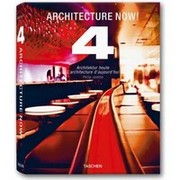
Architecture Now! 4

June 30, 2009 by Roy Johnson

illustrated review of contemporary architectural design

The previous edition of this series, Architecture Now!, was the winner of the prestigious Saint-Etienne Prize for the Best Architecture and Design Book of 2004. Now volume four brings an even more spectacular portfolio of contemporary architecture and design to a general readership via Taschen’s policy of high quality publications at budget prices. The selection here is quite breathtaking. Projects range from multi-million pound buildings to humble constructions such as a tree house, a loft extension, and a prototype for sheltered housing made out of sandbags.

Architecture Now! 4 There’s an exhibition centre built out of old shipping containers, a water purification plant, and one spectacular private commission for a house built on a cliff top with a suspended swimming pool which looks as if it is floating in mid-air.

Each entry presents full contact details for the featured architects, including their web sites, many of which are works of art in their own right. The text is in three languages – English, French, and German – but the emphasis is emphatically upon visual presentation. Beautiful high-quality photographs bring out in full the contrasting textures of materials such as plate glass, brick and natural stone, water, concrete, and polished copper.

You’ve got to be on your visual toes, because some of the projects only exist as models and mock-ups; but they are rendered using digital techniques which blend natural landscapes with computer-generated images in such a way that you’d swear you were looking at a finished construction.

jodidio-2

The selection includes all the well known names you would expect to find in a survey of this kind – Frank O Gehry, Rem Koolhaas, and Saha Hadid. But I was surprised the editor Philipe Jodidio did not include Richard Rogers, Norman Forster, Nicholas Grimshawe, or Renzo Piano. Yet strangely enough he does include work by the video installation artist Bill Viola and the painter Frank Stella, who has recently produced some sculpture with architectural forms.

I was pleased to note that Jodidio does not shy away from discussing the costs of some of these projects – many of which have notoriously run many times over budget. You get the feeling that he has not put his critical faculties on hold whilst he celebrates the obvious creativity on show. And he introduces some interesting concepts and techniques – such as ‘topographic insertion’, in which a construction is merged with its surrounding landscape.

This is a marvelously stimulating production which will appeal to anybody interested in modern building and design, and in particular those who are concerned with the integration of man-made environments into the natural world.

© Roy Johnson 2006

Architecture Now! Buy the book at Amazon UK

Arc hitecture Now! Buy the book at Amazon US


Philipe Jodidio (ed), Architecture Now! V.4, London: Taschen, 2006, pp.576, ISBN 3822839892


More on architecture
More on technology
More on design


Filed Under: Architecture Tagged With: Architecture, Interior design, Lifestyle, Modernism

Arguments in essays

August 22, 2009 by Roy Johnson

sample from HTML program and PDF book

1. The term ‘arguments’ is used to describe your response to an essay question. Your arguments might sometimes be no more than an explaining or evaluating a subject, interpreting a text, solving a problem, or reporting on a project.

2. In its more particular sense, an argument can be a proposition which is put forward and then illustrated, discussed, and defended. It might be the assertion and defence of a particular moral belief (“Killing people is always wrong”) the judgement of a work of art (“Bleak House is Dickens’s greatest novel”) or the inspection of someone else’s belief (“How valid is Chomsky’s notion of a Universal Grammar?”).

3. An academic argument should not be confused with the sort of personal dispute we might have with a family member (“You ate the last piece of cake! No I didn’t!”) – though it is true that both are forms of persuasion. Academic essays should not include literary abuse or personal criticism.

4. The difference between these two notions is that an academic argument should be put forward in an objective and relatively neutral manner. It must also be accompanied by illustrative examples, evidence to support your propositions, and logically persuasive discussion.

5. The argument might be a single claim or a theory for which ‘proof’ is offered. Alternatively, it might be an idea or a notion which is explored in a discursive manner. In this case, the order of the topics being examined forms the structure of the ‘argument’.

© Roy Johnson 2003

Buy Writing Essays — eBook in PDF format
Buy Writing Essays 3.0 — eBook in HTML format


More on How-To
More on writing essays
More on writing skills


Filed Under: Writing Essays Tagged With: Academic writing, Arguments, Essays, Study skills, Term papers, Writing skills

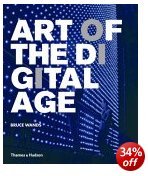
Art of the Digital Age

July 22, 2009 by Roy Johnson

pictures, sculpture, installations, and web-art

Art of the Digital Age is a beautifully illustrated survey of the latest developments in art which has been generated digitally. Well, for ‘latest’ read ‘in the last ten or fifteen years’, because people were attempting to use IT for art even before the arrival of the Web. Bruce Wands very sensibly begins by defining ‘digital art’ – pointing out that many artists may use computers and digitisation in the preparation of works which are then executed by conventional means.

Art of the Digital Age His first section on digital imaging illustrates that perfectly. Many of the artists combine photography, painting, and scanned imagery – to produce data files which can then be projected into other media. He then moves on to show works which are categorised as ‘virtual sculpture’. In this genre, 3-D modelling software is used to produce wireframe shapes which can then be clad in a variety of skins or surfaces. The results can be sent as a file to a rendering studio which creates the object in a substances of the artist’s choice.

There is also 3-D printing, in which layer upon layer of a plastic coating can be applied to a surface until the result is a three dimensional shape. This can be the desired sculpture or a mould from which the finished work is cast. there are some slightly gruesome-looking organic forms here, but the constructivist work of sculptor Bruce Beasley (www.brucebeasley.com) stands out as possibly the most impressive work in the book.

On installation art I remained unconvinced. Much of it seemed like 3-D objects with light shows thrown in – though it is hard to judge an environment when it is only captured in a 2-D photograph. The problem here and elsewhere is that the term ‘art’ has been taken to mean ‘arty’. If the pages had been thrown open to the truly popular users of new technology, we could have had the work of those people whose works are viewed by up to ten million at a time on YouTube.

The same is even more true of digital music – though he ‘cheats’ by going back into performance and installation art which also happens to feature music. Video (which is now called ‘time-based media’) is another example where current commercial practice far outstrips the arty experimentalists

I followed up lots of the sources, and was amazed how few of the artists featured had their work available for view on their web sites – though the spectacular animations of Dennis H. Miller were an honourable and very worthwhile exception here (www.dennismiller.neu.edu). But when I arrived in the ‘Net Art’ section at work which allows you to connect interactively with snakes, I felt I could give that one a miss.

It’s a visually rich publication, marred only by the use of a sans-serif font for the body text which sits rather unsympathetically with the pictures; but this is offset by a richer-than-usual scholarly apparatus which includes a 1450—2006 IT timeline, a glossary, lists of further reading, a list of digital art resources, and a webliography of the artists featured.

© Roy Johnson 2007

Digital Art Buy the book at Amazon UK

Digital Art Buy the book at Amazon US


Bruce Wands, Art of the Digital Age, London: Thames and Hudson, new edition 2007, pp.224, ISBN 0500286299


More on digital media
More on graphic design
More on art

Filed Under: Art Tagged With: Art, Art of the Digital Age, Digital art, Media, New media, Technology

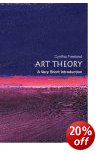
Art Theory: a short introduction

August 4, 2009 by Roy Johnson

brief critical guide to study of art and art theories

This introductory to art theory guide comes from a new series by Oxford University Press. They are written by specialists, aimed at the common reader, and offer an introduction to the main cultural and philosophical ideas which have shaped the western world. Cynthia Freeland takes a very lively and un-stuffy approach to explaining a wide variety of theories of art. She chooses topics – her first is the use of blood in art – then shows possible theoretical responses to it.

Art Theory Her range of examples is wide and impressive. She sweeps without pause from ancient and classical art to modern performance and digital arts, from Christian to Inca rituals, and on to Park Avenue auction prices. She is very well informed. En route she explains theories of art, from Kant, Hume, and Nietzsche, to Walter Benjamin, Marshall McLuhan, and Jean Baudrillard. Her prime intention seems to be to force us to think more flexibly about what constitutes a work of art. It’s an approach which consciously raises questions rather than delivering answers.

For instance there is an interesting chapter on art museums – who creates and owns them, what they exhibit, and what function they serve. Links with big business and even international politics are explored, but at the end we are no closer to knowing what makes good art. It is less an explanation of art theories and more an introduction to themes and topics in the study of art, with particular emphasis on contemporary art from a largely American perspective.

But finally she does get round to two theories for the interpretation of art – what she calls expressionist and cognitive theories. She argues, quite reasonably, that there can never be a ‘right’ or ‘wrong’ interpretation of a work of art – only ones which are more insightful, well-informed, and ultimately more persuasive than others. This is more or less the same conclusion as Jonathan Culler’s in his very short introduction to Literary Theory.

One very good feature of her presentation is that whilst clearly rooted in visual arts (painting and sculpture) it ranges widely over others: architecture, music, performance and video art, and even Japanese Zen gardening get a mention.

Despite my reservations, I think this is a book which will encourage readers to think more widely about questions of what is or is not art; the possible relevance of an artist’s gender; and the changing social significance of an art work according to the context into which it is placed.

These are interesting as well as cheap and cheerful introductions – and they come complete with a full critical apparatus plus suggestions for further reading.

© Roy Johnson 2005

Art Theory Buy the book at Amazon UK

Art Theory Buy the book at Amazon US


Cynthia Freeland, Art Theory : a very short introduction, Oxford: Oxford University Press, 2005, pp.158. ISBN: 0192804634


More on art
More on media
More on design


Filed Under: Art, Theory Tagged With: Art, Art theory, Theory

Articles – how to use them

August 30, 2009 by Roy Johnson

free pages from our English Language software program

Articles – definition

articles Articles go in front of nouns.

redbtn There are two types of articles in English:

  • the definite article [the]
  • the indefinite article [a or an].

Examples

The definite article is the — as in the book

The indefinite article is a – as in a pencil

or an — as in an apple


Use

redbtn When using the indefinite article a is used before

redbtn an is used when the noun begins with a vowel.

redbtn This convention is based on ease of speaking. It is easier to say an apple than a apple, and a new book than an new book.

redbtn The definite article the remains the same in all cases, although speakers do vary the pronunciation according to whether a vowel or a consonant follows. For example:

[thee] – the other – the argument

[theu] – the ball – the tent

redbtn NB! Just be thankful the article is gender-free in English. [It’s not in other languages.]

redbtn Articles in English are fairly simple compared with some other European languages. English articles vary only according to ease of speaking, whereas in French they have to agree with the gender of the noun. For example

MASCULINE le bureau
(the office)
le matin
(the morning)
FEMININE la maison
(the house)
la plage
(the beach)

redbtn Students of English as a foreign language are relieved to find that the articles stay fairly constant with the exception of the variation between a and an.

redbtn However, English wasn’t always like this. Old English or Anglo-Saxon had as many variations as Latin or modern German. These have very gradually disappeared as word-order has become more crucial.

redbtn Even today, some people say an historic occasion or an hotel. This is a remnant of Middle English when, because of the French influence, the aitch was not articulated, making the initial syllables of these words effectively vowels. [End of history lesson.]

Self-assessment quiz follows >>>

© Roy Johnson 2003


English Language 3.0 program
Books on language
More on grammar


Filed Under: English Language Tagged With: Articles, English language, Grammar, Language

Artie Shaw: his life and music

July 25, 2009 by Roy Johnson

critical and illustrated biography – plus discography

As the handsome (and much-married) leader of a series of big bands and small groups in the 1930s and 1940s, clarinetist Artie Shaw achieved measures of fame and fortune that temporarily eclipsed those of his great rival, Benny Goodman. Shaw’s five top single recordings had sold over 65 million copies by 1965; by 1990 his total sales exceeded 100 million records. John White’s critical biographical study starts with an outline of Swing as a phenomenon of the 1930s and 1940s, then traces Shaw’s rise through countless small bands to fame as a leader in his own right. It takes in the jobbing years of the 1930s and the rise to stardom in the 1940s. And then at the height of his fame, suddenly feeling uncomfortable in the modernist phase of the 1950s, Shaw retired to Spain.

Artie Shaw: his life and musicAfter five years he returned to the USA, and made a series of come-backs, then started writing fiction. It’s lucidly written account, fully annotated and referenced, and I particularly liked the fact that White puts the life of the musician into a socio-economic context – so we see what shaped the world of a professional musician. It’s a rich antidote to the romantic approach to jazz music criticism, which tends to be based on anecdotes and uncritical enthusiasm.

The narrative is punctuated by well-documented quotations from Shaw himself and other musicians. These often reinforce the precarious life of the professional jazz musician:

‘A cop in Boston arrested our Negro driver and tossed him into the can … We left our driver in jail, the truck in the police yard, and went on to our next stand by bus.’

What emerges is portrait of a complex, thoughtful man. He was obviously intellectually ambitious; he frequently dropped out of the music business altogether to pursue other interests; and he did finally achieve a moderate success as a writer. His autobiographical The Trouble with Cinderella is worth reading despite its often pretentious style.

Shaw was good on the race issue (first white band to have a black singer – Billie Holiday) not so good on the political issue (compromising with the Committee of Un-American Activities) and his personal life – well, let’s leave that to his eight ex-wives. These included women as glamorous as Lana Turner and Ava Gardner, despite the fact that he suffered from bad breath.

After the life, the book ends with two essays – an appreciation of his style and a study of his recordings. All of this made me want to hear more , and sure enough I did, when I put on a Mel Torme recording I bought recently. There, rising between choruses from The Velvet Fog, were fluid arpeggios from the master himself. He had technique, he had taste – and amazingly enough, he survived to the age of 95. In the world of jazz, that’s quite an achievement.

© Roy Johnson 2004

artie shaw Buy the book at Amazon UK

artie shaw Buy the book at Amazon US


John White, Artie Shaw: his life and music, London: Continuum, 2004, pp.223, ISBN: 0826469159


More on music
More on biography
More on digital media


Filed Under: Biography, Music Tagged With: Artie Shaw, Biography, Cultural history, Jazz, Music

Assessment criteria for essays

August 22, 2009 by Roy Johnson

sample from HTML program and PDF book

1. What follow are the assessment criteria used by a humanities department in a typical UK university.

2. Most institutions use similar criteria, but not all of them take the trouble to make them explicit to students. [However, this is beginning to change because of political pressure.]


First Class (70+%)

A first class answer has a thoughtful structure, a clear message displaying personal reflection informed by direct use of primary source material and/or wide reading of scholarly literature, and a good grasp of detail (as evidenced by the choice of relevant examples which are well integrated into the answer’s structure). Complete with no errors or omissions. Professionally presented including scholarly apparatus.

First class answers are ones that are exceptionally good for an undergraduate and which excel in at least one and probably several of the following criteria:

  • comprehensiveness and accuracy
  • clarity of argument or expression
  • integration of a range of materials
  • close analysis of texts
  • insight into theoretical issues
  • relates topic to wider field of knowledge

Excellence in one or more of these areas should be in addition to the qualities expected of an upper second class answer. Although there is no expectation of originality of exposition or treatment, a first class answer is generally expected to spot points rarely seen. A high first (75+%) is expected to display originality and excel in most if not all the aforementioned criteria.


Upper Second Class (60-69%)

An upper second class answer generally shows a sound understanding of both the basic principles and relevant details of the topic supported by examples which are demonstrably well understood and which are presented in a coherent and logical fashion. The answer should be well presented, display some analytical ability and contain no major error or serious omissions. Not necessarily excellent in any area. Professionally presented including scholarly apparatus.

Upper second class answers cover a wider band of students. Such answers are clearly highly competent and typically possess the following qualities:

  • generally accurate and well-informed
  • reasonably comprehensive
  • well organised and structured
  • provides evidence of general reading
  • shows a sound grasp of basic principles
  • shows understanding of relevant details
  • succinctly and cogently presented
  • displays some evidence of insight

One essential aspect of an upper second class answer is that it must have competently dealt with the question set. It should also demonstrate an ability to evaluate the secondary sources used in writing the essay and should, where appropriate, offer evidence of an ability to observe closely and evaluate material evidence.

Lower Second Class (50-59%)

A substantially correct answer which shows an understanding of the basic principles. Lower second class answers display an acceptable level of competence, as indicated by the following qualities:

  • generally accurate
  • adequate answer to the question
  • work based on secondary sources and class notes
  • clearly presented
  • no real development of arguments
  • may contain errors or omissions

A lower second class answer may also be a good answer (that is, an upper second class answer) to a related question, but not the one set by the examiner.


Third Class (40-49%)

A basic understanding of the main issues, but not coherently or correctly presented. Third class answers demonstrate some knowledge or understanding of the general issue, but a third class answer tends to be weak in the following ways:

  • descriptive only
  • does not directly answer the question
  • misses key points
  • contains important inaccuracies
  • covers material sparsely
  • assertions not supported by evidence
  • poorly presented

Below Third Class

A pass presents the minimum acceptable standard at the bottom of the third class category. There is just sufficient information to indicate that the student has a general familiarity with the subject. Such answers typically:

  • contain little material
  • lack accuracy or depth of argument
  • adopt a cursory approach
  • are poorly written and presented

© Roy Johnson 2003

Buy Writing Essays — eBook in PDF format
Buy Writing Essays 3.0 — eBook in HTML format


More on writing essays
More on How-To
More on writing skills


Filed Under: Writing Essays Tagged With: Academic writing, Assessment, Assessment criteria, Essays, Grades, Study skills, Term papers, Writing skills

  • « Previous Page
  • 1
  • …
  • 8
  • 9
  • 10
  • 11
  • 12
  • …
  • 103
  • Next Page »

Get in touch

info@mantex.co.uk

Content © Mantex 2016
  • About Us
  • Advertising
  • Clients
  • Contact
  • FAQ
  • Links
  • Services
  • Reviews
  • Sitemap
  • T & C’s
  • Testimonials
  • Privacy

Copyright © 2026 · Mantex

Copyright © 2026 · News Pro Theme on Genesis Framework · WordPress · Log in