Mantex

Tutorials, Study Guides & More

  • HOME
  • REVIEWS
  • TUTORIALS
  • HOW-TO
  • CONTACT
>> Home / Archives for 2009

Archives for 2009

Commas in essays

August 22, 2009 by Roy Johnson

sample from HTML program and PDF book

1. Commas in essays are the least emphatic pause in normal punctuation. They mark a light hesitation or interruption in the sentence. The comma is used in a number of different grammatical instances.

2. To separate two clauses when the first is not closely associated with the second:

Cars should turn left here, whilst foot passengers should continue towards the exit.

3. To introduce a pause where the eye might otherwise continue and momentarily mistake the sense of what was written:

In the beautiful valley below, the villages looked very small.

4. To separate a sequence of adjectives which qualify a noun in the same manner:

He was an arrogant, loquacious man.

5. However, when the adjectives are of a different order or type, no comma is necessary:

He was a distinguished foreign visitor.

6. To separate items in a long list:

The box contained an old leather-bound book, a bottle, some pencils, and a gun.

7. Opinions vary on the necessity of the final comma in such examples. If the items are all of the same kind, there is probably little chance of ambiguity. If they are not, it is usually safer to retain the comma.

8. To mark the beginning and end of a parenthetical phrase within a sentence:

I am quite sure, despite all my reservations on the matter, that he is doing the right thing.

9. Confusion is sometimes sown by the insertion of commas where they are not really necessary. This is an example of bad usage:

The strangest of all these new sensations, was the onset of profound happiness.

10. Commas should not be used to connect separate sentences as a casual substitute for the full stop:

A party has been arranged, it will not take place until next week.

11. This is weak writing. The statement should be made either as two separate sentences, or if they are brought together because of their natural connection, a conjunction is required:

A party has been arranged, but it will not take place until next week.

12. Even though in some cases a comma may not be absolutely necessary for retaining grammatical coherence (as in the previous example), it may still be useful in order to clarify the meaning for a reader. Here’s another bad example.

Each night you stay at a Roberts-Plaza Moat Houses UK hotel at the fully published or corporate rate you are entitled to a special discount voucher.

13. This poorly phrased statement would be improved by the insertion of a comma after the word ‘rate’.

14. What follows is an example of an entire paragraph which has been punctuated using only the comma and the full stop. [It also illustrates, rather deftly, the function of the ‘topic sentence’.]

The central thought or main controlling idea of a paragraph is usually conveyed in what is called a topic sentence. This important sentence which states, summarises or clearly expresses the main theme, is the keystone of a well-built paragraph. The topic sentence may come anywhere in the paragraph, though most logically and in most cases it is the first sentence. This immediately tells readers what is coming, and leaves them in no doubt about the overall controlling idea. In a very long paragraph, the initial topic sentence may even be restated or given a more significant emphasis in its conclusion.

© Roy Johnson 2003

Buy Writing Essays — eBook in PDF format
Buy Writing Essays 3.0 — eBook in HTML format


More on writing essays
More on How-To
More on writing skills

Filed Under: Writing Essays Tagged With: Academic writing, Commas, Essays, Grammar, Punctuation, Study skills, Term papers, Writing skills

Common essay problems

September 15, 2009 by Roy Johnson

sample from downloadable HTML program or PDF book

Essay problems – Relevance

1. Straying off the subject in question is a common problem. There are several simple solutions.

2. Always write out the question accurately and in full on both your notes and your essay script.

3. Plan your essays carefully, consult the wording, and relate each part of your argument to the topic(s) in question.

4. At each stage of the argument, you should keep asking yourself ‘Is this relevant?’, ‘Am I answering the question?’, ‘Does this relate directly to the subject I have been asked to discuss?’

5. Each paragraph should contain just one idea or topic which is announced in its first sentence. This idea or topic should be directly related to the question or the subject you have been asked to discuss.

6. If you introduce a separate issue in order to illustrate some part of your argument, make sure that you return to the original subject as soon as possible. Part of your discussion should explain why and how this secondary issue is relevant.

Essay problems – Signposting

1. Unless you have been asked to do so, there is no need to signpost your argument.

2. That is, you do not need to use expressions such as:

‘Later in this essay I will be discussing…’
‘Let us now go on to consider…’
‘As I demonstrated earlier…’
‘We will now turn to evaluate another example…’

3. Just state clearly the point of your arguments and leave them to speak for themselves.

4. In a well-planned essay, this progression should be self-evident from the arrangement of your work.

5. A sound essay plan and a coherent structure will reveal the logic of your argument and the relationship of its parts.

6. Each new topic should be clearly identified or defined as soon as you begin dealing with it. This statement will provide all the indication needed of your intentions.

7. If you wish to some light indication of structure, it is perfectly acceptable to use formulations such as:

‘The first reason … The second…’
‘On one hand … on the other…’
‘However, the main argument against this is…’

8. The conventions on signposting may vary slightly from one subject to another. In some of the sciences it is necessary to announce in advance what you will be writing about.

Essay problems – Commenting on the process

1. Your essay represents the results of your efforts. There is no need to comment on the manner in which you have worked.

2. Your tutor doesn’t need to know in what order you assembled your evidence, or what difficulties you encountered during its composition.

3. You might wish to argue that the question raises a certain number of difficulties or crucial issues. This is acceptable – so long as you say what they are.

4. You should then go on to discuss their relevance to the subject in question, and maybe even suggest some answers to them.

Essay problems – Posing questions

1. Do not present your argument in the form of questions.

2. Remember – you are supposed to be answering a question.

3. Avoid formulations such as:

Was she so overwhelmed at the thought of a ‘new brave’ husband that she shot him? In considering his cowardice, had Macomber removed his weapon – his weakness?

Essay problems – Your own argument

1. Do not use quotation from the text as a substitute for your own argument.

2. That is, don’t present your answer to the question as a mixture of your own remarks, woven together with quotations.

3. Here is an example:

The poem describes a journey ‘from rich industrial shadows’ through crowded urban environments to a place of ‘loneliness’ where ‘silence stands/like heat’.

Referencing

1. Quotations from a text should be followed by page references – as in the following example:

These literary devices include simile, such as the description of the lion as ‘like some super-rhino’ (p.94) and the…

2. You should not include the reference as part of your text, as in the following example:

These literary devices include simile, such as the description of the lion on page ninety-four when it is described as ‘like some super-rhino’ and the other instance on page fifty-six when it is…

Essay problems – Creating structure

1. Essays should have a clear structure. This should be created in a firm essay plan.

2. Good structure is a persuasive or logical sequence of the parts in an essay.

3. The order of parts is often determined by the nature of the subject. This order might be created by:

  • logical progression
  • increasing significance
  • equal significance
  • chronological order
  • narrative sequence
  • category groupings

4. You can generate the parts of your essay by deciding which topics you will cover in your answer.

5. Each of these topics should be discussed separately – usually in at least one paragraph on its own.

6. If there is no natural order for your topics, you could deal with the smaller, less important items first. This leaves the larger, more important issues until the end of the essay.

© Roy Johnson 2004

Buy Writing Essays — eBook in PDF format
Buy Writing Essays 3.0 — eBook in HTML format


More on writing essays
More on How-To
More on writing skills

Filed Under: Writing Essays Tagged With: Academic writing, Common essay problems, Essay problems, Essay writing, Study skills, Term papers, Writing skills

Common essay problems

September 28, 2009 by Roy Johnson

… and how to overcome them

Essay problems – Relevance

1. Straying off the subject in question is one of the most common essay problem. There are several simple solutions.

2. Always write out the question accurately and in full on both your notes and your essay script.

3. Plan your essays carefully, consult the wording, and relate each part of your argument to the topic(s) in question.

4. At each stage of the argument, you should keep asking yourself ‘Is this relevant?’, ‘Am I answering the question?’, ‘Does this relate directly to the subject I have been asked to discuss?’

5. Each paragraph should contain just one idea or topic which is announced in its first sentence. This idea or topic should be directly related to the question or the subject you have been asked to discuss.

6. If you introduce a separate issue in order to illustrate some part of your argument, make sure that you return to the original subject as soon as possible. Part of your discussion should explain why and how this secondary issue is relevant.


Essay problems – Signposting

1. Unless you have been asked to do so, there is no need to signpost your argument.

2. That is, you do not need to use expressions such as:

‘Later in this essay I will be discussing…’

‘Let us now go on to consider…’

‘As I demonstrated earlier…’

‘We will now turn to evaluate another example…’

3. Just state clearly the point of your arguments and leave them to speak for themselves.

4. In a well-planned essay, this progression should be self-evident from the arrangement of your work.

5. A sound essay plan and a coherent structure will reveal the logic of your argument and the relationship of its parts.

6. Each new topic should be clearly identified or defined as soon as you begin dealing with it. This statement will provide all the indication needed of your intentions.

7. If you wish to some light indication of structure, it is perfectly acceptable to use formulations such as

‘The first reason … The second…’

‘On one hand … on the other…’

‘However, the main argument against this is…’

8. The conventions on signposting may vary slightly from one subject to another. In some of the sciences it is necessary to announce in advance what you will be writing about.


Essay problems – Commenting on the process

1. Your essay represents the results of your efforts. There is no need to comment on the manner in which you have worked.

2. Your tutor doesn’t need to know in what order you assembled your evidence, or what difficulties you encountered during its composition.

3. You might wish to argue that the question raises a certain number of difficulties or crucial issues. This is acceptable – so long as you say what they are.

4. You should then go on to discuss their relevance to the subject in question, and maybe even suggest some answers to them.


Essay problems – Posing questions

1. Do not present your argument in the form of questions.

2. Remember – you are supposed to be answering a question.

3. Avoid formulations such as:

Was she so overwhelmed at the thought of a ‘new brave’ husband that she shot him? In considering his cowardice, had Macomber removed his weapon – his weakness?

4. A common rule on this issue is as follows: “Never raise a question in an essay – unless you are going to answer it.”


Essay problems – Your own argument

1. Do not use quotation from the text as a substitute for your own argument.

2. That is, don’t present your answer to the question as a mixture of your own remarks, woven together with quotations.

3. Here is an example:

The poem describes a journey ‘from rich industrial shadows’ through crowded urban environments to a place of ‘loneliness’ where ‘silence stands/like heat’.


Essay problems – Referencing

1. Quotations from a text should be followed by page references – as in the following example:

These literary devices include simile, such as the description of the lion as ‘like some super-rhino’ (p.94) and the…

2. You should not include the reference as part of your text, as in the following example:

These literary devices include simile, such as the description of the lion on page ninety-four when it is described as ‘like some super-rhino’ and the other instance on page fifty-six when it is…


Essay problems – Creating structure

1. Essays should have a clear structure. This should be created in a firm essay plan.

2. Good structure is a persuasive or logical sequence of the parts in an essay.

3. The order of parts is often determined by the nature of the subject. This order might be created by:

  • logical progression
  • increasing significance
  • equal significance
  • chronological order
  • narrative sequence
  • category groupings

4. You can generate the parts of your essay by deciding which topics you will cover in your answer.

5. Each of these topics should be discussed separately – usually in at least one paragraph on its own.

6. If there is no natural order for your topics, you could deal with the smaller, less important items first. This leaves the larger, more important issues until the end of the essay.

See – How to structure an essay.

© Roy Johnson 2009


More on How-To
More on study skills
More on writing skills


Filed Under: Study Skills Tagged With: Academic writing, Essay writing, Essay writing problems, Study skills, Writing skills

Common file types

October 31, 2009 by Roy Johnson

Extension Type Characteristics
.aam media file MacroMedia Shockwave
.arc archive file
(obsolete)
Open with PKZip or WinZip
.asp web page active server page – used to code Web pages that connect to databases
.au audio Sound file – open with player – used on older Web pages
.avi video clip Audio/Video Interleaved – movie clip – open with mplayer, IE, or Navigator with plugin
.bak backup file Used by many applications – often created automatically
.bat application DOS batch file – run by double-clicking in Win95 – edit with Notepad
.bmp graphic file Microsoft bitmap – open in MS Paint or graphics program
.cab archive Microsoft installation achive (cabinet file) – similar to .zip archive
.cfg — Configuration file
.cgi — Common Gateway Interface – used to exchange information with a server (often used with Perl)
.chk — Data recovered after running Checkdisk
.css style sheet plain text file containing web page style preferences
.csv data Comma Separated Value file – a way of presenting tabular data in
a text file – usually viewed in MS Excel.
.dat data file Used by several applications. Not to be opened directly.
.dcr media file Macromedia Shockwave movie
.dir media file Macromedia Director file – provides animation and interactivity
.dll dynamic link library Software used by Windows to provide services to applications
.doc document Microsoft Word file
.dot template Microsoft Word template
.drv device driver Used to control hardware – (old)
.dtd text document type definition
.exe application self-extracting or executable file – run by double-clicking in Win95
.faq data file Frequently Asked Questions – almost always a text file
.fla media Macromedia Flash animation file – requires Shockwave
.fnt — Font file
.gif image graphic in GIF format – open in web browser or graphics program
.gz application compressed archive file created by Gzip in the UNIX operating system
.hqx archive Compressed Macintosh file archive created by Binhex
.htm text file hypertext document [same as .html] – open in a web browser – edit in any word-processor or text editor
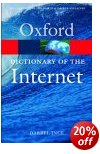
Dictionary of the Internet - Click for details at AmazonThis dictionary explains the thousands of new terms which have come into use during the last few years. It includes the abbreviations of newsgroups, the language of e-commerce, and the scientific terms used to describe the structure of the Internet. It provides terms on the Web itself, software technology, security, and the arcane language of hackers.
.ico Windows icon Open with an icon editor
.ini — Initialisation file
.jar Java Java compressed archive file
.jav Java cross platform programming language used to create complex interactive forms and special effects
.jpg image Graphic in JPEG format (Joint Photographic Experts Group) View with web browser or image editing program
.js JavaScript part of Web page used to create interactive effects such as mouse roll-overs and pop-up boxes
.jso — Java server page
.kbd data file Keyboard layout data
.log data file Created by many applications – usually a text file – edit in any text editor
.mdb database Database file created by Microsoft Access, a widely-used desktop relational database program; contains the database structure (tables and fields) and database entries (table rows) as well as data entry forms, queries, stored procedures, reports, and database security settings.
.mid audio audio file in MIDI format
.mov video QuickTime movie – view using IE or Netscape using plug-in
.mp3 audio Audio file in MP3 format – CD-quality sound, with 10x compression
.mpg movie Video movie in MPEG format (Motion Picture Experts Group)
.odf data OpenDocument Formula. Spreadsheet formula used by OpenOffice.org and StarOffice Calc; allows the results of calculations performed within the spreadsheet to be automatically entered into one or more cells; based on the OASIS OpenDocument standard and formatted in XML.
.old — Backup file (generic)
.pdf application Portable Document Format – requires Adobe Acrobat reader
.pl application Perl source file – text file, editable in any text editor
.png image graphic in Portable Network Graphics format – can work on all platforms
.ppt application Microsoft PowerPoint file – used for creating slides and overhead presentations
.pub — Microsoft Publisher page template file
.ram audio Real Audio file – open in browser with RealAudio plug-in
.rtf application Rich Text Format –
word-processor file with formatting codes
.scr screen saver
.sea application Self-extracting archive –
Apple-Mac – requires Stuffit
.sig signature Appended to outgoing email messages – editable in text editor
.swf media Macromedia Shockwave Flash animation movie
.sys — DOS system file – device driver or hardware configuration info
.tar application file archive created in the Unix operating system
.tar.gz application .tar archive compressed by Gzip
.tif image Tagged Image File format – graphic file – editable in graphics program
.tmp — temporary file – used by many programs
.ttf — True Type Font file – view with fontview
.txt text contains only ASCII code – also called ‘text file’ – editable in any text editor
.wav audio Sound file in Waveform format
.wsz graphics Winamp skin – visual interface for audio control board
.xls application Microsoft Excel worksheet file
.xml Web page extensible markup language – a plain text file for web pages
.zip application compressed file – open with WinZip or PKZip

© Roy Johnson 2002


Filed Under: How-to guides Tagged With: Common file types, Computers, file extensions, file types, Technology

Common Reading

June 11, 2009 by Roy Johnson

writers, critics, intellectuals, and their audiences

Alternative titles for this collection of literary essays might be The Last Men of Letters, Critics and the Marketplace, or even (to choose the sub-titles of two other Stefan Collini books) Essays in History and Culture or Intellectuals in Britain – because it is largely a study of writers 1920-1960 who earned their living as journalists and critics in the world of literary magazines and journals. But Common Reading is also a consideration of their readership, how they have been forced to change over the years, and the state of intellectual biography in the twenty-first century.

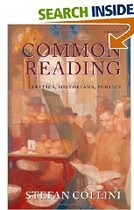
Common ReadingHe describes the collection himself as ‘exercises in intellectual portraiture [and] the nature of the diverse public for whom these figures wrote, and … the cultural traditions and institutional frameworks within which they operated’. The first half of the book is a series of literary portraits of critics and what he calls ‘public intellectuals’ – Cyril Connolly, Edmund Wilson, George Orwell, E.H.Carr, E.P.Thompson, Perry Anderson, and even Roger Scruton.

The second half is a series of extended essays on literary and intellectual culture as reflected in journals and magazines, including those for which he himself writes, such as the Times Literary Supplement. He speaks from deep within the cultural establishment – Professor of English at Cambridge – but the essays are pitched at the same level as the work he is describing: that is, they are well informed without being overly academic, and accessible to the common reader without being over-simplified or condescending. I was interested to see that he endorsed Perry Anderson’s critique of contemporary academic writing as suffering from ‘peer-group fixation, index-of-citations mania, gratuitous apparatuses, pretentious jargons, [and] guild conceit’.

This is not to say that he is against scholastic rigour. His essay on two biographies of George Orwell offers a bravura display of examining the value of literary evidence in making factual or historical claims about a personal life. He makes similar analyses on the ‘Art of Biography’ (as Virginia Woolf calls it in her essay on the subject) in the case of a critical account of the successful-but-ineffectual Stephen Spender written by John Sutherland.

He also does an excellent line in biography as critical reassessment. There’s a devastating piece on Andre Malraux – art-thief, self-appointed hero of a war he avoided, and non-elected politician – which has one wondering how anybody was taken in by such frauds in the first place. Similarly with the living, his analysis of Roger Scruton (Hegel in Green Wellies, Roger of Salisbury) leaves the fustian so-called philosopher in tatters at the end of half a dozen pages.

The style of Collini’s writing is something of a curious mixture. He embraces the long cadences and deeply nested qualifying clauses of the early twentieth century in which he is clearly so well read. But his jokes, casual references, and asides are offered in a pungently modern fashion. He’s writing for an intellectual audience, and he expects you to keep up.

He’s dealing with the same sort of issues as John Carey in The Intellectuals and the Masses – the relationship of intellectuals to the audiences which consumed their work. And like Carey he offers fascinating glimpses into the social and political culture of the literary professional – complete with how much they earned, how many books they sold, and how their critical reputations have risen (and often fallen again) in the last half century.

These are studies in literary and cultural history of a very high order. I’m slightly embarrassed to admit that I hadn’t come across Collini’s work before, but I now look forward to working my way through his considerable back catalogue.

© Roy Johnson 2010

Common Reading   Buy the book at Amazon UK

Common Reading   Buy the book at Amazon US


Stefan Collini, Common Reading, Oxford: Oxford University Press, 2009, pp.384, ISBN: 0199569797


More on literature
More on the novella
More on literary studies
More on short stories


Filed Under: 20C Literature, Literary Studies Tagged With: Common Reading, Cultural history, Literary studies, Stefan Collini, Theory

Communicating in Style

June 30, 2009 by Roy Johnson

how to present text and data for publication

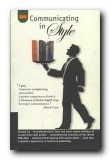
This is a style guide for writers who have produced the basic text but who need help laying it out effectively on the page – or on screen. It will be of particular interest to technical writers and those dealing with business documentation. Communicating in Style covers the basics of document design such as headings and subheadings; how to present dates, times, and email addresses; and how best to control spacing, indentation and margins to create effective pages.

Communicating in StyleThere are lots of small but important details: acronyms first, followed by the full version; no full stops after contractions; headings closer to body text which follows than that which precedes. He also suggests that abbreviations should be explained anew in each chapter of a book – especially if they deal with different topics. Yateendra Joshi is good on the punctuation and spacing of lists; the kerning of small caps; (symbols have no plurals); and how to use the numeric keypad to produce special symbols and characters.

On tables there’s lots of good advice on alignment in columns and rows to simplify and clarify the presentation of data. Like Edward Tufte he believes in reducing any unnecessary lines, rules, and ‘chart junk’.

He deals with questions such as ‘Is the symbol for hour ‘h’ or ‘hr’?’ and ‘Are thousands separated by commas or with a space?’ plus lots of details on abbreviations, acronyms, contractions, and symbols.

There’s a section on OHP and PowerPoint presentations and how to lay out the display for maximum effectiveness; how to submit manuscripts to journals; and how to integrate charts, diagrams, maps, and photographs into documents; citing and referencing sources of information, including web pages and electronic documents.

The feature of the book I liked best was the use of quotations from other well-known style guides to illustrate the main points of his arguments. These are placed on almost every left-hand page, along with a picture of the jacket cover and bibliographic details of the book itself.

I can confirm his claim that the book has been extensively field-tested with earlier drafts. Many versions have been made available to the Information Design email discussion group in the past couple of years.

He finishes off with advice on spelling, fonts, and formats for postal addresses and telephone numbers. This is in fact very detailed and sophisticated advice on the presentation of information on screen and page. It encourages us all to be more attentive.

It’s good to see that this book has now found its way to Amazon.co.uk – but you might find it difficult to locate elsewhere. Be persistent however: it’s well worth the effort.

© Roy Johnson 2004

Communicating in Style   Buy the book at Amazon UK

Communicating in Style   Buy the book at Amazon US


Yateendra Joshi, Communicating in Style, New Delhi: The Energy and Resources Institute, 2003, pp.250, ISBN: 8179930165


More on information design
More on design
More on media
More on web design


Filed Under: Information Design, Publishing, Writing Skills Tagged With: Communicating in Style, Communication, Publishing, Style guides, Writing skills

Communication for Engineering Students

June 14, 2009 by Roy Johnson

writing and speaking skills for science and engineering

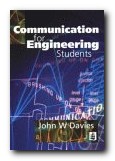
Are science and engineering students in special need of help with their writing skills? This seems to be a generally held belief, and John Davies takes it as the starting-point for this manual. His approach is to divide the writing task into discrete topics, each of which he treats in separate chapters. He covers Sentences, Grammar and Style, Technical Information, Laboratory Reports, Projects, and even Spoken Presentations, Job Applications, and Interview Techniques.

Engineering studentsThe general approach is to offer sound, sensible advice, and he points out that there are few absolute rules. The way to improve your writing, he suggests, is “to think about what you write”.  This is good advice, in whichever branch of engineering [or science] it might be applied.

He offers brief exercises (with answers) in each chapter, and I would guess that a first or second-year engineering student would find his avuncular tone reassuring. However, some sections – those on word-processors and examinations for instance – skip over the issues rather rapidly.

In this sense the strength of a book which covers so many topics in such a short space could also be construed as its weakness. However, on balance I suspect that the students at whom it is aimed are likely to be overwhelmed by a more encyclopaedic approach. Davies’ light touch should encourage them to adopt good practices and pursue the finer details in further reading which is given at the end of each chapter.

© Roy Johnson 2000

Communication for Engineering Students   Buy the book at Amazon UK

Communication for Engineering Students   Buy the book at Amazon US


John W. Davies, Communication for Engineering Students, London: Longman, 1996, pp.167, ISBN: 0582256488


More on writing skills
More on online learning


Filed Under: Study skills Tagged With: Academic writing, Communication, Engineering, Writing skills

Compact Dictionary for Students

July 27, 2009 by Roy Johnson

dictionary + writing and study skills

Despite record-breaking results in GCSEs and A levels, many employers, colleges, and universities complain that they have applications from people who cannot spell or write good English. This is not to say that ‘standards are falling’ – which I don’t believe. On the contrary it seems to me that standards are actually rising – because we are surrounded in print, on screen, and everywhere else by high-quality writing. But more employers and teachers now expect people to be able to produce similarly clear prose, free from ambiguity and grammatical errors.

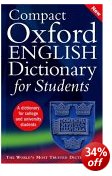
Compact Dictionary for Students So Oxford University Press have come up with a brand-new dictionary to help students in colleges and universities not only grasp the meanings and spellings of words, but to understand their origins. With over 144,000 words, phrases, and definitions, it offers comprehensive coverage of current English and is perfect for student reference and everyday study needs. They have also done their best to reduce the normally intimidating appearance of pages in a dense book of reference. Each headword is printed in blue instead of the usual black, and this gives the page a lighter tone. It makes the twelve hundred page book (not so compact!) much easier to use.

The really big bonus however is an additional central section which explains how to brush up your English, and how to produce essays and dissertations. It also covers reports and summaries, advice on note-taking and referencing, and preparing CVs and job applications.

Throughout the text there are also notes giving advice on the use of good English, and highlighting the differences between commonly confused words such as empathy and sympathy, and affect and effect, as well as thousands of example phrases showing words in context.

There are also boxed explanations of common problems and misunderstandings. So – the entry on forbear runs as follows:

forbear1 /for-bair / verb (past forebore; past. part. forborne) stop oneself from doing something. – ORIGIN Old English.

USAGE Do not confuse forbear with forebear. Forbear means ‘stop oneself from doing something’ (he doesn’t forbear to write about the bad times ) while forebear (which is also sometimes spelled forbear) means ‘an ancestor’ (our Stone Age forebears).

There is guidance provided on which verbal register a word belongs to – that is, if it’s formal or informal, dated (rotter) literary, technical (dorsal), derogatory (bimbo), offensive, or euphemistic (powder room).

If you were just embarking on a course at college or university, this would be a very good investment. It’s comprehensive, completely up to date, and with Amazon’s discount, a bargain at the price.

© Roy Johnson 2006

Compact Dictionary for Students   Buy the book at Amazon UK

Compact Dictionary for Students   Buy the book at Amazon US


Compact Oxford English Dictionary for Students, Oxford: Oxford University Press, 2006, pp.1210, ISBN: 0199296251


More on dictionaries
More on language
More on literary studies
More on grammar


Filed Under: Dictionaries Tagged With: Compact Oxford Dictionary for Students, Dictionaries, English language, Language

Companion to English Literature

July 28, 2009 by Roy Johnson

authors, books, literary topics, and cultural issues

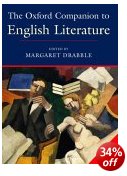
The first edition of the Oxford Companion to English Literature was published in 1932, and quickly established itself as the standard source of reference for students and general readers. Since then it has gone through six editions, the latest of which has been hugely updated and expanded. Of course it’s not the sole work of editor Margaret Drabble. She has assembled a team of 140 fairly distinguished authors (all listed) who have written authoritatively on their specialisms.

Oxford Companion to English LiteratureThe entries are biographies of novelists, poets, and dramatists; and there are sketches of well-known philosophers, historians, critics, and biographers. It includes non-English writers such as Balzac, Goethe, and Tolstoy, as well as figures from other genres such as Dürer, Pasolini, and Prokoviev. It includes mini-essays on genres; fictional characters; famous works (Aaron’s Rod to Max Beerbohm’s Zuleika Dobson); famous places, and literary theory.

There are bonuses, such as the special essays on detective, gothic, and historical fiction. It also explains literary genres such as free verse, the epic, metaphors, and naturalism. So if you need a potted account of the differences between ‘New Historicism’ and ‘Cultural Materialism’ for instance, it can be found here, cross-referenced and explained in jargon-free language.

The extras are also entries on significant magazines such as Edinburgh Review and Atlantic Monthly; entries on deconstruction, folios and quartos; the Hogarth Press and Penguin Books; performance poetry and post-colonial literature.

One particularly useful feature is the potted accounts of novels and dramas. I’m fairly sure I will be going back to that, having refreshed my memory of the sprawling plot of Malcolm Lowry’s Under the Volcano as a sort of test case.

So, a typical entry runs as follows. This is a literature-related text which had a huge influence in the Cold War period.

God that Failed, The: Six Studies in Communism, a volume published in 1950, edited by R.H.S.Crossman, which marked a significant point in the reaction against the pro-communist mood of the 1930s. It contained contributions by three ex-communists, *Koestler, *Silone, and R. *Wright, and by three sympathisers, *Gide (presented by Enid *Starkie), Louis Fischer, and *Spender (who had been a party member for a matter of weeks only).

There is a detailed timeline covering the period 1000 to 2005. This lists major literary works, and it also records important events which happened at the same time, to provide a socio-political context. For those of us who were denied a classical education, there’s a generous outline of its main authors, texts, and characters – from Aristophanes and Aristotle to Virgil and Xenophon. There are also appendix lists of poets laureate, plus Nobel, Pulitzer, and Booker Man prizewinners for literature.

This is the sort of reference book which you will grab off the shelf the moment you see a name you don’t recognise, when you want to check the date, the author, or the correct title of a work you see mentioned, or if you want to know about ‘The Battle of Alcazar’ (1594) or ‘The Wreck of the Deutschland’ (1875).

It certainly gets pride of place in my handy revolving bookcase, alongside the great dictionaries and my local A to Z.

© Roy Johnson 2006

Companion to English Literature   Buy the book at Amazon UK
Companion to English Literature   Buy the book at Amazon US


Margaret Drabble (ed), The Oxford Companion to English Literature, (revised sixth edition) Oxford: Oxford University Press, 2006, pp.1172, ISBN: 0198614535


More on literature
More on the novella
More on literary studies
More on short stories


Filed Under: Literary Studies Tagged With: Companion to English Literature, Cultural history, Literary history, Literary studies, Reference

Complete Critical Guide to D.H.Lawrence

May 22, 2009 by Roy Johnson

biography, guidance notes, and literary criticism

D.H.Lawrence is not an easy writer to categorise. We think of him mainly as a novelist – but he is equally influential (if not so highly regarded) as a poet and a writer of novellas and short stories. He also wrote plays, but these tend to be overlooked in favour of his fiction. This guide to his work comes from a new series by Routledge which offers comprehensive but single-volume introductions to major English writers. They are aimed at students of literature, but are accessible to general readers who might like to deepen their understanding. The approach taken could not be more straightforward.

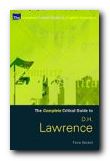
The Complete Critical Guide to D.H.LawrencePart one is a potted biography of Lawrence, placing his life and work in a relatively neutral socio-historical context. Thus we get his early influences and his complex relations with women; but we are also nursed through an introduction to the literary Modernist movement of which he formed an important part. Part two provides a synoptic view of Lawrence’s stories, novels, and poetry.

The works are described in outline, and then their main themes illuminated. This is followed by pointers towards the main critical writings on these texts and issues.

Part three deals with criticism of Lawrence’s work. This is presented in chronological order – from contemporaries such as T.S. Eliot and E.M. Forster to critics of the present day who tend to focus on Lawrence’s psychological insights. Feminist writers have been particularly critical of what they see as misogyny in Lawrence’s work. .

The book ends with a commendably thorough bibliography which covers biography, criticism in books and articles, plus pointers towards specialist Lawrence journals.

An excellent starting point for students who are new to Lawrence’s work – and a refresher course for those who would like to keep up to date with criticism.

© Roy Johnson 2003

Buy the book at Amazon UK

Buy the book at Amazon US


Fiona Becket, The Complete Critical Guide to D. H. Lawrence, London: Routledge, 2002, pp.186, ISBN 0415202523


More on D.H. Lawrence
More on the novella
More on literary studies
More on short stories


Filed Under: D.H.Lawrence Tagged With: Complete Critical Guide to D.H.Lawrence, D.H.Lawrence, English literature, Literary criticism, Literary studies, Study skills

  • « Previous Page
  • 1
  • …
  • 15
  • 16
  • 17
  • 18
  • 19
  • …
  • 103
  • Next Page »

Get in touch

info@mantex.co.uk

Content © Mantex 2016
  • About Us
  • Advertising
  • Clients
  • Contact
  • FAQ
  • Links
  • Services
  • Reviews
  • Sitemap
  • T & C’s
  • Testimonials
  • Privacy

Copyright © 2026 · Mantex

Copyright © 2026 · News Pro Theme on Genesis Framework · WordPress · Log in