Mantex

Tutorials, Study Guides & More

  • HOME
  • REVIEWS
  • TUTORIALS
  • HOW-TO
  • CONTACT
>> Home / Archives for 2009

Archives for 2009

Words Words Words

June 13, 2009 by Roy Johnson

how language arises, changes, is recorded, and used

David Crystal is a world-famous authority on language development, lexicography, linguistics, and anything else which concerns the words human beings use to speak and write. Words Words Words is the latest of his many books – an easy-to-read primer in which he attempts to convey his enthusiasm for all aspects of the subject. His intention is to explore the common fascination with all aspects of language and to answer some of the questions we ask about it. How many words are there in the English language for instance?
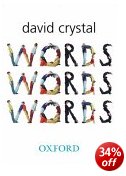
language development He shows why it’s so difficult to answer this question accurately, but settles for ‘over a million’. He also tries to dispel myths. Does the Sun newspaper really use a lexicon of only 500 words? That’s a much easier problem. The answer is no. A sample he took showed the total was nearer to 7,000. He describes how dictionaries are compiled; the origins and history of words; how words are borrowed (stolen in fact) from other languages and rapidly adopted as our own – despite complaints from conservatives; how new words are created by blending (heliport) lengthening (chewing gum) shortening (demo) or simply changing the use of an existing word (gay).

He traces the history of English spelling and explains why it is so complex and irregular. His discussion of accents and pronunciation covers the way the language is spoken, and his argument is that things are changing all the time. It’s no use writing to the Times complaining that the BBC now pronounces controversy with the stress in the middle of the word, because that’s the way it is going.

He’s very good at conveying his enthusiasm for language. He writes warmly and tolerantly on slang, jargon, and even has a good word to say for cliché, and he is more tolerant of children swearing than I am:

In Caernarfon, in North Wales, you hear people calling each other cunt all the time, quite unconcernedly. It just means ‘mate’.

That might be true in Caernarfon, but it would get you a thick ear if you tried it on in Stockport. He finishes with a series of practical suggestions for those people who would like to take the subject further. He recommends dictionaries (buy two); shows you how to find the meaning of names; how to estimate the size of your vocabulary; lists dialect societies to join; and even encourages you to contribute to dictionary building.

All the points he makes are illustrated with examples from both language history and contemporary usage. He throws in lots of amusing anecdotes, and the pages are decorated with side panels showing how to take each topic further. This approach really brings his subject to life and makes the study of language sound very attractive – and certainly within the grasp of the average reader.

© Roy Johnson 2007

Words   Buy the book at Amazon UK

Words   Buy the book at Amazon US


David Crystal, Words Words Words, Oxford: Oxford University Press, new edition 2007, pp.224, ISBN: 0199210772
Filed Under: Language use Tagged With: Cultural history, Dictionaries, English language, Language, Language change, Words

Working at Home

June 7, 2009 by Roy Johnson

combining your office with your home – elegantly

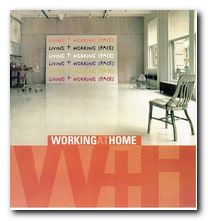
Working at Home is the second book on the interior design of home office space I have recently consulted as research for a move to new office premises. Like the first, Working Spaces, it offers a powerfully stimulating set of examples, generated by people with imagination, flair, and in some cases, courage. If the selection of examples are typical of interior design today, the cities pushing this trend are New York, London, Berlin, Barcelona, and Tokyo.

Working at Home And the fashion is for old industrial spaces preserved for their high ceilings, big room spaces, and vast windows. In each case they have been transformed by adding luxury furnishings, yet the original features have been preserved – so that there at first appears to be a tension between domestic and commercial purposes. The examples show interior design solutions for writers, artists, musicians, architects, graphic designers, a printers, business people, and a textile designer. And in most cases the usual clutter which blights commercial offices has been purged – to good effect.

It has to be said that most of the samples illustrated are examples of minimalist design – plain walls and floors, no decoration, wood in teak or beech, lots of opaque tinted green glass, polished chrome fittings, simple halogen downlighters, chairs with tubular chrome legs, and giant settees in black leather.

There are architectural plans reproduced in each case which illustrate how the overall space has been used and how the parts relate to the whole.

One of the recurring features I spotted here was floors covered in epoxy resin – which results in a hard, shiny surface which is practical and easily cleaned. Not everybody would wish to settle down for a cozy evening in such surroundings – but the results look great.

What conclusions can be drawn from the examples on display? In almost all cases there are few decorations in the rooms: no pictures or shelves or decorative brackets. The rooms, with their pale walls and clutter-free surfaces are left to speak for themselves.

You might imagine that people working in the creative industries would want to decorate every inch of their surroundings with objects which expressed their tastes and cultural values. But the opposite appears to be the case. And these might indeed be shining examples illustrating Mies van der Rohe’s mantra – Less is More.

© Roy Johnson 2005

Home office Buy the book at Amazon UK

Home office Buy the book at Amazon US


Aurora Cuito, Working at Home, New York: Loftpublications, 2000, pp.175, ISBN 0823058700


More on architecture
More on technology
More on design


Filed Under: Architecture, Lifestyle Tagged With: Architecture, Design, Home office, Home working, Interior design, Lifestyle, Working at Home

Working Spaces

July 17, 2009 by Roy Johnson

interior design glamour for the home office

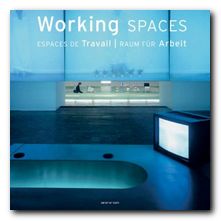
Lots of people work from home today. In the world of an email address, a broadband connection, and a laptop on your coffee table, nobody knows you’re a consultant dog on the Internet. But if it gets more serious and you want to establish a grown-up home office, you might want to create a professional workspace. Many people start from a small study or working in a corner of the spare room, but if your business grows, I guarantee you’ll feel more professional with a proper office. Working Spaces is packed with examples of how it can be done.

Working SpacesThis book is visual proof that you don’t need to be surrounded by empty cardboard boxes and metal filing cabinets. The examples illustrated include quite small family homes which have been adapted to the demands of creating a working space within a domestic environment. They also recognise that people working from confined spaces may need to put a single area to different uses at different times. A workaday meeting room might become a weekend lounge; or an office might need to be converted to accommodate guests from time to time.

What I admire about these Taschen publications is that although they have the outer glamour of coffee table luxury, they do in fact deal with real-life examples. There are plenty of cases here of one and two-roomed apartments which have been adapted to maximise space and preserve elegance, whilst at the same time functioning as proper offices with computers, storage for box files, and desks with telephones and wastebaskets.

The photography is superb throughout; the text is in English, French, and German; and every example is accompanied by architectural plans showing the floor layout. It’s also bursting with good space-saving ideas – foldaway beds; hinged partition screens; and lots of tables, chairs and bookshelves with wheels. Another common design feature if you’ve got the courage to try it is white floors. White everything in fact.

How can you make your own working space more pleasant, more aesthetically soothing? Well, ask yourself these questions. Do you really need ugly filing cabinets immediately to hand? Why not conceal them or put the contents somewhere else? Why not have bold decorative features in your workspace, to make it more individualised and humane? Large pictures and big pots of flowers will do the trick.

Most of the owners seem to be graphic and interior designers, and architects – which might be cheating somewhat. I know a number of professional writers who operate from spaces far less elegant (and that’s putting it mildly) . But this gives an idea of what is possible, and moreover attainable without a great deal of expense.

In fact I’ll summarise it all in one tip which is guaranteed to make your own working space more stylish and effective in one quick step: Get rid of all the clutter- now!

© Roy Johnson 2005

Working Spaces Buy the book at Amazon UK

Working Spaces Buy the book at Amazon US


Simone Schleifer, Working Spaces, London: Taschen, 2005, pp.384, ISBN: 3822841862


More on architecture
More on technology
More on design


Filed Under: Architecture, Lifestyle Tagged With: Architecture, Home office, Home working, Interior design, Lifestyle, Working Spaces

Write in Style

July 14, 2009 by Roy Johnson

lessons on good writing style – with lots of examples

Write in Style is a good-natured and humane guide to the main elements of producing fluent and accurate English. Richard Palmer’s approach is practical and refreshingly irreverent. He covers good and bad sentences; how to deal with punctuation; how to strike the right tone; and the rules of spelling and grammar – plus all the bewildering exceptions to them. His pace is leisurely and the style conversational. He’s particularly good at explaining the problems and irregularities of the English language. Every point is illustrated with vivid examples – gaffes from the popular press and good style from skilful authors.

Write in StyleHe covers all the fundamentals and issues which commonly give people problems – such as the differences between clauses, phrases, and complete sentences. There are also exercises (with answers) at the end of each chapter, so that you can check your understanding of each topic.

All the common marks of punctuation are fully explained, including the much-misunderstood apostrophe. There’s a whole chapter devoted to advice on writing academic essays – a very good discipline to acquire for anybody who wants to develop their writing skills. Then he does the same thing for reports, reviews, and the quite tricky precis and summary.

This will appeal to people who want to be taken by the hand and led through the complexities of English by a reassuring teacher. The strength of this book is that every point is thoroughly explained and illustrated by good and bad examples – many of them very amusing.

© Roy Johnson 2003

Buy the book at Amazon UK

Buy the book at Amazon US


Richard Palmer, Write in Style: a guide to good English, London: Routledge, 2nd edn, 2002, pp.255, ISBN: 0415252636


More on writing skills
More on language
More on grammar


Filed Under: Writing Skills Tagged With: Academic writing, Creative writing, Write in Style, Writing skills

Writer’s block – how to overcome it

August 25, 2009 by Roy Johnson

sample from HTML program and PDF book

1. Writer’s block is much more common than many people imagine. When faced with the task of producing a piece of writing, many people develop a mental block. It can be like a state of panic, emptiness, paralysis – or just a sheer inability to get started. You simply cannot make the pen move across the page or type the words at the keyboard. After agonizing for a while you might just squeeze out a few words, but then immediately delete them again – and you are back where you started.

2. Suddenly all sorts of other tasks seem very attractive – going shopping, or just taking the dog for a walk. You desperately want to write your essay or report, and you may even have a deadline to meet. But the last thing you can bring yourself to do is start writing. And the longer you worry about it, the more intractable the problem seems to become.

3. If you sometimes feel like this, here is the first piece of good news. It is a very common problem. Even experienced writers sometimes suffer from it. Do not think that you are the only person in the world who has ever encountered such a difficulty. What you need to know is how to get out of the blocked condition.

4. Most people read as part of their everyday lives, even if it is only glancing through newspapers and the occasional magazine. In doing so they keep their reading skills sharpened. Some of them may even develop it further by an active habit of reading. However, there are a lot of people who have hardly any need to write at all, and this skill is allowed to go rusty or even wither away. They simply become out of practice.

5. There are also a series of other possible reasons – many of them psychological in origin. Others may be connected with simple factors such as lack of preparation, or the common but rather misguided assumption that it is possible to write successfully at the first attempt.

6. The notes which follow are a series of the most common statements made by people suffering from writer’s block. This should help you identify your own case if you have this problem. Then there follow explanations of one or two of the most probable causes for the condition – followed by tips on how to effect a cure.

7. Read through all the examples given. It will help you to understand that overcoming writer’s block often involves engagement with those other parts of the writing process which come before you put pen to paper.


1. ‘ I’m terrified at the very thought of writing’

Cause – Perhaps you are just not used to writing, or you are out of recent practice. Maybe you are over-anxious and possibly setting yourself standards which are far too high.

Cure – Limber up and get yourself used to the activity of writing by scribbling something on a scrap of paper or keying in a few words which nobody else will see. Write a letter to yourself, a description of the room you are in – anything just to practise getting words onto paper. Remember that your attempts can be discarded. They are a means to an end, not a product to be retained.

2. ‘I’m not sure what to say‘

Cause – Maybe you have not done enough preparation for the task in hand, and you don’t have any notes to work from and use as a basis for what you want to say. Perhaps you haven’t yet accumulated enough ideas, comments, or materials on the topic you are supposed to be discussing. Possibly you have not thought about the subject for long enough.

Cure – Sort out your ideas before you start writing. Make rough notes on the topics you wish to discuss. These can then be expanded when you are ready to begin. Brainstorm you topic; read about it; put all your preliminary ideas on rough paper, then sift out the best for a working plan. Alternatively, make a start with anything, then be prepared to change it later.

3. ‘My mind goes blank’

Cause – Maybe you have not done enough preparation on the topic in question and you are therefore short of ideas or arguments. Perhaps you do not have rough notes or a working plan to help you formulate a response. Maybe you are frightened of making a false start or saying the wrong thing.

Cure – Make notes for what you intend to do and sort out your ideas in outline first. Try starting yourself off on some scrap paper or a blank screen. You can practise your opening statement and then discard it once you are started. Put down anything that comes into your head. You can always cross it out or change it later.

4. ‘It’s just a problem of the first sentence’

Cause – These can be quite hard to write! There is quite a skill in striking the right note immediately. You may be thinking ‘How can I make an introduction to something which I have not yet written?’ Maybe you have not created a plan and do not therefore know what will follow any opening statement you make. Perhaps you are setting yourself standards which are much too high or unrealistic. Maybe you are fixated on the order of your statements – or just possibly using this as an excuse to put off the moment when you will have to start.

Cure – Leave a blank space at the beginning of what you are going to write. The first sentence can be written later after you have finished the rest. Make a start somewhere else and come back to it later. Alternatively, write any statement you wish, knowing that you will change it later.

5. ‘I’m not quite ready to start yet‘

Cause – This could be procrastination, or it’s possible that you have not quite finished digesting and sorting out your ideas on the topic in question.

Cure – If it is procrastination, then use the warming up procedure of writing something else of no importance just to get yourself into the mood. If it is not, then maybe you need to revise your notes, drum up a few more ideas, or make a working plan to give you a point from which to make a start.

6. ‘I’ve got too much information’

Cause – If you have several pages of notes, then maybe they need to be digested further. Maybe you have not selected the details which are most important, and eliminated anything which is not relevant.

Cure – Digest and edit your material so as to pare it down to what is most essential. Several pages of notes may need to be reduced to just one or two. Don’t try to include everything. Draw up a plan that includes only indispensable items. If your plan is too long, then condense it. Eliminate anything that is not absolutely necessary for the piece of work in hand.

7. ‘I’m just waiting for one small piece of information’

Cause – Maybe you feel that a crucial piece of background reading – a name, or just a date is holding you up. You may be waiting for a book to be returned to the library. But this is often another form of procrastination – making excuses so as not to face the task in hand.

Cure – Make a start without it anyway. You can always leave gaps in your work and add things later. Alternatively, make a calculated guess – which you can change if necessary at a later stage when you have acquired the missing information. Remember that your first draftwill be revised later anyway. Additional pieces of information can be added during the editing process.

8. ‘I’m frightened of producing rubbish’

Cause – Maybe you are being too hard on yourself and setting standards which are unnecessarily high. However, this can sometimes be an odd form of pride, with which some people protect themselves from what they see as the embarrassment of having to go through the process of learning.

Cure – Be prepared to accept a modest achievement at first. And remember that many people under-rate their potential ability. It is very unlikely that anybody else will be over-critical. If you are a student on a course, it is the tutor’s job to help you improve and become more confident.

9. ‘I’m stuck at the planning stage’

Cause – This may be a hidden fear of starting work on the first draft, or it may possibly be a form of perfectionism. It may be that you are making too much of the planning stages, or alternatively that you are stuck for ideas.

Cure – Make a start on the first draft anyway. You can create a first attempt which may even help you to clarify your ideas as you are writing it. This first draft may then be used to help you devise and finalise another plan – which can then be used as the basis for your second or final draft.

10. ‘I’m not sure in what order to put things’

Cause – Maybe there are a number of possibilities, and you are seeking the best order. Perhaps there is no ‘best’ or ‘right’ order. You are probably looking for some coherence or logical plan for your ideas.

Cure – Draw up a number of different possible plans. Lay them out together, compare them, then select the one which seems to offer the best structure. Be prepared to chop and change the order of your information until the most persuasive form of organisation emerges. Make sure that you do this before you start writing, so that you are not trying to solve too many problems at the same time once you begin.

11. ‘It’s bound to contain a mistake somewhere’

Cause – You may be so anxious to produce good work that your fear of making a mistake is producing the ‘block’. Alternatively, this may be a form of striving for the impossible, or setting yourself unreachably high goals so as to create an excuse for not starting.

Cure – Your first efforts should only be a draft, so you can check for mistakes at a later stage. Be prepared to make a start, then deal with any possible errors when you come to re-write the work later. Very few people can write without making mistakes – even professional authors – so there is no need to burden yourself with this block.


Some general guidelines

  • Don’t imagine that you should be able to write impeccably at your first attempt. Most successful writers make several drafts of their work. They edit what they write, correct mistakes, make additions and deletions, and generally re-write extensively. Writing fluently and clearly is a skilled business. Nobody can expect you to have advanced level ability if you are still at the learning stage.
     
  • Don’t just sit staring at the blank piece of paper or the edit screen: it will only make you feel worse. Do something else, then come back to the task. Best of all, write something else – something you know you can write. This will help you to feel more confident.
     
  • Do some different type of writing as a warm-up exercise. Write
    a note or a letter to one of your friends. Re-write some of your earlier work, or just write something for your own amusement. This may help to release you from the blocked condition.
     
  • Don’t try composing in your head if you get stuck. Put down even your scrappiest ideas, so that you can see what you are dealing with. It may help you to identify any problems which are holding you back. If in doubt, put it down anyway. You can always delete it or change it later.
     
  • Get used to the idea of planning and making notes for what you are going to write. Don’t try to work with all the information stored in your head. A sound working plan and good notes will take the strain off you – and will prompt you with ideas, which in turn will prevent any ‘blocks’ developing.
     
  • Be prepared to make two or three attempts at anything you write. The first may not be very good, but it can be corrected, altered, changed – or even thrown away. Nobody need see your first attempts, so you don’t need to worry how bad they are – provided you pass on to a second or a third draft.
     
  • If you feel intimidated or blocked at the edit screen but wish to remain there, one simple tip which you might find helpful is to turn down the brightness on your screen so that you are faced with a blank monitor. You then type anything you
    wish for a while without seeing the results (and trying not to worry what they might be). When you feel ready, turn the brightness back up again and treat the results as just a rough draft which you can either edit – or delete.

© Roy Johnson 2003

Buy Writing Essays — eBook in PDF format
Buy Writing Essays 3.0 — eBook in HTML format


More on writing essays
More on How-To
More on writing skills


Filed Under: Writing Essays Tagged With: Academic writing, Essays, Reports, Study skills, Term papers, Writer's block, Writing skills

Writer’s Market UK

July 20, 2009 by Roy Johnson

where and how to sell what you write

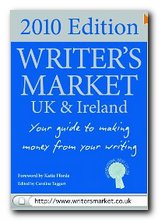
The best-selling guide to marketing your writing so far is The Writers’ and Artists’ Yearbook, with The Writer’s Handbook a close second. But there’s always room for competition in an open market – and Writer’s Market UK is competition writ large. It’s a huge, 1,000 page compendium of advice, resources, and detailed information on how writers can locate markets and get their work into print. The format for these books is now fairly standardised.

Writer's Market UK They have feature articles written by well-known authors giving advice on breaking into print. These are surrounded by listings of publishers, magazines, literary agents, and broadcast outlets. Then come specialized resources such as prizes and competitions, bursaries and fellowships, writers groups, and web sites.

The usefulness of this information relies on its being accurate, up-to-date, and annotated to explain the nuances and differences between one source and the next. In other words, the compilers need to know what they’re talking about. This book scores well on all counts, and the editor Caroline Taggart has done a good job.

For instance, the feature articles are precisely the sort of advice that aspirant writers are most likely to want and need. How to tackle the various genres of fiction writing: the short story, children’s writing, crime, and the novel. What agents and publishers are looking for – and how to approach them. Writing for radio, the Web, newspapers and magazines are all covered well,

There are essays on how books are designed, financed, and marketed, plus why you should know about contracts and legal issues. There are articles on the odd but very profitable field of ghost writing, and when you have made lots of money how to deal with agents, and how to promote your work once it’s published.

There are huge listings of bursaries, prizes, competitions, writers’ foundations, and all sorts of support to help the struggling want-to-be. And testing it out for being up to date, I found all sorts of on line resources for would-be writers: magazines, forums, self-help groups, web sites full of resources, writing software, plus competitions and prizes.

Given the differences in page and font sizes, it’s difficult to do a direct quantitative comparison with its two main rivals, but having looked through all three recently, I’d say that this gives the other two a very good run for their money.

© Roy Johnson 2003

Buy the book at Amazon UK

Buy the book at Amazon US


Caroline Taggart (ed), Writer’s Market UK, London: David & Charles, issued annually, pp.976, ISBN: 0715332856


More on creative writing
More on writing skills
More on publishing


Filed Under: Creative Writing, Journalism, Publishing Tagged With: Creative writing, Journalism, Publishing, Reference books, Writer's Market UK, Writing skills

Writers’ and Artists’ Yearbook

May 25, 2009 by Roy Johnson

best-selling guide to publishers, agents, and outlets

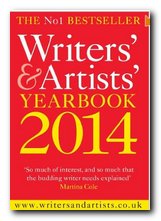
If you’ve just finished producing your masterpiece, this writer’s yearbook will help you to bring it to the marketplace. It’s a well-established reference guide for writers, journalists, photographers, and other people in the creative arts. The heart of the book is its amazingly comprehensive listings. It offers full contact details of publishers, agents, and institutions who deal with writers and creative arts people. The lists cover the UK and US, as well as other English-speaking countries.

Writers & Artists YearbookIn recent years, short essays have been added to each section offering advice to would-be writers and media workers. Pay attention to these: they’re written by professionals with experience and a proven track record. The information they offer will repay the price of the book ten times over. They cover fiction and poetry; drama scripts for TV, radio, theatre, and film; graphic illustration and design; plus photography and music. The other features which make it useful are general information on publishing methods, copyright and libel, income tax and allowances, and a particularly useful list of annual competitions and their prizes.

Bonus items seem to be added with each edition – such as a list of the highest earning books of the previous year, specialist literary agents, how to prepare and submit a manuscript, and even (if the worst comes to the worst) how to claim social security benefits. The latest edition also includes sections on e-publishing, ghostwriting, distribution, adaptation, and digital imaging.

Additions to the latest edition include: Self-publishing; How to publicise your book; How to get an agent’s attention: Getting cartoons published; Blogging; Crime writing; and Can you recommend an agent?

Like many other reference books, it represents very good value for money in terms of bulk information – but more importantly it’s information which is reliable, up-to-date, and difficult to locate elsewhere.

If you have any serious intention of entering the commercial market as a writer or someone working in one of the other creative arts – then this is a book which you will need sooner or later. It’s no wonder that it sits near the top of the Amazon ratings all the year round.

© Roy Johnson 2012

Writers' and Artists' Yearbook   Buy the book at Amazon UK

Writers' and Artists' Yearbook   Buy the book at Amazon US


Writers’ & Artists’ Yearbook, London: A & C Black (issued annually) pp.816, ISBN: 1408192195


More on creative writing
More on writing skills
More on publishing


Filed Under: Creative Writing, Journalism, Publishing, Writing Skills Tagged With: Creative writing, Publishing, Writer's agents, Writers' and Artists' Yearbook, Writing skills

Writers’ Questions and Answers

July 24, 2009 by Roy Johnson

practical self-help manual and resources guide for writers

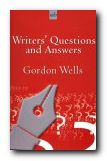
Writers who wish to publish their work are often baffled by some of the mysteries of the publishing process itself. How can you get the attention of a publisher? Do you need an agent? How much can you expect to get paid? Should you submit an outline – or the complete work? Gordon Wells’ book Writers’ Questions and Answers provides responses to these queries, and raises lots more questions lots more which are frequently asked by people trying to get a foothold in the world of published writing.

Writers' Questions and AnswersThe press always seems to have stories of first-time authors who have been paid a five or six-figure advance for their first novel. But those who have tried to do the same thing know that it’s a far more common experience to be dealing with rejection slips. How do you break into this seemingly charmed world?

Well, these guidance notes certainly tell you how to learn from rejection – and what to do about it. The advice is all practical, realistic, and based on the clear-eyed realisation that if you wish to succeed in this extremely competitive world – you need to know how it works.

Wells tackles all the most frequently asked questions – Who is the best person to approach with your masterpiece? Does vanity publishing work? What makes a best-seller? What if somebody poaches your ideas? Which publishers pay best?

If you want to move beyond the comforts of your local writers’ circle into the world of commercial publishing, you should read what he has to say. Keep dreams of success in mind by all means, but take the trouble to learn how professional writers actually work.

© Roy Johnson 2002

Writers' Questions and Answers   Buy the book at Amazon UK

Writers' Questions and Answers   Buy the book at Amazon US


Gordon Wells, Writers’ Questions and Answers, London: Allison & Busby, 2001, pp.143, ISBN: 0749005319


More on writing skills
More on language
More on literary studies
More on creative writing


Filed Under: Creative Writing Tagged With: Creative writing, Journalism, Writing skills

Writing – how to understand it

September 14, 2009 by Roy Johnson

sample page – English Language software

Writing – definition

redbtn Writing is the use of visual symbols which act as a code for communication between individuals or groups.
redbtn Writing and speech are the two main language varieties.


Examples

redbtn Writing is a material form of communication which can comprise:

handwriting on paper
carving on wood, stone, or metal
electronic writing on screen or disk
printed lettering on public signs


Use

writing Writing and speech should usefully be regarded as two entirely separate systems.

redbtn Writing has to be acquired as a skill in the same way as driving, sewing and cooking are learnt.

redbtn Speech is acquired by means of innate programming, in the same way as we grow taller or acquire a second set of teeth.

redbtn The code of written language consists of letter-forms [the alphabet] used to form a visual approximation of spoken words.

redbtn These words are formed in accordance with the conventions of spelling, then combined using the rules of grammar and syntax to form meaningful statements.

redbtn Writing is a code or a set of symbols which serve to produce material forms of communication.

redbtn It is interesting to consider the differences between speech and writing:

redbtn Writing can be preserved indefinitely, whereas speech is transient unless it is deliberately recorded.

redbtn Writing is usually a solitary act of communication, whereas speech is a social act.

redbtn Writing expects a delay in reply, whereas speech usually solicits an immediate response.

redbtn Writing does not contain non-verbal gesture, whereas speech employs non-verbal gesture constantly.

redbtn Writing is often drafted, so that the audience receives an edited version. With speech, the audience hears the first attempt with all its faulty starts, hesitations, contradictions and corrections.

redbtn Writing is pre-planned, whereas speech is usually spontaneous.

redbtn Writing and speech have discrete functions in society. Speech is more appropriate for some purposes, whereas writing is more appropriate for others.

  • a lengthy shopping list is better written down
  • a job interview is better conducted verbally, but accompanied by written notes
  • a wedding invitation is usually written because it contains lots of factual details

redbtn No language can have an exact correlationship in terms of its speech and its writing. English is no exception to this principle.

redbtn It is important to appreciate [and worth repeating] that writing is an arbitrary code and as such is learnt separately from speech.

redbtn A competent literate person usually has little difficulty in reading, comprehension, or pronunciation.

redbtn One important reason for the disparity between pronunciation and spelling is the fact that written language stays relatively fixed, whereas the spoken language is always developing rapidly.

redbtn The spoken language is alive, and therefore grows and develops from moment to moment. Pronunciation styles alter and shift, as does the lexicon of the language. Terms and idioms are imported from various societies whose pronunciation differs greatly from our own.

Self-assessment quiz follows >>>

© Roy Johnson 2004


English Language 3.0 program
Books on language
More on grammar


Filed Under: English Language Tagged With: English language, Language, Writing, Writing Theory

Writing a CV that Works

July 8, 2009 by Roy Johnson

develop your key self-promotion and marketing tool

This is a cheap and cheerful guide to producing an effective CV (curriculum vitae). Writing a CV that Works is suitable for complete beginners who may not have written one before, or for intermediate users who might want to develop their existing CV beyond merely a list of their previous jobs. It starts off with the reasons why you need a CV and why you should view it as a marketing tool rather than just a life synopsis. This is followed by advice on how to identify your own skills and achievements. Paul McGee introduces four case studies of typical adults wishing to seek, change, or improve a job. Then comes the meat of the matter – how to write the most persuasive account of yourself without fibbing or distortion.

Writing a CV that WorksThe secret is to spell out all your skills and your achievements in a positive manner. He offers templates which you can use, as well as some good tips for presenting any qualifications or training in the best possible light. Moreover, he doesn’t shy away from the problem of what to do if you haven’t got any qualifications.

He discusses the three main types of CV – chronological, functional, and targetted – and how to organise the information it contains. If you’ve never created a CV before, you’ll be glad to see that he analyses several practical examples, showing their strengths and weaknesses. He also offers suggestions for how they could be improved.

He includes valuable advice on how to analyse job advertisements, and how to compose the covering letter which will accompany your CV. Then comes the part most people find very difficult indeed – Cold Calling, or applying for jobs which haven’t been advertised.

Then finally the picture is rounded off with advice about preparing for and succeeding in an interview. You’ll still need to do a lot of preparation before you get to this stage – but this short guide will help you through each part of the process.

© Roy Johnson 2000

Buy the book at Amazon UK

Buy the book at Amazon US


Paul McGee, Writing a CV that Works, Plymouth: How to Books, 1997, pp.128, ISBN 1857033655


More on writing skills
More on language
More on grammar


Filed Under: Writing Skills Tagged With: Business, Communication, Curriculum vitae, CV, Writing a CV that Works, Writing skills

  • « Previous Page
  • 1
  • …
  • 98
  • 99
  • 100
  • 101
  • 102
  • 103
  • Next Page »

Get in touch

info@mantex.co.uk

Content © Mantex 2016
  • About Us
  • Advertising
  • Clients
  • Contact
  • FAQ
  • Links
  • Services
  • Reviews
  • Sitemap
  • T & C’s
  • Testimonials
  • Privacy

Copyright © 2026 · Mantex

Copyright © 2026 · News Pro Theme on Genesis Framework · WordPress · Log in