Mantex

Tutorials, Study Guides & More

  • HOME
  • REVIEWS
  • TUTORIALS
  • HOW-TO
  • CONTACT
>> Home / Archives for 2009

Archives for 2009

Lexicography: An Introduction

June 29, 2009 by Roy Johnson

how dictionaries are compiled and written

This book is an accessible introduction to lexicography – the study of dictionaries and how they are compiled. Howard Jackson provides a detailed overview of the history, types and content of everybody’s essential reference book. He starts with a very readable introduction to the grammar, structure, and history of the English language, then traces the development of dictionaries. This goes from their origins as lists of ‘hard’ (that is, foreign) words in the early Renaissance, via Dr Johnson’s famous attempt to ‘fix the meaning of words’ which when it appeared in 1754 carried a preface admitting that such an attempt was pointless.
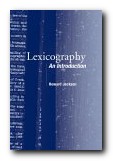
Lexicography: An IntroductionNext comes the monumental Oxford English Dictionary, begun by John Murray in 1884, which took forty-four years to complete. He gives a detailed account of the editors’ attempts to be as systematic as possible, constructing their evidence from the work of volunteers. He covers the American tradition of democratic lexicography pioneered by Noah Webster in what emerged at the US popular option, Webster’s Third New International Dictionary of the English Language. There’s a careful explanation of the differences between shorter and concise dictionaries, and an account of what’s possible in the increasingly popular electronic dictionaries. These now commonly offer search facilities, sample pronunciations, and hypertext links between entries.

He discusses issues of range – what to include or exclude – how entries in a dictionaries are to be displayed, and how much detail is to be provided under each entry. This becomes most interesting when he tackles problems of including new terms, slang expressions, obsolete and taboo terms, and how much etymological history to provide.

The other highpoint is a consideration of the different ways in which words can be defined, when they have multiple meanings (horse, table, back) and often take their meaning from the context in which they are used.

Who will be interested in all this? Students and teachers of language, lexicographers of course, and anyone with an interest in the most popular source of reference in most cultures – the book (or CD-ROM) to which we turn when we need information on the spelling or meaning of a word.

© Roy Johnson 2002

Lexicography: An Introduction   Buy the book at Amazon UK

Lexicography: An Introduction   Buy the book at Amazon US


Howard Jackson, Lexicography: An Introduction, London: Routledge, 2002, pp.190, ISBN: 0415231736


More on language
More on literary studies
More on writing skills
More on creative writing
More on grammar
Filed Under: Dictionaries Tagged With: Bibliography, Dictionaries, Language, Lexicography: An Introduction

Line references in essays

August 24, 2009 by Roy Johnson

sample from HTML program and PDF book

1. Some texts – such as long poems, plays, works of philosophy, or the Bible – require line references. You should identify the source of your first quotation with a numbered endnote. Then add a line number, thus:

NOTES
1. Tony Harrison, Selected Poems, Penguin, 1984, p.181, l.26.

2. If all your subsequent references will be to this text, you may
add a brief note:

All subsequent line and page references are to this edition.

Following this first full reference, you may afterwards give only a line number after the quotation in your text.

3. There is no need to give line references when quoting from a short text (say, up to twenty lines). Just give the source as an endnote to your first quotation.

4. When giving references to quotations from texts such as plays, the convention is to give the information in the sequence as follows:

Act – Scene – Line number

Act II,   Sc iv,   l.129

5. Notice that the act number is usually given as a Roman numeral in capitals (II), the scene number in lower case (iv), and the line reference in Arabic numerals (129). This type of notation is normally abbreviated to II.iv.129

6. Remember that you should produce your own argument first, and then add supporting quotations afterwards. Unless the essay question asks you to do so, you should not normally quote first and then offer a commentary on the extract.

© Roy Johnson 2003

Buy Writing Essays — eBook in PDF format
Buy Writing Essays 3.0 — eBook in HTML format


More on writing essays
More on How-To
More on writing skills


Filed Under: Writing Essays Tagged With: Academic writing, Essays, Line references, Reports, Study skills, Term papers, Writing skills

Literacy and the Politics of Writing

June 19, 2009 by Roy Johnson

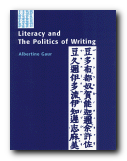
This book examines some of the fundamental questions about writing. What is it? What is it for? How is it related to literacy? It’s also about the philosophy of information storage and transmission. A great deal of what Albertine Gaur has to say centres on the historic development of different writing systems. She shows how they emerged from numbering systems and pictographic records. She covers numeric as well as pictorial and non-linguistic forms of writing in a historical and cultural range which is simply breathtaking.

Literacy and Politics of WritingIt’s a scholarly book, pitched at a fairly high intellectual level [well, I found it so] in which terms are left unexplained and you have to keep up with a compact and rapid manner of delivery. She admits that her particular approach of posing questions about the nature of writing raises problems rather than supplying answers, but in identifying gaps in our knowledge she challenges some widespread assumptions.

For instance, she raises a serious criticism of the UK’s current National Literacy Strategy based on what she sees as a fundamental misunderstanding about the nature of the phoneme – the supposed smallest possible unit in the sound system of any language.

Equally tenuous is the connection between language and writing. Speculation, for example, about how well (or how badly) the alphabet represents the English language is more or less spurious for the simple reason that the alphabet was never meant to write English in the first place. The present alphabet goes back some three thousand years via Etruscan and Roman forms of writing to a Greek alphabet which was, in turn, simply an adaptation of the Phoenician consonant script, to a time when the English language did not even exist.

The part of the book I found most interesting was the account of how contemporary writing systems (the Roman alphabet) developed historically from a common Proto-Semitic script. This leads into a consideration of why certain writing systems succeed (the rather difficult Chinese for instance) whereas others don’t. It usually comes down to politics.

Some people used to believe in a monogenesis theory of writing, rather like the monotheistic religious belief – one source, one author, one instant moment of creation. She comprehensively debunks this myth, but then very broadmindedly goes on to discuss examples of people who have actually invented scripts to fit spoken languages.

There are fascinating reflections which arise from asking such apparently simple but profound questions as ‘What is a book?’ The answers to this question, which involve the long transition from the scroll to the collection of separate pages called a codex reveals the origin of much of which we now take for granted: titles, tables of contents, pages, and page numbers.

It’s beautifully illustrated with pictures of rare texts, unusual scripts and printings, and examples of writing systems from all over the globe, Albertine Gaur was formerly head of Oriental Manuscripts and Printed Books at the British Library. It’s quite clear that she knows these objects intimately, and this book is her attempt to share her knowledge and enthusiasm for them. Anyone who is interested in the philosophy of writing or the book as a physical object will profit from the encounter.

© Roy Johnson 2000

Buy the book at Amazon UK

Buy the book at Amazon US


Albertine Gaur, Literacy and The Politics of Writing, Bristol: Intellect, 2000, pp.188, ISBN 1904705065


More on theory
More on typography
More on digital media


Filed Under: Theory Tagged With: Cultural history, Language, Literacy, Writing

Literacy in the New Media Age

July 2, 2009 by Roy Johnson

theoretical study of writing in the digital age

This is an investigation of the effect of new media on what Gunter Kress calls ‘alphabetic writing’. He is arguing that multimedia and the screen are starting to challenge the page as the natural medium of writing – and that this in turn is affecting the way we write. It’s certainly true that writing for the screen has to be more immediate and heavily chunked than writing for the page, and Kress also argues that the screen is making graphic images more important as a medium of communication.

Literacy in the New Media Age He points out quite rightly that speech and writing are two completely separate systems (which is why many people have problems with writing). The alphabet is actually a loose transcription system for translating between them. His basic argument is that all communication (including linguistics) should be seen as a subset of semiotics. There’s actually not very much about new media discussed – merely an assumption that iconic or visual communication is challenging the dominance of writing.

However, he does make the interesting observation that computers put users in charge of page layout in a way which gives new emphasis to design, as well as providing interactivity between writer and reader.

Having argued that all texts are a result of ideological relationships between author and reader, he even attempts a quasi-political analysis of punctuation. This is not really persuasive, and founders in his attempts to explain or excuse his examples of what is no more than poor writing.

But he does end on an interesting topic of reading paths. That is, the manner in which readers have to construct their own navigational routes when confronting what he calls ‘multimodal’ texts – ones with pictures and words, such as magazines and web pages, for instance.

Although he claims to have left behind an academic style so as to communicate with a wider audience, he writes in a dense and rather abstract manner. The results will be of interest to linguists, educational theorists, and semiologists – though those approaching it with an interest in new media might be a little disappointed.

© Roy Johnson 2003

Literacy in the New Media Age   Buy the book at Amazon UK

Literacy in the New Media Age   Buy the book at Amazon US


Gunther Kress, Literacy in the New Media Age, London: Routledge, 2003, pp.186, ISBN: 041525356X


More on literary studies
More on digital media
More on technology
More on theory


Filed Under: Language use, Media, Theory Tagged With: Language, Literacy, Literacy in the New Media Age, Media, New media, Technology, Theory, Writing

Literary Theory: a short introduction

August 4, 2009 by Roy Johnson

brief guide to critical approaches to literary studies

This introductory guide to literary theory comes from a new series by Oxford University Press. They are written by specialists, aimed at the common reader, and offer an introduction to the main cultural and philosophical ideas which have shaped the western world. Jonathan Culler avoids the common approach of explaining the various schools of literary criticism by choosing instead a set of topics and showing what various literary theories have to say about them.

Literary Theory: a short introduction There’s a certain amount of sleight of hand. In explaining ‘theory’ in its modern sense he doesn’t acknowledge the profound difference between this loose use of the term and a scientific theory, which can be proven or disproven. Nor does he acknowledge the sort of special pleading and self justification which is passed off as ‘philosophy’ in the work of someone such as Michel Foucault. But he does have a persuasive way of explaining some of these difficult ideas in terms which the common reader can understand.

The topics he chooses turn out to be very fundamental questions such as ‘What is literature?’ – that is, are there any essential differences between a literary and a non-literary text. These are questions to which common sense supplies rapid answers, but when Theory is applied, unforeseen complexities arise.

In fact when he looks more closely at the nature, purpose, and the conventions of literature, he claims that one of the purposes of Theory is to expose the shortcomings of common sense.

There’s an interesting chapter on language and linguistic approaches to literary theory where he discusses Saussure and Chomsky, the differences between poetics and hermeneutics, and reader-response criticism. Any one of these approaches is now the basis for a whole school of literary theory.

When he gets to genre criticism there’s a useful explanation of lyric, epic, and drama – though it’s not quite clear why he separates narrative (stories and novels) into a chapter of its own.

However, when it does come, his explanation of narrative theory is excellent. His account of plot, point of view, focalisation, and narrative reliability will help anyone who wants to get to grips with the analysis of fiction.

He ends with brief notes explaining the various school of literary theory which have emerged in the recent past – from New Criticism, through Structuralism, Marxism, and Deconstruction, to the latest fashions of Post-Colonialism and Queer Theory.

In one sense the book’s title is slightly misleading. It should be Modern Literary Theory. But this is a very interesting and attractive format – a small, pocket-sized book, stylishly designed, with illustrations, endnotes, suggestions for further reading, and an index.

© Roy Johnson 2005

Literary Theory   Buy the book at Amazon UK

Literary Theory   Buy the book at Amazon US


Jonathan Culler, Literary Theory: A Very Short Introduction, Oxford: Oxford University Press, 2005, pp.149, ISBN: 019285383X


More on literature
More on the novella
More on literary studies
More on short stories


Filed Under: 19C Literature, 20C Literature, Literary Studies, Theory Tagged With: Literary studies, Literary theory, Theory

Literary Theory: the basics

May 24, 2009 by Roy Johnson

schools of literary criticism 1900-2000 explained

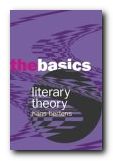
Despite its title, this is a survey of modern literary criticism. Hans Bertens starts from a critique of Matthew Arnold’s liberal humanist and essentially romantic appeal that literature exists on a higher spiritual plane that we are invited to visit. He then goes on to show the links with T.S.Eliot, Ivor Richards, F.R.Leavis, and the New Criticism of the United States in the early decades of the last century. Then its on to the Russian formalists and Prague structuralism – Shklovsky, Propp, and Jakobson .

Literary Theory: the basicsThese progress by a slightly dog-legged chronology to the French structuralists of the 1960s and 1970s. Roland Barthes picks up Saussure and runs with the ball of structuralism. Genette develops the same lines in his theories of narratology. When it came to Marxism I had a minor quibble with his account of ideology and I think he lets Georgy Lukacs off rather lightly – but on the whole it’s an even-handed treatment.

I enjoyed his explanations of feminism, race, and gender theory, and I couldn’t help feeling that his own interests were transmitted more infectiously as his story approached the present. What a rich choice of approaches any young student of literature has today.

When he arrives at the ‘poststructuralist revolution’ you have to be prepared for an excursion into the realms of philosophy. Literature seems a long way off, but you’ll get an account of Derrida which makes him seem almost accessible. The same is true of his chapter on Lacan

We know now that the deconstructionists took literary theory to a point where it appeared that nothing certain could be said about a text. So what happened afterwards? Well – it’s interesting that the fashions in literary theory which followed tend to focus upon on a single topic – race, class, sexuality, colonialism, or gender, and erect a series of abstact generalisations upon it.

Bertens gives very generous considerations to these late twentieth-century developments. The strength of this approach is that the theories are explained very well. The weakness is that we don’t get to see them applied. Literary texts themselves seem a long way off, and only get the occasional mention. It’s really difficult to see what ‘queer theory’ can tell us about Bleak House or The Odyssey. Go on – prove me wrong.

Nevertheless, I think this is a book worth recommending to people embarking on literary studies at undergraduate level, if for no other reason than it gives a reasonable account of what these theories claim without shirking from their weaknesses. And as he points out, although the latest of them tend to claim the intellectual high ground, their predecessors are still in general circulation.

Each separate chapter is followed by an annotated bibliography of further reading. I mention the annotation because this makes it far more useful to the reader than the long bare listings you usually find in books of this kind.

© Roy Johnson 2007

Literary Theory   Buy the book at Amazon UK

Literary Theory   Buy the book at Amazon US


Hans Bertens, Literary Theory: The Basics, Abingdon: Routledge, 2nd edition 2007, pp.264, ISBN: 0415396719


More on literature
More on the novella
More on literary studies
More on short stories


Filed Under: 19C Literature, 20C Literature, Literary Studies, Literature, Theory Tagged With: Critical theory, Literary criticism, Literary studies, Literary theory, Theory

Literature and the Internet

November 1, 2009 by Roy Johnson

resources, techniques, and issues for literary studies

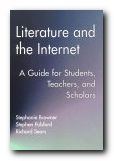
In the field of literary studies, people have been creating digitized texts and making concordances for quite some time now. But until the advent of the Web it was difficult to get an overview of criticism and scholarship which was easily available. In fact it’s still not easy. As the authors of this excellent guide Literature and the Internet point out, it remains common for the latest work to be made available only in the form of conventionally printed books and the dinosaur publishing methods of scholarly journals.

Literature and the Internet But at last the Internet is now making ever more material easily available to us, and it is the purpose of this guide to advise students, teachers, and scholars how to make the most of the opportunity to retrieve it. They start with a general survey of the pros and cons of the Internet for literary studies, quite rightly pointing out that despite all its obvious advantages, there are still many shortcomings:

It has large and obvious gaps, it cannot cover the literary ground as even a moderately well-stocked library can, and it cannot equal the contemporary appeal of a good bookstore.

In fact the differences between books in libraries and texts on the Net are intelligently explored, before we get down to some practical advice on usability. This centres logically enough on using search engines, and they offer an explanation of the different techniques which can be deployed, as well as alerting users to the differences in kind amongst the sources which might be located.

The centre of the book is an extensive list of resources. These are arranged as web site address – in categories ranging from libraries, journals, literary periods, literary criticism, discussion groups and email distribution lists, to individual authors – from Achebe to Zola – and their home pages.

Mercifully, these lists are annotated with useful evaluative comments, making clear distinctions between sites which are commercial, fan pages, and the results of scholarly research. It’s interesting to note how many of the award-winning sites are the work of dedicated individuals (such as Jack Lynch at Pennsylvania and Mitsuharu Matsuoka in Japan) and departments in little-known colleges in the back of nowhere. Major institutions are noticeably thin on the ground.

I felt reassured that the authors had done their homework, had visited the sites they discuss – and were not frightened of levelling criticism at some quite well known names in the literary establishment. They point out the need for more qualitative evaluation of online resources and web site reviews.

This is followed by advice on the evaluation of sites, including a series of basic questions we can ask on arrival. Is the information accurate? Is it complete? And is there any acknowledgement of the sources being used?

There is also a section for teachers, discussing how computers and the Internet can be used in literary studies, with suggestions (for instance) for hypertext assignments and web essays – though I hope their term Webliographies doesn’t catch on.

They consider the nature of electronic texts – from plain ASCII, through the Standard Generalized Markup Language (SGML) and HyperText Markup Language (HTML), and even as far as the Text Encoding Initiative (TEI) and Extensible Markup Language (XML).

These are only touched on lightly, with their differences briefly explained, but this is a valuable topic to raise in the consciousness of students and teachers, especially in the light of controversies surrounding the form in which commercial electronic books are being issued.

The guide ends with considerations of the theoretical and political connections between literary studies in an era of digitized text – exploring some of the notions raised in recent years by Jay Bolter, George Landow, and J. Hillis Miller.

They even have some interesting comments to make on the likely impact of Information Technology on academic careers – including the vexed issue of academic publishing, which must surely be due for major convulsions in the next few years.

Many people have argued that it’s now rather pointless issuing printed resource guides which will be quickly outdated. But there is a reason for such publications. The fact is that it’s often quicker to locate information in a book, rather than searching through files or favourites using a browser.

Certainly, I’m very pleased that this book is on my desk, and I look forward to exploring its suggestions and passing on any gems to my own students – who are currently learning how to write, link, zip, and upload their first web essays.

Literature and the Internet   Buy the book at Amazon UK

Literature and the Internet   Buy the book at Amazon US

© Roy Johnson 2000


Stephanie Browner, Stephen Pulsford, and Richard Sears, Literature and the Internet: A Guide for Students, Teachers, and Scholars, London/New York: Garland, 2000, pp.191, ISBN: 0815334532


More on literature
More on the novella
More on literary studies
More on short stories


Filed Under: 19C Literature, 20C Literature, Literary Studies Tagged With: Education, Literary studies, Literature and the Internet, Technology, Theory

Live/Work

June 15, 2009 by Roy Johnson

working at home: living at work

Home office living isn’t new. It used to be called ‘living above the shop’. That was a vertical separation of living and working space. But many people are now doing the same thing horizontally, with a home office, split-use rooms, or garden shed workshops. Deborah Dietsch has assembled a collection projects where living and working environments have been merged, and the results prove that with imagination you can transform a house, a flat, or even an industrial site so that it becomes a very comfortable and attractive hybrid.

Home Office livingHer examples include the homes of architects, a painter, a photographer, a fashion designer, a dance tutor, a restaurateur, a documentary film maker, a physical trainer, even a priest marrying people out of his own home-church.

The examples are all very well photographed – but don’t just look at the pictures in this book. There are lots of excellent suggestions and topics of design theory in the text. For instance, she argues that you should plan with the future and multi-purpose use in mind. Your work annexe can easily double up as space for occasional guests, and if things go pear-shaped commercially, you might want to let off a room or even an entire floor to compensate for lost income.

One feature I found interesting is that in each case there’s a summary of what lessons can be learned from the project. These could be summarised as follows:

  1. Don’t be afraid of colour
  2. Find beauty in industrial details
  3. Rentals pay the mortgage
  4. Re-use space for different purposes
  5. Maintain a professional atmosphere
  6. Keep living and workspaces separate

This corresponds with my own personal philosophy from hours and hours of studying design magazines and architectural source materials – and it’s this. No matter how outlandish or peculiar a design scheme, no matter how unlike your own taste it might be – there’s always at least one thing you can take away as a positive or a good idea from somebody else’s work.

She even mentions two ideas in her introduction that I’ve done myself recently. You should create some sort of separate entrance so that clients or business visitors don’t have to traipse through your home living space; and it’s useful to have a separate table or conference arrangement so that you can arrange proper business meetings.

I can also confirm from personal experience that it’s a good idea to be near services – the post office, supermarket, restaurants, cafe bars – so that you don’t feel isolated if you are setting up as a sole trader.

Remember too that all these ideas are very green. If you live and work in the same space, you are not driving to work. Your carbon footprint is lower, and you can offset some of your expenditure against tax.

Of course, the success of such projects depends on where you currently live and the size of your budget for setting up a work environment. The budget could actually be zero – but this book will still give you plenty of ideas on how to arrange the space you’ve got to bring your life and work into some form of unified design.

© Roy Johnson 2008

Working at Home Buy the book at Amazon UK

Working at home Buy the book at Amazon US


Deborah K. Dietsch, Live/Work – Working at Home, Living at Work, New York: Abrams, 2008, p.319, ISBN: 0810994003


More on architecture
More on technology
More on design


Filed Under: Architecture, Lifestyle Tagged With: Architecture, Home office, Homeworking, Interior design, Lifestyle, Live/Work

Living in Provence

July 19, 2009 by Roy Johnson

beautiful interiors and gardens from le midi

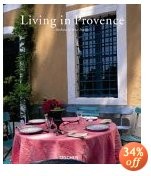
For anybody who knows Provence, the very names of the locations in this book seem like a musical evocation of the place: Roussillon, Eygaliers, Avignon, St Remy, Aix-en-Provence. And if you’ve been there you will know that Provence is a region drenched in warm colours, beautiful vegetation, soft contours, and rich textures – all of which are reflected in the traditional styles of the region. This photographic study of house interiors and gardens beautifully captures the magic of the place. I used to take my summer holidays there every year, and flicking through these pages made me yearn to go back to an almost heartbreaking extent.

Living in ProvenceThere are all sorts of locations featured – everything from chateaux, the Grand Hotel Nord-Pinus at Arles, Paul Cézanne’s atelier in Aix, via elegant town houses, to restored villas which have been transformed into interior spaces of great beauty. Yet for all the rich glamour, there is nothing snobby about the collection. It includes old farmhouses, a hotel in Noves whose walls haven’t been decorated since the seventeenth century, and a troglodytic cave-like lean-to built into the side of a hill.

Having said that, most of these gaffs are of course more expensive than you and I could ever afford – but I have trained myself to curb envy and just pick up design tips from people who can afford to do anything. The rules which emerge here are to use restrained background colours, plus natural textures in stone, wood, and fabrics. The way to create an elegant and calming atmosphere is to remove all the clutter from overcrowded rooms, and let the eye be soothed by just one or two well-chosen pieces.

Every page is rich in images of sun-soaked patios and gardens, swimming pools, marbelled and tiled floors, period furniture, wood panelling, beautiful engravings, and rustic pieces of earthenware.

The colour photography is good, the print production values are excellent, and the commentary is is produced in English, French, and German. As publishers, Taschen don’t provide a lot of text or technical details, but in terms of value-for-money and visual interest you could not go wrong with a book like this.

© Roy Johnson 2005

Living in Provence Buy the book at Amazon UK

Living in Provence Buy the book at Amazon US


Barbara and Rene Stoeltie, Living in Provence, London: Taschen, 2005, pp.199, ISBN: 3822825271


More on architecture
More on technology
More on design


Filed Under: Architecture, Lifestyle Tagged With: Architecture, Interior design, Lifestyle, Living in Provence, Provence

Los Logos

July 2, 2009 by Roy Johnson

international  logos, trademarks, and typography

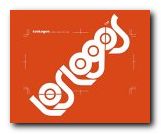
Los Logos is arranged in four main sections: Pictorial Logos, Lettering, Typograms and Combinations. As well as hundreds of pages of beautifully laid out images, it also contains an interesting and informative introduction about the evolution of the logo. All the materials are presented in both English and German. It’s a collection of around 3500 logos from a wide range of contemporary designers including the likes of Buro-destruct, DED associates, Eboy, Rinzen and Woodtli. In terms of colour it’s interesting to note that the predominant choices fall into two groups. Pink, lime green, and peppermint blue crop up again and again for a twenty first-century hippy look. Orange, grey, and black do the same for the post-modern techno look.

Los LogosThere are lots and lots of company logos – though surprisingly few that I recognised. For me, the best part of the book was the section on typography as a logo design element. There are some very attractive typefaces one would like to see in more detail. For instance, there’s a very inventive font (reminiscent of Neville Brody’s work) illustrated simply by the slogan ‘mexico 686’ which has been sprayed on a brick wall.

It’s a very handsome publication, beautifully produced on good quality paper and top class printing. If there’s a weakness, it’s that we don’t get to see the logos in any context. It would be useful to see the products to which some of these logos were attached, or the materials on which they were printed.

This is the sort of compilation which provides a rich source of visual stimulation for designers, and it’s strongest point is the amazingly wide range of examples shown. There are attributions for all designs at the back of the book, but in keeping with the publisher’s persistent habit of information minimalism, it’s not easy to track them down.

© Roy Johnson 2004

los logos   Buy the book at Amazon UK

los logos   Buy the book at Amazon US


Los Logos, Berlin: Die Gestalten Verlag, 2004, pp.416, ISBN: 3931126927


More on typography
More on design
More on media
More on web design


Filed Under: Graphic design, Typography Tagged With: Graphic design, Icons, Logos, Logotypes, Los Logos, Typography

  • « Previous Page
  • 1
  • …
  • 51
  • 52
  • 53
  • 54
  • 55
  • …
  • 103
  • Next Page »

Get in touch

info@mantex.co.uk

Content © Mantex 2016
  • About Us
  • Advertising
  • Clients
  • Contact
  • FAQ
  • Links
  • Services
  • Reviews
  • Sitemap
  • T & C’s
  • Testimonials
  • Privacy

Copyright © 2026 · Mantex

Copyright © 2026 · News Pro Theme on Genesis Framework · WordPress · Log in