Mantex

Tutorials, Study Guides & More

  • HOME
  • REVIEWS
  • TUTORIALS
  • HOW-TO
  • CONTACT
>> Home / Archives for 2009

Archives for 2009

Mikhail Bulgakov biography

September 17, 2009 by Roy Johnson

Mikhail Bulgakov biographylife, works, political persecution

Mikhail Bulgakov (1891—1940) was born in Kiev in the Ukraine into a family of intellectuals. His father was a professor at the Theological Academy. From 1901 to 1904, Mikhail attended the First Kiev Gymnasium. The teachers of the Gymnasium exerted a great influence on the formation of Mikhail’s literary taste, and his favourite authors became Gogol, Pushkin, Dostoevsky, Saltykov-Shchedrin, and Dickens. He graduated as a doctor from Kiev University, specialising in venereology. In 1913 he married Tatyana Lappa, and moved into provincial villages, where he practised as an itinerant doctor. For a short time he became addicted to morphine, but his wife helped him kick the habit. During the revolution he was drafted by the White Army and worked as a field doctor, but then gave up medicine for literature. In his autobiography, Bulgakov recalls how he started writing : “Once in 1919 when I was travelling at night by train I wrote a short story. In the town where the train stopped, I took the story to the publisher of the newspaper who published the story”.

In 1921 he moved to Moscow and wrote for emigrée newspapers and worked for the literary department of the People’s Commissariat of Education. His journalism was also published in Berlin, which was the main centre for Russian emigration at the time. (Vladimir Nabokov lived and worked there at the same period.) In 1924 he divorced his first wife and married Liubov Evgenevna Belozerskaia. Bulgakov began writing the story about the Civil War in Ukraine in 1923, which he published in the journal Rossiia under the title The White Guard.

From 1925 onwards, Bulgakov was closely associated with the Moscow Arts Theatre, which was dominated by the figure of its founder Konstantin Stanislavsky and his theories of method acting. By 1928 he had three plays running in Moscow theatres, one of which — The Day of the Turbins — was a favourite of Stalin’s, even though it presented a sympathetic portrayal of White (counter-revolutionary) officers. Nevertheless, as Stalin’s reactionary grip on power tightened, Bulgakov’s work was increasingly criticised, and then banned. In 1929 he wrote a letter appealing for help to Maxim Gorky, who was in favour with the authorities:

All my plays have been banned; not a line of mine is being printed anywhere; I have no work ready, and not a kopeck of royalties is coming in from any source; not a single institution, not a single individual will reply to my applications…

He also wrote to the Soviet government requesting permission to emigrate, and as a result of this received a personal telephone call from Stalin. But he was never allowed out of the country, and never saw the rest of his family again. They had all settled in Paris – the ‘second’ centre of Russian emigration at that time.

Bulgakov began writing Master and Margarita in 1928, and the novel still shows some traces of its earliest drafts. But he burned the manuscript along with all his other works in progress in a Gogolian fit of despair in 1930. However, by 1933 he had resumed work on it.

In 1932 he married for the third time to Elena Sergeevna Shilovskaia. During the 1930s Bulgakov was employed as an assistant producer at the Moscow Arts Theatre, and he was also librettist and consultant at the Bolshoi Theatre. Stalin’s favour protected him from the worst of the arrests, torture, and executions which characterised the reign of terror at that time – but his works remained unpublished and banned.

In 1937 he diagnosed his own neurosclerosis and predicted that he would die in 1939. He was correct to within only three months. He spent the last years of his life working on what was to be his masterpiece, The Master and Margarita.

© Roy Johnson 2004


The Master and MargeritaThe Master and Margarita (1940/1973) is a wonderful mixture of realism and fantasy which offers a satirical view of communist Russia. The story involves the arrival of the Devil into Moscow, interspersed with chapters dealing with Pontius Pilate and the crucifixion of Jesus Christ, plus other sections related to an artist and his relationships with his art and his lover. All three layers of the story are blended with spellbinding imaginative force.
Mikhail Bulgakov biography - The Master and Margerita Buy the book here


Filed Under: Mikhail Bulgakov Tagged With: Biography, Literary studies, Mikhail Bulgakov, Modernism, Russian literature, The Master and Margerita

Mikhail Bulgakov web links

September 17, 2009 by Roy Johnson

Mikhail Bulgakov web links

redbtnMikhail Bulgakov at Mantex
Biography, study notes, and web links

redbtnThe Master and Margarita
Stylish web site in English, Dutch, French, and Russian featuring all aspects of the novel, its themes and interpretation – plus multimedia links, including even pop video clips

redbtn Bulgakov’s The Master and Margarita
Web study featuring illustrations, maps, characters, themes, bibliography, and chapter notes with introductory essay and notes

redbtn Mikhail Afanasjevitch Bulgakov
Works, timeline, excerpts, links – in English, Russian & German

redbtn Bulgakov on Wikipedia
Life history, historical background, works, materials, and links

redbtn BBC Bulgakov Wiki
Biographical notes

redbtn Library of Congress Bibliography
Extensive records of biography, works, criticism, and commentary


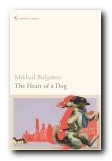
Heart of a DogThe Heart of a Dog (1925) A rich, successful Moscow professor befriends a stray dog and attempts a scientific experiment by transplanting into it the testicles and pituitary gland of a recently deceased man. A distinctly worryingly human animal is then turned on the loose, and the professor’s hitherto respectable life becomes a nightmare beyond endurance. An absurd and superbly comic story, this classic novel can also be read as a fierce parable of the Russian Revolution.


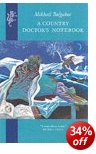
A Country Doctor's NotebookA Country Doctor’s Notebook (1925) With the ink still wet on his diploma, the twenty-five year old Dr Mikhail Bulgakov was flung into the depths of rural Russia which, in 1916-17, was still largely unaffected by such novelties as the motor car, the telephone or electric light. How his alter-ego copes (and fails to cope) with the new and often appalling responsibilities of a lone practitioner in a vast country practice – in blizzards, pursued by wolves and on the eve of Revolution – is described in Bulgakov’s delightful blend of candid realism and imaginative exuberance.


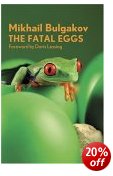
The Fatal EggsThe Fatal Eggs (1924) Professor Persikov discovers a new form of light ray whose effect is to accelerate growth in primitive organisms. But when this ray is shone on the wrong batch of eggs, the Professor finds himself both the unwilling creator of giant hybrids, and the focus of a merciless press campaign. For it seems the propaganda machine has turned its gaze on him, distorting his nature in the very way his ‘innocent’ tampering created the monster snakes and crocodiles that now terrorise the neighbourhood. An inspired work of science fiction and a biting political allegory.


The Master and MargeritaThe Master and Margarita (1940/1973) is a wonderful mixture of realism and fantasy which offers a satirical view of communist Russia. The story involves the arrival of the Devil into Moscow, interspersed with chapters dealing with Pontius Pilate and the crucifixion of Jesus Christ, plus other sections related to an artist and his relationships with his art and his lover. All three layers of the story are blended with spellbinding imaginative force.

The novel is a multilayered critique of the Soviet society in general and its literary establishment specifically. It begins with Satan visiting Moscow in 1935, joining a conversation of a critic and a poet, busily debating the existence of Jesus Christ and the Devil. It then evolves into a whole scale indictment of the corruption, greed, narrow-mindedness, and widespread paranoia of Stalinist Russia. Banned but widely read, the novel firmly secured Bulgakov’s place among the pantheon of the greatest of Russian writers.


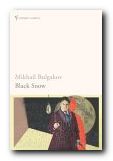
Black SnowBlack Snow: A Theatrical Novel (1920s) When Maxudov’s bid to take his own life fails, he dramatises the novel whose failure provoked the suicide attempt. To the resentment of literary Moscow, his play is accepted by the legendary Independent Theatre and he plunges into a vortex of inflated egos. With each rehearsal more sparks fly and the chances of the play being performed recede. This is a back-stage novel and a brilliant satire on his ten-year love-hate relationship with Stanislavsky and the Moscow Arts Theatre

© Roy Johnson 2004


Filed Under: Mikhail Bulgakov Tagged With: A Country Doctor's Notebook, Black Snow, Heart of a Dog, Literary studies, Mikhail Bulgakov, Russian literature, The Fatal Eggs, The Master and Margerita

Milton Glaser: Art is Work

June 19, 2009 by Roy Johnson

graphic design, interiors, objects and illustration

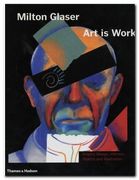
Don’t be put off by the cover design – this is a wonderful book. Milton Glaser is one of the most influential design and illustration gurus of the late 20th century in the USA. He was responsible for the “I love NY” logo and the poster of Bob Dylan with psychedelic hair which became a symbol of the 1980s. This is one of the few design books I have come across where the text is just as interesting as the graphics. Milton Glaser has thought a lot about the fundamentals of good design, and his ideas come through here via a series of interviews, plus his own commentary on the work illustrated.

Milton Glaser: Art is Work And there’s a big bonus. He doesn’t just show his finished designs, but includes his preliminary drafts and early attempts which lead up to a successful outcome. So it’s like being invited to sit in his studio whilst he thinks and works out loud. He’s astonishingly versatile. The book contains examples of poster design, record covers, freehand drawings (amazingly similar to David Hockney in style) book illustrations, interior design, product design, typography, and publicity materials.

His observations focus on the aesthetics of creativity – and yet he keeps his eye on the commercial and professional aspects of his work. He’s frank enough to admit that if the client’s budget is not big enough, he is prepared to discriminate between a ‘one hour’ idea and a ‘six hour’ design.

He’s a great believer in the idea that designers must continue to draw to develop their ideas, and he believes in creation as a form of work and process:

When you’re thinking you do a sketch and it’s fuzzy. You have to keep it fuzzy so that the brain looks at it and imagines another iteration that is clearer. Then you do another sketch that advances it again. It may take a number of these intermediate solutions before you arrive.

It’s a very instructive experience to see his rough sketches develop as he stretches and changes an idea until he comes up with what looks a fresh and spontaneous picture. That’s what he means by his book title. These designs do not just happen spontaneously: they are the result of hard work

He is very aware of modern painters – Klee, Mondrian, the much under-rated Sonia Delauney, Klimt, and Max Ernst. There’s also a portrait of Duke Ellington which has elements of Francis Bacon in its colouring and handling of paint, and a series of posters for the Venice Biennale which combine images of the city’s emblematic lion with ink spattering reflecting his appreciation of the work of Jackson Pollock

I found his book illustrations less successful, his restaurant designs inspired in terms of lighting, and his product design superb. There’s a whole page of sketches for a cocktail glass, any one of which you would be pleased to hold. But the finished product – complete with double-sided conical bowl with a vacuum to keep your Martini cold, fluted stem, and Art Deco collar uniting the two – well, my knees went weak when I turned the page, and I would pay substantial money to own a set.

© Roy Johnson 2003

Milton Glaser Buy the book at Amazon UK

Milton Glaser Buy the book at Amazon US


Milton Glaser, Art is Work, London: Thames and Hudson, 2000, pp.272, ISBN 0500510288


More on art
More on media
More on design


Filed Under: Art, Individual designers, Product design Tagged With: Art, Graphic design, Milton Glaser, Milton Glaser: Art is Work, Product design

Modern English Writing

July 9, 2009 by Roy Johnson

General survey of literature in English 1960-2003

Modern English Writing is an introduction to contemporary literature, and a survey of ‘British and Irish’ writing from 1963 to the early 2000s. John McRae and Ronald Carter introduce the social and political background to the period – which will be useful for those people who haven’t lived through it. They give a brief account of the writer’s major works, discuss the themes that emerge, and highlight links and differences with their contemporaries. These expositions are punctuated by mini-essays outlining special themes which emerged during the period, and commenting on developments in language, culture.

Modern English WritingIn the theatre they single out as major figures Stoppard, Orton, Beckett, and Pinter. Then coming more up to date, they make a strongly argued case for the importance of Sarah Kane, who committed suicide in 2000. However, it’s the novel which gets the lion’s share of their attention. The names go racing past with few surprises: Durrell, Golding, Murdoch, Amis (pere et fils). What’s interesting here is their mention of names who seemed important at the time but who are now largely unread or on their way to becoming forgotten: Anthony Powell, D.M.Thomas, Muriel Spark, Angus Wilson.

There is a group whose value is in the balance, but whose stock (I predict) seems likely to sink. Malcolm Bradbury, David Lodge, Doris Lessing, Margaret Drabble, and her sister A.S.Byatt

Of course it is difficult to see who if anyone from the recent crop will last. Formerly ‘big’ names from the 1960-1980s are already beginning to disappear, and if you look back further than that into the review pages of literary newspapers and magazines at who was being touted as important or the next big thing, your reaction is likely to be “Who he?”

The main novelty to emerge from the last half century or so has been the emergence of writers from other cultures (often former colonies) who have chosen to write in English. The most recent are all represented here: Timothy Mo, Salman Rushdie, Kazuo Ishiguro, Anita Desai, and Vikram Seth, whose novel in sonnet form, The Golden Gate, is undoubtedly a masterpiece.

As we move closer to the present, it’s more difficult to say who is worth listing and who not. The younger but now middle-aged generation of writers such as Ian McEwan are given as much space and attention as Nobel prizewinner V.S.Naipaul. But the authors pack in as many names from the world of contemporary fiction as possible, giving fair space to Irish and Scottish writers, as well as English. They also include mention of sub-genres such as detective fiction and children’s literature.

They finish off with a survey of poetry. Few surprises here: Larkin, Hughes, Heaney, and Harrison. But they manage to come smack up to date with a very appreciative piece on Simon Armitage.

Anyone could quibble about who is included or excluded, or argue about the amount of space devoted to a particular writer; but anybody looking for guidance or suggestions on literature in UK English in the last fifty years will find this useful.

There are also some useful appendices – lists of literary prizewinners, a late 20th century literary timeline, and a bibliography of further reading. It’s an excellent source if you need suggestions for further reading, or you are studying modern British literature.

© Roy Johnson 2004

Modern English Writing   Buy the book at Amazon UK

Modern English Writing   Buy the book at Amazon US


John McRae and Ronald Carter, The Routledge Guide to Modern English Writing, London: Routledge, 2nd edn, 2004, pp.216, ISBN: 0415286379


More on literature
More on the novella
More on literary studies
More on short stories


Filed Under: 20C Literature, Literary Studies Tagged With: English literature, Fiction, Literary studies, Modern English Writing, Modern fiction

Moodle E-Learning Course Development

July 16, 2009 by Roy Johnson

complete guide to e-learning using Moodle

I went to a Moodle training course recently, and the universal cry there was for training manuals or guidance books which would talk you through the program and its features. This new software package is sweeping the world of further and higher education. Just in case you didn’t know, Moodle is an Open Source (that is, free) course management system (CMS). Or if you prefer, a virtual learning environment (VLE) into which tutors can upload their course materials.

Moodle: E-Learning Course Development It’s a sophisticated and complex program which offers all sorts of features to please teachers and students alike. Interactive exercises; journals; email and chat; Wikis; forums; and surveys – all in addition to the basic learning materials, which can be uploaded in any file format. Moodle is built on what’s called a ‘social constructivist’ model.

That is, students are encouraged to build their own learning experiences by engaging with teaching materials, interactive exercises, tutors, and fellow students.

Moodle organises everything for you – from individual student enrolments to databases of complete course results. Students can store drafts of their work, see their quiz results, build learning diaries, or participate in joint project-building. Tutors can set time limits for tests,

First off the block in guidance manuals there was Jason Cole’s book Using Moodle which gave a description of the system. Now comes William Rice’s guide to building courses. The difference between the two is that Rice gets further under the bonnet and shows you the workings of Moodle. More importantly, he tells you in advance what the consequences of your choices will be.

Moodle is so modularised and flexible that you can arrange your course contents however you wish (well, almost). But your choices (which can be made very easily) can also have hidden knock-on effects.

The Moodle interface can also be changed at a single click to work in any one of a number of languages. It offers you the opportunity to add course materials in any format – and to edit your pages and turn them into web pages without having to learn HTML coding.

And if you want to be really adventurous in terms of pedagogy, you can have students assessing their own and other students’ work, voting on the relevance of discussion contributions, and collectively building course-related glossaries and encyclopedias (using a Wiki).

William Rice makes course design clear by breaking down the process into separate elements – for instance, showing the difference between static pages (text and Web pages) and interactive pages (quizzes, journals, and assignments). Most importantly, he explains the advantages and limitations of each.

For the technically minded, there’s an entire chapter on how Moodle is installed and configured to suit your needs. On the other hand, if you want to practice or ‘try before you download’, there’s an excellent demonstration version of Moodle at demo.moodle.org. I actually read the book and had the demo open on screen at the same time, to check each feature for real. But you don’t have to go that far: there are screenshots illustrating every item.

There is extensive coverage of the quizzes, lessons, assignments, and other pedagogic tools available, and a chapter which introduces all the add-ons and plug-in modules which are available for free download. The only thing which struck me as odd was a chapter about welcoming students and making your starting page friendly – which puzzlingly came near the end of the book.

I’m working on a Moodle-based project at the moment, and can vouch for the comprehensiveness of Moodle’s own online documentation – but I imagine most course designers (like me) will feel more confident with a printed manual to hand. This is the one I would suggest you go for.

Moodle E-Learning Course Development   Buy the book at Amazon UK

Moodle E-Learning Course Development   Buy the book at Amazon US

© Roy Johnson 2006


William H. Rice, Moodle: E-Learning Course Development, Packt Publishing: Birmingham, 2006, pp.236, ISBN: 1904811299


More on online learning
More on technology
More on digital media
More on web design
More on computers


Filed Under: CMS, Online Learning, Open Sources Tagged With: CMS, eLearning, Moodle, Moodle: E-Learning Courses, Online learning, Open Sources, Rapid eLearning

Moodle for Language Teaching

November 11, 2009 by Roy Johnson

online language-learning activities using Moodle

I have been critical of some of these Moodle guides in the past. That’s because most of them are not much more than an explanation of Moodle’s individual features, but no suggestions about how they might be used to create dynamic eLearning courses, exploiting the interactivity that Moodle offers. Moodle for Language Teaching is far more useful, because it approaches these issues the other way round. It starts with the premise of online learning design, then shows how it can be done using Moodle.

Moodle 1.9 for Language TeachingJeff Stanford very sensibly begins by explaining the structure of a course in Moodle, and how its parts relate to each other. It’s important if you haven’t used Moodle before to understand the difference between course content and the extras that can be attached via blocks and add-on modules. [You also need to get used to the names of all these features.] All this will help you to conceptualise your course design, and it explains clever supplements such as Mobile Quiz which allows the downloading of quiz questions onto mobile phones.

Stanford also explains how to choose all the important settings for a course – the various permissions, users, course timetable, and what will be shown to students in the way of grades, results, and feedback. All of these options are amazingly detailed and customisable from within Moodle – so long as you know your way around the various settings.

All of his explanations are offered in a direct ‘Here’s how to do it’ manner, with screenshots showing you what to expect and copious lists of free software to help you achieve what you’re looking for. But be warned! Take anything new one step at a time, and don’t expect to create a richly interactive multimedia course in just a few days. Or – if you are new to Moodle – even a few weeks.

He explains how to create quizzes – and here’s an extra tip from someone who did this the hard way. You should learn how to categorise and store your quiz questions groups, so that you can re-use them in different combinations. This will save you the laborious effort of re-keying questions and their multiple possible answers.

The book understandably uses language learning as its pedagogic objective, but in fact almost all of the features of Moodle discussed could be used for creating courses in other subjects. For instance the glossary building activity to create lists of key terms and a ‘word a day’ feature; the Chat module, which acts in the same way as other Instant Messaging systems; or the ‘Hot Potatoes’ quiz-making module.

It’s assumed that the second language being taught is English, so this makes both the ideas and the examples useful for teachers of English, communication skills, or other language-oriented courses.

Many of the stages of course creation involve entering small items of information into a data base using forms. There is quite a conceptual gap between the data entry process and what appears on screen as the final result to a user. You should expect to find this quite arduous at first, but then straightforward once you’ve done it a few times.

There are lots of different types of quizzes possible – missing words, multiple choice questions, matching words, or matching pictures to text – and you can also shuffle questions so that no two people see them in the same order (which I can assure you helps to minimize copying by students using adjacent screens).

For a language course he naturally explains the use of audio and video files to enhance learning. There’s a free add-on module called NanoGong which can be used in conjunction with a quiz to produce vocabulary, pronunciation, intonation, and word stress exercises. You can also make short podcasts or add dictation exercises to which students reply in writing.

There are any number of opportunities to allow students to interact with each other, compare notes, see each other’s blog entries, rate discussion contributions, swap messages via email and the forum, and comment on each other’s work. But here’s another tip from hard won experience. Before you design a course, make sure how much time the tutor (even if that is you) can spend monitoring all this activity and participation in group work. Many institutions see online learning as a way of saving the expense of tutor time, rather than enhancing the student’s learning experience.

Writing activities are relatively straightforward. Students enter text and save their efforts as a journal, a blog, their profile, or as an assignment. You’ll be lucky if they do just one of these. But they do like feedback on any work submitted – so the book quite rightly ends with a section explaining the huge variety of assessment and grading systems that are available in Moodle.

In fact there is so much guidance and support available that it won’t all fit in this (fairly long) book. So two additional chapters have been placed on the publisher’s web site. These cover making your Moodle course materials look nice on screen, and preparing your students to use Moodle.

I’ve a feeling that the publishers Packt have learned from feedback on their earlier Moodle guides, and have wisely gone down the road of putting the designer’s needs first. Their formula works well here, and this guide for me is a better manual for designing courses than all the others currently available. We’ve been designing customized Moodle courses at www.texman.net for the last few years now, and having a guide like this at the outset would have flattened what at times was a painfully steep learning curve.

Moodle for Language Teaching   Buy the book at Amazon UK

Moodle for Language Teaching   Buy the book at Amazon US

© Roy Johnson 2009


Jeff Stanford, Moodle 1.9 for Second Language Teaching, Birmingham: Packt, 2009, pp.505, ISBN: 1847196241


More on online learning
More on technology
More on digital media
More on web design
More on computers


Filed Under: CMS, Online Learning, Open Sources Tagged With: Course design, Education, Moodle, Online learning, Open Sources, VLE

Moodle Teaching Techniques

July 16, 2009 by Roy Johnson

creative ways to use Moodle for online learning courses

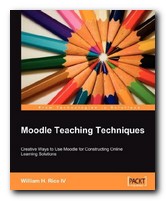
William H. Rice is something of a Moodle specialist. This is a follow up to his recent Moodle: E-Learning Course Development in which he seeks to explain the finer points of Moodle’s dizzying array of features and how they can be used to construct ever more sophisticated models of online teaching and learning. Moodle Teaching Techniques looks at the current and the future versions of Moodle. For instance, many tutors want to control the sequence of the student’s progress through a course, so that they need to understand one topic before they pass on to the next.

Moodle Teaching TechniquesThis is called ‘activity locking’, which is not available in the currently popular Moodle 1.8 version, but will be by the time version 2.0 appears. This is a good way of future-proofing the book’s relevance. All the strategies are explained in a perfectly straightforward manner, and illustrated with screenshots from the relevant control panels within Moodle. Those people who are familiar with its interface will have no difficulty in finding their way around.

The central feature of Moodle’s interactivity is the quiz option – and fortunately this is explored in some detail, showing how tutors can give graded levels of feedback on answers. I can tell you from first hand experience that all this is hard work – thinking up questions, correct solutions, and responses to all possible answers – but it does give students something more interactive than just reading flat text on a screen.

It’s certainly true that Moodle gives tutors and administrators an amazing amount of control over what appears and what takes place on a course. Postings to a discussion forum can be rated for their relevance, ordered by priority, and monitored for the participation level. These features are particularly useful for students engaged with online college degree programs where there is less face-to-face contact with other students as well as tutors.

However, some features are explored to the point of Utopianism – such as the ability of tutors to conduct chat sessions with students in a foreign language, with all the keyboard allocations used to type in foreign characters.

It’s good to know that Moodle has these features, but the basics of course construction still need to be explained and promoted – such as how to get more graphics, video, sound, and general animation and interaction into a typical course. Ninety-nine out of every hundred online tutors will still be having problems getting their students to the keyboard and keeping them there.

And some of the suggestions are workarounds bordering on the perverse – such as creating forums and allocating to them single students for what seems no more than what would be possible in a private email exchange. It’s possible, and it’s ingenious – but any tutor who has the time to do this ought to be making better use of it.

His suggestions for using Moodle’s lesson and Wiki features are much more realistic, as well as his assessment of the relative advantages and disadvantages of the forum, blog and journal features. He finishes by showing how the block elements of a Moodle course can be re-arranged on the page – something I think might have been more usefully placed at the start of the book.

So on the whole I think that whilst all Moodle-using course designers will want to get their hands on this well-timed publication – the definitive guide to designing online learning experiences is still to be written.

© Roy Johnson 2007

Buy the book at Amazon UK

Buy the book at Amazon US


William H. Rice IV, Moodle Teaching Techniques, Birmingham UK: Pakt, 2007, pp.172, ISBN: 184719284X


More on online learning
More on technology
More on digital media
More on web design
More on computers


Filed Under: Online Learning, Open Sources Tagged With: CMS, eLearning, Moodle, Moodle Teaching Techniques, Online learning, Open Sources, Rapid eLearning

Moralizing in essays

August 24, 2009 by Roy Johnson

sample from HTML program and PDF book

1. Moralizing should be avoided in academic essays and term papers. You should resist turning an essay into a vehicle for sermonizing or tub-thumping. Pious sentiments concerning ‘declining standards’ and ‘sexual promiscuity’ should be avoided – especially when they are delivered (as they often are) from a self-elected position of moral righteousness.

2. Moralizing often goes along with generalising and takes two common forms. The first case occurs when the writer makes sanctimonious judgements with a lofty tone of assumed superiority: ‘It is because we despise such immoral actions in others that … ‘. You should not assume too readily that ‘we’ will all agree with you, or even that readers will share your opinion.

3. The second form of moralising often arises from failing to acknowledge that ‘morals’ are relative. What is acceptable in one society may not be in another. Try to avoid sweeping statements on morality by keeping in mind that your own system of beliefs may seem strange or irrational to someone else. This will also help you to be specific and to present your argument concretely, rather than hiding behind empty generalizations and emotional rhetoric.

4. Note by the way that the term ‘moral’ is either an adjective as in ‘a moral victory’, or a noun as in ‘the moral of the story’. Statements such as ‘It was a moral thing to do’ and ‘She is a very moral sort of person’ do not actually make much sense.

5. The purpose of almost all academic essays is to present you with an exercise in precise thinking and objective argument. You are being asked to show fine discrimination based on concrete evidence.

© Roy Johnson 2003

Buy Writing Essays — eBook in PDF format
Buy Writing Essays 3.0 — eBook in HTML format


More on writing essays
More on How-To
More on writing skills


Filed Under: Writing Essays Tagged With: Academic writing, Essays, Moralizing, Reports, Study skills, Term papers, Writing skills

Morphology – how to understand it

September 9, 2009 by Roy Johnson

free pages from our English Language software program

Morphology – definition

morphology Morphology is the study of meaning in individual units of language.
redbtn It is concerned with the structure of words.

redbtn The smallest unit of meaning is a morpheme.

redbtn Morphemes can be classified as either free or bound.


Examples

redbtn A free morpheme is a unit of meaning which can stand alone or alongside another free or bound morpheme.

redbtn These are usually individual words, such as

lid sink air car

redbtn A bound morpheme is a unit of meaning which can only exist alongside a free morpheme.

redbtn These are most commonly prefixes and suffixes:

ungrateful insufficient
childish goodness

Use

redbtn A knowledge of morphology creates an awareness of meaning at a sub-lexical level. That is, we can deconstruct a word and consider its component parts.

redbtn The stems, roots, prefixes, and suffixes of words can be recognised. This can throw light on etymology (the origins of the word) thus giving us more power to communicate efficiently.

redbtn NB! The term comes from the Greek word morph, meaning shape or form.

redbtn Free morphemes are units of meaning which cannot be split into anything smaller, as in the following examples:

tree gate pillow
butter flower rhinoceros

redbtn However, the terms ‘gate’, ‘butter’ and ‘flower’ can also exist alongside another free morpheme. The following examples comprise two free morphemes

gatepost buttermilk sunflower

redbtn Bound morphemes are also units of meaning which cannot be split into anything smaller. However, they are different from free morphemes because they cannot exist alone. They must be bound to one or more free morphemes. Almost all prefixes and suffixes are bound morphemes.

Prefixes asymmetrical, subordinate
unnecessary, empower
Suffixes cowardice, minty
fruitful, swimming

redbtn The following words are made up of two free morphemes or components which could stand alone and retain their meaning.

inkwell mothball
sunflower slapstick

redbtn Note that morphemes can only be classified according to their given semantic context.

redbtn Take for example the word ‘elephant’ which is a free morpheme. Although it is a lengthy word, it cannot be split up into any smaller units of meaning within this particular context. That is, the word ‘elephant’ refers to a large grey mammal with a trunk and tusks which is indigenous to India and Africa.

redbtn The final three letters of elephant may spell ‘ant’, but that unit of meaning does not exist in the context of the term ‘elephant’.

redbtn Now take the word ‘ant’ as a separate unit of meaning referring to a small insect. In that context ‘ant’ is a free morpheme. Add another free morpheme in the form of ‘hill’ and we have a word comprising two free morphemes – ‘anthill’.

redbtn The unit ‘ant’ can also be classified separately as a bound morpheme in yet another context. The term ‘ant’ can act as a prefix in the word ‘antacid’. As such, it is a bound morpheme because its meaning only exists in conjunction with the free morpheme ‘acid’.

Self-assessment quiz follows >>>

© Roy Johnson 2003


English Language 3.0 program
Books on language
More on grammar


Filed Under: English Language Tagged With: English language, Meaning, Morphology

Mother Tongue

May 31, 2009 by Roy Johnson

English language – its history and peculiarities

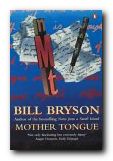
If you are interested in language, this is the sort of book which will both entertain you and stimulate you to learn more. Bill Bryson re-tells the history of the English language in a way which is both amusing and well-informed. His account is shot through with a gift for bringing statistics alive and illustrating complex issues with striking anecdotes. He covers the history of the language, its odd spelling system, and its even stranger pronunciation; varieties of English from around the world; American English; swearing; where words and names come from, and how English is likely to develop in future.

English LanguageHe has an excellent chapter on the irregularities of English spelling. This explains why problems occur, he outlines the various doomed schemes for spelling reform, and he even mounts a persuasive defence of retaining all the irregularities.

Imposing Latin rules on English structure is a little like trying to play baseball in ice skates

He is astonishingly well informed. Although his principal focus is English, you will come away with a lot of information on many other languages. Basque for instance is not related to any other language in the world. [Not many people know that.]

His general approach is refreshingly democratic and anti-stuffy. Most of the people who have tried to regulate language have failed, and he is happy to explain where they have gone wrong.

He pays homage to the great dictionary compilers – Samuel Johnson, Noah Webster, and John Murray – all of them amateurs with no professional training – and he is quite obviously intimately acquainted with their works.

There’s a very amusing chapter on swearing in which he tackles the hard Anglo-Saxon words head on – without any sense of coyness.

Bill Bryson has recently become a best-selling travel writer This book demonstrates the solid foundations of scholarly linguistic knowledge on which that reputation has been built.

It’s packed with interesting nuggets of information about English in particular and language in general. Readable; entertaining; highly recommended.

© Roy Johnson 2009

Mother Tongue   Buy the book at Amazon UK

Mother Tongue   Buy the book at Amazon US


Bill Bryson, Mother Tongue, London: Penguin Books, 2nd edn, 2009, pp.288, ISBN: 0141040084


Filed Under: Language use Tagged With: English language, Language, Language use, Mother Tongue, Reference, Writing

  • « Previous Page
  • 1
  • …
  • 54
  • 55
  • 56
  • 57
  • 58
  • …
  • 103
  • Next Page »

Get in touch

info@mantex.co.uk

Content © Mantex 2016
  • About Us
  • Advertising
  • Clients
  • Contact
  • FAQ
  • Links
  • Services
  • Reviews
  • Sitemap
  • T & C’s
  • Testimonials
  • Privacy

Copyright © 2026 · Mantex

Copyright © 2026 · News Pro Theme on Genesis Framework · WordPress · Log in