Mantex

Tutorials, Study Guides & More

  • HOME
  • REVIEWS
  • TUTORIALS
  • HOW-TO
  • CONTACT
>> Home / Archives for 2009

Archives for 2009

Thomas Hardy criticism

September 30, 2009 by Roy Johnson

annotated bibliography of Hardy criticism and comment

Thomas Hardy criticism is a collection of publications on Thomas Hardy and his works, with bibliographic details and a brief description of their contents. The details include active web links to Amazon where you can buy the books, often in a variety of formats – new, used, and as Kindle eBooks. The listings are arranged in alphabetical order of author.

The list includes new books and older publications which may now be considered rare. It also includes print-on-demand or Kindle versions of older texts which are much cheaper than the original. Others (including some new books) are often sold off at rock bottom prices. Whilst compiling these listings I bought a copy of Ian Gregor’s critical study, The Form of Hardy’s Major Fiction for one penny.
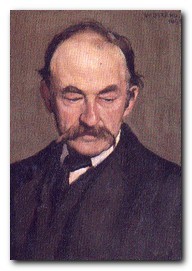
Thomas Hardy criticism


Thomas Hardy criticism The Poetry of Thomas Hardy: A Handbook and Commentary –
J.O. Bailey, The University of North Carolina Press, 1971. The complete poems, plus critical commentary.

Thomas Hardy criticism An Essay on Hardy – John Bayley, Cambridge: Cambridge University Press, 1981. A critical assessment of the novels and the poetry, with an emphasis on eroticism and humour.

Thomas Hardy criticism Thomas Hardy and Women: Sexual Ideology and Narrative Form – Penny Boumelha, Barnes and Noble, 1982. A critical study of Hardy’s novels showing the relationship between gender and the telling of the tale.

Thomas Hardy criticism The Short Stories of Thomas Hardy – Kristin Brady, London: Palgrave Macmillan, 1982. A critical introduction to the complete short stories.

Thomas Hardy criticism Thomas Hardy: The World of his Novels – J.B. Bullen, Frances Lincoln, 2013. A study of Hardy’s Wessex, exploring the buildings, places, and scenes that inspired his fiction.

Thomas Hardy criticism The Language of Thomas Hardy – Raymond Chapman, London: Palgrave Macmillan, 1990. A study of Hardy’s distinctive phraseology and sentence-structure in both the poetry and the fiction.

Thomas Hardy criticism Thomas Hardy: The Critical Heritage – R.G.Cox, London: Routledge and Keegan Paul, 1970. A collection of critical essays, showing the historical development of Hardy criticism.

Thomas Hardy criticism Ambivalence in Hardy: A Study of his Attitude to Women – Shanta Dutta, Anthem Press, 2010. Hardy’s attitudes to women in his fiction and in his interactions with his wives, literary protégées and contemporary female authors. Combines a feminist approach with close textual analysis.

Thomas Hardy criticism Sexing Hardy: Thomas Hardy and Feminism – Margaret Elvy, Crescent Moon Publishing, 2007. A study of gender, desire, class, economy, socialization, identity and patriarchy in Hardy’s fiction and poetry.

Thomas Hardy criticism Hardy the Creator: A Textual Biography – Simon Gattrel, Oxford: Clarendon Press, 1989. The evolution of Hardy’s novels and stories from first draft to final revised texts as he took them through the process of dealings with magazine editors, publishers, and printers.

Thomas Hardy criticism The Complete Poems of Thomas Hardy – James Gibson (ed), London: Palgrave Macmillan, 2001. A compendium of Hardy’s eight published books of poetry, plus critical notes.

Thomas Hardy criticism The Great Web: The Form of Hardy’s Major Fiction – I. Gregor, London: Faber & Faber, 1982. A critical study of the great later novels.

Thomas Hardy criticism The Life of Thomas Hardy – Florence Emily Hardy, Wordsworth Editions, 2007. This is more or less Hardy’ s autobiography, since he told his wife what to write.

Thomas Hardy criticism The Complete Critical Guide to Thomas Hardy – Geoffrey Harvey, London: Routledge, 2003. A student’s guide to Hardy – the man and his work in fiction and poetry.

Thomas Hardy criticism The Sense of Sex: Feminist Perspectives on Hardy – Margaret Higgonet (ed), Urbana: University of Illinois Press, 1993. A collection of essays which offer an overview of feminist critiques of Hardy and his treatment of gender.

Thomas Hardy criticism Authors in Context: Thomas Hardy – Patricia Ingham, Oxford University Press, 2009. Social and political background to Hardy and his times, showing how modern interpretations on film and television create new contexts in which to read the works afresh.

Thomas Hardy criticism Thomas Hardy (Feminist Readings) – Patricia Ingham, Humanities Press International, 1989. Critical studies of sexuality and gender issues in the major novels.

Thomas Hardy criticism Reading Hardy’s Landscapes – Michael Irwin, London: Palgrave Macmillan, 2000. A study of the importance of geography and physical topography in the stories, poems, and novels.

Thomas Hardy criticism The Feminist Sensibility in the Novels of Thomas Hardy – Margaret Kaur, Sarup & Son, 2005. Hardy’s presentation of women characters. Often dubbed anti-feminist, this study attempts to exonerate Hardy of this view.

Thomas Hardy criticism Thomas Hardy: The Forms of Tragedy – Dale Kramer, London: Macmillan, 1975. A chronological study of the major novels.

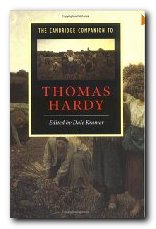
Thomas Hardy criticism The Cambridge Companion to Thomas Hardy – Dale Kramer, Cambridge University Press, 1999. A collection of critical essays commissioned from specialists on all aspects of Hardy’s work.

Thomas Hardy criticism Thomas Hardy: Distance and Desire – J. Hillis Miller, Cambridge: Harvard University Press, 1970. A critical study of the interrelation of the literary themes of distance and desire woven throughout the novels and poems.

Thomas Hardy criticism Thomas Hardy: His Career as a Novelist – Michael Millgate, London: Palgrave Macmillan, 1994. Critical readings of the novels in the context of Hardy’s intellectual background, his friendships and family relationships, and his evolution as a professional writer.

Thomas Hardy criticism Thomas Hardy: A Biography Revisited – Michael Millgate, Oxford University Press, 2006. This is the fully updated version of the definitive biography.

Thomas Hardy criticism Women and Sexuality in the Novels of Thomas Hardy – Rosemarie Morgan, London: Routledge, 1988. Kindle version of an early feminist study of the major fiction.

Thomas Hardy criticism Student Companion to Thomas Hardy – Rosemarie. Morgan, Greenwood Press, 2006. This study explores Hardy’s life, his career, and most important and unconventional works, and why he abandoned novel-writing in favour of his first love – poetry.

Thomas Hardy criticism Seeing Hardy: Film and Television Adaptations of the Fiction of Thomas Hardy – Paul J. Nemeyer, McFarland & Co, 2002. A study of adaptations of the major novels for the cinema, plus television films and mini-series based on Hardy’s work.

Thomas Hardy criticism Thomas Hardy’s Personal Writings – Harold Orel (ed), London: Palgrave Macmillan, 1967. A collection of Hardy’s novel prefaces, his literary opinions, and reminiscences.

Thomas Hardy criticism The Oxford Reader’s Companion to Hardy – Norman Page, Oxford University Press, 2000. Forty essays by experts on all aspects of Hardy’s work – ranging from alcohol, humour, and pets, to the historical context in which he wrote.

Thomas Hardy criticism A Thomas Hardy Companion: A Guide to the Works of Thomas Hardy – F.B. Pinion, London: Palgrave Macmillan, 1968. A general critical commentary on the major works and their social background.

Thomas Hardy criticism A Thomas Hardy Dictionary – F.B. Pinion, New York: New York University Press, 1993. Features architectural terms, the sources of quotations, identification of fictional characters, and the explanation of rare or rustic words.

Thomas Hardy criticism Thomas Hardy: A Bibliographical Study – Richard L. Purdy and Charles P.C. Pettit, The British Library Publishing Division, 2002. An important bibliography first published in 1954, and now supplemented by modern criticism and recent Hardy studies.

Thomas Hardy criticism Hardy’s Use of Allusion – Marlene Springer, London: Macmillan, 1983. A study of Hardy’s widespread use of allusions from classical, biblical, historical, and literary sources.

Thomas Hardy criticism The Neglected Hardy: Thomas Hardy’s Lesser Novels – Richard H. Taylor, London: Palgrave Macmillan, 1982. A critical examination of the lesser-known novels.

Thomas Hardy criticism The Personal Notebooks of Thomas Hardy – Richard H. Taylor, Columbia University Press, 1979. Includes the unpublished passages from the original typescripts of the ‘Life of Thomas Hardy’.

Thomas Hardy criticism Thomas Hardy: The Time-torn Man – Clair Tomalin, London: Penguin, 2012. A biography of Hardy with emphasis on the death of his first wife and the curious marriage to his second.

Thomas Hardy criticism A Preface to Hardy – Merryn Williams, London: Longman, 1976. A readable and unexpectedly positive study of Hardy’s prose and verse.

Thomas Hardy criticism A Companion to Thomas Hardy – Keith Wilson, Wiley-Blackwell, 2012. A collection of essays offering a one–volume resource which encompasses all aspects of Hardy’s major novels, short stories, and poetry.

Thomas Hardy criticism Thomas Hardy: Towards a Materialist Criticism – George Wooton, Barnes & Noble Books, 1985. Explores the historical, social, aesthetic and ideological determinants of Hardy’s novels.

© Roy Johnson 2015
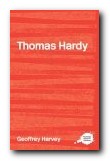

The Complete Critical Guide to Thomas HardyThe Complete Critical Guide to Thomas Hardy is a good introduction to Hardy criticism. It includes a potted biography of Hardy, an outline of the stories, novels, and poetry, and pointers towards the main critical writings – from the early influential full length study by D.H. Lawrence to critics of the present day. Also includes a thorough bibliography which covers biography, criticism in books and articles, plus pointers towards specialist Hardy journals. These guides are very popular.


More on Thomas Hardy
More on the novella
More on literary studies
More on short stories

Filed Under: Thomas Hardy Tagged With: Critical studies, Critical theory, Literary studies, Thomas Hardy

Thomas Hardy greatest works

September 30, 2009 by Roy Johnson

major novels and film adaptations

Thomas Hardy is one of the few writers (D.H.Lawrence was another) who made a significant contribution to English literature in the form of the novel, poetry, and the short story. His writing is full of delightful effects, beautiful images and striking language. He creates unforgettable characters and orchestrates stories which pull at your heart strings. It has to be said that he also relies on coincidences and improbabilities of plot which (though common in the nineteenth century) some people see as weaknesses. However, his sense of drama, his powerful language, and his wonderful depiction of the English countryside make him an enduring favourite.

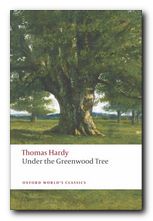
Thomas Hardy greatest works Under the Greenwood TreeUnder the Greenwood Tree (1872) was Hardy’s first success as a novelist. It’s a light and gentle evocation of pastoral life. It depicts the world of an agricultural Britain which Hardy saw being transformed by the industrial revolution. Modern readers might find the love interest a bit soppy, but the picture of the Melchester church musicians and their resistance to change is touchingly humorous. It enabled Hardy to express his affection and love for the Wessex countryside. Structurally divided into Winter, Spring, Summer, Autumn, it follows the natural rhythms of the earth and of rural society. There’s none of the acute conflict, the psychological drama, or the tragedy of the later novels. This is one for either the complete beginner to Hardy, or for devotees who wish to flesh out their knowledge of the early stages of his career.
Thomas Hardy greatest works Buy the book at Amazon UK
Thomas Hardy greatest works Buy the book at Amazon US


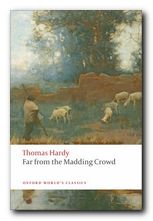
Thomas Hardy greatest works Far from the Madding CrowdFar from the Madding Crowd (1874) was the first of Hardy’s novels to apply the name of Wessex to the landscape of south west England, and the first to gain him widespread popularity as a novelist. Heroine and estate-owner Bathsheba Everdene is romantically involved with three very different men. The dashing Sergeant Troy, who is handsome but unreliable; Farmer Boldwood, who is honourable but middle-aged; and man-of-the-soil Gabriel Oak, who is worthy and prepared to bide his time. The conflicts between them and the ensuing drama has lots of plot twists plus a rich picture of rural life.
Thomas Hardy greatest works Buy the book at Amazon UK
Thomas Hardy greatest works Buy the book at Amazon US


Far from the Madding Crowd – DVD John Schlesinger’s film adaptation (1967) has an outstanding sound track by Richard Rodney Bennett, and stalwart performances from an all star cast of Julie Christie as Bathsheba, Alan Bates as Gabriel Oak, Terence Stamp as Sergeant Troy, and Peter Finch as Boldwood – plus delicious a country bumpkin role for Freddy Jones. The film was shot by Nicolas Roeg (director of his own films Don’t Look Now and Bad Timing) and the screenplay was written by novelist Frederic Raphael. This film is a visual treat which has stood the test of time.
Thomas Hardy greatest works Buy the DVD at Amazon UK
Thomas Hardy greatest works Buy the DVD at Amazon US


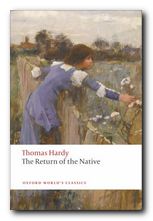
Thomas Hardy greatest worksThe Return of the NativeThe Return of the Native (1878) It’s often said that this is one of the most Hardyesque of all the novels. There are some stand-out characters: Eustacia Vye, a heroine who patrols the moors looking out for her man through a telescope; Clym Yeobright, a hero who can’t escape his mother’s influence; and Diggory Ven, an itinerant trader who wanders in and out of the story covered in red dye. Improbable coincidences and dramatic ironies abound – and over it all presides the brooding presence of Egdon Heath. But underneath the melodrama, there are profound psychological forces at work. You need to be patient. This is one for Hardy enthusiasts – not beginners. This edition, unlike any other currently available, retains the text of the novel’s first edition, without the later changes that substantially altered Hardy’s original intentions.
Thomas Hardy greatest works Buy the book at Amazon UK
Thomas Hardy greatest works Buy the book at Amazon US

The Oxford World Classics are the best editions of Hardy’s work. They are largely based on the most accurate versions of the texts; and they feature introductory essays, a biography, explanatory notes, textual variants, a bibliography of further reading, and in some cases missing or deleted chapters. They are also terrifically good value.

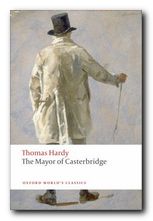
Thomas Hardy greatest works The Mayor of CasterbridgeThe Mayor of Casterbridge (1886) is probably Hardy’s greatest work – a novel whose aspirations are matched by artistic shaping and control. It is the tragic history of Michael Henchard – a man who rises to civic prominence, but whose past comes back to haunt him. This is not surprising, because he sells his wife in the opening chapter. When she comes back unexpectedly, he is trapped between present and past. He is also locked into a psychological contest with an alter-ego figure with whom he battles both metaphorically and realistically. Henchard falls in the course of the novel from civic honour and commercial greatness into a tragic figure, a man defeated by his own strengths as much as his weaknesses. There are strong echoes of King Lear here, and some of the most dramatic and psychologically revealing scenes in all of Hardy’s work.
Thomas Hardy greatest works Buy the book at Amazon UK
Thomas Hardy greatest works Buy the book at Amazon US


Thomas Hardy greatest worksThe Well Beloved (1892) is set in the stone quarries of Portland Bill – one of the strangest parts of Hardy’s Wessex. But the logical link is with the sculptor hero of this tale who rather improbably falls in love with a woman, her daughter, and her grand-daughter at twenty year intervals on the implausible pretext that they look similar. This seems like blatant authorial wish-fulfilment on Hardy’s part (and he did eventually marry a woman forty years his junior). It’s one for specialists – or the psychiatrist’s couch. This Penguin Classics edition of the work includes an earlier version of the same novel.
Thomas Hardy greatest works Buy the book at Amazon UK
Thomas Hardy greatest works Buy the book at Amazon US


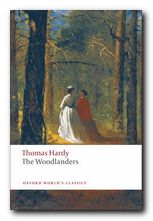
Thomas Hardy greatest works The WoodlandersThe Woodlanders (1887) Giles Winterbourne, an honest woodsman, suffers with the many tribulations of his selfless love for Grace Melbury, a woman above his station in this classic tale of the West Country. She marries the new doctor, Edred Fitzpiers, but leaves him when she learns he has been unfaithful. She turns instead to Giles, who nobly allows her to sleep in his house during stormy weather, whilst he sleeps outside and brings on his own death. It’s often said that the hero of this novel is the woods themselves – so deeply moving is Hardy’s account of the timbered countryside which provides the backdrop for another human tragedy and a study of rural life in transition.
Thomas Hardy greatest works Buy the book at Amazon UK
Thomas Hardy greatest works Buy the book at Amazon US


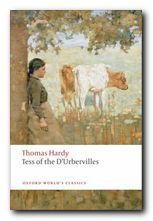
Thomas Hardy greatest works Tess of the d'UrbervillesTess of the d’Urbervilles (1891) is probably the most popular of Hardy’s late, great novels. The sub-title is ‘A Pure Woman’, and it is a story which explores the tragic consequences of a young milkmaid who becomes the victim of the men she encounters. First she falls for the spiritual but flawed Angel Clare, and then the physical but limited Alec Durberville takes advantage of her. This novel has some of the most beautiful and the most harrowing depictions of rural working conditions which reveal Hardy as a passionate advocate for those who work the land. It also has a wonderfully symbolic climax at Stonehenge on Salisbury Plain. There is poetry in almost every page.
Thomas Hardy greatest works Buy the book at Amazon UK
Thomas Hardy greatest works Buy the book at Amazon US


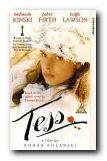
TessTess: DVD Roman Polanski’s film version of Tess of the D’Urbervilles (1979) was shot in Brittany rather than England – to get round the extradition laws between the UK and the US from which he has been in exile since 1977, after jumping bail when charged with raping a 13 year old girl. It is beautifully faithful to the original novel and particularly unsparing in its depiction of country life as hard manual work – which would have pleased Hardy. The centrepiece is an outstanding performance by seventeen year old Natassia Kinski (Klaus Kinski’s daughter) who was Polanski’s lover at the time. She is astoundingly beautiful without seeming to ever realise it, which is exactly one of the causes of Tess’s downfall in the novel.
Thomas Hardy greatest works Buy the DVD at Amazon UK
Thomas Hardy greatest works Buy the DVD at Amazon US


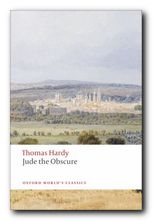
Thomas Hardy greatest works Jude the ObscureJude the Obscure is Hardy’s last major statement before he gave up writing novels for good. Hero Jude is intellectually ambitious but held back by his work as stonemason and his dalliance with earthy Arabella. When he meets his spiritual soulmate Sue Brideshead, everything seems set fair for success – except that she is capricious and sexually repressed. Jude struggles to do the right thing – but the Fates are against him. The outcome is heart-rendingly bleak and tragic. This novel reveals the deep-seated social and sexual tensions in Hardy – himself a self-made man from a humble background.
Thomas Hardy greatest works Buy the book at Amazon UK
Thomas Hardy greatest works Buy the book at Amazon US


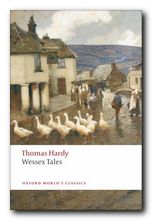
Thomas Hardy greatest works Wessex TalesWessex Tales Don’t miss the skills of Hardy as a writer of shorter fictions. None of his short stories are really short, but they are beautifully crafted. This is the first volume of his tales in which he was seeking to record the customs, superstitions, and beliefs of old Wessex before they were lost to living memory. Yet whilst dealing with traditional beliefs, they also explore very modern concerns of difficult and often thwarted human passions which he developed more extensively in his longer works.
Thomas Hardy greatest works Buy the book at Amazon UK
Thomas Hardy greatest works Buy the book at Amazon US


The Complete Critical Guide to Thomas HardyThe Complete Critical Guide to Thomas Hardy is a good introduction to Thomas Hardy criticism. It includes a potted biography of Hardy, an outline of the stories, novels, and poetry, and pointers towards the main critical writings – from the early influential full length study by D.H. Lawrence to critics of the present day. It also includes a thorough bibliography which covers biography, criticism in books and articles, plus pointers towards specialist Hardy journals. Recommended for anyone making a serious study of Hardy.
Thomas Hardy greatest works Buy the book at Amazon UK
Thomas Hardy greatest works Buy the book at Amazon US


The Cambridge Companion to Thomas HardyThe Cambridge Companion to Thomas Hardy offers commissioned essays from an international team of contributors, comprising a general overview of all Hardy’ s work and specific demonstrations of Hardy’s ideas and literary skills. Individual essays explore Hardy’s biography, aesthetics, his famous attachment to Wessex, and the impact on his work of developments in science, religion and philosophy in the late nineteenth century. Hardy’s writing is also analysed against developments in contemporary critical theory and issues such as sexuality and gender. The volume also contains a detailed chronology of Hardy’s life and publications, and a guide to further reading.
Thomas Hardy greatest works Buy the book at Amazon UK
Thomas Hardy greatest works Buy the book at Amazon US


Thomas Hardy – web links

Hardy at Mantex Thomas Hardy at Mantex
Biographical notes, study guides to the major novels, book reviews. bibliographies, critiques of the shorter fiction, and web links.

Thomas Hardy complete works The Thomas Hardy Collection
The complete novels, stories, and poetry – Kindle eBook single file download for £1.29 at Amazon.

Hardy eTexts Thomas Hardy at Project Gutenberg
A major collection of free eTexts in a variety of digital formats.

Hardy at Wikipedia Thomas Hardy at Wikipedia
Biographical notes, social background, the novels and literary themes, poetry, religious beliefs and influence, biographies and criticism.

Thomas Hardy web links The Thomas Hardy Society
Dorset-based site featuring educational activities, a biennial conference, a journal (three times a year) with links to the texts of all the major works.

Thomas Hardy web links The Thomas Hardy Association
American-based site with photos and academic resources. Be prepared to search and drill down to reach the more useful materials.

Hardy at IMDB Thomas Hardy on the Internet Movie Database
Adaptations for the cinema and television – in various languages. Full details of directors, actors, production features, box office, film reviews, and even quizzes.

Thomas Hardy web links Thomas Hardy – online literary criticism
Small collection of academic papers and articles ‘favoring signed articles by recognized scholars and articles published in peer-reviewed sources’.

Red button Thomas Hardy’s Wessex
Evolution of Wessex, contemporary reviews, maps, bibliography, links to other web sites, and history.

© Roy Johnson 2009


More on Thomas Hardy
More on the novella
More on literary studies
More on short stories


Filed Under: Thomas Hardy Tagged With: English literature, Far from the Madding Crowd, Jude the Obscure, Literary studies, Tess of the d'Urbervilles, The Mayor of Casterbridge, The novel, The Return of the Native, The Well Beloved, The Woodlanders, Thomas Hardy, Under the Greenwood Tree, Wessex Tales

Thomas Mann greatest works

September 19, 2009 by Roy Johnson

stories, novellas, novels

Thomas Mann greatest works - small portraitThomas Mann’s work spans the first half of the twentieth century. He started out writing in the tradition style of the nineteenth centry, but very quickly sought out themes and motifs which place him amongst modernists. His political views went through a similar transformation, from arch conservative before and during the first world war, to a very sceptical liberal democracy after the second. Many of his works are long and dense, and his style includes such typically Germanic features of writing in huge paragraphs, with lots of philosophic meditation embedded in his narratives. Beginners are best advised to sart with his earlier work – particularly novellas such as Death in Venice and Tonio Kroger
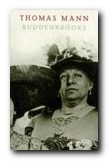
 

Thomas Mann greatest works BuddenbrooksBuddenbrooks: The Decline of a Family
This lengthy saga of a prosperous Hanseatic commercial family and their gradual disintegration is also a portrayal of the transition from the stable bourgeois life of the nineteenth century to a modern uncertainty. It was Thomas Mann’s first novel – published when he was only twenty-five – and it announces themes he was to pursue for the rest of his life. The technique of leitmotif which Mann borrowed from Wagner is most apparent, as is his love of Schopenhauer, and the novel overall reads as a deeply philosophical epic. It brought Mann instant fame on its first publication.
Thomas Mann greatest works Buddenbrooks Buy the book at Amazon UK
Thomas Mann greatest works Buddenbrooks Buy the book at Amazon US


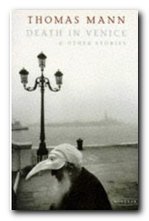
Thomas Mann greatest works Death in VeniceDeath in Venice
The title story of this collection is a classic novella – half way between a long story and a short novel. It’s a wonderfully condensed tale of the relationship between art and life, love and death. Venice provides the background for the story of a famous writer Gustav Von Aschenbach who departs from his usual strict routines, falls in love with a beautiful young boy, and gets caught up in a subtle downward spiral of self-indulgence – all set against a backdrop of the beautiful city of Venice, but which is in the grip of a plague. The unity of themes, form, and motifs are superbly realised – even though Mann wrote this when he was quite young.
Thomas Mann greatest works Death in Venice Buy the book at Amazon UK
Thomas Mann greatest works Death in Venice Buy the book at Amazon US


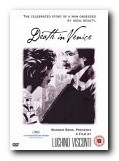
Thomas Mann greatest works Death in VeniceDeath in Venice – video film adaptation
Luchiano Visconti produced a visually glamorous version of Mann’s novella which captures the original very faithfully. Shimmering scenes of the Venice lido are interspersed with menacing glimpses of the impending plague. The film is famous for two features – the spectacular use of the slowed-down version of the adagietto from Mahler’s fifth symphony as a sound track, and the outstanding performance of Dirk Bogard as the ageing Gustav von Aschenbach – one of his last and greatest screen performances. This is a visually spectacular piece of filming.
Thomas Mann greatest works Death in Venice Buy the DVD at Amazon UK
Thomas Mann greatest works Death in Venice Buy the DVD at Amazon US


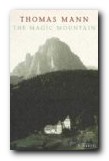
Thomas Mann greatest works The Magic MountainThe Magic Mountain
This is a curious but impressive novel, written on either side of the First World War. The setting is a sanatorium in the Alps – a community organized with exclusive reference to ill-health. There the characters discuss love, politics, and philosophy. Much of the novels ‘activity’ is intellectual debate between characters such as Settembrini and Naphta (who are said to represent Mann’s brother Heinrich and the Hungarian Marxist critic Georg Lukacs respectively). It’s an intellectual drama of the forces which play upon modern man. Don’t expect tension or plot in the conventional sense. The novel also marks a transition in Mann’s political philosophy – from a conservative to a more liberal ideology.
Thomas Mann greatest works The Magic Mountain Buy the book at Amazon UK
Thomas Mann greatest works The Magic Mountain Buy the book at Amazon US


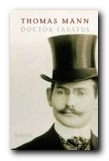
Thomas Mann greatest works Doktor FaustusDoktor Faustus
Full title – Doctor Faustus: The Life of the German Composer Adrian Leverkuhn as Told by a Friend. This is widely regarded as Thomas Mann’s masterpiece – a dense, intellectual, and metaphysical novel which is the biography of a famous composer Adrian Leverkuhn – a thinly disguised portrait of Arnold Schoenberg. His extraordinary career is loosely based on the Faust legend, and charted from his precocious childhood to his tragic death. His revelation of the horrifying price he had to pay for his achievement highlights Mann’s vast theme: the discord between genius and sanity. The story combines Mann’s serious concern for music with his political view of German society, which is shown sliding towards its own self-generated collapse in 1945.
Thomas Mann greatest works Dr Faustus Buy the book at Amazon UK
Thomas Mann greatest works Dr Faustus Buy the book at Amazon US


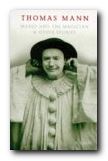
Thomas Mann greatest works Mario and the MagicianMario and the Magician
Using settings as varied as Germany, Italy, the Holy Land and the Far East, these stories explore a theme which always preoccupied Thomas Mann – “the two faces of things”. Written between 1918 and 1953, they offer an insight the development of his thought. The title story concerns a German family on holiday in Italy who fall under the hypnotic spell of a brutal magician. It is often seen as a warning against the seductive power of fascism.

Thomas Mann greatest works Mario and the Magician Buy the book at Amazon UK
Thomas Mann greatest works Mario and the Magician Buy the book at Amazon US

© Roy Johnson 2004


Filed Under: Thomas Mann Tagged With: Buddenbrooks, Death in Venice, Doktor Faustus, German literature, Literary studies, Mario and the Magician, The Magic Mountain, Thomas Mann

Thomas Mann life and works

September 19, 2009 by Roy Johnson

Thomas Mann life and works - small portrait1875. Thomas Mann born in Lübeck, northern Germany. His father was from a prosperous merchant family – head of the company and twice Mayor of Lübeck. His mother was artistic, with foreign blood. Five brothers and sisters. Rivalry with elder bother Heinrich, who was also a novelist. Two sisters commit suicide. Mann dislikes school, study, and discipline.

1891. Death of father. Family moves to Munich, south Germany. [North/South = Business/Pleasure]. Brief spell working in insurance office. Mann dislikes work. One year of classes at university studying journalism.

1896. Moves to Rome and Palestrina for one year with brother Heinrich – ‘biding time’ on financial allowance.

1898. Moves back to Munich. Spends one year as editor of satirical magazine Simplicissimus. German philosophers Nietzsche and Schopenhauer early influences. Records in his diary that he is ‘close to suicide’. First stories published – Little Herr Friedmann.

1900. Starts military service, but invalided out with psycho-somatic illness after three months.

1901. Publishes Buddenbrooks, his first novel, at twenty-five. This long saga of ‘the decline of a family’ brings him instant fame.

1903. Publishes ‘Tonio Kröger’.

1905. Marries Katia, daughter of well-to-do middle-class family. They have six children. Mann has very conservative political views. Begins a novel Confessions of Felix Krull, Confidence Man (based on memories of Manolescu) which he abandons. (He picked it up forty years later, and continued writing, exactly where he left off.)

1913. Publishes Death in Venice, a novella. Records in his diary ‘nothing is invented in Death in Venice‘.

1912. Spends three weeks in a sanatorium in Davos with his wife. Begins The Magic Mountain as a short story.

1914. Outbreak of First World War. Mann takes very conservative political line, supporting Germany. Writes essays, Reflections of an Unpolitical Man, and almost in spite of himself, his political views change. Unable to write Magic Mountain during the war.

1922. Mann’s political views become more radical in the face of rising fascism.

1924. Finishes writing The Magic Mountain.

1925. Begins a series of foreign lecture tours.

1929. Awarded Nobel prize for literature. records in his diary – ‘It lay, I suppose, upon my path in life’. Starts work on Joseph and His Brothers

1930. Mario and the Magician – short novel symbolising the rise of fascism. begins lecture tours in America.

1933. Hitler seizes power in Germany. Mann moves to Zurich. Begins political debates with fellow emigrées on how best to combat fascism and maintain the humane basis of traditional German culture.

1936. Mann’s son Klaus, a writer and theatre critic, publishes Mephisto, a novel dealing with the relationship between art and politics, the dangers of compromising with evil, and which uses the Faust theme – all of which prefigure Thomas Mann’s Doktor Faustus.

1938. Moves to Princeton (USA) – then to California, joining fellow emigrés Bertolt Brecht, Arnold Schoenberg, Walter Adorno, Bruno Walter, and Igor Stravinski.

1943. Begins writing Doktor Faustus.

1944. Becomes a US citizen.

1947. Doktor Faustus

1949. Suicide of Mann’s son Klaus from drug overdose.

1952. Mann returns to Europe, but refuses to choose between the divided Germanies. Settles in Zurich

1955. Dies, leaving Felix Krull unfinished.


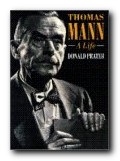
Thomas Mann life and works A LifeThomas Mann: a life This exploration of Thomas Mann’s life by Donald Prater describes his relationship of intense rivalry with his brother Heinrich, who was also a novelist, his (much-concealed) homosexuality, his career as a prolific essayist, and the vast achievement of his novels. Particular attention is paid to Mann’s opposition to Nazism, and his role in the rise and fall of Hitlerism. It traces Mann’s political development from the nationalistic conservatism of his younger days, to the humanistic anti-Nazim of his maturity.   Buy the book here
© Roy Johnson 2004


Filed Under: Thomas Mann Tagged With: Biography, German literature, Literary studies, Thomas Mann

Thrown to the Woolfs

July 3, 2009 by Roy Johnson

Leonard and Virginia Woolf and the Hogarth Press

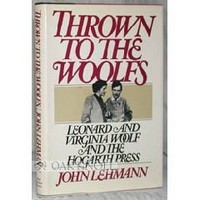
John Lehmann joined the Hogarth Press as a trainee manager in 1931 when it was in the full flush of its first success. Virginia Woolf’s To the Lighthouse had just been published, as well as T.S.Eliot’s The Waste Land and Katherine Mansfield’s Prelude. This was to be the first of two periods of engagement with the Press, the second of which lasted until 1946. Thrown to the Woolfs his account of publishing and the literary world of the 1930’s is dominated by the figure of Leonard Woolf, whose own account of the Hogarth Press in his Autobiography confirms almost all of what Lehmann says – though they differed over issues of policy.

Thrown to the WoolfsIt’s a rather unglamorous world of working strict office hours in crowded basement rooms, with “a ramshackle lavatory, in which old Hogarth Press galley proofs were provided as toilet paper”. He was delighted to be mixing with some of the major figures of the modernist period, as well as the up-and-coming writers of the day. There are sketches of writers of the period with whom Lehmann dealt: Michael Roberts, William Plomer, and Christopher Isherwood, whom he introduced to the Press as the Great Hope of English Fiction (which people believed at the time).

He does his best to be fair to Leonard Woolf, and his portrait corresponds accurately to that which one gains from other accounts, including Woolf’s own:

Leonard himself was, in general, cool and philosophical about the ups and downs of publishing: his fault was in allowing trifles to upset him unduly. A penny, a halfpenny that couldn’t be accounted for in the petty cash at the end of the day would send him into a frenzy that often approached hysteria… On the other hand, if a major setback occurred – a new impression, say, of a book that was selling fast lost at sea on its way from the printers in Edinburgh – he would display a sage-like calm, and shrug his shoulders.

It’s quite obvious from his account that although he was being employed in commerce as a publisher’s assistant, to write adverts, promote sales, and check proofs, his heart was set on being a ‘poet’ himself. The tensions he felt with Leonard Woolf became more serious, and within two years of securing what he at first thought of as his dream job, he gave in his notice and left under a very dark cloud.

He then gives an account of his wanderings in central Europe, inspired by Rilke’s notion that “In order to write a single verse, one must see many cities” (not having read Emily Dickinson, it would seem). Much of this part of the story revolves around Christopher Isherwood and Lehmann’s efforts in publishing the collection New Writing. But in 1938, having made up with the Woolfs, he bought out Virginia’s share of the Press and rejoined it as manager and full partner.

The theme then becomes ‘How does one run a publishing company during a war?’. The odd thing is that despite paper rationing, despite being bombed out of its premises in Mecklenburgh Square, and despite having to transfer the Press and its business to Letchworth, sales rose, because of general shortages:

Books that in peacetime, when there was an abundance of choice, would have sold only a few copies every month, were snapped up the moment they arrived in the shops.

Priority was given to keeping Virginia Woolf’s works in print even after her death, as well as the works of Sigmund Freud which the Press had started to publish. Other writers whose work appeared around this time were Henry Green, Roy Fuller, and William Sansom.

However, following Viginia’s death in 1941, there remained only two essential decision makers on policy. Without her casting vote, the differences between them grew wider and led to clashes. Lehmann wanted to publish Saul Bellow and Jean Paul Sartre, but Leonard said ‘No’. There were also misunderstandings about income tax returns and the foreign rights to Virginia’s work.

When the final split between them came about, Leonard solved the problem by persuading fellow publisher Ian Parsons of Chatto and Windus to buy out John Lehmann’s share. Parsons was the husband of Trekkie Parsons, who lived with Leonard during the week and with her husband at weekends – so as well as sharing a wife, they became business partners.

John Lehmann eventually went on to found his own publishing company, and the Hogarth Press was absorbed into Chatto and Windus on Leonard’s death in 1969. This is an interesting account of their joint efforts – partisan, but reasonable and humanely argued.

For literary historians it’s an interesting account of English culture and letters in the 1930s and the war years. And it’s also a fascinating glimpse into the world of commercial publishing. Anyone who wants to make judgments about the rights and wrongs in the disputes between the principals should also read Leonard Woolf’s excellent Autobiography.

© Roy Johnson 2000

Thrown to the Woolfs Buy the book at Amazon UK

Thrown to the Woolfs Buy the book at Amazon US


John Lehmann, Thrown to the Woolfs, New York: Holt, Rinehart and Winston, 1978, pp.164, ISBN 0030521912


More on Leonard Woolf
Twentieth century literature
More on the Bloomsbury Group


Filed Under: Bloomsbury Group, Hogarth Press, Leonard Woolf Tagged With: Bloomsbury Group, Business, Hogarth Press, John Lehmann, Leonard Woolf, Publishing, Thrown to the Woolfs

Titles in essays

August 25, 2009 by Roy Johnson

sample from HTML program and PDF book

1. Publications of book length such as text books or novels should normally be presented by giving their titles in italics. [In hand-written essays, this will be denoted by underlining].

Emily Bronte’s Wuthering Heights
R.G. Lipman’s Positive Ergonomics

2. When using a word-processor you should use italics for titles (with bold reserved for special emphasis). Remember to be consistent throughout your document, and do not combine any of these attributes.

3. You should not combine underlining or italics with quotation marks.

4. The titles of short stories and songs are indicated by single quote marks:

Katherine Mansfield’s short story ‘The Voyage’
Kurt Weil’s show tune ‘September Song’

5. Thus, James Joyce’s ‘The Dead’ is a celebrated short story, but his long novel Ulysses is even more famous.

6. When offering book titles in references and endnotes the sequence of information given is as follows:

AUTHOR—TITLE—PUBLISHER—DATE—PAGE

Valerie Shaw, The Short Story, Longman, 1983, p.56.

If you are using the Harvard system of referencing, remember to put the date of publication after the author’s name.

7. The titles of individual poems are indicated by using roman type and single quote marks, thus:

W.H.Auden’s ‘Night Mail’
Browning’s ‘Pippa Passes’

8. Where a long poem has been published on its own, it may be indicated as a book, thus:

T.S.Eliot’s The Waste Land
Milton’s Paradise Lost

9. Where a number of poems has been collected as a group, they are treated as a book, as follows:

‘Tess’s Lament’ is one of the poems in Thomas Hardy’s 1903 collection, Poems of the Past and the Present.

10. You should always make a clear distinction between fictional characters and books which are named after them. David Copperfield is a fictional character, whereas David Copperfield is the novel which bears his name. The same is true of Middlemarch (the fictional town) and Middlemarch (the novel).

11. Plays are indicated in the same way as novels, because they are usually published in single volume form.

Oscar Wilde’s play, Lady Windermere’s Fan
Shakespeare’s The Tempest

12. Magazines, newspapers, and journals are indicated in the same way as books:

The Economist     The Daily Telegraph
Architectural Review     English Studies

13. Individual articles from within these separate publications are indicated by single quotation marks and roman type, as follows:

A.B. Smith’s review article ‘Foreign Practices’ in The Observer business section of 27 October 1991.

14. The titles of films, radio and television programmes are also indicated by italics:

Double Indemnity     Round the Horne
Newsnight     World in Action

15. This convention also applies to the names of famous operas, ballets, paintings and sculptures:

The Magic Flute     Swan Lake
The Night Watch     David

16. When the title of a work includes mention of another book title, the second title should be placed in single quotation marks:

A.B. Smith, The Textual Development of ‘King Lear’, New York: Scholarship Press, 1986.

17. Notice that capital letters are used in the first word and any other important words of titles. Less important words such as ‘and’, ‘of’, and ‘in’ are not capitalised:

The Power and the Glory
Cat on a Hot Tin Roof

18. The titles of works which are stored in electronic form will follow similar conventions, but are described separately.

19. Sometimes in documents stored as web pages, bold is used instead of italics because it shows up better on screen.

20. Whichever conventions you use, you should be consistent throughout your document.

© Roy Johnson 2003

Buy Writing Essays — eBook in PDF format
Buy Writing Essays 3.0 — eBook in HTML format


More on writing essays
More on How-To
More on writing skills


Filed Under: Writing Essays Tagged With: Academic writing, Essays, Reports, Study skills, Term papers, Titles, Writing skills

Tone – how to understand it

September 14, 2009 by Roy Johnson

free pages from our English Language software program

Tone – definition

tone To the linguist [or speech therapist] ‘tone’ means the quality of sound produced by the voice in uttering words.
redbtn In a general sense, ‘tone’ is the attitude of the speaker or writer as revealed in the choice of vocabulary or the
intonation of speech.

redbtn This attitude might be immediately apparent — in tone of voice, for instance.

redbtn It might on the other hand be a complex and subtle manner which takes time to establish — in an extended piece of writing, for instance.


Examples

redbtn Written or spoken communication might be described as having a tone which is, for instance:

ironic serious flippant
threatening light-hearted pessimistic

Use

redbtn Tone is used to convey an attitude. This may be done consciously or unconsciously.

redbtn It could be said that there is no such thing as a text or verbal utterance without a tone.

redbtn In most cases, tone is either taken for granted, or perceived unconsciously.

redbtn NB! Tone is sometimes difficult to describe and analyse. It’s a subtle and complex matter.

redbtn Tone, taken at its most literal, is a feature of non-verbal communication. It is the physical level at which the sound of the human voice is transmitted.

redbtn Linguists and speech therapists chart intonation patterns by a system of marks on the page to suggest the rising and falling of the voice tone.

redbtn Intonation is the term by which we refer to the patterns of sound which are evident in every utterance. We sometimes use the term ‘monotone’ to imply an absence of intonation. This usually suggests some negative state of mind on the part of the speaker.

redbtn Every language has its standard set of intonation patterns. These have to be learnt by the non-native speaker as an essential constituent of the transmission of meaning.

redbtn The intonation patterns of a language are the first things a child learns in its progress as a speaker. They are the first elements a child selects from the body of ‘comprehensible imput’ which is necessary to trigger the acquisition process.

redbtn Interestingly, intonation is a difficult hurdle for the second-language learner. It seems that the intonation of one’s own native language becomes deeply internalised, and the ability to hear the intonation of a second language is not as sharp as it is in a young child.

redbtn We can, perhaps, appreciate these difficulties if we take the single word ‘hello’ and consider the variations possible in expressing it to imply an attitude. [This isn’t easy to reproduce on screen, but bear with us.]

‘Hello, hello, hello.’ stereotype policeman
‘Hello?’ ‘Is anyone there?’
‘Hello!’ ‘At last I’ve found it!’
‘Hello!’ ‘Here we go again!’
‘Hello!’ ‘Fancy meeting you.’
and of course…
‘Hello!’ Greeting a friend

redbtn Even a non-verbal utterance such as a cough or a clearing of the throat can be eloquent by means of its tone. An example of this is the cough which says ‘Be careful! People are listening in to what you’re saying’. A slightly different cough acts as a warning not to go any further with an action or an utterance.

redbtn Intonation as part of literary writing is conveyed often by narrative description as in:

‘Oh Jeremy!’ she exclaimed in a shocked tone.

‘Jeremy!’ she screamed, as she saw him leap from the parapet.

redbtn As practised readers, we infer the tone of literary dialogue without the explicit narrative description used in the first example given above. We hear the delivery in our mind’s ‘ear’ as clearly as we hear it in reality when taking part in a dialogue ourselves.

redbtn Tone is perhaps applied more widely in an almost metaphoric sense to convey a whole attitude. For instance we might receive a letter from someone expressing the sentiment that they had trusted us, but felt let down by something we had done. The letter might have an ironic tone, or an angry tone, or an indignant tone.

redbtn Tone in this sense is conveyed by an amalgam of choice of vocabulary and syntax on the part of the writer. For the reader, this selection creates an imaginary audible impression, as the tone is heard in the mind’s ear.

Self-assessment quiz follows >>>

© Roy Johnson 2004


English Language 3.0 program
Books on language
More on grammar


Filed Under: English Language Tagged With: English language, Language, Speech, Tone, Writing

Tone in essays

August 25, 2009 by Roy Johnson

sample from HTML program and PDF book

1. The tone in essays or any other piece of writing can be roughly defined as ‘the author’s attitude to the subject – as manifest in the writing’. In academic essays (unless you have been instructed otherwise) you should adopt a tone which is neutral and objective. Your attitude to the subject should be serious and formal.

2. For instance, too much use of ‘I think that…’ and ‘I feel that…’ has the effect of making an essay too personal and subjective in its tone, as in this example:

‘I think that E.H. Carr is a really brilliant historian, and when I first started reading his book The Bolshevik Revolution I suddenly felt … ‘

3. This approach is also likely to encourage a casual and conversational style, which is inappropriate in a formal essay.

4. Avoid using features such as slang (‘far-out’) contractions (‘can’t’ or ‘they’ll’) and vogue words (‘situation’, ‘ongoing’, ‘fantastic’) which create a tone which is too chatty and casual.

5. Avoid the use of ‘I think’ and ‘I believe’ by substituting impersonal expressions such as ‘It seems that…Carr argues that…but there is now increasingly good evidence to show that…’

6. The following example illustrates an inappropriate tone which combines chattiness with writing in note form. It is from a student essay on ‘The Origins of the Industrial Revolution’.

Easy access to raw materials – coal, iron, etc. And cheap labour too (all exploited of course!). Then inland waterways and the building of the ship canal. Lots of good markets overseas as well.

7. These notes should be expanded and expressed as grammatically complete sentences in a manner such as this:

In that part of the North West there was easy access to raw materials such as coal and iron. The sources of labour were also cheap at that time since there was such unchecked exploitation. A system of inland water ways provided good transportation. This was especially true following the construction of the Manchester Ship Canal. In addition, Britain in the nineteenth century had access to (and in some cases a monopoly of) a number of overseas markets.

8. A manner of expression which is direct, simple, and clear is preferable to one which is flamboyant or wordy. Keep your sentences short and to the point. ‘He sent for the doctor’ is more direct than ‘He called into requisition the services of the family physician.’

9. Some people imagine that an ornate or flamboyant manner is necessary in order to create a good impression. This is not true. In fact the opposite is the case. Too many flourishes or a sense or wordiness will weaken your essay. Adopt a plain, straightforward prose style. Remember that academic essays are not exercises in creative writing. You will not give your work a sense of purpose or seriousness simply by adding literary decoration. Even when one is sorely tempted – one should eschew the grandiloquent. [That’s a deliberately bad example, by the way!]

10. All this is not a killjoy injunction against writing which is stylistically attractive. If you write fluently and include the occasional well-turned phrase, then your work will be more pleasant to read. If you are in any doubt however — Keep it plain and simple.

© Roy Johnson 2003

Buy Writing Essays — eBook in PDF format
Buy Writing Essays 3.0 — eBook in HTML format


More on writing essays
More on How-To
More on writing skills


Filed Under: Writing Essays Tagged With: Academic writing, Essays, Reports, Study skills, Term papers, Tone, Writing skills

Tools for Complex Projects

July 16, 2009 by Roy Johnson

large scale project management skills

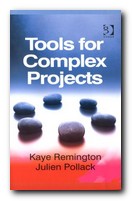
Tools for Complex Projects is not just about project management – but the management of complex and large scale projects. That complexity might be structural (building a large engineering plant) technical (developing a major new chemical) directional (a cross-national political initiative) or temporal (national oil supply during a time of war). The overall strategy of Kaye Remington and Julien Pollack’s approach to this subject is to examine the nature of these complex projects in some theoretical detail and then to offer a series of practical tools for dealing with them. There are of course other ways of categorising complexity – most commonly by scale or cost of a project, its duration, or the degree of risk to its owners. Their claim is that the four categories they have chosen are more fundamental and will cover any project.

Tools for Complex ProjectsIt has to be said that the theoretical part of the book is extraordinarily dry reading:

During implementation, variance control must be vigilant so that stakeholders are kept informed of possible cost blow-outs. Techniques like Earned Value Management (EVM) a tool which links scope with time and cost, can be used to translate schedule slippages into budgetary terms.

Discussing the features of large and complex projects only really comes to life when concrete examples are used to illustrate the argument. It’s only when a chemical refinery, an ocean-going oil tanker, or the production of a full-length feature film hove into view that the picture snaps into focus.

The same questions are posed in each of these cases. What are the implications for communication and control within the project? What does the project manager need to do to in terms of team support, finance, scheduling procurement, and risk analysis?

In fact the larger the project, the more likely it is that these issues will be delegated to individual experts. The project manager however must have the skills to keep the larger picture and the smaller details in mind at the same time. S/he must have the capacity to be one moment an eagle, and the next a mouse.

The second part of the book looks at a number of ‘tools’ for dealing with the problems generated by complex projects. These in general are suggestions for defining the problems that arise using charts and ratings boxes; drawing up one-page ‘maps’ which show the ‘anatomy’ or connections in a complex system; and collaborative working arrangements (CWAs) instead of adversarial lump-sum contracts in the construction industry to reduce budget over-runs.

Some are fairly obvious such as splitting a large-scale complex problem down into a series of smaller discrete projects which are easier to manage and complete. Another is defining quite carefully the roles and responsibilities of project team members.

Multiple tools may be employed where uncertainties are created in long term projects (due to political or environmental changes, or financial problems arising out of volatile stock-markets. In such cases, a cost review might take precedence over an examination of delivery dates.

Risk-assessment maps can be drawn up to calculate the possible effects of worst-case scenarios. These look something like TV weather forecasts, where the arrows get bigger and are packed together more tightly – to show where the danger lies and where an emergency procedure needs to be put in place.

It occurred to me whilst reading this book that one of the largest and most complex projects I could think of was governing a country. I wonder if Gordon Brown or George Bush use any such management tools whilst simultaneously running democracies and waging costly wars – which we pay for. Somehow I doubt it, but maybe they should.

© Roy Johnson 2007

Tools for Complex Projects   Buy the book at Amazon UK

Tools for Complex Projects   Buy the book at Amazon US


Kaye Remington and Julien Pollack, Tools for Complex Projects, London: Gower, 2007, pp.211, ISBN: 0566087413


More on design
More on media
More on web design
More on information design


Filed Under: Product design Tagged With: Information design, Project management, Tools for Complex Projects

Topics in essays

August 25, 2009 by Roy Johnson

sample from HTML program and PDF book

1. Topics are distinct units of meaning. They are normally sub-divisions of a subject, but they can sometimes stand as the purpose of an essay in their own right.

2. For instance, if the subject of an essay was ‘government’, the separate topics for discussion might be ‘finance and taxation’, ‘law-making’, ‘public health’, and ‘international diplomacy’. Each one of these however might, in a different context, be a subject on its own.

3. If ‘international diplomacy’ became the main subject of an essay, this might be considered by sub-dividing it into topics such as ‘government policy’, ‘political history’, ‘trade and industry’, and ‘foreign relations’.

4. In most essays, the subject in question can and should be broken down into a series of separate topics. These are then arranged in some persuasive or logical order at the planning stage to form your argument.

5. Remember that each paragraph normally deals with a separate topic. This should be signalled (usually by a ‘topic sentence’) at the outset. Its relevance to the subject in question should also be explained as part of the argument.

6. In the following essay plan the main subject is ‘French wine’ and the topics to be discussed are Loire wines, Bordeaux wines, Cotes du Rhone wines, and Burgundy wines.

Introduction

Loire
* red wine
* white wine

Bordeaux
* red wine
* white wine

Cotes du Rhone
* red wine
* white wine

Bugundy
* red wine
* white wine

Conclusion

7. In the following essay plan the main subject is ‘Congestion charging in city centres’, and the topics to be covered are – traffic density, ecology, economy, and politics.

Introduction

Part One – In favour of congestion charges
* [traffic] reduces volume
* [ecology] less air pollution
* [economy] generates local income
* [politics] positive social control

Part Two – Against congestion charges
* [traffic] public transport alternatives
* [ecology] transfers problem elsewhere
* [economy] reduces profitable activity
* [politics] punishes tax-payers

Conclusion

© Roy Johnson 2003

Buy Writing Essays — eBook in PDF format
Buy Writing Essays 3.0 — eBook in HTML format


More on writing essays
More on How-To
More on writing skills


Filed Under: Writing Essays Tagged With: Academic writing, Essays, Reports, Study skills, Term papers, Topics, Writing skills

  • « Previous Page
  • 1
  • …
  • 84
  • 85
  • 86
  • 87
  • 88
  • …
  • 103
  • Next Page »

Get in touch

info@mantex.co.uk

Content © Mantex 2016
  • About Us
  • Advertising
  • Clients
  • Contact
  • FAQ
  • Links
  • Services
  • Reviews
  • Sitemap
  • T & C’s
  • Testimonials
  • Privacy

Copyright © 2026 · Mantex

Copyright © 2026 · News Pro Theme on Genesis Framework · WordPress · Log in