Mantex

Tutorials, Study Guides & More

  • HOME
  • REVIEWS
  • TUTORIALS
  • HOW-TO
  • CONTACT
>> Home / Archives for 2009

Archives for 2009

Clauses – how to understand them

August 31, 2009 by Roy Johnson

free pages from our English Language software program

Clauses – definition

clauses Clauses are parts of a sentence which make sense independently because they contain a finite verb.

redbtn There are main clauses and subordinate clauses.


Examples

redbtn There are two clauses in this sentence:

Come in, put your coat on that chair, and sit down.

redbtn The main clause is ‘Come in … and sit down.’

redbtn The subordinate clause is ‘put your coat on that chair’.


Use

redbtn It is natural for language to structure itself into manageable parts which make complete sense in themselves.

redbtn As speakers we create comprehensible clauses spontaneously and automatically.

redbtn Written language can have a greater complexity of clauses than speech within sentences.

redbtn This is because writing can be reconsidered by the reader at any time and at any speed.

redbtn Speech on the other hand must be taken in immediately by the listener.

redbtn NB! The difference between a clause and a phrase is that a phrase does not contain a finite verb.

redbtn The term ‘clause’ belongs to the discipline of descriptive grammar. This approach is very traditional and has been taught in grammar schools for the past few hundred years. It is still considered useful as a term by which to identify the components of a sentence.

redbtn Descriptive grammar sets out with a preconceived blueprint of sentence structure and attempts to force all utterances into it.

redbtn Recently, the term was introduced into the National Curriculum for the teaching of English in schools. This states:

‘pupils should be given opportunities to develop their understanding of the grammar of complex sentences, including clauses and phrases’

redbtn This development illustrates a return to old conventions which has been brought about by conservative values. It is also based on the belief that standards of literacy have been falling due to the lack of basic grammar teaching.

redbtn ‘Transformational Grammar’, pioneered by the American linguist Noam Chomsky, is an alternative and more functional approach to understanding grammar. This discipline focuses on the relationship and function of parts in an utterance and seeks to accommodate an infinite variety of expression and usage.

redbtn For instance, the sentence John is easy to please is identical in structure to the sentence John is eager to please. In terms of meaning however, the two utterances are quite different. This example demonstrates that there is more to understanding grammar than being able to spot clauses.

Self-assessment quiz follows >>>

© Roy Johnson 2003


English Language 3.0 program
Books on language
More on grammar

Filed Under: English Language Tagged With: Clauses, English language, Grammar, Language

Cliches – how to recognise them

August 31, 2009 by Roy Johnson

free pages from our English Language software program

Cliches – definition

cliches Cliches are hackneyed phrases or expressions.

redbtn The phrases might once have been fresh or striking, but they have become tired through over-use.


Examples

“He was over the moon about that goal.”
“Yes please. I don’t mind if I do.”
“Far be it from me…”
“I would be the last person to cast aspersions.”
We will leave leave no stone unturned in our search.


Use

redbtn Clichés are often used unconsciously in casual speech.

redbtn They usually suggest mental laziness or the lack of original thought.

redbtn They should be avoided in writing.

redbtn NB! Beware. Cliché may sometimes be used consciously for ironic effect.

redbtn Clichés circulate in the spoken language very readily, because they save people having to think.

redbtn When written down, they appear even more tired and vacuous than when spoken.

redbtn Traditional examples are expressions such as it takes the biscuit, back to square one and a taste of his own medicine.

redbtn Current favourites (in the UK) include the bottom line is …, a whole different ball game, living in the real world, a level playing field, and moving the goalposts.

redbtn Clichés present a temptation, because they often seem to be just what is required to make an effect. They do the trick. They hit the nail on the head. They are just what the doctor ordered. [See what I mean?]

redbtn Here is a stunning compilation, taken from a provincial newspaper. The example is genuine, but the names have been changed to protect the innocent. [That’s a deliberate example!]

By their very nature cabarets tend to be a bit of a hit and miss affair. And Manchester’s own ‘Downtown Cabaret’ is ample proof of that. When it was good it was very good, and when it was bad it was awful. Holding this curate’s egg together was John Beswick acting as compere and keeping the hotchpotch of sketches and songs running along smoothly. And his professionalism shone through as he kept his hand on the tiller and steered the shown through a difficult audience with his own brand of witticism. Local playwright Alan Chivers had previously worked like a Trojan and managed to marshal the talents of a bevy of Manchester’s rising stars.

redbtn It isn’t always easy to see where an idiomatic expression ends and a cliché begins.

redbtn The essential difference between them is that an idiom is not being offered as original thought. We say ‘fish and chips’ because people do not normally say ‘chips and fish’ (because it’s more difficult to say). But anybody who says he’s ‘over the moon’ about something has chosen the expression, no doubt thinking that it’s impressive.

redbtn A vogue word is very close to the cliché. This is an item of vocabulary whose meaning is becoming blurred, distorted, or inflated [that is, emptied] through over-use.

redbtn The term ‘vogue’ implies that the word is currently fashionable.

  • That’s a fantastic dress! [very nice]
  • We’re in a war situation. [at war]
  • It’s a brilliant novel. [interesting]
  • She’ll get paranoid about it. [become worried]
  • What a fabulous car! [remarkable]

redbtn The use of these terms is very common in everyday speech. They should be avoided in formal writing.

Self-assessment quiz follows >>>

© Roy Johnson 2003


English Language 3.0 program
Books on language
More on grammar


Filed Under: English Language Tagged With: Cliches, English language, Grammar, Language

Clive Bell biography

September 17, 2009 by Roy Johnson

art critic and Bloomsbury socialite

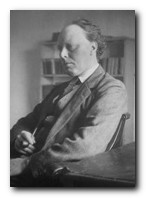
Clive Bell portraitClive Bell (1881-1964) was raised at Cleve House in Seend, Wiltshire. His father William Heward Bell was a rich industrialist who had made his money in coal mining at Merthry Tydfil. He fashioned himself Squire and re-built part of the house in the style of a Tudor mansion, adding a family crest. Clive was educated at Marlborough (a ‘public’ school – that is, private), then at Trinity College Cambridge. It was there that he met Thoby Stephen, Lytton Strachey, John Maynard Keynes, and Leonard Woolf. After university, he went to study in Paris, originally intending to do historical research. He was very influenced by the art he saw there and switched his studies to painting.
Back in London, when his friend Thoby Stephen invited fellow students home to an evening discussion group in Gordon Square, Bloomsbury, Clive met Thoby’s sisters Vanessa Stephen and Virginia Stephen. It was there that the network of friendships and liaisons was formed which became known as the Bloomsbury Group.

He became romantically attracted to Vanessa Stephen, but she turned down his first two proposals of marriage. However, in 1907, following the deaths of both her father and brother Thoby, she accepted him. They had two sons, Julian and Quentin, both of whom went on to become writers.

In 1909 he met Roger Fry by accident on a railway journey and became involved in the promotion of modern art which culminated in the famous Post-Impressionist Exhibition in 1910. Fry became a close friend of the family, and in 1911 went on holiday with them to Greece and Turkey. When Vanessa became ill, it was Roger Fry who nursed her back to health, and the pair began an affair, leaving Clive Bell to turn his romantic attentions back onto an old flame, Mary Hutchinson (who also had affairs with both Aldous Huxley and his wife Maria).

He published his first major work, Art, in 1914. In this he set out his idea of ‘significant form’, which is a notion that foregrounds the importance of form in painting over its overt subject matter. Like almost all other members of the Bloomsbury Group, he was opposed to the first world war, and in 1915 published a controversial pamphlet, Peace at Once, calling for a negotiated settlement to the conflict. This was considered an outrageous suggestion by the establishment of the time, and his essay was burned by the Public Hangman.

His relationship with Vanessa had virtually come to an end, although the couple remained on friendly terms, and Clive was a regular visitor to the family home at Charleston in Sussex. Vanessa had in fact moved on from Roger Fry to Duncan Grant, and even though he was an active homosexual, they spent virtually the rest of their lives together.

However, Vanessa had another child, Angelica. The father was Duncan Grant, but for the sake of propriety, she was given Clive’s name and passed off for nearly twenty years as his daughter. This deception and its dramatic consequences are described in Angelica’s memoir Deceived with Kindness.

His friend from Cambridge, Lytton Strachey described the various facets of Bell’s personality:

His character has several layers, but it is difficult to say which is the fond. There is the country gentleman layer which makes him retire into the depths of Wiltshire to shoot partridges. There is the Paris decadent layer, which takes him to the quartier latin where he discusses painting and vice with American artists and French models. There is the eighteenth-century layer which adores Thoby Stephen. There is the layer of innocence which adores Thoby’s sister. There is the layer of prostitution, which shows itself in an amazing head of crimped straw-coloured hair. And there is the layer of stupidity which runs transversely through all the other layers.


Clive Bell


Bloomsbury Group – web links

Bloomsbury Group - web links Hogarth Press first editions
Annotated gallery of original first edition book jacket covers from the Hogarth Press, featuring designs by Vanessa Bell, Roger Fry, and others.

Bloomsbury Group - web links The Omega Workshops
A brief history of Roger Fry’s experimental Omega Workshops, which had a lasting influence on interior design in post First World War Britain.

Bloomsbury Group - web links The Bloomsbury Group and War
An essay on the largely pacifist and internationalist stance taken by Bloomsbury Group members towards the First World War.

Bloomsbury Group web links Tate Gallery Archive Journeys: Bloomsbury
Mini web site featuring photos, paintings, a timeline, sub-sections on the Omega Workshops, Roger Fry, and Duncan Grant, and biographical notes.

Bloomsbury Group - web links Bloomsbury: Books, Art and Design
Exhibition of paintings, designs, and ceramics at Toronto University featuring Hogarth Press, Vanessa Bell, Dora Carrington, Quentin Bell, and Stephen Tomlin.

Bloomsbury Group - web links Blogging Woolf
A rich enthusiast site featuring news of events, exhibitions, new book reviews, relevant links, study resources, and anything related to Bloomsbury and Virginia Woolf

Bloomsbury Group - web links Hyper-Concordance to Virginia Woolf
Search the texts of all Woolf’s major works, and track down phrases, quotes, and even individual words in their original context.

Bloomsbury Group - web links A Mrs Dalloway Walk in London
An annotated description of Clarissa Dalloway’s walk from Westminster to Regent’s Park, with historical updates and a bibliography.

Bloomsbury Group - web links Women’s History Walk in Bloomsbury
Annotated tour of literary and political homes in Bloomsbury, including Gordon Square, University College, Bedford Square, Doughty Street, and Tavistock Square.

Bloomsbury Group - web links Virginia Woolf Society of Great Britain
News of events, regular bulletins, study materials, publications, and related links. Largely the work of Virginia Woolf specialist Stuart N. Clarke.

Bloomsbury Group - web links BBC Audio Essay – A Eulogy to Words
A charming sound recording of a BBC radio talk broadcast in 1937 – accompanied by a slideshow of photographs of Virginia Woolf.

Bloomsbury Group - web links A Family Photograph Albumn
Leslie Stephens’ collection of family photographs which became known as the Mausoleum Book, collected at Smith College – Massachusetts.

Bloomsbury Group - web links Bloomsbury at Duke University
A collection of book jacket covers, Fry’s Twelve Woodcuts, Strachey’s ‘Elizabeth and Essex’.

© Roy Johnson 2000-2014


More on biography
More on the Bloomsbury Group
Twentieth century literature


Filed Under: Bloomsbury Group Tagged With: Art, Biography, Bloomsbury Group, Clive Bell, Cultural history

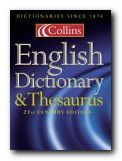
Collins Dictionary and Thesaurus

June 11, 2009 by Roy Johnson

dictionary and thesaurus – two books in one

The Collins Dictionary and Thesaurus (In One Volume) was first produced in 1987.  My copy is the 1990 reprint and like all good dictionaries it is now falling apart, because it has stopped me from falling apart in the decade since I received it as a gift from my wife.  Even though I have the advantage of spellcheck and thesaurus on computer, The Collins Dictionary and Thesaurus is – and will remain – on my desk.  Why do I like it so much?  Why is it such a popular dictionary?

Dictionary and ThesaurusWhen it came out, it was the first time that a dictionary and thesaurus had been put together in this format.  Like all great concepts, it was essentially a simple idea – a general purpose dictionary and thesaurus arranged so that matching relevant material was printed on the same page.  If you want to check the spelling and meaning of concubine, you look at the top half of the page, then check out the lower thesaurus half for a range of alternative words.

This is just very convenient, and it makes the book doubly useful. The arrangement of the print and the division of the pages is very attractive to the eye and easy to read – which is a godsend for people who have to work late to deliver deadlines.  The alphabetical ordering is thumb indexed with the letters printed in gold on a black background. The aesthetic qualities of the Collins Dictionary and Thesaurus are excellent to the last detail, and this shows a design awareness that is in tune with the people most likely to use it. The book which stares up at me from the desk looks good as well as having first-rate content.

There are 71,000 dictionary references and a quarter of a million thesaurus synonyms in this volume, all gathered from the larger Collins English Dictionary and New Collins Thesaurus.  I believe a good dictionary gives a feel for the linguistic zeitgeist of the time in which it was produced.  Open this volume at any page and you’ll be hit by the vibrant choice of words – hatchet man, roly-poly, parodist, polish off.  Look in the Thesaurus – what synonyms does it give for Police? Boys In Blue, Fuzz, Old Bill, The Law. It’s plain to see that this volume is aimed at being more than a language tool: it’s also a good read.

This strength, the volume’s readability, can also be perceived as a weakness.  It’s hard to open the book, get the word you immediately need, and then shut it and move on. I invariably, end up skimming and scanning the rest of the page, flicking through, opening at random and seeing what jumps off the page.  This is great fun, but it can be a distraction when there’s a deadline to meet.

The definitions of words are plainly and exactly expressed throughout. Cannelloni are ‘tubular pieces of pasta filled with meat or cheese’. The synonyms are often poetic, evocations of the many spirits resident within a single word.  Dig yields break up, burrow, delve, excavate, gouge, grub, hoe, hollow out, mine.

In his introduction to A Dictionary Of The English Language, Samuel Johnson wrote that those who engaged in the business of writing dictionaries were ‘exposed to censure without hope of praise’.  Or as we might call it the ‘Hiding to Nothing’ syndrome. Personally, I can’t praise the managing editor William T McLeod and his team enough.  They have produced a book that would be my choice of reading matter if I was stranded on a desert island – a popular, attractive, user-friendly and entertaining celebration of language.

© Mark Roberts 2011

Collins Dictionary and Thesaurus   Buy the book at Amazon UK

Collins Dictionary and Thesaurus   Buy the book at Amazon US


The Collins Dictionary and Thesaurus In One Volume, London: Collins, 5th edition 2011, pp.1344, ISBN: 0007429029


More on language
More on literary studies
More on writing skills
More on creative writing
More on grammar


Filed Under: Dictionaries Tagged With: Collins Dictionary and Thesaurus, Dictionaries, Language, Reference

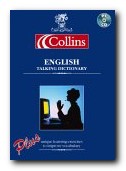
Collins Electronic Dictionary

June 11, 2009 by Roy Johnson

popular electronic talking dictionary

Dictionary owners have been quicker than most publishers to exploit the commercial possibilities of their databases. This software offers a talking dictionary containing 80,000 words. It comes with a set of tools for speedy and accurate look-up of any words or phrases on your computer. The information about each item is fairly basic, but pronunciation using the voices of professional native speakers is used in the audio recordings.

Collins Electronic DictionaryThe dictionary can be used with any other computer application to get the definition and correct spelling of words – as well as for listening to a reading of each entry. It’s part of a series that uses the complete text of printed dictionaries, adapted so that they sit on a corner of your screen while you’re working.

It’s designed for non-native English users, but the adaptation to computer has been so well thought out that native English speakers who want more than a spell checker will also find it useful. One good feature is that long entries have their own scroll button, so that you can read each entry without enlarging the dictionary screen or losing your place.

If you encounter a word in a definition you don’t understand, you simply right click on it and jump to its definition; then a single click takes you back to the original entry. Bookmarks can be used for more complex cross-referencing.

Definitions can be transferred to the main screen via the clipboard or drag and drop, and text can also be imported into the dictionary where each word will automatically be defined. You can hear all headwords in standard English pronunciation at a single click. Learners can then practice their pronunciation, comparing it with the original.

There’s also a system of entertaining and dynamic exercises which enables you to not only memorize the words you need, but also type them correctly. You can also monitor your progress and displayed with helpful graphics.

© Roy Johnson 2000

Collins Electronic Dictionary   Buy the CD at Amazon UK

Collins Electronic Dictionary   Buy the CD at Amazon US


Intense Language Office / Collins Talking Dictionary on CD-Rom; HarperCollins Publishers 1995 / Intense Educational Ltd 2002. ISBN: 1903397154


More on language
More on literary studies
More on writing skills
More on creative writing
More on grammar


Filed Under: Dictionaries Tagged With: Collins Electronic Dictionary, Dictionaries, Language, Reference, Talking dictionaries

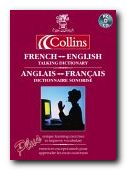
Collins French-English Dictionary

June 11, 2009 by Roy Johnson

talking dictionary dual-language software

Don’t be misled by the title of this program. It’s is two books in one – a French-English dictionary as well as an English-French. And it’s very easy to switch between the two. The program installs effortlessly and takes up 44MB of hard disk space. In terms of sheer vocabulary there are over 80,000 words and phrases, and over 120,000 translations. It can be used with any other computer application to translate words and phrases, as well as for listening to the pronunciation of French and English words.

Collins French-English DictionaryThe word-base comes from the Collins paper dictionary, and you can easily add other dictionaries into the same basic program. There’s a talk-through introduction explaining all these functions – done by a very fruity-voiced woman, who even started playing jazz piano part way through. Each entry has a sound file attached giving the correct pronunciation. The sound files can either be run from the CD or copied permanently onto your hard drive. If the program reads the sound files off the CD, there’s a teensy time-lag first time you click on a word, but after that each successive selection plays instantly.

The program can sit in a small window in the corner of your screen, so you can keep it open unobtrusively whilst working on another document. I liked the fact that you can locate a term easily, simply by typing the first few letters into a dialogue box.

You can also work with the dictionary in condensed or expanded mode – which means that less or more details are shown for each entry. And you can test your grasp of the language as you go along with either a shooting gallery exercise or a crossword.

The AudioPad feature gives you the chance to practise your speaking skills with the help of professionals. You compare your pronunciation with the expert speaker, and see the result in sound waves on screen.

There’s a full HELP system which explains how to use and configure the program. It also lists keyboard shortcuts. Useful tips, answers to frequently asked questions, and database updates are available at the publisher’s web site.

Who is it for? I would say beginners to intermediate, as well as professional and business users. I’ve been using it to brush up my restaurant-level French skills, so that I can get closer to the goodies of Provencal gastronomy. And it works.

© Roy Johnson 2005

Collins French-English Talking Dictionary   Buy the CD at Amazon UK

Collins French-English Talking Dictionary   Buy the CD at Amazon US


Collins Talking French-English Dictionary, Intense Educational, 2004, CD-ROM


More on language
More on literary studies
More on writing skills
More on creative writing
More on grammar


Filed Under: Dictionaries Tagged With: Collins French-English Talking Dictionary, Dictionaries, English language, French language, Language, Reference, Talking dictionaries

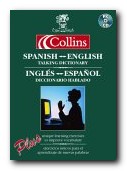
Collins Spanish-English Dictionary

June 11, 2009 by Roy Johnson

dual-language talking dictionary

Don’t be misled by the title of this program. It’s is two dictionaries in one – a Spanish-English dictionary as well as English-Spanish. And it’s very easy to switch between the two. The program installs effortlessly and takes up 44MB of hard disk space. In terms of sheer vocabulary there are over 80,000 words and phrases, and over 120,000 translations. The dictionary can be used with any other computer application to translate words and phrases, as well as for listening to the correct pronunciation of Spanish and English words.

Spanish-English DictionaryThe dictionary word-base comes from the Collins paper dictionary, and you can easily add other dictionaries into the same basic program. There’s a talk-through introduction explaining all these functions – done by a very fruity-voiced woman, who even started playing jazz piano part way through.

Each entry has a sound file attached giving the correct pronunciation. The sound files can either be run from the CD or copied permanently onto your hard drive. If the program reads the sound files off the CD, there’s a teensy time-lag first time you click on a word, but after that each successive selection plays instantly.

The program can sit in a small window in the corner of your screen, so you can keep it open unobtrusively whilst working on another document. I liked the fact that you can locate a term easily, simply by typing the first few letters into a dialogue box.

You can also work with the dictionary in condensed or expanded mode – which means that less or more details are shown for each entry. And you can test your grasp of the language as you go along with either a shooting gallery exercise or a crossword.

The AudioPad feature gives you the chance to practise your speaking skills with the help of professionals. You compare your pronunciation with the expert speaker, and see the result in sound waves on screen.

There’s a full HELP system which explains how to use and configure the program. It also lists keyboard shortcuts. Useful tips, answers to frequently asked questions, and database updates are available at the publisher’s web site.

It recognises the importance of distinctions between European and Latin-American usages, and each definition comes with a sign as to whether it is used in Spain or in the Americas.

Who is it for? I would say beginners to intermediate, as well as professional and business users. I’ve been using it to brush up my restaurant-level Spanish skills, so that I can get closer to the goodies of Andalucian gastronomy. And it works.

© Roy Johnson 2004

Collins Spanish-English Dictionary   Buy the book at Amazon UK

Collins Spanish-English Dictionary   Buy the book at Amazon US


Collins Talking Spanish-English Dictionary, Intense Educational, 2004, CD-ROM


More on language
More on literary studies
More on writing skills
More on creative writing
More on grammar


Filed Under: Dictionaries Tagged With: Collins Spanish-English Dictionary, Dictionaries, Language, Reference, Spanish language, Talking dictionaries

Colons – how to use them

August 31, 2009 by Roy Johnson

free pages from our English Language software program

Colons – definition

colons Colons are used to introduce strong pauses within sentences.

redbtn The colon is the longest pause short of a full stop.


Examples

redbtn Colons are used to introduce lists:

The car has a number of optional extras: sun roof, tinted windows, rear seat belts, and electrically operated wing mirrors.

redbtn The colon separates two clauses which could stand alone as separate sentences, but which are linked by some relationship in meaning:

My brother likes oranges: my sister hates them.

redbtn The colon is also used before a long quotation or a speech:

Speaking at Caesar’s funeral, Anthony addresses the crowd: “Friends, Romans, countrymen …”

redbtn It is also used before a clause which explains the previous statement:

The school is highly regarded: academic standards are high, the staff are pleasant, and the students enjoy going there.


Use

redbtn The colon can be used to provide emphasis, or to create dramatic effect:

There can be only one reason for this problem: his total incompetence.

redbtn It is also used at the end of a statement which is followed by an illustration:

The vase contains beautiful flowers: roses, tulips, and daffodils.

redbtn NB! The colon followed by a dash (: —) is never necessary. The colon alone is sufficient, even before a list.

redbtn Notice that the items which follow a list are punctuated with commas if they are a succession of individual words.

You will need four ingredients: flour, butter, milk, and sugar.

redbtn If the items in the list contain clauses or phrases these may be punctuated with semicolons:

You will need the following materials: some scrap paper; a pen, preferably blue or black; some envelopes; and some good, white, unlined writing paper.

redbtn The colon requires careful handling. If you are in any doubt, use separate sentences.

redbtn The colon is also used between the title and the sub-title of a book:

Magical Realism: Latin-American fiction today.

Self-assessment quiz follows >>>

© Roy Johnson 2003


English Language 3.0 program
Books on language
More on grammar


Filed Under: English Language Tagged With: Colons, English language, Grammar, Language, Punctuation

Colons in essays

August 22, 2009 by Roy Johnson

sample from HTML program and PDF book

1. Colons in essays are marks of punctuation used to introduce a strong pause within a sentence. They separates two clauses which could stand alone as separate sentences but which are linked by some relationship in their meaning.

2. A colon is used to introduce a list:

The car has a number of optional extras: sun roof, tinted windows, rear seat belts, and electrically operated wing mirrors.

3. It normally precedes a long quotation or a speech:

Speaking at Caesar’s funeral, Anthony addresses the crowd: “Friends, Romans, countrymen …”

4. It is used before a clause which explains (often by way of illustration) the previous statement. It suggests the sense of ‘That is to say’ or ‘Namely’:

The school is highly regarded: academic standards are high, the staff are pleasant, and the students enjoy going there.

5. It is used to indicate a sharp contrast:

My brother likes oranges: my sister hates them.

6. Note that the colon followed by a dash (:—) is never necessary. Some people put these before a list, but the colon alone is sufficient.

7. The colon is also used between the title and the sub-title of a book:

Magical Realism: Latin-American fiction today.

8. Notice that the items which follow a list are punctuated with commas if they are a succession of individual words.

You will need four ingredients: flour, butter, milk, and sugar.

9. If the items in the list contain clauses or phrases these may be punctuated with semicolons:

You will need the following materials: some scrap paper; a pen, preferably blue or black; some envelopes; and some good, white, unlined writing paper.

10. The colon requires careful handling. If you are in any doubt, use separate sentences.

© Roy Johnson 2003

Buy Writing Essays — eBook in PDF format
Buy Writing Essays 3.0 — eBook in HTML format


More on writing essays
More on How-To
More on writing skills


Filed Under: Writing Essays Tagged With: Academic writing, Colons, Essays, Grammar, Punctuation, Study skills, Term papers, Writing skills

Commas – how to use them

August 31, 2009 by Roy Johnson

free pages from our English Language software program

Commas – definition

commas Commas are used to show slight pauses in a sentence.

redbtn Commas are the lightest marks of punctuation.


Examples

He will never do it, whatever he says.
She bought some butter, a pint of milk, and some jam.
Cars should turn left here, whilst vans should turn right.


Use

redbtn The comma is used to separate words, clauses, or phrases in a sentence.

redbtn It is used to help clarify the sense of statements and to prevent ambiguity.
redbtn It is also used to separate the items in lists.

redbtn NB! Use commas to clarify meaning. Don’t scatter them around like confetti.

redbtn The comma is used to separate two clauses when the first is not closely associated with the second:

She is a famous singer, whilst her husband remains unknown.

redbtn It is used to introduce a pause where the eye might otherwise continue and mistake the sense of what is written:

In the valley below, the villages looked small.

redbtn It is used to separate a sequence of adjectives which qualify a noun:

He was an arrogant, pompous fellow.

redbtn However, when the adjectives are of a different order or type, no comma is necessary:

He was a distinguished foreign visitor.

redbtn The comma is used to mark the start and finish of a parenthetical phrase within a sentence:

I am quite sure, despite my reservations, that he’s the best man for the job.

redbtn A very common use for the comma is to separate the items in a list:

The box contained a book, some pencils, and a knife.

redbtn Opinions differ on the need for the final comma in such examples. If the items are all of the same kind, it can usually be omitted. If they are not, it is usually safer to retain the comma.

Self-assessment quiz follows >>>

© Roy Johnson 2003


English Language 3.0 program
Books on language
More on grammar


Filed Under: English Language Tagged With: Commas, English language, Grammar, Language, Punctuation

  • « Previous Page
  • 1
  • …
  • 14
  • 15
  • 16
  • 17
  • 18
  • …
  • 103
  • Next Page »

Get in touch

info@mantex.co.uk

Content © Mantex 2016
  • About Us
  • Advertising
  • Clients
  • Contact
  • FAQ
  • Links
  • Services
  • Reviews
  • Sitemap
  • T & C’s
  • Testimonials
  • Privacy

Copyright © 2026 · Mantex

Copyright © 2026 · News Pro Theme on Genesis Framework · WordPress · Log in