Mantex

Tutorials, Study Guides & More

  • HOME
  • REVIEWS
  • TUTORIALS
  • HOW-TO
  • CONTACT
>> Home / Archives for 2009

Archives for 2009

Semiotics: the basics

June 8, 2009 by Roy Johnson

Semiotics is ‘the study of signs’ – but what constitutes a ‘sign’? Basically, it can be anything. Its significance will be determined by the context in which it appears and the way in which it is interpreted. The colour red can suggest passion, danger, or heat, depending on where it occurs and who perceives it. Daniel Chandler’s introduction to the subject explains the history and the various strands of the subject in everyday language, using up-to-date examples.
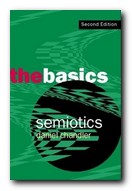
Semiotics: the basicsBasically, his account covers the development of these ideas from the nineteenth-century Swiss linguist Saussure, to post-modern cultural theorists of the present day. Semiotics is a subject which can hardly escape the dominance of language as the most developed system of signs. This is because language has what he calls ‘double articulation’. What this means is that small units (words) can be signs, but they can be combined indefinitely with each other to form other, bigger, or more complex signs. However, the theory leads effortlessly into considerations of linguistics, philosophy, and critical theory, as well as cultural media such as television, photography, literature, cinema, and even academic writing. This is in addition to the more obvious day-to-day sign systems of facial expressions, food, clothing, and social gestures.

His guidance through this multi-discipline maze is thoughtful and clear, and even though you have to be prepared to dip your toes into the waters of critical theory, he has a reassuring manner which makes it a pleasant intellectual experience.

I enjoyed his chapters on metaphor, irony, and codes – though a few more examples of how the theory could be applied would be useful. It would also be interesting to consider why something deprecated in one code (switching point of view in film, for instance) is permitted in another, such as narrative fiction.

However, he summarises his exposition with a useful chapter outlining the strengths and limitations of semiotics as an analytic tool. I was slightly surprised he didn’t include more comment on the Internet as a cultural medium, because this book has its origins as a well-established web site where he has been posting help for his students in the last few years.

Semiotic theory claims that it can reveal the codes and conventions shaping what we might otherwise think of as ‘natural’, which makes it a powerful tool for analysing all forms of culture and human communication. This an excellent basic introduction to the subject, with a good glossary, an index, and a list of further reading.

© Roy Johnson 2007

Semiotics   Buy the book at Amazon UK

Semiotics   Buy the book at Amazon US


Daniel Chandler, Semiotics: The Basics, London: Routledge, 2nd edition 2007, pp. 328, ISBN: 0415363756


More on digital media
More on technology
More on theory


Filed Under: Media, Theory Tagged With: Communication, Language, Media, Semiotics, Theory

Sentences – how to use them correctly

September 13, 2009 by Roy Johnson

free pages from our English Language software program

Sentences – definition

sentences A sentence is a group of words which is usually a grammatically complete statement.

redbtn It is often the expression of a thought.

redbtn In writing, sentences should begin with a capital letter and end with a full stop.


Examples
Command Keep left.
Question Is James joining us for breakfast?
Statement Smoking can damage your health.

redbtn A normal sentence in English usually contains at least three elements: a subject, a verb, and an object.

Subject Verb Object
The cat ate the goldfish
My friend wants your address
Some sheep have black fleece

Use

redbtn The sentence is a unit of meaning in both speech and writing.

redbtn We speak in sentences automatically from the time we first acquire language.

redbtn A sentence is defined as a grammatically complete unit, but it might need other sentences around it to make its meaning clear.

redbtn Constructing written sentences may be difficult. This is a skill which has to be learned.

redbtn Written sentences may be very short [‘Jesus wept’] or very long, but their underlying structure must follow grammatical conventions.

redbtn NB! Short sentences help to create clear expression. Keep them short. Keep them simple.

redbtn There are various kinds of sentences – simple, complex, and compound.

redbtn A simple sentence is one which contains phrases rather than clauses. A simple sentence contains one subject and one object or predicate. For example:

Subject Verb Predicate
I am the head of this department.
We won last Saturday’s match.
Jean is in the house.

redbtn In all the examples above, when the subject is removed we are left with a phrase – an utterance which has no finite verb.

redbtn The expressions ‘in the house’, ‘last Saturday’s match’, and ‘the head of this department’, are all phrases not clauses.

redbtn A complex sentence contains one or more subordinate clauses. In the examples which follow, the subordinate clause is emphasised.

The suspect denied that he had been in the neighbourhood.

You won’t persuade me to stay no matter how hard you try.

Despite the fact that I had ordered the meal, I left the restaurant when I saw him arrive.

I went out shopping, although it was raining, and bought a basket of fruit.

redbtn In all these examples, the removal of the main clause leaves another clause (an utterance with a finite verb) and not a phrase.

redbtn A compound sentence is one in which contains two or more co-ordinating parts.

It’s starting to rain // and I have left my deck-chair outside.

The film we saw last night // was interesting and enjoyable.

We have no red towels // but we have plenty of green ones.

redbtn The following terms can be used to classify types of sentences by their function.

redbtn A statement – grammatically defined by the position of the subject immediately before the verb:

The pen is mightier than the sword.

redbtn A question – grammatically defined by the initial element being ‘how’, ‘what’, ‘when’, ‘where’, or ‘why’:

How many spoons are in that box?

redbtn A command – grammatically defined by the initial positioning of the verb:

Go to the bus stop and wait for your father.

redbtn An exclamation – grammatically defined by an initial ‘what’, ‘how’, and the rest of the utterance being in statement form:

What a pity it’s raining for our picnic!

redbtn It is possible to have meaningful sentences which do not have all three normal elements:

[Subject – Verb – Object]

redbtn In such cases, any missing part is usually implied –

‘[I] thankyou’.

redbtn Many people lose grammatical control of their sentences because they use:

  • features from speech
  • conversational style
  • badly linked phrases
  • vague punctuation
  • faulty syntax

Self-assessment quiz follows >>>

© Roy Johnson 2004


English Language 3.0 program
Books on language
More on grammar


Filed Under: English Language Tagged With: English language, Grammar, Language, Sentences, Writing

Sentences in essays

August 25, 2009 by Roy Johnson

sample from HTML program and PDF book

1. Short, clear, and simple sentences are usually more effective than those which are long and complex. Avoid piling up clause upon clause. In the majority of essays, you should aim for clarity and simplicity in your written style. If in doubt, remember this rule: Keep it short. Keep it simple.

2. Punctuate your work firmly, making a clear distinction in your writing between marks such as the comma, the semicolon, and the full stop.

3. Remember that all sentences without exception must begin with a capital letter and end with a full stop.

4. Remember that the common word order (syntax) of a simple sentence written in English is as follows:

subject – verb – object

The cat eats the goldfish
Elephants like grass
We are the best team

If you are in any doubt at all, follow this pattern. Sentences which go out of grammatical control often lack one of these elements, or they have them placed in a different order.

5. You should avoid starting sentences with words such as ‘Again’, ‘Although’, ‘But’, ‘And’, ‘Also’, and ‘With’. These words are called conjunctions, which normally belong in the ‘middle’ of a sentence, not at its beginning. Sentences which begin with a conjunction are very often left grammatically incomplete.

6. Remember that speech and writing are two different forms of communication. Avoid the use of a casual or conversational style when writing. For instance don’t string together clauses which are grammatically unrelated. This is quite normal in speech, but it should be avoided in formal writing.

7. What follows is an example of a statement which has too many unrelated clauses, which goes on too long, and which eventually skids out of grammatical control.

Less smoking would undoubtedly lead to redundancies in the tobacco industry, a consequent rise in the number of unemployed, more people dependent upon State benefits to be supported by a government with subsequently reduced income.

8. The same arguments can be expressed far more clearly and effectively by splitting them up into two separate and shorter sentences. (I have also made one or two minor changes to enhance the sense.)

Less smoking would undoubtedly lead to redundancies in the tobacco industry and a consequent rise in the number of unemployed. More people would then become dependent upon State benefits, which would have to be paid out by a government with a reduced income.

9. Most problems in sentence construction are caused by two or three closely related factors:

  • The sentence is much too long.
  • Too many unrelated clauses.
  • The sentence starts with its verb or object, rather than the subject.
  • The sentence start with a conjunction (‘although’, ‘because’).

10. The solution to this problem is worth repeating:

Keep it short. Keep it simple.

© Roy Johnson 2003

Buy Writing Essays — eBook in PDF format
Buy Writing Essays 3.0 — eBook in HTML format


More on writing essays
More on How-To
More on writing skills


Filed Under: Writing Essays Tagged With: Academic writing, Essays, Reports, Sentences, Study skills, Term papers, Writing skills

Shakespeare’s Bawdy

July 14, 2009 by Roy Johnson

all the Bard’s smut, indecency, and suggestiveness

Eric Partridge was a maverick, self-taught Australian lexicographer. In addition to scholarly work on grammar and linguistics, he specialised in slang, swearing, and the colourful language of everyday life. In this classic work from 1941 he combines a study of ‘rude language’ with a scholarly reading of Shakespeare. The result in Shakespeare’s Bawdy is a marvellous compilation of Shakespeare’s linguistic inventiveness and an in-depth study of imagery, allusion, innuendo, and metaphor. Structurally, the book is composed in its first part of introductory essays on sexual, homosexual, and general bawdy; and then in its second part a major glossary of terms, with quoted examples from the plays and poetry.

Shakespeare's Bawdy Partridge assumes that all the opinion, references, and allusions represent Shakespeare’s own personal opinion, rather than that of the characters who express them. This is an approach which many today would take to be critically naive. But I don’t think this matters too much. Most people reading the book will be delighted with Partridge’s learned swashbuckling style, grateful for his scholarship, and amused by the plethora of examples he explores. Here’s a typical example which illustrates both the scholarly detail and the amazing density of the sexual reference he uncovers:

boat hath a leak, her. To Edgar’s Come o’er the bourne, Bessy, to me’, the Fool adds, ‘Her boat hath a leak And she must not speak Why she doth not come over to thee’ (Lear, III vi 25-28). Perhaps, ‘she is having her period’, but probably ‘she is suffering from gonorrhoea’. (Cf. leaky.)
The boat may be the female body (cf. carrack), a rich prize that a man is ready to board; or it may, by a shape-allusion, be the female pudend.

This is a linguistic register in which innocent words such as ‘neck’ and ‘nose’ are used to imply sexual body parts, and even the pronunciation of the single letter ‘n’ may be used suggestively. What the majority of these entries reveal however is not simply the sauciness and ribaldry of Shakespeare’s language, but his amazing power of coining metaphors and the spectacular profundity of his imagination.

This is one of the first volumes in Routledge’s re-issue of books which have established themselves as classics. They are now available for those who missed them first time round, and for a younger generation for whom the authors are just frequently-cited names in bibliographies.

Because they have now acquired the status of ‘set texts’, the current editions have been given introductions, prefaces, and notes which place them in historical context and offer a scholarly apparatus which make them even more valuable than their original editions.

All Partridge’s books are a joy to read, and this is no exception. This is a handsomely produced book – well designed and printed, and very good value at the price. It’s a series which deserves to prosper.

© Roy Johnson 2002

Buy the book at Amazon UK

Buy the book at Amazon US


Eric Partridge, Shakespeare’s Bawdy, London: Routledge Classics, 2001, pp.291, ISBN: 0415254000


Filed Under: Slang Tagged With: Dictionaries, Eric Partridge, Language, Reference, Shakespeare, Slang

Sigmund Freud – The Ego and the Id

October 5, 2009 by Roy Johnson

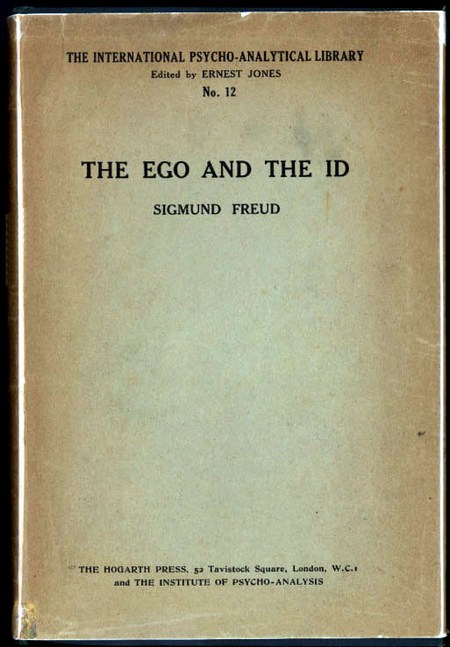
Hogarth Press first edition book jacket designs


The Ego and the Id - first edition

 
Sigmund Freud, The Ego and the Id (1927) The International Psycho-Analytic Library, No.12

“From 1922 to 1939 the International Psycho-Analytic Library offered nine of Freud’s books and two Epitomes. Joan Riviere translated two of the nine books, James Strachey two books (Group Psychology and the Analysis of the Ego, 1922, and An Autobiographical Study, 1935), and Alix Strachey one book (Inhibitions, Symptoms, and Anxiety, 1936). Only four other translators were entrusted with translating Freud’s books in the series: C.M.J. Hubback (Beyond the Pleasure Principle, 1922), W.D Robson-Scott (The Future of an Illusion, 1928). W.J.H. Sprott (New Introductory Lectures on Psycho-Analysis, 1933), and Katherine Jones (Moses and Monotheism, 1939).”

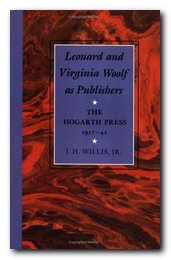
J.H. Willis Jr, Leonard and Virginia Woolf as Publishers: The Hogarth Press 1917-1941

It was James Strachey, Lytton Strachey’s brother, who arranged to have the Hogarth Press become the publisher for the books of the International Psycho-Analytic Library in 1924. The Press bought the rights to the previously published titles in the ILP series, inheriting the already printed volumes (bearing the International Psycho-Analytic Press imprint) along with the rights to Freud’s Collected Papers for £800. Thus the Hogarth Press became the publisher of Freud in English, making a major contribution to twentieth-century thought and increasing the international importance of the Press. Freud’s Collected Papers also became one of the Press’s most successful publications. Freud’s reputation grew tremendously in the 1920s and 1930s. The Ego and the Id, along with other works by Freud, were an important part of the Press list for decades.

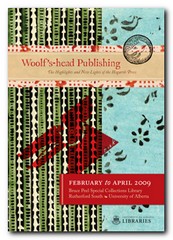
Elizabeth Willson Gordon, Woolf’s-head Publishing: The Highlights and New Lights of the Hogarth Press

previousnext


Hogarth Press studies

Woolf's-head Publishing Woolf’s-head Publishing is a wonderful collection of cover designs, book jackets, and illustrations – but also a beautiful example of book production in its own right. It was produced as an exhibition catalogue and has quite rightly gone on to enjoy an independent life of its own. This book is a genuine collector’s item, and only months after its first publication it started to win awards for its design and production values. Anyone with the slightest interest in book production, graphic design, typography, or Bloomsbury will want to own a copy the minute they clap eyes on it.

Woolf's-head Publishing Buy the book at Amazon UK
Woolf's-head Publishing Buy the book at Amazon US

The Hogarth Press Leonard and Virginia Woolf as Publishers: Hogarth Press, 1917-41 John Willis brings the remarkable story of Leonard and Virginia Woolf’s success as publishers to life. He generates interesting thumbnail sketches of all the Hogarth Press authors, which brings both them and the books they wrote into sharp focus. He also follows the development of many of its best-selling titles, and there’s a full account of the social and cultural development of the press. This is a scholarly work with extensive footnotes, bibliographies, and suggestions for further reading – but most of all it is a very readable study in cultural history.

The Hogarth Press Buy the book at Amazon UK
The Hogarth Press Buy the book at Amazon US

© Roy Johnson 2005


Filed Under: Hogarth Press Tagged With: Art, Bloomsbury, Graphic design, Hogarth Press, Literary studies, Sigmund Freud, The Ego and the Id

Signposting in essays

August 25, 2009 by Roy Johnson

sample from HTML program and PDF book

1. In most essays (up to 3000 words) you should avoid ‘signposting’ your argument. That is, you do not need to use expressions such as

‘Later in this essay I will be discussing…’
‘Let us now go on to consider…’
‘As I demonstrated earlier…’
‘We will now turn to evaluate another example…’

2. Just state clearly the point of your arguments and leave them to speak for themselves, uncluttered by any direction indicators. You do not need to offer a commentary on what you have already said, or what you will be saying later. In a well-planned essay, this progression should be self-evident from the arrangement of your work.

3. A sound essay plan and a coherent structure will reveal the logic of your argument and the relationship of its parts. If you have, for instance, four main topics to discuss, simple state clearly what those topics are, then deal with them separately, one after the other.

4. Each new topic should be clearly identified or defined as soon as you begin dealing with it. This statement will provide all the indication needed of your intentions. Remember that each paragraph should deal with just one principal stage or item of your argument. Each new topic requires a separate paragraph.

5. If you wish to some light indication of structure, it is perfectly acceptable to use formulations such as

‘The first reason … The second…’
‘On one hand … on the other…’
‘However, the main argument against this is…’

These statements will demonstrate that you have control of your argument.

6. Remember that although an essay may take many hours to write, it will only take a few minutes to read. Signposting is only necessary in very long pieces of work. Even then, skillful writers will integrate any direction indicators into their work as unobtrusively as possible.

7. The conventions on signposting may vary slightly from one subject to another. In some of the sciences it is necessary to announce in advance what you will be writing about. However, these pieces of work are likely to be closer to experimental reports than continuous prose arguments.

8. Similarly, in some branches of psychology or linguistics, students may sometimes be required to offer a meta-critique of a written assignment. They will be expected to describe what they are writing. This is to demonstrate their awareness of the processes in which they are engaged.

9. With these few exceptions, you should not normally comment on the manner in which you have written an essay. Your tutor doesn’t need to know in what order you assembled your evidence, or what difficulties you encountered during its composition. Some students try to disarm possible criticism by announcing in advance how difficult the question was to answer. Your tutor will already know its degree of difficulty, and doesn’t need to be told again.

10. However, you may wish to argue that the question raises a certain number of difficulties or crucial issues. This is acceptable – so long as you say what they are. You should then go on to discuss their relevance to the subject in question, and maybe even suggest some answers to them.

11. The conventions on signposting in report writing are different. Reports are normally written to a pre-determined structure or set of headings. These provide the sequence of events which in a conventional essay have to be constructed by the author.

12. A report of an investigation or an experiment will also have its own sequence of events, so it will be quite acceptable to use expressions such as ‘First the X was added to the Y … and then Z occurred … The results were then analysed and are shown in Table One’.

© Roy Johnson 2003

Buy Writing Essays — eBook in PDF format
Buy Writing Essays 3.0 — eBook in HTML format


More on writing essays
More on How-To
More on writing skills


Filed Under: Writing Essays Tagged With: Academic writing, Essays, Reports, Signposting, Study skills, Term papers, Writing skills

Signs, Symbols and Icons

July 17, 2009 by Roy Johnson

history and development of iconography

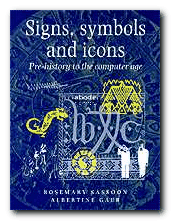
As its title suggests, this study of iconography uses a structure of historical progression to argue that symbolic presentation has been “part of the collective subconscious of the human race since earliest times”. In the first part of the book Albertine Gaur compresses a great deal of cultural history and draws on an impressively wide range of ethnographic reference to argue the case. She starts with non-verbal scripts used as mnemonics, tallies, maps, and marks of ownership – many of which are still with us in the form of title brands, logos, watermarks, and seals. Then she deals with fascinating examples of number symbols, iconography in religion and art, and even the [possible] origins of phonetic writing.

Signs, Symbols and IconsAt its weakest this is not much more than a very elegantly illustrated list, with examples jumping from pre-Christian culture on one page to New York subway graffiti on the next. At its best, it is an example of a writer who can make her scholarship attractive, accessible, and inviting to her audience. Reading this filled me with a curiosity to look at her other work.

In the second part of the book Rosemary Sassoon teases out the layers of meaning behind the apparently simple term ‘icon’ – showing that it can stretch from a universal element [fire] to include words and even whole literary works:

we write letters but we read words. Words therefore become hieroglyphs or icons themselves. As an extension, in some cases and for some people, sentences, poems or whole works of literature (Shakespeare, for instance) or religious belief (the Koran) become icons in themselves.

The writing is full of wonderfully suggestive language – ‘cartouche’, ‘glyph’, ‘ideogram’, ‘pictographic’, ‘boustrophedon’ – and the subject is presented in a thought-provoking manner. But we are taken from one aspect of the subject to another without any firm sense of structure or reasoned exposition. For instance, we are dropped into an encomium of aboriginal iconography on one page with a claim that ‘no future iconography is likely to approach that level’ – only to then be rushed on to dingbats with no connecting argument.

This sense of fragmentation is exacerbated by the fact that the second part of the book in fact has several authors (who are only credited in the small print of ‘acknowledgements’ and marginal notes). There are two chapters on iconography and its relation to what are now called [in PC-speak] ‘special needs’. ‘Symbol systems for the visually impaired’ includes some fascinating material on alternatives to Braille, and ‘A new iconography for deaf signers’ discusses some socio-linguistic aspects of what can sometimes be quite a controversial topic.

A chapter on musical notation is not much more than a description of traditional craft methods, followed by an acknowledgement that what was once a laborious process can now be done easily using computers. It’s not until we reach Adrian Grater’s chapter on movement notation that we get closer to the IT element promised in the title. He describes in some detail the cognitive process of constructing a software program which can record the subtleties of dance in graphic form.

Sassoon comes in again at the end with an attempt to pull all the threads together – but by then it’s too late. The strength of this book is that it is packed with disparate and thought-provoking items – but that’s also its weakness. The illustrations are plentiful and excellent, and it’s obvious that the authors [editors?] have a strong purchase on an interesting subject. Maybe they would do it more justice to it if they narrowed the focus of their approach and spent longer explaining the case they wish to make.

© Roy Johnson 2002

Buy the book at Amazon UK

Buy the book at Amazon US


Rosemary Sassoon and Albertine Gaur, Signs, Symbols and Icons: Pre-history to the computer age, Oxford: Intellect, 1997, pp.191, ISBN 1871516730


More on writing skills
More on theory
More on typography


Filed Under: Theory Tagged With: Icons, Signs, Signs Symbols and Icons, Symbols

Similes – how to understand them

September 13, 2009 by Roy Johnson

free pages from our English Language software program

Similes – definition

similes A simile is a figure of speech in which one thing is directly compared with another.

redbtn The comparison is usually signalled by the use of the terms ‘as’ or ‘like’ or ‘such as’.


Examples

He was as strong as a lion

It shot out like a bullet

“Music is such sweet thunder”


Use

redbtn Similes are part of everyday speech. They may be used consciously or unconsciously.

redbtn They are often used in imaginative writing such as fiction and poetry to clarify and enhance an image.

redbtn NB! To say that a girl looks like Marilyn Monroe is not a simile. That’s because two similar things are being directly equated to each other.

redbtn But to say that ‘My heart is like a singing bird’ is a simile. That’s because the two things being likened to each other are quite different – and so an imaginative comparison is being made.

redbtn A simile requires less of an imaginative leap than does a metaphor. A simile states that A is like B, whereas a metaphor suggests that A actually is B.

redbtn The simile is one common component of imagery. This is the process of evoking ideas, people, places, feelings and various other connections in a vivid and effective way.

redbtn Imagery is used in both written and spoken communication in many varieties of form, from advertising to poetry and from chatting to speech-making.

redbtn Simile, metaphor, and symbol are the main types of image making. The result is that communication acquires a creative and vital quality which somehow springs from the essential act of comparison.

redbtn So, a raindrop can become a crystal, fear can become an abyss, and jealousy a monster.

redbtn By employing imagery, we interpret the material world and use language to transmit our vision.


Self-assessment quiz follows >>>

© Roy Johnson 2004


English Language 3.0 program
Books on language
More on grammar


Filed Under: English Language Tagged With: English language, Figures of speech, Grammar, Language, Similes

Slang – how to understand it

September 13, 2009 by Roy Johnson

free pages from our English Language software program

Slang – definition

slang Slang is sometimes described as ‘the language of sub-cultures’ or ‘the language of the streets’.

redbtn It is a term for words or expressions used by small groups of people.

redbtn It tends to be vivid and colourful, and holds a delicate position between the colloquial and the vulgar.


Examples
MONEY dough, lolly, spondulicks
FOOD grub, nosh, scoff
DRINK sloshed, smashed, plastered
SEX nookey, the other, crumpet

Use

redbtn Slang is used in everyday informal speech amongst members of the same group.

redbtn It can often act as a ‘code’ which excludes outsiders.

redbtn Linguistically, it can be usefully seen as a sub-dialect.

redbtn It is hardly used at all in writing — except for stylistic effect.

redbtn Today’s slang can be tomorrow’s Standard English.

redbtn NB! Slang may also date very quickly, like fashion in clothes. Yesterday’s slang can become today’s cliché.

redbtn Eric Partridge [an authority on the subject] identifies a number of reasons for the creation and use of slang:

  • to be different, startling, or original
  • to display one’s membership of a group or club
  • to be secretive or to exclude others
  • to enrich the stock of language
  • to establish a friendly rapport with others
  • to be irreverant or humorous

redbtn Cockney rhyming slang is well known throughout the English speaking population. It is a very stylised form of slang which consists of two main elements:

  • the item being referred to — ‘tea’ for instance
  • a pair of words of which the latter rhymes with the referent — ‘Rosie Lee’

redbtn Thus ‘tea’ becomes ‘Rosie Lee’ [names are often used].

redbtn To make matters more complex, the rhyming word is often omitted. Thus the Cockney slang utterance is abbreviated, so that the listener may hear ‘Make us a cup of Rosie.’

redbtn This practice of omitting the rhyming word creates more interest in the usage, making it into a kind of conundrum or a word game.

redbtn Here are some examples of well-known rhyming slang.

‘Time to go up the apples to bed.’
[Apples and pears = stairs]

‘How do you like my new whistle?’
[Whistle and flute = suit]

‘Let’s have a butcher’s.’
[Butcher’s hook = look]

redbtn It was once thought that rhyming slang was dying out, but the recent fashion for using celebrity names has proved this not to be true – as in Garry Glitter = ‘pint of bitter’, abbreviated to a Garry of course. The alternative might be to order a couple of Britneys (Spears).

redbtn Some forms of slang change very rapidly, for various reasons.

redbtn Teenage slang changes rapidly because people are teenagers for a short period of time. For example, in the early 1990s the term used to express enthusiastic approval was ‘Ace’. Now this would be considered rather dated. It has been replaced by ‘Sound’ — which itself will soon be supplanted by whatever the current teenage culture decides is appropriate.

redbtn ‘Smashing!’ and ‘Super!’ the teenage slang of Enid Blyton stories of the 1930s and 1940s is now used to parody the period and the attitudes from which they sprang. Intrinsically however, it is no different from today’s terms.

redbtn One important function of teenage slang is to create an identity which is distinct from the general adult world. Teenagers for this reason do not generally approve of parents or teachers using their slang terms. This defeats the object of what is essentially a group ‘code’.

redbtn Thus new terms are generated every couple of years. It is interesting that the main slang items are adjectives for extreme approval or extreme disapproval.

redbtn The criminal culture has even more reason to refer in slang terms to the key elements of its activities. This is why there are so many terms for illegal substances. ‘Weed’, ‘draw’, and ‘whacky backy’ are just some of the slang terms for marijuana.

redbtn ‘Exstasy’ is a slang term which has now been adopted into Standard English. This is probably because the chemical term is too complex or difficult to pronounce.

redbtn This process can also occur in reverse. For instance the term ‘muck’ is now slang, but it used to be a Standard English word meaning mud or outdoor dirt.

redbtn The most important lesson regarding the concept of slang is that like all other parts of the language, it is in process. Cockney rhyming slang has stayed with us probably because of its creative and almost poetic element. Also, because of its formulaic nature, Cockney slang can continue to be generated according to the formula, suiting a variety of linguistic purposes.

Self-assessment quiz follows >>>

© Roy Johnson 2004


English Language 3.0 program
Books on language
More on grammar


Filed Under: English Language Tagged With: English language, Grammar, Language, Slang

Small Business Websites that Work

July 9, 2009 by Roy Johnson

practical guide to getting started in eCommerce

If you want to develop small business websites using eCommerce, this is an overview of all the things you will need to take into account. Sean McManus starts out by pointing to the new approaches required when doing business electronically. Your customers will expect instant responses; web sites must deliver up-to-date and accurate information; you need to make yourself and your products and services easily accessible. He doesn’t go into much technical detail – which is probably a good thing, given that so much is available elsewhere.

Small Business Websites that WorkInstead, he provides a strategy overview punctuated by thumbnail case studies. It’s a list of Good Ideas for maximising the relationship between you and your customers – actual and potential. Planning a site and creating the content; integrating the site with your business; and the advantages and disadvantages of trying to do it all yourself.

He puts a lot of store on learning from good examples, and there are detailed analyses of well designed ecommerce sites – pointing out how and why they are successful.

He points out free content and tools where they are available, covers the important details of domain names and hosting, and offers a checklist of what he calls the ‘sixteen crimes of Web design’. These include pointless animations and splash screens, cliched graphics, ‘under construction’ notices, and poor layout.

There’s not as much on affiliate programs and credit card handling as I would have expected, but he makes up for this with plenty on site promotion and search engine optimisation.

This will make a good primer for anybody who wants to make a serious bid in the world of eCommerce within the limited budget of a small enterprise. You will probably need additional help with the details, but this offers you an excellent overview.

© Roy Johnson 2003

Small Business Websites that Work   Buy the book at Amazon UK

Small Business Websites that Work   Buy the book at Amazon US


Sean McManus, Small Business Websites that Work, London: Prentice Hall, 2001, pp.202, ISBN: 0273654861


More on eCommerce
More on media
More on publishing
More on technology


Filed Under: e-Commerce, Web design Tagged With: Business, e-Commerce, Online selling, Small Business Websites that Work, Web design

  • « Previous Page
  • 1
  • …
  • 69
  • 70
  • 71
  • 72
  • 73
  • …
  • 103
  • Next Page »

Get in touch

info@mantex.co.uk

Content © Mantex 2016
  • About Us
  • Advertising
  • Clients
  • Contact
  • FAQ
  • Links
  • Services
  • Reviews
  • Sitemap
  • T & C’s
  • Testimonials
  • Privacy

Copyright © 2026 · Mantex

Copyright © 2026 · News Pro Theme on Genesis Framework · WordPress · Log in