Mantex

Tutorials, Study Guides & More

  • HOME
  • REVIEWS
  • TUTORIALS
  • HOW-TO
  • CONTACT
>> Home / Archives for 2009

Archives for 2009

Spelling rules – how to understand them

September 13, 2009 by Roy Johnson

free pages from our English Language software program

Spelling – definition

spelling rules Spelling is a convention by which words are represented in writing by letters of the alphabet.

spelling rules The spelling of most words is now largely fixed.

spelling rules The relationship between spelling and pronunciation is not consistent.


Examples

The term connection can also be spelled connexion.

Judgement can also be spelled Judgment.

Even spelled can also be spelled spelt!


Use

redbtn Competence in spelling is desirable, but we cannot possibly know the definitive spelling of all the English lexicon.

redbtn Good spelling usually results from an awareness of those words which we need to check in a dictionary.

redbtn Computer spell-checkers are an enhancement to the writing process. They should be used with caution however, as some errors are those of wrong word rather than of spelling.

redbtn For instance, ‘They took there places’. The spell-checker would let that pass.

redbtn NB! Shakespeare used a variety of spellings for his own name.

redbtn Spelling was not generally fixed in English until the eighteenth century. [Samuel Johnson’s dictionary was a landmark in this respect.]

redbtn The following example is from a poem written in the seventeenth century, showing the original spelling of what we would now write as dearly, fain, and enemy:

Yet dearley I love you, and would be loved faine,
But am betroth’d unto your enemie

[JOHN DONNE]

redbtn Spelling mistakes in formal writing create a very bad impression.

redbtn Some words may have more than one acceptable spelling:

connection can be spelled connexion
judgement can be spelled judgment

redbtn Certain organisations such as newspapers and publishers issue rules on spelling for their authors. This is known as House Style.

redbtn Spelling in English does have rules — but there are many exceptions and irregularities. The plural of baby is babies but the plural of donkey is donkeys. We write about honour but the adjective is spelled honorary.

redbtn Even the verb ‘to spell’ itself may be spelled or spelt in the past tense.

redbtn The reason for this irregularity is that English vocabulary is made up of many other languages [Old English, Latin, Greek, and French]. Words from these languages have brought their own spelling characteristics.

redbtn There are minor differences in the spelling of English and American English. Colour is color in the USA, and centre is spelled [or spelt!] center.

redbtn There is no easy way to learn correct spelling. Rules exist, but there are many, many exceptions. You should simply take an interest in the words themselves.

redbtn On the question of possible spelling reform, the American writer Mark Twain has some typically humorous comments to make.


A Plan for the Improvement of English Spelling

For example, in Year 1 that useless letter ‘c’ would be dropped to be replased either by ‘k’ or ‘s’, and likewise ‘x’ would no longer be part of the alphabet. The only kase in which ‘c’ would be retained would be the ‘ch’ formation, which will be dealt with later.

Year 2 might reform ‘w’ spelling, so that ‘which’ and ‘one’ would take the same konsonant, wile Year 3 might well abolish ‘y’ replasing it with ‘i’ and Iear 4 might fiks the ‘g/j’ anomali wonse and for all.

Jenerally, then, the improvement would kontinue iear bai iear with Iear 5 doing awai with useless double konsonants, and Iears 6-12 or so modifaiing vowlz and the rimeining voist and unvoist konsonants.

Bai Iear 15 or sou, it wud fainali bi posibl tu meik ius ov thi ridandant letez ‘c’, ‘y’ and ‘x’ — bai now jast a memori in the maindz ov ould doderez — tu riplais ‘ch’, ‘sh’, and ‘th’ rispektivli.

Fainali, xen, aafte sam 20 iers ov orxogrefkl riform, wi wud hev a lojikl, kohirnt speling in ius xrewawt xe Ingliy-spiking werld.

Self-assessment quiz follows >>>

© Roy Johnson 2004


English Language 3.0 program
Books on language
More on grammar

Filed Under: English Language Tagged With: English language, Grammar, Language, Spelling, Writing

Standard English – how to understand it

September 13, 2009 by Roy Johnson

free pages from our English Language software program

Standard English – definition

standard english The term ‘Standard English’ refers to a dialect which has acquired the status of representing the English language.

redbtn It refers to the content of the utterance rather than the pronunciation.

redbtn However, Standard English is used in both speech and in writing.


Examples

A business letter

Dear Martin Brown
Thankyou for your letter dated July 3, requesting more information on the Snowmobile. We have put a copy of our brochure in the post to you.

A telephone conversation

“Hello. I’m ringing on behalf of my wife, Mary. Unfortunately, she won’t be in today because she’s feeling unwell.”


Use

redbtn Standard English in written form is used in such formal documents as essays, business letters, notices, reports, and memos.

redbtn Standard English in spoken form is used in such formal utterances as business negotiations, public announcements, and news broadcasts.

redbtn Most educated writers use Standard English in all texts – except when a special effect is required.

redbtn It is fairly common for a speaker to use Standard English and deliver it with a regional accent.

redbtn NB! Today’s dialect can become tomorrow’s Standard English.

redbtn Standard English is believed to have evolved by means of a universal linguistic process. The essential concepts concerning standardisation are as follows:

  • an element of conscious engineering always obtains
  • a variety regarded as exclusive is cultivated by an elite
  • standardisation slows down language development
  • a written form always exists, though not always as a standard

redbtn The standardisation process is thought to comprise the following stages:

1. selection
2. acceptance
3. elaboration
4. codification

redbtn If these principles are applied to the English language, we can see how a dialect became Standard English.

redbtn Selection. The origins of standard English lay in the merchant class who had by the fourteenth century settled in London. They spoke an east midland dialect, associated first with Norfolk and later with Northamptonshire, Leicestershire, and Bedfordshire. It had already become a class dialect within London. The lower class Londoners spoke a south east dialect which was the antecedent of Cockney.

redbtn By the end of the fourteenth century the east midland dialect was the embryonic written standard. About 1430, one regional variant of that dialect became increasingly dominant. This selection of a standard was obviously linked with the economic power and the ideas of the new merchant class. This was confirmed by the advent of printing, which created a concrete representation of the merchants’ spoken variety. [Caxton brought the printing press to England in 1475].

redbtn The spoken standard came about later in the Middle Ages for the following reason. Students from all over England mixed in the universities of Oxford and Cambridge, both of which were only sixty miles from London. In this triangle formed by the three centres a great deal of east midland speech would have been heard, and possibly used as a kind of lingua franca (common language) among a socially mobile group. Here then, we see the selection of a certain dialect due to need and function.

redbtn Acceptance By about the middle of the fifteenth century the east midland dialect had been accepted as a written standard by those who wrote official documents. However, this acceptance was made unconsciously.

redbtn [For instance, when Chaucer wrote The Canterbury Tales [1387] in the east midland dialect, his contemporaries had their own, local written varieties. Langland’s Piers Plowman [1362-87] and Sir Gawain and the Green Knight [1370] are both written in dialects which are different than Chaucer’s.]

redbtn Even as late as the sixteenth century, no national literary standard existed. By Shakespeare’s time however, the regional differences had disappeared and a real, national, literary standard prevailed.

redbtn Elaboration Regional dialects of English lost status as their writing systems were displaced by the standard. Their functions became more restricted as the standard became more elaborated. Regional dialects became the medium of ordinary everyday conversation among equals.

redbtn The new written standard now had to function where previously Latin and French had been the norm in legal, ecclesiastical and scholarly matters. By neccessity it thus became elaborated.

redbtn Elaboration when applied to the development of a standard means that the particular variety must cope with all types of communication. Thus any variation within the dialect ceased to be based on region. It was based instead on stylistic function. That meant, for example, that vocabulary could now be differentiated as legal, literary, or technical.

redbtn English language was first used in government and law in 1362, although the use of French persisted alongside it for another century. It is interesting to note in this respect that Milton – one of the great English poets – wrote a great deal of his work in Latin. In 1731 an act of parliament was passed to restrict the use of Latin and French to the province of law. [Even today, the English legal system uses Latin expressions – ‘habeas corpus’, for instance.]

redbtn Codification The process of codification means that the use of language is documented in order to reinforce a certain variety which has been accepted. Codification is easier to effect in written form than in speech, although attempts have been made since the development of a written standard to apply the same practices of codification in speech.

redbtn Codification slows down the natural development of any language because of its aims for minimal variation in form. Criteria for choosing one particular use rather than another are usually related to the vested interests of certain social or economic groups. The impulses behind this codification stem from notions of prestige based on the emulation of social groups considered worthy of esteem.

redbtn Other countries in Europe such as France and Italy set up their own academies designed to monitor language and prescribe certain usages. The Academie Francaise (established in 1635) is still in operation. One of its most recent projects was trying to prohibit the use of ‘Franglais’ [‘Le parking’, ‘le week-end’] which was thought to be making the French language impure. The attempt was not successful.

redbtn In England, eighteenth-century scholars such as Jonathan Swift and Samuel Johnson pressed for the institution of an English academy, but it never happened.

redbtn The phenomenon of the dictionary arrived as a direct result of the desire to codify. Samuel Johnson’s dictionary (1755) was historically significant in that whilst it was a major work of codification, it was the first to acknowledge variation in meaning and usage.

redbtn Important note for teachers. The new National Curriculum requires youngsters to be competent in using “Standard English”. This is quite wrongly taken by many people to refer to accent, when it actually requires pupils to understand the use of standard grammatical constructions, together with a comprehensive standard lexicon.

Self-assessment quiz follows >>>

© Roy Johnson 2004


English Language 3.0 program
Books on language
More on grammar


Filed Under: English Language Tagged With: English language, Grammar, Language, Standard English

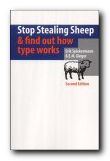
Stop Stealing Sheep

July 19, 2009 by Roy Johnson

best-seller on the basics of typography and page design

Don’t worry about the quirky title. Just pay attention to what’s on offer. This is a popular beginner’s guide to the appreciation of type which teaches by good example. Every page is a mini-tutorial in good design – an elegant balance of body text, pull quotes, graphics, and a interesting variety of fonts, weights, and sizes. Spiekermann and Ginger start with the issue of appreciating and selecting typefaces for specific purposes. There are guidance notes on the provenance of the typefaces they discuss, and they take the line that context is all.

Stop Stealing SheepThat is, the value of a font can only be seen when it is put into use, and is seen where it will be used – on the page or screen. A lot of their exposition is conducted via extended metaphors – families, music, driving, and human character – which sometimes seem rather strained. But they do cover all the basics of typography: selection of font type, size, and weight; word and line spacing; and page design.

Make sure you get the second edition. It’s a big improvement on the first. Lots of colour has been added to the pages, and the topics they discuss now include the latest developments in font technology. They also explain how to choose type for the best effects on Web pages, email, and writing for the screen.

The emphasis is on visually exciting graphic examples, rather than a ponderous lecture on typography. That’s probably what has made this book such a best-seller. It’s an introduction which is entertaining and breathes enthusiasm for the subject of tasteful design. It’s also an elegant production in its own right.

© Roy Johnson 2002

stop stealing sheep Buy the book at Amazon UK

stop stealing sheep Buy the book at Amazon US


Erik Spiekermann & E.M. Ginger, Stop Stealing Sheep & find out how type works, Mountain View (CA) Adobe Press, 2nd edition 2002, pp.192, ISBN 0201703394


More on typography
More on technology
More on digital media


Filed Under: Typography Tagged With: Design, Fonts, Graphic design, Information design, Stop Stealing Sheep, Typography

Structure – how to understand it

September 13, 2009 by Roy Johnson

free pages from our English Language software program

Structure in grammar – definition

structure in grammar The term ‘structure’ refers to the basic construction or the arrangement of parts in a communication — spoken or written.

structure in grammar In the study of language, the term is being used metaphoricaly.


Examples

redbtn The events of a novel or a play may be arranged in a linear, chronological order to reflect the passing of time. They might on the other hand be arranged so that the end reflects the beginning, presenting a cyclic structure.

redbtn The structure of the English language is its grammar system with discernable patterns such as that of word-order and rules for forming tenses.

redbtn The structure of a conversation might be fairly random or planned, depending on the level of formality and the purpose of the discourse.

redbtn An interview might follow the chronology of a candidate’s curriculum vitae, or it might be structured by a series of questions.

redbtn The structure of a business document might be determined by the route taken by information as it passes through an organisation. On the other hand, it might reflect the stages of a manufacturing process.

redbtn The structure of a poem can often be seen in its rhyme scheme and the arrangement of its verses.


Use

redbtn People structure the content of their speech spontaneously, without any need for deliberate planning.

redbtn The same is not true for writing, where conscious effort is required.

redbtn An awareness of the concept of structure in language use is essential to the speaker or the writer, the listener or the reader.

redbtn Structure can be based on such elements as chronology, alphabetical order, recurring themes, logical sequence of content, and visual layout.

redbtn NB! Readers and speakers are affected by structure, even though they may not be conscious of it.

redbtn The structure of a text or of a spoken item is its foundation. Structure when applied to the English language as a system is its grammar.

redbtn It might be useful to distinguish structure from form in terms of linguistic analysis. The term ‘form’ refers to the finished article as a recognisable artifact such as a novel, report, letter, recipe, sermon, statement, or greeting.

redbtn A letter, for example, has a structure based on the patterning of both its content and its layout. The content is structured according to the convention of giving information in the following order:

  • sender’s address
  • date of writing
  • vocative opening (‘Dear Sir’)
  • content in order of importance
  • conventional salutation (‘Best wishes’)
  • signature of writer

redbtn The structure of the content is complemented by the layout in a conventional letter. The content is organised on the page in a well known pattern.

redbtn Even if a person were twelve feet away from the text it would be recognisable as a letter form — because of the structure of the layout.

redbtn In any text, the content must be organised according to some logical premise. Information which is not consciously structured is disjointed, haphazard, and therefore usually incomprehensible. Efficient communication in speech and writing depends to a great extent on the existence of structure.

Self-assessment quiz follows >>>

© Roy Johnson 2004


English Language 3.0 program
Books on language
More on grammar

Filed Under: English Language Tagged With: English language, Grammar, Language, Speech, Structure, Writing

Structure in essay plans

August 25, 2009 by Roy Johnson

sample from HTML program and PDF book

1. The structure of a piece of writing is the (sometimes underlying) order of its parts. Good structure usually means that a persuasive or logical sequence of these parts has been created. This is often best established by creating the structure in essay plans.

2. The basic structure of most essays can be very simple:

  • Introduction
  • Argument(s)
  • Conclusion

3. Provided that the individual topics of your argument(s) are arranged in a clear and meaningful order, this basic model should create a firm structure.

4. The order of the parts is often determined by the nature of the subject in question. This order might be created by:

  • logical progression
  • increasing significance
  • equal significance
  • chronological order
  • narrative sequence
  • category groupings

Arranging the parts

5. Imagine you were writing an essay about French wine. You have decided to discuss four red wines and four white wines. The structure for this essay is created by diving the examples into white wines and red wines – as shown here.

Introduction

Part One – Red wines
* wine 1
* wine 2
* wine 3
* wine 4

Part Two – White wines
* wine 1
* wine 2
* wine 3
* wine 4

Conclusion

6. This is clear, simple, and uncomplicated. But you could also create a slightly more interesting structure by arranging the wines by region. This is the arrangement shown here.

Introduction

Loire
* red wine
* white wine

Bordeaux
* red wine
* white wine

Cotes du Rhone
* red wine
* white wine

Bugundy
* red wine
* white wine

Conclusion

7. It’s the same number of examples, but the arrangement is slightly more complex. This might also make the essay more interesting. Notice how each item is kept separate – so they don’t get mixed up. And each one would be discussed in a paragraph of its own.

8. Next – this process can be taken one step further with a slightly more complex question. You might often be asked to write an essay considering the arguments for and against some topic or proposition. For instance – “Consider the arguments for and against congestion charges in city centres.”

9. There are two ways you can arrange the structure for an essay of this type. Here’s the first, which we’ll call Strategy A.

Introduction

Part One – In favour of congestion charges
* [traffic] reduces volume
* [ecology] less air pollution
* [economy] generates local income
* [politics] positive social control

Part Two – Against congestion charges
* [traffic] public transport alternatives
* [ecology] transfers problem elsewhere
* [economy] reduces profitable activity
* [politics] punishes tax-payers

Conclusion

10. The arguments in favour of congestion charges are kept separate from the arguments against. The structure is simple, clear, and uncomplicated. Notice that the same topics (traffic, ecology, economy, and politics) are covered in both the case ‘for’ and ‘against’. Next – look at an alternative strategy, Strategy B.

11. You can see that in this example the structure is arranged in the form of TOPICS – and each one contains an argument for and against the proposal.

Introduction to congestion charges

TOPIC 1
* [traffic] reduces volume
* [traffic] public transport alternatives

TOPIC 2
* [ecology] less air pollution
* [ecology] transfers problem elsewhere

TOPIC 3
* [economy] generates local income
* [economy] reduces profitable activity

TOPIC 4
* [politics] positive social control
* [politics] punishes tax-payers

Conclusion

12. It’s fairly important if you are using this structure to keep a balance. And the topics must be clearly identified and matched. That is, you must not put an argument FOR economy alongside one AGAINST traffic

13. If there is no natural order for your topics, you might deal with them in order of their importance. You could deal with the smaller, less important items first. This leaves the larger, more important issues until the end of the essay. Discussing the detail first in this way leaves the larger items for general consideration in approaching your conclusion.

14. On the other hand you might wish to deal with the major item(s) first, then turn to a consideration of the detailed evidence which supports the argument you are making. Using this approach, you could then return to your main points again and give them further general consideration as your conclusion.

© Roy Johnson 2003

Buy Writing Essays — eBook in PDF format
Buy Writing Essays 3.0 — eBook in HTML format


More on writing essays
More on How-To
More on writing skills


Filed Under: Writing Essays Tagged With: Academic writing, Essay planning, Essay structure, Essays, Reports, Structure, Study skills, Term papers, Writing skills

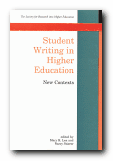
Student Writing in Higher Education

July 3, 2009 by Roy Johnson

essays on problems and solutions for academic writing

Student Writing in Higher Education is a collection of academic research papers which reflect the work being done in what the editors call the ‘new contexts’ of higher education. By this they mean the writing which goes on in non-traditional subjects such as dance or computer conferencing, as well as the new types of writing such as ‘journals of learning’ and ’empathetic writing’ which are now used in a number of subjects.

Student Writing in Higher EducationThe essays deal with many of the problems faced by typical students – the unspecified audiences for which they are expected to write; the debate about skills-based writing tuition versus ‘writing in context’; and the new problems created by the collapse of traditional subject boundaries.

There is an interesting paper which analyses tutor feedback on students’ written work. This includes some scandalous examples of marking which offer nothing more than marginal ticks and an overall grade. As the authors chillingly observe:

Those tutors who give minimal responses perhaps see the task of reading students’ writing as largely administrative, and/or do not consider students to have the sort of role in the academic community which merits engaging in dialogue with them.”

This chapter should be required reading for departmental heads and anybody with a responsibility for training tutors in marking skills.

A chapter on academic writing in the study of dance throws up the fundamental problem that not all subjects make the same types of intellectual demand. Terpsichoreans are allowed to describe their own practice and reflect upon the Self in a way which would be unthinkable in traditional disciplines. The same seems to be true of ‘Reflective Learning Journals’ in anthropology [which includes the example of a Death Journal!] – though at least these have as a primary function encouraging students to think about interdisciplinary studies and ‘map’ their experiences of learning.

There’s also an interesting chapter on the new use of computer conferencing, with two Open University courses as examples. This throws up the problems of asynchronous and informal academic discourse, as well as the potentially ambiguous role of tutors, who can act as ‘fellow participants’ or as ‘knowledge holders’.

One of the persistent weaknesses of these papers is that they often don’t seem to reach any conclusion or have very much to offer by way of insight. As one contributor observes: ‘I am aware that this chapter has raised questions which have not been answered’. I was also surprised by the amount of heavy signposting – such as a chapter whose final paragraphs begin ‘To conclude this chapter I turn finally to issues of pedagogy…’. The other surprise is that so few – almost none – of the studies actually deal with or quote any of the very subject under consideration – student writing itself.

One of the most interesting chapters is – perhaps strategically – the last, in which Barry Stierer describes the plurality of writing demands in the Open University’s MA in Education. It’s interesting that a careful explanation of the pedagogic requirements of a well-constructed course are more interesting than any amount of strangulated theorising about ‘epistemic modality’ and ‘intrinsic and embodied readings’.

The editors make it clear that they concentrate specifically on the implications of their research for the work of teachers rather than students. In fact this collection will be of most interest to those in the field of educational research striving to generate publications for the next Research Assessment Exercise. But there are also some practical lessons and observations which might actually help those tutors interested in improving students’ writing skills.

© Roy Johnson 2000

Writing in Higher Education   Buy the book at Amazon UK

Writing in Higher Education   Buy the book at Amazon US


Mary R. Lea and Barry Stierer, Student Writing in Higher Education, Buckinghamshire: Open University Press, 2000, pp. 205, ISBN: 0335204074


More on study skills
More on writing skills
More on online learning


Filed Under: Study skills Tagged With: Academic writing, Education, Student Writing in Higher Education, Writing skills, Writing Theory

Students Must Write

May 22, 2009 by Roy Johnson

writing skills guide for coursework and examinations

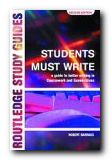
Robert Barrass begins this guide Students Must Write with the important observation that students are judged largely on the quality of what they write. It is therefore very much in their interests to sharpen their writing skills for all forms of academic work. He starts from basics, covering taking notes in lectures, and how writing about something helps you to understand and remember it. His advice is punctuated with well-chosen quotations from famous writers, indicating that they struggle too. They write, re-write, plan, edit, scrap drafts, and treat writing as a process. It’s not a one-off action. He analyses examples of slack writing and shows both the weaknesses and how they might be overcome.

Students Must WriteThere’s also a chapter on words – choosing items of vocabulary to make your writing more effective. To support this he adds some wonderfully useful lists of misused words, circumlocutions and malapropisms – but they are somewhat buried inside the chapters when I think they could have been highlighted to greater effect.

There is a particularly good chapter on how to deal with numbers, diagrams, graphs, charts, and tables. This includes such nice points as the order of presenting the slices of a pie chart – clockwise, starting from the largest at noon. [Bet you didn’t know that!]

His tips on exam technique are sound enough – as is his advice on longer pieces of work such as dissertations and reports. He even covers writing letters – applying for that job after you have graduated. And he ends with tips on using word-processors, a few words on punctuation, and a brief guide to spelling and how to overcome some of the common problems.

This is a book for people who want a general stroll through the process of language and writing. It moves from one topic to another in a casual manner. There is a downside and an upside to this approach. The downside is its weakness in terms of organisational rigour. But the upside is that it might make some of the issues of writing less intimidating for the very students to whom this book is addressed.

© Roy Johnson 2005

Students Must Write   Buy the book at Amazon UK

Students Must Write   Buy the book at Amazon US


Robert Barrass, Students Must Write: A Guide to Better Writing in Coursework and Examinations, London: Routledge, third edition, 2005, pp.232, ISBN: 0415358264


More on study skills
More on writing skills
More on online learning


Filed Under: Study skills, Writing Skills Tagged With: Academic writing, Exam skills, Students Must Write, Study skills, Writing skills

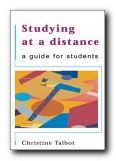
Studying at a Distance

July 20, 2009 by Roy Johnson

learning skills for further and higher education

Distance learning is nowadays much more than receiving correspondence course units through the post. Radio and TV broadcasts, video tapes, CD-ROMs, email, online courses, and Web-based conferencing are all common means of learning. This book offers support and learning skills for anybody undertaking this form of education – which goes under lots of different names. Having taught distance learning courses for over thirty years myself, I can confirm that Christine Talbot covers all the important issues. She starts with preparation for studying, showing you how to assess your existing skills and identify what you will need. This also involves becoming aware of the different modes of learning.

Studying at a DistanceNext comes a chapter on E-learning, now rapidly expanding to include submitting electronic assignments, conferencing, and using virtual learning environments. This is becoming a more and more important part of most distance learning courses – for economic as well as technological reasons. She tells you what equipment you will need, how to plan your time, and how to make the best use of the support and resources available to you.

There’s also coverage of the core skills required for any form of course in further or higher education – note-taking, essay writing, and revision and examination skills.

The guide ends appropriately enough with advice on tackling a research project – probably the largest piece of work you will have to undertake below post-graduate level.

This is a short and readable guide which offers a clear explanation of how to prepare for independent study. It will be particularly useful for those people returning to education after a gap of some years.

© Roy Johnson 2010

Studying at a Distance   Buy the book at Amazon UK

Studying at a Distance   Buy the book at Amazon US


Christine Talbot, Studying at a Distance, Maidenhead: Open University Press, third edition 2010, pp.256, ISBN: 0335238068


More on study skills
More on writing skills
More on online learning


Filed Under: Study skills Tagged With: correspondence tuition, Distance learning, eLearning, Open University, Study skills, Studying at a Distance

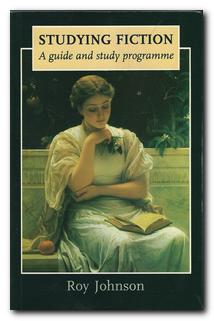
Studying Fiction

June 30, 2009 by Roy Johnson

guide to the basics of literary analysis – plus short stories

Many adult students have spent most of their lives reading fiction in the form of stories and novels. However, when it comes to making a formal academic study of literature – especially at undergraduate level – it’s hard to find the right words in which to express your understanding of a text. That’s why this book was written. Studying Fiction is an introduction to the basic concepts and the technical terms you will need when making a study of prose fiction.

Studying Fiction It shows you how to apply the elements of literary analysis by explaining them one at a time, and then showing them at work in a series of short stories which are reproduced as part of the book. The materials are carefully graded, so that you start from simpler literary concepts, then work gradually towards more complex issues. The guide contains stories by Arthur Conan Doyle, Katherine Mansfield, Thomas Hardy, Joseph Conrad, D.H. Lawrence, and Charles Dickens. All of them are excellent and very entertaining tales in their own right. The guidance notes help you to understand the literary techniques being used in each case.

Eight chapters deal separately with issues such as the basics of character and story; point of view, symbolism, irony, and theme; literary language and ‘appreciation’; the techniques of close reading; the social context of literature; narrators and interpretation; and an explanation of literary terms.

The book works as a form of self-instruction programme. You first of all read the story; then a particular literary concept is explained in relation to the story; a series of questions are posed [with answers] which allow you to test your understanding; and the chapter ends with suggestions for further reading.

OK – this is what’s called an ‘author’s own review’, so I’ve tried to be as unbiased as possible. If anybody else wishes to produce a review, I’ll be happy to add it. Alternatively, you can read somebody else’s review at Amazon here

© Roy Johnson 2000

Studying Fiction Buy the book at Amazon UK

Studying Fiction Buy the book at Amazon US


Roy Johnson, Studying Fiction, Manchester University Press, 1994, pp.226, ISBN 0719033977


More on literature
More on the novella
More on literary studies
More on short stories


Filed Under: 19C Literature, 20C Literature, Literary Studies, Short Stories, Study skills Tagged With: English literature, Literary criticism, Literary studies, Study skills, Studying Fiction

Style – how to understand it

September 13, 2009 by Roy Johnson

free pages from our English Language software program

Style – definition

style Style is a particular set of characteristics in the use of language.

redbtn These characteristics are the result of choices which may be made consciously or unconsciously.

redbtn The results are speech or writing which may be efficient, idiosyncratic, identifiable, or memorable.


Examples

redbtn The following are examples of good style in instructional writing and prose fiction:

Instructional writing
When approaching a roundabout, watch out for traffic already on it. Take special care to look out for cyclists or motorcyclists ahead or to the side. Give way to traffic on your right unless road markings indicate otherwise; but keep moving if the way is clear.

Prose fiction
Lolita, light of my life, fire of my loins. My sin, my soul. Lo-lee-ta: the tip of the tongue taking a trip of three steps down the palate to tap, at three, on the teeth. Lo. Lee. Ta.


Use

redbtn The term ‘style’ is usually used in a positive sense to praise what are seen as good qualities.

redbtn Even bad style may be identifiable – if it is consistent.

redbtn Good style is often easy to recognise, but quite difficult to analyse.

redbtn It may be used and perceived – unconsciously.

redbtn NB! We all use a variety of language styles every day, especially in speech.

redbtn One very important feature of good style is that it must be entirely appropriate for the task it is performing.

redbtn This means that the author must take into account [even if unconsciously!] audience, form, and function.

redbtn Style might be good, yet hardly noticeable – because it is concentrated on effective communication. This is sometimes known as ‘transparent’ good style.

redbtn The first of the examples above is from The Highway Code.

When approaching a roundabout, watch out for traffic already on it. Take special care to look out for cyclists or motorcyclists ahead or to the side. Give way to traffic on your right unless road markings indicate otherwise; but keep moving if the way is clear.

redbtn This is writing which is makes its points as simply and as clearly as possible. The vocabulary is that of everyday life, and in manner it is speaking to a general reader without trying to make an impression or draw attention to itself in any way.

redbtn This writing is entirely free of literary effects or decoration.

redbtn In most writing however, ‘good style’ is normally associated with verbal inventiveness and clever manipulation of the elements of literary language.

redbtn The second example is from Vladimir Nabokov’s famous novel Lolita:

Lolita, light of my life, fire of my loins. My sin, my soul. Lo-lee-ta: the tip of the tongue taking a trip of three steps down the palate to tap, at three, on the teeth. Lo. Lee. Ta.

redbtn This is writing which is deliberately setting out to be impressive. It relies very heavily on decoration and ornament.

redbtn In this extract Nabokov uses lots of alliteration – the repetition of the ‘l’ and ‘t’ sounds, metaphor – ‘light’ and ‘fire’ – and onomatopoeia – ‘trip’, ‘tap’ – as well as such fancy wordplay as the orthographic and semantic parallels between ‘life’ and ‘fire’.

redbtn Good style in speech and writing – like that in clothes or other matters involving taste – can go in and out of fashion.

redbtn Style in context. Style, in any kind of speech or writing, is extremely important to the overall function of communication. In most cases, a consistency of features produces what we understand as a pleasing style. That is, the style is appropriate to the context in which it occurs.

redbtn A discordant style is produced by the inclusion of some feature which does not fit with the stylistic context of the piece. In other words, the feature is out of place.

redbtn An example of this might be found in a personal letter which is signed ‘Yours faithfully’ or an aristocratic character in a novel speaking street slang for no good stylistic reason.

Self-assessment quiz follows >>>

© Roy Johnson 2004


English Language 3.0 program
Books on language
More on grammar

Filed Under: English Language Tagged With: English language, Figurative writing, Language, Style, Writing

  • « Previous Page
  • 1
  • …
  • 71
  • 72
  • 73
  • 74
  • 75
  • …
  • 103
  • Next Page »

Get in touch

info@mantex.co.uk

Content © Mantex 2016
  • About Us
  • Advertising
  • Clients
  • Contact
  • FAQ
  • Links
  • Services
  • Reviews
  • Sitemap
  • T & C’s
  • Testimonials
  • Privacy

Copyright © 2026 · Mantex

Copyright © 2026 · News Pro Theme on Genesis Framework · WordPress · Log in