Mantex

Tutorials, Study Guides & More

  • HOME
  • REVIEWS
  • TUTORIALS
  • HOW-TO
  • CONTACT
>> Home / Archives for 2009

Archives for 2009

The Castle

August 10, 2009 by Roy Johnson

Kafka’s last major work

The Castle was Kafka’s last novel, and like most of his others (except The Trial) it was never completed. Indeed, it ends abruptly, breaking off half way through a sentence. But it towers like some sort of an unfinished masterpiece over the rest of his work. Anthea Ball, the translator of this new edition from OUP, makes the case that The Castle is unlike The Trial because it is set in the countryside and it is mainly concerned with a village community. This is what might be called a ‘charitable’ interpretation.

The Castle Others are likely to note that it has a very similar protagonist, with the same initial name (K) who seeks acceptance into the village and is condemned to failure in his attempts to gain admission to the Castle. This building dominates the entire locality and houses swarms of unseen officials and various bureaucrats representing authority in the absence of its real owner, who never appears.

The castle is also likened to a church or cathedral – and the villagers do in fact pay it religious devotions. Visitors to Kafka’s home town of Prague do not have to look far to see the likely origin of this powerful symbol. Prague Castle towers above every possible view from the surrounding city.

The villagers live in a state of what Marx called ‘rural idiocy’ because of their reverence for this unseen authority. Kafka’s other works are mainly set in a city – and he himself rarely left Prague where he was born, went to school and university, and worked – until the very end of his short life. But The Castle is world of shabby, overworked and undernourished peasants who live in hovels and endure brutish behaviour from everyone above them in the pecking order.

K does his best to challenge in a rational manner the benighted obeisance in which the villagers are held because of their irrational respect for the Castle’s authority – especially in the form of Klamm, an official of such awesome power that people are even afraid to say his name or look at him. But K is met with ambiguity, contradiction, and absurdity at every attempt to deal with the strange world in which he finds himself.

There is also the usual sexual ambiguity one comes to expect in Kafka’s work. When K arrives in the village, Frieda the barmaid is Klamm’s mistress, but she gives him up in favour of the newcomer K. The two of them consummate their passion on the floor of the bar room amongst beer puddles, unknowingly observed by the comic twins Artur and Jeremiah. This experience transports K into ‘another land’ – and yet he quickly gets fed up with her and spends all his time thinking about gaining access to the Castle.

Any number of possible interpretations of the novel have been discussed at length in the critical writing on Kafka. It has often been seen as a novel-length version of his parable ‘Before the Law’ in which a man seeks entry to the Law but is denied by a gatekeeper. The man decides to wait and only when he is dying asks why no other people have ever sought entrance. The gatekeeper replies “This entrance was assigned only to you. And now I am going to close it”.

These new editions of Kafka’s main works from Oxford University Press offer fresh translations, and they come with extended introductory essays, full explanatory notes, a bibliography, and both a biographical preface on Kafka and a chronology of his life. They also explain the very complex provenance of the text.

The Castle is not for readers new to Kafka. Better to start with the short stories, such as Metamorphosis or his shorter novel The Trial. But for anything like a complete Kafka experience, this one is unmissable. It is also a surprisingly funny novel at times, despite its sombre overtones.

Buy the book at Amazon UK

Buy the book at Amazon US

© Roy Johnson 2009


Franz Kafka, The Castle, Oxford: Oxford University Press, 2009, pp.279, ISBN 0199238286


More on Franz Kafka
More on the novella
More on literary studies
More on short stories

Filed Under: Franz Kafka Tagged With: Franz Kafka, German literature, Literary studies, Metamorphosis, Modernism, The Castle, The Trial

The Cathedral and the Bazaar

July 15, 2009 by Roy Johnson

socio-political manifesto of the free software movement

Forget the enigmatic title of The Cathedral and the Bazaar for a moment. This is essentially four long, polemical essays on the open source movement, written by one of its prime movers in the period between 1992 and summer 1999. ‘Open Source’ is a term used to describe the idealistic notion of freely sharing technological development – particularly the software code written by computer programmers. The first and earliest essay sets out the principles of the open source movement. The second inspects the attitudes and moral codes of its members (the hackers) who submit their work to peer review and what Eric Raymond claims is a ‘gift culture’. The third looks at the economic conundrum of how the open source movement sustains itself without a regular income. The last essay is an account of activism relating to the Microsoft anti-trust case.

The Cathedral and the BazaarBasically, it’s an impassioned argument in favour of a new strategy in software development which has arisen from the decision by Linus Torvalds to release the source code of his operating system Linux. He released it not only for free use, but also invited volunteers to help him develop it further. Raymond argues that this represents – dare one say it? – a paradigm shift – a democratic sharing of ideas and repeated testing rather than the development of a product in commercial secrecy.

This is where the title comes in. The ‘cathedral’ is a metaphor for work ‘carefully crafted by individual wizards or small bands of mages working in splendid isolation, with no beta to be released before its time’. The bazaar represents an open free-for-all approach ‘differing agendas and approaches…out of which a coherent and stable system [can] seemingly emerge only by a succession of miracles’.

He inspects the arguments which have been made in criticism of the open source movement, and whilst I wouldn’t say that he demolishes them exactly, he does come up with some interesting points about a system which he is presenting as a revolutionary alternative to the common commercial model. ‘It is often cheaper and more efficient to recruit self-selected volunteers from the Internet than it is to manage buildings full of people who would rather be doing something else’. If the principles of the open source movement really do work in the long term, this will stand a lot of MBA wisdom on its head.

However, his arguments for the advantages of releasing open source on Netscape (in autumn 1998) seem to evade the issue that NS was under intense pressure from Microsoft. He’s making an argument from technological altruism, when deep down the motive might have been economic. But he does explain how a company such as Red Hat can sell open source code (Linux) for a profit, when it’s free for anyone who wants it. They sell – ‘a brand/service/support relationship with people who are freely willing to pay for that’ – and other companies are free to do the same thing if they wish.

As the book reaches its breathy conclusion, the fourth essay becomes a rather personal and excited account of how the open source movement was established in 1998/9 – largely to support Netscape in its fight against Microsoft. No doubt there will be updates to this statement issued at the appropriate web site [www.opensource.org] following each stage of the fight in court.

Some of the anthropological parallels and excursions into political economy seem slightly fanciful, and at times his polemic becomes a sociological study of hackers’ motives – a trap which in literary studies is known as the ‘intentional fallacy’. That is, we shouldn’t judge outcomes on the strength of what we perceive to be the author’s intent. It’s also very idealistic – though the latest edition of WIRED carries an article about open source warriors selling their services on the open market, and Raymond argues that there is no necessary contradiction in this.

It’s the first book on high-tech developments I’ve come across which provided the slightly bizarre experience of a text printed with double line spacing and one-sentence paragraphs. This I imagine reflects the influence of the email originals written for reading on screen. Another interesting feature is that the majority of the bibliographical references are to articles on the Net, not to printed books – though I still think he should have tried to produce an index and bibliography.

He claims that even this book is in a state of evolution via updates following peer review – and that’s exactly as it should be for such a subject. It’s written in a concise, deeply compacted style, with few concessions to an average reader’s technical knowledge, and he’s occasionally cryptic to the point of obscurity: ‘Before taxonomising open-source business models, we should deal with exclusion payoffs in general’.

This is a crusading text, and anyone concerned with the sharp end of software development and the battles of operating systems will be fascinated by his arguments. This revised and expanded paperback edition includes new material on recent technological developments which has made it one of the essential texts on Open Sources

© Roy Johnson 2000

Buy the book at Amazon UK

Buy the book at Amazon US


Eric S. Raymond, The Cathedral and the Bazaar: Musings on Linux and Open Source by an Accidental Revolutionary, Sebastopol (CA): O’Reilly, 1999, pp.268, ISBN: 0596001088


Filed Under: Open Sources Tagged With: Linux, Open Sources, Technology, The Cathedral and the Bazaar, Theory

The Classic Guide to Better Writing

June 19, 2009 by Roy Johnson

guide to writing skills basics – plus grammar and spelling

This is a book with three titles. The Classic Guide to Better Writing was originally The Way to Write, and it has also been issued by Warner books as The New Guide to Better Writing. What does this mean? Well, my guess is that it indicates a compilation of sound advice which has been successfully marketed in various guises. As the blurb claims, “The book that has taught millions the art of writing well”. You also get the benefit of many revisions and new editions in its lifetime.

The Classic Guide to Better WritingFlesch and Lass are emphatic planners. They start off with what they claim as the three essential chapters – the need to plan, how to generate ideas, and how to put these ideas into some order. There’s a reassuring tone, and they cover many different kinds of writing. They even discuss the common mistakes and distractions which prevent people from writing well. I think this is what has made this book a best-seller: they keep the needs of their readers in mind.

The first part of the book discusses the construction of paragraphs; linking ideas and statements; audience and tone; clauses, phrases, and sentence construction; brevity, clarity, and avoiding ambiguity. Their advice is academically based, but chapters on making your writing more direct, interesting, and even amusing will appeal to general readers and those with a penchant for creative writing. However, they issue a warning that “This book won’t make you into another Shakespeare…But it will, we hope, teach you to write simply, clearly, correctly”

Part two tackles basic grammatical problems – double negatives; agreement of verb and subject; incomplete sentences; commonly confused words (affect/effect, imply/infer, lie/lay) spelling; quotations; awkward plurals (Mrs, court-martial, zero) and capitalization.

They do take the traditional [and perhaps outdated] view that you need to know the grammatical terminology for effects which most people use instinctively (‘relative pronouns’, ‘object of a preposition’) but fortunately every topic is illustrated with good examples, and anyone with the discipline to work through their exercises would give themselves a thorough grounding in the fundamentals.

Like many other classic guides, you get the advantage of a low price, because the publishers can afford to be generous, having made their money with earlier printings of a best-seller. This is a good-value manual on the principles of clear writing. Make sure you get the latest, 50th anniversary edition.

© Roy Johnson 2000

Buy the book at Amazon UK

Buy the book at Amazon US


Rudolph Flesch and A.H.Lass, A Classic Guide to Better Writing, New York: Harper, 1966, pp.288, ISBN 0062730487


More on writing skills
More on language
More on grammar


Filed Under: Writing Skills Tagged With: Grammar, Reference, Style guides, The Classic Guide to Better Writing, Writing skills

The Complete Manual of Typography

June 18, 2009 by Roy Johnson

encyclopedia of type and typography

This is a very elegantly-produced book which sets out the basic principles of type design and page layout. It bids to stand as a classic alongside the reigning Bible of typography – Robert Bringhurst’s The Elements of Typographic Style, which always comes top of typography favourites lists. It includes the basic concepts and anatomy of good typography: how type came about, how to set type, and the difference between type and fonts.

The Complete Manual of Typography Then comes how to manage fonts – techniques for working with leading, kerning, and managing indentation and alignment. There are sections which deal with setting type in language-specific instances such as using foreign character sets, which specialists will find useful. There’s even a chapter on dealing with style sheets – something which really does bridge the gap between print and digital culture. What’s interesting about this book is that it’s not just a historical survey. It covers all aspects of type design and applications of them in print and screen. It’s packed with illustrative examples, and anybody who has the slightest interest in typography will find something of interest in its detailed exposition of the basics. It’s an ambitious book, because it seeks to deal with type from Gutenburg to digital fonts. And it does it very well. There’s an extensive glossary and a very good index. Only the bibliography was rather disappointing.

For those who are still interested in using type for print rather than on screen, Felici covers all the niceties of font weight, ligatures, letter-spacing, hyphenation, and wrapping text around graphics. There are plenty of examples of well presented typesetting, with detailed analyses showing the subtle differences between them. This is like a mastercourse in the finer points of typography. He also covers issues such as footnotes, endnotes, picture captions, and bibliographies.

feliciThere’s some amazing detail. I hadn’t appreciated before the difference between a standard and a punctuating m-dash. This stuff will appeal to typography buffs – and it’s all beautifully illustrated.

I also enjoyed a section on document structure, in which he shows you how to arrange headings and various levels of sub-headings. This section could be useful for those people [like me] currently grappling with the possibilities of cascading style sheets.

For a book which covers the historical tradition as well as digital innovations, this is a remarkable achievement. As Frank Romano says in his introduction:

At this point, most people who work with type have to catch up with both what is old and what is new in typography. Fortunately, you have the solution in your hands: a concise, beautiful book that pulls together everything you need to produce great typography.

© Roy Johnson 2003

Buy the book at Amazon UK

Buy the book at Amazon US


James Felici, The Complete Manual of Typography, Berkeley (CA): Peachpit Press, 2003, pp.360, ISBN 0321127307


More on typography
More on technology
More on digital media


Filed Under: Typography Tagged With: Fonts, Graphic design, The Complete Manual of Typography, Typefaces, Typography

The Computer and the Information Revolution

June 28, 2009 by Roy Johnson

the history of mathematics + technology = computers

This is book which gets mentioned in any serious history of computers. It’s a study of the mathematical, mechanical, and then the electronic developments which led to the creation of modern computers. The first part of The Computer and the Information Revolution offers an account of the development of mathematical systems, ending with the creation of binary notation in the nineteenth century. This paves the way for part two, which is a history of automatic calculation – first by mechanical devices, then by electronic means. It’s a book dense with a sense of history, and Ifrah’s span reaches effortlessly from 3500 BCE (Before the Common Era) to the maths underlying computer technology in the post-war years.

The Computer and the Information RevolutionHis approach can sometimes be a little disconcerting. One minute we’re in ancient Greece, next in the eighteenth century. A more smoothly integrated chronological narrative would have strengthened his case, just as more pictures and diagrams would have spared him page-length descriptions of the machines he discusses. This is a book which is crying out for illustrations.

However, he more than makes up for this in his wide-ranging inclusiveness. Even small-scale and failed inventors are mentioned. He is particularly good at explaining the relationship between mathematical theory and what was technologically possible at any given point. He points out that there are big gaps in the development of information technology – very often caused by the absence of nought/null in the numbering system.

It’s an odd book, because the translator and editor fills in what he clearly regards as important gaps in the author’s knowledge, and the chronology is patchy too. There’s a lot of back-tracking to make up for a lack of continuous narrative.

However, his account gains a great deal of impetus as all strands converge for the creation of the first modern computers. His description of Alan Turing’s conceptual breakthrough in 1936 and his relationship to John Van Neumann’s idea for a program stored in memory become positively gripping.

In fact it’s a shame he doesn’t stick with his theme once computers had been built, because the latter part of the book spins off into cosmology, genetics, and a mosaic of reflections on culture,science, and ‘the future of mankind’. Nevertheless, for anyone remotely interested in the development of information technology, this is a book which should not be missed.

© Roy Johnson 2000

Buy the book at Amazon UK

Buy the book at Amazon US


Georges Ifrah, The Computer and the Information Revolution, trans E.F.Harding, London: Harvill, 2000, pp.410, ISBN 1860467385


More on computers
More on technology
More on digital media


Filed Under: Techno-history Tagged With: Computers, Information architecture, Mathematics, Technological history, Technology, The Computer and the Information Revolution, Theory

The Design of Everyday Things

July 12, 2009 by Roy Johnson

classic design principles using everyday objects

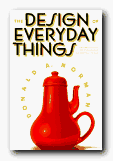
Donald Norman is a product design and usability guru who has teamed up recently with Jakob Nielsen to form the influential Nielsen-Norman Group. They specialise in advising businesses on the usefulness of their web sites. The Design of Everyday Things is the latest edition of what has become a classic in usability principles in the short time since it was first published. Norman discusses the problems we all have with the results of bad design in everyday life – doors which open the wrong way; telephone calls you can’t put on hold; washing machines with spaceship control panels. He clarifies the rules of good design as he goes along. These turn out to be – visibility, good conceptual model, feedback, and natural mapping.

Product DesignWhat this means is that the controls should be visually obvious, they should feel part of a natural process,they should tell you that an action has been performed, and they should reveal the connection between action and results. Every point of his argument is illustrated with practical examples and anecdotes drawn from the problems of normal life. These range from the trivialities of taking the wrong turn when driving, to the disastrous consequences of aircraft engine and nuclear reactor failure. One of the reasons this is such a charming and interesting book is that it’s written by an expert who admits to his own weaknesses and problems. This is the professor from MIT who can’t program his own video recorder, who says so, and who convinces you its not the user’s fault but that of the designer.

Click for details at AmazonHe’s also good at explaining the function and limitations of memory, and gives a clear account of one concept on which he relies heavily – mapping. This is the ability of good designers to arrange their controls, buttons, and switches in a way which corresponds to something we already know and have mentally internalised. He also offers interesting analyses of mistakes, breakdowns, and disasters – relating them to issues of both design and the relationship of humans to machines.

Donald Norman is a ‘usability’ guru who puts the user first. This is a witty and humane approach to the issues of good design – and it rightly deserves its reputation as a modern classic. You will never interact with the physical world in quite the same way again.

© Roy Johnson 2001

The Design of Everyday Things   Buy the book at Amazon UK

The Design of Everyday Things   Buy the book at Amazon US


Donald A. Norman, The Design of Everyday Things, London/New York: MIT Press, 2000, pp.257, ISBN: 0262640376


More on design
More on media
More on web design
More on information design


Filed Under: Product design Tagged With: Design, Donald Norman, Product design, The Design of Everyday Things, Usability

The Designer

July 17, 2009 by Roy Johnson

fifty years of change in image, training, and techniques

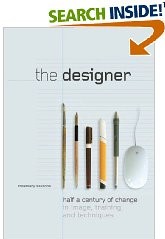
Rosemary Sassoon is a distinguished authority on typography, writing, and education – with publications as diverse as Computers and Typography, Signs, Symbols and Icons, and Handwriting of the Twentieth Century. What marks her out from many other writers on these issues is that she tends to test her ideas in the classroom – either by designing fonts to assist children’s reading [Sassoon Primary] or researching how children learn to write. It was she who came up with the observation that the way children hold a pen has no relation to or effect on the clarity of their writing.

The DesignerHer latest book is about the development and training of designers over the last half century. She begins just after the end of the second world war, when although design was harnessed to promote post-war recovery, designers were regarded as second-class citizens. The Festival of Britain (1951) did little to change matters, even though the exhibition was successful. Designers were labelled ‘commercial artists’. Now, fifty-odd years on, some designers are better known than [‘fine’] artists. How times change.

She considers the neglect of drawing skills in design training and sees this as a sad loss which began with the encouragement of ‘conceptual’ design in the 1970s – one which has accelerated with the arrival of computer-assisted deign (CAD).

Much of the evidence she produces for the changes in design education comes from interviews with professional designers and teachers who look back on their own educational history. Common themes include regret at the demise of the apprenticeship system; scepticism regarding the use of computers in the teaching of typography; regret that design students often avoid theory; and despair over class sizes which during this period have risen from 15-20 to 100+ – a phenomenon which results in such practices as ‘hot-desking’ and ‘elearning’ to cope with these numbers and spread scarce resources further and further.

The second part of the book is a series of essays on contemporary issues and prospects for the future written by distinguished practitioners. They reflect on their own professional development and the manner in which teaching design has changed all over the world in the last fifty years.

Then in the third part of the book (and I have to say its the best-written and illustrated) Rosemary Sassoon reflects on her own experience and practice as a designer. She went through quite a random but eminently practical training as a calligraphist and a textile designer. She gives a first hand account of what practical commercial design involved – working with different types of printing and reproduction, then negotiating with clients and sales representatives.

In a quite amazing career where one thing led to another, she became a regularly published writer on typography, a teacher, a government consultant on writing, with particular reference to children and stroke victims, and a book designer. And one supposes she will go on this way until one day she joins the Big Design Studio in the sky.

© Roy Johnson 2008

The Designer   Buy the book at Amazon UK

The Designer   Buy the book at Amazon US


Rosemary Sassoon, The Designer: half a century of change in image, training, and techniques, Bristol: Intellect, 2008, pp.144, ISBN: 1841501956


More on design
More on media
More on web design


Filed Under: Graphic design Tagged With: Design, Education, Graphic design, The Designer, Writing

The Diary of a Man of Fifty

June 30, 2009 by Roy Johnson

tutorial, commentary, web links, and study resources

The Diary of a Man of Fifty first appeared in Harper’s New Monthly Magazine and Macmillan’s Magazine for July 1879. The first English book version appeared later the same year in the collection The Madonna of the Future and Other Tales published by Macmillan.

The Diary of a Man of Fifty

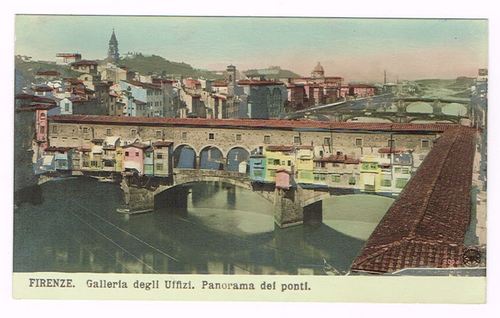
The setting – Florence


The Diary of a Man of Fifty – critical commentary

This tale is one of James’ least-known stories, and he didn’t even include it in the twenty-four volume New York Edition of his Novels and Tales (1907-09). It’s also rather unusual, because it’s written in the form of a journal. James normally liked to keep the narrative and the point of view tightly under his own control in the form of a first person or omniscient third person narrator. The only other instances of his using the diary and journal forms in his tales were A Landscape Painter (1866), A Light Man (1869), and The Impressions of a Cousin (1883).

The General is very forcibly struck by the parallels between his own situation and Stanmer’s. The General was in love with the beautiful Countess twenty-five years previously, and now he meets young Stanmer who is enchanted by her equally alluring daughter, and who bears the same name – Bianca. The General felt betrayed by the Countess when she married his rival, Count Camerino, and he feels that Stanmer is likely to be ill-treated by Bianca in the same way – though he has no evidence to support this notion.

Stanmer feels that the General is pursuing the ‘analogy’ too far, and resists the attempts to persuade him of any danger. And in the end, Stanmer does marry Bianca, and he is happy according to his own report. So for once in these cautionary tales about the dangers of marriage, the protagonist’s fears seem to be overturned. The General is left wondering what might have been, and the reader is left wondering if he is another candidate for James’s collection of unreliable narrators – a man who is so blinded by his own past experience and lack of real perception that he is unable to correctly interpret the world he inhabits.

It is difficult to form a clear judgement on this issue – because we do not have sufficient independent evidence. But it is worth noting (in the balance of its being a ‘cautionary tale’) that both the Countess and her daughter Bianca ‘lose’ three husbands between them – all of whom die in duels brought about because of rivalry and jealousy. So no matter what we think in the choice between Stanmer and the General, the state of matrimony is depicted as a zone of conflict and potential death.


Study resources

The Diary of a Man of Fifty The Complete Works of Henry James – Kindle edition – Amazon UK

The Diary of a Man of Fifty The Complete Works of Henry James – Kindle edition – Amazon US

The Diary of a Man of Fifty Complete Stories 1874—1884 – Library of America – Amazon UK

The Diary of a Man of Fifty Complete Stories 1874—1884 – Library of America – Amazon US

The Diary of a Man of Fifty The Diary of a Man of Fifty – Classic Reprint edition

The Diary of a Man of Fifty The Diary of a Man of Fifty – Kindle edition

The Diary of a Man of Fifty Complete Works of Henry James – Kindle edition

The Diary of a Man of Fifty The Diary of a Man of Fifty – eBook formats at Gutenberg

Red button The Cambridge Companion to Henry James – Amazon UK

Henry James Henry James at Wikipedia – biographical notes, links

Henry James Henry James at Mantex – tutorials, biography, study resources

The Diary of a Man of Fifty


The Diary of a Man of Fifty – plot summary

An English army general of fifty-two returns to Florence twenty-five years after a romance with Countess Falvi, a woman who has died ten years previously. He revisits the places they used to frequent together.

He then meets Edmund Stanmer, a young English traveller of twenty-five who is acquainted with the Countess’s daughter Bianca. The General takes a liking to him, feeling that he is a reminder of his younger self.

Stanmer arranges a meeting between Bianca and the General, who is at first reluctant to follow it through, because his memories of her mother are that she was a dangerous woman.

However, when he goes to see Bianca the next day she is charming and attractive. They reminisce about her mother. Bianca lost her own father when she was young; her mother re-married, and she also lost her own husband three years previously.

The following day the General warns Stanmer that Bianca is an actress and a coquette, just like her mother. Stanmer resents the comparison and wants to know what the mother did to hurt the general – but he initially passes up on the opportunity to hear what it was.

Next evening at the Casa Salvi the General learns that Bianca’s stepfather was killed in a duel. They discuss Stanmer together , and Bianca asks the general to ‘explain’ her to his young friend.

The General continues to warn Stanmer about Bianca, but admits that he finds her fascinating. He then stays away from the Casa Salvi for a while, uncertain about his intentions regarding Stanmer.

But then Stanmer demands to know what happened between the General and the countess. The General reveals that he was jealous of Count Camerino, who was a suitor to the Countess, and who killed her husband in a duel caused by jealous rivalry – though another man (acting as his second) was deemed responsible. The General was horrified when the Countess married the man who had killed her own husband, and he left Florence, never to see her again.

The General takes his leave of Bianca, who reproaches him for having deserted her mother at a time when she needed a protector.

The general later hears that Stanmer married Bianca. The two men meet again in London some time later, where Stanmer tells the General that he was wrong about his account of the Countess, and that maybe she really did need his protection. This causes the general to doubt his own judgement, and he thinks it might be possible that he has made a mistake.


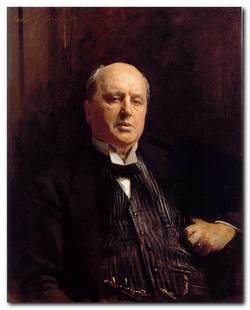
Henry James portrait

Henry James – portrait by John Singer Sargeant


Principal characters
General — an un-named former soldier from the English army in India (52)
Edmund Stanmer a young Englishman (25)
Countess Salvi-Scarabelli the General’s former amorata
Bianca Scarabelli her beautiful daughter
Count Salvi the Countess’s former jealous husband
Count Camerino the general’s rival, and second husband to the Countess

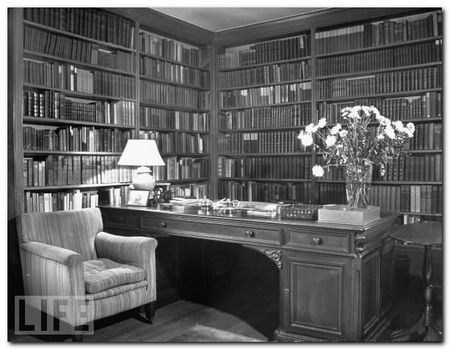
Henry James's Study

Henry James’s study


Further reading

Biographical

Red button Theodora Bosanquet, Henry James at Work, University of Michigan Press, 2007.

Red button F.W. Dupee, Henry James: Autobiography, Princeton University Press, 1983.

Red button Leon Edel, Henry James: A Life, HarperCollins, 1985.

Red button Philip Horne (ed), Henry James: A Life in Letters, Viking/Allen Lane, 1999.

Red button Henry James, The Letters of Henry James, Adamant Media Corporation, 2001.

Red button Fred Kaplan, Henry James: The Imagination of Genius, Johns Hopkins University Press, 1999

Red button F.O. Matthieson (ed), The Notebooks of Henry James, Oxford University Press, 1988.

Critical commentary

Red button Elizabeth Allen, A Woman’s Place in the Novels of Henry James London: Macmillan Press, 1983.

Red button Ian F.A. Bell, Henry James and the Past, London: Palgrave Macmillan, 1993.

Red button Millicent Bell, Meaning in Henry James, Cambridge (MA): Harvard University Press, 1993.

Red button Harold Bloom (ed), Modern Critical Views: Henry James, Chelsea House Publishers, 1991.

Red button Kirstin Boudreau, Henry James’s Narrative Technique, Macmillan, 2010.

Red button J. Donald Crowley and Richard A. Hocks (eds), The Wings of the Dove, New York: W.W. Norton and Company, 1978.

Red button Victoria Coulson, Henry James, Women and Realism, Cambridge University Press, 2009.

Red button Daniel Mark Fogel, A Companion to Henry James Studies, Greenwood Press, 1993.

Red button Virginia C. Fowler, Henry James’s American Girl: The Embroidery on the Canvas, Madison (Wis): University of Wisconsin Press, 1984.

Red button Jonathan Freedman, The Cambridge Companion to Henry James, Cambridge University Press, 1998.

Red button Judith Fryer, The Faces of Eve: Women in the Nineteenth Century American Novel, Oxford: Oxford University Press, 1976

Red button Roger Gard (ed), Henry James: The Critical Heritage, London: Routledge, 1968.

Red button Tessa Hadley, Henry James and the Imagination of Pleasure, Cambridge University Press, 2009.

Red button Barbara Hardy, Henry James: The Later Writing (Writers & Their Work), Northcote House Publishers, 1996.

Red button Richard A. Hocks, Henry James: A study of the short fiction, New York: Twayne Publishers, 1990.

Red button Donatella Izzo, Portraying the Lady: Technologies of Gender in the Short Stories of Henry James, University of Nebraska Press, 2002.

Red button Colin Meissner, Henry James and the Language of Experience, Cambridge University Press, 2009

Red button John Pearson (ed), The Prefaces of Henry James, Pennsylvania State University Press, 1993.

Red button Richard Poirer, The Comic Sense of Henry James, Oxford: Oxford University Press, 1967.

Red button Hugh Stevens, Henry James and Sexuality, Cambridge University Press, 1998.

Red button Merle A. Williams, Henry James and the Philosophical Novel, Cambridge University Press, 1993.

Red button Judith Woolf, Henry James: The Major Novels, Cambridge University Press, 1991.

Red button Ruth Yeazell (ed), Henry James: A Collection of Critical Essays, Longmans, 1994.


Other works by Henry James

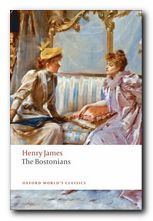
Henry James The BostoniansThe Bostonians (1886) is a novel about the early feminist movement. The heroine Verena Tarrant is an ‘inspirational speaker’ who is taken under the wing of Olive Chancellor, a man-hating suffragette and radical feminist. Trying to pull her in the opposite direction is Basil Ransom, a vigorous young man to whom Verena becomes more and more attracted. The dramatic contest to possess her is played out with some witty and often rather sardonic touches, and as usual James keeps the reader guessing about the outcome until the very last page.

Buy the book at Amazon UK
Buy the book at Amazon US


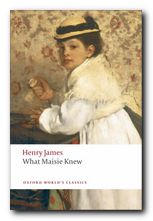
Henry James What Masie KnewWhat Masie Knew (1897) A young girl is caught between parents who are in the middle of personal conflict, adultery, and divorce. Can she survive without becoming corrupted? It’s touch and go – and not made easier for the reader by the attentions of an older man who decides to ‘look after’ her. This comes from the beginning of James’s ‘Late Phase’, so be prepared for longer and longer sentences. In fact it’s said that whilst composing this novel, James switched from writing longhand to using dictation – and it shows if you look carefully enough – part way through the book.

Henry James What Masie Knew Buy the book at Amazon UK
Henry James What Masie Knew Buy the book at Amazon US


Henry James – web links

Henry James web links Henry James at Mantex
Biographical notes, study guides, tutorials on the Complete Tales, book reviews. bibliographies, and web links.

Henry James web links The Complete Works
Sixty books in one 13.5 MB Kindle eBook download for £1.92 at Amazon.co.uk. The complete novels, stories, travel writing, and prefaces. Also includes his autobiographies, plays, and literary criticism – with illustrations.

Henry James web links The Ladder – a Henry James website
A collection of eTexts of the tales, novels, plays, and prefaces – with links to available free eTexts at Project Gutenberg and elsewhere.

Red button A Hyper-Concordance to the Works
Japanese-based online research tool that locates the use of any word or phrase in context. Find that illusive quotable phrase.

Henry James web links The Henry James Resource Center
A web site with biography, bibliographies, adaptations, archival resources, suggested reading, and recent scholarship.

Henry James web links Online Books Page
A collection of online texts, including novels, stories, travel writing, literary criticism, and letters.

Henry James web links Henry James at Project Gutenberg
A major collection of eTexts, available in a variety of eBook formats.

Henry James web links The Complete Letters
Archive of the complete correspondence (1855-1878) work in progress – published by the University of Nebraska Press.

Henry James web links The Scholar’s Guide to Web Sites
An old-fashioned but major jumpstation – a website of websites and resouces.

Henry James web links Henry James – The Complete Tales
Tutorials on the complete collection of over one hundred tales, novellas, and short stories.

© Roy Johnson 2005


More tales by James
More on literature
More on the novella
More on literary studies
More on short stories

Filed Under: James - Tales Tagged With: English literature, Henry James, Literary studies, Short stories, The Diary of a Man of Fifty

The Digital University

June 26, 2009 by Roy Johnson

academic essays on the e-Learning revolution

The Digital University is a collection of academic position papers and reports dealing with the relationship between information technology and teaching in universities. From my experience of IT awareness in higher education, it should be compulsory reading in most departments.

The Digital UniversityUniversity education is currently being revolutionised by the use of Web-based teaching and learning systems. Everybody wants online learning systems – at least as a supplement to conventional teaching methods. This compilation looks at the impact which this revolution is having on all aspects of university life, including research, student support, teaching, and course management.

It covers authoring tools, multimedia learning systems, collaborative environments, distance learning, and course management.Some of the papers even discuss such small but important details as the spatial layout of computer labs, and using ready-made systems such as Lotus Notes for collaborative learning projects.

Most of the accounts are reports of practical projects and ongoing developments, and they include items such as checklists, questionnaires, and diagrams which other practitioners will undoubtedly find useful.

This is likely to be of most use to departmental heads, managers, administrators, or anyone else involved in the rapidly expanding world of online learning in higher education.

© Roy Johnson 2001

Buy the book at Amazon UK

Buy the book at Amazon US


Reza Hazemi, Stephen Hailes, and Steve Wilbur (eds) The Digital University: Reinventing the Academy, London: Springer Verlag, 1998, pp.307, ISBN 1852330031


More on online learning
More on technology
More on digital media
More on web design
More on computers


Filed Under: Online Learning Tagged With: Education, eLearning, Online learning, The Digital University

The Doctoral Examination Process

July 20, 2009 by Roy Johnson

This is an ambitious book with three separate audiences. It’s main strength is that it is based on research at twenty British universities – eleven ‘old’ and nine ‘new’. Tinkler and Jackson’s approach assumes that the research has been done and the work has been submitted. So it begins withe the Viva – which the Burnham committee described as ‘one of the best kept secrets in British higher education’. They seek to de-mystify the process by looking at what the viva is for, what the expectations of students and examiners are, and what rules (if any) surround the process.

The Doctoral Examination ProcessThese are more varied (or non-existent) than you might imagine. It turns out rather surprisingly that at the University of Glamorgan for instance, you can pass the viva even if you are dead. Next comes what examiners might be looking for in the thesis which will be discussed during the viva – followed by advice on how to prepare for the experience, short and long term.

Their suggestions are that you should be presenting papers in the department or conferences, attending training courses, and even publishing your own work.

Next come observations on the selection of examiners. Who chooses them? What are their qualifications? And should your supervisor attend the viva as well?

Despite the mystique which still surrounds this part of PhD examination, there are a lot more open regulations these days. Both students and newly appointed supervisors and examiners would do well to read these chapters.

There are also some fascinating case studies illustrating practices in foreign universities, as well as some cautionary tales from the UK where the ‘flexibility’ in the system sometimes means things go wrong.

They then offer something I have never come across before – guidance to examiners on how to assess a doctoral thesis. They even cover a number of different disciplines in doing so. Then it’s a return to support and preparation for the student – using mock vivas and last minute revision.

Finally, they deal with what happens behind the closed doors of the viva itself. (More case studies of horror stories and triumphs.) How to deal with the questions; how to create a confident impression; how to overcome nervousness.

They are right to stress the range of possible outcomes for which candidates should be prepared. If the result is not what you had hoped for, they even cover the appeals process – as well as how to celebrate afterwards if it’s a success.

I think students will find the quotations and real life case studies really interesting. New supervisors and examiners will get an informative overview with some useful comparative studies from a variety of institutions.

© Roy Johnson 2005

Doctoral Examination Process   Buy the book at Amazon UK

Doctoral Examination Process   Buy the book at Amazon US


Penny Tinkler and Carolyn Jackson, The Doctoral Examination Process, Maidenhead: Open University Press, 2004, pp.228, ISBN: 0335213057


More on study skills
More on writing skills
More on online learning


Filed Under: Study skills Tagged With: Academic writing, Education, Postgraduate studies, Research, The Doctoral Examination Process, Viva

  • « Previous Page
  • 1
  • …
  • 76
  • 77
  • 78
  • 79
  • 80
  • …
  • 103
  • Next Page »

Get in touch

info@mantex.co.uk

Content © Mantex 2016
  • About Us
  • Advertising
  • Clients
  • Contact
  • FAQ
  • Links
  • Services
  • Reviews
  • Sitemap
  • T & C’s
  • Testimonials
  • Privacy

Copyright © 2026 · Mantex

Copyright © 2026 · News Pro Theme on Genesis Framework · WordPress · Log in