Mantex

Tutorials, Study Guides & More

  • HOME
  • REVIEWS
  • TUTORIALS
  • HOW-TO
  • CONTACT
>> Home / Archives for 2009

Archives for 2009

Universal Design for Web Applications

June 8, 2009 by Roy Johnson

an introduction to the study of sign systems

Universal design is a general principle, but it’s used here as something of a coded term for two topics which are discussed in detail. One is designing for accessibility (people with disabilities) and the other is designing for a variety of devices – PCs, laptops, PDAs, and most challenging of all, for mobile phones. The argument is that more people fall into the disability category than is generally realised, and that for huge numbers of users the mobile device is now the principal means of accessing Internet services.
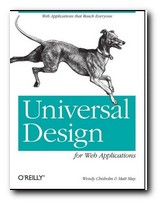
Universal Design Fail to take these two factors into account, and you are automatically falling behind in providing what users want. The first important piece of advice these authors offer is that you should separate content from presentation in everything you design. This means using HTML in the way it was originally intended for use. Tables are for presenting tabular data, the <OL> feature for ordered lists, and so on. The <FONT> tag should now be abandoned altogether, and replaced by the use of cascading style sheets (CSS).

They are quite adamantly against using tables for layout, and think CAPTCHAs ought to be banned altogether: (those are the pictures of text you’re supposed to read to prove that you’re a human being, not a spambot).

If you’re using tables correctly however, they have a lot of useful tips for adding information in the form of captions and summaries. The same goes for making streamed video accessible for disabled users.

They explain the three different approaches to this issue: to offer audio or text transcripts, subtitles, or captions. These are time-consuming and therefore expensive to provide – but anyone who claims their web presence is designed for maximum usability to cater for all users needs to be aware of these features and incorporate them into their work.

I wonder how many of the self-righteous sites claiming full usability would pass scrutiny in this regard? Certainly not my local town council, whose site boasts full accessibility – but doesn’t even include email addresses and hides behind a general menu option telephone answering service. And after you’ve left your message, they ‘guarantee’ to get back to you within ten days. Some promise!

The latter chapters of the book cover working with scripts (Ajax) to produce dropdown menus that are accessible even for people using the keyboard for navigation – though when I went to look at an open source menu script they claim to have put on the book’s web site (http://ud4wa.com) there was nothing available.

They finish by explaining how most of these procedures can be pursued using a content management system (CMS) with templates and style sheets. Finally, as you might expect, they offer checklists for making sure your content matches up to what’s required, and resources for implementing features that cover magnification of text, scrolling, multimedia, screen readers, and full HTML validation of your output.

© Roy Johnson 2008

Buy the book at Amazon UK

Buy the book at Amazon US


Wendy Chisholm and Matt May, Universal Design for Web Applications, Sebastopol (CA), 2008, pp.179, ISBN 0596518738


More on web design
More on digital media
More on technology

Filed Under: Web design Tagged With: Technology, Universal design, Usability, Web Applications, Web design

Upgrading and Repairing PCs

July 10, 2009 by Roy Johnson

best-selling comprehensive guide to computer hardware

Scott Mueller’s title here is too modest. Upgrading and Repairing PCs is not just a repair guide – it’s a major encyclopaedia of computer components, their specifications, and a workshop manual on all aspects of dealing with PC hardware. His approach is very simple – and extremely thorough. He describes each major component of a PC in separate chapters, explains how it works, what it does, and even how it is made. You can use this manual for either an explanation of how things function, or for an up-to-date account of technical component specifications. It covers building, maintaining, and repairing all parts of a PC. It’s an approach which works – which is what has made this book a best-seller.

Upgrading and Repairing PCsAll the major manufacturers chips, motherboards, memory, hard drives, and peripherals are covered – so this is a valuable resource if you want to make comparisons before ordering new equipment. There’s even a comprehensive list of suppliers, plus advice on making choices.

The book also comes with a CD containing two hours of video tutorials. These are in fairly plain MP3 files. The process of installing components is described well enough in the book, but it’s made infinitely clearer when shown on screen.

He even shows you how to assemble your own PC – delivering the information in a fluent and cheerful manner. It occurred to me that these clips are also excellent tutorials for those who would like to know what’s inside their PC, but who don’t want to go though the heart-stopping experience of opening up the box.

The majority of the data here is very technical. This is a serious, heavy-duty book which has proved itself in the best-seller lists. It is now in its thirteenth edition and is just about as up-to-date as it’s possible to be. This is somebody who knows his subject inside-out.

© Roy Johnson 2009

Buy the book at Amazon UK

Buy the book at Amazon US


Scott Mueller, Upgrading and Repairing PCs, Indianapolis (IN): Que, 19th edition, 2009, pp.1176, ISBN: 0789739542


More on technology
More on digital media
More on online learning
More on computers


Filed Under: Computers Tagged With: Computers, Technology, Upgrading and Repairing PCs

Using a spell checker

September 16, 2009 by Roy Johnson

a poetic caution – please take note

Ode to a spell checker

Eye halve a spelling chequer
It came with my pea sea
It plainly marques four my revue
Miss steaks eye kin knot sea.

Eye strike a key and type a word
And weight four it two say
Weather eye am wrong oar write
It shows me strait a weigh.

As soon as a mist ache is maid
It nose bee fore two long
And eye can put the error rite
Its rare lea ever wrong.

Eye have run this poem threw it
I am shore your pleased two no
Its letter perfect awl the weigh
My chequer tolled me sew.

Norman Vandal


More on How-To
More on study skills
More on writing skills


Filed Under: Study Skills Tagged With: spell checker, Spelling, spelling checker, Study skills, Writing skills

Using Drupal

June 2, 2009 by Roy Johnson

Configuring Modules to Build Dynamic Websites

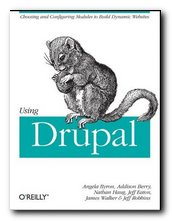
Drupal is the most powerful, industrial-strength option amongst the open source content management systems (Drupal, Joomla, and WordPress). But it’s notoriously difficult to configure and manipulate. Hence the up-front sub-title to this publication. The answers to the problems have been supplied by designers creating plug-in modules which deliver separate functions. These all sit on top of the Drupal core.

Using DrupalThe user is left with ‘only’ the task of getting these modules to work together. And as anyone who has tried it will tell you, it’s no mean task. That’s where this guidance manual comes in. It takes you through a selection of the most basic add-on modules you’ll need to get a site up and running.

It’s written with the latest version of Drupal in mind (6.0) and you should be warned that modules written for other versions (5.0 and earlier) are not compatible with the latest version, and visa versa.

The other warning which needs to be flagged up as a major hazard and frustration is that configuration settings in one module might have a global effect, affecting your tweakings in another module, or even wiping it out altogether.

Fortunately there’s a very useful introduction which explains how a content management system works and the differences between first, second, and third generation web sites. You need to get used to lots of the specialised terms which are employed in this form of technology – modules, themes, and nodes – and you’ll have to let go of comforting terms such as folders and pages, because they just don’t apply any more.

In my experience of CMS systems, these naming conventions can be very confusing. Articles become stories, and features become modules or blocks. So you need to grit your teeth and just take on the new language.

The good thing about this book is that there are full instructions on adding and configuring modules that add functionality to a site. The creation of basic content is quite a complex business – partly because it’s assumed that a site will be fully interactive, and its materials can be tagged, commented upon, and served up in different forms. That’s why you end up arranging the content from a control panel with lots of options and settings.

There’s another reason why this approach to development by configuring modules is important. That’s because, rather surprisingly, the basic Drupal core does not include such fundamentals as a text editor and image manipulation tools. These have to be bolted on as extras. But free open source solutions are listed at the end of every chapter.

Separate chapters of the book have been written by open source evangelists, and the success of their approach is reflected in several five-star reviews for this book at Amazon. They concentrate on a wide range of third party modules which have been created by the Drupal community. This means the modules have been devised to solve real life problems and requirements.

The book is also arranged as a series of projects, showing how Drupal can be used to build a commercial web site; a job postings notice board; a product reviews site; a Wiki; a photo gallery; and an event management site. They explain how to use the most important modules, the content creator’s kit (CCK), categorise materials with Taxonomy, and use the Views module to arrange the display of content in a variety of user-selected forms.

The range and scope of sites built with Drupal in this book is truly impressive – from multi-language sites to eCommerce shopping sites using the Ubercart module. Full details of the all the software used is listed for every chapter, and there’s a very strong sense throughout that you are taking part in a community activity – where ideas, work, and results are shared.

O’Reilly took quite some time getting this, their first Drupal manual onto the shelves, but the wait has been worth it. I wonder when they will do the same thing for Joomla?

© Roy Johnson 2009

Using Drupal   Buy the book at Amazon UK

Using Drupal   Buy the book at Amazon US


Angela Byron et al, Using Drupal, Sebastopol (CA): O’Reilly, 2008, pp.464, ISBN: 0596515804


More on technology
More on digital media
More on online learning
More on computers


Filed Under: CMS, Open Sources, Web design Tagged With: CMS, Drupal, Technology, Using Drupal, Web design

Using Moodle (second edition)

June 8, 2009 by Roy Johnson

open source software for online learning courses

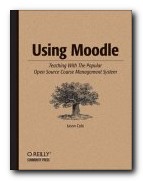
Two or three years ago, attempts to put educational courses on line were stuck with using programs such as Blackboard and WebCT, which were costly, cumbersome, and deeply unpopular with the teachers who were being urged to use them. Now these programs are being swept away by the arrival of Moodle, the open source Content Management System (CMS), or Virtual Learning Environment (VLE), which has one killer feature: it’s free.

Using MoodleActually, it also has more technical features than its commercial rivals, but that’s not the only reason it’s being taken up by schools, universities, and colleges. In the jargon of educationalists, this is a ‘constructivist’ program. That is, it allows people to learn through building their own experience of learning, possibly in contact with other students. It is student-oriented, rather than teacher-led, and it promotes learning through doing rather than just passive reception. This is the second edition of a basic introduction to Moodle’s features – and it’s a big improvement over the first edition.

Jason Cole and Helen Foster start off quite rightly by taking you on a tour of the user interface – what you see when you start using Moodle. That is – how to log in and edit your user profile; how to navigate through the sections of a course using the breadcrumb trail; and how to explore all the tools and support information buttons which surround the main working area on screen.

Moodle allows you to arrange your courses chronologically, conceptually by topics, or socially according to the people using it. For tutors there is an amazing degree of control over every aspect of a course – its start date, duration, enrolments, course materials, quizzes, email forums, activities, reports, and student grades.

The heart of Moodle is the huge variety of interactive engagements it will support. These range from chatrooms, forums, and discussion boards, to collective activities such as building glossaries, journals, surveys, and (perhaps most novel of all) an option for student peer assessment.

The book’s basic assumption is that you are using what’s called ‘blended learning’ – that is, a combination of face-to-face tuition such as lectures or seminars, plus online course materials and lecture notes, email support, instant messaging – and anything else that will empower the student and enhance the learning process. It is also assuming a fairly mature and serious attitude to eLearning from the student.

From my experience of online teaching, they seem a bit over-optimistic about participation rates in discussion forums, but Moodle certainly does have some sophisticated features to help promote debate. For instance, the latest version allows participants to rate each other’s contributions (though you might have doubts about that being a good thing).

There are many other features that teachers will welcome. Add a news item for your group, and every member of it will automatically be sent an email informing them of the update. There are also handy tips such as reducing file sizes and saving PowerPoint presentations as Rich Text File format to save space.

They confront head on the issue of possible cheating in online tests, and provides a number of strategies for counteracting twisters. The most advanced current feature of Moodle is workshops – which allow students to see good and bad examples of coursework, and to offer critiques of each other’s work prior to formal submission.

That comes with the additional feature of what’s called an exercise. This is a piece of work the student submits along with a self-assessed grade. Their final grade is a combination of the tutor’s score and how well the student’s assessment matches it. This is an example of what struck me as verging on Utopian.

The journals feature is a tool that encourages students to reflect on their own learning process. Glossaries offers a similar property in that they can be created collaboratively. Lessons is a system of developing multiple-choice enquiries. That is, if you answer a question correctly, you move on the next topic; if you do not, you move back to check you understand the course materials.

Moodle even has its own built-in Wiki, so tutor and students can assemble basic information about their subject. Various levels of permissions for editing and access are also available so that the results can be safeguarded.

This is an excellently clear user’s guide, and almost every topic is illustrated with a screenshot. Full technical software documentation is available at Moodle, but if you’re anything like me, you will feel far more secure with a book to hand.

In this second edition there’s far more detail on how Moodle tools and features can be used to meet teaching objectives as techniques for the equivalent of classroom activity. This is getting closer to the book on constructing online learning courses which still needs to be written.

There are descriptions of how various IT champions are using Moodle to develop new forms of collaborative, blended and social learning . Some of these will seem rather advanced to even to even the most ambitious elearning tutor. Peer assessment, messaging and chat facilities could easily be seen as distractions for younger learners, but could be more appropriate for adults.

There’s still room for improvement in future editions. I would like to see some examples of course design and structure for instance. But for now, this is still the best guide to Moodle available in book form.

© Roy Johnson 2007

Using Moodle   Buy the book at Amazon UK

Using Moodle   Buy the book at Amazon US


Jason Cole & Helen Foster,Using Moodle, Sebastopo (CA): O’Reilly, 2007, pp.266, ISBN: 059652918X


More on technology
More on digital media
More on online learning
More on computers


Filed Under: CMS, Online Learning, Open Sources Tagged With: CMS, Education, eLearning, Moodle, Online learning, Technology, Using Moodle

Using Statistics

July 17, 2009 by Roy Johnson

gathering, analysing, and presenting data

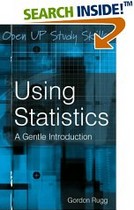
Many subjects such as psychology and biology have a ‘hidden’ requirement of using statistics which gives many students problems when they realise that they’ve got to tackle them as part of the course. As Gordon Rugg observes in this guide for beginners: ” Many people emerge from their first encounter with stats feeling distinctly bruised, and with a mental image of stats as a bizarre set of meaningless rituals that you have to follow because you’re told to.”

Using StatisticsWhat he’s offering is a sympathetic guide to the basic principles without terrorizing readers with a lot of abstract mathematics and complex equations. It’s intended to provide an overview of statistics, and to explain how statistics fit into the big picture of research, with particular attention to using statistics as a coherent part of research design. He brings off this intention very well by using a simple but clever device: he makes his explanations amusing, with concrete examples all the way.

So concepts such as mean, average, and standard deviation are explained using problems from everyday life, and he also explains why some of the basic statistical methods are necessary for the sake of scientific accuracy. It’s not enough to say that 50% of a sample was positive if you’ve only chosen two or three items to test, for instance.

He goes into measurement theory, showing the variety of ways in which things can be enumerated or calibrated – which is particularly useful for people designing surveys and questionnaires.

He also explains the difference between reliability and validity in statistics, using the example of ‘descriptions of Father Christmas’. These would be very reliable, because everyone will describe him in the same way; but they have zero validity, because he doesn’t actually exist.

There’s an explanation of how data can best be presented using graphs, pie-charts, and scatter diagrams – as well as the ways in which they are commonly misused.

The latter parts of the book, which deal with the presentation of knowledge – patterns, categorization, and probability theory – come almost into the realms of philosophy.

So – the first part of the book deals with measuring and presenting data accurately. This then leads to the more interesting issues of interpretation and knowing what questions can be legitimately asked when trying to assess the significance of any findings – what he calls the ‘So what?’ question.

For this, statistical tests are required. He talks you through how to choose the right type and only goes into maths and calculations when absolutely necessary. All of this is done humanely, by making his primary illustrative examples such things as a game of tiddlywinks and the height at which gorillas sleep in trees.

This is followed by even more improbable examples of limpet racing to illustrate what’s called ‘Parametric Statistics’, and he ends with some useful comments on the latest statistical software which is used for neural networks, data mining, and genetic algorithms.

I’m rather glad that my subject (literary studies) has not yet been invaded by ‘scientific’ theoretical approaches which involve statistics, but for anybody who can’t avoid the subject, this is a very enjoyable introduction.

© Roy Johnson 2007

Using Statistics   Buy the book at Amazon UK
Using Statistics   Buy the book at Amazon US


Gordon Rugg, Using Statistics: a gentle introduction, Open University Press: Maidenhead, 2007, pp.137, ISBN: 0335222188


More on study skills
More on writing skills
More on online learning


Filed Under: Study skills Tagged With: Data management, Research, Statistics, Study skills, Using Statistics

Vanessa Bell a biography

July 19, 2009 by Roy Johnson

Bloomsbury painter, matriarch, and bohemian

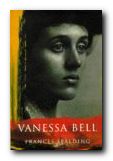
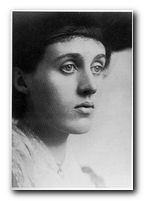
Vanessa Bell is best known as the sister of Virginia Woolf, but she was a distinguished artist in her own right, and her reputation has risen in recent years, along with other women artists such as Dora Carrington and Gwen John. Her father Leslie Stephen was a literary figure (editor of the Dictionary of National Biography but he encouraged Vanessa’s early enthusiasm for painting and drawing, and in 1901 she entered to study at the Royal Academy. Then following her father’s death she moved with her sister Virginia and their younger brother Adrian to live in Gordon Square.

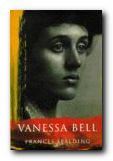
Vanessa Bell a biographyWhen their elder brother Thoby brought home his friends Lytton Strachey, Leonard Woolf and Saxon Sydney-Turner from Cambridge, it was there that the Bloomsbury Group began. She married Clive Bell in 1906 and achieved what seemed like immediate happiness with him – yet within two years she was completely taken up with her son Julian, and Clive had resumed an affair with his previous lover Mrs Craven-Hill.

As a biographer, Frances Spalding is frank and explicit regarding the behaviour of secondary characters, but she protects her principal subject behind a smokescreen of evasion and omission. Even though she documents the movements and actions of her characters on what is often a day-to-day basis, Vanessa has been engaged in a sexual relationship with Roger Fry for several months before it is even mentioned, and then obliquely, as if it is solely his decision:

Roger Fry was still legally married. Discretion necessarily surrounded his affair with Vanessa which at first was kept from Clive

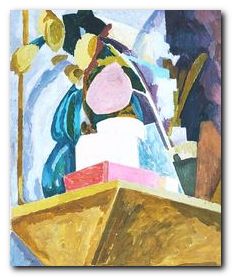
She is on much stronger ground when discussing the development of Vanessa Bell’s painting. The influence of Roger Fry, the Post-Impressionists, and her exposure to French art (Gaugin, Derain, Picasso, Braque) are traced quite intelligently and linked well to the illustrations in the book which have been selected to represent some of her most important works.

Despite Frances Spalding’s efforts to turn her into a saint, Vanessa Bell emerges as a fairly scheming egoist – quite content to keep both the legal and sexual connection with her husband intact, whilst developing her affair with Roger Fry, then replacing him with Duncan Grant, and keeping all three in her orbit – which Spalding interprets as an example of generosity of spirit. On their part maybe, but on hers?

When Duncan Grant (who was a homosexual) makes her pregnant, the resulting child (Angelica) is passed off as Clive Bell’s for the sake of propriety and probably economics (given the amount of money which Bell’s family was pumping into hers). It was something which had fairly dire consequences for the girl, as she documents in her own version of events, Deceived with Kindness. But all this is passed over with very little comment.

Despite all the bohemianism, everything is based on a foundation of rock-solid middle-class economics: multiple property ownerships; a permanent retinue of servants (cook, housemaid, nurse, housekeeper); and stock-market investments carefully managed by John Maynard Keynes. Since he was at the time was an advisor to the Treasury, this is something we would today call insider trading. It’s is a world where bells (not Bells) rang at one for lunch, five for tea, and dinner at eight.

In the 1920s and 1930s Vanessa divided her time between Charleston (the much decorated house that she shared with Duncan Grant) and Cassis in France, where she helped to popularise the Cote d’Azur amongst artists. Her exhibitions were quite successful, and she had commissions for decorative work.

It’s often said that she retreated into a reclusive lifestyle at this time, but she flits from Paris to Rome, and back to London and Sussex at a dizzying rate, and Spalding’s pages are dense with the names of writers, artists, and upper-class socialites, plus Duncan Grant’s gay hangers-on (who presented a constant threat to their partnership).

Then there comes a period of personal loss: the death of Lytton Strachey, followed by Roger Fry, and most damaging of all her son Julian (killed in the Spanish Civil War) and her sister Virginia’s suicide. Further losses were sustained in the post-war years, but she continued to paint and complete decorative commissions.

But the later years of her life were dominated by her pleasure at being a grandparent [always much easier than being a parent] and though she became something of an establishment figure (sitting on artistic committees) her retreat in the last two decades of her life was into the pleasures of what was left of her family and friends.

Despite my reservations about the picture created here, this is a thorough and a scholarly biography, with all its sources fully documented. It’s simultaneously the complete account of a life, a rich documentary on the Bloomsbury Group, and a historical account which begins in the Victorian era and ends in modern post-war Britain.

© Roy Johnson 2002

Vanessa Bell biography Buy the book at Amazon UK

Vanessa Bell biography Buy the book at Amazon US


Frances Spalding, Vanessa Bell, London: Macmillan, 1987, pp.399, ISBN 0333372255


More on biography
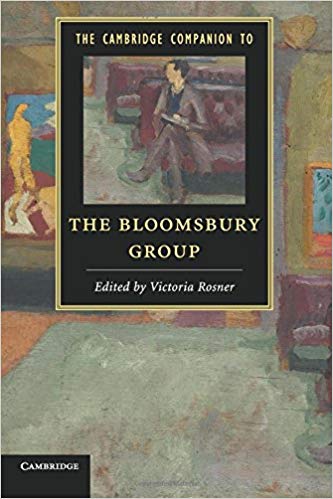
More on the Bloomsbury Group
Twentieth century literature


Filed Under: Art, Biography, Bloomsbury Group Tagged With: Art, Biography, Bloomsbury Group, Modernism, Vanessa Bell

Vanessa Bell biography

September 22, 2009 by Roy Johnson

artist, lover, matriarch

Vanessa Bell biographyVanessa Bell (1879-1961) is best known as the sister of Virginia Woolf – but in fact she was a talented artist in her own right. She was born in May 1879 at Hyde Park Gate, in central London, the eldest of four children of Leslie Stephen, a Victorian scholar and writer, and his second wife Julia Duckworth. Vanessa like her sister was largely educated at home, but they were both encouraged to develop their individual talents. Vanessa started having drawing lessons, and in 1899 she entered the Royal Academy.
Following her mother’s death in 1895, Vanessa took on the role of housekeeper for the family. Her father, Sir Leslie Stephen, was rather demanding, and Vanessa struggled to balance this domestic role with trying to develop her artistic interests. However, her father died in 1904, so she was released from this responsibility. The family home was sold and she moved with her sister and two brothers, Adrian and Thoby, to a start a new and emotionally more liberated life at 46 Gordon Square, Bloomsbury.

The move to their new home enabled Vanessa and her sister and brothers to entertain their own friends. On Thursday nights Thoby invited his literary friends from Trinity College, Cambridge University to the house, and Vanessa started the ‘Friday Club’, a meeting for artists. The Bloomsbury Group grew out of these meetings of artists and writers.

Vanessa Bell - biographyVanessa Bell, Frances Spalding’s excellent biography, records the effects of this liberating move. One of Thoby Stephen’s friends at university was Clive Bell. In 1905 he asked Vanessa to marry him, but she declined. She also rejected a second proposal from him a year later. (Virginia did the same with Leonard Woolf.) Her reasons were that although she valued his friendship, she did not want to be married.

However, after the sudden death of her brother Thoby from typhoid fever in 1907, she changed her mind and accepted him. They had two sons – Julian and Quentin – both of whom went on to become writers. Vanessa continued to paint, but her time was increasingly taken up with looking after the children. In 1910 they met Roger Fry when he came to speak at the ‘Friday Club’, and the following year they went on holiday with him to Greece and Turkey.

When she became ill on holiday, Fry nursed her through the illness, and they started an affair. She and Clive nevertheless remained friends, and Clive continued to support her financially, but he resumed a relationship with a previous mistress. Such is Bloomsbury, and there is more to come.

Another artist who joined the Bloomsbury Group was Duncan Grant. Vanessa admired his work and bought one of his paintings. The Art of Bloomsbury shows via beautiful colour reproductions how Bell, Fry, and Grant influenced each other. In time she became close to Grant, and despite the fact that he was a promiscuous homosexual, she started an affair with him. This displaced Roger Fry, who was miffed but remained friends and part of the Bloomsbury Group.

She and Duncan Grant were devoted to each other and lived together for the rest of her life. They had a daughter, Angelica, who they pretended was the daughter of Vanessa’s husband Clive Bell. This deceit was maintained until the girl was nineteen years old. She records her own account of this dubious episode in her memoir Deceived with Kindness.

During the First World War, Vanessa and Duncan Grant moved to the Sussex countryside, so he could avoid conscription. They rented Charleston Farmhouse, and moved there in October 1916 with Vanessa’s children and also the writer David Garnett, who was Duncan’s current lover.

Duncan and Vanessa chose rooms for their studios at Charleston and immediately started to decorate the house. The walls, fireplaces, door panels, and furniture were all decorated to harmonise with their paintings, and Omega fabrics and ceramics were incorporated into the overall décor.

Vanessa Bell - Still life on mantelpieceClive Bell came to visit his sons, and Virginia and Leonard Woolf lived only four miles away. Other guests included Maynard Keynes and his wife the Russian dancer Lydia Lopokova and Lytton Strachey and his sisters. Amateur dramatics were a popular form of entertainment at Charleston. There were a number of pageants and drama shows put on between the wars – what came to be called ‘The Long Weekend’. Virginia Woolf satirises a country house pageant in her last novel Between the Acts.
The thirties were a time of personal difficulty for Vanessa. Roger Fry, with whom Vanessa had remained close, died after a fall in 1934, and in 1937 her son Julian was killed while serving as an ambulance driver in the Spanish Civil War. More unhappiness followed with the suicide of her sister Virginia in 1941, and estrangement from her daughter Angelica in 1942. This was caused by a twist which illustrates the complex personal relationships amongst the Bloomsbury Group.

Angelica discovered the truth about the identity of her real father only when she was nineteen, and then much against her mother’s wishes, and in a manoeuvre which you do not need a brass plaque on your front door to understand, she married David Garnett, her father’s former lover, who was twenty-six years older than her.

Charleston became a full-time home again during the Second World War as it was safely out of reach of the bombs falling on London, and Vanessa continued to live there for part of each year until her death in 1961. Duncan kept the house on for a few years longer but it was too large for him and he eventually moved out. The house is now maintained by The Charleston Trust who have renovated and opened it to the public.


Vanessa Bell


Bloomsbury Group – web links

Bloomsbury Group - web links Hogarth Press first editions
Annotated gallery of original first edition book jacket covers from the Hogarth Press, featuring designs by Vanessa Bell, Roger Fry, and others.

Bloomsbury Group - web links The Omega Workshops
A brief history of Roger Fry’s experimental Omega Workshops, which had a lasting influence on interior design in post First World War Britain.

Bloomsbury Group - web links The Bloomsbury Group and War
An essay on the largely pacifist and internationalist stance taken by Bloomsbury Group members towards the First World War.

Bloomsbury Group web links Tate Gallery Archive Journeys: Bloomsbury
Mini web site featuring photos, paintings, a timeline, sub-sections on the Omega Workshops, Roger Fry, and Duncan Grant, and biographical notes.

Bloomsbury Group - web links Bloomsbury: Books, Art and Design
Exhibition of paintings, designs, and ceramics at Toronto University featuring Hogarth Press, Vanessa Bell, Dora Carrington, Quentin Bell, and Stephen Tomlin.

Bloomsbury Group - web links Blogging Woolf
A rich enthusiast site featuring news of events, exhibitions, new book reviews, relevant links, study resources, and anything related to Bloomsbury and Virginia Woolf

Bloomsbury Group - web links Hyper-Concordance to Virginia Woolf
Search the texts of all Woolf’s major works, and track down phrases, quotes, and even individual words in their original context.

Bloomsbury Group - web links A Mrs Dalloway Walk in London
An annotated description of Clarissa Dalloway’s walk from Westminster to Regent’s Park, with historical updates and a bibliography.

Bloomsbury Group - web links Women’s History Walk in Bloomsbury
Annotated tour of literary and political homes in Bloomsbury, including Gordon Square, University College, Bedford Square, Doughty Street, and Tavistock Square.

Bloomsbury Group - web links Virginia Woolf Society of Great Britain
News of events, regular bulletins, study materials, publications, and related links. Largely the work of Virginia Woolf specialist Stuart N. Clarke.

Bloomsbury Group - web links BBC Audio Essay – A Eulogy to Words
A charming sound recording of a BBC radio talk broadcast in 1937 – accompanied by a slideshow of photographs of Virginia Woolf.

Bloomsbury Group - web links A Family Photograph Albumn
Leslie Stephens’ collection of family photographs which became known as the Mausoleum Book, collected at Smith College – Massachusetts.

Bloomsbury Group - web links Bloomsbury at Duke University
A collection of book jacket covers, Fry’s Twelve Woodcuts, Strachey’s ‘Elizabeth and Essex’.

© Roy Johnson 2000-2014


More on biography
More on the Bloomsbury Group
Twentieth century literature


Filed Under: Bloomsbury Group Tagged With: Art, Bloomsbury Group, Vanessa Bell

Vera Mrs Vladimir Nabokov

July 17, 2009 by Roy Johnson

a biography of the ultimate amanuensis

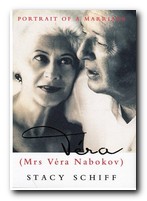
Russian literature is rich in examples of famous writers whose wives have acted as unpaid secretaries and copyists. Leo Tolstoy, Fyodor Dostoyevski, and (I suspect) Alexander Solzhenistyn. But Vera Slonim, who married Vladimir Nabokov, took the tradition to unprecedented extremes. They met as Russian exiles in Berlin in 1923 – both dispossessed of fortunes – and she gave up the rest of her life to acting as Nabokov’s secretary, typist, business manager, translator, research assistant, chauffeur, and even standing in for him as a lecturer. Vera: Mrs Vladimir Nabokov is a biography of the wife, but it tells us a lot about the husband too.

Vera Mrs Vladimir NabokovHis output as a writer was large – but as an author still given to writing in pencil on small index cards, then handing them over to her to copytype on an old portable, it’s inconceivable that he would have produced half as much without her self-sacrifice. And it’s a sacrifice she was very willing to make. She promoted and protected his literary reputation throughout his life – and after his death. She did this at the expense of losing friends and making enemies of family alike.

In fact the portrait Stacy Schiff creates is of a clever, proud, but ultimately rather cold and brittle woman who nursed grudges and ‘spoke her mind’ in a way which seemed to be a cover for rudeness and cruelty. If there’s a weakness in her approach as a biographer it’s that she often takes the evidence she gathered from the Nabokovs themselves at face value. She also assumes that scenes from Nabokov’s novels are accurate transcriptions of not only his own life, but even his wife’s life before they met. Both of these are serious methodological weakness.

However, given the unalloyed marital rapture in which they both claimed to live, I was glad to see that she did not skate over Nabokov’s seriously disturbing love-affair with Irina Guadanini – the one event which threatened the idyllic nature of the relationship. Yet in the course of tracing its dramatic denouement she casually reveals several earlier affairs – none of which she had mentioned at all. This is almost like applying the rules of fiction to the genre of biography, where they do not belong.

The big narrative is one of permanent exile – first from Russia to Berlin (the first centre of exile) then to Paris (the second) and finally to the USA, before the world fame of Lolita allowed them to return to Europe. It was eventually for tax reasons that they settled at the Montreux Palace Hotel. They needed a fixed address from which expenses could be claimed.

Throughout this Odyssey, Vera is depicted as a woman who is aristocratic in spirit (though not in fact) who was prepared to sacrifice herself entirely to the needs of her husband – even to the extent of protecting his social reputation when evidence of his sexual peccadilloes and predilections surfaced when teaching young women at Wellsley College. “He liked young girls. Not just little girls” observed one of his dalliances. Vera ended up sitting in on all his lectures, just to keep an eye on him.

She comes across as a curious mixture of hauteur and self-abasement, a Jewish immigrant who nevertheless supported McCarthy in the 1950’s show trials, and a rabid anti-communist who carried a gun in her handbag.

They were a tight-knit double act, who eventually hid behind each other. She wrote letters in his name and on his behalf. He replied to letters in a similar vein – pretending to be her. They had a joint dairy, and they edited their past to present each other in the best possible light. When discrepancies were brought to light, they simply denied them.

Lolita was the turning point in their lives. Nabokov gave up his teaching job, and they became financially comfortable for the first time in their adult lives. And yet in another sense, nothing changed at all. Vera carried on being his full time personal assistant, translating him to the world, and he carried on writing. When he wasn’t producing new novels, he was translating his back catalogue into English and other languages with the help of his wife and his son.

Nabokov was well known for his magisterial pronouncements and his seeming incapacity for the slightest self-doubt. But anyone who has read his work and pronouncements carefully will know that he was given to misleading his readers and omitting the truth (a characteristic Vera shared). In his introduction to Lolita he claims that the first idea for the novel came to him on seeing the painting of a chimpanzee in the Jardin des plantes – when in fact he had already written an entire novella on exactly the same theme in 1939 – The Enchanter. Once again it seems we should ‘trust the tale, not the teller.’

© Roy Johnson 2002

Buy the book at Amazon UK

Buy the book at Amazon US


Stacy Schiff, Vera: Mrs Vladimir Nabokov, London: Macmillan, 1999, pp.456, ISBN: 0330376748


More on Vladimir Nabokov
More on literary studies
Nabokov’s Complete Short Stories


Filed Under: Biography, Vladimir Nabokov Tagged With: Biography, Literary studies, Vera: Mrs Vladimir Nabokov, Vladimir Nabokov

Verbs – how to understand them

September 14, 2009 by Roy Johnson

free pages from our English Language software program

Verbs – definition

verbs A verb expresses an action or a state of being.

redbtn Most statements in speech and writing have a main verb.


Examples

redbtn The following verbs are expressed in their infinitive form:

to sing to eat to run
to travel to be to have
to intend to feel to paint

Use

redbtn Verbs are traditionally expressed along with the appropriate pronouns as follows:

Singular Plural
I run We run
You run You run
He runs They run
She runs —
It runs —

redbtn This is the conjugation of the verb ‘to run’.

redbtn Verbs are expressed in tenses which place the statement in a point in time. Broadly speaking these are are the past, present, and future tense:

PAST I ran [yesterday]
PRESENT I run [today]
FUTURE I shall run [tomorrow]

redbtn The verbs ‘to be’ and ‘to have’ are the most commonly used auxiliary verbs and they work alongside the main verbs in any statement.

redbtn NB! English is the only European language which doesn’t have a future tense. It uses an auxiliary verb (‘shall’) to indicate the future.

redbtn Traditionally, children are taught that verbs are doing words. This is a very simplistic definition, although it is valid for most normal purposes:

John went to the bank.
My mother arrives on Saturday.
Simple Simon met a pieman.

redbtn The verb is a very important part of the sentence. It is a necessary part of every fully expressed predicate – the part of the sentence which normally follows the subject.

redbtn The verb is the grammatical instrument which gives us information about the person or thing which is the subject.

redbtn Consider the following sentence:

Jane grasped the neckace with joy and placed it in the carved wooden box.

redbtn We are given essential information here by means of two verbs – ‘grasped’ and ‘placed’. They express the subject’s physical and psychological attitude, and they also place the action in a temporal context by the fact that they are verbs in the past tense.

redbtn These verbs in this context are lexical items, even though they are also doing essential grammatical work. They are lexical in the sense that they are giving detailed information regarding the actions of the subject.

redbtn In other contexts, the verb does take a more mechanically grammatical role, as in the following sentence:

James is absolutely sure that Alice is the right choice for the executive post..

redbtn Here the verb ‘to be’ is used twice to express the information. The verb’s function here is almost entirely grammatical rather than lexical. The lexical information is given by means of the two adverbs ‘absolutely’ and ‘sure’, the adverbial phrase ‘right choice’, and the phrase ‘executive post’.

redbtn The verb ‘is’ puts the information in the present tense and facilitates the expression of James’ state of mind.

redbtn Advertisers trade on the grammatical dynamism of the verb when space is at a premium. The following slogans all use the verb in a lexical mode, which places the focus on the action.

It’s good to talk British Telecom
Makes the going easy British Rail slogan
Wash and go shampoo ad
Pick up a Penguin chocolate biscuits
The listening bank Midland Bank ad

redbtn Road signs also need to be succinct, so verbs play a crucial part in the best known:

Keep left Stop Give way

redbtn All of these are strong imperatives. The recent ‘Kill your speed’ is not only imperative but emotive by the use of the word ‘kill’, here applied as a metaphor.

redbtn Verbs are employed to critical effect by poets. The following well known extracts show the powerful effect of the lexical verb.

My heart aches and a drowsy numbness pains my sense
As though of hemlock I had drunk one moment past
And Lethewards had sunk.

[John Keats]

redbtn Here ‘aches’ and ‘pains’ both in the present tense are strongly evocative of a listless state of being. The next active verb ‘drunk’ acts as a clear connection between the state of being and the possible cause, at the same time as shifting the action from the present to the hypothetical past. ‘Sunk’ completes the sequence by suggesting physical movement as a result of all the preceding verbal information.

redbtn Verbs can also be transformed into other grammatical functions and in many cases this results in an increased dynamism.

Adverbs ‘Thats nice’ he said mockingly, as she tried her best to pick up the broken vase.
Adjectives The moving finger writes, and having writ moves on.
Nouns He always insisted on doing all his own washing.

redbtn Conversely, other parts of speech can be used as verbs. American English is replete with such usages, some of which have been assimilated into British English.

redbtn Young people now go ‘clubbing’ on Saturday evenings. ‘Parenting’ has now become the term for child-rearing. A recent court case in America revealed that the defendent had been ‘incested’.

Self-assessment quiz follows >>>

© Roy Johnson 2004


English Language 3.0 program
Books on language
More on grammar


Filed Under: English Language Tagged With: English language, Grammar, Language, Verbs

  • « Previous Page
  • 1
  • …
  • 87
  • 88
  • 89
  • 90
  • 91
  • …
  • 103
  • Next Page »

Get in touch

info@mantex.co.uk

Content © Mantex 2016
  • About Us
  • Advertising
  • Clients
  • Contact
  • FAQ
  • Links
  • Services
  • Reviews
  • Sitemap
  • T & C’s
  • Testimonials
  • Privacy

Copyright © 2026 · Mantex

Copyright © 2026 · News Pro Theme on Genesis Framework · WordPress · Log in