Mantex

Tutorials, Study Guides & More

  • HOME
  • REVIEWS
  • TUTORIALS
  • HOW-TO
  • CONTACT
>> Home / Archives for 2009

Archives for 2009

Design of the 20th Century

June 18, 2009 by Roy Johnson

pocketbook guide to major modern designers

These Taschen pocketbooks are very well produced, with high quality print, full colour illustrations, and they are amazingly cheap. I’ve bought several of them, both in the UK and abroad, and always been surprised at the integrity of the writing and the scholarship. But I have not been surprised at the quality of the illustration and the graphic design. It’s always been first rate.

Design of the 20th CenturyThis one is a collection of major designers and design companies in the twentieth century, arranged in A to Z format. Each entry consists of a biographical sketch or a historical account of a company or movement, with well-chosen colour illustrations of typical products. The authors are both experts in industrial design, both ex-Sotheby’s, and now running their own consultancy in London.

It’s amazing how many of the people represented were teachers, students, or felt the influence of the Bauhaus – Walter Gropius (architect) Marcel Breuer (furniture) Moholy-Nagy (photography) – though there are plenty from other sources – Le Corbusier (France), Charles and Ray Eames (USA), Charles Rennie Mackintosh (Scotland). Entries run from Alvar Aalto (Finland) to Frank Lloyd Wright (USA) and Marco Zanuso (Italy).

Lots of other well known names are represented: Lalique (glass) Mies van der Rohe (architecture) and Paul Rand (graphics). The one new discovery (for me) was Raymond Loewy, though I wondered why they chose to illustrate his work with a ceramic tea-set when he is renowned principally for streamlining automobiles and Greyhound coaches.

This volume is a very comforting mix of interior design, consumer products, teapots, chairs, and other domestic objects. But the main thing to say about such a high-quality yet low-price product is that it’s terrific value for money.

© Roy Johnson 2003

Design of the 20th Century   Buy the book at Amazon UK

Design of the 20th Century   Buy the book at Amazon US


Charlotte and Peter Fiell, Design of the 20th Century, Taschen, 2003, pp.190, ISBN: 3822855421


More on design
More on media
More on web design
More on information design

Filed Under: Product design Tagged With: Cultural history, Design, Design of the 20th Century, Product design

Design Since 1900

June 30, 2009 by Roy Johnson

encyclopedia of modern design and designers

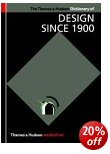
This is a comprehensive guide to all aspects of modern design. It covers graphics, consumer products, interior decor, furniture, print, advertising, plus industrial and architectural design. Entries run from the Finnish designer Alvar Aalto (who for obvious reasons always comes first in such listings) through Rene Lalique (glassware) and the multi-talented Hungarian Laszlo Moholy-Nagy, to typographist Hermann Zapf and Piet Zwart (who for the same reason always comes last).

Design Since 1900Most entries are illustrated by thumbnail graphics. It’s a shame they are not in colour, but you can’t expect everything in such a good-value production. The entries are either brief biographical sketches of individual designers (Saul Bass, Charles Eames, Raymond Loewy, Alexandr Rodchenko) with notes on why they have been so influential. There are also short histories of companies famous for their emphasis on design (Bauhaus, General Motors, Olivetti, Wiener Werkstatte).

Others include influential artistic movements (art deco, constructivism, neo-plasticism, and post-modernism) and individual products which have become icons of modern design (the Citroen DS19, Dyson vacuum cleaners, Tatlin’s Monument to the Third International).

There are notes on materials of manufacture (aluminium, formica, MDF, polyurethane) movements and schools (Deutsche Werkbund, Omega, and Black Mountain College) and explanations of technical terms such as anthropometrics, bit mapping, deconstruction, and third age design (which isn’t quite what you might think).

He even includes individual shops such as Biba, Habitat, and the Body Shop; typographists such as Neville Brody, Eric Gill, and Jan Tschichold. The only thing missing is Information Technology. There are a couple of mentions of computer games, but curiously enough not a single reference to Web design.

The text incorporates extensive cross-referencing, suggestions for further reading, and a chronological chart of design highlights since 1900.

© Roy Johnson 2004

Design Since 1900   Buy the book at Amazon UK

Design Since 1900   Buy the book at Amazon US


Guy Julier, Design Since 1900, London: Thames and Hudson, 2004, pp.224, ISBN: 0500203792


More on design
More on media
More on web design


Filed Under: Design history, Graphic design, Product design Tagged With: Decorative arts, Design, Design Since 1900, Graphic design, Product design

Design Without Boundaries

July 15, 2009 by Roy Johnson

visual communication in transition

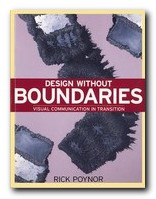
Design Without Boundarie is a collection of articles on visual communication produced between the 1980s and the mid-1990s. That was a period that saw an unprecedented development in graphic design in the USA and Europe, but Rick Poyner observes that there was no corresponding critical analysis of what was going on. This is his contribution to rectifying the matter. The pieces are exhibition and book reviews, profiles of designers, essays, and interviews. He is energetic and passionate about his subject, which is the relationship between design, illustration, and art – all of which he treats at both a theoretical and commercial level. And he’s truly international in his reach of vision. He interviews April Greiman in America, reports from Dutch and Swiss design studios, and searches out UK designers in their workshops and even their homes.

Design Without BoundariesHis approach is combative and challenging. He doesn’t give up looking for theoretical rigour and method, and he certainly doesn’t pull any punches with quite well-established figures. Jan Tschichold and Paul Rand both come under fire in the early pages of the book. It’s a pity there aren’t more illustrations (and some colour) because he spends a lot of time describing designers’ work which would come alive better with graphics. However, there is an up side to this. Because of his pursuit of rigour and clear analysis, he’s forced to describe works in a way which (where there are illustrations) turn out to be accurate and objective – certainly not the sloppy, self-oriented impressionism which passes for much of art criticism.

He really comes into his own on the ground of UK-based design. There are not one but two articles on Neville Brody in which he characteristically praises him for his design and challenges his theoretical assumptions. [In my experience, graphic artists are rarely gifted in articulating ideas about their own production. Go to any art school finals show to see the pretentious nonsense they write about their work.]

Peter Saville has interesting revelations to make about surviving early celebrity. It’s amazing how insecure these famous designers can still feel beneath their apparent success. This might be caused by the rapidly changing styles of the businesses that employ them – music, fashion, popular magazines, and the arty end of commercial advertising.

Other designers he discusses include Vaughan Oliver, Why Not Associates, Cartlidge Levene, Tomato, and Jonathan Barnbrook. Then he does the same thing for a group he classifies as illustrators – Russell Mills, Dan Fern, Andrzej Klimowski, and the American Milton Glaser.

There’s a section on magazines covering Nova, Oz, Modern Painters, David Carson’s Ray Gun, and Emigre. These analyses are very impressive indeed. For Poynor not only captures the graphic spirit of these publications; he offers as well their background commercial histories, their successions of editors, changes of policy, and in most cases the reasons for their demise.

I liked the fact that the essays were fairly short – three or four pages at most. Because he gets straight down to business with no padding. And yet it’s a huge book. If you’re looking for a survey of contemporary design issues written by an extremely well-informed insider – this is it.

© Roy Johnson 2002

Design Without Boundaries   Buy the book at Amazon UK

Design Without Boundaries   Buy the book at Amazon US


Rick Poynor, Design Without Boundaries, London: Booth-Clibborn, 1998, pp.296, ISBN: 186154006X


More on design
More on media
More on web design


Filed Under: Graphic design Tagged With: Design Without Boundaries, Graphic design, Rick Poynor, Theory

Design Writing Research

July 5, 2009 by Roy Johnson

illustrated essays on design, graphics, and typography

Design Writing Research is the name given to the combined work of Ellen Lupton and Abbott Miller, who are curator at Cooper-Hewitt design museum and director of a New York design agency. This elegant compilation brings together their writings on a wide variety of design-related topics – from the graphic presentation of numbers; contemporary hieroglyphs; the choice of body text in printed books; advertising; racial presentations in journalism; the seductiveness of commercial advertising; and newspaper layout and design – to a brief history of graphic design in America. This splendid variety in content is also matched by the design of the book itself.

Design Writing ResearchThey start with an essay on Deconstruction in design history – tracing the influence of French critical theory in the US and eventually settling on notions of typographical presentation. There’s also an essay on the history of punctuation and spacing which is wittily illustrated with a visual paraphrase of punctuation styles – from Latin monumental inscriptions to email emoticons in one short essay. This is a perfect use of the print medium, and an excellent fusion of form and content.

Some of the essays are no more than a sketch over a double page spread, but all of them are interesting – even one on the representation of numbers in print which inexplicably comes to an abrupt stop after the abacus.

They ambitiously tackle structuralist typography – an attempt to apply cultural theory to the realm of type design. Whilst this is not altogether convincing, it’s consistently thought-provoking and like all the other essays in the compilation, skillfully illustrated in a manner which is reminiscent of the work of Edward Tufte.

There are some indications of old-fashioned political correctness. They use the term ‘progressive’ as a blanket marker of approval reminiscent of the Old Left. When this is combined with an essay extolling the technical skills of Andy Warhol, the effect seems naive and rather whimsical. And yet the essay itself, a study of the relationship between advertising and graphic design, is essentially quite interesting. It looks at the work of illustrators such as Ben Shan, Paul Glaser, and David Stone Martin – pointing out that many of their works ‘were sold in galleries soon after they were published’.

The essays in the centre of the book are longer, detailed, and well researched, looking at the practice of graphic design in the context of twentieth century art. A study of McLuhan’s The Medium is the Message argues the case for the groundbreaking contribution of his co-author, Quentin Fiore. This is followed by an in-depth study of the relationship between race and advertising; then the use of stock photographic archive materials in journalism; and subliminal messages in advertising.

The book ends with a synoptic account of graphic design in the USA between 1829 and 1993 – which just stops short of the Internet explosion. If they ever get round to analysing Web pages in the way they treat their material here, it will be truly something to look out for.

This is a beautifully designed and exquisitely illustrated book which is a Must for anyone interested in graphics, information design, typography, or media studies – and it’s amazingly cheap. I bought my copy at full price, just in case the bookshop had made a mistake.

© Roy Johnson 2000

Design Writing Research   Buy the book at Amazon UK

Design Writing Research   Buy the book at Amazon US


Ellen Lupton and Abbott Miller, Design Writing Research: Writing on Graphic Design, London: Phaidon, 1996, pp.211, ISBN: 0714838519


More on design
More on media
More on web design


Filed Under: Graphic design Tagged With: Design Writing Research, Graphic design, Research, Theory, Typography

Design: A Short Introduction

June 27, 2009 by Roy Johnson

themes, principles, and categories of design

John Heskett kicks off this brief study by defining the term ‘design’ and shows fairly convincingly that it can cover a wide range of activities which affect “the forms and structures of the immediate world we inhabit”. There follows a quick gallop through historical attitudes to design problems, before getting under way with a look at the relationships between ‘form’, ‘function’, and ‘utility’. His focus is on design theory considered by categories (objects, communications, environments) rather than looking at the work of individual designers – though plenty of these are considered en passant.

Design: A Short IntroductionBy ‘communication’ he means the vast array of two-dimensional materials that play such an extensive role in modern life. For this read advertising, print, television, street signs, and web sites, plus hybrids such as the online promotional video. Once again he looks at general principles, but gives mention to individual designers such as David Carson, Milton Glaser, and Paul Rand.

On environment (interior and exterior design) he makes some interesting comparisons between America and Japan. Homes are much bigger in the USA, and the domestic appliances tend to be bigger and more old-fashioned. In Japan space is at such a premium that everything tends to be miniaturised, computerised, and designed to be stacked vertically, not horizontally

I was surprised he didn’t follow the logic of his own arguments here to consider the design of external environments such parks, airports, and other public spaces.

The design of ‘identities’ considers the sort of total corporate makeovers of the kind which Peter Behrens invented for the German electrical giant Allgemeine Elektrizitäts Geselschaft (AEG). He also considers disastrous examples, such as BA’s badly-judged, sixty million pounds re-launch of its visual identity with the much-mocked multicolour tailfins

Image is a projection of how a company would like to be understood by customers; identity is the reality of what a company delivers as experienced by customers. When the two are consonant, it is possible to speak of corporate integrity. If a gulf opens up between the two however, no amount of money flung at visual redesigns will rebuild customers’ confidence.

There’s a chapter on the relationship between design and business management and the politics of design in a national context which will be of particular interest to anyone with serious career ambitions.

He concludes with a glimpse into future possibilities, which gives him the chance to raise the issue of social responsibility in design – at which point I was delighted to note that he gave mention to Trevor Bayliss’ clockwork-powered radio.

This book was first issued as Toothpicks and Logos three years ago, and I have to say that placing it in the context of these ‘very short introductions’ has probably enhanced its value.

© Roy Johnson 2005

Design: A Short Introduction   Buy the book at Amazon UK

Design: A Short Introduction   Buy the book at Amazon US


John Heskett, Design: A Very Short Introduction, Oxford: Oxford University Press, 2005, pp.148, ISBN: 0192854461


More on design
More on media
More on web design
More on information design

Filed Under: Product design Tagged With: Communication, Design, Design: A Short Introduction, Product design, Theory

Designing Computer-based Learning

June 8, 2009 by Roy Johnson

practical design principles – from conception to evaluation

“This is not a ‘How to …’ book but rather one seeking to help you understand the different elements which go into computer-based learning.” Alan Clarke is offering general principles – and his advice is sound.

Designing Computer-based LearningHe kicks off with some observations on interactivity – and how to convert static web pages into a more dynamic experience. This is followed by a discussion of navigation, menus, structural metaphors, and the variety of forms in which questions can be posed. The next chapter deals with types of computer-based learning materials. He lists lots of general principles and learning systems – but a few practical examples would have been welcome at this point.

He discusses assessment methods and how one form of feedback is better than another. The best part of this section is how to construct multiple choice questions. He explains clearly how hypothetical tests can be very useful in situations where there is danger or impracticality – practising nuclear power station shutdowns or deep sea diving rescues, for instance.

His advice on the presentation of text-based learning materials is very good. Use lots of white space; break up text into small chunks; and breathe life into the project with graphics. Anyone following his advice will produce attractive pages. He also throws in some useful tips – such as the observation that people learn more efficiently if they see a structure diagram of a sequence of learning before going through the details.

It’s a pity that his discussions of colour and graphics are illustrated entirely in black and white, with only line diagrams. The publishers could have been more generous to him on this issue.

I was most interested to know what he had to say about hypermedia, since the linking of multiple resources from a variety of media represents possibly the most severe challenge to designers.

He has interesting suggestions on using linked graphics where video is not available – on subjects with a historical dimension for instance. He also makes the point that audio materials ought to be designed for listening, not reading – an easy thing for many writers to forget.

His overall message is that users should have access to as wide a variety of input as possible, and that they should be able to control their own choices.

He is also good on the basic design principles for web pages and screen layout – reminding us that for online learning materials, only a small proportion of the screen should be used – as distinct from a commercial web site – otherwise the user can easily becomes confused.

This book covers the whole of the design process – from conception to testing and evaluation. There are plenty of suggestions for scripts, templates, and storyboards, as well as tips for estimating the cost-effectiveness of what you produce. As a manual, it provides comprehensive guidance for any serious designer – or any department which is under orders to produce online learning materials.

© Roy Johnson 2002

Buy the book at Amazon UK

Buy the book at Amazon US


Alan Clarke, Designing Computer-Based Learning Materials, London: Gower, 2001, pp.196, ISBN 0566083205


More on online learning
More on technology
More on digital media
More on web design
More on computers


Filed Under: Online Learning Tagged With: Designing Computer-based Learning, Education, eLearning, Online learning, Technology

Designing Instructional Text

June 26, 2009 by Roy Johnson

how to create effective documentation

This is a practical guide for designing instructional texts. It describes each stage in the process very thoroughly – from the selection of paper size and page layout, through composition of clear text, to the use of diagrams and illustrations. Although a number of these issues might seem straightforward, what makes James Hartley’s treatment of them interesting is the persuasive psychological reasons given for making one choice rather than another on vocabulary, line length, or paragraph spacing.

Designing Instructional TextThe third edition has been produced with the advances in word-processors in mind, and Web users might be particularly interested in the section dealing with electronic text and some of the tips for producing screen layouts which people will actually read. There is a comprehensive analysis of the visual presentation of information – with subtle distinctions noted between pie charts and bar charts.

A couple of chapters dealing with writing for the elderly and those with impaired sight reinforce the psychological importance of good layout and spatial coherence in writing. There are also some interesting details offered en passant – such as the fact that most readers ignore questions posed after instructions, the psychological advantage of the bulleted list, and the fallibility of Flesch Reading Ease scores.

On questionnaire design, it deals with the danger of ambiguity, citing the example of a job application with the question ‘Give previous experience with dates’ which was answered by ‘Moderately successful in the past, but I am now happily married.’ Each chapter has a full bibliography and suggestions for further reading, and on the whole it bears all the hallmarks of work which is now a standard text. No wonder it’s in its third edition.

© Roy Johnson 2001

Designing Instructional Text   Buy the book at Amazon UK

Designing Instructional Text   Buy the book at Amazon US


James Hartley, Designing Instructional Text, London: Kogan Page, (3rd edn) 1994, pp.183 ISBN: 074941037X


More on information design
More on design
More on media
More on web design


Filed Under: Information Design Tagged With: Communication skills, Designing Instructional Text, Information design, Instructional text, Writing skills

Designing Interfaces

July 20, 2009 by Roy Johnson

navigation, interactivity, and graphic design techniques

O’Reilly have recently taken to adding colour to their publications – and it works. The pages are more visually interesting, and the reader gets a more accurate picture of what will appear on screen. This book is attempting to get down to the fundamentals of interface design – How many clicks, how many screens do you need to see before you get to what you want? In fact Jenifer Tidwell starts of with usability issues, showing what real users do and ask of interfaces. Then she starts considering design, starting from the top and most general level – the organisation of content, or information architecture. This also includes consideration of the user interface or screen.

Designing InterfacesThe main strength of her approach is that she is very thorough. Her examples include different types of software and hardware. A design that works on a computer screen will have to be adapted if it’s going to be read on a mobile phone, and if viewed on a TV screen, you won’t have a mouse for navigation. She deals with web pages, installation programs, spreadsheets, and even graphic design packages – but keeps these issues in mind at all times.

Next comes navigation which deals with methods for leading the user through the contents. These include navigation panels, sequence maps, breadcrumb trails, and colour coding.

The next level down in terms of detail is page layout. This introduces elements of graphic design in arranging both content and navigation. This where the going can get rough. The layout part is easy if you’ve got a reasonable eye for design, but after that you need to choose between columns and tabs, and fixed width and liquid pages. She explains all the options, with the advantages and drawbacks of each.

Then comes what she calls the ‘verbs’ of the interface – objects such as buttons, action panels, and menus which make things happen. I was pleased to see that she gave as an example of bad design just how difficult it is to cancel a print job in Windows.

It’s fairly obvious that her principal interest is in information graphics – maps, tables, and graphs plus all their variants. Here she covers the ground which Edward Tufte has made his own – but you’ll find her prose easier to understand. She covers tooltips, expandable views, and what she calls ‘data brushing’ whereby the user can select which part(s) of a collection of information to view on screen.

Then comes a section on the much trickier issue of designing interactive choice lists. There are all sorts of possibilities here – forms, checkboxes, toggle buttons, dropdown lists, and so on – but the important point is that she illustrates them all, pointing to their advantages and weaknesses.

She even covers the design of interfaces for editors – such as text and image editing programs. Not many people outside a technological elite few will need to know these matters, but I found it instructive to see the general principles behind so many of the drag and drop or click and resize functions we come across all the time.

She finishes with a chapter any designer will enjoy – dealing with the graphic design of what appears on screen. This involves colour, spacing, typography, balance, and every other facet of visual rhetoric to make a visitor wish to stay on the site. I picked up some useful tips on hairlines and rounded corners here.

It’s a handsome, well-designed book – as befits its subject – and she includes a generous bibliography. O’Reilly have done her proud.

© Roy Johnson 2005

Designing Interfaces   Buy the book at Amazon UK

Designing Interfaces   Buy the book at Amazon US


Jenifer Tidwell, Designing Interfaces, Sebastopol, CA: O’Reilly, 2005, pp.331, ISBN: 0596008031


More on design
More on media
More on web design


Filed Under: Graphic design, Information Design Tagged With: Computers, Designing Interfaces, Graphic design, Information design, Navigation, Web design

Designing the 21st Century

June 18, 2009 by Roy Johnson

contemporary world product design and designers

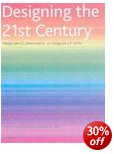
This is a block-busting compendium of design and designers which is as smack up to date as it’s possible to be. It’s arranged in alphabetical order, allocating individual or group designers a few pages each to demonstrate work produced in the current century. The designers are each given a short profile and a list of exhibitions and clients, plus well-photographed examples of their work. They are also asked to respond to the question “What is your vision for the future of design?” The materials are those of everyday products – chairs, lighting, shelving, cutlery, computers (the Mac, naturally) motor cars, mobile phones, kettles, and settees.

Designing the 21st CenturyDesigners run from Werner Aisslinger and Ron Arad via the amazing Jonathan Ive, through to Helen Yardley and Michael Young. I was surprised by two things: how many of these designers had all come up with basically the same coffee table; and how many of the best designers were British.

Charlotte and Peter Fiell are a two-person encyclopedia of modern design, with a string of publications on the subject. If this doorstep size tome is not for you, try their pocket-book sized Design of the 20th Century and Industrial Design A—Z, both of which are short introductions to the same subject.

This is a visually rich collection which is doing its best to look ahead to what might happen next. Like most of Taschen’s other publications it’s well designed, well printed and produced, and amazingly good value.

It’s a pity the individual designer’s contact details are not given, but anyone with an interest could click on Google and track people down with a search word or two.

© Roy Johnson 2005

Designing the 21st Century   Buy the book at Amazon UK

Designing the 21st Century   Buy the book at Amazon US


Charlotte and Peter Fiell , Designing the 21st Century, London: Taschen, 2005, pp.576, ISBN: 3822858838


More on design
More on media
More on web design
More on information design


Filed Under: Product design Tagged With: Designing the 21st Century, Graphic design, Product design

Designing Web Graphics

July 23, 2009 by Roy Johnson

comprehensive tutorials on web site design

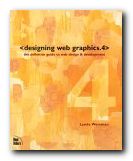
Don’t make any mistake. This is not just a book about designing web graphics. It’s the fourth edition of guru Lynda Weinman’s best-selling compendium of web design tutorials. She offers a manual of digital design which deals with far more than its title suggests. It covers all the basics of graphic design for the web – typography, browser safe colours, and the differences between HTML and XHTML. Almost every point is illustrated with a coloured screenshot; there are lots of tips and tricks in callout boxes; and she gives sources for free software such as XHTML editors, clip art, JavaScripts, and downloadable fonts.

Designing Web Graphics 4Serious designers will be interested in the fact that she includes lots of advice about getting work as a freelance designer. There’s also guidance on web project management, usability, and content architecture. She offers a particularly good explanation of how to organise the structure of a site and design its navigation system. And for anyone who wants to make their web design politically correct, there’s a clear account of current ‘accessibility’ requirements.

On graphics, she favours Photoshop and Fireworks in her coverage of all aspects of graphic files. These include JPGs, GIFs, scalable vector graphics, Flash, and PNG. She also covers colour pallets and compression techniques, plus effects such as transparency.

She’s very keen on rollovers, and devotes a lot of effort to explaining the JavaScript and Flash approaches to creating them, complete with examples of code.

She also explains tables, frames, and cascading style sheets, arguing for the advantages and disadvantages of each one, and she has lots of tips and tricks.

She finishes with the elements of audio files and animations using Flash, Macromedia Director, and Quicktime, then how to promote your site using newsletters, blogs, scripts, and search engine submissions.

This is the latest edition of a very popular guide. These New Riders publications are expensive but exceptionally good quality – packed with screenshots, links to websites, and recommendations for further reading.

© Roy Johnson 2004

artie shaw Buy the book at Amazon UK

artie shaw Buy the book at Amazon US


Lynda Weinman, Designing Web Graphics 4, Indianapolis IN: New Riders, 2003, pp.512 ISBN 0735710791


More on web design
More on technology
More on digital media


Filed Under: Web design Tagged With: Designing Web Graphics, Graphic design, Web design

  • « Previous Page
  • 1
  • …
  • 20
  • 21
  • 22
  • 23
  • 24
  • …
  • 103
  • Next Page »

Get in touch

info@mantex.co.uk

Content © Mantex 2016
  • About Us
  • Advertising
  • Clients
  • Contact
  • FAQ
  • Links
  • Services
  • Reviews
  • Sitemap
  • T & C’s
  • Testimonials
  • Privacy

Copyright © 2026 · Mantex

Copyright © 2026 · News Pro Theme on Genesis Framework · WordPress · Log in