free pages from our English Language software program
Form – definition
 Form is a term which refers to the recognisable shape of a text or a speech act.
This shape may be either physical or abstract.
Examples
| Spoken | Written | |
| Conversation | Menu | |
| Sermon | Letter | |
| Announcement | Novel | |
| Anecdote | Article | |
| Joke | Poster |
Use
The term ‘form’ is used in linguistics and in literary criticism as a technical term.
It is used when considering the shape, the construction, or the type of speech or writing.
An awareness of form can help to produce more efficient communication.
Keeping the ‘shape’ of writing in mind helps to clarify the type of end product required.
NB! An appreciation of form is developed via practice and experience.
Form is an important part of stylistic analysis – together with audience and function.
When studying a text we first try to identify its form. What type of writing is it? (Is it a letter, an advertisement, a timetable, or a novel?)
Then we might ask ‘To whom is it addressed?’ [audience] and ‘What is it doing?’ [function].
When thinking of linguistic or literary form, it’s sometimes useful to think in terms of material shape. For instance, a table is usually a rectangular horizontal surface supported by legs at each corner. That is the form of a table.
Similarly, a piece of writing which begins with a postal address and the words ‘Dear Sir’, then ends with ‘Yours sincerely’ – is likely to be a letter. This is the form taken by most letters.
It is possible for one form to contain another or several other forms. For example, a novel may contain a letter or a poem. A sermon may contain an anecdote.
Most poems have a form, but this varies a great deal. The sonnet is in part defined by its form which is the number of lines and the rhyme scheme.
Form in speech may be signaled by recognizable phrases, tone of voice, or choice of vocabulary.
For instance, ‘The train now standing in platform ten…’ would be recognised by most people as the start of a railway announcement.
Similarly, ‘O Lord, we beseech thee to …’ would easily be identified as the start of a prayer.
If someone says ‘My grandfather always told me that …’ we know that they are probably going to offer moral advice – a piece of homespun wisdom.
Beware! The term ‘formal’ has widened in its application to mean ‘serious’ — just as ‘informal’ has also extended its meaning to encompass notions of friendliness.
For instance, the greeting ‘Hi there!’ might be described by most people as informal. However, because it is part of a recognised verbal ritual, in linguistic terms [strictly speaking] it is ‘formal’ because it has a fixed shape.
The two terms, ‘formal’ and ‘informal’ therefore need to be used accurately when applied to linguistic or literary analysis.
Self-assessment quiz follows >>>
© Roy Johnson 2003
English Language 3.0 program
Books on language
More on grammar

 Metamorphosis
 The Trial
 The Castle
 Amerika
 The Complete Short Stories
 The Diaries
 Letters to Felice
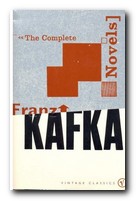 The Complete Novels
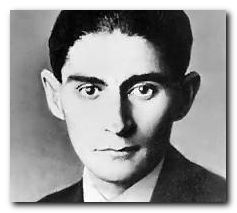 timeline, writings, social context
 Franz Kafka: Illustrated Life is a photographic biography that offers an intimate portrait in an attractive format. A lively text is accompanied by over 100 evocative images, many in colour and some previously unpublished. They depict the author’s world – family, friends, and artistic circle – together with original book jackets, letters, and other ephemera. An excellent starting point for beginners which captures fin de siecle Europe beautifully.
 Kafka: A Very Short Introduction introduces Kafka’s life and cultural background, then traces a number of themes in his best-known works. It’s in an interesting and attractive format – a small, pocket-sized book, stylishly designed, with illustrations, endnotes, suggestions for further reading, and an index. If you’ve not studied Kafka before, this will give you pointers on what to look for. It covers Kafka’s biography, then interpretations of his work – including one quite original approach concerning the relationship between his writing and his body.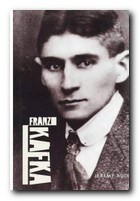
 a selection of free font suppliers