Mantex

Tutorials, Study Guides & More

  • HOME
  • REVIEWS
  • TUTORIALS
  • HOW-TO
  • CONTACT
>> Home / Archives for 2009

Archives for 2009

Go It Alone!

May 31, 2009 by Roy Johnson

the streetwise secrets of self-employment

I bought this book on the strength of enthusiastic reader reviews at Amazon – and I was right to do so! It’s written as a guide and confidence-booster for those people who have decided to start their own businesses and embrace self-employment. It’s written in a lively, fast-paced style which makes for entertaining reading and what I liked was that Geoff Burch makes important distinctions between essentials. Being successful doesn’t necessarily mean making lots of money or creating a huge business empire. It might mean working for a couple of days a week, then having the rest of the time off for gardening, family, or golf – whatever takes your fancy. In other words success is not always equal to wealth. There are other ways of defining it.
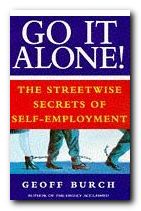
Go It Alone!And without being naively optimistic, he points out both the advantages of being self-employed and the many opportunities which exist to create your own work. Surrounded as we are by universally bad service, all the new entrepreneur has to do is offer prompt and good quality service with a smile, and he’ll put the old traders under pressure. This is something the eBay and Amazon traders are doing right now. Take the order, send a confirming email within minutes, and get the goods into the next post in a padded bag.

He also explains those small-but-important issues which most business self-help guides would not think to cover. Where do you meet clients for business meetings when your office is in your back-bedroom? What do you say when the bank tries to force you to open a business instead of a personal account? What title do you give yourself and think of yourself as, when your duties run from executive decision-making down to taking letters to the local post office?

He comes up with all sorts of practical, matter-of-fact advice for anybody planning to start up their own business – much of it common sense, but only if you have the benefit of experience. You don’t need an ‘office’; you probably don’t need lots of equipment such as printers and fax machines, and office furniture. You shouldn’t take out bank loans, and you should never mortgage your house. If you want to survive as a self-employed guerilla, the secret is “Travel light, live off the land, and strike from the shadows”

  • Don’t recreate your old working environment. The last thing you will need is a hat stand.
  • Develop the virtual office, the virtual car, and virtually anything else you need.
  • Don’t let your clients know that you are enjoying yourself. It might make them jealous.

This not just for those who want to set up their own businesses. It’s for people who are about to be made redundant; people who face early retirement; people who want a part-time job; and people who are already self-employed but who want to feel more confident and hold their heads up high.

I wish I had read this book ten years ago when I first set up my own company. I might not be any richer today, but I know I would have felt more confident that I was doing the right thing – and more importantly, going about it in the right way.

© Roy Johnson 2000

Go It Alone!   Buy the book at Amazon UK

Go It Alone!   Buy the book at Amazon US


Geoff Burch, Go It Alone!, London: Harper-Collins, 1997, pp.203, ISBN: 0722534604


More on eCommerce
More on media
More on publishing
More on technology

Filed Under: e-Commerce, Lifestyle Tagged With: Business, e-Commerce, Enterprise, Home business, Home office, Lifestyle

Good Fiction Guide

July 16, 2009 by Roy Johnson

reference guide and essays on ideas for further reading

Do you like reading good quality fiction – but you’re not sure what to read next? Good Fiction Guide is designed for you. It’s combination of short essays describing popular literary genres and topics, with lists of suggested reading. It then adds potted biographies of writers, with tips on which of their works are most approachable. The general idea is to lead you onto any number of recommendations for ‘further reading’, all of which will be of good quality.

Good Fiction Guide This is because they are by classic writers – Balzac, Dickens, Turgenev, Woolf – or because their contemporary writing is of a literary kind – Salman Rushdie, Angela Carter, Julian Barnes. So it’s a good mixture of the traditional and the new. The book begins with thirty-four articles on a mixture of genres – short story, fantasy – place – France, Canada – and topics such as ‘war’, ‘humour’, and ‘the sea’. These are written by enthusiasts who range from academics to popular writers, and each one includes their top twelve recommended titles.

The bulk of the book is taken up with over a thousand thumbnail sketches of writers and their best-known work. Clive James cheek by jowl with Henry James and Thomas Hardy followed by Robert Harris.

The emphasis is firmly on modern and contemporary literature, and I suspect that despite the introductory essays, most readers will find the biographies the ideal ground for browsing and picking up ideas for further reading. They also make this compilation a reasonable quick reference book for those concerned with modern literature.

© Roy Johnson 2005

Good Fiction Guide   Buy the book at Amazon UK

Good Fiction Guide   Buy the book at Amazon US


Good Fiction Guide, (ed Jane Rogers) Oxford: Oxford University Press, 2nd edition 2005, pp.548, ISBN: 0192806475


More on literature
More on the novella
More on literary studies
More on short stories


Filed Under: Literary Studies Tagged With: English literature, Fiction, Good fiction guide, Literary studies, Recommended reading

Goodbye to Berlin – Christopher Isherwood

October 5, 2009 by Roy Johnson

Hogarth Press first edition book jacket designs

 
Goodbye to Berlin - first edition

 
Christopher Isherwood, Goodbye to Berlin (1939)

“Before leaving for China, Isherwood had completed “The Landauers”, “On Ruegen Island”, and “A Berlin Diary (Winter 1932-33)” and given them to John Lehmann, who was beginning his negotiations with the Woolfs to become managing director of the press. Lehmann collected the various stories from the first Berlin diary to the last and arranged them in novel form as Goodbye to Berlin (1939), and the novel was published by the Hogarth Press under Lehmann’s supervision in March.

Goodbye to Berlin, thanks in part to the audacious spirit of Sally Bowles, became another fast-selling, popular success for Isherwood and the Hogarth Press. Reviewers were generally enthusiastic, although troubled by the fragmented structure and the omnipresent narrator Christopher Isherwood who bore the author’s name. Few of them saw at the time the irony, art, and control with which Isherwood had shaped his characters and assembled his episodes. Edmund Wilson, almost alone, saw Goodbye to Berlin in terms that would become obvious to later more observant critics. Reviewing the American edition by Random House, Wilson noted that Isherwood was a master of social observation whose eye was “accurate, lucid and cool; and it is a faculty which brings its own antidote to the hopelessness and horror he describes”. Isherwood’s prose, added Wilson, was “a perfect medium for his purpose”, allowing the reader “to look right through Isherwood and to see what he sees”.

J.H. Willis Jr, Leonard and Virginia Woolf as Publishers: The Hogarth Press 1917-1941

previousnext


Hogarth Press studies

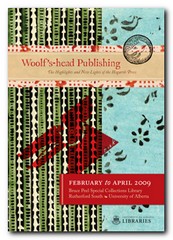
Woolf's-head Publishing Woolf’s-head Publishing is a wonderful collection of cover designs, book jackets, and illustrations – but also a beautiful example of book production in its own right. It was produced as an exhibition catalogue and has quite rightly gone on to enjoy an independent life of its own. This book is a genuine collector’s item, and only months after its first publication it started to win awards for its design and production values. Anyone with the slightest interest in book production, graphic design, typography, or Bloomsbury will want to own a copy the minute they clap eyes on it.

Woolf's-head Publishing Buy the book at Amazon UK
Woolf's-head Publishing Buy the book at Amazon US


The Hogarth Press
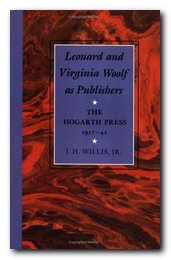
Leonard and Virginia Woolf as Publishers: Hogarth Press, 1917-41 John Willis brings the remarkable story of Leonard and Virginia Woolf’s success as publishers to life. He generates interesting thumbnail sketches of all the Hogarth Press authors, which brings both them and the books they wrote into sharp focus. He also follows the development of many of its best-selling titles, and there’s a full account of the social and cultural development of the press. This is a scholarly work with extensive footnotes, bibliographies, and suggestions for further reading – but most of all it is a very readable study in cultural history.

The Hogarth Press Buy the book at Amazon UK
The Hogarth Press Buy the book at Amazon US

© Roy Johnson 2005


Filed Under: Hogarth Press Tagged With: Art, Bloomsbury, Goodbye to Berlin, Graphic design, Hogarth Press, Literary studies

Google Advertising Tools

June 14, 2009 by Roy Johnson

e-commerce strategies and web site optimisation

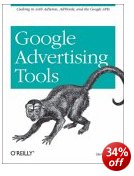
If you want to make money out of your web site, Google Advertising Tools is the best guidance manual I have come across for a long time. Ignore the title: it’s not just about Google. Harold Davis deals with all the routes you can go down to generate income from pages you put on line. The advice is clearly coming from someone who knows all the systems as a practitioner. He covers good web design principles, how to understand search engines, website optimisation, and e-Commerce in general, as well as the detail of hitching your web wagon to Google’s star via its AdSense and AdWords programs.

Google Advertising I’ve no way of knowing what income he generates from his own sites, but everything he says in this book rings true to me, and I have been working at e-Commerce reasonably well for the last ten years or so. I liked the fact that he lists both the positives and negatives of the strategies he describes. For instance, after telling you how to get recognised by search engines, he provides a long list of tricks and sharp practices which you should avoid, because they are likely to get you black listed.

It should be said that there’s very little HTML coding and no graphic design strategy on offer here. This is to do with e-Commerce policy and good web design practices.

But of course because Google’s AdSense program is the biggest and most successful of the advertising programs, he does go through this extensively. He shows you how to sign up, how to choose the options that will work best for your site, and how to tweak everything to get the best results. He even goes into the fine details of such things as customising the colour of the ads which will appear on your pages, and filtering out competitive ads.

I was glad he explained how to interpret all the report data which Google provides every day, because I’ve never got round to working out what it all means. [I have usually been too busy checking the daily earnings.]

Next comes Google advertising viewed the other way round – in what’s called the AdWords program. This is a scheme of paying small amounts for adverts which are served up to people who search on certain key words. You choose the words, and the ads are therefore highly targeted at the people you wish to reach.

Google plays quite fairly with both its AdSense and AdWords customers in these matters. For instance, you can filter out any unwanted ads from your own pages, or indicate any sites on which you don’t want your adverts to appear.

The AdWords process can become quite complex, particularly for people running several advertising campaigns simultaneously. At this point Davis brings in the advantages of the Google application program interface (API). This is a set of tools which allows those with the programming skills to develop software which interacts directly with the AdWords server – thus allowing them to more easily manage their multiple accounts.

So – he takes the e-commerce possibilities in advertising from a fairly simple (but profitable) start, through to a quite sophisticated level. In fact he doesn’t even shy away from devoting a whole chapter to making money from ‘adult’ material en route.

I liked his explanations because they were clear and easy to understand. Everything is spelled out in simple steps, and there’s a screenshot illustrate almost every stage of the processes he describes. All this, and there are lots of web resources and services listed as well, just waiting to be followed up. In fact I have started doing exactly that today.

© Roy Johnson 2006

Google Advertising Tools   Buy the book at Amazon UK

Google Advertising Tools   Buy the book at Amazon US


Harold Davis, Google Advertising Tools, Sebastopol: CA, 2006, pp.353, ISBN: 0596101082


More on eCommerce
More on media
More on publishing
More on technology


Filed Under: e-Commerce Tagged With: Business, e-Commerce, Google, Google Advertising Tools, Publishing, Technology

Google Hacks

June 2, 2009 by Roy Johnson

one hundred industrial-strength tips and tools

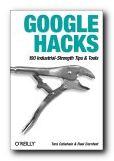
This has got nothing to do with hacking in the normal sense. It’s a book about improving your Web search skills using the world’s best search engine. Google is the ultimate research tool – a formidable search engine that now indexes more than eight billion web pages, in more than 30 languages, conducting more than 150 million searches a day. The more you know about Google, the better you are at pulling data off the Web. This book is a collection of real-world, tested solutions to practical problems. It offers a variety of interesting ways to mine the information at Google, and helps you have fun while doing it.

Google HacksTara Calishan shows you how to make the most of Google’s basic services; how to access image collections and newsgroups; looking for phone numbers and news stories; multi-language searches; and maximising the rankings of your own web pages. Google is not case sensitive; there’s a limit of ten words; you can’t use the asterisk for wildcards on letters, but you can use it for complete words.

There’s advice on how to improve your search results using slang terms. You can search by page title, URL, link, filetype, date, language, and even pages which are stored in cache. Even more miraculously, you can enter details of a page at Google and have them translated into any number of foreign languages.

Google also now includes its own special services – images, news, groups, and catalogues. Just type one of these words instead of www in the address.

The second part of the book offers a detailed technical account of how to merge Google into your own site. This will appeal to programmers. Once you’ve got this set up you can then indulge a whole variety of customisations, games, personalised searches, and even pranks.

I found all the scripting quite a struggle, but then suddenly the last part of the book is a wonderfully clear and persuasive section about raising the rankings of your own pages. How to choose meta tag terms; where to position your best material; and if you want to get really complicated, how the page rank algorithm works.

There is then a really good checklist of advice about making your site more efficient by simplifying and shrinking pages. For any serious web masters, the book is worth it for this part alone.

All these advanced search strategies make this an invaluable resource for librarians, information engineers, and any serious researchers. No wonder the first printing sold out immediately.

The new third edition has been completely reorganized and offers many new searches, along with coverage of Gmail, Google Desktop, Google Site Search, and tips on using Google AdWords.

© Roy Johnson 2005

Buy the book at Amazon UK

Buy the book at Amazon US


Tara Calishan and Rael Dornfest, Google Hacks: 100 Industrial-Strength Tips & Tools, 3rd edn, Sebastopol CA: O’Reilly, 2003, pp.576, ISBN 0596527063


Filed Under: Technology Tagged With: Data retrieval, Google, Information design, Research, Technology

Grades in essay results

August 23, 2009 by Roy Johnson

sample from HTML program and PDF book

1. There are two systems of essay grades commonly used in further and higher education [in the UK]. One is the numerical percentages system of grades (from 0 up to 100) and the other is the alphabetical letter system (from A to E, F, and G).

2. Older, traditional universities sometimes employ a similar system, but using the initial letters of the Greek alphabet – Alpha, Beta, Gamma, and Delta.

3. Those using the English and Greek letter system often employ the further refinement of a plus and minus system to provide a greater degree of discrimination. In this system, the grades Beta-plus (B+) and Alpha-minus (A-) represent incremental grades between Beta and Alpha.

4. Although these systems are in widespread use, there might be minor local variations. An example of the other common [sixteen-point] marking scheme is given below. See also the section on assessment.

5. In numerical percentages especially, there is sometimes a sense of fuzziness about the distinctions between one grade and the next. It is also quite common not to award percentages over eighty.

6. The percentage and letter grades, corresponding to the standard university degree classification, are as follows:

CLASS PERCENT LETTER
First class (I) 70% or over A
Upper second (II.i) 60-69% B
Lower second (II.ii) 50-59% C
Third class (III) 40-49% D
Pass/Fail 34-39% E
Fail Below 34% F

7. For most courses, the boundary between a pass and a fail will be forty percent. Below this there can be different levels of failure. A tutor might award thirty-five to record a near miss. This could permit a student to re-submit a piece of work or maybe to re-sit an examination. The band of marks between thirty and forty is sometimes called a ‘compensatory pass’.

8. A mark as low as twenty-five suggests a basic misunderstanding or a serious lack of achievement. Below this, there are further possible degrees of failure. These marks may sometimes be designated as E, F, and G in the letter grading system – though some institutions stop registering grades at D.

9. Low marks for individual pieces of work might nevertheless be significant depending on the system for calculating an overall course grade. One single low essay grade on a course might bring down an average score – or it might be disregarded as an aberration if all other grades were high.

10. Above forty percent there is a band of ten marks which designate a ‘bare pass’. The question has been considered, but that is all. The answer might be weak and hesitant, either in the arrangement of its ideas or in the quality of its arguments and evidence. The manner of expression might also be shaky. This band corresponds to the D grade in the letter system or a third (III) or pass mark in the traditional university system.

11. Work which scrapes through the pass mark will usually suffer from a number of weaknesses. The answers might have been very short, the focus of the argument might have wandered on and off the required subject. It might lack coherence and structure, and the expression may have been hesitant or clumsy. In work of this calibre there is often no indication that the student knows which is the more and which the less relevant part of the argument.

12. The higher the grade awarded to an essay, the greater must be the proportion of material it contains which is directly related to the question. Conversely, there should be as little as possible which is not relevant. The success of the work, in almost all cases, is directly related to the ability to focus single-mindedly on the question topic(s).

13. Next comes the band between fifty and sixty percent. Grades at this level represent a greater degree of competence, both in terms of handling the issues and the manner in which they are expressed. There may be a greater degree of fluency in the written style, and the generation of ideas. More supporting evidence may have been offered, or examples discussed. However, there will still be weak patches, and possibly mistakes or omissions which dilute the overall effect of the essay. This band corresponds to the C grade or the lower second (II.ii) in the other grading systems.

14. Grades between fifty and sixty are perfectly respectable. They represent rising degrees of competence in handling the issues raised by the question. These grades reflect an average ability in the subject at this level – yet they often seem to cause more problems than any other grades. Many students imagine that such results represent a humiliating failure to succeed, when in fact they demonstrate competence and success – albeit at a moderate level.

15. In the next band, between sixty and seventy, there will be a rise in the quality of written expression, argument and evidence. There will also be far less extraneous material and usually a greater degree of self-confidence in the writing. The essay will demonstrate an ability to focus attention on the question. This is a standard which shows a well informed and firm grasp of the issues involved, and the intellectual capability to deal with them. This band corresponds to the B grade or the upper second (II.i) in the other systems.

16. Students often want to know (quite rightly) what constitutes the difference in quality between two results, one of which might score 59 and the other 62 percent. This is a gap of only three marks, but enough to make the distinction between a lower and upper second level pass. The answer is that the better work probably has a stronger sense of focus and structure, presents more concrete evidence, or makes a closer engagement with the details of the question.

17. The regions beyond seventy or seventy-five are normally reserved for work which is clearly outstanding in its quality, intellectual breadth, and fluency of articulation. Answers pitched at this level are likely to be very confidently presented, and they will demonstrate a breadth of knowledge and reading in the subject which make it especially praiseworthy. Marks in this band are often awarded to work which not only answers the question but say something insightful or original about it as well. This band corresponds to the A grade or first class award (I) in the other systems.

18. Keep in mind however that essay questions do not require you to be dazzlingly original. Your tutors will be perfectly happy to award good grades to work which shows that you have studied the course material and answered the question.

19. Most institutions use similar standards of assessment, even though many of them do not make the criteria explicit. Here is one which does.

SIXTEEN-POINT MARKING SCHEME
Grade Degree     Guide to interpretation
90/85 1 Outstanding work
78 1 Work of exceptional merit, in terms of coherence, clarity of presentation, comprehensive coverage and critical analytic discourse.
73 1 Excellent command of relevant material, clearly expressed, with a high level of perception and critical insight.
68/63 2.i Based on wide reading and critical analysis of material. Work is logically structured, is expressed clearly, offers broad coverage of the topic, and is accurate in points of detail.
58/53 2.ii Work is satisfactory in structure and expression, and is based on a fair range of reading. The student has thought through the subject, tackled most relevant issues with reasonable accuracy, and has attained an acceptable level of understanding.
48 3 Work has some merits, but is deficient in one or more significant respects. For example, structure and expression are poor; certain issues are misunderstood; factual errors creep in; insufficient reading; lack of evidence of independent thought.
43 Pass Work is deficient in several respects or badly deficient in one of them, but nontheless has some recognisable merit.
33 Fail Some awareness of the dimensions of the question/issue, but the communication of knowledge and understanding is limited and/or error-prone. Alternatively, the communication of knowledge and understanding is of a related subject, which represents a misreading or misunderstanding of the question/issue as set.
25 Fail Sufficient knowledge to indicate a minimal level of understanding, but knowledge based unacceptably weak.
15 Fail No coherent response to the question/issue, but a few relevant points made.
8 Fail Virtually no relevant response to the question or issue.
0 Fail No relevant response to the question or issue.

© Roy Johnson 2003

Buy Writing Essays — eBook in PDF format
Buy Writing Essays 3.0 — eBook in HTML format


More on writing essays
More on How-To
More on writing skills


Filed Under: Writing Essays Tagged With: Academic writing, Essays, Grades, Reports, Study skills, Term papers, Writing Essays, Writing skills

Grammar – how to understand it

September 6, 2009 by Roy Johnson

free pages from our English Language software program

Grammar – definition

grammar The term ‘grammar’ refers to the structure of language.
redbtn This can be applied to a whole language or to any smaller unit of that language.

redbtn Grammatical study is often a systematic account of the rules of sentence structure, syntax, and semantics.


Examples

redbtn The study of grammar in any language focuses on:

tense concerning time sequence
person reference to people or things
syntax how parts relate to each other

redbtn A grammatical study of the following brief statement focuses on the same issues:

The cats drank the milk

The cats Subject – third person plural
drank Verb – past tense
the milk Object – third person singular

redbtn Notice that the statement follows normal English syntax (word-order)

Subject — Verb — Object


Use

redbtn An awareness of grammar or the structure of language can result in more efficient writing and speaking.

redbtn An understanding of the mechanics or workings of language is far more useful and more easily acquired than memorising technical terms.

redbtn You can understand the mechanics of language by studying utterances and their:

audience — form — function

redbtn The study of grammar in any language focuses on:

tense John ran up the stairs
[past tense of the verb]
person Joanna approached him
[third person singular]
syntax The dog bit the man
[subject – verb – object]

redbtn NB! Most people are not conscious of grammatical rules — but they use them quite naturally when speaking.

redbtn It is useful to be able to distinguish between the more grammatical items in a statement and those which have a mainly lexical function.

redbtn The grammatical items are the working parts of the statement, whilst the lexical items carry content or meaning.

redbtn There is no absolute distinction between grammatical and lexical items. However, it is possible to think of a continuum, with lexis at one end and grammar at the other.

redbtn For instance, the items in in the following statement can be seen as lexical, grammatical, and a combination of both:

‘Dorothy likes to come to our house every Tuesday and have tea with us.’

lexical Dorothy, house, Tuesday, tea
grammatical to, and, with

redbtn The terms ‘our’, ‘every’, and ‘have’ are between these two categories because they perform both a lexical and a grammatical function.

redbtn The study of English grammar study has developed over hundreds of years. The objective has generally been to find a set of rules which accurately and comprehensively define, describe, and explain the workings of the language.

redbtn In the past, grammar study was very prescriptive. Rules were laid down as to how English must be used. Many of these prescriptive rules were based on the rules of the Latin language which historically had strong religious and cultural ties with English.

redbtn Latin was regarded as the perfect language and as such was used as a model for English. However, it was a blueprint which didn’t fit, and the struggle to make it fit has left us with such prescriptive rules as ‘Never end a sentence with a preposition’.

redbtn In the past, the study of grammar was thought to be a series of rules and regulations:

  • Rules for writing good English
  • Learning to analyse sentences grammatically

redbtn The most significant development this century has been the move towards a descriptive and functional approach to understanding of the workings of English. That is to say, the emphasis currently is on observing how the language is actually operating in practice. Changes are charted and variations noted, with a neutral attitude.

redbtn A language is best seen as a living organism which is constantly in the process of evolution. The nature of its changes reflect and affect its users. As Latin has been a dead language for hundreds of years, its imposition on English is at best interesting and at worst ludicrous.

redbtn Every language has a basic structure. This is composed of its essential grammatical features, which are its working parts. It also has more superficial features such as its vocabulary, which changes and develops in accordance with cultural and social phenomena.

redbtn A good example of this can be seen in the recently acquired technological terms associated with the advent of the computer. The terms ‘hard disk’, ‘floppy drive’, ‘Web site’, ‘Internet’, ‘mouse’, and ‘downloading’ simply didn’t exist thirty years ago. Indeed, the World Wide Web – for many people the centre of the Internet – was only invented as recently as 1993.

redbtn Noam Chomsky perhaps made the most significant impact on the study of grammar by his Innateness Theory, which is now universally accepted as basically valid.

redbtn The Innateness theory of grammar is based on the notion that humans are genetically programmed to acquire language. The Language Acquisition Device (LAD) is a function which equips us for speech, just as other genetic features equip us for walking or breathing.

redbtn The prerequisite for language acquisition is what Chomsky calls comprehensible imput – which is hearing people around us use language.

redbtn Thousands of different languages exist, and the developing child acquires the language of its own culture. The vocabulary and content has to be learnt, but the fundamental grammatical workings are innate.

redbtn Evidence of this LAD at work can be observed in the so-called mistakes which young children make. These are utterances such as ‘I comed home’ or ‘I wented over there’ or ‘those two sheeps’ and ‘those three mouses’.

redbtn What is happening here should be celebrated as evidence of the child’s capacity for grammatical analysis. That is, the rule has been learned but over-applied.

redbtn The expression ‘I comed’ is evidence that the child has internalised the rule for forming the past tense, which is – add ‘—ed’.

redbtn ‘Sheeps’ and ‘mouses’ show that the rule for forming a plural has been learnt — add ‘—s’.

Self-assessment quiz follows >>>

© Roy Johnson 2003


English Language 3.0 program
Books on language
More on grammar


Filed Under: English Language Tagged With: English language, Grammar, Language

Grammar checkers for essay writing

August 23, 2009 by Roy Johnson

sample from HTML program and PDF book

1. Grammar checkers will help you to avoid some of the most common stylistic pitfalls. These include over-long sentences, cloudy grammar, unrelated clauses, bad punctuation, and dangling participles [which can be very painful].

2. These programs are generally designed to encourage clear, plain prose. This is a good model to follow for most forms of writing. Be prepared to split up over-long sentences or to simplify the syntax of chained clauses.

3. Most checkers give you the option to adjust settings for different types of writing. For instance, they will allow you to select a formal style, in which any mistakes in conventional grammar are corrected. Alternatively, you might choose an informal style as acceptable [not a good idea]. You could even choose to accept more jargon if you were writing for a specialist readership.

4. For academic writing, you should choose a formal writing style. This will throw up queries on anything which is shaky or unorthodox. It will also put a limit of something like twenty or thirty words on sentence length.

5. The checker will present alternate choices of words for what it regards as ‘mistakes’. Do not blindly accept them. The near-synonyms offered may be drawn from different contexts. If necessary, take the trouble to look up the meanings of these words in a dictionary.

6. Some grammar-checkers incorporate spelling-checkers. Use these in the same way – with a combination of patience and scepticism.

7. Grammar-checkers are a fairly recent development. They are not yet very sophisticated. Moreover, grammar and syntax are subtle and complex matters. It is not always possible for a machine to make sensitive distinctions between linguistic usages which represent tasteful or even accurate discrimination.

8. It has to be said that they are also notoriously unpopular, because they seem to be throwing up ‘mistakes’ in your work. But if you can overcome your irritation, you are very likely to improve the clarity of your writing by using one.

© Roy Johnson 2003

Buy Writing Essays — eBook in PDF format
Buy Writing Essays 3.0 — eBook in HTML format


More on writing essays
More on How-To
More on writing skills


Filed Under: Writing Essays Tagged With: Academic writing, Essays, Grammar, Grammar-checkers, Reports, Study skills, Term papers, Writing skills

Grammar for Teachers

July 17, 2009 by Roy Johnson

essential guide to how English language works

The UK government’s latest policy on English teaching insists that it should be presented ‘across the curriculum’. What this means is that teachers of subjects other than English have to focus the language of their practice as part of normal classroom teaching and learning. This can leave teachers of chemistry, home economics, and physical education feeling rather exposed where formal grammar is concerned. John Seely’s latest book to the rescue! It is aimed at teachers in primary and secondary schools, and will also be useful for those preparing to teach modern foreign languages and English as an additional or foreign language.

Grammar for TeachersAnd he’s well qualified for the job of explaining complex issues. His previous books include Words, The A-Z of Grammar and Punctuation, Effective Writing and Speaking, and Writing Reports.

These are all very popular books which introduce linguistic facets of everyday life in a straightforward manner. This one follows the same pattern. He explains how sentences are built up from subject, verb, and object (Elephants like grass) but puts his emphasis on recognising clause patterns. Then comes an explanation of different types of noun (proper, countable, uncountable) adjectives, verbs, adverbs, and all the other common parts of speech.

In keeping with all the normal rigour of language studies, nothing is examined beyond the length of a single sentence, and his explanations are all as simple and clear as possible. Despite this, there’s still quite a lot of grammatical jargon to take on board (clause elements, prepositional phrases, and modal auxiliaries).

A lot of what he offers is a common sense approach to explaining the categories of grammar – that is, what function a word is performing in any given statement. For instance, work can be a verb or a noun, depending on the context in which it is being used.

The book is in three parts. The first offers basic definitions and explanations; the second goes into more detail; and the third is a big glossary which explains all the technical terms used throughout the book. It also includes other terms that may be be particularly useful for teachers of modern foreign languages. There’s also an appendix explaining what’s required of teachers implementing the literacy strategy in primary schools.

© Roy Johnson 2007

Grammar for Teachers   Buy the book at Amazon UK

Grammar for Teachers   Buy the book at Amazon US


John Seely, Grammar for Teachers, Oxpecker Press, 2007, pp.172, ISBN: 095534512X


Filed Under: Grammar, Language use Tagged With: English language, Grammar, Grammar for Teachers, Language

Grammar in essays

August 23, 2009 by Roy Johnson

sample from HTML program and PDF book

1. Grammar in essays (and elsewhere) is the system of rules which govern the formal use of written language. You should follow these conventions as closely as possible. In writing, poor grammar creates a bad effect.

2. Don’t try to remember lots of grammatical ‘rules’ (many of which are anyway not absolute). Instead, you should simply take care with your choice of vocabulary, your construction of sentences, and the use of simple syntax.

3. You can usually improve your grammar by writing in short, clear sentences. These should follow the syntax of a normal statement in English:

Subject — Verb — Object

The man — was — very tall

4. Double check the following guidance notes. They will help you to create a clear and trouble-free style.

grammar in essays Sentences

grammar in essays Punctuation

grammar in essays Case agreement

grammar in essays Paragraphs


Checklist

  • Avoid a casual or a chatty tone
  • Avoid very long sentences
  • Develop a simple and clear style
  • Be consistent in use of tenses
  • Check for full case agreement in your sentences
  • Punctuate your writing clearly and simply
  • Take special care with the apostrophe
  • Be careful with the semicolon and the colon
  • Re-write and edit your work
  • Eliminate anything vague or over-complex
  • Use a spelling-checker and a grammar-checker

© Roy Johnson 2003

Buy Writing Essays — eBook in PDF format
Buy Writing Essays 3.0 — eBook in HTML format


More on writing essays
More on How-To
More on writing skills


Filed Under: Writing Essays Tagged With: Academic writing, Essays, Grammar, Reports, Study skills, Term papers, Writing skills

  • « Previous Page
  • 1
  • …
  • 34
  • 35
  • 36
  • 37
  • 38
  • …
  • 103
  • Next Page »

Get in touch

info@mantex.co.uk

Content © Mantex 2016
  • About Us
  • Advertising
  • Clients
  • Contact
  • FAQ
  • Links
  • Services
  • Reviews
  • Sitemap
  • T & C’s
  • Testimonials
  • Privacy

Copyright © 2026 · Mantex

Copyright © 2026 · News Pro Theme on Genesis Framework · WordPress · Log in