Mantex

Tutorials, Study Guides & More

  • HOME
  • REVIEWS
  • TUTORIALS
  • HOW-TO
  • CONTACT
>> Home / Archives for 2009

Archives for 2009

Homonyms – how to understand them

September 7, 2009 by Roy Johnson

free pages from our English Language software program

Homonyms – definition

homonyms Homonyms are words which are spelled the same, but which have different meanings.


Examples

bear – an animal
bear – to carry

bore – to drill a hole
bore – a tedious person

down – at a lower part
down – bird’s feathers

draft – preliminary sketch
draft – a money order


Use

redbtn The apparent similarities in these words sometimes causes confusion — particularly to non-native speakers.

redbtn Such words may or may not have the same etymological origins.

redbtn NB! Homonyms are a rich source of puns in English.

redbtn Strictly speaking, homonyms may be broken down into two different categories – homophones and homographs.

redbtn Homophones are words which are pronounced in the same way, but which have different spellings:

threw flung
through from end to end
bow incline from the waist
bough large tree-branch

redbtn Homographs are words which have the same spelling, but which are pronounced differently:

lead a heavy metal
lead to walk in front
wind air movement
wind to coil

redbtn One reason for these similarities is that spelling is only a rough approximation to pronunciation.

Self-assessment quiz follows >>>

© Roy Johnson 2003


English Language 3.0 program
Books on language
More on grammar

Filed Under: English Language Tagged With: English language, Grammar, Homology, Homonyms, Language

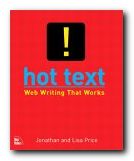
Hot Text: Web Writing That Works

July 15, 2009 by Roy Johnson

new writing  techniques for web communication

If you’re thinking of putting some of your writing on line, keep this rule of thumb in mind. Write 50% less than you would in print – otherwise people will not read it. This is one of the hundreds of tips and guidelines packed into Jonathan and Lisa Price’s new book, Hot Text. They start with a chapter of advice on writing for an audience, and getting closer to the reader, then they move on to something I found fascinating – the concept of ‘writing objects’. This is the practice of splitting up documents into small re-useable parts. It’s basically a plea for applying XML principles during the authoring process. This will enable you to produce Web documents which can be used for any number of purposes.

Hot Text: Web Writing That WorksThis is intermediate to advanced level stuff – not for beginners – and you will need to be patient. There’s a lot of important technological data before they get round to any advice on writing skills. But when they do, it comes in bucketloads. Another important point they make is that text has a double function on the web. It conveys content, but it also acts as an aid to navigation, because we do not have the physical aids provided by printed books. For this reason they advise writers to use plenty of typographical guidance.

They also emphasise the need for brevity and chunking. You should use short sentences, short paragraphs, and make the structure of all documents stand clear in a self-explanatory manner.

Once they get under way, every point is illustrated with before and after examples – 200 words of exposition reduced to 50, for instance. They even deal with issues such as reducing punctuation and moving any statistical data into tables or charts.

The centre of the book is packed with good examples of how to produce efficient writing – leading with punch lines; reducing ambiguity; how to write menus; creating the right tone; how to arrange bulleted lists; and where to place links grammatically for best effect.

They use case studies of sites such as AltaVista, Microsoft, and Amazon to discuss the requirements of writing for eCommerce, and they are particularly good at the special requirements of writing Help files and FAQs.

For commercial sites they are relentlessly on the side of the customer – and the suggestions they offer will allow any honest trader to get closer to customers and win their trust. The formula is simple – be honest, put the customer first, and don’t waffle.

They cover a wide range of digital genres – web marketing copy, news releases, email newsletters, webzine articles, personal resumes, Weblogs – and they even provide tips for would-be job seekers.

Ignore the cheesy photos of the authors which punctuate their chapters. This book is packed with good advice on web writing and modern communication skills – and it’s a must-have for any web content developers, documentation authors, online course constructors, and e-Commerce editors.

© Roy Johnson 2002

Buy the book at Amazon UK

Buy the book at Amazon US


Jonathan and Lisa Price, Hot Text: Web Writing that Works, Indianapolis (IN): New Riders, 2002, pp.507, ISBN: 0735711518


More on online learning
More on technology
More on digital media
More on web design
More on computers


Filed Under: Online Learning, Writing Skills Tagged With: Hot Text: Web Writing That Works, Information design, Publishing, Web writing, Writing skills

How Novels Work

July 10, 2009 by Roy Johnson

novelists’ techniques – and contemporary fiction

Literary Theory of the academic kind led itself into a one-way, dead-end street in the latter decades of the last century. But traditional literary criticism has survived, largely because it preserved a connection with common sense; it didn’t take itself too seriously; and it was more interested in literature than theory. John Mullan’s guide to understanding novels How Novels Work belongs to this humanist tradition. It’s based on articles he wrote for the cultural supplement to the Guardian. He seeks to examine how novels work by looking at examples of contemporary fiction whilst keeping in mind what we already know about classics.

How Novels WorkHe does this by focusing on some of the most fundamental parts of the novel – its title for instance, how its story is told, its characters created, its style, and even how it ends. One of the clever parts of his approach is that he situates his analyses within an account of the story. So even if you haven’t read some of the recent Booker prizewinners he uses as his source materials, he tells you enough to make his point comprehensible. And en passant he delivers some really good appetite-whetting accounts of contemporary best-sellers – from Monica Ali, Martin Amis, Margaret Atwood, and Ian McEwan.

The Guardian articles were originally written with people in book-reading circles in mind – and they are just the sort of readers who could profit from this introductory approach to the analysis of literature and how it achieves its effects. Others include students in schools, colleges, and universities, plus general readers of novels who would like a guided tour of the literary engine room to be shown how it all works.

Such readers will find helpful his explanations of first and third person narratives, unreliable narrators, point of view, and the conventions that surround them. And he moves fluently from Robinson Crusoe and Jane Eyre to contemporary novels such as Nick Hornby’s How to be Good and Zadie Smith’s White Teeth without any strain or condescension.

Of course you’re not likely to agree with every one of his interpretations. For instance, I think he credits Philip Roth with clever manipulation of author-narrator distinctions which are no more than modish self-referentiality, weak writing, and self-indulgence. But that is the nature of literary interpretation. These things are up for debate.

He has a particularly good section which discusses the distinctions to be made between story, narrative, structure, and plot. And the examples he chooses are fascinating. Indeed, half way through reading the chapter I dashed out to buy all Patricia Highsmith’s Ripley novels, he made the account of their split narratives so interesting.

All sorts of literary and rhetorical devices are examined: diction, parenthesis, hyperbole, pastiche, stream of consciousness, letters, emails, newspaper articles, coincidence, epigrams, quotations, symbolism – and so on. I read the book straight through, but it could equally well suffice as a work of reference.

© Roy Johnson 2008

How Novels Work   Buy the book at Amazon UK

How Novels Work   Buy the book at Amazon US


John Mullan, How Novels Work, Oxford: Oxford University Press, 2008, pp.368, ISBN: 0199281785


More on literature
More on the novella
More on literary studies
More on short stories


Filed Under: Literary Studies, Theory Tagged With: English literature, How Novels Work, Literary studies, Study skills, The novel

How the Beatles Destroyed Rock N Roll

August 21, 2009 by Roy Johnson

an alternative history of American popular music

How the Beatles Destroyed Rock N Roll is a serious and well-informed piece of cultural criticism. I am no committed student of rock and roll, though my life to date, from about ten years onwards spans that of rock and roll and much else in the world of pop music. I’ve always enjoyed it without really knowing why, and for me popular music was never the inevitable concomitant of dancing. As a history of American music this is a solid, well researched and interesting book.

How the Beatles Destroyed Rock and Roll Elijah Wald has an encyclopaedic knowledge of his subject plus a shrewd understanding of the business side of the pop music industry; and this is one field of music-popular entertainment – where money is more central than any other. He fills out his narrative from Ragtime and early Jazz to the Twist and Rock- folk with a dazzling array of talent, social history and, unsurprisingly race relations.

But to get to the Beatles thread, Wald sees the Liverpool foursome as a typical late fifties group, travelling around local dance-halls playing covers of other records to young kids who wanted to dance. I was one of them as it happens – in 1963 they played at the Shrewsbury Music Hall and I was there as someone trying to dance (I never learnt).

But the Beatles were not so typical as Wald himself supposes. Far from it. They were unusual in that they did not survive on a diet of material supplied by song writers, beavering away for record companies. They dared to write their own songs and this meant they could direct their own careers more closely than others less talented. They could also introduce trends which others followed.

So, after an early focus on rock and roll – covers of Chuck Berry and some rockers of their own like She was Just Seventeen – they produced a sentimental but haunting song, Yesterday, to link up with that earlier tradition of ballads. This song was of course a worldwide hit and soon there were nearly 200 covers of it by different artists. The ability of the Beatles to influence others was clearly immense as their popularity went global in the late sixties.

Wald argues they distracted white kids from getting into black soul, causing them instead to regress to sentimental ballads, paving the way for Simon and Garfunkel, Crosby Stills Nash and Young, Elton John and the like. Then they became more pretentious and got into meditation, clothing their music with arty mystification and letting loose the likes of The Velvet Underground, Pink Floyd, and yes, Led Zeppelin. Then a whole galaxy of sub sects were spawned which are still developing and mutating.

I’m sure there is something in this. Even McCartney says of Yesterday “we didn’t release Yesterday as a single in England at all because we were a little embarrassed by it; we were a rock and roll band”. Rock music is very imitative – witness how many US performers produced ‘Beatlified’ songs to jump on the new British bandwagon. Wald also points out that after 1966 the Beatles did not perform live but were closeted in their studios making more advanced, experimental pop music – as George Harrison joked: “our avant garde a clue music”.

With Sgt Pepper, moreover, they refused to issue any singles. Wald describes these albums as ‘musical novels’ or ‘art’; all this of a different order to the two to three minute thrashes of fifties rock and roll which had drawn them into the business. Soon rock and roll’ became a word to describe a historical period in popular music; a more generic ‘rock’ was what followed the post Beatles period.

Wald makes another interesting point regarding the white and black wings of the business. While both black and white artist were aiming at the same audience up to the mid to late sixties, he claims the Beatles marked a bifurcation into the more sophisticated white-appealing ‘rock folk’ and the more rhythmically complex black-appealing ‘soul’.

I hope I’ve summarised his argument sufficiently. Does it stack up? I think it does – but I have two doubts about it. First I don’t think you can attribute everything since the late sixties to the Beatles. I would reckon Bob Dylan had an equal influence on charting the new directions, along with the likes of Joni Mitchell, Leonard Cohen and Eric Clapton.

Second I’m not sure there was ever such a separation between black and white audiences. I recall a universal acclaim for both Beatles music and Tamla for example. But I recommend this book for anyone wishing to gain a grasp of why rock and roll lost its rebellious snarl and its sneer, its thundering, testosterone celebration of youthful sexuality and became more serene, thoughtfully wistful and poetic.

© Bill Jones 2009

Beatles Destroyed Rock N Roll Buy the book at Amazon UK
Beatles Destroyed Rock N Roll Buy the book at Amazon US


Elijah Wald, How the Beatles Destroyed Rock n Roll: An Alternative History of American Popular Music, Oxford: Oxford University Press, 2009, pp.336, ISBN: 0195341546


More on music
More on media
More on lifestyle


Filed Under: Music Tagged With: Cultural history, Music, Popular music, Rhythm and Blues, Rock and Roll

How the Web was Born

June 2, 2009 by Roy Johnson

Readable technological history of Internet and Web

Robert Cailliau’s name was on the original research proposal for the World Wide Web, along with Tim Berners-Lee. This is his account of the development, written with James Gilles. They start with a quick history of the Internet, focussing on the key feature of packet-switching which made the Web possible. Part two switches to the European Organisation for Nuclear Research in Geneva. Here the story becomes one of scientists from all over the world who need to share, archive, and retrieve information. CERN had developed its own Intranet, and by the late 1980s had become Europe’s biggest Internet site.

world wide webAs with most accounts of Internet history, you have to keep up with a complex chronology as the separate stories of each technological strand are developed: the TCP/IP protocols; the development of the PC; and the HCI (human computer interface). Fortunately, all technical terms are explained, and the general reader will be grateful for the appendices which include a timeline, a list of key individuals, a bibliography, an explanation of acronyms, and of course an index.

They include character sketches of all the main figures – Vannevar Bush, Ted Nelson, and Douglas Engelbert, who first thought of Windows, hypertext, and the mouse respectively.

There’s an interesting chapter on the rapid rise and fall of the UK computer industry which in the early 1980s was producing the world’s highest per-capita ownership of personal computers.

They also include potted histories of hypertext, and the pre-web search software such as Archie, WAIS, and Gopher. People who have used these command-line interfaces are likely to look back and smile fondly.

Finally, after all the preliminaries, everything is set for what was to be the killer application of the Internet – the invention of the World Wide Web.

It’s still amazing to think how recent all this has been – only ten years ago – as this second edition of their book is issued on the Web’s birthday.

If you want a history of the Web which is more general than Tim Berners-Lee’s more personal account in Weaving the Web, this is an excellent alternative.

© Roy Johnson 2002

Buy the book at Amazon UK

Buy the book at Amazon US


James Gillies and Robert Cailliau, How the Web was Born, Oxford, Oxford University Press, 2000, p.372, ISBN 0192862073


More on computers
More on technology
More on digital media


Filed Under: Techno-history Tagged With: How the Web was Born, HTML, Techno-history, Technology, Theory, World Wide Web

How to avoid plagiarism

September 16, 2009 by Roy Johnson

how to understand plagiarism – and avoid it

Plagiarism – definition

1. Plagiarism is defined as “Passing off someone else’s work as your own”.

2. It happens if you copy somebody else’s work instead of doing your own.

3. It also happens in those cases where people actually buy essays instead of doing the work themselves.

4. Schools, colleges, and universities regard this as a serious offence – and they often have stiff penalties for anyone found guilty.

5. Most people at school level call this ‘cheating’ or ‘copying’ – and they know it is wrong.

6. The problem is that at college or university, you are expected to use and write about other people’s work – so the issue of plagiarism becomes more complex.

7. There are also different types and different degrees of plagiarism – and it is often difficult to know whether you are breaking the rules or not.

8. Let’s start off by making it clear that all the following can be counted as plagiarism.

  • Copying directly from a text, word-for-word
  • Using text downloaded from the Internet
  • Paraphrasing the words of a text very closely
  • Borrowing statistics from another source or person
  • Copying from the essays or the notes of another student
  • Downloading or copying pictures, photographs, or diagrams without acknowledging your sources
  • Using an attractive phrase or sentence you have found somewhere
Why is this so complex?

9. The answer is – because in your work at college or university level you are supposed to discuss other people’s ideas. These will be expressed in the articles and books they have written. But you have to follow certain conventions.

10. Plus – at the same time – you will be asked to express your own arguments and opinions. You therefore have two tasks – and it is sometimes hard to combine them in a way which does not break the rules. Many people are not sure how much of somebody else’s work they can use.

11. Sometimes plagiarism can happen by accident, because you use an extract from someone else’s work – but you forget to show that you are quoting.

12. This is the first thing you should learn about plagiarism – and how to avoid it. Always show that you are quoting somebody else’s work by enclosing the extract in [single] quotation marks.

In 1848 there was an outbreak of revolutionary risings throughout Europe, which Marx described as ‘the first stirrings of proletarian defiance‘ in a letter to his collaborator, Frederick Engels.

13. This also sometimes happens if you are stuck for ideas, and you quote a passage from a textbook. You might think the author expresses the idea so well, that you can’t improve on it.

14. This is plagiarism – unless you say and show that you are quoting someone else’s work. Here’s how to do it:

This painting is generally considered one of his finest achievements. As John Richardson suggests: ‘In Guernica, Picasso lifts the concept of art as political propaganda to its highest level in the twentieth century‘.

Academic conventions

15. Why do colleges and universities make such a big fuss about this issue? The answer to this is that they are trying to keep up important conventions in academic writing.

16. The conventions involve two things at the same time. They are the same as your two tasks:

  • You are developing your own ideas and arguments and learning to express them.
  • You are showing that you have learned about and can use other people’s work.

17. These conventions allow you to use other people’s work to illustrate and support your own arguments – but you must be honest about it. You must show which parts are your own work, and which parts belong to somebody else.

18. You also need to show where the information comes from. This is done by using a system of footnotes or endnotes where you list details of the source of your information.

19. The conventions of referencing and citation can become very complex. If you need guidance on this issue, have a look at our detailed guidance notes on the subject. What follows is the bare bones.

20. In an essay on a novel by D.H. Lawrence for example, you might argue that his work was influenced by Thomas Hardy. You could support this claim by quoting a literary critic:

Lawrence’s characters have a close relationship with their physical environment – showing possibly the influence of Hardy, who Walter Allen points out was ‘his fundamental precursor in the English tradition‘ (1)

21. Notice that you place a number in brackets immediately after the quotation. The source of this quotation is given as a footnote at the bottom of the page, or as an endnote on a separate sheet at the end of your essay.

22. The note gives full details of the source – as follows:

Notes

1. Walter Allen, The English Novel, London: Chatto and Windus, 1964, p.243


A bad case of plagiarism

This video clip features the case of Ann Coulter. She is a best-selling American writer and social critic who has extremely right-wing views.

The film raises several plagiarism issues:

  • failure to acknowledge sources
  • failure to quote accurately
  • changing the nature of a quotation
  • misleading references (citations)
  • definitions of plagiarism
  • plagiarism detection software
  • legitimate quotation


Do’s and Don’ts

23. You should avoid composing an essay by stringing together accounts of other people’s work. This occurs when an essay is written in this form:

Critic X says that this idea is ‘ … long quotation …‘, whereas Commentator Y’s opinion is that this idea is ‘ … long quotation …‘, and Critic Z disagrees completely, saying that the idea is ‘ … long quotation …‘.

24. This is very close to plagiarism, because even though you are naming the critics and showing that you are quoting them – there is nothing of your own argument being offered here.

25. If you are stuck for ideas, don’t be tempted to copy long passages from other people’s work. The reason is – it’s really easy to spot. Your tutor will notice the difference in style straight away.

Copyright and plagiarism

26. Copyright can be quite a complex issue – but basically it means the ‘right to copy’ a piece of work. This right belongs to the author of the work – the person who writes it – or a publisher.

27. When a piece of writing is published in a book or on the Web, you can read it as much as you wish – but the right to copy it belongs to the author or the author’s publisher.

28. Nobody will worry if you quote a few words, or a few lines. This is regarded as what is called ‘fair use’. People in the world of education realise that because quotation is so much a part of academic writing, it would be ridiculous to insist that you should seek permission to quote every few words.

29. In fact there is an unwritten convention that you can quote up to 5% of a work without seeking permission. If this was from a very long work however, you would still be wise to seek permission.

30. This permission is only for your own personal study purposes – as part of your course work or an assignment. If you wished to use the materials for any other purpose, you would need to seek permission.

31. Copyright also extends beyond writing to include diagrams, maps, drawings, photographs, and other forms of graphic presentation. In some cases it can even include the layout of a document.


The Johann Hari case

A recent case which has drawn attention to subtle forms of plagiarism is that of British journalist Johann Hari. He writes articles and conducts interviews for The Independent newspaper. It was revealed that in many articles (and particularly his interviews) he had inserted quotations from the previous writings of the interviewee, or from interviews written by other journalists. In both cases the quotations were unacknowledged. .

He was criticised in particular for creating the impression that the words had been used in his own face-to-face interviews by sewing together the quotations with apparently on-the-spot dramatic context – as in “puffing nervously on a cigarette, she admitted to me that …” and that sort of thing.

When it was revealed that his prime quotations were lifted from written sources up to five years old, Hari was forced to issue an apology. He claimed that interviewees were sometimes less articulate in speech writing than in writing, and that he merely wanted to present their arguments in the best light.

This feeble ‘explanation’ ignores three of the principal issues in plagiarism. He did not produce his own paraphrases of the interviewee’s ideas, but used their words from other sources. He went out of his way to conceal his sources and create the entirely bogus impression of a first-hand interview. (Some people have wondered if his interviews actually took place.) And he used the work of other journalist, from work they had published previously, without acknowledgement.

So how exactly was Hari guilty of plagiarism?

  • He quoted other people’s words as if they were his own.
  • He didn’t acknowledge his sources.
  • He concealed the cut and paste origins of his composition.

A number of his essays and interviews have been analysed, and he has been shown to be guilty of systematic plagiarism. The majority of Internet comments point to the fact that he acted unprofessionally. All his previous work was scrutinised, and it has been suggested that he return the 2008 George Orwell Prize that he was awarded for distinguished reporting.

He began to edit his personal Wikipedia entry, inserting flattering comments on his own work and abilities. But to make matters doubly worse, he then resorted to something even more underhand. Using a false identity (‘David Rose’) he began making pejorative edits to the Wikipedia entries of anybody who had criticised him. When challenged, he denied all this, but was eventually forced to admit the truth and apologise.

Guido Fawkes on the Hari issue and here

Detailed analysis of Hari’s plagiarism


Plagiarism and the Web

32. The World Wide Web has made millions and millions of pages of information available to anybody with access to the Internet. But even though this appears to be ‘free’ – copyright restrictions still apply. If someone writes and publishes a Web page, the copyright belongs to that person.

33. If you wish to use material you have located on the Web, you should acknowledge your sources in the same way that you would material quoted from a printed book.

34. Keep in mind too that information on a Web page might have been put there by someone who does not hold copyright to it.


What follows is the rather strictly-worded code on plagiarism from a typical university handbook.

Plagiarism

Plagiarism is the theft or appropriation of someone else’s work without proper acknowledgement, presenting the materials as if they were one’s own. Plagiarism is a serious academic offence and the consequences are severe.

a) Course work, dissertations, and essays submitted for assessment must be the student’s own work, unless in the case of group projects a joint effort is expected and indicated as such.

b) Unacknowledged direct copying from the work of another person, or the unacknowledged close paraphrasing of somebody else’s work, is called plagiarism and is a serious offence, equated with cheating in examinations. This applies to copying both from other student’s work and from published sources such as books, reports or journal articles.

c) Use of quotations or data from the work of others is entirely acceptable, and is often very valuable provided that the source of the quotation or data is given. Failure to provide a source or put quotation marks around material that is taken from elsewhere gives the appearance that the comments are ostensibly one’s own. When quoting word-for-word from the work of another person quotation marks or indenting (setting the quotation in from the margin) must be used and the source of the quoted material must be acknowledged.

d) Paraphrasing when the original statement is still identifiable and has no acknowledgement, is plagiarism. A close paraphrase of another person’s work must have an acknowledgement to the source. It is not acceptable to put together unacknowledged passages from the same or from different sources link these together with a few words or sentences of your own and changing a few words from the original text: this is regarded as over-dependence on other sources, which is a form of plagiarism.

e) Direct quotation from an earlier piece of the student’s own work, if unattributed, suggests that the work is original, when in fact it is not. The direct copying of one’s own writings qualifies as plagiarism if the fact that the work has been or is to be presented elsewhere is not acknowledged.

f) Sources of quotations used should be listed in full in a bibliography at the end of the piece of work and in a style required by the student’s department.

g) Plagiarism is a serious offence and will always result in imposition of a penalty. In deciding upon the penalty the University will take into account factors such as the year of study, the extent and proportion of the work that has been plagiarised and the apparent intent of the student. the penalties that can be imposed range from a minimum of zero mark for the work (without allowing resubmission) through to downgrading of degree class, the award of a lesser qualification (eg a Pass degree rather than Honours, a certificate rather than a diploma) to disciplinary measures such as suspension or expulsion.

Quoted with the permission of Manchester University

© Roy Johnson 2004


More on How-To
More on literary studies
More on writing skills


Filed Under: How-to guides, Literary studies, Study Skills Tagged With: Academic writing, Copying, Copyright, Plagiarism, Study skills, Writing skills

How to be a Student

July 10, 2009 by Roy Johnson

100 great ideas and practical habits on student life

There are lots more guidance books on study skills than there used to be. In the past it was assumed you would pick up the necessary skills as you went along, or by some sort of mystical osmosis. It’s good that educational institutions have been forced to make themselves more transparent – but there’s still a long way to go, which is what makes books like How to be a Student helpful for would-be students. It would be useful for anyone entering further or higher education.

How to be a StudentThis spells out what’s required at a really basic and practical level. Making sure you turn up to your lectures for instance, and what to do when you get there. Learning about the complexities of plagiarism, and how to develop your own voice when writing essays. How to deliver presentations with confidence and style. Everything is spelt out in short, clear manageable chunks, so there is nothing which should overwhelm the people who the book is aimed at.

And it’s not all study skills. The authors also cover topics such as dealing with periods of boredom and knowing when it’s time to teak a break; preventing small problems from growing to become big obstacles; plus dealing with finance and not letting money problems get in the way of your studies.

The good thing about this book is that it’s based on real life and it deals with the actual problems many students face. There’s advice about phoning home, drinking, personal relationships, dealing with boredom, coping with bureaucracy, and even what to eat to feel better.

They cover writing skills, reading skills, revision and exam skills too – but these are taken alongside all the other personal issues as sources of potential worry and uncertainty which these guidance notes seek to dispel.

If you need advice on all these topics written in a manner which is friendly and non-patronising manner, this is a good place to start.

© Roy Johnson 2005

How to be a Student   Buy the book at Amazon UK

How to be a Student   Buy the book at Amazon US


Sarah Moore and Maura Murphy, How to be a Student, Maidenhead: Open University Press, 2005, pp.138, ISBN: 0335216528


More on study skills
More on writing skills
More on online learning


Filed Under: Study skills Tagged With: Education, Students, Study skills

How to choose a dictionary

November 1, 2009 by Roy Johnson

from pocket-size to the world’s largest reference

Dictionaries can be something of a personal matter. People become very attached to their favourite amongst the most-used of all reference books. However, a few guidelines on how to choose a dictionary can easily be established. The first thing to understand is that they are not all the same. They have their own characters and peculiarities, and they are created for different users.

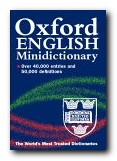
How to choose a dictionary - Oxford MinidictionaryLet’s start with the question of size. The smallest dictionaries, which you really can fit into your pocket, are only suitable for a quick check of spelling and meaning in most commonly used words. These are mini-books the size of cigarette packets, which often end up in your desk drawer. The Oxford English Minidictionary manages to pack 40,000 entries and 50,000 definitions into a miraculously small space – and throws in a few extra pages which offer solutions to common problems. Keep this in your briefcase, or take it along to the pub quiz, but for serious work you’ll need something bigger.


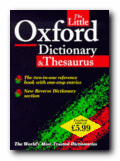
How to choose a dictionary - The Little Oxford Dictionary The Little Oxford Dictionary is the next size up. This is a more serious attempt to be useful, with 51,000 entries and supplementary information on each word, including how it should be pronounced. It also includes occasional panels of advice on grammar and good usage, plus a supplement of words which have come into the language during the 1990s. This is one for the desktop or your briefcase, and probably the smallest you can go if you are going to consult a dictionary regularly.
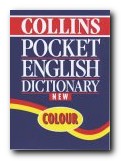
 

How to choose a dictionary - Collins Pocket DictionaryCollins offer an alternative to the Oxford domination of the dictionary market. Their books are popular because they generally make clear page layout a priority. The Collins Pocket Dictionary contains 44,500 definitions, plus advice on grammar and common problems. It claims to be ‘in colour’ – but all this turns out to mean is that headwords and their variants are printed in red – which makes the pages look as if they’ve got measles.


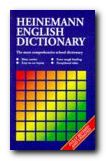
How to choose a dictionary - Heineman DictionaryAmongst the ‘portables’, the Heinemann English Dictionary is specially designed for use in schools. Not only is each entry very clearly presented, but parts of speech are spelt out in full, not abbreviated as is usual in dictionaries. Pronunciation is explained, and there are pull-out boxes with gems of etymology on certain words. It has been created with the UK National Curriculum in mind – and has proved to be popular as a reference for the classroom.


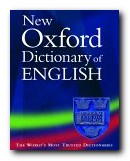
How to choose a dictionary - New Oxford DictionaryThe New Oxford Dictionary focuses on English as it is really used in the late 20th century. Compiled after in-depth analysis of computerized databases of current English, this dictionary is the first to base its coverage on the evidence of real English. A rapid-reference page design separates out parts of speech, word histories, and phrases. The most modern meaning of each word, as used by the majority of people, is placed first within each entry. Contemporary rules are given on question of usage, providing relevant advice on problems old and new. Word history notes explain the linguistic roots of words and tell the story of how a word’s meaning and form have changed over time. Modern pronunciations are also given, using the internationally recognized system.

If you are buying a dictionary for serious use, paperbacks can be a false economy. Very often, hardback editions only cost slightly more – and they will last you a lifetime. Treat yourself!

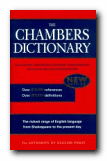
How to choose a dictionary - Chambers DictionaryIt’s official! The word techie – a devotee of technology – has made it into the Chambers Dictionary. And there are a slew of other net-specific words too, including netiquette, browsing, applet, spam, cybersex and cybercafé. It just goes to show how the world of computing and electronic communications has advanced and changed our world. Of course, there are also those other little things that have become part of our lives: Prozac, sound bite, cellulite…


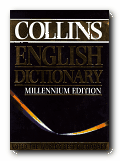
How to choose a dictionary - Collins Millenium DictionaryCollins dictionaries have always scored well on contemporary relevance and accessibility. The latest ‘Millennium’ edition of the Collins English Dictionary has increased the previous content by twenty percent, and there are useful guiding headers at the top of the pages, and the headword entries are printed in a no-nonsense non-serif font which I find unexpectedly easy to read. Besides answering the questions usual to dictionaries there are many encyclopedic entries which make this a valuable work of general reference. It also carries notes on language use which might be studied by those who think they speak English correctly.


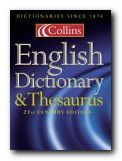
How to choose a dictionary - Collins Dictionary and ThesaurusCollins also have on offer a ‘two-books-in-one’ Dictionary and Thesaurus. This carries 71,000 entries, plus a quarter of a million synonyms. Normal dictionary entries appear in the top half of each page, whilst the bottom half presents lists of synonyms and antonyms. This is a simple but very effective device which encourages browsing and learning about language. A useful choice if you need to combine two sources of reference in one.


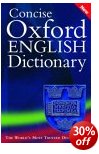
How to choose a dictionary - Concise Oxford DictionaryThe most popular of the one-volume desktop dictionaries is the Concise Oxford Dictionary. This contains explanations, pronunciation, and the etymology of over 40,000 headwords. It also adds notes on any disputed or controversial terms, and includes American spellings. This is a great favourite with writers and students, and a basic minimum for a civilized library. If you can only afford one dictionary – make it this one.


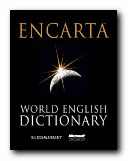
How to choose a dictionary - EncartaIf you want an illustrated dictionary, Encarta has recently been released as one volume – to some acclaim. It represents both the diversity of English as a language spoken around the world, and an attempt to capture up-to-date usage. If you want a picture of an aardvark and details of zygotes – Encarta has them. It offers variant spellings, meanings, and pronunciations in more than 100,000 entries comprising some 3.5 million words. If, for example, your Asian correspondent asks you for your biodata, you can quickly and painlessly learn that she needs your curriculum vitae. There are more than 3,000 black-and-white illustrations and 10,000 biographical and geographical entries. This is Microsoft making good use of its linguistic database.


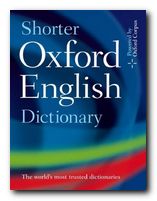
How to choose a dictionary - New Shorter Oxford DictionaryMoving towards the heavier, more serious resources for writers, students, and teachers who want the sort of books in their homes which are normally only available in libraries, the New Shorter Oxford is a firm favourite. It’s big, comprehensive, and scholarly, and is based on the monumental Oxford English Dictionary. All entries have been re-written to reflect contemporary usage. This is one which should be considered as a minimum for serious writers and researchers. It comes in two handsomely-produced volumes, which are a sound investment. Its also just been re-issued in a Oxford’s new easy-to-read format.


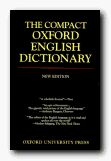
How to choose a dictionary - Compact Oxford English DictionaryThe Compact OED [an accurate but amazingly misleading title] is just about as far as you would need to go without being a library acquisitions officer or a professional lexicographer. It’s a two-volume version of the complete OED – but photo-reduced, so that the text is laid out in a font size of about six points. The volumes are issued as a cased set with a magnifying glass – and you’ll need it. But here’s the good news. It works. So you save on storage space, yet have access to the contents of the twenty volume version. I picked one up second hand, and use it all the time.


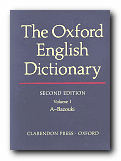
How to choose a dictionary - The Oxford English Dictionary CompleteOf course when we get to the biggest and best dictionary of the English Language, and a towering monument of bibliographic scholarship – then it’s the complete Oxford English Dictionary. This is now twenty printed volumes and had become rather expensive to produce. There are the two options available. You can have the convenience, speed, and reliability of the whole database on a single disk. Keep it in your D: drive and the world’s biggest lexical resource can be summoned with a mouse-click. The alternative is to subscribe to the online version, which will be permanently updated. It’s worth noting that the OED editors have decided to adopt an all-inclusive policy. New English, slang, jargon, and even obscenities are all listed.

© Roy Johnson 2009


More on dictionaries
More on language
More on literary studies
More on writing skills


Filed Under: Dictionaries, How-to guides, Study skills, Writing Skills Tagged With: Choosing a Dictionary, Communication, Creative writing, Dictionaries, Oxford Dictionaries, Oxford English Dictionary, Reference

How to cite electronic sources

September 15, 2009 by Roy Johnson

academic conventions for the digital age

Referencing

1. More and more data is now stored electronically in a variety of forms.

2. When quoting, your sources may be in some digital form.

3. The information might be stored in different types of location.

4. Many of these locations are known as Internet ‘sites’ or ‘addresses’.

5. The sources you are most likely to encounter are as follows:

  • FTP site
  • Web site
  • Newsgroup
  • CD-ROM
  • E-mail

Accuracy

1. Details of addresses should be recorded with complete accuracy.

2. All use of capital and lower case letters must be respected.

3. All punctuation must be recorded exactly as given.

4. No punctuation should be added.

5. For instance, don’t put a full stop at the end of an address:

https://mantex.co.uk – not – https://mantex.co.uk.

6. Typographic symbols (#,@,!,~) should be incorporated accurately.

7. You should also include a record of the date the site was visited.

8. Electronic documents may easily be updated at any time.


FTP (File Transfer Protocol) Sites

1. When giving reference to sources located via FTP, you should provide the following information. The electronic ‘address’ of the document is enclosed in angle brackets (which are optional).

  • the author’s name (if known)
  • the full title of the document in quotation marks
  • the date of publication (if available)
  • the abbreviation ftp
  • the address of the ftp site, with no closing punctuation
  • the full path to the paper, with no closing punctuation
  • the date of access in parentheses

Example:

Bruckman, Amy. “Approaches to Managing Deviant Behavior in Virtual
Communities.”

<ftp://ftp.media.mit.edu/pub/asb/papers/deviance-chi-94>
(4 Dec. 1994).


World Wide Web (WWW) Sites

1. To cite files available for viewing or downloading via the World Wide Web by means of Firefox, Internet Explorer, or other Web browsers, you should provide the following information:

  • the author’s name (if known)
  • the full title of the document in quotation marks
  • the title of the complete work if applicable in italics
  • the date of publication or last revision (if available)
  • the full http address (URL) enclosed within angle brackets
  • the date of visit in parentheses

[ HTTP = HyperText Transfer Protocol ]
[ URL = Uniform Resource Locator ]

Example:

Burka, Lauren P. “A Hypertext History of Multi-User Dimensions.”
MUD History. 1993.
<http://www.ccs.neu.edu/home/1pb/mud-history.html>
(5 Dec. 1994).


Newsgroup (USENET) messages

1. When citing information posted by participants in newgroup discussions, you should provide the following information:

  • the author’s name (if known)
  • the author’s e-mail address, enclosed in angle brackets
  • the subject line from the posting in quotation marks
  • the date of publication
  • the name of the newsgroup, enclosed in angle brackets
  • the date of access in parentheses

Example:

Slade, Robert. <res@maths.bath.ac.uk> “UNIX Made Easy.”
26 Mar. 1996. <alt.books.reviews> (31 Mar. 1996).


E-mail messages

1. When citing electronic mail correspondence, you should provide the following information:

  • the author’s name
  • the author’s e-mail address, enclosed in angle brackets
  • the subject line from the posting in quotation marks
  • the date of publication
  • the kind of communication
  • the date of access in parentheses

Example:

Franke, Norman. <franke1@llnl.gov> “SoundApp 2.0.2.” 29 Apr. 1996. Personal e-mail. (3 May 1996).


CD-ROM disk

1. When citing information located on a CD-ROM disk, the source is treated as if it were a normal (print) publication, and you should provide the following information:

  • the author’s name (if known)
  • the full title of the document in quotation marks
  • the full title of the CD-ROM
  • the publisher
  • the date of publication (if available)

Example:

Norman Higginbottam, “The Sounds of Muzak”, Beethoven Revisited,
Digital Resources, 1996.


Details gratefully quoted and adapted with permission from Andrew Harnack and Gene Kleppinger, online! a reference guide to using internet sources, St Martin’s Press, 1997.

© Roy Johnson 2004


More on How-To
More on literary studies
More on writing skills


Filed Under: How-to guides, Literary studies, Study Skills Tagged With: Academic writing, Citation, Electronic sources, Reference, Referencing, Research, Writing skills

How to create a bibliography

November 16, 2009 by Roy Johnson

the basic conventions for academic writing

1. bibliographyAt the end of any scholarly writing (an essay, report, or dissertation) you should offer a list of any works you have consulted or from which you have quoted. This list is called a bibliography – literally, a list of books or sources.

2. The traditional way of showing this information is to use the following sequence:

Author – Title – Publisher – Date

Terry Eagleton, Literary Theory, Oxford: Blackwell, 1983.

3. In some cases, you might be expected to present this information with the author’s surname listed first – as follows:

Eagleton, Terry. Literary Theory, Oxford: Blackwell, 1983.

4. If you are using the Harvard system of notation, the date follows the author’s name – thus:

Eagleton, T. (1983), Literary Theory, Oxford: Blackwell

5. Notice that book titles are shown in italics.

6. If you are using a ‘standard’ text, give the editor’s name first, as in the following examples:

Mark Amory (ed), The Letters of Evelyn Waugh, Weidenfeld and Nicolson, 1980.

Frank Kermode (ed), The Tempest, Methuen, 1954.

7. List the items of a bibliography in alphabetical order according to author’s or the editor’s surname.

8. Don’t list works you have not consulted or from which you have not quoted. Doing this creates the impression that you are trying to claim credit for work you have not actually done.

9. You might find that your bibliography repeats much of the information given in your endnotes or footnotes. Don’t worry about this: these two separate lists have different functions. In addition, your bibliography may contain works from which you have not directly quoted.

10. Here’s an extract from the bibliography of a second year undergraduate essay on the sociology of domestic labour:

Bibliography

Beeton, I., Beeton’s Book of Household Management, Chancellor Press, 1991.

Best, G., Mid-Victorian Britain 1851-75, Fontana, 1979.

Branca, P., Silent Sisterhood, Croom Helm, 1975.

Burman, S. (ed), Fit Work for Women, Croom Helm, 1979.

Burnett, J., Useful Toil, Allen Lane, 1974.

Darwin, E., ‘Domestic Service’, The Nineteenth Century, Vol.28, August 1890.

Davidoff, L., The Best Circles, Croom Helm, 1973.

Davidoff, L., ‘Mastered for Life: Servant and Wife in Victorian and Edwardian England’, Journal of Economic and Social History, Vol.7, 1974.

The Harvard System

11. Some subjects adopt the Author-Date method of referencing – which is also known as the Harvard System. Full details of the texts you have quoted are placed in the bibliography in the following order:

Author – Date – Title – Place – Publisher

Smith, John. (1988) The Weavers’ Revolt, Chicago, Blackbarrow Press.

12. The list of texts which appears at the end of your essay should be arranged in alphabetical order of the author’s surname. The list differs from a traditional bibliography in that the date of publication follows the author’s name.

So – the same bibliography shown above would appear as follows in Harvard style:

Bibliography

Beeton, I. 1991 Beeton’s Book of Household Management, Chancellor Press.

Best, G. 1979 Mid-Victorian Britain 1851-75, Fontana.

Burman, S. 1979 (ed), Fit Work for Women, Croom Helm.

Darwin, E. 1890 ‘Domestic Service’, The Nineteenth Century, Vol.28, August.

Davidoff, L. 1973 The Best Circles, Croom Helm.

Davidoff, L. 1974 ‘Mastered for Life: Servant and Wife in Victorian and Edwardian England’, Journal of Social History, Vol.7.

Davidoff, L. 1987 and Hall, C., Family Fortunes, Hutchinson.

[…and so on]

bibliography Full details of Harvard style referencing.

© Roy Johnson 2009


More on How-To
More on literary studies
More on writing skills


Filed Under: 19C Literature, 20C Literature, How-to guides, Literary studies, Study Skills Tagged With: Academic writing, Bibliography, Harvard style referencing, Referencing, Study skills, Writing skills

  • « Previous Page
  • 1
  • …
  • 38
  • 39
  • 40
  • 41
  • 42
  • …
  • 103
  • Next Page »

Get in touch

info@mantex.co.uk

Content © Mantex 2016
  • About Us
  • Advertising
  • Clients
  • Contact
  • FAQ
  • Links
  • Services
  • Reviews
  • Sitemap
  • T & C’s
  • Testimonials
  • Privacy

Copyright © 2026 · Mantex

Copyright © 2026 · News Pro Theme on Genesis Framework · WordPress · Log in