Mantex

Tutorials, Study Guides & More

  • HOME
  • REVIEWS
  • TUTORIALS
  • HOW-TO
  • CONTACT
>> Home / Archives for 2009

Archives for 2009

Point of view – how to understand it

September 12, 2009 by Roy Johnson

free pages from our English Language software program

Point of view – definition

point of view ‘Point of view’ is a term from literary studies which describes the outlook from which events are related.

redbtn It is used of a statement which offers a particular viewpoint or perspective on something.

redbtn This viewpoint might be that that held personally by the writer or speaker, but it could also be that of a deliberately created fictional character.


Examples
  • I think Bill’s taste in clothes is appalling.
    [My point of view.]
  • “I think Bill’s taste in clothes is appalling” John said sneeringly.
    [John’s point of view.]
  • She tried desperately to persuade me of her husband’s honesty.
    [My point of view.]

Use

redbtn ‘Point of view’ is an important concept in analysing and understanding both speech and writing.

redbtn Point of view may be overt and explicit, or it may be subtly implied.

redbtn It is often used to create character by presenting recognisable opinions.

redbtn It may also be used to present psychology in depth by revealing unconscious thoughts.

redbtn Information may often be presented from a particular point of view without revealing the source – which the observer is invited to guess.

redbtn It may also be mischevously imitated for ironic effect.

redbtn NB! Point of view is more than just an ‘opinion’. It also implies an identifiable source.

redbtn The concept of ‘point of view’ is essentially concerned with identifying the source of information.

redbtn This is not always a straightforward matter, because statements may contain more than one point of view.

redbtn In the first example – I think Bill’s taste in clothes is appalling – we are given only one point of view: that of the ‘I’ who is making the statement. We have no way of putting this view into any other perspective. Strictly speaking, we do not know if Bill’s taste is bad or not. We only know the opinion of ‘I’ about the matter.

redbtn In the second example – “I think Bill’s taste in clothes is appalling” John said sneeringly – the same statement is made by John, and this is reported to us by someone else – the narrator. The narrator informs us that the statement was made ‘sneeringly’. This casts John’s opinion into a critical light, because the term ‘sneering’ carries very negatives overtones.

redbtn Thus in this second example we have two points of view – John’s and the narrator’s. One is passing comment on the other. This gives the reader more information with which to make judgements.

redbtn In the third example – She tried desperately to persuade me of her husband’s honesty – there are again two points of view, though the second is less obvious this time.

redbtn The first point of view is that of the ‘me’ recounting events. This person – the narrator – controls what we know. The second point of view is that of the ‘she’ who is discussing her husband. This view however comes to us from the narrator – the ‘me’.

redbtn The terms ‘desperately’ and ‘persuade’ suggest that this effort is being made under emotional pressure – and that the attempt is not succeeding.

redbtn But the person recounting this event [the narrator] might have a bias of some kind, or prejudice against the woman. We tend to believe that narrators are telling the truth, but what if this person were a robber who had just broken into the house and was stealing the family jewels?

redbtn The point here is that we cannot know if the husband is actually honest or not. We only have two points of view – that of the wife who is trying to persuade a narrator, and failing. [It’s a complex business, isn’t it?]

redbtn Sometimes a point of view may be implied rather than directly stated. Consider the following example, from a story which concerns a young girl making a journey at night:

A faint wind blowing off the water ruffled under Fenella’s hat, and she put up her hand to keep it on. It was dark on the Old Warf, very dark; the wool sheds, the cattle trucks, the cranes standing up so high, the little squat railway engine, all seemed carved out of solid darkness. Here and there on a rounded wood pile, that was like the stalk of a huge black mushroom, there hung a lantern, but it seemed afraid to unfurl its timid, quivering light in all that blackness; it burned softly, as if for itself.

[KATHERINE MANSFIELD]

redbtn Here the first point of view is that of a narrator – telling the story of Fenella, the young girl. But then in the second sentence, starting with terms such as ‘cranes standing up so high’ and ‘the little squat railway engine’, the events are narrated from the young girl’s point of view – as they might seem to her.

redbtn This is a very typical example of a writer using ‘point of view’ to offer readers an imaginative experience – in this case seeing the world as it would be perceived by a young girl.

redbtn Point of view may also be impersonated, assumed, or mischevously implied in both speech and writing for ironic effect.

redbtn To summarise, point of view is important because we need to place any statement into a context before we can evaluate it properly.

Self-assessment quiz follows >>>

© Roy Johnson 2003


English Language 3.0 program
Books on language
More on grammar

Filed Under: English Language Tagged With: English language, Fiction, Point of view, Writing

Poor Richard’s Web Site

July 1, 2009 by Roy Johnson

web site design and maintenance on a budget

This publication has an interesting history. Peter Kent is an author of best-selling titles, yet when he wrote Poor Richard’s Web Site, a plain folk’s guide to the most rapidly expanding part of Information Technology, publishers didn’t want to touch it. He therefore released it himself in the form of Word files on disk. This fortunately led to print publication, in which form it now comes to us in a new second edition, swathed in well-deserved commendations.

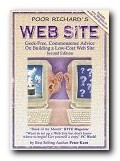
Poor Richard's Web SitePart I offers four introductory chapters on choosing an Internet Service provider and domain name. This is very logical, but somehow I think its position at the front of the book might deter readers who want to more rapidly approach the meatier and less abstract matter of planning and designing their site. Part II on the creation of a site is where the book really comes to life. He covers the basics of the site and its purpose.

There’s an introduction to HTML; choosing authoring tools; making the site interactive; and how to use auto-responders and email to enhance commerce generated by your pages. He includes a brief guide to the many sources of information which are available free on line. Lots of resource centres are listed for HTML editors, scripts, and graphics. A beginner would save the price of the book in the space of two or three downloads.

Part III deals with the commercial aspects of registration and promotion. He offers multiple sites to check your pages for browser compatibility – an important feature during the on-going browser wars. The going gets a little complicated when discussing CGI scripts – but he does his best to be reassuring.

His approach is emphatically clear, logical, and (as his rum sub-title claims) full of common sense. At every stage of his exposition he points to examples. There’s a list of award-winning sites, and even a list of the worst – some of which are quite funny. He’s certainly done the spadework of analysing Web sites on behalf of the reader, and in this respect this publication is very good value as a guide and a source of reference. The inclusion of so many Web addresses is particularly useful for UK readers who (paying for local telephone calls) can’t afford to surf freely for this information like their US counterparts.

The first edition was written two years ago. Quite a bit has changed since then. There are better ways to connect, better and more software is available, and there are more services out there. This new edition covers the basics, but it also discusses newer issues like registering and modifying your domain name, the additional service offered by Web hosting companies, and how to use e-mail more effectively. It’s a shame that there’s no bibliography, because he mentions en passant a number of useful-sounding publications. However, by the time you read this they might have been added to the book’s own web site, where the 800 plus links are listed.

© Roy Johnson 2000

Buy the book at Amazon UK

Buy the book at Amazon US


Peter Kent, Poor Richard’s Web Site: Geek-free, Commonsense Advice on Building a Low Cost Web Site, Colorado: Top Floor, second edition, 2000, pp.418, ISBN 0966103203


More on web design
More on digital media
More on technology


Filed Under: Web design Tagged With: Business, e-Commerce, Poor Richard's Web Site, Web design

Port Out, Starboard Home

July 15, 2009 by Roy Johnson

folk etymologies and false word histories explained

This is a book of folk-etymologies, false-etymologies, pseudo-etymologies – call them what you will. As Michael Quinion explains, once a colourful explanation for the origin of a term is offered, it’s hard to shift, no matter how flawed it might be. His book title Port Out, Starboard Home is taken from one of the most famous – the assumption that the word ‘posh’ is an acronym from reservations made with the old steamship companies servicing the British Empire. The story seems plausible, and it’s attractive – but it’s not true.

Port Out, Starboard Home He covers lots of others such as honeymoon (nothing to do with honey) Elephant and Castle (which actually has connections with one of my local towns, Bolton) and Jerusalem Artichoke, which is not an artichoke and isn’t from Jerusalem. En route he takes you through some interesting byways – such as the reasonably well known example of British servicemen in the First World War converting ca ne fait rien into san fairy ann.

Entries run from akimbo to Zzxjoanw, which was passed off for years as a Maori name for a drum – despite the fact that there is no Z, X, or J in the Maori alphabet.

He gives detailed and plausible explanations for difficult cases such as the Big Apple (New York) and you would hardly believe how much can be written about the origins of apparently simple words such as aluminium and jazz.

So in a typical example, such as Ballyhoo for instance, he lists all the supposed explanations for the word’s origins – then quietly explodes them as myths, and substitutes either a reasonable explanation, or an admission that we simply don’t know. The same is true for expressions such as break a leg, for which he gives several possible explanations, before coming up with the the most plausible.

Michael Quinion is a scholar, and as a researcher for the Oxford English Dictionary he knows his stuff. He cites his sources and he knows the etymological history of language back to the early Renaiassance. But I don’t agree with him that the negative should be removed from all mouth and no trousers.

And he also keep a very good web site at www.worldwidewords.org – from which many of these examples are drawn. I visit regularly when I get stuck, and I’m rarely disappointed. The site also has a weekly newsletter which gives updates on issues to do with problems, difficult words, and complications in English Language. But like most people, I like having something between hard covers.

© Roy Johnson 2005

Port Out, Starboard Home   Buy the book at Amazon UK

Port Out, Starboard Home   Buy the book at Amazon US


Michael Quinion, Port Out, Starboard Home and other language myths, London: Penguin, new edition 2005, pp.304, ISBN: 0141012234


Filed Under: Language use Tagged With: Etymology, Language, language myths, Port Out Starboard Home, Reference

Portrait of a Marriage

July 11, 2009 by Roy Johnson

conjugal life a la Bloomsbury

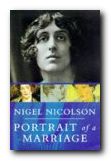
Nigel Nicolson is the son of writer Vita Sackville-West and diplomat-politician Harold Nicolson. When his parents died he found a locked leather Gladstone bag in his mother’s study, cut it open, and discovered a diary containing an autobiographical account of her affair with Violet Trefusis. Portrait of a Marriage is made up of these diary entries, interspersed with his own explanations of what went on in those parts of the story his mother doesn’t cover.

Portrait of a Marriage It’s not really a portrait of a marriage at all until the final chapter. Harold Nicolson remains a vaporous non-presence throughout, and there is almost nothing about the relationship between them except for her protestations at ‘depending’ on him. The central issue is her passionate three-year fling that has her dressing up as a man, leaving her husband and children behind to ‘elope’ to France, and to live in Monte Carlo, gambling at the tables with money they didn’t have, whilst Trefusis was debating the wisdom of marrying her fiancé Denys, whom she didn’t love or desire.

It’s an amazing story, and most instructive in class terms. Husbands colluding with their wives’ lovers for the sake of money to keep estates solvent, whilst paternity suits raged to the tune of £40,000 (this in the 1900s).

I was also very struck by how much of Sackville-West’s literary style is similar to Virginia Woolf’s. She is a great fan of the stream of immediate memory, and a narrative couched in extended metaphors and rhapsodic interludes. There are lots of schooners breasting silvery waves with the wind full in their sails, and that sort of thing.

There’s nothing here that will be remotely shocking in the sexual sense to modern readers. ‘I had her’ is about as explicit as it gets. But the behaviour – duplicitous, self-seeking, naive, and hypocritical – is breathtaking. Vita Sackville West finally broke off the relationship with Trefusis because she thought she might have had some sexual connection with Denys Trefusis – the man she had recently married – whilst West had two children with Harold Nicolson. Actually, Violet Trefusis hadn’t had any such connection, having made it a condition of her marriage contract.

There’s a lot of utterly snobbish ancestor-worship to get through and Nicolson’s chapters are written in a creakingly old-fashioned manner: ‘She permitted him liberties but not licence’. In fact Nicolson fils seems as wrapped up in snobbery as his mother:

her real friends were souls, but real souls who had some breeding and a gun, who could make a fourth at bridge, and who knew the difference between claret and burgundy

I found it quite hard to keep my rage down when reading of the almost unbelievable concern for money, status, and class. The events are only just over a hundred years ago, and this account of them was written in the 1970s, but it was like reading about social dinosaurs.

The latter part of the book outlines West’s affairs with Geoffrey Scott and Virginia Woolf – both of which she recounted in detail to her husband. Their son makes the case that the bond between them was strong enough to outlast these affairs – which it did, though on the basis that they had no sexual relationship with each other.

Of course you don’t need a brass plaque on your door to realise why a child would want to portray his bisexual and adulterous parents in the best possible light, but I must say all this is sometimes difficult to accept calmly.

As time went on the affairs petered out and the Nicolsons settled down to a quieter life, the major part of which they spent separately – he in London, she in their house at Sissinghurst – which might account for the longevity of the union.

These were people who seemed to have separated out sex from marriage, who obviously cared for each other, and yet spent most of their time apart, writing endless letters saying how much they missed each other. They also made sure their children were kept out of the way at all times. Maybe there’s a lesson in there somewhere?

However, there is one very good thing to say for this memoir-cum-history. Anyone who wants a vivid, living example of the social values and the bohemian behaviour of the Bloomsbury Group need look no further. It’s all here.

© Roy Johnson 2004

Portrait of a Marriage   Buy the book at Amazon UK

Portrait of a Marriage   Buy the book at Amazon US


Nigel Nicolson, Portrait of a Marriage, London: Orion Books, 2004, pp.216, ISBN: 1857990609


More on Harold Nicolson
More on the Bloomsbury Group
Twentieth century literature
More on Vita Sackville-West


Filed Under: Biography, Bloomsbury Group, Harold Nicolson, Lifestyle, Vita Sackville-West Tagged With: Biography, Bloomsbury Group, Cultural history, Harold Nicolson, Portrait of a Marriage, Vita Sackville-West

Practical Information Policies

July 13, 2009 by Roy Johnson

data management and information architecture

This is a study of information architecture and management – both in theory and practice. It is written with three groups of readers in mind – managers in libraries and information services; business managers and executives; and students of information science, librarianship, and information management. Elizabeth Orna starts Practical Information Policies by explaining why organizations need policies and strategies for managing information – outlining the benefits of having a policy, and the losses of not having one. She offers interesting definitions of the basic concepts she discusses, such as ‘information policy’, ‘knowledge management’, and ‘information management’.

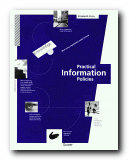
Practical Information PoliciesWhen she moves on to look at how institutions are organized, she presents a very useful checklist of questions. These can be posed to query the efficiency of management systems. For instance, ‘What provision does the organization make for job handover and transfer of knowledge?’ These sorts of questions will be very useful to those people serious about systems analysis, just as they will strike fear into slack managers facing a quality assurance inspection.

These considerations form the basis for the next part of her study, which deals with making an information audit, then interpreting and presenting its findings. She sees individuals as repositories of skills and knowledge, and her basic argument is that they are both the prime asset of an organization and the agents for successfully managing change. The examples she discusses are drawn from real-life instances of ‘change’ such as ‘premises destroyed by bomb’ and ‘hostile takeover bid’.

The second part of the book is a series of case studies in corporate policy initiatives – including the introduction of a comprehensive IT policy at Amnesty International; the management of change at the British Library; and information strategies in the National Health Service, plus organizations as diverse as an advertising agency, the University of North London, and the Surrey Police.

Of course there are no guarantees that conducting even the most searching and intelligent audit of knowledge is going to save an organization from political or commercial doom. One of the case studies discussed here is NatWest bank, currently being swallowed up by the Royal Bank of Scotland. But as Orna finally observes, when dealing with information systems and large-scale corporate developments, ‘a degree of detachment, and a sense of humour are…useful assets.’

It’s worth saying that this is also a beautifully designed and elegantly produced book. It belongs in that rare category of publications which for book-lovers are interesting to contemplate, irrespective of their content. It follows the modern practice – which has its attractions – of placing short lists of suggested reading after each chapter, rather than in one long bibliography at the end of the book.

This is one for information professionals. The message of Practical Information Policies is that successful ‘knowledge management’ depends on knowledge in human minds, expressed in effective action, fed with appropriate information, and supported by the right blend of IT and systems. It offers readers a straightforward way of working out what their organization needs to know to survive and prosper; what information it requires to ‘feed’ its knowledge base; and how people need to interact in using knowledge and information effectively.

© Roy Johnson 2000

Practical Information Policies   Buy the book at Amazon UK

Practical Information Policies   Buy the book at Amazon US


Elizabeth Orna, Practical Information Policies, Hampshire: Gower, second edition, 1999, pp.375, ISBN: 0566076934


More on information design
More on design
More on media
More on web design


Filed Under: Information Design Tagged With: Data management, Information design, Information policies, Research

Preparing Dissertations and Theses

May 21, 2009 by Roy Johnson

postgraduate writing skills from start to finish

Many students reach postgraduate studies and have a difficult time producing their dissertations and theses – for two reasons. First, they’ve probably never written such a long piece of work before and second, because they’ve probably never seen one and therefore don’t know what it’s supposed to look like. Bill Allison and Phil Race start off this brief guide to postgraduate writing skills with the first issue which most students are likely to confront – how to choose a research topic.

Preparing Dissertations and Theses This needs to be done with some care, because you can be saddled with your choice for anything up to three years or more. It’s not unknown for some people to become bored by their own subject. Fortunately, the preliminary work of looking at the literature and searching the databases of research, is a lot easier these days since most of this information will be available on line.

Next they explain what’s required in a research project – the ability to identify a problem, analyse it, read the literature, develop a research method, select the data, do the work, draw conclusions, and write up the results following the academic conventions of your subject.

The rest of the book is devoted largely to producing the written product which will be the material outcome of the research. This involves understanding the structure of dissertations and theses – knowing the correct order of their parts. This covers items which students often find difficult, such as how to reduce a thesis which might be anything up to 80-100,000 words long into a succinct 400 word abstract.

The other things which may people find difficult are quotations, referencing systems, and bibliographies. These are all worth understanding as soon as possible, because research which is perfectly successful can easily be referred back for ‘further revisions’ if the referencing is irregular or the bibliography doesn’t follow the specified standard.

Next they cover the process of doing the research itself – the actual work of the project and how to keep track of what you are doing. They stress the importance of writing up your work, organising your files, keeping records, and backing up what you produce – which should be easy now that the price of disk space and storage has fallen.

The last part of the book deals with the really small details of the physical object you will create – the page layout and margins, abbreviations, tables, the size of fonts, line spacing, and everything down to the way the finished pages will be bound.

So that covers just about everything. It’s up to you now to do the necessary work – and then you can collect your degree.

© Roy Johnson 2004

Dissertations and Theses   Buy the book at Amazon UK

Dissertations and Theses   Buy the book at Amazon US


Brian Allison and Phil Race, The Student’s Guide to Preparing Dissertations and Theses, London: Routledge, 2nd edn, 2004, pp.100, ISBN: 0415334861


More on study skills
More on writing skills
More on online learning


Filed Under: Study skills, Writing Skills Tagged With: Academic writing, Dissertations, Research, Theses, Writing skills

Prepositions – how to understand them

September 12, 2009 by Roy Johnson

free pages from our English Language software program

Prepositions – definition

prepositions Prepositions express a relationship between nouns (or pronouns) and some other part of the sentence.

redbtn It usually tells us where something is.


Examples
with out in
under over around

Use

redbtn A preposition is used with a noun or pronoun.

The child ran around the snowman.

Jack and Jill went up the hill.

redbtn However, the same words are adverbs in the following statements:

Let’s take a walk around.

My lucky number came up.

He came over to me.

redbtn They are adverbs because they tell us about the verb.

redbtn NB! Prepositions often tell us about position, so don’t underestimate them.

redbtn Prepositions are mainly used in English to form adverbial and adjectival phrases, as in the following:

Adverbial phrases

‘Marseilles is in France’
[‘in France’ tells us where Marseilles is]

‘Hastings stands on the south coast of England’
[‘on the south coast of England’ tells us where Hastings stands]

‘The grocer marvelled at the arrival of the boxes’
[‘at the arrival’ tells us when the grocer marvelled]

‘She left the hall with a toss of her head’
[‘with a toss of her head’ tells us the manner in which she left]

redbtn All the prepositions above are used adverbially to tell us more about the verb in each case.

redbtn The following are examples of adjectival phrases. In each case the preposition describes a noun:

Adjectival phrases

‘The first cable across the Atlantic was laid in 1838′
[‘across the Atlantic’ describes the cable]

‘I love the sound of the sea’
[‘of the sea’ describes the sound]

‘I believe that the man in the moon exists’
[‘in the moon’ describes the man]

‘We all enjoyed the cheese on toast that our mother gave us’
[‘on toast’ describes the cheese]

redbtn Prepositions are usually used, as in the two sets of examples above, with a noun or a pronoun.

redbtn Examples of nouns from the sentences given above are ‘the arrival’, ‘a toss’, ‘ the moon’ and ‘toast’.

redbtn Prepositions can also be used as adverbs without an accompanying noun or pronoun.

Come in Turn round Go up
Jump off Look around Go under

Self-assessment quiz follows >>>

© Roy Johnson 2003


English Language 3.0 program
Books on language
More on grammar


Filed Under: English Language Tagged With: English language, Grammar, Parts of speech, Prepositions

Presentation of essays

August 24, 2009 by Roy Johnson

sample from HTML program and PDF book

1. Presentation
The presentation of your finished work is an important part of its success. You should deliver your work as clearly and as neatly as possible. Try to observe the following general guidelines to create an attractive page layout. You may not necessarily gain marks for good presentation, but you are likely to loose them for work which is untidy.

2. Paper
Use A4 size paper. This is now accepted as the international standard for most printed and written materials in the fields of education and commerce.

3. Writing
Word-processed or typewritten work is becoming the norm. Remember that standards of presentation are being driven up all the time. Some tutors might deduct marks for bad handwriting or untidy work.

4. Margins
Leave margins of at least one-and-a-half inches at each edge of your text and at least one inch at the top and bottom of each page. This might seem over-generous at first, but it will almost certainly enhance the appearance of what you produce.

5. White space
The purpose of all this white space is to leave plenty of room in which your tutor can write detailed comments or corrections. These comments will offer you direct guidance on what you have written. This is very valuable feedback which should help you improve
the quality of your work.

6. Line Spacing
If the document is a normal essay, use one-and-a-half or double line spacing. This too will create space for tutor comment. If the document is one which will be read at greater length, such as a report or a dissertation, use normal single line spacing. The comments on such work are sometimes made on separate sheets.

7. Paragraphs
Leave extra space between paragraphs. If you follow this rule you do not need to indent the first line of the paragraph. This enhances page layout, and it will also help you to organise the structure of your argument.

8. Pages
Print on one side of a page only. Leave the other side blank. Remember to number each of the pages. This will lessen the chance of your work becoming disordered. The blank pages are available for additional comments if necessary.

9. Headings
Headings or question rubrics should be separated from the body of the essay text. Emphasis should be given by using bold or (less desirable) italics. There is no need to underline titles or headings, and do not create them in continuous capitals.

No punctuation marks (other than question marks) should be used after headings or sub-headings.

10. Titles
Choose italics to indicate the titles of book-length publications, and remember to be consistent throughout your document.

11. Presentation
When submitting your essay, keep the pages together by using one of the transparent plastic document holders which are now increasingly popular. Securing by one staple in the top left-hand corner is acceptable, but do not fasten pages together with pins. These are a hazard for all concerned.

12. Postage
If you need to post work back to your tutor, use large A4 size envelopes. Avoid folding your written work, and do not use small sized envelopes which are designed for letters.

13. Security
You might wish to take a photocopy of your work as a precaution against loss. This could be useful if you are a distance learning student using the post, or if you have a particularly long or valuable essay on which you have spent a lot of time. If you are using a word-processor, keep a backup copy of your work on disk.

14. Photocopying tip
If you have a typed essay which contains a lot of mistakes, here is a tip for improving the appearance of your work. First, blank out mistakes with correction fluid, make your alterations – then take a photocopy of the final draft. Submit the photocopy and keep the original.

© Roy Johnson 2003

Buy Writing Essays — eBook in PDF format
Buy Writing Essays 3.0 — eBook in HTML format


More on writing essays
More on How-To
More on writing skills


Filed Under: Writing Essays Tagged With: Academic writing, Essays, Presentation, Reports, Study skills, Term papers, Writing skills

Print Culture bibliography

October 27, 2009 by Roy Johnson

book history, bibliographic studies, and textual culture

Abdurgham, Alison. Women in Print: Writing and Women’s Magazines from the Restoration to the Accession of Victoria. London: Allen & Unwin, 1972.

Altick, Richard Daniel. The English Common Reader: A Social History of the Mass Reading Public, 1800-1900. 2nd ed. Columbus: Ohio State UP, 1998.

Armbruster, Carol, ed. Publishing and Readership in Revolutionary France and America. Westport, CT: Greenwood Press, 1993.

Anderson, Benedict R. O’Gorman. Imagined Communities: Reflections on the Origins and Spread of Nationalism. Rev. ed. London: Verso, 1991.

Anderson, Patricia. The Printed Image and the Transformation of Popular Culture 1790-1860. Oxford: Clarendon P of Oxford UP, 1991.

Armstrong, Adrian. Technique and Technology: Script, Print, and Poetics in France 1470-1550. New York: Oxford UP, 2000.

Barker, Hannah and David Vincent. Language, Print, and Electoral Politics, 1790-1832: Newcastle-under-Lyme Broadsides. Rochester, NY: Boydell P/Parliamentary History Yearbook Trust, 2001.

Baron, Naomi S. Alphabet to Email: How Written English Evolved and Where It’s Heading. London: Routledge, 2000.

Barton, David and Nigel Hall, eds. Letter Writing as a Social Practice. Philadelphia: John Benjamins, 2000.

Bazerman. Charles. The Languages of Edison’s Light. Cambridge, MA: Massachusetts Institute of Technology P, 1999.

—. Shaping Written Knowledge. Madison: U of Wisconsin P, 1988.

Bell, William, Laurel Brake, and David Finkelstein, eds. Nineteenth-Century and the Construction of Identities. New York: St. Martin’s P, 2000.

Besnier, Niko. Literacy, Emotion, and Authority. Cambridge, UK: Cambridge UP, 1995.

Birkerts, Sven. The Gutenberg Elegies: The Fate of Reading in an Electronic Age. Winchester, MA: Faber and Faber, 1994.

Blaney, Peter W. M. The First Folio of Shakespeare. Washington, DC: Folger Library Publications, 1991.

Bobrick, Benson. Wide as the Waters: The Story of the English Bible and the Revolution It Inspired. New York: Simon & Schuster, 2001.

Bolter, Jay David. Writing Space: Computers, Hypertext and the Remediation of Print. 2nd ed. Hillsdale, NJ: Lawrence Erlbaum Associates, 2001

Bolter, Jay David and Richard Grusin. Remediation: Understanding New Media. Cambridge, MA: Massachusetts Institute of Technology, pp.295, 1999.

Borgmann, Albert. Holding on to Reality: The Nature of Information at the Turn of the Millennium. Chicago: U of Chicago P, 1999.

Brewer, John. The Pleasures of the Imagination: English Culture in the Eighteenth Century, New York: Farrar, Straus and Giroux, 1997.

Burke, Sean, ed. Authorship: From Plato to the Postmodern: A Reader. Edinburgh: Edinburgh UP, 1995.

Cadman, Eileen, Gail Chester, and Agnes Pivot. Rolling Our Own: Women as Printers, Publishers and Distributors. London: Minority P Group, 1981.

Carlson, David R. English Humanist Books: Writers and Patrons, Manuscript and Print, 1475-1525. Toronto: U of Toronto P, 1993.

Cavallo, Guglielmo and Roger Chartier, eds. A History of Reading in the West. Trans. Lydia G. Cochrane. Amherst: U of Massachusetts P, 1999.

Certeau, Michel de. The Practice of Everyday Life. Trans. Steven Rendall. Berkeley: U of California P, 1984.

Chambers, Douglas. The Reinvention of the World: English Writing 1650-1750. London: Arnold/Hodder Headline Group, 1996.

Chambers, Douglas. The Reinvention of the World: English Writing 1650-1750. London: Arnold/Hodder Headline Group, 1996.

Chartier, Roger. The Cultural Uses of Print in Early Modern France. Trans. Lydia G. Cochrane. Princeton: Princeton UP, 1988.

—, ed. The Culture of Print: Power and the Uses of Print in Early Modern Europe. Trans. Lydia G. Cochrane. Princeton: Princeton UP, 1989.

—. The Order of Books: Readers, Authors, and Libraries in Europe Between the Fourteenth and Eighteenth Centuries. Trans. Lydia G. Cochrane. Stanford: Stanford UP, 1994.

Chaytor, H. J. From Script to Print: An Introduction to Medieval Vernacular Literature. London: W. Heffer and Sons, 1945.

Crain, Patricia A. The Story of A: The Alphabetization of America from The New England Primer to The Scarlet Letter. Stanford: Stanford UP, 2000.

Crosby, Alfred W. The Measure of Reality: Quantification and Western Society, 1250-1600. Cambridge, UK: Cambridge UP, 1997.

Cuddihy, John Murray. The Ordeal of Civility: Freud, Marx, Levi-Strauss, and the Jewish Struggle with Modernity. 2nd ed. Boston: Beacon P, 1987.

Darnton, Robert. The Forbidden Best-Sellers of Pre-Revolutionary France. New York: Norton, 1995.

Darnton, Robert and Daniel Roche. Revolution in Print: The Press in France, 1775-1800. Berkeley: U of California P, 1989.

Davidson, Cathy N. Revolution and the Word: The Rise of the Novel in America. New York: Oxford UP, 1986.

DeRitter, Jones. The Embodiment of Characters: The Representation of Physical Experiences on Stage and in Print, 1728-1749. Philadelphia: U of Pennsylvania P, 1994.

Dock, Julie Bates. The Press of Ideas: Readings for Writers on Print Culture and the Information Age. Boston: Bedford Books/St. Martin’s P, 1996.

Dolan, Frances E. Whores of Babylon: Catholicism, Gender and Seventeenth-Century Print Culture. Ithaca: Cornell UP, 1999.

Eberly, Rosa A. Citizens Critics: Literary Public Spheres. Urbana: U of Illinois P, 2000.

Eisenstein, Elizabeth L. Grub Street Abroad: Aspects of the French Cosmopolitan Press from the Age of Louis XIV to the French Revolution. Oxford: Clarendon P of Oxford UP, 1992.

—. The Printing Press as an Agent of Change. 2 vols. Cambridge, UK: Cambridge UP, 1979.

Eliot, Simon. Some Patterns and Trends in British Publishing, 1800-1919. London: Bibliographical Society, 1994.

Elsky, Martin. Authorizing Words: Speech, Writing, and Print in the English Renaissance. Ithaca: Cornell UP, 1989.

Ezell, Margaret J. M. Social Authorship and the Advent of Print. Baltimore: Johns Hopkins UP, 1999.

Farrell, Thomas J. Walter Ong’s Contributions to Cultural Studies: The Phenomenology of the Word and I-Thou Communication. Cresskill, NJ: Hampton, 2000.

Febvre, Lucien Paul Victor and Henri-Jean Martin. The Coming of the Book: The Impact of Printing, 1450-1800. Trans. David Gerard. Ed. Geoffrey Nowell-Smith and David Wootton. London: Verso, 1997.

Ford, Worthington Chauncey. The Boston Book Market, 1679-1700. New York: Burt Franklin, 1972. Reprint of 1917 ed.

Fox, Adam. Oral and Literate Culture in England, 1500-1700. New York: Oxford UP, 2000.

Frasca-Spada, Marina and Nicholas Jardine, eds. Books and the Sciences in History. Cambridge, UK: Cambridge UP, 2000.

Freedman, Joseph S. Philosophy and the Arts in Central Europe, 1500-1700: Teaching and Texts in Schools and Universities. Aldershot, UK: Ashgate, 1999.

Fuller, Mary C. Voyages in Print: English Travel to America 1576-1624. Cambridge, UK: Cambridge UP, 1995.

Gilmartin, Kevin. Print Politics: The Press and Radical Opposition in Early Nineteenth-Century England. Cambridge, UK: Cambridge UP, 1996.

Gitelman, Lisa. Scripts, Grooves and Writing Machines: Representing Technology in the Edison Era. Stanford: Stanford UP, 1999.

Goggin, Maureen Daly, ed. Inventing a Discipline: Rhetoric Scholarship in Honor of Richard E. Young. Urbana, IL: National Council of Teachers of English, 2000.

Goody, Jack. The Logic of Writing and the Organization of Society. Cambridge, UK: Cambridge UP, 1986.

—. The Power of the Written Tradition. Washington, DC: Smithsonian Institution P, 2000.

Graff, Harvey J. The Labryrinths of Literacy: Reflections on Literacy Past and Present. Rev. ed. Pittsburgh: U of Pittsburgh P, 1995.

—. The Legacies of Literacy: Continuities and Contradictions in Western Culture and Society. Bloomington: Indiana UP, 1987.

—. Literacy in History: An Interdisciplinary Research Bibliography. New York: Garland, 1981.

—. The Literacy Myth: Cultural Integration and Social Structure in the Nineteenth-Century City. New York: Academic P, 1979.

—, ed. Literacy and Social Development in the West: A Reader. New York: Cambridge UP, 1981.

Grafton, Anthony, April Shelford, and Nancy G. Siraisi. New Worlds, Ancient Texts: The Power of Tradition and the Shock of Discovery. Cambridge, MA: Belknap P of Harvard UP, 1992.

Gray, Floyd. Gender, Rhetoric, and Print Culture in French Renaissance Writing. Cambridge, UK: Cambridge UP, 2000.

Green, Ian. Print and Protestantism in Early Modern England. New York: Oxford UP, 2001.

Greetham, D. C. Textual Scholarship: An Introduction. New York: Garland, 1992. Includes extensive bibliography.

Gronbeck, Bruce E., Thomas J. Farrell, and Paul A. Soukup, eds. Media, Consciousness, and Culture: Explorations of Walter Ong’s Thought. Newbury Park, CA: Sage Publications, 1991.

Habermas, Jurgen. The Structural Transformation of the Public Sphere. Trans. Thomas Burger and Frederick Lawrence. Cambridge, MA: Massachusetts Institute of Technology P, 1989.

Harrison, Peter. The Bible, Protestantism, and the Rise of Natural Science. Cambridge, UK: Cambridge UP, 1998.

Hart, James David. The Popular Book: A History of America’s Literary Taste. New York: Oxford UP, 1950.

Havelock, Eric A. The Muse Learns to Write. New Haven: Yale UP, 1986.

Hayes, Kevin J. Poe and the Printed Word. Cambridge, UK: Cambridge UP, 2000.

Headrick, Daniel R. When Information Came of Age: Technologies of Knowledge in the Age of Reason and Revolution, 1700-1850. New York: Oxford UP, 2000.

Heim, Michael. Electric Language: A Philosophical Study of Word Processing. New Haven: Yale UP, 1987.

Hindman, Sandra L., ed. Printing the Written Word: The Social History of Books, circa 1450-1520. Ithaca: Cornell UP, 1991.

Hobart, Michael E. and Zachary S. Schiffman. Information Ages: Literacy, Numeracy, and the Computer Revolution. Baltimore: Johns Hopkins UP, 1998.

Howard-Hill, T. H. British Literary Bibliography and Textual Criticism, 1890-1969. Volume 6 of and index to British Literary Bibliography. Oxford: Clarendon P of Oxford UP, 1980.

Isaac, Peter and Barry McKay, eds. The Mighty Engine: The Printing Press and Its Impact. New Castle, DE: Oak Knoll P, 2000.

Ivins, William. Prints and Visual Communication. Cambridge, MA: Harvard UP, 1953.

Jagodzinski, Cecile M. Privacy and Print: Reading and Writing in Seventeenth-Century England. Charlottesville: UP of Virgina, 1999.

Johns, Adrian. The Nature of the Book: Print and Knowledge in the Making. Chicago: U of Chicago P, 1998.

Johnson-Eilola, Johndan. Nostalgic Angels: Rearticulating Hypertext Writing. Norwood, NJ: Ablex, 1997.

Jordan, John O. and Robert L. Patten, eds. Literature in the Marketplace: Nineteenth-Century British Publishing and Reading Practices. Cambridge, UK: Cambridge UP, 1995.

Kaestle, Carl F., Helen Damon-Moore, Lawrence C. Stedman, Katherine Tinsley, and William Vance Trollinger, Jr. Literacy in the United States: Readers and Reading Since 1880. New Haven: Yale UP, 1991.

Kaufer, David S. and Kathleen M. Carley. Communication at a Distance: The Influence of Print on Sociocultural Organization and Change. Hillsdale, NJ: Lawrence Erlbaum Associates, 1993.

Keller-Cohen, Deborah, ed. Literacy: Interdisciplinary Conversations. Cresskill, NJ: Hampton P, 1994.

Kernan, Alvin. Samuel Johnson and the Impact of Print. Princeton: Princeton UP, 1989.

Kilgour, Frederick G. The Evolution of the Book. New York: Oxford UP, 1998.

Kintgen, Eugene R. Reading in Tudor England. Pittsburgh: U of Pittsburgh P, 1996.

Knoppers, Laura Lunger. Constructing Cromwell: Ceremony, Portrait, and Print, 1645-1661. Cambridge, UK: Cambridge UP, 2000.

Kramnick, Jonathan Brody. Making the English Canon: Print-Capitalism and the Culture of the Past, 1700-1770. Cambridge, UK: Cambridge UP, 1998.

Lanham, Richard A. The Electronic Word: Democracy, Technology and the Arts. Chicago: U of Chicago P, 1993.

—. Literacy and the Survival of Humanism. New Haven: Yale UP, 1983.

Laspina, James Andrew. The Visual Turn and the Transformation of the Textbook. Mahwah, NJ: Lawrence Erlbaum Associates, 1998.

Leith, Philip. Formalism in AI and Computer Science. Chichester, UK: Ellis Horwood, 1990.

Logan, Robert. The Alphabet Effect: The Impact of the Phonetic Alphabet on the Development of Western Civilization. New York: William Morrow, 1986.

—. The Sixth Language: Learning & Living in the Internet Age. Toronto: Stoddart Publishing, 2000..

Love, Harold. The Culture and Commerce of Texts: Scribal Publication in Seventeenth-Century England. Amherst: U of Massachusetts P, 1998.

Luke, Carmen. Pedagogy, Printing, and Protestantism: The Discourse on Childhood. Albany: State U of New York P, 1989.

Manguel, Alberto. A History of Reading. New York: Penguin, 1996.

Marotti, Arthur F. Manuscript, Print, and the English Renaissance Lyric. Ithaca: Cornell UP, 1995.

Marotti, Arthur F. and Michael D. Bristol, eds. Print, Manuscript, and Performance: The Changing Relationships of the Media in Early Modern England. Columbus: Ohio State UP, 2000.

Martin, Henri-Jean, The History and Power of Writing, Chicago: University of Chicago Press, 1995, trns. Lynda G. Cochrane, pp.591, ISBN 0226508366

—. Print, Power, and People in Seventeenth-Century France. Trans. David Gerard. Metuchen, NJ: Scarecrow, 1993.

Mayer, Thomas F. and D. R. Woolf, eds. The Rhetorics of Life-Writing in Early Modern Europe: Forms of Biography from Cassandra Fedele to Louis XIV. Ann Arbor: U of Michigan P,1995.

Mazzio, Carla and Douglas Trevor, eds. Historicism, Psychoanalysis, and Early Modern Culture. New York: Routledge, 2000.

McGrath, Alister. In the Beginning: The Story of the King James Bible and How It Changed a Nation, a Language and a Culture. New York: Doubleday, 2001.

McIntosh, Carey. The Evolution of English Prose: Style, Politeness, and Print Culture. Cambridge, UK: Cambridge UP, 1998.

McKenzie, D. F. Bibliography and the Sociology of Texts. New York: Cambridge UP, 1999.

—. Oral Culture, Literacy, and Print in Early New Zealand: The Treaty of Waitangi. Wellington, NZ: Victoria UP, 1985.

McLuhan, Marshall. The Gutenberg Galaxy: The Making of Typographic Man. Toronto: U of Toronto P, 1962.

—. Understanding Media: The Extensions of Man. New York: McGraw-Hill, 1964.

Melendez, A. Gabriel. So All Is Not Lost: The Poetics of Print in Nuevomexicano Communities, 1834-1958. Albuquerque: U of New Mexico P, 1997.

Miller, Perry. The New England Mind: The Seventeenth Century. Cambridge, MA: Harvard UP, 1939.

Milton, John. ‘A Fuller Course in the Art of Logic Conformed to the Method of Peter Ramus’. Ed. and Trans. Walter J. Ong and Charles J. Ermatinger. Complete Prose Works of John Milton: Volume 8. Ed. Maurice Kelley. New Haven: Yale UP, 1982. 206-407

Mitch, David F. The Rise of Popular Literacy in Victorian England: The Influence of Private Choice and Public Policy. Philadelphia: U of Pennsylvania P, 1992.

Mitchell, W. J. T. Iconology: Image, Text, Ideology. Chicago: U of Chicago P, 1987.

—. Picture Theory. Chicago: U of Chicago P, 1995.

Morison, Samuel Eliot. The Founding of Harvard College. Cambridge, MA: Harvard UP,
1935.

—. Harvard College in the Seventeenth Century. 2 vols. Cambridge, MA: Harvard UP,
1936.

Moss, Ann. Printed Commonplace Books and the Structuring of Renaissance Thought. Oxford: Clarendon P of Oxford UP, 1996. Also see Yeo; Rechtien.

Oliphant, Dave and Robin Bradford, eds. New Directions in Textual Studies. Austin: Harry Ransom Humanities Research Center, U of Texas.

Ong, Walter J. The Barbarian Within: And Other Fugitive Essays and Studies. New York: Macmillan, 1962.

—. Faith and Contexts. 4 vols. Ed. Thomas J. Farrell and Paul A. Soukup. Atlanta: Scholars Press, 1992-1999; now distributed by Rowman & Littlefield.

—. Interfaces of the Word: Studies in the Evolution of Consciousness and Culture. Ithaca: Cornell UP, 1977.

—. ‘Literature, Written Transmission of.’ The New Catholic Encyclopedia. Ed. William J. McDonald. 15 vols. New York: McGraw-Hill, 1967. Reprinted in An Ong Reader; Challenges for Further Inquiry.

—. An Ong Reader: Challenges for Further Inquiry. Ed. Thomas J. Farrell and Paul A. Soukup. Cresskill, NJ: Hampton P, forthcoming.

—. Orality and Literacy: The Technologizing of the Word. London: Methuen, 1982.

—. The Presence of the Word: Some Prolegomena for Cultural and Religious History. New Haven: Yale UP, 1967.

—. Ramus, Method, and the Decay of Dialogue: From the Art of Discourse to the Art of Reason. Cambridge, MA: Harvard UP, 1958.

—. Review of Butler’s The Origin of Printing in Europe. The Historical Bulletin 19 (Mar. 1941): 68.

—. Review of McLuhan’s The Gutenberg Galaxy. America 107 (Sept. 15, 1962): 743, 747. Reprinted in An Ong Reader: Challenges for Further Inquiry.

—. Rhetoric, Romance, and Technology: Studies in the Interaction of Expression and Culture. Ithaca: Cornell UP, 1971.

Perkinson, Henry J. How Things Got Better: Speech, Writing, Printing, and Cultural Change. Westport, CT: Bergin & Garvey, 1995.

Peters, Julie Stone. Theatre of the Book 1480-1880: Print, Text and Performance in Europe. New York: Oxford UP, 2000.

Popkin, Jeremy D. The Press, Revolution, and Social Identities in France, 1830-1835. University Park: Pennsylvania State UP, 2001.

—. Revolutionary News: The Press in France, 1789-1799. Durham: Duke UP, 1990.

Postman, Neil. Amusing Ourselves to Death: Public Discourse in the Age of Show Business. New York: Viking Penguin, 1985.

Price, Leah. The Anthology and the Rise of the Novel from Richardson to George Eliot. Cambridge, UK: Cambridge UP, 2000.

Radway, Janice A. A Feeling for Books: The Book-of-the-Month Club, Literary Taste, and Middle-Class Desire. Chapel Hill: U of North Carolina P, 1997.

Rechtien, John G. Thought Patterns: The Commonplace Book as Literary Form in Theological Controversy during the English Renaissance. Diss. St. Louis U, 1975. Ann Arbor: UMI, 1975.

Rhodes, Neil and Jonathan Sawday, eds. The Renaissance Computer: Knowledge Technology in the First Age of Print. London: Routledge, 2000.

Richardson, Brian. Printing, Writers and Readers in Renaissance Italy. Cambridge, UK: Cambridge UP, 1999.

Rose, Mark. Authors and Owners: The Invention of Copyright. Cambridge, MA: Harvard UP, 1993.

Schmidt, Leigh Eric. Hearing Things: Religion, Illusion, and the American Enlightenment. Cambridge, MA: Harvard UP, 2000.

Schulte, Henry F. The Spanish Press, 1470-1966: Print, Power, and Politics. Urbana: U of Illinois P, 1968.

Secord, James A. Victorian Sensation: The Extraordinary Publication, Reception, and Secret Authorship of Vestiges of the Natural History of Creation. Chicago: U of Chicago P, 2000.

Sharpe, Kevin. Reading Revolutions: The Politics of Reading in Early Modern England. New Haven: Yale UP, 2000.

Sharratt, Peter. ‘The Present State of Studies on Ramus.’ Studi francesi 47-48 (1972): 201-13.

—. ‘Ramus 2000.’ Rhetorica: A Journal of the History of Rhetoric 18 (2000): 399-455.

—. ‘Recent Work on Peter Ramus (1970-1986).’ Rhetorica: A Journal of the History of Rhetoric 5 (1987): 7-58.

Solomon, Harry M. The Rise of Robert Dodsley: Creating the New Age of Print. Carbondale: Southern Illinois UP, 1996.

Spufford, Margaret. Small Books and Pleasant Histories. Athens: U of Georgia P, 1982.

Stephens, Mitchell. The Rise of the Image, the Fall of the Word. New York: Oxford UP, 1998.

Street, Brian V. Literacy in Theory and Practice. Cambridge, UK: Cambridge UP, 1984.

Sutherland, John A. Fiction and the Fiction Industry. London: Athlone, 1978.

—. Victorian Fiction: Writers, Publishers, Readers. New York: St. Martin’s P, 1995.

Taylor, Mark C. and Esa Saarinen. Imagologies: Media Philosophy. London: Routledge, 1994.

Tebeaux, Elizabeth. The Emergence of a Tradition of Technical Writing in the English Renaissance, 1475-1640. Amityville, NY: Baywood Publishing, 1997.

Topham, Jonathan R. ‘Scientific Publishing and the Reading of Science in Nineteenth-Century Britain: A Historiographical Survey and Guide to Sources.’ Studies in the History and Philosophy of Science 31 (2000): 559-612. Includes extensive bibliography.

Treglown, Jeremy and Bridget Bennett, eds. Grub Street and the Ivory Tower: Literary Journalism and Literary Scholarship from Fielding to the Internet. New York: Clarendon P of Oxford UP, 1998.

Ulmer, Gregory. Teletheory: Grammatology in the Age of Video. New York: Routledge, Chapman & Hall, 1989.

Tyson, Gerald P. and Sylvia S. Wagonheim, eds. Print and Culture in the Renaissance: Essays on the Advent of Printing in Europe. Newark: U of Delaware P/Associated U Presses, 1986.

Warner, Michael. The Letters of the Republic: Publication and the Public Sphere in Eighteenth-Century America. Cambridge, MA: Harvard UP, 1990.

Watt, Ian. The Rise of the Novel: Studies in Defoe, Richardson, and Fielding. Berkeley: U of California P, 1957.

Watt, Tessa. Cheap Print and Popular Piety, 1550-1640. Cambridge, UK: Cambridge UP, 1991.

Weber, Harold M. Paper Bullets: Print and Kingship under Charles II. Lexington: UP of Kentucky, 1996.

Welch, Kathleen E. Electric Rhetoric: Classical Rhetoric, Oralism, and a New Literacy. Cambridge, MA: Massachusetts Institute of Technology P, 1999.

Wheale, Nigel. Writing and Society: Literacy, Print and Politics in Britain, 1590-1660. London: Routledge, 1999.

Williams, Gordon. Shakespeare, Sex and the Print Revolution. London: Athlone, 1996.

Woolf, Daniel. Reading History in Early Modern England. Cambridge, UK: Cambridge UP, 2000.

Wyss, Hilary E. Writing Indians: Literacy, Christianity, and Native Community in Early America. Boston: U of Massachusetts P, 2000.

Yeo, Richard. Encyclopaedic Visions: Scientific Dictionaries and Enlightenment Culture. Cambridge, UK: Cambridge UP, 2001. Includes commonplace books.

Zaret, David. Origins of Democratic Culture: Printing, Petitions, and the Public Sphere in Early Modern England. Princeton: Princeton UP, 2000.

Ziff, Larzer. Writing in the New Nation: Prose, Print, and Politics in the Early United States. New Haven: Yale UP, 1991.

Zboray, Ronald J. and Mary Saracino Zboray. A Handbook for the Study of Book History in the United States. Washington, DC: Center for the Book, Library of Congress, 2000; available from Oak Knoll Books. Includes extensive bibliography.

© Roy Johnson 2009


Reproduced with the permission of the author –

Thomas J. Farrell, Associate Professor, Department of Composition, University of Minnesota at Duluth; Duluth, MN


More on journalism
More on creative writing
More on writing skills
More on publishing


Filed Under: How-to guides, Journalism, Publishing Tagged With: Bibliography, Book history, Literary studies, Print culture, textual scholarship

Print Culture bibliography

October 1, 2009 by Roy Johnson

Print Culture bibliography

Abdurgham, Alison. Women in Print: Writing and Women’s Magazines from the Restoration to the Accession of Victoria. London: Allen & Unwin, 1972.

Altick, Richard Daniel. The English Common Reader: A Social History of the Mass Reading Public, 1800-1900. 2nd ed. Columbus: Ohio State UP, 1998.

Armbruster, Carol, ed. Publishing and Readership in Revolutionary France and America. Westport, CT: Greenwood Press, 1993.

Anderson, Benedict R. O’Gorman. Imagined Communities: Reflections on the Origins and Spread of Nationalism. Rev. ed. London: Verso, 1991.

Anderson, Patricia. The Printed Image and the Transformation of Popular Culture 1790-1860. Oxford: Clarendon P of Oxford UP, 1991.

Armstrong, Adrian. Technique and Technology: Script, Print, and Poetics in France 1470-1550. New York: Oxford UP, 2000.

Barker, Hannah and David Vincent. Language, Print, and Electoral Politics, 1790-1832: Newcastle-under-Lyme Broadsides. Rochester, NY: Boydell P/Parliamentary History Yearbook Trust, 2001.

Baron, Naomi S. Alphabet to Email: How Written English Evolved and Where It’s Heading. London: Routledge, 2000.

Barton, David and Nigel Hall, eds. Letter Writing as a Social Practice. Philadelphia: John Benjamins, 2000.

Bazerman. Charles. The Languages of Edison’s Light. Cambridge, MA: Massachusetts Institute of Technology P, 1999.

—. Shaping Written Knowledge. Madison: U of Wisconsin P, 1988.

Bell, William, Laurel Brake, and David Finkelstein, eds. Nineteenth-Century and the Construction of Identities. New York: St. Martin’s P, 2000.

Besnier, Niko. Literacy, Emotion, and Authority. Cambridge, UK: Cambridge UP, 1995.

Birkerts, Sven. The Gutenberg Elegies: The Fate of Reading in an Electronic Age. Winchester, MA: Faber and Faber, 1994.

Blaney, Peter W. M. The First Folio of Shakespeare. Washington, DC: Folger Library Publications, 1991.

Bobrick, Benson. Wide as the Waters: The Story of the English Bible and the Revolution It Inspired. New York: Simon & Schuster, 2001.

Bolter, Jay David. Writing Space: Computers, Hypertext and the Remediation of Print. 2nd ed. Hillsdale, NJ: Lawrence Erlbaum Associates, 2001

Bolter, Jay David and Richard Grusin. Remediation: Understanding New Media. Cambridge, MA: Massachusetts Institute of Technology, pp.295, 1999.

Borgmann, Albert. Holding on to Reality: The Nature of Information at the Turn of the Millennium. Chicago: U of Chicago P, 1999.

Brewer, John. The Pleasures of the Imagination: English Culture in the Eighteenth Century, New York: Farrar, Straus and Giroux, 1997.

Burke, Sean, ed. Authorship: From Plato to the Postmodern: A Reader. Edinburgh: Edinburgh UP, 1995.

Cadman, Eileen, Gail Chester, and Agnes Pivot. Rolling Our Own: Women as Printers, Publishers and Distributors. London: Minority P Group, 1981.

Carlson, David R. English Humanist Books: Writers and Patrons, Manuscript and Print, 1475-1525. Toronto: U of Toronto P, 1993.

Cavallo, Guglielmo and Roger Chartier, eds. A History of Reading in the West. Trans. Lydia G. Cochrane. Amherst: U of Massachusetts P, 1999.

Certeau, Michel de. The Practice of Everyday Life. Trans. Steven Rendall. Berkeley: U of California P, 1984.

Chambers, Douglas. The Reinvention of the World: English Writing 1650-1750. London: Arnold/Hodder Headline Group, 1996.

Chambers, Douglas. The Reinvention of the World: English Writing 1650-1750. London: Arnold/Hodder Headline Group, 1996.

Chartier, Roger. The Cultural Uses of Print in Early Modern France. Trans. Lydia G. Cochrane. Princeton: Princeton UP, 1988.

—, ed. The Culture of Print: Power and the Uses of Print in Early Modern Europe. Trans. Lydia G. Cochrane. Princeton: Princeton UP, 1989.

—. The Order of Books: Readers, Authors, and Libraries in Europe Between the Fourteenth and Eighteenth Centuries. Trans. Lydia G. Cochrane. Stanford: Stanford UP, 1994.

Chaytor, H. J. From Script to Print: An Introduction to Medieval Vernacular Literature. London: W. Heffer and Sons, 1945.

Crain, Patricia A. The Story of A: The Alphabetization of America from The New England Primer to The Scarlet Letter. Stanford: Stanford UP, 2000.

Crosby, Alfred W. The Measure of Reality: Quantification and Western Society, 1250-1600. Cambridge, UK: Cambridge UP, 1997.

Cuddihy, John Murray. The Ordeal of Civility: Freud, Marx, Levi-Strauss, and the Jewish Struggle with Modernity. 2nd ed. Boston: Beacon P, 1987.

Darnton, Robert. The Forbidden Best-Sellers of Pre-Revolutionary France. New York: Norton, 1995.

Darnton, Robert and Daniel Roche. Revolution in Print: The Press in France, 1775-1800. Berkeley: U of California P, 1989.

Davidson, Cathy N. Revolution and the Word: The Rise of the Novel in America. New York: Oxford UP, 1986.

DeRitter, Jones. The Embodiment of Characters: The Representation of Physical Experiences on Stage and in Print, 1728-1749. Philadelphia: U of Pennsylvania P, 1994.

Dock, Julie Bates. The Press of Ideas: Readings for Writers on Print Culture and the Information Age. Boston: Bedford Books/St. Martin’s P, 1996.

Dolan, Frances E. Whores of Babylon: Catholicism, Gender and Seventeenth-Century Print Culture. Ithaca: Cornell UP, 1999.

Eberly, Rosa A. Citizens Critics: Literary Public Spheres. Urbana: U of Illinois P, 2000.

Eisenstein, Elizabeth L. Grub Street Abroad: Aspects of the French Cosmopolitan Press from the Age of Louis XIV to the French Revolution. Oxford: Clarendon P of Oxford UP, 1992.

—. The Printing Press as an Agent of Change. 2 vols. Cambridge, UK: Cambridge UP, 1979.

Eliot, Simon. Some Patterns and Trends in British Publishing, 1800-1919. London: Bibliographical Society, 1994.

Elsky, Martin. Authorizing Words: Speech, Writing, and Print in the English Renaissance. Ithaca: Cornell UP, 1989.

Ezell, Margaret J. M. Social Authorship and the Advent of Print. Baltimore: Johns Hopkins UP, 1999.

Farrell, Thomas J. Walter Ong’s Contributions to Cultural Studies: The Phenomenology of the Word and I-Thou Communication. Cresskill, NJ: Hampton, 2000.

Febvre, Lucien Paul Victor and Henri-Jean Martin. The Coming of the Book: The Impact of Printing, 1450-1800. Trans. David Gerard. Ed. Geoffrey Nowell-Smith and David Wootton. London: Verso, 1997.

Ford, Worthington Chauncey. The Boston Book Market, 1679-1700. New York: Burt Franklin, 1972. Reprint of 1917 ed.

Fox, Adam. Oral and Literate Culture in England, 1500-1700. New York: Oxford UP, 2000.

Frasca-Spada, Marina and Nicholas Jardine, eds. Books and the Sciences in History. Cambridge, UK: Cambridge UP, 2000.

Freedman, Joseph S. Philosophy and the Arts in Central Europe, 1500-1700: Teaching and Texts in Schools and Universities. Aldershot, UK: Ashgate, 1999.

Fuller, Mary C. Voyages in Print: English Travel to America 1576-1624. Cambridge, UK: Cambridge UP, 1995.

Gilmartin, Kevin. Print Politics: The Press and Radical Opposition in Early Nineteenth-Century England. Cambridge, UK: Cambridge UP, 1996.

Gitelman, Lisa. Scripts, Grooves and Writing Machines: Representing Technology in the Edison Era. Stanford: Stanford UP, 1999.

Goggin, Maureen Daly, ed. Inventing a Discipline: Rhetoric Scholarship in Honor of Richard E. Young. Urbana, IL: National Council of Teachers of English, 2000.

Goody, Jack. The Logic of Writing and the Organization of Society. Cambridge, UK: Cambridge UP, 1986.

—. The Power of the Written Tradition. Washington, DC: Smithsonian Institution P, 2000.

Graff, Harvey J. The Labryrinths of Literacy: Reflections on Literacy Past and Present. Rev. ed. Pittsburgh: U of Pittsburgh P, 1995.

—. The Legacies of Literacy: Continuities and Contradictions in Western Culture and Society. Bloomington: Indiana UP, 1987.

—. Literacy in History: An Interdisciplinary Research Bibliography. New York: Garland, 1981.

—. The Literacy Myth: Cultural Integration and Social Structure in the Nineteenth-Century City. New York: Academic P, 1979.

—, ed. Literacy and Social Development in the West: A Reader. New York: Cambridge UP, 1981.

Grafton, Anthony, April Shelford, and Nancy G. Siraisi. New Worlds, Ancient Texts: The Power of Tradition and the Shock of Discovery. Cambridge, MA: Belknap P of Harvard UP, 1992.

Gray, Floyd. Gender, Rhetoric, and Print Culture in French Renaissance Writing. Cambridge, UK: Cambridge UP, 2000.

Green, Ian. Print and Protestantism in Early Modern England. New York: Oxford UP, 2001.

Greetham, D. C. Textual Scholarship: An Introduction. New York: Garland, 1992. Includes extensive bibliography.

Gronbeck, Bruce E., Thomas J. Farrell, and Paul A. Soukup, eds. Media, Consciousness, and Culture: Explorations of Walter Ong’s Thought. Newbury Park, CA: Sage Publications, 1991.

Habermas, Jurgen. The Structural Transformation of the Public Sphere. Trans. Thomas Burger and Frederick Lawrence. Cambridge, MA: Massachusetts Institute of Technology P, 1989.

Harrison, Peter. The Bible, Protestantism, and the Rise of Natural Science. Cambridge, UK: Cambridge UP, 1998.

Hart, James David. The Popular Book: A History of America’s Literary Taste. New York: Oxford UP, 1950.

Havelock, Eric A. The Muse Learns to Write. New Haven: Yale UP, 1986.

Hayes, Kevin J. Poe and the Printed Word. Cambridge, UK: Cambridge UP, 2000.

Headrick, Daniel R. When Information Came of Age: Technologies of Knowledge in the Age of Reason and Revolution, 1700-1850. New York: Oxford UP, 2000.

Heim, Michael. Electric Language: A Philosophical Study of Word Processing. New Haven: Yale UP, 1987.

Hindman, Sandra L., ed. Printing the Written Word: The Social History of Books, circa 1450-1520. Ithaca: Cornell UP, 1991.

Hobart, Michael E. and Zachary S. Schiffman. Information Ages: Literacy, Numeracy, and the Computer Revolution. Baltimore: Johns Hopkins UP, 1998.

Howard-Hill, T. H. British Literary Bibliography and Textual Criticism, 1890-1969. Volume 6 of and index to British Literary Bibliography. Oxford: Clarendon P of Oxford UP, 1980.

Isaac, Peter and Barry McKay, eds. The Mighty Engine: The Printing Press and Its Impact. New Castle, DE: Oak Knoll P, 2000.

Ivins, William. Prints and Visual Communication. Cambridge, MA: Harvard UP, 1953.

Jagodzinski, Cecile M. Privacy and Print: Reading and Writing in Seventeenth-Century England. Charlottesville: UP of Virgina, 1999.

Johns, Adrian. The Nature of the Book: Print and Knowledge in the Making. Chicago: U of Chicago P, 1998.

Johnson-Eilola, Johndan. Nostalgic Angels: Rearticulating Hypertext Writing. Norwood, NJ: Ablex, 1997.

Jordan, John O. and Robert L. Patten, eds. Literature in the Marketplace: Nineteenth-Century British Publishing and Reading Practices. Cambridge, UK: Cambridge UP, 1995.

Kaestle, Carl F., Helen Damon-Moore, Lawrence C. Stedman, Katherine Tinsley, and William Vance Trollinger, Jr. Literacy in the United States: Readers and Reading Since 1880. New Haven: Yale UP, 1991.

Kaufer, David S. and Kathleen M. Carley. Communication at a Distance: The Influence of Print on Sociocultural Organization and Change. Hillsdale, NJ: Lawrence Erlbaum Associates, 1993.

Keller-Cohen, Deborah, ed. Literacy: Interdisciplinary Conversations. Cresskill, NJ: Hampton P, 1994.

Kernan, Alvin. Samuel Johnson and the Impact of Print. Princeton: Princeton UP, 1989.

Kilgour, Frederick G. The Evolution of the Book. New York: Oxford UP, 1998.

Kintgen, Eugene R. Reading in Tudor England. Pittsburgh: U of Pittsburgh P, 1996.

Knoppers, Laura Lunger. Constructing Cromwell: Ceremony, Portrait, and Print, 1645-1661. Cambridge, UK: Cambridge UP, 2000.

Kramnick, Jonathan Brody. Making the English Canon: Print-Capitalism and the Culture of the Past, 1700-1770. Cambridge, UK: Cambridge UP, 1998.

Lanham, Richard A. The Electronic Word: Democracy, Technology and the Arts. Chicago: U of Chicago P, 1993.

—. Literacy and the Survival of Humanism. New Haven: Yale UP, 1983.

Laspina, James Andrew. The Visual Turn and the Transformation of the Textbook. Mahwah, NJ: Lawrence Erlbaum Associates, 1998.

Leith, Philip. Formalism in AI and Computer Science. Chichester, UK: Ellis Horwood, 1990.

Logan, Robert. The Alphabet Effect: The Impact of the Phonetic Alphabet on the Development of Western Civilization. New York: William Morrow, 1986.

—. The Sixth Language: Learning & Living in the Internet Age. Toronto: Stoddart Publishing, 2000..

Love, Harold. The Culture and Commerce of Texts: Scribal Publication in Seventeenth-Century England. Amherst: U of Massachusetts P, 1998.

Luke, Carmen. Pedagogy, Printing, and Protestantism: The Discourse on Childhood. Albany: State U of New York P, 1989.

Manguel, Alberto. A History of Reading. New York: Penguin, 1996.

Marotti, Arthur F. Manuscript, Print, and the English Renaissance Lyric. Ithaca: Cornell UP, 1995.

Marotti, Arthur F. and Michael D. Bristol, eds. Print, Manuscript, and Performance: The Changing Relationships of the Media in Early Modern England. Columbus: Ohio State UP, 2000.

Martin, Henri-Jean, The History and Power of Writing, Chicago: University of Chicago Press, 1995, trns. Lynda G. Cochrane, pp.591, ISBN 0226508366

—. Print, Power, and People in Seventeenth-Century France. Trans. David Gerard. Metuchen, NJ: Scarecrow, 1993.

Mayer, Thomas F. and D. R. Woolf, eds. The Rhetorics of Life-Writing in Early Modern Europe: Forms of Biography from Cassandra Fedele to Louis XIV. Ann Arbor: U of Michigan P,1995.

Mazzio, Carla and Douglas Trevor, eds. Historicism, Psychoanalysis, and Early Modern Culture. New York: Routledge, 2000.

McGrath, Alister. In the Beginning: The Story of the King James Bible and How It Changed aNation, a Language and a Culture. New York: Doubleday, 2001.

McIntosh, Carey. The Evolution of English Prose: Style, Politeness, and Print Culture. Cambridge, UK: Cambridge UP, 1998.

McKenzie, D. F. Bibliography and the Sociology of Texts. New York: Cambridge UP, 1999.

—. Oral Culture, Literacy, and Print in Early New Zealand: The Treaty of Waitangi. Wellington, NZ: Victoria UP, 1985.

McLuhan, Marshall. The Gutenberg Galaxy: The Making of Typographic Man. Toronto: U of Toronto P, 1962.

—. Understanding Media: The Extensions of Man. New York: McGraw-Hill, 1964.

Melendez, A. Gabriel. So All Is Not Lost: The Poetics of Print in Nuevomexicano Communities, 1834-1958. Albuquerque: U of New Mexico P, 1997.

Miller, Perry. The New England Mind: The Seventeenth Century. Cambridge, MA: Harvard UP, 1939.

Milton, John. ‘A Fuller Course in the Art of Logic Conformed to the Method of Peter Ramus’. Ed. and Trans. Walter J. Ong and Charles J. Ermatinger.Complete Prose Works of John Milton: Volume 8. Ed. Maurice Kelley. New Haven: Yale UP, 1982. 206-407

Mitch, David F. The Rise of Popular Literacy in Victorian England: The Influence of Private Choice and Public Policy. Philadelphia: U of Pennsylvania P, 1992.

Mitchell, W. J. T. Iconology: Image, Text, Ideology. Chicago: U of Chicago P, 1987.

—. Picture Theory. Chicago: U of Chicago P, 1995.

Morison, Samuel Eliot. The Founding of Harvard College. Cambridge, MA: Harvard UP, 1935.

—. Harvard College in the Seventeenth Century. 2 vols. Cambridge, MA: Harvard UP, 1936.

Moss, Ann. Printed Commonplace Books and the Structuring of Renaissance Thought. Oxford: Clarendon P of Oxford UP, 1996. Also see Yeo; Rechtien.

Oliphant, Dave and Robin Bradford, eds. New Directions in Textual Studies. Austin: Harry Ransom Humanities Research Center, U of Texas.

Ong, Walter J. The Barbarian Within: And Other Fugitive Essays and Studies. New York: Macmillan, 1962.

Ong, Walter J. Orality and Literacy. London: Routledge, 2002, pp.204, ISBN: 0415281294

—. Faith and Contexts. 4 vols. Ed. Thomas J. Farrell and Paul A. Soukup. Atlanta: Scholars Press, 1992-1999; now distributed by Rowman & Littlefield.

—. Interfaces of the Word: Studies in the Evolution of Consciousness and Culture. Ithaca: Cornell UP, 1977.

—. ‘Literature, Written Transmission of.’ The New Catholic Encyclopedia. Ed. William J. McDonald. 15 vols. New York: McGraw-Hill, 1967. Reprinted in An Ong Reader; Challenges for Further Inquiry.

—. An Ong Reader: Challenges for Further Inquiry. Ed. Thomas J. Farrell and Paul A. Soukup. Cresskill, NJ: Hampton P, forthcoming.

—. Orality and Literacy: The Technologizing of the Word. London: Methuen, 1982.

—. The Presence of the Word: Some Prolegomena for Cultural and Religious History. New Haven: Yale UP, 1967.

—. Ramus, Method, and the Decay of Dialogue: From the Art of Discourse to the Art of Reason. Cambridge, MA: Harvard UP, 1958.

—. Review of Butler’s The Origin of Printing in Europe. The Historical Bulletin 19 (Mar. 1941): 68.

—. Review of McLuhan’s The Gutenberg Galaxy. America 107 (Sept. 15, 1962): 743, 747. Reprinted in An Ong Reader: Challenges for Further Inquiry.

—. Rhetoric, Romance, and Technology: Studies in the Interaction of Expression and Culture. Ithaca: Cornell UP, 1971.

Perkinson, Henry J. How Things Got Better: Speech, Writing, Printing, and Cultural Change. Westport, CT: Bergin & Garvey, 1995.

Peters, Julie Stone. Theatre of the Book 1480-1880: Print, Text and Performance in Europe. New York: Oxford UP, 2000.

Popkin, Jeremy D. The Press, Revolution, and Social Identities in France, 1830-1835. University Park: Pennsylvania State UP, 2001.

—. Revolutionary News: The Press in France, 1789-1799. Durham: Duke UP, 1990.

Postman, Neil. Amusing Ourselves to Death: Public Discourse in the Age of Show Business. New York: Viking Penguin, 1985.

Price, Leah. The Anthology and the Rise of the Novel from Richardson to George Eliot. Cambridge, UK: Cambridge UP, 2000.

Radway, Janice A. A Feeling for Books: The Book-of-the-Month Club, Literary Taste, and Middle-Class Desire. Chapel Hill: U of North Carolina P, 1997.

Rechtien, John G. Thought Patterns: The Commonplace Book as Literary Form in Theological Controversy during the English Renaissance. Diss. St. Louis U, 1975. Ann Arbor: UMI, 1975.

Rhodes, Neil and Jonathan Sawday, eds. The Renaissance Computer: Knowledge Technology in the First Age of Print. London: Routledge, 2000.

Richardson, Brian. Printing, Writers and Readers in Renaissance Italy. Cambridge, UK: Cambridge UP, 1999.

Rose, Mark. Authors and Owners: The Invention of Copyright. Cambridge, MA: Harvard UP, 1993.

Schmidt, Leigh Eric. Hearing Things: Religion, Illusion, and the American Enlightenment. Cambridge, MA: Harvard UP, 2000.

Schulte, Henry F. The Spanish Press, 1470-1966: Print, Power, and Politics. Urbana: U of Illinois P, 1968.

Secord, James A. Victorian Sensation: The Extraordinary Publication, Reception, and Secret Authorship of Vestiges of the Natural History of Creation. Chicago: U of Chicago P, 2000.

Sharpe, Kevin. Reading Revolutions: The Politics of Reading in Early Modern England. New Haven: Yale UP, 2000.

Sharratt, Peter. ‘The Present State of Studies on Ramus.’ Studi francesi 47-48 (1972): 201-13.

—. ‘Ramus 2000.’ Rhetorica: A Journal of the History of Rhetoric 18 (2000): 399-455.

—. ‘Recent Work on Peter Ramus (1970-1986).’ Rhetorica: A Journal of the History of Rhetoric 5 (1987): 7-58.

Solomon, Harry M. The Rise of Robert Dodsley: Creating the New Age of Print. Carbondale: Southern Illinois UP, 1996.

Spufford, Margaret. Small Books and Pleasant Histories. Athens: U of Georgia P, 1982.

Stephens, Mitchell. The Rise of the Image, the Fall of the Word. New York: Oxford UP, 1998.

Street, Brian V. Literacy in Theory and Practice. Cambridge, UK: Cambridge UP, 1984.

Sutherland, John A. Fiction and the Fiction Industry. London: Athlone, 1978.

—. Victorian Fiction: Writers, Publishers, Readers. New York: St. Martin’s P, 1995.

Taylor, Mark C. and Esa Saarinen. Imagologies: Media Philosophy. London: Routledge, 1994.

Tebeaux, Elizabeth. The Emergence of a Tradition of Technical Writing in the English Renaissance, 1475-1640. Amityville, NY: Baywood Publishing, 1997.

Topham, Jonathan R. ‘Scientific Publishing and the Reading of Science in Nineteenth-Century Britain: A Historiographical Survey and Guide to Sources.’ Studies in the History and Philosophy of Science 31 (2000): 559-612. Includes extensive bibliography.

Treglown, Jeremy and Bridget Bennett, eds. Grub Street and the Ivory Tower: Literary Journalism and Literary Scholarship from Fielding to the Internet. New York: Clarendon P of Oxford UP, 1998.

Ulmer, Gregory. Teletheory: Grammatology in the Age of Video. New York: Routledge, Chapman & Hall, 1989.

Tyson, Gerald P. and Sylvia S. Wagonheim, eds. Print and Culture in the Renaissance: Essays on the Advent of Printing in Europe. Newark: U of Delaware P/Associated U Presses, 1986.

Warner, Michael. The Letters of the Republic: Publication and the Public Sphere in Eighteenth-Century America. Cambridge, MA: Harvard UP, 1990.

Watt, Ian. The Rise of the Novel: Studies in Defoe, Richardson, and Fielding. Berkeley: U of California P, 1957.

Watt, Tessa. Cheap Print and Popular Piety, 1550-1640. Cambridge, UK: Cambridge UP, 1991.

Weber, Harold M. Paper Bullets: Print and Kingship under Charles II. Lexington: UP of Kentucky, 1996.

Welch, Kathleen E. Electric Rhetoric: Classical Rhetoric, Oralism, and a New Literacy. Cambridge, MA: Massachusetts Institute of Technology P, 1999.

Wheale, Nigel. Writing and Society: Literacy, Print and Politics in Britain, 1590-1660. London: Routledge, 1999.

Williams, Gordon. Shakespeare, Sex and the Print Revolution. London: Athlone, 1996.

Woolf, Daniel. Reading History in Early Modern England. Cambridge, UK: Cambridge UP, 2000.

Wyss, Hilary E. Writing Indians: Literacy, Christianity, and Native Community in Early America. Boston: U of Massachusetts P, 2000.

Yeo, Richard. Encyclopaedic Visions: Scientific Dictionaries and Enlightenment Culture. Cambridge, UK: Cambridge UP, 2001. Includes commonplace books.

Zaret, David. Origins of Democratic Culture: Printing, Petitions, and the Public Sphere in Early Modern England. Princeton: Princeton UP, 2000.

Ziff, Larzer. Writing in the New Nation: Prose, Print, and Politics in the Early United States. New Haven: Yale UP, 1991.

Zboray, Ronald J. and Mary Saracino Zboray. A Handbook for the Study of Book History in the United States. Washington, DC: Center for the Book, Library of Congress, 2000; available from Oak Knoll Books. Includes extensive bibliography.


Reproduced with the permission of the author –

Thomas J. Farrell, Associate Professor, Department of Composition, University of Minnesota at Duluth; Duluth, MN 55812


Filed Under: 19C Literature, 20C Literature Tagged With: Bibliography, Cultural history, Print culture, Theory

  • « Previous Page
  • 1
  • …
  • 63
  • 64
  • 65
  • 66
  • 67
  • …
  • 103
  • Next Page »

Get in touch

info@mantex.co.uk

Content © Mantex 2016
  • About Us
  • Advertising
  • Clients
  • Contact
  • FAQ
  • Links
  • Services
  • Reviews
  • Sitemap
  • T & C’s
  • Testimonials
  • Privacy

Copyright © 2026 · Mantex

Copyright © 2026 · News Pro Theme on Genesis Framework · WordPress · Log in