Mantex

Tutorials, Study Guides & More

  • HOME
  • REVIEWS
  • TUTORIALS
  • HOW-TO
  • CONTACT
>> Home / Archives for 2009

Archives for 2009

James Joyce – life and works

September 19, 2009 by Roy Johnson

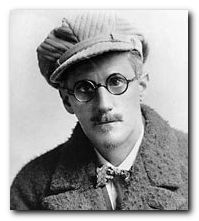
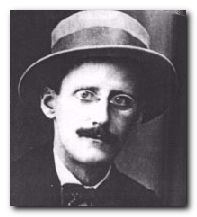
James Joyce - portrait1882. James Joyce was born in Dublin, the eldest of ten children. His father was a rather improvident tax collector. The family became progressively impoverished.

1888. He was educated in Jesuit schools, with emphasis on Catholic and scholastic doctrine. [These establishments were also renowned for their intellectual rigour.] Joyce was a talented student, especially good at languages. He moved from being devout to bitterly anti-Catholic. These experiences were later used as material for his autobiographical novel, A Portrait of the Artist as a Young Man.

1893. Enters Belvedere College, a Jesuit boys’ day school – fees having been waived because of family’s needy circumstances.

1894. Joyce reads Lamb’s Adventures of Ulysses and writes theme on Ulysses as ‘my favourite hero’.

1897. Wins prize for best English composition in Ireland for his age group.

1898. Studies languages at University College, Dublin. Rebels against Church, Family, and the State. Begins to read Ibsen. Active campaigner for freedom of expression and equality for women.

1902 Leaves university to study medicine in Paris, but gives it up and writes reviews for newspapers.

1904. Back in Dublin following his mother’s death, Joyce meets Nora Barnacle on June 10, subsequently to be known as ‘Bloomsday’ and used as temporal setting for Ulysses. Opposed to marriage, but unable to live together because of moral climate at that time, they move to Trieste and live there for the next ten years. Joyce earns a precarious living teaching English at the Berlitz School of Languages.

1905. Joyce writing stories which are later collected as Dubliners, and Stephen Hero, a novel based on his own early life. Supported by his brother Stanislaus.
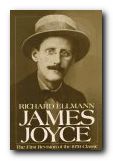

James Joyce - biography James Joyce is an acclaimed biography, considered by many to be the definitive account of Joyce’s life and work. Richard Ellmann has a sympathetic grasp of Joyce’s personality. A reverence for his literary accomplishment is balanced by a bemused affection for his weaknesses. Whether Joyce is putting the finishing touches to Ulysses, falling down drunk in the streets of Trieste, or writing erotic messages to his future wife, Ellmann’s account always shows us a genius and a human being. This latest edition has been revised and expanded to include newly discovered primary material, including details of a failed love affair, a limerick about Samuel Beckett, a dream notebook, and previously unknown letters.


1907. Publishes Chamber Music (poems). Financial hardship partly self-induced as a result of erratic and improvident lifestyle. Eyesight problems begin.

1908. Begins revising Stephen Hero. Many unsuccessful attempts to have Dubliners published.

1909. Returns to Dublin and opens the city’s first cinema – the ‘Volta’.

1912. Lectures on Defoe and Blake at Trieste University. Passes Italian state exams to become a teacher. Lectures on Hamlet.

1913. Writes Giacomo Joyce, a novella based on unconsummated affair with one of his language students. Corresponds with American poet Ezra Pound, who begins serialization of A Portrait of the Artist as a Young Man in his magazine the Egoist.

1914. Joyce’s annus mirablis. Publication of Dubliners. Begins writing Ulysses.

1915. Completes Exiles, a play. Family moves to neutral Switzerland during first world war. Zurich important centre for arts, theatre, and political exiles. Awarded a grant (£75) from Royal Literary Fund.

1917. American and English editions of Portrait well received. Further eye operations. Harriet Shaw Weaver begins her financial support which lasts throughout the rest of Joyce’s life: (she even pays for his funeral).

1918. Serialization of Ulysses begins in the American magazine Little Review. Reputation grows. Forms a theatrical group, the English Players, and stages The Importance of Being Earnest.

1919. Copies of Little Review confiscated and burned by US Postal Authorities. Family returns to Trieste.

1920. Family moves to live in Paris for next twenty years. Friendships with Pound, Wyndham Lewis, and T.S.Eliot. Supported by American bookshop owner Sylvia Beech.

1921. Little Review prosecuted by the Society for the Suppression of Vice for publishing extracts from Ulysses. Sylvia Beech offers to publish under the imprint of her bookshop, Shakespeare and Company.

1922. Ulysses printed in Dijon and published on Joyce’s fortieth birthday. Nora refuses to read it.

1923. Writes the first pages of Finnegans Wake. More eye operations fail to save failing sight. Ulysses pirated in America and copies seized by customs in England.

1927. Fragments of the Wake published in small magazines, but work is constantly revised and re-written.

1930. Publication of Stuart Gilbert’s critical study James Joyce’s Ulysses, written with Joyce’s assistance.

1931. Travels to London with Nora to be married ‘for testamentary reasons’ following the death of his father. Daughter Lucia goes mad after falling in love with Samuel Beckett, who was then acting as Joyce’s secretary.

1934. First publication in USA of Ulysses by Random House. Travels to Switzerland to be near Lucia who was in a mental institution. Almost blind, Joyces writes in coloured crayons.

1935. Continues work on Finnegans Wake. (Nora describes it as – “that chop suey he’s writing”).

1936. First publication in UK of Ulysses by Bodley Head.

1939. Finnegans Wake published in London and New York in the year of Joyce’s fifty-seventh birthday.

1941. Following the occupation of France, Joyces move back to neutral Switzerland. Joyce dies after an abdominal operation. (Joyce’s dates 1882-1941 identical to those of Virginia Woolf.)

© Roy Johnson 2004
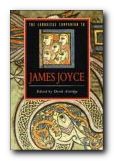

The Cambridge Companion to James JoyceThe Cambridge Companion to James Joyce contains eleven essays by an international team of leading Joyce scholars. The topics covered include his debt to Irish and European writers and traditions, his life in Paris, and the relation of his work to the ‘modern’ spirit of sceptical relativism. One essay describes Joyce’s developing achievement in his earlier works (Stephen Hero, Dubliners, and A Portrait of the Artist as a Young Man), while another tackles his best-known text, asking the basic question ‘What is Ulysses about, and how can it be read?’ The issue of ‘difficulty’ raised by Finnegans Wake is directly addressed, and the reader is taken through questions of theme, language, structure and meaning, as well as the book’s composition and the history of Wake criticism.


More on James Joyce
Twentieth century literature
More on study skills

Filed Under: James Joyce Tagged With: Biography, James Joyce, Literary studies, Modernism

James Joyce A Critical Guide

August 9, 2009 by Roy Johnson

biography, explication, criticism

It is interesting to note that almost all of the great writers of the modernist movement published their seminal texts within a few years of each other: D.H. Lawrence’s Women in Love in 1920, James Joyce’s Ulysses in 1922, Virginia Woolf’s Mrs Dalloway in 1925, and Franz Kafka’s The Trial in the same year. James Joyce A Critical Guide, an introduction to the writer and his work, is split into three sections. The first deals with Joyce’s life and the context in which his works were produced.

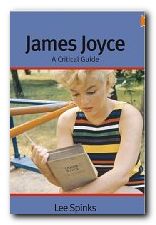
James Joyce A Critical GuideThe second is an examination of his major publications, treated in the order that they were written. And the third is an account of the critical responses that his work has evoked over the years. Now that James Joyce is established as part of the canon of modernist literature, it’s easy to forget the public difficulties and personal sacrifices he made in order that his version of art be given a fair hearing. As Lee Spinks observes:

His systematic transformation of the nature and scope of the novel and his protracted struggle against the legal censorship and suppression of his work extended the possibilities of modern art and helped to redraw the boundaries between the claims of public morality and the rights of artistic expression for his own and succeeding generations.

Part One is a very enjoyable account of Joyce’s life and his artistic development, with occasional excursions into Irish politics and history. Joyce’s personal existence was restless, peripatetic, and pan-European, yet in his work he wrote about the same thing all his life – Ireland, the country to which he never returned.

In Part Two Spinks offers a critical account of each of Joyce’s major works. This includes their genesis, their themes, and in particular the development of his literary style. This represents an almost continuous line of increasing complexity from 1905 to 1939 with the publication of Finnegans Wake. This is the largest section of the book, and each of its parts is supplemented by suggestions for further reading.

I was glad to note that there was a full account of the very tangled and much-debated status of the text of Ulysses. This was supposed to be settled conclusively with the publication of Hans Walter Gabler’s ‘corrected edition’ of 1986, but despite his supposed rigorous editorial method, it seems to have made matters even worse. Spinks opts to recommend Jeri Johnson’s critical edition of Ulysses (1988) published by Oxford University Press.

Part Three deals with the critical reception of Joyce’s work. Spinks points to the fact that right from the beginning as Joyce’s work began to appear in various little magazines, it tended to divide opinion quite markedly. Many critics at first objected to his frankness and consideration of topics (sex, religion) which we now regard as quite harmless. Others admired the freshness and originality of his style. It was the publication of Ulysses which really galvanized both these tendencies, and we are reminded that the novel was –

a work that was reviled, celebrated, legally examined, banned, pirated and reinterpreted as a modernist ‘classic’ within twenty years of its publication

He splits his observations into two parts – criticism before and after Joyce’s death. The first of these periods sees relatively traditional commentators grappling with the highpoint of literary experimentation and modernism. The second includes all the recently fashionable schools of structuralism, post-modernism, post-structuralism, psychoanalysis, and feminism. You’ll need a strong intellectual stomach to cope with some of these critics, many of whom seem more interested in making life difficult rather than throwing instructive light onto somebody else’s work.

Finnegans Wake remains a challenge to them all, for like the other major figures of early literary modernism, Joyce was drawn to push the nature of the novel to almost unreadable limits – just as Woolf did with The Waves, Thomas Mann with Joseph and his Brothers, and Herman Broch did with The Death of Virgil.

But despite the difficulties of his later work, Joyce is an approachable and very amusing writer – which is rare amongst the modernists. Anyone seeking assistance with the deeper aspects of his work would do well to consult a guide such as this. It offers clear and readable pathways through the thickets of both the work and commentary upon it.

Buy the book at Amazon UK

Buy the book at Amazon US

© Roy Johnson 2009


Lee Spinks, James Joyce: A Critical Guide, Edinburgh: Edinburgh University Press, 2009, pp.233, ISBN: 0748638369


More on James Joyce
Twentieth century literature
More on study skills

Filed Under: James Joyce Tagged With: Biography, James Joyce, Literary criticism, Literary studies

James Joyce criticism

September 19, 2009 by Roy Johnson

a bibliography of criticism and commentary

James Joyce criticism - small portraitHarry Blamires, The New Bloomsday Book, London: Routledge, 1996.
Frank Budgen, James Joyce and the Making of Ulysses, Oxford University Press, 1972.

Anthony Burgess, Joysprick: An Introduction to the Language of James Joyce, Andre Deutsch, 1973.

Robert H. Deming (ed), James Joyce: The Critical Heritage, 2 Vols, Routledge and Keegan Paul, 1970.

Richard Ellmann, James Joyce, Oxford University Press, 1959.

Richard Ellman and Stuart Gilbert (eds), The Letters of James Joyce, 3 Vols, Faber, 1957-66.

Stuart Gilbert, James Joyce’s Ulysses: a Study, Faber and Faber, 1930.

Seon Givens, James Joyce: Two Decades of Criticism, N.Y.: Vanguard Press, 1963.

S.C. Goldberg, The Classical Temper, Oxford University Press, 1961.

Suzette A. Henke, James Joyce and the Politics of Desire, Routledge and Keegan Paul, 1990.

Hugh Kenner, Joyce’s Voices, Faber, 1978.

Harry Levin, James Joyce: a Critical Introduction, New York: New Directions, 1960.

Colin MacCabe (ed), James Joyce: New Perspectives, Harvester, 1982.

W.J. McCormack and Alistair Stead (eds), James Joyce and Modern Literature, Routledge and Keegan Paul, 1982.

Patrick Parrinder, James Joyce, Cambridge University Press, 1984.

C.H. Peake, James Joyce: The Citizen and the Artist, Arnold, 1977.

Jean-Michel Rabaté, Joyce Upon the Void, Macmillan, 1991.

Lee Spinks, James Joyce, Edinburgh University Press, 2008.

W.Y. Tindall, A Reader’s Guide to James Joyce, Thames and Hudson, 1959.


The Cambridge Companion to James JoyceThe Cambridge Companion to James Joyce contains eleven essays by an international team of leading Joyce scholars. The topics covered include his debt to Irish and European writers and traditions, his life in Paris, and the relation of his work to the ‘modern’ spirit of sceptical relativism. One essay describes Joyce’s developing achievement in his earlier works (Stephen Hero, Dubliners, and A Portrait of the Artist as a Young Man). Another tackles his best-known text, asking the basic question ‘What is Ulysses about, and how can it be read?’ The issue of ‘difficulty’ raised by Finnegans Wake is directly addressed, and the reader is taken through questions of theme, language, structure and meaning, as well as the book’s composition and the history of Wake criticism.
The Cambridge Companion to James Joyce Buy the book here


James Joyce – web links

James Joyce web links James Joyce at Mantex
Biographical notes, study guides to the major works, book reviews, studies of the short stories, bibliographies, web links, study resources.

James Joyce web links James Joyce at Project Gutenberg
A limited collection of free eTexts in a variety of digital formats.

James Joyce web links James Joyce at Wikipedia
Full biography, social background, interpretation of the major works, religion, music, list of biographies, and external web links.

James Joyce on film James Joyce at the Internet Movie Database
Adaptations for the cinema and television – in various languages. Full details of directors and actors, plus box office, technical credits, and quizzes.

James Joyce exhibition James Joyce Centre in Dublin
Exhibition centre, walking tours, lectures, and newsletter. The latest addition is a graphic novel version of ‘Ulysses’.

James Joyce web links The James Joyce Scholars’ Collection
University of Wisconsin – digitised scans of Finnegans Wake and out-of-print studies on Joyce’s language, plus rare critical studies.

James Joyce web links An Annotated Ulysses
An online version of Ulysses with hyperlinks giving explanations of obscure and classical references in the text.

James Joyce web links Cornell’s James Joyce Collection
Cornell University – a collection of letters, manuscripts, and books documenting the life and work of James Joyce on exhibition in 2005. Particularly strong on Joyce’s early life.

© Roy Johnson 2004


More on James Joyce
Twentieth century literature
More on study skills


Filed Under: James Joyce Tagged With: James Joyce, Literary studies, Modernism

James Joyce greatest works

September 19, 2009 by Roy Johnson

an introduction to the major stories and novels

If you read Joyce’s work in the same order that he wrote it, the sequence forms a perfect James Joyce tutorial. His early writing is simple and easy to understand, then it gradually becomes more complex as he experimented with the possibilities of language. Be prepared to extend the range of your vocabulary, to discover prose blended with poetry, and to encounter amazingly inventive word-play in the later work. Joyce’s writing was also considered quite scandalous when it first appeared, because it is critical of religion and frank about sexual matters.

DublinersDubliners is his first major work – a ground-breaking collection of short stories in which he strips away all the decorations and flourishes of late Victorian prose style. What remains is a sparse yet lyrical exposure of small moments of revelation – which he called ‘epiphanies’. Like other modernists, such as Katherine Mansfield and Virginia Woolf, Joyce minimised the dramatic element of the short story in favour of symbolic meaning and a more static aesthetic. This collection of vignettes features both real and imaginary figures in Dublin life around the turn of the century. The collection ends with the most famous of all Joyce’s stories – ‘The Dead’. It caused controversy when it first appeared, and was the first of many of Joyce’s works to be banned in his native country. Dubliners is now widely regarded as a seminal collection of modern short stories. New readers should start here.
James Joyce greatest works Dubliners Buy the book at Amazon UK
James Joyce greatest works Dubliners Buy the book at Amazon US


James Joyce greatest works A Portrait of the Artist as a Young ManA Portrait of the Artist as a Young Man is Joyce’s first complete novel – a largely autobiographical account of a young man’s struggle with Catholicism and his desire to forge himself as an artist. It features a prose style whose complexity develops in parallel with the growth of the hero, Stephen Dedalus. The early pages are written from a child’s point of view, but then they quickly become more sophisticated. As Stephen struggles with religious belief and the growth of his sexual feelings as a young adult, the prose become more complex and philosophical. In addition to the account of his personal life and a critique of Irish society at the beginning of the last century, it also incorporates the creation of an aesthetic philosophy which was unmistakably that of Joyce himself. The novel ends with Stephen quitting Ireland for good, just as Joyce himself was to do – never to return.
James Joyce greatest works A Portrait of the Artist as a Young Man Buy the book at Amazon UK
James Joyce greatest works A Portrait of the Artist as a Young Man Buy the book at Amazon US


James Joyce greatest works UlyssesUlysses (1922) is one of the greatest novels of the twentieth century, and it is certainly Joyce’s most celebrated work. He takes Homer’s Odyssey as a structural framework and uses it as the base to create a complex story of characters moving around Dublin on a single day in June 1904. Each separate chapter is written in a different prose style to reflect its theme or subject. The novel also includes two forms of the ‘stream of consciousness’ technique. This was Joyce’s attempt to reproduce the apparently random way in which our perceptions of the world are mixed with our conscious ideas and memories in an unstoppable flow of thought. There is a famous last chapter which is an eighty page unpunctuated soliloquy of a woman as she lies in bed at night, mulling over the events of her life and episodes from the previous day.
James Joyce greatest works Ulysses Buy the book at Amazon UK
James Joyce greatest works Ulysses Buy the book at Amazon US


James Joyce greatest works Finnegans WakeFinnegans Wake is famous in literary circles as a great novel which almost no one has ever read. Joyce said that he spent seventeen years of his life writing Finnegans Wake and that he expected readers to spend the rest of their lives trying to understand it. It continues where Ulysses leaves off in terms of linguistic complexity. Written and rewritten many times over, Joyce eventually decided to incorporate many languages other than English into the narrative. It is a fantastic crossword-puzzle of puns, parodies, jokes and linguistic invention which make enormous intellectual demands on the reader. This, in addition to the many arcane references and a very complex narrative make Finnegans Wake a literary experiment which has never been surpassed. It is one of the great unread masterpieces of twentieth century literature.
James Joyce greatest works Finnegans Wake Buy the book at Amazon UK
James Joyce greatest works Finnegans Wake Buy the book at Amazon US


The Cambridge Companion to James JoyceThe Cambridge Companion to James Joyce contains eleven essays by an international team of leading Joyce scholars. The topics covered include his debt to Irish and European writers and traditions, his life in Paris, and the relation of his work to the ‘modern’ spirit of sceptical relativism. One essay describes Joyce’s developing achievement in his earlier works (Stephen Hero, Dubliners, and A Portrait of the Artist as a Young Man). Another tackles his best-known text, asking the basic question ‘What is Ulysses about, and how can it be read?’ The issue of ‘difficulty’ raised by Finnegans Wake is directly addressed, and the reader is taken through questions of theme, language, structure and meaning, as well as the book’s composition and the history of Wake criticism.
The Cambridge Companion to James Joyce Buy the book at Amazon UK
The Cambridge Companion to James Joyce Buy the book at Amazon US


James Joyce – web links

James Joyce web links James Joyce at Mantex
Biographical notes, study guides to the major works, book reviews, studies of the short stories, bibliographies, web links, study resources.

James Joyce web links James Joyce at Project Gutenberg
A limited collection of free eTexts in a variety of digital formats.

James Joyce web links James Joyce at Wikipedia
Full biography, social background, interpretation of the major works, religion, music, list of biographies, and external web links.

James Joyce on film James Joyce at the Internet Movie Database
Adaptations for the cinema and television – in various languages. Full details of directors and actors, plus box office, technical credits, and quizzes.

James Joyce exhibition James Joyce Centre in Dublin
Exhibition centre, walking tours, lectures, and newsletter. The latest addition is a graphic novel version of ‘Ulysses’.

James Joyce web links The James Joyce Scholars’ Collection
University of Wisconsin – digitised scans of Finnegans Wake and out-of-print studies on Joyce’s language, plus rare critical studies.

James Joyce web links An Annotated Ulysses
An online version of Ulysses with hyperlinks giving explanations of obscure and classical references in the text.

James Joyce web links Cornell’s James Joyce Collection
Cornell University – a collection of letters, manuscripts, and books documenting the life and work of James Joyce on exhibition in 2005. Particularly strong on Joyce’s early life.

© Roy Johnson 2004


More on James Joyce
Twentieth century literature
More on study skills


Filed Under: James Joyce Tagged With: A Portrait of the Artist as a Young Man, Dubliners, Finnegans Wake, James Joyce, Literary studies, Modernism, Ulysses

Jane Austen biographical studies

September 30, 2009 by Roy Johnson

Jane Austen biographical studiesDavid Cecil, A Portrait of Jane Austen, London: Constable, 1978.
R.W. Chapman (ed) Jane Austen’s Letters to her Sister Cassandra and Others, (2nd edn) London 1952, repr. 1979.

R.W. Chapman, Jane Austen: Facts and Problems, Oxford 1948, repr. 1970.

Edward Copeland (ed), The Cambridge Companion to Jane Austen, Cambridge University Press, 1997.

John Halperin, The Life of Jane Austen, Baltimore and London, 1984.

Claire Harman, Jane’s Fame: How Jane Austen Conquered the World, Cannongate Books, 2010.

Park Honan, Jane Austen: her life, London: Weidenfeld and Nicolson, 1987.

Elizabeth Jenkins, Jane Austen: a Biography, London: Gollancz, 1949.

Marghanita Laski, Jane Austen, London: Thames and Hudson, 1975.

Deirdre le Fay, Jane Austen’s Letters, Oxford University Press, 1997.

Valerie Grosvenor Myer, Obstinate Heart: Jane Austen – A Biography, Michael O’Mara Books, 1997.

Catherine Reef, Jane Austen: A Life Revealed, Houghton Mifflin, 2011.

Jon Spence, Becoming Jane Austen, Hambledon Continuum, 2007.

George Holbert Tucker, A Goodly Heritage: A History of Jane Austen’s Family, Manchester, 1983.

Claire Tomalin, Jane Austen: A Life, Penguin, 2003.


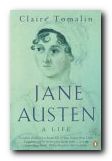
Jane Austen - biography - book jacketJane Austen: a Life is a biography which traces Jane Austen’s progress through a difficult childhood, an unhappy love affair, her experiences as a poor relation and her decision to reject a marriage that would solve all her problems – except that of continuing as a writer. Both the woman and the novels are radically reassessed in this biography. Her life was superficially uneventful, but Claire Tomalin brings out the flesh and blood woman who lies behind the cool, ironic prose.
 

The Complete Critical Guide to Jane AustenThe Complete Critical Guide to Jane Austen is a good introduction to Austen criticism and commentary. It includes a potted biography, an outline of the novels, and pointers towards the main critical writings – from Walter Scott to critics of the present day. It also includes a thorough bibliography which covers biography, criticism in books and articles, plus pointers towards specialist journals. It also has an interesting chapter discussing Austen on the screen. These guides are very popular.

© Roy Johnson 2009


Jane Austen web links
Jane Austen greatest works
Jane Austen biographical studies
Jane Austen life and works
Jane Austen literary criticism


Filed Under: Jane Austen Tagged With: Biography, Jane Austen, Literary studies, The novel

Jane Austen greatest works

September 30, 2009 by Roy Johnson

Jane Austen greatest worksJane Austen is renowned for her wit, her lightness of touch, and the elegance of her prose style. There isn’t a great deal of drama in her novels: people fall in and out of love; some of her heroines test our patience; and in the end there is usually a marriage. But the manner in which she orchestrates these events, and her shrewd insights into human frailties have made her an enduringly popular writer. She was writing (almost in secret) at a time when the whole of Europe was in thrall to the novelist Walter Scott. If you read her work now, it’s as fresh as if it had been written last week. Read Walter Scott now, and you’re likely to be asleep within ten pages.


Jane Austen greatest worksPride and Prejudice (1813) has the famous opening line “It is a fact universally recognised that a man with a fortune must be in search a wife.” It’s a story of the empty-headed and garrulous Mrs Bennet, who has but one aim in life – to find a good match for each of her daughters. Her husband is a mild-mannered and indolent man, much given to making witty cynicisms about his wife’s weaknesses, and he refuses to take this vulgar prospect seriously. The pride of the title belongs to its hero Mr Darcy, and the prejudice to heroine Elizabeth Bennet, who has lessons to learn from life. This was Jane Austen’s first major success as a novelist – though not the first of her books to be written. It’s a perfect place to start – witty, sophisticated writing, and some well-observed character sketches. It seems as fresh today as ever, and it’s no wonder it has been the subject of so many television and film adaptations.
Jane Austen greatest works Buy the book at Amazon UK
Jane Austen greatest works Buy the book at Amazon US


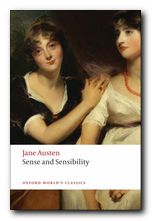
Jane Austen greatest worksSense and Sensibility (1811) casts two sisters Elinor and Marianne Dashwood as representatives of ‘sense’ and ‘sensibility’ respectively. Elinor bears her social disappointments with dignity and restraint – and thereby gets her man. Marianne on the other hand is excitable and impetuous, following her lover to London – where she quickly becomes disillusioned with him. Recovering and gaining more ‘sense’, she then sees the good qualities in her old friend Colonel Brandon, who has been waiting in the wings and is now conveniently on hand to propose marriage. Almost all the novels feature a heroine growing in moral intelligence through doubts and adversities – and this is no exception.
Jane Austen greatest works Buy the book at Amazon UK
Jane Austen greatest works Buy the book at Amazon US


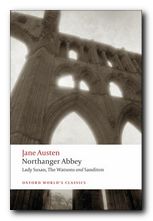
Jane Austen greatest worksNorthanger Abbey (1818) starts in the drawing rooms of Bath. The heroine is imaginative Catherine Morland who falls in love with Henry Tilney, a young clergyman. When he invites her to meet his family at the Abbey however, she sees nothing but Gothic melodrama at every turn – since they were very fashionable at the time. Her visions of medieval horror prove groundless of course. This is Jane Austen’s satirical critique of Romantic cliché and excess. But Catherine eventually learns to see the world in a realistic light – and gets her man in the end. This volume also contains the early short novels Lady Susan and The Watsons, as well as the unfinished Sanditon.
Jane Austen greatest works Buy the book at Amazon UK
Jane Austen greatest works Buy the book at Amazon US

The Oxford World Classics are the best editions of Jane Austen’s work. They are largely based on the most accurate versions of the texts; and they feature introductory essays, a biography, explanatory notes, textual variants, a bibliography of further reading, and in some cases missing or deleted chapters. They are also terrifically good value.

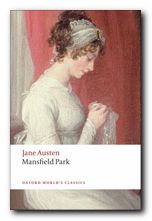
Jane  Austen greatest worksMansfield Park (1814) is more serious after the comedy of the earlier novels. Heroine Fanny Price is adopted into the family of her rich relatives. She is long-suffering and passive to a point which makes her almost unappealing – but her refusal to tolerate any drop in moral standards eventually teaches lessons to all concerned. (All that is except standout character Mrs Norris who is a sponging and interfering Aunt you will never forget.) The hero Edmund is dazzled by sexually attractive Mary Crawford – but in the nick of time sees the error of his ways and marries Fanny instead. This is a slow moving narrative, but it is full of moral subtleties.
Jane Austen greatest works Buy the book at Amazon UK
Jane Austen greatest works Buy the book at Amazon US


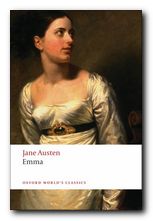
Jane Austen greatest worksEmma (1816) Charming and wilful Emma Woodhouse amuses herself by dabbling in other people’s affairs, planning their lives the way she sees fit. Most of her match-making plots go badly awry, and moral confusion reigns until she abandons her self-delusion and wakes up to the fact that stern but honourable Mr Knightly is the right man for her after all. As usual, money and social class underpin everything. Some wonderful comic scenes, and a rakish character Frank Churchill who finally reveals his flaws by making the journey to London just to get his hair cut.

Jane Austen greatest works Buy the book at Amazon UK
Jane Austen greatest works Buy the book at Amazon US


Jane Austen greatest worksPersuasion (1818) is the most mature of her novels, if one of the least exciting. Heroine Anne Elliott has been engaged to Captain Wentworth, but has broken off the engagement in deference to family and friends. Meeting him again eight years later, she goes against conventional wisdom and accepts his second proposal of marriage. Anne is a sensitive and thoughtful character, quite unlike some of the earlier heroines. Jane Austen wrote of her “She is almost too good for me”. There is a shift of location to Lyme Regis for this novel, which reveals for the first time a heroine acting from a deep sense of personal conviction, against the grain of conventional wisdom.
Jane Austen greatest works Buy the book at Amazon UK
Jane Austen greatest works Buy the book at Amazon US


The Complete Critical Guide to Jane AustenThe Complete Critical Guide to Jane Austen is a good introduction to Austen criticism and commentary. It includes a potted biography, an outline of the novels, and pointers towards the main critical writings – from Walter Scott to critics of the present day. It also includes a thorough bibliography which covers biography, criticism in books and articles, plus pointers towards specialist journals. It also has an interesting chapter discussing Austen on the screen. These guides are very popular.
Jane Austen greatest works Buy the book at Amazon UK
Jane Austen greatest works Buy the book at Amazon US

© Roy Johnson 2009


Jane Austen greatest works
Jane Austen biographical studies
Jane Austen life and works
Jane Austen literary criticism


Filed Under: Jane Austen Tagged With: English literature, Jane Austen, Literary studies, The novel

Jane Austen life and works

September 30, 2009 by Roy Johnson

Jane Austen life and works1775. Jane Austen born in Steventon rectory, Hampshire, the daughter of a local rector. She was the youngest of seven children. Two brothers go on to serve at sea. Two others enter the church.

1780+. Her father was a competent scholar who encourages her education in English literature, French, and Italian.

1790. Early writing and experiments with what she described as ‘nonsense, burlesque and satire’.

1795. Lady Susan – a short novel written in epistolary form. Elinor and Marianne exists as first draft of what was to become Sense and Sensibility.

1796. Begins to write First Impressions, which was completed as Pride and Prejudice the following year. Reads Fanny Burney (1752-1840) the creator of ‘the novel of home life’.

1798. Northanger Abbey a deliberate satire of the type of Gothic Romance (The Mysteries of Udolpho, The Monk) then in vogue. It was sold – but not published. This and all her subsequent work was published anonymously.

1801. Father retires to live with family in Bath.

1805. Death of father. The Watsons written about this time.

1807. Family settles to live in Southampton.

1809. Family moves to Chawton, Hampshire (owned by Jane Austen’s brother). She writes all her novels in a corner of one sitting-room surrounded by the entire family.

1811. Sense and Sensibility published. Title pages states ‘By a Lady’. Immediate success.

1813. Pride and Prejudice published and goes into second edition same year.

1814. Mansfield Park published.

1815. Emma published. First translations into French appear.

1817. Writes Sanditon. Dies at Winchester. Buried in the cathedral. Persuasion published posthumously.


The Complete Critical Guide to Jane AustenThe Complete Critical Guide to Jane Austen is a good introduction to Austen criticism and commentary. It includes a potted biography, an outline of the novels, and pointers towards the main critical writings – from Walter Scott to critics of the present day. It also includes a thorough bibliography which covers biography, criticism in books and articles, plus pointers towards specialist journals. It also has an interesting chapter discussing Austen on the screen. These guides are very popular.

© Roy Johnson 2009


Jane Austen web links
Jane Austen greatest works
Jane Austen biographical studies
Jane Austen life and works
Jane Austen literary criticism


Filed Under: Jane Austen Tagged With: Biography, Jane Austen, Literary studies, The novel

Jane Austen literary criticism

September 29, 2009 by Roy Johnson

Jane Austen literary criticism F.W. Bradbrook, Jane Austen and her Predecessors, Cambridge: Cambridge University Press, 1966.

Julia Prewitt Brown, Jane Austen’s Novels: Social Change and Literary Form, Cambridge (Mass), 1979.

Marilyn Butler, Jane Austen and the War of Ideas, Oxford: Oxford University Press, 1975, revised 1987.

W.A. Craick, Jane Austen: the Six Novels, London: Methuen, 1965.

D.D. Devlin, Jane Austen and Education, London, 1975.

Alistair M. Duckworth, The Improvement of the Estate: A Study of Jane Austen’s Novels, Baltimore (Md) and London, 1971.

Sandra M. Gilbert and Susan Gubar, The Madwoman in the Attic: The Woman Writer and the Nineteenth-century Literary Imagination, New Haven and London, 1979.

John Halperin (ed), Jane Austen Bicentenary Essays, Cambridge: Cambridge University Press, 1975.

Barbara Hardy, A Reading of Jane Austen, London, 1975.

Joycelyn Harris, Jane Austen’s Art of Memory, Cambridge, 1989.

Claudia L. Johnson, Jane Austen: Women, Politics, and the Novel, Chicago and London, 1988.

Margaret Kirkham, Jane Austen: Feminism and Fiction, Brighton and Totawa (NJ) 1983.

Mary Lascelles, Jane Austen and her Art, Oxford: Oxford University Press, 1963.

A. Walton Litz, Jane Austen: a Study of her Artistic Development, Oxford: Oxford University Press, 1965.

Juliet McMaster (ed), Jane Austen’s Achievement, London: Macmillan, 1976.

David Monaghan, Jane Austen in a Social Context, Totawa (NJ) 1981.

Laura G. Mooneyham, Romance, Language, and Education in Jane Austen’s Novels, New York and Basingstoke, 1988.

Susan Morgan, In the Meantime: Character and Perception in Jane Austen’s Fiction, Chicago, 1980.

Norman Page, The Language of Jane Austen, London: Blackwell, 1972.

K.C. Phillips, Jane Austen’s English, London: Andre Deutsch, 1970.

F.B. Pinion, A Jane Austen Companion, London: Macmillan, 1976.

Warren Roberts, Jane Austen and the French Revolution, New York, 1979.

B.C. Southam, Jane Austen’s Literary Manuscripts: A Study of the Novelist’s Development through the Surviving Papers, London and New York, 1964.

B.C. Southam (ed), Critical Essays on Jane Austen, London: Routledge and Kegan Paul, 1969.

B.C. Southam (ed), Jane Austen: the Critical Heritage, 2 vols, London: Routledge and Keegan Paul, 1968-87.

Alison G. Sulloway, Jane Austen and the Province of Womanhood, Philadelphia, 1989.

Tony Tanner, Jane Austen, London: Macmillan, 1986.

Ian Watt (ed), Jane Austen: a Collection of Critical Essays, Englewood Cliffs (NJ): Prentice-Hall, 1963.


The Complete Critical Guide to Jane AustenThe Complete Critical Guide to Jane Austen is a good introduction to Austen criticism and commentary. It includes a potted biography, an outline of the novels, and pointers towards the main critical writings – from Walter Scott to critics of the present day. It also includes a thorough bibliography which covers biography, criticism in books and articles, plus pointers towards specialist journals. It also has an interesting chapter discussing Austen on the screen. These guides are very popular.

© Roy Johnson 2009


Jane Austen web links
Jane Austen greatest works
Jane Austen biographical studies
Jane Austen life and works
Jane Austen literary criticism


Filed Under: Jane Austen Tagged With: Critical studies, Jane Austen, Literary studies, The novel

Jargon – how to understand it

September 7, 2009 by Roy Johnson

free pages from our English Language software program

Understanding jargon – definition

understanding jargon Jargon is ‘the technical vocabulary of a profession or group’.

redbtn The word is used as a form of criticism when such terms are used unnecessarily for communication outside a group.


Examples
legal probate, conveyance, intestate
computers download, Megabyte, serial port
engineering sprocket, crankshaft, centrifuge
gardening mulch, perennial, phlox

Use

redbtn Jargon can be a useful form of communication between members of the same group. It acts as a ‘shorthand’ which eliminates the need for lengthy explanations.

redbtn The most important thing about jargon is that it should only be used when communicating with people in the same group.

redbtn Some items of jargon eventually pass into common use because they seem to fill a need. Terms such as own-goal [from football] or repression [from psycho-analysis] were once jargon.

redbtn NB! There is often a very fine line between jargon [salary] and pretentious nonsense [personal remuneration package].

redbtn There is nothing wrong when jargon is used amongst members of the same group. It often acts as a sort of ‘shorthand’, which eliminates the need for lengthy explanations.

redbtn For instance, the foreman in a garage does not need to write on a mechanic’s worksheet:

‘Please regulate the device which provides a constant supply of petrol to the inlet manifold of the engine.’

redbtn He writes ‘Adjust the carbuettor’ — or even ‘Fix the carb’.

redbtn However, when you are communicating with people outside a group, you should use jargon as little as possible.

redbtn The term jargon in its most negative sense describes the use of technical or obscure terms when addressing a general audience.

For instance, what follows is a sentence in a letter from the Inland Revenue. It is addressed to ordinary members of the public.

The basis of assessment for Schedule D Case I and II, other than
commencement and cessation, is what is termed a previous year
basis.

redbtn This is an example of bad manners and poor communication. [Would you know what a ‘previous year basis’ means?]

redbtn Academic study has its own jargon too, depending upon the subject in question. Terms such as hegemony (political philosophy) discourse analysis (linguistics) and objective correlative (literary studies) would not be recognisable by an everyday reader, though they might be understood by someone studying the same subject.

redbtn Whatever the jargon of your own discipline, it should be used with precision, accuracy, and above all restraint.

redbtn Eric Partridge quotes the following example to illustrate the difference between a statement made in technical and non-technical form:

‘Chlorophyll makes food by photosynthesis.’

‘Green leaves build up food with the aid of light.’

redbtn Only use the specialised terms of your subject if you are quite sure of their meaning. Never use jargon to show off or ‘impress’ your reader. It is likely to create the opposite effect.

redbtn Do not use a jargon term where perfectly ordinary terms will be just as effective. There is not much virtue in using terms such as aerated beverages instead of fizzy drinks. These simply cause disruptions in
tone and create a weak style.

redbtn Here is an even more pretentious example, spotted recently:

“Enjoy your free sample of our moisturising cleansing bar”

redbtn …in other words – our soap.

Self-assessment quiz follows >>>

© Roy Johnson 2003


English Language 3.0 program
Books on language
More on grammar


Filed Under: English Language Tagged With: English language, Grammar, Jargon, Language

Jargon in essays

August 23, 2009 by Roy Johnson

sample from HTML program and PDF book

1. Jargon is ‘the technical language of a profession or group’. The implication of this definition is that their language may not be understood by people outside the group.

2. For example, when solicitors use terms such as ‘probate’, ‘conveyance’, and ‘leasehold’, they are using the jargon of their profession, which is usually only understood by other solicitors. Similar examples could be given for doctors, engineers, and even bookbinders.

3. There is nothing wrong when jargon is used amongst members of the same group. It often functions as shorthand, which eliminates the need for lengthy explanations. However, when you are communicating with people outside a group, its use should be minimised.

4. The term jargon in its most negative sense describes the use of technical or obscure terms when addressing a general audience. For instance, a letter from the Inland Revenue to an ordinary member of the public which contains the following sentence is an example of bad manners (and poor communication):

The basis of assessment for Schedule D Case I and II, other than commencement and cessation, is what is termed a previous year basis.

Some steps have been taken to eliminate this occurrence in public documents, but there is still a long way to go.

5. Academic discussion can have its own jargon too, depending upon the subject in question. Terms such as ‘hegemony’ (political philosophy) ‘discourse analysis’ (linguistics) and ‘objective correlative’ (literary studies) would not be recognisable by an everyday reader, though they might be understood by someone studying the same subject.

6. Whatever the jargon of your own discipline, it should be used with precision, accuracy, and above all restraint. Only use the specialised terms of your subject if you are quite sure of their meaning.

7. Never use jargon to show off or ‘impress’ your reader. It is likely to create the opposite effect. Similarly, do not take half-understood jargon from one discipline and import it into another.

8. Take the trouble to learn the meanings of these specialised terms within the context of your subject. A word might have a particular meaning when used within a subject discipline which it does not have in general usage.

9. Do not use a jargon term where perfectly ordinary terms will be just as effective. There is not much virtue in using terms such as ‘aerated beverages’ instead of ‘fizzy drinks’. These simply cause disruptions in tone and create a weak style.

10. Here is an even more pretentious example, spotted recently.

‘Moisturising cleansing bar’ [in other words – ‘soap’]

© Roy Johnson 2003

Buy Writing Essays — eBook in PDF format
Buy Writing Essays 3.0 — eBook in HTML format


More on writing essays
More on How-To
More on writing skills


Filed Under: Writing Essays Tagged With: Academic writing, Essays, Jargon, Language, Reports, Study skills, Term papers, Writing skills

  • « Previous Page
  • 1
  • …
  • 47
  • 48
  • 49
  • 50
  • 51
  • …
  • 103
  • Next Page »

Get in touch

info@mantex.co.uk

Content © Mantex 2016
  • About Us
  • Advertising
  • Clients
  • Contact
  • FAQ
  • Links
  • Services
  • Reviews
  • Sitemap
  • T & C’s
  • Testimonials
  • Privacy

Copyright © 2026 · Mantex

Copyright © 2026 · News Pro Theme on Genesis Framework · WordPress · Log in