Mantex

Tutorials, Study Guides & More

  • HOME
  • REVIEWS
  • TUTORIALS
  • HOW-TO
  • CONTACT
>> Home / Archives for 2009

Archives for 2009

48 – The Vane Sisters

September 26, 2009 by Roy Johnson

a critical examination of Nabokov’s collected stories

‘The Vane Sisters’ (March 1951) is almost Nabokov’s farewell to the short story as a literary form. He created a specially difficult task for this last major experiment. It is the problem of having a first person narrator transmit to the reader information of whose existence he is himself unaware. As Wayne Booth commented shortly after the story was published

‘The Vane Sisters’ carries the pleasure of secret communication [between author and reader] about as far as it can go in the direction of what might be called mere cryptography (Booth,p.301)
The Vane SistersThe principal device used to achieve this effect is the deployment of yet another unreliable narrator. He is an unnamed Frenchman teaching literature at a girl’s college in America. One of the eponymous sisters, Sybil, is having an affair with another member of the college’s staff – D. The other sister, Cynthia, recruits the help of the narrator to stop the affair – but it is too late: Sybil commits suicide.

The narrator subsequently gets to know Cynthia better as she tries to enlist him in a circle of believers in the occult. He remains sceptical, she spurns him, and they drift apart. Some years later his colleague D reveals that Cynthia too has just died, and the narrator goes home at night full of presentiments that Cynthia might haunt him in some way.

He wakes up next day disappointed that she has failed to manifest herself, and in recounting this fact reveals as an acrostic hidden in his last words a message from her which concerns not just one but both sisters.

The trick is very neatly done, and is one which, as Nabokov himself suggests ‘can only be tried once in a thousand years of fiction’   (TD,p.218). And it is not just a cheap cryptogram or a revelation of identity: the message has a significance which connects it to two other aspects of the story.

The first of these is Cynthia’s beliefs in manifestations from the afterlife. She believes that these will take the form of short moments in a person’s life which are influenced by another person’s spirit:

‘a string of minute incidents just sufficiently clear to stand out in relief against one’s usual day then shading off into vaguer trivia as the aura gradually faded’ (p.228)

It is these beliefs about which the narrator is sceptical, yet the story opens with his sudden feeling of elation at watching icicles melting in the sunlight: ‘it only sharpened my appetite for other tidbits of light and shade’ (p.220). Following this he spots ‘The lean ghost, the elongated umbra cast by a parking meter upon some damp snow’ (p.220).

We also learn, in the course of his narrative, that his favourite painting (of Cynthia’s) is ‘Seen through a Windshield’…a windshield partly covered with rime, with a brilliant trickle (from an imaginary car roof) across its transparent part (p.226).

This elation of the narrator’s is precisely the sort of manifestation Cynthia’s theory has postulated, and this is confirmed by the acrostic of which he is unaware which reads, when extracted by the reader from his narrative “Icicles by Cynthia. Meter from me. Sybil.” (p.238).

The acrostic is also linked to the important feature of the narrator’s unreliability and lack of self-awareness. We are given two or three hints about him. The first two the reader is able to check as indicators of his lack of acuteness. Nabokov plants, partly as a joke from author to reader, his lack of consciousness regarding his own narrative:

‘I wish I could recollect that novel or short story (by some contemporary writer, I believe) in which, unknown to its author, the first letters of the words in its last paragraph formed…a message’ (p.230)

Of course, this is the very story he is telling, but it does not occur to him to check his own last paragraph for messages. He is also unable to understand a very simply coded description of a chess set: ‘What seemed to be some Russian type of architectural woodwork (‘figures on boards – man, horse, cock, man, horse, cock’) all of which was…hard to understand’ (p.232).

The other hint is more difficult to disentangle from Nabokov’s own authorial control. For the narrator (as are many of Nabokov’s male protagonists) turns out to be something of a misogynist. He spends a whole page describing Cynthia in a very unflattering manner (thick eyebrows, coarse skin, hairy legs) and the widowed lady who is his neighbour he describes as ‘resembling a mummified guinea pig’ (p.235).

But there is another set of data within the account to suggest that Nabokov is deliberately planting information to cast doubt on his narrator’s reliability. For Cynthia accuses him of being ‘a prig and a snob…[who] only saw the gestures and disguises of people’ (p.234) – the implication being that she sees a lot more.

Our confidence in accepting this view is confirmed by the events of the narrative itself (Cynthia and Sybil are able to send their ‘message’) and we are offered extra assurance by such delicately and finely applied details as the fact that Cynthia makes her accusation ‘through pear-shaped drops of sparse rain’ (p.234) which echo the icicle drops of the signal between them.

One might argue that the trickery involved outweighs the importance of the subject, but the story is masterfully constructed nevertheless. What is the test for acceptability in such a case? Sean O’Faolain’s case against what he calls the ‘whip-crack ending’ is that there is less reason to re-read the story if everything in it depends upon some surprise revelation in its last lines (O’Faolain,p.159). But in the case of ‘The Vane Sisters’ we would re-read for the pleasure of seeing how subtly Nabokov has planted information in his narrator’s account, giving us the satisfaction of being able to work out what is going on behind the narrator’s back as it were.

It is in this sense that Nabokov is amongst the most successful of manipulators of narrative conventions: he forces his readers to pay especially close attention to what is being told and lays any number of traps to mislead their expectations – but always plants sufficient evidence within the text to enable them to work out the truth of the matter. In terms of the construction of its narrative if not the seriousness of its subject matter, ‘The Vane Sisters’ is amongst the greatest of Nabokov’s achievements as a writer of short stories, along with The Eye, Lik, Spring in Fialta, and The Return of Chorb.

next

© Roy Johnson 2005


Vladimir Nabokov Collected Stories   Vladimir Nabokov: The Collected Stories – Amazon UK
Vladimir Nabokov Collected Stories   Vladimir Nabokov: The Collected Stories – Amazon US


Vladimir Nabokov web links
Vladimir Nabokov greatest works
Vladimir Nabokov criticism
Vladimir Nabokov life and works
Filed Under: Nabokov - Stories Tagged With: Literary studies, Nabokov collected stories, The Short Story, The Vane Sisters, Vladimir Nabokov

49 – Lance

September 26, 2009 by Roy Johnson

a critical examination of Nabokov’s collected stories

LanceA year later, for what was to be his last short story, he attempted another difficult subject – interplanetary space travel. ‘Lance’ (October 1951) takes as its central issue the idea that the experiences of the first people to travel in space (and time) might possibly be quite overwhelming. The story is presented in five distinct sections by Nabokov in one of his most self-conscious personae as narrator.

Part one sweeps away all the clichés of Sci-Fi and space travel stories in a manner which draws the subject of these fictional conventions into the story itself: ‘Another thing I have not the slightest use for is the special equipment business – the air-tight suit, the oxygen apparatus’ (ND,p.205). He pushes even further than before the tongue-in-cheek lecture-room loftiness of his address to the reader: ‘This seems to complete the elimination – unless anyone wants to discuss the question of time?’ (p.207)

Section two introduces Lance the young astronaut and his ageing parents, the Bokes. This is done in a manner which plays jokingly with the fictionality of the account itself – Nabokov pretending in mock-humility that he does not have all the information he might have about his own creations: ‘I am somewhat disappointed that I cannot make out [Mr Boke’s] features’ (p.209). The parents are worried about their son as he departs for his voyage.

Part three describes their anxiety as they watch the stars whilst he is absent – but this description is relayed by Nabokov keeping extremely close hold of the narrative and toying with the extended metaphor comparing the exploration of space with that of mountaineering:

‘Ah, there he is again! Crossing through a notch between two stars; then, very slowly attempting a traverse on a cliff face so sheer, and with such delicate holds that the mere evocation of those groping fingertips and scraping boots fills one with acrophobic nausea’ (p.214)

This is very typical of Nabokov’s later narrative style: the subject is almost hidden beneath word-play, allusions, the rapid switching of subjects and points of view, and even excursions into speculative fancy.

In a short passage near the end of this section he is still describing Lance’s exploration, then switches point of view to wonder how news of his return would be made, quickly sketches in the outline of such a scene, bringing a very minor character to life in doing so, and then cancels it to return to the narrative:

‘There is some routine rock work ahead, and then the summit. The ridge is won. Our losses are heavy. How is one notified? By wire? By registered letter? And who is the executioner – a special messenger or the regular plodding, florid-nosed postman, always a little high (he has troubles of his own)? Sign here. Big thumb. Small cross. Weak pencil. Its dull-violet wood. Return it. The illegible signature of teetering disaster.

But nothing comes. A month passes’ (p.215)

Part four then switches to discuss what Lance’s view of the earth might be from amongst the stars, and since he is full of intelligent imaginative capacity, will his mind survive the shock?

Part five answers this question – but with the sort of understatement and open-endedness which was used in Signs and Symbols. The Bokes are summoned to the hospital where Lance is recuperating. He has changed, says he is going back, and is not allowed to tell his parents what he has seen. The implication is that his mind has not survived the shock, and his parents leave the hospital more quickly than they need to, possibly having realised the truth.

Many might wish to argue that the mode Nabokov adopts here – repeatedly drawing attention to his own existence as narrator and to the fictionality of his construct – a form of mannerism which has become tediously over-used in the fictions and meta-fictions of the last twenty years or more – is not suitable for the purposes of the short story and the demands it makes for impersonal presentation, restraint, and economy. But the tone he adopts is perfectly consistent, his theme is kept in view throughout the story, the dramatic element in the narrative is understated, and the reader is kept amused or busy by the consistently high level of Nabokov’s imaginative ‘digressions’:

‘Terrestrial space loves concealment. The most it yields to the eye is a panoramic view. The horizon closes upon the receding traveller like a trap door in slow motion. For those who remain, any town a day’s journey from here is invisible, whereas you can easily see such transcendencies as, say, a lunar amphitheatre and the shadow cast by its circular ridge’ (p.211)

next

© Roy Johnson 2005


Vladimir Nabokov Collected Stories   Vladimir Nabokov: The Collected Stories – Amazon UK
Vladimir Nabokov Collected Stories   Vladimir Nabokov: The Collected Stories – Amazon US


Vladimir Nabokov web links
Vladimir Nabokov greatest works
Vladimir Nabokov criticism
Vladimir Nabokov life and works

Filed Under: Nabokov - Stories Tagged With: Lance, Literary studies, Nabokov collected stories, The Short Story, Vladimir Nabokov

50 – Conclusion

September 26, 2009 by Roy Johnson

a critical examination of Nabokov’s collected stories

Nabokov's short storiesNo matter how far geographically, culturally, and linguistically Nabokov moved from his native Russia, there is reflected at a very deep level in his work firm links with its literary traditions. His characters and their concerns echo those of Pushkin, Gogol and Dostoyevski. The precision of his descriptions of the material world show powers of observation similar to those of Tolstoy, who he admired so much. His concern with literary style, his playfulness and sense of the absurd are deeply influenced by Gogol, whose ‘The Overcoat’ he describes, emphasising his enthusiasm for sheer literary aesthetics, as

‘mumble, mumble, lyrical wave, mumble, lyrical wave, mumble, lyrical wave, mumble, fantastic climax, mumble, mumble, and back into the Chaos from which they had all derived. At this superhigh level of art, literature…appeals to that secret depth of the human soul where the shadows of other worlds pass like the shadow of nameless and soundless ships’ (LRL,p.60)

His stories, like his novels, show a consistent development in the ornamentation and the florid nature of his literary style. They also reveal his successful experiments with mixed narrative modes. Even with the added flourishes of his later translations and revisions, the earlier stories are written in a fairly plain manner. His consistency of tone and the focus of attention required in the modern short story are exemplary.

Edith Wharton claimed that the successful writer of short stories must produce ‘what musicians call “the attack”…If his first stroke be vivid and telling the reader’s attention will be immediately won’ (Wharton,p.51). But as the long succession of beautifully executed stories went on he not only struck the right note; he elaborated it, maintaining the note but also adding his own rhetorical decorations whilst at the same time moving fluently from one narrative mode to another.

It is not common for Nabokov to be considered alongside fellow modernists such as Katherine Mansfield and Virginia Woolf; but in fact he was writing at the same time as they were, and was interested in the same forms of experimentation – notably that of moving from (for example) third person narrative mode, into unarticulated first person thought, and back out again without any formal indication to the reader. He also employs the same sorts of abrupt transitions, elisions, poetic repetitions, and prose rhythms which characterised their respective styles.

But it perhaps in his deployment of the first person conversational mode that his florid style is most evident. This is more easily discernable in his novels of course, but even in the short stories there is a marked tendency towards self-conscious and artful forms of address amongst his narrators.

His early narrators tell their tales with interesting or amusing asides, but in the later stories they address the reader directly, address their own characters, think aloud, pose questions, answer them, and muse reflectively in a manner which forces the reader to work hard keeping track of an often kaleidoscopic train of thought.

The artful first person narrator is also connected with another prominent feature of Nabokov’s work – his obvious joy in constructing unstable narratives and unreliable narrators. More than most other modern writers he seems to have explored the possibilities and subtleties of communicating to and posing problems for the reader behind the backs of his narrators.

Many other writers have used these devices since and taken them to such extremes that common and even professional readers have decided that the effort demanded of them is not amply compensated by the aesthetic reward; but Nabokov’s special skill is in having created this narrative complexity without moving outside the traditional notions of what is acceptable and accessible to the normal intelligent and attentive reader.

next

© Roy Johnson 2005


Vladimir Nabokov Collected Stories   Vladimir Nabokov: The Collected Stories – Amazon UK
Vladimir Nabokov Collected Stories   Vladimir Nabokov: The Collected Stories – Amazon US


Vladimir Nabokov web links
Vladimir Nabokov greatest works
Vladimir Nabokov criticism
Vladimir Nabokov life and works

Filed Under: Nabokov - Stories Tagged With: Literary studies, Nabokov collected stories, The Short Story, Vladimir Nabokov

72 dpi

July 2, 2009 by Roy Johnson

showcase of the latest in web design techniques

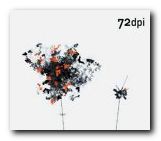
This is a handsome collection of web site illustrations – with a difference. All the designers wish to challenge conventional web design principles and exploit the possibilities of the new medium to achieve dramatically innovative effects. 72 dpi is a book with superb graphics and production values, but you have to be prepared for some challenging visual concepts. The pages make few concessions to what Jakob Nielsen calls ‘usability’. Plus the authors are not very good at explaining what they’re up to. Details of navigation and who produced what are almost wilfully obscure. But it’s all there if you’re patient.

72 dpi What the designers have in common is seemingly a desire to get away from standard navigation devices and text-dominated explanations of content. Their home pages offer instead visual dramas which are more like modernist paintings. Black and dark grey are the most popular screen colours, and there’s lots of imaginative use of typography as a graphic design element. When I checked some the sites, many of them were using Flash and Shockwave [no surprise there then].

The elegant page spreads are interspersed by brief policy statements from the designers, some of them interestingly thoughtful on the subject of web design and its new challenges, others lapsing badly into art school manifesto babble.

Some of the designs show exquisite use of colour. I particularly liked Matt Owens’ deeply layered pages which are reminiscent of Francis Bacon portraits. And indeed, some of these creations are very close to being works of art in a new medium.

Most of the latest avant-garde styles are represented – what Curt Cloninger calls HTML minimalism, Lo-Fi grunge, Mondrian poster, and Drafting table / transformer. What they certainly have in common is an imaginative approach to creating web sites. You are sure to find fresh ideas and visual stimulation here, even if they don’t reveal how their special effects are achieved.

© Roy Johnson 2000

72 dpi   Buy the book at Amazon UK
72 dpi   Buy the book at Amazon US


Robert Klanten (ed), 72 dpi , Berlin: Die Gestalten Verlag, 2000, pp.345, ISBN: 3931126358


More on design
More on media
More on web design


Filed Under: Graphic design, Web design Tagged With: Graphic design, Web design

A 2 Z and More Signs

May 21, 2009 by Roy Johnson

unusual alphabets, fonts, logos, symbols, and signs

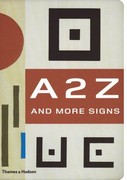
This is a compilation of the best-selling albumns of quirky typography, 130 Alphabets and Other Signs and A B Z: More Alphabets and Other Signs, with new materials added. Basically, it’s a sample book of fonts, characters, trademarks, logos, dingbats, and alphabet designs. But what makes the book so attractive is that the collection is both eclectic and suffused with a period charm of the inter-war years. Many of the designs and fonts are drawn from that period – with a hint of colonial nostalgia in labels from products destined for Africa, China, and India.

Alphabet Design Even the pages are printed in a pre-faded manner and cut with rounded corners to enhance this effect. There are elaborate display fonts, shaded letters, monograms, a set called ‘Huxley Vertical’ which seem like a precursor to Neville Brody, a selection of ink blots, labels from Joan of Arc laxatives, labels for matches, cigarettes and drinks, a two-page spread of ampersands, examples of visiting cards, Japanese packaging labels, even a typographic book-cover design by Natalia Goncharova from 1920s Paris.

The materials are the products of the main centres of modernist design in the first third of the last century: largely French, German, Czech, and Russian. The selection of material comes from private collections in London, Paris, Amsterdam, Prague, New York, and Mexico City.

Many of the designs appear here for the first time since their first use. Some of the examples, such as Karel Tiegel’s photo-balletic alphabet of 1926 and a Spanish civil war manual for illiterate soldiers, have never been reproduced before since they first appeared.

The sources of this new collection are wonderfully assorted. There are plenty of straight font sets, but also monograms, letter headings, package labels, posters, shop signs, opticians’ eye test charts, book jackets, film posters, technical manuals, propaganda leaflets, and magazine covers. The selection reflects mainly European modernism, constructivism, and Art Deco – though there are also novelties from Mexican graffiti and Asian medicine labels.

Each large page is striking in its muted, silkscreened colours, and the book
itself is amazingly attractive, with rounded corners, pre-faded yellow edges, and splotchy endpapers.

It has to be said that the main charm of this book is its unashamed retro feel; but I would defy anyone not to be pleased with the result. It is beautifully designed and produced, well printed, and altogether a must-have for anybody interested in typography and graphic design.

A 2 Z and More Signs   Buy the book at Amazon UK

A 2 Z and More Signs   Buy the book at Amazon US

© Roy Johnson 2006


Julian Rothenstein and Mel Goodwin, A 2 Z and More Signs, London: Thames and Hudson, 2006, pp.320, ISBN: 0500286043


More on typography
More on design
More on media
More on web design


Filed Under: Graphic design, Typography Tagged With: Alphabets, Graphic design, Symbols, Typography

A B Z More Alphabets and Signs

May 21, 2009 by Roy Johnson

glamorous collection of font sets and graphic designs

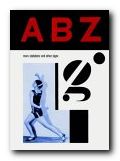
This is a follow-up to the excellent 130 Alphabets and Other Signs – a fascinating collection of font sets, alphabet design, and attractively printed designs from the early part of the last century. The sources of this new collection are wonderfully assorted. There are plenty of straight font sets, but also monograms, letter headings, packaging labels, posters, shop signs, opticians’ eye test charts, book jackets, film posters, technical manuals, propaganda leaflets, magazine covers, and dingbats. The selection reflects mainly European modernism, and Art Deco – though there are also novelties from Mexican graffiti art and Asian medicine labels.

A B Z: More Alphabets & SignsThe materials are the products of the main centres of modernist design in the first third of the last century: largely French, German, Czech, and Russian. The selection of material comes from private collections in London, Paris, Amsterdam, Prague, New York, and Mexico City.

Many of the designs appear here for the first time since their first use. Some of the examples, such as Karel Tiegel’s photo-balletic alphabet of 1926 and a Spanish civil war manual for illiterate soldiers, have never been reproduced before since they first appeared.

I was slightly disappointed that there’s so little explanation or comment on the materials – except for some rather cryptic notes on sources in the index. This seems to have been done to keep the display area free of any visual clutter.

Each large page is striking in its muted, silkscreened colours, and the book itself is beautiful, with rounded corners, pre-faded yellow edges, and green splotchy endpapers.

It has to be said that the main charm of this book is its unashamed retro feel; but I would defy anyone not to be pleased with the result. It is beautifully designed and produced, well printed (in Hong Kong) and altogether a must-have for anybody interested in typography, design, or attractive books.

© Roy Johnson 2004

A B Z: More Alphabets and Signs   Buy the book at Amazon UK

A B Z: More Alphabets and Signs   Buy the book at Amazon US


Julian Rothenstein and Mel Gooding, A B Z: More Alphabets and Other Signs, London: Redstone Press, 2003, pp.221, ISBN: 1870003330


More on typography
More on design
More on media
More on web design


Filed Under: Graphic design, Typography Tagged With: Alphabets, Fonts, Graphic design, Symbols, Typography

A Better Pencil

November 12, 2009 by Roy Johnson

Readers, Writers, and the Digital Revolution

A Better Pencil is a study that traces the relationships between writing and reading and the technology used as the medium of communication – from the invention of writing, the development of the printing press, then the typewriter, to the modern computer.

It’s a book about how the digital revolution is impacting our reading and writing practices, and how the latest technologies of the word differ from what came before.

A Better Pencil - book jacketIn this sense Dennis Baron has produced a similar work to that of his namesake Naomi Baron’s Alphabet to Email though his emphasis is less on historical development and more on exploring topics related to the issue. In fact I was rather glad he didn’t take a strictly chronological approach, which would have delayed annoyingly any revelations he might have about electronic writing. But the problem with his thematic structure is that many of his observations are made over and over again, each one of which he seems to imagine to be the first.

The one basic argument which he repeats is that each development in the technology of literacy was at first introduction regarded with suspicion. Even writing itself, which it was thought (by Plato) would lead to the decline of human memory. Then printing, which some people opposed on the grounds that it would lead to the dissemination of new ideas and the loss of respect for the authority of the church – and they were right.

What he’s doing in fact is looking at commonly held notions about computer technology and trying to dissipate widespread fears and misconceptions. Will computers lead to a decline in literacy. Answer – No. Will they rot our children’s brains – no. And so on.

The idea that some people are suspicious of technology is examined at some length by a study of the Unabomber – the technophobe terrorist who was ironically caught out only when he published his manifesto. The story is well told, and it’s entertaining enough – but it tells us almost nothing about writing or technology that we didn’t already know. However, this is a book that becomes more interesting as it goes on.

There’s quite a good chapter on the history of the pencil (much of it taken from the work of Henry Petrowski) that throws up quite a few interesting observations. He argues for instance that writing in pencil lacks status because the pencil post-dates the pen in historical development. Its traces can be wiped out of course, yet some pencils do not have erasers – for very good reasons. Joiners don’t want to leave graphite smears on their work, and golfers should not alter their scores.

It doesn’t take us much closer to electronic writing, but there’s a very amusing chapter on handwriting in which he exposes the bogus claims of graphologists (sloping left script = suicidal tendencies: that sort of rubbish). He makes the more serious point that people repeatedly claim current handwriting practice is a falling off in standards from some previous golden era in which everybody wrote in beautiful copperplate script. This too just isn’t true.

Once he gets to word-processors all his lines of argument begin to come together. Anyone who has followed the development of writing with a PC will be fondly reminded of the early frustrations as he describes his experiences using VAX, WordStar, and WordPerfect. As he rightly claims, all new developments in writing technology seem to slow down the writing process when they are first introduced.

He looks at the conventions, plus the advantages and disadvantages of all forms of on-screen writing – email, web pages, Instant Messaging, and blogs. Each of these has so rapidly replaced its predecessors that the conventions often change with the matter of a few years. Something hip with the kids one moment becomes old hat the next – particularly when adults get involved. That’s happening on Facebook and Twitter right now.

Most of these are new opportunities for self-expression rather than new writing technologies – though he might have included text messaging as an almost coded form of communication. Wikis are also new in that they are anonymous user-generated writing in which individual contributors sacrifice notions of personal authorship for the sake of a common good.

He ends with a look at what he calls the ‘dark side of the web’ – the world of hate groups, email scams, and political censorship. I was glad he didn’t let the illustrious Google off the hook for the way in which they (and MSN) have capitulated to China, the world’s leader in state-sponsored cyber snooping (with an estimated 30,000 people employed in spying on their fellow citizens). And they’re not alone: Cuba, North Korea, Saudi Arabia, and Burma (Myanmar) are doing the same thing.

One of Baron’s other central arguments is that revolutions in our writing behaviour take place when the technology becomes cheap and ubiquitous enough to put new tools in everybody’s hands. Things are moving so fast in digital technology just at the moment that it’s hard to keep up or predict what might happen next. But this survey is an excellent account of the status quo at 2008/2009.

A Better Pencil   Buy the book at Amazon UK

A Better Pencil   Buy the book at Amazon US

© Roy Johnson 2009


Dennis Baron, A Better Pencil: Readers, Writers, and the Digital Revolution, Oxford: Oxford University Press, 2009, pp.259, ISBN: 0195388445


More on digital media
More on technology
More on theory


Filed Under: Media, Theory Tagged With: Computers, Electronic wrriting, Technology, Theory, Writing skills, Writing Theory

A Boy at the Hogarth Press

July 1, 2009 by Roy Johnson

Adrian Mole meets Bloomsbury

Richard Kennedy started work at the Hogarth Press when he was sixteen. He had been a complete failure at Marlborough School, and was fixed up with the job through a family connection as a special favour, starting work at one pound a week. His memoirs (and atmospheric line illustrations) were produced many years later, and they take great delight in contrasting the youth’s naive enthusiasm and his bewilderment with the sophisticated milieu into which he had been transported.

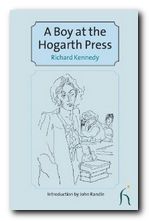
A Boy at the Hogarth Press Leonard Woolf ran an enterprise in the Hogarth Press which was commercially very successful, and Kennedy joined it at a time in the 1920s when the work of Virginia Woolf (particularly Orlando) and Vita Sackville-West (All Passion Spent) were virtually best-sellers. But his approach is to depict these intellectual giants as they were seen by a sixteen year old boy. He was far more interested in learning how to chat up girls than the lofty aspirations of his employers. He contrives to present an ‘Emperor’s New Clothes’ approach to all things Bloomsbury, and the result is a sort of Adrian Mole version of events.

The saintly Virginia Woolf, who at that time was producing some of the most advanced texts of literary modernism, is pictured as she would appear to a young teenager:

She looks at us over the top of her steel-rimmed spectacles, her grey hair hanging over her forehead and a shag cigarette (which she rolls herself) hanging from her lips. She wears a hatchet-blue overall and sits hunched in a wicker armchair with her pad on her knees and a small typewriter beside her.

His employer, the indefatigable Leonard Woolf, who ran the whole enterprise with rigorous efficiency, is cut down to size in a similar fashion:

After lunch we all straggled home over the Downs. LW stopped to have a pee in a very casual way without attempting any sort of cover. I could see that this was a part of his super-rational way of living.

But for all the naive self deprecation, you know that Kennedy is well connected. He is in fact from the same social milieu as the people he describes, as he reveals in a throwaway remark on a visit to St Ives::

The picnic over, we returned to Talland House – curiously enough, the scene of Virginia Woolf’s first successful novel, To the Lighthouse. Her parents had rented the house from my aunt’s parents .

The book is decorated by spidery but very evocative drawings which capture the mood of the era and the spirit of the text. Amazingly, they were drawn from memory in the 1970s, yet capture both the period and the principal characters very well.

It’s a slight book to say the least, but it’s very amusing and it throws light onto the workings of what was a very successful publishing business – and for Bloomsbury Group enthusiasts it has some delicious thumbnail sketches of the principals, as well as even floor plans of the rooms at the Hogarth Press, showing who was cooped up where. Full marks to Hesperus Press for bringing this delightful book back into print.

© Roy Johnson 2011

Buy the book at Amazon UK

Buy the book at Amazon US


Richard Kennedy, A Boy at the Hogarth Press, London: Hesperus Press, 2011, pp.90, ISBN 1843914611


More on the Bloomsbury Group
More on biography


Filed Under: Bloomsbury Group, Hogarth Press Tagged With: Biography, Bloomsbury Group, Cultural history, Hogarth Press

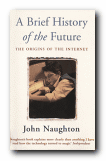
A Brief History of the Future

July 11, 2009 by Roy Johnson

readable account of computer and Internet development

This is a fascinating history of the Internet – but given a personal spin. Journalist and academic John Naughton describes the technology of the digital revolution from a user’s point of view. What are the concerns of the average person? How does it all work? At each stage he explains the significance of each development. This approach will be very reassuring for beginners. A Brief History of the Future starts with potted biographies of Vannevar Bush, Norbert Weiner, and J.C.R Licklider as his version of ‘fathers of the Internet’, but it is Paul Baran and Vint Cerf who he tips as most important of all – because they came up with the ideas which pulled it all together.

A Brief History of the Future Naughton is good as explaining the details of the technology and engineering, and he puts his professional journalism skills to good use. Whenever necessary, he uses analogies with practical, everyday matters – such as packet-switching being like moving a house and its contents in separate trucks which take different routes to their destination, and then are re-assembled at the other end. He also writes amusingly about the pleasures and perils of email, and takes a refreshingly tolerant view on the issues of censorship and control.

There are some parts of the hard technical developments which he leaves out of his account – politely admitting that he has done so. This seems to me a wise choice, because the type of popular readership at which the book is aimed will welcome his focus on the personal achievements and his own enthusiastic account of engineering history.

Some of the other accounts of the Internet such as Hafner and Lyon’s Where Wizards Stay up Late and Robert Cringley’s Accidental Empires occasionally tax the non-specialist reader in this respect.

Like these other books, his narrative becomes chronologically scrambled at times, maybe because this reflects the disparate locations, enterprises, and time schemes [not to mention funding and government enterprises] involved in the enterprise. Naughton goes out of his way to be scrupulously fair to them all – including even monopolies such IT & T – which like British Telecom put a brake on the development of the Internet for a long time.

There is a particularly interesting chapter on the development of the UNIX operating system, and an explanation of how and why the Usenet News system evolved from it. He also provides interesting introductions to topics such the development of Linux and the Open Source movement which belives that software should be available free of charge.

He is at his best when describing the development of hypertext and the World Wide Web – perhaps because the story flows in an unbroken chronological sequence from Vannevar Bush, via Douglas Engelbart and Ted Nelson, through to Tim Berners-Lee and Marc Andreesson. He ends with a brief glimpse at the current dangers of the commercialisation of the Net and the reasons why it is almost impossible to predict its future.

Naughton offers a very readable, humane, and contagiously enthusiastic account of the Net and its major features. This is a perfect book for anyone who wants to know the background to this major technological revolution.

© Roy Johnson 2001

Buy the book at Amazon UK

Buy the book at Amazon US


John Naughton, A Brief History of the Future: The Origins of the Internet, London: Orion Books, 2000, pp.332, ISBN 075381093X


More on computers
More on technology
More on digital media


Filed Under: Techno-history Tagged With: Computers, Cultural history, Technological history, Technology

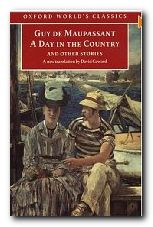
A Day in the Country and Other Stories

July 6, 2009 by Roy Johnson

19th century master of the short story form

Guy de Maupassant was a prolific and very famous writer in his own lifetime. Between 1880 and 1891 for instance he wrote about 300 short stories, 200 articles, six novels, two plays, and three travel books. He wrote in the heyday of the short story, and it is this literary form for which he is now best remembered. Maupassant was one of the late nineteenth-century writers shaping what was to become the modern short story. His contribution to the genre was to pare down the means of expression and to focus on the effect of the tale.

A Day in the Country and Other StoriesHis stories are not abbreviated novels or rambling prose poems. They tell a story – and often it has a sting in the tail. Like other French writers of the late nineteenth century he was keen to explore ordinary everyday life – often exposing its less appetising and even grim features. I bought this particular collection after watching Jean Renoir’s beautiful film Partie de campagne which is a completely faithful account of the title story. But I was amazed to discover that the full length feature film and masterpiece of the cinema was based on a tale no more than a few pages long.

His style, much influenced by his friend Flaubert, is one of scrupulous clarity. Everything is pared to a minimum, and the material world is rendered in well-chosen detail. His attitude is that of a sceptical realist, with an eye for the tragic and sad elements of life which lead many critics to brand him a pessimist. They may have a point, because it’s remarkable just how many of his stories end with someone’s abrupt death.

He was shortening and concentrating the narrative, stripping it of excrescence. Yet he still drags along some of its traditional features – the whiplash ending for instance. Some of them are not much more than well-articulated anecdotes, but they are usually resolved with an ironic or dramatic twist.

Despite these weaknesses, it’s his contribution to the development of the short story for which he is still respected. It is his stories which are still widely read, not his full-length novels.

[Maupassant] fixes a hard eye on some spot of human life, usually some dreary, ugly, shabby, sordid one, takes up the particle, and squeezes it either till it grimaces or till it bleeds. Sometimes the grimace is very droll, sometimes the wound is very horrible … Monsieur de Maupassant sees human life as a terribly ugly business relieved by the comical.

It’s amazing to think that Henry James, a friend and admirer who wrote those words was writing at the same time – though when considering the compositional crudities in some of these stories, their origin in newspapers and popular magazines should be taken into account.

But this famous terseness of style is not quite so ubiquitous as is often claimed. He is quite prepared to indulge in rhetorical flourishes to make his point – as in this account of a Parisian visiting the provinces:

I wondered: ‘What on earth can I do after dinner?’ I thought how long an evening could be here in this town in the provinces: the slow, grim stroll through unfamiliar streets, the depressing gloom which the solitary traveller feels oozing out of passers by who are complete strangers in every respect, from the provincial cut of their jackets, hats, and trousers to their ways and the local accent, an all-pervading misery which drips from the houses, the shops, the outlandish shapes of the vehicles in the streets, and the generally unaccustomed hubbub, an uneasy sinking of the spirits which prompts you to walk a little quicker as though you were lost in a dangerous, cheerless country and makes you want to go back to your hotel, that loathsome hotel, where your room has been pickled in innumerable dubious smells, where you are not entirely sure about the bed, and where there’s a hair stuck fast in the dried dust at the bottom of the washbasin.

In one of the finest tales in this collection he tackles a subject which has a long and honourable history amongst writers – the story of a man who, as a result of some trivial argument or misplaced notion of pride, suddenly finds that he is about to fight a duel. It also includes his best known – ‘The Necklace’ – another tale which has spawned many variations, as well as ‘Le Horla’, a story which strangely parallels Maupassant’s own descent into premature madness and death, brought on by syphilis.

Later writers such as James Joyce, Katherine Mansfield, and especially Virginia Woolf were to take his stylistic developments further – and bring the short story into closer contact with the prose poem and the philosophic meditation. But connoisseurs of this literary form will always be well rewarded by re-visiting one of the earlier masters of the genre.

© Roy Johnson 2000

A Day in the Country Buy the book at Amazon UK

A Day in the Country Buy the book at Amazon US


Guy de Maupassant, A Day in the Country and Other Stories, Oxford: Oxford University Press, 1998, pp.312, ISBN 0192838636


More on literature
More on the novella
More on literary studies
More on short stories


Filed Under: 19C Literature, Short Stories, The Short Story Tagged With: A Day in the Country, French Literature, Guy de Maupassant, Literary studies, The Short Story

  • « Previous Page
  • 1
  • …
  • 4
  • 5
  • 6
  • 7
  • 8
  • …
  • 103
  • Next Page »

Get in touch

info@mantex.co.uk

Content © Mantex 2016
  • About Us
  • Advertising
  • Clients
  • Contact
  • FAQ
  • Links
  • Services
  • Reviews
  • Sitemap
  • T & C’s
  • Testimonials
  • Privacy

Copyright © 2026 · Mantex

Copyright © 2026 · News Pro Theme on Genesis Framework · WordPress · Log in