Mantex

Tutorials, Study Guides & More

  • HOME
  • REVIEWS
  • TUTORIALS
  • HOW-TO
  • CONTACT
>> Home / Archives for 2009

Archives for 2009

Paris Interiors

July 18, 2009 by Roy Johnson

interior design French capital city style

This is another of the very stylish and amazingly good value photographic studies from Taschen Books. It features fifty imaginatively conceived apartments and houses, the homes of prominent people such as Isabelle Adjani, Helena Christensen, and Christian and Francoise Lacroix. What then characterises the Parisian interior? Well, there are lots of elegant nineteenth century apartment buildings; rooms with high ceilings and tall windows reaching almost to the floor; marble staircases with wrought-iron banisters; light, pale colours; touches of art-nouveau; and polished wooden or tiled floors (rarely carpets). However, it’s not all tradition.
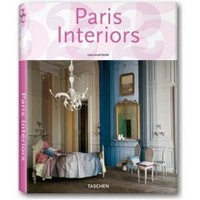
Paris Interiors There’s an apartment fashioned from an old warehouses, one with a vegetable garden on the roof, and another coaxed out of just two or three modest rooms. That’s another of the many good things about these books. They go beyond mere coffee table glamour by incorporating examples which demonstrate flair on a budget.

If you want to pick up some living tips from these pages, be prepared to use rooms for different purposes than they were originally intended. Bedrooms do not always need to be above living quarters. There are even examples of people putting buildings to different uses: there’s an excellent example of a stylish home on a Parisian barge, and another created from a converted attic.

Most of the owners (or occupants) whose homes are depicted tend to be fashion designers, couturiers, and visual consultants of one kind or another. In fact my favourite was an ultra minimalist art deco penthouse designed and owned by parfumier Thierry Mugler.

Two other things come through very strongly. First – lots of them offset whatever their taste and decorative arrangements with classical columns supporting a bust. No problems there: I’m a big fan of those myself. But second – many of them have rooms which are so piled up with books they look like auction rooms, ready for the bargain clearance sale. A few art books might look OK, but too many just looks very untidy – as if the owner has simply not yet tackled the issue of storage.

The other weakness here (which might simply reflect the taste of the author) is that rather a lot of the examples chosen are interesting for gimmicky reasons rather than for their good aesthetics. Rooms stuffed full of giant sized golliwogs or flea-market tat might be unusual, but they can easily make their owners look rather foolish.

But these are minor quibbles. Anyone interested in interior design will find something to stimulate their imagination here. Paris is still one of the most stylish cities in the world, and not just Capital of the Nineteenth Century as Walter Benjamin described it.

© Roy Johnson 2007

Buy the book at Amazon UK

Buy the book at Amazon US


Lisa Lovett-Smith, Paris Interiors, London: Taschen, 2007, p.320, ISBN 3822838055


More on lifestyle
More on biography
More on the Bloomsbury Group


Filed Under: Lifestyle Tagged With: Architecture, Design, Interior design, Lifestyle, Paris Interiors

Participles – how to understand them

September 11, 2009 by Roy Johnson

free pages from our English Language software program

Participles – definition

participles The term participles refers to the lexical component of the verb or the part which conveys the information or meaning.
redbtn Participles can express the present tense as in swimming or the past as in swam.


Examples

PRESENT PARTICIPLES

jumping thinking being
rowing considering maintaining

PAST PARTICIPLES

ran came went was
thought made helped socialised

Use

redbtn Participles are usually used along with pronouns as verbs, but they are also used as adjectives as in The Killing Fields and The Hanging Gardens.

redbtn Participles can be used also as nouns as in ‘the cleaning’, ‘the washing’, or The Shining [film title].

redbtn NB! Speaking, listening, reading, and writing add up to communicating.

redbtn The term ‘participle’ is a technical grammatical term. It is useful to be able to identify this portion of the verb.

redbtn A verb is usually referred to in its infinitive form, with the prefix ‘to’ — as in:

to learn to be to have
to walk to converse to seem

redbtn An alternative form of reference to a given verb is to express it as a participle:

running walking sitting
wondering scribbling seeming

redbtn The participle has been very adaptable in creating new terms recently. This is particularly true in the USA, where Americans seem to have a more flexible and pragmatic approach to linguistic creativity than the British — who are perhaps inhibited by notions of traditional restraint where language development is concerned.

redbtn The scope of the noun ‘parent’ has been extended to include a verb form, and the participle is the most common form of this. Parenting is now the title of a magazine, and the activity is often referred to as ‘parenting’. However, we do not often hear other forms of the verb used — as in ‘I parented two children’ or ‘I have learnt to parent my child’.

redbtn The phrase ‘the reason being’ contains the participle form of the verb ‘to be’. This phrase seems to have recently become idiomatic. That is, it has become a compound or stock phrase which speakers find useful when expressing cause and effect, especially in speech.

redbtn Often a speaker will use the idiom as in the utterance: ‘The reason being is that I don’t like driving late at night’. In a mechanical sense, the participle ‘being’ has been substituted for ‘is’ in the conventionally grammatical utterance ‘The reason is that I don’t like driving late at night’.

redbtn The result is ungrammatical, but it is quite possible that this deviant form could become Standard English if enough speakers adopted it into their everyday repertoire. [But let’s hope not!]

Self-assessment quiz follows >>>

© Roy Johnson 2003


English Language 3.0 program
Books on language
More on grammar


Filed Under: English Language Tagged With: English language, Grammar, Language, Participles, Parts of speech

Passing Exams without Anxiety

May 18, 2009 by Roy Johnson

popular guide to revision and examination techniques

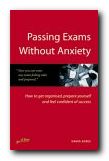
David Acres is a counsellor and a specialist in learning and stress management. He applies these skills to all stages of what’s required for exam success – in any subject and at all levels, from GCSE and A Level to university level. He deals with all the common issues of time management, confidence, motivation, and study conditions, as well as the techniques you need in the exam room itself. The approach he takes encourages you to ask questions and break up tasks into smaller parts. This helps you to analyse what you need to do to complete tasks. He also recommends a pick-and-mix strategy – dipping in and out of the book and choosing those techniques which suit you best.

Passing ExamsThe advice he gives is sound. Make a revision timetable; check your coursework deadlines; study past papers; make notes and summaries; and get to know what examiners are looking for. He provides plenty of checklists and recommends the use of planning and time charts, diagrams, lists, and mind maps. The section on improving your memory becomes a little bit like a personal therapy session – but he does explore a wide variety of methods for exercising and improving your powers of recovering information.

The main emphasis of the book is concerned with relieving stress and anxiety – so this will appeal to those who are looking for reassurance and nerve-calming techniques. It’s now in its fifth edition – which is a sure recommendation.

© Roy Johnson 2000

Passing Exams   Buy the book at Amazon UK

Passing Exams   Buy the book at Amazon US


David Acres, Passing Exams Without Anxiety, Oxford: How to Books, 1998, pp.182, ISBN: 1857032691


More on study skills
More on writing skills
More on online learning


Filed Under: Study skills Tagged With: Exam skills, Passing Exams, Revision skills, Study skills, Writing skills

Patrick White – greatest works

September 23, 2009 by Roy Johnson

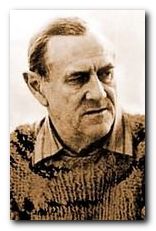
Patrick White - portraitPatrick White was born in Australia but sent to be educated in England, which he disliked intensely. He settled to live in London during the 1930s and served in the RAF during the war. After the war he returned to live in Australia, eking out his small private income by farming. His novels offer great variety in their themes, subjects, and settings – but what they have in common is his use of powerfully rich language, his deeply psychological character portraits, the dramatic incidents of his stories, and a semi-mystical belief system which he invites us to contemplate without making his narratives depend upon it. He was awarded the Nobel Prize for Literature in 1973.
 

The Tree of Man (1955)
This is White’s first major work. (He actually dis-owned some of his earlier work.) It is an epic account of a young farmer, Stan Parker and his wife Amy and their struggles to build themselves a life and a family in the middle of the Australian wilderness at the beginning of the twentieth century. The life they make is full of small triumphs and some bitter disappointments. This is a novel which has been compared with D.H. Lawrence’s The Rainbow, yet the tale is recounted in a bare simple prose which gives no hints of the baroque complexities of his later style.
Patrick White Buy the book from Amazon UK
Patrick White Buy the book from Amazon US


A Fringe of Leaves (1976)
This novel is the re-telling of a true nineteenth century incident which has become a mythical Australian narrative. It’s the story of Mrs Fraser, an English woman who is shipwrecked on the island which now bears her name. She gets back to the mainland, only to be seized and held semi-captive by Aboriginal natives. She escapes from them and teams up with an escaped convict to make an epic journey on foot back to ‘civilization’. The implication of the novel is that she is spiritually transformed by her experiences of suffering and deprivation. It conjures up a very romantic evocation of the period, with all White’s touches of vivid and dramatic scene painting.
Patrick White Buy the book from Amazon UK
Patrick White Buy the book from Amazon US


Voss (1957)
This is another nineteenth century epic tale – this one based on the true story of the tragic and doomed journey made in 1845 by the German explorer Leichardt. He leads a group across the Australian desert, and is accompanied imaginatively by a young woman, Lara Trevalyen from her home in Sydney. She suffers with him, right up to the point of his death – and then keeps his memory alive. The scene painting of the Australian outback and desert is truly wonderful, and although an outsider, Voss lives on as an increasingly legendary, martyred figure. This is another of White’s novels which seeks to capture the essence of Australia, its national spirit, and cultural heritage.
Patrick White Buy the book from Amazon UK
Patrick White Buy the book from Amazon US


The Vivisector (1970)
This is the story of Hurtle Duffield, an Australian painter – a portrait loosely based on Sydney Nolan, with whom White was once friendly before they fell out because of a fairly trivial disagreement. It traces very convincingly the relationship between the artist’s experiences of life and their translation into artistic expression. What makes this novel particularly interesting is its dramatic conclusion as Duffield sinks into a psychologically chaotic old age. His memories from a past which we have fictionally shared are woven into his crumbling grip on the present. The fragmented narrative is demanding on the reader, but very impressively written, as we are invited to remember the origins of sane incidents which lie beneath his apparently deluded old age.
Patrick White Buy the book from Amazon UK
Patrick White Buy the book from Amazon US


The Twyborn Affair (1979)
This novel; presents readers with a real challenge. It’s White’s version of Virginia Woolf’s Orlando. Without giving away too much of the very intriguing story line, White is exploring the relationship between gender and sexuality. The same character experiences life in quite different ways with different sexual identities. The setting changes from the south of France, to an Australian sheep farm, then back to a brothel in London. It’s baffling and uncompromising at first reading – but eventually makes a kind of sense.
Patrick White Buy the book from Amazon UK
Patrick White Buy the book from Amazon US


Riders in the Chariot (1961)
Many critics see this as White’s greatest work. The story puts together four completely different characters – all outsiders in one way or another. It’s not difficult to see them as various aspects of White’s own complex personality. Himmelfarb is a refugee Jewish professor struggling to come to terms with his persecution and the murder of his wife by the Nazis. The other misfits are a half-caste painter, a spinster, and a washerwoman, Ruth Godbold, who finds a mystic feeling of togetherness with her living friends and the dead ones. It contains White’s most ferocious criticism of Australian gentility and ugliness, plus the subtle gradations of racism, ignorance, and hypocrisy in contemporary suburban society.
Patrick White Buy the book from Amazon UK
Patrick White Buy the book from Amazon US


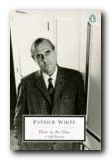
Flaws in the GlassFaws in the Glass (1981) is an amazingly frank self-portrait. In this he reveals the truths about his homosexuality; his feelings of inhabiting different personae and sexual identities; his lifelong feud with his mother; his alcoholism, and his later political radicalism. Reading it will certainly help you to understand his complex fictions, but more importantly it lays bare his relationship with Australia. White reveals a great deal about the psychological processes through which his experiences and ideas are transformed into art. It is a fascinating if at times almost uncomfortable reading experience.
Patrick White Buy the book from Amazon UK
Patrick White Buy the book from Amazon US

© Roy Johnson 2005


Filed Under: Patrick White Tagged With: Flaws in the Glass, Literary studies, Patrick White

Patrick White biographical notes

September 23, 2009 by Roy Johnson

Patrick White - portrait1912. Patrick White born in Sydney – his father was a wealthy sheep farmer. Both parents were indolent, snobbish, and never worked. White always felt very distant from them.

He was sent to England to be educated at a boarding school in Cheltenham College. He hated it, and reproached his parents:

“I resented their capacity for boring me and their dumping me in a prison of a school at the other side of the world.”

He spent adolescent holidays in Dieppe and Germany, and read mainly poetry as a youth, then went on to take a degree in French and German literature at Cambridge University.

1930s. His father finally made him an allowance of £400 per year, and he settled in bohemian London, making friends with the painters Francis Bacon and Roy de Maistre. He made a break with Australia which was part cultural, and partly to do with his struggle with sexual identity:

“I see myself not so much a homosexual as a mind possessed by the spirit of a man and woman according to actual situations or the characters I become in my writing.”

1939. Published his first novel, Happy Valley, which he later disowned. He emigrated to the USA, but returned on the outbreak of war to join the RAF. He served in the middle East in the Intelligence Corps, working as a censor.

“Superficially my war was a comfortable exercise in futility carried out in a grand hotel amongst the bridge players and swillers of easy-come-by whisky. My chest got me out of active service and into guilt, as I wrote two, or is it three of the novels for which I am now acclaimed.”

1941. Published his second novel, The Living and the Dead, about which he later said “Perhaps it should not have been written”.

1945. He settled back in Australia with his Greek partner Monoly Lascaris, and they attempted a form of self-sufficiency on a smallholding, making a living from selling flowers, vegetables, milk, and cream.

1948. Published The Aunt’s Story and traveled widely throughout England, France, Germany, Egypt, Palestine, and Greece, as well as Australia and the USA. His spiritual life is particularly tempestuous.

“Those who are doomed to become artists are seldom blessed with equanimity. They are tossed to drunken heights, only to be brought down into a sludge of headachy despair.”

1955. Published The Tree of Man – a family saga, which focused on ordinary people at the beginning of the twentieth century. Stan Parker is a young farmer. He establishes a family and farm in the Australian wilderness, has children and grandchildren, but the land is eventually engulfed by suburb.

1957. Published Voss “Much of Voss was written in bed”

1961. Published Riders in the Chariot.

1966. Published The Solid Mandala


Flaws in the GlassFlaws in the Glass (1981) is an amazingly frank self-portrait. In this he reveals the truths about his homosexuality; his feelings of inhabiting different personae and sexual identities; his lifelong feud with his mother; his alcoholism, and his later political radicalism. Reading it will certainly help you to understand his complex fictions, but more importantly it lays bare his relationship with Australia. White reveals a great deal about the psychological processes through which his experiences and ideas are transformed into art. It is a fascinating if at times almost uncomfortable reading experience.


1970. Published The Vivesector.

1973. Published The Eye of the Storm. Awarded the Nobel Prize for Literature – but White, who guarded his privacy, did not attend the award ceremonies. He persuaded his friend, the artist Sidney Nolan, to accept it in Stockholm on his behalf.

1976. Published A Fringe of Leaves

“I first went to Fraser Island after Sydney Nolan gave me the story of Eliza Fraser and the wreck of the Stirling Castle. I went there on my own and began A Fringe of Leaves but gave up on deciding that Australian writers should deal with the twentieth century. Years later Manoly and I went to the island together and explored it more thoroughly. From two visits and a certain amount of necessary research, it became part of my life, and the novel I wrote as painful and sensual a situation as one I might have lived through personally whether as Ellen Roxburgh or Jack Chance.”

1979. Published The Twyborn Affair

1981. Published Flaws in the Glass

1986 Published Memoirs of Many in One

1990 Died, after a long illness.

© Roy Johnson 2005


Filed Under: Patrick White Tagged With: Biography, Literary studies, Patrick White

Paul Rand

June 26, 2009 by Roy Johnson

illustrated study of influential graphic designer

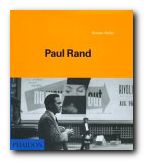
Paul Rand (1914 -1996) was one of the most successful figures in corporate American graphic design. He is best known for his IBM logo, which helped to resurrect the company in the 1970s, and led to its dominant position in computer manufacture. His early success in New York was founded – quite apart from his natural talent as an illustrator – on his appreciation of European modernism. He absorbed its influences quickly and, combining them with his precocious technical skills, produced a distinctive ‘American’ style. His basic approach is founded on photo-montage, collage, and elements of surrealism. But it’s a style which manages to look permanently modern.

Paul RandHe seems to have been particularly strongly influenced – as were many others at that time – by Jan Tschichold’s classic study of the relationship between politics and design in Die Neue Typografie. By the 1940s and 1950s, his combination of simple, abstracted forms contrasted with handwritten text came to be the template for many US book jacket and LP albumn designers – such as Milton Glaser and David Stone Martin. He coined the phrase ‘less is more’ – perhaps a summary of modernism in graphic design. He worked seven days a week, did all his own technical work, and he even designed his own house.

This beautifully illustrated biography traces his early work, which still looks fresh today; it covers the book jackets which set design pace in the 1950s and 1960s; and then the centre of the study is taken up with the development of the IBM corporate image and its famous Venetian blind logo. The conclusion is an illustrated gallery tour of his best commercial contracts – Westinghouse, United Parcels Service, ABC, and even re-designs such as Ford for which he was not actually awarded the contract.

Steven Heller, his biographer, is art director of The New York Times and the author of several influential books on graphic design. His account is even-handed on the whole, though it becomes a little whimsical in places – such as when describing Rand’s illustrations for children’s books written by his wife Anne. However, this book is exquisitely designed and elegantly printed from first page to last – which is why it is already a best-seller. The new paperback edition should help to bring the vivacity of Rand’s work to a wider audience.

© Roy Johnson 2002

Paul Rand   Buy the book at Amazon UK

Paul Rand   Buy the book at Amazon US


Steven Heller, Paul Rand, London: Phaidon, 2000, pp.255, ISBN: 0714839949


More on design
More on media
More on web design
More on typography


Filed Under: Individual designers, Typography Tagged With: Design, Graphic design, Paul Rand, Typography

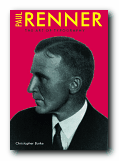
Paul Renner: the art of typography

July 16, 2009 by Roy Johnson

illustrated critical biography of modernist typographer

German typographer Paul Renner is best known as the designer of the typeface Futura, which stands as a landmark of modern graphic design. This title is the first study in any language of Renner’s typographic career. It details his life and work to reveal the breadth of his accomplishment and influence. Renner was a central figure in the German artistic movements of the 1920s and 1930s, becoming an early and prominent member of the Deutscher Werkbund while creating his first book designs for various Munich-based publishers. As the author of numerous texts such as Typografie als Kunst (Typography as Art) and Die Kunst der Typographie (The Art of Typography) he created a new set of guidelines for balanced book design.

Paul Renner: the art of typographyRenner taught with Jan Tschichold in the 1930s and was a key participant in the heated ideological and artistic debates of that time. Arrested and dismissed from his post by the Nazis, he eventually emerged as a voice of experience and reason in the postwar years. Throughout this tumultuous period he produced a body of work of the highest distinction.

Christopher Burke’s biography is a PhD thesis which has been transformed into an elegant commercial publication – designed and typeset by the author himself. It follows a chronological structure, tracing the relationship between the history of Germany and Renner’s theories and practice as an artist. He helped lead German print out of the conservative Gothic or Blackletter tradition into the use of modern fonts such as his own best-selling Futura. His life also parallels German cultural history in the twentieth century.

Burke is very good at revealing the political, economic, and social forces which influenced the development of the new aesthetic movements of the period. For instance, he details the post-inflation shortages of the 1920s which gave the Bauhaus its impetus to link art and technology to produce machine-made objects. (Renner participated actively in this movement, developing alongside people such as Mies van der Rohe and Walter Gropius.)

Another wonderfully revealing instance is his discussion of the Nazis’ 1941 ban on the use of gothic script. What was once part of national identity was suddenly denounced as a ‘Jewish abomination’ – when in fact the truth was that the Germans had occupied much of France, Netherlands, Belgium, Denmark, and Norway, and they needed to make their propaganda understandable to people in these countries.

Burke sometimes seems to bury Renner’s theoretical and aesthetic work under lots of historical data. I was amazed that he gives so little attention to Typografie als Kunst (1922). But fortunately he traces the development of Futura in great detail, complete with reproductions of preliminary sketches of the letter forms and their variants.

He discusses the interesting notion that this essentially modernist font actively suppressed the differences between lower and upper case in the pursuit of a purely ‘rational’ design. Yet a weighted stroke emerged as it developed – because it was quite clear that the purely geometric form looked ugly.

Sometimes the politics and typography are not so comfortably integrated. After forty pages of letter forms, we’re suddenly jerked back into the political crises of the time – though it has to be said that part of Burke’s argument is to rescue Renner from the taint of Nazism which might be attached to any survivors of the period who stayed within Germany. Renner maintained a humanitarian stance against the Nazis, which he expressed significantly in his Kulturbolschewismus?, for which he as arrested in 1933 and then went into a period of ‘internal exile’.

Renner was obviously a survivor. The book ends with his post-war contributions to a debate between typographic modernisers and conservatives, in which he characteristically took the middle ground. He even saw a relationship between book design and political ideology:

In Renner’s view, the taste for large volumes, which equated weight with prestige, betrayed a potential flaw in the German character: ‘the “fatal desire for greatness”, by which Hitler was also notoriously motivated

This is a very attractive book which will appeal to both typographists and cultural historians. It will also have a passing attraction for bibliophiles who will appreciate the sheer pleasure of a beautifully illustrated and carefully designed book printed on high quality paper. If this is the level of work done in the department of typography and graphic communication at Reading University, then Christopher Burke is a very good advert for it.

© Roy Johnson 2002

Paul Renner   Buy the book at Amazon UK

Paul Renner   Buy the book at Amazon US


Christopher Burke, Paul Renner: the art of typography, London: Hyphen Press, 1999, pp.223, ISBN: 1568981589


More on typography
More on design
More on media
More on web design


Filed Under: Individual designers, Typography Tagged With: Biography, Fonts, Graphic design, Paul Renner, Typography

Pause and Effect: the art of interactive narrative

July 9, 2009 by Roy Johnson

techniques of telling stories in visual media

Pause and Effect examines the intersection of storytelling, visual arts, new media, and interactivity. It’s a mixture of a little theorising with plenty of practical examples. Mark Meadows starts reasonably well with some interesting reflections on narrative and perspective, and then plunges valiantly into the realm of literary narratives. But before giving himself time to consider them seriously, he’s off into Excel spreadsheets and interactive games. It’s a very elegantly designed book. Almost every page is illustrated with diagrams, screenshots, and paintings.

Click for details at AmazonHe ventures bravely into first, second, and third person narratives, plus point of view. Famous names come thick and fast – Homer, Aristotle, Dostoyevski, Giotto, James Joyce. We get reflections on novels, TV programs, video games, and Spiderman comics. But it’s hard to find a coherent argument. Most of what he has to say is descriptive rather than analytical.

This is a shame, because theoretical reflections on new media design would be very welcome – but here there is the sense of someone struggling with issues which even literary theorists have sorted out long ago.

He does look at some interesting examples of narrative art – religious paintings and tablets. But when you think about it, the traditional narrative painting is ‘cheating’ in terms of conveying a new story. Viewers of ‘The Annunciation’ already know the sequence of events when they see the depiction of them in two dimensions.

There are some interviews with designers of multimedia and interactive events, plus case studies which feature contemporary games designers. He also covers interesting reports of experiments which seek to blend digital genres. Probably the best part of the book however is where he offers reflections on narrative and architecture, second-person point of view, and 3D virtual reality.

This is a publication which will appeal to people who want to pursue ideas about narrative theory. Web designers and new media buffs will certainly pick up some new lines of investigation to think about.

© Roy Johnson 2003

interactive narrative   Buy the book at Amazon UK

interactive narrative   Buy the book at Amazon US


Mark Stephen Meadows, Pause and Effect: the art of interactive narrative, Indianapolis (IN): New Riders, 2003, pp.257, ISBN: 0735711712


More on digital media
More on technology
More on theory


Filed Under: Media, Theory Tagged With: Hypertext, Media, Media theory, Narrative, Theory

PC Hacks

May 21, 2009 by Roy Johnson

100 Industrial-strength Tips and Tools

This is a technical guide on how to configure, customise, and upgrade your PC: how to crank up the speed at which your CPU runs; how to make your memory run a bit faster and optimise your memory usage; how to configure and partition hard disks; and how to protect yourself by making backups and safeguard your system against viruses and spyware.

PC HacksIt starts off at the ground floor of the computer system with the motherboard and the basic BIOS setup program, then works its way up through memory, hard disk, and peripherals. Each of the hacks is given a rating, so you can choose if you want to tackle the suggestions at beginner’s, intermediate, or expert level. Author Jim Aspinwall even lists the tools you will need for each procedure. If any of the hacks are going to be risky, he gives plenty of warning and tells you how to recover.

Actually, one of the most important tips he gives is the very first – which is that you should back up your system and your data regularly:

Backups, system restore points, software and hardware installation disks, and printouts of hard-to-remember or obscure details are very handy to keep safe but close at hand should you need them.

There are also lots of clearer-than-usual photographs showing the parts of the innards on which you’ll be working. There’s a whole chapter devoted to squeezing more speed out of your system. I was surprised to see that in some cases (with a Pentium II for instance) it’s possible to achieve 550% increases.

It’s unlikely that most people will want to start tampering with recently purchased systems, but anybody who has been using computers for more than a few years is probably in possession of more than one machine. [Come to think of it, I’ve got three desktops, two laptops, and two Palm Pilots – one dead.] Quite a lot of his advice has its eye on the fact that you might want to use that old 486 as a backup to your current system.

His language is fairly uncompromisingly technical. This gives you a flavour:

If you need Gigabit Ethernet (1000BaseT), you should use a motherboard that has it built in. If you install a 1000BaseT PCI card, it will likely saturate the PCI bus, leaving no bandwidth for other PCI cards. Onboard 1000BaseT uses a separate bus to talk to the CPU and memory.

Even if, like me, you’re a bit shy of replacing the heat sink on a CPU or partitioning your hard drive, there’s still plenty of useful information here. I learned quite a lot about memory management and file allocation systems – which is how information is arranged and stored on your hard drive. This is in addition to really useful general tips, such as his suggestion that you install the drivers for new devices before installing the hardware.

For those who are really ambitious, he shows how to run two different operating systems on the same machine. So if you want to make steps into the open source software movement (OSS) you can have a version of Linux (which is free) running alongside Windows XP.

This is yet another in the successful series of O’Reilley’s Hacks titles. They are written by experts, well designed, and terrific value for money.

© Roy Johnson 2004

Buy the book at Amazon UK

Buy the book at Amazon US


Jim Aspinwall, PC Hacks, Sebastopol CA, 2004, pp.285, ISBN 0596007485


Filed Under: Technology Tagged With: Computers, Personal computers, Technology

PDF Hacks

July 19, 2009 by Roy Johnson

100 industrial-strength tips and tools

Many people think that PDF files are a proprietary Adobe Acrobat format, but in fact they are now a standard for other applications as well. Ghostscript and Open Office are open source (that is, free) programs in which you can create and modify PDFs, and even in Microsoft Word there is an option to save your work in PDF format. It’s also commonly thought that PDF files are simply for printing off onto paper – because that’s what they were first designed for. This book is designed to show you all the other possible ways of working with PDFs. Sid Steward also tells you about lots of other helpful associated tools and products. These include customising PDF viewers to make reading files more comfortable; speeding up Acrobat by controlling its many plug-ins; and shrinking down huge PDFs into much smaller files.

PDF HacksHe also shows you how to create your own PDF files using a variety of different software programs; how to give your PDF files advanced navigation and interactive features; and how to integrate PDF files with existing web sites. He reveals lots of Acrobat’s hidden features, and shows you how to control and even improve them – though this is not stuff for the faint-hearted. Some of the hacks he describes require quite a bit of technical expertise, but he’s certainly very thorough – describing what’s required for all recent program versions and across different operating systems.

PDF files now come in three flavours – which he describes as dumb (electronic paper) clever (a loose sense of the original structure), and smart (full sense of structure) – with of course an increasing file size for each degree of smartness. He strongly recommends using style sheets to keep your master document as smart as possible. Style is separated from content: then you can generate the document in different forms.

Suddenly after a lot on scripting and other technical stuff, there’s information on what many people will want to use PDFs for – printing and publishing their own work. This is a gold mine of good advice, with listings of free resources thick on the page.

He even goes into the detail of how to convert PDF files for reading in Palm-type handheld devices (using a tool called Plucker); how to embed special fonts without causing file bloat; and there’s quite a lot on indexing and running searches on PDF files, as well as making the results available from within an HTML page.

He ends by showing you how to add interactive forms to PDFs, how to download and use all the free software programs for doing all these tasks, and even, if you feel up to it, how to get under the bonnet to re-program the Acrobat software.

This book was something of an eye-opener for me. Like many people, I had no idea you could do so much with the PDF format. The little-known tips and tricks in this book are ideal for anyone who works with PDF on a regular basis, including web developers, pre-press users, forms creators, and those who generate PDF for distribution

© Roy Johnson 2004

pdf hacks Buy the book at Amazon UK

pdf hacks Buy the book at Amazon US


Sid Steward, PDF Hacks: 100 Industrial-Strength Tips & Tools, Sebastopol, CA: O’Reilly, 2004, pp.278, ISBN 0596006551


More on technology
More on digital media
More on online learning
More on computers


Filed Under: Computers Tagged With: Computers, File formats, PDF, PDF Hacks, Technology

  • « Previous Page
  • 1
  • …
  • 61
  • 62
  • 63
  • 64
  • 65
  • …
  • 103
  • Next Page »

Get in touch

info@mantex.co.uk

Content © Mantex 2016
  • About Us
  • Advertising
  • Clients
  • Contact
  • FAQ
  • Links
  • Services
  • Reviews
  • Sitemap
  • T & C’s
  • Testimonials
  • Privacy

Copyright © 2026 · Mantex

Copyright © 2026 · News Pro Theme on Genesis Framework · WordPress · Log in