Mantex

Tutorials, Study Guides & More

  • HOME
  • REVIEWS
  • TUTORIALS
  • HOW-TO
  • CONTACT
>> Home / Archives for 2009

Archives for 2009

A First Class Essay

September 28, 2009 by Roy Johnson

this shows what a first class essay looks like

This first class essay is piece of work was produced on a third-year undergraduate course which considers Modern Literature and Literary Theory. Students are required to examine texts from different genres in the light of critical theory. In this case it is theories about the relationship between literature and history. As in many questions set at this level, the student is being asked to respond to a quotation from citical commentary on the topic. The essay is in full copyright of its author, to whom thanks for permission to reproduce it here are due.


Question
‘The poetic act both anticipates the future and speeds its coming’ (Czeslaw Milosz, ‘On Hope’ The Witness of Poetry, Cambridge, Mass: Harvard University Press, 1983).

In what ways could texts which deal with the past be said to be anticipating a future? Discuss with reference to at least one poetry text, and one text from a different genre.


Every literary text is both written and received in a particular historical context. In this sense all literary texts are historical. However some texts deliberately foreground history by explicitly engaging with a given period, or by referring to specific historical events. Anna Akhmatova and J.G. Ballard are writers who have consciously chosen to address the past, and yet, in doing so, have also prefigured the future.

In ‘Requiem’ (1) Akhmatova expresses her need to preserve the memories of the horror of life during the Stalinist reign of terror, as a way of issuing a warning about the future. She herself lived through the events depicted, and the poem represents her personal testimony, ‘I stand as witness to the common lot, / survivor of that time, that place.’ (p.54) Akhmatova also makes clear the fact that she faced opposition from those in authority, who attempted, through censorship, to prevent such remembrance. However her determination to commemorate the suffering that she and others like her endured, is explicit in the Epilogue:

I want to name the names of all that host,
but they snatched up the list, and now it’s lost.
I’ve woven them a garment that’s prepared
out of poor words, those that I overheard,
and will hold fast to every word and glance
all of my days, (p.61).

Her feelings are shared by many writers who have witnessed or experienced traumatic circumstances and feel that drawing attention to them is a way of trying to prevent their reoccurrence. Dennis Walder, in a paraphrase of the writing of Gunter Grass, explains it as ‘an urgency to recall a specific past in order to say something to the present – and to the future’.(2)

‘Requiem’ is a group of poems written over a period of years in which Akhmatova highlights various periods in her life and in the life of her country. She compares her situation to that of ‘the wives of Peter’s troopers’ whose soldier husbands were executed in 1698. One effect of referring to a comparable event over two hundred years earlier, is to demonstrate that the ‘Yezhov terror’ is far from being Russia’s first experience of tyranny. The implication is that it may not be the last. As Joseph Brodsky states, ‘She sensed that history, like its objects has very limited options’.(3) Hence the sense of desperation in her wish to communicate the horror of an event which, in the words of Primo Levi, ‘happened, therefore it can happen again’.(4)

As a poet, rather than a historian, Akhmatova is perhaps better able to express the suffering and emotions of her people, albeit subjectively. By concentrating on grief and affliction rather than clinical facts, she increases the memorability of her subject matter. As Joseph Brodsky states, ‘At certain periods in history it is only poetry that is capable of dealing with reality by condensing it into something graspable, something that otherwise couldn’t be retained by the mind’.(5) The poem’s imagery conveys the way in which suffering produces feelings of numbness. Its ability to ‘turn heart into a stone'(p.58), seems to be necessary for people to survive. The same imagery is used to portray the dehumanizing effect of oppression, with people metaphorically depicted as stone: ‘how suffering inscribes on cheeks / the hard lines of its cuneiform texts,'(p. 60). This theme continues in the epilogue when, in a proleptic reference, Akhmatova anticipates her own symbolical reification. She envisions a statue erected in her memory, ‘I should be proud to have my memory graced / but only if the monument be placed / …here, where I endured three hundred hours'(p.61). This prefiguration is also an anticipation of a possible end to the anguish, as symbolized by the image of ‘melting snow’.(p.61)

Despite the fact that the poem consists of a number of small segments, likened to the musical form of a requiem, the religious imagery forms a continuum. It also serves to set the poem in a wider context, and is another example of the way in which Akhmatova anticipates a better future. The section of the poem entitled ‘Crucifixion’, is particularly rich in religious imagery and contains a near quotation from the Russian Orthodox Easter service, ‘Do not weep for me, Mother, / When I am in my grave’ (p.59). Akhmatova’s direct comparison of her situation with the crucifixion and Easter, indirectly implies an anticipation of the resurrection, and thus expresses a glimmer of hope for the future. This is taken a step further with an apocalyptic prophesy ‘A choir of angels glorified the hour, / the vault of heaven was dissolved in fire.’ (p.59). As book of Revelation suggests that following the Apocalypse there will be no more suffering or death, the allusions to it are again a way of tentatively intimating a sense of optimism about the future. The poem ends with a reference to ‘a prison dove’, an image which fuses the Christian symbol of peace and freedom with persecution and imprisonment. This exemplifies the way in which, throughout the poem, Akhmatova balances the wish to commemorate horror, with a simultaneous attempt to anticipate peace.

Empire of the Sun is a novel based upon events in the past, witnessed by its author during his childhood. In the preface, Ballard explains the relationship between the narrative and known historical facts, ‘For the most part this novel is based on events I observed during the Japanese occupation of Shanghai and within the camp at Lunghua’.(6)

Like Akhmatova, Ballard is concerned with memory, and how memories of the past can affect the present and the future. As such, Empire of the Sun contains his personal testimony. Despite the fact that the novel is clearly a work of fiction, there is an obvious autobiographical feel about it; the main protagonist shares the name of the author and there are frequent references to verifiable events. As Laurence Lerner explains, ‘The world of fiction is not purely imaginary, but overlaps with the world of history; in the case of realistic fiction, the overlap is especially large, and welcomed.’ (7) This ‘overlap’, caused by the inclusion of a wealth of legitimate facts, gives a sense of credibility to the fictional events that occur. This is exemplified by a sentence from the beginning of the novel in which fictional and verifiable events are juxtaposed, ‘After morning service on Sunday, 7 December, the eve of the Japanese attack on Pearl Harbour, the choirboys were…marched down to the crypt’ (p.11). The episode that the narrator relates may, or may not have actually happened, but is given an air of realism by its link with an established factual event.

In an interview, Ballard explained his gravitation towards the genre of science fiction, as being due to a desire to ‘write about the next five minutes and not the last thirty years’.(8) Empire of the Sun, is not a work of science fiction, and yet it is possible to see how, despite its engagement with the past, Ballard uses the narrative to speculate about the future. In particular the focus towards the end of the novel is concentrated on the possibility of a third world war. The narrative perspective of a young and somewhat traumatized boy, under the apprehension that the next war has already started, enables Ballard to heighten awareness of such a prospect. ‘If he saw his parents he would tell them that World War III had begun and they should return to their camp at Soochow’ (p.338).

Ballard’s preoccupation with the prospect of another war, reveals an ideology which relates to the prevailing political circumstances at the time in which the novel was written. The years preceding 1984 had been characterized by anxiety due to the events which surrounded the ‘Cold War’. Despite Jim’s limited perceptions and often simplistic interpretation of events, his prophetic remarks about future hostilities are lent credence by their feasibility and the conviction with which they are expressed, ‘these were trailers for a war that had already started. One day there would be no more newsreels.’ (p. 349); ‘One day China would punish the rest of the world, and take a frightening revenge’.(p.351) Although it is clear that these are Jim’s thoughts and opinions, they are reported by the narrator without elaboration or contradiction, which adds to their plausibility. Ballard’s choice of narrative mode, therefore contributes to the novel’s ability to arouse contemplation of future events.

By definition, the past is absent and yet language is able to make it accessible. Despite their differing emphasis and methodology, Akhmatova and Ballard have both produced texts which, in the words of Primo Levi ‘bear witness’.(9) In doing so they demonstrate the way in which recollections of specific past occurrences, can affect perceptions of the present and the future. In issuing warnings about the future and provoking its consideration, they are able, as Milozs suggests, to ‘anticipate the future’ and to ‘speed its coming’.(10)

Notes

1. Anna Akhmatova, ‘Requiem’, in The Poetry Anthology, The Open University (p.54). All subsequent references are to this edition.

2. Dennis Walder et al, Block 8 – Literature and History, The Open University (p.10).

3. Joseph Brodsky, ‘The Keening Muse’, Literature in the Modern World, The Open University (p.354). All subsequent references are to this edition.

4. Primo Levi, quoted by Dennis Walder, Block 8 – Literature and History, The Open University (p.10)

5. Joseph Brodsky (p.357).

6. J.G. Ballard, from the preface to Empire of the Sun, Flamingo (1994)
All subsequent references are to this edition.

7. Laurence Lerner, ‘History and Fiction’ from Literature in the Modern World, The Open University (p.337)

8. J.G. Ballard, taken from TV16, ‘The next five minutes : literature and history’, The Open University.

9. Primo Levi, quoted by Dennis Walder, Block 8 – Literature and History, The Open University (p.10)

10. Czeslaw Milosz, ‘On Hope’, Literature in the Modern World, The Open University (p.359.)

Bibliography

A319, Block 8 Literature and History.

A319, The Poetry Anthology.

TV16, ‘The Next Five Minutes: literature and history’.

Radio 16 ‘Poetry and History: Anna Akhmatova’.

Ballard J.G., Empire of the Sun, Flamingo (1994)

Copyright © Kathryn Smith


More on How-To
More on study skills
More on writing skills

Filed Under: Study Skills Tagged With: Academic writing, Essay writing, Sample essay, Sample essay answer, Study skills, Term papers, Writing skills

A good essay

August 22, 2009 by Roy Johnson

sample from HTML program and PDF book

What makes a good essay?

1. Answers the question
No matter how interesting or well-written an essay, you will not be given any credit for your efforts unless it answers the question that was set. Your argument and evidence must be relevant to the question. This is the most important feature of what makes a good essay. It must deal with the subject or the topic(s) posed in the question rubric. Your answer should demonstrate that you have understood what the question is asking for, that you have grasped its key terms, and that you have followed all its instructions.

2. Clear structure
An essay should be like a good piece of architecture – built on firm foundations to carefully made plans. The points of your argument should be arranged in some structure which is logical and persuasive. If you are dealing with a number of issues, the relation between them should be clearly explained. The connections between each stage of your argument and the original question should be evident throughout the essay.

3. Appropriate style
For an academic essay the third person (‘he’, ‘she’, or ‘it’) rather than the first person (‘I’) is a more preferable style. Occasional use of ‘I’ may be acceptable if a personal opinion has been specifically requested. You should keep your audience in mind. Try to imagine that you are addressing someone who is intelligent and reasonably, but not necessarily well-informed in the subject. Remember that your writing should be grammatically accurate. Poor punctuation and weak sentence construction will create a bad impression. Mixed tenses and metaphors should be avoided. Spelling mistakes should be corrected.

4. Arguments supported by evidence
Essays should not be just a series of unsupported assertions. You need to provide some evidence to support them – either in the form of factual details, your own reasoning, or the arguments of others. In this latter case, you should always reveal the fact that you are using someone else’s ideas. Provide attribution by using a system of footnotes or endnotes and accurate referencing. Never try to pass off other people’s written words as your own. This is called plagiarism – a form of intellectual dishonesty which is severely frowned upon in academic circles.

5. Clarity of thought
One of the hallmarks of a good essay is that it demonstrates clarity of thought. This may be your ability to identify different issues and discuss them in a logical manner. It may mean organising materials into a coherent structure for the essay. It could be showing that you are able to make important distinctions and insights. This may not come easily at first, but with practice it should be possible to gain greater clarity through discipline, selection, and planning.

6. Evidence of wide reading and understanding
Essays are often set to encourage and direct your reading in a subject. If you show that you have read widely and thoroughly understood the subject you are discussing, you will be demonstrating your competence. The best essays are often produced by people who have taken the trouble to acquaint themselves both with the principal ‘set books’ and with secondary works of commentary and criticism as well. They will often show evidence of intellectual curiosity which has taken them beyond the bounds of what has been prescribed as a minimum.

7. Originality
An essay will be rewarded with a good mark if it competently reviews all the well-known arguments in a subject and reaches a balanced conclusion. The highest grades however are often given – deservedly – to essays which display something extra. This may be a demonstration of original ideas or an unusual, imaginative approach. Such essays usually stand out because of their freshness and the sense of intellectual excitement they convey. But remember that you are not usually required to be original. Your tutor(s) will be perfectly satisfied if you simply answer their essay questions in a sensible and competent manner.

Buy Writing Essays — eBook in PDF format
Buy Writing Essays 3.0 — eBook in HTML format

© Roy Johnson 2003


More on How-To
More on writing essays
More on writing skills


Filed Under: Writing Essays Tagged With: Academic writing, Essays, Study skills, Term papers, Writing skills

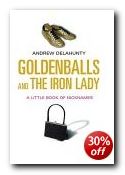
A Little Book of Nicknames

June 14, 2009 by Roy Johnson

alternatives for the famous, notorious, and infamous

Have you ever wondered where nicknames come from – or why we use them? You can find out here in this brisk and witty excursion into the stories behind the nicknames of hundreds of famous people, places, and institutions. It’s a combination of nicknames used in sport, politics, public life, and cinema. Strangely enough, showbiz seems not to generate many nicknames amongst its members – though they do better with catchphrases.

A Little Book of Nicknames Entries run from the deeply ironic Action Man (Prince Charles) to the affectionate Zizou (Zinedine Zidane – the French footballer). It’s interesting to see how the popularity of one nickname can lead to the creation of another. For instance … Gazza (Paul Gascoigne – footballer) leads to Hezza (Michael Hezeltine – politician) and even Prezza (John Prescott – politician) the notoriously gauche deputy to Tony Blair (Bambi), who also famously got the nickname two Jags when as the minister for transport he used two executive saloons to drive 300 yards to deliver a speech urging less car use and fuel conservation.

This spirit of linguistic inventiveness it also evident in names and phrases coined from other forms of word play. So Oxford, whose nickname is the city of dreaming spires (a quote from Thyrsis by Matthew Arnold) becomes the city of perspiring dreams, and former liberal leader Paddy Ashdown immediately becomes Paddy Pantsdown when it is revealed he has been having Ugandan discussions with his secretary.

This is a compilation which will be ideal for anyone who wants to catch up with cultural life at street level in the UK and the US. It includes football clubs – the Cottagers (Fullham – not what you might think) the Gunners (Arsenal), and the Blades (Sheffield) – and jazz musicians Earl Hines, Jelly Roll Morton, and Zoot Sims.

It’s written by lexicographer Andrew Delahunty who also produced The Oxford Dictionary of Nicknames. There’s a full set of nicknames for USA states, and he also covers the origins of all those nicknames which are foisted on to people with certain surnames – such as Blanco White, Nobby Clark, and Dixie Dean.

He also includes plenty of gossip about who was whose lover – from silent film star Pola Negri right up to David Beckham – the Goldenballs of the book’s title – according to his wife Posh.

There are one or two etymologies that I think slang experts such as Michael Quinion might dispute – but on the whole most are convincingly sourced. This is one of those reference books which it’s difficult to put down, once you start reading.

© Roy Johnson 2005

Buy the book at Amazon UK
Buy the book at Amazon US


Andrew Delahunty, Goldenballs and the Iron Lady: a little book of nicknames, Oxford: Oxford University Press, 2004, pp.254, ISBN 0198609647


Filed Under: Slang Tagged With: Dictionaries, Language use, Nicknames, Reference, Slang

A Manual for Writers of Term Papers

July 22, 2009 by Roy Johnson

best-selling guide for term papers and academic essays

A Manual for Writers of Term Papers is the more-or-less standard US guidebook on academic writing. It’s based on The Chicago Manual of Style, and offers a comprehensive and very detailed guide to the conventions of layout and presentation. In the last half century since it first appeared, this book has gone through six editions, and even though editorship has passed into other hands, the spirit of Kate Turabian’s original approach has been preserved.

A Manual for Writers of Term Papers It covers everything from spelling, punctuation, and abbreviations to quotation, referencing, and the use of tables and diagrams. And all guidance notes are illustrated with real-life (and up-to-date) examples. There’s a huge chapter dealing with every possible complication in showing reference notes, and even a section dealing with government documents.

The latest edition includes a useful useful chapter on sample pages. These show how to lay out text on a page, according to the conventions for academic documents – title page, list of contents, tables, maps, footnotes, and so on. There’s also a recent addition on computers and word-processing (which already needs updating) and an excellent index.

Even if you are working to UK rather than US conventions, this is a very useful reference. It sits on my reference shelf alongside the Concise OED and an old copy of Roget’s Thesaurus, and it gets used just as often. It gets more hits at this site than any other book, and it has sold more than five million copies. That’s quite some guarantee!

© Roy Johnson 2000

Manual for Writers of Term Papers   Buy the book at Amazon UK

Manual for Writers of Term Papers   Buy the book at Amazon US


Kate L. Turabian, A Manual for Writers of Term Papers, Theses, and Dissertations, (6th edn) Chicago: University of Chicago Press, 1996, pp.300, ISBN: 0226823377


More on writing skills
More on dictionaries
More on grammar
More on online learning


Filed Under: Study skills, Writing Skills Tagged With: A Manual for Writers of Term Papers, Academic writing, Essays, Study skills, Term papers, Writing skills

A New History of Jazz

July 17, 2009 by Roy Johnson

encylopedia of jazz and its history to the present

Do we really need yet another weighty ‘history of jazz’ in what is already a crowded field? When the author (also a bass player) has already produced excellent biographies of (among others) Dizzy Gillespie and Fats Waller, and regularly presents ‘Jazz Profiles’ on Radio 3, the answer must be in the affirmative. In this expanded version of his award-winning study, Alyn Shipton offers an encyclopaedic account of ‘a music created mainly by black Americans in the early twentieth-century through an amalgamation of elements drawn from European-American and tribal African musics.’ Throughout, he contends that up-the-river-from-New Orleans ‘histories’ of jazz distort and oversimplify what was a complex series of accidents, interactions, borrowings and innovations.

A New History of JazzPart One contains an extended consideration of the ‘Precursors’ of jazz – including the blues and vaudeville, the classic jazz of New Orleans and Chicago, stride and boogie woogie piano, the advent of big bands (Bennie Moten, Fletcher Henderson and early Ellington) – and bands and combos of the Swing Era. Some readers will consider that Paul Whiteman and Cab Calloway receive more than their fair share of attention. There is also a survey of developments in jazz in the UK, France and Germany up to World War II.

Part Two, ‘From Swing to Bop’ covers Dizzy Gillespie’s early orchestra, the West Coast scene and a (very good) summary of jazz on film. Among other topics treated are impresario Norman Granz and the Jazz at the Philharmonic (JATP) phenomenon. Granz is properly commended for presenting and recording such disparate players as Charlie Parker, Dizzy Gillespie, J. J. Johnson, Lester Young and Coleman Hawkins together in concert and on record (where they also backed Sarah Vaughan, Billie Holiday and Ella Fitzgerald), helping to popularise jazz and ‘heal some of the more damaging aspects of the modern versus trad split of the 1940s.’

Elsewhere, Shipton discusses the early work of Miles Davis, the emergence of Hard Bop and Soul Jazz, the contributions of John Coltrane, Charles Mingus and Ornette Coleman, Miles Davis’s crossover into Jazz Rock, and ‘Jazz as World Music’ – in Latin America, India, Africa and Europe.

One of the many strengths of the book is an extensive use of oral histories and personal interviews with such luminaries as Ahmad Jamal, Oscar Peterson, Michel Petrucciani, Sam Rivers and Cassandra Wilson. Shipton discusses little-known (but pioneering) performers, and displays an enviable familiarity with the lesser-known records of Louis Armstrong, Coleman Hawkins, Erroll Garner, Woody Herman, Gerald Wilson and Miles Davis.

He is particularly well informed and incisive on jazz pianists. The late Michel Petrucciani ‘overcame his lack of stature and strength to become one of the most ferociously talented pianists in jazz,’ with ‘a touch as delicately forceful as that of either [Bill] Evans or [Keith] Jarrett.’ Brad Mehldau and Martial Solal also receive honourable mention, but Jessica Williams is absent from the roster of ‘cutting edge’ pianists (a cliché Shipton overuses).

Jazz singers such as Sarah Vaughan, Helen Merrill, Betty Carter, Carmen McCrae and Abbey Lincoln receive more extended coverage than in the first edition. Lincoln is identified as ‘the most accomplished social and political commentator in the history of vocal jazz.’ Yet despite his refreshing catholicity of taste, not all jazz singers receive the Shipton seal of approval. He is underwhelmed by Nina Simone who ‘lacked the jazz improviser’s spontaneous ability to play off her musical colleagues.’ The currently ubiquitous Norah Jones is dismissed as a purveyor of ‘jazz-inflected pop, with no improvisational edge and no profound exploration of emotion or meaning.’

In a concluding section on Postmodern Jazz Shipton argues that up to the 1970s, ‘the story of jazz is a straightforward narrative.’ But thanks [sic] to advances in technology, aspiring jazz musicians no longer sit at the feet of their idols, engage in informal jam sessions or serve apprenticeships in big bands – although college orchestras in the UK and the US serve a similar function.

Jazz artists in the twenty-first-century, Shipton suggests, are either forward or backward looking. Two popular singers resident in Britain illustrate the point: Claire Martin performs mainly original compositions, while Stacey Kent sticks to ‘the standard repertoire.’ In America, Wynton Marsalis and the Lincoln Centre Jazz Orchestra perpetuate the Ken Burns approach to jazz with recreations of the work of Ellington, whereas saxophonists Sam Rivers, and Joshua Redman hone and polish the ‘cutting edge’ of the jazz tradition.

A New History of Jazz is a massively detailed and well-documented interpretation of a musical form ‘inextricably bound up with the development of popular music as a whole.’ It can also be consulted as a series of discrete essays on its major (and minor) forms and practitioners. A good selection of photographs, a list of recommended CDs, and an extensive bibliography (which surprisingly does not include the late Whitney Balliett or Gary Giddins) add to the authority of a magisterial if over-weight volume. And a more attentive editor might have pruned Shipton’s always engaging but sometimes repetitive prose.

© John White 2007

A New History of Jazz Buy the book at Amazon UK

A New History of Jazz Buy the book at Amazon US


Alyn Shipton, A New History of Jazz: Revised and Updated Edition, New York & London: Continuum, 2007, pp.804, ISBN: 0826417892


More on music
More on media
More on lifestyle


Filed Under: Music Tagged With: A New History of Jazz, Cultural history, Jazz, Music

A Pattern Language for Web Usability

June 20, 2009 by Roy Johnson

improve web site efficiency and usability

Pattern language is a notion borrowed from architecture. It means ‘standard solutions to recurring problems’. This is rather like ‘learning objects; in the design of training courses or standard solutions to problems in computer programming. In terms of Web design, this means using templates and lowest common denominator solutions to graphic interface design, following common routes, and using ‘patterns’ of what users normally expect to see on screen.

In software development, a pattern (or design pattern) is a written document that describes a general solution to a design problem that recurs repeatedly in many projects.

A Pattern Language for Web UsabilityThe first three chapters of this book discusses these issues theoretically. The topics are also linked to questions of usability, navigation, and information architecture. It has to be said that these pages make for rather dry reading. But then in the second, larger part of the book, everything comes to life. What follows is a series of seventy-eight case studies in which a problem is posed, analysed, and solved using the pattern language model.

This is as much business studies and project management as web design. But then anyone who has had to decide what to put on a homepage and where to place it will have already been engaged in such decisions.

It includes very good tips such as resisting the urge to add help features in place of removing anything which impedes a user’s intuitive navigation of the site. He draws heavily on the work of Jakob Nielsen, Jeffrey Veen, Steve Krug, and Edward Tufte – all of whom are reliable sources.

What emerges is good, brief advice notes on how to create site maps, where to position search boxes, use of colour-coding for navigation, breadcrumb trails, and where to place navigation bars.

These suggestions eventually include the more sophisticated issues of server side includes, cookies, and even security and encryption.

You won’t be surprised to hear that he advises against the use of frames. I wish somebody had told me that earlier. Converting from a framed to a non-framed structure has cost me more time, energy, and money than anything else on the site you are visiting now. Thank goodness for the arrival of WordPress and its content management system. Now that is a pattern that’s worth repeating.

© Roy Johnson 2003

Buy the book at Amazon UK

Buy the book at Amazon US


Ian Graham, A Pattern Language for Web Usability, London: Addison Wesley, 2003, pp.283, ISBN 0201788888


More on web design
More on digital media
More on technology


Filed Under: Web design Tagged With: A Pattern Language for Web Usability, Information design, Usability, Web design

A plan for writing essays

August 22, 2009 by Roy Johnson

sample from HTML program and PDF book

1. Approach
Essays can be composed using a number of different writing strategies. Some people write directly from rough notes, whilst others prefer a ‘discovery’ method. If you are in any doubt at all, you should plan your work. The task of writing is usually much easier if you create an outline structure for your arguments, with brief details of the topics to be covered. The stages of this process are as follows.

2. Analyse the question
Make sure that you understand what an essay question is asking for. What is it giving you the chance to write about? What is its central issue? Note carefully any of its key terms and any instructions. Think about the question, turning it over in your mind. Discuss it if possible with your fellow students. If you are in any doubt, ask your tutor to explain what is required.

3. Generate ideas
Take a sheet of paper and make a brief note of any topics that might be used for an answer. These can be ideas, observations, or information from your study materials. These topics will be used to make a plan. Don’t copy out chunks of texts. Use brief notes or even single word triggers. Write down anything you think of at this stage. Your objective is to generate ideas, to assemble a stock of potential material from which you will pick out the most appropriate items.

4. Choose topics
Take another sheet of paper. Extract from your list all those topics and points of argument which are of greatest relevance to the question and its central issue. You are simply picking out the best material. If it is possible, put your ideas in any logical groups or categories. If anything strikes you as irrelevant to the subject in question, throw it out.

5. Reading and research
Whilst writing essays, you will probably be engaged in reading or research in the subject. This will help you to provide information for an answer. Your reading will be more carefully directed if you have narrowed down the topics you need to cover in your response to a question. This is why it is important to think about the issues involved as a form of preliminary work on the question.

6. Selection
Select items on the strength of their relevance to the question. This may not be an easy judgement to make. Keep asking yourself – “Is this directly related to the subject? Will it answer the question?” You might have three categories of selection. One is a definite “Yes – this relevant”. The second could be like a ‘Pending’ tray containing items which might be used later. The third is a dustbin into which the completely unrelated material is thrown for good.

7. Create order
Take yet another sheet of paper. Try to arrange your chosen topics and material in some sort of order. At this stage you should be starting to formulate your basic response to the question. Organise the points so that they form a persuasive and coherent pattern or argument. Some subjects will lend themselves more easily to the creation of this order than others. In some, such as appreciation of the arts, there may be no set pattern and one must be created. In some of the sciences, there may be a standard form of report which must be followed. This is probably the hardest part of essay planning at a conceptual level.

8. Arrange evidence
Most of the major points in your argument will need to be supported by evidence. One purpose of the essay task is to show that you have read widely in your subject and considered the opinions of others. In some subjects you may actually need proof to support your arguments. During the process of study you have probably been assembling notes and references for just such a purpose. If not, this is the time to do so. On another sheet of paper you might compile a list of brief quotations from other sources (don’t forget the page references) which will be offered as your evidence.

9. Material
Don’t worry too much if you have surplus evidence after completing this stage. This is perfectly normal. You can pick out the best from what is available. If on the other hand you don’t have enough, you should do more background reading or engage with the subject once again. Take some more notes or generate new ideas as material to work on.

10. Make changes
Whilst you have been engaged in the first stages of planning, new ideas may have come to mind. Alternate sources of evidence may have occurred to you, or the line of your argument may have shifted somewhat. Be prepared at this stage to rearrange your plan so that it incorporates any new materials. Try out different arrangements of your topics until they form the most convincing and logical sequence.

11. Make plan
Most essay plans can be summarised in this form:

  • Introduction
  • Arguments
  • Conclusion

State your case as briefly and as directly as possible. Next, present your arguments and your evidence in the body of the essay, explaining their relevance to the original question. Finally, draw together the points of your arguments and try to lift them to a higher level in your conclusion. Your final plan may be something like a list of half a dozen to ten major points of argument. Each of these, together with their supporting evidence, will be expanded to a paragraph of something around 100-200 words. This is the heart of essay planning.

12. First draft
You are now ready to produce the first draft of the essay. Don’t imagine that you are supposed to produce an accomplished piece of writing at one sitting. These will be your first thoughts and your initial attempts at answering the question. Later drafts can be improved by re-writing. You will be matching your evidence to what is required. You do not necessarily need to start at the introduction and work systematically towards your conclusion: it may be better to start working where you feel most comfortable.

13. Relevance
At all stages of essay writing, you should keep the question in mind. Keep asking yourself “Is this evidence directly relevant to the topic I have been asked to discuss?” If necessary, be prepared to scrap your first attempts and formulate new arguments. This may seem painful, but it will be much easier than scrapping finished essays.

14. Paragraphs
A good tip on relevance is to check that the opening statement of each major paragraph is directly related to the question. The first sentence (which is sometimes called the topic sentence’) should be a direct response to what you have been asked. It might be an example to illustrate your answer, or a major point of your argument on the subject in question. If it is not, something may be wrong.

15. Revising the draft
Your first draft is the basic material from which you will be building the finished product. Be prepared to re-write it in whatever way is necessary. If it is too short, generate more arguments. If it is too long, cut out the less relevant parts. If it doesn’t seem convincing, consider putting its arguments in a different order. You might begin to tidy up the grammar and style at this stage.

16. Multiple drafts
The number of drafts you make will depend upon the time you have available (and possibly the importance of the piece of work). It is very useful to take your work through a number of drafts, re-writing where necessary. In the majority of cases, this will improve the quality of what you produce.

17. Editing
Before actually submitting the piece of work, you should take it through at least one stage of rigorous presentation of your work will enhance its effectiveness. Create a neat, legible text; double-space your paragraphs and leave wide margins to ‘frame’ what you have written. Take pride in the work you produce. Keep essays in a loose-leaf folder or a document wallet. Alternatively, use one of the plastic envelopes which are now increasingly popular. Remember that your essays will be of critical importance during the period of revising for examinations.

© Roy Johnson 2003

Buy Writing Essays — eBook in PDF format
Buy Writing Essays 3.0 — eBook in HTML format


More on How-To
More on writing essays
More on writing skills


Filed Under: Writing Essays Tagged With: Academic writing, Essay planning, Essays, Study skills, Term papers, Writing Essays, Writing skills

A Smile of Fortune

June 12, 2009 by Roy Johnson

a harbour tale

A Smile of Fortune is one of Joseph Conrad’s lesser-known long stories. He was essentially a nineteenth century writer who anticipated and then lived into the modernist age of the early twentieth century, helping to shape its spirit of uncertainty, anxiety, and moral ambiguity. Even his own life and works share the contradictions of the era. He is best known as an author of mannish sea tales, yet he only achieved success with a novel set largely on dry land which had a woman as its central character (Flora Barral in Chance).

A Smile of FortuneHe is now regarded as a great figure in the tradition of the English novel, yet he was Polish, and English was his third language. He’s also regarded as something of a conservative, yet his political views were scathingly radical (see The Secret Agent).

A Smile of Fortune comes from his mature period (1911) and features the familiar Conradian device of a young sea captain who is confronted by a puzzling ethical dilemma. The first person narrator is a confirmed bachelor given to a philosophic approach to life, but whom Conrad cleverly makes vulnerable to the duplicities of the more experienced people around him.

He arrives at an island in the Indian Ocean to take on a cargo of sugar, but is also given an open invitation by his ship’s owners to do trade with a local merchant.

The trader turns out to have a brother, and the two of them have diametrically opposed characters: one is socially well respected, but is a brute; the other is a social outcast who wishes to ingratiate himself with the unnamed narrator.

For reasons he himself cannot fully understand, the captain opts for the outcast and allows himself to be drawn into his domestic life whilst waiting for his ship to be made ready. The principal attraction for this delay is a mysterious young woman, who might be the trader’s daughter, with whom the young captain becomes romantically obsessed.

The trader meanwhile is encouraging the captain’s attentions, whilst trying to lure him into a speculative commercial venture. It’s as if the young man is being lured and tempted on two fronts – the erotic and the pecuniary.

In typically modernist fashion, this conflict reaches an unexpected and ambiguous resolution which despite the captain’s commercial profit leads to his resigning his commission and heading back home.

Formally, it’s a long short story, rather than a novella such as The Secret Sharer and The Shadow Line with which it is frequently collected. And in terms of achievement, it seems to me to fall between the level of those excellent longer tales and the often embarrassingly bad short stories which Conrad turned out at the height of his commercial success.

It’s a story full of symbols and half-concealed inferences which is crying out for (at least) Freudian analysis, and can certainly be added to the list of lesser-known tales which deserve interpretive attention from anyone who admires Conrad’s achievement.

© Roy Johnson 2008

A Smile of Fortune Buy the book at Amazon UK

A Smile of Fortune Buy the book at Amazon US


Joseph Conrad, A Smile of Fortune, London: Hesperus Press, 2007, pp.79, ISBN 184391428X


More on Joseph Conrad
Twentieth century literature
Joseph Conrad complete tales


Filed Under: Conrad - Tales, Joseph Conrad, Short Stories, The Short Story Tagged With: A Smile of Fortune, Joseph Conrad, Literary studies, Modernism, The Short Story

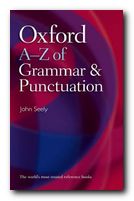
A-Z of Grammar and Punctuation

July 17, 2009 by Roy Johnson

pocket guide to the basics of English language

Most people are a bit frightened of grammar and punctuation – with some reason, because both can be very complex issues. Fortunately, anybody who can speak their own language is already in possession of all the tools they need for using it correctly. This isn’t to say that we don’t need a little help from time to time. And that’s where guides like this one come in useful. John Seely starts off with a brief overview of English sentence structure, and how the parts relate to each other. He explains all the main elements of speech, and uses everyday examples as illustrations. Then it’s on to the main substance of the book, which starts at abbreviations and runs via main clause to who’s/whose and will/shall. In between, he covers all the main issues which crop up time and again as problems for everyday users of English.

Grammar and PunctuationHow do you punctuate lists of terms? How can you avoid the split infinitive? What is the rule for using apostrophes? What is the difference between can and may? What’s the correct way to show speech in writing? Is between you and me correct English? Answer: yes it is.

He uses a minimum of jargon, and makes all his explanations as succinct as possible. I particularly liked one visual feature of this book. Longer topics, such as paragraphs and prefixes are given their own shaded boxes, and somehow this makes both the topic and its surrounding items easier to read.

This book will be ideal if you want a reference offering quick simple explanations, but you could also use it as an introduction to a more in-depth study of the subject.

This is a new series from OUP – a pocketbook guides on the basics of writing and language skills. They’re small, cheap, cheerful, and compact, yet authoritative – the sort of thing which I imagine would be ideal for students or the average person-in-the-street who wants to take on the first principles of improving their language skills.

© Roy Johnson 2009

A-Z of Grammar and Punctuation   Buy the book at Amazon UK

A-Z of Grammar and Punctuation   Buy the book at Amazon US


John Seely, Oxford A—Z of Grammar and Punctuation, Oxford: Oxford University Press, 2nd edition 2009, pp.192, ISBN: 0199564671


More on writing skills
More on language
More on grammar


Filed Under: Grammar, Language use, Writing Skills Tagged With: A-Z of Grammar & Punctuation, Grammar, Language, Punctuation, Writing skills

Abbreviations

August 27, 2009 by Roy Johnson

free pages from our English Language software program

Abbreviations – definition

abbreviations in English Abbreviations are letters or shortened words which are used instead of the full word.


Examples
Abbreviation Full expression Latin term
e.g. for example exempli gratia
i.e. that is id est
N.B. please note nota bene
Mr Mister —
US United States —

Use

abbreviations Abbreviations are used to save space – or to avoid repeating common terms.

abbreviations They are often used in dictionaries, encyclopedias, and bibliographies.

abbreviations Some organisations abbreviate their titles to the initial capital letters of their names.

abbreviations Abbreviations are very useful when taking notes.

abbreviations Many traditional abbreviations are shortened forms of words from Latin.

abbreviations NB! Don’t use abbreviations in formal writing. Write out the word(s) in full.

abbreviations Notice that a full stop is placed after an abbreviation, but not when the full word is used.

abbreviations Sometimes the full stop may be omitted in order to avoid double punctuation.

abbreviations Never begin a sentence with an abbreviation. Either spell out the word, or re-arrange the words in the sentence.

abbreviations Companies and organisations often drop the full stops from their abbreviated titles.

ICI – Imperial Chemicals Industry
BBC – British Broadcasting Corporation
WHO – World Health Organisation

abbreviations Some abbreviations are spoken as if they were complete words: for instance, NATO (‘NayTow’).

abbreviations Others are spelled out. For instance VIP [very important person] is usually spoken as three separate letters – “Vee-Eye-Pea”.

abbreviations Abbreviations are very useful when taking notes, but you should not use them in the main text of any formal writing.

abbreviations If you wish to use any of these expressions, they should be written out in full. That is, don’t use e.g., but write out for example.

Self-assessment quiz follows …

© Roy Johnson 2003


English Language 3.0 program
Books on language
More on grammar


Filed Under: English Language Tagged With: Abbreviations, English language, Grammar, Language

  • « Previous Page
  • 1
  • …
  • 5
  • 6
  • 7
  • 8
  • 9
  • …
  • 103
  • Next Page »

Get in touch

info@mantex.co.uk

Content © Mantex 2016
  • About Us
  • Advertising
  • Clients
  • Contact
  • FAQ
  • Links
  • Services
  • Reviews
  • Sitemap
  • T & C’s
  • Testimonials
  • Privacy

Copyright © 2026 · Mantex

Copyright © 2026 · News Pro Theme on Genesis Framework · WordPress · Log in