Mantex

Tutorials, Study Guides & More

  • HOME
  • REVIEWS
  • TUTORIALS
  • HOW-TO
  • CONTACT
>> Home / Archives for 2009

Archives for 2009

Associate and Affiliate Programs

June 20, 2009 by Roy Johnson

practical guide to ‘making money whilst you’re asleep’

Associate and affiliate programs are a new form of e-commerce in which you don’t have to sell anything. How does it work then? Well, you put links on your website which send visitors to the site of a major player such as Amazon, Fatbrain, or CD-NOW. If the visitor buys something, you get a small percentage – between five and twenty percent. As Daniel Gray puts it in this cheap and cheerful guide to the subject – ‘Affiliate marketing is a way to be paid for wearing a T-shirt with a logo’.
Associate and Affiliate ProgramsBut although most affiliate programs pay only a small percentage, it’s a quick and easy way to put some hard cash in your pocket with a little effort and no risk at all. Dan Gray even makes money from a site which specialises in DIY garden sheds! This quirkiness is reflected in the way he writes – jumping from one metaphor to another. But he knows his stuff on how the schemes work.

He offers sound advice on the technicalities of submitting to search engines and interpreting log files. I expected him to say a little more on the issue of how much comes in each month, but he does reveal that books are the best sellers; conversion rates of one percent are normal; and he offers an analysis of sites which have blossomed using affiliate programs – CD-NOW, Amazon, BarnesandNoble, and the BabyCenter.

The latter part of the book is devoted to what he calls the Top100 Directory. This is a very useful listing all those companies operating an affiliates program, with full details of how to contact them, what conditions apply, and how much they pay out. On some programs you can even buy through your own links. If you are going to buy that CD anyway, why not get another 20% off the discounted price? But beware! Amazon for instance don’t allow this and might kick you off its list for infringements.

This isn’t an in-depth view of associate programs, but there’s enough information here to get you started. Click through to Amazon now and order this book – then you can see how the system works 🙂

© Roy Johnson 2001

Associate and Affiliate Programs   Buy the book at Amazon UK

Associate and Affiliate Programs   Buy the book at Amazon US


Daniel Gray, Associate and Affiliate Programs on the Net: turning clicks into cash, New York: McGraw-Hill, 2000, pp.227, ISBN: 0071353100


More on eCommerce
More on media
More on publishing
More on technology


Filed Under: e-Commerce Tagged With: Affiliate selling, Amazon, Associate and Affiliate Programs, Business, e-Commerce

Assonance – how to understand it

August 30, 2009 by Roy Johnson

free pages from our English Language software program

Assonance – definition

assonance Assonance is a figure of speech featuring the repetition of vowel sounds.


redbtn The repetitions are usually close together, to create a euphonious effect.


Examples

‘The rain in Spain falls mainly on the plain.’

‘We love to spoon ‘neath the moon in June.’

On either side the river lie
Long fields of barley and of rye

[TENNYSON – ‘The Lady of Shalott’]


Use

redbtn You can see from these examples that the device is used a lot in song lyrics and poetry.

redbtn Because the vowels are ‘open’ sounds, it creates a generally soothing effect.

redbtn The repeated sound also makes the text easy to memorise.

redbtn It is also popular in advertising, for the same reasons.

redbtn NB! This device can easily become cloying.

redbtn The repetition of vowel sounds creates rhyme and a generally soothing effect.

redbtn Phonologically, it is interesting to note that the same sound may be represented by different combinations of letters:

On either side the river lie
Long fields of barley and of rye

redbtn The same sound here is produced by /ei/, /i/, /ie/, and /ye/.

Self-assessment quiz follows >>>>

© Roy Johnson 2003


English Language 3.0 program
Books on language
More on grammar


Filed Under: English Language Tagged With: Assonance, English language, Grammar, Language

At Home with Books

June 17, 2009 by Roy Johnson

the libraries of book lovers and book collectors

I once lived in a twelve-room Victorian house filled from top to bottom with a book collection which represented forty years of reading, studying, and loving acquisition. Then a few years ago, a change in life style led me to auction off my libraries – the whole lot – a decision about which I have felt ambivalent ever since. This book helped to remove every last trace of that ambivalence. I now feel like cutting my own throat.

At Home with BooksIt’s a superbly illustrated tour of private libraries and book collections, showing how people have integrated books into their homes. Of course, not many of them are stuck for space: but even those people who live in flats and who have to carve out space from relatively modest surroundings are revealed as book lovers who respect books as objects and who wish to display their collections in a way which combines practicality with a love of good design.

But it’s also about a lot more than that: it covers all aspects of bibliographic enthusiasm. How to store your books so that you can get at them; how to organise your library; how to start a collection (and what to look for); how books should be bound; and even details such as bookplates, library ladders, and how the lighting of a library should be arranged.

The examples illustrated come from the homes of people whose entire lives revolve around the purchase, collection and love of books. People such as Seymour Durst whose five-storey house is devoted to books about the history of New York; Paul Getty who has his collection housed in a small castle; people such as the translator Richard Howard and the biographer John Richardson who actually live in the libraries they have created; and there are also some surprises such as the inclusion of Rolling Stones guitarist Keith Richards.

The one masterpiece of book storage I expected to find but didn’t was that of Sir John Soane’s house (now a museum) in Lincoln’s Inn Fields, but that is perhaps because most of the examples shown are located in the USA.

There are all sorts of beautiful oddities: a collector who recovers all his books with cream paper so that they blend in with his furniture; bookspaces arranged by interior designers such as Bill Blass and David Hicks, who has most of his book bound in red to match his trademark colour scheme.

These people take their bibliophilic really seriously. Mitchell Wolfson Jr, who lives in Miami, where the climate is inimical to book life, has both climate control and insect-free environments in his home and his museum.

The advice also includes such curiosities as how to protect books against attack by bookworms and other vermin by putting them into plastic bags and freezing them overnight; plus how to best to design private libraries, and if you are stuck for the details, where to find bookdealers, book fairs, and makers of library furnishings.

This is a beautifully produced book which will appeal to both bibliophiles and lovers of interior design. It is elegantly designed, lavishly illustrated, and it makes me realise I made a terrible mistake.

© Roy Johnson 2007

At Home with Books Buy the book at Amazon UK

At Home with Books Buy the book at Amazon US


Estelle Ellis, At Home with Books, London: Thames & Hudson, 2006, pp.248, ISBN 0500286116


More on lifestyle
More on biography
More on the Bloomsbury Group
More on design


Filed Under: Architecture, Lifestyle Tagged With: Architecture, At Home with Books, Bibliography, Interior design, Lifestyle

Audience – how to understand it

August 30, 2009 by Roy Johnson

free pages from our English Language software program

Audience – definition

audience Audience is a term used to refer to the reader of a text, or the listener to what we say.

redbtn The audience might be any of the following:

single person
selected
specialist
all the same kind
group of people
random or accidental
non-specialist
very mixed

Examples
Personal letter single selected
Note to milkman single specialist
MA dissertation single specialist targeted
Insurance claim group selected specialist
Novel group random non-specialist

Use

redbtn The main purpose of speaking or writing is to communicate.

redbtn An awareness of audience helps to make speech or writing more effective.

redbtn Efficient writers and effective speakers target their audience as clearly as possible.

redbtn NB! Sometimes a piece of writing may have more than one audience.

redbtn An awareness of your audience is a critical factor in efficient communication for both speech and writing.

redbtn Efficiency can be improved by choosing the vocabulary, tone, and style which are appropriate for the audience.

redbtn Publishers, advertisers, poets, and novelists all target their readers or listeners.

redbtn The vocabulary of a newspaper is chosen very carefully with its readership in mind.

redbtn Radio and television programmes adapt their use of language to their target audiences.

redbtn We write letters to our friends in a style which is different to that we use for the bank manager or someone we don’t know.

redbtn If someone stops you to ask for directions, they won’t be interested in how long you’ve lived in the town, and what it used to look like before the War. On the other hand, if you’re a member of the History Society you may be invited to give a half-hour lecture on that very topic. Your audience is different in each case.

Self-assessment quiz follows >>>

© Roy Johnson 2003


English Language 3.0 program
Books on language
More on grammar


Filed Under: English Language Tagged With: Audience, English language, Grammar, Language

Bauhaus

June 16, 2009 by Roy Johnson

Design history: Weimar, Dessau, Berlin 1919-1933

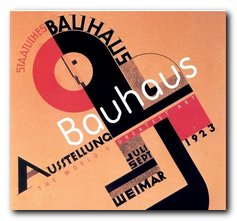
The Bauhaus was a major landmark in the development of modernism in the early years of the last century. In concept it grew out of the German desire to form its own version of the English Arts and Crafts movement, but it quickly became influenced by constructivism and expressionism. As a movement it grew rapidly in Weimar, despite the economic recession in Germany in the 1920s – and it embraced all forms of design – typography, ceramics, furniture, architecture.

Bauhaus Its principal teachers and movers are now household names in their respective disciplines – painters Wassily Kandinsky, Paul Klee, and Lionel Feininger; architects Walter Gropius and Mies van der Rohe; designers Joseph Albers and Laszlo Moholy-Nagy. What made them different to earlier design movements was that they wished to make their products available for industrial production.

This is the first full-length study of the movement and its participants to be based on the papers of the Bauhaus archive – many of which are reproduced in this elegantly designed book which does its subject proud in terms of page layout and typographic design. Magdalene Droste traces both the artistic policies which were constantly changing as key personnel came and went, as well as the political and economic difficulties of keeping the institution afloat – most of which was achieved in its first phase by Walter Gropius.

The structure of the book follows the policies under its three directors – Gropius, Mayer, and van der Rohe on its three sites, Weimar, Dessau, and Berlin.

I hadn’t realised before that the curriculum also included drama, which produced mechanical ballet and abstract theatre which still seems quite avant garde now, eighty-odd years later. There are some wonderful pictures of the products of the institute: the first really modern furniture; stained glass, pottery, and rugs; plus some exquisite tableware by Marianne Brandt, who for me is the outstanding discovery of this collection.

brandt_02
Gropius presciently observed: “Much of what we today consider luxury will tomorrow be the norm” – and its true that looking at the (for then) ultra-modern chairs, tables, and kitchen cabinets is hardly any different to thumbing through a contemporary IKEA catalogue. Some of their designs were commercially successful, particularly their best-selling wallpaper designs, many of which are still in production today.

The Bauhaus is perhaps known best for its influence on modern architecture, and yet strangely enough that subject was not taught there until a demand for it was made by students and then implemented by Mies van der Rohe. Droste’s detailed accounts of the classes taught there and the examples of work produced make you wish you could sign up as a student.

The latter part of her story deals with the intense battles which went on between left and right-wing political forces over the future of the Bauhaus. These ended in 1933 with the victory of the Nazis and the closure of the institution.

If there is a weakness in this scholarly piece of work, it’s that the story is not taken beyond there. For we know that many of the principal figures involved emigrated to America and continued their work in the New World . But you have to stop somewhere, and any shortfall is made up for by the quality of the illustrations,

I spotted this book in a display on modernism at Waterstone’s, selected it as the best on offer, and was amazed when I saw the price. It’s another in the astonishingly cheap and high quality publications from Taschen

© Roy Johnson 2007

Bauhaus Buy the book at Amazon UK

Bauhaus Buy the book at Amazon US


Magdalene Droste, Bauhaus, London: Taschen, 2006, pp.256, ISBN 3822821055


More on architecture
More on technology
More on design


Filed Under: Architecture, Design history, Graphic design, Product design Tagged With: Architecture, Bauhaus, Design, Product design

Bauhaus 1919-1933

October 22, 2009 by Roy Johnson

modernist design movement

Bauhaus was a design movement which sprang up in Germany in post 1914-1918 as a reaction to the efflorescent curlicues of la Belle Epoque. It emphasised (particularly in theory) rectilinear practicality, function over form, and a political element of art for the masses rather than a privileged few. Most of its designers were of course middle-class artists who were caught up in the revolutionary fervour of the Weimar Republic – but its greatest strength in terms of enduring design is that many of its creations are still in production today. Wallpapers are still in print, vintage retro table lamps are either being reproduced at exorbitant prices, or are trading on eBay for not much less.

Bauhaus 1919-1933This is an excellent presentation of the work done there – for a number of reasons. First, it shows a wide range of products – from paintings, furniture, and architecture, to photography and household effects. Second, the illustrations are fresh and well researched. There are illustrations here I have never seen before in books on the subject. And third, there is plenty of historical depth and context, including original photos of the Bauhaus studios and the people who taught there.

The staff list is like a roll call of modernism at its highest – architects Walter Gropius and Mies van der Rohe, designer Herbert Bayer, painters Wassily Kandinsky, Paul Klee, Joseph Albers, and Lionel Feininger, artists El Lizitsky and Moholy-Nagy, plus the constructivists Vladimir Tatlin and Alexander Rodchenko. I was also glad to see that the book included work by the wonderful and much under-rated product designer Marianne Brandt.

marianne brandt

The format of the book is simple and effective. Double page spreads are arranged with explanatory text on the left and colour illustrations on the right. Just the right sort of proportion for this type of book. Full details of each item are provided, and there are links to further information in the appendices.

The range of items is quite astonishing. There are buildings (the Bauhaus workshops themselves) designs and photos of completed architectural projects, furniture, wall hangings, paintings, advertising posters, household objects such as electric lamps and tea sets, rugs, children’s toys, and photographs.

However, form and function were not always harmonised as successfully as they might have been. It has to be said that even a design ‘classic’ such as Gerrit Ritvelt’s armchair (1918) looked as modern as modern could be in 1918 – but as design critic Victor Papanek observes

These square abstractions painted in shrill primaries were almost impossible to sit in; they were extremely uncomfortable. Sharp corners ripped clothing, and the entire zany construction bore no relation to the human body

But the overwhelming impression one takes from a collection like this is of design inventiveness working at all levels – from architecture, interior and furniture design, through fabrics and furnishings, down to graphics and typography.

In fact much of today’s architectural design is directly attributable to the influence of the Bauhaus designers. Rectilinear buildings, minimalist interiors, walls made from glass bricks, bentwood furniture, ceiling to floor windows, uncarpeted hard surface floors. Moreover, the spirit of Bauhaus functionality lives on in the products and styles of stores such as Habitat and IKEA.

I got an email only the other day offering copies of the famous Barcelona chair (Mies van der Rohe 1929) for a mere $3000 – only they called it the ‘Madrid’ chair just to cover themselves. So the spirit of the Bauhaus is definitely alive and doing commercially well today thank you very much.

Bauhaus Buy the book at Amazon UK

Bauhaus Buy the book at Amazon US

© Roy Johnson 2009


Andrew Kennedy, Bauhaus, London: Flame Tree Publishing, 2005, pp.384, ISBN 184451336X


More on architecture
More on technology
More on design


Filed Under: Architecture, Design history, Graphic design, Product design Tagged With: Architecture, Art, Bauhaus, Cultural history, Design, Graphic design, Interior design

Being Digital

July 11, 2009 by Roy Johnson

why computers are important – now and in the future

Nicholas Negroponte is professor of the Media Lab at MIT and an enthusiastic spokesman for the revolution in information technology. He writes regular columns in WIRED, which have been expanded to form this manifesto for the future of digitisation. The fundamental thesis he expounds in Being Digital is simple but profound. He suggests that the revolutionary state we now inhabit is one in which the ‘bit’ is to be distinguished from the ‘atom’.

Being DigitalThat is, information encoded and transmitted electronically in binary form needs no material existence, whereas its physical realisation in print, film stock, or VCR is earth-bound and cumbersome. The bit can be transmitted instantly, globally, and virtually cost-free, whereas its tangible version in atoms immediately requires physical production, distribution, and storage. The future, he claims, is digital.

In the course of a dozen and a half short chapters he covers just about every aspect of modern communications. Developments in data compression; the next stages in desktop publishing; how the television monitor and the PC will merge; ownership and intellectual property rights.

He is particularly interesting on multimedia, [whose origins he reveals in the Israeli attack on Entebbe airport!] CD- ROMs [described as “the Betamax of the 90s”] the historical development of GUIs, and the politics of those businesses which are busy buying up information for “repurposing”.

En passant he covers holography, teleconferencing, speech recognition, virtual reality, and howPCs will develop. There’s something here for everybody.

As far as Negroponte is concerned everything is bits. For with digitisation, any one medium becomes translatable into another. A book chapter is no different from a video clip once it has been transposed into binary code (except that it takes up less space). The future of PCs for writing he sees being affected by miniaturisation, touch-sensitive screens, and “intelligent agents” which will learn to interpret our demands. All this is delivered in a breathless telegraphic style (which I suppose befits his subject) and he is deliberately provocative and cryptic in a manner which suggests that many of his ideas could be developed further.

It’s easy to spot the contradiction that this electronic vision comes to us in a form which he wittily describes as “ink squeezed onto dead trees”. In fact the book is produced on paper of such poor quality that you can read the print on both sides at once. [It’s not clear if this is a high-tech device or an ironic comment from the publishers.] In addition, for someone extolling the transmission of data in milliseconds, Negroponte does a lot of travellers name-dropping. One wonders why he has to go traipsing round the globe so much when he could do business using Email. But he has tips for travellers: boycott those hotels which don’t let you plug your laptop straight into the wall.

The persuasiveness of what he has to say arises from his own first-hand experience. As someone who has been in the business of computers and multimedia since the 1960s [whilst Bill Gates was still at school] he is well informed about the history of its technology, frank in revealing the true ownership behind corporate names, and generous in attributing credit for the technical advances we all now take for granted. However, if you can steel yourself against his breathless rush, one or two of the arguments can be made to tremble a little with some applied clear thinking.

He supposes for instance that writers would earn more if their work were distributed digitally (smaller profits, bigger sales). But would you want to download then print off a 500 page book to avoid the publisher’s price-tag? (This is already possible from databases such as Project Gutenberg.) Why have your edition of Moby Dick on 600 loose sheets of A4 when Penguin will supply a bound copy for less than the price of a gin-and-tonic? Nevertheless, this is just one small idea amongst many that he throws off in a series of elegantly catenated chapters.

Others ideas might be more disturbing for those professionally engaged in existing forms of communication – but they make sense when measured against common experience. This is what he has to say about manuals for instance. “The notion of an instruction manual is obsolete. The fact that computer hardware and software manufacturers ship them with product is nothing short of perverse. The best instructor on how to use a machine is the machine itself.” This is bad news for technical writers, but do you really refer to that 900 page manual any more? Of course not: you just click on HELP.

This is a stimulating and thought-provoking book, and unless Negroponte has it all wrong (which seems doubtful) it will provide ideas for the rest of us to work with for many years to come. Anyone who wants a glimpse into the future should start here.

© Roy Johnson 2001

Buy the book at Amazon UK

Buy the book at Amazon US


Nicholas Negroponte, Being Digital, London: Coronet, 1996, pp.249, ISBN 0340649305


More on computers
More on technology
More on digital media


Filed Under: Techno-history Tagged With: Being Digital, Computers, Cultural history, Nicolas Negroponte, Technology

Bertrand Russell biography

September 21, 2009 by Roy Johnson

philosopher, writer, peace campaigner

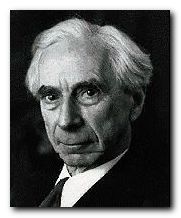
Bertrand Russell - portraitBertrand Russell (1872-1970) was an unusual mixture of a popular and an academic philosopher. He was the inventor of The Theory of Descriptions. Like many philosophers he made his major contributions whilst quite young with The Principles of Mathematics (1903) and he followed this later with The Analysis of Mind (1921) and An Enquiry into Meaning and Truth (1940).
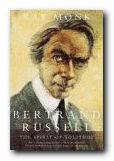
He was born the grandson of Lord John Russell, who had twice served as Prime Minister under Queen Victoria. Educated at first privately, and later at Trinity College, Cambridge. In 1894 he obtained first class degrees both in mathematics and in the moral sciences. The same year he got married to Alys Pearsall Smith, an American Quaker, who was the first of his four wives.

Like many others of his generation who attended Cambridge he was influenced by G.E. Moore and his Principia Ethica (1903) which propounded the principals of ‘the pleasures of human intercourse and the enjoyment of beautiful objects’ which inspired many of the Bloomsbury Group.

In 1904 he went to teach at Harvard, where T.S.Eliot became one of his students. Their paths continued to run in close parallel when both became members of the Bloomsbury Group – and closer still when Russell started an affair with Eliot’s new wife Vivienne.

He was a regular visitor at Garsington, the country estate of Lady Ottoline Morrell with whom he had a long affair. [Mischievous commentators point out that she only had two baths a year, and he suffered from halitosis.] It was there that he also met D.H.Lawrence with whom he had a fairly virulent falling out. Their spat over existential matters led Russell to contemplating suicide. The same combination of attraction and male rivalry also affected his relationship with one of his star pupils, Ludwig Wittgenstein. In 1921 he divorced and married for the second time to Dora Black, with whom he set up a progressive school.

Later in life he wrote a series of popular books which were essays and reflections on topics such as liberty, freedom, censorship. Most of his popular writing is humane, stylish, and easy to read. Many modern attitudes we now take for granted – tolerance, liberal humanism, questioning of authority – were first articulated in collections such as The Conquest of Happiness, In Praise of Idleness, and Why I Am Not a Christian.

During the late 1920s and early 1930s, as his marriage to Dora broke down and as he lost faith in Beacon Hill, Russell continued to write books intended to emancipate readers from what he saw as the fetters of outmoded religious belief, restrictive marriages, repressed attitudes towards human sexuality, and authoritarian education practices.

In 1936 he married for the third time to Patricia (Peter) Helen Spence. While teaching in the United States in the late 1930s, Russell was offered a teaching appointment at City College, New York. The appointment was revoked following a large number of public protests and a judicial decision which stated that he was morally unfit to teach at the College.

Along with George Orwell, Russell was one of the few Western intellectuals on the Left not to be seduced by the claims of Marxist theory and Bolshevik practice in Russia. He retained his beliefs in non-violent resistance to wars until the aggressive expansionism of Hitler in Poland in 1939 compelled him to abandon his peace advocacy. He spent the Second World War in America where he wrote his most popular work, History of Western Philosophy.

He was awarded the Nobel prize for literature in 1950, divorced Peter Spence in 1952 and married for the fourth time to Edith Finch. In the 1960s he also embraced the cause of nuclear disarmament and was a prominent member of the Campaign for Nuclear Disarmament (CND). He died of influenza at his home in Merioneth, Wales in 1970.


Bertrand Russell - biographyAs Ray Monk’s excellent biography of Russell makes clear, although he was elected to the Royal Society in 1908, Russell’s teaching career at Cambridge appeared to come to an end in 1916 when he was dismissed from Trinity College because of a conviction for anti-war activities. Two years later he was convicted again. This time he spent six months in prison. It was while in prison that he wrote his well-received Introduction to Mathematical Philosophy (1919).


Bertrand Russell


Bloomsbury Group – web links

Bloomsbury Group - web links Hogarth Press first editions
Annotated gallery of original first edition book jacket covers from the Hogarth Press, featuring designs by Vanessa Bell, Roger Fry, and others.

Bloomsbury Group - web links The Omega Workshops
A brief history of Roger Fry’s experimental Omega Workshops, which had a lasting influence on interior design in post First World War Britain.

Bloomsbury Group - web links The Bloomsbury Group and War
An essay on the largely pacifist and internationalist stance taken by Bloomsbury Group members towards the First World War.

Bloomsbury Group web links Tate Gallery Archive Journeys: Bloomsbury
Mini web site featuring photos, paintings, a timeline, sub-sections on the Omega Workshops, Roger Fry, and Duncan Grant, and biographical notes.

Bloomsbury Group - web links Bloomsbury: Books, Art and Design
Exhibition of paintings, designs, and ceramics at Toronto University featuring Hogarth Press, Vanessa Bell, Dora Carrington, Quentin Bell, and Stephen Tomlin.

Bloomsbury Group - web links Blogging Woolf
A rich enthusiast site featuring news of events, exhibitions, new book reviews, relevant links, study resources, and anything related to Bloomsbury and Virginia Woolf

Bloomsbury Group - web links Hyper-Concordance to Virginia Woolf
Search the texts of all Woolf’s major works, and track down phrases, quotes, and even individual words in their original context.

Bloomsbury Group - web links A Mrs Dalloway Walk in London
An annotated description of Clarissa Dalloway’s walk from Westminster to Regent’s Park, with historical updates and a bibliography.

Bloomsbury Group - web links Women’s History Walk in Bloomsbury
Annotated tour of literary and political homes in Bloomsbury, including Gordon Square, University College, Bedford Square, Doughty Street, and Tavistock Square.

Bloomsbury Group - web links Virginia Woolf Society of Great Britain
News of events, regular bulletins, study materials, publications, and related links. Largely the work of Virginia Woolf specialist Stuart N. Clarke.

Bloomsbury Group - web links BBC Audio Essay – A Eulogy to Words
A charming sound recording of a BBC radio talk broadcast in 1937 – accompanied by a slideshow of photographs of Virginia Woolf.

Bloomsbury Group - web links A Family Photograph Albumn
Leslie Stephens’ collection of family photographs which became known as the Mausoleum Book, collected at Smith College – Massachusetts.

Bloomsbury Group - web links Bloomsbury at Duke University
A collection of book jacket covers, Fry’s Twelve Woodcuts, Strachey’s ‘Elizabeth and Essex’.

© Roy Johnson 2000-2014


More on biography
More on the Bloomsbury Group
Twentieth century literature


Filed Under: Bloomsbury Group Tagged With: Bertrand Russell, Biography, Bloomsbury Group, Cultural history, Philosophy

Bestsellers: a short introduction

July 20, 2009 by Roy Johnson

popular fiction of the past and present

John Sutherland (professor of literature in London and California) is adept in conveying English Literature and its relevance to the general public (not unlike his contemporary John Carey). Bestsellers is typical of his approach. It’s a guide to the world of best-selling writers – writers of fiction on the whole. And it’s focused on the UK and the USA. He writes in a slick, non-patronising manner – as if talking to a peer group in the senior common room. He sees the USA as the hotbed of the bestseller – unfettered by copyright restrictions for much of the nineteenth century. And he’s very well informed on the subject of book publication and the commercial side of ‘literature’. What he looks at in particular is the question of why certain books become more popular than others.

Bestsellers: a short introductionThere’s all sorts of insider gossip and information on the publishing business sandwiched between his comments on bestsellers of the 1920s which nobody reads any more – and similar cases from the 1970s and 1980s. Indeed, one best-selling novelist went on to become a Nobel prizewinner – though few people read Pearl S. Buck today.

He discusses how difficult it is to measure bestsellers. Is it sales over the past week, or over years? Is it sales of a single title, or a complete oeuvre? His answer is to offer a historical survey of year-end bestsellers – the numbers of which items sold continues to rise exponentially.

But it’s a tale in which some writers with phenomenal success are now completely unknown, and others were bestsellers ((Victor Hugo Les Miserables) but earned nothing because their works were pirated.

If there’s a weakness it’s that he doesn’t seem to have bothered creating a structure for what he has to say. Ideas and information come off every page like sparks – but one minute it’s the economics of the book trade, and the next it’s the Anglo-American copyright relation or Harry Potter promotions.

In Sutherland’s reckoning, Zane Grey has claim to be an all time best seller – with 250 million sales and 100 film adaptations – though he is challenged by Max Brand (who he?) with 900 stories and 600 full length novels to his name. And just to keep things in perspective, Earl Stanley Gardner sold 300 million copies of his crime and mystery novels.

Oxford University Press have obviously found a niche in the publishing market with these pocket-sized guides – but it’s the quality of the writing rather than their form which makes them a hit.

© Roy Johnson 2007

Bestsellers   Buy the book at Amazon UK

Bestsellers   Buy the book at Amazon US


John Sutherland, Bestsellers: a very short introduction, Oxford: Oxford University Press, 2007, pp.127, ISBN: 0199214891


More on literature
More on the novella
More on literary studies
More on short stories


Filed Under: Literary Studies Tagged With: Bestsellers, Literary studies, Popular fiction

Better Wordpower

July 27, 2009 by Roy Johnson

learn how words are formed, written, and used

Better Wordpower is a popular language guide based on a simple notion – that a deeper grasp of language and the way words are used is the sure route to more efficient and effective communication. It offers several different approaches to what Reader’s Digest used to call Improve your Wordpower. It begins by showing you how to use dictionaries, encyclopedias and other language books effectively.

Better Wordpower Then it goes through the basic rules of spelling; lists of words which are commonly confused (affect and effect for instance); a list of foreign words and phrases; and a list of antonyms – words which mean the opposite, as in eager and apathetic or winsome and repulsive.

One of the most useful sections for increasing your wordpower is that listing prefixes and suffixes (what they call ‘word parts’) which help in the formation of new terms (auto- self, or automatic – as in autobiography, automobile or -ectomy surgical removal – as in vasectomy, appendectomy).

This is followed by an explanation of words used in common areas of human activity – animal life, architecture, art, astronomy, botany, computers, diseases, finance, geology, language, mathematics, music, physics and chemistry, psychology and psychiatry, shipping, and weather.

There are even illustrations in these sections, making the book like a mini-encyclopedia. Some of these categories seem somewhat arbitrary, but at least they point the user in the direction of intellectual categories – which is one of the prime purposes of the book.

The compilation ends with another very useful list of difficult, obscure, and what they call ‘hard’ words. These range from the reasonably well-known (alopecia ‘baldness’) to more abstruse terms such as (loricate ‘having an armour of scales or plates’).

All in all, it’s an accessible and readable guide which helps you through some of the most common pitfalls and complications of the English language. Ideally suitable for beginners, users in the classroom, or self-improvers of any kind.

Better Wordpower   Buy the book at Amazon UK

Better Wordpower   Buy the book at Amazon US

© Roy Johnson 2005


Janet Whitcut, Better Wordpower, Oxford: Oxford University Press, 2000, pp.329, ISBN: 0192801082


More on dictionaries
More on language
More on literary studies
More on grammar


Filed Under: Language use Tagged With: Better Wordpower, English language, Language, Language skills

  • « Previous Page
  • 1
  • …
  • 9
  • 10
  • 11
  • 12
  • 13
  • …
  • 103
  • Next Page »

Get in touch

info@mantex.co.uk

Content © Mantex 2016
  • About Us
  • Advertising
  • Clients
  • Contact
  • FAQ
  • Links
  • Services
  • Reviews
  • Sitemap
  • T & C’s
  • Testimonials
  • Privacy

Copyright © 2026 · Mantex

Copyright © 2026 · News Pro Theme on Genesis Framework · WordPress · Log in