Mantex

Tutorials, Study Guides & More

  • HOME
  • REVIEWS
  • TUTORIALS
  • HOW-TO
  • CONTACT
>> Home / Archives for 2009

Archives for 2009

Bibliographies in essays

August 22, 2009 by Roy Johnson

sample from HTML program and PDF book

1. Bibliographies are lists of books placed at the end of essays. They are a compilation of any works you have consulted or from which you have quoted. The list is called a bibliography.

2. The traditional manner of recording this information is to use the following sequence:

AUTHOR – TITLE – PUBLISHER – DATE

Terry Eagleton, Literary Theory, Oxford: Blackwell, 1983.

3. In more scholarly works, such as dissertations and theses, this information may be given with the author’s surname listed first – as follows:

Eagleton, Terry. Literary Theory, Oxford: Blackwell, 1983.

4. If you are using the Harvard system of notation, the date follows the author’s name – thus:

Eagleton, T. (1983), Literary Theory, Oxford: Blackwell

5. When using a word-processor, put the book title in italics. [They are in bold here because italics don’t show up very well on screen.]

6. If you are using a ‘standard’ text, give the editor’s name first, as in the following examples:

Mark Amory (ed), The Letters of Evelyn Waugh, Weidenfeld and Nicolson, 1980.

Frank Kermode (ed), The Tempest, Methuen, 1954.

7. List the items of a bibliography in alphabetical order according to author’s or the editor’s surname.

8. Do not list works you have not consulted or from which you have not quoted. To do this creates the impression that you are trying to claim credit for work you have not actually done.

9. You might find that your bibliography repeats much of the information given in your endnotes. Don’t worry about this: these two separate lists have different functions. In addition, your bibliography may contain works from which you have not directly quoted.

10. See References for details of more complex bibliographic issues. Here is an extract from the bibliography of a second year undergraduate essay on the sociology of domestic labour:


Bibliography

Beeton, I., Beeton’s Book of Household Management, Chancellor Press, 1991.

Best, G., Mid-Victorian Britain 1851-75, Fontana, 1979.

Branca, P., Silent Sisterhood, Croom Helm, 1975.

Burman, S. (ed), Fit Work for Women, Croom Helm, 1979.

Burnett, J., Useful Toil, Allen Lane, 1974.

Darwin, E., ‘Domestic Service’, The Nineteenth Century,
Vol.28, August 1890.

Davidoff, L., The Best Circles, Croom Helm, 1973.

Davidoff, L., ‘Mastered for Life: Servant and Wife in Victorian and Edwardian England’, Journal of Economic and Social History, Vol.7, 1974.

© Roy Johnson 2003

Buy Writing Essays — eBook in PDF format
Buy Writing Essays 3.0 — eBook in HTML format


More on writing essays
More on How-To
More on writing skills

Filed Under: Writing Essays Tagged With: Academic writing, Bibliographies, Essays, Reading lists, Study skills, Term papers, Writing skills

Bleak House close reading

September 30, 2009 by Roy Johnson

reading skills in the critical analysis of a text

What is close reading?

1. Close reading is the most important skill you need for any form of literary studies. It means paying especially close attention to what is printed on the page. It is a much more subtle and complex process than the term might suggest.

2. Close reading means not only reading and understanding the meanings of the individual printed words; it also involves making yourself sensitive to all the nuances and connotations of language as it is used by skilled writers.

Bleak House close reading3. This can mean anything from a work’s particular vocabulary, sentence construction, and imagery, to the themes that are being dealt with, the way in which the story is being told, and the view of the world that it offers. It involves almost everything from the smallest linguistic items to the largest issues of literary understanding and judgement.
4. Close reading can be seen as four separate levels of attention which we can bring to the text. Most normal people read without being aware of them, and employ all four simultaneously. The four levels or types of reading become progressively more complex.

Linguistic
You pay especially close attention to the surface linguistic elements of the text – that is, to aspects of vocabulary, grammar, and syntax. You might also note such things as figures of speech or any other features which contribute to the writer’s individual style.

Semantic
You take account at a deeper level of what the words mean – that is, what information they yield up, what meanings they denote and connote.

Structural
You note the possible relationships between words within the text – and this might include items from either the linguistic or semantic types of reading.

Cultural
You note the relationship of any elements of the text to things outside it. These might be other pieces of writing by the same author, or other writings of the same type by different writers. They might be items of social or cultural history, or even other academic disciplines which might seem relevant, such as philosophy or psychology.

5. Close reading is not a skill which can be developed to a sophisticated extent overnight. It requires a lot of practice in the various linguistic and literary disciplines involved – and it requires that you do a lot of reading. The good news is that most people already possess the skills required. They have acquired them automatically through being able to read – even though they havn’t been conscious of doing so. This is rather like many other things which we learn unconsciously. After all, you don’t need to know the names of your leg muscles in order to walk down the street.

6. The four types of reading also represent increasingly complex and sophisticated phases in our scrutiny of the text.

Linguistic reading is largely descriptive. We are noting what is in the text and naming its parts for possible use in the next stage of reading.

Semantic reading is cognitive. That is, we need to understand what the words are telling us – both at a surface and maybe at an implicit level.

Structural reading is analytic. We must assess, examine, sift, and judge a large number of items from within the text in their relationships to each other.

Cultural reading is interpretive. We offer judgements on the work in its general relationship to a large body of cultural material outside it.

7. The first and second of these stages are the sorts of activity designated as ‘Beginners’ level; the third takes us to ‘Intermediate’; and the fourth to ‘Advanced’ and beyond.

8. One of the first things you need to acquire for serious literary study is a knowledge of the vocabulary, the technical language, indeed the jargon in which literature is discussed. You need to acquaint yourself with the technical vocabulary of the discipline and then go on to study how its parts work.

9. What follows is a short list of features you might keep in mind whilst reading. They should give you ideas of what to look for. It is just a prompt to help you get under way.


Close reading – Checklist

Grammar
The relationships of the words in sentences
Examples

Vocabulary
The author’s choice of individual words
Examples

Figures of speech
The rhetorical devices used to give decoration and imaginative expression to literature, such as simile or metaphor
Examples

Literary devices
The devices commonly used in literature to give added depth to the work, such as imagery or symbolism
Examples

Tone
The author’s attitude to the subject as revealed in the manner of the writing
Examples

Style
The author’s particular choice and combination of all these features of writing which creates a recognisable and distinctive manner of writing.
Examples


10. Now here’s an example of close reading in action. The short passage which follows comes from the famous opening to Charles Dickens’ Bleak House.

London. Michaelmas Term lately over, and the Lord Chancellor sitting in Lincoln’s Inn Hall. Implacable November weather. As much mud in the streets, as if the waters had but newly retired from the face of the earth, and it would not be wonderful to meet a Megalosaurus, forty feet long or so, waddling like an elephantine lizard up Holborn Hill. Smoke lowering down from chimney pots, making a soft black drizzle, with flakes of soot in it as big as full grown snowflakes – gone into mourning, one might imagine, for the death of the sun.

This is the sort of writing which many people, asked for their first impressions, would say was very ‘descriptive’. But if you looked at it closely enough you will have seen that it is imaginative rather than descriptive. It doesn’t ‘describe what is there’ – but it invents images and impressions. There is as much “it was as if …” material in the extract as there is anything descriptive. What follows is a close reading of the extract, with comments listed in the order that they appear in the extract.

London
This is an abrupt and astonishingly short ‘sentence’ with which to start a six hundred page novel. In fact technically, it is grammatically incomplete, because it does not have a verb or an object. It somehow implies the meaning ‘The scene is London.’

Sentence construction
In fact each of the first four sentences here are ‘incomplete’ in this sense. Dickens is taking liberties with conventional grammar – and obviously he is writing for a literate and fairly sophisticated readership.

Sentence length
These four sentences vary from one word to forty-three words in length. This helps to create entertaining variation and robust flexibility in his prose style.

Michaelmas Term
There are several names (proper nouns) in these sentences, all signalled by capital letters (London, Michaelmas Term, Lord Chancellor, Lincoln’s Inn Hall, November, Holborn Hill). This helps to create the very credible and realistic world Dickens presents in his fiction. We believe that this is the same London which we could visit today. The names also emphasise the very specific and concrete nature of the world he creates.

Michaelmas Term
This occurs in autumn. It comes from the language of the old universities (Oxford and Cambridge) which is shared by the legal profession and the Church.

Lord Chancellor sitting
Here ‘sitting’ is a present participle. The novel is being told in the present tense at this point, which is rather unusual. The effect is to give vividness and immediacy to the story. We are being persuaded that these events are taking place now.

Implacable
This is an unusual and very strong term to describe the weather. It means ‘that which cannot be appeased’. What it reflects is Dickens’s genius for making almost everything in his writing original, striking, and dramatic.

as if
This is the start of his extended simile comparing the muddy streets with the primeval world.

the waters
There is a slight Biblical echo here, which also fits neatly with the idea of an ancient world he is summoning up.

but newly and wonderful
These are slightly archaic expressions. We might normally expect ‘recently’ and ‘astonishing’ but Dickens is selecting his vocabulary to suit the subject – the prehistoric world. ‘Wonderful’ is being used in its original sense of – ‘something we wonder at’.

forty feet long or so
After the very specific ‘forty feet long’, the addition of ‘or so’ introduces a slightly conversational tone and a casual, almost comic effect.

waddling
This reinforces the humorous manner in which Dickens is presenting this Megalosaurus – and note the breadth of his vocabulary in naming the beast with such scientific precision.

like an elephantine lizard
This is another simile, announced by the word ‘like’. Here is Dickens’s skill with language yet again. He converts a ‘large’ noun (‘elephant’) into an adjective (‘elephantine’) and couples it to something which is usually small (‘lizard’) to describe, very appropriately it seems, his Megalosaurus.

up Holborn Hill
There is a distinct contrast, almost a shock here, in this abrupt transition from an imagined prehistoric world and its monsters to the ‘real’ world of Holborn in London.

lowering
This is another present participle, and an unusual verb. It means ‘to sink, descend, or slope downwards’. It comes from a rather ‘poetic’ verbal register, and it has a softness (there are no sharp or harsh sounds in it) which makes it very suitable for describing the movement of smoke.

soft black drizzle
He is comparing the dense smoke (from coal fires) with another form of particularly depressing atmosphere – a drizzle of rain. Notice how he goes on to elaborate the comparison.

as big as full grown snow flakes
The comparison becomes another simile: ‘as big as’. And then ‘full grown’ almost suggests that the snowflakes are human. This is a device much favoured by Dickens: it is called ‘anthropomorphism’ – attributing human qualities or characteristics to things which are themselves inanimate. Then ‘snowflakes’ is a well-observed comparison for an enlarged flake of soot, because they are of similar size and texture. Notice next how Dickens immediately goes on to play with the notion that whilst soot is black, snowflakes are white.

gone into mourning
This reinforces the anthropomorphism. The inanimate world is being brought to life. And of course ‘mourning’ reinforces the atmospheric gloom he is trying to evoke. It also introduces blackness (the colour of mourning) to explain how these snowflakes (actually flakes of soot) might have changed from white to black.

the death of the sun
This is why the flakes have changed colour. And if the sun has died the light and life it brings to earth have also been extinguished – which reinforces the atmosphere of pre-historic darkness he is creating.


We will stop at this point. It would in fact be possible to say even more about the extract if we were to relate it to the novel as a whole – but almost everything listed was accessible even if you were reading the passage for the first time.

Literary studies are not conducted in such detail all the time, but it is very important that you try to develop the skill of reading as closely as possible. It really is the foundation on which everything else is based.

The next point to make about such close reading is that it becomes easier if you get used to the idea of reading and re-reading. The Russian novelist Vladimir Nabokov (famous for Lolita) once observed that “Curiously enough, one cannot read a book: one can only re-read it”.

What he meant by this apparently contradictory remark is that the first time we read a book we are busy absorbing information, and we cannot appreciate all the subtle connexions there may be between its parts – because we don’t yet have the complete picture before us. Only when we read it for a second time (or even better, a third or fourth) are we in a position to assemble and compare the nuances of meaning and the significance of its details in relation to each other.

Finally, let’s try to dispel a common misconception. Many people ask, when they first come into contact with close reading: “Doesn’t analysing a piece of work in such detail spoil your enjoyment of it?” The answer to this question is “No – on the contrary – it should enhance it.” The simple fact is that we get more out of a piece of writing if we can appreciate all the subtleties and the intricacies which exist within it. Nabokov also suggested that “In reading, one should notice and fondle the details”.


Bleak House close readingStudying Fiction is an introduction to the basic concepts and the language you will need for studying prose fiction. It explains the elements of literary analysis one at a time, then shows you how to apply them. The guidance starts off with simple issues of language, then progresses to more complex literary criticism.The volume contains stories by Arthur Conan Doyle, Katherine Mansfield, Thomas Hardy, Joseph Conrad, D.H. Lawrence, and Charles Dickens. All of them are excellent tales in their own right. The guidance on this site was written by the same author.
Buy the book from Amazon UK
Buy the book from Amazon US


Charles Dickens Bleak HouseBleak House (1852-53) is a powerful critique of the legal system. Characters waiting to gain their inheritance from a will which is the subject of a long-running court case are ruined when the delays and costs of the case swallow up the whole estate. At the same time, Ester Summerson, one of Dickens’ most saintly heroines, is surrounded by mystery regarding her parentage and pressure to marry a man she respects but does not love. Unraveling the mystery results in scandal and deaths. Many memorable characters, including ace sleuth Inspector Bucket; Horace Skimpole a criminally irresponsible house guest; and Krook – the ‘chancellor’ of the rag and bone department, who dies from spontaneous combustion – something which Dickens actually believed could happen.

Bleak House Buy Bleak House at Amazon UK
Bleak House Buy Bleak House at Amazon US

© Roy Johnson 2009


More on Charles Dickens
More on literature
More on the novella
More on literary studies
More on short stories


Filed Under: Charles Dickens, Literary studies, Study Skills Tagged With: Bleak House, Charles Dickens, Close reading, Critical studies, Literary studies, Study skills

Blogging – publish your writing

October 1, 2009 by Roy Johnson

a selection of resources + how to get started

If you want to try the latest thing in Net publishing, it’s called Blogging. A Blog (short for Web Log) is usually a combination of a personal diary, links to items of interest on the Internet, a commentary on them, plus personal thoughts and essays. It is a form of self-publishing, and because you can write whatever you wish is very popular with authors who have strong and unorthodox opinions.

Blogging began as a medium for Web-based personal diaries, and most people still use it for this purpose. But some bloggers have started to develop the medium for what is essentially self-publishing. They might post notes reflecting briefly on a topic or discuss it with other bloggers, but they also upload essays, articles, or opinion pieces which count as serious pieces of journalism, expressing ideas and points of view which might not be available elsewhere.

The mainstream media (MSM) made fun of blogging when it first appeared – but now they can’t get enough of it. Newspapers, radio and TV stations, and magazines of all kinds have their own blogs – and they can’t get enough user-generated content either. That’s writing done by you and me, which they don’t have to pay for.

Some bloggers with access to popular information have suddenly found their hobby has been transformed into a thriving business. Paul Staines’ Guido Fawkes started as an amateur political gossip blog, but now gets 2 million visitors a month and makes him a full time living via advertising. Ric Turner’s Blue Moon did the same thing for supporters of Manchester City FC.

In fact the latest generation of bloggers at the time of writing are uploading digital photographs, video clips, and audio files – which have spawned the term podcasting. It’s also free and easy to do. You simply add your own text into a ready-made form and press the SEND button.

Essential BloggingEssential Blogging offers a tour of the best blogging sites, how to upload and maintain your pages, and how to configure the options to get the best effects. A series of chapters, clearly written by enthusiasts, takes you through which Blog sites and software are available – from Blogger, Radio Userland (free software), Moveable Type, WordPress, and Blosxom. Some of these have developed rapidly beyond mere blogging tools into small-scale content management systems.

Are you likely to make an income from all this? Not directly – but there are all sorts of possible spin-offs. Lots of bloggers sign up as affiliates to Amazon, Google, and other commercial sites. They earn a small residual income from sending potential customers to buy books and software. Click one of the Amazon ads on this page, and you’ll see how it works.

There’s also the possibility of micro-payments. This is a system in which people are prepared to pay a small amount for downloading an article of interest. There’s still some resistance to this idea, but it’s now fairly common in downloading music files – so it might catch on.


Blogging GeniusBlogging: Genius Strategies for Instant Web Content Biz Stone covers most of these new possibilities in his book. He shows how to log onto the most popular site of all – Blogger – and establish your Web presence. Then he shows you how to add colour, text manipulation, and layout variety to your pages, then on to the serious business of making money.
There’s a chapter on arranging archives of your blogs, which can be done on a weekly or monthly basis. He also shows you how you can increase traffic to your blog. This text shows how to turn your home page into a microportal with fresh content to keep your readers coming back.

There are now all sorts of blogging support and development services springing up as the number of bloggers gets bigger and bigger. These range from online tutorials which will show you how to get set up — try BlogBasics — to tracking and site visitor statistics — try BlogFlux. And just to repeat the point yet again — it’s all free. If you want to see our blog, go to mantex.blogspot.com


The Weblog HandbookThe Weblog Handbook Rebecca Blood’s book is for anyone who has ever thought about starting a Weblog but isn’t sure how to post, where to find links, or even where to go to register. She certainly knows what she’s talking about, as you can see if you look at her own blog at RebeccaBlood.net.

She blogs regularly on topics which range from food and knitting to political activism and blogging itself. The Weblog Handbook is a clear and concise guide to everything you need to know about the phenomenon that is exploding on the Web. She expertly guides the reader through the whole process of starting and maintaining a Weblog and answers any questions that might pop up along the way, such as the elements of good Weblog design and how to find free hosting.


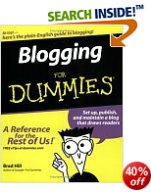
Blogging for DummiesBlogging for Dummies Brad Hill’s advice is aimed at getting you up and running as quickly as possible – though he begins with what blogs are – and what they are not. He explains the different types of blogs, and how and why they are different from web sites. The good thing is that he looks at all the options and draws up comparison charts which show the features, cost, and options offered by the various providers and software programs.


return button Publish your writing

© Roy Johnson 2009


More on publishing
More on journalism
More on creative writing
More on writing skills


Filed Under: How-to guides, Journalism, Publishing, Writing Skills Tagged With: Blogging, Blogging for Dummies, Journalism, Publishing, The Weblog Handbook, Writing skills

Blogging and Social Media

July 11, 2009 by Roy Johnson

exploiting the technology and protecting the enterprise

This is a guide to blogging and social media with a difference. It’s aimed at professionals in business who might not have thought of using such communication techniques before. In fact it’s written by people with a background in law – which doesn’t at first seem like a zappy, media-conscious line of work to be in. But the first half of the book explains how blogs work; it outlines the plusses and minuses of blogging; shows you how to set up your own blog; and how to write and run it. The advice is clear and realistic.

Blogging and Social MediaYou’ve got to be prepared to work at it; success doesn’t come easily; you can make money, but don’t expect too much; and if you’re in a serious business, take care what you say in your postings. It strikes a good balance between enthusiasm and the need for clear-headed guidance. The advantages for the business user are potentially enormous – because if you’re writing about something you already know well, blogging is fairly easy. It’s free, and you can write new material whenever you feel like it. There’s a tremendous potential for niche markets: if you are an expert in second-hand motor parts, the migration of birds in Europe, or planning application procedures for new motorways – you can be number one in your field without problems.

Even if you are constrained to write about your firm’s business in waste management you have the chance to link up with others in the same field. You can create networks, develop banks of resources, post bulletins, capture the contract opportunities in your area, and make a name for yourself and your firm.

You’ll be doing this even though you are only dealing with issues you would be handling normally – with the difference that you are doing it as part of a social network. And that’s the essence of what this book has to offer: it is showing you how to link up with other people who share your interests.

After blogging come the variety of social media which have mushroomed in the last few years. There are services such as Facebook, MySpace, and Twitter which started out as networking sites for teenagers but developed very rapidly into large scale communication tools. Each of these seems to have developed its own special audience. MySpace for instance is the premier site for musicians who upload recordings and promotional videos for their performances. Twitter on the other hand has been embraced by media organisations such as the BBC and The Guardian – even though messages posted to the site are limited to 140 characters (like a text message). Similar opportunities exist at uploading sites such as YouTube and Flickr.

They then cover the new generation of online office applications. These are word processors, spreadsheets, databases, and accounting software – such as Google Docs and Zoho.com – which don’t run on your own machine but which you access (free of charge) via the Web. These have the immense advantage that you don’t have to pay for upgrades to the latest version.

There’s also an excellent chapter on podcasts, giving instructions on how to make them and examples of how they might be useful in business. And once again, full details are given of all the free software you might need.

They then go deeper into the details of how companies might use these services internally – using what has come to known as an Enterprise 2.0 approach. Finally, and understandably since the authors all come from a legal background, they outline the law as it relates to the use of social media, covering copyright, trade marks, passing off, and brand names, defamation, privacy, and data protection. A number of complex cases have arisen as a result of bloggers writing about their bosses and the companies they work for. It’s a risky business – so beware!

© Roy Johnson 2008

Blogging and Social Media   Buy the book at Amazon UK

Blogging and Social Media   Buy the book at Amazon US


Alex Newson et al, Blogging and Other Social Media, London: Gower, 2008, pp.182, ISBN: 0566087898


More on eCommerce
More on media
More on publishing
More on technology


Filed Under: e-Commerce, Media Tagged With: Blogging, Blogging and Other Social Media, Communication, eCommerce, Social media, Technology

Blogging for Dummies

June 27, 2009 by Roy Johnson

set up, publish, and maintain a blog that draws readers

The blog trackers at Technorati now reckon there are 450 million blogs in existence, and new ones are being created at the rate of one per second – that’s 86,400 per day. It’s an unprecedented opportunity for people to broadcast their thoughts and observations – and it’s completely free. So where do you start? Brad Hill’s advice in Blogging for Dummies is aimed at getting you up and running as quickly as possible – though he begins with what blogs are – and what they are not.

Blogging for Dummies He explains the different types of blogs, and how and why they are different from web sites. The good thing is that he looks at all the options and draws up comparison charts which show the features, cost, and options offered by the various providers and software programs. This includes popular features such as the ability to display adverts and upload photos.

First he covers MSN Spaces and Yahoo 360 – both of which combine written blogs with lots of picture uploading features. Each step of the process is illustrated with screenshots – so you can follow his instructions and have something online within a few minutes.

Next comes the ubiquitous Blogger (which I use at Mantex) where he points to two disadvantages. One is that you see their templates everywhere, and the other is that Blogger forces you to edit your template code by hand if you wish to personalise your pages.

However, Blogger lets you do so many other things that its benefits outweigh the disadvantages. You can create audio blog entries (podcasting) and send photo postings from your mobile phone (moblogging). Then he does the same thing for TypePad, another popular blog service.

Unlike the other blogging manuals I have read and reviewed he takes on the crucial issue of blogging frequency. If you want a regular readership, you have to maintain regular postings.

Then comes the more complex option of installing blogging software on your own hard disk. This gives you more control, but more technical responsibility and expense. If you go down this route you are basically controlling your own blog from your hard disk, but it’s running from your blog provider’s server. This is an option for the more ambitious or technically gifted, but he gives you plenty of support and talks you through Moveable Type, WordPress, and Radio Userland.

His latter chapters deal with what he calls ‘Total Blog Immersion’ – that is, the techniques you need if you want to take blogging seriously, as many people now do. He explains RSS feeds, which help you to syndicate your blog content; making money from your blog by including adverts; and setting up the two most popular recent spinoffs, audio-blogging and photo-blogging.

So it’s not really just for Dummies at all. He covers the whole issue of blogging – from beginners to quite advanced users. The style is friendly and chatty – though you have to put up with a few lame jokes which are part of the Dummies house style.

But the main efficacy of his approach has already been proved to me. A friend of mine who read the book and followed its advice has recently gone quite quickly from novice to blogger to someone quoted in the national press. Now that’s not bad going.

© Roy Johnson 2006

Blogging for Dummies   Buy the book at Amazon UK

Blogging for Dummies   Buy the book at Amazon US


Brad Hill, Blogging for Dummies, Indianapolis: IN, Wiley, 2006, pp.367, ISBN: 0471770841


More on publishing
More on journalism
More on creative writing
More on writing skills


Filed Under: Journalism, Publishing Tagged With: Blogging, Blogging for Dummies, Communication, Journalism, Writing skills

Blogging genius strategies

July 19, 2009 by Roy Johnson

web log writing techniques and software

Web logging, known as blogging, is an easy way of updating a web page via a browser without the hassle of launching an FTP client or HTML editor. Some people claim that the blog is an entirely new form of communication – and Biz Stone is one of them. Blogging genius strategies is written from the perspective of a breathless young enthusiast, and yet the guidance he offers is perfectly sound and well organised. He starts off by telling you how to establish your blog – which is what most people will want. He shows how to log onto the most popular site of all – Blogger – and establish your Web presence. It’s rather like the world of email and newsgroups ten years ago. (That’s about a hundred years in Internet terms.)

Blogging genius strategiesEveryone is posting their diaries, rants and raves, and creating gonzo journals with links to everything that’s hip. He gives an overview of major blog service providers – Blogger, Moveable Type, Diaryland, and Radio Userland. Then, assuming that you are keen to make your blog visually attractive, he throws in a little HTML coding advice. This shows you how to add colour, text manipulation, and layout variety to your pages.

In fact for the more adventurous he even goes as far as Cascading Style Sheets and JavaScripts – then on to the serious business of making money from your blog. How can this be done? Well, via micro-payment systems, affiliate programs such as Amazon’s, and even advertising – though I wouldn’t hold your breath on this last one.

There’s a chapter on arranging archives of your blogs, which can be done on a weekly or monthly basis. Then it’s on to group blogs, blogs which invite comments on themselves, and even corporate blogs.

You can add search engine features, and he also shows you how you can increase traffic to your blog. This goes from making connections at Google to trading links with like-minded bloggers. If that’s not enough, you can even syndicate your blog.

In the latest part of his advice the blog is elaborated and extended until it becomes, logically enough, a Web site. In fact he then goes on to discuss software applications which can download selected blogs you wish to read in the form of daily emails.

Since Biz Stone went on from writing this book to become one of the key players at Twitter – so he knows new media when he sees it. He takes the subject of blogging seriously, and leads you through all the basic elements to get you started, then on to the more advanced techniques which allow you to turn your blog into a modern communication art form. Why not start now – Its all free!

© Roy Johnson 2002

Blogging genius   Buy the book at Amazon UK

Blogging genius   Buy the book at Amazon US


Biz Stone, Blogging: Genius Strategies for Instant Web Content, Indianapolis (IN): New Riders, 2002, pp.309, ISBN: 0735712999


More on creative writing
More on writing skills
More on publishing


Filed Under: Creative Writing, Journalism, Media, Publishing Tagged With: Biz Stone, Blogging, Computers, Journalism, Technology

Blogging, Citizenship, and Media

July 20, 2009 by Roy Johnson

When blogging first took off, the mainstream media (MSM) poo-poohed it, saying it was a fad that wouldn’t last. Next, they started lifting ideas and news from bloggers and quoting them without attribution. Nowadays all newspapers and broadcasters have their own featured blogs and urge their readers to supply copy. They have been turned around within about ten years. So citizen journalism, as Dan Gillmor called it, has arrived and only a fool would pretend otherwise any more.

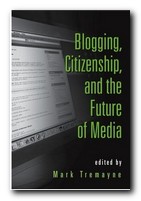
Blogging, Citizenship, and MediaMark Tremayne’s collection of academic essays takes this fact as a starting point and looks at the current state of blogging as a cultural phenomenon. What are the facts, as revealed? Well – that the number of blogs continues to rise exponentially, that most have single authors, the majority of whom are adult males, the most popular feature political comment, and that only a small percentage generate comments from their readers.

It’s pointed out that most blogs are in the form of personal diaries, but unlike conventional personal records they are intended to be read by others. And indeed, readers can add their own responses in the form of comments.

Whilst traditional journalism provides individuals with pictures of a world they cannot experience firsthand … blogs operate in the opposite direction, broadcasting the pictures in our heads back to a worldwide audience.

Many of the early chapters are academic studies of blog postings and activity – mainly focused on US political blogs around the period of the 2004 elections and the invasion of Iraq. There’s a lot of technical data related to the way comparisons were made, and the language of discussion is rather abstract and heavily jargonised

Homophily theory underlies Sunstein’s (2000, 2002) work on hate group polarization and cybercascades theories within the Internet’s effect as deleterious to democracy because it enlarges fragmentation, insulation, and enclave deliberation.

It’s largely a sociology of Web use, the motivation of bloggers and blog readers, and the reliability of sources. The latter part of the collection deals with the impact of blogging on traditional journalism. Does the freedom of the press enshrined in the First Amendment apply to bloggers? And if not, why not?

There’s also an extended consideration of international jurisdiction in libel and defamation cases. Where should a case be brought – in the country where the offending material is downloaded for reading, or where it is stored on servers? The answer to this question seems to vary, depending on the case, the country, and the legislation. The same is true of copyright infringement cases, though the good news is that the costs of prosecuting across national boundaries are so high that individual bloggers are unlikely to be pursued.

The main thrust of the pro-blog argument is supplemented by a report of a citizen journalism project – MyMissourian.com – which set up a community blog in one month using free open source Mambo software. Within a year it had gone from online blog to supporting a print edition.

Mark Tremayne sums up all these issues and looks at the future of both blogging and traditional media. It’s obvious that individual bloggers won’t suddenly replace large-scale news-gathering organisations, but they might have significant impact at a local micro-news level. News organisations might start to invite citizen journalists to create content (as the Guardian is already doing on its in-house blogs ‘Comment is Free’).

There’s also a future for individuals in database journalism in which existing sources are mined for original analyses and comment. And the Wikipedia project proves that the combined efforts of individuals can add up to an overwhelming whole.

What’s certain is that the print and broadcast media are losing their traditional audience and power, the bloggers are gaining in strength and number, and journalism has a new force to be reckoned with.

© Roy Johnson 2007

Blogging, Citizenship, and Media   Buy the book at Amazon UK

Blogging, Citizenship, and Media   Buy the book at Amazon US


Mark Tremayne (ed) Blogging, Citizenship, and the Future of Media, London: Routledge, 2007, pp.287, ISBN: 0415979404


More on technology
More on digital media
More on design


Filed Under: Journalism Tagged With: Blogging, Citizenship, Journalism, Media, Theory

Blood, Sweat and Tears

June 25, 2009 by Roy Johnson

comic book illustrations and dark-souled graphics

Die Gestalten Verlag are curious publishers. They produce books of high-spec contemporary graphics and computer animations such as 72dpi and Anime – yet at the same time they come up with this curiously disembodied publication of assorted illustrations and sketch book entries. It’s quite difficult to understand its purpose, except as a sample portfolio of one designer’s work.

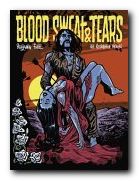
Blood, Sweat and Tears Benjamin Guedel is I suppose an illustrator. He draws pictures of a kind which seem to evoke a comic book retro feel of the 1970s and 1980s. The pictures are largely close-ups of people shown in reaction to dramatic situations. You will have to imagine scenes from pulp fiction or ‘adult’ comics. It’s the sort of work you would expect to find in something called Raw Comix or Naked Truth.

The images are largely nightmarish, with lots of the violence, anguish, and suffering to produce the blood, sweat, and tears of the title. The book is bizarre in that it has not a single printed word except its title – so as you flick through the pages there’s a very strong urge to construct a narrative from the sequence of images. Whether you can make a logic or narrative is up to you. I gave up after a couple of attempts.

In fact the illustrations are extracted from dark, violent, and surreal comic books to which he has contributed. And yet I was driven on to make the attempt for an oblique reason. It’s because this guy has got such an interesting web site. It features some of the same images, but there’s much more in his digital presence.

All of which is a shame – because the book could be a great advert for the site if the images were put into some sort of context, and if his web site was listed. But at the moment it’s the wrong way round.

© Roy Johnson 2005

Blood, Sweat and Tears   Buy the book at Amazon UK

Blood, Sweat and Tears   Buy the book at Amazon US


Benjamin Guedel, Blood Sweat & Tears, Die Gestalten Verlag, 2005, no page numbers, ISBN: 3899550749


More on design
More on media
More on web design


Filed Under: Graphic design Tagged With: Art, Graphic design

Bloomsbury Art and Design

August 6, 2009 by Roy Johnson

painting, illustration, ceramics, interior design

The Bloomsbury Group included a number of painters and designers who had an important influence on the visual and decorative arts during the period of English modernism (1905—1930). The group included artists Vanessa Bell and her husband Clive Bell; the artist and critic (and Vanessa Bell’s lover) Roger Fry; the artist (and Vanessa Bell’s lifetime companion) Duncan Grant, plus painters Dora Carrington and Mark Gertler. Bloomsbury art and design was never a coherent movement with an agreed set of theories: it was a close-knit group of friends who shared an interest in aesthetics.

The following publications deal with the amazingly wide range of their art in its pure and applied manifestations. These range from easel paintings, public commissions, interior designs, book illustrations, furniture and tapestries, plus the celebrated wall decorations at Charleston.

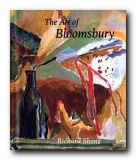
Bloomsbury Art and DesignThe Art of Bloomsbury features the paintings and drawings of artists Roger Fry, Vanessa Bell, and Duncan Grant – three of the central figures of the Bloomsbury Group. There are entries on two hundred works of art, all illustrated in colour, which bring out the chief characteristics of Bloomsbury painting – domestic, contemplative, sensuous, and essentially pacific. These are seen in landscapes, portraits, and still lifes set in London, Sussex, and the South of France. The volume also features the abstract painting and applied art that placed these artists at the forefront of the avant-garde before the First World War. There are portraits of family and friends – from Virginia Woolf and Maynard Keynes to Aldous Huxley and Edith Sitwell. Essays by leading scholars provide further insights into the works and the changing critical reaction to them.
Bloomsbury Group Buy the book from Amazon UK
Bloomsbury Group Buy the book from Amazon US


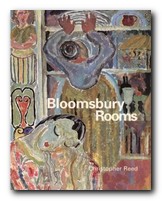
Bloomsbury Art and DesignBloomsbury Rooms: Modernism, Subculture, and Domesticity is a scholarly study which traces the development of Bloomsbury’s domestic aesthetic from the group’s influential Post-Impressionism in Britain around 1910 through to the 1930s. Christopher Reed makes detailed studies of rooms and environments created by Virginia Woolf’s sister Vanessa Bell, Duncan Grant, and Roger Fry, and he puts them into the context of aesthetic debates of the period. His study challenges the accepted notion that these artists drifted away from orthodox modernism. Whatever you think of the book’s theoretical arguments, it’s a beautifully illustrated production, full of fascinating paintings, fabrics, decoration, interior design, and original graphics.
Bloomsbury Group Buy the book from Amazon UK
Bloomsbury Group Buy the book from Amazon US


Bloomsbury Art and DesignThe Art of Dora Carrington At the age of 38, Dora Carrington (1893-1932) committed suicide, unable to contemplate living without her companion, Lytton Strachey, who had died a few weeks before. The association with Lytton and his Bloomsbury friends, combined with her own modesty have tended to overshadow Carrington’s contribution to modern British painting. She hardly exhibited at all during her own lifetime, and didn’t even bother signing her own works. This book aims to redress the balance by looking at the immense range of her work. She produced portraits, landscapes, glass paintings, letter illustrations and decorative work – all illustrated here in full colour. It also acts as an introduction to the artist herself, with rare photographs helping form a fuller picture of this fascinating woman.
Bloomsbury Group Buy the book from Amazon UK
Bloomsbury Group Buy the book from Amazon US


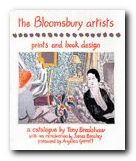
Bloomsbury Art and DesignThe Bloomsbury Artists: Prints and Book Designs This volume catalogues the woodcuts, lithographs, etchings and other prints created by Vanessa Bell, Dora Carrington, Roger Fry and Duncan Grant – with various colour and black and white reproductions. Of particular interest are the many book jackets designed for the Hogarth Press, the publishing company established by Leonard Woolf and Virginia Woolf. Also included are ephemera such as social invitations, trade cards, catalogue covers, and bookplates. Many of these were produced as part of the movement for modern design established by the Omega Workshops.
Bloomsbury Group Buy the book from Amazon UK
Bloomsbury Group Buy the book from Amazon US


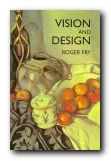
Bloomsbury Art and DesignVision and Design is a collection of Roger Fry’s best articles and writings. It had a significant impact on the art world in the 1920s and 1930s. Unlike many critics and scholars of the time, Fry expanded his discussion on art outside of the Western world, even to the degree of contending that primitive sculpture surpasses that of the West. As well as Western art, the book examines the use of form and aesthetics in ethnic art from Africa, America and Asia. It reinforced his position as a critic and it is still recognised as an extremely influential work in the development of modernist theory.
Bloomsbury Group Buy the book from Amazon UK
Bloomsbury Group Buy the book from Amazon US


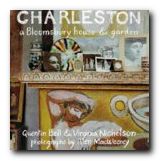
Bloomsbury Art and DesignCharleston: A Bloomsbury House and Garden by Quentin Bell and Virginia Nicolson encapsulates the artistic sensibility of the Bloomsbury Group. It is an illustrated record of the farmhouse at Charleston in Sussex which Vanessa Bell and Duncan Grant treated as a blank canvas in interior design. In doing so, they created a treasury of Bloomsbury art. The book provides family memories and anecdotes drawn from a lifetime’s experience. Each room links the interiors with some of the leading cultural figures of the 20th century, plus guests such as Vanessa’s sister Virginia Woolf and Lytton Strachey. Specially commissioned photographs portray the essence of the Bloomsbury style both throughout the house, with its painted furniture and walls, plus decorative items, paintings, and objects in the garden.
Bloomsbury Group Buy the book from Amazon UK
Bloomsbury Group Buy the book from Amazon US


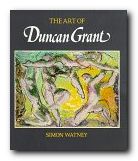
Bloomsbury Art and DesignThe Art of Duncan Grant In addition to being a central figure in the Bloomsbury group, Duncan Grant played a leading role in the establishment of modernist art in Britain. His principal works were easel paintings, but he also produced murals, fabric designs, theatre and ballet work, illustration and print-making, and commercial interior decoration. Throughout a long life Duncan Grant continued to experiment with and adapt to new styles and techniques, and this book offers an opportunity to grasp the extent of his achievement. It examines the influence that people and places had on him and demonstrates, with more than a hundred illustrations of his work, the range of his talent. It’s been said that he was as polymorphous in his work as he was in his much-discussed private life.
Bloomsbury Group Buy the book from Amazon UK
Bloomsbury Group Buy the book from Amazon US


Bloomsbury Group – web links

Hogarth Press first editions
Annotated gallery of original first edition book jacket covers from the Hogarth Press, featuring designs by Vanessa Bell, Roger Fry, and others.

The Omega Workshops
A brief history of Roger Fry’s experimental Omega Workshops, which had a lasting influence on interior design in post First World War Britain.

The Bloomsbury Group and War
An essay on the largely pacifist and internationalist stance taken by Bloomsbury Group members towards the First World War.

Tate Gallery Archive Journeys: Bloomsbury
Mini web site featuring photos, paintings, a timeline, sub-sections on the Omega Workshops, Roger Fry, and Duncan Grant, and biographical notes.

Bloomsbury: Books, Art and Design
Exhibition of paintings, designs, and ceramics at Toronto University featuring Hogarth Press, Vanessa Bell, Dora Carrington, Quentin Bell, and Stephen Tomlin.

Blogging Woolf
A rich enthusiast site featuring news of events, exhibitions, new book reviews, relevant links, study resources, and anything related to Bloomsbury and Virginia Woolf

Hyper-Concordance to Virginia Woolf
Search the texts of all Woolf’s major works, and track down phrases, quotes, and even individual words in their original context.

A Mrs Dalloway Walk in London
An annotated description of Clarissa Dalloway’s walk from Westminster to Regent’s Park, with historical updates and a bibliography.

Women’s History Walk in Bloomsbury
Annotated tour of literary and political homes in Bloomsbury, including Gordon Square, University College, Bedford Square, Doughty Street, and Tavistock Square.

Virginia Woolf Society of Great Britain
News of events, regular bulletins, study materials, publications, and related links. Largely the work of Virginia Woolf specialist Stuart N. Clarke.

BBC Audio Essay – A Eulogy to Words
A charming sound recording of a BBC radio talk broadcast in 1937 – accompanied by a slideshow of photographs of Virginia Woolf.

A Family Photograph Albumn
Leslie Stephens’ collection of family photographs which became known as the Mausoleum Book, collected at Smith College – Massachusetts.

Bloomsbury at Duke University
A collection of book jacket covers, Fry’s Twelve Woodcuts, Strachey’s ‘Elizabeth and Essex’.

© Roy Johnson 2000-2014


More on art
More on design
More on lifestyle
More on biography
More on the Bloomsbury Group


Filed Under: Art, Bloomsbury Group, Lifestyle Tagged With: Art, Bloomsbury Group, Bloomsbury rooms, Charleston, Dora Carrington, Duncan Grant, Graphic design, Interior design

Bloomsbury Concise Dictionary

May 26, 2009 by Roy Johnson

a dictionary which is also an encyclopedia

There’s a great deal of competition amongst dictionaries and encyclopedias these days. You can buy the New Oxford Dictionary for the price of a couple of hardback books; Encarta comes cheap enough; and you can even get the whole of Encyclopedia Britannica on disk for less than a tenner. So any serious contender as a desktop reference work must have something special to offer in order to be taken seriously. And the Bloomsbury Concise Dictionary does that by packing in an amazing number of extra features – which is what makes it something of a hybrid, combining the basic data you expect in a conventional dictionary with some of the features of an encyclopedia.

Bloomsbury Concise DictionaryIt offers what it calls ‘quick definitions’, which are summaries of the different meanings a word can have. These are useful for navigating through longer entries. Almost every entry is also given a cross reference or labelled with a category to which it belongs. I think I see the influence of hyperlinking at work here. In fact there is quite a lot of visual novelty, because font size, emphasis, and bullet points are used to guide you through the explanations of terms.

The most obvious feature which stands out and I think makes the book attractive is the use of illustrations, maps, tables, and diagrams. It’s obviously more helpful to show a map of the Czech Republic, rather than describing where it is geographically.

For those people who want to use a dictionary to help them improve their use of English, there are all sorts of aids to language and its problems. There is a spellcheck feature which draws attention to words whose spelling is unusual or problematic. Words are placed into a context to demonstrate how they are correctly used. There are notes on grammar, pronunciation, and issues of style and levels of formality. A typical entry runs as follows:

intrigue n/in treeg, in treég/ 1 SECRET PLOTTING secret scheming or plotting 2 SECRET PLOT a secret scheme or plot 3 SECRET LOVE AFFAIR a secret love affair (archaic) • v/in treeg/ (-trigues, -triguing, -trigued) 1 vt INTEREST to make somebody greatly interested or curious 2 vi SCHEME to scheme or use underhand methods to achieve something [Early 17C Via French < Italian intrigo < intrigare ‘entangle’ < Latin intricare (see INTRICATE) —intriguer /in treegar/ n —intriguingly vi

In terms of lexicon, the main body of the work is drawn from the Bloomsbury Corpus of World English, which now has a database of over 150 million words. There is a substantial proportion of recently-coined terms in evidence – so you can be confident of finding (for instance) an explanation of the technological sense of backbone [the core of an electronic network] along with its biological sense of ‘spinal column’.

And if all that isn’t enough, there are also panels giving what they call ‘quick facts’ on subjects such as the Baroque period in architecture and the Human Genome project. These give the key names, dates, publications, and technologies involved. So, with 220,000 word definitions and 8,000 entries on people and places, I doubt if it would be possible to pack much more into a desktop reference book of this kind.

© Roy Johnson 2005

Bloomsbury Concise Dictionary   Buy the book at Amazon UK

Bloomsbury Concise Dictionary   Buy the book at Amazon US


Bloomsbury Concise English Dictionary, London: A & C Black, 2nd edn, 2005, pp.1687, ISBN: 0713674997


More on language
More on literary studies
More on writing skills
More on creative writing
More on grammar


Filed Under: Dictionaries Tagged With: Dictionaries, Language, Reference, Research

  • « Previous Page
  • 1
  • …
  • 10
  • 11
  • 12
  • 13
  • 14
  • …
  • 103
  • Next Page »

Get in touch

info@mantex.co.uk

Content © Mantex 2016
  • About Us
  • Advertising
  • Clients
  • Contact
  • FAQ
  • Links
  • Services
  • Reviews
  • Sitemap
  • T & C’s
  • Testimonials
  • Privacy

Copyright © 2026 · Mantex

Copyright © 2026 · News Pro Theme on Genesis Framework · WordPress · Log in