Mantex

Tutorials, Study Guides & More

  • HOME
  • REVIEWS
  • TUTORIALS
  • HOW-TO
  • CONTACT
>> Home / Archives for 2009

Archives for 2009

Complete Critical Guide to Jane Austen

June 28, 2009 by Roy Johnson

biography, guidance notes, and critical essays

This complete critical guide to Jane Austen comes from a new series by Routledge which offers comprehensive but single-volume introductions to major English writers. They are aimed at students of literature, but are accessible to general readers who might like to deepen their understanding. The approach taken is quite straightforward. Part One is a potted biography of Austen, placing her life and work in a socio-historical context. This takes into account the role of women in the early nineteenth century; the position of a female author in the world of book publishing at the time; the social conventions surrounding women and marriage; and the sheer political fact that she was living at the time of the French revolution and war between Britain and France.
Guide to Jane AustenPart Two provides a synoptic view of Austen’s six great novels – from Northanger Abbey to Persuasion. The works are described in outline, and then their main themes illuminated. This is followed by pointers towards the main critical writings on these texts and issues.

Part Three deals with criticism of Austen’s work. This is presented in chronological order – from contemporaries such as Walter Scott to critics of the present day, with the focus on feminist and gender criticism, Marxist, and psychoanalytic criticism. Some of the readings Irvine outlines will be quite provocative and surprising to many readers – particularly those dealing with such issues as slavery in Mansfield Park and both sexual and homosexual readings of Sense and Sensibility.

The book ends with a commendably thorough bibliography which covers biography, criticism in books and articles, plus pointers towards specialist Austen journals. There is also a separate chapter which deals with Austen on screen. This discusses the controversial issue of Austen’s work as it has been appropriated to project modern notions of English nationalism and the ‘heritage industry’.

This will be an excellent starting point for students who are new to Austen’s work – and a refresher course for those who would like to keep up to date with criticism. And it certainly is up to date – with references to publications only just over a year old at the time of publication.

© Roy Johnson 2005

Buy the book at Amazon UK

Buy the book at Amazon US


Robert P. Irvine, The Complete Critical Guide to Jane Austen, Abingdon: Routledge, 2005, pp.190, ISBN 0415314356


More on literature
More on the novella
More on literary studies
More on short stories

Filed Under: Jane Austen Tagged With: Complete Critical Guide to Jane Austen, English literature, Jane Austen, Literary studies, Study guides

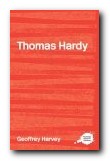
Complete Critical Guide to Thomas Hardy

June 26, 2009 by Roy Johnson

Biography, guidance notes, and criticism of Hardy

This comes from a new series by publishers Routledge which offers comprehensive but single-volume introductions to major English writers. They are aimed at students of literature, but are accessible to general readers who might like to deepen their understanding. The approach taken by the Complete Critical Guide to Thomas Hardy could not be more straightforward.

Complete Critical Guide to Thomas HardyPart one is a potted biography of Hardy, placing his life and work in a relatively neutral socio-historical context. Thus we get his early influences and ambitions, his rise to fame as a novelist, and then his switch to poetry in later life. The study does not shy away from the difficulties he had in his first marriage and his second marriage to a woman forty years younger than himself.

Part two provides a synoptic view of Hardy’s stories, novels, plays, and poetry. The works are described in outline, and then their main themes illuminated. This is followed by pointers towards the main critical writings on these texts and issues.

Hardy is not an easy writer to categorise. We think of him mainly as a novelist – but he is equally influential (if not so highly regarded) as a poet and a writer of novellas and short stories.

Part three deals with criticism of Hardy’s work. This is presented in chronological order – from contemporaries such as D.H. Lawrence to critics of the present day, with the focus on feminist and gender criticism, Marxist, and psychoanalytic criticism.

The book ends with a commendably thorough bibliography which covers biography, criticism in books and articles, plus pointers towards specialist Hardy journals.

An excellent starting point for students who are new to Hardy’s work – and a refresher course for those who would like to keep up to date with criticism.

© Roy Johnson 2003

Buy the book at Amazon UK

Buy the book at Amazon US


Geoffrey Harvey, The Complete Critical Guide to Thomas Hardy, London: Routledge, 2003, pp.228, ISBN 0415234921


More on Thomas Hardy
More on the novella
More on literary studies
More on short stories

Filed Under: Thomas Hardy Tagged With: Complete Critical Guide to Thomas Hardy, English literature, Literary criticism, Literary studies, Thomas Hardy

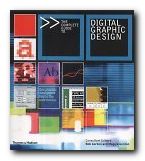
Complete Guide to Digital Design

June 19, 2009 by Roy Johnson

This is a beautifully designed and an elegantly produced book. It’s an excellent counterpart to Bob Gordon’s other recent publication – Making Digital Type Look Good. First he offers a brief introduction which illustrates contemporary digital design in a variety of media – print, packaging, signage, exhibitions, Internet, and Multimedia. The rest of the book is in four sections. The first deals with basic design principles. That is, issues such as shape, line, colour, type, layout, images, and the dynamics of emphasis, contrast, and shade.

Complete Guide to Digital DesignThe next sections look in detail at the latest developments in design for print publications, public signage, exhibitions, for the computer screen, and for multimedia. If any of this sounds rather abstract, it has to be said that these principles are illustrated in a wonderful series of double-page spreads, orchestrated in a beautifully rhythmic series of variations on a five column grid. The book itself lives up to the high design values it is presenting.

The supposition is that many designers will be migrating from the world of print to that of the digital interface – and I think that is reasonable – since the Web gets some of its most efficient and elegant designs from the influences of print design.

There’s an account of the best software programs [QuarkXPress and PageMaker] and how they are used in print preparation. This is followed by a series of illustrated case histories and interesting details of what is now called ‘surface design’ used in instances as varied as cardboard engineering and multimedia exhibitions.

On designing for the screen, there are useful tips on coping with the frustrations of Web page composition – such as browser download times and display uncertainties. There’s an introduction to Flash, Web editors, and graphics packages such as Fireworks.

The section on multimedia concentrates on designing for CD-ROM and DVD using software such as Macromedia Director and Adobe After Effects – all of which are now within budget price range. The big advantage of this increasingly popular form of delivery is that the author can control the appearance of the finished design on screen.

This is a very elegant production which is worth owning as a stunning example of graphic design in its own right. But it will also form an excellent overview of what is current in the field of digital graphics.

© Roy Johnson 2003

Digital Design   Buy the book at Amazon UK

Digital Design   Buy the book at Amazon US


Bob Gordon and Maggie Gordon, The Complete Guide to Digital Graphic Design, London: Thames and Hudson, 2002, pp.224, ISBN: 050028315X


More on design
More on media
More on web design


Filed Under: Graphic design Tagged With: Complete Guide to Digital Design, Digital design, Graphic design, Typography

Computers and Language

July 10, 2009 by Roy Johnson

essays on computers, teaching, and writing

What has been the impact of the PC in the classroom? Computers and Language is collection of essays presenting the results of studies monitoring research on the subject, and it offers one or two extended position papers and guides to software. John Pratt for instance explores the commonly observed phenomenon that students tend to be less inhibited in exploring writing programmes than their tutors – a point reinforced by other contributions. Maybe the next generation will have a different attitude to composition if they have grown up in front of a screen rather than a note book?

Computers and LanguageChris Breeze argues in a letter to his headmaster that working on a PC encourages children to re-draft their work. Most teachers of writing would probably agree that this is something to be encouraged. It is interesting to observe however that one or two of the articles start out as a celebration of the PC as a liberating tool for students, but then gradually reveal the author’s wish to control production. Teachers rule – OK?

There are a couple of [obligatory?] chapters dealing with Hypertext as an adjunct to constructing narratives. Stephen Marcus inspects the use of Hypertext programmes [GUIDE, HYPERCARD] and makes what in the hands of school-age children might be rather ambitious claims for them. If the debates currently raging in the alt.hypertext newsgroup are anything to go by, this is still a contentious issue. There is as yet no fictional hypertext which has staked a claim for aesthetic distinction – but its defendants point out that no other medium produced a masterpiece at first outing.

The most engaging and informative contribution is from Noel Williams – a straightforward review of the software available to assist authors in the post-writing phase. He examines programmes such as GRAMMATIK (then still in version IV) WRITER’S WORKBENCH, and CORPORATE VOICE. In the end he comes down heavily in favour of Ruskin. Like most other commentators on this type of spell- and grammar-checking software, he suggests that people should not be intimidated by rule-governed programmes, encouraging us to “ignor[re] those parts of the system which do not match … writer’s needs”.

One of the main problems with articles and publications of this nature is that they are now rapidly superseded by software updates and discussion which takes place more immediately on the Internet. Nevertheless, there is probably good reason for a place for this collection in the departmental library.

© Roy Johnson 2001

Computers and Language   Buy the book at Amazon UK

Computers and Language   Buy the book at Amazon US


Moira Monteith (ed), Computers and Language, Oxford: Intellect, 1993, pp.159, ISBN: 1871516277


Filed Under: Language use Tagged With: Computers, Computers and Language, Language, Writing skills

Computers and Typography

July 17, 2009 by Roy Johnson

essays on readability and layout in electronic writing

As the price of scalable fonts has dropped and the range available has increased recently, many people have developed an interest in typography. For those with the slightest interest in the appearance of the printed page, the flight from Courier 10 c.p.i. is understandable. Those of us who have gone to libraries to dig out the available literature may have been impressed by the craftsmanship in print production which has been traditionally maintained by printers, type designers, and bibliographists of all kinds.

Computers and Typography But many will have been disappointed that there is so little available which deals with the type design which is now possible in conjunction with computers. Rosemary Sassoon’s book is one answer to this absence. She is a distinguished typographist, the creator of Sassoon Sans-Serif, a legible script for children’s books. This is her assembly of a series of articles exploring the theoretical and practical relationships between computers and what is possible in modern typography.

There are sections on Text Massage (line and word spacing) and the effect of layout on readability; the creation of new alphabets in Latinate and non-Latinate languages using bitmapped fonts; a couple of items on the history of typography and its effects; a piece on the visual analysis of a page of text; and then perhaps the most convincing essay in the book – Sassoon’s own essay on perception and type design related to writing for children.

This is a stimulating collection which I suspect will have an appeal for those interested in typography, book design, the new computer software, and the relationship between writing (and print layout) and our understanding of texts. There is a good index and each essay carries its own bibliography.

The message which emerges from a series of essays which are surprisingly varied both in length and written style is that we should learn from the good practices of our post-Gutenberg heritage – and we should not believe that access to a second-hand bundle of software will automatically make us layout artists.

As Alan Marshall argues in his cautionary essay on access to the new technology “So long as writing (in the full sense of the word, that is, spacing and layout as well as words and punctuation) is not taught at school and at university, most texts produced on micro-computers will never reach the standards necessary for the effective transmission of ideas or information from one person to another”. Be warned.

© Roy Johnson 2002

Buy the book at Amazon UK
Buy the book at Amazon US


Rosemary Sassoon, Computers and Typography, Oxford: Intellect, 1993, pp.164, ISBN: 1871516234


More on typography
More on computers
More on technology
More on digital media


Filed Under: Typography Tagged With: Computers, Computers and Typography, Electronic Writing, Typography

Computers and Typography 2

July 17, 2009 by Roy Johnson

Rosemary Sassoon is a distinguished expert on handwriting, and a typographist celebrated for her font set ‘Sassoon Prima’, which helps young school pupils learn to read and write. Digital versions of her work are illustrated in Computers and Typography 2, her latest book. It’s a collection of essays on the role of digital type in graphic design and education. The emphasis in the first part is on page design. There’s advice on laying out web pages and a chapter on the typographical limitations of HTML.

Computers and Typography 2 The subject is then broadened out into multicultural aspects of typography. It looks at the way in which computerised type has affected other writing systems, and there are chapters on setting non-Latin languages and the differences between English (which has 26 letters) and Japanese (which has 10,000). The next section looks at how the introduction of computers has changed working practices, including the education of typography students. This is followed by a detailed account of the creation of a new font set for US telephone directories.

A chapter by Rosemary Sassoon on marketing her own digital typefaces will be of interest to professional designers. Of greater importance for most readers however is the excellent checklist of tips on making text readable on screen.

The next section deals with the making and shaping of letters, and the design of educational software completes the picture.

But for me, the most interesting contribution was the last, in which Roger Dickinson explores the interface between computers and learners – listing the devices and the technological strategies which can make learning more effective.

This is a good follow-up to Rosemary Sassoon’s first volume of Computers and Typography on topics related to digital type, and it will be of interest to web designers, information architects, and typographers – as well as ‘fotaholics’ .

© Roy Johnson 2002

Buy the book at Amazon UK

Buy the book at Amazon US


Rosemary Sassoon (ed), Computers and Typography 2, Bristol: Intellect, 2002, pp.158, ISBN: 1841500496


More on typography
More on theory
More on typography
More on digital media


Filed Under: Theory, Typography Tagged With: Computers, Computers and Typography 2, Typography, writing systems

Concise Chronology of English Literature

November 1, 2009 by Roy Johnson

what was written and published between 1474 and 2000

What were people writing about as Michelangelo painted the ceiling of the Sistine Chapel, or whilst engineers built the first railways in the nineteenth century? This reference book Concise Chronology of English Literature lists the major and some minor works published in every year between 1474 and 2001. Each year in the chronology begins with a list of interesting events, births, and deaths. The later entries also include other cultural items such as films, television productions, and plays.

Chronology of English Literature There’s a big index which lists the authors and all their works listed by date – so you can either see an entry in its chronological context or look up its dating directly. It represents highbrow, middlebrow, and even lowbrow tastes, so the editors have tried to be egalitarian. So for instance, we learn that 1900 saw the birth of the Labour Party; the death of Ruskin, Nietzsche, and Oscar Wilde; and the publication of Elgar’s The Dream of Gerontius, Joseph Conrad’s Lord Jim, Bernard Shaw’s Fabianism and the Empire, and H.G.Wells’ Love and Mr Lewisham.

It was also the year which saw the first production of Chekhov’s Uncle Vanya, the Boxer Uprising in China, and the publication of S.R. Crockett’s The Stickit Minister’s Wooing, and Other Galloway Stories – which I have to confess I have never heard of before, and I bet you haven’t either.

Although the entries are short, there is an amazing amount of fine detail. For instance, here are two listings from 1756:

David Hume (1711-76)

The History of Great Britain [vol ii] NF Published 1756, dated 1757. Volume i published 1754 (q.v.) See also History of England 1759

Charlotte Lennox (1729? – 1804) (tr.) The Memoirs of the Countess of Berci F Anonymous. Adapted from L’Histoire tragi-comique de notre temps by Vital d’Audiguier (1569-1624)

The more recent entries – say from 2000 onwards read like a list of best-sellers in the weekend supplements. But then of course, who knows how many of these titles will stand the test of time. Will people still think Zadie Smith’s White Teeth and Anita Brookner’s The Bay of Angels summarised the turn of the century? I somehow doubt it.

On some items there is additional publishing history details which appeals to literary anoraks like me. For instance:

Joseph Conrad (1857-1924)

Youth F

Published on 13 November 1902. Contains ‘Youth’ (first published in Blackwood’s Magazine, September 1898), ‘The Heart of Darkness’ (first published in Blackwood’s Magazine, February 1898), and ‘The End of the Tether’ (first published in Blackwood’s Magazine, July-December 1902).

This is useful information for researchers, historians, and detail specialists. All of which might all sound dry as dust – but the strange thing is that I imagine that this will stay at the front of my desktop bookshelf as a useful resource.

Concise Chronology of English Literature   Buy the book at Amazon UK

Concise Chronology of English Literature   Buy the book at Amazon US

© Roy Johnson 2005


Michael Cox (ed), The Concise Oxford Chronology of English Literature, Oxford: Oxford University Press, 2nd revised edition 2005, pp.844, ISBN: 0198610548


More on literature
More on the novella
More on literary studies
More on short stories


Filed Under: 19C Literature, 20C Literature, Literary Studies Tagged With: Concise Chronology of English Literature, Cultural history, English literature, literary chronology, Literary history, Literary studies

Concise Companion to English Literature

July 27, 2009 by Roy Johnson

authors, books, literary topics, and cultural issues

This Concise Companion to English Literature is a cut-down paperback version of Margaret Drabble’s Oxford Companion to English Literature. It’s based on the sixth edition, but it adds 500+ new entries on contemporary writers, ‘women writers’ and literary theorists. The main entries are thumbnail sketches of novelists, poets, and dramatists; but there are also entries representing philosophers, historians, scholars, critics, biographers, travel writers, and journalists.

Concise Companion to English Literature Topics covered include authors (from Abelard to Zola); literary genres (from the Absurd to yellow-backs); characters in fiction, drama, and poetry; famous works (Lawrence’s Aaron’s Rod to Max Beerbohm’s Zuleika Dobson); famous literary places, and concepts in literary theory. There are bonuses, such as the occasional special mini-essays on topics such as biography, or detective, gothic, and historical fiction. It also explains literary genres such as free verse, the epic, metaphors, and naturalism.

It more or less reflects contemporary concerns: Sorley McLean and Marshall McLuhan get far less space than Bernard McLaverty.

The extras are entries on significant magazines such as Edinburgh Review and Atlantic Monthly; entries on deconstruction, folios and quartos; the Hogarth Press and Penguin Books; performance poetry and post-colonial literature.

There are also appendix lists of poets laureate, plus Nobel, Pulitzer, and Booker Man prizewinners for literature.

One useful feature is the potted plots of novels and dramas. I’m fairly sure I will be going back to that, having refreshed my memory of the sprawling plot of Malcolm Lowry’s Under the Volcano.

For those of us who were denied a classical education, there’s a generous outline of its main authors, texts, and characters – from Aristophanes and Aristotle to Virgil and Xenophon.

This is the sort of reference book which you will grab off the shelf the moment you see a name you don’t recognise, when you want to check the date, the author, or the correct title of a work you see mentioned, or if you want to know about ‘The Battle of Alcazar’ (1594) or ‘The Wreck of the Deutschland’ (1875).

© Roy Johnson 2005

Concise Companion to English Literature   Buy the book at Amazon UK

Concise Companion to English Literature   Buy the book at Amazon US


Margaret Drabble and Jenny Stringer, The Concise Oxford Companion to English Literature, Oxford: Oxford University Press, 3rd edition, 2003, pp.752, ISBN: 0199214921


More on dictionaries
More on language
More on literary studies
More on grammar


Filed Under: 19C Literature, 20C Literature, Literary Studies Tagged With: Cultural history, English literature, Literary studies, Reference

Concise Dictionary of Quotations

July 27, 2009 by Roy Johnson

who said what, why, when – and about whom

This Concise Dictionary of Quotations is a cut-down version of the fifth edition of the Oxford Dictionary of Quotations. It contains over 9000 quotations from more than 2500 authors, and maintains its extensive coverage of literary and historical quotations. New material has been added from today’s influential literary and cultural figures. Entries range alphabetically from Diane Abbot (UK MP) to Emile Zola and Zoroastrian Scriptures. Chronologically, they run from classics which still seem up to date, as in ‘Everyone is quick to blame the alien’ (Aeschylus, 456 BC) and ‘Rumour is not always wrong’ (Tacitus, AD 95) – to pithy laments from recently deposed politicians.

Oxford Concise Dictionary of Quotations The standard quotations from written texts have also been supplemented by ‘Sayings and Slogans’ drawn from the world of advertising and politics, newly coined catchphrases, film lines, recent newspaper headlines, and popular modern sayings. There’s also an appendix of famous film lines and last words, amongst which my favourites were Mae West’s ‘Lets get out of these wet clothes and into a dry Martini’, or Oscar Wilde, speaking of the wallpaper in the room where he was dying: ‘One of us must go’.

Many entries are not so much quotations as extracts from famous texts. The Bible, Shakespeare, Milton, and poets such as Pope, Keats, Browning, and Eliot are all heavily represented.

This is the sort of book you would consult if you saw a well-known phrase such as ‘Earth has not anything to show more fair’ and didn’t know it was from Wordsworth, or ‘Patriotism is the last refuge of a scoundrel’ and didn’t know it is by Samuel Johnson.

Searches are made either by author in alphabetical order, or via a huge index of key words which traces quotations and their authors.

Woody Allen 1935-
I recently turned sixty. Practically a third of my life is now over.

in Observer 10 March 1996 ‘Sayings of the Week’

What’s the difference, you might ask, between this and the Dictionary of Quotations by Subject and the Dictionary of Literary Quotations?

The answer is that although this also uses writers and artists as sources, the main intention here is to include quotations from all the main sources – religious texts, Greco-Roman classics, and the original sources include political figures, people from the worlds of sport and entertainment, and various nonentities who have managed to make themselves famous just by the odd bon mot.

© Roy Johnson 2003

Concise Dictionary of Quotations   Buy the book at Amazon UK

Concise Dictionary of Quotations   Buy the book at Amazon US


Elizabeth Knowles (ed), Oxford Concise Dictionary of Quotations, Oxford: Oxford University Press, 2003, pp.547, ISBN: 0198607520


More on dictionaries
More on language
More on literary studies
More on grammar


Filed Under: Dictionaries Tagged With: Cultural history, Dictionaries, Famous sayings, Oxford Concise Dictionary of Quotations

Concise Oxford Dictionary

July 27, 2009 by Roy Johnson

best-selling one-volume desktop reference

Choosing a dictionary can be very much a matter of personal taste, but the Concise Oxford Dictionary has several features which have always made it a great favourite with writers. It is based upon the monumental Oxford English Dictionary and its latest supplements, which gives it a very good pedigree. At a practical level, it’s perfect for the desktop and easy to handle. I always reach for this one first. For the latest edition, Oxford’s lexicographers have rewritten every entry to represent English as it is used today.

Concise Oxford Dictionary There are over 240,000 words, phrases and meanings covering current and historical English, and specialist and technical areas. Each entry is now clearer and more accessible, with the most modern meanings placed first, and definitions given in a clear and straightforward style. Authoritative guidance on grammar and usage is provided in highlighted boxes, and there are also new Word Formation panels that show how complex words are created.

Full explanations of pronunciation, inflexion, and historical derivation are offered in a systematic manner, and the latest edition also includes a wide range of abbreviations. The Concise Oxford was first published one hundred years ago, and this centenary edition continues the tradition of providing an authoritative coverage of English as it is used today.

Another welcome feature (added as a result of reader-demand) is guidance on matters of disputed and controversial usage. Now you can be warned about that possible non-PC faux-pas (both included) – and it also shows the differences for spellings in American English.

I’ve actually got two copies: one old and battered with use which has been on the bookshelf for years; the other a recent edition which was a present to my office when I moved here.

The critic Cyril Connolly once said that if you knew all the words in the Oxford Concise, you would have a big enough vocabulary to be civilized, fluent, and literate. The jacket-cover advert isn’t exaggerating when it says “The world’s favourite”. If you only have room for a single dictionary, it should be this one.

© Roy Johnson 2011

Concise Oxford Dictionary   Buy the book at Amazon UK

Concise Oxford Dictionary   Buy the book at Amazon US


Concise Oxford English Dictionary (12th updated edn) 2011, Oxford: Oxford University Press, pp.1728, ISBN: 0199601089


More on dictionaries
More on language
More on literary studies
More on grammar


Filed Under: Dictionaries Tagged With: Concise Oxford Dictionary, Dictionaries, English language, Language, Reference

  • « Previous Page
  • 1
  • …
  • 16
  • 17
  • 18
  • 19
  • 20
  • …
  • 103
  • Next Page »

Get in touch

info@mantex.co.uk

Content © Mantex 2016
  • About Us
  • Advertising
  • Clients
  • Contact
  • FAQ
  • Links
  • Services
  • Reviews
  • Sitemap
  • T & C’s
  • Testimonials
  • Privacy

Copyright © 2026 · Mantex

Copyright © 2026 · News Pro Theme on Genesis Framework · WordPress · Log in