Mantex

Tutorials, Study Guides & More

  • HOME
  • REVIEWS
  • TUTORIALS
  • HOW-TO
  • CONTACT
>> Home / Archives for 2009

Archives for 2009

Damp Squid: English Laid Bare

June 2, 2009 by Roy Johnson

how language is changing – and why

Truth be told, this is quite an advanced book on language use written from deep within the research vaults of the English linguistic history, but it’s written in a language that most people will be able to understand. Behind the apparently frivolous and amusing selection of examples in Damp Squid, Jeremy Butterfield is offering a serious update on how lexicography is conducted in the digital age.

language useDictionaries are no longer constructed from contributions handed in on slips of paper by enthusiastic amateurs: they are compiled by software programs crunching vast stockpiles of words stored in databases – known as the ‘corpus’. This is a collection of examples of how the English language is actually being used, drawn from the printed word – from literary novels and specialist journals to everyday newspapers and magazines, and from Hansard to the language of chatrooms, emails, and weblogs.

The complete database (of the Oxford Corpus) contains over two billion words, and is being expanded at the rate of 350 million new words every year. The Corpus reveals those words we use most frequently (the, is, to and) – but it has to be observed that these are based on written evidence – not the language we speak.

He looks at the origins of English language, which comes from a bewildering variety of sources – Old English, French, Norse, Greek and Latin, plus words borrowed from more than 350 other languages.

The current social activities generating most new words include information technology, lifestyle, media, sport, ecology, fashion, and cuisine. These new words are coined by making compounds from old terms (bedmate, streetwise) clipping and back-formation (advert, emote) portmanteau (chortle, podcast) eponyms (Biro)and foreign suffixes such as —ati (It: glitterati) —ista (Sp: Guardianista) and —fest (Gr: bookfest).

He has a good chapter on irregularities of spelling and pronunciation, culminating in a review of ‘eggcorns’ – understandable mistakes such as just desserts, free-reign, and baited breath – many of which are so widespread there is a danger of their becoming accepted.

He is a fully committed descriptivist. That is, his job as he sees it is to record the manner in which the English language is used, no matter how much it might change its meanings. Hence the title of the book. He argues that damp squid makes just as much sense as the original damp squib – because we hardly ever use the term squib any more. This might infuriate traditionalists and prescriptive grammarians, and it does neglect to note that a squid can hardly be anything other than damp, since it lives in the sea, so the metaphor loses all its force: it fails to make an imaginative connection between two disparate things.

In fact he takes things even further in his conclusion, where he delivers a vigorous critique of what he calls the ‘language Nazis’ – those people who write to newspapers complaining about the decline of the English language (and are aided and abetted by the BBC).

© Roy Johnson 2008

Damp Squid   Buy the book at Amazon UK

Damp Squid   Buy the book at Amazon US


Jeremy Butterfield, Damp Squid: The English Language Laid Bare, Oxford: Oxford University Press, 2008, pp.179, ISBN: 019957409X


Filed Under: Language use Tagged With: Cultural history, English language, Language, Language use, Theory, Writing

Dates in essays

August 22, 2009 by Roy Johnson

sample from HTML program and PDF book

1. Dates are usually represented by a combination of numbered day, named month, and numbered year. Note that punctuation is not required when using this system.

the events of 17 October 1956 proved fateful

2. Note – there’s no need to add abbreviations such as th or rd:

12 October 1993  not  12th October 1993

23 January 1897  not  23rd January 1897

3. The following example contains four references to dates:

In January 1948 the New Statesman and Nation called for an end to this ‘Russia complex’; within the body of the party it had already effectively passed away. Indeed, by 1949 the distinction between British social democracy and communism, Soviet or British, was infinitely clearer than during the thirties. Clement Atlee made the point explicitly in The Times on 11 April 1949.

4. References to centuries are spelled out, not capitalised, and hyphenated only when they serve as adjectives:

during the eighteenth century

a study of seventeenth-century literature

5. Decades may be referred to by name or number, according to the context. Note that the numbered form is not followed by an apostrophe (because it is a plural):

The 1890s saw an enormous decrease…

during the thirties, political tensions increased

6. Dates represented purely by numbers (15.9.93) may be shown in two different ways. The convention in Britain and most of Europe is as follows:

DAY – MONTH – YEAR

15.9.93 = 15 September 1993

7. The American convention (often seen in their publications and computer software) is to use

MONTH – DAY – YEAR

9.24.93 = 24 September 1993

8. Take care! This system can lead to potential confusion when both the first numbers are below twelve. The date 7.9.93 can easily be mistaken for 7 September 1993, when in American notation it is in fact 9 July 1993.

9. Similarly, an American seeing 4.3.97 in an English publication might mistake the date for 3 April 1997, when in fact it represents 4 March 1997.

10. In references to pre- and post-Christian eras, the number of the
year(s) precedes BC, and follows AD:

Solomon’s temple was rebuilt in 515 BC, but then destroyed by the Romans in AD 70.

11. You might also come across the politically correct system of referring to BCE and ACE – as in the following examples:

500 BCE = 500 Before the Common Era
ACE 500 = 500 After the Common Era

© Roy Johnson 2003

Buy Writing Essays — eBook in PDF format
Buy Writing Essays 3.0 — eBook in HTML format


More on writing essays
More on How-To
More on writing skills


Filed Under: Writing Essays Tagged With: Academic writing, Dates, Essays, Study skills, Term papers, Writing skills

David Carson: 2nd Sight

June 8, 2009 by Roy Johnson

Grafik Design After the End of Print

There is a product which food companies use to make their products thicker. It’s the gum agent you can read about on an ordinary bottle of syrup or a jar of not-so-authentic salsa. The thickener doesn’t really have a flavor, it’s just there to add content when all other things fail to blend or aren’t full enough to make that product enticing. No one likes to have thin and runny syrup on their waffles or salsa that doesn’t stick to their chips. David Carson: 2nd Sight: Grafik Design After the End of Print is a mouthful and more of what you’d expect from a graphic designer on a quest to clarify his methods and intentions, though it seemed spicier the first time around.

David Carson: 2nd SightThere’s a sea of graphic designers who either love Carson’s methods or dislike them. For those who love his methods, you have another book to smile about. Another book to discuss with your fellow designers, another book to justify your methods. In fact, you now have another book that tells you why you do the things that you do. For those who dislike his methods, this is another book to mock. Another book to further your own theories on design.

Intuition played a key roll in the development of the second book by Carson and Blackwell. Those four syllables seem to be the reason behind a lot of what David Carson does in life. Unlike The End of Print, 2nd Sight is more about text than it is about pretty images (although there are plenty of images). There are no popups, but there are a few quotes which serve as some sort of artistic justification or reasoning behind what he and others in the decontructionalist movement supposedly feels deep within.

2nd Sight isn’t trying to intellectualize anything – well it is, but it doesn’t succeed. It’s kind of like a second course in an eight course meal. It’s handing out a little bit of insight into the designers’ creative explorations and it’s putting David Carson’s life into yet another round of syndication. How many times do we need to read about the fact that he was a surfer and has no classical training in graphic design or typography?

In fact, if I had to make a guess, I’d say that by the end of this book Carson was a little bored. The popularity of this subject has dwindled and much of the content of 2nd Sight should have been said in Carson’s first book, The End of Print.

But laying all of that aside, the book hits upon an important point – that intuition plays a crucial role in what any good designer or artist does. You can be classically trained, but if you haven’t got the intuition to go along with that training, then you’ve got nothing. To put it bluntly, you’ve got skills in desktop publishing rather than skills in graphic design.

Visually, 2nd Sight is appealing. There are vistas from hotel rooms at sunset, Carson expounding at workshops, chic and trendy warehouse gigs, and yet more over-populated lectures. The book hangs together well. Unfortunately, the text is not as fully baked. Carson, the pied piper of intuition, fails to realize that not all intuition is good, nor is it enough. In 2nd Sight there is plenty of scenery but no roadmap.

Nonetheless, I’m glad I read this book and am pleased to see its spine on my bookshelf. Anything bearing Carson’s name, whether chunky or smooth, thick or runny, is likely to stimulate your own creative juices. On that basis, I can recommend 2nd Sight to any designer or typographer.

© Tracy Pickle 2000

David Carson: 2nd Sight   Buy the book at Amazon UK

David Carson: 2nd Sight   Buy the book at Amazon US


Lewis Blackwell and David Carson, Carson, David: 2nd Sight: Grafik Design After the End of Print, Universe Publishing, 1997, pp.176, ISBN: 0789301288


More on typography
More on design
More on media
More on web design


Filed Under: Individual designers, Typography Tagged With: 2nd Sight, David Carson, Design, Graphic design, Typography

David Garnett biography

September 18, 2009 by Roy Johnson

David Garnett biographyauthor, editor, bookshop owner

David Garnett (1892-1981) was the son of Edward Garnett, an influential publisher’s reader and Constant Garnett, a translator who did a great deal to popularise the Russian classics in England. He first met members of the Bloomsbury group in 1910, but was not a regular member until 1914 when he became Duncan Grant’s lover.

Like most of the members of the Bloomsbury group, Garnett was a pacifist. In order to be exempted from military service during World War I, he and Duncan Grant moved to Wissett in the Suffolk countryside to become farm labourers. Although they were at first refused exemption by a tribunal, they appealed and were eventually recognised as conscientious objectors.

When Duncan Grant formed his lifelong relationship with Vanessa Bell, Garnett went to live with them at Charleston. What happened after that fully illustrates the complex personal relationships which characterise the Bloomsbury Group and the behaviour of its members. First of all in 1918, Vanessa gave birth to a child Angelica, which was fathered by Duncan Grant. But because Vanessa was still married to Clive Bell, the child was given to believe that Clive Bell was her father – a deception which was to have problematic consequences.

At Angelica’s birth, Garnett admired the child and wrote to Lytton Strachey “I think of marrying it. When she is 20, I shall be 46 – will it be scandalous?”


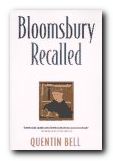
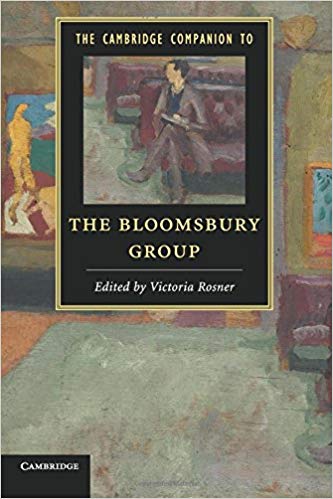
Bloomsbury RecalledQuentin Bell was one of the last surviving members of the Bloomsbury circle. In Bloomsbury Recalled he offers a candid portrait gallery of major and peripheral Bloomsbury figures. His father, Clive Bell, married the author’s mother, Vanessa Stephen (Virginia Woolf’s sister) in 1907 but pursued love affairs while Vanessa, after a clandestine affair with art critic Roger Fry, lived openly with bisexual painter Duncan Grant, with whom she had a daughter. Clive, Duncan and Vanessa were reunited under one roof in 1939, and the author conveys a sense of the emotional strain of growing up in ‘a multi-parent family’. Along with chapters on John Maynard Keynes, Ottoline Morrell and art historian-spy Anthony Blunt, there are glimpses of Lytton Strachey, novelist David Garnett, and Dame Ethel Smyth, the pipe-smoking lesbian composer, who fell in love with Virginia Woolf.


Garnett operated a bookshop in Soho. In 1923 he married Rachel (Ray) Alice Marshall, a book illustrator. He had a success with his first novel Lady into Fox (1922) and its follow-ups A Man in the Zoo (1924) and The Sailor’s Return (1925).

When the marriage to Ray Marshall failed, he turned his attentions back to Angelica Bell (really Angelica Grant) who was now growing up. When she became nineteen, she found out the truth of her father’s true identity. A year later she married Garnett, her father’s former lover, just as he had profetically suggested twenty years earlier. This relationship was disapproved of by her mother Vanessa Bell, and it caused a rift between them which lasted for years. Angelica Garnett gives her side of this odd story in her memoir of Bloomsbury childhood, Deceived with Kindness.

Garnett also edited the letters of T.E.Lawrence and the novels of Thomas Love Peacock. Later in life he produced three autobiographical volumes: The Golden Echo (1953), The Flowers of the Forest (1955), and The Familiar Faces (1962).


David Garnett


Bloomsbury Group – web links

Bloomsbury Group - web links Hogarth Press first editions
Annotated gallery of original first edition book jacket covers from the Hogarth Press, featuring designs by Vanessa Bell, Roger Fry, and others.

Bloomsbury Group - web links The Omega Workshops
A brief history of Roger Fry’s experimental Omega Workshops, which had a lasting influence on interior design in post First World War Britain.

Bloomsbury Group - web links The Bloomsbury Group and War
An essay on the largely pacifist and internationalist stance taken by Bloomsbury Group members towards the First World War.

Bloomsbury Group web links Tate Gallery Archive Journeys: Bloomsbury
Mini web site featuring photos, paintings, a timeline, sub-sections on the Omega Workshops, Roger Fry, and Duncan Grant, and biographical notes.

Bloomsbury Group - web links Bloomsbury: Books, Art and Design
Exhibition of paintings, designs, and ceramics at Toronto University featuring Hogarth Press, Vanessa Bell, Dora Carrington, Quentin Bell, and Stephen Tomlin.

Bloomsbury Group - web links Blogging Woolf
A rich enthusiast site featuring news of events, exhibitions, new book reviews, relevant links, study resources, and anything related to Bloomsbury and Virginia Woolf

Bloomsbury Group - web links Hyper-Concordance to Virginia Woolf
Search the texts of all Woolf’s major works, and track down phrases, quotes, and even individual words in their original context.

Bloomsbury Group - web links A Mrs Dalloway Walk in London
An annotated description of Clarissa Dalloway’s walk from Westminster to Regent’s Park, with historical updates and a bibliography.

Bloomsbury Group - web links Women’s History Walk in Bloomsbury
Annotated tour of literary and political homes in Bloomsbury, including Gordon Square, University College, Bedford Square, Doughty Street, and Tavistock Square.

Bloomsbury Group - web links Virginia Woolf Society of Great Britain
News of events, regular bulletins, study materials, publications, and related links. Largely the work of Virginia Woolf specialist Stuart N. Clarke.

Bloomsbury Group - web links BBC Audio Essay – A Eulogy to Words
A charming sound recording of a BBC radio talk broadcast in 1937 – accompanied by a slideshow of photographs of Virginia Woolf.

Bloomsbury Group - web links A Family Photograph Albumn
Leslie Stephens’ collection of family photographs which became known as the Mausoleum Book, collected at Smith College – Massachusetts.

Bloomsbury Group - web links Bloomsbury at Duke University
A collection of book jacket covers, Fry’s Twelve Woodcuts, Strachey’s ‘Elizabeth and Essex’.

© Roy Johnson 2000-2014


More on biography
More on the Bloomsbury Group
Twentieth century literature


Filed Under: Bloomsbury Group Tagged With: A Man in the Zoo, Biography, Bloomsbury Group, David Garnett, Lady Into Fox, Literary studies, The Sailor's Return

Deceived with Kindness

May 18, 2009 by Roy Johnson

insider victim’s take of Bloomsbury goings-on

Angelica Garnett is the daughter of Vanessa Bell and her lover Duncan Grant. At the time of Angelica’s birth, Vanessa was still married to Clive Bell, so Angelica was passed off to the world as his daughter, though many people in the inner circle of the Bloomsbury Group knew the truth. This crucial fact of her provenance was concealed from her until she was nineteen years old – whereupon she ‘avenged’ herself on the family by marrying David Garnett, who had been her father’s lover even before she was born.

Deceived with KindnessThis was the central drama of her life, and this memoir is her side of the story. But it is also a vivid recollection of being raised in the heart of all that was Bloomsbury. She starts with a psychological portrait of her mother, childhood memories of living at the family home Charleston amongst Vanessa, Clive, Duncan, and their friends Roger Fry and relatives Virginia Woolf and Leonard Woolf. There are also idyllic holidays in France which seem to come from a bygone era.

At first, when she deals with the deception perpetrated by Vanessa, Clive, and Duncan she lets them all off quite lightly, providing them with convenient excuses and admitting (rather surprisingly, but par for this course) that her own true father’s feelings are unknown to her.

There are lots of very charming scenes: life in Gordon Square, being washed in the bath by Maynard Keynes; Christmas with her ‘grandparents’ the Bells, surrounded by cooks, housemaids, and servants. There are some very lyrical episodes evoking upper-class life which although taking place in the 1920s might as well have been the late Victorian or early Edwardian period.

Some of her most perceptive passages are those in which she describes the relationship between her mother’s artistic theories and her practice as an artist. The fact for instance that since Vanessa considered the subject matter of pictorial art unimportant, it was unnecessary for her to go any further than the bottom of the garden to find something worth painting.

There are extended portraits of Clive Bell and Duncan Grant, though it is odd that neither of them is referred to as ‘father’ – even though throughout the whole of her childhood Bell had been falsely ascribed to her as such.

On the subject of her aunt Virginia Woolf she wonders if she had ever made love to her husband Leonard. Yet she is writing as an adult, by which time she would have not only known the answer, but also that Virginia had also slept with Vita Sackville-West. The book is a charming evocation of a privileged youth, but for an in depth knowledge of its subjects, additional sources are definitely required.

She saves the most dramatic part of her story for last. Her very unequal relationship with David Garnett (she was twenty-six years younger) takes place against a backdrop of family disapproval, the onset of the second world war, and the suicide of her aunt Virginia.

Despite the apparent sophistication of the Bloomsbury set, most of the adults behave badly in concealing the important details of their former liaisons from her, and I couldn’t help but feel sorry for her. She is at her most insightful in analysing the shortcomings of her mother, her father, and her husband – all conspirators against her psychological wellbeing.

After one hundred and fifty pages of indulgence and lyric evocation of a privileged upbringing, I finally began to admire her and it made this Bloomsbury memoir worth reading after all.

© Roy Johnson 2000

Deceived with Kindness Buy the book at Amazon UK

Deceived with Kindness Buy the book at Amazon US


Angelica Garnett, Deceived with Kindness: A Bloomsbury Childhood, London: Pimlico, new edition 1995, p.192, ISBN: 0712662669


More on biography
More on the Bloomsbury Group
Twentieth century literature


Filed Under: Bloomsbury Group Tagged With: Biography, Bloomsbury Group, Cultural history, Deceived with Kindness

Design and Build the Coolest Website in Cyberspace

July 11, 2009 by Roy Johnson

web design guidance manual – from start to finish

There are dozens and dozens of web design manuals on the market, so what makes this one any different than all the rest? Nick Nettleton has gone for a visually attractive layout. Every page in this guide is composed of densely layered graphics; every section is colour-coded; and every page is laid out in a very appealing manner. He takes web site design right from the simplest beginning – what equipment and software you need, how to get on line, and how to create your first pages.

Design and Build the Coolest Website in CyberspaceHe assumes you are going to use an HTML editor such as Dreamweaver or GoLive, so there’s no detail about tags and coding. Some may see this as a good thing, others a weakness – especially since in his first site project he uses heavily nested tables. However he covers all the basics – fonts, screen colours, and graphics. Then its on to the special effects you can create by adding colour, outlines, shadows, gradients, and textures.

There’s plenty on the manipulation of graphics – enhancing images, creating thumbnails, buttons, and icons. Then there are more advanced issues such as using templates and library items, when and when not to use frames.

When it comes to animation, there’s a lot of sound advice on Macromedia Flash – with other programs mentioned but trailing in terms of features. The same is true for sound and video, though there are a larger variety of formats to choose from.

He also covers style sheets and making your site interactive using DHTML, ASP, or PHP. It’s likely that you’ll need other guidance manuals if you want to pursue any of these advanced features in any detail, but the good thing about his approach is that it gives you an overview of web design with plenty of jumping off points offering the addresses of further resources.

He even goes as far as showing you how you could make money from your site once it’s up and running. And once again the approach is simple. Here is a list of possibilities and site details. Here is some advice plus the pros and cons of these approaches – with screenshots. Now go and do it.

© Roy Johnson 2004

Buy the book at Amazon UK

Buy the book at Amazon US


Nick Nettleton, How to Design and Build the Coolest Website in Cyberspace, Cambridge: Ilex, 2003, pp.224, ISBN 1904705065


More on web design
More on digital media
More on technology


Filed Under: Web design Tagged With: Design and Build the Coolest Website in Cyberspace, Technology, Web design

Design for Multimedia Learning

May 26, 2009 by Roy Johnson

software and media for creating learning programs

In the rapidly developing world of IT and multimedia, it’s strange to be reviewing a book published three years ago – and probably written at least a year before that. Some of the programs discussed by Tom Boyle in this survey will by now be ‘legacy software’ – but the fact is that some of them are still being used. His book is in four parts. The first provides a critical review of work in the field – from resource-based learning, through simulation and virtual experience to guided discovery learning.

Design for Multimedia Learning This includes consideration of programs such as Speakeasy, the Web, DOVE, Braque, and CLEM – [CORE Learning Environment for Modula-2]. The second part deals with conceptual design – the devising of the deep architecture of the system. Part three deals with presentation design. This covers screen layout, media integration, and the design of individual media – text, graphics, sound, and video. One of the virtues of the book is that it is so wide-ranging. It deals en passant with programs such as Toolbook and systems such as HTML – which was sill being viewed as a rather limited option in the mid 1990s.

Boyle covers moving objects and sound – both of which are conversely viewed rather sceptically in Web circles as distractions bordering on the unnecessary. However, there are circumstances in which these features are necessary. One of the examples discussed and illustrated is a training program showing how to install a hard disk in ‘Build Your Own Personal Computer’. There are other disciplines in which digitised video is essential. A colleague of mine is currently grappling with comparable issues in a teaching hospital, where video clips of operations are put on CD-ROM as seminar support materials.

Part four deals with project development, evaluation, and delivery of teaching programs. It’s all written in a lively and informative style, but the question remains, ‘Are such books superseded by the rapid development of software?’ My answer is ‘No – on two grounds’. First, it’s good to have a historical record of software development. Just as people are now beginning to collect and archive old computers [some of them less than twenty years old] so a well-documented account of the programs which were written for them will become increasingly important.

The second reason is that some of the basic design concepts and the architecture of these older programs may well appear to have been superseded by recent developments. But anyone who uses something as common as a word-processor knows that more features do not always result in improved functionality. At any time, some of these older approaches could be resuscitated for the simplicity and elegance of their design.

© Roy Johnson 2000

Design for Multimedia Learning   Buy the book at Amazon UK

Design for Multimedia Learning   Buy the book at Amazon US


Tom Boyle, Design for Multimedia Learning, London: Prentice Hall, 1997, pp.240, ISBN: 0132422158


More on online learning
More on technology
More on digital media
More on web design
More on computers


Filed Under: Media, Online Learning Tagged With: Education, eLearning, Media, Multimedia, Online learning

Design for the Real World

July 14, 2009 by Roy Johnson

human-centred and ecological design principles

Design for the Real World is often tipped in design circles as one of the best overall guides to ethical design theory and practice, along with Donald Norman’s The Design of Everyday Things. Victor Papanek takes a radically user-centred approach to design, with a very strong emphasis on social and ecological consciousness. It’s obvious to see why a book like this becomes a standard text – because all his questions are very fundamental. Essentially, he bases his design judgements on political criteria. What does this object do? Who is it for? What is it made of? And do the answers to these questions have any social consequences for the rest of society?

Design for the Real WorldHe is quite uncompromising in his approach. No objects are too humble to be considered in terms of good or bad design – a hammer, a teacup, even a simple cardboard box. He is amusingly critical of famous design objects such as de Stijl and Macintosh chairs:

These square abstractions painted in shrill primaries were almost impossible to sit in; they were extremely uncomfortable. Sharp corners ripped clothing, and the entire zany construction bore no relation to the human body … The thronelike Glasgow chairs designed by Charles Rennie MacIntosh in 1902 – with six-and-one-half-foot ladderbacks [had] all the soft comforts of an orange crate.

You won’t get lots of ideas for fancy new designs, but you will get a radical method and a critical approach to design which means you will never look at a spoon or a sports car in the same way again.

En route he offers scathing analyses of multinational corporations such as fast food chains and motor car manufacturers for their often selfish and profligate policies. There’s a detailed critique of MacDonald’s packaging waste, and a clear link argued between gas-guzzling car design and US foreign policy in the middle-East. These ideas will appeal to anybody who wishes to combine design with an ecological conscience.

He also comes up with rather witty observations on ‘fashion’ and false aesthetics from time to time:

Because in any reasonably conducted home, alarm-clocks seldom travel through the air at speeds approaching five hundred miles per hour, streamlining clocks is out of place.

As an educationalist, he advances several useful problem solving techniques which could be applied in other disciplines, as well as design. But this book doesn’t let you off the hook. Whatever is being designed, he wants to know ‘Is it useful?’, ‘Does it do the job for which it is intended?’, and ‘Is it cost effective?’

If there’s a weakness, it’s that he spends a lot of time spelling out the problems of people with physical and social disabilities and calling for design solutions to them. We would all agree that these issues need attention, but personally I would rather he explained the principles of good design.

He gives plenty of examples of ‘alternative’ cheap and cheerful design solutions pioneered by his design studio and students

He’s fairly unrelenting in his argument for ecologically sound, labour-saving devices to help the underprivileged of the third world, but few of them seem entirely convincing, even when they pass prototyping.

The latter part of the book takes on the issue of design and education. Here he makes an argument for what he calls integrated design – working in teams, tackling real problems (not fashion-related) and keeping an ethical vision in mind.

The main trouble with design schools seems to be that they teach too much design and not enough about the ecological, social, economic, and political environment in which design takes place.

If you are serious about product design, put this book on your reading list. It’s full of attitude, full of ideas, and uncompromising in its approach. And it’s got a very good series of bibliographies on all topics related to the issues he discusses.

© Roy Johnson 2000

Design for the Real World   Buy the book at Amazon UK

Design for the Real World   Buy the book at Amazon US


Victor Papanek, Design for the Real World, London: Thames & Hudson, 1985, pp.394, ISBN: 0500273588


More on design
More on media
More on web design
More on information design


Filed Under: Product design Tagged With: Design, Design for the Real World, Ecological design, Product design, Theory, Viktor Papanek

Design in the USA

July 9, 2009 by Roy Johnson

Product design in America 1800-2000

Design in the USA is much more interesting than its rather plain title suggests. It’s a very scholarly approach to the subject, incorporating both the economic and social history of design in America from its revolutionary origins to the present day. Jeffrey Meikle’s first chapters deal with America’s ambiguous relationship with Europe (and England in particular) before native designers begin to emerge towards the end of the nineteenth century in the form of Charles Eastlake (furniture) and Tiffany (lamps) – though I was glad to see that the novelist Edith Wharton got a mention for The Decoration of Houses (1897). Then there’s something of a leap from the end of the nineteenth century to the arrival of art deco in the 1920s.

Design in the USASince the art deco designers were influenced by the motifs they picked up from “automobiles, airplanes, zigzag bolts of electricity, and Manhattan’s skyscrapers”, one wonders why the engineers and architects who produced them are not given more consideration.

He claims that “The profession known as industrial design emerged during the Great Depression of the 1930s”, and he certainly provides a very detailed account of the design consultancies set up by Norman Bel Geddes, Raymond Lowey, and Henry Dreyfuss.

He’s particularly good at documenting the sociology of his subject – the movement of designers within their profession, and the effect on design of economic and political changes in society.

The good part of this survey is that issues of design are firmly placed within the context of American history, economics, and social change. It’s almost like reading an account of the social development of the USA in the last two centuries.

His account ends, quite tantalisingly, just as more-or-less universal access to the personal computers makes designers of us all. Now with the proliferation of web sites and blogs – plus the additional tools of digital photography and software to personalise everything from page layout to typography – the arts of design are truly democratised, which he points out is where they began in the USA two centuries earlier.

The book is very well illustrated, and there’s also a full scholarly apparatus – references, further reading for each chapter and its principal topics, a timeline matrix of design and related subjects; and a list of museums and websites.

© Roy Johnson 2005

Design in the USA   Buy the book at Amazon UK

Design in the USA   Buy the book at Amazon US


Jeffrey L. Meikle, Design in the USA, Oxford: Oxford University Press, 2005, pp.252, ISBN: 0192842196


More on design
More on media
More on web design
More on information design


Filed Under: Product design Tagged With: Design, Design history, Design in the USA, Product design

Design Management

May 24, 2009 by Roy Johnson

managing design strategy, processes and implementation

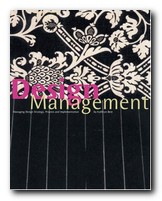
This new title from publishers AVA deals with the business aspects of design projects. I imagine the ideal readers would be students of design who were taking a serious interest in applying their theoretical skills to the practical demands of applying them in the world of commerce and manufacturing. The structure of the book follows that outlined in its sub-title – one section each on design strategy, then managing the design process, and finally design implementation. Each section is split into the knowledge required, a selection of case studies, and an outline of the skills needed for implementation. There is an underlying supposition that in addition to aesthetics, good design management will also take into account profitability, functionality, and even ecological issues.

Design ManagementSo it’s design with very much a practical business slant in mind. There’s an illustrated timeline of design which starts at 1759 with Josiah Wedgwood, then takes in most of the best-known names in design – from Peter Behrens, Moholy-Nagy, Raymond Loewy, Charles Eames, and Viktor Papanek, to the establishment of the design standards which have blossomed in the last ten years.

Although design is approached in the text as if it were a science or even a branch of sociology, it’s quite clear that a lot of it is connected with marketing and publicity – though at least Kathryn Best admits this by discussing such issues as ‘audience’, ‘market’, and ‘product life cycle’.

The case studies are interesting, well illustrated, and up to date – including for instance the Oyster smartcard for travel in London which eliminates the need for paper tickets, reduces queues, and keeps cash off the buses. She also has no problem illustrating all the positives of a company brand such as Apple with its iconic iPod (designed by UK’s Jonathan Ives).

The extended analysis of real-world examples range from thermal imaging devices (heat cameras) to Camper shoes, and from ecological architecture to a new Honda motor scooter. There are also interviews with leading designers from companies such as Yahoo and the National Health Service.

There’s a certain amount of idealisation in all this. Only projects launched by huge companies like AEG, Phillips, and Sony could afford such comprehensive planning of its developments. I’m sure that the majority of design projects have to make do with fewer staff and resources, and a shoestring budget compared with the methods being proposed here.

However, there are plenty of flow diagrams showing the stages of these ideal procedures – so anybody can see the models of good practice and adapt them for their own circumstances. There are also guidance sections on team working and managing creative designers. These include non-hierarchical systems of working and, it would seem, working conditions and design studios straight from the pages of Architecture Today.

The last section on project management in practice is closer to ‘management studies’ than to design. It reinforces the ideas mapped out recently by Chris Anderson in his influential essay The Long Tail – that manufacturers today are reducing their costs and increasing their performance by carrying the minimum of stock, delivering within hours instead of days or weeks, and responding instantly to the customer’s needs. If you were wondering why some shops in the clothing trade only stock what’s on display, that’s the reason why.

It’s an amazingly thorough production. It even finishes with practical suggestions for communication skills, based on the notion that designers need to be able to write effective reports and good business letters. There’s a bibliography, a webliography, suggested design journals, and a glossary. It’s also stylishly designed and produced, printed on thick matte paper stock with colour-coded pages, bound in an attractive paperback A4 format, and elegantly laid out throughout.

© Roy Johnson 2006

Design Management   Buy the book at Amazon UK

Design Management   Buy the book at Amazon US


Kathryn Best, Design Management: Managing Design Strategy, Process and Implementation, Lausanne: AVA, 2006, pp.215, ISBN: 2940373124


More on design
More on media
More on web design
More on information design


Filed Under: Product design Tagged With: Design, Design Management, Product design, Project management

  • « Previous Page
  • 1
  • …
  • 19
  • 20
  • 21
  • 22
  • 23
  • …
  • 103
  • Next Page »

Get in touch

info@mantex.co.uk

Content © Mantex 2016
  • About Us
  • Advertising
  • Clients
  • Contact
  • FAQ
  • Links
  • Services
  • Reviews
  • Sitemap
  • T & C’s
  • Testimonials
  • Privacy

Copyright © 2026 · Mantex

Copyright © 2026 · News Pro Theme on Genesis Framework · WordPress · Log in