Mantex

Tutorials, Study Guides & More

  • HOME
  • REVIEWS
  • TUTORIALS
  • HOW-TO
  • CONTACT
>> Home / Archives for 2009

Archives for 2009

Grammatical tense in essays

August 25, 2009 by Roy Johnson

sample from HTML program and PDF book

1. The grammatical tense in which an essay is written should be chosen according to academic conventions. If your subject is connected with an earlier historical period, then the past tense will probably be suitable. If it is contemporary, then the present tense might be preferred.

2. When dealing with a literary text, the easiest manner of discussing its events and characters is to use the present rather than the past tense. The present tense is less cumbersome to deal with, and you are less likely to become grammatically confused when dealing with topics from different points in the chronology of events.

3. The following example illustrates a perfectly acceptable manner of presenting an argument in an essay on Charles Dickens’s novel, Great Expectations:

When Pip leaves Joe and the forge to enjoy his newfound expectations in London, he feels a momentary twinge of doubt as he notices that …

4. The present tense is a ‘neutral’ mode of discussion from which you can easily move back momentarily into the past and even forward into the future tense when necessary:

When Pip leaves Joe and the forge … whereas earlier he had been closer to him, just as he will later become again when they are reconciled following the novel’s denouement …

5. This may seem slightly odd at first, because most fictional narratives are themselves written in the past tense. The logic of this procedure however is that your essay is dealing with a text that will never change. Pip will always leave the forge, just as he and Joe will always be reconciled.

6. Essays dealing with history or political issues of the past are normally and most logically written in the past tense:

Within six weeks of the revolution Cossack armies and other ‘white’ forces were already mustering in south-eastern Russia; the Ukraine, egged on by French and British promises, was in a state of all but open hostilities against the Soviet power; the Germans, in spite of the armistice, were a standing threat in the west.

E.H. Carr, The Bolshevik Revolution 1917-1923: Volume One, London: Penguin: 1984, p.167

7. Some people try to give a sense of vividness or urgency to their writing by casting their narratives in what’s called the ‘dramatic present’ tense. The result is often modish and posturing. This should be avoided in academic writing.

Within six weeks of the revolution Cossack armies and other ‘white’ forces are already mustering in south-eastern Russia; the Ukraine, egged on by French and British promises, is in a state of all but open hostilities against the Soviet power; the Germans, in spite of the armistice, are a standing threat in the west.

8. When writing scientific reports, the past tense is generally to be preferred. ‘The solubility of potassium dichromate in chloroform was measured’. However, when the item at issue is a fact or a constant, it may be spoken of in the present tense because it will not change: ‘The dipole moment of hydrogen chloride is 1.05 Debye’.

© Roy Johnson 2003

Buy Writing Essays — eBook in PDF format
Buy Writing Essays 3.0 — eBook in HTML format


More on writing essays
More on How-To
More on writing skills

Filed Under: Writing Essays Tagged With: Academic writing, Essays, Grammar, Reports, Study skills, Tenses, Term papers, Writing skills

Graphic Design 1870-2000

July 23, 2009 by Roy Johnson

a century of poster and advertising design

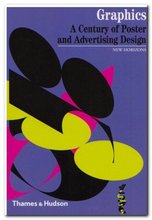
Graphics 1870-2000 is a compact account of the history of commercial graphic design and image-making from the end of the nineteenth century to the present day. It covers graphic design in the UK, France, Germany, Holland, Belgium, Russia, and the USA. All the major movements are covered – from Art Nouveau, Dada, Constructivism, De Stijl, and Bauhaus, right up to the as-yet-unnamed movements at the end of the last century, with generous entries on Paul Rand, Neville Brody and David Carson, plus recent development in the digital age.

Graphic DesignEvery page is a visual treat: well-chosen graphics illustrate every point of the exposition. The examples are fresh and original. There are even page decoration elements on the supporting theoretical documents reproduced along with the index

What I particularly liked about Alain Weill’s account is that the graphic innovations he traces are related to developments in the products they are advertising or the methods by which they are manufactured.

He also has a good eye for detail and can spot a significant novelty which becomes a turning point in design history – such as Lucian Bernhard’s removal of all extraneous detail to focus on brand name and product in the Sachplakat.

sachplakat

He is the former director of the Musée de la Publicité in Paris, and it is quite obvious from this that he has a deep knowledge and love for his subject.

Two issues emerge as sub-themes here. The first is the close link between graphic design and architecture – another discipline which is trying to do several things at the same time. The second is the close relationship between commercial and fine art. This might have dwindled somewhat towards the end of the last century, but it is still present in the work of people such as David Hockney.

It’s a shame it’s in such a small pocket-book format, because I think the elegantly designed pages deserve to breathe in a larger format. But the upside of this is that it’s very good value at a knock-down price.

© Roy Johnson 2004

Graphic Design 1870-2000   Buy the book at Amazon UK

Graphic Design 1870-2000   Buy the book at Amazon US


Alain Weill, Graphics: A Century of Poster and Advertising Design, London Thames and Hudson, 2004, pp.160, ISBN: 0500301166


More on graphic design
More on web design
More on technology
More on digital media


Filed Under: Design history, Graphic design Tagged With: Graphic design, Graphics 1870-2000

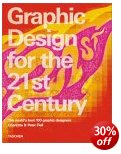
Graphic Design for the 21st Century

June 18, 2009 by Roy Johnson

contemporary world graphic design and designers

This is another block-busting visual compendium from Taschen publishing regulars Charlotte and Peter Fiell which maps out the very latest trends in contemporary graphic design. The commentary is in English, German, and French. Each artist gets a full credit with contact details, plus a list of recent exhibitions, awards, and clients. They are given just three or four pages to demonstrate their work. First a cryptic statement opposite a full page spread; then there’s a short biography, a list of recent exhibitions, and a list of clients.

Graphic Design for the 21st CenturyThe importance of these details is that you can follow up those designers who interest you most, check out their web sites, and track down further examples of their work. And it’s amazing, given these constraints, how so many of them come up with work which is visually arresting. Like most of these giant compendiums, the content is ‘mixed’, but I have to say that the longer I pored over these pictures, the richer the work seemed.

Work which is clearly experimental and even anti-commercial is given just as much space as adverts for Nike. There are entries for Stefan Sagmeister, Peter Saville, and other modern design studios such as Ames Brothers, the Pentagram Group, and Research Studios (all of whom have great web sites too).

The collection comes with an introductory essay by the editors which looks over the developments of the last hundred years – and the examples they have chosen come from all over the world: UK, US, Japan, France, Norway, Holland. This is a huge, value-packed compendium of contemporary graphic design, from professionals at the sharp end of what is happening right now.

It’s also a visually rich collection which is doing its best to look ahead to what might happen next. Like most of Taschen’s other publications it’s well designed, well printed and produced, and amazingly good value.

© Roy Johnson 2000

Graphic Design   Buy the book at Amazon UK

Graphic Design   Buy the book at Amazon US


Charlotte and Peter Fiell, Graphic Design for the 21st Century, Cologne: Taschen, pp.638, ISBN: 3822816051


More on design
More on media
More on web design


Filed Under: Graphic design Tagged With: Graphic design, Graphic Design for the 21st Century

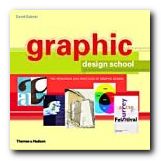
Graphic Design School

June 14, 2009 by Roy Johnson

basic design principles using all modern media

This is a structured self-teaching guide to the principles of graphic design which provides up-to-date information on computer aided design and the use of software applications. Graphic Design School itself is beautifully designed and printed – in full colour, with excellent design and layout fully illustrating the principles it espouses. First of all it deals with basic design principles – layout, space, colour, typography, and graphics.

Graphic Design SchoolEach topic is presented on one double-page spread in a stylish layout which shows off some of the best principles the book is designed to promote. The second part of the book looks in more detail at what effects are possible with detailed manipulation of typeface selection. It also looks at the secret ingredient which lies beneath most examples of good design – grids.

The last part looks at examples of professional design practice – magazines, corporate design, books, presentations, and of course web design.

It’s a visually exciting overview of what’s required in the increasingly complex and sophisticated word of graphic design. The illustrations are wonderfully fresh and well chosen. There wasn’t one I had seen in any publication before.

This will be suitable for people working in newspapers, magazines, books, packaging, advertising, web design, and digital media in general. It’s packed with practical guidance for students and practising designers.

It’s an introductory guide to a discipline with many facets. I imagine that readers will come across a topic that touches a creative nerve – layout, typography, animation, or image manipulation – then shoot off to follow up the subject elsewhere. That’s exactly as it should be – and there’s a glossary and bibliography to help too.

© Roy Johnson 2005

Graphic Design School   Buy the book at Amazon UK

Graphic Design School   Buy the book at Amazon US


David Dabner, Graphic Design School: The Principles and Practices of Graphic Design, London: Thames and Hudson, 2004, pp.192, ISBN: 0500285268


More on design
More on media
More on web design
More on typography


Filed Under: Graphic design, Typography, Web design Tagged With: Design, Graphic design, Graphic Design School, Web design

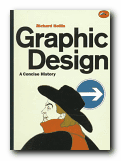
Graphic Design: a concise history

June 27, 2009 by Roy Johnson

popular potted history of 19th and 20th century graphics

This is an introduction to graphic design in a series from Thames and Hudson which offers very good value for money. Richard Hollis takes as a starting point the idea that graphic design begins in the late nineteenth century with the development of the poster which combined word and image. If you are happy to ignore what went before, what he presents is thought provoking and a visual treat.

Graphic Design: a concise historyThe main feature of the book is that each point of his argument is illustrated by small marginal pictures which function like a lecture slide show (which I suspect is their origin). It’s not quite clear if he is following a chronological, a thematic, or a national structure – but this isn’t really important, as the main pleasure of his account is the exuberant variety of illustrative examples he discusses. These act as a fascinating introduction to the subject.

It’s rather like a very entertaining series of illustrated undergraduate lectures. He starts with the poster in the nineteenth century, then goes on to chart the development of word and image in brochures and magazines, advertising, television and electronic media, and the impact of technical innovations such as photography and the computer.

The strength of his approach is his internationalism and excellent choice of materials. He covers the main figures in Swiss, Dutch, French, American, and British design, and en route there are special features on movements such as Italian futurism, Soviet constructivism, and German expressionism.

His exposition and analysis of the various movements is handled with a light touch, which makes the subject accessible to non-specialists. The most successful parts of the book are his detailed tracing of artistic influences and his arguments for the relation between design and function.

He knows the names, the products, and the businesses which produced the commissions. Maybe the book should have been called ‘Twentieth Century Graphic Design’, but this is excellent value, and always in print.

© Roy Johnson 2000

Graphic Design   Buy the book at Amazon UK

Graphic Design   Buy the book at Amazon US


Richard Hollis, Graphic Design: a concise history, London: Thames and Hudson, 1994, pp.224, ISBN: 0500202702


More on design
More on media
More on web design


Filed Under: Graphic design Tagged With: Art, Design history, Graphic design, Modernism

Graphology – how to understand it

September 7, 2009 by Roy Johnson


free pages from our English Language software program

Graphology – definition

graphology Graphology is the study of the system of symbols which communicates language in written form.
redbtn In its more popular sense, it is the study of handwriting.


Examples

redbtn This is an example of a pictographic symbol.

hand-r


Use

redbtn In the English language, writing starts on the left and moves to the right. It begins at the top of the page and moves downwards.

redbtn This might seem rather obvious, but writing in some other languages is arranged differently. Hebrew moves from right to left in rows, and Japanese from top to bottom in columns.

redbtn NB! Graffiti is a type of graphology, but if you confuse the two you’ll end up in trouble.

redbtn Graphology in context. ‘Grapheme’ is the term for the smallest unit of written communication. A letter of the alphabet or a punctuation mark is a grapheme. A scientific, mathematical, or any other kind of symbol is also a grapheme.

redbtn English is an ideographic language. This means that the writing system is based on a set of symbols. These have no intrinsic connection with what they are expressing.

redbtn Chinese on the other hand is known as a logographic or pictographic language. This is because the characters of that language were historically pictorial representations of the object being expressed.

redbtn Over the centuries these pictures have been stylised to the extent that they no longer resemble houses, people or trees. They now seem, to the uninitiated, just as arbitrary in their function as the English alphabet.

redbtn In linguistic study, graphology is a level of analysis along with phonology, vocabulary, grammar and semantics. It includes the study of layout, the use of logos and any other feature of graphical communication.

redbtn Children learn to form individual letters and later to produce joined-up writing. Some students find it difficult to make the transition from upper case printing to continuous script. This can be a significant impediment to their studies.

redbtn However, with literacy and maturity, we develop our own style of hand-writing. There is commonly a variation in the way we form our letters which is subject to context.

redbtn For instance, we may form a flamboyant ‘s’ at the end of a word, but a conservative version of that same grapheme if it occurs in an initial or medial position.

redbtn It is important to be able to distinguish between upper and lower case letters in order to punctuate. This is not possible with printing. Continuous script can also be produced much more rapidly.

redbtn Continuous script is easier to read than printing, because the eye is led by the connecting strokes between the characters. This is the same principle as the use of sefifed fonts in the layout of continuous writing.

redbtn Approaches to teaching hand-writing have changed over the years. It is interesting to note that each generation seems to have its own style of handwriting. Our parents and their contemporaries seem to produce the same script style, while their parents’ generation also have their own similarly distinct style.

redbtn Perhaps parallel with the phenomenon of speech style, handwriting styles are easier to categorise from a distance. Our children may see our contemporaries’ handwriting as belonging to an identifiable style, whilst we ourselves consider each person’s handwriting to be idiosyncratic.

Self-assessment quiz follows >>>

© Roy Johnson 2003


English Language 3.0 program
Books on language
More on grammar


Filed Under: English Language Tagged With: English language, Grammar, Graphology, Language, Writing

Green Architecture

July 25, 2009 by Roy Johnson

the art of architecture in an age of ecology

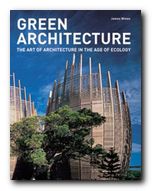
This is a general exploration of one of the most complex and important issues of today – how to construct a human habitat in harmony with nature. The chapters in Green Architecture include a review of twentieth-century green architecture, a review of eco-oriented shelter from Neolithic times to the present, and a survey of those practising architects who are currently seeking to change the relationship between buildings and the environment.

Green ArchitectureJames Wines knows his subject inside-out, and he is as committed to the idea of socially responsible architecture as his parallels in product design – Viktor Papanek and Donald Norman. Like them he refuses to be taken in by design which looks good, but which doesn’t work. In fact his study is something of a critique of much modern architecture, with its modish adherence to ‘vast expanses of plate glass and cantilevered, tilted, or skewed steel trusses’

There’s a marvelous chapter on buildings which have been deliberately conceived to blend in with the surrounding terrain – houses which insert themselves into hillsides, with grass roofs and barely detectable doorways.

I was interested to note that he dug out lots of designs from the early twentieth century which we would now call ‘futuristic’ – concepts for cityscapes crafted in the 1920s by designers such as Chernikhov, Sant’ Ella, or even designed and built by people such as Gerrit Rietveld in 1924.

Le Corbusier and his industry-inspired idea of ‘the house as a machine for living in’ comes for a great deal of justified criticism, and he is happy to quote Le Corbusier’s late-in-life mea culpa on the dust jacket: “Life is right, and the architect is wrong”.

His heroes are Frank Lloyd Right, Lewis Mumford, and Rachel Carson – all supporters of ecology long before the term became fashionable.

He’s also a great fan of the natural buildings fashioned from mud and home-made bricks which we admire in Africa and the middle East. Yet he’s not a dewy-eyed sentimentalist, admitting that these places were constructed that way simply because the original builders simply didn’t have access to any other materials.

This is a book which was published ahead of its time, and whose day has now come. It’s a study of architecture on ecological principles – buildings which blend sympathetically with their environmental context. More than that, they also use materials and focus their design principles on the basis of using as few as possible of the earth’s resources.

Don’t be misled by the low price. This is a serious study, and a beautifully illustrated production.

© Roy Johnson 2002

Green Architecture Buy the book at Amazon UK

Green Architecture Buy the book at Amazon US


James Wines, Green Architecture, London: Taschen, 2000, pp.240, ISBN: 3822863033


More on architecture
More on technology
More on design


Filed Under: Architecture Tagged With: Architecture, Ecological design, Green Architecture, Product design

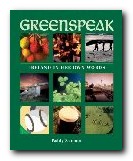
Greenspeak: Ireland in her own words

July 17, 2009 by Roy Johnson

Dictionary-cum-encyclopedia of all things Irish

If you parachuted onto the Emerald Isle, would you know what to do with a griffaun, a mether, or a dolmen ? Did you know that carrageen (Irish moss) can be used as food or as an HIV/AIDS preventative? And where would the taxi driver be taking you if he was going to TCD? Greenspeak is an interesting proposition if you’re interested in language, Ireland and its culture, or unusual dictionaries. Its a dictionary-cum-encyclopedia on all matters Irish, and it’s a beautifully illustrated.

Greenspeak: Ireland in her own wordsEntries run from ‘The Abbey Theatre’ and ‘absentee landlord’ to ‘ziggurat’ and the fact that there is no letter ‘Z’ in the Irish alphabet. Did you know that the words yes and no do not occur in the Irish language? Instead, the main verb in the question is repeated – as in ‘Did you see her?’ – to which the reply is ‘I did’ or ‘I did not’. Some of the terms explained are Irish language pure and simple; others are English words which have a particular or coded meaning in the context of Ireland; others are explanations of Irish history and institutions.

All of them are illustrated by examples drawn from genuinely Irish texts. So for instance, the entry for the apparently innocent-looking expression ‘big house’ runs as follows:

big house, Big House 1. Anglo-Irish country house, the principal house of the former landed Ascendency and often surrounded by a famine wall. Many were burned down in the 1920s. They feature in books, which became a literary genre, starting with Maria Edgeworth’s Castle Rackrent (1800). note: use ‘Irish Big House’ not ‘big Irish house’. Equates with standard English ‘manor’ or ‘stately home’. 2. (Ulster) may refer to mental asylum. 3. (US slang) penitentionary. [1823 (Letters from the Irish Highlands) < teach mor ‘big house’] See Baltimore Oriole.

There are over 2,000 entries covering every aspect of Ireland from food to folklore, and poetry to politics. The chronology and etymology of each word is given, and there is an index of people’s names, a glossary of abbreviations and acronyms.

There is understandably a recurrent strain of relations with neighbours ‘across the water’, but plenty of detailed entries on Ireland’s indigenous language, art, music, literature, history, personalities, and geography.

I get the impression of a huge labour of love and scholarship on Paddy Sammon’s part, and anybody with the slightest interest in Ireland or matters Irish is missing a treat if they don’t see this handsomely attractive book.

© Roy Johnson 2002

Greenspeak: Ireland in her own words   Buy the book at Amazon UK

Greenspeak: Ireland in her own words   Buy the book at Amazon US


Paddy Sammon, Greenspeak: Ireland in her own words, Dublin: Town House, 2002, pp.240, ISBN: 1860591442


More on language
More on literary studies
More on writing skills
More on creative writing
More on grammar


Filed Under: Dictionaries Tagged With: Cultural history, Dictionaries, Greenspeak: Ireland in her own words, Irish culture, Irish dictionary, Reference

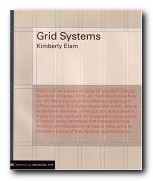
Grid Systems

June 17, 2009 by Roy Johnson

the principles of organising type on page and screen

Well-designed pages – on screen or in print – are built on the structural basis of grid systems. That’s the hidden network or mesh underlying the page design which helps to keep all its parts in close and logical relationship. This book tells you how to understand and create grids. The approach is that of a tutorial – showing the good and not-so-good results of arranging a set of basic elements on a 3 x 3 grid.

Grid Systems There’s a lot of visual repetition, and the writing is rather stiff, but the upside is thoroughness. The same page is shown over and over again, with endless variations in layout, text position, alignment, and reading direction. These tutorial sections are punctuated by analyses of successful and famous examples of the use of grids.

The illustrations come from classics such as Jan Tschichold’s advertising brochure for his revolutionary study Die Neue Typographie, a Bauhaus catalogue designed by Herbert Bayer, and modern designs such as a an architectural web site and a Nike product catalogue.

The really interesting feature of this book is that the pages used to illustrate its ideas are prefaced by a semi-transparent skin which shows the grid on which the base design has been built. It’s a superb use of modern print technology.

This is a well-produced book which illustrates its point very clearly and is a very attractive production in its own right. It comes from the same series as Ellen Lupton’s Thinking with Type which we also reviewed recently.

© Roy Johnson 2005

Grid Systems   Buy the book at Amazon UK

Grid Systems   Buy the book at Amazon US


Kimberly Elam, Grid Systems, New York: Princeton Architectural Press, 2004, pp.130, ISBN: 1568984650


More on design
More on media
More on web design


Filed Under: Graphic design Tagged With: Graphic design, Grid systems, Information design

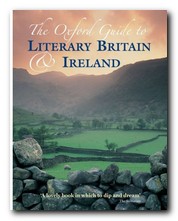
Guide to Literary Britain and Ireland

June 26, 2009 by Roy Johnson

illustrated encyclopedia of writers and places

Writers in Britain (no less than those in any other part of the world) have often been influenced by the localities in which the have been born and grown up. There are whole mythologies built around the Brontes and Yorkshire, Thomas Hardy and the West Country, Charles Dickens and London. But the influence actually goes further back than that. For instance in the late eighteenth and early nineteenth centuries, people from all over Europe flocked to Scotland, inspired by the writing of Walter Scott.

Guide to Literary Britain and Ireland Wordsworth and his friends almost single-handedly created a passion for the English Lake District which continues to this day. People queue up to peep into Dove Cottage, then go back home to houses ten times the size. Jane Austen has her own museum in Bath, because she captured the city so well in her work, even though she only spent a brief period of her short life there. But these are the well known examples. Less well known but just as interesting socially and geographically are the names listed in this encyclopedia of literature and place which explains connections between writers and locations from the smallest villages via towns and cities, to palaces and country seats which are like separate worlds of their own.

The other interesting factor here is that entries take a historical view of places – so that the record stretches well back beyond the recent past. And it also includes writers who were well known in their own day, even though they might not be now.

So, whilst you get pages of information about Shakespeare and Stratford on Avon (for obvious reasons) the entry on my own home city of Manchester includes Elizabeth Gaskell and Anthony Burgess (both fairly well known) but also the less well known Thomas de Quincy, Harrison Ainsworth, Howard Spring, George Gissing, and even Nobel Prize winner Elias Canetti, who lived here for a while.

I was even more interested to read the details of an entry concerning Christopher Isherwood and his connections with the now defunct Marple Hall in Cheshire. His much neglected – and in my opinion his best – novel The Memorial (1932) is set there. He inherited the hall, but gave it away to his brother.

There are all sorts of unexpected informational gems – such as the fact that Nathaniel Hawthorne lived in Southport; Henry James wrote The Spoils of Poynton in Torquay; and Vladimir Nabokov lived in Trinity College, Cambridge. Entries range from Adelstrop and Abingdon to Wormwood Scrubs and Zennor – famous for having expelled D.H.Lawrence during the First World War on suspicion that he was a German spy.

It’s packed with little gems like that, and the nice thing is that although the big names are not neglected, the smaller, the second.rate, and the also-rans are listed too – and this makes it a work of fairly serious reference rather than just a coffee-table guide. And with two indexes, you can look up either authors or places you might plan to visit. It’s the sort of book that reinforces the idea that people from all over the world probably regard Britain as a nation of writers and poets.

© Roy Johnson 2008

Guide to Literary Britain and Ireland   Buy the book at Amazon UK

Guide to Literary Britain and Ireland   Buy the book at Amazon US


Daniel Hahn and Nicholas Robins, The Oxford Guide to Literary Britain and Ireland, Oxford: Oxford University Press, third revised edition 2008, pp.370, ISBN: 0198614608


More on literature
More on the novella
More on literary studies
More on short stories


Filed Under: 19C Literature, 20C Literature, Literary Studies Tagged With: Biography, Guide to Literary Britain & Ireland, Literary guide, Literary studies, Reference

  • « Previous Page
  • 1
  • …
  • 35
  • 36
  • 37
  • 38
  • 39
  • …
  • 103
  • Next Page »

Get in touch

info@mantex.co.uk

Content © Mantex 2016
  • About Us
  • Advertising
  • Clients
  • Contact
  • FAQ
  • Links
  • Services
  • Reviews
  • Sitemap
  • T & C’s
  • Testimonials
  • Privacy

Copyright © 2026 · Mantex

Copyright © 2026 · News Pro Theme on Genesis Framework · WordPress · Log in