Mantex

Tutorials, Study Guides & More

  • HOME
  • REVIEWS
  • TUTORIALS
  • HOW-TO
  • CONTACT
>> Home / Archives for 2009

Archives for 2009

Saul Bellow – greatest works

November 17, 2009 by Roy Johnson

Saul Bellow - portraitSaul Bellow (1915—2005) was born of Russian-Jewish parents in Canada, but lived most of his life in Chicago, a city which features in many of his novels. His work features characters struggling to understand themselves, and searching for identity in an often irrational world. He has a wonderful ear for the rhythms of modern speech, and he captures city life particularly well. Linguistically, he manages to successfully combine an intellectual-philosophical vocabulary with the language of the street. And his narratives are often very funny. He was awarded the Nobel Prize in 1976.

 

Saul Bellow - Dangling ManDangling Man (1944) his first novel, is concerned with existential philosophy and the sense of identity which was much in vogue at the time of its publication. It’s an accomplished debut, thoughtful and serious, about a man who does not want to go into the army. This reflects the serious side of Bellow, who repeatedly inspects the human condition. But it doesn’t have much of the rib-tickling bravura of his later work. This is early Bellow flexing his wings. It is perhaps best appreciated after you have read some of his later works.
Saul Bellow Buy the book from Amazon UK
Saul Bellow Buy the book from Amazon US


Saul Bellow - The Adventures of Augie MarchThe Adventures of Augie March is an ambitious, rambling, almost picaresque novel. Its first half is a moving and seemingly authentic account of a young boy growing up in Chicago during the Depression – which is where Bellow himself was raised. The story then goes off in a free-wheeling account of a series of bizarre jobs and relationships, and he ends up in Mexico. Bellow’s purpose seems to be to question how much compromise is desirable and how much is necessary, and what make us think about which parts of ourselves we want to remain individual. The second half of the novel however is far less coherent and less credible than the first – but some critics think otherwise.
Saul Bellow Buy the book from Amazon UK
Saul Bellow Buy the book from Amazon US


Saul Bellow - Sieze the DaySeize the Day (1956) is a novella in which you get a sense of Bellow finding his true voice. It’s a light, swift work with dark shadows that looks at the events of one day in the life of Tommy Wilhelm, a fading charmer. He confronts his sense of personal failure and a love-hate relationship with his father. This is his day of reckoning and he is scared. In his 40s, he still retains a boyish impetuousness that has brought him to the brink of havoc. In the course of this one climatic day, he reviews his past mistakes and spiritual malaise. This is a short work which is held together by the sort of concentrated sense of unity which is the hallmark of a good novella. It is now widely regarded as the first of Bellow’s great works.
Saul Bellow Buy the book from Amazon UK
Saul Bellow Buy the book from Amazon US


Saul Bellow - Henderson the Rain KingHenderson the Rain King (1959) was his first major success. It is a comic character study of American millionaire Gene Henderson, a larger-than-life 55-year-old who has accumulated money, position, and a large family, yet nonetheless feels unfulfilled. The story plots his frustrations with modern life, and his quest for revelation and spiritual enlightenment in Africa, where he fights with a lion, is hailed as a rainmaker, and becomes heir to a kingdom. He meets two tribes, one of which he virtually destroys in an attempt to purify their main water supply of a plague of frogs which goes disastrously wrong. Much of the novel’s humour derives from such antics from Henderson, a character-exaggeration clearly based on Ernest Hemingway (who was a highly regarded writer and public figure at the time).
Saul Bellow Buy the book from Amazon UK
Saul Bellow Buy the book from Amazon US


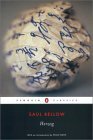
Saul Bellow - HerzogHerzog (1964) became highly regarded and a classic almost as soon as it was published. It centres intensely on the life of Moses Herzog, a Jewish intellectual who is driven close to the verge of breakdown by the adultery of his second wife with his close friend. He writes letters to famous people, both living and dead – Spinoza, Nietzsche, Winston Churchill, and the President of the USA – giving them a piece of his mind and asking their advice about how to live. The novel begins with a statement which sets the tone for everything that follows: “If I am going out of my mind, it’s all right with me, thought Moses Herzog”.
Saul Bellow Buy the book from Amazon UK
Saul Bellow Buy the book from Amazon US


Saul Bellow - Humboldt's GiftHumboldt’s Gift (1974) traces the life and memories of writer Charlie Citrine as he reflects on the influence of his boyhood friend and mentor, Humboldt. This character is based loosely upon Delmore Schwartz, the Jewish poet and short story writer whose early promise was never fulfilled. He descended into alcoholism and poverty, and died in a cheap hotel room, creating the modern version of the myth of the ‘doomed poet’. The novel deals with the ‘gift’ for aesthetic appreciation he passes on to his close friend Charlie, the narrator of the novel.
Saul Bellow Buy the book from Amazon UK
Saul Bellow Buy the book from Amazon US


Saul Bellow - RavelsteinRavelstein (2000) is something of a double portrait. Abe Ravelstein, a mega-successful Jewish academic realises that he might be dying. He invites his friend Chick to write an biographical study of him. What we get is a not-so-thinly disguised portrait of the critic Allan Bloom written by a character who has had all the brushes with life which Bellow experienced in his own: near-death illness, late-life divorce, and happiness with a new wife. Since his death, it has become a lot clearer just how much of his own life Bellow put into his fiction.
Saul Bellow Buy the book from Amazon UK
Saul Bellow Buy the book from Amazon US

© Roy Johnson 2009


More on Saul Bellow
More on short stories
More on biography


Filed Under: 20C Literature Tagged With: American literature, Dangling Man, Henderson the Rain King, Herzog, Humboldt's Gift, Literary studies, Modern novel, Ravelstein., Saul Bellow, Sieze the Day

Scholarly Journals at the Crossroads

July 13, 2009 by Roy Johnson

academic writing: electronic versus print publishing

It had to happen: an email discussion so interesting, it has been published between paper covers. Don’t be put off by the long title: Scholarly Journals at the Crossroads is the account of a debate which embraces a number of important contemporary issues, from digital publishing to intellectual democracy and the politics of knowledge.

The discussion was one which exploded in the summer of 1994 on the discussion list VPIEJ-L [Virginia Polytechnic Institute, Electronic Journals]. Steven Harnad [then at Princeton] posted a brief article concerning the future of scholarly journals. His argument is that scholars working in what he calls the ‘esoteric’ fields of specialisms (particularly the sciences) do not need to publish on paper; they merely wish to be read by their peers. And since they don’t expect to be paid for what they make public, why shouldn’t they put their work straight onto the Net in preprint form. They can invite comment, make Whatever revisions they feel warranted, then archive the finished article in digital form. By following this procedure, peer review is maintained, but the system works more rapidly and less expensively. Most importantly, they can avoid the dinosaur procedures and high costs of traditional print journals. As he puts it himself (in characteristically succinct form):

What scholars…need is electronic journals that provide (1) rapid, expert peer-review, (2) rapid copy-editing, proofing and publication of accepted articles, (3) rapid, interactive, peer commentary, and (4) a permanent, universally accessible, searchable and retrievable electronic archive.

Many other advantages to this proposal were outlined during the debate which followed. Put everything On-Line, and access is free at the desktop twenty-four hours a day. Scholars in fields such as mathematics are already editing their own work for publication (using TeX) – so why should this work be done again less expertly by editors? Fellow scientists and librarians were quick to see the good sense of these proposals.

Objections followed too, of course. His critics come up with compromise and half-way-house solutions, mainly resting on the ‘tradition’ and ‘authority’ of the refereed and printed journal. But Harnad sticks to his proposal that for esoteric publications where authors simply want their work to be read, and do not expect any payment, there is no reason why their work should pass through the laborious, slow, and very expensive process of print publication.

Having established the ‘Subversive Proposal’, he defends his essentially clear view and simple suggestions against all comers. His are opinions which threaten those who currently control the means of production, distribution, and exchange of intellectual property. He takes on criticisms, subjects his own views to inspection, and sets a tone of ‘collegiate debate’ which is commendable.

The editors have retained on-page some of the typographic flavour of email discussion. There’s a lot of repetition of quotes from earlier messages – as well as some revealing date-stamping, which shows major contributions being answered by others within two hours. Quotations have mercifully been attributed, but for the sort of audience this book is aimed at, this degree of ‘full explanation’ may not really have been necessary. However, this is a very small quibble.

Midway through the debate there is major intervention by Naylor from Southampton University (UK) [where Harnad transferred a few weeks later]. Even though he wishes to support the subversive proposal, he points to the problems it would raise for paper publishers. It is then fascinating to see how Harnad subjects this contribution to rigorous clear-thinking and shows it to be held back by what he calls a “papyrocentric” view of publication. In the course of pursuing this argument he throws up a number of important distinctions to be made about the different forms ‘publication’ may take, and the implications these have for scholarship, economics, and intellectual culture in general.

The other main contributor is Paul Ginsparg, who maintains an archive of scholarly materials at Los Alamos which receives more than 20,000 hits per day. That is, more than twenty thousand physicists from all over the world download articles in electronic form – a medium which as he points out, has advantages possessed by no other:

there are many things that the new medium supports … including the overall fluid nature (on-line annotations, continuously graded refereeing, automated hyperlinks to distributed resources including non-text-based applications) that simply have no analogue in print.

He also mentions – en passant – the advantages of directly digitised text over scanned page images (a ratio of 1 to 500 in disk space required). These exchanges explore in concrete detail the possibilities of electronic publication which have been discussed in theory by people such as Ted Nelson, Jay Bolter, and George Landow. Here we have the financial and practical minutiae of editing, printing, and distributing knowledge in electronic form – with the World Wide Web looming larger and larger as each page is turned.

Discussion of costs becomes very detailed on the varying practices in different disciplines – yet none of the contributors seem to take into account the hidden subsidies of people doing editorial work in time which is paid for or made available by their universities. Bernard Naylor gets near to this point when he queries “the propriety of academic institutions using public money … in order to drive a viable industry … to the wall”. However, his observation is made to cast doubt on the wisdom of scholars exchanging information freely instead of passing it through the hands of all those poor publishers.

There are one or two other academic blind-spots. It would be easy for a reader to get the impression from some contributions that scholars do not profit from their work. This might be true superficially – they will not get rich by selling the words they write. But of course as a result of publishing they are able to secure promotion. The progression from lecturer, to senior lecturer, and on to Professor involves a not-inconsiderable salary increase – and let’s not forget that the writing of these articles and books is often done [largely] in time which is payed for at taxpayers’ or funding agencies’ expense. Which other occupations have paid sabbatical terms and periods of study-leave up to a year long? However, this is another strength of Harnad’s argument. He suggests that electronic publication releases authors from what he calls a Faustian pact with commercial publishers.

On a peripheral note, it is interesting that these experienced and fairly high-level scholars from fields as diverse as mathematics, psychology, and particle physics, all manage to communicate with each other in a manner which is clear, direct, and sometimes quite elegant. None of them resort to the silly show-off jargon of the academically modish and the fashion victims of ‘Cultural Theory’. They don’t even push forward their own subject specialisms, but concentrate on the issue in question – electronic communication between peers.

The more books one reads on electronic publication, Hypertext, and digital technology, the more one realises how convenient, comfortable portable, and aesthetically pleasing the printed book remains – produced by what Nicholas Negroponte describes as “squeezing ink onto dead trees”. But this does not invalidate Harnad’s proposal: if a text is urgent, hot, and written for a minority – we’ll read it on-screen, add comments, and send it back within the hour, rather than wait for the Dinosaur Publishing methods (and timescale) of ‘getting it onto paper’. The editors make the point that there is no sharp ‘answer’ or ‘conclusion’ to these issues. [In fact this debate is still currently raging in the Hypertext-Journal discussion group].

This is a book for specialists, but it encompasses issues which are part of the profound effect of the forces of digitisation and the Internet. The vested interests of commercial publishers and academic institutions may take some time to shift, but their fault lines are remorselessly exposed here. Harnad’s vision and his debate with contemporaries gives us a view of a world which is breaking apart, in the very process of being overtaken by the forces of New Technology.

© Roy Johnson 2000

Buy the book at Amazon UK

Buy the book at Amazon US


Ann Okerson and James O’Donnell (eds) Scholarly Journals at the Crossroads: A Subversive Proposal for Electronic Publishing, An Internet Discussion about Scientific and Scholarly Journals and Their Future, Washington DC: Office of Scientific & Academic Publishing Association of Research Libraries, June 1995, pp.242, ISBN 0918006260


More on publishing
More on journalism
More on creative writing
More on writing skills


Filed Under: Publishing, Writing Skills Tagged With: Academic writing, Hypertext, Media, Publishing, Scholarly Journals

Schott’s Almanac

November 22, 2009 by Roy Johnson

entertaining collection of trivia and unusual facts

I was given an earlier version of Schott’s Almanac as a Xmas present, and it kept me smiling all through the holiday. It’s printed to look like an old encyclopedia, but in fact it’s a new compilation of the most amazing – and amusing – trivialities. It starts off with things such as a list of all the diseases doctors are legally obliged to report, the road directions for driving from Land’s End to John O’Groats, and key details of all the James Bond films. It also lists quotable quotes from Samuel Johnson and – just in case you need it – a list of blood group compatibilities, and who has won the Boat Race since 1829. My favourite for the dinner table quiz was how to pronounce toff British surnames such as Auchinlech, Bohun, and Colquhoun.

Schott's Almanac 2010It’s the sort of book which literary people might keep in the lavatory – but personally I found it difficult to put down once I started reading it. There’s serious stuff too – such as legal and medical terminology [my old favourite ‘borborygmous’ makes an appearance – it means ‘rumbling of the stomach’] heraldic colour symbolism, and how to wrap a sari. But it’s the oddity of the juxtapositions items which gives the book its character. A list of bed sizes sits next to compound plurals [adjutants-general and filets mignons] and the rules for a game of Tug-of-War.

If you want a list of the Beatles’ UK number one singles, illustrated definitions of cloud types, or the names of suppliers to the Queen, including her Christmas crackers – it’s all in here.

This year’s edition is separated into thirteen sections (Chronicle, The World, Society & Health, Media & Celebrities, Music & Cinema, Books & Arts, Sci, Tech, Net, Travel & Leisure, Money, Parliament & Politics, Establishment & Faith, Sport, and Ephemera). As it says on the cover “Schott’s Alamanac presents the modern year with an archiac twist.”

Schott's Almanac   Buy the book at Amazon UK

Schott's Almanac   Buy the book at Amazon US

© Roy Johnson 2009


Ben Schott, Schott’s Almanac 2010, London: Bloomsbury, 2010, pp.352, ISBN: 0747598428


More on language
More on literary studies
More on writing skills
More on creative writing
More on grammar


Filed Under: Dictionaries Tagged With: Almanac, Reference, Scott's Almanac, Trivia, Year book

Screen

June 26, 2009 by Roy Johnson

essays on graphic design, new media, and visual culture

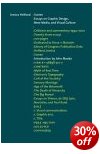
Jessica Helfand is a critic of digital media and design matters. This collection of essays Screen first appeared in Eye, The New Republic, and Print Magazine. They deal with issues of visual design, digital culture, film, and media in general – including television, radio, and the Web. They are commendably short pieces, and it has to be said that they are elegantly written. Her formula is to take a single observation as a starting point, then spin it around with lots of cultural references to make gnomic statements about the state of culture in society.

ScreenThe problem is that they are basically personal opinions, and she very rarely examines concrete examples in any detail. This approach leads her into the marshy swamps of false generalisation. On our sense of space in a digital age, she claims:

The computer is our connection to the world. It is an information source, an entertainment device, a communications portal, a production tool … But we are also its prisoners: trapped in a medium in which visual expression must filter through a protocol of uncompromising programming scripts

Yes, it’s true that using computers requires mastery of complex techniques – but we are not its prisoners, because our sense of space is formed by many sources beyond the computer screen.

It’s obvious that she is well informed on digital technology. She discusses issues of web design, navigation buttons, splash screens, and the cultural significance of ‘rollovers’. Yet she confuses navigation with content, and even thinks that email has a homogenising effect:

In the land of email we all ‘sound’ alike: everyone writes in system fonts … Software protocols require that we title our mail, a leftover model from the days of interoffice correspondence, which makes even the most casual letter sound like a corporate memo.

That is simply not true. Anybody who receives more than a couple of dozen emails a day knows that most people generate their own ‘voice’ using this medium. And the titles of some of the messages I receive would certainly never make the ‘corporate memo’ file.

The fact is that there’s lot of techno-scepticism here. Underneath the glossy media guru carapace, she is actually digitally uncertain. Yet she’s not averse to patting herself on the back; she drops lots of Post-Modernist names, and at its most acute, her writing comes dangerously close to something from Pseud’s Corner. Encountering a consumer quiz on chicken nuggets, she reports

while I would like to report that my thoughts … drifted to Martin Heidegger or Giles Deleuze, to existentialism or metaphysics or even postmodernism, alas, they did not.

Fortunately, the collection is rescued by two excellent essays on the designer Paul Rand, where her analyses are much more meaningful because they are focused on concrete examples. The first is an analysis of his work as a commercial designer, and the second an interesting account of his methods as a teacher at Yale.

These two essays are first rate pieces of work. It’s a shame that the rest of the collection doesn’t match up. But having said that, the book comes larded with praise by other designers, and copies at my local bookshop have been flying off the shelves – so you will need to judge for yourself.

© Roy Johnson 2001

screen   Buy the book at Amazon UK

screen   Buy the book at Amazon US


Jessica Helfand, Screen: Essays on Graphic Design, New Media, and Visual Culture, New York: Princeton Architectural Press, 2001, pp.175, ISBN: 1568983107


More on design
More on media
More on web design


Filed Under: Graphic design, Media, Theory Tagged With: Design, Media, Media theory, New media, Screen, Theory

Search Engine Optimization

July 1, 2009 by Roy Johnson

how to maximise page rankings with search engines

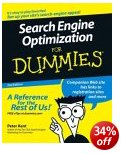
I bought this book on search engine optimisation (SEO) because I trust Peter Kent’s work. His best-selling 2000 work Poor Richard’s Web Site was well-written, clear and friendly advice, and he spells out technology in a way which is easy to understand. He starts out here by explaining how search engines do their work, then provides a quick overview of how to optimise pages. This is an intelligent approach, because the details of SEO can become quite complex, and people fixing their own sites rather than paying an SEO agency will want to get on quickly with the job.

Search Engine Optimization The process is one of gradual adjustment and refinement. It involves choosing the best keywords, creating good content, making submissions to the SEs, and generating incoming links. Each of these topics is then explained in greater detail. He always offers suggestions of free software and services where possible, and the resources mentioned are all listed at the book’s own web site. The only paid-for software he recommends is WordTracker which helps you to identify the most appropriate keywords for your site.

Most of the advice is perfectly straightforward and easy to follow – though it requires a great deal of your patience and time. It involves giving pages accurate descriptive titles, creating content which matches the description of what’s on offer, and avoiding tricks and anything which tries to put one over on the search engines

On the use of frames he is quite unequivocal. Don’t do it! But just in case you have done so, and can’t really change your site, he shows you how to eliminate the worst problems. The same is true for dynamic pages generated from databases, and for cookie-based navigation systems.

But then just to prove that he’s not being unnecessarily stuffy, he does have a chapter on how to trick the search engines – albeit after listing several reasons why you should not use them. These include stuffing keywords, making text and links hidden on the page, duplicating pages, making doorway pages, plus tricks with redirects and cloaking.

Next he deals with the business of submitting your site to the search engines – putting a lot of his emphasis on creating a sitemap. Once again he gives lots of convincing reasons why you should use the free submission systems and avoid the paid-for services.

He explains the way the system of page ranking works and why it is important that the pages of a site contain as many links as possible. This leads naturally to the difficult business of finding people who will link to your site. We get several link-swap offers a day on this site, but most of them turn out to be from what are called link farms – which search engines don’t like.

By the time he reaches the shopping directories he has to admit that all this link-building and site-promotion is a labour-intensive business. So there’s a section on how to get other people to do it for you!

© Roy Johnson 2010

Search Engine Optimization   Buy the book at Amazon UK

Search Engine Optimization   Buy the book at Amazon US


Peter Kent, Search Engine Optimization for Dummies, Indianapolis: Indiana, Wiley, 4th edition, 2010, pp.382, ISBN: 0470881046


More on eCommerce
More on media
More on publishing
More on technology


Filed Under: Computers, e-Commerce Tagged With: Business, e-Commerce, Optimization, Search Engine Optimization, SEO, Web design

Searching the Internet

August 24, 2009 by Roy Johnson

sample from HTML program and PDF book

Search engines

1. Searching the internet is the quickest way to locate data when researching for an essay or term paper. For this you will need a search engine. The most popular without a doubt is Google, but there are others – such as Alta-Vista, Yahoo, and Infoseek.

2. Remember that anybody can put data on the Net. You need to evaluate the quality of the information you recover.

3. Always give full details of the source of any information you use. There are new conventions for citing electronic sources.

4. A search engine will scan its database (or the Net itself) for whatever word(s) you type in the FIND box. It will then return a number of ‘hits’ – possibly rated according to likely significance.

5. Most of the popular search engines use slightly different methods and databases. If you don’t find what you want with one, try another. Some will quote the first few lines of an extract.

Search techniques

6. Be as specific and ‘narrow’ as possible in defining your request. General and ‘wide’ requests will result in too many hits. For example…

7. Say you were researching pineapple production in Brazil in 1997. A search on ‘pineapple’ might result in 10,000 hits. You have ten thousand documents to evaluate!

8. But choosing ‘pineapples+Brazil+1997’ narrows the search to documents which include all these terms.

Boolean terms

9. Most search engines will recognise the use of terms which help you to narrow your request.

10. ‘Bacon AND tomato’ will locate documents which contain both these terms.

11. ‘Bacon OR tomato’ will locate documents which contain either of these terms.

12. ‘Bacon NOT tomato’ will locate documents which contain one term, but not the other.

13. You can also use keyboard symbols to refine a search. The wildcard [*] is powerful but should be used with care. A search for ‘Colum*’ would return Columbus, Columbia, Columbian, Column, and so on.

General points

14. Letter case doesn’t matter with most search engines. ‘Smith’, ‘smith’ and ‘SMITH’ are all the same.

15. Don’t assume the data you are looking for must be available on line.

16. Thousands of pages are added to the Web daily, but the total is still far less than the volume of printed material in big libraries.

17. Many search engines will now allow you to narrow your searches by

  • language (Spanish, English French)
  • date (in last 2/3 days, week, month)
  • continent (co.uk, com.ca, ac.au)
  • source (Web, newsgroups, companies)

© Roy Johnson 2003

Buy Writing Essays — eBook in PDF format
Buy Writing Essays 3.0 — eBook in HTML format


More on writing essays
More on How-To
More on writing skills


Filed Under: Writing Essays Tagged With: Academic writing, Essays, Internet search, Reports, Search, Study skills, Term papers, Writing skills

Secrets of Successful Web Sites

July 18, 2009 by Roy Johnson

business strategy and management of web design projects

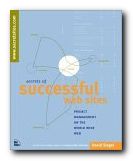
David Siegel is a Web design guru who made his name with the best-selling Creating Killer Web Sites. That was a manifesto on graphic presentation: this is his thesis on the organisation and management of web design projects. The first part of the book offers fifteen case studies; the second part is a methodology of web site design. This takes into account the business and strategic issues of making a site effective, as well as the technicalities of colour, page design, and navigation. The book will appeal to individual designers who want to create their own business – those people with ambition to move from the spare bedroom into their own office.

Secrets of Successful Web SitesThe case studies deal with companies such as Land Rover, National Geographic, Virgin, Porsche, a brewery, and a university. There’s also a fascinating account of the origins of Salon web magazine and how it functions. These are lively mini-essays which reveal the secrets of good business strategies – as well as some of its dangers and pitfalls.

The later chapters describe the planning and design strategies used on a typical web project. At its centre is the project or development web site – where prototypes, help files, and work in progress are posted for comment.

He takes his analysis right through to the launch of a web site, and even the fine details of whose names should appear in the credits. It’s full of interesting tips, such as getting clients to agree on structure and navigation before introducing colour – which is very subjective and almost always causes disagreements.

He’s very good on writing business proposals: how to work out what to charge, and what details to take into account when drawing up estimates for a job – as well as how to spot danger signs.

There are also some useful tips on contracts of agreement and copyright of work . These are backed up with downloadable template documents at the book’s own web site.

So, like his Killer Web Sites, this is full of thought-provoking ideas expressed in an energetic and ‘committed’ style. It’s also a beautifully designed and printed book. Anyone who is interested in e-commerce and web-based business will be interested in what he has to offer.

© Roy Johnson 2002

Buy the book at Amazon UK

Buy the book at Amazon US


David Siegel, Secrets of Successful Web Sites, Indianapolis (IN): Hayden Books, 1997, pp.304, ISBN: 1568303823


More on web design
More on digital media
More on technology


Filed Under: Web design Tagged With: Information architecture, Project management, Secrets of Successful Web Sites, Web design

Semantics – how to understand it

September 13, 2009 by Roy Johnson

free pages from our English Language software program

Semantics – definition

semantics Semantics is a part of language studies which focuses on the meaning of what is spoken or written.

redbtn It can encompass whole items such as a lecture or an annual report, or the smallest unit of meaning.

redbtn Linguists do not regard the word as the smallest unit, but the components of a word which carry separate items of meaning.

redbtn The smallest unit of meaning in a language is called a morpheme.


Examples

redbtn Here are some examples of linguistic study which would fall under the title of semantics:

  • Stylistic analysis of the imagery used in a poem.
  • Analysis of point of view in a novel or short story.
  • A study of tragic themes in Shakespeare’s plays.
  • The study of approaches to translation.
  • Tracing the development of English nouns from the Anglo-Saxon period.

Use

redbtn The semantic level of a statement, whether it be spoken or written, can be seen as the reason for its existence.

redbtn Meaning develops and shifts constantly in any language, and semantic study is often an attempt to chart these changes, using the structure of the language as a yardstick.

redbtn The smallest unit of meaning is known as a morpheme. Words can be broken down according to their morphological make up.

redbtn For instance the word horse is a morpheme, because no smaller part of it can stand alone with any significant meaning.

redbtn The same would be true for words such as big, talk, and giraffe.

redbtn However the word horses is made up of two morphemes:

horse [the animal] + s [which expresses a plural].

redbtn So, even though it is only one letter, s can be a morpheme.

redbtn The following sequence shows how a word of one morpheme can become part of a word with two, then three, then four morphemes or separate units of meaning.

attract 1 morpheme
attract/ive 2 morphemes
un/attract/ive 3 morphemes
un/attract/ive/ly 4 morphemes

redbtn However, where the semantic additions to the words are prefixes [un] and suffixes [ive] and [ly], they are called bound, rather than free morphemes.

redbtn In other words, the semantic additions could not stand alone as units of meaning in the same way as the free morpheme [attract] can.

redbtn We can find words made up of one or more free morphemes — such as mantel/piece.

redbtn Alternatively, they might be made up of one or more free morphemes and one or more bound morphemes — such as ir/regular or dough/nut/ting.

redbtn A word can only be split up into separate morphemes when at least one of the semantic units can stand alone.

redbtn Compare the two following examples:

preposterous 1 free morpheme
un/grateful 1 bound + 1 free morpheme

redbtn The meaning of words is not absolutely fixed. New meanings can be attributed to words if enough people use them. Alternatively, meanings can be ‘lost’. This phenomenon is known as ‘semantic shift’.

redbtn The word ‘gay’ for example, has changed its meaning radically during the past twenty years. The word itself remains, but it has undergone a semantic shift. It’s like using the same box for a changed content.

redbtn Sometimes words can ‘disappear’ from use [even though they might remain in a dictionary]. Most people know and use the word unequal, but very few would know that English once had the term inequal for the same purpose. It is now merely a historical curiosity.

Self-assessment quiz follows >>>

© Roy Johnson 2004


English Language 3.0 program
Books on language
More on grammar


Filed Under: English Language Tagged With: English language, Language, Semantics

Semicolons – how to use them

September 13, 2009 by Roy Johnson

free pages from our English Language software program

Semicolons – definition

semicolons The semicolon [ ; ] marks a long pause in a sentence.

redbtn It is half way between a comma and a colon.


Examples

Neither of us spoke; we merely waited to see what would happen.

He usually took great care; even so he made a few errors.

Four objects lay on the desk: a large book; a spiral-bound notepad; a glass vase containing flowers; and a silver propelling pencil.


Use

redbtn Semicolons are used between clauses which could stand alone, but which are closely related.

redbtn They are also used to punctuate lists in continuous prose writing.

redbtn NB! If you’re in any doubt about the semicolon – don’t use it.

redbtn The semicolon marks a pause which is longer than a comma, but not as long as a colon. This is a subtle distinction.

redbtn It is most commonly used between clauses which could be expressed as separate sentences, but which have some logical connection.

redbtn For instance, in the following example there could be a full stop after ‘England’:

Rutland was formerly the smallest county in England; no other area in the land was famous for so little.

redbtn The semicolon is used to avoid ambiguity in sentences composed of phrases of different length and a mixed content:

The Chairman welcomed the President, Dr Garvey; the Vice-President Mr Barncroft and his wife; several delegates from the United States; and members of the public who had been invited to attend.

redbtn Because the semicolon may be used instead of a full stop, some people use it without discrimination. They connect clause after clause with semicolons where no real link exists between them. This creates grammatical confusion and very poor style.

Self-assessment quiz follows >>>

© Roy Johnson 2004


English Language 3.0 program
Books on language
More on grammar


Filed Under: English Language Tagged With: English language, Language, Punctuation, Semicolons, Writing

Semicolons in essays

August 25, 2009 by Roy Johnson

sample from HTML program and PDF book

1. If you are in any doubt at all concerning the correct use of semicolons – then avoid using them entirely. They are the most commonly misused and misunderstood mark of punctuation.

2. It is perfectly possible to write clearly and effectively using only the comma and the full stop. Do this if you are in any doubt about the use of the semicolon (and the colon).

3. Remember that the semicolon represents a pause which is longer than a comma but shorter than a full stop (and a colon). It is normally used to separate clauses which could stand alone, but which are closely related.

4. It is used when the second clause expands or explains the first:

Neither of us spoke; we merely waited patiently in silence to see what would happen next.

5. It is used when the clauses describe a sequence of actions or different aspects of the same topic:

There was a sharp, bracing air; the ground beneath us was dry; the sea was calm and clear.

6. It is used before clauses which begin with ‘nevertheless’, ‘therefore’, ‘even so’, and ‘for instance’:

He usually took great care; even so he made a few errors.

7. It is used to mark off a series of phrases or clauses which themselves contain commas:

For this exercise you will need the following materials: some scrap paper; a pen, preferably blue or black; some A4 envelopes; and some good, white, unlined writing paper.

© Roy Johnson 2003

Buy Writing Essays — eBook in PDF format
Buy Writing Essays 3.0 — eBook in HTML format


More on writing essays
More on How-To
More on writing skills


Filed Under: Writing Essays Tagged With: Academic writing, Essays, Punctuation, Reports, Semicolons, Study skills, Term papers, Writing skills

  • « Previous Page
  • 1
  • …
  • 68
  • 69
  • 70
  • 71
  • 72
  • …
  • 103
  • Next Page »

Get in touch

info@mantex.co.uk

Content © Mantex 2016
  • About Us
  • Advertising
  • Clients
  • Contact
  • FAQ
  • Links
  • Services
  • Reviews
  • Sitemap
  • T & C’s
  • Testimonials
  • Privacy

Copyright © 2026 · Mantex

Copyright © 2026 · News Pro Theme on Genesis Framework · WordPress · Log in