Mantex

Tutorials, Study Guides & More

  • HOME
  • REVIEWS
  • TUTORIALS
  • HOW-TO
  • CONTACT
>> Home / 2009 / Archives for October 2009

Archives for October 2009

Peggy Guggenheim

October 15, 2009 by Roy Johnson

poor little rich girl

Peggy Guggenheim came from a family of rich Jewish business people who had made fortunes as immigrants in the nineteenth century from trade, mining, and eventually banking. Her father was a womaniser who died aboard the Titanic in 1913 – putting on his dinner clothes to go down in style. When she was nineteen she inherited five million dollars, though as Mary Dearborn points out in this fairly even-handed biography, everybody assumed that she had even more, and couldn’t understand that by Guggenheim standards she came from a ‘poor’ side of the family.

Peggy Guggenheim: Mistress of ModernismThe first thing she spent the money on was an operation to reduce the size of her nose. The procedure went badly wrong and had to be aborted, leaving her worse off than before. In 1921 she married Franco-American Laurence Vail, who introduced her to Bohemian life in the Latin Quarter and in Montmartre. She also met two of his ex-lovers who were to become lifelong friends – Mary Reynolds and Djuna Barnes. Her marriage (the first of many) was a mixture of restless Bohemianism and physical abuse from her husband.

They settled in a house near Toulouse, she had two children, and she sent $10,000 to support the 1926 General Strike in the UK. With Vail she mixed in a fast and arty set: the pages are littered with the names of the now famous – Jean Cocteau, Man Ray, Isodora Duncan, Marcel Duchamp, and Ernest Hemingway – all of whom were happy to share her largesse. She managed to extricate herself from the abusive marriage with the help of her friend and neighbour, Emma Goldmann, the feminist and anarchist. No sooner was this accomplished than she paired off with the Englishman John Holmes who Mary Dearborn describes as “one of the most singularly unproductive men of letters that England may have every known”

There are interesting revelations of the sheer dilettantism which underpins the arty bohemianism of these people. At one point Peggy Guggenheim was trailing across the Atlantic trying to sell decorative lampshades made by her friend Mina Loy.

It’s a life of living in rented houses – in France, England, Switzerland – wherever is fashionable – making visits to America, endless parties, oceans of Champagne, violent rows, fights in restaurants, sexual infidelities – and nobody in sight engaging anything remotely like paid employment.

When John Holmes died unexpectedly (largely of alcohol poisoning) she replaced him with Douglas Garman, another would-be writer, and under his left-wing influence she even joined the Communist Party. A further succession of weekend (and week long) house parties ensued. And rather like the Bloomsbury Group they combined their promiscuity with a curious form of ‘keeping up appearances’ in a bid to preserve social respectability. In common with aristocratic practices, the children produced in these alliances were billeted in outhouses, sent off to boarding schools, raised by paid help, and put unaccompanied on trains to travel half way across Europe at holiday times.

When she got rid of her third abusive husband she began, at forty, what was to become her life vocation. Advised by Marcel Duchamp, she opened a gallery on London devoted to modern art – and surrealism in particular. She began serious collecting, and quickly ammassed a large collection of works by its foremost practicioners, most of whom she knew personally.

In fact many of them either had been or would become her lovers, because free of marriage, she began a mid-life career of sexual emancipation which few would be able to match. Her list of conquests is almost endless: Giorgio Joyce (son of James), Yves Tanguay, Roland Penrose, E.L.T.Mesens, Max Ernst, Marcel Duchamp, and even Samuel Beckett.

By 1940, living in France, she was under serious threat from the Nazis, even though they didn’t seem to realise that she was Jewish. So like many other people she moved to the south then emigrated to America – cleverly arranging for her collection of art works to be sent as ‘household effects’ to avoid tax. Having assembled the collection as a work of love, she wished to put it on show, and despite all the odds she did so in 1942 in New York.

Her concept was novel: it was not just a museum type exhibition, but a living gallery which promoted the work of new young American artists alongside her examples of European art. The gallery was designed to be interactive, and it was a huge success. New York life suited her: she continued to bed men at a prodigious rate, and at one time she lived with a homosexual man with whom she went out on fishing expeditions to pick up sexual partners who they shared.

She exhibited and established the reputations of Mark Rothko, Robert Motherwell, and Jackson Pollock. This was the period in which abstract expressionism swept American modernism into the limelight, propelled by influential critics such as Clement Greenberg and Harold Rosenberg. [See Tom Woolf’s The Painted Word for a sceptical view of the same period.]

And yet almost immediately after the war ended, having established this influential presence in the USA, she closed up shop and decamped to Venice, where she opened the museum that now bears her name. Despite attempts from friends and family alike to deflect her from her purpose, she kept the collection intact, and it now stands as a testament to her personal vision.

In fact last time I visited the gallery it struck me how it encompassed quite a short period of art and a part of the modernist movement which now seems rather tacky – with all the mumbo-jumbo of ‘the unconscious’, the empty posturing of ‘manifestos’, and jejune works by second-rate painters. So the collection is quite an accurate reflection of her life, the later years of which were spent as the grand old lady of the international art scene. But behind the public front of naked sunbathing on the roof of her Grand Canal Palazzo, her gay assistants, and being punted around in the last private gondola in Venice, her real concerns were those of many other elderly ladies the world over – her pet dogs (Lhazo apsos) her wayward children (daughter dead from drugs) and the loneliness of old age.

Peggy Guggenheim Buy the book at Amazon UK

Peggy Guggenheim Buy the book at Amazon US

© Roy Johnson 2009


Mary Dearborn, Peggy Guggenheim: Mistress of Modernism, London: Virago, 2004, pp.448, ISBN 1844080609


More on art
More on media
More on design

Filed Under: 20C Literature, Art, Biography, Lifestyle Tagged With: Art, Biography, Cultural history, Modernism, Peggy Guggenheim, Surrealism

Print Culture bibliography

October 27, 2009 by Roy Johnson

book history, bibliographic studies, and textual culture

Abdurgham, Alison. Women in Print: Writing and Women’s Magazines from the Restoration to the Accession of Victoria. London: Allen & Unwin, 1972.

Altick, Richard Daniel. The English Common Reader: A Social History of the Mass Reading Public, 1800-1900. 2nd ed. Columbus: Ohio State UP, 1998.

Armbruster, Carol, ed. Publishing and Readership in Revolutionary France and America. Westport, CT: Greenwood Press, 1993.

Anderson, Benedict R. O’Gorman. Imagined Communities: Reflections on the Origins and Spread of Nationalism. Rev. ed. London: Verso, 1991.

Anderson, Patricia. The Printed Image and the Transformation of Popular Culture 1790-1860. Oxford: Clarendon P of Oxford UP, 1991.

Armstrong, Adrian. Technique and Technology: Script, Print, and Poetics in France 1470-1550. New York: Oxford UP, 2000.

Barker, Hannah and David Vincent. Language, Print, and Electoral Politics, 1790-1832: Newcastle-under-Lyme Broadsides. Rochester, NY: Boydell P/Parliamentary History Yearbook Trust, 2001.

Baron, Naomi S. Alphabet to Email: How Written English Evolved and Where It’s Heading. London: Routledge, 2000.

Barton, David and Nigel Hall, eds. Letter Writing as a Social Practice. Philadelphia: John Benjamins, 2000.

Bazerman. Charles. The Languages of Edison’s Light. Cambridge, MA: Massachusetts Institute of Technology P, 1999.

—. Shaping Written Knowledge. Madison: U of Wisconsin P, 1988.

Bell, William, Laurel Brake, and David Finkelstein, eds. Nineteenth-Century and the Construction of Identities. New York: St. Martin’s P, 2000.

Besnier, Niko. Literacy, Emotion, and Authority. Cambridge, UK: Cambridge UP, 1995.

Birkerts, Sven. The Gutenberg Elegies: The Fate of Reading in an Electronic Age. Winchester, MA: Faber and Faber, 1994.

Blaney, Peter W. M. The First Folio of Shakespeare. Washington, DC: Folger Library Publications, 1991.

Bobrick, Benson. Wide as the Waters: The Story of the English Bible and the Revolution It Inspired. New York: Simon & Schuster, 2001.

Bolter, Jay David. Writing Space: Computers, Hypertext and the Remediation of Print. 2nd ed. Hillsdale, NJ: Lawrence Erlbaum Associates, 2001

Bolter, Jay David and Richard Grusin. Remediation: Understanding New Media. Cambridge, MA: Massachusetts Institute of Technology, pp.295, 1999.

Borgmann, Albert. Holding on to Reality: The Nature of Information at the Turn of the Millennium. Chicago: U of Chicago P, 1999.

Brewer, John. The Pleasures of the Imagination: English Culture in the Eighteenth Century, New York: Farrar, Straus and Giroux, 1997.

Burke, Sean, ed. Authorship: From Plato to the Postmodern: A Reader. Edinburgh: Edinburgh UP, 1995.

Cadman, Eileen, Gail Chester, and Agnes Pivot. Rolling Our Own: Women as Printers, Publishers and Distributors. London: Minority P Group, 1981.

Carlson, David R. English Humanist Books: Writers and Patrons, Manuscript and Print, 1475-1525. Toronto: U of Toronto P, 1993.

Cavallo, Guglielmo and Roger Chartier, eds. A History of Reading in the West. Trans. Lydia G. Cochrane. Amherst: U of Massachusetts P, 1999.

Certeau, Michel de. The Practice of Everyday Life. Trans. Steven Rendall. Berkeley: U of California P, 1984.

Chambers, Douglas. The Reinvention of the World: English Writing 1650-1750. London: Arnold/Hodder Headline Group, 1996.

Chambers, Douglas. The Reinvention of the World: English Writing 1650-1750. London: Arnold/Hodder Headline Group, 1996.

Chartier, Roger. The Cultural Uses of Print in Early Modern France. Trans. Lydia G. Cochrane. Princeton: Princeton UP, 1988.

—, ed. The Culture of Print: Power and the Uses of Print in Early Modern Europe. Trans. Lydia G. Cochrane. Princeton: Princeton UP, 1989.

—. The Order of Books: Readers, Authors, and Libraries in Europe Between the Fourteenth and Eighteenth Centuries. Trans. Lydia G. Cochrane. Stanford: Stanford UP, 1994.

Chaytor, H. J. From Script to Print: An Introduction to Medieval Vernacular Literature. London: W. Heffer and Sons, 1945.

Crain, Patricia A. The Story of A: The Alphabetization of America from The New England Primer to The Scarlet Letter. Stanford: Stanford UP, 2000.

Crosby, Alfred W. The Measure of Reality: Quantification and Western Society, 1250-1600. Cambridge, UK: Cambridge UP, 1997.

Cuddihy, John Murray. The Ordeal of Civility: Freud, Marx, Levi-Strauss, and the Jewish Struggle with Modernity. 2nd ed. Boston: Beacon P, 1987.

Darnton, Robert. The Forbidden Best-Sellers of Pre-Revolutionary France. New York: Norton, 1995.

Darnton, Robert and Daniel Roche. Revolution in Print: The Press in France, 1775-1800. Berkeley: U of California P, 1989.

Davidson, Cathy N. Revolution and the Word: The Rise of the Novel in America. New York: Oxford UP, 1986.

DeRitter, Jones. The Embodiment of Characters: The Representation of Physical Experiences on Stage and in Print, 1728-1749. Philadelphia: U of Pennsylvania P, 1994.

Dock, Julie Bates. The Press of Ideas: Readings for Writers on Print Culture and the Information Age. Boston: Bedford Books/St. Martin’s P, 1996.

Dolan, Frances E. Whores of Babylon: Catholicism, Gender and Seventeenth-Century Print Culture. Ithaca: Cornell UP, 1999.

Eberly, Rosa A. Citizens Critics: Literary Public Spheres. Urbana: U of Illinois P, 2000.

Eisenstein, Elizabeth L. Grub Street Abroad: Aspects of the French Cosmopolitan Press from the Age of Louis XIV to the French Revolution. Oxford: Clarendon P of Oxford UP, 1992.

—. The Printing Press as an Agent of Change. 2 vols. Cambridge, UK: Cambridge UP, 1979.

Eliot, Simon. Some Patterns and Trends in British Publishing, 1800-1919. London: Bibliographical Society, 1994.

Elsky, Martin. Authorizing Words: Speech, Writing, and Print in the English Renaissance. Ithaca: Cornell UP, 1989.

Ezell, Margaret J. M. Social Authorship and the Advent of Print. Baltimore: Johns Hopkins UP, 1999.

Farrell, Thomas J. Walter Ong’s Contributions to Cultural Studies: The Phenomenology of the Word and I-Thou Communication. Cresskill, NJ: Hampton, 2000.

Febvre, Lucien Paul Victor and Henri-Jean Martin. The Coming of the Book: The Impact of Printing, 1450-1800. Trans. David Gerard. Ed. Geoffrey Nowell-Smith and David Wootton. London: Verso, 1997.

Ford, Worthington Chauncey. The Boston Book Market, 1679-1700. New York: Burt Franklin, 1972. Reprint of 1917 ed.

Fox, Adam. Oral and Literate Culture in England, 1500-1700. New York: Oxford UP, 2000.

Frasca-Spada, Marina and Nicholas Jardine, eds. Books and the Sciences in History. Cambridge, UK: Cambridge UP, 2000.

Freedman, Joseph S. Philosophy and the Arts in Central Europe, 1500-1700: Teaching and Texts in Schools and Universities. Aldershot, UK: Ashgate, 1999.

Fuller, Mary C. Voyages in Print: English Travel to America 1576-1624. Cambridge, UK: Cambridge UP, 1995.

Gilmartin, Kevin. Print Politics: The Press and Radical Opposition in Early Nineteenth-Century England. Cambridge, UK: Cambridge UP, 1996.

Gitelman, Lisa. Scripts, Grooves and Writing Machines: Representing Technology in the Edison Era. Stanford: Stanford UP, 1999.

Goggin, Maureen Daly, ed. Inventing a Discipline: Rhetoric Scholarship in Honor of Richard E. Young. Urbana, IL: National Council of Teachers of English, 2000.

Goody, Jack. The Logic of Writing and the Organization of Society. Cambridge, UK: Cambridge UP, 1986.

—. The Power of the Written Tradition. Washington, DC: Smithsonian Institution P, 2000.

Graff, Harvey J. The Labryrinths of Literacy: Reflections on Literacy Past and Present. Rev. ed. Pittsburgh: U of Pittsburgh P, 1995.

—. The Legacies of Literacy: Continuities and Contradictions in Western Culture and Society. Bloomington: Indiana UP, 1987.

—. Literacy in History: An Interdisciplinary Research Bibliography. New York: Garland, 1981.

—. The Literacy Myth: Cultural Integration and Social Structure in the Nineteenth-Century City. New York: Academic P, 1979.

—, ed. Literacy and Social Development in the West: A Reader. New York: Cambridge UP, 1981.

Grafton, Anthony, April Shelford, and Nancy G. Siraisi. New Worlds, Ancient Texts: The Power of Tradition and the Shock of Discovery. Cambridge, MA: Belknap P of Harvard UP, 1992.

Gray, Floyd. Gender, Rhetoric, and Print Culture in French Renaissance Writing. Cambridge, UK: Cambridge UP, 2000.

Green, Ian. Print and Protestantism in Early Modern England. New York: Oxford UP, 2001.

Greetham, D. C. Textual Scholarship: An Introduction. New York: Garland, 1992. Includes extensive bibliography.

Gronbeck, Bruce E., Thomas J. Farrell, and Paul A. Soukup, eds. Media, Consciousness, and Culture: Explorations of Walter Ong’s Thought. Newbury Park, CA: Sage Publications, 1991.

Habermas, Jurgen. The Structural Transformation of the Public Sphere. Trans. Thomas Burger and Frederick Lawrence. Cambridge, MA: Massachusetts Institute of Technology P, 1989.

Harrison, Peter. The Bible, Protestantism, and the Rise of Natural Science. Cambridge, UK: Cambridge UP, 1998.

Hart, James David. The Popular Book: A History of America’s Literary Taste. New York: Oxford UP, 1950.

Havelock, Eric A. The Muse Learns to Write. New Haven: Yale UP, 1986.

Hayes, Kevin J. Poe and the Printed Word. Cambridge, UK: Cambridge UP, 2000.

Headrick, Daniel R. When Information Came of Age: Technologies of Knowledge in the Age of Reason and Revolution, 1700-1850. New York: Oxford UP, 2000.

Heim, Michael. Electric Language: A Philosophical Study of Word Processing. New Haven: Yale UP, 1987.

Hindman, Sandra L., ed. Printing the Written Word: The Social History of Books, circa 1450-1520. Ithaca: Cornell UP, 1991.

Hobart, Michael E. and Zachary S. Schiffman. Information Ages: Literacy, Numeracy, and the Computer Revolution. Baltimore: Johns Hopkins UP, 1998.

Howard-Hill, T. H. British Literary Bibliography and Textual Criticism, 1890-1969. Volume 6 of and index to British Literary Bibliography. Oxford: Clarendon P of Oxford UP, 1980.

Isaac, Peter and Barry McKay, eds. The Mighty Engine: The Printing Press and Its Impact. New Castle, DE: Oak Knoll P, 2000.

Ivins, William. Prints and Visual Communication. Cambridge, MA: Harvard UP, 1953.

Jagodzinski, Cecile M. Privacy and Print: Reading and Writing in Seventeenth-Century England. Charlottesville: UP of Virgina, 1999.

Johns, Adrian. The Nature of the Book: Print and Knowledge in the Making. Chicago: U of Chicago P, 1998.

Johnson-Eilola, Johndan. Nostalgic Angels: Rearticulating Hypertext Writing. Norwood, NJ: Ablex, 1997.

Jordan, John O. and Robert L. Patten, eds. Literature in the Marketplace: Nineteenth-Century British Publishing and Reading Practices. Cambridge, UK: Cambridge UP, 1995.

Kaestle, Carl F., Helen Damon-Moore, Lawrence C. Stedman, Katherine Tinsley, and William Vance Trollinger, Jr. Literacy in the United States: Readers and Reading Since 1880. New Haven: Yale UP, 1991.

Kaufer, David S. and Kathleen M. Carley. Communication at a Distance: The Influence of Print on Sociocultural Organization and Change. Hillsdale, NJ: Lawrence Erlbaum Associates, 1993.

Keller-Cohen, Deborah, ed. Literacy: Interdisciplinary Conversations. Cresskill, NJ: Hampton P, 1994.

Kernan, Alvin. Samuel Johnson and the Impact of Print. Princeton: Princeton UP, 1989.

Kilgour, Frederick G. The Evolution of the Book. New York: Oxford UP, 1998.

Kintgen, Eugene R. Reading in Tudor England. Pittsburgh: U of Pittsburgh P, 1996.

Knoppers, Laura Lunger. Constructing Cromwell: Ceremony, Portrait, and Print, 1645-1661. Cambridge, UK: Cambridge UP, 2000.

Kramnick, Jonathan Brody. Making the English Canon: Print-Capitalism and the Culture of the Past, 1700-1770. Cambridge, UK: Cambridge UP, 1998.

Lanham, Richard A. The Electronic Word: Democracy, Technology and the Arts. Chicago: U of Chicago P, 1993.

—. Literacy and the Survival of Humanism. New Haven: Yale UP, 1983.

Laspina, James Andrew. The Visual Turn and the Transformation of the Textbook. Mahwah, NJ: Lawrence Erlbaum Associates, 1998.

Leith, Philip. Formalism in AI and Computer Science. Chichester, UK: Ellis Horwood, 1990.

Logan, Robert. The Alphabet Effect: The Impact of the Phonetic Alphabet on the Development of Western Civilization. New York: William Morrow, 1986.

—. The Sixth Language: Learning & Living in the Internet Age. Toronto: Stoddart Publishing, 2000..

Love, Harold. The Culture and Commerce of Texts: Scribal Publication in Seventeenth-Century England. Amherst: U of Massachusetts P, 1998.

Luke, Carmen. Pedagogy, Printing, and Protestantism: The Discourse on Childhood. Albany: State U of New York P, 1989.

Manguel, Alberto. A History of Reading. New York: Penguin, 1996.

Marotti, Arthur F. Manuscript, Print, and the English Renaissance Lyric. Ithaca: Cornell UP, 1995.

Marotti, Arthur F. and Michael D. Bristol, eds. Print, Manuscript, and Performance: The Changing Relationships of the Media in Early Modern England. Columbus: Ohio State UP, 2000.

Martin, Henri-Jean, The History and Power of Writing, Chicago: University of Chicago Press, 1995, trns. Lynda G. Cochrane, pp.591, ISBN 0226508366

—. Print, Power, and People in Seventeenth-Century France. Trans. David Gerard. Metuchen, NJ: Scarecrow, 1993.

Mayer, Thomas F. and D. R. Woolf, eds. The Rhetorics of Life-Writing in Early Modern Europe: Forms of Biography from Cassandra Fedele to Louis XIV. Ann Arbor: U of Michigan P,1995.

Mazzio, Carla and Douglas Trevor, eds. Historicism, Psychoanalysis, and Early Modern Culture. New York: Routledge, 2000.

McGrath, Alister. In the Beginning: The Story of the King James Bible and How It Changed a Nation, a Language and a Culture. New York: Doubleday, 2001.

McIntosh, Carey. The Evolution of English Prose: Style, Politeness, and Print Culture. Cambridge, UK: Cambridge UP, 1998.

McKenzie, D. F. Bibliography and the Sociology of Texts. New York: Cambridge UP, 1999.

—. Oral Culture, Literacy, and Print in Early New Zealand: The Treaty of Waitangi. Wellington, NZ: Victoria UP, 1985.

McLuhan, Marshall. The Gutenberg Galaxy: The Making of Typographic Man. Toronto: U of Toronto P, 1962.

—. Understanding Media: The Extensions of Man. New York: McGraw-Hill, 1964.

Melendez, A. Gabriel. So All Is Not Lost: The Poetics of Print in Nuevomexicano Communities, 1834-1958. Albuquerque: U of New Mexico P, 1997.

Miller, Perry. The New England Mind: The Seventeenth Century. Cambridge, MA: Harvard UP, 1939.

Milton, John. ‘A Fuller Course in the Art of Logic Conformed to the Method of Peter Ramus’. Ed. and Trans. Walter J. Ong and Charles J. Ermatinger. Complete Prose Works of John Milton: Volume 8. Ed. Maurice Kelley. New Haven: Yale UP, 1982. 206-407

Mitch, David F. The Rise of Popular Literacy in Victorian England: The Influence of Private Choice and Public Policy. Philadelphia: U of Pennsylvania P, 1992.

Mitchell, W. J. T. Iconology: Image, Text, Ideology. Chicago: U of Chicago P, 1987.

—. Picture Theory. Chicago: U of Chicago P, 1995.

Morison, Samuel Eliot. The Founding of Harvard College. Cambridge, MA: Harvard UP,
1935.

—. Harvard College in the Seventeenth Century. 2 vols. Cambridge, MA: Harvard UP,
1936.

Moss, Ann. Printed Commonplace Books and the Structuring of Renaissance Thought. Oxford: Clarendon P of Oxford UP, 1996. Also see Yeo; Rechtien.

Oliphant, Dave and Robin Bradford, eds. New Directions in Textual Studies. Austin: Harry Ransom Humanities Research Center, U of Texas.

Ong, Walter J. The Barbarian Within: And Other Fugitive Essays and Studies. New York: Macmillan, 1962.

—. Faith and Contexts. 4 vols. Ed. Thomas J. Farrell and Paul A. Soukup. Atlanta: Scholars Press, 1992-1999; now distributed by Rowman & Littlefield.

—. Interfaces of the Word: Studies in the Evolution of Consciousness and Culture. Ithaca: Cornell UP, 1977.

—. ‘Literature, Written Transmission of.’ The New Catholic Encyclopedia. Ed. William J. McDonald. 15 vols. New York: McGraw-Hill, 1967. Reprinted in An Ong Reader; Challenges for Further Inquiry.

—. An Ong Reader: Challenges for Further Inquiry. Ed. Thomas J. Farrell and Paul A. Soukup. Cresskill, NJ: Hampton P, forthcoming.

—. Orality and Literacy: The Technologizing of the Word. London: Methuen, 1982.

—. The Presence of the Word: Some Prolegomena for Cultural and Religious History. New Haven: Yale UP, 1967.

—. Ramus, Method, and the Decay of Dialogue: From the Art of Discourse to the Art of Reason. Cambridge, MA: Harvard UP, 1958.

—. Review of Butler’s The Origin of Printing in Europe. The Historical Bulletin 19 (Mar. 1941): 68.

—. Review of McLuhan’s The Gutenberg Galaxy. America 107 (Sept. 15, 1962): 743, 747. Reprinted in An Ong Reader: Challenges for Further Inquiry.

—. Rhetoric, Romance, and Technology: Studies in the Interaction of Expression and Culture. Ithaca: Cornell UP, 1971.

Perkinson, Henry J. How Things Got Better: Speech, Writing, Printing, and Cultural Change. Westport, CT: Bergin & Garvey, 1995.

Peters, Julie Stone. Theatre of the Book 1480-1880: Print, Text and Performance in Europe. New York: Oxford UP, 2000.

Popkin, Jeremy D. The Press, Revolution, and Social Identities in France, 1830-1835. University Park: Pennsylvania State UP, 2001.

—. Revolutionary News: The Press in France, 1789-1799. Durham: Duke UP, 1990.

Postman, Neil. Amusing Ourselves to Death: Public Discourse in the Age of Show Business. New York: Viking Penguin, 1985.

Price, Leah. The Anthology and the Rise of the Novel from Richardson to George Eliot. Cambridge, UK: Cambridge UP, 2000.

Radway, Janice A. A Feeling for Books: The Book-of-the-Month Club, Literary Taste, and Middle-Class Desire. Chapel Hill: U of North Carolina P, 1997.

Rechtien, John G. Thought Patterns: The Commonplace Book as Literary Form in Theological Controversy during the English Renaissance. Diss. St. Louis U, 1975. Ann Arbor: UMI, 1975.

Rhodes, Neil and Jonathan Sawday, eds. The Renaissance Computer: Knowledge Technology in the First Age of Print. London: Routledge, 2000.

Richardson, Brian. Printing, Writers and Readers in Renaissance Italy. Cambridge, UK: Cambridge UP, 1999.

Rose, Mark. Authors and Owners: The Invention of Copyright. Cambridge, MA: Harvard UP, 1993.

Schmidt, Leigh Eric. Hearing Things: Religion, Illusion, and the American Enlightenment. Cambridge, MA: Harvard UP, 2000.

Schulte, Henry F. The Spanish Press, 1470-1966: Print, Power, and Politics. Urbana: U of Illinois P, 1968.

Secord, James A. Victorian Sensation: The Extraordinary Publication, Reception, and Secret Authorship of Vestiges of the Natural History of Creation. Chicago: U of Chicago P, 2000.

Sharpe, Kevin. Reading Revolutions: The Politics of Reading in Early Modern England. New Haven: Yale UP, 2000.

Sharratt, Peter. ‘The Present State of Studies on Ramus.’ Studi francesi 47-48 (1972): 201-13.

—. ‘Ramus 2000.’ Rhetorica: A Journal of the History of Rhetoric 18 (2000): 399-455.

—. ‘Recent Work on Peter Ramus (1970-1986).’ Rhetorica: A Journal of the History of Rhetoric 5 (1987): 7-58.

Solomon, Harry M. The Rise of Robert Dodsley: Creating the New Age of Print. Carbondale: Southern Illinois UP, 1996.

Spufford, Margaret. Small Books and Pleasant Histories. Athens: U of Georgia P, 1982.

Stephens, Mitchell. The Rise of the Image, the Fall of the Word. New York: Oxford UP, 1998.

Street, Brian V. Literacy in Theory and Practice. Cambridge, UK: Cambridge UP, 1984.

Sutherland, John A. Fiction and the Fiction Industry. London: Athlone, 1978.

—. Victorian Fiction: Writers, Publishers, Readers. New York: St. Martin’s P, 1995.

Taylor, Mark C. and Esa Saarinen. Imagologies: Media Philosophy. London: Routledge, 1994.

Tebeaux, Elizabeth. The Emergence of a Tradition of Technical Writing in the English Renaissance, 1475-1640. Amityville, NY: Baywood Publishing, 1997.

Topham, Jonathan R. ‘Scientific Publishing and the Reading of Science in Nineteenth-Century Britain: A Historiographical Survey and Guide to Sources.’ Studies in the History and Philosophy of Science 31 (2000): 559-612. Includes extensive bibliography.

Treglown, Jeremy and Bridget Bennett, eds. Grub Street and the Ivory Tower: Literary Journalism and Literary Scholarship from Fielding to the Internet. New York: Clarendon P of Oxford UP, 1998.

Ulmer, Gregory. Teletheory: Grammatology in the Age of Video. New York: Routledge, Chapman & Hall, 1989.

Tyson, Gerald P. and Sylvia S. Wagonheim, eds. Print and Culture in the Renaissance: Essays on the Advent of Printing in Europe. Newark: U of Delaware P/Associated U Presses, 1986.

Warner, Michael. The Letters of the Republic: Publication and the Public Sphere in Eighteenth-Century America. Cambridge, MA: Harvard UP, 1990.

Watt, Ian. The Rise of the Novel: Studies in Defoe, Richardson, and Fielding. Berkeley: U of California P, 1957.

Watt, Tessa. Cheap Print and Popular Piety, 1550-1640. Cambridge, UK: Cambridge UP, 1991.

Weber, Harold M. Paper Bullets: Print and Kingship under Charles II. Lexington: UP of Kentucky, 1996.

Welch, Kathleen E. Electric Rhetoric: Classical Rhetoric, Oralism, and a New Literacy. Cambridge, MA: Massachusetts Institute of Technology P, 1999.

Wheale, Nigel. Writing and Society: Literacy, Print and Politics in Britain, 1590-1660. London: Routledge, 1999.

Williams, Gordon. Shakespeare, Sex and the Print Revolution. London: Athlone, 1996.

Woolf, Daniel. Reading History in Early Modern England. Cambridge, UK: Cambridge UP, 2000.

Wyss, Hilary E. Writing Indians: Literacy, Christianity, and Native Community in Early America. Boston: U of Massachusetts P, 2000.

Yeo, Richard. Encyclopaedic Visions: Scientific Dictionaries and Enlightenment Culture. Cambridge, UK: Cambridge UP, 2001. Includes commonplace books.

Zaret, David. Origins of Democratic Culture: Printing, Petitions, and the Public Sphere in Early Modern England. Princeton: Princeton UP, 2000.

Ziff, Larzer. Writing in the New Nation: Prose, Print, and Politics in the Early United States. New Haven: Yale UP, 1991.

Zboray, Ronald J. and Mary Saracino Zboray. A Handbook for the Study of Book History in the United States. Washington, DC: Center for the Book, Library of Congress, 2000; available from Oak Knoll Books. Includes extensive bibliography.

© Roy Johnson 2009


Reproduced with the permission of the author –

Thomas J. Farrell, Associate Professor, Department of Composition, University of Minnesota at Duluth; Duluth, MN


More on journalism
More on creative writing
More on writing skills
More on publishing


Filed Under: How-to guides, Journalism, Publishing Tagged With: Bibliography, Book history, Literary studies, Print culture, textual scholarship

Print Culture bibliography

October 1, 2009 by Roy Johnson

Print Culture bibliography

Abdurgham, Alison. Women in Print: Writing and Women’s Magazines from the Restoration to the Accession of Victoria. London: Allen & Unwin, 1972.

Altick, Richard Daniel. The English Common Reader: A Social History of the Mass Reading Public, 1800-1900. 2nd ed. Columbus: Ohio State UP, 1998.

Armbruster, Carol, ed. Publishing and Readership in Revolutionary France and America. Westport, CT: Greenwood Press, 1993.

Anderson, Benedict R. O’Gorman. Imagined Communities: Reflections on the Origins and Spread of Nationalism. Rev. ed. London: Verso, 1991.

Anderson, Patricia. The Printed Image and the Transformation of Popular Culture 1790-1860. Oxford: Clarendon P of Oxford UP, 1991.

Armstrong, Adrian. Technique and Technology: Script, Print, and Poetics in France 1470-1550. New York: Oxford UP, 2000.

Barker, Hannah and David Vincent. Language, Print, and Electoral Politics, 1790-1832: Newcastle-under-Lyme Broadsides. Rochester, NY: Boydell P/Parliamentary History Yearbook Trust, 2001.

Baron, Naomi S. Alphabet to Email: How Written English Evolved and Where It’s Heading. London: Routledge, 2000.

Barton, David and Nigel Hall, eds. Letter Writing as a Social Practice. Philadelphia: John Benjamins, 2000.

Bazerman. Charles. The Languages of Edison’s Light. Cambridge, MA: Massachusetts Institute of Technology P, 1999.

—. Shaping Written Knowledge. Madison: U of Wisconsin P, 1988.

Bell, William, Laurel Brake, and David Finkelstein, eds. Nineteenth-Century and the Construction of Identities. New York: St. Martin’s P, 2000.

Besnier, Niko. Literacy, Emotion, and Authority. Cambridge, UK: Cambridge UP, 1995.

Birkerts, Sven. The Gutenberg Elegies: The Fate of Reading in an Electronic Age. Winchester, MA: Faber and Faber, 1994.

Blaney, Peter W. M. The First Folio of Shakespeare. Washington, DC: Folger Library Publications, 1991.

Bobrick, Benson. Wide as the Waters: The Story of the English Bible and the Revolution It Inspired. New York: Simon & Schuster, 2001.

Bolter, Jay David. Writing Space: Computers, Hypertext and the Remediation of Print. 2nd ed. Hillsdale, NJ: Lawrence Erlbaum Associates, 2001

Bolter, Jay David and Richard Grusin. Remediation: Understanding New Media. Cambridge, MA: Massachusetts Institute of Technology, pp.295, 1999.

Borgmann, Albert. Holding on to Reality: The Nature of Information at the Turn of the Millennium. Chicago: U of Chicago P, 1999.

Brewer, John. The Pleasures of the Imagination: English Culture in the Eighteenth Century, New York: Farrar, Straus and Giroux, 1997.

Burke, Sean, ed. Authorship: From Plato to the Postmodern: A Reader. Edinburgh: Edinburgh UP, 1995.

Cadman, Eileen, Gail Chester, and Agnes Pivot. Rolling Our Own: Women as Printers, Publishers and Distributors. London: Minority P Group, 1981.

Carlson, David R. English Humanist Books: Writers and Patrons, Manuscript and Print, 1475-1525. Toronto: U of Toronto P, 1993.

Cavallo, Guglielmo and Roger Chartier, eds. A History of Reading in the West. Trans. Lydia G. Cochrane. Amherst: U of Massachusetts P, 1999.

Certeau, Michel de. The Practice of Everyday Life. Trans. Steven Rendall. Berkeley: U of California P, 1984.

Chambers, Douglas. The Reinvention of the World: English Writing 1650-1750. London: Arnold/Hodder Headline Group, 1996.

Chambers, Douglas. The Reinvention of the World: English Writing 1650-1750. London: Arnold/Hodder Headline Group, 1996.

Chartier, Roger. The Cultural Uses of Print in Early Modern France. Trans. Lydia G. Cochrane. Princeton: Princeton UP, 1988.

—, ed. The Culture of Print: Power and the Uses of Print in Early Modern Europe. Trans. Lydia G. Cochrane. Princeton: Princeton UP, 1989.

—. The Order of Books: Readers, Authors, and Libraries in Europe Between the Fourteenth and Eighteenth Centuries. Trans. Lydia G. Cochrane. Stanford: Stanford UP, 1994.

Chaytor, H. J. From Script to Print: An Introduction to Medieval Vernacular Literature. London: W. Heffer and Sons, 1945.

Crain, Patricia A. The Story of A: The Alphabetization of America from The New England Primer to The Scarlet Letter. Stanford: Stanford UP, 2000.

Crosby, Alfred W. The Measure of Reality: Quantification and Western Society, 1250-1600. Cambridge, UK: Cambridge UP, 1997.

Cuddihy, John Murray. The Ordeal of Civility: Freud, Marx, Levi-Strauss, and the Jewish Struggle with Modernity. 2nd ed. Boston: Beacon P, 1987.

Darnton, Robert. The Forbidden Best-Sellers of Pre-Revolutionary France. New York: Norton, 1995.

Darnton, Robert and Daniel Roche. Revolution in Print: The Press in France, 1775-1800. Berkeley: U of California P, 1989.

Davidson, Cathy N. Revolution and the Word: The Rise of the Novel in America. New York: Oxford UP, 1986.

DeRitter, Jones. The Embodiment of Characters: The Representation of Physical Experiences on Stage and in Print, 1728-1749. Philadelphia: U of Pennsylvania P, 1994.

Dock, Julie Bates. The Press of Ideas: Readings for Writers on Print Culture and the Information Age. Boston: Bedford Books/St. Martin’s P, 1996.

Dolan, Frances E. Whores of Babylon: Catholicism, Gender and Seventeenth-Century Print Culture. Ithaca: Cornell UP, 1999.

Eberly, Rosa A. Citizens Critics: Literary Public Spheres. Urbana: U of Illinois P, 2000.

Eisenstein, Elizabeth L. Grub Street Abroad: Aspects of the French Cosmopolitan Press from the Age of Louis XIV to the French Revolution. Oxford: Clarendon P of Oxford UP, 1992.

—. The Printing Press as an Agent of Change. 2 vols. Cambridge, UK: Cambridge UP, 1979.

Eliot, Simon. Some Patterns and Trends in British Publishing, 1800-1919. London: Bibliographical Society, 1994.

Elsky, Martin. Authorizing Words: Speech, Writing, and Print in the English Renaissance. Ithaca: Cornell UP, 1989.

Ezell, Margaret J. M. Social Authorship and the Advent of Print. Baltimore: Johns Hopkins UP, 1999.

Farrell, Thomas J. Walter Ong’s Contributions to Cultural Studies: The Phenomenology of the Word and I-Thou Communication. Cresskill, NJ: Hampton, 2000.

Febvre, Lucien Paul Victor and Henri-Jean Martin. The Coming of the Book: The Impact of Printing, 1450-1800. Trans. David Gerard. Ed. Geoffrey Nowell-Smith and David Wootton. London: Verso, 1997.

Ford, Worthington Chauncey. The Boston Book Market, 1679-1700. New York: Burt Franklin, 1972. Reprint of 1917 ed.

Fox, Adam. Oral and Literate Culture in England, 1500-1700. New York: Oxford UP, 2000.

Frasca-Spada, Marina and Nicholas Jardine, eds. Books and the Sciences in History. Cambridge, UK: Cambridge UP, 2000.

Freedman, Joseph S. Philosophy and the Arts in Central Europe, 1500-1700: Teaching and Texts in Schools and Universities. Aldershot, UK: Ashgate, 1999.

Fuller, Mary C. Voyages in Print: English Travel to America 1576-1624. Cambridge, UK: Cambridge UP, 1995.

Gilmartin, Kevin. Print Politics: The Press and Radical Opposition in Early Nineteenth-Century England. Cambridge, UK: Cambridge UP, 1996.

Gitelman, Lisa. Scripts, Grooves and Writing Machines: Representing Technology in the Edison Era. Stanford: Stanford UP, 1999.

Goggin, Maureen Daly, ed. Inventing a Discipline: Rhetoric Scholarship in Honor of Richard E. Young. Urbana, IL: National Council of Teachers of English, 2000.

Goody, Jack. The Logic of Writing and the Organization of Society. Cambridge, UK: Cambridge UP, 1986.

—. The Power of the Written Tradition. Washington, DC: Smithsonian Institution P, 2000.

Graff, Harvey J. The Labryrinths of Literacy: Reflections on Literacy Past and Present. Rev. ed. Pittsburgh: U of Pittsburgh P, 1995.

—. The Legacies of Literacy: Continuities and Contradictions in Western Culture and Society. Bloomington: Indiana UP, 1987.

—. Literacy in History: An Interdisciplinary Research Bibliography. New York: Garland, 1981.

—. The Literacy Myth: Cultural Integration and Social Structure in the Nineteenth-Century City. New York: Academic P, 1979.

—, ed. Literacy and Social Development in the West: A Reader. New York: Cambridge UP, 1981.

Grafton, Anthony, April Shelford, and Nancy G. Siraisi. New Worlds, Ancient Texts: The Power of Tradition and the Shock of Discovery. Cambridge, MA: Belknap P of Harvard UP, 1992.

Gray, Floyd. Gender, Rhetoric, and Print Culture in French Renaissance Writing. Cambridge, UK: Cambridge UP, 2000.

Green, Ian. Print and Protestantism in Early Modern England. New York: Oxford UP, 2001.

Greetham, D. C. Textual Scholarship: An Introduction. New York: Garland, 1992. Includes extensive bibliography.

Gronbeck, Bruce E., Thomas J. Farrell, and Paul A. Soukup, eds. Media, Consciousness, and Culture: Explorations of Walter Ong’s Thought. Newbury Park, CA: Sage Publications, 1991.

Habermas, Jurgen. The Structural Transformation of the Public Sphere. Trans. Thomas Burger and Frederick Lawrence. Cambridge, MA: Massachusetts Institute of Technology P, 1989.

Harrison, Peter. The Bible, Protestantism, and the Rise of Natural Science. Cambridge, UK: Cambridge UP, 1998.

Hart, James David. The Popular Book: A History of America’s Literary Taste. New York: Oxford UP, 1950.

Havelock, Eric A. The Muse Learns to Write. New Haven: Yale UP, 1986.

Hayes, Kevin J. Poe and the Printed Word. Cambridge, UK: Cambridge UP, 2000.

Headrick, Daniel R. When Information Came of Age: Technologies of Knowledge in the Age of Reason and Revolution, 1700-1850. New York: Oxford UP, 2000.

Heim, Michael. Electric Language: A Philosophical Study of Word Processing. New Haven: Yale UP, 1987.

Hindman, Sandra L., ed. Printing the Written Word: The Social History of Books, circa 1450-1520. Ithaca: Cornell UP, 1991.

Hobart, Michael E. and Zachary S. Schiffman. Information Ages: Literacy, Numeracy, and the Computer Revolution. Baltimore: Johns Hopkins UP, 1998.

Howard-Hill, T. H. British Literary Bibliography and Textual Criticism, 1890-1969. Volume 6 of and index to British Literary Bibliography. Oxford: Clarendon P of Oxford UP, 1980.

Isaac, Peter and Barry McKay, eds. The Mighty Engine: The Printing Press and Its Impact. New Castle, DE: Oak Knoll P, 2000.

Ivins, William. Prints and Visual Communication. Cambridge, MA: Harvard UP, 1953.

Jagodzinski, Cecile M. Privacy and Print: Reading and Writing in Seventeenth-Century England. Charlottesville: UP of Virgina, 1999.

Johns, Adrian. The Nature of the Book: Print and Knowledge in the Making. Chicago: U of Chicago P, 1998.

Johnson-Eilola, Johndan. Nostalgic Angels: Rearticulating Hypertext Writing. Norwood, NJ: Ablex, 1997.

Jordan, John O. and Robert L. Patten, eds. Literature in the Marketplace: Nineteenth-Century British Publishing and Reading Practices. Cambridge, UK: Cambridge UP, 1995.

Kaestle, Carl F., Helen Damon-Moore, Lawrence C. Stedman, Katherine Tinsley, and William Vance Trollinger, Jr. Literacy in the United States: Readers and Reading Since 1880. New Haven: Yale UP, 1991.

Kaufer, David S. and Kathleen M. Carley. Communication at a Distance: The Influence of Print on Sociocultural Organization and Change. Hillsdale, NJ: Lawrence Erlbaum Associates, 1993.

Keller-Cohen, Deborah, ed. Literacy: Interdisciplinary Conversations. Cresskill, NJ: Hampton P, 1994.

Kernan, Alvin. Samuel Johnson and the Impact of Print. Princeton: Princeton UP, 1989.

Kilgour, Frederick G. The Evolution of the Book. New York: Oxford UP, 1998.

Kintgen, Eugene R. Reading in Tudor England. Pittsburgh: U of Pittsburgh P, 1996.

Knoppers, Laura Lunger. Constructing Cromwell: Ceremony, Portrait, and Print, 1645-1661. Cambridge, UK: Cambridge UP, 2000.

Kramnick, Jonathan Brody. Making the English Canon: Print-Capitalism and the Culture of the Past, 1700-1770. Cambridge, UK: Cambridge UP, 1998.

Lanham, Richard A. The Electronic Word: Democracy, Technology and the Arts. Chicago: U of Chicago P, 1993.

—. Literacy and the Survival of Humanism. New Haven: Yale UP, 1983.

Laspina, James Andrew. The Visual Turn and the Transformation of the Textbook. Mahwah, NJ: Lawrence Erlbaum Associates, 1998.

Leith, Philip. Formalism in AI and Computer Science. Chichester, UK: Ellis Horwood, 1990.

Logan, Robert. The Alphabet Effect: The Impact of the Phonetic Alphabet on the Development of Western Civilization. New York: William Morrow, 1986.

—. The Sixth Language: Learning & Living in the Internet Age. Toronto: Stoddart Publishing, 2000..

Love, Harold. The Culture and Commerce of Texts: Scribal Publication in Seventeenth-Century England. Amherst: U of Massachusetts P, 1998.

Luke, Carmen. Pedagogy, Printing, and Protestantism: The Discourse on Childhood. Albany: State U of New York P, 1989.

Manguel, Alberto. A History of Reading. New York: Penguin, 1996.

Marotti, Arthur F. Manuscript, Print, and the English Renaissance Lyric. Ithaca: Cornell UP, 1995.

Marotti, Arthur F. and Michael D. Bristol, eds. Print, Manuscript, and Performance: The Changing Relationships of the Media in Early Modern England. Columbus: Ohio State UP, 2000.

Martin, Henri-Jean, The History and Power of Writing, Chicago: University of Chicago Press, 1995, trns. Lynda G. Cochrane, pp.591, ISBN 0226508366

—. Print, Power, and People in Seventeenth-Century France. Trans. David Gerard. Metuchen, NJ: Scarecrow, 1993.

Mayer, Thomas F. and D. R. Woolf, eds. The Rhetorics of Life-Writing in Early Modern Europe: Forms of Biography from Cassandra Fedele to Louis XIV. Ann Arbor: U of Michigan P,1995.

Mazzio, Carla and Douglas Trevor, eds. Historicism, Psychoanalysis, and Early Modern Culture. New York: Routledge, 2000.

McGrath, Alister. In the Beginning: The Story of the King James Bible and How It Changed aNation, a Language and a Culture. New York: Doubleday, 2001.

McIntosh, Carey. The Evolution of English Prose: Style, Politeness, and Print Culture. Cambridge, UK: Cambridge UP, 1998.

McKenzie, D. F. Bibliography and the Sociology of Texts. New York: Cambridge UP, 1999.

—. Oral Culture, Literacy, and Print in Early New Zealand: The Treaty of Waitangi. Wellington, NZ: Victoria UP, 1985.

McLuhan, Marshall. The Gutenberg Galaxy: The Making of Typographic Man. Toronto: U of Toronto P, 1962.

—. Understanding Media: The Extensions of Man. New York: McGraw-Hill, 1964.

Melendez, A. Gabriel. So All Is Not Lost: The Poetics of Print in Nuevomexicano Communities, 1834-1958. Albuquerque: U of New Mexico P, 1997.

Miller, Perry. The New England Mind: The Seventeenth Century. Cambridge, MA: Harvard UP, 1939.

Milton, John. ‘A Fuller Course in the Art of Logic Conformed to the Method of Peter Ramus’. Ed. and Trans. Walter J. Ong and Charles J. Ermatinger.Complete Prose Works of John Milton: Volume 8. Ed. Maurice Kelley. New Haven: Yale UP, 1982. 206-407

Mitch, David F. The Rise of Popular Literacy in Victorian England: The Influence of Private Choice and Public Policy. Philadelphia: U of Pennsylvania P, 1992.

Mitchell, W. J. T. Iconology: Image, Text, Ideology. Chicago: U of Chicago P, 1987.

—. Picture Theory. Chicago: U of Chicago P, 1995.

Morison, Samuel Eliot. The Founding of Harvard College. Cambridge, MA: Harvard UP, 1935.

—. Harvard College in the Seventeenth Century. 2 vols. Cambridge, MA: Harvard UP, 1936.

Moss, Ann. Printed Commonplace Books and the Structuring of Renaissance Thought. Oxford: Clarendon P of Oxford UP, 1996. Also see Yeo; Rechtien.

Oliphant, Dave and Robin Bradford, eds. New Directions in Textual Studies. Austin: Harry Ransom Humanities Research Center, U of Texas.

Ong, Walter J. The Barbarian Within: And Other Fugitive Essays and Studies. New York: Macmillan, 1962.

Ong, Walter J. Orality and Literacy. London: Routledge, 2002, pp.204, ISBN: 0415281294

—. Faith and Contexts. 4 vols. Ed. Thomas J. Farrell and Paul A. Soukup. Atlanta: Scholars Press, 1992-1999; now distributed by Rowman & Littlefield.

—. Interfaces of the Word: Studies in the Evolution of Consciousness and Culture. Ithaca: Cornell UP, 1977.

—. ‘Literature, Written Transmission of.’ The New Catholic Encyclopedia. Ed. William J. McDonald. 15 vols. New York: McGraw-Hill, 1967. Reprinted in An Ong Reader; Challenges for Further Inquiry.

—. An Ong Reader: Challenges for Further Inquiry. Ed. Thomas J. Farrell and Paul A. Soukup. Cresskill, NJ: Hampton P, forthcoming.

—. Orality and Literacy: The Technologizing of the Word. London: Methuen, 1982.

—. The Presence of the Word: Some Prolegomena for Cultural and Religious History. New Haven: Yale UP, 1967.

—. Ramus, Method, and the Decay of Dialogue: From the Art of Discourse to the Art of Reason. Cambridge, MA: Harvard UP, 1958.

—. Review of Butler’s The Origin of Printing in Europe. The Historical Bulletin 19 (Mar. 1941): 68.

—. Review of McLuhan’s The Gutenberg Galaxy. America 107 (Sept. 15, 1962): 743, 747. Reprinted in An Ong Reader: Challenges for Further Inquiry.

—. Rhetoric, Romance, and Technology: Studies in the Interaction of Expression and Culture. Ithaca: Cornell UP, 1971.

Perkinson, Henry J. How Things Got Better: Speech, Writing, Printing, and Cultural Change. Westport, CT: Bergin & Garvey, 1995.

Peters, Julie Stone. Theatre of the Book 1480-1880: Print, Text and Performance in Europe. New York: Oxford UP, 2000.

Popkin, Jeremy D. The Press, Revolution, and Social Identities in France, 1830-1835. University Park: Pennsylvania State UP, 2001.

—. Revolutionary News: The Press in France, 1789-1799. Durham: Duke UP, 1990.

Postman, Neil. Amusing Ourselves to Death: Public Discourse in the Age of Show Business. New York: Viking Penguin, 1985.

Price, Leah. The Anthology and the Rise of the Novel from Richardson to George Eliot. Cambridge, UK: Cambridge UP, 2000.

Radway, Janice A. A Feeling for Books: The Book-of-the-Month Club, Literary Taste, and Middle-Class Desire. Chapel Hill: U of North Carolina P, 1997.

Rechtien, John G. Thought Patterns: The Commonplace Book as Literary Form in Theological Controversy during the English Renaissance. Diss. St. Louis U, 1975. Ann Arbor: UMI, 1975.

Rhodes, Neil and Jonathan Sawday, eds. The Renaissance Computer: Knowledge Technology in the First Age of Print. London: Routledge, 2000.

Richardson, Brian. Printing, Writers and Readers in Renaissance Italy. Cambridge, UK: Cambridge UP, 1999.

Rose, Mark. Authors and Owners: The Invention of Copyright. Cambridge, MA: Harvard UP, 1993.

Schmidt, Leigh Eric. Hearing Things: Religion, Illusion, and the American Enlightenment. Cambridge, MA: Harvard UP, 2000.

Schulte, Henry F. The Spanish Press, 1470-1966: Print, Power, and Politics. Urbana: U of Illinois P, 1968.

Secord, James A. Victorian Sensation: The Extraordinary Publication, Reception, and Secret Authorship of Vestiges of the Natural History of Creation. Chicago: U of Chicago P, 2000.

Sharpe, Kevin. Reading Revolutions: The Politics of Reading in Early Modern England. New Haven: Yale UP, 2000.

Sharratt, Peter. ‘The Present State of Studies on Ramus.’ Studi francesi 47-48 (1972): 201-13.

—. ‘Ramus 2000.’ Rhetorica: A Journal of the History of Rhetoric 18 (2000): 399-455.

—. ‘Recent Work on Peter Ramus (1970-1986).’ Rhetorica: A Journal of the History of Rhetoric 5 (1987): 7-58.

Solomon, Harry M. The Rise of Robert Dodsley: Creating the New Age of Print. Carbondale: Southern Illinois UP, 1996.

Spufford, Margaret. Small Books and Pleasant Histories. Athens: U of Georgia P, 1982.

Stephens, Mitchell. The Rise of the Image, the Fall of the Word. New York: Oxford UP, 1998.

Street, Brian V. Literacy in Theory and Practice. Cambridge, UK: Cambridge UP, 1984.

Sutherland, John A. Fiction and the Fiction Industry. London: Athlone, 1978.

—. Victorian Fiction: Writers, Publishers, Readers. New York: St. Martin’s P, 1995.

Taylor, Mark C. and Esa Saarinen. Imagologies: Media Philosophy. London: Routledge, 1994.

Tebeaux, Elizabeth. The Emergence of a Tradition of Technical Writing in the English Renaissance, 1475-1640. Amityville, NY: Baywood Publishing, 1997.

Topham, Jonathan R. ‘Scientific Publishing and the Reading of Science in Nineteenth-Century Britain: A Historiographical Survey and Guide to Sources.’ Studies in the History and Philosophy of Science 31 (2000): 559-612. Includes extensive bibliography.

Treglown, Jeremy and Bridget Bennett, eds. Grub Street and the Ivory Tower: Literary Journalism and Literary Scholarship from Fielding to the Internet. New York: Clarendon P of Oxford UP, 1998.

Ulmer, Gregory. Teletheory: Grammatology in the Age of Video. New York: Routledge, Chapman & Hall, 1989.

Tyson, Gerald P. and Sylvia S. Wagonheim, eds. Print and Culture in the Renaissance: Essays on the Advent of Printing in Europe. Newark: U of Delaware P/Associated U Presses, 1986.

Warner, Michael. The Letters of the Republic: Publication and the Public Sphere in Eighteenth-Century America. Cambridge, MA: Harvard UP, 1990.

Watt, Ian. The Rise of the Novel: Studies in Defoe, Richardson, and Fielding. Berkeley: U of California P, 1957.

Watt, Tessa. Cheap Print and Popular Piety, 1550-1640. Cambridge, UK: Cambridge UP, 1991.

Weber, Harold M. Paper Bullets: Print and Kingship under Charles II. Lexington: UP of Kentucky, 1996.

Welch, Kathleen E. Electric Rhetoric: Classical Rhetoric, Oralism, and a New Literacy. Cambridge, MA: Massachusetts Institute of Technology P, 1999.

Wheale, Nigel. Writing and Society: Literacy, Print and Politics in Britain, 1590-1660. London: Routledge, 1999.

Williams, Gordon. Shakespeare, Sex and the Print Revolution. London: Athlone, 1996.

Woolf, Daniel. Reading History in Early Modern England. Cambridge, UK: Cambridge UP, 2000.

Wyss, Hilary E. Writing Indians: Literacy, Christianity, and Native Community in Early America. Boston: U of Massachusetts P, 2000.

Yeo, Richard. Encyclopaedic Visions: Scientific Dictionaries and Enlightenment Culture. Cambridge, UK: Cambridge UP, 2001. Includes commonplace books.

Zaret, David. Origins of Democratic Culture: Printing, Petitions, and the Public Sphere in Early Modern England. Princeton: Princeton UP, 2000.

Ziff, Larzer. Writing in the New Nation: Prose, Print, and Politics in the Early United States. New Haven: Yale UP, 1991.

Zboray, Ronald J. and Mary Saracino Zboray. A Handbook for the Study of Book History in the United States. Washington, DC: Center for the Book, Library of Congress, 2000; available from Oak Knoll Books. Includes extensive bibliography.


Reproduced with the permission of the author –

Thomas J. Farrell, Associate Professor, Department of Composition, University of Minnesota at Duluth; Duluth, MN 55812


Filed Under: 19C Literature, 20C Literature Tagged With: Bibliography, Cultural history, Print culture, Theory

Publish your academic writing

October 1, 2009 by Roy Johnson

getting your academic work into print – and on line

If you want to get ahead in the world of colleges and universities, there are no two ways about it – you will have to face the challenges of academic publishing. It might be articles, reports, or the results of a research project. It could be chapters from a thesis, or the whole work itself – re-drafted into book form.

Quite apart from your subject, there are two important things to keep in mind. The first is that your work will be scrutinised not only by the publisher, but by specialist reader(s) who are experts in your subject. They will be looking at the quality of your work in terms of commonly accepted academic standards; and they will checking to see that you have demonstrated that you are up to date with the latest research in your field of study.

If they give your work the thumbs up, the publisher will them be making sure that you have presented your work in compliance with their own house style guides. Publishers are increasingly demanding these days : they use economic arguments to transfer a lot of the work of compositors and editors back onto authors.

Writing for Academic Journals
Rowena Murray is an experienced writer on the subject of academic writing. She is author of How to Write a Thesis and How to Survive Your Viva. What she says in this guide should be encouraging for people in ‘new’ universities, people in disciplines which have only recently been considered academic, and those in professions such as the NHS which are under pressure to become more academic.

She deals with the important issue of getting to know your target publications. There’s really no way round this: you need to know what they’re looking for, and how they want it presented. For those who might not have written a scholarly paper before, she shows you how to analyse one and uncover its basic structure and arguments – with a view of course to constructing your own.

The next part of the book deals with how to find a topic and develop an argument. You can do this by mining your reading notes, expanding a brief presentation, or maybe adapting a chapter from your dissertation or thesis.

There’s also lots of sound advice on planning, outlining, and the art of writing abstracts. She also shows you how to draft your text and create the appropriate style. This is followed by the process of revision and editing,

Although it is aimed at those writing for publication, this book will in fact be useful for anyone who wishes to sharpen their academic writing skills and understand something about the process of preparing a text for its public launching.

Buy the book from Amazon UK
Buy the book from Amazon US


Getting Published
Jerry Wellington starts by looking at the variety of positive reasons why people write and publish – as well as the numerous fears which might prevent others from doing so. He argues largely in favour of publishing in established, printed journals on the grounds that they offer the author more credence and protection. Next comes advice in taking account of the publication in which your writing will appear. You need to take into account its readership, and most crucially the type of article or review and how it will best fit the editor’s requirements.

He then goes through the process of submitting an article for publication – both from the writer’s and publisher’s point of view. Much of this is taken up with the pros and cons of the peer review process. Then comes the case of publishing in book form. After warning quite rightly that you shouldn’t write a word until you have a contract, he then shows you how to prepare a publication proposal in great detail. Finally he looks at future possible trends in publishing – which focus largely on electronic journals and what’s called ‘self-archiving’ – which is covered next.

Buy the book from Amazon UK
Buy the book from Amazon US

Scholarly Journals at the Crossroads
This is a review of the arguments for and against electronic publishing of academic writing – largely the work of Stephen Harnad. His argument is that scholars working in what he calls the ‘esoteric’ fields of narrow specialisms (particularly the sciences) do not need to publish on paper; they merely wish to be read by their peers.

And since they don’t expect to be paid for what they make public, why shouldn’t they put their work straight onto the Net in preprint form. Once their work is on the Web, they can invite comment, make whatever revisions they feel warranted, then archive the finished article in digital form. By following this procedure, peer review is maintained, but the system works more rapidly and less expensively. Most importantly, they can avoid the dinosaur procedures and high costs of traditional print journals. As he puts it himself (in characteristically succinct form):

“What scholars…need is electronic journals that provide (1) rapid, expert peer-review, (2) rapid copy-editing, proofing and publication of accepted articles, (3) rapid, interactive, peer commentary, and (4) a permanent, universally accessible, searchable and retrievable electronic archive.”

The more books one reads on electronic publication, Hypertext, and digital technology, the more one realises how convenient, comfortable, portable, and aesthetically pleasing the printed book remains – produced by what Nicholas Negroponte describes as “squeezing ink onto dead trees”. But this does not invalidate Harnad’s proposal: if a text is urgent, hot, and written for a minority – we’ll read it on-screen, add comments, and send it back within the hour, rather than wait for the Dinosaur Publishing methods (and timescale) of ‘getting it onto paper’.

This is a book for specialists, but it encompasses issues which are part of the profound effect of the forces of digitisation and the Internet. The vested interests of commercial publishers and academic institutions may take some time to shift, but their fault lines are remorselessly exposed here. Harnad’s vision and his debate with contemporaries gives us a view of a world which is breaking apart, in the very process of being overtaken by the forces of New Technology.

Buy the book from Amazon UK
Buy the book from Amazon US

Academic publishing Towards Electronic Journals
Carol Tenopir takes a similar view and considers it more-or-less inevitable that print production costs will push academic writing towards digitised publication. The Web was actually created so that academic researchers could share their findings across the Internet – doing so quickly and free from any commercial restrictions.

If you write a paper on rocket science, you can put the results directly onto a web site and announce the fact to special interest groups. That way, you can invite feedback, critical comment, and peer review – and receive it fairly quickly, instead of having to wait up to two years as you would if the paper was put into the slow-moving production methods of commercial publishers.

Scholarly journals take a long time to produce; they are very expensive; and very few people read them. Why bother then, when the same results can be made available fast, free of charge, and to a much wider audience? How much does it cost? What are the trends in scholarly article authorship and readership? What are the overall implications of electronic journals to publishers, libraries, scientists, and their funders? These are some of the fundamental issues underpinning this book.

The argument on costs is overwhelming. Electronic publishing saves on printing costs, re-printing costs, storage costs, archiving, and inter-library loan costs. And all the other arguments return again and again to the obvious advantages of electronic publication.

They point out that readers both inside and outside universities will continue to demand materials in printed form. Which is true. It’s amazing how many people continue to print out documents – for the sake of convenience, and habit. But to quote Nicholas Negroponte again, the future is digital.

This is a study which is aimed at researchers, librarians, publishers, and anyone interested in electronic publication, and they go out of their way to provide hard evidence for decision-makers.

If you are interested in one of the lesser-known but burgeoning forms of electronic publishing – then you should find this a rich source of hard facts for the debate.

Buy the book from Amazon UK
Buy the book from Amazon US

© Roy Johnson 2009


More on publishing
More on journalism
More on creative writing
More on writing skills


Filed Under: How-to guides, Publishing, Writing Skills Tagged With: Academic writing, Publishing, Research, Writing skills

Publishing on the Internet

October 2, 2009 by Roy Johnson

a selection of resources

What if your ambitions are for publishing on the Internet? After all, many writers now launch their work in writers forums, creative writing groups, and even in personal weblogs. The Internet has made it possible to reach a worldwide audience with just a few IT skills – and it’s all for free!

You have the chance to place your work in writers’ groups, you might create your own web site, or you could start blogging. In addition, you could promote your work via a personal website and an email newsletter. Whichever route you choose, you should be aware of the difference between writing for the screen and the printed page.

What follows is guidance and resources covering all these new possibilities. You need to know what is available for writers on the Internet, and where to find it. eBooks and email publishing are a very attractive and cost-effective option you can learn about easily. Blogging is cost-free and currently very hip. And knowing the difference between writing for the screen or for print will show that you know what you are doing.

Publishing on the InternetThe Internet: A Writer’s Guide
The main strength of Jane Dorner’s book is that she is a professional writer who practices what she writes about. She writes for both print and screen, and promotes her work via a personal web site. This book explores both the new opportunities for writers created by the Internet and the practicalities of publishing on your own site.

She touches on writing groups which exist in the form of mailing lists, websites, newsletters, chat groups, and conferences, and she also deals with eBooks plus annotated lists of all the sources a writer could possibly wish for – from libraries to bookshops, dictionaries to writing circles, newspapers to writing style guides, electronic publishers to free Internet service providers.
Buy the book from Amazon UK
Buy the book from Amazon US
 

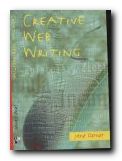
Creative Web Writing - book jacketCreative Web Writing
If you are mainly interested in traditional creative writing Jane Dorner has another book which shows you the skills you need if you want to put your writing onto the Internet. She is speaking to those people who have been creating poems and stories in their back rooms and getting nowhere. This guide covers collaborative story-telling, research online, interactivity and flexible text, as well as the nuts and bolts of styling for screen reading. Most importantly, she explains the range of new markets, new technologies, and how to apply them.

Creative genres are covered, including autobiography, poetry, broadcasting, screen-writing and writing for children. She also describes how to look carefully at contracts, how to submit your writing to an electronic publisher, and how to deal with Print on demand (POD) outlets. There’s a very useful survey of the various delivery methods and payments for eBooks. This is one of the most popular methods for aspiring authors to reach new readers. This section will be required reading if you are thinking of venturing into this world.

The central part of the book deals with new forms of writing using Web technologies. This is one field in which she has clearly done her homework. She shows examples of writing in the form of Blogs (Web-logs) email (epistolary) narratives, fictions illuminated by graphics, the weird world of MUDs and MOOs, Flash-animated writing, and phonetic poetry.
Buy the book from Amazon UK
Buy the book from Amazon US
 

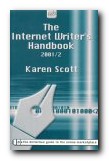
The Internet Writer's HandbookThe Internet Writer’s Handbook
Karen Scott’s book is a detailed guide to publishers of the two formats which are most digital – e-zines and e-books. It’s in the form of an international A-Z of the best websites for writers to target, with full contact details for all websites listed. She offers plenty of detail on how to submit your work , how much publishers will pay, and even how they are most likely to respond. The topics these eBook publishers cover range from poetry and fiction, through non-fiction feature writing, to specialist technical and hobbyist publications.
Buy the book from Amazon UK
Buy the book from Amazon US

return button Publish your writing

© Roy Johnson 2009


More on journalism
More on creative writing
More on writing skills
More on publishing


Filed Under: How-to guides, Journalism, Publishing, Writing Skills Tagged With: Creative writing, Electronic Writing, Journalism, Publishing, Writing skills

R.C.Trevelyan – Beelzebub

October 5, 2009 by Roy Johnson

Hogarth Press first edition book jacket designs


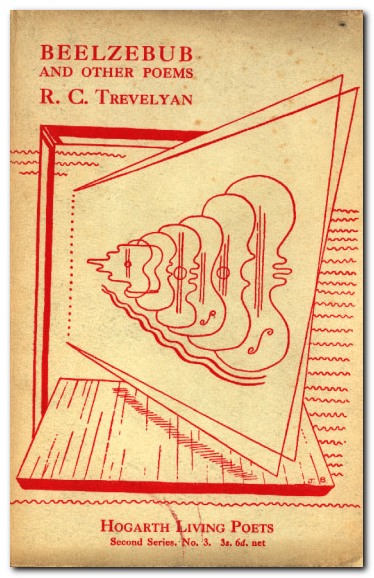
Beelzebub - first edition

 
R.C. Trevelyan, Beelzebub and other poems, Hogarth Living Poets, second series, Number 3.

“R.C. Trevelyan, member of a distinguished Victorian family and brother of the Cambridge historian G.M. Trelyan, had been an Apostle at Trinity College, friend of the Woolfs for years, and by the 1920s was a classical scholar, a translator (Sophocles, Aeschylus, Lucretius, Theocritus), and a poet. He would eventually publish over twenty volumes of poetry.”

J.H. Willis Jr, Leonard and Virginia Woolf as Publishers: The Hogarth Press 1917-1941

previousnext


Hogarth Press studies

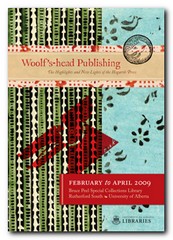
Woolf's-head Publishing Woolf’s-head Publishing is a wonderful collection of cover designs, book jackets, and illustrations – but also a beautiful example of book production in its own right. It was produced as an exhibition catalogue and has quite rightly gone on to enjoy an independent life of its own. This book is a genuine collector’s item, and only months after its first publication it started to win awards for its design and production values. Anyone with the slightest interest in book production, graphic design, typography, or Bloomsbury will want to own a copy the minute they clap eyes on it.

Woolf's-head Publishing Buy the book at Amazon UK
Woolf's-head Publishing Buy the book at Amazon US

The Hogarth Press Leonard and Virginia Woolf as Publishers: Hogarth Press, 1917-41 John Willis brings the remarkable story of Leonard and Virginia Woolf’s success as publishers to life. He generates interesting thumbnail sketches of all the Hogarth Press authors, which brings both them and the books they wrote into sharp focus. He also follows the development of many of its best-selling titles, and there’s a full account of the social and cultural development of the press. This is a scholarly work with extensive footnotes, bibliographies, and suggestions for further reading – but most of all it is a very readable study in cultural history.

The Hogarth Press Buy the book at Amazon UK
The Hogarth Press Buy the book at Amazon US

© Roy Johnson 2005


Filed Under: Hogarth Press Tagged With: Art, Bloomsbury, Graphic design, Hogarth Press, Literary studies, R.C.Trevelyan

Rebecca West – A Letter to a Grandfather

October 5, 2009 by Roy Johnson

Hogarth Press first edition book jacket designs


A Letter to a Grandfather - first edition

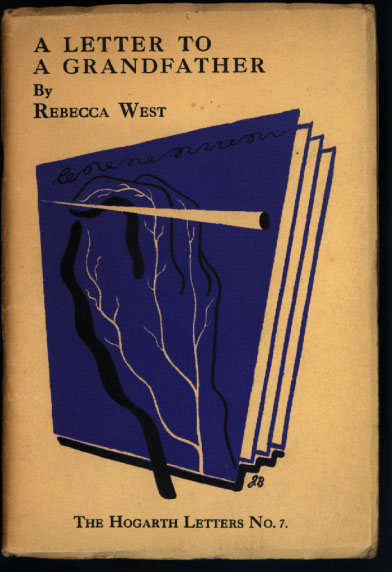
Rebecca West, A Letter to a Grandfather (1933) Hogarth Letters, Number 7. Cover design by John Banting.

“In spite of his financially cautious recruitment of Margaret West for Hogarth manager in February 1933 and his by-now-familiar claim that he did not want to publish books merely because they might be profitable, Leonard Woolf did not neglect to pump up the press income when he could. In that very month he tried to rescue the Hogarth Letters series after twelve titles by binding together eleven of the letters into a single volume with a new title page as The Hogarth Letters. The effort was not successful, and he terminated the series after publishing the last one in March, Rebecca West’s Letter to a Grandfather.”

J.H. Willis Jr, Leonard and Virginia Woolf as Publishers: The Hogarth Press 1917-1941

previousnext


Hogarth Press studies

Woolf's-head Publishing Woolf’s-head Publishing is a wonderful collection of cover designs, book jackets, and illustrations – but also a beautiful example of book production in its own right. It was produced as an exhibition catalogue and has quite rightly gone on to enjoy an independent life of its own. This book is a genuine collector’s item, and only months after its first publication it started to win awards for its design and production values. Anyone with the slightest interest in book production, graphic design, typography, or Bloomsbury will want to own a copy the minute they clap eyes on it.

Woolf's-head Publishing Buy the book at Amazon UK
Woolf's-head Publishing Buy the book at Amazon US

The Hogarth Press Leonard and Virginia Woolf as Publishers: Hogarth Press, 1917-41 John Willis brings the remarkable story of Leonard and Virginia Woolf’s success as publishers to life. He generates interesting thumbnail sketches of all the Hogarth Press authors, which brings both them and the books they wrote into sharp focus. He also follows the development of many of its best-selling titles, and there’s a full account of the social and cultural development of the press. This is a scholarly work with extensive footnotes, bibliographies, and suggestions for further reading – but most of all it is a very readable study in cultural history.

The Hogarth Press Buy the book at Amazon UK
The Hogarth Press Buy the book at Amazon US

© Roy Johnson 2005


Filed Under: Hogarth Press Tagged With: Art, Bloomsbury, Graphic design, Hogarth Press, Literary studies, Rebecca West

Robert Graves – The Feather Bed

October 5, 2009 by Roy Johnson

Hogarth Press first edition book jacket designs


The Feather Bed - first edition

 
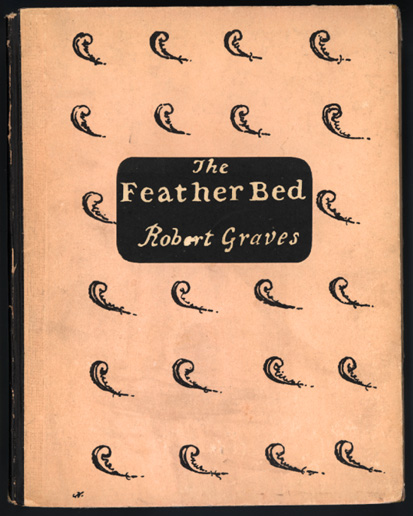
Robert Graves, The Feather Bed (1923)

Cover design by William Nicholson. Number 210 of 250 copies signed by the author.

“As the books and pamphlets on political subjects grew in number and importance, the Woolfs continued to publish more volumes of poetry, fiction, and literary criticism in 1926 than in any other areas. A significant event was the publication of another book in 1926 by Robert Graves. He published a pamphlet on poetry and brought with him Laura Riding. Graves met Laura Riding Gottschalk in 1926 after he had published his first Hogarth Press essay on modern poetry.”

J.H. Willis Jr, Leonard and Virginia Woolf as Publishers: The Hogarth Press 1917-1941

The Hogarth Press published a total of seven works by Graves, the first of which was The Feather Bed. This book consists of an “Introductory Letter” to John Crowe Ransom (his name misspelled “Ransome”) and an unconventional poem: a young man’s monologue that focussed on “internal debate about the nature of love, sexuality, and the religious calling of nuns and priests”. The book generated interest and sold quite well, though no subsequent edition of the poem was issued. The painter William Nicholson, Graves’s father-in-law, provided the cover for the book.

Elizabeth Willson Gordon, Woolf’s-head Publishing: The Highlights and New Lights of the Hogarth Press

previousnext


Hogarth Press studies

Woolf's-head Publishing Woolf’s-head Publishing is a wonderful collection of cover designs, book jackets, and illustrations – but also a beautiful example of book production in its own right. It was produced as an exhibition catalogue and has quite rightly gone on to enjoy an independent life of its own. This book is a genuine collector’s item, and only months after its first publication it started to win awards for its design and production values. Anyone with the slightest interest in book production, graphic design, typography, or Bloomsbury will want to own a copy the minute they clap eyes on it.

Woolf's-head Publishing Buy the book at Amazon UK
Woolf's-head Publishing Buy the book at Amazon US

The Hogarth Press Leonard and Virginia Woolf as Publishers: Hogarth Press, 1917-41 John Willis brings the remarkable story of Leonard and Virginia Woolf’s success as publishers to life. He generates interesting thumbnail sketches of all the Hogarth Press authors, which brings both them and the books they wrote into sharp focus. He also follows the development of many of its best-selling titles, and there’s a full account of the social and cultural development of the press. This is a scholarly work with extensive footnotes, bibliographies, and suggestions for further reading – but most of all it is a very readable study in cultural history.

The Hogarth Press Buy the book at Amazon UK
The Hogarth Press Buy the book at Amazon US

© Roy Johnson 2005


Filed Under: Hogarth Press Tagged With: Art, Bloomsbury, Graphic design, Hogarth Press, Literary studies, Robert Graves, The Feather Bed

Roger Fry – Twelve Original Woodcuts

October 3, 2009 by Roy Johnson

Hogarth Press first edition book jacket designs


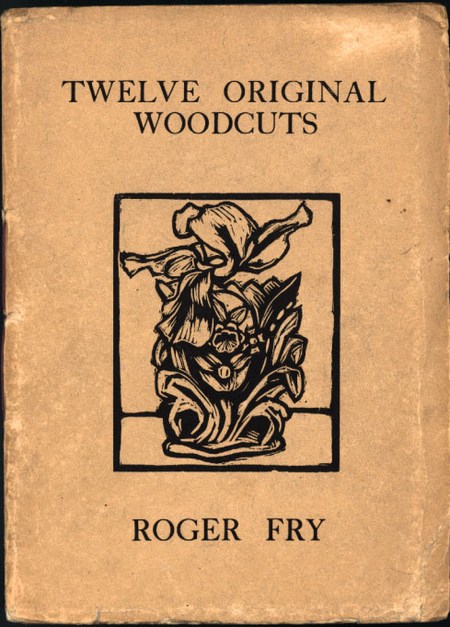
Roger Fry - Twelve Original Woodcuts - first edition

 
150 copies were printed. Squarish octavo, unpaginated, title page + 12 original woodcuts, each printed on a separate sheet.

A copy of the third impression, printed in 1922 is currently described as: “Internally the pages are bright and clean, and the woodcuts are good impressions. The original wrapper has a small closed tear along the front top edge, and a bit of light soiling, otherwise in very good condition. Very scarce in any of the impressions. Price $3,000.00”

See digital slide show of this publication at Duke University Library

previousnext


Hogarth Press studies

Woolf's-head Publishing Woolf’s-head Publishing is a wonderful collection of cover designs, book jackets, and illustrations – but also a beautiful example of book production in its own right. It was produced as an exhibition catalogue and has quite rightly gone on to enjoy an independent life of its own. This book is a genuine collector’s item, and only months after its first publication it started to win awards for its design and production values. Anyone with the slightest interest in book production, graphic design, typography, or Bloomsbury will want to own a copy the minute they clap eyes on it.

Woolf's-head Publishing Buy the book at Amazon UK
Woolf's-head Publishing Buy the book at Amazon US

The Hogarth Press Leonard and Virginia Woolf as Publishers: Hogarth Press, 1917-41 John Willis brings the remarkable story of Leonard and Virginia Woolf’s success as publishers to life. He generates interesting thumbnail sketches of all the Hogarth Press authors, which brings both them and the books they wrote into sharp focus. He also follows the development of many of its best-selling titles, and there’s a full account of the social and cultural development of the press. This is a scholarly work with extensive footnotes, bibliographies, and suggestions for further reading – but most of all it is a very readable study in cultural history.

The Hogarth Press Buy the book at Amazon UK
The Hogarth Press Buy the book at Amazon US

© Roy Johnson 2005


Filed Under: Hogarth Press Tagged With: Art, Bloomsbury, Graphic design, Literary studies, Roger Fry, Woodcuts

Sigmund Freud – The Ego and the Id

October 5, 2009 by Roy Johnson

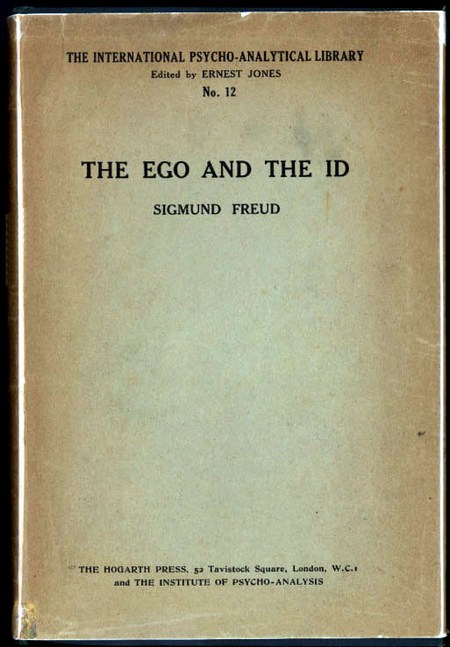
Hogarth Press first edition book jacket designs


The Ego and the Id - first edition

 
Sigmund Freud, The Ego and the Id (1927) The International Psycho-Analytic Library, No.12

“From 1922 to 1939 the International Psycho-Analytic Library offered nine of Freud’s books and two Epitomes. Joan Riviere translated two of the nine books, James Strachey two books (Group Psychology and the Analysis of the Ego, 1922, and An Autobiographical Study, 1935), and Alix Strachey one book (Inhibitions, Symptoms, and Anxiety, 1936). Only four other translators were entrusted with translating Freud’s books in the series: C.M.J. Hubback (Beyond the Pleasure Principle, 1922), W.D Robson-Scott (The Future of an Illusion, 1928). W.J.H. Sprott (New Introductory Lectures on Psycho-Analysis, 1933), and Katherine Jones (Moses and Monotheism, 1939).”

J.H. Willis Jr, Leonard and Virginia Woolf as Publishers: The Hogarth Press 1917-1941

It was James Strachey, Lytton Strachey’s brother, who arranged to have the Hogarth Press become the publisher for the books of the International Psycho-Analytic Library in 1924. The Press bought the rights to the previously published titles in the ILP series, inheriting the already printed volumes (bearing the International Psycho-Analytic Press imprint) along with the rights to Freud’s Collected Papers for £800. Thus the Hogarth Press became the publisher of Freud in English, making a major contribution to twentieth-century thought and increasing the international importance of the Press. Freud’s Collected Papers also became one of the Press’s most successful publications. Freud’s reputation grew tremendously in the 1920s and 1930s. The Ego and the Id, along with other works by Freud, were an important part of the Press list for decades.

Elizabeth Willson Gordon, Woolf’s-head Publishing: The Highlights and New Lights of the Hogarth Press

previousnext


Hogarth Press studies

Woolf's-head Publishing Woolf’s-head Publishing is a wonderful collection of cover designs, book jackets, and illustrations – but also a beautiful example of book production in its own right. It was produced as an exhibition catalogue and has quite rightly gone on to enjoy an independent life of its own. This book is a genuine collector’s item, and only months after its first publication it started to win awards for its design and production values. Anyone with the slightest interest in book production, graphic design, typography, or Bloomsbury will want to own a copy the minute they clap eyes on it.

Woolf's-head Publishing Buy the book at Amazon UK
Woolf's-head Publishing Buy the book at Amazon US

The Hogarth Press Leonard and Virginia Woolf as Publishers: Hogarth Press, 1917-41 John Willis brings the remarkable story of Leonard and Virginia Woolf’s success as publishers to life. He generates interesting thumbnail sketches of all the Hogarth Press authors, which brings both them and the books they wrote into sharp focus. He also follows the development of many of its best-selling titles, and there’s a full account of the social and cultural development of the press. This is a scholarly work with extensive footnotes, bibliographies, and suggestions for further reading – but most of all it is a very readable study in cultural history.

The Hogarth Press Buy the book at Amazon UK
The Hogarth Press Buy the book at Amazon US

© Roy Johnson 2005


Filed Under: Hogarth Press Tagged With: Art, Bloomsbury, Graphic design, Hogarth Press, Literary studies, Sigmund Freud, The Ego and the Id

  • « Previous Page
  • 1
  • 2
  • 3
  • 4
  • 5
  • 6
  • …
  • 8
  • Next Page »

Get in touch

info@mantex.co.uk

Content © Mantex 2016
  • About Us
  • Advertising
  • Clients
  • Contact
  • FAQ
  • Links
  • Services
  • Reviews
  • Sitemap
  • T & C’s
  • Testimonials
  • Privacy

Copyright © 2026 · Mantex

Copyright © 2026 · News Pro Theme on Genesis Framework · WordPress · Log in