Mantex

Tutorials, Study Guides & More

  • HOME
  • REVIEWS
  • TUTORIALS
  • HOW-TO
  • CONTACT
>> Home / 2009 / Archives for October 2009

Archives for October 2009

Virginia Woolf – The Common Reader 1

October 4, 2009 by Roy Johnson

Hogarth Press first edition book jacket designs
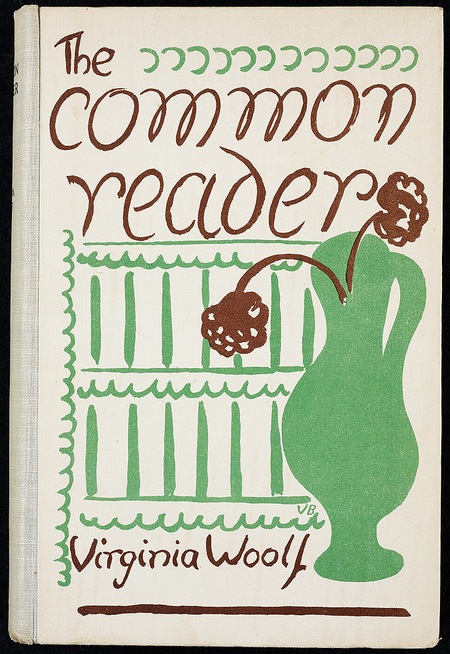
 

The Common Reader 1 - first edition

Virginia Woolf, The Common Reader (1925) Cover design by Vanessa Bell.

This was Virginia Woolf’s first major collection of critical essays. After a slow start, it became very popular, and was followed in 1932 by The Common Reader: Second Series. Both books have remained in print ever since and have been influential works of non-fiction which have taught generations of people how to enjoy literature.

The range of topics included in this volume of over twenty essays includes Elizabethan drama, Jane Austen, Defoe, “The Russian Point of View”, and “Modern Fiction” among others. Earlier versions of a number of the pieces had previously been published in journals, often in the Times Literary Supplement, London Mercury, and the Nation and Atheneum, but this was Woolf’s first collection of essays.

Elizabeth Willson Gordon, Woolf’s-head Publishing: The Highlights and New Lights of the Hogarth Press

previousnext


Hogarth Press studies

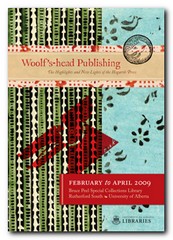
Woolf's-head Publishing Woolf’s-head Publishing is a wonderful collection of cover designs, book jackets, and illustrations – but also a beautiful example of book production in its own right. It was produced as an exhibition catalogue and has quite rightly gone on to enjoy an independent life of its own. This book is a genuine collector’s item, and only months after its first publication it started to win awards for its design and production values. Anyone with the slightest interest in book production, graphic design, typography, or Bloomsbury will want to own a copy the minute they clap eyes on it.

Woolf's-head Publishing Buy the book at Amazon UK
Woolf's-head Publishing Buy the book at Amazon US

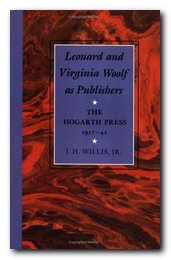
The Hogarth Press Leonard and Virginia Woolf as Publishers: Hogarth Press, 1917-41 John Willis brings the remarkable story of Leonard and Virginia Woolf’s success as publishers to life. He generates interesting thumbnail sketches of all the Hogarth Press authors, which brings both them and the books they wrote into sharp focus. He also follows the development of many of its best-selling titles, and there’s a full account of the social and cultural development of the press. This is a scholarly work with extensive footnotes, bibliographies, and suggestions for further reading – but most of all it is a very readable study in cultural history.

The Hogarth Press Buy the book at Amazon UK
The Hogarth Press Buy the book at Amazon US

© Roy Johnson 2005

Filed Under: Hogarth Press Tagged With: Art, Bloomsbury, Graphic design, Hogarth Press, Literary studies, The Common Reader, Virginia Woolf

Virginia Woolf – The Common Reader 2

October 4, 2009 by Roy Johnson

Hogarth Press first edition book jacket designs


The Common Reader 2 - first edition

 
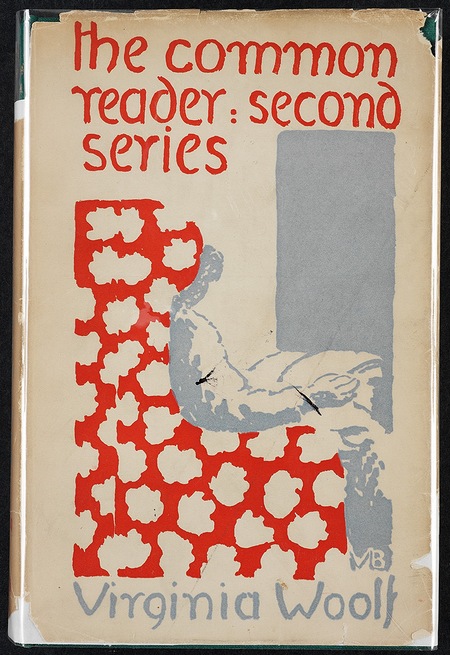
Virginia Woolf, The Common Reader: Second Series (1932) Cover design by Vanessa Bell

The second collection of essays was published when Woolf’s stature as an author had substantially increased. In this volume Woolf writes about Donne, Dorothy Osborne’s letters, George Gissing, Thomas Hardy, and more. This collection also includes the often quoted essay “How Should One Read a Book?” in which Woolf gives some excellent advice.: “The only advice, indeed, that one person can give another about reading is to take no advice, to follow your own instincts, to use your own reason, to come to your own conclusions”. Bell’s cover also emphasises the reading experience. Woolf urges people to read broadly, to explore with an open miond. The essay concludes with something every book lover can appreciate: “when the Day of Judgement dawns and the great conquerors and lawyers and statesmen come to receive their awards – their crowns, their laurels, their names carved indelibly upon imperishable marble – the Almighty will turn to Peter and will say, not without a certain envy when He sees us coming with our books under our arms, ‘Look, these need no reward. We have nothing to give them here. They have loved reading’.”

Elizabeth Willson Gordon, Woolf’s-head Publishing: The Highlights and New Lights of the Hogarth Press

previousnext


Hogarth Press studies

Woolf's-head Publishing Woolf’s-head Publishing is a wonderful collection of cover designs, book jackets, and illustrations – but also a beautiful example of book production in its own right. It was produced as an exhibition catalogue and has quite rightly gone on to enjoy an independent life of its own. This book is a genuine collector’s item, and only months after its first publication it started to win awards for its design and production values. Anyone with the slightest interest in book production, graphic design, typography, or Bloomsbury will want to own a copy the minute they clap eyes on it.

Woolf's-head Publishing Buy the book at Amazon UK
Woolf's-head Publishing Buy the book at Amazon US

The Hogarth Press Leonard and Virginia Woolf as Publishers: Hogarth Press, 1917-41 John Willis brings the remarkable story of Leonard and Virginia Woolf’s success as publishers to life. He generates interesting thumbnail sketches of all the Hogarth Press authors, which brings both them and the books they wrote into sharp focus. He also follows the development of many of its best-selling titles, and there’s a full account of the social and cultural development of the press. This is a scholarly work with extensive footnotes, bibliographies, and suggestions for further reading – but most of all it is a very readable study in cultural history.

The Hogarth Press Buy the book at Amazon UK
The Hogarth Press Buy the book at Amazon US

© Roy Johnson 2005

Filed Under: Hogarth Press Tagged With: Art, Bloomsbury, Graphic design, Hogarth Press, Literary studies, The Common Reader, Virginia Woolf

Virginia Woolf – The Death of the Moth

October 5, 2009 by Roy Johnson

Hogarth Press first edition book jacket designs


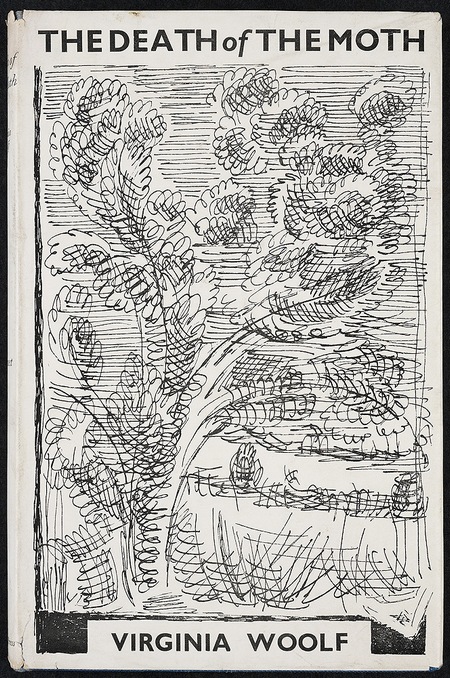
The Death of the Moth - first edition

 
Virginia Woolf, The Death of the Moth (1942) Cover design by Vanessa Bell.

previousnext


Hogarth Press studies

Woolf's-head Publishing Woolf’s-head Publishing is a wonderful collection of cover designs, book jackets, and illustrations – but also a beautiful example of book production in its own right. It was produced as an exhibition catalogue and has quite rightly gone on to enjoy an independent life of its own. This book is a genuine collector’s item, and only months after its first publication it started to win awards for its design and production values. Anyone with the slightest interest in book production, graphic design, typography, or Bloomsbury will want to own a copy the minute they clap eyes on it.

Woolf's-head Publishing Buy the book at Amazon UK
Woolf's-head Publishing Buy the book at Amazon US


The Hogarth Press
Leonard and Virginia Woolf as Publishers: Hogarth Press, 1917-41 John Willis brings the remarkable story of Leonard and Virginia Woolf’s success as publishers to life. He generates interesting thumbnail sketches of all the Hogarth Press authors, which brings both them and the books they wrote into sharp focus. He also follows the development of many of its best-selling titles, and there’s a full account of the social and cultural development of the press. This is a scholarly work with extensive footnotes, bibliographies, and suggestions for further reading – but most of all it is a very readable study in cultural history.

The Hogarth Press Buy the book at Amazon UK
The Hogarth Press Buy the book at Amazon US

© Roy Johnson 2005

Filed Under: Hogarth Press Tagged With: Art, Bloomsbury, Graphic design, Hogarth Press, Literary studies, The Death of the Moth, Virginia Woolf

Virginia Woolf – The Waves

October 5, 2009 by Roy Johnson

Hogarth Press first edition book jacket designs


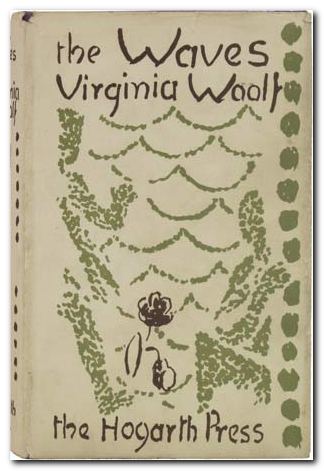
The Waves - first edition

Virginia Woolf, The Waves (1931) Cover design by Vanessa Bell.

“Customarily, Virginia Woolf composed in longhand, writing in ink with an old-fashioned straight pen on the right-hand page of a manuscript book bound for her by the press. She reworked each page as she went, writing for two hours or more in the mornings. In the afternoons she would type up the morning’s work, usually making only minor corrections or changes. When she had completed the first draft of the novel, represented by a holograph and a slightly edited typescript, she would then retype the book from the beginning, making whatever revisions she felt necessary, sometimes scrapping whole sections and rewriting them in markedly different ways. The final shaping of the book took place in this stage. The resulting typescript, probably bearing the marks of further revisions in ink, was given to Leonard for his critical reading.

After this, Virginia would sometimes, as she did with The Waves, have a press secretary retype the text into a copy which she corrected for errors before sending it to R. & R. Clark to be set and printed. At some point either after the proofs were corrected or after each book was published, Virginia would destroy her typescripts, saving only the holograph copy, probably feeling … that it best represented her initial creative impulses and so was important to keep as a record of her artistic struggles. The Waves, however, is unique among her novels because she completely rewrote it from scratch, starting over with a new holograph version and resulting typescript. The two existing holographs … total 399 and 347 pages respectively.”

J.H. Willis Jr, Leonard and Virginia Woolf as Publishers: The Hogarth Press 1917-1941

previousnext


Hogarth Press studies

Woolf's-head Publishing Woolf’s-head Publishing is a wonderful collection of cover designs, book jackets, and illustrations – but also a beautiful example of book production in its own right. It was produced as an exhibition catalogue and has quite rightly gone on to enjoy an independent life of its own. This book is a genuine collector’s item, and only months after its first publication it started to win awards for its design and production values. Anyone with the slightest interest in book production, graphic design, typography, or Bloomsbury will want to own a copy the minute they clap eyes on it.

Woolf's-head Publishing Buy the book at Amazon UK
Woolf's-head Publishing Buy the book at Amazon US

The Hogarth Press Leonard and Virginia Woolf as Publishers: Hogarth Press, 1917-41 John Willis brings the remarkable story of Leonard and Virginia Woolf’s success as publishers to life. He generates interesting thumbnail sketches of all the Hogarth Press authors, which brings both them and the books they wrote into sharp focus. He also follows the development of many of its best-selling titles, and there’s a full account of the social and cultural development of the press. This is a scholarly work with extensive footnotes, bibliographies, and suggestions for further reading – but most of all it is a very readable study in cultural history.

The Hogarth Press Buy the book at Amazon UK
The Hogarth Press Buy the book at Amazon US

© Roy Johnson 2005

Filed Under: Hogarth Press Tagged With: Art, Bloomsbury, Graphic design, Literary studies, The Waves, Virginia Woolf

Virginia Woolf – The Years

October 4, 2009 by Roy Johnson

Hogarth Press first edition book jacket designs


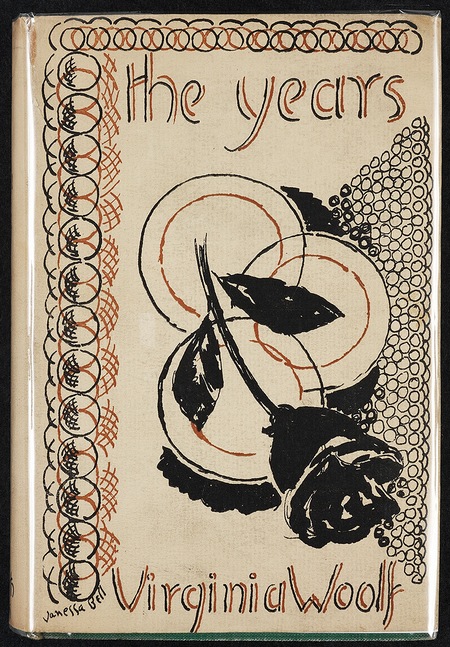
The Years cover - first edition

 
Virginia Woolf, The Years (1937) Cover design by Vanessa Bell.

“Leonard Woolf and many critics of the time considered The Years badly flawed in characterization and structure. Recent critics, however, mostly feminist, have opened up the novel in interesting ways, making virtues out of what were thought vices. Among other points, they have argued that The Years offers compelling evidence of Virginia Woolf’s courage and genius in confronting and remaking herself as a woman in a sexist world, in focusing her frustrations to expose traditional masculine myths of marriage and sex. Such criticism and the textual studies of her revisions have made the novel seem one of the more interesting and ambitious of Woolf’s books, its very ambiguities and muted anger part of its qualities. Leonard Woolf and the early male critics though it inferior to Virginia’s great modernist novels, but the average reader in 1937 had no such qualms, flocking to it with relief after the difficulties of The Waves.

In spite of his reservations about its literary virtues, Leonard anticipated its popularity and ordered over 18,000 copies of The Years for publication on March 15, 1937. Its commercial success completely overshadowed Virginia’s other novels. It sold over 13,000 copies in the first six months. In America, Harcourt Brace printed 10,000 copies for the first edition and quickly reprinted, as The Years sold over 30,000 copies in six months. It became an authentic American best-seller for 1937, ranking sixth on a list led by such heady company as Margaret Mitchell’s Gone With the Wind and Kenneth Roberts’ Northwest Passage and outranking John Steinbeck’s Of Mice and Men. One check alone from Harcourt Brace on January 5, 1938 total led over $5,000.”

J.H. Willis Jr, Leonard and Virginia Woolf as Publishers: The Hogarth Press 1917-1941

In 1937 Virginia Woolf appeared on the cover of Time magazine: she had achieved a remarkable level of critical recognition and esteem that was now translated into more popular acclaim and fame. The initial print run of The Years was the largest of any of Woolf’s novels to that date. The focus of the novel is the passage of time as it traces the Pargiter family from 1880 up to the ‘Present Day’. The novel met with high praise. David Garnett said the book “marks her as the greatest master of English” and is “the finest novel she has ever written” (New Statesman & Nation). Subsequent critical assessments have been more mixed. The novel sold very well in England and America making its way on to American best-seller lists. Vanessa Bell’s jacket for the book features a rose surrounded by geometric patterns and is signed with her full name.

Elizabeth Willson Gordon, Woolf’s-head Publishing: The Highlights and New Lights of the Hogarth Press

previousnext


Hogarth Press studies

Woolf's-head Publishing Woolf’s-head Publishing is a wonderful collection of cover designs, book jackets, and illustrations – but also a beautiful example of book production in its own right. It was produced as an exhibition catalogue and has quite rightly gone on to enjoy an independent life of its own. This book is a genuine collector’s item, and only months after its first publication it started to win awards for its design and production values. Anyone with the slightest interest in book production, graphic design, typography, or Bloomsbury will want to own a copy the minute they clap eyes on it.

Woolf's-head Publishing Buy the book at Amazon UK
Woolf's-head Publishing Buy the book at Amazon US

The Hogarth Press Leonard and Virginia Woolf as Publishers: Hogarth Press, 1917-41 John Willis brings the remarkable story of Leonard and Virginia Woolf’s success as publishers to life. He generates interesting thumbnail sketches of all the Hogarth Press authors, which brings both them and the books they wrote into sharp focus. He also follows the development of many of its best-selling titles, and there’s a full account of the social and cultural development of the press. This is a scholarly work with extensive footnotes, bibliographies, and suggestions for further reading – but most of all it is a very readable study in cultural history.

The Hogarth Press Buy the book at Amazon UK
The Hogarth Press Buy the book at Amazon US

© Roy Johnson 2005

Filed Under: Hogarth Press Tagged With: Art, Bloomsbury, Graphic design, Hogarth Press, Literary studies, The Years, Virginia Woolf

Virginia Woolf – Three Guineas

October 4, 2009 by Roy Johnson

Hogarth Press first edition book jacket designs


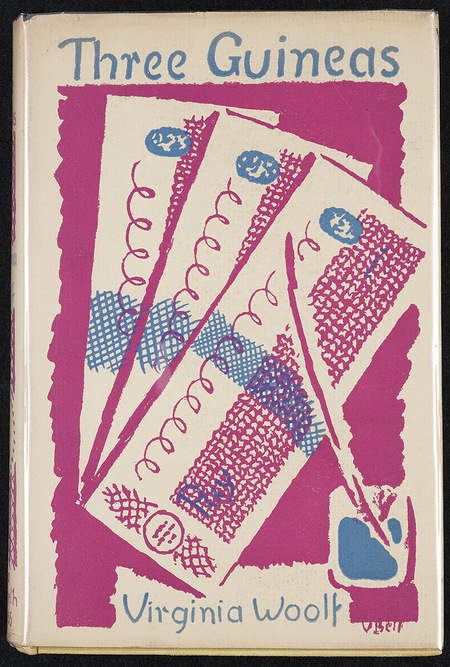
Three Guineas - first edition

 
Virginia Woolf, Three Guineas (1938) Cover design by Vanessa Bell.

This is the second of Virginia Woolf’s overtly feminist polemics. In it, she develops the ideas first put forward in A Room of One’s Own and launches an incisive critique of the English establishment – concentrating on its principal bases of power – the House of Lords, the military establishment, the Church, and the educational system.

“Virginia Woolf’s reading notebooks and scrapbooks [reveal] how much labour went into [her] gathering of facts: twelve volumes of notes, including three scrapbooks compiled between 1931 and 1937. In the power, anger, wit, and satire of her attack on repressive masculine institutions, Woolf chose not to write in the discourse of a traditional historian, sociologist, politician, suffragist, or guildswoman. She developed her arguments, cited her examples, digressed through provocative and unorthodox footnotes, to flail the misogyny and militarism of the patriarchal establishment with all the craft of the essayist and novelist. If she took little notice of the feminist history or the sociopolitical status of women in the 1930s as documented by Strachey and others, her book proved so welcome an offensive against enduring male sexist attitudes that her sisters in the trenches overlooked her lapses. They gleefully applauded her achievement.”

J.H. Willis Jr, Leonard and Virginia Woolf as Publishers: The Hogarth Press 1917-1941

Three Guineas considers women’s role in society, and more particularly, what they might do to prevent war.Woolf traces fascist elements within England’s education system and professions, highlighting monetary and material inequities of class and gender. She argues that “the public and the private worlds are insperably connected; that the tyrannies and servilities of the one are the tyrannies and servilities of the other”.

Elizabeth Willson Gordon, Woolf’s-head Publishing: The Highlights and New Lights of the Hogarth Press

previousnext


Hogarth Press studies

Woolf's-head Publishing Woolf’s-head Publishing is a wonderful collection of cover designs, book jackets, and illustrations – but also a beautiful example of book production in its own right. It was produced as an exhibition catalogue and has quite rightly gone on to enjoy an independent life of its own. This book is a genuine collector’s item, and only months after its first publication it started to win awards for its design and production values. Anyone with the slightest interest in book production, graphic design, typography, or Bloomsbury will want to own a copy the minute they clap eyes on it.

Woolf's-head Publishing Buy the book at Amazon UK
Woolf's-head Publishing Buy the book at Amazon US

The Hogarth Press Leonard and Virginia Woolf as Publishers: Hogarth Press, 1917-41 John Willis brings the remarkable story of Leonard and Virginia Woolf’s success as publishers to life. He generates interesting thumbnail sketches of all the Hogarth Press authors, which brings both them and the books they wrote into sharp focus. He also follows the development of many of its best-selling titles, and there’s a full account of the social and cultural development of the press. This is a scholarly work with extensive footnotes, bibliographies, and suggestions for further reading – but most of all it is a very readable study in cultural history.

The Hogarth Press Buy the book at Amazon UK
The Hogarth Press Buy the book at Amazon US

© Roy Johnson 2005

Filed Under: Hogarth Press Tagged With: Art, Bloomsbury, Graphic design, Hogarth Press, Literary studies, Three Guineas, Virginia Woolf

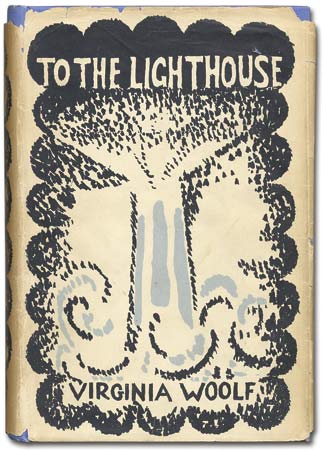
Virginia Woolf – To the Lighthouse

October 5, 2009 by Roy Johnson

Hogarth Press first edition book jacket designs


To the Lighthouse cover - first edition

 
Virginia Woolf, To the Lighthouse (1927) Cover design by Vanessa Bell.

“Advance sales totaled over 1,600 copies, more than twice the number for Mrs Dalloway. Virginia’s mood at the time expressed itself in her gaily ironic joke with Vita Sackville-West. When Vita returned from her second trip to Persia, she found a copy of To the Lighthouse waiting for her, inscribed by Virginia, “In my opinion the best novel I have ever written”. It was a bound dummy copy, with blank pages. Leonard Woolf, anticipating both an artistic and a commercial success for To the Lighthouse, ordered 3,000 copies printed by R. & R. Clark (a thousand more than Mrs Dalloway) and quickly ordered another 1,000 copies in a second impression. The novel outsold her previous fiction. The American publisher of Hogarth Press books, Harcourt Brace, printed 4,000 copies initially (almost twice the number of copies for Mrs Dalloway). American readers had begun to take notice of Woolf’s novels.”

J.H. Willis Jr, Leonard and Virginia Woolf as Publishers: The Hogarth Press 1917-1941

previousnext


Hogarth Press studies

Woolf's-head Publishing Woolf’s-head Publishing is a wonderful collection of cover designs, book jackets, and illustrations – but also a beautiful example of book production in its own right. It was produced as an exhibition catalogue and has quite rightly gone on to enjoy an independent life of its own. This book is a genuine collector’s item, and only months after its first publication it started to win awards for its design and production values. Anyone with the slightest interest in book production, graphic design, typography, or Bloomsbury will want to own a copy the minute they clap eyes on it.

Woolf's-head Publishing Buy the book at Amazon UK
Woolf's-head Publishing Buy the book at Amazon US

The Hogarth Press Leonard and Virginia Woolf as Publishers: Hogarth Press, 1917-41 John Willis brings the remarkable story of Leonard and Virginia Woolf’s success as publishers to life. He generates interesting thumbnail sketches of all the Hogarth Press authors, which brings both them and the books they wrote into sharp focus. He also follows the development of many of its best-selling titles, and there’s a full account of the social and cultural development of the press. This is a scholarly work with extensive footnotes, bibliographies, and suggestions for further reading – but most of all it is a very readable study in cultural history.

The Hogarth Press Buy the book at Amazon UK
The Hogarth Press Buy the book at Amazon US

© Roy Johnson 2005

Filed Under: Hogarth Press Tagged With: Art, Bloomsbury, Graphic design, Hogarth Press, Literary studies, To the Lighthouse, Virginia Woolf

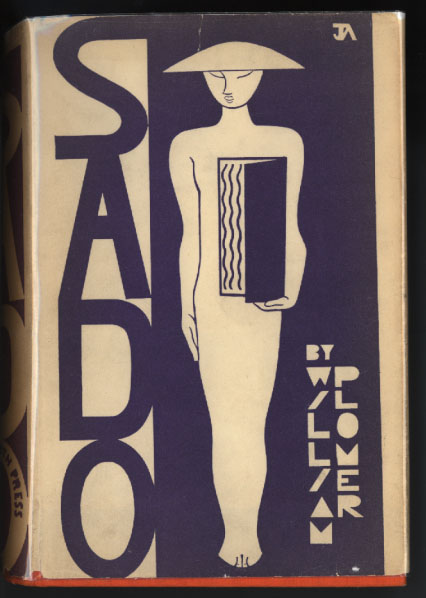
William Plomer – Sado

October 5, 2009 by Roy Johnson

Hogarth Press first edition book jacket designs


Sado - first edition

 
William Plomer, Sado (1931) Cover design by John Armstrong.

“The first version of Sado ran to some 170,000 words, as Plomer wrote to Woolf in February, but he soon boiled it down to half that length. He sent the revised typescript to the Woolfs two months later just as they returned to London after driving through western France for two weeks on their annual outing. Refreshed from their trip, the Woolfs read Plomer’s novel immediately, Leonard writing to him five days later on Friday that both he and Virginia liked the book very much. They were struck by Plomer’s writing and his psychological insights, finding the theme [of homo-eroticism] “extraordinarily interesting” and his prose less uneven than his previous writing, with “fewer, if any, air pockets”. With the publication of Sado, Plomer reached maturity as a writer. Leonard had over 1,500 copies of the novel printed and issued with a handsomely stylized dust jacket in white and blue designed by John Armstrong. In spite of its promising send-off, Sado disappointed by selling only 837 copies in the first six months and by going in the red over £64 in the first year.”

J.H. Willis Jr, Leonard and Virginia Woolf as Publishers: The Hogarth Press 1917-1941

previousnext


Hogarth Press studies

Woolf's-head Publishing Woolf’s-head Publishing is a wonderful collection of cover designs, book jackets, and illustrations – but also a beautiful example of book production in its own right. It was produced as an exhibition catalogue and has quite rightly gone on to enjoy an independent life of its own. This book is a genuine collector’s item, and only months after its first publication it started to win awards for its design and production values. Anyone with the slightest interest in book production, graphic design, typography, or Bloomsbury will want to own a copy the minute they clap eyes on it.

Woolf's-head Publishing Buy the book at Amazon UK
Woolf's-head Publishing Buy the book at Amazon US

The Hogarth Press Leonard and Virginia Woolf as Publishers: Hogarth Press, 1917-41 John Willis brings the remarkable story of Leonard and Virginia Woolf’s success as publishers to life. He generates interesting thumbnail sketches of all the Hogarth Press authors, which brings both them and the books they wrote into sharp focus. He also follows the development of many of its best-selling titles, and there’s a full account of the social and cultural development of the press. This is a scholarly work with extensive footnotes, bibliographies, and suggestions for further reading – but most of all it is a very readable study in cultural history.

The Hogarth Press Buy the book at Amazon UK
The Hogarth Press Buy the book at Amazon US

© Roy Johnson 2005

Filed Under: Hogarth Press Tagged With: Art, Bloomsbury, Graphic design, Hogarth Press, Literary studies, Sado, William Plomer

Writing for magazines

October 1, 2009 by Roy Johnson

a selection of resources reviewed

Writing for magazines can be both more profitable and less time-consuming than other forms of journalism. But you need to identify your topic of interest and match it to the most suitable publication. These guides will help you to get an idea of the marketplace.

How to Write Articles for Newspapers and Magazines
This guide contains ten chapters dealing with getting started (generating ideas and focusing on the subject), gathering information (fact versus opinion, observation, interview), writing the effective article lead, and a sample query letter when suggesting an article to a publisher. It explains how to write newsworthy and interesting articles, how to do research, journalistic techniques, interviewing strategies, and common grammar, usage, and spelling errors.
Buy the book from Amazon UK
Buy the book from Amazon US

 
Writers & Artists Yearbook The Writers’ and Artists’ Year Book
It doesn’t matter which branch of journalism, creative writing, or media publishing you wish to pursue, before you have gone very far you will need this book. It’s a compendium of contact details for agents, agencies, editiorial offices, and publishers in all fields. Book and magazine publishers, newspapers, theatrical agents, picture agencies, and publicists. Plus there are essays written by professional writers on everything from selling your manuscripts to dealing with tax problems when you win the Booker Prize. Updated every year.
Buy the book from Amazon UK
Buy the book from Amazon US

The Freelance Writer’s Handbook
The subtitle to this guide probably explains its popularity – How to Make Money and Enjoy your Life. Now in a fully updated third edition, this is the essential book for everyone who dreams of making money from their writing. It will appeal to all aspiring writers, whether they want to write as a full time profession, or simply to supplement their existing income through writing. This inspiring guide will also benefit professional writers and journalists who want ideas on how to find new markets for their work.
Buy the book from Amazon UK
Buy the book from Amazon US

The Successful Writer’s Guide to Publishing Magazine Articles
This guide gives you the latest trends, how-to instruction, and marketing essentials to write for magazines. If you want to make your dream of extra income, having your own business, seeing your name in print and/or becoming a writer, writing for magazines will do it for you. All you have to do is write and follow some simple recommendations – and of course practise your writing skills.
Buy the book from Amazon UK
Buy the book from Amazon US

The Complete Idiot’s Guide to Publishing Magazine Articles
The title sounds slightly offensive, but in fact the advice on offer here is very sensible. It provides advice to aspiring journalists on how to write effective feature articles, and explains how to sell the articles to newspapers, magazines, and trade publications. Suitable for beginners, it explains how to survive as a freelance writer.
Buy the book from Amazon UK
Buy the book from Amazon US

Writing Feature Articles: A Practical Guide to Methods and Markets
This shows you how to write articles for a wide variety of newspapers and magazines. It analyses a variety of published articles to show what makes them succeed for their audiences. The book provides information on: formulating and developing ideas; studying the markets and shaping ideas to fit them; researching and organizing material; and matching language and style to the subject matter.
Buy the book from Amazon UK
Buy the book from Amazon US

You Can Write for Magazines
From local publications to national magazines, Greg Daugherty takes the mystery out of magazine article writing. Starting with an introduction on how magazines work, the book shows how to land assignments and avoid common mistakes. He also covers technical details such as how manuscripts should be formatted. Concise and readable.
Buy the book from Amazon UK
Buy the book from Amazon US

Writing for Magazines
This guide discusses surveying the field, ideas, research, style and structure, selling work, interviewing, supplying pictures and problem solving. It includes a section on electronic aids for the magazine writer. Written mainly for the novice writer. Jill Dick gives hints and tips on how to generate ideas for articles, which markets to aim for, how to start your research, and much more.
Buy the book from Amazon UK
Buy the book from Amazon US

The Magazine Writer’s Handbook
For all writers of magazine articles and short stories, this guide provides detailed information about 70 British magazines and comments on many more. The author examines typical issues and offers clear and concise information on many aspects, including subject, readership and payment. There’s also a pre-submission checklist and an expanded chapter listing the ‘small press’ magazines.
Buy the book from Amazon UK
Buy the book from Amazon US

return button Publish your writing

© Roy Johnson 2009


More on journalism
More on creative writing
More on writing skills
More on publishing


Filed Under: How-to guides, Journalism, Publishing, Writing Skills, Writing Skills Tagged With: Journalism, Magazines, Publishing, Writing skills

Writing for newspapers

October 1, 2009 by Roy Johnson

a  selection of resources reviewed

Writing for newspapers is probably the hardest form of journalism to break into. That’s because newspapers have traditionally been run by ‘closed shop’ unions. They are now also threatened by falling sales as digital publishing grows. But that means they will be forced to rely on freelance writers as they shed staff. These guides will give you invaluable advice on how to deal with editors and newsrooms.

Writing for NewspapersThe Writers’ and Artists’ Year Book
It doesn’t matter which branch of journalism, creative writing, or media publishing you wish to pursue, before you have gone very far you will need this book. It’s a compendium of full contact details for agents, agencies, editiorial offices, and publishers in all fields. Book and magazine publishers, newspapers, theatrical agents, picture agencies, and publicists. Plus there are essays written by professional writers on everything from selling your manuscripts to dealing with tax problems when you win the Booker Prize. It’s updated every year.
Buy the book from Amazon UK
Buy the book from Amazon US

Freelance Writing for Newspapers
This deals with the importance of marketing and knowing your readers, first contact with editors, how to write regular columns and features, reviewing, interviewing and meeting deadlines – and how to acquire an inexhaustible flow of ideas. There is information on the essential business of writing including rights (and wrongs), tax, plagiarism, keeping records, rates of pay (and how to get paid), syndication, the power of the press, official organizations to help you, and more. Detailed chapters cover style, research, making the Internet work for you and the rewards of rewriting.
Buy the book from Amazon UK
Buy the book from Amazon US

The Freelance Writer’s Handbook
It’s the subtitle which makes this book so popular – How to Make Money and Enjoy your Life. Now in a fully updated third edition, this is the essential book for everyone who dreams of making money from their writing. It will appeal to all aspiring writers, whether they want to write as a full time profession, or simply to supplement their existing income through writing. This inspiring guide will also benefit professional writers and journalists who want ideas on how to find new markets for their work.
Buy the book from Amazon UK
Buy the book from Amazon US

The Elements of Journalism
This sets out the fundamental questions that all journalists face as they compile their stories. Is journalism’s first obligation the truth? How should journalists exercise their personal conscience? Must its practitioners maintain their independence from those they cover? This is looking at the basic principles of journalism, rather than ‘how to do it’ or how to get published.
Buy the book from Amazon UK
Buy the book from Amazon US

Print Journalism
This is a collection of essays by former journalists all now teaching in universities. They cover all aspects of newspapers, magazines, and journals: who owns them; how they work; and how to write for them. Would-be journalists are given a detailed breakdown of news features, and more importantly how to successfully pitch your ideas to editors, then how to write them if and when they are accepted. Also included is a detailed look at reporting, how news is gathered, the role of editors, and how to make your own writing as a freelancer more likely to be successful. This covers its subject from A to Z.
Buy the book from Amazon UK
Buy the book from Amazon US

Essential English for Journalists, Editors, and Writers
Written by former Sunday Times editor Harold Evans, this is an excellent guide to improving the efficiency of your writing by what he calls ‘a process of editorial selection, text editing, and presentation’. He describes the various responsibilities for writing in the newsroom, but then settles down to his main subject – the crafting of good prose – where he is quite clearly at home. There’s plenty of good advice on sentence construction, editing for clarity, choice of vocabulary, avoiding obscurity and abstraction, plus eliminating vagueness and cliche. It’s a book packed with practical examples, written by a very experienced professional.
Buy the book from Amazon UK
Buy the book from Amazon US

How to Write Articles for Newspapers and Magazines
This contains ten chapters dealing with getting started (generating ideas & focusing on the subject), gathering information (fact vs. opinion, observation, interview), writing the
effective article lead, and a sample query letter when suggesting an article to a publisher. This little book really is focused on how to get published.
Buy the book from Amazon UK
Buy the book from Amazon US

The Complete Idiot’s Guide to Publishing Magazine Articles
This offers advice to aspiring journalists on how to write effective feature articles, and explains how to sell the articles to newspapers, magazines, and trade publications. Suitable for beginners, it explains how to survive as a freelance writer. Take the mystery out of selling your ideas to magazine, newspapers, and web sites by reading this book. It explains who hires writers, what editors want from freelancers, how much you can expect to be paid, how you can write effective query and pitch letters, and how the Internet can help your writing career take off.
Buy the book from Amazon UK
Buy the book from Amazon US

Writing Feature Articles: A Practical Guide to Methods and Markets
This shows you how to write articles for a wide variety of newspapers and magazines, and examines the different techniques required. It analyses a variety of published articles to show what makes them succeed for their audiences. The book provides information on: formulating and developing ideas; studying the markets and shaping ideas to fit them; and researching then organizing your material.
Buy the book from Amazon UK
Buy the book from Amazon US

return button Publish your writing

© Roy Johnson 2009


More on journalism
More on creative writing
More on writing skills
More on publishing


Filed Under: How-to guides, Journalism, Publishing, Writing Skills, Writing Skills Tagged With: Journalism, Publishing, Writing skills

  • « Previous Page
  • 1
  • …
  • 5
  • 6
  • 7
  • 8
  • Next Page »

Get in touch

info@mantex.co.uk

Content © Mantex 2016
  • About Us
  • Advertising
  • Clients
  • Contact
  • FAQ
  • Links
  • Services
  • Reviews
  • Sitemap
  • T & C’s
  • Testimonials
  • Privacy

Copyright © 2026 · Mantex

Copyright © 2026 · News Pro Theme on Genesis Framework · WordPress · Log in