Mantex

Tutorials, Study Guides & More

  • HOME
  • REVIEWS
  • TUTORIALS
  • HOW-TO
  • CONTACT
>> Home / Archives for 2009

Archives for 2009

Case agreement in essays

August 22, 2009 by Roy Johnson

sample from HTML program and PDF book

1. Case agreement in essays requires correct grammar. It means that if the subject of a sentence is singular, then the verb form must be singular as well.

Similarly, if the subject of the statement is plural, the verb form must be expressed in the plural as well.

  • The shop [singular] opens at nine o’clock.
  • On Thursdays the shops [plural] open late.

2. Sometimes confusion occurs because a statement begins in the
singular but then drifts into the plural:

wrong
It can be argued that a person has the right to know when they are dying.

3.The easiest solution to this problem is to make the subject plural and its verb plural as well:

correct
It can be argued that people have the right to know when they are dying.

4. Sometimes a singular noun is used to denote a plural or a collective thing – such as the government or parliament. Either the singular or the plural verb form may be used – but the important thing is to be consistent.

wrong
The government prefers to let matters rest, but events may make them change their minds.

correct
The government prefers to let matters rest, but events may make it change its mind.

correct
The government prefer to let matters rest, but events may make them change their minds.

5. Indefinite pronouns such as everybody and anyone can make writing with correct subject-verb agreement tricky.

6. You should treat indefinite pronouns as singular nouns that take singular verbs. Keep in mind that every and any are singular concepts.

Every human being is responsible for his actions.

7. If you wish to avoid using the masculine pronoun his or the very clumsy construction his or her – there is a simple solution to the problem. Put the expression into the plural form:

All human beings are responsible for their own actions.

© Roy Johnson 2003

Buy Writing Essays — eBook in PDF format
Buy Writing Essays 3.0 — eBook in HTML format


More on writing essays
More on How-To
More on writing skills

Filed Under: Writing Essays Tagged With: Academic writing, Case agreement, Essays, Grammar, Study skills, Term papers, Writing skills

Categorizing essay topics

August 22, 2009 by Roy Johnson

sample from HTML program and PDF book

1. Categorizing takes place when you have completed a brainstorming exercise. You will need to produce a logical arrangement of the ideas and items you have written down.

2. Remember that you are doing this in order to generate a coherent plan for your arguments in response to the essay question. You are trying to put the ideas into some persuasive order.

3. Do this on a separate piece of paper so that you free yourself from the randomness of the brainstorming. It should also help you to see more clearly any shape or structure which might begin to emerge.

4. As a first step you should eliminate anything which is completely unrelated to the question topic(s). Be prepared to delete even the most attractive item if it is not relevant. It is no use trying to incorporate material just because you have written it down during the brainstorming stage.

5. When you have eliminated anything which is not relevant, your next task is to look for connections between the individual items. Try to do this as you transfer them from the brainstorming onto your second page. The process should help you analyse the ideas you have produced on the subject and begin to create some form of organisation.

6. The connections between topics might exist because the items are of the same type. For instance cars, trains, and aeroplanes are all forms of TRANSPORT. Alternatively, they might belong in the same category. Banking, taxation, and public expenditure are all FINANCIAL or FISCAL matters.

7. Your task at this point is to identify these general categories. You should then assign to them the individual items from your brainstorming.

8. There may be some items which do not fit easily into any category. Put these to one side. Be prepared to incorporate them at a later stage. Alternatively, if they will not fit logically into the essay plan you are creating, leave them out.

© Roy Johnson 2003

Buy Writing Essays — eBook in PDF format
Buy Writing Essays 3.0 — eBook in HTML format


More on writing essays
More on How-To
More on writing skills


Filed Under: Writing Essays Tagged With: Academic writing, Categorizing, Essays, Research, Study skills, Term papers, Writing skills

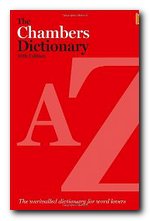
Chambers Dictionary

June 8, 2009 by Roy Johnson

popular and wide-ranging, one-volume dictionary

Did you know that Chambers Dictionary is the official reference dictionary for UK Scrabble competitions? And you can see why. It packs in more words, plus lots of unusual, archaic, and esoteric terms, than any other dictionary of its size. This edition combines the long-established virtues of its predecessors with a modern design and updated content. It offers coverage of English vocabulary, ranging from rare and archaic words to the latest slang and technical terms.

Chambers DictionaryIt also has an introductory essay on the history of English language, a note on American English, rules of English spelling, plus appendices giving the books of the Bible, and the works of Shakespeare. It also includes chemical elements, and phrases and quotations from Latin, Greek and modern foreign languages. What makes this dictionary really distinctive however is that it packs a huge number of words into the available space. It does this by sacrificing long encyclopedic entries and offering instead multiple variants.

It’s particularly popular with crossword puzzle, Scrabble, and word game addicts – mainly because it lists so many unusual words. Some people even prefer it to the popular Collins and the venerable Oxford dictionaries.

The definitions given can be quite quirky and entertaining. For instance, the term eclair is defined as a cake ‘long in shape, but short in duration’.

The text is easy to read, because Chambers follow the now-conventional practice of putting the headword in bold sans-serif type. This stands out well from the definitions which follow, which are set in a serifed font. It looks a bit like this:

abscind ab-sind, vt to cut off. —n abscissa also absciss or abscisse (ab’sis) the intercept between a fixed point and the foot of an ordinate; the x-co-ordinate in analytic geometry; — pl abscissae (ab-sisë or -sis’i), absciss’as or ab’scisses. —n abscission (-sizh’en) an act of cutting off, or the state of being cut off; a figure of speech in which words demanded by the sense are left unsaid, the speaker stopping short suddenly (rhetoric); organised shedding of a part (eg a leaf or fruit) (bot); liberation of a fungal spore by breakdown of part of its stalk (bot). — absciss layer or abscission layer (bot) a layer of parenchymatous cells through which a leaf, branch or bark scale separates off. [L abscindere, abscissum to cut off, from ab from, and scindere to cut]

The latest edition contains over 300,000 definitions, and as other reviewers have pointed out, it should not be confused with the Chambers 21st Century Dictionary. This one is much better and covers a far wider range.

© Roy Johnson 2011

Chambers Dictionary   Buy the book at Amazon UK

Chambers Dictionary   Buy the book at Amazon US


Chambers Dictionary, London: Chambers, 12th edition 2011, pp.1920, ISBN: 055010237X


More on language
More on literary studies
More on writing skills
More on creative writing
More on grammar


Filed Under: Dictionaries Tagged With: Chambers Dictionary, Dictionaries, Language, Reference

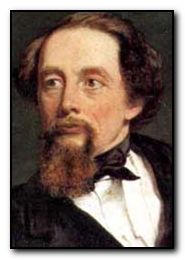
Charles Dickens biography

September 30, 2009 by Roy Johnson

Charles Dickens biography1812. Charles Dickens was born in Portsmouth. His father was a clerk in naval pay office: hard-working but unable to live within income. Several brothers and sisters.

1822. Family settles in Camden Town, London. Father gets into financial trouble. Charles put to work in shoe-blacking factory (traumatic event for child). Father imprisoned for debt, and family (except Charles) visit him in Marshalsea Prison.

1827. Dickens becomes a clerk in Grays’ Inn firm of solicitors. Studies shorthand and becomes freelance reporter in the Courts of Law and Parliament. Praised for his speed and accuracy.

1830. Dickens meets Maria Beadnell and falls madly in love with her. She treats him coldly and calls him ‘boy’.

1833. Dickens publishes his first story – ‘Dinner at Poplar Walk’ in Monthly Magazine.

1836. Sketches by Boz successful early fiction earns 150 pounds for the copyright. Commissioned to write stories to accompany sporting prints. Invents Mr Pickwick for Pickwick Papers and the whole enterprise a big success. On the strength of this he marries Catherine Hogarth. Ten children follow. Dickens an enthusiastic family man fond of home entertainments and amateur theatricals.

1837.Writes his fiction as regular monthly instalments for magazine publication. Publication of Oliver Twist begins.

1838. Dickens and illustrator Hablot Browne travel to Yorkshire to see the boarding schools. Publication of Nicholas Nickleby begins.

1841. Publication of The Old Curiosity Shop begins.

1841. Travels in Scotland and United States. Disappointed by experience of the U.S.

1842. Begins work on Martin Chuzzlewit.

1844.Dickens and family travel to Italy.  Successfully treated Madame de la Rue with hypnotism.

1846. Family tours in Italy, Switzerland and France, returning to London the following year. Dickens involved in philanthropic work for the rescuing of prostitutes and other issues of social concern. Publication of Dombey and Son begins.

1848. Dickens’ sister Fanny dies.

1849. Publication of David Copperfield begins.

1850. Begins his own weekly magazine, Household Words, which combines entertainment with a sort of reforming social purpose. Heavy work both writing and editing it. Dickens indefatigable journalist.

1851. His wife Catherine Dickens suffers a nervous collapse.  John Dickens, the father of Charles Dickens, dies.  His daughter Dora Dickens dies when she is only eight months old.

1852. Publication of Bleak House begins.

1853. Dickens gives the first of what were to be very popular public readings from his works.

1854. Publication of Hard Times begins.

1855. Secret meetings with Maria Beadnell, his first love, at her suggestion. Dickens disappointed by the experience. Family move to Gad’s Hill, Rochester. Dickens involved in theatrical ventures with friend Wilkie Collins (author of The Woman in White) through which he meets actress Ellen Ternan, who probably becomes his mistress. Publication of Little Dorrit begins.

1857. Hans Christian Anderson visits Gad’s Hill.

1858. Separates from wife with considerable publicity and bitterness. Begins new weekly, All the Year Round. Gives public readings and acts out dramatised scenes from his work which are very popular. Quarrels with Thackeray.

1859. A Tale of Two Cities published.

1860. Begins publishing Great Expectations in All the Year Round to boost flagging circulation. Burns quantities of his personal letters. Death of Dickens’ brother Alfred.

1863. Dickens’ mother dies. Reconciled with Thackeray.

1864. Death of Dickens’ son Walter in India. First installment of Our Mutual Friend is printed.

1865. Dickens is involved in the Stapelhurst railway accident, along with Ellen Ternan and her mother. Ten people killed and fifty injured. Dickens tries to prevent publicity, to avoid embarrassment.

1867. Despite poor health, embarks on punishing tour of American to give lucrative readings which help to boost sales of his magazine and novels.

1869. Dickens ordered by his doctors to discontinue the public readings. begins writing The Mystery of Edwin Drood.

1870. Further public readings as a ‘farewell tour’ in England. Private audience with Queen Victoria. More amateur theatricals. Dies of stroke. Buried in Poet’s Corner, Westminster Abbey, with full public honours.


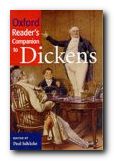
The Oxford Companion to DickensThe Oxford Companion to Dickens offers in one volume a lively and authoritative compendium of information aboutDickens: his life, his works, his reputation and his cultural context. In addition to entries on his works, his characters, his friends and places mentioned in his works, it includes extensive information about the age in which he lived and worked.These are the people, events and institutions which provided the context for his work; the houses in which he lived; the countries he visited; the ideas he satirized; the circumstances he responded to; and the culture he participated in. The companion thus provides a synthesis of Dickens studies and an accessible range of information.


Charles Dickens – web links

Dickens study resources Charles Dickens at Mantex
Biographical notes, book reviews, tutorials and study guides, free eTexts, videos, adaptations for cinema and television, further web links.

Dickens basic information Charles Dickens at Wikipedia
Biography, major works, literary techniques, his influence and legacy, extensive bibliography, and further web links.

Free eBooks on Dickens Charles Dickens at Gutenberg
A major collection of free eTexts of the major works in a variety of formats.

Charles Dickens Dickens on the Web
Major jumpstation including plots and characters from the novels, illustrations, Dickens on film and in the theatre, maps, bibliographies, and links to other Dickens sites.

Charles Dickens The Dickens Page
Chronology, eTexts available, maps, filmography, letters, speeches, biographies, criticism, and a hyper-concordance.

Dickens film adaptations Charles Dickens at the Internet Movie Database
Adaptations of the major novels and stories for the cinema and television – in various languages

Charles Dickens A Charles Dickens Journal
An old HTML website with detailed year-by-year (and sometimes day-by-day) chronology of events, plus pictures.

Dickens Concordance Hyper-Concordance to Dickens
Locate any word or phrase in the major works – find that quotation or saying, in its original context.

Major Dickens web links Dickens at the Victorian Web
Biography, political and social history, themes, settings, book reviews, articles, essays, bibliographies, and related study resources.

Charles Dickens Charles Dickens – Gad’s Hill Place
Something of an amateur fan site with ‘fun’ items such as quotes, greetings cards, quizzes, and even a crossword puzzle.

© Roy Johnson 2009


More on Charles Dickens
More on literature
More on the novella
More on literary studies
More on short stories


Filed Under: Charles Dickens Tagged With: Biography, Charles Dickens, Literary studies

Charles Dickens critical guide

June 26, 2009 by Roy Johnson

introductory study, background, and resources

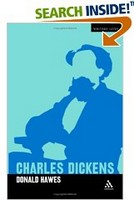
This is an introductory survey of Dickens and the major parts of his work written for students and general readers who perhaps want to know more about this perennially popular novelist. Donald Hawes begins Charles Dickens – A Critical Guide with a sketch of Dickens’s life – the hardships he suffered as a child, his early success as a writer with Sketches by Boz, and then his rapid rise to be the most successful writer in both England and America.

Charles Dickens critical guideIt’s easy to forget Dickens’s astonishing productivity: he regularly composed more than one novel at once, wrote and published his own weekly newspaper, and contributed to other people’s journals as well. This is to say nothing of his prodigious physical energy: walks of up to forty miles a day taken at high speed.

And for all the close association with Englishness and London in particular, he also travelled widely in Europe, living in France and Italy on a regular basis.

What follows is chapters which offer accounts of his major works, alternating with studies of themes and issues important to his work as a whole.

The first give potted plot summaries as well as critical insights which will be particularly useful for beginners. The latter explore recurrent symbols and those topics which Dickens made his own – for example nineteenth century London and its relation to the labyrinthine system of jurisprudence which permeates Bleak House, or the prisons, most notably in Little Dorrit.

Donald Hawes clearly knows Dickens’s work inside out, and all his arguments are illustrated by well-chosen details from the best known works. In most cases he gives some notion of their contemporary reception, plus an account of how these reputations have lasted into the twentieth century.

There’s a very good chapter on Dickens’s unforgettable rogues, villains, and comic masterpieces, analysing why they so brilliantly conceived and executed. Another on the theatre places Dickens’s enthusiasm for the genre firmly in the realm of what we would now call ‘popular culture’ – since at that time, in mid nineteenth century there was little else the lower orders could enjoy. The same was also true of Dickens’s public readings from his own works – which both made him rich and probably shortened his life.

I hadn’t previously realised just how much Dickens’s friend John Forster had played in the composition, revision, and editing of his writing, but there’s a good chapter on Dickens’s relationship with his friends and contemporaries.

Other topics considered include prisons, education, doctors and hospitals, social class, Christmas, and even a section on animals – especially dogs and ravens (both of which Dickens possessed).

So, Hawes covers all the major novels, the stories, and some of the occasional writing. With this and the thematic chapters, plus an extensive bibliography of further reading, there’s everything here for someone who wants a comprehensive departure point for further Dickens studies.

© Roy Johnson 2007

Charles Dickens critical guide Buy the book at Amazon UK

Charles sDickens critical guide Buy the book at Amazon US


Donald Hawes, Charles Dickens, London: Continuum, 2007, pp.167, ISBN 0826489648


More on Charles Dickens
More on literature
More on the novella
More on literary studies
More on short stories


Filed Under: Charles Dickens Tagged With: Biography, Charles Dickens, English literature, Literary criticism, Literary studies

Charles Dickens greatest works

September 30, 2009 by Roy Johnson

introductory notes to his most outstanding novels

Charles Dickens greatest worksCharles Dickens (1812-1870) is a novelist whose work appeals to both general readers and serious literary critics alike. This is because at its best it operates at two levels simultaneously. Entertaining incidents and characters abound at the surface level, and deep beneath them exist profoundly serious themes and psychological insights into human nature. His early novels are rich in enjoyable knockabout entertainment, and his later works explore the darker side of moral and social issues with which he was so concerned throughout the whole of his working life.

Turn to any work in his huge output, and you will find linguistic invention, tremendous imaginative flair, memorable characters, vivid scene-painting, dramatic incidents, high comedy and tragic pathos packed into alternate chapters, and an overwhelming sense of joie de vivre.

There was a time when his fondness for melodrama and plots which hinged on improbable coincidence were thought to be fatal weaknesses, but modern readers now tend to be more tolerant of these nineteenth century conventions. They focus attention instead on his endless inventiveness and his mastery of the novel form.

Readers with less literary experience might choose to begin with early works such as The Pickwick Papers, Oliver Twist , or even David Copperfield. Those used to reading long novels with complex plots and a huge cast of characters could go straight to the late, great masterpieces such as Dombey and Son, Bleak House, or Great Expectations.

Your choice of editions is enormous. The most scholarly, with full introductions, notes, glossaries, and background details are the Oxford University Press and Penguin Books editions.


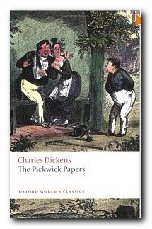
Charles Dickens Pickwick PapersPickwick Papers (1836-37) was Dickens’ first big popular success, written when he was only twenty-four years old. It was issued in twenty monthly parts and is not so much a novel as a series of loosely linked sketches and changing characters featured in reports to the Pickwick Club. These episodes recount comic excursions to Rochester, Dingley Dell, and Bath; duels and elopements; Christmas festivities; Mr Pickwick inadvertently entering the bedroom of a middle-aged lady at night; and in the end a happy marriage. Much light-hearted fun, and a host of memorable characters.

Charles Dickens greatest works Buy the book at Amazon UK
Charles Dickens greatest works Buy the book at Amazon US


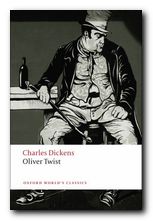
Charles Dickens Oliver TwistOliver Twist (1837-38) expresses Dickens’ sense of the vulnerability of children. Oliver is a foundling, raised in a workhouse, who escapes suffering by running off to London. There he falls into the hands of a gang of thieves controlled by the infamous Fagin. He is pursued by the sinister figure of Monks who has secret information about him. The plot centres on the twin issues of personal identity and a secret inheritance (which surface again in Great Expectations). Emigration, prison, and violent death punctuate a cascade of dramatic events. This is the early Victorian novel in fine melodramatic form. Recommended for beginners to Dickens.

Charles Dickens greatest works Buy the book at Amazon UK
Charles Dickens greatest works Buy the book at Amazon US


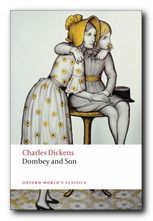
Charles Dickens Dombey and SonDombey and Son (1847-48) is Dickens’ version of the King Lear story, in which Dombey, the proud and successful head of a shipping company, loses his son, wife, and daughter because of neglect and his lack of sympathy towards them. Even his second wife is driven into the arms of his villainous business manager – with disastrous results. Eventually his empire collapses, and he lives on in tragic desolation – until his daughter Florence returns and finds a way back to his heart. This is the first of Dickens’ great and powerful masterpieces.

Charles Dickens greatest works Buy the book at Amazon UK
Charles Dickens greatest works Buy the book at Amazon US


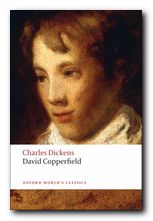
David CopperfieldDavid Copperfield (1849-50) is a thinly veiled autobiography, of which Dickens said ‘Of all my books, I like this the best’. As a child David suffers the loss of both his father and mother. He endures bullying at school and a life of poverty when he goes to work. The book is packed with memorable characters such as Mr Micawber, the fawning Uriah Heep, and the earth-mother figure Clara Peggotty. The plot involves Dickens’ recurrent topics of thwarted romance, financial insecurity and misdoings, and the terrible force of the legal system which haunted him all his life.

Charles Dickens greatest works Buy the book at Amazon UK
Charles Dickens greatest works Buy the book at Amazon US


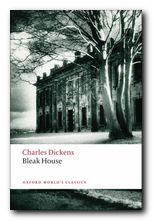
Charles Dickens Bleak HouseBleak House (1852-53) is a powerful critique of the legal system. Characters waiting to gain their inheritance from a will which is the subject of a long-running court case are ruined when the delays and costs of the case swallow up the whole estate. At the same time, Ester Summerson, one of Dickens’ most saintly heroines, is surrounded by mystery regarding her parentage and pressure to marry a man she respects but does not love. Unraveling the mystery results in scandal and deaths. Many memorable characters, including ace sleuth Inspector Bucket; Horace Skimpole a criminally irresponsible house guest; and Krook – the ‘chancellor’ of the rag and bone department, who dies from spontaneous combustion – something which Dickens actually believed could happen.

Charles Dickens greatest works Buy the book at Amazon UK
Charles Dickens greatest works Buy the book at Amazon US


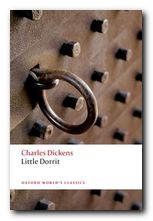
Charles Dickens Little DorritLittle Dorrit (1855-57) features Dickens’ recurrent themes of prison, debt, and the negative effects of wealth. William Dorrit and his daughter Amy have been paupers for so long that they actually live in the Marshalsea debtor’s prison. When he is suddenly released because of an inheritance, his place is taken by the middle-aged hero Arthur Clenham when he falls on hard times. Amy is devoted to them both. There is also a murky sub-plot involving doubtful parentage, a mysterious secret, and a villain with two names. Also includes a satirical critique of nineteenth century government bureaucracy in his depiction of the Circumlocution Office. Another of the greatest of Dickens’ works.

Charles Dickens greatest works Buy the book at Amazon UK
Charles Dickens greatest works Buy the book at Amazon US


Charles Dickens A Tale of Two CitiesA Tale of Two Cities (1859) was Dickens’ account of the French Revolution – with the story switching between London and Paris. It views the causes and effects of the Revolution from an essentially private point of view, showing how personal experience relates to public history. The characters are fictional, and their political activity is minimal, yet all are drawn towards the Paris of the Terror, and all become caught up in its web of suffering and human sacrifice. The novel features the famous scene in which wastrel barrister Sydney Carton redeems himself by smuggling the hero out of prison and taking his place on the scaffold. The novel ends with the memorable lines: “It is a far, far better thing that I do, than I have ever done; it is a far, far better rest that I go to, than I have ever known.”

Charles Dickens greatest works Buy the book at Amazon UK
Charles Dickens greatest works Buy the book at Amazon US


The Oxford World Classics are the best editions of Dickens’ work. They are largely based on the most accurate versions of the texts; and they feature introductory essays, a biography, explanatory notes, textual variants, a bibliography of further reading, and in some cases missing or deleted chapters. They are also terrifically good value.


Great ExpectatonsGreat Expectations (1860-61) traces the adventures and moral development of the young hero Pip as he rises from humble beginnings in a village blacksmith’s. Eventually, via good connections and a secret benefactor, he becomes a gentleman in fashionable London – but loses his way morally in the process and disowns his family. Fortunately he is surrounded by good and loyal friends who help him to redeem himself. Plenty of drama is provided by a spectacular fire, a strange quasi-sexual attack, and the chase of an escaped convict on the river Thames. There are a number of strange psycho-sexual features to the characters and events, and the novel has two subtly different endings – both adding ambiguity to the love interest between Pip and the beautiful Stella.

Charles Dickens greatest works Buy the book at Amazon UK
Charles Dickens greatest works Buy the book at Amazon US


The Cambridge Companion to Charles DickensThe Cambridge Companion to Charles Dickens contains fourteen essays which cover the whole range of Dickens’s writing, from Sketches by Boz through to The Mystery of Edwin Drood. Some address important thematic topics: childhood, the city, and domestic ideology. Others consider the serial publication and Dickens’s distinctive use of language. Three final chapters examine Dickens in relation to work in other media: illustration, theatre, and film. The volume as a whole offers a valuable introduction to Dickens for students and general readers, as well as fresh insights, informed by recent critical theory.


Charles Dickens – web links

Dickens study resources Charles Dickens at Mantex
Biographical notes, book reviews, tutorials and study guides, free eTexts, videos, adaptations for cinema and television, further web links.

Dickens basic information Charles Dickens at Wikipedia
Biography, major works, literary techniques, his influence and legacy, extensive bibliography, and further web links.

Free eBooks on Dickens Charles Dickens at Gutenberg
A major collection of free eTexts of the major works in a variety of formats.

Charles Dickens Dickens on the Web
Major jumpstation including plots and characters from the novels, illustrations, Dickens on film and in the theatre, maps, bibliographies, and links to other Dickens sites.

Charles Dickens The Dickens Page
Chronology, eTexts available, maps, filmography, letters, speeches, biographies, criticism, and a hyper-concordance.

Dickens film adaptations Charles Dickens at the Internet Movie Database
Adaptations of the major novels and stories for the cinema and television – in various languages

Charles Dickens A Charles Dickens Journal
An old HTML website with detailed year-by-year (and sometimes day-by-day) chronology of events, plus pictures.

Dickens Concordance Hyper-Concordance to Dickens
Locate any word or phrase in the major works – find that quotation or saying, in its original context.

Major Dickens web links Dickens at the Victorian Web
Biography, political and social history, themes, settings, book reviews, articles, essays, bibliographies, and related study resources.

Charles Dickens Charles Dickens – Gad’s Hill Place
Something of an amateur fan site with ‘fun’ items such as quotes, greetings cards, quizzes, and even a crossword puzzle.

© Roy Johnson 2009


More on Charles Dickens
More on literature
More on the novella
More on literary studies
More on short stories


Filed Under: Charles Dickens Tagged With: Charles Dickens, Literary studies, The novel

Charles Dickens: an introduction

July 18, 2009 by Roy Johnson

short biography and literary background

The new Very Interesting People series from Oxford University Press provides authoritative bite-sized biographies of Britain’s most fascinating historical figures. These are people whose influence and importance have stood the test of time. Each book in the series is based on the biographical entry from the world-famous Oxford Dictionary of National Biography. Michael Slater sketches the main outline of Dickens’ life – the boyhood in Chatham and Rochester, his love of reading and amateur theatricals, and then the shocking, seminal event in his young life when his father was put into the Marshalsea debtor’s prison and Dickens himself was set to work in a blacking factory, sticking labels on bottles. This was an event which was to shape much of his later fiction, as well as his own psychology and his attitudes to social reform.

Charles Dickens: an introductionAfter this difficult start to life, and despite being very largely self-educated, he fought his way into literature via journalism and court reporting. By the time he was in his mid twenties he had catapulted himself to fame with Pickwick Papers. Thereafter, he became a cultural and publishing phenomenon, producing masterpieces at a rate that puts most of today’s writers to shame.

On the strength of this success he married and settled down to a life of stupendous creativity and some amazing enterprise. He was active in controlling his own commercial potential as a writer, and he campaigned vigorously on the cause for authors’ copyright.

His fame also led him to develop a parallel career as a public speaker, and he gave regular dramatised readings from his own works, travelling to America on lecture tours and taking holidays in France and Italy.

Slater’s account manages to balance aspects of Dickens’ personal life with the development of his literary work. For instance, he doesn’t shirk the fact that Dickens like many other rich middle-class Victorian men became interested in the plight of ‘fallen women’, but at the same time he was able to produce his great masterpieces in books such as Dombey and Son, Bleak House, and Little Dorrit.

Yet whilst his fame spread and both his family and his bank-balance grew, his marriage slid into the doldrums, and he made matters worse by falling in love with Ellen Ternan, an actress the same age as his own young daughter.

The later years of his life appear to have been tinged with darkness. His relationships with his (ten) children was not good; he seems to have been implacably hostile to his wronged wife; and his health was not robust. Nevertheless, he worked on – and eventually it was his work rate and his dramatic readings which cut short his life at fifty-eight.

For a publication of this size, there’s a lot of inline source referencing that takes up space which could have been much better used by offering a bibliography and suggestions for further reading. But it’s a book which you can be quite confident is based on a scholarly knowledge of its subject. Most importantly, it makes you want to read the great works – or even better read them again.

© Roy Johnson 2007

Buy the book at Amazon UK

Buy the book at Amazon US


Michael Slater, Charles Dickens, Oxford: Oxford University Press, 2007, pp.111, ISBN: 0199213528


More on Charles Dickens
More on literature
More on the novella
More on literary studies
More on short stories


Filed Under: Charles Dickens Tagged With: 19C Literature, Charles Dickens, Charles Dickens: an introduction, Literary studies

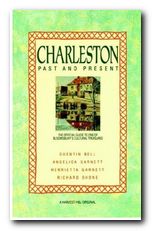
Charleston: Past and Present

May 23, 2009 by Roy Johnson

official guide to one of Bloomsbury’s cultural treasures

Charleston is the country house in Lewes, Sussex which was established as a family home by Vanessa Bell and Duncan Grant. She was married to Clive Bell at the time and had children by both men, but this was how things were done in the Bloomsbury Group. They lived in the house for over fifty years, covering the walls and furniture with their paintings, designing ceramics, making rugs and wall hangings, cultivating the gardens – and generally forming what became a unique collection of domestic and interior design.

Charleston: Past and Present The house also became the country retreat for many of the Bloomsbury Group. Vanessa raised her children Julian, Quentin and Angelica there, and she was visited by her sister Virginia Woolf, as well as by her ex-lover Roger Fry, and at weekends her husband Clive Bell and his lover Mary Hutchinson. These people in turn brought their friends such as John Maynard Keynes, Lytton Strachey, E.M.Forster, and David Garnett. Their personal lives and relationships were rather complicated, but this joint artistic venture was one that helped cement their common interests in design, decoration, painting, and domestic arts.

The Bloomsberries were great supporters of modern art, and many of them had made judicious purchases long before the artists became well known. Consequently, the walls of the house came to be decorated not only with their own paintings, but with works by Picasso, Matisse, Derain, Vlaminck, and Modigliani.

The main part of the book is the official guide to the house and gardens, written by Bloomsbury expert Richard Shone. This contains details of the contents of all the main rooms, and is well illustrated by colour photographs of their principal features and objects.

The latter part of the book is a collection of letters and memoirs, written by Quentin Bell and Angelica Garnett, who was his sister but who didn’t know that her father was Duncan Grant until she was eighteen. Quentin Bell’s memoir is of an idyllic childhood, spent with his brother Julian, largely unsupervised by semi-absent parents. He gives a Swallows and Amazons type of account.

His sister Angelica’s is more seriously thoughtful and reflective. It combines observations on Vanessa Bell’s fabric designs with psychological analyses of her relationship with Charleston and its other inhabitants. She captures the spirit and the development of the house as if it were a living being. She also draws an interesting socio-political contrast with her Christmas visits to the conservative house at Seend, which was the home of Clive Bell’s parents:

Even though it was at Seend that I celebrated my birthday – a birthday that belonged by rights to Charleston…the atmosphere of Victorian constraint could not have been tolerated for longer than the three or four days we spent there … it did not contain, as Charleston seemed to, the secret of creativity and renewal.

It’s also a paean of appreciation for her mother, as the presiding spirit of generosity and creativeness that permeated the house. This chapter is an interesting addendum to the account of her childhood that she provides in Deceived with Kindness.

Miraculously, the house survived the second world war and was kept in more or less its original condition. Quentin Bell (who grew up there) describes the practical difficulties and strategic frustrations of restoring the property. Fortunately for the historical records of English modernism, the house was completely refurbished, then purchased from its original owners, and is now governed by The Charleston Trust.

© Roy Johnson 2000

Charleston Buy the book at Amazon UK

Charleston Buy the book at Amazon US


Quentin Bell et al, Charleston: Past and Present: The Official Guide to One of Bloomsbury’s Cultural Treasures, London: Harvest Books, 1988, pp.180, ISBN 0156167735


More on art
More on design
More on biography
More on the Bloomsbury Group
Twentieth century literature


Filed Under: Art, Bloomsbury Group, Lifestyle, Product design Tagged With: Bloomsbury Group, Charleston, Decorative arts, Interior design, Lifestyle

Checking drafts of essays

August 22, 2009 by Roy Johnson

sample from HTML program and PDF book

1. Checking drafts takes place when you have produced the first version of an essay. You should be prepared to check through it carefully. Make any changes necessary to improve the clarity and effectiveness of what you have written.

2. Do not be tempted to hand in the essay just because you have written the last word.

3. You should eliminate any weaknesses. Check your punctuation and grammar.

4. Correct any mistakes, and even rearrange the order of your paragraphs if it will improve the quality and coherence of your argument.

5. Eliminate anything which is not strictly relevant to the question topic(s) you have been asked to deal with.

6. Use the list of suggestions which follow to check that you have covered what is required.

7. Try to avoid thinking of the first draft as the finished essay, no matter how much effort you have put into its production.

8. Regard it instead as the raw material from which a more considered and well-crafted second draft will be produced. You should be prepared for extensive re-writing.

9. When word-processing your work, edit the final draft on screen.

10. Eliminate all errors and add all your corrections before printing out the final draft.


Checklist

  • Write out the question accurately and fully at the head of your draft
  • Answer its specific directions and follow any instructions in the rubric
  • Cover all the main aspects of the question topic(s) concerned
  • Answer in a concise, clear, and logical manner
  • Remain strictly relevant to the question throughout
  • Stay within any given word limit required
  • Move smoothly from one point of argument to the next
  • Provide good illustrative examples and evidence to support your claims
  • Acknowledge your sources and supply either endnotes or footnotes
  • Provide a bibliography

© Roy Johnson 2003

Buy Writing Essays — eBook in PDF format
Buy Writing Essays 3.0 — eBook in HTML format


More on writing essays
More on How-To
More on writing skills

Filed Under: Writing Essays Tagged With: Academic writing, Drafts, Editing, Essays, Study skills, Term papers, Writing skills

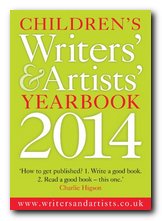
Children’s Writers’ and Artists’ Yearbook

May 25, 2009 by Roy Johnson

best-selling guide to publishers, agents, and outlets

This is the ‘writing for children’ version of the best-selling writer’s yearbook and manual, which has come up with a winning formula. It lists all the resources any serious writer could need – the names, addresses, and contact details for publishers and agents, outlets for freelancers, and institutions which offer help to writers. Woven between these listings (which are updated every year) there are specially commissioned essays and articles by famous authors and illustrators – such as Children’s Laureate Michael Morpurgo and JK Rowling; top editors and best-selling publishers; leading TV and radio producers, and other experts in the field of children’s media.

Childrens Writers and Artists YearbookThese give invaluable first-hand accounts of how the world of professional writing actually operates. Anyone aspiring to write for children will find these invaluable. The latest edition includes chapters entitled: How to Get an Agent; Learning to Write for Children; Writing Humour for Young Children; Do I Have to Have an Agent to Succeed?; What Does an Editor Do?; Eight Great Tips to Get Your Picture Book Published; UK Copyright Law; Writing Comedy for Children’s Television; Children’s Evergreens & Best Sellers; Out of the Slush Pile; Teenage Fiction; Marketing, Publicising and Selling Children’s Books; Illustrating for Children’s Books;

Like many other reference books, this guide represents very good value for money in terms of bulk information – but more importantly it’s information which is reliable, up-to-date, and difficult to locate elsewhere.

If you have any serious intention of entering the commercial market as a children’s writer or someone working in one of the associated creative arts – then this is a book which you will need sooner or later.

© Roy Johnson 2014

Children's Writers' and Artists' Yearbook   Buy the book at Amazon UK

Children's Writers' and Artists' Yearbook   Buy the book at Amazon US


Children’s Writers’ and Artists’ Yearbook, London: A & C Black, 7th revised edition 2014, pp.480, ISBN: 1408195127


More on creative writing
More on writing skills
More on publishing


Filed Under: Creative Writing, Publishing, Writing Skills Tagged With: Children's Writers' and Artists' Yearbook, Creative writing, Publishing, Writer's agents, Writing skills

  • « Previous Page
  • 1
  • …
  • 13
  • 14
  • 15
  • 16
  • 17
  • …
  • 103
  • Next Page »

Get in touch

info@mantex.co.uk

Content © Mantex 2016
  • About Us
  • Advertising
  • Clients
  • Contact
  • FAQ
  • Links
  • Services
  • Reviews
  • Sitemap
  • T & C’s
  • Testimonials
  • Privacy

Copyright © 2026 · Mantex

Copyright © 2026 · News Pro Theme on Genesis Framework · WordPress · Log in