Mantex

Tutorials, Study Guides & More

  • HOME
  • REVIEWS
  • TUTORIALS
  • HOW-TO
  • CONTACT
>> Home / Archives for 2009

Archives for 2009

George Orwell – a guide to his writings

September 20, 2009 by Roy Johnson

novels, documentary reportage, essays
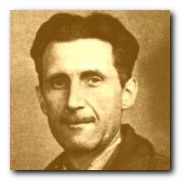
George Orwell - portraitGeorge Orwell (real name, Eric Blair) is renowned as a master of plain English prose style. He went out of his way to make himself understood to as many people as possible. He wrote in a very political era – the 1930s and 1940s. It’s hardly surprising that much of his work is written in support of democratic causes and as a warning against any form of totalitarianism, whether from the left or right. He started as a novelist of lower middle-class misery in the tradition of George Gissing, found a new strength in his reportages from working life and the Spanish Civil War, and ended his short life with two rather un-English books which have become classics of the political novel. he was not a great writer of the first rank, but a very decent man with a gift for clear expression and a desire to tell the truth and expose the fake. Martin Seymour Smith sums him up admirably by saying “he was a master of lucidity, of saying what he meant, of exposing the falsity of what he called double-think”

Down and Out in Paris and London (1933)
This is a social documentary about Orwell’s true-life (and self-imposed) experiences scraping a living and being homeless in the two capitals. Although it is fairly obvious that his plight is self-inflicted, the book contains memorable scenes of working as a plongeur in a restaurant, living alongside dossers and tramps, and queuing for an overnight bed at the Salvation Army hostel. Orwell strikes a note of unflinching realism in this his first book. Very readable, and an interesting commentary on between-the-wars experiences.
George Orwell greatest works Buy the book at Amazon UK
George Orwell greatest works Buy the book at Amazon US


Keep the Aspidistra Flying (1936)
Orwell’s semi-autobiographical third novel – almost a modern Grub Street. Gordon Comstock is an aspiring poet who works as an advertising copy-writer. He hates his job, helping to sell mundane products. So he gives it up and works in a bookshop to support himself whilst failing to find literary success. He is in a constant state of war against what he calls the ‘Money God’ – the commercial requirements of the market place – to which he eventually succumbs. However, he does in the end achieve success of a human kind by getting married and becoming a father.
George Orwell greatest works Buy the book at Amazon UK
George Orwell greatest works Buy the book at Amazon US


The Road to Wigan Pier (1937)
This hybrid book is a famous piece of sociological reportage. Whilst other people theorised about the working class, Orwell went to spend time with Lancashire miners in the depression of the 1930s. This is his account of how they lived and worked. It made an enormous impact at the time and still speaks with a voice of truth and authenticity about a level of griding poverty which fortunately no longer exists. Part One describes the appalling conditions in which many people lived at the time. Many people were shocked by the scenes he describes. In Part Two he expounds his personal strategy for Socialism, using an account of his own personal journey from public schoolboy and member of the Indian Imperial Police in Burma, to Left-wing author and crusading journalist. This is one of the few books to emerge from Victor Gollancz’s Left Book Club which is still worth reading.
George Orwell greatest works Buy the book at Amazon UK
George Orwell greatest works Buy the book at Amazon US


Homage to Catalonia (1938)
This is possibly Orwell’s best book. It offers a vivid first-hand account of the Spanish civil war, in which he fought between 1936 and 1937. It includes a wonderfully upbeat sketch of Barcelona whilst it was briefly under control of the anarchists and Trotskyists. This is nevertheless the first of Orwell’s warnings about the betrayal of good causes by ideologues. All his political judgments turned out to be more or less correct in the long term, though he was criticised by both Left and Right at the time. This is the literature of commitment at its very best, and a very good example of truthfulness in political reportage. It also includes instructions on how to successfully achieve an all-over wash in a mountain stream at sub-zero temperatures.
George Orwell greatest works Buy the book at Amazon UK
George Orwell greatest works Buy the book at Amazon US


Coming Up for Air (1939)
Written at the height of the political disappointments of the 1930s, this is possibly Orwell’s most pessimistic book. George Bowling is a middle-aged insurance clerk trapped in a loveless marriage. He tries to escape by revisiting the idyllic past of his childhood in Lower Binfield. But when he gets there, like all pasts, it has vanished. The only thing he has to look forward to in the end is the prospect of war – which when the book was published was just around the corner.
George Orwell greatest works Buy the book at Amazon UK
George Orwell greatest works Buy the book at Amazon US


Collected Essays and Journalism
It’s possible that Orwell’s essays will outlast most of his fiction. These are perceptive and well-written meditations on politics, nationalism, language, and what we now call mass communications – newspapers, radio, and popular culture. It’s interesting to note that these essays, which at the time they were written were challenging the status quo, are now used as models of good practice by the educational establishment.
George Orwell greatest works Buy the book at Amazon UK
George Orwell greatest works Buy the book at Amazon US


Animal Farm (1945)
This is a rare case of a modern fable that works convincingly. It’s Orwell’s satirical allegory of the betrayal of the Russian revolution – transposed to struggles between the animals and humans on Manor Farm. Th revolution is a success, but is then betrayed by corruption and factional in-fighting amongst the animals themselves – with political slogans such as the now famous ‘All animals are equal, but some animals are more equal than others’.
George Orwell greatest works Buy the book at Amazon UK
George Orwell greatest works Buy the book at Amazon US


Nineteen Eighty-Four (1949)
Orwell’s best-known work. The title alone has passed into common use as a term for a totalitarian dystopia. Ordinary citizen Winston Smith battles to maintain the values of rational humanism against the fascist state which is under the control of Big Brother. This is a society where people are made to conform to orthodoxy by the Thought Police. He is helped by his love for Julia, a fellow humanist, but eventually, under torture in Room 101, he betrays her. Orwell was much influenced by Yevgeny Zamyatin’s novel We, which he reviewed in the 1930s.
George Orwell greatest works Buy the book at Amazon UK
George Orwell greatest works Buy the book at Amazon US


George Orwell: Essays
This is an anthology which includes George Orwell’s most famous pieces, among them My Country Right or Left, The Decline of the English Murder and How the Poor Die. With insight and wit, Orwell writes on a series of wide ranging topics, from the Spanish Civil War to a defence of English cooking. Some of his generalisations about ‘English character’ might now strike us as a little jingoistic, but on the whole these essays are models of combative thinking and good prose.
George Orwell greatest works Buy the book at Amazon UK
George Orwell greatest works Buy the book at Amazon US


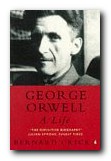
George Orwell: A LifeGeorge Orwell: A Life This is the more-or-less standard biography, which was written in 1980 and has since revised twice. Bernard Crick puts his emphasis on Orwell’s politics. There are other more recent biographies, but Crick’s will help you to understand the social and ideological background to the turbulent period through which Orwell lived and wrote. It’s particularly good for understanding the strained allegiances amongst socialists and liberals caused by the Stalinist betrayal of the revolution.

George Orwell greatest works Buy the book at Amazon UK
George Orwell greatest works Buy the book at Amazon US

© Roy Johnson 2004

Filed Under: George Orwell Tagged With: English literature, George Orwell, Literary studies

George Orwell chronology

September 21, 2009 by Roy Johnson

George Orwell chronology1903. George Orwell born as Eric Arthur Blair in Mothari, Bengal. His father was an English government official in the Opium department.

1904. Blair moves with mother, Ida Mabel Limouzin and older sister, to Henley-on-Thames, Oxfordshire, to be educated in England, according to Anglo-Indian tradition.

1908. Attends Anglican convent school in Henley.

1911. Attends St Cyprian’s, a preparatory school in Eastbourne.

1917. Attends Eton as a King’s Scholar.

1921. Leaves Eaton, but does not go on to university.

1922. Joins the Indian Imperial Police and serves as an officer in Burma.

1927. Resigns from Indian Police and returns to England.

1928. Goes to Paris to become a writer.

1929. Money runs out – returns to England and becomes a tramp.

1932. Secures a job teaching in a private school.

1933. Publishes Down and Out in Paris and London using the pseudonym George Orwell.

1934. Works in a bookshop in London. Publishes his first novel – Burmese Days.

1935. Meets his future first wife, Eileen Maude O’Shaughnessy. Publishes A Clergyman’s Daughter.

1936. Visits the north of England, researching working conditions amongst miners. Marries Eileen O’Shaughnessy. Publishes Keep the Aspidistra Flying Goes to Spain and joins the POUM to fight in the Spanish Civil War.

1937. Shot through the neck and returned to England. Publishes The Road to Wigan Pier.

1938. Publishes Homage to Catalonia.

1939. Publishes Coming Up for Air.

1940. Publishes Inside the Whale

1941. Joins the BBC as a talks producer and broadcaster for India. Publishes The Lion and the Unicorn. Writes reviews for Time and Tide, Tribune, The Observer, Partisan Review, and Manchester Evening News,

1943. Resigns from the BBC and becomes literary editor of Tribune.

1944. Completes Animal Farm, but no publisher will accept it. He and Eileen adopt baby boy, Richard.

1945. Resigns from Tribune to become war correspondent for The Observer. Death of wife Eileen. Animal Farm published and becomes successful overnight.

1946. Leaves London to live with son and nurse on the island of Jura.

1947. Becomes ill and enters hospital near Glasgow.

1948. Returns to live on Jura.

1949. Enters a sanatorium in Gloucestershire. Nineteen Eighty-Four published to instant success. Admitted to University College Hospital, and marries Sonia Brownell, a former colleague from Tribune.

1950. Dies of tuberculosis and is buried in Sutton Courtenay, Oxfordshire. Shooting an Elephant and Other Essays.

1953. Such, Such Were the Joys


George Orwell: A LifeGeorge Orwell: A Life is the more-or-less standard biography, written in 1980 and revised twice since then. Bernard Crick puts his emphasis on Orwell’s politics. There are other more recent biographies, but Crick’s will help you to understand the social and ideological background to the turbulent period through which Orwell lived and wrote. It’s particularly good for understanding the strained allegiances amongst socialists and liberals caused by the Stalinist betrayal.

© Roy Johnson 2004


Filed Under: George Orwell Tagged With: Biography, George Orwell, Literary studies

George Rylands – Poems

October 5, 2009 by Roy Johnson

Hogarth Press first edition book jacket designs

 
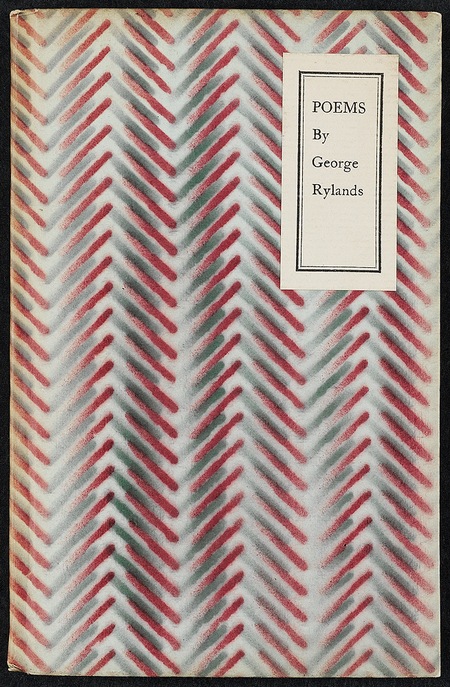
Poems by George Rylands - first edition

 
George Rylands, Poems (1931)

“George (“Dadie”) Rylands as an undergraduate moved in the Cambridge Apostles circuit of young men who caught the attention of Maynard Keynes and Lytton Strachey. He became the Woolfs’ short-term but beloved assistant from July to December 1924 and then returned to Cambridge where he became a fellow of King’s College in 1927. The Woolfs published two volumes of Rylands’s poetry, Russet and Taffeta (1925), people by Perditas and Corydons, and Poems (1931) about Chloe and Flora amid the flowers and hay-scented farmlands. The Woolfs also published his fellowship dissertation, Words and Poetry (1928). For all their skillful lyricism, Rylands’s Poems are like pressed flowers, nosegays colourless and dry, preserved from change. Only one year older than William Plomer and two years older than Christopher Isherwood, Rylands wrote not of his generation but of a generation before the FirstWorld War.”

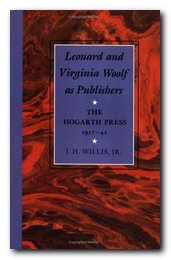
J.H. Willis Jr, Leonard and Virginia Woolf as Publishers: The Hogarth Press 1917-1941

There is generous use of white space in this, the second book of Rylands’ poetry hand printed by the Woolfs… There is a typo in the imprint, placing a comma rather than a period after Leonard’s initial.

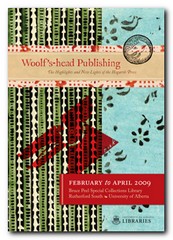
Elizabeth Willson Gordon, Woolf’s-head Publishing: The Highlights and New Lights of the Hogarth Press

previousnext


Hogarth Press studies

Woolf's-head Publishing Woolf’s-head Publishing is a wonderful collection of cover designs, book jackets, and illustrations – but also a beautiful example of book production in its own right. It was produced as an exhibition catalogue and has quite rightly gone on to enjoy an independent life of its own. This book is a genuine collector’s item, and only months after its first publication it started to win awards for its design and production values. Anyone with the slightest interest in book production, graphic design, typography, or Bloomsbury will want to own a copy the minute they clap eyes on it.

Woolf's-head Publishing Buy the book at Amazon UK
Woolf's-head Publishing Buy the book at Amazon US

The Hogarth Press Leonard and Virginia Woolf as Publishers: Hogarth Press, 1917-41 John Willis brings the remarkable story of Leonard and Virginia Woolf’s success as publishers to life. He generates interesting thumbnail sketches of all the Hogarth Press authors, which brings both them and the books they wrote into sharp focus. He also follows the development of many of its best-selling titles, and there’s a full account of the social and cultural development of the press. This is a scholarly work with extensive footnotes, bibliographies, and suggestions for further reading – but most of all it is a very readable study in cultural history.

The Hogarth Press Buy the book at Amazon UK
The Hogarth Press Buy the book at Amazon US

© Roy Johnson 2005


Filed Under: Hogarth Press Tagged With: Art, Bloomsbury, Graphic design, Hogarth Press, Literary studies, Poems

Gerald Brenan biography

September 17, 2009 by Roy Johnson

his life, writings, and adventures

Gerald Brenan biographyGerald Brenan (1894-1987) was born in Malta, the son of an English army officer. After spending some of his childhood in South Africa and India, he grew up in an isolated Cotswold village. He studied at Radley College and then the military academy at Sandhurst. Travel and adventure were to be his way of life, and at sixteen he ran away from home. His aim was to reach Central Asia but the outbreak of the Balkan War and shortage of money caused him to return to England. He studied to enter the Indian Police (as did his near-contemporary George Orwell) but on the outbreak of the First World War, he joined the army. He spent over two years on the Western Front, reaching the rank of captain and winning a Military Cross and a Croix de Guerre.
Following the end of the war, his fellow officer and friend Ralph Partridge introduced him to the fabled Bloomsbury Group. It was through Partridge that Brenan met Lytton Strachey, Dora Carrington, and Virginia Woolf. As soon as he was released from military service he packed a rucksack and left England aboard a ship bound for Spain. He was disillusioned with the way of life in England and with the stifling social and sexual hypocrisies of British bourgeois society. He rebelled against becoming part of it and, being a romantic and adventurer, resolved to seek a more breathable atmosphere in which to live.

He also wanted to educate himself and become a writer. As he records in his best known travel memoir, South from Granada, he felt ashamed that his public school upbringing had left him with a very poor education. He shipped 2,000 books out to his chosen destination – an area deep in Andalucia known as ‘La Alpujarra’.


South from GranadaSouth from Granada is a classic in which Brenan describes setting up home in a remote Spanish village in the 1920s. He has a marvellous grasp of geography; he captures the rugged atmosphere of the region; and he has a particularly detailed knowledge of botany. Local characters and customs are vividly recounted. Bloomsbury enthusiasts will be delighted his by hilarious accounts of visits made by Lytton Strachey and Virginia Woolf under very difficult conditions, as well as a meeting with Roger Fry in Almeria.


Ralph Partridge and Dora Carrington, recently married, also visited him with Lytton Strachey in 1920, and Carrington’s fondness for Brenan is thought to have started on this trip. She carried on an extensive correspondence with Brenan for the next several years and in 1922 they had a brief affair, which was rapidly discovered by Partridge. There was a year of silence between the three, before reconciliation took place and the often-stormy friendship continued for the remainder of their lives.

In 1930 he married the American poetess Gamel Woolsey. In 1934 the Brenans left Spain and were unable to return until 1953, partly because of the Spanish civil war. During the Second World War he was an Air Raid Warden and a Home Guard. They spent this time in Aldbourne and Brenan expressed his feelings of exile from Spain by completing three major works on Spanish life and literature. On his return to Spain he began a series of autobiographical works, including South from Granada, A Life of One’s Own, and A Personal Record.


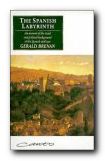
The Spanish LabyrinthThe Spanish Labyrinth has become the classic account of the background to the Spanish Civil War. It has all the vividness of Brenan’s personal experiences and intelligent insights. He tries to see the issues in Spanish politics objectively, whilst bearing witness to the deep involvement which is the only possible source of much of this richly detailed account. As a literary figure on the fringe of the Bloomsbury Group, Gerald Brenan lends to this narrative an engaging personal style that has become familiar to many thousands of readers over the decades since it was first published


After the death of his wife in 1968, a young English student of the poetry of the Spanish saint – St. John of the Cross – joined Gerald as his secretary and companion. This young lady Lynda Jane Nicholson Price remained with him for 14 years. In the later part of his life he was confined to an old people’s home in Aldermaston, but a group of his Spanish friends ‘kidnapped’ him and took him back to what they regarded as his spiritual home, just outside Malaga. He died on January 19, 1987 while in the hands of the Spanish Medical Services who had undertaken to care for him. He was acclaimed for his services to Spanish literature, buried in Malaga, and a plaque dedicated to his work was fixed to the house where he had lived in Yegen. It reads:

“In this house for a period of seven years [1920-1934] lived the British Hispanist GERALD BRENAN, who universalised the name of Yegen and the customs and traditions of La Alpujarra. The Town Hall, grateful, dedicates this plaque.” YEGEN, 3 JANUARY, 1982


Gerald Brenan biography


Bloomsbury Group – web links

Bloomsbury Group - web links Hogarth Press first editions
Annotated gallery of original first edition book jacket covers from the Hogarth Press, featuring designs by Vanessa Bell, Roger Fry, and others.

Bloomsbury Group - web links The Omega Workshops
A brief history of Roger Fry’s experimental Omega Workshops, which had a lasting influence on interior design in post First World War Britain.

Bloomsbury Group - web links The Bloomsbury Group and War
An essay on the largely pacifist and internationalist stance taken by Bloomsbury Group members towards the First World War.

Bloomsbury Group web links Tate Gallery Archive Journeys: Bloomsbury
Mini web site featuring photos, paintings, a timeline, sub-sections on the Omega Workshops, Roger Fry, and Duncan Grant, and biographical notes.

Bloomsbury Group - web links Bloomsbury: Books, Art and Design
Exhibition of paintings, designs, and ceramics at Toronto University featuring Hogarth Press, Vanessa Bell, Dora Carrington, Quentin Bell, and Stephen Tomlin.

Bloomsbury Group - web links Blogging Woolf
A rich enthusiast site featuring news of events, exhibitions, new book reviews, relevant links, study resources, and anything related to Bloomsbury and Virginia Woolf

Bloomsbury Group - web links Hyper-Concordance to Virginia Woolf
Search the texts of all Woolf’s major works, and track down phrases, quotes, and even individual words in their original context.

Bloomsbury Group - web links A Mrs Dalloway Walk in London
An annotated description of Clarissa Dalloway’s walk from Westminster to Regent’s Park, with historical updates and a bibliography.

Bloomsbury Group - web links Women’s History Walk in Bloomsbury
Annotated tour of literary and political homes in Bloomsbury, including Gordon Square, University College, Bedford Square, Doughty Street, and Tavistock Square.

Bloomsbury Group - web links Virginia Woolf Society of Great Britain
News of events, regular bulletins, study materials, publications, and related links. Largely the work of Virginia Woolf specialist Stuart N. Clarke.

Bloomsbury Group - web links BBC Audio Essay – A Eulogy to Words
A charming sound recording of a BBC radio talk broadcast in 1937 – accompanied by a slideshow of photographs of Virginia Woolf.

Bloomsbury Group - web links A Family Photograph Albumn
Leslie Stephens’ collection of family photographs which became known as the Mausoleum Book, collected at Smith College – Massachusetts.

Bloomsbury Group - web links Bloomsbury at Duke University
A collection of book jacket covers, Fry’s Twelve Woodcuts, Strachey’s ‘Elizabeth and Essex’.

© Roy Johnson 2000-2014


More on Gerald Brenan
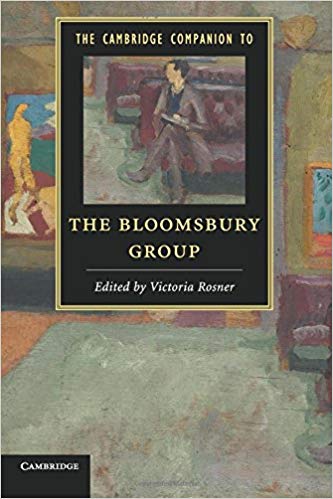
More on the Bloomsbury Group
More on literary studies
More on short stories


Filed Under: Bloomsbury Group, Gerald Brenan Tagged With: Biography, Bloomsbury Group, Cultural history, Gerald Brenan, Literary studies, South from Granada, The Spanish Labyrinth

Gerald Brenan: A Personal Record

May 26, 2009 by Roy Johnson

second volume of autobiography 1920-1972

This is the second volume of Gerald Brenan’s autobiographical writings. The first, A Life of One’s Own covers the period 1894 to 1920, and deals with his childhood and education, up to the point of his emergence from (honourable) service during the first world war. This volume starts with an account of his arrival in Spain as a young man of twenty-six – a subject he treats in a more general and less personal terms in his classic travel book South from Granada.

Gerald Brenan Although it purports to cover five decades, most of the book is devoted to his bohemian wanderings in the 1920s, which he spent oscillating between Spain and the Bloomsbury Group – of which he is not uncritical. Much of his narrative is dominated by an emotionally turbulent affair with Dora Carrington, who just happened to be married to his best friend Ralph Partridge. It also includes his dabblings with shop girls and prostitutes, and his attempts to secure allowances and inheritances so that he didn’t have to work.

He decided he was going to become a writer, but it was to be more than two decades before he got round to anything substantial. Having established a home in southern Spain, he returned to London to continue his on-off affair with Carrington and started to write a biography of Saint Teresa. In this period of his life he also mixed with various bohemians of whom he gives vivid character sketches – Arthur Whaley, Boris Anrep, Beryl de Zoete – almost all of whom had personal relations as tangled as his own.

The anguish of his affair with Carrington continued for years and is spelled out in quite intimate detail. She was married to Ralph Partridge but in love with Lytton Strachey, who was also in love with Partridge – and they all lived together. This is the Bloomsbury Group writ large. But as soon a long-awaited inheritance from an aunt arrived, Brenan got married to almost the first girl he met.

He is amazingly frank about this marriage, the first part of which was passed knowing that his wife was still in love with Llewelyn Powys, with whom she had been conducting an affair. He sticks at it and makes the marriage work, but the pages devoted to it are outnumbered by those on Carrington by ten to one.

There’s a vivid first-hand account of the Civil War in Malaga, following the military revolt which had started in the Spanish protectorates of Ceuta and Melilla in Morocco. He stuck it out as long as possible, then retreated to England to serve as an air-raid warden during the war.

The strange thing is that once he reaches 1940, the last three decades of his life are written off in no more than a few pages. However, I was mindful of the fact that he wrote these memoirs in the late 1960s, and there might have been an element of recapturing his lost youth in the enterprise.

In the post-war years he was spending his time doing nothing more demanding than writing letters to the newspapers. His social life included such heterogeneous folk as Dylan Thomas and Diana Dors. He inherited yet again following death of his father – though not as much as he felt he was entitled to.

In 1953 he and his wife returned to Spain, to the house which had been vacated during the Civil War. Before long he was engaged in an amorous adventure with Dora Carrington’s young niece, and couldn’t wait to tell his wife all about it.

His wife died in 1967, but Brenan had already started a relationship with a girl forty years younger than him. He sold his house and built a new one further inland, from which point he composed this memoir.

I must say that my regard for him as a human being went down quite a few notches reading this account, but he is undoubtedly a good writer, with a good eye for character and an interesting line in anecdotes. His reflections on the Bloomsbury Group are valuable, and South from Granada and The Spanish Labyrinth remain well established as classics.

© Roy Johnson 2000

Gerald Brenan Buy the book at Amazon UK

Gerald Brenan Buy the book at Amazon US


Gerald Brenan, Personal Record 1920-1972, New York: Knopf, 1975, pp.381, ISBN: 0394495829


More on biography
More on the Bloomsbury Group
More on literary studies
More on the arts


Filed Under: Biography, Gerald Brenan Tagged With: Biography, Bloomsbury Group, Cultural history, Gerald Brenan

Getting Hits

July 17, 2009 by Roy Johnson

the basics of generating traffic and web site promotion

This is a beginner’s guide to web site promotion and search engine placement. Its main advantage is that it will not overwhelm somebody new to this arcane technology. Don Sellers begins with a simple explanation of search engines and what they do. He tells you how to get your site listed, how to understand which links give the biggest hits, and how to get listed with the top search engines, such as Yahoo!, AltaVista, and Excite. He also explains the subtle differences between the major players in this field. [His baseball metaphor is catching].

Getting HitsHe describes how to set up links both to and from other sites, and where to submit your site for free web promotion. He lists plenty of submission sites, announce sites, and how to use them. His lessons on netiquette in newsgroups and mailing lists will be helpful for newcomers to these areas of the Web. He assists you in targeting which newsgroups you should list your Web page with, and identifies some of the pitfalls of using this method of promotion.

He also includes some interesting suggestions for offline site promotion – creating your own press releases and getting listed in magazines for instance.

If you want to spend money, he has sound advice on banner advertising and how to pay for key words, as well as how to analyse the statistics of web logs to interpret the results. Finally there is a useful listing of free and commercial resources to help you.

His overall advice is that there are no easy shortcuts. Success will come from testing and refining your site regularly to stay competitive in the medium.

© Roy Johnson 2002

Getting Hits   Buy the book at Amazon UK

Getting Hits   Buy the book at Amazon US


Don Sellers, Getting Hits: the definitive guide to promoting your web site Berkeley, CA: Peachpit, 1997, pp. 178, ISBN: 0201688158


More on eCommerce
More on media
More on publishing
More on technology


Filed Under: e-Commerce Tagged With: Business, eCommerce, Getting Hits, Optimization, SEO, site promotion

Getting Published: guide for lecturers

July 23, 2009 by Roy Johnson

insider tips for putting academic writing into print

We all know that in the present climate of academic writing, it’s a case of publish – or perish. The stress on doing ‘research’ then getting published is almost the only way to ‘get on’. This book tells you how to do it. Despite the dubious imperatives, Jerry Wellington starts out by looking at the huge variety of positive reasons why people write and publish – as well as the numerous fears which might prevent others from doing so. He argues largely in favour of publishing in established, printed journals on the grounds that they offer the author more credence and protection – though there’s no mention of the amazingly small number of people who ever read them.

academic writingNext comes advice in taking account of the publication in which your writing will appear, its readership, and most crucially the type of article or review and how it will best fit the editor’s requirements. There’s a long section on ‘the writing process’ based on interviews with people who describe their approaches (the planners and the improvisers) as well as their reactions to peer review and criticism. You are certain to find somebody in here who shares your own approach. He describes what to write about, and even offers a checklist on how to be original.

He then describes the process of submitting an article for publication – both from the writer’s and publisher’s point of view. Much of this is taken up with the pros and cons of the peer review process.

Then comes the case of publishing in book form. After warning quite rightly that you shouldn’t write a word until you have a contract, he then shows you how to prepare a publication proposal in great detail.

He throws in some observations and tips on the techniques of writing – how to plan and structure your work; how to edit and re-write what you produce; and how to develop a sense of ‘good writing’.

Finally he looks at future possible trends in publishing – which focus largely on electronic journals and what’s called ‘self-archiving’. Anyone interested in this development would do well to look at the work of Steven Harnad in this field.

And for those who want to take the subject seriously, this book could profitably read alongside Peter Wood’s Successful Writing for Qualitative Researchers.

I wrote this review on the day the UK government announced it would allow the formation of new non-research universities. So the rules of the game may well be changing soon. For most people however, the steps to getting published in the academic world will remain the same; and they are all covered here.

© Roy Johnson 2004

Getting Published   Buy the book at Amazon UK

Getting Published   Buy the book at Amazon US


Jerry Wellington, Getting Published: a guide for lecturers and researchers, London: Routledge, 2003, pp.136, ISBN: 0415298476


More on publishing
More on writing skills
More on journalism
More on creative writing
More on writing skills


Filed Under: Publishing, Study skills Tagged With: Academic writing, Getting Published, Publishing, Writing skills

Giving Presentations

May 25, 2009 by Roy Johnson

presentation skills for lectures, demonstrations, and talks

This book will show you what’s required in giving presentations. That means how to plan and structure the presentation; how to choose and prepare good visual aids; and how to deliver your presentation with confidence, either individually or as part of a team. The contents of Jo Billingham’s book are arranged in the logical manner you need if your presentation is to be successful. First prepare and structure what you are going to say; then choose your visual aids and arrange them in an effective manner.

Giving Presentations Next, you need to make notes and rehearse what you are going to deliver. Even if you do this in a room on your own it’s better than being unprepared. The presentation itself is explored completely. What happens if something goes wrong? How do you make maximum impact? What do we do about being nervous? How to dress – up or down? There is plenty of good advice on coping with all these problems. Oxford University Press have just brought out a series of short beginners’ guides on communication skills. The emphasis is on compact, no-nonsense advice directly related to issues of everyday life.

Given the controversy surrounding the much-used and some would say over-used market-leading software PowerPoint, it’s good that she discusses the disadvantages as well as the advantages of using it.

The chapters of these guides are short and to-the-point; but the pages are rich in hints, tips, and quotes in call-out boxes. The strength of this approach is that it avoids the encyclopedic volume of advice which in some manuals can be quite overbearing.

There are lots of tips on the use of visual aids – one of the potential nightmares when doing presentations – and she offers a very useful checklist of things to do.

When I last gave a presentation using a computer and a data projector, the system packed up after five minutes. “Thank goodness for the humble overhead projector” I confidently declared – whereupon the bulb in the OHP blew up. The moral is – be prepared. Be doubly prepared.

© Roy Johnson 2005

Giving Presentations   Buy the book at Amazon UK

Giving Presentations   Buy the book at Amazon US


Jo Billingham, Giving Presentations, Oxford: Oxford University Press, 2003, pp.144, ISBN: 0198606818


More on study skills
More on writing skills
More on online learning


Filed Under: Study skills Tagged With: Business, Communication, Giving Presentations, Information design, PowerPoint, Presentations

Glossary of essay instruction terms

September 15, 2009 by Roy Johnson

Essay instruction termscommon terms used in essay questions

1. Instruction terms are words commonly used in essay questions. They instruct or direct you in the approach you should take towards the proposition of the question.

2. The exact meaning of these terms will vary depending upon the subject being studied. The following give some idea of what they normally mean for essays and examination questions.

3. Think carefully about the meaning of these terms in relation to the remainder of the question. Even though you might feel confident, do not become blasé or inattentive. Sometimes even experienced students forget the important difference between Compare and Contrast.

4. Try to understand exactly what an instruction is asking you to do – but be reasonable. Don’t look for problems where they might not exist. If in doubt, ask your tutor.


account for
Explain the reasons for, giving an indication of all relevant circumstances. Not to be confused with ‘Give an account of’ which asks only for a detailed description.

analyse
Study in depth, identifying and describing in detail the main characteristics.

argue
Put forward a proposition, then illustrate it, discuss its significance, and defend it against possible counter-charges.

assess
Examine closely, with a view to ‘weighing up’ a particular situation. Consider in a balanced way the strengths and weaknesses or points for and against a proposition. In conclusion, state your judgement clearly.

comment
State clearly and in moderate fashion your opinions on the material in question. Support your views with reference to suitable evidence or explanations.

compare
Look for similarities and differences between two or more things.

contrast
Deliberately single out and emphasise the differences and dissimilarities between two or more things.

criticise
Give your judgement about a statement or a body of work; explore its implications, discussing all the evidence which is available. Be specific in your examination.

define
Set down the precise meaning of something. Be prepared to state the limits of the definition. Take note of multiple meanings if they exist.

describe
Give a detailed and comprehensive account of something.

discuss
Investigate and examine by careful argument. Explore the implications and the advantages or disadvantages. Debate the case and possibly consider any alternatives. This is probably the most common instruction term. It is inviting you to say something interesting in response to the topic in question. You can choose your own approach.

evaluate
Make an appraisal of the worth of something in the light of its truth or utility. Emphasise the views of authorities as well as your personal estimation.

explain
Make plain. Account for. Clarify, interpret, and spell out the material you present, giving reasons for important features or developments.

how far …
Similar to questions which begin ‘To what extent…‘. You are expected to make your case or present your argument, whilst showing an awareness that alternate or even contradictory explanations may exist. Careful assessment and weighing of evidence are called for.

identify
Pick out what you regard as the key features of something, perhaps making clear the criteria you use in doing so.

illustrate
Make clear and explicit by the discussion of concrete examples.

justify
Show adequate grounds for decisions or conclusions. Answer or refute the main objections likely to be made against them.

outline
Give the main features or the general principles of a subject, omitting minor details and emphasising structure or arrangement.

relate
Show how things are connected, and how they possibly affect, cause, or resemble each other.

review
Make a survey of, examining the subject critically.

state
Present the main points in brief, clear form.

summarise
Give a concise account of the main points of a matter, omitting details and examples.

trace
Follow the development or history of a topic from some point of origin.

© Roy Johnson 2004


More on How-To
More on literary studies
More on writing skills


Filed Under: How-to guides, Literary studies, Study Skills Tagged With: Academic writing, Essay instructions, Essay writing, Glossary, Instruction terms, Study skills, Writing skills

Glossary of text messaging

November 17, 2009 by Roy Johnson

Text messaging is now a normal part of everyday life. These abbreviations will help you to write common expressions with fewer key strokes or button presses. It was once though that communicating in this way, using a form of code, would reduce people’s standards of literacy. We now know that the opposite is the case: see David Crystal’s excellent defence in Txtg: The Gr8 Db8.

Abbreviation Full expression
@ at
1 one
2 to, too
2day today
2moro tomorrow
2nite tonight
3sum threesome
4 for
AAM as a matter of fact
AB ah bless!
AFAIC as far as I’m concerned
AFAIK as far as I know
AKA also known as
ASAP as soon as possible
ATB all the best
B be
BCNU be seeing you
Bwd backward
B4 before
BBFN bye bye for now
BFN bye for now
BRB be right back
BTDT been there done that
BTW by the way
BYKT but you knew that
C see
CMIIW correct me if I’m wrong
CU see you
CYA see ya!
CUL8R see you later
CW2CU can’t wait to see you
Doin doing
EOL end of lecture
FAQ frequently asked questions
FITB fill in the blank
F2T free to talk
FOAD f*** off and die
FUBAR f***ed up beyond all recognition
Fwd forward
FWIW for what it’s worth
FYI for your information
GAL get a life
Gr8 great
GD&R grinning, ducking, and running
GG good game
HAND have a nice day
H8 hate
HTH hope this helps
Hot4U hot for you
IAC in any case
IAE in any event
IANAL I am not a lawyer (but…)
ICCL I couldn’t care less
ICL in Christian love
IDK I don’t know
IYSS if you say so
IHTFP I have truly found paradise [or]
I hate this f***ing place
IIRC if I recall correctly
ILUVU I love you
ILUVUMED I love you more each day
IMCO in my considered opinion
IMHO in my humble opinion
IMNSHO in my not so humble opinion
IMO in my opinion
IOW in other words
ITYFIR I think you’ll find I’m right
IYKWIM if you know what I mean
JM2p just my two pennyworth
KIT keep in touch
L8 late
L8r later
Luv love
LOL lots of luck [or] laughing out loud
MGB may God bless
MHOTY my hat’s off to you
MMD make my day
MMDP make my day punk!
Mob mobile
Msg message
MYOB mind your own business
NE any
NE1 anyone
NH nice hand
NO1 no one
NRN no reply necessary
OIC oh I see!
OTOH on the other hand
PCM please call me
PITA pain in the arse
PLS please
PPL people
PS post script
QL cool
R are
RGDS regards
ROF rolling on the floor
ROTFL rolling on the floor laughing
RSN really soon now
RU are you?
RUOK are you OK?
SITD still in the dark
SIT stay in touch
SMS short message service
SOHF sense of humour failure
SOME1 someone
Stra stray
SWG scientific wild guess
SWALK sealed with a loving kiss
THNQ thank you
Thx thanks
TIA thanks in advance
TIC tongue in cheek
Ti2GO time to go
TPTB the powers that be
TTFN ta ta for now
TTUL talk to you later
TWIMC to whom it may concern
TUVM thank you very much
U you
UR you are
WAN2 want to
WAN2TLK? want to talk?
W with
Wknd weekend
WRT with respect to
WTTW word to the wise
WYSIWYG what you see is what you get
X kiss
XLNT excellent
YKWYKD you know what you can do
YMMV your milage may vary
YR your
YTLKIN2ME? you talking to me?
YWIA you’re welcome in advance
YYSSW yeah, yeah, sure, sure, whatever

© Roy Johnson 2009


More on How-To
More on literary studies
More on writing skills


Filed Under: How-to guides Tagged With: Glossary, Text messaging

  • « Previous Page
  • 1
  • …
  • 33
  • 34
  • 35
  • 36
  • 37
  • …
  • 103
  • Next Page »

Get in touch

info@mantex.co.uk

Content © Mantex 2016
  • About Us
  • Advertising
  • Clients
  • Contact
  • FAQ
  • Links
  • Services
  • Reviews
  • Sitemap
  • T & C’s
  • Testimonials
  • Privacy

Copyright © 2026 · Mantex

Copyright © 2026 · News Pro Theme on Genesis Framework · WordPress · Log in