Mantex

Tutorials, Study Guides & More

  • HOME
  • REVIEWS
  • TUTORIALS
  • HOW-TO
  • CONTACT
>> Home / Archives for 2009

Archives for 2009

Mark Gertler biography

September 20, 2009 by Roy Johnson

the only working-class Bloomsbury artist
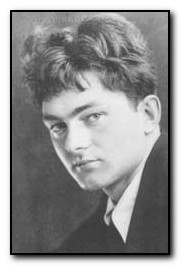
Mark Gertler - portraitMark Gertler (1896—1939) was born in Spitalfields in London’s East End, the youngest son of Jewish immigrant parents. When he was a year old, the family was forced by extreme poverty back to their native Galicia (Poland). His father travelled to America in search of work, but when this plan failed the family returned to London in 1896. As a boy he showed a marked talent for drawing, and on leaving school in 1906 he enrolled in art classes at Regent Street Polytechnic, which was the first institution in the UK to provide post-school education for working people.

Once again, because of his family’s poverty, he was forced to drop out after only a year and take up work as an apprentice in a stained glass company. However, he continued with his interest in art, and after gaining third place in a competition he submitted his drawings to the Slade and was granted a scholarship by Sir William Rothenstein.

His contemporaries during four years at the Slade included David Bomberg, Paul Nash, Edward Wadsworth, Christopher Nevinson and Stanley Spencer. More fatefully for his private life, he also met and fell in love with Dora Carrington. They had a turbulent and anguished relationship which lasted a number of years.

Meanwhile, he won prizes and scholarships, then left the Slade in 1912 to paint full time. He was patronised by Lady Ottoline Morrell who introduced him to Walter Sickert, Augustus John, and the Bloomsbury Group. He became moderately successful as a society portrait painter, but suffered in such company because of his relative poverty, his working-class origins, and his Jewishness.
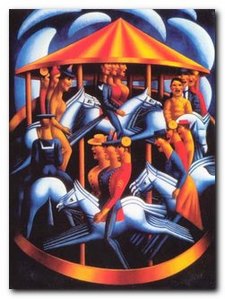
Mark Gertler - Merry-go-RoundIn 1914 he was also taken up by Edward Marsh an art collector who was later to become secretary to Winston Churchill. Even this relationship became difficult, since Gertler was a pacifist, and he disapproved of the system of patronage. He broke off the relationship, and around this time painted what has become his most famous painting – The Merry-Go-Round.

In 1915 he became the love object of Lytton Strachey, but he continued his own pursuit of Dora Carrington for five years before she finally agreed to have a sexual relationship with him. For a time, he shared her with Strachey, with whom Carrington had meanwhile fallen in love. When she eventually left him to set up home with Strachey, Gertler was crushed and mortified.

As a young man, he projected a personal magnetism which fascinated many of his contemporaries. He is the model for the sinister sculptor Loerke in D.H. Lawrence’s novel Women in Love, the dashing Byronic hero of Aldous Huxley’s Chrome Yellow, and the egotistical painter of Katherine Mansfield’s story Je ne parle pas Francais.

The first symptoms of tuberculosis appeared in 1920, and he was forced to enter a sanatorium. Nevertheless, despite his poor health, he continued to have yearly exhibitions at the Goupil Gallery in Regent Street.

In 1930 Gertler married Marjorie Hodgkinson, and they had a son in 1932. Their marriage was often difficult, and Gertler suffered from the same feelings of ill-ease that undermined relationships with his patrons. Edward Marsh continued to buy Gertler’s paintings, even though he admitted that he no longer liked or understood them. But in order to supplement his intermittent income from painting, Gertler was forced to become a part-time teacher at the Westminster School of Art .

Throughout the 1930s he had difficulty in selling his paintings, even though he had a few loyal supporters such as J.B. Priestly and Aldous Huxley. But depressed by what he saw as his own failure, his ill-health, and the fear of another imminent world war, he committed suicide in June 1939. He is buried in Willesden Jewish Cemetery.

© Roy Johnson 2006
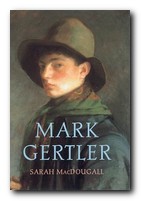

Mark Gertler - biographyThis biography of Mark Gertler reappraises an extraordinary artist. Gertler was admired and encouraged by Walter Sickert, Vanessa Bell, Roger Fry and Henry Moore. His magnificent and haunting pictures were keenly collected by London society and yet at 48, feeling alienated, he killed himself. Sarah MacDougall explores the life of this complex man, whose powerful images, like the “Merry-go-round” or the “Creation of Eve” have lost none of their disturbing eloquence.

Mark Gertler – But the book at Amazon UK

Mark Gertler – Buy the book at Amazon US


Sarah McDougall, Mark Gertler, London: John Murray, 2002, pp.413, ISBN: 0719557992


Bloomsbury Group – web links

Bloomsbury Group - web links Hogarth Press first editions
Annotated gallery of original first edition book jacket covers from the Hogarth Press, featuring designs by Vanessa Bell, Roger Fry, and others.

Bloomsbury Group - web links The Omega Workshops
A brief history of Roger Fry’s experimental Omega Workshops, which had a lasting influence on interior design in post First World War Britain.

Bloomsbury Group - web links The Bloomsbury Group and War
An essay on the largely pacifist and internationalist stance taken by Bloomsbury Group members towards the First World War.

Bloomsbury Group web links Tate Gallery Archive Journeys: Bloomsbury
Mini web site featuring photos, paintings, a timeline, sub-sections on the Omega Workshops, Roger Fry, and Duncan Grant, and biographical notes.

Bloomsbury Group - web links Bloomsbury: Books, Art and Design
Exhibition of paintings, designs, and ceramics at Toronto University featuring Hogarth Press, Vanessa Bell, Dora Carrington, Quentin Bell, and Stephen Tomlin.

Bloomsbury Group - web links Blogging Woolf
A rich enthusiast site featuring news of events, exhibitions, new book reviews, relevant links, study resources, and anything related to Bloomsbury and Virginia Woolf

Bloomsbury Group - web links Hyper-Concordance to Virginia Woolf
Search the texts of all Woolf’s major works, and track down phrases, quotes, and even individual words in their original context.

Bloomsbury Group - web links A Mrs Dalloway Walk in London
An annotated description of Clarissa Dalloway’s walk from Westminster to Regent’s Park, with historical updates and a bibliography.

Bloomsbury Group - web links Women’s History Walk in Bloomsbury
Annotated tour of literary and political homes in Bloomsbury, including Gordon Square, University College, Bedford Square, Doughty Street, and Tavistock Square.

Bloomsbury Group - web links Virginia Woolf Society of Great Britain
News of events, regular bulletins, study materials, publications, and related links. Largely the work of Virginia Woolf specialist Stuart N. Clarke.

Bloomsbury Group - web links BBC Audio Essay – A Eulogy to Words
A charming sound recording of a BBC radio talk broadcast in 1937 – accompanied by a slideshow of photographs of Virginia Woolf.

Bloomsbury Group - web links A Family Photograph Albumn
Leslie Stephens’ collection of family photographs which became known as the Mausoleum Book, collected at Smith College – Massachusetts.

Bloomsbury Group - web links Bloomsbury at Duke University
A collection of book jacket covers, Fry’s Twelve Woodcuts, Strachey’s ‘Elizabeth and Essex’.

© Roy Johnson 2000-2014


More on art
More on biography
More on the Bloomsbury Group
Twentieth century literature

Filed Under: Art, Biography, Bloomsbury Group Tagged With: Art, Bloomsbury Group, Mark Gertler, Modernism

Mashup Patterns

July 13, 2009 by Roy Johnson

designs and examples for the modern enterprise

Mashups originated in the music industry, where a mashup was a combination of two or more songs to create a new experience. Typically, the vocal track of one song was combined with the instrumental background of another. The result was a hybrid – but something new. For most consumers, mashups are built with data from Google Maps, Flickr, YouTube, Amazon, and eBay. These companies were pro-active in offering up their data for other people’s use. In Mashup Patterns Michael Ogrinz is more concerned with ‘enterprise’ (that is, Big Business) where there may be less enthusiasm in giving access to data. But it can be ‘gathered’ nevertheless – and he offers the polite euphemism ‘harvesting’ to avoid the more nasty-sounding term ‘screen-scraping’.

Mashup PatternsHe also sees rich potential in the congruence of mashups with Software as a Service (SaaS) – firms which offer ready-made software solutions to which business users subscribe at very little cost. This saves them the heavy investment costs of developing their own. His emphasis is on showing useful solutions to problems: this is the ‘patterns’ of his title. A pattern is a solution to a problem which can be re-used elsewhere to solve a different problem. What he doesn’t do is show the technical detail of how it’s done. For that you might wish to consult the book’s companion, J. Jeffrey Hanson’s Mashups: Strategies for the Modern Enterprise.

It’s understandably assumed that data will be taken from more than one source to create a mashup – but he gives examples where only one source is used. In both cases however, scheduling of gathering the data may be crucial, especially on time-sensitive issues such as stock market prices.

The book is rich in examples. An ‘alerter’ can be used to warn businesses of new software releases or product updates, or compare price fluctuations to identify buying opportunities. Similarly, price analysis mashups allow businesses to keep an eye on competitors and offer lower prices.

Mashups he calls ‘Infinite Monkeys’ can be used to analyse huge amounts of data, which are too big for human analysis. This is done to uncover hidden trends – such as geographic hot spots where more widgets sell, more accidents occur, or where house repossessions are on the rise.

Mashups can also analyse data in blogs, wikis, and email messages to deal with what he calls ‘reputation management’ – such as most frequently cited sources. The patterns he describes are given a ‘fragility’ rating – based on how likely the data they use is going to become unavailable (because sites do go down or even disappear).

One of the most obvious uses of mashup technology is the holiday planner. Data can be drawn from multiple sources such as airline schedules, hotel booking agencies, car hire firms, and restaurants to produce a complete package.

All these applications are grouped into chapters which consider how information can be obtained from various sources, how it can be enriched, recombined, and repurposed. The term ‘enterprise’ in his subtitle is reflected in the fact that most concrete examples involve improving sales, making a business more effective, identifying new business opportunities, and in general maximising profit.

He finishes with some real life case studies in which companies successfully used mashups to solve problems – from Associated Press to the Philadelphia Stock Exchange and Reuters. This emphasis on commerce might make the book appeal to business users as well as the content creators and software developers who are most likely to be taken up with the possibilities of mashups.

© Roy Johnson 2009

Mashups   Buy the book at Amazon UK

Mashups   Buy the book at Amazon US


Michael Ogrinz, Mashup Patterns: Designs and Examples for the Modern Enterprise, London: Addison-Wesley, 2009, pp.400, ISBN: 032157947X


More on eCommerce
More on media
More on publishing
More on technology


Filed Under: e-Commerce Tagged With: e-Commerce, Mashup Patterns, Mashups, Media, Technology

Maurice Dobb – Russia To-day and To-morrow

October 5, 2009 by Roy Johnson

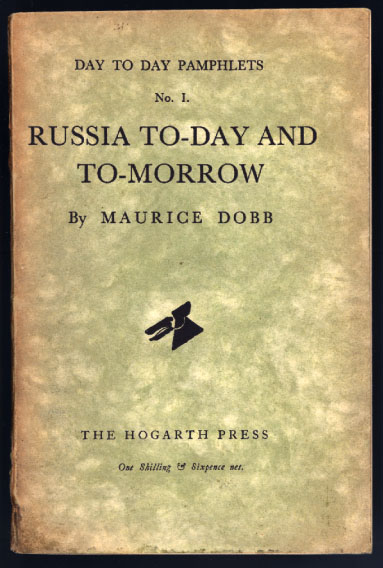
Hogarth Press first edition book jacket designs


Russia Today and Tomorrow - first edition

 
Maurice Dobb, Russia Today and Tomorrow (1930) Hogarth Day to Day pamphlets, Number 1.

The colophon design was by the American artist E.McKnight Kauffer. It was used on many other Hogarth publications as an alternative to the original dog’s head design by Vanessa Bell. Price 1s. 6d.

“Reporting on his second trip to Russia in 1929, Dobb provided in six chapters a perceptive, generally approving, but not uncritical survey of Soviet history, politics, economics, industrial development, and cultural revolution. His visit came just after the relaxed and stimulating New Economic Policy period (1921—28) had been controverted by the Five Year Plan and the Russian Association of Proletarian writers. While Dobb recognised the increasing pressure for conformity to Marxist ideology, he still reported finding tolerance for experimentation in the arts.”

J.H. Willis Jr, Leonard and Virginia Woolf as Publishers: The Hogarth Press 1917-1941

previousnext


Hogarth Press studies

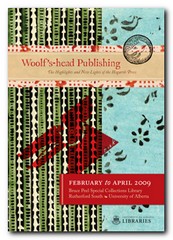
Woolf's-head Publishing Woolf’s-head Publishing is a wonderful collection of cover designs, book jackets, and illustrations – but also a beautiful example of book production in its own right. It was produced as an exhibition catalogue and has quite rightly gone on to enjoy an independent life of its own. This book is a genuine collector’s item, and only months after its first publication it started to win awards for its design and production values. Anyone with the slightest interest in book production, graphic design, typography, or Bloomsbury will want to own a copy the minute they clap eyes on it.

Woolf's-head Publishing Buy the book at Amazon UK
Woolf's-head Publishing Buy the book at Amazon US

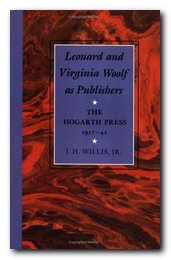
The Hogarth Press Leonard and Virginia Woolf as Publishers: Hogarth Press, 1917-41 John Willis brings the remarkable story of Leonard and Virginia Woolf’s success as publishers to life. He generates interesting thumbnail sketches of all the Hogarth Press authors, which brings both them and the books they wrote into sharp focus. He also follows the development of many of its best-selling titles, and there’s a full account of the social and cultural development of the press. This is a scholarly work with extensive footnotes, bibliographies, and suggestions for further reading – but most of all it is a very readable study in cultural history.

The Hogarth Press Buy the book at Amazon UK
The Hogarth Press Buy the book at Amazon US

© Roy Johnson 2005


Filed Under: Hogarth Press Tagged With: Art, Bloomsbury, Graphic design, Hogarth Press, Literary studies, Maurice Dobb

Mediterranean Architecture

May 26, 2009 by Roy Johnson

glamorous contemporary European house designs

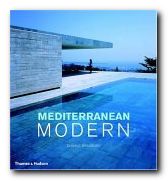
If you like looking at examples of beautiful mediterranean architecture, designer homes overlooking the sea, and experiments with shapes, materials, and domestic organisation – then this new book from Thames & Hudson is worth your consideration. It’s like A Place in the Sun on steroids. Dominic Bradbury has assembled mini-essays on twenty-five of the best in modern architect-designed houses.

Mediterranean Architecture They differ in their styles, but are united by their clean lines, open plan living, and a serious commitment to integration with their surroundings. The overall style, which might reflect the editor’s taste or might represent the movement of the current decade, is for buildings that are minimalist, rectangular, and low-rise. They must also blend sympathetically with their surroundings. Their materials have some relationship to the area in which they’re built, large plate-glass windows feature prominently, if possible reaching to the floor, and an infinity pool is a desirable extra.

A high proportion of the examples come from Spain. There’s quite a lot of cantilevering, flat roofing, sharp-edged, rectilinear profiles, and all the example shown rise to a maximum of three floors. There’s also a recurrent theme of contrasting textures – mahogany against raw concrete, polished steel and plate glass, water features and carefully arranged gravel pathways.

I liked the inclusion of small architectural plans, which help you to gain an overall perspective of the building in its geographical location. And visually, the book is a treat, with excellent photographs – even though their relatively small format made me hanker after something more grand.

bradbury_1

Of course, it has to be said that most of these buildings are situated in completely idyllic locations, set amidst rolling pine forests, overlooking sun-drenched harbours, and untroubled by any neighbours or industrial blots on their landscapes. But having said that, they represent what’s possible when an architect is commissioned by a client with enough money and sufficient confidence to allow free imaginative rein.

The locations range from Morocco in the west, via Spain and the Balearics, through Greece, to Turkey in the east. Yet many of the designers of these buildings come from places as far away from the Mediterranean as Paris and Brussels – though I suppose any architects worth their salt must have their practices located in big cities.

This is part way between a coffee table book, the text of which nobody (except design anoraks) will ever read, and a serious review of modern architecture. Dominic Bradbury seeks to point out what the designers are doing that’s original, and he has a sensiitive regard for his subject. Full contact details of the architects are listed, and a trawl through their web sites is like getting a trip through another book for free.

© Roy Johnson 2006

Mediterranean Modern Buy the book at Amazon UK

Mediterranean Modern Buy the book at Amazon US


Dominic Bradbury, Mediterranean Modern, London: Thames & Hudson, 2006, pp.256, ISBN 050034227X


More on architecture
More on technology
More on design


Filed Under: Architecture, Lifestyle Tagged With: Architecture, Design, Interior design, Lifestyle

Metamorphosis and Other Stories

July 18, 2009 by Roy Johnson

Franz Kafka is one of the most original and idiosyncratic writers of the twentieth century. He published very little during his own lifetime; he lived for literature (in fact he said “I am literature”); he wasn’t formally a great novelist or writer of short stories; and yet he put his stamp on literature to such an extent that his name has become an adjective – and we now speak of Kafkaesque situations and circumstances.

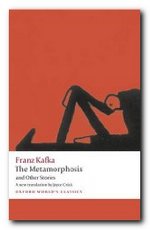
The Metamorphosis and Other StoriesThese tend to be scenarios in which the individual is trapped in madly contradictory situations, confronted by bureaucratic and totalitarian forces over which he has no control. That’s why Kafka’s reputation soared in the 1930s and 1940s. He prophesied the sort of state which condemned individuals as guilty – but didn’t tell them of what they were being accused. He spelled out the mad logic of the show trials long before they took place, and he is quite rightly regarded as a precursor of modern existentialism..

Metamorphosis is a superb piece of imaginative fiction. A young commercial salesman wakes up one morning to find that he has been transformed into giant insect. He is horrified – and so is his family, who shun him, neglect him, and eventually kill him. The tale admits to several levels of interpretation, and like most pieces of rich fiction it is dense with contextual symbols, metaphors, and suggestive allusions.

This collection also includes three other major short works – The Judgement, In the Penal Colony, and Letter to his Father. The first was written in a single creative burst during one night and concerns an Oedipal conflict between father and son which ends with the father condemning the son to death. The second is a horrifying account of someone undergoing torture in a way which prophecies what was to happen in the concentration camps (of both Russia and Germany) only a few years later. The famous letter to his father (which was never posted) is yet another a soul-searching psychological investigation of the relation between father and son. And for those who have not come across the lighter side of his writing, there’s also a collection of his first-ever published works – fragmentary pieces, to which he gives the title ‘Meditations’.

I was glad to see that in his introduction, Ritchie Robertson mentioned Nadine Gordimer’s magnificent short story Letter to his Son, which presents his father Herman Kafka’s hypothetical response to his neurotic son’s letter from beyond the grave. It’s a marvellous presentation of the other side of the picture.

The translation notes make very pertinent reference to the difficulty of rendering Kafka’s extraordinarily complex syntax. His writing is an odd mixture of startlingly dramatic images or situations, surrounded by endlessly convoluted descriptions and speculations, with deeply nested conditional clauses that can lead on from one page to the next in huge Teutonic paragraphs.

These new editions from OUP offer full value in terms of critical apparatus surrounding the text. There’s a lengthy introduction, a chronology of Kafka’s life, an essay on the new translation, explanatory notes, and an extended bibliography. This volume is an ideal starting point for anyone who has not read Kafka before.

© Roy Johnson 2009

Metamorphosis Buy the book at Amazon UK

Metamorphosis Buy the book at Amazon US


Franz Kafka, The Metamorphosis and Other Stories, Oxford: Oxford University Press, 2009, pp.146, ISBN 0199238553


More on Franz Kafka
More on the novella
More on literary studies
More on short stories


Filed Under: Franz Kafka, Short Stories, The Short Story Tagged With: Franz Kafka, Literary studies, Modernism, Short stories, The Metamorphosis and Other Stories

Metaphor

July 15, 2009 by Roy Johnson

its meaning in literature and general culture

Routledge have a series of books (New Critical Idiom) which offer monographs examining the key concepts and critical terms used in literary, cultural, and media studies. They seek to bring modern theory to bear upon traditional concepts, so as to illustrate the development of modern usages and shifts in contemporary interpretation. David Punter’s examination of metaphor starts by looking at its history. This begins with Aristotle’s observation in his Poetics (350 BC) that the genius of metaphor lies in the ability to see similarities in two different things.

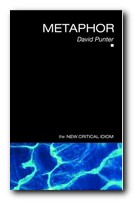
Metaphor That is at the base of metaphor in all its forms – similes, metaphors, metonymy, synecdoche, symbols, and allegories – and I think he was wise in not getting hung up about the differences between them. He looks at examples in poetry and prose, showing them working at various levels of complexity – from simple similes to extended metaphors which seem to be operating at a ‘beyond the text’ level. After establishing the basics, he moves on to look at metaphor in a non-European context (specifically, Chinese poetry) then at public or political metaphors (‘Fathers4Justice’, the Crown, and Labour’s red rose symbol – cue William Blake).

In most cases his approach is to show what lies beneath the ‘intended’ meaning(s) so as to show others, that might be unintended, lurking below. To give an example that never ceases to amaze me, when local government officers speak of their ‘front line’ services, I wonder if sub-consciously they think of the public (their clients, whose interests they are supposed to be serving) as their enemy, with whom they are at war?

Then he tries something more difficult – interpreting modern texts that seem to have metaphorical meanings to which (it would seem) we do not have access – The Life of Pi being his most prominent example. This didn’t seem so convincing.

There’s also a discussion of psycho-analysis and metaphor which I thought might say something about what the two things being likened to each other might reveal about the person making the comparison – but he drifts off into a consideration of Edward Lear’s nonsense poetry. It doesn’t seem to occur to him that Lear’s famously bathetic last lines (‘That elastic old person of Pinner’) which merely echo the first, might just be an example of feeble whimsy.

At its weakest, his commentaries are not much more than chasing word associations (‘Howling at the moon’-> Howling Wolf -> Wolf -> Sheep -> Wolf -> Rome) and so on, but at their best he offers genuine insights into the limits and possibilities of his subject.

And despite any differences one might have with his interpretations, any students of literature (and in particular, poetry) will find his extended analyses of modern poets (Hardy, Hughes, W.S. Graham, Walcott) very illuminating.

© Roy Johnson 2007

Metaphor   Buy the book at Amazon UK

Metaphor   Buy the book at Amazon US


David Punter, Metaphor, London: Routledge, 2007, pp.158, ISBN: 0415281660


More on literature
More on the novella
More on literary studies
More on short stories


Filed Under: Literary Studies, Theory Tagged With: Literary studies, Media, Metaphor, Theory

Metaphors – how to understand them

September 9, 2009 by Roy Johnson

free pages from our English Language software program

Metaphors – definition

metaphors Metaphors are figures of speech in which one thing is compared to another — either directly or by implication.

Examples

redbtn Common metaphors in speech:

  • Those people are the salt of the earth.
  • She worked her fingers to the bone.
  • It was a real pea soup morning.
  • They were inundated with orders.

redbtn Well known literary metaphors:

  • Now is the winter of our discontent
  • Life’s but a walking shadow
  • I am the way, the truth and the life
  • The girl with kaleidoscope eyes

Use

redbtn A metaphor often demands that the listener or reader make a powerful leap of the imagination.

redbtn Some metaphors are commonly recognised whilst others are uniquely and even spontaneously created.

redbtn Imaginative writing such as poetry, prose, and drama often create their special effects by use of metaphor.

redbtn Metaphors are often used in advertising and in political speeches.

redbtn One important feature of metaphor is that a significant and comprehensive image may be created by a few key words.

redbtn A metaphor can be created by the article, noun, verb, adjective or any other part of speech.

redbtn NB! In a metaphor two things are said to be the same, whereas in a simile they are only like each other.

redbtn It’s useful to see the concept of metaphor as part of a scale which runs from the literal to the non-literal use of language.

redbtn A literal statement is one which refers to the actual material world in plain terms. For instance — ‘This table is made of wood’.

redbtn At the other extreme, and in the words of a popular song, we find the statement:

‘The sun is a big yellow duster, polishing the blue, blue sky’

redbtn This makes a much bigger demand on our imagination and on our willingness to step outside the rational, literal world.

redbtn This metaphor can be analysed as follows. The sun is being compared to a duster. This idea is interesting because dusters are often yellow like the sun. Further, just as the sun appears to move in the sky, removing grey clouds, a duster moves to polish a surface and clear it of dust. In the context of a pop song, the idea is witty and entertaining in a lighthearted way.

redbtn Contrast this more serious metaphor:

Now does he feel
His filthy murders sticking on his hands

redbtn This is from Macbeth. The image is extremely vivid as the murderer’s sense of guilt is conveyed to the audience by combining the abstract guilt and the material sticky blood.

redbtn Metaphor is extremely economic communication. Several layers of meaning can be conveyed at the same time.

redbtn Advertisers make effective use of metaphor and other images because they have a restricted amount of space, and this space is very costly. A phrase such as ‘the sunshine breakfast’ is more effective than a statement which might read: ‘Have our cereal for your breakfast and you’ll enjoy it. It will give you energy and nutrition because the corn’s been grown in a sunny climate.’

Self-assessment quiz follows >>>

© Roy Johnson 2003


English Language 3.0 program
Books on language
More on grammar


Filed Under: English Language Tagged With: English language, Figurative language, Figures of speech, Metaphors

Metonymy – how to understand it

September 9, 2009 by Roy Johnson

free pages from our English Language software program

Metonymy – definition

metonymy Metonymy is a figure of speech in which an attribute or a suggestive word is substituted for the name of something.


Examples
Metonym Thing represented
The Stage the acting profession
Shakespeare the plays of Shakespeare
The Crown the monarchy
Whitehall the civil service

Use

redbtn Metonymy is part of everyday speech. It is usually used quite unconsciously.

redbtn It is often used in imaginative writing such as fiction and poetry to clarify and enhance an image.

redbtn NB! If you find it difficult to remember the difference between metonymy and synecdoche — you’re not alone.

redbtn Metonymy can be seen as a specific kind of symbolism by which the most essential component of the subject is abstracted to represent it. This component acts as a single symbol for something larger and usually more complex.

redbtn For instance, a crown is the most essential material component of the trappings of royalty, and so it serves well in representing the whole system of monarchy.

redbtn Similarly, the stage is a material component of acting as a profession. This too serves to represent symbolically something abstract and dynamic.

redbtn The ‘cloth’ symbolises the religious profession, and the ‘bar’ represents the legal profession. Both these items are essential material objects and are used to refer to the abstract concept of a profession.

redbtn In a statement such as ‘Shakespeare depicts monarchs as human’ the name is actually symbolising the total collection of his works. This form of metonymy is useful as a very graphic kind of shorthand.

redbtn This pragmatic explanation could also apply to the example of ‘Whitehall announced today …’, although we could ascribe more political and even ulterior functions to this usage. [Remember, ‘Whitehall’ represent the civil service in the UK.]

redbtn To refer to Whitehall as having issued a statement is to generalise the source of the communication. This may be in the political interest of the Establishment. It is a form of social control to promote an image of a corporate mass of civil servants, rather than suggesting that one person or even a small hierarchical group makes significant and powerful decisions.

redbtn Whitehall as a material location stands for something abstract, in this case an institution. This symbolic use depersonalises the source of the statement, perhaps thereby giving it more authority.

redbtn This political interpretation is merely speculation, but the mechanical analysis of metonymy as a symbolic device stands on firmer ground.

redbtn [Pedants who collect terms enjoy distinguishing metonymy from synechdoche, which is its figurative bedfellow.]

Self-assessment quiz follows >>>

© Roy Johnson 2003


English Language 3.0 program
Books on language
More on grammar


Filed Under: English Language Tagged With: English language, Figurative language, Metonymy

MHRA Style Guide

July 9, 2009 by Roy Johnson

pocket academic writing style guide for humanities

The key to this style guide is in its subtitle: ‘Notes for Authors, Editors, and Writers of Theses’. It has been produced by the Modern Humanities Research Association as a manual of advice and procedures for people preparing texts for publication. The MHRA Style Guide assembles a set of conventions to help users through the minutiae of the scholarly editing and presentation of texts.

MHRA Style Guide If you are a student, a researcher, or a writer, the net result is a brief and very usable guide. One of its principal advantages over other guides is its brevity: it only includes the essentials, and everything is easy to find. And yet it covers everything you would normally require for academic writing or formal publication – from spelling, abbreviations, and punctuation through to the thorny issue of bibliographic referencing, which is what often drives students into fits of nail-biting frenzy.

It’s all very succinct, and yet manages to pack in the presentation of foreign languages, citations from articles, journals, and newspapers, and even a nod towards the Author-Date (or Harvard) system of referencing.

The latest edition has been expanded to cover preparing texts for electronic publication and there are sections on indexing and writing a thesis or a dissertation. There’s a glossary, sections on book reviews and correcting proofs, and a good index.

I first came across this book when it was chosen by the Open University as a set text for some of its postgraduate courses. Getting students to follow the conventions is still hard work, but it’s a lot easier than it used to be.

What I like most about the book is that it gives you the impression that you’re just about to publish an important piece of work. Since it’s also amazingly cheap, it’s worth buying as a confidence-booster alone.

© Roy Johnson 2008

MHRA Style Guide   Buy the book at Amazon UK

MHRA Style Guide   Buy the book at Amazon US


MHRA Style Guide: Notes for Authors, Editors, and Writers of Theses, London: Modern Humanities Research Association, new second edition 2008, pp.95, ISBN: 0947623620


More on writing skills
More on language
More on grammar


Filed Under: Study skills, Writing Skills Tagged With: MHRA Style Guide, Reference, Writing guides, Writing skills

Mikhail Bulgakov – a guide

September 17, 2009 by Roy Johnson

major works in English translation

Apart from the relatively straightforward and restrained Checkhovian style of his early work, A Country Doctor’s Notebook, most of Mikhail Bulgakov’s writing is characterised by a florid prose style, rich images, and startling metaphors. He also plays freely with science fiction, political allegory, and sudden shifts into the absurd.

You might keep in mind that almost all of what he wrote was either censored, banned, or simply not published in his own lifetime. Even though some of his work was popular when it appeared in the 1920s, his reputation as a major Russian writer has only been established since his writing has been gathered together and published in the post-1960s.


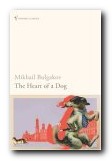
Mikhail Bulgakov - Heart of a DogThe Heart of a Dog (1925) A rich, successful Moscow professor befriends a stray dog and attempts a scientific experiment by transplanting into it the testicles and pituitary gland of a recently deceased man. A worryingly human animal is then turned on the loose, and the professor’s hitherto respectable life becomes a nightmare beyond endurance. An absurd and superbly comic story, this classic novel can also be read as a fierce parable of the Russian Revolution.

Mikhail Bulgakov Buy the book from Amazon UK
Mikhail Bulgakov Buy the book from Amazon US


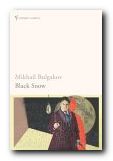
Mikhail Bulgakov Black Snow - Click for details at Amazon Black Snow: A Theatrical Novel (1920s) When Maxudov’s bid to take his own life fails, he dramatises the novel whose failure provoked the suicide attempt. To the resentment of literary Moscow, his play is accepted by the legendary Independent Theatre and he plunges into a vortex of inflated egos. With each rehearsal more sparks fly and the chances of the play being performed recede. This is a back-stage novel and a brilliant satire on his ten-year love-hate relationship with Stanislavsky and the Moscow Arts Theatre.
Mikhail Bulgakov Buy the book from Amazon UK
Mikhail Bulgakov Buy the book from Amazon US


Mikhail Bulgakov A Country Doctor's Notebook - Click for details at AmazonA Country Doctor’s Notebook (1925) With the ink still wet on his diploma, the twenty-five year old Dr Mikhail Bulgakov was flung into the depths of rural Russia which, in 1916-17, was still largely unaffected by such novelties as the motor car, the telephone or electric light. How his alter-ego copes (and fails to cope) with the new and often appalling responsibilities of a lone practitioner in a vast country practice – in blizzards, pursued by wolves and on the eve of Revolution – is described in Bulgakov’s delightful blend of candid realism and imaginative exuberance.
Mikhail Bulgakov Buy the book from Amazon UK
Mikhail Bulgakov Buy the book from Amazon US


Mikhail Bulgakov The Fatal Eggs - Click for details at AmazonThe Fatal Eggs (1924) Professor Persikov discovers a new form of light ray whose effect is to accelerate growth in primitive organisms. But when this ray is shone on the wrong batch of eggs, the Professor finds himself both the unwilling creator of giant hybrids, and the focus of a merciless press campaign. For it seems the propaganda machine has turned its gaze on him, distorting his nature in the very way his ‘innocent’ tampering created the monster snakes and crocodiles that now terrorise the neighbourhood. An inspired work of science fiction and a biting political allegory.
Mikhail Bulgakov Buy the book from Amazon UK
Mikhail Bulgakov Buy the book from Amazon US


Mikhail Bulgakov The Master and Margerita - Click for details at AmazonThe Master and Margarita (1940/1973) is a wonderful mixture of realism and fantasy which offers a satirical view of communist Russia. The story involves the arrival of the Devil into Moscow, interspersed with chapters dealing with Pontius Pilate and the crucifixion of Jesus Christ, plus other sections related to an artist and his relationships with his art and his lover. All three layers of the story are blended with spellbinding imaginative force. The novel is a multilayered critique of the Soviet society in general and its literary establishment specifically. It begins with Satan visiting Moscow in 1935, joining a conversation of a critic and a poet, busily debating the existence of Jesus Christ and the Devil. It then evolves into a whole scale indictment of the corruption, greed, narrow-mindedness, and widespread paranoia of Stalinist Russia. Banned but widely read, the novel firmly secured Bulgakov’s place among the pantheon of the greatest of Russian writers.
Mikhail Bulgakov Buy the book from Amazon UK
Mikhail Bulgakov Buy the book from Amazon US

© Roy Johnson 2004


Filed Under: Mikhail Bulgakov Tagged With: Literary studies, Mikhail Bulgakov, Modernism, Russian literature

  • « Previous Page
  • 1
  • …
  • 53
  • 54
  • 55
  • 56
  • 57
  • …
  • 103
  • Next Page »

Get in touch

info@mantex.co.uk

Content © Mantex 2016
  • About Us
  • Advertising
  • Clients
  • Contact
  • FAQ
  • Links
  • Services
  • Reviews
  • Sitemap
  • T & C’s
  • Testimonials
  • Privacy

Copyright © 2026 · Mantex

Copyright © 2026 · News Pro Theme on Genesis Framework · WordPress · Log in