Mantex

Tutorials, Study Guides & More

  • HOME
  • REVIEWS
  • TUTORIALS
  • HOW-TO
  • CONTACT
>> Home / Archives for 2009

Archives for 2009

DH Lawrence critical studies

September 18, 2009 by Roy Johnson

in chronological order of publication
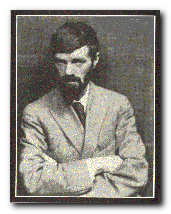
D.H.Lawrence critical studies
Books on D.H.Lawrence

Stephen Potter, D.H.Lawrence: A First Study, 1930.

John Middleton Murry, Son of Woman: The Story of D.H.Lawrence, 1931.

Catherine Carswell, The Savage Pilgrimage: A Narrative of D.H.Lawrence, 1932.

Frederick Carter, D.H.Lawrence and the Body Mystical, 1932.

Anais Nin, D.H.Lawrence: An Unprofessional Study, Paris: Edward W. Titus, 1932.

Horace Gregory, Pilgrim of the Apocalypse: A Critical Study of D.H.Lawrence, 1933.

William York Tindall, D.H.Lawrence and Susan His Cow, 1939.

William Tiverton [Martin Jarrett-Kerr], D.H.Lawrence and Human Existence, 1951.
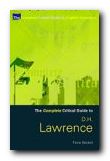

The Complete Critical Guide to D.H.LawrenceThe Complete Critical Guide to D. H. Lawrence is a good introduction to Lawrence criticism. Includes a potted biography of Lawrence, an outline of the stories, novels, plays, and poetry, and pointers towards the main critical writings – from contemporaries T.S. Eliot and E.M. Forster to critics of the present day. Also includes a thorough bibliography which covers biography, criticism in books and articles, plus pointers towards specialist Lawrence journals.


Mary Freeman, D.H.Lawrence A Basic Study of His Ideas, 1955.

F.R.Leavis, D.H.Lawrence: Novelist, London: Chatto and Windus, 1955.

Mark Spilka, The Love Ethic of D.H.Lawrence, 1955.

Graham Hough, The Dark Sun: A Study of D.H.Lawrence, New York: Capricorn Books, 1956.

Eliseo Vivas, D.H.Lawrence: The Failure and the Triumph of Art, 1960.

Kingsley Widmer, The Art of Perversity: D.H.Lawrence’s Shorter Fiction, 1962.

Eugene Goodheart, The Utopian Vision of D.H.Lawrence, 1963.

Julian Moynahan, The Deed of Life: The Novels and Tales of D.H.Lawrence, 1963.

George Panichas, Adventure in Consciousness: Lawrence’s Religious Quest, 1964.

Helen Corke, D.H. Lawrence: The Croydon Years, Austin (Tex): University of Texas Press, 1965.

George Ford, Double Measure: A Study of D.H.Lawrence, 1965.

H M Daleski, The Forked Flame: A Study of D.H.Lawrence, Evanston (Ill): Northwestern University Press, 1965.

Keith Sagar, The Art of D.H.Lawrence, 1966.

David Cavitch, D.H.Lawrence and the New World, 1969.

Colin Clarke, River of Dissolution: D.H.Lawrence and English Romanticism, 1969.

Baruch Hochman, Another Ego: Self and Society in D.H.Lawrence, 1970.

Keith Aldritt, The Visual Imagination of D.H.Lawrence, 1971.

R E Pritchard, D.H.Lawrence: Body of Darkness, 1971.

John E Stoll, The Novels of D.H.Lawrence: A Search for Integration, 1971.

Frank Kermode, D.H. Lawrence, London: Fontana, 1973.

Scott Sanders, D.H.Lawrence: The World of the Major Novels, 1973.

F.R.Leavis, Thought, Words, and Creativity in Lawrence, 1976.

Marguerite Beede Howe, The Art of the Self in D.H.Lawrence, 1977.

Keith Cushman, D.H. Lawrence at Work: The Emergence of the ‘Prussian Officer’ Stories, Hassocks: Harvester Press, 1978.

Alastair Niven, D.H.Lawrence: The Novels, 1978.

Anne Smith, Lawrence and Women, London: Vision Press, 1978.

R.P. Draper (ed), D.H. Lawrence: The Critical Heritage, London: Routledge & Keegan Paul, 1979.

John Worthen, D.H.Lawrence and the Idea of the Novel, London: Macmillan, 1979.

Aidan Burns, Nature and Culture in D.H.Lawrence, 1980.

L D Clark, The Minoan Distance: Symbolism of Travel in D.H.Lawrence, 1980.

Roger Ebbatson, D.H.Lawrence and the Nature Tradition, 1980.

Alastair Niven, D.H.Lawrence: The Writer and His Work, 1980.

Philip Hobsbaum, A Reader’s Guide to D.H.Lawrence, 1981.

Kim A.Herzinger , D.H.Lawrence in His Time: 1908 – 1915, 1982.

Graham Holderness, D.H.Lawrence: History, Ideology and Fiction, Dublin: Gill & Macmillan, 1982.

Hilary Simpson, D.H.Lawrence and Feminism, London: Croom Helm, 1982.

Gamini Salgado, A Preface to D.H. Lawrence, London: Longman, 1983.

Judith Ruderman, D.H.Lawrence and the Devouring Mother, 1984.

Anthony Burgess, Flame Into Being: The Life and Work of D.H.Lawrence, 1985.

Sheila McLeod, Men and Women in D.H.Lawrence, 1985.

Henry Miller, The World of Lawrence: A Passionate Appreciation [1930] 1985.

Keith Sagar, D.H.Lawrence: Life Into Art, 1985.

Mara Kalnins (ed), D.H. Lawrence: Centenary Essays, Bristol: Classical Press, 1986.

Michael Black, D.H. Lawrence: The Early Fiction, London: Macmillan, 1986

Peter Scheckner, Class, Politics, and the Individual: A Study of D.H.Lawrence, 1986.

Cornelia Nixon, D.H.Lawrence’s Leadership Novels and the Turn Against Women, 1986.

Colin Milton, Lawrence and Nietzsche, 1988.

Peter Balbert, D.H.Lawrence and the Phallic Imagination, 1989.

Wayne Templeton, States of Estrangement: the Novels of D.H.Lawrence 1912-17, 1989.

Janet Barron, D.H.Lawrence: A Feminist Reading, 1990.

Keith Brown (ed), Rethinking Lawrence, Milton Keynes: Open University Press, 1990.

James C Cowan, D.H.Lawrence and the Trembling Balance, 1990.

John B Humma, Metaphor and Meaning in D.H.Lawrence’s Later Novels, 1990.

G M Hyde, D.H.Lawrence, London: Macmillan, 1990.

Allan Ingram, The Language of D.H. Lawrence, London: Macmillan, 1990.

Nancy Kushigian, Pictures and Fictions: Visual Modernism and D.H.Lawrence, 1990.

Tony Pinkney, Lawrence Hemel Hempstead: Harvester Weatsheaf, 1990.

Leo J.Dorisach, Sexually Balanced Relationships in the Novels of D.H.Lawrence, 1991.

Nigel Kelsey, D.H.Lawrence: Sexual Crisis, 1991.

Barbara Mensch, D.H.Lawrence and the Authoritarian Personality, 1991.

John Worthen, D H Lawrence, London: Arnold, 1991.

Michael Bell, D.H.Lawrence: Language and Being, 1992.

Michael Black, D.H. Lawrence: Sons and Lovers, Cambridge: Cambridge University Press, 1992.

Virginia Hyde, The Risen Adam: D. H. Lawrence’s Revisionist
Typology
, University Park: Pennsylvania State University Press, 1992.

James B.Sipple, Passionate Form: life process as artistic paradigm in D.H.Lawrence, 1992.

Kingsley Widmer, Defiant Desire: Some Dialectical Legacies of D.H.Lawrence, 1992.

Anne Fernihough, D.H.Lawrence: Aesthetics and Ideology, 1993.

Linda R Williams, Sex in the Head: Visions of Femininity and Film in D.H.Lawrence, 1993.

Katherine Waltenscheid, The Resurrection of the Body: Touch in D.H.Lawrence, 1993.

Robert E.Montgomery, The Visionary D.H.Lawrence: Beyond Philosophy and Art, 1994.

James C Cowan, Lawrence, Freud, and Masturbation, 1995.

Leo Hamalian, D.H.Lawrence and Nine Women Writers, 1996.

© Roy Johnson 2004 – with thanks to Damian Grant


D.H.Lawrence – web links

D.H.Lawrence web links D.H.Lawrence at Mantex
Biographical notes, book reviews, study guides, videos, bibliographies, critical studies, and web links.

Project Gutenberg D.H.Lawrence at Project Gutenberg
A major collection of free eTexts of the novels, stories, travel writing, and poetry – available in a variety of formats.

Wikipedia D.H.Lawrence at Wikipedia
Biographical notes, social background, publishing history, the Lady Chatterley trial, critical reputation, bibliography, archives, and web links.

Film adaptations D.H.Lawrence at the Internet Movie Database
Adaptations of Lawrence’s work for the cinema and television – in various languages. Full details of directors, actors, production, box office, trivia, and even quizzes.

D.H.Lawrence D.H.Lawrence archive at the University of Nottingham
Biography, further reading, textual genetics, frequently asked questions, his local reputation, research centre, bibliographies, and lists of holdings.

Red button D.H.Lawrence and Eastwood
Nottinhamshire local enthusiast web site featuring biography, historical and recent photographs of the Eastwood area and places associated with Lawrence.

D.H.Lawrence The World of D.H.Lawrence
Yet another University of Nottingham web site featuring biography, interactive timeline, maps, virtual tour, photographs, and web links.

Red buttonD.H.Lawrence Heritage
Local authority style web site, with maps, educational centre, and details of lectures, visits, and forthcoming events.


More on D.H. Lawrence
More on the novella
More on literary studies
More on short stories

Filed Under: D.H.Lawrence Tagged With: D.H.Lawrence, Literary criticism, Literary studies, Modernism

DH Lawrence greatest works

September 18, 2009 by Roy Johnson

DH Lawrence greatest worksnovels, novellas, stories, poems

D.H.Lawrence is a writer who excites great passions – which is entirely appropriate, since that is how he wrote. He is the first really great writer to come from the working class, and much of his work deals with issues of class, as well as other fundamentals such as the relationships between men, women, and the natural world. At times he becomes mystic and visionary, and his prose style can be poetic, didactic, symbolic, and bombastic all within the space of a few pages. He also deals with issues of sexuality and politics in a manner which is often controversial. Critical opinion tends to be divided between those who believe that he provides illuminating insights into the human psyche, and others who believe that closer study reveals a profound misogyny and some crackpot ideas – particularly in the fields of social and political matters.


Sons and LoversSons and Lovers is Lawrence’s first great novel. It’s a quasi-autobiographical account of a young man’s coming of age in the early years of the twentieth century. Set in working class Nottinghamshire, it focuses on class conflicts and gender issues as young Paul Morrell is torn between a passionate relationship with his mother and his attraction to other women. He is also engaged throughout the novel in an Oedipal struggle with his father. If you are new to Lawrence and his work, Sons and Lovers is a good place to start.

D.H.Lawrence greatest works Buy the book at Amazon UK
D.H.Lawrence greatest works Buy the book at Amazon US


The RainbowThe Rainbow is Lawrence’s version of a social saga, spanning three generations of the Brangwen family. It is the women characters in this novel who remain memorable as they strive to express their feelings. The story concludes with the struggle of two sisters, Ursula and Gudrun, to liberate themselves from the stifling pressures of Edwardian English society. They also feature in his next and some say greatest novel, Women in Love – so it’s a good idea to read this first.

D.H.Lawrence greatest works Buy the book at Amazon UK
D.H.Lawrence greatest works Buy the book at Amazon US


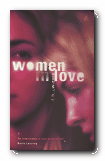
Women in LoveWomen in Love begins where The Rainbow leaves off and features the Brangwen sisters as they try to forge new types of liberated personal relationships. The men they choose are trying to do the same thing – so the results are problematic and often disturbing. Many regard this as his finest novel, where his ideas are matched with passages of superb writing. The locations combine urban Bohemia with a symbolic climax which takes place in the icy snow caps of the Alps.

D.H.Lawrence greatest works Buy the book at Amazon UK
D.H.Lawrence greatest works Buy the book at Amazon US


Lady Chatterley's LoverLady Chatterley’s Lover is Lawrence’s most controversial novel, and perhaps the first serious work of literature to explore human sexuality in explicit detail. It features some of his most lyrical and poetic prose style alongside the theme of class conflict – acted out between the aristocratic Constance Chatterley, and her gamekeeper-lover Mellors. Some feminist critics now claim the novel to be deeply misogynistic, because part of its argument is that women will reach true fulfillment only by submitting themselves to men. Lawrence wrote the novel three times, and it made important historical impacts twice over: one when it was first published in 1928, and the second in the famous obscenity trial in 1960.

D.H.Lawrence greatest works Buy the book at Amazon UK
D.H.Lawrence greatest works Buy the book at Amazon US


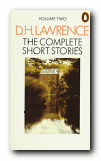
D.H.Lawrence - The Collected Short StoriesThe Complete Short Stories Lawrence contributed to the development of the modern short story by following the post Chekhov approach, which excludes high drama and easy snap endings. Instead, he focuses on moments of personal revelation in the same way as James Joyce did with his ‘epiphanies’. He also features symbolism and a flexible prose style which changes according to its subject. His central theme is personal and sexual relationships and dramas acted out in those parts of the English class system which had been previously left unexamined.

D.H.Lawrence greatest works Buy the book at Amazon UK
D.H.Lawrence greatest works Buy the book at Amazon US

The Penguin versions of Lawrence reproduce the scholarly editions originally published by Cambridge University Press. They are based on the most accurate versions of the texts, and they include a critical essay of introduction; bibliography of criticism; explanatory notes; alternative and missing chapters; plus glossaries of dialect terms where required. Very good value.

D.H.Lawrence - The Short NovelsThe Short Novels Lawrence was especially fond of the short novel or novella as a literary form. These feature his usual subjects and characters but, as with most successful novellas, they operate at a deeply symbolic level. For example, they feature cosmic elements – as in The Woman Who Rode Away (the sun) The Fox (animal nature) and The Virgin and the Gypsy (flood). Many of these have been successfully translated to the cinema.

D.H.Lawrence greatest works Buy the book at Amazon UK
D.H.Lawrence greatest works Buy the book at Amazon US


D.H.Lawrence - The Collected PoemsThe Complete Poems Many people believe that Lawrence was just as successful a poet as he was a writer of prose. He writes in a very free verse form, unbounded by traditional structures. The results are fresh, arresting, and full of verbal dexterity. He was especially fond of writing about animals, flowers, and other aspects of nature – usually in a deeply symbolic manner. This collection includes all the poems from the incomplete Collected Poems of 1929 and from the separate smaller volumes issued during Lawrence’s lifetime; uncollected poems; an appendix of juvenilia and another containing variants and early drafts; and all Lawrence’s critical introductions to his poems. It also includes full textual and explanatory notes.

D.H.Lawrence greatest works Buy the book at Amazon UK
D.H.Lawrence greatest works Buy the book at Amazon US


The Complete Critical Guide to D.H.LawrenceThe Complete Critical Guide to D. H. Lawrence is a good introduction to Lawrence criticism. Includes a potted biography of Lawrence, an outline of the stories, novels, plays, and poetry, and pointers towards the main critical writings – from contemporaries such as T.S. Eliot and E.M. Forster to critics of the present day. Also includes a thorough bibliography which covers biography, criticism in books and articles, plus pointers towards specialist Lawrence journals.

D.H.Lawrence greatest works Buy the book at Amazon UK
D.H.Lawrence greatest works Buy the book at Amazon US


D.H.Lawrence – web links

D.H.Lawrence web links D.H.Lawrence at Mantex
Biographical notes, book reviews, study guides, videos, bibliographies, critical studies, and web links.

Project Gutenberg D.H.Lawrence at Project Gutenberg
A major collection of free eTexts of the novels, stories, travel writing, and poetry – available in a variety of formats.

Wikipedia D.H.Lawrence at Wikipedia
Biographical notes, social background, publishing history, the Lady Chatterley trial, critical reputation, bibliography, archives, and web links.

Film adaptations D.H.Lawrence at the Internet Movie Database
Adaptations of Lawrence’s work for the cinema and television – in various languages. Full details of directors, actors, production, box office, trivia, and even quizzes.

D.H.Lawrence D.H.Lawrence archive at the University of Nottingham
Biography, further reading, textual genetics, frequently asked questions, his local reputation, research centre, bibliographies, and lists of holdings.

Red button D.H.Lawrence and Eastwood
Nottinhamshire local enthusiast web site featuring biography, historical and recent photographs of the Eastwood area and places associated with Lawrence.

D.H.Lawrence The World of D.H.Lawrence
Yet another University of Nottingham web site featuring biography, interactive timeline, maps, virtual tour, photographs, and web links.

Red buttonD.H.Lawrence Heritage
Local authority style web site, with maps, educational centre, and details of lectures, visits, and forthcoming events.

© Roy Johnson 2004


More on D.H. Lawrence
More on the novella
More on literary studies
More on short stories


Filed Under: D.H.Lawrence Tagged With: D.H.Lawrence, Lady Chatterley's Lover, Literary studies, Modernism, Sons and Lovers, The Rainbow, Women in Love

Dialect – how to understand it

August 31, 2009 by Roy Johnson

free pages from our English Language software program

Dialect – definition

dialect The term dialect refers to any variety of a language used by a group of speakers.
redbtn It refers to the content of the utterance rather than the pronunciation.


Examples

redbtn There are two main types of dialect in English:

  • Regional varieties of speech which relate to a particular geographical area.
  • Standard English which is used by speakers and writers in any area.

Use

redbtn The term dialect used to refer to deviations from Standard English which were used by groups of speakers.

redbtn Political awareness has now given us the current concept of dialect as any developed speech system.

redbtn Standard English itself is therefore now considered to be a dialect of English — equal in status with regional dialects such as Scottish or social dialects such as Black English.

redbtn The concept of dialect embraces all aspects of a language from grammar to vocabulary.

redbtn NB! Dialect is not the same thing as accent.

redbtn Linguists take a descriptive view of all language phenomena. They do not promote the notion of the superiority of Standard English.

redbtn This is not to say that Standard English and Received Pronunciation are considered equal to other forms by the majority of speakers, but certainly attitudes are becoming more liberal.

redbtn This may be as a result of the increase in mass media in Britain and the exposure this provides to varieties of English such as American English and Australian English.

redbtn The past participle ‘gotten’ as in ‘he had gotten into his car’ is Standard American English — whereas it would be an aberration if used by a native British speaker.

redbtn The concept of a dialect used to be applied to a deviant form of the standard which had no written version. This is no longer the case. The written form of Standard English is now considered as a dialect. Thus we may write in a variety of dialects — one of which is the Standard English which most of us employ.

redbtn Dialect poetry has become popular recently, along with the shift in perception which political correctness has demanded.

redbtn Writers have for centuries attempted to represent dialect utterances in their work. Shakespeare often gave his yokels such items. Snout the tinker in A Midsummer Night’s Dream says “By’r lakin, a parlous fear.”

redbtn The novelist D.H.Lawrence represented the Nottinghamshire dialect in many of his novels by interspersing Standard English with utterances such as “Come into th’ut” spoken by Mellors in Lady Chatterley’s Lover.

redbtn Perhaps the most interesting factor here is that the writer needs to use the English alphabet in the attempt to write dialect terms. This is not always possible, and so one of the skills a dialect writer needs is the ability to select those words which lend themselves to representation by means of the orthodox alphabet.

redbtn Some contemporary regional dialect forms are ones which have remained as such after being eliminated from what is now Standard English. An example of this is the Scottish ‘kirtle’ which was replaced in Standard English during the Old English period by ‘skirt’.

redbtn Some of the terms used to command the sheep dogs in Cumbria and Northumbria are unrecognizable in any dialect. They have remained intact since Old English or Middle English times.

redbtn This is an interesting phenomenon and explicable when one considers that the utterance is necessarily one-way, with the dog as the listener! For this same reason, we can’t accurately define this set of commands as a contemporary dialect.

Self-assessment quiz follows >>>

© Roy Johnson 2003


English Language 3.0 program
Books on language
More on grammar


Filed Under: English Language Tagged With: Dialect, English language, Grammar, Language, Speech

Dictionary for Scientific Writers and Editors

August 4, 2009 by Roy Johnson

specialist scientific style guide and reference

This Dictionary for Scientific Writers and Editors is aimed at scholars working in an academic setting and people writing or editing scientific papers – say in book publishing or the mass print media. It gives exact details of how scientific matter is presented in written form – both in terms of the correct spelling for scientific terms and the manner in which scientific data such as equations are rendered on the page. It’s part of a set of specialist dictionaries and style guides produced by Oxford University Press.

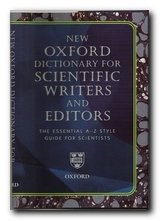
Dictionary for Scientific Writers and EditorsThe OUP is the number one source for reference books of this kind, and the series manages to compress huge, unwieldy databases of information into a handy, useable format. This single volume includes over 9,700 entries which reflect accepted usage, and it follows the recommendations of international scientific bodies such as the International Union of Pure and Applied Chemistry and the International Union of Pure and Applied Physics.

It gives clear guidance on such matters as spellings (American English and British English), punctuation, abbreviations, prefixes and suffixes, units and quantities, and symbols. Also included are the correct spelling of chemical and medical terms; short explanations of the meaning of scientific concepts; basic data about famous scientists; explanations of acronyms; and definitions of terms.

There are appendices with lists of chemical and electro-magnetic symbols; the periodic table; scientific symbols; and a list of web-based resources. It provides substantially enlarged coverage from previous editions, with increased coverage of the life sciences, and new entries in physics, astronomy, chemistry, computer science, and mathematics.

This comprehensive and authoritative A-Z guide is an invaluable tool for students, professionals, and publishers working with writing in the fields of physics, chemistry, botany, zoology, biochemistry, genetics, immunology, microbiology, astronomy, mathematics, and computer science.

These style guides are in a curious format – royal sixteenmo – which is smaller than a conventional book, but too bulky to be pocket-sized. But I must say that it looks quite diminutively handsome on my shelves alongside its colleagues the New Oxford Spelling Dictionary, New Hart’s Rules, and the Oxford BBC Guide to Pronunciation.

© Roy Johnson 2009

Dictionary for Scientific Writers and Editors   Buy the book at Amazon UK

Dictionary for Scientific Writers and Editors   Buy the book at Amazon US


New Oxford Dictionary for Scientific Writers and Editors, Oxford: Oxford University Press, 2009, pp.451, ISBN: 0199545154


More on language
More on literary studies
More on writing skills
More on creative writing
More on grammar


Filed Under: Dictionaries Tagged With: Dictionaries, Dictionary for Scientific Writers & Editors, Editing, English language, Reference, Scientific writing, Writing skills

Dictionary for Writers and Editors

August 4, 2009 by Roy Johnson

difficult cases of spellings and expressions

The Dictionary for Writers and Editors has been ‘repurposed’ from its original larger-scale edition to sit alongside the New Oxford Spelling Dictionary, New Hart’s Rules, and the Oxford BBC Guide to Pronunciation. These form a group of new reference sources for writers and editors who are concerned with preparing texts for publication to the highest possible standard. It’s a specialist dictionary for writers, journalists, and text-editors. It offers rulings on words and spellings which are commonly problematic.

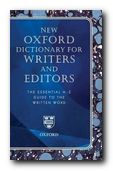
Dictionary for Writers and Editors For instance, do we write Muslim or Moslem, customise or customize? It covers the names of well-known people and places, foreign words and commonly-used phrases such as petit-bourgeois and persona non grata. Entries run from A as a letter or paper size to Zydeco music and Zyklon B.

Many of these items are in any good dictionary, but this one eliminates all the non-problematic words and makes the book easier to use. It also deals with abbreviations, capitalization and punctuation. I looked up amendment [one ‘m’] superseded [yes – it’s spelt with an ‘s’] and manageable [it keeps the ‘e’]. It can also be used as a quick guide to many niceties of writing (the difference between hyphens and dashes) and as a potted source for historical names, dates, and places of importance.

At first glance, there might not seem much difference between this and an ordinary dictionary, but the process of selection and the emphasis on explanations of common problems makes it a very useful resource. This latest edition offers a huge revision and update on the original. Entries have been expanded on doubtful or variable spellings (“gettable” not “getable”); the punctuation of dates and spellings of proper names; and all those other little things that are so difficult to be consistent about when writing. It is also an invaluable guide to words that are often confused such as biannual (twice every year, or every six months) and biennial (every two years).

It is designed to be used in conjunction with New Hart’s Rules, which gives details of how text should be edited in preparation for printing. The headword is set in bold sans-serif, which makes it more immediately legible, though it might seem strange if you are used to the OUP tradition of bold Roman. There are four appendices: mathematical and logical symbols; proofreading marks; a list of diacritical accents; and tables for transliterating Arabic, Hebrew, Greek, and Russian.

It should certainly be amongst the reference tools of anybody who takes a serious interest in writing. The new smaller handbook format is a matter of personal taste, but it certainly looks a handsome little tome flanked by its three cousins.

Dictionary for Writers and Editors   Buy the book at Amazon UK

Dictionary for Writers and Editors   Buy the book at Amazon US

© Roy Johnson 2005


The Oxford Dictionary for Writers and Editors, Oxford: Oxford University Press, 2005, pp.434, ISBN: 0198610408


More on language
More on literary studies
More on writing skills
More on creative writing
More on grammar


Filed Under: Dictionaries Tagged With: Dictionaries, Dictionary for Writers and Editors, Editing, Language, Writers, Writing skills

Dictionary of British Place Names

July 29, 2009 by Roy Johnson

origins of UK town, hamlet, and village names

Have you ever wondered how places such as Eccles, Stoke Poges, Great Snoring, Lower Peover, or Leighton Buzzard get their names? This Dictionary of British Place Names will tell you, and give you details about the historical background. The reason there are so many unusual names for British towns, villages, and hamlets is of course that the UK has been invaded by so many different nations in the past. They have left their languages stamped all over the land.

Oxford Dictionary of British Place NamesAnd as the author of this specialist dictionary points out, foreign languages actually persist in place names more than in the living language, because place names are not likely to change, whereas the spoken language does. There are over 17,000 entries listed here – alphabetically, from Abbas Combe in Somerset to Zennor in Cornwall. Most place names come from Old English, Danish, Norse, and Celtic, with only a smattering from Norman-French, and Latin. And not all of the etymologies are as obvious as they might seem.

For instance, many place names which occur a lot can in fact come from different origins. Broughton occurs in several counties and combinations such as Broughton Astley (Leics) and Broughton Poggs (Oxon). But the name can come from ‘brook farmstead’, ‘hill farmstead’, or ‘fortified farmstead’.

The opposite phenomenon also occurs – where the same thing can give rise to different names. Thus Keswick and Chiswick both come from ‘cheese farm’.

Most of the names listed are likely to be at least a thousand years old, and structurally they are often in two parts. The first may be a place, person, tribal, or river-name – and it qualifies the second part. Thus Bakewell was originally Badecanwelle formed from Badeca + wella = ‘Spring or stream of a man called Badeca’.

There’s a glossary of common elements in British place names – such as baernet, land cleared by burning; mynster, minster or large church; and stoc, outlying farmstead or hamlet. This occurs in my own home town of Stockport – which I notice has just appeared in the designed-for-Xmas novelty publication, Crap Towns: The 50 Worst Places to Live in the UK.

© Roy Johnson 2011

Dictionary of British Place Names   Buy the book at Amazon UK

Dictionary of British Place Names   Buy the book at Amazon US


A.D. Mills, Oxford Dictionary of British Place Names, Oxford: Oxford University Press, revised edition, 2011, pp.576, ISBN: 019960908X


More on dictionaries
More on language
More on grammar


Filed Under: Dictionaries Tagged With: Dictionaries, Dictionary of British Place Names, Language, Place names, Reference, Town names

Dictionary of British Politics

June 30, 2009 by Roy Johnson

UK parliament, its members, and political affairs

If you want to know what’s going on in UK society and politics today, the Dictionary of British Politics is the definitive resource. It’s written by a best-selling authority on the subject of parliament, personalities, and modern politics. Entries span from Diane Abbot and the Acts of Union, via the Maastrict Treaty and Gus MacDonald, to Tim Yeo and the Zinoviev letter. I don’t know why the entries are split into two parts – politics and people – but there’s a list of web sites and a good list of further reading.

Dictionary of British PoliticsThese make you feel confident that the author is on top of his subject. (So confident that he’s even just started a daily political blog at SKIPPER). It covers the personalities, policies, and institutions that have shaped British politics. The entries are short, lively, and authoritative. What I liked in particular was the mixture of biographical sketches (Killroy-Silk failed his eleven-plus exam) and entries which give thumbnail accounts of larger issues, events, and movements such as Marxism, the Kyoto Protocol, and election rules, as well as politically influential forces such as newspapers, pressure groups, and the media.

This is a book which I imagine will be invaluable to any student of politics or general readers who want to know what’s going on now in the UK. It will also help them to understand the details of the many organisations and pressure groups which compete to influence political power.

All information is well cross-referenced. So for instance, the entry on the Daily Mail provides the newspaper’s web site; it points to the entry for its original owner Alfred Harmsworth; and it flags up its support for the above-mentioned bogus Zinoviev letter.

The coverage even extends to social issues such as water privatisation, party political broadcasts, cronyism, and arcane parliamentary issues such as the Chiltern Hundreds: (I didn’t realise there were three).

It also covers members of parliament, government policies, the important bits of parliamentary history, political theories, historical landmarks, and even newspapers and their proprietors who influence events. The latest edition also covers the many scandals in political life during the last few years.

© Roy Johnson 2010

Dictionary of British Politics   Buy the book at Amazon UK

Dictionary of British Politics   Buy the book at Amazon US


Bill Jones, Dictionary of British Politics, Manchester: Manchester University Press, 2nd revised edition 2010. p.496. ISBN: 0719079403


More on language
More on literary studies
More on writing skills
More on creative writing
More on grammar


Filed Under: Dictionaries Tagged With: Cultural history, Dictionaries, Dictionary of British Politics, History, Politics

Dictionary of Classical Myth and Religion

July 27, 2009 by Roy Johnson

comprehensive A to Z reference to the classical world

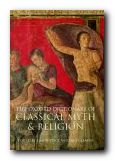
This Dictionary of Classical Myth and Religionis a serious reference book providing invaluable information not only on Greek and Roman mythologies but also on religion in the Graeco-Roman world, including both Judaism and Christianity. It runs from Abaris, legendary devotee of Apollo, through to Zoroaster (who I didn’t realise was the Greek form of the Iranian Zarathrustra). Many of the entries are the length of mini essays. The compilation includes both Greek mythology and Roman festivals, religious places, gods, deities, divination, astrology, and magic. There are also entries on Egyptian religion, Christian beliefs, Homer, Judaism, magic, and river gods.

Dictionary of Classical Myth and ReligionSo, in a typical entry you are given multiple interpretations and sources. Electra for instance is daughter of Agamemnon and Clytemnestra and sister of Orestes, but she is also alternatively daughter of Atlas and Pleione, mother by Zeus of Dardanus and Iasion.

You can also look up classical notions such as the polis, votive offerings, and hubris (‘intentionally dishonouring behaviour’ – not ‘pride or over-confidence’) .

Iliona, in mythology, eldest daughter of Priam and Hecuba. Wife of Polymestor (see HECUBA), she saved the life of Polydorus in a variant version by passing him off as her son, Polymestor thus murdering his own child.
(Virgil, Aeneid 1. 653-4)

The main text is supplemented by an important introductory essay providing
overviews of mythology, religious pluralism in the ancient world, and the
reception of myths from antiquity to the present.

This is a serious, heavyweight, and comprehensive work of reference. It also contains maps, lists of genealogical tables, a thematic index, and an extensive bibliography. An ideal resource for students and teachers of ancient history and religion and anyone interested in the ancient world.

© Roy Johnson 2003

Dictionary of Classical Myth and Religion   Buy the book at Amazon UK

Dictionary of Classical Myth and Religion   Buy the book at Amazon US


Simon Price and Emily Kearns, The Oxford Dictionary of Classical Myth and Religion, Oxford: Oxford University Press, 2003, pp.599, ISBN: 0192802887


More on dictionaries
More on language
More on literary studies
More on grammar


Filed Under: Dictionaries Tagged With: Classical myths, Cultural history, Dictionaries, Dictionary of Classical Myth and Religion, Reference, Religion, Religious myths

Dictionary of Contemporary Slang

July 20, 2009 by Roy Johnson

street-speak, vulgar language, swearing and obscenities

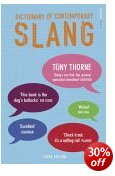
It’s very difficult for dictionary compilers to keep up with the development of slang. Would you have known what chav and bling meant a year ago – in 2004 that is? But Tony Thorne’s compilation certainly captures most of the new street language that is passing into common usage as I write towards the end of 2005. Of course some of it may not last, but I have the feeling his selection is well-judged.

Dictionary of Contemporary SlangHe offers more than 15,000 definitions, many of the terms drawn from the worlds of drugs, sport, youth culture, and television, as well as traditional slang topics such as sex, money, and bodily functions. He also explains how and when the terms are used, with notes on nuance, tone, and associations. The language items are drawn from Britain, America, and Australia, as well as other English-speaking countries. He gives plenty of examples of usage and cites sources wherever possible.

He defines slang quite persuasively as “language selected for its striking informality”. And of course it’s is a loose enough term to encompass irreverence, vulgarity, new jargon, and obscenity – as well as the coded terms used by minority groups as a sort of secret language.

I was glad to see that he acknowledges one of my favourite sources of contemporary slang – Roger’s Profanisaurus – and cites it as the source for their wonderful synonym for bonkers which seems to still be in general circulation – “He’s gone completely hatstand“.

He also includes Cockney rhyming slang, which is still popular and spawning new variants all the time – although his entry on the now-disgraced Garry Glitter does not illustrate a beverage as other slang dictionaries claim, but a body part – itself a slang term. (I’ll leave you to work that one out.)

And he’s good at keeping dated slang in the lexicon. Probably not many people under forty would know that ‘gams’ is a slang term for shapely legs (on a woman of course) or that it comes from the Old Northern French term gamb – obviously itself closely related to jambe.

He’s also good at noting the mutiple possible meanings of words: fag can be a male homosexual or something you smoke. [Oops! it’s all a linguistic minefield.] So – a typical entry runs as follows, fully explaining the term:

naff adj

tasteless, inferior, shoddy, and unappealing. Naff had existed in working-class slang for at least 40 years by the time it became a vogue word in the later 1970s. It had been used in the jargon of prostitutes to mean nothing or negligible. In the theatrical, criminal and street-trading milieus it meant third-rate or poor quality. The word’s sudden popularity occurred probably because it was seized upon by TV scriptwriters (particularly Dick Clement and Ian la Frenais in the comic series Porridge) as an acceptable euphemism for fuck in such forms as ‘naff-all’ (meaning fuck-all), naffing and naff off. Naff’s ultimate origin, which seems to be 19th century, is nonetheless obscure. It has been claimed that it is a backslang form of fann(y) (in the sense of females sex organs) or an acronym or alteration of a phrase involving the word fuck (‘not a fucking fart’ or similar). Neither etymology is attested (or particularly convincing), and the similarity to NAFFI is probably coincidental-

‘To be naff is to be unstylish, whatever that may mean.’

(The Complete Naff Guide, Bryson, et al, 1983)

A lot of the examples he gives are actually US slang which is passing into UK usage, but he explains the provenance. He includes phrases as well as individual words – as in choke the chicken and smuggling peanuts.

Tony Thorne knows his stuff. There’s no slack here. The language of the street is up front. He doesn’t pretend to the sort of historical depth you get with Eric Partridge, but this is as up-to-date a dictionary of ‘strikingly informal’ contemporary language as you are likely to find.

© Roy Johnson 2007

Dictionary of Contemporary Slang   Buy the book at Amazon UK

Dictionary of Contemporary Slang   Buy the book at Amazon US


Tony Thorne, Dictionary of Contemporary Slang, London: A and C Black, 3rd revised edition, 2006, pp.512, ISBN: 0713675292


More on language
More on literary studies
More on writing skills
More on creative writing
More on grammar


Filed Under: Dictionaries, Slang Tagged With: Dictionaries, Dictionary of Contemporary Slang, English language, Language, Reference, Slang

Dictionary of English Folklore

July 29, 2009 by Roy Johnson

traditional beliefs, customs, myths, and superstitions

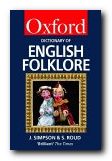
How would you find out what myths are attached to hedgehogs – or about cures for warts? It’s no good looking in the excellent Brewer’s Dictionary of Phrase and Fable, because that deals with sayings and people, not beliefs and activities. This Dictionary of English Folklore is a compendium of national beliefs which describes in reasonably objective terms the customs, myths, and superstitions associated with traditional English culture.

Dictionary of English Folklore It excludes other parts of the British Isles on the grounds that Scotland, Ireland and Wales have their own languages, through which these beliefs have been transmitted. And if even a fraction of these beliefs are alive and well in the twenty-first century, it speaks volumes for the strength of tradition. It covers what it calls ‘oral and performance’ genres – such as cheese rolling, Morris dancing, and well dressing – which I can confirm are alive and popular in the part of England that I inhabit (except for the cheese rolling: we just eat it and have the oldest, Cheshire).

Mythical characters such as Robin Hood, Merlin, Beowulf, and father Christmas are examined – as well as what people believe about parts of the body. This includes the significance of certain fingers, the eyebrows, the nose, and especially the thumb – from ‘OK’ to ‘obscene’.

The significance of special days in the calendar are well documented – All Saints’ day, St Agnes’ Eve (especially significant for love) – and there are beliefs associated with simple items such as plants – cowslip, parsley, foxglove, and clover.

They also cover archaeological items such as Stonehenge, Camelot, and my own special favourite ever since I first cycled past it as a youth – the Cerne Abbas Giant.

The line the authors take is a reasonable compromise between detached description and sympathetic endorsement of these beliefs. They are not afraid to debunk some ideas – such as the belief that ‘Ring-a-ring-a-roses’ is connected with the Great Plague. (The first English versions were recorded in a New Year ceremony in Allendale, Northumberland, in which the men march through the village with blazing tar barrels – a custom which only started in 1858.)

So if you want to check out fairy rings, Devil’s hoofprints, frog showers, pancake races, sin-eating, and the special significance of Saturday – it’s all here. If there’s evidence, they give it. If not, they usually give it the benefit of the doubt. You can make up your own mind.

© Roy Johnson 2003

Dictionary of English Folklore   Buy the book at Amazon UK

Dictionary of English Folklore   Buy the book at Amazon US


J. Simpson (ed), Dictionary of English Folklore, Oxford: Oxford University Press, 2003, pp.420, ISBN: 0198607660


More on dictionaries
More on language
More on literary studies
More on grammar


Filed Under: Dictionaries Tagged With: Cultural history, customs, Dictionaries, Dictionary of English Folklore, English culture, Language, myths, superstitions

  • « Previous Page
  • 1
  • …
  • 22
  • 23
  • 24
  • 25
  • 26
  • …
  • 103
  • Next Page »

Get in touch

info@mantex.co.uk

Content © Mantex 2016
  • About Us
  • Advertising
  • Clients
  • Contact
  • FAQ
  • Links
  • Services
  • Reviews
  • Sitemap
  • T & C’s
  • Testimonials
  • Privacy

Copyright © 2026 · Mantex

Copyright © 2026 · News Pro Theme on Genesis Framework · WordPress · Log in