Mantex

Tutorials, Study Guides & More

  • HOME
  • REVIEWS
  • TUTORIALS
  • HOW-TO
  • CONTACT
>> Home / Archives for 2009

Archives for 2009

John Maynard Keynes biography

September 18, 2009 by Roy Johnson

economist and government political adviser
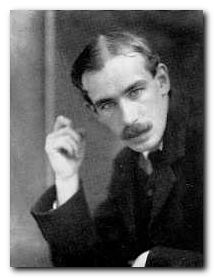
John Maynard Keynes biographyJohn Maynard Keynes (pronounced “Kaynz”) was one the most important figures in the history of economics. He revolutionized the subject with his classic study, The General Theory of Employment, Interest and Money (1936). This is generally regarded as one of the most influential social science treatises of the twentieth century. It quickly and permanently changed the way the world looked at the economy and the role of government in society. He was born in 1883 in Cambridge into an academic family. His father, John Nevile Keynes, was a lecturer at the University of Cambridge teaching logic and political economy. His mother Florence Ada Brown was a remarkable woman who was a highly successful author and a pioneer in social reform. She was also the first woman mayor of Cambridge. An interesting family detail is that although Keynes lived to the age of sixty-three, both his parents outlived him.

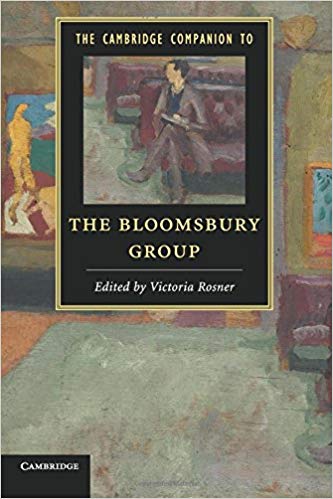
He was educated at Eton and King’s College Cambridge where his intelligence made him very successful. He was almost immediately elected into the secret society known as the Cambridge Apostles. There he met Lytton Strachey and Leonard Woolf, who became his lifelong friends. It was through these connections that he became part of the Bloomsbury Group.

In 1908 he began a serious affair with the painter Duncan Grant. Keynes had numerous affairs with other young men, but never he never had the slightest legal or social trouble, even though homosexuality was illegal at that time. This charmed life can be explained by his combination of personal brilliance, family and professional connections, and remarkable self-confidence. Keynes lectured in economics at Cambridge on and off from 1908. He also worked at the India Office and in 1913 as a member of the Royal Commission on Indian finance and currency, published his first book on the subject.
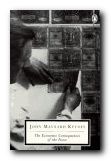
John Maynard Keynes - The Economic Consequences of the PeaceHe represented the Treasury at the Versailles Peace Conference, but resigned in strong opposition to the terms of the draft treaty which he set out in his next book Economic Consequences of the Peace, (1919). Keynes argued that the war reparations imposed on Germany could not be paid by a country which had been devastated by war. He warned that this would lead to further conflict in Europe – which of course turned out to be true.

In 1925 Keynes married a Diaghilev ballerina, Lydia Lopokova, but they never had children. With his wife he helped to found the Vic-Wells ballet. He also financed the establishment of the Arts Theatre, Cambridge. Although he never earned a great deal from either his academic or government appointments, he made himself quite rich by stock market investments. He was reputed to spend the first part of every day in bed, telephoning instructions to his stock-broker. Of course he had the advantage of knowing what the government’s economic policies were going to be (since he helped to establish them) – so this sort of activity is what we would today call ‘insider trading’.

In 1936 Keynes published his most important book A General Theory of Employment, Interest and Money. It revolutionized economic theory by showing how unemployment could occur involuntarily. Keynes argued that the lack of demand for goods and rising unemployment could be countered by increased government expenditure to stimulate the economy.

By 1937 Keynes’ health began to deteriorate. He would never be fully fit again. However, his expertise was such that he was given an honorary role in the Treasury during World War Two. One of the most important projects he was involved in during his last years was the setting up of the International Monetary Fund.

In 1942 Keynes was elevated to the peerage and took his seat in the House of Lords, where he sat on the Liberal benches. Around the same time he became chairman of the newly formed Committee for the Encouragement of Music and the Arts which, before the end of the war, was renamed the British Arts Council. He died in 1946.

John Maynard Keynes biography


Bloomsbury Group – web links

Bloomsbury Group - web links Hogarth Press first editions
Annotated gallery of original first edition book jacket covers from the Hogarth Press, featuring designs by Vanessa Bell, Roger Fry, and others.

Bloomsbury Group - web links The Omega Workshops
A brief history of Roger Fry’s experimental Omega Workshops, which had a lasting influence on interior design in post First World War Britain.

Bloomsbury Group - web links The Bloomsbury Group and War
An essay on the largely pacifist and internationalist stance taken by Bloomsbury Group members towards the First World War.

Bloomsbury Group web links Tate Gallery Archive Journeys: Bloomsbury
Mini web site featuring photos, paintings, a timeline, sub-sections on the Omega Workshops, Roger Fry, and Duncan Grant, and biographical notes.

Bloomsbury Group - web links Bloomsbury: Books, Art and Design
Exhibition of paintings, designs, and ceramics at Toronto University featuring Hogarth Press, Vanessa Bell, Dora Carrington, Quentin Bell, and Stephen Tomlin.

Bloomsbury Group - web links Blogging Woolf
A rich enthusiast site featuring news of events, exhibitions, new book reviews, relevant links, study resources, and anything related to Bloomsbury and Virginia Woolf

Bloomsbury Group - web links Hyper-Concordance to Virginia Woolf
Search the texts of all Woolf’s major works, and track down phrases, quotes, and even individual words in their original context.

Bloomsbury Group - web links A Mrs Dalloway Walk in London
An annotated description of Clarissa Dalloway’s walk from Westminster to Regent’s Park, with historical updates and a bibliography.

Bloomsbury Group - web links Women’s History Walk in Bloomsbury
Annotated tour of literary and political homes in Bloomsbury, including Gordon Square, University College, Bedford Square, Doughty Street, and Tavistock Square.

Bloomsbury Group - web links Virginia Woolf Society of Great Britain
News of events, regular bulletins, study materials, publications, and related links. Largely the work of Virginia Woolf specialist Stuart N. Clarke.

Bloomsbury Group - web links BBC Audio Essay – A Eulogy to Words
A charming sound recording of a BBC radio talk broadcast in 1937 – accompanied by a slideshow of photographs of Virginia Woolf.

Bloomsbury Group - web links A Family Photograph Albumn
Leslie Stephens’ collection of family photographs which became known as the Mausoleum Book, collected at Smith College – Massachusetts.

Bloomsbury Group - web links Bloomsbury at Duke University
A collection of book jacket covers, Fry’s Twelve Woodcuts, Strachey’s ‘Elizabeth and Essex’.

© Roy Johnson 2000-2014


More on biography
More on the Bloomsbury Group
Twentieth century literature

Filed Under: Bloomsbury Group Tagged With: Bloomsbury Group, Cultural history, John Maynard Keynes, The Economic Consequences of the Peace

Joseph Conrad biography

September 18, 2009 by Roy Johnson

timeline of life, career, and literary works

Joseph Conrad biography1857. Joseph Conrad (full original name Jozef Teodor Konrad Korzeniowski) born December 3 in Berdichev (or vicinity) to Apollo Nalecz Korzeniowski and Evelina (Ewa) Bobrowska. Poland at that time is under the control of Russia.
1862. Conrad’s father exiled to Russia because of his political liberalism, accompanied by his wife and son.

1865. Conrad’s mother dies. Conrad taken into care of maternal uncle, Tadeusz Bobrowski.

1869. Conrad and his father return to Cracow. Father dies. Conrad sporadically attends school in Cracow.

1873. Leaves for a three-month-long stay in Switzerland and northern Italy. Announces his wish to have a career at sea, which the family resists.

1874. Leaves Cracow for Marseilles to begin life as a sailor on French ships.

1875. Apprentice on the Mont-Blanc, bound for Martinique.

1876-77. From January to July in Marseilles; from July to February 1877 on schooner Saint-Antoine to West Indies.

1877. Acquires (with three other men) the tartane, the Tremolino which carries arms illegally to the supporters of Don Carlos, the Spanish pretender. Conrad probably escaping from gambling debts accrued in Monte Carlo.


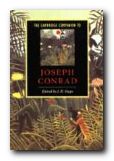
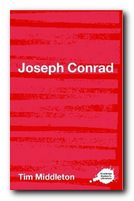
The Cambridge Companion to Joseph ConradThe Cambridge Companion to Joseph Conrad offers a series of essays by leading Conrad scholars aimed at both students and the general reader. There’s a chronology and overview of Conrad’s life, then chapters that explore significant issues in his major writings, and deal in depth with individual works. These are followed by discussions of the special nature of Conrad’s narrative techniques, his complex relationships with late-Victorian imperialism and with literary Modernism, and his influence on other writers and artists. Each essay provides guidance to further reading, and a concluding chapter surveys the body of Conrad criticism.

1878-79. Mounting financial problems. In February attempts suicide by shooting himself through the chest (which he later passed off as injury in a duel). Uncle Bobrowski pays off his debts and arranges for him to be transferred to England. On April 24 leaves Marseilles on British steamer Mavis. On June 18 sets foot in England at Lowestoft. Serves as ordinary seaman on coaster The Skimmer of the Sea.

1883. Passes mate’s examination on July 4. Meets uncle Bobrowski at Marienbad. Mate on the sailing ship Riversdale.

1884. Second mate on the Narcissus, bound from Bombay to Dunkirk.

1885-86. Second mate on the Tilkhurst; August 19, receives British certificate of naturalization. November 11, passes examination, receives his ‘Certificate of Competency as Master’. His first story, ‘The Black Mate’, submitted to Tit-Bits.

1887. First mate on Highland Forest. Hurt by a falling spar, hospitalized in Singapore (experience recalled in Lord Jim). Second mate on steamship Vidar (Singapore-Borneo).

1888. On Melita (bound for Bangkok), then his first command on the barque the Otago (Bangkok-Sydney-Mauritius-Port Adelaide). Experiences described in The Shadow-Line, Victory, The Secret Sharer. A Smile of Fortune, and other works.

1889. Summer in London; begins writing Almayer’s Folly.

1890. First trip to Poland since he left in 1874. In May he leaves for the Congo. Second in command, then in command of S. S. Roi de Belges.

1891-93. First mate on Torrens. English passenger (Jacques) reads the first nine chapters of Almayer’s Folly, offers encouragement; meets John Galsworthy aboard the ship. Visits uncle Bobrowski in Poland.

1893-94. Second mate on Adowa (London-Rouen-London). Ends his career as seaman on January 14.

1894. Uncle Bobrowski dies on January 29, 1894. In April Conrad sends Almayer’s Folly to T. Fisher Unwin.

1894-95. Writes An Outcast of the Islands.


Complete Critical Guide to Joseph Conrad - Click for details at AmazonThe Complete Critical Guide to Joseph Conrad is a good introduction to Conrad criticism. It includes a potted biography, an outline of the stories and novels, and pointers towards the main critical writings – from the early comments by his contemporaries to critics of the present day. Also includes a thorough bibliography which covers biography, criticism in books and articles, plus pointers towards specialist Conrad journals. These guides are very popular. Recommended.

1896. March 24, marries Jessie George.

1897. Completes The Nigger of the ‘Narcissus’; friendship with R. B. Cunninghame Graham.

1898. Son Alfred Borys born January 14. In October moves to Petit Farm, Kent.

1899. In February completes Heart of Darkness.

1900. Finishes Lord Jim.

1904. Nostromo. Writes the memoir The Mirror of the Sea. Wife falls ill, and becomes practically an invalid.

1905. Spends four months in Europe.

1906. Spends two months in France. Second son John Alexander born August 2.

1907. Children ill in France. Returns to Pent Farm in August. The Secret Agent.

1908. A Set of Six (short stories).

1910. In June moves to Capel House, Kent. Seriously ill.

1911. Under Western Eyes.

1912. ‘Twixt Land and Sea, Tales.

1913-14. Chance. Writes Victory. Leaves for Poland in July 1914; meets Stefan Zeromski in Zakopane; caught by the war in August; escapes and returns to Capel House November 3.

1915. Victory. Within the Tides.

1916. Borys fights on the French front.

1917. The Shadow-Line. Writes prefaces for a new collected edition of his works.

1918. Borys, gassed and wounded, is hospitalized in Le Havre.

1919. The Arrow of Gold. Moves to Oswalds, Bishopbourne, near Canterbury, where he spends the last years of his life.

1920. The Rescue.

1921. Visits Corsica. Notes on Life and Letters.

1923. Visits New York (April-June). Reading from his Victory at home of Mrs. Arthur Curtiss James, May 10. The Secret Agent, Drama in Four Acts (adaptation of the novel). The Rover. Laughing Anne, a play (adaptation of “Because of the Dollars”).

1924. Jacob Epstein does Conrad’s bust. In May Conrad declines knighthood. Health deteriorates and he is bedridden. His wife is also ill. Both sons and Richard Curle are with them. Dies of heart attack 3 August. Buried in Canterbury.

1925. Suspense (incomplete). Tales of Hearsay.

1926. Last Essays.

1928. The Sisters (written in 1896; incomplete.)

1936. Jessie Conrad dies 6 December. Buried near her husband at Canterbury.

© Roy Johnson 2004


Joseph Conrad links

Joseph Conrad - tutorials Joseph Conrad at Mantex
Biography, tutorials, book reviews, study guides, videos, web links.

Red button Joseph Conrad – his greatest novels and novellas
Brief notes introducing his major works in recommended editions.

Joseph Conrad - eBooks Joseph Conrad at Project Gutenberg
A major collection of free eTexts in a variety of formats.

Joseph Conrad - further reading Joseph Conrad at Wikipedia
Biography, major works, literary career, style, politics, and further reading.

Joseph Conrad - adaptations Joseph Conrad at the Internet Movie Database
Adaptations for the cinema and television – in various languages. Full details of directors and actors, production notes, box office, trivia, and quizzes.

Joseph Conrad - etexts Works by Joseph Conrad
Large online database of free HTML texts, digital scans, and eText versions of novels, stories, and occasional writings.

Joseph Conrad - journal The Joseph Conrad Society (UK)
Conradian journal, reviews. and scholarly resources.

Conrad US journal The Joseph Conrad Society of America
American-based – recent publications, journal, awards, conferences.

Joseph Conrad - concordance Hyper-Concordance of Conrad’s works
Locate a word or phrase – in the context of the novel or story.


More on Joseph Conrad
Twentieth century literature
More on Joseph Conrad tales


Filed Under: Joseph Conrad Tagged With: Biography, Joseph Conrad, Literary studies, Modernism

Joseph Conrad greatest works

September 17, 2009 by Roy Johnson

introductions, with links to tutorials and study guides

Joseph Conrad took hold of the late nineteenth century ‘action novel’ – the Imperialist Boy’s Own adventure story – and invested it with moral subtlety, aesthetic density, and a powerful sense of ideological seriousness. His writing can be demanding: be prepared for long sentences, complex syntax, abstract vocabulary, philosophic speculations, and an all-male environment. The rewards are profound insights into the human condition, superbly orchestrated moments of drama, and writing which explores issues of deep moral complexity.

He also pushed the complexities of story-telling further than they had ever been before. Keep in mind that Conrad, considered a master of English prose style, was Polish. He was writing in his second language. In this sense he is not unlike the Russian novelist, Vladimir Nabokov.


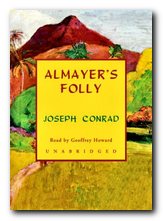
Joseph Conrad greatest works Almayer's FollyAlmayer’s Folly (1895) was Conrad’s first published novel. It is set towards the end of the nineteenth century in the Malay archipelago and deals with the conflicts between European colonialism and the native population. Dreams of easy wealth drive the Dutch trader Kaspar Almayer into grandiose schemes which come to nothing. His mixed-race wife despises him and is having an affair with a local native war lord. He completely misjudges the turmoil of events in which he becomes enmeshed and eventually descends into opium addiction and self-destruction. The novel contains many stereotypes of nineteenth century imperialist ideology, but its events are related in a manner which would lead to the development of literary modernism in the twentieth.
Joseph Conrad Buy the book from Amazon UK
Joseph Conrad Buy the book from Amazon US


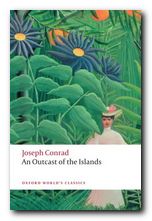
Joseph Conrad greatest works An Outcast of the IslandsAn Outcast of the Islands (1896) was Conrad’s second novel, and acts as a ‘prequel’ to the first, Almayer’s Folly. English sea captain Tom Lingard rescues the corrupt Peter Willems and gives him a second chance by setting him up with a business in a commercial outpost. However, Willems lacks the moral fibre to profit from this act of generosity. He becomes obsessed with a beautiful native girl, deserts his wife and is overwhelmed by local political factions. All this takes place in southern Indonesia against a background of British and Dutch imperialist squabbling for supremacy in the region. Willems is eventually abandoned by his protector, feels desolate and isolated, then has to face the wrath of his wife who comes in search of him.
Joseph Conrad Buy the book from Amazon UK
Joseph Conrad Buy the book from Amazon US


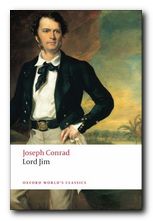
Joseph Conrad greatest works Lord JimLord Jim (1900) is the earliest of Conrad’s big and serious novels, and it explores one of his favourite subjects – cowardice and moral redemption. Jim is a ship’s captain who in youthful ignorance commits the worst offence – abandoning his ship. He spends the remainder of his adult life in shameful obscurity in the South Seas, trying to re-build his confidence and his character. What makes the novel fascinating is not only the tragic but redemptive outcome, but the manner in which it is told. The narrator recounts the events in a time scheme which shifts between past and present in an amazingly complex manner. This is one of the features which makes Conrad (born in the nineteenth century) considered one of the fathers of twentieth century modernism.
Joseph Conrad Buy the book from Amazon UK
Joseph Conrad Buy the book from Amazon US


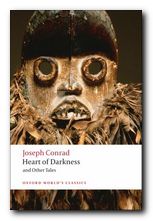
Joseph Conrad greatest works Heart of DarknessHeart of Darkness (1902) is a tightly controlled novella which has assumed classic status as an account of the process of Imperialism. It documents the search for a mysterious Kurtz, who has ‘gone too far’ in his exploitation of Africans in the ivory trade. The reader is plunged deeper and deeper into the ‘horrors’ of what happened when Europeans invaded the continent. This might well go down in literary history as Conrad’s finest and most insightful achievement, and it is based on his own experiences as a sea captain. This volume also contains ‘An Outpost of Progress’ – the magnificent study in shabby cowardice which prefigures ‘Heart of Darkness’.
Joseph Conrad Buy the book from Amazon UK
Joseph Conrad Buy the book from Amazon US

Oxford World Classics offers the best editions of Conrad’s work. They are largely based on the most accurate versions of the texts; and they feature introductory essays, a biography, explanatory notes, textual variants, a bibliography of further reading, and in some cases missing or deleted chapters. They are also terrifically good value.

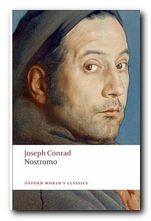
Joseph Conrad greatest works NostromoNostromo (1904) is Conrad’s ‘big’ political novel – into which he packs all of his major subjects and themes. It is set in the imaginary Latin-American country of Costaguana – and features a stolen hoard of silver, desperate acts of courage, characters trembling on the brink of moral panic. The political background encompasses nationalist revolution and the Imperialism of foreign intervention. Silver is the pivot of the whole story – revealing the courage of some and the corruption and destruction of others. Conrad’s narration is as usual complex and oblique. He begins half way through the events of the revolution, and proceeds by way of flashbacks and glimpses into the future.
Joseph Conrad Buy the book from Amazon UK
Joseph Conrad Buy the book from Amazon US


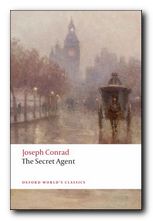
Joseph Conrad greatest works The Secret AgentThe Secret Agent (1907) is a short novel and a masterpiece of sustained irony. It is based on the real incident of a bomb attack on the Greenwich Observatory in 1888 and features a cast of wonderfully grotesque characters: Verloc the lazy double agent, Inspector Heat of Scotland Yard, and the Professor – an anarchist who wanders through the novel with bombs strapped round his waist and the detonator in his hand. The English government and police are subject to sustained criticism, and the novel bristles with some wonderfully orchestrated effects of dramatic irony – all set in the murky atmosphere of Victorian London. Here Conrad prefigures all the ambiguities which surround two-faced international relations, duplicitous State realpolitik, and terrorist outrage which still beset us more than a hundred years later.
Joseph Conrad Buy the book from Amazon UK
Joseph Conrad Buy the book from Amazon US


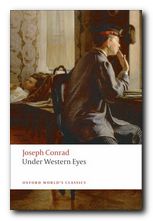
Joseph Conrad greatest works Under Western EyesUnder Western Eyes (1911) is the story of Razumov, a reluctant ‘revolutionary’. He is in fact a coward who is mistaken for a radical hero and cannot escape from the existential trap into which this puts him. This is Conrad’s searing critique of Russian ‘revolutionaries’ who put his own Polish family into exile and jeopardy. The ‘Western Eyes’ are those of an Englishman who reads and comments on Razumov’s journal – thereby creating another chance for Conrad to recount the events from a very complex perspective. Razumov achieves partial redemption as a result of his relationship with a good woman, but the ending, with faint echoes of Dostoyevski, is tragic for all concerned.
Joseph Conrad Buy the book from Amazon UK
Joseph Conrad Buy the book from Amazon US


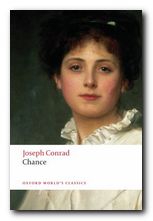
Joseph Conrad greatest works ChanceChance is the first of Conrad’s novels to achieve a wide commercial success, and one of the few to have a happy ending. It tells the story of Flora de Barral, the abandoned daughter of a bankrupt tycoon, and her long struggle to find happiness and dignity. He takes his techniques of weaving complex narratives to a challenging level here. His narrator Marlow is piecing together the story from a mixture of personal experience and conversations with other characters in the novel. At times it is difficult to remember who is saying what to whom. This is a work for advanced Conrad fans only. Make sure you have read some of the earlier works first, before tackling this one.
Joseph Conrad Buy the book from Amazon UK
Joseph Conrad Buy the book from Amazon US


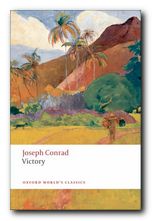
Joseph Conrad greatest works VictoryVictory (1915) is set in the legendary port of Surabaya and in an outpost of the Malayan archipelago. It is the story of Swedish recluse Axel Heyst, who rescues Lena, a young woman from a touring orchestra and runs off to live in remote seclusion, influenced by the pessimistic philosophy of his father. But he is pursued by two lying and scheming English gamblers, who believe he is concealing ill-gotten wealth. They corner him in his retreat, and despite the efforts of Lena to shield Heyst from their plans, there is a tragic confrontation which brings destruction into their island paradise.
Joseph Conrad Buy the book from Amazon UK
Joseph Conrad Buy the book from Amazon US

© Roy Johnson 2004


Joseph Conrad links

Joseph Conrad - tutorials Joseph Conrad at Mantex
Biography, tutorials, book reviews, study guides, videos, web links.

Red button Joseph Conrad – his greatest novels and novellas
Brief notes introducing his major works in recommended editions.

Joseph Conrad - eBooks Joseph Conrad at Project Gutenberg
A major collection of free eTexts in a variety of formats.

Joseph Conrad - further reading Joseph Conrad at Wikipedia
Biography, major works, literary career, style, politics, and further reading.

Joseph Conrad - adaptations Joseph Conrad at the Internet Movie Database
Adaptations for the cinema and television – in various languages. Full details of directors and actors, production notes, box office, trivia, and quizzes.

Joseph Conrad - etexts Works by Joseph Conrad
Large online database of free HTML texts, digital scans, and eText versions of novels, stories, and occasional writings.

Joseph Conrad - journal The Joseph Conrad Society (UK)
Conradian journal, reviews. and scholarly resources.

Conrad US journal The Joseph Conrad Society of America
American-based – recent publications, journal, awards, conferences.

Joseph Conrad - concordance Hyper-Concordance of Conrad’s works
Locate a word or phrase – in the context of the novel or story.


More on Joseph Conrad
Twentieth century literature
More on Joseph Conrad tales


Filed Under: Joseph Conrad Tagged With: Almayer's Folly, An Outcast of the Islands, Chance, Heart of Darkness, Joseph Conrad, Literary studies, Lord Jim, Modernism, Nostromo, The Secret Agent, Under Western Eyes, Victory

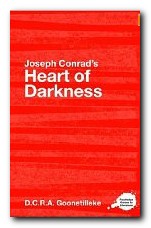
Joseph Conrad’s Heart of Darkness

June 19, 2009 by Roy Johnson

critical survey and literary essays

Joseph Conrad’s Heart of Darkness book looks at the famous novella in detail from the perspective of the early twenty-first century and offers a series of critical essays which plot its reception and the establishment of its reputation. It begins with a long essay by the editor exploring its political, social, and literary background, offering a defence of Conrad. This is a counter to the criticisms made by Edward Said and Chinua Achebe which claim that Conrad, for all his liberalism, cannot conceal a submerged racism and imperialism from his critical gaze.

Joseph Conrad's Heart of DarknessHeart of Darkness was written in 1899, and was based loosely on Conrad’s own experience as a seaman with a commission to sail up the Congo river in 1890. During the twentieth century it has become a central text in the discussion of European imperialism , and possibly the best known of Conrad’s works – even though his first commercial success did not come until much later with the publication of Chance in 1913.

D.C.R.A. Goonetilleke even puts in a spirited defence of Conrad as an even-handed writer in gender terms. I’m afraid he’s on something of a hopeless quest here, as anyone who has read widely in Conrad will know – particularly some of his deservedly less well-known short stories.

There’s a chapter which traces the critical debate on Heart of Darkness from its publication to the present day. This allows readers the opportunity to witness how succeeding generations have interpreted the text, and it’s a refreshing reminder that literary criticism has fads and fashions which change and even disappear.

The latter half of the book is given over to five extended critical readings of the text. These represent what are currently perceived as major schools of literary criticism – neo-Marxist, historicist, feminist, deconstructionist, and narratological. These will allow the serious students of literature at whom the book is aimed to sense the academic climate and see what to aim at in their own work.

The feminist critique takes up the conventional objection that Conrad’s works don’t include many female characters, and even includes a bizarre recipe for those who cannot accept that a writer might not share contemporary values.

Nina Pelikan Straus concluded that while women readers may find some way to appreciate the text (she offers a number of reading strategies), in the end the best that women readers can do is remain detached from Heart of Darkness and refuse to grant the status of high art to the work.

There’s also an interesting bonus – an appendix in which two film adaptations of the text are analysed. Francis Ford Coppola’s Apocalypse Now! (1979) and Nicholas Roeg’s Heart of Darkness (1994) are compared with the original text in a way which casts interesting light on both, though no mention is made of the ‘deleted’ scenes on the old French rubber plantation in Coppola’s film which would reinforce the fact that his work was about imperialism and not just war.

It’s a pity even more divergent views are not represented, but maybe there’s just not enough room in one volume. As Douglas Hewitt, one of the many critics cited in this very scholarly survey observes: “Conrad’s Heart of Darkness has had more critical attention per word than any other modern prose work”.

© Roy Johnson 2007

Buy the book at Amazon UK

Buy the book at Amazon US


D.C.R.A. Goonetilleke, Joseph Conrad’s Heart of Darkness, Abingdon: Routledge, 2007, pp.160, ISBN 0415357764


More on Joseph Conrad
Twentieth century literature
More on Joseph Conrad tales


Filed Under: Joseph Conrad Tagged With: English literature, Heart of Darkness, Joseph Conrad, Literary criticism, Literary studies, Modernism

Journalism – A Short Introduction

June 26, 2009 by Roy Johnson

Reporting for press, broadcast media, and the Net

Ian Hargreaves has worked in newspaper journalism, magazines, television and radio. He was director of news and current affairs at the BBC, deputy editor of the Financial Times, and editor of the Independent and the New Statesman. This breadth and depth of experience gives him a very well informed overview of contemporary journalism in print and broadcast forms.

Journalism - A Short IntroductionHe starts by sketching in a brief history of free speech and the press – Milton, Thomas Paine, J.S. Mill – then argues that newspapers had only just finished establishing themselves as the prime vehicles for circulating news in the early years of the last century when they were immediately challenged by new technological inventions. First the radio, then television, and most recently the Internet. This is an exposition conducted at a fairly high socio-political level.

He compares recent journalism in Russia and the USA for instance – both cases where freedom of expression is being compromised, even if for very different reasons. One possible solution he sees is a return to what he calls ‘civic journalism’ – of the kind discussed by Dan Gillmor in his recent book We the Media. Digital communication in the form of email, bulletin boards, blogs, RSS feeds, and web sites puts the power of communication and free speech back into the hands of individuals. We no longer need to own printing presses to circulate information.

He is certainly smack up to date – tracking the politicking and manoeuvring that goes on between governments, regulatory bodies, and media tycoons such as Rupert Murdoch, Ted Turner and their like. He also includes the Hutton report in the context of reporting during a war, which always puts ‘standards’ and the ethics of truth-telling to a severe test.

There’s an interesting chapter on tabloid journalism in which he easily exposes the excesses of The Sun and The National Enquirer – but he also argues that the concentration on ‘celebrity’ has had an injurious knock-on effect on serious media.

There’s also a chapter on press ownership where he argues that despite the Murdochs, Blacks, and Maxwells, the real power in press ownership is passing into the hands of business conglomerates. This is likely to be depressing news for those who believe in a ‘free press’. He also offers some gritty examples from his first hand experience of the relations between owners, editors, and journalists.

There’s a historical view of public relations and spin-doctoring which is more interesting than you might think – though the overall impression it gave me was that all journalists ought to keep in mind the mantra of Harold Evans who suggested that all journalists interviewing politicians ought to ask themselves “Why is this bastard lying to me?” He also includes an interesting chapter on the ethics of journalism – with a healthy critique of the toothless UK Press Complaints Committee.

He ends, logically enough, with the influence of the Internet, which has spawned all sorts of challenges to conventional media. He uses the example of Matt Drudge’s exposure of the Clinton-Lewinsky scandal as a touchstone case, reminding us that Drudge was just an individual citizen, not a paid journalist. Digital information technology is changing so quickly, it’s difficult to know what will last or what will happen next – but he outlines all the important issues.

I found this a much more interesting and stimulating book than its modest title led me to expect. If you want to know what’s happening in journalism right now, it will bring you right up to date.

© Roy Johnson 2005

Journaalism   Buy the book at Amazon UK

Journalism   Buy the book at Amazon US


Ian Hargreaves, Journalism: a very short introduction, Oxford: Oxford University Press, 2005, ISBN: 0192806564


More on journalism
More on creative writing
More on writing skills
More on publishing


Filed Under: Journalism Tagged With: Journalism, Journalism - A Short Introduction, Media, Publication, Writing skills

Kafka: An Introduction

July 16, 2009 by Roy Johnson

brief guide to a great twentieth-century writer

Kafka was a writer of such stunning originality that usually no more than a single sentence is required to identify his work. He conjured up arresting images and unforgettable scenes, and wrote stories unlike any that had gone before.

Those, and I am one of them, who find even a small ordinary sized mole disgusting, would probably have died of disgust if they had seen the great mole that a few years back was observed in the neighbourhood of one of our villages, which achieved a certain transitory celebrity on account of the incident.

Kafka: A Very Short IntroductionThis introductory guide to the writer and his work comes from a new series by Oxford University Press. They are written by specialists, aimed at the common reader, and offer an introduction to the main cultural and philosophical ideas which have shaped the western world. Ritchie Robertson takes a fairly even-handed approach to Kafka: appreciative, not uncritical, and certainly avoiding the hagiographic excesses of many commentators who would elevate him to saint-like status.

Instead, he takes a quick look at Kafka’s tortured life, and reasonably argues that much of his writing is a metaphorical or a symbolic rendering of it. There are some suggestions on how we might read Kafka, but his choice is to look at three or four key texts in detail, whilst bringing in support for his arguments from Kafka’s many fragments of writing, his aphorisms, and his voluminous correspondence.

Kafka anticipated much of the radical alienation, the existential Angst and sense of terror which became obvious in European political life after his death. This comes through clearly, but Robertson also takes interestingly novel approaches which look at aspects of Kafka’s work which are often ignored.

One of these is a particularly incisive chapter on The Body in Kafka’s writing. He argues persuasively that physical attributes, denial of the body through fasting, and even gestures feature as symbolic forces in his work.

Another fruitful theme he explores is Kafka’s fascination with institutions and figures of power, towards which he had an often ambiguous relation. These include the family, the legal system (in which he worked) the bureaucratic organisation, the court, the church, the castle, the judge, and the father – to whom he wrote the famous letter which was not sent.

The writing is clear, polished, and non-patronising. Like most good critical commentary, it makes you feel like going back to the original texts to read them again.

Finally he turns to a religious reading – the traditional manner in which this most enigmatic of writers has been interpreted. He deals with Kafka’s ambiguous position within a Jeudeo-Christian tradition, then passes on to his spiritual sense of self which became particularly marked in his later work.

This is a very interesting and attractive format – a small, pocket-sized book, stylishly designed, with illustrations, endnotes, suggestions for further reading, and an index.

© Roy Johnson 2004

Buy the book at Amazon UK

Buy the book at Amazon US


Ritchie Robertson, Kafka: A Very Short Introduction, Oxford: Oxford University Press, 2004, pp.136, ISBN 0192804553


More on Franz Kafka
More on the novella
More on literary studies
More on short stories


Filed Under: Franz Kafka Tagged With: 20C Literature, Franz Kafka, Kafka: A Very Short Introduction, Literary studies, Modernism

Katherine Mansfield – life and works

September 19, 2009 by Roy Johnson

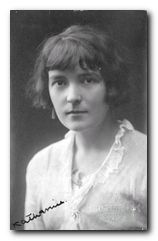
Katherine Mansfield - portrait1888. Katherine Mansfield Beauchamp was born into a socially prominent family in Wellington, New Zealand. Her father was a banker, who went on to become chairman of the Bank of New Zealand. She was first cousin of Elizabeth Beauchamp, who married into German aristocracy to become Countess Elizabeth von Arnim. She had a somewhat insecure childhood. Her mother left her when she was only one year old to go on a trip to England. She was raised largely by her grandmother, who features in some of the stories as ‘Mrs Fairfield’.

1895. She attended Karori State School with her sisters, and proved to be gifted at writing, even though her spelling was poor.

1898. Attended Wellington Girls’ High School. Some of her earliest sketches appeared in the school magazine, and she won a composition prize for ‘A Sea Voyage’.

1901. She attended a private finishing school, showed a somewhat precocious interest in notions of ‘free love’, and continued writing stories. It is obvious even at this early stage that she was interested in creating a good prose style. The following was written when she was fifteen:

This evening I have sat in my chair with my reading lamp turned low, and given myself up to thoughts of the years that have passed. Like a strain of minor music they have surged across my heart, and the memory of them, sweet and fragrant as the perfume of my flowers, has sent a strange thrill of comfort through my tired brain.

1902. She becomes very passionate about writing and music, and is greatly influenced by Chekhov and Oscar Wilde, whose notoriety at that time was still at its height. She falls in love with Arnold Trowell, the son of her cello teacher.

1903. The family travel to London, and KM attends Queen’s College in Harley Street which had been founded by Charles Kingsley to prepare young women for higher education. On her first day there she meets Ida Baker, who was to become a central figure in the rest of her life. Five of her sketches appear in Queen’s College Magazine.

1906. She gives herself up to a rather bohemian lifestyle, and has affairs with both men and women. Because of this, her parents take her back home to New Zealand against her wishes.

1907. Three sketches and a poem published in the Melbourne Native Companion.

1907. Love affairs with two girls. Her family send her on a tour of New Zealand’s northern island. Love affair with a Maori girl.

1908. Her family give up in the fight against her rebellious nature, and she is allowed to go back to London with an allowance of £100 per year from her father. She lodges in Little Venice, and is in love with Garnet Trowell (Arnold’s twin brother).

1909. Pregnant by Garnet Trowell, she marries singing teacher George Bowden and leaves him the same evening (without consummating the marriage) to join a travelling light opera company in Glasgow. Her mother travels from New Zealand to restore order, and takes KM to Bavaria for what she describes as a ‘cold water cure’. She has a miscarriage.

1910. Returns to London, where she is hospitalised for gonorrhoea. She then goes back to live with her husband. Some of her stories are published in the New Age, alongside writers such as H.G. Wells, Arnold Bennett, and Hilare Belloc. At this stage she begins to suffer from severe bouts of illness.

1911. She has an abortion, then travels to Bruges and Geneva. In a German Pension published in the autumn.

1912. Meets John Middleton Murry and becomes with him the editor of a magazine which causes something of a scandal by its title alone – Rhythm. They live together, moving from England to France and back again, sometimes living together with her most devoted ex-lover, Ida Baker, who KM sometimes calls her ‘wife’.

1913. Friendships and fallings-out with both Henri and Sophia Gaudier-Brzeska, and Frieda and D.H.Lawrence. Last issue of Rhythm. Four stories published in the Blue Review, which then failed. Works as a film extra.

1914. Murry declared bankrupt: he leaves London to live in the country. KM ill: she writes love letters to fellow Rhythm contributor Francis Carco in France.

1915. Her brother Leslie Beauchamp visits her in London on his way to join regiment. KM leaves Murry and travels to Paris to live with Francis Carco. She is then reconciled with Murry, then goes back to Carco in France. Begins to write The Aloe (which becomes Prelude). Three stories published in Signature, which then folds. Brother killed in war. Moves to live in Bandol, France.

1916. Moves to Zennor, Cornwall with the Lawrences, who have violent rows and fights. Finally ‘leaves’ Murry. Visits Ottoline Morell’s home at Garsington, Oxfordshire.

1917. Moves to live in Chelsea, and begins to write ‘narratorless’ stories. Meetings with Virginia Woolf. Both of them realise that they are making similar experiments in prose fiction, and feel a combination of rivalry and friendship.

1918. Moves back to live in Bandol. Tuberculosis diagnosed. Returns to London and divorces George Bowden. Marries John Middleton Murry (wearing Frieda Lawrence’s wedding ring). They live together in a house in Hampstead – together with Ida Baker. Prelude published by Leonard and Virginia Woolf’s Hogarth Press.

1919. Regular contact with Virginia Woolf. Writes reviews for the Athenaeum (edited by Murry). Moves to San Remo Italy with Ida Baker. Murry visits occasionally.

1920. Moves to live in Menton, France. Murry begins to dally with other women. KM returns to London. Bliss and Other Stories published by Constable. Returns to France.

1921. Returns to London to scare off Princess Bibesco, who has been dallying with Murry. Moves to live in Switzerland, where her neighbour Rainer Maria Rilke is writing the Duino Elegies. Intense creative bursts between bouts of severe illness.

1922. Moves to Paris for radium treatment for her TB. Moves back to Switzerland. Murry leaves KM, who prepares her will, making Murry her literary executor. Returns to France to join in the mystic ‘treatment’ which was then fashionable at the Gurdjieff Institute at Fontainbebleau, France.

1923. Murry arrives in Fontainebleau on the day that KM dies – 9 January 1923, aged just thirty-five.


Katherine Mansfield


Katherine Mansfield – web links

Katherine Mansfield - web links Katherine Mansfield at Mantex
Life and works, biography, a close reading, and critical essays

Katherine Mansfield - web links Katherine Mansfield at Wikipedia
Biography, legacy, works, biographies, films and adaptations

Katherine Mansfield - web links Katherine Mansfield at Online Books
Collections of her short stories available at a variety of online sources

Katherine Mansfield - web links Not Under Forty
A charming collection of literary essays by Willa Cather, which includes a discussion of Katherine Mansfield.

Katherine Mansfield - web links Katherine Mansfield at Gutenberg
Free downloadable versions of her stories in a variety of digital formats

Katherine Mansfield - web links Hogarth Press first editions
Annotated gallery of original first edition book jacket covers from the Hogarth Press, including Mansfield’s ‘Prelude’

Katherine Mansfield - web links Katherine Mansfield’s Modernist Aesthetic
An academic essay by Annie Pfeifer at Yale University’s Modernism Lab

Katherine Mansfield - web links The Katherine Mansfield Society
Newsletter, events, essay prize, resources, yearbook

Katherine Mansfield - web links Katherine Mansfield Birthplace
Biography, birthplace, links to essays, exhibitions

Katherine Mansfield - web links Katherine Mansfield Website
New biography, relationships, photographs, uncollected stories

© Roy Johnson 2014


More on Katherine Mansfield
Twentieth century literature
More on the Bloomsbury Group
More on short stories


Filed Under: Bloomsbury Group, Katherine Mansfield Tagged With: Biography, Bloomsbury Group, Katherine Mansfield, Literary studies, Modernism

Katherine Mansfield – Prelude

October 3, 2009 by Roy Johnson

Hogarth Press first edition book jacket designs


Katherine Mansfield - Prelude - first edition

Katherine Mansfield, Prelude (1918)

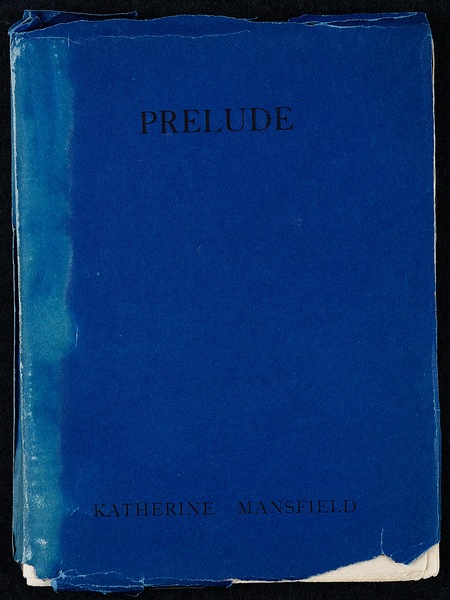
This was the second publication of the Hogarth Press. It was a re-write of her long short story The Aloe which she had begun in 1915. 300 copies were printed.

“It is a sixty-eight-page book and we printed and bound it entirely with our own hands. The edition must have consisted of nearly 300 copies for, when it went out of print, we had sold 257 copies. Virginia did most of the setting and I did all the machining.”

Leonard Woolf, An Autobiography


“Prelude was published by the Hogarth Press in July 1918, an edition of 300 copies selling at 3s. 6d. It was a book of 68 pages, 19 X 14.5 cm, set in Caslon and bearing the dedication “To L.H.B. and J.M.M.” The early pages had been set by Barbara Hiles, a former student at the Slade who now worked for the Press, then mostly by Virginia Woolf, who recorded that her top speed at hand-setting was one page in an hour and a quarter. The book finally was not run off on the hand press at Hogarth House, but at a jobbing printer’s in Richmond, with Leonard himself working the machine.

The book was clearly the work of amateurs, but cleanly done and unpretentious. The Woolfs misnamed the story The Prelude in both the heading preceding section I, and in the running head as far as p.19. After the first few copies, they removed from the front of the dark blue paper jacket the line block of a woman’s head, surrounded by the spiky leaves and the flowers of the aloe and from the back cover another head, with the leaves now fallen into rather a Medusa-like severity, which had been designed by Mansfield’s friend, the Scottish painter J.D.Fergusson.”

Aloe - colophon

Vincent O’Sullivan (ed), The Aloe

previousnext


Hogarth Press studies

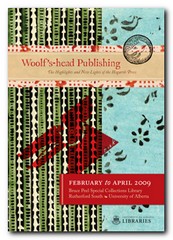
Woolf's-head Publishing Woolf’s-head Publishing is a wonderful collection of cover designs, book jackets, and illustrations – but also a beautiful example of book production in its own right. It was produced as an exhibition catalogue and has quite rightly gone on to enjoy an independent life of its own. This book is a genuine collector’s item, and only months after its first publication it started to win awards for its design and production values. Anyone with the slightest interest in book production, graphic design, typography, or Bloomsbury will want to own a copy the minute they clap eyes on it.

Woolf's-head Publishing Buy the book at Amazon UK
Woolf's-head Publishing Buy the book at Amazon US

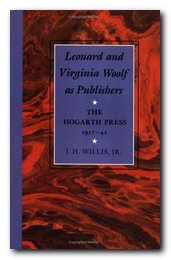
The Hogarth Press Leonard and Virginia Woolf as Publishers: Hogarth Press, 1917-41 John Willis brings the remarkable story of Leonard and Virginia Woolf’s success as publishers to life. He generates interesting thumbnail sketches of all the Hogarth Press authors, which brings both them and the books they wrote into sharp focus. He also follows the development of many of its best-selling titles, and there’s a full account of the social and cultural development of the press. This is a scholarly work with extensive footnotes, bibliographies, and suggestions for further reading – but most of all it is a very readable study in cultural history.

The Hogarth Press Buy the book at Amazon UK
The Hogarth Press Buy the book at Amazon US

© Roy Johnson 2005


Filed Under: Hogarth Press Tagged With: Art, Bloomsbury, Graphic design, Hogarth Press, Katherine Mansfield, Literary studies, Prelude

Katherine Mansfield biography

July 20, 2009 by Roy Johnson

biography of a literary bohemian

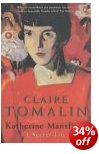
Katherine Mansfield has the rare distinction of being regarded as a major writer, even though she only ever published short stories. In fact her entire oeuvre is available in just one volume. There are two other biographies by Jeffrey Myers and Anthony Alpers, but Claire Tomalin’s is a fairly straightforward and very readable account of her life. She portrays her talent sympathetically, but does not disguise her weaknesses and her occasional unkindnesses, though she does seem either squeamish or even purblind where sexual matters are concerned. However, she is very well informed and spares us none of the medical details of gonnorhoea and tuberculosis which helped to bring KM’s life to a premature end.

Katherine Mansfield biographyMansfield’s talent blossomed as soon as she was sent from her privileged but stiflingly conformist upbringing in New Zealand to be educated at Queen’s College in Harley Street. These important years – from fourteen to seventeen – confirmed her taste for artistic matters, and it was on return from there to New Zealand that she had her first success as a writer.

But in 1908 she was back in London, ready to throw herself into full scale Bohemianism. She quickly became pregnant, then tricked another man into marrying her without telling him about her condition, and left him the same night. Within the next few months she suffered a miscarriage and acquired a new Polish lover, from whom she contracted gonnorhoea.

She recovered in the company of her life-long partner Ida Baker, whom she regarded as her ‘wife’, then since she was short of money she tricked her way back into free lodging with her lawful husband and began publishing with A. R. Orage’s New Age, which was later to become the New Statesman.

More literary success followed. She published her first collection of sketches In a German Pension, then was introduced to John Middleton Murry, who became her lover then her second husband.

In structure, the book is almost one chapter per year from 1907 onwards of Mansfield’s tragically short life. Tomalin does not disguise the fact that she thinks much of the earlier work is self-indulgent, sentimental, and quite weak – which it is. But there would be greatness to come.

Lots more of La vie Boheme follows: constantly on the move; short of money; living promiscuously in every sense; and writing for small literary magazines which either don’t pay or go out of business.

She leaves Murry and travels to northern France in the middle of the First World War for an assignation with fellow artist Francis Carco, then goes back to Murray, and by 1916 is in deep with The Bloomsbury Group, even moving into a house in Gower Street with painters Dorothy Brett and Dora Carrington.

When the first signs of the tuberculosis which was to kill her appeared, she went to live in Bandol with her ‘wife’ Ida, then when her health temporarily improved, she returned home to London and married Murray, with D.H. Lawrence and his wife Frieda as witnesses.

She had a spasmodic but very close relationship as fellow authors with Virginia Woolf. Both of them were working on the development of the short story and the possibilities of a more elliptic prose style at the same time. Both regarded each other’s work highly, even though they knew that they were ‘rivals’.

Tomalin gives a very clear-headed critique of the patchiness of KM’s writing, as well as a persuasive account of the biographical basis for much of its content – but she does not say much about what made her writing and the development of the post-Checkhov short story so original.

KM’s last years were a restless search for a cure for her illnesses, combined with an outpouring of her greatest works. She zigzags back and forth across northern Europe, finally dying outside Paris in 1923. She was just thirty-five years old.

© Roy Johnson 2004

artie shaw Buy the book at Amazon UK

artie shaw Buy the book at Amazon US


Claire Tomalin, Katherine Mansfield: A Secret Life, London: Penguin, new edition 2003, pp.304, ISBN 0140117156


More on Katherine Mansfield
Twentieth century literature
More on the Bloomsbury Group
More on short stories


Filed Under: Biography, Bloomsbury Group, Katherine Mansfield Tagged With: Biography, Bloomsbury Group, Katherine Mansfield, Literary studies, Short story, Virginia Woolf

Key terms in essay questions

August 23, 2009 by Roy Johnson

sample from HTML program and PDF book

1. Key terms are those parts of a question which either state or reveal its subject.

2. Key terms should be distinguished from instruction terms, which tell you how to approach the question, and how to deal with the subject.

Question
‘Discuss the significance of railways in the Industrial Revolution’

3. Both the terms ‘railways’ and ‘Industrial Revolution’ are key terms here. These are the subject of the question. You are being asked to concentrate on one topic (‘railways’) in relation to a specified historical period (‘the Industrial Revolution’).

4. The term ‘discuss’ on the other hand is an instruction term. This tells you how to approach the question.

5. Don’t expect key terms to jump off the page at you – or to be
unproblematic. Sometimes you will need to think carefully about the possible implications of the subject. They might also be expressed in very ordinary language.

Question
‘To what extent was Clement Atlee a successful politician?’

6. It is the term ‘To what extent’ which acts as an instruction: you are free to construct your own response. The key term is ‘successful politician’, which isn’t as obvious as it might first appear. Does ‘successful’ mean winning general elections, or being the author of policies which are adopted? You would need to give careful thought to these issues.

6. In order to make these distinctions (particularly when they are not obvious) you should be prepared to analyse questions very carefully.

© Roy Johnson 2003

Buy Writing Essays — eBook in PDF format
Buy Writing Essays 3.0 — eBook in HTML format


More on writing essays
More on How-To
More on writing skills


Filed Under: Writing Essays Tagged With: Academic writing, Essays, Key terms, Reports, Study skills, Term papers, Writing skills

  • « Previous Page
  • 1
  • …
  • 48
  • 49
  • 50
  • 51
  • 52
  • …
  • 103
  • Next Page »

Get in touch

info@mantex.co.uk

Content © Mantex 2016
  • About Us
  • Advertising
  • Clients
  • Contact
  • FAQ
  • Links
  • Services
  • Reviews
  • Sitemap
  • T & C’s
  • Testimonials
  • Privacy

Copyright © 2026 · Mantex

Copyright © 2026 · News Pro Theme on Genesis Framework · WordPress · Log in