Mantex

Tutorials, Study Guides & More

  • HOME
  • REVIEWS
  • TUTORIALS
  • HOW-TO
  • CONTACT
>> Home / Archives for 2009

Archives for 2009

The Awakening and Other Stories

August 9, 2009 by Roy Johnson

short stories from a ‘new woman’ of the 1890s

Kate Chopin was an American writer who is now best known for her novel The Awakening (1899) which was ‘re-discovered’ in the 1960s. But in fact she was a professional and quite successful author in her own lifetime who earned part of her living by placing her short stories with magazines. Her stories embrace the modern tradition, created in the late nineteenth century, of describing situations or dramatic episodes, then leaving them to speak for themselves.
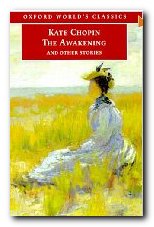
The Awakening and Other Stories Without doubt she was what many people would call ‘ahead of her time’. It is no surprise that with the reassertion of women’s rightful place in cultural history which occurred in the 1960s, she was seen as an unjustly neglected figure. And reading her stories today, it’s amazing how fresh and modern they seem, My guess is that she will now retain her place in the literary canon.

She comes from the aristocratic landowning south of the United States with the Gulf of Mexico and the Caribbean as its neighbours, and this cultural miscegenation is reflected in her writing – both in the linguistically rich mixture of English, French, and Spanish vocabulary and in the mores of her characters.

She tackles many of the subjects favoured by ‘new women’ of the period – the critique of patriarchy, the yearning for self-expression amongst females, the social perspective on daily life which sees the personal as political.

Her default manner is a mild Jane Austen-like irony which reveals the vanities and foolishness of everyday life. In tone and literary style, she is very much a precursor to Jean Rhys – another female Caribbean writer who explored similar themes.

The major text in this collection is her short novel or novella – The Awakening. It’s this work by which she is now best known, but in fact this should not detract from her accomplishments as a writer of short stories.

The Awakening is a slow, beautifully paced work set in New Orleans at the end of the nineteenth century. Edna Pontellier is a married woman on summer holiday on the Gulf in the process of waking up to a new sense of responsiveness to the world. She does this via ecstatic responses to social mood, to romantic music, and to swimming at night.

A feeling of exultation overtook her, as if some power of significant import had been given her to control the working of her body and hr soul. She grew daring and reckless, overestimating her strength. She wanted to swim far out, where no woman had swum before.

The narrative is composed of short scenes, pregnant with significance, which follow each other like the acts of a play. She captures perfectly the elegant cadences of the aristocratic landowning south of which she was part.

When the holiday is over she progressively distances herself from her husband and even her children. She is also surprised to discover that she misses a young would-be lover when he leaves abruptly to seek his fortune in Mexico. Nevertheless, when her husband goes away on business she begins a flirtation with another man.

With husband conveniently out of the way, when the first lover returns unexpectedly, she declares herself to him, but almost immediately realises that one man succeeding another in her life is not the answer to the process of self-realisation which her summer experiences have brought about.

This has quite rightly become a central text for anyone even mildly sympathetic to the feminist movement – the story of a conventionally successful woman who chooses to reject the central values of her society in favour of pursuing a goal of self-realisation. Ultimately, she opts to pay the ultimate price for doing so – but the consummate skill with which her narrative is articulated makes it a milestone of the twentieth century, on whose eve it was published.

© Roy Johnson 2009

The Awakening   Buy the book at Amazon UK

The Awakening   Buy the book at Amazon US


Kate Chopin, The Awakening and Other Stories, Oxford: Oxford University Press, 2000, pp.410, ISBN: 0192823000


More on literature
More on the novella
More on literary studies
More on short stories

Filed Under: Short Stories, The Novella, The Short Story Tagged With: Kate Chopin, Literary studies, Short story, The modern short story

The Basics of Essay Writing

July 23, 2009 by Roy Johnson

how to develop and improve your essay-writing skills

The main thing to say here about The Basics of Essay Writing is that it’s very short. Nigel Warburton has compressed the essential points of essay-writing skills into an amazingly small space. He’s done this by using a technique which could be recommended to people writing in any literary form. It’s called ‘cutting out the dross’. His ideas and recommendations come thick and fast, and he doesn’t dwell on anything for very long. The result is a highly concentrated series of tips, advice, and guidance on all aspects of academic writing.

The Basics of Essay Writing He begins by pointing out the importance of writing skills – how everyone can improve with just a few simple steps, and how writing is a form of thinking. It really is true that often you don’t really understand something properly until you have written it down. He deals with getting started, and how to encourage your own fluency; how to understand the instruction terms in an essay question; and how you must keep in mind the most important thing of all – answering the original question.

Research skills are condensed into the very sound advice that you need to be disciplined. You should not ‘get lost’ in reading everything, and your reading should be accompanied by active note-taking as a preparation for producing your essay plan.

The central part of the book deals with the all-important issue of structure: how to create order, marshal your arguments, and write good introductions and conclusions. In my experience this is the part students find hardest, and if you follow his suggestions it should be more manageable.

There’s a good section on plagiarism and referencing where he shows some practical examples of the various degrees of plagiarism which are possible, even when the original source is acknowledged.

Cultivating an appropriate style is dealt with via tips on tone, vocabulary, spelling, and punctuation. There’s a section on dealing with exams, and he ends with general advice for improving your writing. He shows a rogue’s gallery of common mistakes – of which he has obviously seen many.

Nigel Warburton is the principal author of a very successful Open University course on essay-writing skills. In fact (without knowing him in the slightest) I have been tutoring it for the last few years, and I have been repeatedly struck by the thoroughness of its approach. All the students who follow the course recommendations pass with flying colours.

© Roy Johnson 2007

Essay Writing   Buy the book at Amazon UK

Essay Writing   Buy the book at Amazon US


Nigel Warburton, The Basics of Essay Writing, London: Routledge, 2007, pp.128, ISBN: 0415434041


More on writing skills
More on creative writing
More on grammar


Filed Under: Study skills, Writing Skills Tagged With: Academic writing, Essay writing, Term papers, The Basics of Essay Writing, Writing skills

The Bedside Companion to Virginia Woolf

June 26, 2009 by Roy Johnson

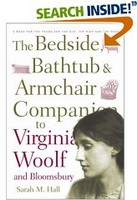
This is a really curious book, both in appearance and content. The text is presented in double columns like a Victorian newspaper, and its subject is just about everything you could think of regarding Virginia Woolf and Bloomsbury – but offered in quick snatches and potted summaries. It’s not a continuous narrative but a series of overlapping sketches and thematic surveys.

The Bedside Companion to Virginia Woolf The chapters switch from biography to social history, then on to Woolf’s major fictional writing, and back again to the geography of Bloomsbury, the houses they all lived in, and their relationships with feminism, the two world wars, and even animals. This renders the treatment rather superficial, but I imagine it will make the book more interesting to the people it is aimed at – because new characters, incidents, and themes are coming up on almost every page.

Sandwiched amongst the main text there are panels featuring such topics as the other artistic movements of the period, the geography of Bloomsbury and Fitzrovia, synopses of Woolf’s major novels, and issues such as pacifism and even films based on Bloomsbury. There are biographical sketches of most of the principal characters, from Virginia Woolf’s family and outwards, covering minor figures such as Saxon Sydney-Turner and Dora Carrington. Each of these sections has suggestions for further reading which are commendably up to date.

It’s also worth saying that the book is generously illustrated with some refreshingly original photographs – but also with some amateurish sketches which would have been better left out.

Sarah Hall is very good at keeping track of the many complex relationships which were established in Bloomsbury and its outer reaches. Speaking of the artist Duncan Grant she notes:

Through a friendship with the art critic Bernard Berenson’s step-daughters, Ray and Karin Costelloe (Ray became Bunny Garnet’s first wife, Karin married Adrian Stephen), he stayed at the Berenson’s villa in Florence, I Tatti, and learned at first hand the politics of art dealing.

She takes a sympathetic view of Bloomsbury – sometimes to the point of almost naive enthusiasm. She thinks that Virginia and Leonard Woolf were ‘faithful’ to each other during their marriage, and that Bloomsbury’s homosexual men were ‘not promiscuous’ – which would have been news to most of them.

If a good test of critical writing is that it makes a reader wish to re-visit the work, then one of the most successful chapters is on Virginia Woolf’s short stories which offers a sympathetic and insightful account of those profoundly experimental studies. Other highlights include chapters on the Hogarth Press, Lytton Strachey, and the Memoir Club.

It would not matter which aspect of Virginia Woolf or Bloomsbury you wished to pursue – be it Woolf’s feminism or mental illness, the lives of her relatives, the writing and art works of her friends, or even the popular walking tours which retrace her steps through London and the Home Counties – this would be an excellent point of departure.

© Roy Johnson 2007

Buy the book at Amazon UK

Buy the book at Amazon US


Sarah M. Hall, The Beside, Bathroom, and Armchair Companion to Virginia Woolf and Bloomsbury, London: Continuum, 2007, pp.206, ISBN 0826486754


More on Virginia Woolf
Virginia Woolf – web links
Virginia Woolf – greatest works
Virginia Woolf – criticism
More on the Bloomsbury Group


Filed Under: Bloomsbury Group, Virginia Woolf Tagged With: Biography, Bloomsbury Group, Cultural history, Literary studies, Virginia Woolf

The Bloomsbury Group – 1886-1919

August 6, 2009 by Roy Johnson

art, literature, philosophy, design, modernism

1832. Leslie Stephen born in Kensington Gore, London into a family of evangelical Christian reformers. Educated at Eton College.

1851. Enters Trinity Hall, Cambridge and is elected to the Apostles (a quasi-secret elite debating group). Graduates in 1854, and in 1857 becomes a fellow and tutor at Trinity.

1865. Renounces his religious beliefs, even though he was a clergyman.

1866. Roger Fry born in Highgate, London. George Eliot, Felix Holt the Radical. Lewis Carroll, Alice’s Adventures in Wonderland.

1869. Leslie Stephen marries Harriet Thackeray, the daughter of William Makepeace Thackeray, who died in 1875. He subsequently married Julia Prinsep Jackson, the widow of the publisher Herbert Duckworth.

1872. Birth of Bertrand Russell.

1873. Birth of Ottoline Violet Anne Cavendish Bentinck (later Ottoline Morrell).

1875 Leslie Stephen marries Julia Prinsep Jackson and settles at Hyde Park Gate in Kensington, London.

1877. Desmond MacCarthy born. Victoria declared Empress of India. Henry James, The American;

1879. E.M. Forster born in London. Vanessa Stephen (later Vanessa Bell) born at Hyde Park Gate. George Meredith, The Egoist. Henry James, Daisy Miller

1880. Lytton Strachey born at Clapham Common and raised at Lancaster Gate. Thoby Stephen born. Saxon Sydney-Turner born. Leonard Woolf born. First Anglo-Boer war in South Africa.

1881. Clive Bell born. Henry James, Washington Square and The Portrait of a Lady.

1882. Virginia Stephen (later Virginia Woolf) born at Hyde Park Gate.

1883. John Maynard Keynes born in Cambridge. Adrian Stephen born.


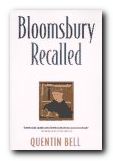
Bloomsbury RecalledBloomsbury Recalled is written by Quentin Bell, one of the last surviving members of the Bloomsbury circle. He offers a disarmingly candid portraits of his father, Clive Bell, who married the author’s mother, Vanessa Stephen (Virginia Woolf’s sister). He pursued love affairs while Vanessa, after a clandestine affair with art critic Roger Fry, lived openly with bisexual painter Duncan Grant, with whom she had a daughter, Angelica. Clive, Duncan and Vanessa were reunited under one roof in 1939, and the author conveys a sense of the emotional strain of growing up in ‘a multi-parent family.’ Acclaimed biographer of his aunt, Virginia Woolf, Bell here defends her as a feminist and pacifist. Along with chapters on John Maynard Keynes, Ottoline Morrell and art historian-spy Anthony Blunt, there are glimpses of Lytton Strachey, novelist David Garnett (Angelica’s husband) and Dame Ethel Smyth, the pipe-smoking lesbian composer, who fell in love with Virginia Woolf.
Bloomsbury Group Buy the book from Amazon UK
Bloomsbury Group Buy the book from Amazon US


1885. Duncan Grant born in Inverness, Scotland. Roger Fry enters King’s College Cambridge. Death of General Gordon at Khartoum.

1888. Roger Fry obtains a first class honours in natural sciences, but decides to study painting. Rudyard Kipling, Plain Tales from the Hills. Henry James, The Aspern Papers.

1892. Birth of David Garnett (son of translators Edward and Constant Garnett). Roger Fry studies painting in Paris. First edition of Vogue appears in New York. Birth of Vita Sackville-West. Thomas Hardy, The Well Beloved.

1893. Roger Fry’s first writings on art. Independent Labour Party founded. Birth of Dora Carrington in Hereford.

1894. Roger Fry gives university extension lectures at Cambridge on Italian art. Desmond MacCarthy enters Trinity College Cambridge.

1895. Death of Mrs Leslie Stephen. Virginia Stephen’s first mental breakdown. Oscar Wilde, The Importance of Being Earnest.

1896. Roger Fry marries Helen Coombe. Thomas Hardy, Jude the Obscure.

1897. E.M. Forster enters King’s College Cambridge. Desmond MacCarthy leaves Trinity College. Virginia Stephen attends Greek and history classes at King’s College London. Queen Victoria’s Diamond Jubilee. Henry James, The Spoils of Poynton and What Masie Knew.

1899. Roger Fry Giovanni Bellini. Clive Bell, Thoby Stephen, Lytton Strachey, Saxon Sydney-Turner, and Leonard Woolf all enter Trinity College Cambridge, and establish The Midnight Society – a reading group. Henry James, The Awkward Age.

1900. Roger Fry gives university extension classes on art at Cambridge. Freud’s Interpretation of Dreams, Einstein’s General Theory of Relativity, Joseph Conrad, Lord Jim

1901. Vanessa Stephen enters the Royal Academy Schools. Roger Fry becomes art critic of The Atheneum. E.M. Forster leaves Cambridge, travels in Greece and Italy, and begins writing A Room with a View. Death of Queen Victoria. Edwardian period begins.

1902. Duncan Grant attends Westminster Art School. Leonard Woolf, Saxon Sydney-Turner, and Lytton Strachey elected to ‘The Apostles’ – a semi-secret discussion group. All come under the influence of philosopher G.E. Moore. Clive Bell does historical research in London. Adrian Stephen enters Trinity College, Cambridge. John Maynard Keynes enters King’s College, Cambridge. Virginia Stephen starts private Greek lessons. Marriage of Philip and Ottoline Morrell. Henry James, The Wings of the Dove. Joseph Conrad, Heart of Darkness

1903. G.E. Moore, Principia Ethica. Roger Fry’s first exhibition of paintings and drawings. Desmond MacCarthy writes criticism for The Speaker. John Maynard Keynes elected to The Apostles. E.M. Forster’s first short stories published in the Independent Review. Henry James, The Ambassadors


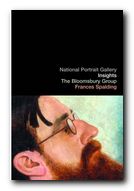
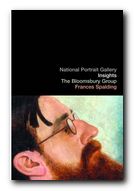
The Bloomsbury GroupThe Bloomsbury Group is a short but charming book, published by the National Portrait Gallery. It explores the impact of Bloomsbury personalities on each other, plus how they shaped the development of British modernism. But most of all it’s a delightful collection of portrait paintings and photographs, with biographical notes. It has an introductory essay which outlines the development of Bloomsbury, followed by a series of portraits and the biographical sketches of the major figures.

Bloomsbury Group Buy the book from Amazon UK
Bloomsbury Group Buy the book from Amazon US


1904. Death of Sir Leslie Stephen. Virginia, Vanessa, and bothers move to Gordon Square, Bloomsbury. Clive Bell lives in Paris, doing more research. Lytton Strachey works on a fellowship dissertation on Warren Hastings (unsuccessful). Leonard Woolf leaves Cambridge and joins the civil service as an administrator in Ceylon. Saxon Sydney-Turner leaves Cambridge and becomes a clerk in the Estate Duty Office. Virginia Stephen’s first review published in The Guardian and she has her second mental breakdown. Bertrand Russell goes to teach at Harvard, where T.S. Eliot is one of his students. Henry James, The Golden Bowl.

1905. Publication of Euphrosyne: A Collection of Verse with anonymous contributions by Clive Bell, Saxon Sydney-Turner, Leonard Woolf, and Lytton Strachey. E.M. Forster, Where Angels Fear to Tread. Virginia Stephen teaching at Morley College London, an evening institute for working men and women. Thoby Stephens begins the Thursday evenings at Gordon Square for his friends. Vanessa organises The Friday Club, a discussion group for the arts. Oscar Wilde has theatrical success, but is put on trial and imprisoned.

1906. Roger Fry accepts curatorship of the Department of Painting, Metropolitan Museum of New York. Duncan Grant studies art in Paris. John Maynard Keynes joins the India Office. Thoby Stephen contracts typhoid fever whilst on holiday in Turkey and dies on return to England. Election of Philip Morrell as Liberal MP for Burnley, Lancashire. Labour Party formed.

1907. E.M.Forster, The Longest Journey. Vanessa Stephen marries Clive Bell. Virginia and Adrian Stephen move to 29 Fitzroy Square, where Thursday evenings begin again. Virginia working on her first novel. Desmond MacCarthy edits The New Quarterly. Lytton Strachey begins writing reviews for The Spectator. Play-reading Society started at 46 Gordon Square with the Bells, Adrian and Virginia Stephen, Lytton Strachey, and Saxon Sydney-Turner. Meets intermittently until 1914.

1908. E.M.Forster, A Room with a View. Julian Bell born. John Maynard Keynes leaves the civil service and becomes the lover of Duncan Grant.

1909. Roger Fry, ‘An Essay on Aesthetics’. He becomes editor of The Burlington Magazine. Lytton Strachey proposes to Virginia Stephen. Duncan Grant moves in to 21 Fitzroy Square. John Maynard Keynes elected to a fellowship at King’s College, Cambridge. Saxon Sydney-Turner and Virginia and Adrian Stephen go to the Wagner Festival in Bayreuth. Lady Ottoline Morrell visits the Thursday evening group at Fitzroy Square.


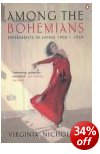
Among the BohemiansAmong the Bohemians: Experiments in Living 1900—1930 was written by Virginia Nicholson, Quentin Bell’s daughter and grand-daughter of Vanessa Bell, who was Virginia Woolf’s sister. Bloomsbury lies at the heart of the book in its portraits of Ralph Partridge, Virginia Woolf, Duncan Grant, Lytton Strachey, Dora Carrington, and Katherine Mansfield, plus peripheral figures such as Arthur Ransome, Rupert Brooke, Augustus John, Nina Hamnett, and Dylan and Caitlin Thomas. Very amusing, well written, and every page dense with top class gossip and anecdotes. She looks at their tangled love lives naturally, but also their radical ideas on money (and poverty) food, dress, and even child-raising. Highly recommended.
Bloomsbury Group Buy the book from Amazon UK
Bloomsbury Group Buy the book from Amazon US


1910. E.M.Forster’s Howards End is his first major success. The Dreadnought hoax takes place. Roger Fry meets Duncan Grant and the Bells, talks to the Friday Club, and is dismissed from the Metropolitan Museum by J.P. Morgan. Fry’s wife Helen confined to mental institution as incurably insane (where she dies in 1937). Virginia Stephen does voluntary work for women’s suffrage and spends time in a nursing home in Twickenham. Lytton Strachey meets Ottoline Morrell. First Post-Impressionist Exhibition at the Grafton Galleries organised by Roger Fry. Carrington wins scholarship to study at the Slade.

1911. E.M. Forster, The Celestial Omnibus and Other Stories. Virginia Stephen leases a house at Firle, Sussex. Roger Fry starts lecturing at the Slade School. The Bells and the Frys travel together in Turkey. Vanessa Bell starts an affair with Roger Fry. Leonard Woolf returns from Ceylon. John Maynard Keynes becomes a lecturer in economics at Cambridge. Virginia and Adrian Stephen move to Brunswick Square, where they share their house with Leonard Woolf, John Maynard Keynes, and Duncan Grant.

1912. Lytton Strachey, Landmarks in French Literature. E.M. Forster travels in India. John Maynard Keynes becomes editor of The Economic Journal. Leonard Woolf resigns from the colonial service and marries Virginia Woolf: they live in Clifford’s Inn, London and Asham House, Sussex. Second Post-Impressionist exhibition organised by Roger Fry. Sinking of the Titanic.

1913. Leonard Woolf, The Village and the Jungle (novel). Saxon Sydney-Turner joins the Treasury. John Maynard Keynes, Indian Currency and Finance. E.M. Forster returns from India and starts writing A Passage to India and Maurice. Leonard Woolf begins reviewing for the newly established The New Statesman and studies the Co-Operative movement. Omega Workshop founded by Roger Fry and Duncan Grant. Virginia Woolf has another nervous breakdown and attempts suicide. Vanessa Bell starts an affair with Duncan Grant. Vita Sackville-West marries Harold Nicolson. First crossword puzzle published. D.H. Lawrence, Sons and Lovers.

1914. Clive Bell, Art. Leonard Woolf, The Wise Virgins (novel). John Maynard Keynes joins the Treasury. Virginia and Leonard Woolf move to Richmond from Clifford’s Inn. Outbreak of first world war. James Joyce, Dubliners; Marcel Proust begins to publish Remembrance of Things Past.

1915. Clive Bell’s Peace at Once manifesto is ordered to be destroyed by Lord Mayor of London. E.M. Forster working in Alexandria with the Red Cross. Leonard and Virginia Woolf move into Hogarth House, Richmond. Virginia Woolf publishes her first novel, The Voyage Out. T.S. Eliot, ‘The Love Song of J. Alfred Prufrock’. Carrington meets Lytton Strachey at Ottoline Morrell’s estate at Garsington Manor, Oxford.


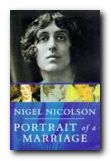
Portrait of a MarriagePortrait of a Marriage is a double biography of novelist Vita Sackville-West and her diplomat husband Harold Nicolson, written by their son Nigel. It is based on an autobiographical manuscript found after Vita’s death and describes the apparent success of the marriage, despite the fact that they both had homosexual relationships with other people. It also captures some of the flavour of these complex personal relationships within the Bloomsbury Group which made it famous – and notorious.
Bloomsbury Group Buy the book from Amazon UK
Bloomsbury Group Buy the book from Amazon US


1916. Lytton Strachey’s application for conscientious objection to serving in the war is denied, but he is granted exemption for medical reasons. Leonard Woolf, International Government: Two Reports: he is exempted from conscription for medical reasons. Clive Bell does ‘alternative labour’ working on Morrell’s farm at Garsington. John Maynard Keynes and friends takes over 46 Gordon Square, which then remains Keynes’ London Home. Vanessa Bell, Duncan Grant, and David Garnett (Duncan Grant’s lover) move to Charleston in Sussex so that Grant and Garnett can do alternative service on a farm. Bell and Grant then live there permanently. Virginia Woolf lectures to Richmond branch of the Women’s Co-Operative Guild, and does reviews for the Times Literary Supplement (which at that time were anonymous). Bertrand Russell dismissed from Trinity College Cambridge for anti-war activities. James Joyce, Portrait of the Artist as a Young Man.

1917. Leonard and Virginia Woolf buy a printing press as a therapeutic hobby for Virginia, and print Two Stories as the first publication of the Hogarth Press. Leonard edits The Framework for a Lasting Peace and becomes secretary to the Labour Party advisory committee on imperial and international questions. Virginia begins keeping a regular diary. Lytton Strachey and Carrington set up home together at Mill House, Tidmarsh, Berkshire. T.S. Eliot, Prufrock and Other Observations.

1918. Lytton Strachey, Eminent Victorians. Leonard Woolf becomes editor of The International Review and, Co-operation and the Future of Industry. Katherine Mansfield’s The Prelude published by the Hogarth Press. At the suggestion of Roger Fry and Duncan Grant, John Maynard Keynes persuades the Treasury to purchase works of art from the Degas sale in Paris. Angelica Bell born: (her father is actually Duncan Grant).

1919. The Hogarth Press publishes Virginia Woolf’s Kew Gardens and T.S. Eliot’s Poems, but do not publish James Joyce’s Ulysses, which had been offered to them. Virginia Woolf’s second novel Night and Day appears, and she starts brief friendship with Katherine Mansfield. John Maynard Keynes is the principal representative of the Treasury at the Versailles Peace Treaty, from which he resigns in protest at the war reparations imposed on Germany. He writes The Economic Consequences of the Peace. The Bells, the Woolfs, Keynes, Fry, and Grant meet Diaghilev’s Ballet Russes troupe in London, including Picasso, Derain, Stravinsky, Massine, Nijinski, and Lydia Lopokova. Woolfs move to Monk’s House, Rodmell, Sussex. Carrington marries Ralph Partridge (Lytton Strachey’s lover). Vita Sackville-West ‘elopes’ to Paris with Violet Trefusis.

redbtn The Bloomsbury Group 1920-1987 – Part Two of this timeline

© Roy Johnson 2003


More on biography
More on the Bloomsbury Group
Twentieth century literature


Filed Under: Bloomsbury Group Tagged With: Bloomsbury Group, Cultural history, Reference

The Bloomsbury Group – 1920-1987

August 9, 2009 by Roy Johnson

1920. Roger Fry, Vision and Design (a series of essays). Leonard Woolf writes leaders for The Nation. Omega workshop closes. First meeting of the Bloomsbury group Memoir Club. Desmond MacCarthy becomes literary editor of The New Statesman. E.M. Forster becomes literary editor of the London Daily Herald. Duncan Grant has his first one-man show in London. Carrington, Partridge, and Strachey visit Gerald Brenan in Spain.

1921. Virginia Woolf publishes her collection of experimental short stories, Monday or Tuesday, then falls ill and inactive for four months. Lytton Strachey, Queen Victoria. Dora Carrington marries Ralph Partridge, but continues to live with Lytton Strachey (who is in love with Ralph Partridge). E.M. Forster works in India as temporary secretary to Maharajah of Dewas. Leonard Woolf, Stories from the East and Socialism and Co-operation. John Maynard Keynes, A Treatise on Probability.

1922. Virginia Woolf publishes her first modernist novel, Jacob’s Room and starts her love affair with Vita Sackville West. Leonard Woolf is defeated as Labour candidate for the Combined University constituency. John Maynard Keynes, A Revision of the Treaty. Vanessa Bell and Duncan Grant decorate Keynes’s rooms at King’s College, Cambridge. Lytton Strachey, Books and Characters: French and English. E.M. Forster, Alexandria: A History and a Guide. T.S. Eliot founder and editor of The Criterion. David Garnett, Lady into Fox. James Joyce’s, Ulysses published in Paris. Katherine Mansfield, The Garden Party.

1923. The Hogarth Press publishes T.S. Eliot’s, The Waste Land. John Maynard Keynes, A Tract on Monetary Reform: he becomes chairman of the board of The Nation and Atheneum, whilst Leonard Woolf becomes its literary editor. E.M. Forster, Pharos and Pharillon. Leonard and Virginia Woolf visit Gerald Brenan in Spain. Carrington begins an affair with Henrietta Bingham (one of Strachey’s former lovers).

1924. E.M. Forster’s A Passage to India widely acclaimed: (the composition of the novel was interrupted by the first world war – as was Thomas Mann’s The Magic Mountain). Virginia Woolf’s manifesto on modern literature, ‘Mr Bennett and Mrs Brown’. The Hogarth Press publishes Freud’s Collected Papers and begins the Psycho-Analytic Library. Lytton Strachey, Carrington, and Ralph Partridge move to Ham Spray House, Berkshire. The Woolfs (and the Hogarth Press) move to 52 Tavistock Square in Bloomsbury. First UK Labour government formed under Ramsey MacDonald (lasts nine months).


The Bloomsbury Group The Bloomsbury Group is a short but charming book, published by the National Portrait Gallery. It explores the impact of Bloomsbury personalities on each other, plus how they shaped the development of British modernism. But most of all it’s a delightful collection of portrait paintings and photographs, with biographical notes. It has an introductory essay which outlines the development of Bloomsbury, followed by a series of portraits and the biographical sketches of the major figures.
Bloomsbury Group Buy the book from Amazon UK
Bloomsbury Group Buy the book from Amazon US


1925. Virginia Woolf publishes both The Common Reader and Mrs Dalloway, then is ill for three months. Leonard Woolf, Fear and Politics: A Debate at the Zoo. Lytton Strachey’s play The Son of Heaven is performed, and he lectures on Pope at Cambridge. John Maynard Keynes marries Lydia Lopokova, and takes a lease on a house at Tilton, near Charleston, which remains his country home.

1926. UK General Strike. Adrian Stephen and his wife Karin obtain bachelor of medicine degrees to become psycho-analysts. Vanessa Bell and Duncan Grant decorate the house of Mr and Mrs St John Hutchinson. Roger Fry, Transformations. Ralph Partridge leaves Dora Carrington for Frances Marshall. Carrington begins an affair with Julia Strachey (Lytton Strachey’s sister). Vita Sackville-West wins Hawthornden Prize for her poem The Land.

1927. Virginia Woolf, To the Lighthouse. Clive Bell, Landmarks in Nineteenth Century Painting. Leonard Woolf, Essays on Literature, History, and Politics. E.M. Forster gives the Clark lectures at Cambridge, which are published as Aspect of the Novel. He also becomes a fellow of King’s College. Julian Bell enters King’s College as an undergraduate. Roger Fry becomes an honorary fellow of King’s College. His study Cezanne is published.

1928. Virginia Woolf, Orlando, a biographical ‘love note’ to Vita Sackville-West. Lytton Strachey, Elizabeth and Essex: A Tragic History. Desmond MacCarthy succeeds Edmund Gosse as senior literary critic of the Sunday Times. E.M. Forster, The Eternal Moment and Other Stories. Clive Bell, Civilization. Leonard Woolf, Imperialism and Civilization. Death of Thomas Hardy. First Oxford English Dictionary published. Carrington starts an affair with Bernard Penrose.

1929. Virginia Woolf, A Room of One’s Own, which was first delivered as a series of lectures at Cambridge. Roger Fry lectures at the Royal Academy. Collapse of New York Stock Exchange. Start of world economic depression. Second UK Labour government under Ramsay MacDonald.

1930. Leonard Woolf helps to found The Political Quarterly and becomes its first editor. Roger Fry, Henri Matisse. John Maynard Keynes, A Treatise on Money. Vanessa Bell has an exhibition of her paintings in London. Pipe-smoking lesbian feminist composer Ethyl Smyth falls in love with Virginia Woolf. Mass unemployment in UK. Death of D.H. Lawrence.


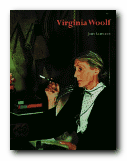
Virginia Woolf: A BiographyVirginia Woolf is a readable and well illustrated biography by John Lehmann, who at one point worked as her assistant at the Hogarth Press. It is described by the blurb as ‘A critical biography of Virginia Woolf containing illustrations that are a record of the Bloomsbury Group and the literary and artistic world that surrounded a writer who is immensely popular today’. An attractive and very accessible introduction to the writer and her intellectual milieu.

Bloomsbury Group Buy the book from Amazon UK
Bloomsbury Group Buy the book from Amazon US


1931. Virginia Woolf, The Waves. Leonard Woolf, After the Deluge. Lytton Strachey, Portraits in Miniature. John Maynard Keynes, Essays in Persuasion. John Lehmann joins the Hogarth Press for the first time. Resignation of UK Labour government, followed by formation of national coalition government.

1932. Virginia Woolf, The Common Reader. Death of Lytton Strachey from stomach cancer, followed by suicide of Dora Carrington. Exhibition of paintings by Vanessa Bell and Duncan Grant in London. New Signatures published by the Hogarth Press. Roger Fry, Characteristics of French Art and The Arts of Painting and Sculpture. Hunger marches start in UK.

1933. Virginia Woolf, Flush, a biography of Elizabeth Barrett Browning’s pet dog. Roger Fry appointed Slade professor of art at Cambridge and, Art History as an Academic Study. Clive Bell becomes art critic of The New Statesman and Nation. John Maynard Keynes, Essays in Biography.

1934. Clive Bell, Enjoying Pictures. E.M. Forster, Goldsworthy Lowes Dickinson. Death of Roger Fry, and publication of his Reflections on British Painting. Exhibition of Vanessa Bell’s paintings. Virginia Woolf publishes Walter Sickert: A Conversation.

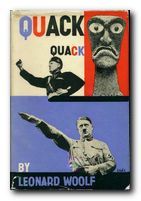
1935. Private performance of Virginia Woolf’s unpublished play, ‘Freshwater: A Comedy in Three Acts’. John Maynard Keynes helps to establish the Arts Theatre in Cambridge. Leonard Woolf, Quack, Quack!.

1936. John Maynard Keynes, The General Theory of Employment, Interest and Money. E.M.Forster, Abinger Harvest, a collection of essays on literature and society. Virginia Woolf ill for two months. Death of George V in UK, followed by Edward VIII, who is forced to abdicate. Stalinist show trials in USSR. Julian Bell goes to participate in Spanish Civil War.

1937. Virginia Woolf, The Years. Vanessa Bell and Duncan Grant both have exhibitions of their paintings. John Maynard Keynes seriously ill. Julian Bell killed in Spain.


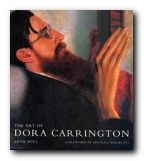
The Art of Dora CarringtonThe Art of Dora Carrington At the age of 38, Dora Carrington (1893-1932) committed suicide, unable to contemplate living without her companion, Lytton Strachey, who had died a few weeks before. The association with Lytton and his Bloomsbury friends, combined with her own modesty have tended to overshadow Carrington’s contribution to modern British painting. She hardly exhibited at all during her own lifetime. This book aims to redress the balance by looking at the immense range of her work: portraits, landscapes, glass paintings, letter illustrations and decorative work.

Bloomsbury Group Buy the book from Amazon UK
Bloomsbury Group Buy the book from Amazon US


1938. Virginia Woolf, Three Guineas, her ‘sequel’ to A Room of One’s Own. John Lehmann joins the Hogarth Press for the second time as its general manager, buying out Virginia Woolf’s financial interest. Leonard Woolf appointed as member of the Civil Service Arbitration Tribunal, on which he sits for seventeen years. Germans occupy Austria. Chamberlain meets Hitler to make infamous Munich ‘agreement’ to prevent war.

1939. Leonard Woolf, After the Deluge, vol.II, The Barbarians at the Gate, and a play, The Hotel. The Woolfs and the Hogarth Press move to 37 Mecklenburgh Square. Fascists win Civil War in Spain. Stalin makes pact with Hitler. Germany invades Poland. Britain and France declare war on Germany. James Joyce, Finnegans Wake.

1940. Virginia Woolf, Roger Fry: A Biography. Hogarth Press bombed in Mecklenburgh Square, moved to Herfordshire. Angelica Bell’s 21st birthday: ‘the last Bloomsbury party’.

1941. Virginia Woolf, Between the Acts, then commits suicide by drowning herself in the River Ouse. Death of James Joyce.

1942. Virginia Woolf’s essays The Death of the Moth and Other Essays published posthumously. Angelica Bell, Duncan Grant’s daughter, marries David Garnett, her father’s former lover. John Maynard Keynes elevated to the peerage and takes seat as Liberal in the House of Lords. He was also the chairman of the Committee for the Encouragement of Music and the Arts (which becomes the Arts Council in 1945).

1943. Virginia Woolf’s A Haunted House and Other Short Stories published posthumously. Vanessa Bell, Duncan Grant, and Quentin Bell complete paintings for the parish church at Berwick, near Firle, Sussex.

1944. John Maynard Keynes is senior British representative at the Bretton Woods International Conference to plan for the aftermath of war.

1945. E.M. Forster elected honorary fellow at King’s College Cambridge, and takes up permanent residence there after his mother’s death. John Maynard Keynes goes to America to negotiate a loan for Britain. United Nations founded. Huge Labour victory in UK general election. Clement Atlee becomes prime minister.

1946. Death of John Maynard Keynes. Leonard Woolf sells John Lehmann’s interest in the Hogarth Press to Chatto and Windus. Vita Sackville-West made Companion of Honour for her services to literature.

1947. E.M. Forster, Collected Tales. Posthumous publication of Virginia Woolf’s The Moment and Other Essays.

1948. Death of Adrian Stephen. T.S. Eliot awarded Nobel prize for literature (for the UK).

1949. Posthumous publication of John Maynard Keynes’s Two Memoirs.

1950. Bertrand Russell awarded the Nobel prize for literature. Posthumous publication of Virginia Woolf’s The Captain’s DeathBed and Other Essays.

1951. E.M.Forster, Two Cheers for Democracy (essays) and writes the libretto for Benjamin Britten’s opera Billy Budd. Desmond MacCarthy knighted.

1952. Death of Desmond MacCarthy. Death of George V. Accession of Queen Elizabeth II at 25.

1953. Leonard Woolf, Principia Politica (vol.III of After the Deluge and also publishes extracts from Virginia Woolf’s diaries as A Writer’s Diary. E.M. Forster, The Hill of Devi. Death of Stalin – and Prokofiev on same day. Nobel prize for literature – Winston Churchill (UK).

1956. Leonard Woolf publishes his correspondence with Lytton Strachey. Last meeting of the Memoir Club. Exhibition of paintings by Vanessa Bell.


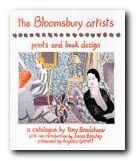
The Bloomsbury ArtistsThe Bloomsbury Artists: Prints and Book DesignsThis volume catalogues the woodcuts, lithographs, etchings and other prints created by Vanessa Bell, Dora Carrington, Roger Fry and Duncan Grant – with various colour and black and white reproductions. Of particular interest are the many book jackets designed for the Hogarth Press, the publishing company established by Leonard Woolf and Virginia Woolf. Also included are ephemera such as social invitations, trade cards, catalogue covers, and bookplates.

Bloomsbury Group Buy the book from Amazon UK
Bloomsbury Group Buy the book from Amazon US


1957. Exhibition of paintings by Duncan Grant. Homosexuality decriminalised in UK.

1958. Posthumous publication of Virginia Woolf’s Granite and Rainbow: Essays. Duncan Grant decorates Russell Chantry, Lincoln Cathedral.

1959. Duncan Grant has retrospective exhibition of his paintings at the Tate Gallery.

1960. Leonard Woolf, Sowing: An Autobiography of the Years 1880-1904 and revisits Ceylon.

1961. Leonard Woolf, Growing: An Autobiography of the Years 1904-1911. Death of Vanessa Bell: memorial exhibition of her paintings.

1962. Leonard Woolf, Diaries in Ceylon 1904-1911. Death of Saxon Sydney-Turner. Death of Vita Sackville-West.

1964. Leonard Woolf, Beginning Again: An Autobiography of the Years 1911-1918. Death of Clive Bell. Vanessa Bell: A Memorial Exhibition of her Paintings by the Arts Council.

1965. Posthumous publication of Virginia Woolf’s Contemporary Writers. Death of T.S. Eliot.

1967. Leonard Woolf, Downhill All the Way: An Autobiography of the Years 1919-1939.

1969. Leonard Woolf, The Journey Not the Arrival Matters: An Autobiography of the Years 1939-1969. Portraits by Duncan Grant: An Arts Council exhibition. E.M. Forster awarded the Order of Merit. Death of Leonard Woolf.

1970. Death of E.M. Forster at the home of friends. Death of Bertrand Russell.

1971. Posthumous publication of E.M. Forster’s overtly homosexual novel, Maurice (written in 1913). Posthumous publication of Lytton Strachey by Himself: A Self Portrait.

1972. Publication of Roger Fry’s Letters 2 vols. Duncan Grant: exhibition of water colours and drawings. Posthumous publication of Lytton Strachey’s The Really Interesting Question and Other Papers. Posthumous publication of E.M. Forster’s The Life to Come and Other Stories.

1973. Posthumous publication of Virginia Woolf’s Mrs Dalloway’s Party: A Short Story Sequence. Vanessa Bell: Paintings and Drawings, An Exhibition.

1987. Death and burial of Gerald Brenan in Malaga, Spain.

© Roy Johnson 2003


More on biography
More on the Bloomsbury Group
Twentieth century literature


Filed Under: Bloomsbury Group Tagged With: Bloomsbury Group, Cultural history, Modernism

The Bloomsbury Group and War – 1/2

September 17, 2009 by Roy Johnson

internationalism, pacifism, and social resistance

Bloomsbury group and warAlmost without exception, the members of the Bloomsbury Group were opposed to the first world war. Their attitudes varied from outright pacifism through conscientious objection to quietism and a form of radical internationalism normally only found in figures such as Trotsky and Lenin. The origins of these attitudes – which were extremely unusual at the time – lay in the liberal, laissez-faire, free-thinking and non-religious beliefs which seemed to have spread from late nineteenth-century intellectuals such as Sir Leslie Stephen (father of the Bloomsbury Group) and the next generation of Cambridge undergraduates of the period 1895-1905 who were heavily influenced by the philosophy of G.E.Moore, whose Principia Ethica promoted ideals of friendship and love towards others.

Conscription began in 1915, and whilst the government lied to the country about conditions at the front for propaganda purposes, the Bloomsbury Group were tipped off about the horrors of the trenches by Maynard Keynes, who as a member of the Treasury, and had insider information on government matters. He had also visited soldiers convalescing at Cambridge. They were recovering from shell shock and the grim truths of bayonet charges and ‘going over the top’. None of them wanted to go back.

Art critic Clive Bell was the son of a nouveau-riche family who had made their money in coal-mining in southern Wales, but established a fake-Tudor manor in Wiltshire, invented a family crest, and sent him to Marlborough College. Despite this very conservative background, in 1915 Bell published a controversial pamphlet, Peace at Once, calling for a negotiated settlement to the conflict. This was considered an outrageous suggestion by the establishment of the time, and copies of his essay were burned by the Public Hangman. Bell resisted conscription on the grounds of being a conscientious objector, and he spent some of the war years doing what was called ‘alternative service’ on a farm owned by the politician Philip Morrell and his wife Ottoline.

hogarth_6Leonard Woolf came from a background quite unlike other members of the Bloomsbury Group. He was the son of a Jewish barrister. Nevertheless, he met his fellow Bloomsberries at Cambridge and like them was influenced by the ethical theories of G.E.Moore. He served in the colonial service between 1905 and 1911 and developed first hand a healthy distaste for imperialism.

With the outbreak of the war, he was rejected as unfit for military service, and campaigned actively for peace. He joined the Labour Party and the Fabian Society and became a regular contributor to the New Statesman. In 1916 he wrote International Government which outlined future possibilities for a international agency to enforce peace in the world. The book was incorporated by the British government in its proposals for a League of Nations at Geneva.

Woolf maintained his anti-war and internationalist stance throughout his life, except for the period of the 1930s and the Second World War, when he somewhat reluctantly accepted that the threat of fascism was worth fighting against. He was also, like George Orwell (who had also served in and quit the colonial service) one of the few British intellectuals who saw through to the totalitarian tyranny underpinning Stalin’s sham democracy.

Bertrand Russell was a contemporary of the other Bloomsberries at Cambridge, but unlike them he took up an academic career, teaching philosophy. Although he was elected to the Royal Society in 1908, Russell’s teaching career at Cambridge appeared to come to an end in 1916 when he was dismissed from Trinity College because of a conviction for anti-war activities. Two years later he was convicted again. This time he spent six months in prison. It was while in prison that he wrote his well-received Introduction to Mathematical Philosophy (1919).

He continued to hold radical and anti-war views throughout the rest of his (long) life. In the 1950s and 1960s he was politically active in the campaign for nuclear disarmament (CND) and he opposed the American war in Vietnam. He established the International War Crimes Tribunal in 1966 with Jean-Paul Sartre and other Nobel prize winners.

redbtn The Bloomsbury Group and War — Part 2


Bloomsbury GroupThe Bloomsbury Group is a short but charming book, published by the National Portrait Gallery. It explores the impact of Bloomsbury personalities on each other, plus how they shaped the development of British modernism. But most of all it’s a delightful collection of portrait paintings and photographs, with biographical notes. It has an introductory essay which outlines the development of Bloomsbury, followed by a series of portraits and the biographical sketches of the major figures.

Bloomsbury Group Buy the book from Amazon UK
Bloomsbury Group Buy the book from Amazon US

© Roy Johnson 2004


More on biography
More on the Bloomsbury Group
Twentieth century literature


Filed Under: Bloomsbury Group Tagged With: Bloomsbury Group, Cultural history, Modernism, Pacifism, War

The Bloomsbury Group and War – 2/2

September 17, 2009 by Roy Johnson

internationalism, pacifism, and social resistance

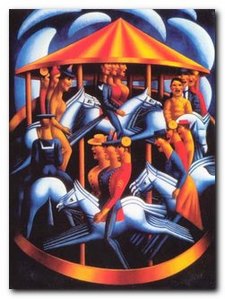
Bloomsbury group and warThe painter Mark Gertler was a pacifist who refused to support Britain’s involvement in the First World War. After the Battle of the Somme he painted Merry-go-Round (1916). Considered by many art critics as the most important British painting of the First World War, Merry-go-Round, shows a group of military and civilian figures caught on the vicious circle of the roundabout. One gallery refused to show the painting because Gertler was a conscientious objector. Eventually it appeared in the Mansard Gallery in May, 1917.

Society hostess Ottoline Morrell was educated at home and at Somerville College, Oxford, where she studied politics and history. Her husband Philip Morrell became a Liberal MP (for Blackburn) following the general election in 1906. He was critical of the government’s position on the First World War. They sheltered a number of conscientious objectors on their farm estate at Garsington near Oxford, including Duncan Grant, Clive Bell, and Mark Gertler. It was there that Siegfried Sassoon, recuperating after a period of sick leave, was encouraged to go absent without leave in a protest against the war.

Much scoffing has been expressed by their guests in thinly-veiled depictions in their novels about the luxury and extravagance of Garsington – but the truth is that the Morrells were sailing financially close to the edge, and eventually they had to sell the entire estate. Because Ottoline Morrell had a brief relationship with one of her members of staff, it’s assumed that this provided the creative spark for D.H.Lawrence’s Lady Chatterley’s Lover.

The writer Gerald Brenan was unusual as a member of the Bloomsbury set, because he did serve in the war. He was the son of an army officer, and was partly educated at the military academy at Sandhurst. He served from 1914 to 1919 and was, as his biographer Jonathan Gaythorne-Hardy points out, a ‘brave, successful, conscientious and enthusiastic officer’. He spent over two years on the Western Front, reaching the rank of captain and winning a Military Cross and a Croix de Guerre.

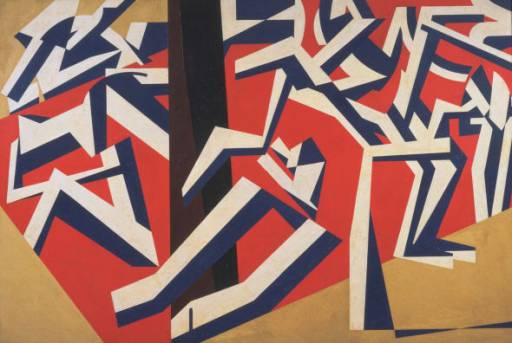
David Bomberg - The Mudbath 1914

David Bomberg – The Mudbath 1914

Biographer Lytton Strachey was a conscientious objector during the war. He is famous for his confrontation with the board which interrogated objectors. His claims of pacifism were challenged by a board member asking him what he would do if he found a German soldier raping his sister. His witty riposte was ‘I should try and come between them’. What is less well known is that Strachey could easily have evaded the inquisition on medical grounds, but didn’t. Even less well known than that is the fact that he wrote a polemical essay against the war.

The painter Duncan Grant was a pacifist, like most of the members of the Bloomsbury group, In order to be exempted from military service during World War I, he and David Garnett (his lover at the time) moved to Wissett in the Suffolk countryside to become farm labourers. Although they were at first refused exemption by a tribunal, they appealed and were eventually recognised as conscientious objectors.

Harold Nicolson worked as a diplomat in the Foreign Office. Because of this, he was exempt military service during the first world war. After the end of the first world war he took part in the Paris Peace Conference, and he was very critical of the punitive reparations extracted by the allies (which also caused his fellow Bloomsburyite John Maynard Keynes to resign from the commission).

Between the wars he flirted briefly with Sir Oswald Mosley’s fascists, but then entered the House of Commons as National Labour Party member for Leicester West in 1935. (His wife refused to visit the constituency, regarding it as ‘bedint’ – a family slang term for ‘unacceptably low class’.)

He was very active as a parliamentarian, and became a keen supporter of Winston Churchill, especially during the second world war, when he was appointed private secretary to the Minister of Information in the government of national unity. He lost his seat in the 1945 election, and then despite joining the Labour Party, he failed to get back into parliament. He is a fairly rare example of someone from the upper class whose political allegiances moved leftwards as he got older.


Bloomsbury GroupThe Bloomsbury Group is a short but charming book, published by the National Portrait Gallery. It explores the impact of Bloomsbury personalities on each other, plus how they shaped the development of British modernism. But most of all it’s a delightful collection of portrait paintings and photographs, with biographical notes. It has an introductory essay which outlines the development of Bloomsbury, followed by a series of portraits and the biographical sketches of the major figures.

Bloomsbury Group Buy the book from Amazon UK
Bloomsbury Group Buy the book from Amazon US


John Maynard Keynes lectured in economics at Cambridge on and off from 1908. He also worked at the India Office and in 1913 as a member of the Royal Commission on Indian finance and currency, published his first book on the subject. His expertise was in demand during the First World War. He worked for the Adviser to the Chancellor of the Exchequer and to the Treasury on Financial and Economic Questions. Among his responsibilities were the design of terms of credit between Britain and its continental allies during the war, and the acquisition of scarce currencies.

He represented the Treasury at the Versailles Peace Conference, but resigned in strong opposition to the terms of the draft treaty which he set out in his next book Economic Consequences of the Peace, (1919). Keynes argued that the war reparations imposed on Germany could not be paid by a country which had been devastated by war. He warned that this would lead to further conflict in Europe – which of course turned out to be true.

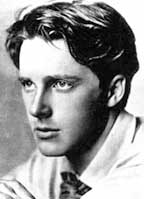
The poet Rupert Brooke is often (quite erroneously) classed as a ‘war poet’ because some of his early works glamourised the idea of war – and he was in fact a fervent supporter of it. But he never saw active service. His poetry gained many enthusiasts and he was taken up by Edward Marsh, who brought him to the attention of Winston Churchill, who was at that time First Lord of the Admiralty. Through these connections he was commissioned into the Royal Naval Volunteer Reserve as a temporary Sub-Lieutenant shortly after his 27th birthday and took part in the Royal Naval Division’s Antwerp expedition in October 1914.

He sailed with the British Mediterranean Expeditionary Force on 28 February 1915 but developed sepsis from an infected mosquito bite. He died on 23 April 1915 off the island of Lemnos in the Aegean on his way to a battle at Gallipoli. As the expeditionary force had orders to depart immediately, he was buried in an olive grove on the island of Skyros, Greece.

redbtn The Bloomsbury Group and War — Part I

© Roy Johnson 2004


Bloomsbury RecalledBloomsbury Recalled is written by Quentin Bell, one of the last surviving members of the Bloomsbury circle. He offers a disarmingly candid portraits of his father, Clive Bell, who married the author’s mother, Vanessa Stephen (Virginia Woolf’s sister). He pursued love affairs while Vanessa, after a clandestine affair with art critic Roger Fry, lived openly with bisexual painter Duncan Grant, with whom she had a daughter, Angelica. Clive, Duncan and Vanessa were reunited under one roof in 1939, and the author conveys a sense of the emotional strain of growing up in ‘a multi-parent family.’ Acclaimed biographer of his aunt, Virginia Woolf, Bell here defends her as a feminist and pacifist. Along with chapters on John Maynard Keynes, Ottoline Morrell and art historian-spy Anthony Blunt, there are glimpses of Lytton Strachey, novelist David Garnett (Angelica’s husband) and Dame Ethel Smyth, the pipe-smoking lesbian composer, who fell in love with Virginia Woolf.
Bloomsbury Group Buy the book from Amazon UK
Bloomsbury Group Buy the book from Amazon US


More on biography
More on the Bloomsbury Group
Twentieth century literature


Filed Under: Bloomsbury Group Tagged With: Bloomsbury Group, Cultural history, Modernism, Pacifism, War

The Bloomsbury Group memoirs and criticism

July 17, 2009 by Roy Johnson

memoirs, commentary, and criticism

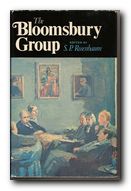
This is a collection of memoirs, commentary, and criticism – all of which relate to the Bloomsbury Group and its members – of whom it was said that they were ‘a circle of friends who lived in squares and loved in triangles’. Many of the materials are available elsewhere – people’s letters, diaries, and various published papers; but these are scattered sources, whereas here they are all shepherded into one single pen, with the title ‘Bloomsbury’ writ large at the entrance.

The Bloomsbury Group memoirsCharacters reflect on each other – Virginia Woolf on her nephew Julian Bell, Duncan Grant on Virginia Woolf, Clive Bell on Roger Fry, David Garnett on E.M.Forster, and Leonard Woolf on Lytton Strachey.

Some of the materials are well known because they come from fairly accessible sources, such as Virginia Woolf’s diaries, or Gerald Brenan’s South from Granada (which contains the hilarious account of Lytton Strachey riding a donkey in the Alpujarras in southern Spain). But others are pieces you would not easily find elsewhere – such as essays from the Memoir Club.

There are also relatively scarce items, such as Adrian Stephen’s first-hand account of the Dreadnought Hoax, and Vanessa Bell’s memoir of Bloomsbury, as well better-known pieces as Maynard-Keynes‘ ‘My Early Beliefs’, which is an account of his youthful days at Cambridge with Bertrand Russell and Lytton Strachey, along with the Apostles under the influence of G.M. Moore.

Many of the longer pieces are written in defence of Bloomsbury, because (though it might seem odd now) it was under a considerable degree of negative criticism from the 1920s onwards. Some of that criticism is reproduced here, which makes the book all the richer for it. The objections of the Leavis camp have evaporated with the passage of time, but I think it’s worth recalling them for the sake of historical perspective.

As a repository of social history it relies very heavily on extracts from Leonard Woolf’s excellent Autobiography, but as a source for fans of Bloomsbury, this is a valuable resource.

© Roy Johnson 2002

Bloomsbury Group memoirs Buy the book at Amazon UK

Bloomsbury Group memoirs Buy the book at Amazon US


S.R. Rosenbaum (ed), The Bloomsbury Group: A Collection of Memoirs, Commentary and Criticism, Toronto: University of Toronto, 1975, pp.444, ISBN: 0802062687


More on biography
More on the Bloomsbury Group
Twentieth century literature


Filed Under: Bloomsbury Group Tagged With: Biography, Bloomsbury Group, Cultural history, The Bloomsbury Group: memoirs & criticism

The Bloomsbury Group portraits

August 11, 2009 by Roy Johnson

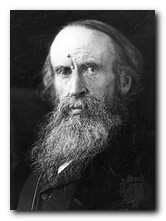
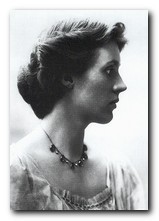
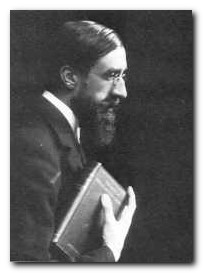
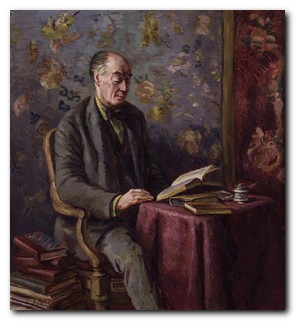
The Bloomsbury Group portraits - Leslie Stephen

Sir Leslie Stephen (1832—1904)


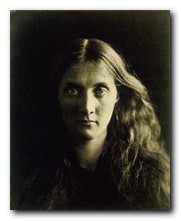
The Bloomsbury Group portraits - Julia Stephen

Julia Stephen (1846—1895)


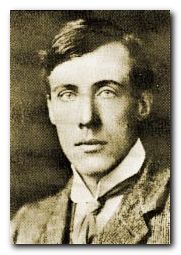
The Bloomsbury Group portraits - Thoby Stephen

Thoby Stephen (1880—1906)


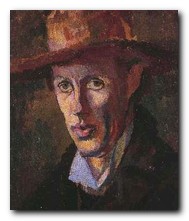
The Bloomsbury Group portraits - Adrian Stephen

Adrian Stephen (1883—1948)


The Bloomsbury Group portraits - Vanessa Bell

Vanessa Bell (1879—1961)


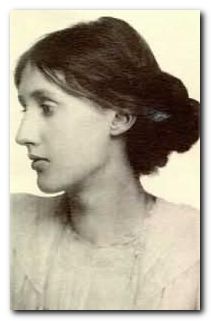
The Bloomsbury Group portraits - Virginia Woolf

Virginia Woolf (1882—1941)


Lytton Strachey

Lytton Strachey (1880—1932)


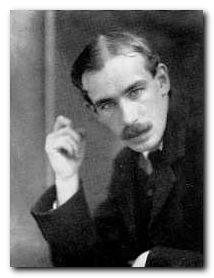
John Maynard Keynes

John Maynard Keynes (1883—1946)


Leonard Woolf

Leonard Woolf (1880—1969)


E.M.Forster

E.M. Forster (1879—1970)


Roger Fry

Roger Fry (1866—1934)


Bertrand Russell

Bertrand Russell (1872—1970)


T.S. Eliot

T.S. Eliot (1888—1965)


Duncan Grant

Duncan Grant (1885—1978)


Clive Bell

Clive Bell (1881—1964)


Vita Sackville-West

Vita Sackville-West (1892—1962)


Harold Nicolson

Harold Nicolson (1886—1968)


Mark Gertler

Mark Gertler (1896—1939)


David Garnett

David Garnett (1892—1981)


Ottoline Morrell

Ottoline Morrell (1873—1938)


Gerald Brenan

Gerald Brenan (1894—1987)


Dora Carrington

Dora Carrington (1893—1932)


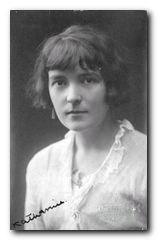
Katherine Mansfield

Katherine Mansfield (1888—1923)


Rupert Brooke

Rupert Brooke (1887—1915)


Desmond MacCarthy

Desmond MacCarthy (1977-1952)


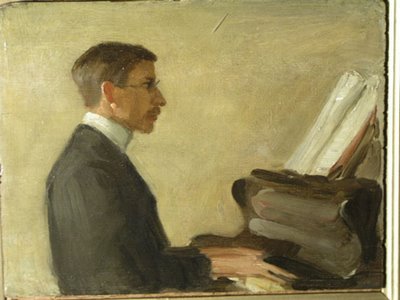
Saxon Sydney-Turner at the Piano

Saxon Sydney-Turner (1880-1962)

© Roy Johnson 2003


More on biography
More on the Bloomsbury Group
Twentieth century literature


Filed Under: Bloomsbury Group Tagged With: Bloomsbury Group, Bloomsbury portraits, Cultural history, Modernism

The Bloomsbury Group: who were they?

August 5, 2009 by Roy Johnson

modernist culture and arts 1900-1950

The Bloomsbury Group is a name given to a loose collection of writers, artists, and intellectuals who came together during the period 1905-06 at the home of Virginia Woolf and her sister Vanessa Bell. Following the death of their father, Sir Leslie Stephen, they set up home in Gordon Square, Bloomsbury, in central London, close to the British Museum.

The group included Virginia Woolf (writer) and her husband-to-be Leonard Woolf (writer and later political figure); her sister Vanessa Bell (artist) and her husband Clive Bell; the artist and critic Roger Fry; the novelist E.M.Forster and poet T.S.Eliot; economist John Maynard Keynes and philosopher Bertrand Russell; the writers Gerald Brenan, Lytton Strachey, and Vita Sackville-West; artists Duncan Grant and Dora Carrington.


The Bloomsbury GroupThe Bloomsbury Group is a short but charming book which explores the impact of Bloomsbury personalities on each other, plus how they shaped the development of British modernism. It’s actually the illustrated catalogue of an exhibition at the National Portrait Gallery. But most of all it’s a delightful collection of portrait paintings and photographs, with biographical notes. It has an introductory essay which outlines the development of Bloomsbury, followed by a series of portraits and the biographical sketches of the major figures.

Bloomsbury Group Buy the book from Amazon UK
Bloomsbury Group Buy the book from Amazon US


Toby invited his friends to soirees, and Vanessa invited hers. The two groups met, networked, formed liaisons with each other (that’s putting it mildly) and created some of the central works of the modernist movement in Britain in the period 1905-1930.

They were in conscious revolt against the artistic, social, and sexual restrictions of the Victorian age. They were on the whole from an upper middle class intellectual elite, but it has to be said that in their personal lives they defied the status quo, and most of them were very productive.

In fact, the true centre of the group was Cambridge University, where their brother Toby had met a number of intellectuals who had come under the influence of G.M. Moore, whose Principia Ethica (1903) had made a serious impression on undergraduates who formed a group called the ‘Apostles’. He propounded a notion of ethics which rested on the pursuit of friendship, happiness, and the cultivation of the intellect.


Bloomsbury RecalledBloomsbury Recalled is written by Quentin Bell, one of the last surviving members of the Bloomsbury circle. He offers a disarmingly candid portraits of his father, Clive Bell, who married the author’s mother, Vanessa Stephen (Virginia Woolf’s sister). He pursued love affairs while Vanessa, after a clandestine affair with art critic Roger Fry, lived openly with bisexual painter Duncan Grant, with whom she had a daughter, Angelica. Clive, Duncan and Vanessa were reunited under one roof in 1939, and the author conveys a sense of the emotional strain of growing up in ‘a multi-parent family.’ Acclaimed biographer of his aunt, Virginia Woolf, Bell here defends her as a feminist and pacifist. Along with chapters on John Maynard Keynes, Ottoline Morrell and art historian-spy Anthony Blunt, there are glimpses of Lytton Strachey, novelist David Garnett (Angelica’s husband) and Dame Ethel Smyth, the pipe-smoking lesbian composer, who fell in love with Virginia Woolf.
Bloomsbury Group Buy the book from Amazon UK
Bloomsbury Group Buy the book from Amazon US


Influenced by this notion of free-spirited friendship, intellectual liberty, and radical life-styles, many of the men were conscientious objectors during the First World War. They were liberals or socialists at a time when the English establishment was overwhelmingly conservative; and in their personal relationships they pushed back the boundaries of what could be done in a way which was not seen again until the 1960s.

Many of these people became sexually involved with each other in a way which even now seems quite bewildering. Married to one person, but in cahoots with someone else, often of the same sex. Some of them even lived with a person of the opposite sex yet shared the same lover.

It has to be remembered that at that time homosexuality was a criminal offence (though only for men) and many gay men got married as a legal cover and a smokescreen to provide social legitimacy.

There were also lots of minor figures who are counted amongst the Bloomsbury Group – people such as Harold Nicolson (diplomat and writer); Mark Gertler (painter); Desmond MacCarthy (literary critic); Saxon Sydney-Turner (civil servant); David Garnett and John Lehmann (writers); and Ottoline Morrell (social hostess).


Among the BohemiansAmong the Bohemians: Experiments in Living 1900—1930 was written by Virginia Nicholson, Quentin Bell’s daughter and grand-daughter of Vanessa Bell, who was Virginia Woolf’s sister. Bloomsbury lies at the heart of the book in its portraits of Ralph Partridge, Virginia Woolf, Duncan Grant, Lytton Strachey, Dora Carrington, and Katherine Mansfield, plus peripheral figures such as Arthur Ransome, Rupert Brooke, Augustus John, Nina Hamnett, and Dylan and Caitlin Thomas. Very amusing, well written, and every page dense with top class gossip and anecdotes. She looks at their tangled love lives naturally, but also their radical ideas on money (and poverty) food, dress, and even child-raising. Highly recommended.
Bloomsbury Group Buy the book from Amazon UK
Bloomsbury Group Buy the book from Amazon US


The intellectual connections between these people were amazing. For instance, the Woolfs established the Hogarth Press in their own home as a hobby-cum-therapy to help Virginia through her periods of depression and madness. The Press published not only her own works, but books by T.S.Eliot, Vita Sackville-West, and Christopher Isherwood. They even pioneered the work of Sigmund Freud, whose writing was translated by James Strachey, Lytton Strachey’s brother.

It also has to be said that many of the group were enormously productive and high-achievers. Despite her periods of mental illness, Virginia Woolf was a voluminous diarist and letter writer – as was her husband Leonard Woolf. Together they also ran the Hogarth Press. Economist John Maynard Keynes produced an almost unbroken stream of influential political studies and policy documents whilst working in a number of high-ranking government positions. And Vita Sackville-West was a best-selling novelist and award-winning poet who also wrote books on historic houses and gardens.


A Bloomsbury CanvasA Bloomsbury Canvas is a selection of essays on the Bloomsbury Group. Essayists include Hermione Lee, biographer of Virginia Woolf; art historians Richard Shone and Frances Spalding; Nigel Nicolson, author of Portrait of a Marriage, a study of his parents, Vita Sackville-West and Harold Nicolson; and the last survivors of those closely connected to the Bloomsbury Group – Frances Partridge, Quentin Bell and Angelica Garnett. The text is illustrated with many previously unpublished works.
Bloomsbury Group Buy the book from Amazon UK
Bloomsbury Group Buy the book from Amazon US

© Roy Johnson 2003


More on biography
More on the Bloomsbury Group
Twentieth century literature


Filed Under: Bloomsbury Group Tagged With: Bertrand Russell, Biography, Bloomsbury Group, Clive Bell, Cultural history, Dora Carrington, Duncan Grant, E.M.Forster, John Maynard Keynes, Leonard Woolf, Lytton Strachey, Roger Fry, T.S.Eliot, Vanessa Bell, Virginia Woolf

  • « Previous Page
  • 1
  • …
  • 75
  • 76
  • 77
  • 78
  • 79
  • …
  • 103
  • Next Page »

Get in touch

info@mantex.co.uk

Content © Mantex 2016
  • About Us
  • Advertising
  • Clients
  • Contact
  • FAQ
  • Links
  • Services
  • Reviews
  • Sitemap
  • T & C’s
  • Testimonials
  • Privacy

Copyright © 2026 · Mantex

Copyright © 2026 · News Pro Theme on Genesis Framework · WordPress · Log in