themes and developments in English Literature 1910-1940
Although writers such as Virginia Woolf, James Joyce, D.H. Lawrence, and E.M. Forster produced their work almost a hundred years ago, we still class their work as ‘modernism’. That’s because they made such a radical break with the preceding century, and the fact is that some of their experiments have not been surpassed in the literature produced since.
 Chris Baldick’s comprehensive study sketches in the social, linguistic, and aesthetic background of the period, then groups his discussion of examples according to literary forms – short stories, drama, poetry, and the novel. He naturally highlights the major figures – Joyce, Woolf, Lawrence, Eliot – but his other concern is to show the traditional literary culture out of which the modernist experiment emerged at the beginning of the last century.
This involves consideration of writers such as Arnold Bennett, Somerset Maugham, and now almost-forgotten figures such as Dornford Yates, Aldous Huxley, and Elizabeth Bowen who were very successful in their own time.
The Modern Movement ranges broadly, covering psychological novels, war poems, detective stories, ‘light reading’, essays, biography, satire (Waugh, Huxley, Lewis, Isherwood) children’s books, and other literary forms evolving in response to the new anxieties and exhilarations of twentieth-century life. He also introduces chapters which focus on themes such as Childhood, the Great War, and Sexuality.
He’s particularly well informed on what’s often called ‘the writer and the marketplace’ – that is, the financial realities which lie beneath the occupation of authorship. He knows who earned most (Arnold Bennett) he reveals which writers were subsidised by rich patrons (Joyce of course, as well as others who were subsidised by wealthy spouses). I was amazed to learn that D.H. Lawrence not only made a lot of money out of the privately published Lady Chatterley’s Lover but that he went on to make even more by investing it in stocks and shares on Wall Street.
One small feature comes off nicely. Each chapter is preceded by a list of new words which came into currency at the time, and they always seem to emerge earlier than you would guess – blurb, umpteen, back-pack, and tear-jerker for instance.
He even includes an interesting presentation of theories of the novel – which involves consideration of first and third person narration. This ties in the connections between the nineteenth and twentieth centuries, and lays out the groundwork for the central chapters on Joyce, Woolf, Lawrence, and Forster.
Baldick interprets all the major works of these writers – Howards End, Mrs Dalloway, Ulysses, Women in Love – in a way that makes you feel like immediately reading them again. But en route he takes time to look at the lesser-known works of the period, such as Love on the Dole, Elizabeth Bowen’s The Death of the Heart, Dorothy Richardson’s Pilgrimage, and Aldous Huxley’s Chrome Yellow, and novels by Naomi Mitchison, Robert Graves, and Sylvia Townsend Warner.
I remember reading Walter Allen’s The English Novel and Tradition and Dream many years ago, and this is a similar experience. Authors, novels, books, and ideas jump off every page, and anybody with an appetite for literature will feel a terrific urge to follow up on the suggestions he holds out.
There’s a very good collection of further reading at the back of the book. These entries combine biographical notes on the author, together with available editions of their major works, plus secondary studies and criticism.
This is the fifth volume to be published in the Oxford English Literary History series. It can be read continuously as an in-depth study of the period, or used as a rich source of reference.
© Roy Johnson 2004

Chris Baldick, The Modern Movement, Oxford: Oxford University Press, 2004, pp.477, ISBN: 0198183100
More on literature
More on the novella
More on literary studies
More on short stories
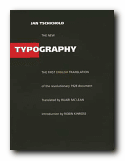
 There are chapters on the use of photographs; the standardisation of paper sizes [the origin of the DIN A4 we all use today] lots of carefully analysed examples of business stationery, and even film posters which evoke the visual ethos of the inter-war years. All this is illustrated by some crisp and still attractive reproductions of everyday graphics – letterheads, postcards, catalogues, and posters – in the red, black and white colour-scheme characteristic of the period.
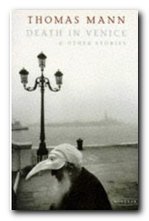 Thomas Mann’s Death in Venice (1912) is a classic novella – half way between a long story and a short novel. It’s a wonderfully condensed tale of the relationship between art and life, love and death. Venice provides the background for the story of a famous German writer who departs from his usual routines, falls in love with a young boy, and gets caught up in a subtle downward spiral of indulgence. The novella is constructed on a framework of references to Greek mythology, and the unity of themes, form, and motifs are superbly realised – even though Mann wrote this when he was quite young. Later in life, Mann was to declare – ‘Nothing in Death in Venice was invented’. The story was turned into a superb film by Luchino Visconti and an opera by Benjamin Britten.
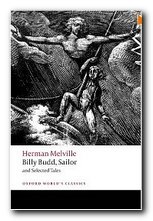 Herman Melville’s novella Billy Budd (1856) deals with a tragic incident at sea, and is based on a true occurence. It is a nautical recasting of the Fall, a parable of good and evil, a meditation on justice and political governance, and a searching portrait of three men caught in a deadly triangle. Billy is the handsome innocent, Claggart his cruel tormentor, and Captain Vere the man who must judge in the conflict between them. The narrative is variously interpreted in Biblical terms, or in terms of representations of male homosexual desire and the mechanisms of prohibition against this desire. His other great novellas Benito Cereno, The Encantadas and Bartelby the Scrivener (all in this collection) show Melville as a master of irony, point-of-view, and tone. These fables ripple out in nearly endless circles of meaning and ambiguities.
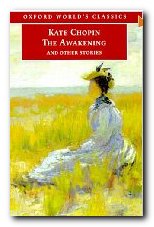 Artistically, the novella is often unified by the use of powerful symbols which hold together the events of the story. The novella requires a very strong sense of form – that is, the shape and essence of what makes it distinct as a literary genre. It is difficult to think of a great novella which has not been written by a great novelist (though Kate Chopin’s The Awakening might be considered an exception). Another curious feature of the novella is that it is almost always very serious. It’s equally difficult to think of a great comic novella – though Saul Bellow’s excellent Seize the Day has some lighter moments.
 Seize the Day (1956) focusses on one day in the life of one man, Tommy Wilhelm. A fading charmer who is now separated from his wife and his children, he has reached his day of reckoning and is scared. In his forties, he still retains a boyish impetuousness that has brought him to the brink of havoc. In the course of one climatic day, he reviews his past mistakes and spiritual malaise. Some people might wish to argue that this is a short novel, but it is held together by the sort of concentrated sense of unity which is the hallmark of a novella. It is now generally regarded as the first of Bellow’s great works, even though he went on to write a number of successful and much longer novels – for which he was awarded the Nobel Prize in 1976.
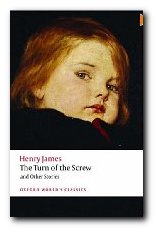 Henry James’ The Turn of the Screw (1897) is a classic novella, and a ghost story which defies easy interpretation. A governess in a remote country house is in charge of two children who appear to be haunted by former employees who are now supposed to be dead. But are they? The story is drenched in complexities – including the central issue of the reliability of the person who is telling the tale. This can be seen as a subtle, self-conscious exploration of the traditional haunted house theme in Victorian culture, filled with echoes of sexual and social unease. Or is it simply, “the most hopelessly evil story that we have ever read”? This collection also includes James’s other ghost stories – Sir Edmund Orme, Owen Wingrave, and The Friends of the Friends.
 The Aspern Papers (1888) also by Henry James, is a psychological drama set in Venice which centres on the tussle for control of a great writer’s private correspondence. An elderly lady, ex-lover of the writer seeks a husband for her plain niece, whereas the potential purchaser of the letters she possesses is a dedicated bachelor. Money is also at stake – but of course not discussed overtly. There is a refined battle of wills between them. Who wins out? Henry James keeps readers guessing until the very end. The novella is a masterpiece of subtle narration, with an ironic twist in the outcome. This collection of stories also includes The Private Life, The Middle Years, and The Death of the Lion which is another classic novella.
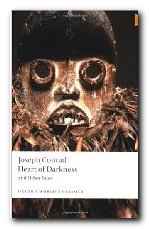 Joseph Conrad’s Heart of Darkness (1902) is a tightly controlled novella which has assumed classic status as an account of late nineteenth century imperialism and the colonial process. It documents the search for a mysterious Kurtz, who has ‘gone too far’ in his exploitation of Africans in the ivory trade. The reader is plunged deeper and deeper into the ‘horrors’ of what happened when Europeans invaded the continent. This might well go down in literary history as Conrad’s finest and most insightful achievement. It is certainly regarded as a classic of the novella form, and a high point of twentieth century literature – even though it was written at its beginning. This volume also contains the story An Outpost of Progress – the magnificent study in shabby cowardice which prefigures ‘Heart of Darkness’. The differences between a story and a novella are readily apparent here if you read both texts and compare them.
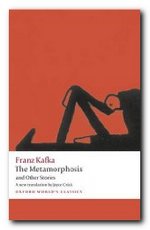 Franz Kafka’s Metamorphosis is the account of a young salesman who wakes up to find he has been transformed into a giant insect. His family are bewildered, find it difficult to deal with him, and despite the good human intentions struggling underneath his insect carapace, they eventually let him die of neglect. He eventually expires with a rotting apple lodged in his side. This particular collection also includes Kafka’s other masterly transformations of the short story form – ‘The Great Wall of China’, ‘Investigations of a Dog’, ‘The Burrow’, and the story in which he predicted the horrors of the concentration camps – ‘In the Penal Colony’.
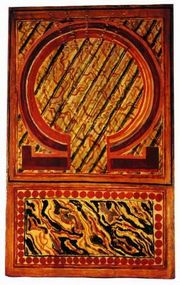 It opened in 1913 at the worst possible time in commercial terms, at 33 Fitzroy Square in the heart of Bloomsbury.
  At the launch of the project, artist and writer Wyndham Lewis was also a member; but he quickly split away from the group in a dispute over Omega’s contribution to the Ideal Homes Exhibition. Lewis circulated a letter to all shareholders, making accusations against the company and Roger Fry in particular, and pouring scorn on the products of Omega and its ideology. This subsequently led to his establishing the rival Vorticist movement and the publication in 1916 of its two-issue house magazine, BLAST.