Mantex

Tutorials, Study Guides & More

  • HOME
  • REVIEWS
  • TUTORIALS
  • HOW-TO
  • CONTACT
>> Home / Archives for 2009

Archives for 2009

Love in Bloomsbury

July 14, 2009 by Roy Johnson

the memoirs of Frances Partridge

Beautiful, well read, and educated at Cambridge, Frances Partridge was a member of the Bloomsbury Group and until quite recently the last survivor of the group’s most famous love quadrangle. Love in Bloomsbury is a collection of her memoirs, which sketch out her childhood and adolescence, then focus on that celebrated quartet, two of whom were doomed, the other two survivors. Her story begins and ends in Bloomsbury, because she was raised in an upper middle-class Edwardian family in Bedford Square.
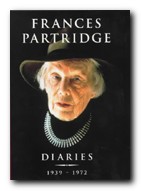
Love in Bloomsbury She was the youngest of a large family which also included her sister Ray Marshall, the painter (who later married David Garnett). They were friends of both the Stracheys and the Stephens (Virginia Woolf‘s family) and her education included school at Queen’s College, Harley Street (which Katherine Mansfield also attended) then Newnham College Cambridge, where she graduated in English and Philosophy.

Her introduction to the Bloomsbury set was via her job at David Garnett’s bookshop. She gives a vivid account of parties, dancing, and the heady artsy-Bohemian atmosphere which flourished after the first world war. There are character sketches of all the principal Bloomsberries, Virginia Woolf, her sister Vanessa Bell, and Roger Fry, though like most of them when it came to writing their memoirs, she is extremely discreet and gives little away about the background to what were in some cases quite extraordinary liaisons.

She formed a relation ship with Ralph Partridge, who was at that time married to Dora Carrington, who in her turn happened to be in love with Lytton Strachey, with whom Carrington lived – though there is no open acknowledgement of the complex sexual relationships between the principals. You would never know from this for instance that Dora Carrington had affairs with women as well as men.
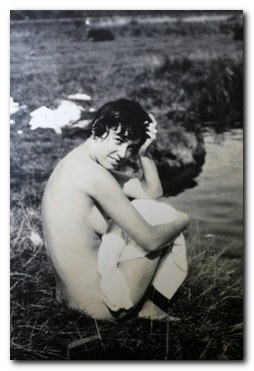
Frances Partridge

There are some delightful vignettes: a long summer weekend at Charleston with Vanessa Bell and Duncan Grant, then a visit to Gerald Brenan‘s house in the Spanish Alpujarraras (which he describes in his classic, South from Granada).

Lots of famous names flit through the pages – Arnold Bennett, Princess Bibesco, Cyril Connolly, Maurice Chevalier, and even Ludwig Wittgenstein. At one point, once her relationship with Ralph Partridge has become established (there was a rather hurried marriage) a child appears – only to disappear seven words later.

In the second part of the book her account centres on the late 1920s, reaching its climax in the death of Lytton Strachey and the subsequent suicide of Dora Carrington. After that, the narrative comes to a quiet ending, celebrating the central Bloomsbury belief that friendship ought to be cherished and celebrated.

I actually enjoyed the earlier schoolgirl and student years of her account more than the later, though her confirmation of some of the famous Bloomsberry anecdotes that one has read elsewhere does help to authenticate their veracity.

It should also be said that the writing is very stylish and poised. Frances Partridge went on to become a prolific writer in her later years, translating from French and Spanish, including work by the Cuban Nobel prizewinner Alejo Carpentier, but mainly devoting herself to her memoirs of the years which follow these.

© Roy Johnson 2000

Love in Bloomsbury Buy the book at Amazon UK

Love in Bloomsbury Buy the book at Amazon US


Frances Partridge, Love in Bloomsbury, Boston: Little, Brown, 1981, pp.244, ISBN: 0316692840


More on biography
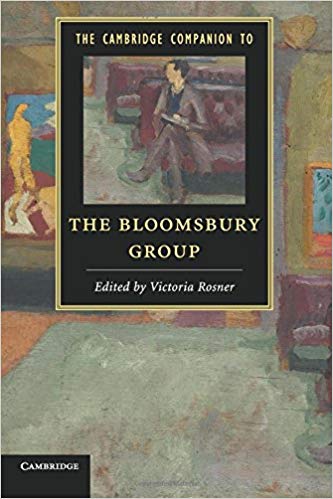
More on the Bloomsbury Group
Twentieth century literature

Filed Under: Bloomsbury Group Tagged With: Biography, Bloomsbury Group, Cultural history, Frances Partridge, Love in Bloomsbury

Love Letters: Leonard Woolf and Trekkie Parsons

May 18, 2009 by Roy Johnson

Bloomsbury’s secret love affair

Everybody knows that Leonard Woolf nursed his wife Virginia Woolf through periods of mental and physical illness, right up to the point of her suicide in 1941. What is not so well known is that he did this at the same time as being a full time journalist and author, a Labour Party activist responsible for the development of the League of Nations, and a successful commercial publisher in charge of the Hogarth Press. Even less well known is the fact that within twelve months of his wife’s death he began a relationship with a woman which was to last for the rest of his life.

Love Letters: Leonard Woolf & Trekkie ParsonsNot that there was anything wrong with his forming a new relationship – but the woman happened to be married to someone else. She was Trekkie Parsons, an artist and book illustrator, and her second husband Ian Parsons eventually became Leonard Woolf’s business partner. The actual content of the letters is fairly inconsequential: arrangements for meeting; reflections on botanical matters; lots of endearments; the desire (on his part) for more contact; and occasional comments on their contemporaries. They had lots of shared interests – pet animals, horticulture, and even printing. He was after all an independent publisher, and she studied and practised all sorts of printing techniques.

Leonard is clearly the more enamoured: as a widower, living alone, he yearns for more time with her. But she warns against their relationship becoming passionate – using a form of words which would give anyone pause for thought: ‘I want you to love me you see – but not as an epidemic disease all covered in spots & then quite cured’.

When her husband was posted to France she went to live with Woolf at Monks House in Lewes (sleeping in Virginia Woolf’s old bed) – though it also has to be said that when Ian Parsons was demobbed in 1945 all three of them moved into the same house in London.

In fact for the near thirty years that their relationship existed, she split herself between the two men. She supported her husband in his business ventures and enjoyed their busy social life together. They were said to be a ‘well-oiled unit’. But she spent a large part of the working week with Leonard, and even went on holidays with him.

There is no evidence in the letters that her husband was at all worried about what was going on, but when Parsons started an affair of his own with his business partner Nora Smallwood, Trekkie was not impervious to jealousy.

The most amazing thing is that there is hardly a word in what they write to each other over a span of almost three decades about the oddity, ambiguity, or any tensions in their relationship. Even the footnotes remain silent on that score.

The question which anyone with an ounce of curiosity or a spoonful of blood in their veins will want to know is – was the relationship physically intimate? And the amazing thing is that there is not a jot of evidence either way so far as I could see – which makes it all the more curious.

The editing of the letters is quite scholarly. Whenever someone new is mentioned, an explanation of who they are is offered in a footnote. But there is little analysis or interpretation of events.

Leonard claimed that Trekkie was the best thing that had ever happened to him. He made her his executrix and principal legatee. And when his will was contested by members of his own family, these letters were adduced in court as evidence of merely a ‘literary and social friendship’. Moreover, Trekkie herself claimed (at the age of ninety) that the relationship had not been sexual.

If that is true, Leonard Woolf spent almost six decades devoted to two women, Virginia and Trekkie, with whom he had sexless relationships. It is no good going to his excellent Autobiography to discover more, because he is just as reserved about his private life there. One can only read and stand back, amazed at yet another facet of Bloomsbury life.

© Roy Johnson 2004

Leonard Woolf Love Letters Buy the book at Amazon UK

Leonard Woolf Love Letters Buy the book at Amazon US


Judith Adamson (editor), Love Letters: Leonard Woolf & Trekkie Parsons 1941-1968, London: Pimlico, 2002, pp.312, ISBN: 0712664734


More on Leonard Woolf
Twentieth century literature
More on the Bloomsbury Group


Filed Under: Bloomsbury Group, Leonard Woolf Tagged With: Biography, Bloomsbury Group, Hogarth Press, Leonard Woolf, Literary studies, Trekkie Parsons

Lytton Strachey biography

September 22, 2009 by Roy Johnson

life, works, and loves of a literary bohemian

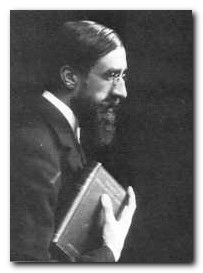
Lytton Strachey biographyLytton Strachey (1880-1932) was born at Clapham Common and raised at Lancaster Gate, in central London. He was the eleventh of thirteen children, to General Sir Richard Strachey (an engineer) and his wife Jane Grant. Though he spent some years at boarding schools, including Abbotsholme and Leamington College, he received much of his education at home. His mother took an interest in literature and politics, and Strachey met many of the leading writers and thinkers of the day when they came to visit Lady Strachey. His secondary education was completed at University College in Liverpool where he studied Latin, Greek, mathematics, and English literature and history. It was there that he met and was influenced by Walter Raleigh, a professor of English literature and well known biographer.
After failing to receive a scholarship to Oxford in 1899, Strachey decided to attend Cambridge where he developed many friendships which lasted the rest of his life. At Trinity College Cambridge he met Clive Bell, Thoby Stephen (Virginia Woolf’s brother) John Maynard Keynes, and Leonard Woolf.

Along with many other future members of the Bloomsbury Group, he was elected to the Apostles Society, and he also won the Chancellor’s medal for his poem, ‘Ely: An Ode’. In 1903 fellow Apostle G.E.Moore’s Principia Ethica was published, producing a profound effect on the aspiring intellectuals. The Principia became a rationalizing factor in loosening the repression of homosexual tendencies among the Apostles and in Trinity and King’s College as well.

Strachey completed his work at Cambridge with a thesis on Warren Hastings but failed to receive a Trinity fellowship. He returned to his parents’ home in Lancaster Gate and sought to support himself as a journalist. Much of his social life centred on the Thursday night ‘at-homes’ of the Stephenses – Thoby, Adrian, Vanessa Bell, and Virginia Woolf.

He contributed book and drama reviews to The Spectator magazine, published poetry, and wrote an important work of literary criticism, Landmarks in French Literature (1912). During the First World War, he was a conscientious objector, and spent much time with like-minded people such as Lady Ottoline Morrell and other members of the Bloomsbury Group.

In 1915 Strachey met Dora Carrington, a graduate of the Slade School of Art and the woman who devoted herself to him for the rest of his life. In 1917 Strachey and Carrington moved into a cottage in Tidmarsh, Oxfordshire, and continued to carry on with their separate personal lives. Carrington maintained a relationship with fellow artist Mark Gertler before marrying Ralph Partridge, and Strachey moved through a series of relationships with a series of men.

Eminent VictoriansHis first great success, and his most famous achievement, was Eminent Victorians (1918) a collection of four short biographies of Victorian heroes. With a dry wit, he exposed the human failings of his subjects and what he saw as the hypocrisy at the centre of Victorian morality. His portraits of Cardinal Manning, Florence Nightingale, Thomas Arnold, and General Gordon changed perceptions of the Victorians for a whole generation.

This work was followed in the same style by Queen Victoria, a work which used elements of romantic fiction and melodrama to create a warm, humorous and very human portrait of an iconic figure. We see Victoria as a strong-willed child, as the 18-year-old girl queen, as a monarch, wife, mother and widow. Equally fascinating are her relationships with Peel, Gladstone and Disraeli, with her beloved Albert and her Highland servant John Brown, all of which show a different side of her staid, pious image.

Strachey’s literary style was becoming very popular and he began to achieve a measure of fame which allowed him to support himself and his household from the proceeds of his writing. In 1924 he purchased the lease to Ham Spray House and moved in along with Carrington and Ralph Partridge. He completed Elizabeth and Essex in 1928 and started editing The Greville Memoirs, a project which was completed posthumously by Ralph and Frances Partridge and Roger Fulford.

Though his frequent ill-health often made it difficult, Strachey enjoyed travelling and made several trips abroad between 1928 and 1931. One of these excursions is described very humorously in Gerald Brenan’s memoir, South from Granada. Late in 1931 he began to decline rapidly from an illness which doctors were unable to identify. He died January 21, 1932, of what was later found to be stomach cancer. His famous deathbed bon mot was: ‘If this is dying, then I don’t think much of it.’ Distraught at the loss of her soul-mate, Carrington made two attempts to commit suicide. The latter was successful when she borrowed a gun from her neighbour and shot herself.


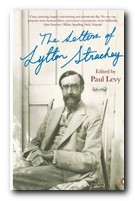
The Letters of Lytton StracheyStrachey’s Letters This collection reveals the poignant love-affair between him and the painter Dora Carrington, plus his affairs with Roger Senhouse and his cousin Duncan Grant. He also wrote almost every day to Leonard Woolf on politics, literature, and life – and he correctly predicted to Maynard Keynes that their sexual proclivities and attitudes put them a hundred years ahead of their time. Includes new materials unknown to previous biographers, almost every item revealing Strachey as a witty, gossipy, and sparkling character.


Lytton Strachey biography


Bloomsbury Group – web links

Bloomsbury Group - web links Hogarth Press first editions
Annotated gallery of original first edition book jacket covers from the Hogarth Press, featuring designs by Vanessa Bell, Roger Fry, and others.

Bloomsbury Group - web links The Omega Workshops
A brief history of Roger Fry’s experimental Omega Workshops, which had a lasting influence on interior design in post First World War Britain.

Bloomsbury Group - web links The Bloomsbury Group and War
An essay on the largely pacifist and internationalist stance taken by Bloomsbury Group members towards the First World War.

Bloomsbury Group web links Tate Gallery Archive Journeys: Bloomsbury
Mini web site featuring photos, paintings, a timeline, sub-sections on the Omega Workshops, Roger Fry, and Duncan Grant, and biographical notes.

Bloomsbury Group - web links Bloomsbury: Books, Art and Design
Exhibition of paintings, designs, and ceramics at Toronto University featuring Hogarth Press, Vanessa Bell, Dora Carrington, Quentin Bell, and Stephen Tomlin.

Bloomsbury Group - web links Blogging Woolf
A rich enthusiast site featuring news of events, exhibitions, new book reviews, relevant links, study resources, and anything related to Bloomsbury and Virginia Woolf

Bloomsbury Group - web links Hyper-Concordance to Virginia Woolf
Search the texts of all Woolf’s major works, and track down phrases, quotes, and even individual words in their original context.

Bloomsbury Group - web links A Mrs Dalloway Walk in London
An annotated description of Clarissa Dalloway’s walk from Westminster to Regent’s Park, with historical updates and a bibliography.

Bloomsbury Group - web links Women’s History Walk in Bloomsbury
Annotated tour of literary and political homes in Bloomsbury, including Gordon Square, University College, Bedford Square, Doughty Street, and Tavistock Square.

Bloomsbury Group - web links Virginia Woolf Society of Great Britain
News of events, regular bulletins, study materials, publications, and related links. Largely the work of Virginia Woolf specialist Stuart N. Clarke.

Bloomsbury Group - web links BBC Audio Essay – A Eulogy to Words
A charming sound recording of a BBC radio talk broadcast in 1937 – accompanied by a slideshow of photographs of Virginia Woolf.

Bloomsbury Group - web links A Family Photograph Albumn
Leslie Stephens’ collection of family photographs which became known as the Mausoleum Book, collected at Smith College – Massachusetts.

Bloomsbury Group - web links Bloomsbury at Duke University
A collection of book jacket covers, Fry’s Twelve Woodcuts, Strachey’s ‘Elizabeth and Essex’.

© Roy Johnson 2000-2014


More on Lytton Strachey
Twentieth century literature
More on the Bloomsbury Group


Filed Under: Bloomsbury Group, Lytton Strachey Tagged With: Biography, Bloomsbury Group, Eminent Victorians, Literary studies, Lytton Strachey

Lytton Strachey by Himself

July 19, 2009 by Roy Johnson

diaries, journals, essays, and personal fragments

Lytton Strachey is best known through his letters, a voluminous outpouring which he maintained throughout his life. But those were written largely to amuse the recipients. This book gathers together his diaries, which he wrote in solitude for himself. It also contains autobiographical fragments, some travel journals, and two essays which were delivered to the Bloomsbury Memoir Club, plus occasional writings from periods of his life ranging from childhood to his last days. After a scene-setting opening which describes life at his family home at Lancaster Gate, the first entry is the journal of a holiday in Gibraltar, Cairo, and Capetown.

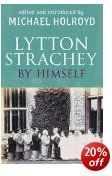
Lytton Strachey by HimselfThen we get a confessional fragment on the first of his schoolboy love affairs, followed by a journal of his time studying literature at Liverpool University College. Next come reflections on Cambridge life and his preoccupations with sex, then an essay that records the events – or rather the thoughts and feelings – of a single day ‘Monday 16 June 1916’. This piece, written amidst the horrors of the first world war, conjures up a languorous, privileged visit to Vanessa Bell’s house at Charleston, doing virtually nothing the whole day long except lounge around in the garden, making plans to seduce the postman.

As Michael Holroyd admits in his linking commentary between the entries, this piece is guaranteed to infuriate Bloomsbury critics, but for those who are more sympathetic it offers a first-hand glimpse of what life was like amidst this group.

It’s also remarkably similar in style to Virginia Woolf’s poetic meditations and her shorter experimental fictions. It hovers tentatively in the regions of what we now call Proustian ‘moments’, and it is interesting to note that like the Lancaster Gate piece, it ends on a note of erotic confession.

This is a fairly lightweight compilation, but it fills in some gaps left by both the letters and the biography. Strachey is a fascinating character – far more complex than the picture of him as an effete neurasthenic which is commonly circulated.

© Roy Johnson 2005

Lytton Strachey by Himself Buy the book at Amazon UK

Lytton Strachey by Himself Buy the book at Amazon US


Michael Holroyd (ed) Lytton Strachey by Himself, London: Abacus, 2005, pp.248, ISBN 0349118124


More on Lytton Strachey
Twentieth century literature
More on the Bloomsbury Group


Filed Under: Lytton Strachey Tagged With: Biography, Bloomsbury Group, Literary studies, Lytton Strachey, Lytton Strachey by Himself

Maestros, Masterpieces and Madness

July 3, 2009 by Roy Johnson

Secret Life and Shameful Death of the Classical Record

Norman Lebrecht is a writer and pundit specialising in classical music who often appears on Radio 3 taking phone-in commentaries on what the BBC supposes to be very controversial topics such as “Should government subsidise the Arts?” and “Is the Internet taking over from print journalism?”. He comes across in the spoken word as a pushy and self-aggrandising windbag, but I must say that in Maestros, Masterpieces and Madness the same approach makes for lively reading.

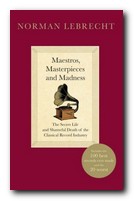
Maestros, Masterpieces and MadnessWhat he offers here is a history of recording classical music, from its faltering start at the beginning of the last century, to the present. His main argument is that what was at first perceived as a somewhat impure medium gradually took hold of the public imagination when the technology became affordable in the form of the LP record and then the CD. This led to an explosion of recording the classics which was fuelled by vainglorious recording companies and famous conductors alike. This accelerated until the whole system ground to a point of collapse brought on by their greed, by over-production, and a failure to see changes in mass media.

That’s the story in a nutshell, but it is told via a combination of detailed insider knowledge of how classical music works as a business, with celebrity vignettes, potted biographies, and what might be called lashings of The Higher Gossip.

Many of the principal conductors we think of as cultural icons and household names emerge from these pages as vain, self-seeking, and egotistical monsters – pocketing huge sums in secret deals behind the backs of their employers, and moving from one orchestra and city to another in a relentless search for more prestige.

This starts with figures such as the mercurial and dictatorial conductor Toscanini and the unscrupulous record producer Walter Legge, and then moves into more recent years with company takeovers which seem more motivated by whim and rivalry than any artistic or business logic.

He’s very well informed about all sorts of details. How Decca was a haven for gays (Britten, Tippett, Maxwell Davis) and how Deutsche Grammophon (owned by Siemens) had used slave labour from the death camps to keep its empire going.

The golden years are awash with lucrative record deals, and projects which replicate every popular classic known to man, ten times over. But then in the 1960s things begin to change. That’s because the record companies suddenly realise that they are making more money out of pop music.

By the end of 1956 Elvis had sold $22 million worth of discs and merchandise in the US, half as much as the whole of the classical market.

From this point onwards there was a struggle between pop and classical in the board rooms. One brought in the money, the other wasted it on a prodigious scale. Despite a temporary revival with early music, the end was in sight. And when it came there was lots of grief and pain for everyone. By the time we reach Internet downloads and Peer-2-Peer filesharing, the game is up.

You’ll love this story if you are interested in behind-the-scenes of the music world, and gossip about those people with high reputations but much lower levels of behaviour. It’s got schadenfreude by the bucketload. (Actually, that’s a fair example of Lebrecht’s style rubbing off on me.)

And yet for all his dirt-dishing on the famous, he actually supports a high patrician line of cultural conservatism. You get a strong sense of regret that things have turned out as they have. He doesn’t see the process he describes as one of change, fuelled by one technology after another, which probably has more people listening to classical music than ever before – as I am doing right now, over the Internet.

© Roy Johnson 2007

Maestros, Masterpieces and Madness Buy the book at Amazon UK

Maestros, Masterpieces and Madness Buy the book at Amazon US


Norman Lebrecht, Maestros, Masterpieces and Madness, London: Allen Lane, 2007, pp.324, ISBN: 0713999570


More on music
More on media
More on lifestyle


Filed Under: Media, Music Tagged With: Cultural history, Maestros, Masterpieces and Madness, Media, Music

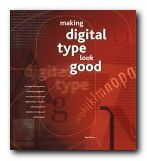
Making Digital Type Look Good

June 19, 2009 by Roy Johnson

illustrated guide to new digital typography techniques

This is a stunningly attractive book. It jumped off the shelf first time I saw it, and after reading it, I’m more in love than ever. Part One offers a history of digital typography and shows how it works. Bob Gordon discusses the features that go into the design of type – the anatomy, rendering, technology, and fine tuning. This is a quick history lesson and a valuable tutorial in basic typography. He gets through the basics quickly, then concentrates on type in the digital age – how it is rendered on screen, in print, and even how it is created, down to pixel level.

Making Digital Type Look GoodThis part also explains those terms you have seen mentioned but never quite understood – such as bitmap, antialiasing, and rasterization. He clarifies all the complexities of font technology in a very straightforward manner – showing how tracking, kerning, and hyphenation can be used to good effect.

What makes this book such a visual treat is that every double-page spread is a work of exquisite design in its own right. The pages are designed on a consistent grid; they are deeply ‘layered’ and colour-coded by subject; the colouring is elegantly restrained; and every detail is illustrated with beautifully-chosen examples.

Part Two shows a a range of classic and contemporary font designs. These range from Bembo and Bodoni to Rotis and ITC Stone. Each font is described, illustrated, and shown with hundreds of examples of styles and setting values. There are also tips on how to set each font to best advantage, using tracking and kerning.

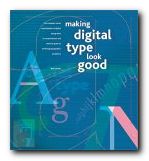
Making Digital Type Look GoodPart Three looks at display type – both on the printed page and the computer screen. He discusses customised font design – making your own font sets using software such as Fontographer and Pyrus. There is a thorough round-up of how the latest font technology is being used on the Web. This involves font-embedding, which is now much more easily achieved than it used to be. Then he concludes with a review of the most innovative font foundries and contemporary designers – such as Neville Brody, Matthew Carter, Zuzana Licko, and Adrian Frutiger.

The really successful feature of this book is that it will appeal to beginners and professionals alike. For those new to typography it offers a visual masterclass of design examples, and for the seasoned practitioner, it is a technical guide to the latest techniques. For anybody interested in good design, it is an example of book production raised to the level of an art form.

NB: The UK and the US editions have different jacket designs and different ISBNs.

© Roy Johnson 2001

Digital Type   Buy the book at Amazon UK

Digital Type   Buy the book at Amazon US


Bob Gordon, Making Digital Type Look Good, London: Thames and Hudson, 2001, pp.192, ISBN: 0500283133


More on typography
More on design
More on media
More on web design


Filed Under: Graphic design, Typography Tagged With: Digital type, Graphic design, Making Digital Type Look Good, Typography, Web design

Making Knowledge Visible

July 13, 2009 by Roy Johnson

practical information architecture – projects and policies

Elizabeth Orna is a big hitter in the field of information architecture and design. Her previous studies – Information Strategy in Practice, Practical Information Policies, and Managing Information for Research have all been very well received. This latest study Making Knowledge Visible sets out her ideas for making information more accessible and more useful. It is based on practical research projects conducted at institutions as diverse as the Co-Operative Bank, Essex County Council, The Tate Gallery, the National Health Service, and the Inland Revenue.

Making Knowledge Visible In the first two chapters she sets out her terms and definitions, then presents an overview of her arguments. Her central idea is a distinction she makes between knowledge and information. Knowledge resides in people’s brains: it is transformed into information when they express it in some form and make it available to someone else. That second person inverts the process by absorbing the information and transforming it into personal knowledge. She uses the term ‘Information Products’ to describe the medium in which these transformations take place: these could be books, reports, data bases, or web sites.

In any organisation these information products constitute a very valuable asset, and they ought to be complete, up to date, documented, and searchable. So much should be quite obvious, but anybody who has worked in industry, commerce, or government knows that this is often not the case. Orna is quick to observe:

I gave up being surprised a long ago by how often those essential products look as if they had been designed to repel all boarders, drive users to distraction, dissuade potential customers from purchase of goods or services, and impede staff in their work.

Fortunately, she goes on to give examples of organisations who have profited from making their own IPs explicitly to themselves. Those who have taken the trouble to value their information have profited from doing so.

But she doesn’t shy away from negative examples There’s an excruciating account of trying to bring rationality and coherence to the Department of Trade and Industry which makes you feel glad you don’t work there.

A lot of the discussion of information is often abstract, but she does make the interesting point that the value of information and knowledge are unusual compared with other commodities:

  • Transactions in them among people can benefit all parties
  • They don’t wear out from use
  • Information can be used in multiple ways by many people simultaneously

Most of the ‘black museum’ cases she exposes result in financial losses inefficiency, and employee frustration; but she also includes the example of the Cambridge police mishandling of public records which resulted in the employment of Ian Huntley as a school caretaker, even though he had a police record for attempted rapes. The result was the tragic murder of two children.

She also deals with some interesting examples which come to light as a result of the Freedom of Information Act. Institutions are obliged to comply with the new requirements to make certain of their information publicly available – but how can they do so accurately unless they have a complete and up-to-date inventory of their own data?

The main lesson which emerges is very simple and quite obvious – but it is seldom implemented. That is, there needs to be an organisational overview and a coherent approach to the management of information within an organisation – and the strength of Elizabeth Orna’s approach is that she does show how it is possible.

One other feature of her work I found attractive is that she moves easily between the world of print and the web, seeing the benefits of both. For those who want to pursue these issues at a more advanced level, she also considers metadata and the Dublin Core.

Information design is a subject which spins out in all directions to include other subjects – information architecture; typography and graphic presentation; usability; web design; systems analysis; and organisational structures. One of the strong features of Orna’s work is that she takes them all into account.

All her claims are meticulously documented, and each chapter carries its own bibliography and list of relevant URLs. It’s also worth noting that the book itself is very elegantly designed by her usual collaborator Graham Stevens.

This is a book aimed at information and systems analysts and managers, web designers, communication specialists, plus teachers and students of business management. I think librarians, project managers, and business consultants would also have a lot to learn from what she has to say.

© Roy Johnson 2005

Making Knowledge Visible   Buy the book at Amazon UK

Making Knowledge Visible   Buy the book at Amazon US


Elizabeth Orna, Making Knowledge Visible, Aldershot, UK: Gower, 2005, pp.212, ISBN: 0566085631


More on information design
More on design
More on media
More on web design


Filed Under: Information Design Tagged With: Data management, HTML, Information architecture, Information design, Making Knowledge Visible

Managing Information for Research

July 13, 2009 by Roy Johnson

practical strategies for data management and research

Most people feel challenged when faced with the prospect of a research project. And why not? After all, it’s not something we do every day. The biggest problem (usually) is knowing how to cope with both the shape and the volume of information. Elizabeth Orna’s advice in Managing Information for Research is that we should concentrate on managing the process of research. She deals with the essential questions which are asked by anybody undertaking a project. What am I looking for? Why am I looking for it? How shall I set about the task? Where shall I start looking? And she answers these questions by showing practical examples and demonstrating how to both define and limit the task. Her evidence is drawn from a long and distinguished career, working in education and government.

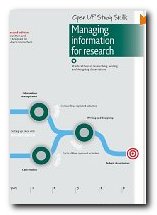
Managing Information for ResearchWhat she is offering here are “ways of thinking about information, and practical techniques of applying the thinking that are characteristic of the disciplines known variously as ‘information science’, ‘librarianship’, ‘information management’, or ‘information studies’.” This is not how to grub around for your data, but what to do with it when you’ve got it.

She discusses for instance the simple practicalities of organising information – on cards; on A4 pages; and in indexes. [This section is crying out for extended hypertext consideration in the next edition.] She also gives an excellent example (culled from a negative experience on an MA course) of why it is important to keep a full documentary record of a research project – complete with a list of the documents required to do it. This is first-rate advice, generated from first-hand educational experience.

There’s also a section on time management, complete with guidance on estimating how long it will take to complete tasks – and what to do when you can’t realistically meet your deadlines. The purpose and readership of a project should be kept in mind so that it’s designed to meet the requirements of an intended audience – and there’s a useful checklist of questions you can apply to any work you produce.

She covers a number of possible ways of presenting your results – which leads into a consideration of what is now called ‘information architecture’. That is, thinking clearly about the way in which data is displayed in order to be useful, easily understood, and effective. This points towards the sort of work being done by Edward Tufte and the University of Reading, both of which sources I was glad to see listed in the excellent bibliographies of further reading which follow each chapter.

The latter parts of the book deal with the importance of effective page layout and good typographical design in the presentation of data. Graham Stevens points readers towards that most important feature in the principles of good design – over-riding the default settings of your word-processor. He covers the details of font choice, line length, margins, grids, word spacing, heading hierarchies, and close editing in its relation to the effective visual display of information.

The publishers have had the good sense to let him completely re-design this hugely enlarged second edition of the book. The result is tremendous improvement on the first. It’s now a production which follows the very same principles it lays down for the efficient presentation of information. It’s also an excellent piece of work which will help anyone who is prepared to learn about the most effective manner of organising and presenting information.

© Roy Johnson 2009

Information for Research   Buy the book at Amazon UK

Information for Research   Buy the book at Amazon US


Elizabeth Orna with Graham Stevens, Managing Information for Research, Buckinghamshire: Open University Press, second edition 2009, pp.271, ISBN: 0335221424


More on information design
More on design
More on media
More on study skills
More on writing skills


Filed Under: Information Design, Study skills Tagged With: Data management, Information design, Managing information, Managing Information for Research, Research, Writing skills

Marcel Proust Illustrated Life

June 8, 2009 by Roy Johnson

biographical notes, charming illustrations, and photos

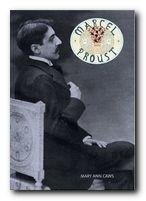
This short biographical study offers an introduction to Proust’s strange life, and his unrelenting devotion to creativity. It’s written by an expert, and presented in a very attractive manner with archive photographs on almost every page. Mary Ann Caws admits from the outset that with so many other excellent biographies of Proust available [by George Painter, Ronald Hayman, and William Sansom] there’s no point in writing another.

Marcel Proust Illustrated LifeInstead, she produces an account of Proust which takes themes and motifs from his life as a starting point for meditations upon them – some of them not much longer than a single page, and others stretching out in more leisurely fashion to make well-informed reflections on the social context which gave rise to his work.

For those who don’t know Proust well, she includes a sufficient number of tantalizing biographical details to whet any appetite for more. He slept between eight in the morning and three in the afternoon, then worked late into the night, fueled (like Balzac) by strong coffee and a variety of drugs. He turned up to the best restaurants in the middle of the night and paid for special dinners to be laid on. He left some of his best furniture to a male brothel which he frequented.

Caws is steeped in knowledge about Proust and his background, and her account moves easily from his personal life to cultural issues. Her most extensive chapter is a lengthy analysis of Proust’s relationship to music, and the influence of the Ballets Russes on Paris and London in the early years of the last century. She also discusses the influence of the English art critic Ruskin on Proust’s literary style, and notes in addition his enthusiasm for the work of Thomas Hardy.

The beginner expecting a chronological introduction to the main events in Proust’s life might be disappointed, but by way of compensation it is the photographs and illustrations which make this book such a charming experience. The images of late nineteenth century Paris which inspired so much of his work are surrounded by sketches from his notebooks, paintings of the people who inspired his characters, and photographs that you rarely see elsewhere.

© Roy Johnson 2005

Marcel Proust   Buy the book at Amazon UK

Marcel Proust   Buy the book at Amazon US


Mary Ann Caws, Marcel Proust: an illustrated life, New York: Overlook Press. 2005, pp.112, ISBN: 1585676489


More on biography
More on Marcel Proust
Twentieth century literature


Filed Under: Biography, Marcel Proust Tagged With: Biography, Cultural history, Literary studies, Marcel Proust

Marcel Proust translations

September 21, 2009 by Roy Johnson

a comparison of the three generally available versions

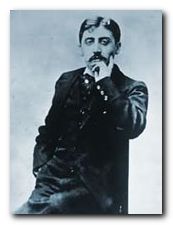
Marcel Proust - portraitMost English-speaking readers will choose to read Marcel Proust in translation. And his literary style is quite demanding. His sentences are long, the paragraphs are huge, and his great novel is one of the longest ever – at a million and a half words. But the effort is worthwhile – and the benefits are enormous. Proust offers gems of psychological perception on every page, and his characters come alive in a way which makes you feel they become your personal friends. There is very little in the way of plot, suspense, or even story in a conventional sense. This modern classic is one which depicts an entire world of upper-class fin de siècle French characters circling round each other before and shortly after the First World War.
The greatest depths of insight he offers are in the form of profound reflections on some of the most important issues any novelist can approach – love, desire, memory, time, and death. These are presented in the form of extended aphorisms, embedded as part of his narrative in such a way that you will hardly be aware where one ends and the other begins.

Other people are, as a rule, so immaterial to us that, when we have entrusted to any one of them the power to cause so much suffering or happiness to ourselves, that person seems at once to belong to a different universe, is surrounded with poetry, makes of our lives a vast expanse, quick with sensation, on which that person and ourselves are ever more or less in contact.

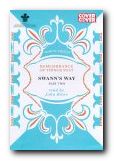
Marcel Proust translations - Scott-MoncrieffEventually, it comes down to which translation should you read – and in English there are three options currently in print. My favourite is the oldest by C.K. Scott Moncrieff. It was first to appear as the original volumes were published, and it even had Proust’s own blessing. Although it is based on a version of the French original which was not complete, it has a charm all of its own. There may be technical errors here and there, but it will take a long time for any of the subsequent translations to supersede its elegance and the powerful influence it has had. It is still held in high regard as a work of literary interpretation.

Marcel Proust translations Buy the book at Amazon UK
Marcel Proust translations Buy the book at Amazon US

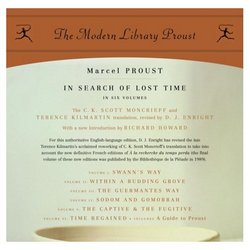
Marcel Proust - six-pack The second option is an edition which is based on the Scott Moncrieff original translation, but which was revised and re-translated by Terrence Kilmartin in the 1990s. This version is also informed by updated versions of the original text in French, including new material which has come to light since the author’s death. Kilmartin’s work was then itself edited by D.J.Enright. So this version comes to us with a guarantee of completeness and accuracy, but with the traces of three different translators’ hands since the original work. Each volume contains its own notes, addenda, and a synopsis, so readers new to Proust can feel supported by this additional material.

Marcel Proust translations Buy the book at Amazon UK
Marcel Proust translations Buy the book at Amazon US

This same tanslation by Kilmartin and Enright is now also available in Everyman’s Library Classics edition. It’s available in both hardback and paperback versions, and they have the advantage of being presented in just four volumes, which keeps down the cost of the complete work.

Marcel Proust translations Buy the book at Amazon UK
Marcel Proust translations Buy the book at Amazon US

Marcel Proust translations - box setThe most recent version was produced by seven different translators. This has the advantage of being the most up to date. It is based on the latest version of a text with a very tangled provenance, and each translator writes a preface on the problems of translation. This version got a mixed reception when it first appeared. Some people argue that it removes a certain prissiness which had clung to the English version of Proust since Scott Moncrieff’s translation. Others have claimed that it introduces new problems and lacks a unifying voice. Perhaps the best reason for choosing it is that it’s now generally available at a cut-down price in a handy boxed set.

Marcel Proust translations Buy the book at Amazon UK
Marcel Proust translations Buy the book at Amazon US


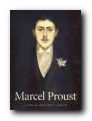
The Cambridge Companion to Proust The Cambridge Companion to Proust provides essays on the major features of Marcel Proust’s great work. These investigate such essential areas as the composition of the novel, its social dimension, the language in which it is couched, its intellectual parameters, its humour, its analytical profundity and its wide appeal and influence. This is suitable for those who want to study Proust in depth. The discussion is illustrated by textual quotation (in both French and English) and close analysis. This is the only volume of its kind on Proust currently available. It contains a detailed chronology and bibliography.
Marcel Proust translations Buy the book at Amazon UK
Marcel Proust translations Buy the book at Amazon US

Marcel Proust: BiographyMarcel Proust is the definitive biography, by George Painter. This study has become famous in its own right, because it combines deep insights with scholarly rigour – and it is also written in a very stylish manner. Painter sketches in the background to Parisian society, which provides a historical context for what follows. He then traces Proust’s singular life (the neurasthenia, the ‘job’ he kept for one day, the cork-lined bedroom) up to his death in 1922 – where he was still revising his masterpiece in bed, which is where he had written most of it. This is regarded as a classic of modern biography, and in 1965 it was awarded the Duff Cooper Memorial Prize.

Marcel Proust translations Buy the book at Amazon UK
Marcel Proust translations Buy the book at Amazon US


Marcel Proust – web links

Marcel Proust web links Marcel Proust at Mantex
Biographical notes, study guide to ‘In Search of Lost Time’. comparison of the English translations, book reviews, web links, study resources.

Marcel Proust web links Marcel Proust at Project Gutenberg
A collection of free eTexts in a variety of digital formats, mainly in French.

Marcel Proust web links Marcel Proust at Wikipedia
Biographical notes, early works, bibliography, further reading, and web links.

Marcel Proust web links Marcel Proust at the Internet Movie Database
Adaptations for the cinema and television – in various languages. Full details of directors and actors, plus production notes, box office, trivia and quiz.

Marcel Proust web links Temps Perdu.com
Translations, collector’s editions, Proust chronology, characters in the novel, film audio and music, online version of the novel, and discussion groups.

Marcel Proust web links The Kolb-Proust Archive
An online searchable database of Proust’s correspondence in French and English, plus further study resources and related web sites. – located at University of Illinois at Urbana-Champaign.

Marcel Proust web links Proust’s In Search of Lost Time
Picture gallery, bibliography, who’s who, video and audio files, and web links.

Marcel Proust web links Marcel Proust – Ephemera Site
Juvenilia, articles, pastiches, poetry, letters – materials unavailable elsewhere.

© Roy Johnson 2004


More on Marcel Proust
Twentieth century literature
More on biography


Filed Under: Marcel Proust Tagged With: French Literature, Literary studies, Marcel Proust, Modernism

  • « Previous Page
  • 1
  • …
  • 52
  • 53
  • 54
  • 55
  • 56
  • …
  • 103
  • Next Page »

Get in touch

info@mantex.co.uk

Content © Mantex 2016
  • About Us
  • Advertising
  • Clients
  • Contact
  • FAQ
  • Links
  • Services
  • Reviews
  • Sitemap
  • T & C’s
  • Testimonials
  • Privacy

Copyright © 2026 · Mantex

Copyright © 2026 · News Pro Theme on Genesis Framework · WordPress · Log in