Mantex

Tutorials, Study Guides & More

  • HOME
  • REVIEWS
  • TUTORIALS
  • HOW-TO
  • CONTACT
>> Home / Archives for 2009

Archives for 2009

Vita: The Life of Vita Sackville-West

June 19, 2009 by Roy Johnson

best-selling author, horticulturalist, and lesbian

Vita Sackville-West is best known these days as the woman who had an affair with Virginia Woolf, and maybe also as the woman who ‘eloped’ with Violet Trefusis. She’s also famous for being one half of a doubly bisexual relationship with her husband Harold Nicolson – recorded by their son in Portrait of a Marriage. What’s not so well known is the fact that she was also a best-selling author, and that in the post-1940 era she made herself a doyenne of writing on the English garden.
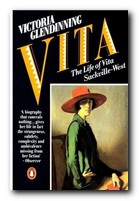
Vita: The Life of Vita Sackville-WestThe first part of Victoria Glendenning’s account of Vita’s life is dominated by her equally unconventional parents, both of whom maintained barely-concealed love affairs. Sackville-West pére moved his lover and her own husband into the family home at Knowle. Mrs Sackville-West seemed to have kept her 25 stone admirer Sir John Scott more at arm’s length, but sufficiently close that she inherited from him a large capital sum, houses, and a Paris flat full of antique furniture.

Vita’s youth was a mixture of foreign travel (and languages) romantic crushes on the Renaissance, and life at the top of the social ladder. Many readers will be surprised by one thing for sure – her enormous application and productivity where writing was concerned. Youthful novels poured from her, plus poems and plays, some written in languages other than English.

Her Sapphism began early, with both Rosamund Grosvenor and Violet Keppel, though she finally did the expected thing and married Harold Nicolson. They quickly produced two children, who were housed in a separate building at their first home in Long Barn.

When Harold Nicolson announced that he had veneral disease, she switched her attentions back to Violet Keppel. Vita dressed in men’s clothing as ‘Julian’ and they booked into hotels together as man and wife. Wot larks!

But when Violet married Denys Trefusis, things started to go wrong. For a start, Vita was jealous, and forbad Violet to have sex with her new husband. She even intercepted Violet on her honeymoon, took her to a hotel, and had sex with her to make the point. The two women eventually eloped to France and were only brought back home when their husbands flew out in a small plane to stop them, and the affair then gradually fizzled out.

Only to be replaced by one with the architect Geoffrey Scott. She shared these problems with her mother, who was meanwhile having an affair with another archtiect, Edwin Lutyens. There were also trips to Persia to visit husband Harold who was posted there – at the same time as he was also visited by his lover Raymond Mortimer.

Her well-known love affair with Virginia Woolf appears to be a sincere enthusiasm on both their parts, but when Virginia shied away from making their relationship a full-blown adventure (a la Violet Trefusis) Vita turned her attentions to Mary Hutchinson, the wife of South African poet Roy Campbell. Meanwhile, she won the Hawthornden prize for her long poem The Land.

She followed that up with best-selling novels The Edwardians and All Passion Spent, bought a near-ruined castle in Kent, and set up her husband with his own flat in London.

There were many other lovers, but then gradually, following the death of her mother in 1936, she started to become something of a recluse. She poured her creative energy into the development of Sissinghurst and its now-famous gardens.

She and Harold continued to live separately, take holidays separately, and wrote to each other every day saying how much they missed each other. Sissinghurst survived the war, and she continued writing in a number of genres, but gradually, as she got older, she focussed all her attention on horticulture and became quite well known as the gardening correspondent of The Observer.

However, it would be a mistake to imagine that her physically demanding nature was curbed in any way. As Gelendenning observes, a propos one of her later passions:

Vita was never without love or the physical expression of love. Her great adventure was never over.

In all this tale, you need to be able to stomarch enormous amounts of upper-class snobbery, vanity, and pure greed. In her own family, there were two major law suits involving contested wills and claims to inheritance. And you also need to be reasonably tolerant to the biographer.

Because despite its having the appearance of a scholarly piece of work, Gelendenning’s method is quite amateurish. Passages from other texts are quoted for their shock value to pad out the drama almost like a stream of consciousness, without giving any indication of their sources. She doesn’t stoop to anything as demanding as page references, and she mixes scenes from West’s fiction with historical fact as if they both had the same value and status.

Despite these technical shortcomings however, this is something of a page-turner. In addition to sometimes reading like an Evelyn Waugh novel, the quasi-aristocratic-cum-bohemian lifestyle is so astonishing that it’s bound to be of interest to us lesser mortals. As Glendenning says of Vita’s own mother: “physical fidelity was not greatly valued in the marriages of the British upper classes”.

© Roy Johnson 2000

Buy the book at Amazon UK

Buy the book at Amazon US


Victoria Glendenning, Vita: The Life of Vita Sackville-West, London:Weidenfeld and Nicolson, 1985, pp.430, ISBN 014007161X


More on the Bloomsbury Group
More on Vita Sackville-West
More on the novella
More on literary studies
Filed Under: Biography, Vita Sackville-West Tagged With: Biography, Bloomsbury Group, Literary studies, Vita Sackville-West, Vita: The Life of Vita Sackville-West

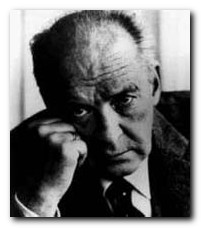
Vladimir Nabokov an illustrated life

June 20, 2009 by Roy Johnson

potted biography with charming photos and illustrations

This short biographical study offers an introduction to Nabokov’s amazingly varied yet consistent life, and his unrelenting devotion to creativity. It’s written by an expert, and presented in a very attractive manner with archive photographs on almost every page. Even though he came from a rich and privileged background, Nabokov’s life was one which was beset by the tragic events of the age in which he lived. His childhood was idyllic – well educated, and loved by both parents, he was taken to school in a chauffeur-driven Mercedes-Benz.

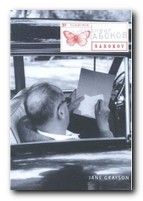
Vladimir Nabokov an illustrated lifeWhen he was only seventeen he inherited a mansion, a country estate, and a fortune . Within three years however he had lost it all in the revolution and he was forced to leave Russia, never to return. In the 1920s he painstakingly established a reputation for himself as a Russian novelist, writing in the first city of emigration, Berlin, and making a living by giving tennis lessons and setting chess problems and crossword puzzles for newspapers.

When the Nazis came to power he hung on as long as possible, but was eventually forced to move to the second choice for Russian emigres – Paris. He realised that he had lost forever the audience he had spent almost twenty years cultivating, and he started writing in French, knowing that he must start all over again.

Then, with only days to spare before the Germans occupied France in 1940 he escaped to the USA and began the entire process over again, writing in English and struggling to make a living by teaching literature in a girls’ college.

Once again he succeeded in adapting himself to his surroundings, but he felt unappreciated in a literary sense – until he threw down the gauntlet by publishing Lolita. This book changed his life.

He was able to give up teaching, and interestingly, for all his fondness for America, one of the first things he did was to return to Europe. He booked into the Palace Hotel in Montreux and lived there for the rest of his life.

Jane Grayson’s account of his life is interspersed with accounts of his major works – The Gift, Pale Fire, Laughter in the Dark, his stories, most of his other novels, and his translation of Pushkin’s Eugene Onegin, which caused such a scholarly controversy when it appeared. I was slightly surprised that she skirted round the over-indulgences of Ada, his last major work.

But it is the photographs and illustrations which make this book such a charming experience. The images of old Russian estates which inspired so much of his work are surrounded by sketches from his notebooks, book jacket designs from the first editions of his work, and photographs which you rarely see elsewhere.

© Roy Johnson 2004

Buy the book at Amazon UK

Buy the book at Amazon US


Jane Grayson, Vladimir Nabokov: an illustrated life, New York: Overlook Press, 2004, pp.146, ISBN 1585676098


More on Vladimir Nabokov
More on literary studies
Nabokov’s Complete Short Stories


Filed Under: Biography, Vladimir Nabokov Tagged With: Biography, Literary studies, Vladimir Nabokov, Vladimir Nabokov: an illustrated life

Vladimir Nabokov greatest works

September 27, 2009 by Roy Johnson

Vladimir Nabokov is one of the great twentieth-century writers. He wrote of himself: “I was born in Russia and went to university in England, then lived in Germany for twenty years before emigrating to the United States.” The first half of his oeuvre was written in Russian; then he switched briefly to French, and then permanently to English. He also spent a third period of exile living in Geneva, and translating his earlier works from Russian into English.

Nabokov loves word-play, stories that pose riddles, and games which keep readers guessing. Above all, he loves jokes. He produces witty and intellectual writing – and yet persistently draws our attention to moments of tenderness and neglected sadness in life. It is lyric, poetic writing, in the best sense of these terms.

Beginners should start with some of the short stories or the early novels, before tackling the challenges of his later work. Be prepared for black humour and unashamed tenderness – often on the same page. And be sure to keep a dictionary on hand.


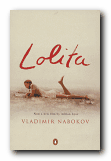
Vladimir Nabokov greatest works -LolitaLolita (1955) is without doubt Nabokov’s masterpiece – a tour de force of fun and games in both character, plot, and linguistic artistry. And yet its overt subject is something now considered quite dangerous – paedophilia. A sophisticated European college professor goes on a sexual joy ride around the USA with his teenage step-daughter. He evades the law, but drives deeper and deeper into a moral Sargasso, and the end is a tragedy for all concerned. There are wonderful evocations of middle America, terrific sub-plots, and language games with deeply embedded clues on every page. You will probably need to read it more than once to work out what is going on, and each reading will reveal further depths.  

Lolita – a tutorial and study guide
Lolita – buy the book at Amazon UK
Lolita – buy the book at Amazon US


Vladimir Nabokov greatest works - Pale FirePale Fire is a very clever artistic joke. It’s a book in two parts – the first a long poem (quite readable) written by an American poet who we are encouraged to think of as someone like Robert Frost. The second half is a series of footnoted commentaries on the text written by his neighbour, friend, and editor. But as we read on the explanation begins to take over the poem itself, we begin to doubt the reliability – and ultimately the sanity – of the editor, and we end up suspended in a nether-world, half way between life and illusion. It’s a brilliantly funny parody of the scholarly ‘method’ – written around the same time that Nabokov was himself writing an extensive commentary to his translation of Pushkin’s Eugene Onegin.

Pale Fire – a tutorial and study guide
Pale Fire – buy the book at Amazon UK
Pale Fire – buy the book at Amazon US


PninPnin is one of his most popular short novels. It deals with the culture clash and catalogue of misunderstandings which occur when a Russian professor of literature arrives on an American university campus. Like many of Nabokov’s novels, the subject matter mirrors his life – but without ever descending into cheap autobiography. This is a witty and tender account of one form of naivete trying to come to terms with another. This particular novel has always been very popular with the general reading public – probably because it does not contain any of the dark and often gruesome humour that pervades much of Nabokov’s other work.  

Pnin – a tutorial and study guide
Pnin – buy the book at Amazon UK
Pnin – buy the book at Amazon US


Vladimir Nabokov greatest works - Collected StoriesCollected Stories Nabokov is also a master of the short story form, and like many writers he tried some of his literary experiments there first, before giving them wider reign in his novels. This collection of sixty-five complete stories is drawn from his entire working life. They range from the early meditations on love, loss, and memory, through to the later technical experiments, with unreliable story-tellers and the games of literary hide-and-seek. All of them are characterised by a stunning command of language, rich imagery, and a powerful lyrical inventiveness.  

Buy the book at Amazon UK
Buy the book at Amazon US


Vladimir Nabokov greatest works - Speak MemorySpeak Memory is supposed to be an autobiography, but if you are looking for frank confessions and concrete details, you will be disappointed. Nabokov was almost pathologically private, and he argued consistently that readers should not look into writer’s private lives. This ‘memoir’ covers Nabokov’s first forty years, up to his departure from Europe for America at the outset of World War II. The ostensible subject-matter is his emergence as a writer, his early loves and his marriage, his passion for butterflies and his lost homeland. But what he really offers is a series of meditations on human experience, the passage of time, and how the magic of art is able to transcend and encapsulate both.  

Buy the book at Amazon UK
Buy the book at Amazon US


Vladimir Nabokov greatest works - DespairDespair – is an early ‘Berlin’ novel which deals with the literary figure of ‘the double’. Chocolate manufacturer Herman Herman (see the point?) is being cuckolded by his vulgar brother-in-law and his sluttish wife. He meets a man who he believes to be his exact double, and plans a fake suicide to escape his torments. Everything goes horribly wrong, in a way which is simultaneously grotesque, amusing, and rather sad. All of this is typical of the way in which Nabokov manages to blend black humour with a lyrical prose style.

Despair – a tutorial and study guide
Despair – buy the book at Amazon UK
Despair – buy the book at Amazon US


Vladimir Nabokov greatest works - MaryMary (1923) is his first novel, in which he evokes the raptures of youthful pleasures, and the discovery of passion and loss. His lyrical prose records a young Russian exile’s recollections of his first love affair. But the woman in question clearly symbolises his relationship with Russia. Nabokov is also good at a creating a marvellous sense of awe in contemplating the quiet aesthetic pleasures in everyday events and special moments of being.  

Mary – a tutorial and study guide
Mary – buy the book at Amazon UK
Mary – buy the book at Amazon US


Vladimir Nabokov greatest works - Laughter in the DarkLaughter in the Dark and King, Queen, Knave show a much darker side to his nature, with its focus on adultery and deception. These traits are taken to an uncomfortable extreme in Laughter in the Dark (1932) which plots the downfall of a man who runs off with a young girl who, when he is rendered blind in a car accident, secretly moves her lover in to live under the same roof. The pair of them torment the protagonist in a particularly gruesome fashion – a theme Nabokov was to explore twenty years later in Lolita.

Laughter in the Dark – a tutorial and study guide
Laughter in the Dark – buy the book at Amazon UK
Laughter in the Dark – buy the book at Amazon US


Vladimir Nabokov greatest works - The GiftThe Gift (1936) is generally held to be the greatest of his Russian novels. It deals with the ironies and agonies of exile. It is the last of the novels Nabokov wrote in his native Russian and the crowning achievement of that period in his literary career. It’s also his ode to Russian literature, evoking the works of Pushkin, Gogol, and others in the course of its narrative: the story of Fyodor Godunov-Cherdyntsev, an impoverished émigré poet living in Berlin, who dreams of the book he will someday write – a book very much like The Gift itself. The novel also includes a deeply felt fictionalisation of the murder of Nabokov’s own father in 1922 whilst he was attempting to stop a political assassination.

Buy the book at Amazon UK
Buy the book at Amazon US

© Roy Johnson 2009


More on Vladimir Nabokov
More on literary studies
Nabokov’s Complete Short Stories


Filed Under: Vladimir Nabokov Tagged With: Despair, King, Knave, Laughter in the Dark, Literary studies, Lolita, Mary, Pale Fire, Pnin, Queen, Speak Memory, The Gift, The novel, The Short Story, Vladimir Nabokov

Vladimir Nabokov life and works

September 27, 2009 by Roy Johnson

Vladimir Nabokov life and works1899. Vladimir Nabokov was born in St Petersburg on April 23 [the same birthday as Shakespeare]. His father was a prominent jurist, liberal politician, and a member of the Duma (Russia’s first parliament). His mother was the daughter of a wealthy aristocratic family.

1900. Nabokov learned English and then French from various governesses. The Nabokov family spoke a mixture of French, English, and Russian in their household.

1904. The first national congress (zemstvo) was held in St Petersburg in November. Its final session took place in the Nabokov home.

1905. ‘Bloody Sunday’ in January when Tsar’s troops fired at demonstration of workers converging on the Winter Palace. There was a general strike throughout Russia in October.

1906. Nabokov’s father was elected to the first state Duma – then banned from politics for signing a manifesto opposing conscription and taxes.

1908. Nabokov’s father served three month sentence in Kresty Prison.

1911. Nabokov began attending the highly regarded Tenishev School – a noted liberal academy. He was driven to school each day in the family Rolls Royce.

1914. Nabokov writes his first poems. First World War begins.

1915. The start of his first love affair, with Valentina Shulgina.

1916. Nabokov privately publishes a collection of poems Stikhi in Petrograd. His uncle dies, leaving him a country house and estate, plus a substantial fortune.

1917. February revolution in Russia. Nabokov’s father was a member of the provisional government. Following the October revolution, the aristocratic Nabokov home comes under attack. The family moves to Crimea in the south.

1919. The family flees into exile from the Crimea on an old Greek ship carrying dried fruit. The family settles provisionally in London.

1919. His father moves the family to Berlin – the first centre of Russian emigration. Nabokov stays behind in England, studying French and Russian literature at Trinity College Cambridge. Some of these experiences appear in his first English-language novel, The Real Life of Sebastian Knight.

1922. His father is murdered while attempting to stop an assassination attempt on the politician Pavel Miliukov. This episode later appears in The Gift. Nabokov translates Alice in Wonderland into Russian. He becomes engaged to Svetlana Siewert in Berlin.

1923. Nabokov moves to Berlin, where he earns a living giving English and tennis lessons, and working as a walk-on extra in films. His engagement is broken off. He publishes poems, reviews, chess problems, and short stories in ‘Rul (The Rudder), a liberal newspaper founded by his father.

1925. Nabokov marries Vera Evseena Slonim.

1926. Publishes Mary, his first novel. It goes unnoticed.

1928. His second novel, King, Queen, Knave appears, and causes the first stirrings of interest and controversy in Russian emigré literary circles.

1929. His third novel, The Luzhin Defense is published serially. He develops a readership in Berlin and Paris – the ‘second’ centre of Russian emigration.

1930. Critical attacks on Nabokov’s writing begin in emigré circles. Publishes a novella The Eye.

1931. Publishes Glory, his fourth novel.

1932. Publishes Kamera Obskura – Laughter in the Dark.

1933. Begins work on The Gift. Hitler comes to power in Germany.

1934. Birth of Dmitri, Nabokov’s only son.

1935. Breaks off work on The Gift to write Invitation to a Beheading which appears serially, giving rise to much debate and controversy.

1936. Publication of Despair. A small circle of writers, critics, and readers begin to place VN’s work alongside other great modern Russian writers. Knowing he is likely to lose connection with his Russian emigre audience, he composes ‘Mademoiselle O’ – in French.

1937. The Gift begins to appear serially. The Nabokov’s move to Paris to escape the threat from Nazism. Nabokov becomes involved with La Nouvelle Revue Francaise, meets Jean Paulhan and James Joyce, and composes in French an essay on Pushkin entitled Pouchkine, ou le vrai et le vraisemblable. He begins an affair with Irina Guadanini.

1938. He writes two plays produced in Russian in Paris: Sobytia (The Event) and Izobretenie Wal’sa (The Waltz Invention). Begins writing The Real Life of Sebastian Knight – in English.

1939. Writes a novella The Enchanter, his first version of the Lolita story (which contradicts the account he gives in the introduction to Lolita).

1940. The Nabokovs leave for the United States on board the Champlain. He begins his lepidopteral studies at the Museum of Natural History in New York. Meets Edmund Wilson, who will introduce him to The New Yorker.

1941. One year appointment in comparative literature at Wellesley College. Publication of his first English novel, The Real Life of Sebastian Knight.

1942. Nabokov named researcher at Harvard University’s Museum of Comparative Zoology. Teaches Russian literature three days a week at Wellesley College.

1943. Nabokov receives a Guggenheim Award.

1944. Publication of Nikolai Gogol and Three Russian Poets – translations of Pushkin, Lermontov, and Tiutchev. Appointed lecturer at Wellesley College.

1945. Nabokov and his wife Véra become American citizens. His brother Sergey dies in Nazi concentration camp.

1947. Publication of Bend Sinister. Begins planning Lolita.

1948. Nabokov is offered and accepts a professorship of Russian literature at Cornell University in Ithaca, New York.

1951. He is a guest lecturer at Harvard. Publication of autobiography Conclusive Evidence.

1953. Second Guggenheim Award and American Academy of Arts and Letters Award. Finishes writing Lolita.

1954. Works on Pnin and his monumental translation of Eugene Onegin.

1955. Lolita, refused by four American publishers, is published in Paris by Olympia Press, run by Maurice Girodias, largely a pornographer.

1956. Publication of Vesna v Fial’te – 14 stories in Russian.

1957. Publication of Pnin.

1958. Publication of Dmitri and Vladimir Nabokov’s translation of Lermontov’s A Hero of Our Time, Nabokov’s Dozen (stories), and Lolita in the United States.

1959. Lolita becomes an international best-seller. Nabokov is able to resign from teaching in order to devote himself full time to creative writing. The family move to Switzerland, to be near Dmitri, who is studying opera in Italy.

1960. Publication of Nabokov’s translation of The Song of Igor’s Campaign. He writes a screenplay of Lolita for Stanley Kubrick. Begins Pale Fire.

1961. Moves into a suite of rooms in the Palace Hotel, Montreux – and stays there for the rest of his life.

1962. Publication of Pale Fire. The release of Stanley Kubrick’s film version of Lolita, starring James Mason, Shelley Winters, Peter Sellers, and Sue Lyon. Nabokov makes the cover of Newsweek.

1964. Publication of his mammoth translation with commentary of Pushkin’s Eugene Onegin – which becomes the subject of protracted controversy between Nabokov and Edmund Wilson.

1967. Publication of Speak, Memory. Publication of the first important critical works on Nabokov: Page Stegner’s Escape into Aesthetics and Andrew Field’s Nabokov, His Life in Art.

1969. Publication of Ada or Ardor: A Family Chronicle Nabokov makes the cover of Time magazine.

1972. Publication of Transparent Things.

1973. Publication of A Russian Beauty and Other Stories – 13 stories, some translated from the Russian, some written directly in English. Publication of Strong Opinions – interviews, criticism, essays, letters. Rift with his biographer Andrew Field.

1974. Publication of Lolita: A Screenplay, which was not used by Kubrick for the film. Publication of Look at the Harlequins.

1975. Publication of Tyrants Destroyed and Other Stories – 14 stories, some from the Russian, some written in English.

1976. Publication of Details of a Sunset and Other Stories – 13 stories, translated from the Russian.

1977. Nabokov dies July 2 in Lausanne. He is buried in Clarens, beneath a tombstone that reads ‘Vladimir Nabokov, écrivain.’

© Roy Johnson 2009


More on Vladimir Nabokov
More on literary studies
Nabokov’s Complete Short Stories


Filed Under: Vladimir Nabokov Tagged With: Biography, Literary studies, The novel, The Short Story, Vladimir Nabokov

Vocabulary – how to use it correctly

September 14, 2009 by Roy Johnson

free pages from our English Language software program

Vocabulary – definition

vocabulary Vocabulary is a general term to describe the particular selection or type of words chosen in speech or writing.
redbtn It refers to individual items of content such as words.

redbtn Stylistic analysis picks out specific vocabulary items and analyses them as distinct from the grammar of the statement.


Examples

redbtn Here is a statement [from the world of computer technology] with certain vocabulary items selected for analysis.

“JavaScript is not a standalone programming language, and JavaScript programs cannot run outside the context of a Web browser.”

JavaScript technical jargon and the proper name for a programming language
standalone a recent coinage used as an adjective describing the nature of the programming language
program an American borrowing, useful as it distinguishes it from the English ‘programme’ which is now kept for reference to theatrical or TV content lists
Web more technical jargon, and the [abbreviated] proper name of the World Wide Web
browser the name of software for exploring the Web [a very recent coinage]

Use

redbtn Every individual has a collection of vocabulary items stored up in memory for use in speech and writing.

redbtn This collection can be referred to as a person’s lexicon.

redbtn The lexicon of any group is the sum-total of its word-stock.

redbtn This public lexicon is recorded in dictionaries — which have to be kept up to date as word meanings change and new items of vocabulary are created.

redbtn Vocabulary (or ‘lexis’) is usefully distinguished from grammar in textual analysis. The grammar of any utterance is the underlying structure. The vocabulary or the lexical level is the immediate content or subject-matter of a statement.

redbtn The passage which follows contains a normal mixture of grammatical items and vocabulary items.

Bananas are cheap and plentiful and can be used in many interesting ways, either as desserts or in main meals.

redbtn With the grammatical items removed, the sentence still makes some sense.

Bananas cheap plentiful used many interesting ways either desserts main meals.

redbtn Without the lexical items however, the grammar words mean nothing as a sequence.

are and can be in as or in

redbtn As part of the language acquisition process, children build up a vocabulary which is like a personal archive of words or utterances. These may be called on as part of the natural act of speaking.

redbtn Much research has been carried out to assess the volume of a child’s vocabulary at a young age. It has been impossible to gain accurate results in this field because a child utters only a fraction of its total vocabulary.

redbtn Saussure applied the terms langue and parole to this phenomenon. Langue referred to the total individual vocabulary comprising the words learnt and understood (but not necessarily uttered). Parole referred to the vocabulary actually spoken.

redbtn There is an added complexity surrounding this topic. That is the definition of ‘knowing’ a vocabulary item. A person could utter a word or a phrase without knowing its meaning. Moreover, the quality of understanding is not always easy to assess, especially in children.

redbtn Vocabulary is one level of stylistic analysis, along with graphology, phonology, grammar and semantics.

redbtn In anylysing the vocabulary of a text or a speech, patterns of usage would be the subject of comment. For instance, the frequent occurrence of technical terms in car repair manual, or of emotive terms in a tabloid newspaper article.

redbtn Aberrant usage would also be of interest. In advertising for instance, words are sometimes spelt deviantly as in Beanz meanz Heinz. Coinages are also used, as is rhyme and onomatopoeia. All these features become issues of vocabulary in stylistics.

Self-assessment quiz follows >>>

© Roy Johnson 2004


English Language 3.0 program
Books on language
More on grammar


Filed Under: English Language Tagged With: English language, Language, Vocabulary, Words

Waterhouse on Newspaper Style

July 23, 2009 by Roy Johnson

writing skills via amusing critique of tabloid journalism

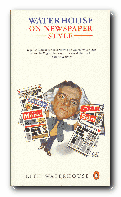
Waterhouse on Newspaper Style has a complex history. It was originally written in 1979 as a series of style notes for journalists on the Daily Mirror, and it has gone in and out of print ever since – whilst simultaneously establishing a reputation as a classic of clear guidance and an analysis of tabloid journalism. Keith Waterhouse is one of the old Fleet Street school who actually care about clarity, accuracy, and good prose style.

Waterhouse on Newspaper Style Writing from the point of view of a working journalist, he inspects the linguistic practice of the press and reveals its weaknesses in a series of witty mini-essays. He adopts the A-to-Z format – from Adjectives through Metaphor to the Weather – looking at usage and abusage in a way which is both instructive and very amusing.

It’s easy to score points off the tabloid fixation with headlines which combine rhyme, alliteration, cliché, and weak puns [RAMBO BOY ON RAMPAGE]. However, in the course of dissecting these literary weaknesses, Waterhouse forces us to think about the everyday misuse of language in a way which is instructive beyond the pages our daily newspapers.

For instance, in terms of the discourse of the medium, he points out that popular journalism employs an artificial language which nobody actually speaks – as in “the dollar takes a pounding”.

He describes this approach as being like “ransom notes which are made up of lettering cut out of various publications”. And all through this amusing tour of catchwords, journalese, officialese, and tautology he has perceptive advice to offer on the most basic elements of good writing – such as accuracy and restraint in the use of the comma, and alertness to the cliché, the vogue word, and the tired metaphor.

Another of his observations which struck me as usefully perceptive was the reason he gives for distrusting those who use too much jargon:

to use outsiders’ jargon is to take their own evaluation of themselves on trust – or anyway to give the impression of doing so. This is one good reason why journalists should never resort to the jargon of the field they cover.

Waterhouse illuminates the conventions of good and bad writing without once resorting to the polysyllabic terms of conventional grammar. There are no ‘objects of a preposition’ or ‘possessive pronouns’ here. Everything is done via plain prose and good examples. He comes out on the side of the specific, the concrete, and the direct expression. We should write ‘red’, not ‘brightly coloured’, ‘rain’ not ‘bad weather’, and ‘began’ not ‘commenced’.

It’s a joy to read, it’s instructive, and you’ll search your own prose more rigorously to avoid the solecisms he discusses. But the book’s idiosyncratic career still seems to be in progress. My edition is a recent Penguin paperback, yet when I checked the Net, it didn’t appear to be in print. Keep looking. It’s well worth the effort.

© Roy Johnson 2000

Waterhouse on Newspaper Style   Buy the book at Amazon UK

Waterhouse on Newspaper Style   Buy the book at Amazon US


Keith Waterhouse, Waterhouse on Newspaper Style London: Penguin, 1993, pp.250, ISBN: 0140118195


More on writing skills
More on creative writing
More on grammar


Filed Under: Journalism, Writing Skills, Writing Skills Tagged With: broadsheets, Journalism, Keith Waterhouse, Tabloids, Waterhouse on Newspaper Style, Writing skills

We the Media

June 19, 2009 by Roy Johnson

open sources – writing and new web technology

O’Reilly publish computer books and software guidance manuals, but they also support the open source movement. This seeks to make the code of software available to be developed and used free of charge. This book is one of their contributions to the polemic. We the Media is a study of committed writing which argues the case for what author Dan Gillmor calls open source journalism. He takes the idea of sharing code into the realms of information exchange. To this is coupled his enthusiasm for blogging as the greatest form of New Journalism. He also discusses the other forms in which information can easily be transmitted – such as peer-to-peer file sharing, Wikis, the mobile connected camera, text messaging, and RSS feeds.

Open Source JournalismHis basic argument is that journalists, news broadcasters, public relations people, political activists, and anybody else who wants their message to be taken seriously should make full use of these latest communication tools. He gives plenty of examples of IT-activism – people mounting public information on web sites when the authorities removed it from public view; others raising political campaign funds from adverts on blogs.

He seems a little over-optimistic about their effectiveness for political activism, but on firmer ground when it comes to more neutral journalistic uses.

For anybody who is short of ideas, his chapters are packed with practical examples of successful enterprises which have been launched on the strength of a new blog. These range from one-person campaigns or news services, to blogs which generate income or sponsorship. One intrepid soul asked people for the money to send him to report the war in Iraq – and he got it.

Gillmor also gives a cautious glimpse into the future by looking at the latest trends in web technology. This includes news aggregators, RSS feeds, and Web Services. All of these enable information to be gathered automatically and customised by the user.

In the latter part of the book he looks at some of the legal implications of the latest technologies – cases where people have claimed to be libeled, copyright cases, cybersquatting, even cases where people have sought to prevent others deep-linking into their sites. He deals with all these issues in a way which supports freedom of speech, whilst recognising that it might sometimes be put to negative purposes.

Strangely enough, he does have some reservations about the current state of copyright, which he sees as increasingly restrictive to the point of abuse:

What were once 14-year terms have now been extended to the life of the author plus 75 years, or 95 years when a copyright is held by a corporation. By amazing coincidence, copyright terms seem to get extended every time Mickey Mouse comes close to entering the public domain

This is a committed and wide-ranging polemic which explores the very latest developments in online communications – both from a technological and a content point of view.

In keeping with the high standards he advocates throughout, he acknowledges and references all his sources, there is a huge webliography listing all the homepages, sites, and blogs mentioned; and the book has its own web site where you can follow up on his arguments, find software, and even download a copy of the book free of charge.

© Roy Johnson 2006

We the Media   Buy the book at Amazon UK

We the Media   Buy the book at Amazon US


Dan Gillmor, We the Media: grassroots journalism by the people, for the people, Sebastopol, CA: O’Reilly, 2006, pp.336, ISBN: 0596102275


More on journalism
More on creative writing
More on writing skills
More on publishing


Filed Under: Journalism, Open Sources, Publishing Tagged With: Communication, Journalism, Open Sources, Publishing, We the Media

Weather Bird

June 19, 2009 by Roy Johnson

the state of jazz at the dawn of its second century

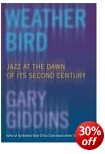
This book covers the writing of prominent jazz critic Gary Giddins from 1990 to 2003. There are reviews of concerts and broadcasts, record reviews, and transcripts of interviews, but mainly reprints of the column entitled Weather Bird which he wrote for the Village Voice between 1974 and 2003. His range is wide. It goes from Traditional figures such as Louis Armstrong to contemporary and avant-gard figures such as Cecil Taylor and young modernists such as Javron Jackson. In between there’s a rich appreciation of figures such as Benny Carter, Gerry Mulligan, Cassandra Wilson, Sonny Rollins, and Jimmy Heath. He even writes with generous recognition of fellow jazz critics Martin Williams and Leonard Feather.

Weather BirdBetween the profiles and concert reviews there are features such as The Best Jazz Records of the Year. After the lapse of up to a decade, it’s interesting to see how many names you can recognise, and sad to note how few of these records are still available. His reviews of jazz concerts give a vivid impression of what it’s like to be immersed in the world of jazz, but because there are often so many people to mention, these reviews sometimes become bewildering lists of names and tune titles.

As a reviewer myself I admired the dextrous way he manages to avoid “… and the next tune … then they play … next comes …”. He certainly writes in a crisp style which is never dull:

The MJQ is almost too good. Fixed snapping rythms embellished with bells and chimes support contrapuntal melodies and compelling improvisation. Clipped, jabbing piano and vivid blues complement saturated sonorities augmented by bowed bass and accelerated vibrophone vibrato. A seductive book, assiduously reworked and enhanced for decades, transfigures popular songs into originals and vice versa.

He is amazingly well informed, and shows it in such fascinating and surprising features as a political and social history of jazz in Denmark. It’s a very instructive compilation for non-US readers. There are lots of musicians discussed who I had never heard of before, and his appreciation of the much under-rated bop vocalist Bob Dorough had me scanning the listings at Amazon in an instant.

He even finds positive things to say about people who have often struck dubious relations with the traditions of jazz such as Sun Ra, Cecil Taylor, and Ornette Coleman.

Longer pieces such as a book chapter essay summarising the avant gard in jazz, and his sleeve notes for the complete Columbia recordings of Bille Holiday, and his ‘roadmap’ to jazz 1945—2001 which analyses one significant recording from each year of the post-war period.

He puts the relative newcomers such as Cyrus Chestnut and Jason Moran into a rich historical context, and he’s not afraid to reveal the weaknesses in revered (some would say over-rated) figures such as Winton Marsalis.

One thing’s for sure. If you have listened to jazz of any style or flavour from the last seventy years or so, you’ll find something to interest you here. This is a tremendously comprehensive guide and a rich source of reference, as well as a stimulating critique of America’s one indigenous art form.

© Roy Johnson 2005

Weather Bird Buy the book at Amazon UK

Weather Bird Buy the book at Amazon US


Gary Giddins, Weather Bird, Oxford: Oxford University Press, 2005, pp.632, ISBN: 0195156072


More on music
More on media
More on lifestyle


Filed Under: Music Tagged With: Cultural history, Jazz, Modern jazz, Music, Weather Bird

Weaving the Web

July 3, 2009 by Roy Johnson

the history of the Web – by the man who invented it

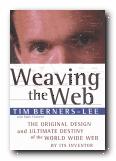
Everybody knows that Tim Berners-Lee is the man who invented the World Wide Web – and that he hasn’t become a millionaire. Weaving the Web explains the reasons why. It’s his own account of one of the most profound developments in twentieth century technology – almost as important as the invention of the Net itself. His story begins in one of the spiritual homes of computing – Manchester UK – where his both his parents worked on the first commercial mainframes made by Ferranti in the 1950s.

Weaving the WebHe wrote his first program to link information in 1980 with “no loftier reason than to help me remember the connections amongst the various people, computers and projects at the [CERN] lab”. He was concerned to share information amongst a community of scientists who were equipped with different languages, different computers, and different operating systems – and it’s interesting to note the persistence of this altruism as the development unfolds.

His narrative is the now-familiar one of noble intentions battling against indifference, resistance, and outright opposition. There is a wonderful sense of intellectual excitement in following the step-by-step struggle to convince people that information could be linked and shared. And all this is as recent as 1990.

There were also conceptual difficulties. Ten years ago, people on the Net were regularly ‘lost in Cyberspace’ – an expression you don’t see used much any more. How difficult it was for most of us to conceptualize all this back in the early 1990s. It was not an easily intuitive thing to take in that when you clicked on a link you were ‘going’ to a computer at the other side of the world. Worse still – when the connection dropped, you felt as though you had fallen out of an aeroplane in mid-Atlantic. We’ve learned since not to worry when something disappears off the screen.

He discusses the competing systems such as Gopher and WAIS [remember those] and the strategic advantage of making SGML the base for hypertext markup language [HTML], the lingua franca of the Web. He is also forthright enough to admit his own failings, and even describes a conference paper which was rejected, as well as a rather sadly uneventful meeting with Ted Nelson in 1992. There’s also an explanation of how the rather clumsy term URL came about, though he continues to use URI [Indicator] throughout the book.

Once the Web takes off in the early 1990s, people such as Jim Clark and Marc Andreesson start to come into the picture. But whilst they make their fortunes turning Mosaic into Netscape, Berners-Lee selflessly devotes his energies to keeping the Web universal, out of the control of individual interests.

It has to be said that the story begins to dip a little at this point, with important but less dramatic decisions to be taken about protocols and standards.

Click for details at AmazonBy 1996 we’re deep into the details of the Web Consortium [WC3] and its workings. The story picks up again as he covers the Netscape-Microsoft squabble and the move towards extensible markup language [XML]. He goes on to discuss the problems of encryption, privacy, censorship, domain name registration, and policies which should be in place to protect the individual. He also indulges in a little futurism, speculating about the consequences of permanent online connections [Yes please!] and the benefits of XML, which he strongly endorses. His account culminates with a prediction that the Web will evolve into what he calls the ‘Semantic Web’ – a system whereby information will be more intelligently and qualitatively structured.

It’s a relatively easy book to read. I had the impression that it’s a transcript of interviews. And he ends, rather surprisingly, by revealing his belief in parallels between the Web and a ‘non-religious’ faith he has taken up in the US. But one thing remains constant throughout – his passionate desire to keep the Web an open, international standard – and for that we can all be grateful.

© Roy Johnson 2000

Buy the book at Amazon UK

Buy the book at Amazon US


Tim Berners-Lee, Weaving the Web, London: Orion Books, 1999, pp.244, ISBN 0752820907


More on computers
More on technology
More on digital media


Filed Under: Techno-history Tagged With: Computers, Cultural history, Technology, Tim Berners-Lee, Weaving the Web, World Wide Web

Web 2.0 – A Strategy Guide

July 17, 2009 by Roy Johnson

successful Web 2.0 implementations

People who read Chris Anderson’s enormously influential The Long Tail will know that Web 2.0 has revolutionised eCommerce. Companies make more money by lowering their prices; they get rich by giving things away free of charge; and they invite their competitors to share information for mutual benefit. What is Web 2.0 exactly? And how does all this work? Well – Web 2.0 is the latest manifestation of web applications which allow its users to upload information and interact with each other, as well as downloading it, which we did with Web 1.0. And it is a technology which builds on economies of scale.

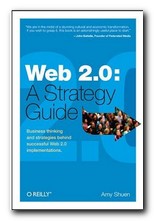
Web 2.0 - A Strategy GuideIf your web site makes 1% profit from 250,000 visitors a week, imagine what happens if you start giving things away and get a million visitors. The chances are your profits will increase by 400%. Amy Shuen’s new book examines this phenomenon from a business point of view. She presents a series of case studies which illustrate the novel forces at work – and you don’t need to know the technical details of modern Internet technology to understand how it all operates.

Flickr, for instance, the photo-sharing service, rapidly generated a user base of two million users who uploaded 100 million photos. The setup costs for this business were very low (no shop, no physical stock) the service was free (Flickr made money from its premium services) and the customers were not only providing the inventory free of charge, but giving it added value by tagging the photos. Flickr was eventually bought by Yahoo! for $40 million, and it continues to prosper.

Shuen also draws on the strategic lessons from these entrepreneurial success stories. It doesn’t matter if you are a big time Web business or just running a one-person site, she asks “Do you allow your visitors to participate in your site? Can they share their own questions and ideas there?”

She has a chapter on Google that provides an interesting example of what’s called a ‘tippy market’. That’s when a company corners a certain percentage of the market which proves fatal for the competition. (The VHS/Betamax rivalry was a case in point). To reach this point Google paid a lot of money to AOL, but it tipped them over in active users to become the dominant search engine – a position which still holds today.

Next she looks at the social networking sites and explains how they establish their phenomenal growth rates. They all have features in common: they’re free; they grow by one subscriber recommending to friends; and as soon as they reach the tipping point they can generate huge incomes from advertising and selling web services. I also noticed that they tend to identify niche markets. Facebook is largely for college graduates keeping in touch; MySpace is for bands and artists publicising their work; and LinkedIn is for business people who want to find useful contacts.

Finally, she offers a five step approach to using Web 2.0 strategic thinking on your own business. This means applying the principles, rather than spending a fortune on complex software. She reminds us that a single extra line at the end of each Hotmail message – “Get your free email at http://www.hotmail.com” – was enough to give them a huge success in viral marketing.

And if all that’s not enough, she also provides two comprehensive bibliographies which list the key texts and resources – including papers from the Harvard Business School, where they practice Web 2.0 strategies by putting all their published research papers online at prices anybody can afford.

© Roy Johnson 2008

Web 2.0   Buy the book at Amazon UK

Web 2.0   Buy the book at Amazon US


Amy Shuen, Web 2.0 – A Strategy Guide, Sebastopol (CA): O’Reilly, 2008, pp.243, ISBN: 0596529961


More on eCommerce
More on media
More on publishing
More on technology


Filed Under: e-Commerce Tagged With: eCommerce, Enterprise, Web 2.0, Web 2.0 - A Strategy Guide, Web design

  • « Previous Page
  • 1
  • …
  • 93
  • 94
  • 95
  • 96
  • 97
  • …
  • 103
  • Next Page »

Get in touch

info@mantex.co.uk

Content © Mantex 2016
  • About Us
  • Advertising
  • Clients
  • Contact
  • FAQ
  • Links
  • Services
  • Reviews
  • Sitemap
  • T & C’s
  • Testimonials
  • Privacy

Copyright © 2026 · Mantex

Copyright © 2026 · News Pro Theme on Genesis Framework · WordPress · Log in