Mantex

Tutorials, Study Guides & More

  • HOME
  • REVIEWS
  • TUTORIALS
  • HOW-TO
  • CONTACT
>> Home / Archives for 2009

Archives for 2009

Bloomsbury Group portraits

July 19, 2009 by Roy Johnson

excellent illustrated exhibition catalogue

This is a short but very charming book, published by the National Portrait Gallery. It explores the impact of Bloomsbury personalities on each other, as well as how they shaped the development of British modernism. But most of all it is a delightful collection of portrait paintings and photographs, with accompanying biographical notes. It’s an introductory essay which outlines the development of Bloomsbury, followed by a series of portraits and the biographical sketches of the major figures.
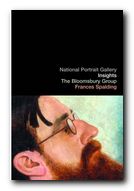
Bloomsbury Group portraits The paintings are supplemented by some quite rare photographs – most of which I suspect came from the National Portrait Gallery for which this publication was once an exhibition catalogue. The characters portrayed are what might be called the usual suspects: Leonard Woolf, Virginia Woolf, Lytton Strachey, Duncan Grant, Vanessa Bell, Ottoline Morrell, John Maynard Keynes, Bertrand Russell, and Dora Carrington, for instance.

It was amusing to note that throughout the pages, Lytton Strachey seems to be in a state of permanent horizontal recline, lounging in a succession of deckchairs and armchairs, which the accompanying text maintains was ‘conducive to a life of intense mental activity’ – forgetting that Virginia Woolf, a far more productive author, often wrote standing up.

The biographical sketches themselves are an entertaining mixture of historical fact, contextualisation, and discreetly gossipy personal details. They also comment on the painted portraits too – so we get an element of psychological interpretation as well.

I was fascinated by some of the small details – such as Lytton Strachey re-naming Reginald Partridge Ralph; E.M.Forster setting fire to his trousers when visiting Virginia Woolf; Frances Partridge modelling creations by Issey Miyake; and an aged Gerald Brenan being kidnapped from an old people’s home in Pinner and taken back to die in his spiritual home in southern Spain.

This is an excellent introduction for newcomers, and there is enough novelty to keep regular Bloomsbury fans interested too. All the paintings and photographs are beautifully reproduced, and the book is well designed and printed. It’s become a best-seller on this site.

© Roy Johnson 2005

Bloomsbury Group portraits Buy the book at Amazon UK

Bloomsbury Group portraits Buy the book at Amazon US


Frances Spalding, The Bloomsbury Group, London: National Portrait Gallery, 2005, pp.108, ISBN 1855143518


More on biography
More on the Bloomsbury Group
Twentieth century literature

Filed Under: Bloomsbury Group Tagged With: Art, Biography, Bloomsbury Group, Modernism, Portraits, The Bloomsbury Group: portraits

Bloomsbury Group web links

September 17, 2009 by Roy Johnson

Bloomsbury Group – further study resources

Hogarth Press first editions
Annotated gallery of original first edition book jacket covers from the Hogarth Press, featuring designs by Vanessa Bell, Roger Fry, and others.

The Omega Workshops
A brief history of Roger Fry’s experimental Omega Workshops, which had a lasting influence on interior design in post First World War Britain.

The Bloomsbury Group and War
An essay on the largely pacifist and internationalist stance taken by Bloomsbury Group members towards the First World War.

Tate Gallery Archive Journeys: Bloomsbury
Mini web site featuring photos, paintings, a timeline, sub-sections on the Omega Workshops, Roger Fry, and Duncan Grant, and biographical notes.

Bloomsbury: Books, Art and Design
Exhibition of paintings, designs, and ceramics at Toronto University featuring Hogarth Press, Vanessa Bell, Dora Carrington, Quentin Bell, and Stephen Tomlin.

Blogging Woolf
A rich enthusiast site featuring news of events, exhibitions, new book reviews, relevant links, study resources, and anything related to Bloomsbury and Virginia Woolf

Hyper-Concordance to Virginia Woolf
Search the texts of all Woolf’s major works, and track down phrases, quotes, and even individual words in their original context.

A Mrs Dalloway Walk in London
An annotated description of Clarissa Dalloway’s walk from Westminster to Regent’s Park, with historical updates and a bibliography.

Women’s History Walk in Bloomsbury
Annotated tour of literary and political homes in Bloomsbury, including Gordon Square, University College, Bedford Square, Doughty Street, and Tavistock Square.

Virginia Woolf Society of Great Britain
News of events, regular bulletins, study materials, publications, and related links. Largely the work of Virginia Woolf specialist Stuart N. Clarke.

BBC Audio Essay – A Eulogy to Words
A charming sound recording of a BBC radio talk broadcast in 1937 – accompanied by a slideshow of photographs of Virginia Woolf.

A Family Photograph Albumn
Leslie Stephens’ collection of family photographs which became known as the Mausoleum Book, collected at Smith College – Massachusetts.

Bloomsbury at Duke University
A collection of book jacket covers, Fry’s Twelve Woodcuts, Strachey’s ‘Elizabeth and Essex’.


Bloomsbury Group web links

© Roy Johnson 2000-2014


Bloomsbury Group - Click for details at AmazonThe Bloomsbury Group is a short but charming book, published by the National Portrait Gallery. It explores the impact of Bloomsbury personalities on each other, plus how they shaped the development of British modernism. But most of all it’s a delightful collection of portrait paintings and photographs, with biographical notes. It has an introductory essay which outlines the development of Bloomsbury, followed by a series of portraits and the biographical sketches of the major figures.


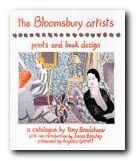
The Bloomsbury Artists - Click for details at AmazonThe Bloomsbury Artists: Prints and Book Designs This volume catalogues the woodcuts, lithographs, etchings and other prints created by Vanessa Bell, Dora Carrington, Roger Fry and Duncan Grant – with various colour and black and white reproductions. Of particular interest are the many book jackets designed for the Hogarth Press, the publishing company established by Leonard Woolf and Virginia Woolf. Also included are ephemera such as social invitations, trade cards, catalogue covers, and bookplates.


More on biography
More on the Bloomsbury Group
Twentieth century literature

Filed Under: Bloomsbury Group Tagged With: Bloomsbury Group, Cultural history, Modernism

Bloomsbury Portraits and Biographies

November 28, 2009 by Roy Johnson

selected and recommended reading

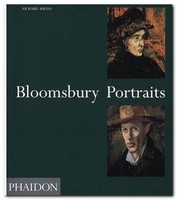
Bloomsbury PortraitsBloomsbury Portraits is an updated and redesigned edition of Richard Shone’s study of the painters of the Bloomsbury group. Vanessa Bell and Duncan Grant were at the centre of the interplay of personal and intellectual life that characterised the group and to whom the Bloomsbury writers often sat for portraits. As a friend of Duncan Grant at the end of his long life and as a frequent visitor to Charleston, Bloomsbury expert Richard Shone is well placed to dispel many of the myths and misconceptions that surround their work.
Bloomsbury Group Buy the book from Amazon UK
Bloomsbury Group Buy the book from Amazon US


The Bloomsbury GroupThe Bloomsbury Group is a short but charming book, published by the National Portrait Gallery. It explores the impact of Bloomsbury personalities on each other, plus how they shaped the development of British modernism. But most of all it’s a delightful collection of portrait paintings and photographs, with biographical notes. It has an introductory essay which outlines the development of Bloomsbury, followed by a series of portraits and the biographical sketches of the major figures.

Bloomsbury Group Buy the book from Amazon UK
Bloomsbury Group Buy the book from Amazon US


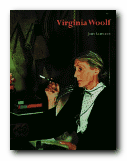
Virginia Woolf : BiographyVirginia Woolf is a readable and well illustrated biography by John Lehmann, who at one point worked as her assistant at the Hogarth Press. Later he bought out her shares and became a full business partner of Leonard Woolf – remaining a close friend of the couple throughout their lives. It is described by the blurb as ‘A critical biography of Virginia Woolf containing illustrations that are a record of the Bloomsbury Group and the literary and artistic world that surrounded a writer who is immensely popular today’. This is an attractive and very accessible introduction to the writer and her intellectual milieu.
Bloomsbury Group Buy the book from Amazon UK
Bloomsbury Group Buy the book from Amazon US


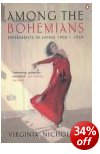
Among the BohemiansAmong the Bohemians: Experiments in Living 1900—1930 was written by Virginia Nicholson, Quentin Bell’s daughter and grand-daughter of Vanessa Bell, who was Virginia Woolf’s sister. Bloomsbury lies at the heart of the book in its portraits of Ralph Partridge, Virginia Woolf, Duncan Grant, Lytton Strachey, Dora Carrington, and Katherine Mansfield, plus peripheral figures such as Arthur Ransome, Rupert Brooke, Augustus John, Nina Hamnett, and Dylan and Caitlin Thomas. Very amusing, well written, and every page dense with top class gossip and anecdotes. She looks at their tangled love lives naturally, but also their radical ideas on money (and poverty) food, dress, and even child-raising. Highly recommended.
Bloomsbury Group Buy the book from Amazon UK
Bloomsbury Group Buy the book from Amazon US


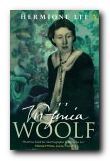
Virginia Woolf - a biographyVirginia Woolf, a biography by Hermione Lee is strongly recommended if you would prefer something more advanced and intellectually demanding. It assumes you know the general background to her life and the Bloomsbury group. Lee writes from an academic perspective, and extricates Woolf from clichs about madness and modernism to reveal a vigorous artist whose work is politically probing as well as psychologically delicate. This is one for the serious literary scholar – but it’s nevertheless very readable.
Bloomsbury Group Buy the book from Amazon UK
Bloomsbury Group Buy the book from Amazon US


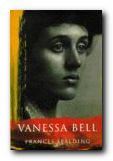
Vanessa Bell - a biographyVanessa Bell, Francis Spalding’s excellent biography, sets out a portrait of this complex and talented woman who sacrificed a great deal of her time and efforts to looking after other people. She managed to stay on friendly terms with her lover, her husband, and her ex-lover – and to keep them friendly with each other. At the same time she was an active member of the Omega workshops, and her work in painting and the applied arts has been increasingly appreciated in the period since her death in 1961.
Bloomsbury Group Buy the book from Amazon UK
Bloomsbury Group Buy the book from Amazon US


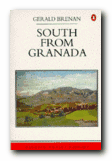
South from GranadaSouth from Granada is a travel writing classic in which the writer and cultural historian Gerald Brenan describes setting up home in a remote Spanish village in the 1920s. He has a marvellous grasp of geography; he captures the rugged atmosphere of the region; and he has a particularly detailed knowledge of botany. Local characters and customs are vividly recounted. Bloomsbury enthusiasts will be delighted by his hilarious accounts of visits made by Lytton Strachey (on a donkey) and Virginia Woolf under very difficult conditions, as well as a meeting with Roger Fry in Almeria.
Bloomsbury Group Buy the book from Amazon UK
Bloomsbury Group Buy the book from Amazon US


E.M.Forster: A LifeE.M.Forster: A Life is a readable and well illustrated biography by P.N. Furbank. This book has been much praised for the sympathetic understanding Nick Furbank brings to Forster’s life and work, as well as to his relationships with other members of the Bloomsbury Group. He produced his now-classic novels whilst he was quite young, gave up writing fiction, and devoted his later years to political essays and literary criticism. This is also a very scholarly book, with plenty of fascinating details of the English literary world during Forster’s surprisingly long life. Very well written too.

Bloomsbury Group Buy the book from Amazon UK
Bloomsbury Group Buy the book from Amazon US


The Life of Dora CarringtonA Life of Dora Carrington 1893-1932 Because of her Bohemian lifestyle, her connection with the Bloomsbury group, her bobbed hair, and her outspoken views, Dora Carrington seemed to symbolize the ‘new woman’ of the twentieth century. This is a portrait of the woman who was once described as ‘a strange wild beast’. She was a talented painter who had affairs with both men and women, and she devoted a great deal of the latter part of her life to looking after Lytton Strachey until she committed suicide when he died. Very popular with readers.
Bloomsbury Group Buy the book from Amazon UK
Bloomsbury Group Buy the book from Amazon US


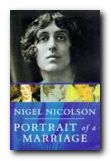
Portrait of a MarriagePortrait of a Marriage is a double biography of Vita Sackville-West and her husband Harold Nicolson, written by their son Nigel. It is based on an autobiographical manuscript found after Vita’s death and describes the success of the marriage, despite the fact that they both had homosexual relationships with other people. It also captures some of the flavour of these complex personal relationships within the Bloomsbury Group, particularly Sackville-West’s passionate affair with Violet Trefussis.

Bloomsbury Group Buy the book from Amazon UK
Bloomsbury Group Buy the book from Amazon US


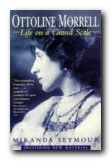
Ottoline Morrell - biography: Life on a Grand ScaleOttoline Morrell: Life on a Grand Scale This biography reveals Ottoline Morrell, London’s leading literary hostess during the first three decades of the 20th century. Augustus John, the Asquiths, T.S. Eliot, D.H. Lawrence, Lytton Strachey, Virginia Woolf and W.B. Yeats enjoyed her hospitality – and she was Bertrand Russell’s mistress for many years. The book includes her lost correspondence with Strachey and Bertrand Russell’s 2500 letters to her. It also throws light on her curious marriage to Philip Morrell, and offers a new perspective on Britain’s artists and writers in the early 20th century.
Bloomsbury Group Buy the book from Amazon UK
Bloomsbury Group Buy the book from Amazon US


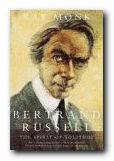
Bertrand Russell: 1872-1920 The Spirit of SolitudeBertrand Russell: 1872-1920 The Spirit of Solitude is the first volume of Ray Monk’s acclaimed biography of Bertrand Russell, covering the first 50 years of his life. It deals with his childhood, his early works including Principia Mathematica, his relationships with prominent contemporaries, his bizarre sex life, his conscientious objection in World War I, and his visits abroad. Russell was an active member of the Bloomsbury Group, and had tempestuous relationships with both men and women.

Bloomsbury Group Buy the book from Amazon UK
Bloomsbury Group Buy the book from Amazon US


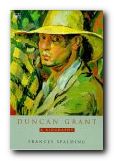
Duncan Grant: A BiographyDuncan Grant – a Biography Francis Spalding’s book is the standard account of his life, which stretched from the Victorian age into the modern era. Duncan Grant was one of the best-known names on the British art scene and one of the most charismatic members of the Bloomsbury set. His life spanned great changes in society and art, from Edwardian times to the 1970s. Although he was a homosexual, he lived devotedly and worked throughout his life with fellow artist and former lover Vanessa Bell.
Bloomsbury Group Buy the book from Amazon UK
Bloomsbury Group Buy the book from Amazon US


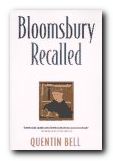
Bloomsbury RecalledBloomsbury Recalled Quentin Bell was one of the last surviving members of the Bloomsbury circle. Here he offers a candid portrait gallery of major and peripheral Bloomsbury figures. His father,Clive Bell, married the author’s mother, Vanessa Stephen in 1907 but pursued love affairs while Vanessa, after a clandestine affair with art critic Roger Fry, lived openly with bisexual painter Duncan Grant, with whom she had a daughter. Clive, Duncan and Vanessa were reunited under one roof in 1939, and the author conveys a sense of the emotional strain of growing up in ‘a multi-parent family’. Acclaimed biographer of his aunt, Virginia Woolf, Bell here defends her as a feminist and pacifist. Along with chapters on John Maynard Keynes, Ottoline Morrell and art historian-spy Anthony Blunt, there are glimpses of Lytton Strachey, novelist David Garnett, and Dame Ethel Smyth, the pipe-smoking lesbian composer, who fell in love with Virginia Woolf.
Bloomsbury Group Buy the book from Amazon UK
Bloomsbury Group Buy the book from Amazon US


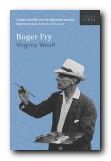
Roger Fry - a biographyRoger Fry, Virginia Woolf’s authorised biography, traces the development of his aesthetic practice and theories – after first graduating in science from Cambridge. He was the oldest member of the Bloomsbury Group, and influenced much of its ideas concerning fine and decorative arts. In partnership with his one-time lover Vanessa Bell, he was the founder of the Omega workshop, and he became a leading art critic as well as a successful painter in his own right. Don’t expect any spicy personal details: Woolf concentrates on his aesthetic theories and his public life.
Bloomsbury Group Buy the book from Amazon UK
Bloomsbury Group Buy the book from Amazon US


Bloomsbury Group – web links

Bloomsbury Group - web links Hogarth Press first editions
Annotated gallery of original first edition book jacket covers from the Hogarth Press, featuring designs by Vanessa Bell, Roger Fry, and others.

Bloomsbury Group - web links The Omega Workshops
A brief history of Roger Fry’s experimental Omega Workshops, which had a lasting influence on interior design in post First World War Britain.

Bloomsbury Group - web links The Bloomsbury Group and War
An essay on the largely pacifist and internationalist stance taken by Bloomsbury Group members towards the First World War.

Bloomsbury Group web links Tate Gallery Archive Journeys: Bloomsbury
Mini web site featuring photos, paintings, a timeline, sub-sections on the Omega Workshops, Roger Fry, and Duncan Grant, and biographical notes.

Bloomsbury Group - web links Bloomsbury: Books, Art and Design
Exhibition of paintings, designs, and ceramics at Toronto University featuring Hogarth Press, Vanessa Bell, Dora Carrington, Quentin Bell, and Stephen Tomlin.

Bloomsbury Group - web links Blogging Woolf
A rich enthusiast site featuring news of events, exhibitions, new book reviews, relevant links, study resources, and anything related to Bloomsbury and Virginia Woolf

Bloomsbury Group - web links Hyper-Concordance to Virginia Woolf
Search the texts of all Woolf’s major works, and track down phrases, quotes, and even individual words in their original context.

Bloomsbury Group - web links A Mrs Dalloway Walk in London
An annotated description of Clarissa Dalloway’s walk from Westminster to Regent’s Park, with historical updates and a bibliography.

Bloomsbury Group - web links Women’s History Walk in Bloomsbury
Annotated tour of literary and political homes in Bloomsbury, including Gordon Square, University College, Bedford Square, Doughty Street, and Tavistock Square.

Bloomsbury Group - web links Virginia Woolf Society of Great Britain
News of events, regular bulletins, study materials, publications, and related links. Largely the work of Virginia Woolf specialist Stuart N. Clarke.

Bloomsbury Group - web links BBC Audio Essay – A Eulogy to Words
A charming sound recording of a BBC radio talk broadcast in 1937 – accompanied by a slideshow of photographs of Virginia Woolf.

Bloomsbury Group - web links A Family Photograph Albumn
Leslie Stephens’ collection of family photographs which became known as the Mausoleum Book, collected at Smith College – Massachusetts.

Bloomsbury Group - web links Bloomsbury at Duke University
A collection of book jacket covers, Fry’s Twelve Woodcuts, Strachey’s ‘Elizabeth and Essex’.

© Roy Johnson 2000-2014


More on biography
More on the Bloomsbury Group
Twentieth century literature

Filed Under: Bloomsbury Group Tagged With: Biography, Bloomsbury Group, Cultural history

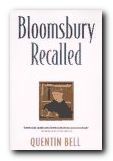
Bloomsbury Recalled

May 22, 2009 by Roy Johnson

memoirs and portraits of Bloomsberries from an insider

Quentin Bell is the son of Clive Bell and Vanessa Bell, the nephew of Virginia Woof, and the friend of many of the major figures in the Bloomsbury Group. Bloomsbury Recalled is his scrapbook of reminiscences focused on some of its major figures, plus one or two minor characters many people will not have heard about. The first part of his memoir concerns his parents. He treads carefully between respect for their individuality and an objective account of their behaviour.

Bloomsbury Recalled This even stretches to his description of a turning point in family life when his mother, still married to his father Clive, but entangled in a romantic liaison with the artist Roger Fry, realises that she is actually in love with the homosexual Duncan Grant, with whom she spent the rest of her life. This seems to epitomise Bloomsbury lifestyles without a doubt.

He also deals in separate chapters with Duncan Grant and his proclivity for rough trade; David Garnett and his relationship with Quentin Bell’s own ‘sister’ Angelica – who was actually the daughter of Duncan Grant; John Maynard Keynes who switched from men to a Russian ballerina and whilst being an important economist also became a farmer and landholder, seeking to create a feudal aristocratic lineage out of nothing.

There are also some surprising details – Leonard Woolf teaching his visitors to play bowls and keeping a pet monkey; Desmond MacCarthy, like something out of a novel by George Meredith, a man with eternal promise who did not deliver; E.M.Forster setting his trousers on fire during a visit to the Woolfs at Monks House; and Matisse boring everybody rigid with his vanity and egoism on a visit to the Stracheys. He also supplies brief glimpses of minor figures such as the art critic and Soviet spy Anthony Blunt, and Ethyl Smyth, the pipe-smoking lesbian composer who fell in love with Virginia Woolf.

He writes with a rather touchingly old-fashioned naivety (‘Virginia broke her fast in bed’) and he certainly reaches into a rich lexicon of outdated terms (‘sodomy’, ‘catamite’, ‘buggery’, ‘pederast’) to describe the activities of Lytton Strachey and Maynard Keynes. He’s also good at bringing out contradictions which might surprise some people today – examples of great family wealth and yet Spartan living conditions, and upper class connections and yet socialist sympathies.

Don’t expect any rigour or consistency in chronology, place, or even subject. These are just personal memoirs built around themes – rather like an old jazz pianist sitting down and tinkling out variations on some of his favourite songs. He doesn’t even bother describing scandals if he has written about them elsewhere.

There are no scalding revelations here, but anyone who has the slightest interest in the Bloomsbury Group and its members will be grateful for a first-hand account which captures the flavours and textures of a bygone era which nevertheless has much still to teach us about the politics and the aesthetics of daily life and personal relationships.

© Roy Johnson 2000

Bloomsbury Recalled Buy the book at Amazon UK

Bloomsbury Recalled Buy the book at Amazon US


Quentin Bell, Bloomsbury Recalled, New York: Columbia University Press, 1995, pp.234, ISBN 0231105657


More on biography
More on the Bloomsbury Group
Twentieth century literature

Filed Under: Bloomsbury Group Tagged With: Biography, Bloomsbury, Bloomsbury Group, Modernism, Quentin Bell.

Bloomsbury Rooms

July 15, 2009 by Roy Johnson

Modernism, Subculture, and Domesticity

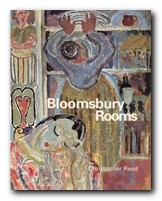
Bloomsbury Rooms is a beautifully illustrated book which explores the relationship between Bloomsbury notions of aesthetics and the actual interior designs of the homes in which its members lived. Christopher Reed takes their various houses as starting points – 46 Gordon Square, Asheham, Brunswick Square, Charleston, 52 Tavistock Square – for meditations on their socio-psychological development and the notions of art practised by Vanessa Bell, Walter Sickert, Roger Fry, and Duncan Grant.

Bloomsbury RoomsIt should be said from the outset that although this has the size and has the high production values of a coffee table book, it is not a casual or an easy read. Christopher Reed situates Bloomsbury within theoretical concepts of art that were competing with each other in the early phase of European modernism in a serious and heavyweight fashion. And these theories themselves are analysed in a political and ideological manner. In fact his study is not only about Bloomsbury’s domestic interiors. He is profoundly well-read in the whole Bloomsbury oeuvre, and right from the start he emphasises the political radicalism out of which much of its artistic practices sprung.

He engages quite passionately with art theory, social criticism, and the philosophic relationship between politics and human relations to which they gave expression in their domestic lives. He sees this as an early version of an idea we now express as ‘the personal is political’.

His study challenges the accepted notion that these artists drifted away from orthodox modernism. He argues that their aesthetics were formed by fully conscious choices, made by people who were often more politically radical than was generally acknowledged – both then and now.

Whatever you think of the book’s theoretical arguments, it’s a beautifully illustrated production, full of fascinating paintings, fabrics, decoration, interior design, and original graphics. It’s meticulously researched, fully annotated with extensive notes, an enormous bibliography, and a full index.

And Bloomsbury was a world of graphic and interior design, as well as literary culture. Vanessa Bell was a painter and book illustrator, Duncan Grant was a painter and interior designer, and Roger Fry was a painter, art critic, and at one time advisor to the Metropolitan Museum of Art in New York.

Many of their designs for the Omega workshops are in evidence here, as well as the decoration of their own homes in both London and the countryside. Artistic theory aside, for most readers it will be the photographs, illustrations, the paintings, ceramics, and textile designs which will be the main attraction here. There simply aren’t any other books in print offering such a rich glimpse into the visual world that Bloomsbury represents.

© Roy Johnson 2005

Bloomsbury Rooms Buy the book at Amazon UK

Bloomsbury Rooms Buy the book at Amazon US


Christopher Reed, Bloomsbury Rooms: Modernism, Subculture, and Domesticity, New York: Yale University Press, 2004, pp.314, ISBN: 0300102488


More on lifestyle
More on biography
More on the Bloomsbury Group


Filed Under: Bloomsbury Group, Lifestyle Tagged With: Art, Bloomsbury Group, Bloomsbury rooms, Interior design, Lifestyle, Modernism

Bloomsbury: A House of Lions

June 17, 2009 by Roy Johnson

biographical portraits of Bloomsbury Group principals

It’s easy to make fun of the Bloomsbury Group, because they were a privileged upper-class clique; they were often snobbish; and they created personal relationships of extraordinary complexity. But Leon Edel takes a balanced and largely sympathetic view which helps to bring out their positives:

they were a group of rational and liberal individuals with an arduous work ethic and an aristocratic ideal…They had a passion for art; they liked the fullness of life…They wrote. They painted. They decorated. They built furniture. They sat on national committees. They achieved a large fame…They criticized the Establishment but, unlike most critics, they worked to improve it. They hated war. Some refused to fight; others believed they had to see the 1914-18 conflict through to the end. All actively worked for peace.

Bloomsbury: A House of LionsHis account follows the unusual structure of starting with a portrait of one character, then passing on to another when the two meet. For instance, at Trinity College Cambridge, Leonard Woolf (stoic, disciplined, intellectual) meets Clive Bell (lightweight, bon viveur, artistic dreamer) and before long they both form friendships with Lytton Strachey (clever, lofty, neurasthenic).

Shortly afterwards Thoby Stephen, John Maynard Keynes, and Sidney Saxon-Turner join them as members of the Apostles, and all of them come under the influence of G.E.Moore, who published his influential Principia Ethica in 1903.

Edel’s account takes very much a psychological view of these characters – and yet it is from a distance. There is very little personal detail. You would never know from his opening chapters that Strachey and Keynes were lovers for instance.

Once the Cambridge connection is made, other characters are introduced: the charming Desmond MacCarthy, and Leslie Stephen, visiting his son Thoby in his own alma mater. He brings with him his two daughters Vanessa and Virginia, up for the May Ball. It is like the plot of a novel unfolding.

The individual studies are not biographical in the conventional sense. There is no attempt to document historical facts. Instead, they are impressionistic, psychological, and unashamedly subjective – though clearly based on detailed knowledge. This method has some interesting results when dealing with such topics as the sexual rivalry between the Stephen sisters, or meditating on the imagery of mirrors and death in Virginia’s writing.

After they all left Cambridge, Thoby Stephen began the Thursday Club in Gordon Square at which members were invited to discuss topic such as The Good, The Beautiful and Truth. Then Vanessa (less intellectual) established the Friday Club where the subject was Art – preferably modern.

Much of the rest of the story is reasonably well known. When Vanessa marries Clive Bell, Virginia and her younger brother Adrian set up a separate home in Fitzroy Square. Then Vanessa takes up with Roger Fry as a lover – only to replace him with Duncan Grant soon afterwards.

Edel covers the strange but ultimately successful marriage of Virginia and Leonard Woolf (though omitting to mention that Vita Sackville-West was for some time her lover); the impressive achievement of Lytton Strachey’s Eminent Victorians; and Maynard Keynes’ work at the Treasury and his role in the Versailles Treaty, which culminated in his resignation and the writing of Economic Consequences of the Peace.

His main focus is on the period 1900 to the 1920s – for that is when he sees the essential spirit of the group forming and having its strongest influence. By the 1930s a change of zeitgeist meant the modernist baton was passed on to a younger generation – though many Bloomsbury members (Duncan Grant and Leonard Woolf, for instance) carried on working into the 1960s and 1970s.

So despite its psychological approach, this is not a volume for gossip and tittle-tattle. For that you will need to consult other memoirs and biographies. But what Edel brings to this group portrait are his biographical skills, his enormous literary erudition, and an imaginative respect for his subjects.

© Roy Johnson 2000

Buy the book at Amazon UK

Buy the book at Amazon US


Leon Edel, Bloomsbury: A House of Lions, London: Penguin, 1988, pp.288, ISBN 0140580247


More on biography
More on the Bloomsbury Group
Twentieth century literature


Filed Under: Bloomsbury Group Tagged With: Biography, Bloomsbury Group, Bloomsbury: A House of Lions, Cultural history

Blown to Bits

June 18, 2009 by Roy Johnson

business strategies and the new technology

This book seeks to explain how technological developments are impacting in the world of eCommerce. We’ve all heard about the IT revolution, but where is it actually having an effect? Evans and Wurster start with the cautionary tale of Encyclopedia Britannica, whose business model was wrong-footed when Encarta was launched on CD. A strategy almost two hundred years old was overturned in the space of five years. You can now buy Britannica on disk for the price of a paperback book. The lesson is that it’s suicide to rest on your laurels when faced with new technology. Their second major point is what they call the playoff between ‘richness’ and ‘reach’.

Blown to BitsYou can either deliver information-rich data to a few people, or lightweight general ads to many. These appear to be mutually exclusive strategies – though Amazon manage to do both at the same time. They are essentially IT optimists, because they believe that access to information will promote more efficient competition. “the emergence of universal, open standards will … accelerate the demise of hierarchical structures and their proprietary information systems”. Whether this is true or not is still a matter for e-Commerce conjecture.

In the era of the IT revolution, the knowledge we need to enrich information is available to us all – free of charge. Therefore, as they argue, “Shifting the trade-off between richness and reach melts the informational glue that bonds business relationships”.

As you can see, you have to be prepared for a mode of expression which combines abstractions and the jargon of business and management studies:

This shaped the horizontally integrated multidivisional corporation, held together by a logic that transcended the business unit.

I’ve read that statement several times, but I still don’t know what it means. It’s hard to stick with this kind of opaque and abstract language. But if you can, it’s worth it – because they do deal with important general principles – though it’s a great relief when they occasionally come to discuss a practical example.

They look at newspapers and banking as examples of business models which are now vulnerable to the new technology. For instance, those people who use personal banking systems are small in percentage terms, but they are the richest, and account for 75% of banking profits. What does this mean? It means that banking is vulnerable to changes brought about by software engineering.

They explore that buzzword of the new e-Commerce – ‘disintermediation’ (the removal of the middle man) using the example of online shopping. Yet no sooner has the middleman gone than he comes back again as the ‘navigator’ – that is, somebody who acts as a guide and as an advisor amidst the plethora of choices available to the consumer.

The general lesson boils down to this. Access to information and the transforming power of new technology puts traditional business methods under threat: yet at the same time it opens up new possibilities for those wishing to take them.

This book has become a set text on an Open University technology course that I teach. The students find it hard going, but all of them in my group have grasped the ideas behind it – and finished the course with successful Web essays outlining eCommerce plans.

© Roy Johnson 2000

eCommerce   Buy the book at Amazon UK

eCommerce   Buy the book at Amazon US


Philip Evans and Thomas S. Wurster, Blown to Bits: How the New Economics of Information Transforms Strategy, Boston (MA): Harvard Business School Press, 2000, pp.259, ISBN: 087584877X


More on eCommerce
More on media
More on publishing
More on technology


Filed Under: e-Commerce, Techno-history Tagged With: Blown to Bits, e-Commerce, Techno-history, Technology

Bohemians: The Glamorous Outcasts

July 25, 2009 by Roy Johnson

alternative lifestyles amongst modernist bohemians

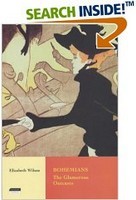
What are Bohemians? Are they people who choose poverty in order to produce works of art – or characters who dress flamboyantly, take drugs, and parade up and down Kings Road in Chelsea, hoping to become famous? Well, it appears it can be either or both of those things – and more besides. Elizabeth Wilson brings together both major and minor bohemian figures from two centuries and both sides of the Atlantic in a scholarly attempt to define the phenomenon. She identifies the key element of Bohemia as a gravitation towards the city, to be free of the constraints of provincial life.

Bohemians: The Glamorous Outcasts And she opts for Paris as its true birthplace – despite offering Byron as the first great Bohemian figure, though she does follow him with Arthur Rimbaud and Oscar Wilde who have stronger Parisian connections. Her chapters are built on themes, and the content can be both chronologically lose and geographically disconcerting. One minute it’s the opening night of Alfred Jarry’s scandalous Ubu Roi, next it’s California’s Venice Beach in the 1950s, and then on without pause to Viv Stanshull setting fire to himself in bed in 1995.

But at least this does have the virtue of suggesting that what she calls Bohemia can exist at any time and in any place. She speaks of it in the past tense, and yet there’s every reason to believe that this sort of world still exists – though as Malcolm Cowley, speaking of Greenwich Village in the 1920s observed, “Bohemia is always yesterday”.

She’s particularly good on the role of women in relation to Bohemianism – whether as muse to a male artist (Elizabeth Siddall, Alma Mahler) or as long-suffering wife-supporter (Dorelia John, Caitlin Thomas). But I think she’s stretching her notion of Bohemia rather for including relatively successful female artists such as Louise Colet and George Sand.

Despite her scholarly approach, her prose style occasionally slides into a poetic mode, as in her comments on the relationship between cafe life and smoking:

To smoke was more than a way of passing the time. It was the classic ‘displacement activity’ which gave coffee drinkers who had long since emptied their cup, lovers who had been stood up, and intellectuals who had lost their ‘circle’ the feeling that they were doing something, had a purpose. I smoke, therefore I am. Smoking orchestrated time, gave it a rhythm, punctuated talk, theatrically mimed masculinity and femininity, was the intellectuals’ essential accessory, and was also an erotic gesture, enhancing the mystery of some unknown drinker seated at her table, veiled in a bluish haze.

Her chapters are packed with interesting characters and rich in social history. She covers the surrealists, Parisian night life, and the cult of negritude in the 1920s, symbolised so magnificently by Josephine Baker.

Yet despite several attempts, she never gets round to defining bohemianism successfully. She simply chains together various types of outsider or larger-than-life figures. Sometimes her subjects are members of a quasi-artistic sub class, but often they are just alcoholics, scroungers, and hangers-on.

There’s a big difference between someone who produces great works of art but dies young (Modigliani) and someone like Marianne Faithful (mentioned more than once) who does very little except take drugs and who is no more than a talent-less has-been, .

Her book could do with a different title. Many of the people she describes were not really bohemian – just famous, dissipated, or so rich they could do as they pleased. Other were neither glamorous nor outcast. Some were fat, ugly, and badly dressed, and others cast themselves out simply by choosing not to work. But it’s a fascinating collection of portraits nevertheless.

© Roy Johnson 2005

Bohemians Buy the book at Amazon UK

Bohemians Buy the book at Amazon US


Elizabeth Wilson, Bohemians: The Glamorous Outcasts, London: Tauris, 2003, pp.275, ISBN: 1860647820


More on the Bloomsbury Group
More on lifestyle
More on biography


Filed Under: Bloomsbury Group, Lifestyle Tagged With: Biography, Bloomsbury Group, Bohemians, Cultural history, Soho

Brackets – how to use them

August 30, 2009 by Roy Johnson

free pages from our English Language software program

Brackets – definition

brackets Brackets are used to show that a word or phrase has been inserted into a sentence.

redbtn The technical name for this device is a ‘parenthesis’.


Examples
  • Most of the suspects (seven in all) were questioned by the police.
  • Put your scrap paper (or cardboard) into the dustbin.
  • The next person to arrive (a very attractive woman) caused a sensation.

Use

redbtn The words inserted between brackets are usually an explanation, an illustration, or an aside.

redbtn They often carry the meaning ‘that is to say’.

redbtn NB! Brackets are always used in pairs. Once they are ‘open’, don’t forget to close them.

redbtn Round brackets are used to represent an aside or an extra piece of information which is closely related to the main subject of the sentence.

Goodwin argues that Thompson’s policies (which he clearly dislikes) would only increase the problem.

redbtn Square brackets are used to indicate that something
is being added by the author. This is usually for clarification or comment.

The reporter added that the woman [Mrs Wood] had suffered severe injuries.

A mother wrote that her son was ‘fritened [sic] to go to school’.

redbtn When brackets are used at the end of a sentence, the full stop falls outside the bracket (like this).

redbtn Statements inside brackets should be grammatically separate from the sentence. That is, the sentence should be complete, even if the contents of the brackets are removed.

The republican senator (who was visiting London for a minor operation) also attended the degree ceremony.

redbtn If a quotation contains a mistake in the original you can indicate that the error is not your own. This is indicated by the use of square brackets.

The senior government minister who was recently acquitted of kerb-crawling claimed that at long last his ‘trails [sic] and tribulations’ were at an end.

redbtn The expressions within brackets should be kept as brief as possible, so as not to interrupt the flow of the sentence.

redbtn The use of brackets should be kept to a minimum. If used too frequently, they create a choppy, unsettling effect.

Self-assessment quiz follows >>>

© Roy Johnson 2003


English Language 3.0 program
Books on language
More on grammar


Filed Under: English Language Tagged With: Brackets, English language, Grammar, Language, Punctuation

Brackets in essays

August 22, 2009 by Roy Johnson

sample from HTML program and PDF book

1. The term brackets in essays is used to describe both square brackets [these] and round brackets (these) – whose technical name is ‘parentheses’.

2. The difference between the two is that a parenthesis represents an aside, an associated remark, or an additional piece of information which is closely related to the main subject of the sentence in which it is placed.

Goodwin argues that Thompson’s policies (of which he clearly disapproves) would only increase the national debt.

3. Square brackets on the other hand are used to indicate that something has been added to the original text for editorial purposes of clarification or comment.

The reporter added that this woman [Mrs Wood] had suffered severe injuries.

A mother wrote to the headmaster that her son was ‘fritened [sic] to go to school’

4. A common use for the parenthesis in academic writing is to indicate a bibliographic reference within the text of an essay – particularly when using the Harvard (or the short title) system of referencing.

Sartre’s account of ‘bad faith’ (Sartre 1938) differs slightly from that offered by Simone de Beauvoir (de Beauvoir 1949).

5. Notice that when a parenthesis occurs at the end of a sentence, the full stop falls outside the bracket (as this one does).

6. Any statement within brackets should be grammatically independent of the sentence in which it occurs. That is, the sentence should be gramatically complete, even if the contents of the brackets were to be removed.

The republican senator (who was visiting London for a minor operation) also attended the degree ceremony.

7. If a quotation contains a mistake in the original you might wish to indicate that the error is not your own. This too is indicated by the use of square brackets.

The senior government minister who was recently acquitted of kerb-crawling claimed that at long last his ‘trails [sic] and tribulations’ were at an end.

8. The expressions within brackets should be kept as brief as possible, so as not to interrupt the flow of the sentence in which they are placed.

9. The use of brackets should be kept to a minimum. If used too frequently, they create a choppy, unsettling effect.

© Roy Johnson 2003

Buy Writing Essays — eBook in PDF format
Buy Writing Essays 3.0 — eBook in HTML format


More on writing essays
More on How-To
More on writing skills


Filed Under: Writing Essays Tagged With: Academic writing, Brackets, Essays, Punctuation, Study skills, Term papers, Writing skills

  • « Previous Page
  • 1
  • …
  • 11
  • 12
  • 13
  • 14
  • 15
  • …
  • 103
  • Next Page »

Get in touch

info@mantex.co.uk

Content © Mantex 2016
  • About Us
  • Advertising
  • Clients
  • Contact
  • FAQ
  • Links
  • Services
  • Reviews
  • Sitemap
  • T & C’s
  • Testimonials
  • Privacy

Copyright © 2026 · Mantex

Copyright © 2026 · News Pro Theme on Genesis Framework · WordPress · Log in