Mantex

Tutorials, Study Guides & More

  • HOME
  • REVIEWS
  • TUTORIALS
  • HOW-TO
  • CONTACT
>> Home / Archives for 2009

Archives for 2009

The Hours

June 14, 2009 by Roy Johnson

the film of a novel about a book

When it first appeared, Stephen Daldry’s film of Michael Cunningham’s best-selling novel was subject to a number of niggling criticisms which made me apprehensive when I sat down to watch it. But I needn’t have worried. Every doubt was completely swept away by the overwhelming visual and emotional power of the film. For those who don’t know, The Hours is inspired by Cunningham’s deep appreciation of Virginia Woolf, and the film itself is split into three apparently unconnected stories.

Virginia Woolf The HoursThe first of these is a fictionalised account of Virginia Woolf’s daily life working alongside her husband Leonard as she writes Mrs Dalloway, the story of a society hostess who is preparing to throw a party. We see her erratic behaviour and his patient attempts to deal with it; her addiction to cigarettes; a good account of her creativity; and eventually her suicide when she fills her pockets with stones and drowns herself in the river Ouse.

This narrative is intercut with the two others, the first of which is a John Cheever-like study of family life in a prosperous middle-class Los Angeles suburb in the 1950s. At the outset the only apparent connection is that the wife Laura Brown – superbly acted by Julianne Moore – is reading a copy of Mrs Dalloway. She bakes a cake for her husband’s birthday and plans his party.

However, it is made quite clear to us that she is deeply unhappy, and when she leaves her young son with a babysitter and checks into a hotel with a bottle of sleeping pills, it is seems she is going to commit suicide. But at the last minute she changes her mind. However, that’s not the end of the story.

In the third narrative, the connections are more obvious. The setting is contemporary New York, where an arty lesbian hostess called Clarissa (played by Meryl Streep) is arranging a party. This is to celebrate the successful publication of a book of poems by her close friend and ex-lover Richard who is dying of AIDS. He cannot enjoy the prospect of celebration because he knows what life has in store for him.

Clarissa goes to try to persuade him to come to the party, but he rejects her kindness, and as he starts hovering around the open window of his skyscraper apartment, readers of Mrs Dalloway know what is likely to follow.

These are just some of the many thematic links between the three narratives. Each one has its own tone, but they hang together beautifully, and the climax of the film is brought about by an amazing blending of all three into one.

As a drama it is wonderfully constructed, and as a film beautifully photographed. Despite the reservations of some critics, I thought the acting superb. Nicole Kidman generates a very convincing portrait of the nervy, clever bluestocking Woolf, and I was glad to see that there was little attempt to glamourise her.

Julianne Moore simply radiates the amazing tension which exists between her outer serenity and inner turmoil. Meryl Streep could be accused of over-egging her role as Clarissa, but not enough to knock the film off track. Ed Harris is very good as an anguished Richard, and there is a unusually persuasive portrait of Lara’s young son by Jack Rovello which will tug at your heart strings.

The film quite rightly gathered a whole swathe of awards; screenplay is by David Hare; and the accompanying music is by Philip Glass.

© Roy Johnson 2004

Buy the DVD at Amazon UK

Buy the DVD at Amazon US


Stephen Daldry, The Hours, 2003


More on Virginia Woolf
Virginia Woolf – web links
Virginia Woolf – greatest works
Virginia Woolf – criticism
More on the Bloomsbury Group

Filed Under: Bloomsbury Group, Virginia Woolf Tagged With: Bloomsbury Group, Cultural history, Literary studies, Mrs Dalloway, The Hours, Virginia Woolf

The Intellectuals and the Masses

June 8, 2009 by Roy Johnson

pride and prejudice: literary modernists 1880-1939

This book has been around for a while now. I read it on the strength of having enjoyed John Carey’s more recent What Good Are The Arts? His basic argument is that with the rise of mass democracy and universal education at the end of the nineteenth and beginning of the twentieth century, artists and intellectuals reacted with fear to this phenomenon and both denigrated the ordinary person and at the same time deliberately made their art more difficult to understand. It’s a study of literary modernists and their anti-democratic sentiments.

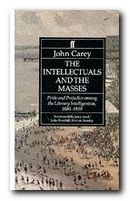
The Intellectuals and the MassesNone of the major figures of literary modernism escapes his charge: D.H. Lawrence, W.B. Yeats, Virginia Woolf, E.M. Forster, and T.S. Eliot are all quoted making remarks which are undemocratic, elitist, racist, and tainted with a supremacism which Carey traces back to Nietzsche. This basic argument is then extended to the intellectually snobbish dislike of the ‘suburbs’ which were built to house the growing numbers of clerks to service the expanding financial and commercial sectors of the economy.

Here Graham Greene, John Betjemann, G.K. Chesterton, and Evelyn Waugh come in for a similar type of criticism – though they are not accused of putting their writing beyond the reach of the common reader. Returning to Nietzsche’s influence via his ideas about ‘natural aristocrats’ and ‘Beyond Good and Evil’, Carey shows these views of the lofty superman alive and well in the work of Lawrence and Graham Greene – and he punctures their lightweight adoption in the work of art critic Clive Bell with his characteristically mordant humour:

So we find, for example, Clive Bell hymning ‘the austere and thrilling raptures of those who have climbed the cold, white peaks of art’, and contrasting them with the herd who frequent the ‘snug foothills of warm humanity’. Bell’s language figures himself and fellow aesthetes as engaged upon dangerous and energetic pursuits, when in fact they are merely looking at pictures and reading books.

This is not the only time he points to the false metaphors in which art is often discussed: ‘Spatial metaphors of ‘high’ and ‘low’ culture are logically meaningless, of course.’ There’s also an interesting reading of Aldous Huxley’s Brave New World which, for all its satirical Utopianism, he reveals as a covert defence of Nietzschean or Christian ‘redemptive suffering’.

In the latter part of the book he offers four ‘case studies’ – in-depth readings of the works of George Gissing, H.G. Wells, Arnold Bennett, and Wyndham Lewis. He uncovers some fairly unhealthy attitudes in Gissing, though I was surprised that he let him off the charge of profound snobbery which made me feel like hurling New Grub Street across the room last time I read it.

It’s not quite as clear why he includes Wells – because his only flaw seems to be a fear of overpopulation coupled with a submerged form of misogyny. But Arnold Bennett turns out to be the book’s hero. Carey describes his writings as ‘a systematic dismemberment of the intellectuals’ case against the masses’ – and he goes on to give a spirited case for his works as a sympathetic insight into the lives of ordinary people, and a defence of suburbia. In fact he takes on Virginia Woolf’s argument against Bennett in ‘Mr Bennett and Mrs Brown’ and demolishes it completely.

He saves his maximum invective for last – and unleashes it on Wyndham Lewis, whose views he argues are not dissimilar to those of Adolf Hitler. And just in case we misunderstand, he points out that this is not simply crude anti-Semitism and a hatred for jazz music and Negroes, but that Hitler, like the other intellectuals of modernism, believed in an intellectual hierarchy, in great art which was produced by special individuals endowed with quasi-religious insights (rather like God, in fact) and that none of this was accessible to the masses. The implication however was that it was accessible to the people making these judgments – such as Clive Bell up on his cold white peaks.

This is a very spirited polemic, which also serves to remind us that many of the technological advances in the early modern era were often regarded with scepticism bordering on outright rejection by the soi-disant intellectuals. Radio, newspapers, photography, cinema, and rail travel were all vilified at one time or another – and the masses who seemed to enjoy them were both sneered at and condemned as philistines.

If you’re going to look at Carey’s views on art, read this one first, before What Good Are The Arts? – then you will have a clearer notion of where his ideas come from. For anyone interested in literary modernism, the history of ideas, or modern cultural criticism, it’s an exhilarating read.

© Roy Johnson 2000

The Intellectuals and the Masses   Buy the book at Amazon UK

The Intellectuals and the Masses   Buy the book at Amazon US


John Carey, The Intellectuals and the Masses, London: Faber, 1992, pp.246, ISBN: 0571169260


More on literature
More on the novella
More on literary studies
More on short stories


Filed Under: 20C Literature, Literary Studies, Theory Tagged With: Cultural history, John Carey, Literary studies, The Intellectuals and the Masses, Theory

The Letters of James and Alix Strachey

July 9, 2009 by Roy Johnson

Bloomsbury meets Freud and psycho-analysis

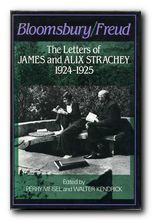
James Strachey was the younger brother of Lytton Strachey and one of the first people in England to train in and practise psychoanalysis. He translated Freud’s work, and as a member of the Bloomsbury Group was instrumental in promoting it via publications with the Hogarth Press. The Letters of James and Alix Strachey is a record of the almost daily correspondence he exchanged with his wife Alix whilst she was being psychoanalysed as part of her training by Karl Abraham in Berlin.

The Letters of James and Alix Strachey It’s an interesting one-year slice of two lives which encompasses social and cultural life in Germany and the UK in the early 1920s, the foundations of Freudianism in the UK, and a rich tapestry of European modernism from two of its inside practitioners who were very keen to be au fait with the latest cultural and intellectual developments. The letters are prefaced by an introductory essay which places psychoanalysis in a historical context and explains James and Alix Strachey’s position in the Bloomsbury group – into which they both fitted well, both in terms of their unorthodox sexual proclivities and their intellectual achievements.

James’s letters are rich in Bloomsbury gossip and title-tattle as he entertains Alix whilst she endures the dire north German food in Pension Bismark:

Adrian [Stephen] is said now to be in the most awful condition & threatens to shoot himself. Karin will remain until he gets through his final exam… If he shoots himself in our sitting-room it’ll not only spoil the carpet but also damage our professional careers—so I suppose I shall have to avert it. —Loppy & Maynard are still said to be on the point of marriage. The divorce is expected to be consummated in October.

Alongside translating Freud, he reports on visits to the Ballet Russe, meetings with Gerald Brenan, Arthur Whaley, John Maynard Keynes and Lydia Lopokova, Dora Carrington, Lou Andreas-Salome, David Garnett, and his brother Lytton Strachey.

Alix reports to him from deep within the psychoanalytic pressure cooker which was Berlin in the 1920s, providing interesting details on all the rival camps and splits which went on between Freud, Adler, Jung, Rank, and Reich.

From a scientific point of view it’s interesting to note that both of them, whilst eagerly pioneering psychoanalysis as practitioners, freely admit to each other that they don’t understand it all, and they see much quackery in their now-famous contemporaries.

There are plenty of opinions ventilated which even for 1924 are politically incorrect to a degree which might surprise today’s Bloomsbury enthusiasts. Alix writes to James on a political contretemps with Egypt: “its a pity all blacks (including the Irish) can’t be gently sunk in the bottom of the sea. For what good are they on earth.” And she is just as forthright when replying to an enquiry from him about their romantic separation: “If & when I come back bursting with vaginal libido, I’ll keep myself going with candles & bananas … if that is partly what is on your mind.”

Within a few years of her being there, the whole of the psychoanalytic movement had broken up in Germany, harassed by the rising Nationalists, and had dispersed to America and the UK. James and Alix continued to work as practising analysts, translating major works, and taking a major role in promoting The Standard Edition of Freud’s works. This volume concludes with a fascinating account this long and complex process – as well as addressing the criticisms of hasty and flawed translations which continue to surround the works.

This volume provides both an interesting insight into a corner of Bloomsbury which is not so welll known, and at the same time a fascinating glimpse into European culture at what turned out to be a critical period.

© Roy Johnson 2003

Buy the book at Amazon UK

Buy the book at Amazon US


Perry Meisel and Walter Kendrick (eds), Bloomsbury/Freud: The Letters of James and Alix Strachey 1924-1925, New York: Basic Books, 1985, pp.360, ISBN 0465007112


More on biography
More on the Bloomsbury Group
Twentieth century literature


Filed Under: Bloomsbury Group Tagged With: Alix Strachey, Biography, Bloomsbury Group, Cultural history, Freud, James Strachey, Letters, Psychoanalysis

The Letters of Leonard Woolf

July 5, 2009 by Roy Johnson

politics, life, and literature – 1900 to 1969

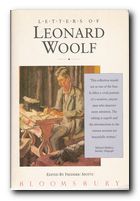
Leonard Woolf was one of the longest living (1880-1976) and the most distinguished members of the Bloomsbury Group. He was a writer, a publisher, a political activist, a proto environmentalist and animal lover, a loyal friend, cantankerous employer, and a devoted husband. What’s not so well known about him is that in fact he had two ‘wives’ – the second technically married to somebody else – who happened to be his business partner. The Letters of Leonard Woolf is a definitive selection from his voluminous correspondence, which begins at Cambridge, with letters to his lifelong friend Lytton Strachey, and fellow apostles G.E.Moore and Saxon Sydney-Turner.

The Letters of Leonard Woolf The manner of these early writings is surprisingly arch, full of classical references and undergraduate Weltschmerz – though no doubt this reflects the turn-of-the-century social mood amongst such a privileged elite. All of this was to change very suddenly when after doing badly in the Civil Service exams, he went to work as a colonial administrator in Sri Lanka – then called Ceylon. There he plunged into the practical affairs of running the Empire – and making a big personal success of it. It’s interesting to note that the florid rhetoric of the earlier letters is replaced by a straightforward reporting of events, and a frank expression of his feelings. His fellow Brits began to seem like something out of a bad novel:

The ‘society’ of the place is absolutely inconceivable; it exists only upon the tennis-court & in the G.A.’s house; the women are all whores or hags or missionaries or all three; & the men are … sunk.The G.A.’s wife has the vulgarity of a tenth rate pantomime actress; her idea of liveliness is to kick up her legs & to scream the dullest of dull schoolboy ‘smut’ across the tennis court or the dinner table,

There are many interesting disclosures as he reveals himself to Lytton Strachey, his only confidant, who was 9,000 miles away. Woolf though that sexual desire was a ‘degradation’ – an attitude which casts light on his two later sex-free relationships. “I am really in love with someone who is in love with me. It is not however pleasant because it is pretty degrading, I suppose, to be in love with practically a schoolgirl”.

He’s also fairly unsparing in his comments on people who were later to become his famous fellow Bloomsburyites – though it has to be remembered that he had known them since they were all undergraduates together. On reading E.M.Forster’s Where Angels Fear to Tread he thinks ‘It’s …a mere formless meandering. The fact is I don’t think he knows what reality is, & as for experience the poor man does not realise that practically it does not exist’.

I detest Keynes, don’t you? Looking back on him from 4 years I can see he is fundamentally evil if ever anyone was.

When he arrived back in England on leave in 1911, is was with the vague notion of marrying Virginia Stephen, an idea that Lytton Strachey had put into his head. And marry her he did – even though Virginia refused to allow his family to the wedding and made it quite clear that she felt no physical attraction to him.

The letters are presented in separate themes which correspond to successive periods in his life – Cambridge, Ceylon, marriage to Virginia, manager of the Hogarth Press. It also has to be said that this is a rigorously scholarly production. Each section of his life has an essay-length introduction; there’s a family tree, chronological notes; biographical sketches of the principal characters, explanatory footnotes, photographs, and a huge index.

Writing as a publisher, there are some wonderfully humane letters to his actual and would-be authors, explaining the iniquities of the book trade. He was of course sealing with writers of the stature of Freud and T.S.Eliot. There’s also an extended letter to one of his best-selling authors, Vita Sackville-West (his wife’s one-time lover) which should be required reading for anyone who wants to know how the world of selling books works – even today.

He also had his finger on the pulse of the BBC and its patronising attitude to the public in a way that still rings true:

That the BBC should be so reactionary and politically and intellectually dishonest is what one would expect and forgive, knowing the kind of people who always get in control of those kind of machines, but what makes them so contemptible is that, even according to their own servants’ hall standards, they habitually choose the tenth rate in everything, from their music hall programmes and social lickspittlers and royal bumsuckers right down their scale to the singers of Schubert songs, the conductors of their classical concerts and the writers of their reviews.

Politically, he was spot on throughout all the tensions and ambiguities of the inter-war years. Anti-Imperialist, Ant-Fascist, and supportive of the Russian revolution whilst critical of the Stalinism which caused its corruption.

One of the most interesting features of his later life is that he spent more than thirty years of it in love with another man’s wife. She lived with Leonard during the week and went back to her husband at the weekend. The husband even became Leonard’s business partner.

This is somewhat brushed under the carpet by the editor. He chooses fairly anodyne letters to Trekkie Parsons, and you would need information from other sources such as their collected correspondence (Love Letters) to realise how serious the relationship was.

It was serious enough that Leonard made Trekkie his executor and legatee in a will which was disputed by the Woolf family after his death. It was in court that the revelation (or claim) was made that they were never more than good friends.

One wonders, and boggles. But the fact is that Leonard Woolf was a great letter writer – though always seeming to be writing with the public looking over his shoulder. His correspondence should be read alongside the magnificent Autobiography, but even then you need to realise that there’s more to the story of a person’s life than the tale told by its protagonist.

© Roy Johnson 2000

Buy the book at Amazon UK

Buy the book at Amazon US


Frederic Spotts (ed), The Letters of Leonard Woolf, London: Bloomsbury, Oxford: Oxford Paperbacks, 1992, pp.616, ISBN: 0747511535


More on Leonard Woolf
Twentieth century literature
More on the Bloomsbury Group


Filed Under: Leonard Woolf Tagged With: Biography, Bloomsbury Group, Leonard Woolf, Literary studies, The Letters of Leonard Woolf

The Letters of Lytton Strachey

July 4, 2009 by Roy Johnson

life, loves, letters, plus Bloomsbury gossip

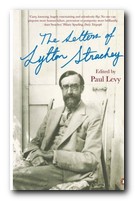
Lytton Strachey, like his close friend Virginia Woolf (strongly featured here) was a prolific letter writer. Theirs was an age which largely preceded the telephone, and in early twentieth-century England there could be up to three postal deliveries per day. This selection from The Letters of Lytton Strachey covers the whole of his adult life – from meeting Leonard Woolf as Apostles at Trinity College Cambridge in 1899 to his premature death in 1932.

Click for details at Amazon The letters reveal him as an even more complex character than that which emerges from the majority of Bloomsbury memoirs and biographies. He was, as Paul Levy succinctly puts it in his introduction, “a political radical who was born into the ruling class, a member of the intellectual aristocracy who cherished his contacts with the aristocracy of blood, a democrat who did not always trust the people, and one of the original champagne socialists.”

Most of the early letters are to his lifelong friend Leonard Woolf, with whom he kept up a regular correspondence all the time Woolf was working as a colonial administrator in Sri Lanka (then Ceylon). We see the formation of the Bloomsbury Group when “The Goth [Adrian Stephen] is ‘at home’ on Thursday evenings”, and there are some slightly unexpected appearances and connections – such as his brother James Strachey’s affair with Rupert Brooke, and Lytton Strachey’s flirtation with the explorer George Mallory, who was to disappear on Everest in 1924.

He is certainly a mass of contradictions in his private life: one minute fluttering like an elderly aunt about a minor ailment or swooning with rapture over a young messenger boy, then next minute talking about ‘raping’ one of his friends or discussing the techniques of coprologists with his brother James in stomach-churning detail.

He’s also two-faced to an extraordinary degree – writing scathing critiques of John Maynard Keynes and Rupert Brooke in letters to third parties, then toadying up to them directly and even asking them to come on holiday with him.

His correspondence during the war years reveals him as far more politically radical than he is usually given credit for. He was not only a conscientious objector on principle, but he even wrote pamphlets critical of the way the government was handling the war.

The letters are presented and annotated in the most scholarly fashion – with full biographical notes on all the people mentioned, and all nicknames and obscure allusions spelled out. Indeed, the notes are occasionally longer than the letters they seek to explain.

Suddenly in mid volume the correspondence takes on an amazing animation and inventiveness when he meets Dora Carrington, who was to become the central figure in the rest of his life. First (and very briefly) she was his lover, and then they set up their famous menage a trois when Strachey fell in love with Ralph Partridge – and Carrington married him, whilst remaining in love with Strachey.

Whenever separated from Carrington, he wrote her long letters describing the various weekend house parties he attended. The portraits of Ottoline Morrell and Margot Asquith and their like are mischievous and bitchy, and although he censors himself on personal matters, he is not averse to pungent comment on others:

everything is at sixes and sevens – ladies in love with buggers and buggers in love with womanisers, and the price of coal going up too. Where will it all end?

There are all sorts of interesting details: Strachey’s sharp eye and collector’s nose for modern painting (Derain and Modigliani); Maynard Keynes altering the clocks to one hour ahead of summer time; Strachey’s strong opinions that Queen Victoria was ‘a martyr to analeroticism’ and Bernard Berenson ‘has accumulated his wealth from being a New York guttersnipe’.

However, he seems at his most comfortable when in the midst of his Bloomsbury contemporaries, as a letter written from Vanessa Bell’s house at Charleston suggests:

the company in this house is its sempiternal self. Duncan and Vanessa painting all day in each other’s arms. Pozzo [Keynes] writing on Probability, on the History of Currency, controlling the business of King’s , and editing the Economic Journal. Clive pretending to read Stendhal. Mary writing letters on blue note-paper, the children screaming and falling into the pond.

The final bunch of letters, to his last lover, Roger Senhouse, reveal his taste for sado-masochism (crucifixion, blood-letting) but also his extraordinary generosity towards friends. His late financial success led to some self-indulgence, but he seems to have spent far more on other people than on himself. Though not for long. A falsely diagnosed stomach cancer cut him down at the age of fifty-two. His soul-mate Dora Carrington committed suicide a few weeks later.

© Roy Johnson 2006

The Letters of Lytton Strachey Buy the book at Amazon UK

The Letters of Lytton Strachey Buy the book at Amazon US


Paul Levy, The Letters of Lytton Strachey, London: Penguin Books, 2006, pp.698, ISBN 0141014733


More on Lytton Strachey
Twentieth century literature
More on the Bloomsbury Group


Filed Under: Bloomsbury Group, Lytton Strachey Tagged With: Biography, Bloomsbury Group, Literary studies, Lytton Strachey

The Letters of Vita Sackville-West and Virginia Woolf

June 15, 2009 by Roy Johnson

love, literature, and friendship Bloomsbury-style

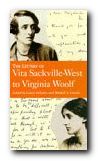
The title of this book is letters to Virginia Woolf – but this is so misleading, that I have changed it for the title of this review. This is a fully reciprocated exchange between these two writers – both of letters and affection. And as in many love affairs the power passes from one to the other and back again. Their relationship began in 1923 around the time that Hogarth Press was publishing Vita Sackville-West’s improbably titled novel, Seducers in Ecuador.

Letters of Vita Sackville-West and Virginia WoolfTheir early letters are friendly and flattering, with just a touch of flirtation which gives a hint of Things to Come. But once the deed is done, the flattery is replaced by practical arrangements for meeting up, plus a fear that their secret might have been uncovered by Clive Bell. The amazing thing is that for all the sexual pluralism and bisexuality of the Bloomsbury group, they went to a lot of trouble to preserve the semblance of respectability.

The second phase of the affaire is largely Vita’s travelogue as she journeys to join her husband Harold Nicolson in Tehran where he had been posted to the British Legation by the Foreign Office.

When she gets back to the UK, it’s a good thing we have editorial commentary, because you would not guess from the content of the letters that she had transferred her romantic affection to Dorothy Wellesley, just as later, whilst protesting in every letter how much she missed and was very much in love with Virginia, she was also in love with Mary, wife of South-African poet Roy Campbell – an affair which in true Bloomsbury style, she eventually tells Virginia all about.

There’s no detail of what or how much went on in physical terms between them, but to make up for this there is plenty of intelligent comment on the profession of literature passing between these two women who were after all both commercially successful authors. Virginia asks Vita about the difference between poetry and prose:

I don’t believe there is any, with all due respect to Coleridge … All too often the distinction leads people to think they may mumble inanities which would make them blush if written in good common English, but which they think fit to print if spilt up into lines.

In addition, we get all sorts of quaint period details: Hillaire Belloc buying 2,000 bottles of wine at twopence halfpenny a bottle [for younger readers, that’s one penny in today’s money]; six-day cycle racing in Berlin; Vita cutting down an oak tree for fuel during the General Strike; buying an island in the South Seas for five pounds; and Virginia engaged in the joys of early motoring:

Off for our first drive in the Singer: the bloody thing wouldn’t start. The accelerator died like a duck – starter jammed … At last we had to bicycle in and fetch a man from Lewes. He said it was the magnetos – would you have known that?…

Vita’s letters from Tehran are rich and entertaining, and she is much given to Proustian ‘reflections’:

I have come to the conclusion that solitude is the last refuge of civilised people. It is much more civilised than social intercourse, really, although at first sight the reverse might appear to be the case. Social relations are just the descendants of the primitive tribal need to get together for purposes of defence; a gathering of bushmen or pygmies…

In the middle of all this, both women were writing and publishing at a prodigious rate: Vita’s long award-winning poem The Land and her two travel books, Passenger to Tehran and Twelve Days: Virginia’s Mrs Dalloway, The Common Reader, and To the Lighthouse.

The publication of Orlando made them both famous (“The percentage of Lesbians is rising in the States, all because of you”). Yet despite this, you can sense Virginia’s gradual withdrawal, hurt by Vita’s repeated ‘infidelities’ with other women. In the end, the older, less sexually experienced, and more talented woman retreated into her safer world of the intellect.

They continued to meet and correspond through the 1930s, but the sparkle had gone out of things. Vita moved on to relationships with BBC radio producer Hilda Matheson and others, and Virginia became the love object of pipe-smoking lesbian composer Ethel Smyth.

Despite Vita’s snobbery, her emotional cruelty and hauteur (“the BBC – which I look on as my pocket borough”) in the end I warmed to her sheer exuberance, her energy and inventiveness, her intelligence and creative impulse. This is a wonderfully stimulating record of exchanges between oustanding personalities which has quite rightly become a classic of its kind.

© Roy Johnson 2000

Letters of Vita Sackville-West and Virginia Woolf Buy the book at Amazon UK

Letters of Vita Sackville-West and Virginia Woolf Buy the book at Amazon US


Louise de Salvo and Mitchell A. Leaska, The Letters of Vita Sackville-West to Virginia Woolf, London: Macmillan, 1985, pp.473, ISBN 1853815055


More on Virginia Woolf
More on the Bloomsbury Group
More on Vita Sackville-West
More on the novella
More on literary studies


Filed Under: Bloomsbury Group, Virginia Woolf, Vita Sackville-West Tagged With: Biography, Bloomsbury, Cultural history, Literary studies, Virginia Woolf, Vita Sackville-West

The Life of Jimmy Scott

July 16, 2009 by Roy Johnson

critical biography of major but under-appreciated singer

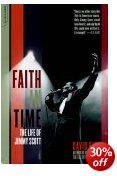
I have to confess that I only heard of Jimmy Scott quite recently. Understandably so, it turns out. He’s one of the best kept secrets in the world of jazz and ballad singing. I heard his voice on a radio broadcast, was intrigued, bought a couple of CDs from Amazon – and was completely blown away. He’s completely unlike any other male singer you’ve ever heard of – mainly because he sounds like a woman. This is the result of a congenital disease which denied him puberty.

Jimmy Scott But that isn’t all: he has a style which is stripped bare to a minimum and yet very mannered at the same time. Like all good jazz musicians, he pays attention to song lyrics and sings them as if he means them. The most interesting things about him are his voice quality – high falsetto, big vibrato – and his delivery, which is laid back to a point where you think he might fall over. But he never does. The nearest style I can think of is Billie Holliday – one of his early fans and an influence. As David Ritz puts it in this very readable biography:

The rhythms he creates are wholly original. He does more than take his time. He doesn’t worry about time. Time disappears as a restraint or a measure. As a singer, his signatures are idiosyncratic phrasing and radical, behind-the beat syncopation. His career, like his singing, has lagged far behind the beat.

Scott’s life was full of personal heartbreak: from a dysfunctional family; orphaned as a teenager; married four times; duped by record producers; constantly on the move; scorned as an outsider; drink, (soft) drugs. He lived, as David Ritz accurately puts it, the jazz life.

Oddly enough, he claims that his early influences were Paul Robeson and Judy Garland two singers who you would think were at opposite ends of the musical spectrum.

The amazing thing, for someone who is still alive and singing now (I heard him with a German tenor player only a few weeks ago) is that he cut his musical teeth with people such as Lester Young, Charlie Parker, and Tadd Dameron. His working life spans the last half-century.

Much of the racy vivacity of Ritz’s narrative comes from the fact that he transcribes the accounts of people he interviewed in his research. There are also some very entertaining vignettes along the way – such as life on the road in the high-octane Lionel Hampton band in the late 1940s.

His biggest fans were the people who matter musically – Bird, B.B.King, Ray Charles, Quincy Jones, Billie Holiday, and Shirley Horn. Later on he was championed by Lou Reed and Madonna.

And his own musical taste is impeccable – as in his perceptive observation that Stan Getz got better as he got older “Whatever he learned from Lester—and he learned a lot—he expanded on the lessons until he became a master himself”

He started out promisingly enough, but every time he tried to make his breakthrough record albumn, an old producer would surface to block his ambition with a ‘cease and desist’ order straight out of a nineteenth century melodrama. Scott remained unembittered – though it has to be said he took out a lot of his anger on the people closest to him.

The 1970s and 1980s are like waste years, with Scott working as a hotel lift attendant and a shipping clerk to make ends meet. Then there are a succession of failed enterprises which left him living off social security. But then he finally got some recognition and success in the 1990s when largely white audiences began to catch on to him. By then he was sixty-eight years old.

So the story has a reasonably happy ending – but he had to wait almost half a lifetime for it. This is an enthralling account of a real survivor, recounted with genuine but not uncritical admiration, and supported by a scholarly apparatus of bibliography and discography which left me yearning to read and listen to more of this truly remarkable artist.

© Roy Johnson 2002

Jimmy Scott Buy the book at Amazon UK

Jimmy Scott Buy the book at Amazon US


David Ritz, Faith in Time: The Life of Jimmy Scott, Cambridge, MA: Da Capo Press, 2002, pp.270, ISBN: 0306812290


More on music
More on media
More on lifestyle


Filed Under: Biography, Music Tagged With: Cultural history, Jazz, Jimmy Scott, Music

The Little Brown Handbook

June 19, 2009 by Roy Johnson

encyclopaedia of writing skills + exercises and examples

Don’t be misled by the title. This book is neither little nor brown. It’s a reference guide to all aspects of academic writing that its authors say will “answer almost any question you have about writing…find out how to get ideas, punctuate quotations, search the Internet, cite sources, or write a resumé”. That’s a bold claim, but in almost one thousand densely packed pages, I think they live up to it. The Little, Brown Handbook has become a classic style guide over its many editions.

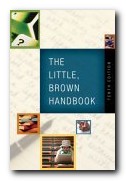
The Little, Brown HandbookFowler and Aaron start with the standard academic essay and its requirements, then cover grammar, punctuation, spelling, sentence construction, vocabulary, and research. However, these simple headings belie the richness of the material they provide. The latest edition takes full account of computers and the Internet for writing and research, advice for users of English as a second language, plus the latest (1998) MLA guidelines.

It actually starts with a chapter on critical thinking and reading, then puts its emphasis on writing as a process of development, drafting, and revising. These sections act as a thorough course in essay-writing techniques, from formulating ideas to revising, editing, and proofreading the final drafts.

It’s full of handy hints. They suggest for instance the use of two-column reading journal – left column for summaries, and an empty right column which will “beckon you to respond” with critical notes. Every point is illustrated with examples, and there are exercises at the end of each chapter [though you have to work out the answers for yourself].

This is a book that could be used for reference [“Where does the comma go?”] as a teaching aid [“Work through exercises 4 and 5”] or as a source of self-instruction [Outliners and how to use them in generating structure]. For students, there are some very useful examples of revised drafts, tips on essay introductions and conclusions, the generation and substantiation of arguments, and recognising fallacies of argument. For tutors, they make suggestions for coursework.

The section on sentence construction is also an introduction to the basics of English Language and grammar. Like many other guides of its kind, it assumes that readers need to know about ‘prepositional phrases’, ‘subordinating conjunctions’, and ‘restrictive apositives’. Every single case and difficulty is listed, to the point of exhaustive completeness. The problem is that it might not be easy for students to locate the case they require from index entries which read ‘Commas – with conjunctive adverbs and transitional expressions’.

After sections on grammatical correctness, it goes on to questions of taste, style, and conventions in language-use. This embraces choosing the appropriate word, being concise, eliminating dross, and extending one’s vocabulary. The vexed issue of spelling is explained with all its common exceptions, and the latter part of the book discusses meta-issues such as planning a research project, using the Internet to good effect, evaluating sources, the traditional skills of taking notes, and the latest MLA conventions on text citation. At the end, there are sections on writing under exam conditions, business writing (with plenty of examples) and appendices on page layout, document design, oral presentations, and writing with a computer. These latter sections will be of interest to more advanced users.

For students, there are some very useful examples of sample research papers and an examination essay – not only the complete text, but a running commentary on the right-hand page explaining points of detail and commenting on structure, format, citation, and the handling of secondary sources. They even include revised drafts and notes made in the composition of the papers. This is an excellent resource, and just about the closest you could get to live tuition in the subtleties of academic writing.

This may be a book that will appeal more to course tutors, instructors, and librarians than to the students it is written for, but for anyone concerned with the development of writing skills Fowler and Aaron cover all (and I mean all) the details. It might be an expensive investment, but if you’re teaching writing skills it’s the most comprehensive resource I’ve ever come across, and if you’re just starting your academic career, it will see you through to post-graduate studies and beyond.

© Roy Johnson 2009

Little, Brown Handbook   Buy the book at Amazon UK

Little, Brown Handbook   Buy the book at Amazon US


H. Ramsey Fowler and Jane E. Aaron, Little, Brown Handbook, (7th edn) New York: Longman, 11th edition 2009, pp.992, ISBN: 0205734960


More on study skills
More on writing skills
More on online learning


Filed Under: Study skills, Writing Skills Tagged With: Academic writing, Grammar, Reference, Style guides, The Little, The Little Brown Handbook, Writing skills

The Long Tail

May 21, 2009 by Roy Johnson

how endless choice is creating unlimited demand

Chris Anderson is the editor of WIRED magazine. This book started as an article there, took off, and was expanded via seminars, speeches, and further research. It has now become one of the most influential essays on the new sCommerce. Anderson’s notion is relatively simple, but its implications profound. He argues that because the digitisation of commerce allows more people into the trading arena, and because minority goods can be made available alongside best-sellers, the consumer therefore has a much wider choice and cheaper prices. This gives rise to a new phenomena – niche markets – also known in marketing-speak as the ‘long tail’. This is the part of the commercial results graph where returns begin to flatten out and slope towards zero.

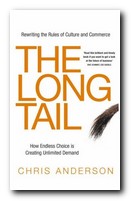
The Long TailBut – and this is a very big BUT – in the new digital world they don’t slope off completely. And if you add up all the income from these many tail end transactions, it can be more than the total sales from the Short Head part of the graph.

Once you have grasped these basic issues, the lessons are clear. The profit is to be made in shifting bits, not atoms, plus lower overheads means more profit, because you can sell more. Much of this is possible because the price of electronic storage has now dropped almost to zero, and digital distribution has removed transport costs – as well as making delivery immediate. A physical bricks-and-mortar store has limited shelf space to stock goods, but Peer-2-Peer file-sharers make the downloaders’ options almost limitless.

The only way to reach all the way down the Tail—from the biggest hits down to all the garage bands of past and present—is to abandon atoms entirely and base all transactions , from beginning to end, in the world of bits.

Much of the new digital economy is amazingly counter-intuitive. Amazon for instance has allowed its own competitors to sell their goods on its site. The net result – more profit for Amazon, and the rise of the small second-hand book trader – the very businesses people thought would be put out of work by online trading.

Other positive elements in the new digital economy are the rise of reader reviews and recommendations; the back catalogue becomes valuable again; and new niche markets become available for more buyers.

Anderson looks at the technological history which has made the long tail possible, using a typical Amazon purchase as a model: postal delivery service, standard ISBN numbers, credit cards, relational databases, and barcodes. Of course Amazon’s genius in its latest phase is it gets other people to hold all the stock and fulfil the orders.

He’s a great believer in reputations and taste being formed by social media – the YouTube and MySpace worlds in which personal recommendations and fan reviews help forge best-sellers more than any amount of advertising hype.

There are lots of interesting nuggets thrown out as he makes his way through the socio-economic implication of all this. Such as for instance the fact that Google searches counteract the tyranny of the New over the well-established. That’s because they rank pages by the number of incoming links, which favours those which have had the time to acquire them.

Even though he goes into some economic theory, the study remains accessible and readable throughout – largely because he uses everyday examples with which most readers will be able to identify: the purchase of music CDs, DVDs of films, and supermarket food purchases.

This is a really inspiring book, and a must for anyone remotely connected with the online world. Even if some of his estimations and predictions might be overstated, it offers a glimpse into processes taking place that will change the way we think about business and technology. Time and time again, I thought “Yes! I’ve already started doing that!” – ordering more books from Amazon’s marketplace traders, buying out-of-print titles at knockdown prices, exploring new music, and looking out for recommendations on the new social media. I would rank this book alongside Nicolas Negroponte’s 1996 study Being Digital as a seminal influence for the decade in which it is published.

© Roy Johnson 2007

The Long Tail   Buy the book at Amazon UK

The Long Tail   Buy the book at Amazon US


Chris Anderson, The Long Tail, London: Random House, 2006, pp.238, ISBN: 184413850X


More on eCommerce
More on media
More on publishing
More on technology


Filed Under: e-Commerce Tagged With: Business, e-Commerce, Media, Technology, The Long Tail, Theory

The Manual of Typography

July 9, 2009 by Roy Johnson

best-selling introduction to type and good page design

This book appears regularly in the Top Ten list of typography manuals – and rightly so. Although The Manual of Typography began life as one in a series of general introductions to arts and crafts, it has established its reputation on the strength of its scholarship, clarity, and beautiful presentation. McLean covers all the basics. First comes a brief historical survey; then the issues of legibility; practical considerations of paper types and composition methods; book design; and what he modestly calls ‘jobbing typography’. There are notes, a list of material suppliers, a brief index, and an excellent list of further reading. It’s easy to see why this book has become one of the standard texts on its subject.

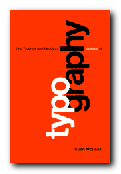
The Manual of TypographyThe design of the book is based on a simple three-column grid, with a subtle rhythm of graphic illustration. This varies from full page blow-ups of a single letter design to marginal examples of icons, logos and glyphs accompanied by explanations of a scholarly density.

Yet despite craft origins, it’s a text which unites a profoundly sophisticated sense of taste with the practical aspects of typography. He ranges from the balance of page layout in art-books, to the nuances of letterspacing in railway timetables. From the analysis of six versions of the same font, to recommendations for clear systems of book illustration captions. It stops short of the computer age – but the range of reference and the elegance of the illustrations make this a must for anyone in visual presentation.

Almost every page of this book is a visual delight. Do yourself a favour. If you want to discover the the delight, the subtlety, and the craft of typographical presentation – this is the place to start. Whilst fashions in grunge and distressed type styles have come and gone in the last ten years, this book has remained in print and become a classic.

© Roy Johnson 2003

Buy the book at Amazon UK

Buy the book at Amazon US


Ruari McLean, The Thames and Hudson Manual of Typography, London: Thames and Hudson, 1980, pp.280, ISBN 0500680221


More on typography
More on technology
More on digital media


Filed Under: Typography Tagged With: Graphic design, The Manual of Typography, Typography

  • « Previous Page
  • 1
  • …
  • 79
  • 80
  • 81
  • 82
  • 83
  • …
  • 103
  • Next Page »

Get in touch

info@mantex.co.uk

Content © Mantex 2016
  • About Us
  • Advertising
  • Clients
  • Contact
  • FAQ
  • Links
  • Services
  • Reviews
  • Sitemap
  • T & C’s
  • Testimonials
  • Privacy

Copyright © 2026 · Mantex

Copyright © 2026 · News Pro Theme on Genesis Framework · WordPress · Log in