Mantex

Tutorials, Study Guides & More

  • HOME
  • REVIEWS
  • TUTORIALS
  • HOW-TO
  • CONTACT
>> Home / Archives for 2009

Archives for 2009

Virginia Woolf life and works

September 24, 2009 by Roy Johnson

novelist, essayist, diarist, biographer
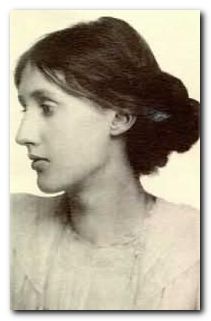
Virginia Woolf life and works1882. Virginia Woolf born (25 Jan) Adeline Virginia Stephen, third child of Leslie Stephen (Victorian man of letters – first editor of the Dictionary of National Biography) – and Julia Duckworth (of the Duckworth publishing family). Comfortable upper middle class family background. Her father had previously been married to the daughter of the novelist William Makepeace Thackery. Brothers Thoby and Adrian went to Cambridge, and her sister Vanessa became a painter. Virginia was educated by private tutors and by extensive reading of literary classics in her father’s library.

1895. Death of her mother Julia Stephen. VW has the first of many nervous breakdowns.

1896. Travels in France with her sister Vanessa.

1897. Death of half-sister, Stella. VW learning Greek and History at King’s College London.

1899. Brother Thoby Stephen enters Trinity College, Cambridge and subsequently meets Lytton Strachey, Leonard Woolf, and Clive Bell. These Cambridge friends subsequently become known as the Bloomsbury Group, of which VW was an important and influential member.

1904. Death of father. Beginning of second serious breakdown. VW’s first publication is an unsigned review in The Guardian. Travels in France and Italy with her sister Vanessa and her friend Violet Dickinson. VW moves to Gordon Square in Bloomsbury. Other residents of this Square include Lady Jane Strachey, Charlotte Mew, and Dora Carrington.

1905. Travels in Spain and Portugal. Writes book reviews and teaches once a week at Morley College, London, an evening institute for working men and women.

1906. Travels in Greece. Death of brother Thoby Stephen. Writes a group of short stories now collected as Memoirs of a Novelist.

1907. Marriage of sister Vanessa to Clive Bell. VW moves with brother Adrian to live in Fitzroy Square. Working on her first novel (to become The Voyage Out).

1908. Visits Italy with the Bells.

1909. Lytton Strachey [homosexual] proposes marriage. VW meets Ottoline Morell, visits Bayreuth and Florence.
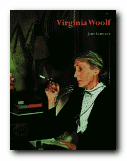

Virginia Woolf: BiographyVirginia Woolf is a readable and well illustrated biography by John Lehmann, who at one point worked as her assistant at the Hogarth Press. It is described by the blurb as ‘A critical biography of Virginia Woolf containing illustrations that are a record of the Bloomsbury Group and the literary and artistic world that surrounded a writer who is immensely popular today’. An attractive and very accessible introduction to the subject.
Virginia Woolf - A Biography Buy the book here


1910. Works for women’s suffrage. Spends time in a nursing home in Twickenham. First exhibition of Post-Impressionist painters arranged by Roger Fry.

1911. VW moves to Brunswick Square, sharing house with brother Adrian, Maynard Keynes, Duncan Grant, and Leonard Woolf. Travels to Turkey.

1912. Marries Leonard Woolf. Travels for honeymoon to Provence, Spain, and Italy. Moves to Clifford’s Inn.

1913. Mental illness and her first attempted suicide. Put in care of husband and nurses.

1915. Purchase of Hogarth House, Richmond. The Voyage Out published and well received. Another bout of violent madness.

1916. Lectures to Richmond branch of the Women’s Co-Operative Guild. regular work for the Times Literary Supplement [whose reviews were at that time anonymous].

1917. L and VW buy hand printing machine and establish the Hogarth Press. First publication Monday or Tuesday. Later goes on to publish T.S. Eliot, Freud, and VW’s own books.

1919. Purchase of Monk’s House, Rodmell. Night and Day published. Brief friendship with Katherine Mansfield. Both are conscious of experimenting with the substance and the style of prose fiction.

1920. Works on journalism and Jacob’s Room.
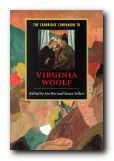

The Cambridge Companion to Virginia WoolfThe Cambridge Companion to Virginia Woolf is collection of essays which addresses the full range of her intellectual perspectives – literary, artistic, philosophical and political. It provides new readings of all nine novels and fresh insight into Woolf’s letters, diaries and essays. The progress of Woolf’s thinking is revealed from Bloomsbury aestheticism through her hatred of censorship, corruption and hierarchy to her concern with all aspects of modernism.


1921. The Mark on the Wall published. VW ill for most of the summer.

1922. Jacob’s Room published. MeetsVita Sackville-West with whom she has a brief love affair. Writing encouraged by E.M. Forster, Strachey, and Leonard Woolf.

1923. Visits Spain. Works on ‘The Hours’ – an early version of Mrs Dalloway.

1924. Purchase of lease on house in Tavistock Square. Gives lecture that becomes ‘Mr Bennett and Mrs Brown’.

1925. The Common Reader [essays] and Mrs Dalloway published. Major break with the traditional novel, its form and techniques.

1926. Unwell with German measles. Starts writing To the Lighthouse.

1927. To the Lighthouse published. Travels to France and Sicily. Begins Orlando.

1928. Orlando published – a fantasy dedicated to and based upon the life of Vita Sackville-West and her love of her ancestral home at Knole in Kent. Delivers lectures at Cambridge on which she based A Room of One’s Own.

1929. A Room of One’s Own published – essays on women’s exclusion from literary history which have become of seminal importance in feminist studies. Travels to Berlin.

1930. First meets Ethel Smyth – pipe-smoking feminist composer, who falls in love with VW. Finishes first version of The Waves.

1931. The Waves – a novel composed of the thoughts of six characters which takes VW’s literary experimentation to its natural limits.

1932. Death of Lytton Strachey. Begins ‘The Partigers’ which was to become The Years.

1934. Death of Roger Fry. Rewrites The Years.

1935. Rewrites The Years. Car tour through Holland, Germany, and Italy.

1936. Begins Three Guineas – a ‘sequel’ to A Room of One’s Own.

1938. Three Guineas extends the feminist critique of patriarchy, militarism, and privilege started in A Room of One’s Own.

1939. Moves to Mecklenburgh Square, but lives mainly at Monk’s House. Meets Freud in London.

1940. Biography of Roger Fry published. London homes damaged or destroyed in blitz.

1941. VW completes Between the Acts, her last novel, then fearing the madness which she felt engulfing her again, fills her pockets with stones and drowns herself in the River Ouse, near Monk’s House. [Her dates of 1882- 1941 are exactly those of James Joyce.]


Bloomsbury Group – web links

Bloomsbury Group - web links Hogarth Press first editions
Annotated gallery of original first edition book jacket covers from the Hogarth Press, featuring designs by Vanessa Bell, Roger Fry, and others.

Bloomsbury Group - web links The Omega Workshops
A brief history of Roger Fry’s experimental Omega Workshops, which had a lasting influence on interior design in post First World War Britain.

Bloomsbury Group - web links The Bloomsbury Group and War
An essay on the largely pacifist and internationalist stance taken by Bloomsbury Group members towards the First World War.

Bloomsbury Group web links Tate Gallery Archive Journeys: Bloomsbury
Mini web site featuring photos, paintings, a timeline, sub-sections on the Omega Workshops, Roger Fry, and Duncan Grant, and biographical notes.

Bloomsbury Group - web links Bloomsbury: Books, Art and Design
Exhibition of paintings, designs, and ceramics at Toronto University featuring Hogarth Press, Vanessa Bell, Dora Carrington, Quentin Bell, and Stephen Tomlin.

Bloomsbury Group - web links Blogging Woolf
A rich enthusiast site featuring news of events, exhibitions, new book reviews, relevant links, study resources, and anything related to Bloomsbury and Virginia Woolf

Bloomsbury Group - web links Hyper-Concordance to Virginia Woolf
Search the texts of all Woolf’s major works, and track down phrases, quotes, and even individual words in their original context.

Bloomsbury Group - web links A Mrs Dalloway Walk in London
An annotated description of Clarissa Dalloway’s walk from Westminster to Regent’s Park, with historical updates and a bibliography.

Bloomsbury Group - web links Women’s History Walk in Bloomsbury
Annotated tour of literary and political homes in Bloomsbury, including Gordon Square, University College, Bedford Square, Doughty Street, and Tavistock Square.

Bloomsbury Group - web links Virginia Woolf Society of Great Britain
News of events, regular bulletins, study materials, publications, and related links. Largely the work of Virginia Woolf specialist Stuart N. Clarke.

Bloomsbury Group - web links BBC Audio Essay – A Eulogy to Words
A charming sound recording of a BBC radio talk broadcast in 1937 – accompanied by a slideshow of photographs of Virginia Woolf.

Bloomsbury Group - web links A Family Photograph Albumn
Leslie Stephens’ collection of family photographs which became known as the Mausoleum Book, collected at Smith College – Massachusetts.

Bloomsbury Group - web links Bloomsbury at Duke University
A collection of book jacket covers, Fry’s Twelve Woodcuts, Strachey’s ‘Elizabeth and Essex’.

© Roy Johnson 2000-2014


More on Virginia Woolf
Virginia Woolf – web links
Virginia Woolf – greatest works
Virginia Woolf – criticism
More on the Bloomsbury Group
Filed Under: Bloomsbury Group, Virginia Woolf Tagged With: Biography, Bloomsbury Group, Literary studies, Modernism, Virginia Woolf, Virginia Woolf biography

Virginia Woolf non-fiction

September 24, 2009 by Roy Johnson

essays, letters, diaries, lectures, biography

Virginia Woolf non-fiction writing - Virginia Woolf Selected EssaysThe Essays are a wonderful introduction to the world of belles lettres. Virginia Woolf’s non-fiction writing and literary career began in her father’s library. She read the classics whilst young, then began to write about her literary experiences, producing reviews for the Manchester Guardian and the Times Literary Supplement – whose contributions were anonymous in those days. Her tastes are humane and well informed. Read her articles on Shakespeare, Charlotte Bronte, and Katherine Mansfield – and you will feel like reading the texts again immediately. She is astonishingly wide-ranging – from the Greek classics via Renaissance drama and Enlightenment journalism, to contemporary fiction. The approach is rather biographical and author-centred, but these are intelligent and gracefully composed essays which speak eloquently on literary and cultural life.

Virginia Woolf non-fiction Buy the book at Amazon UK
Virginia Woolf non-fiction Buy the book at Amazon US


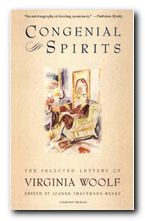
Virginia Woolf non-fiction writingThe Letters are for specialists and the ultimate gossip trivia for Woolf fans. There really is everything from laundry bills, to dinner party recipes, and snobbish lists of people who are ‘in’ or ‘out’. Many of them read as if they were written for public consumption, and even in the gossip there is a lot of repetition. It’s interesting to note just how much of this listing and gossip-mongering is recycled in one letter after another. But this is not surprising, given the communication technology available at the time. The telephone had only just been introduced, and there were two or even three postal deliveries a day at that period. However, if they are read in conjunction with her biography, it is possible to trace the ebb and flow of her personal relationships at very close quarters. For a richer insight into the workings of her keen intellect and creative spirit, the diaries offer greater rewards.

Virginia Woolf non-fiction Buy the book at Amazon UK
Virginia Woolf non-fiction Buy the book at Amazon US


Virginia Woolf non-fiction writing - Virginia Woolf DiariesThe Diaries are quite simply a marvellous human document. Don’t expect lots of intimate personal revelations of the kind we’re used to almost a hundred years later, but there’s a vivacity about her personal reflections which make them a wonderful reading experience. More importantly, it is here that she reveals the secrets of the creative process. She feels the beginnings of important ideas coming on like a mood or an illness. The topic swells, grows in her imagination, and sometimes takes her over like an intellectual love affair. She suffers; she struggles to express elusive ideas; she writes; and then finally the work emerges and she is exhausted with the effort. This is the nearest to the deeply creative process you are likely to come across. Of course there are lots of observations on contemporary affairs which make this an interesting historical document too. One minute it’s creative breakthroughs via metaphors or new techniques, then next it’s the Versailles Treaty and her husband Leonard’s part in it. But the real benefit (almost a privilege) is to be invited to share the private thoughts of a first class creative mind.

Virginia Woolf non-fiction Buy the book at Amazon UK
Virginia Woolf non-fiction Buy the book at Amazon US


Virginia Woolf non-fiction writing - Virginia Woolf A Writer's JournalA Writer’s Journal It’s no wonder that the best parts of her diaries were extracted and published separately by her husband Leonard Woolf. If you don’t have time to read the full personal chronicles, this is a very good condensation. It’s a much-quoted source in writing manuals and books on creativity. Read it alongside her fiction, and learn how the imaginative mind works. She records the first flashes of inspiration, the development of good ideas, and the links between disparate insights. You might also be surprised to learn how much self-doubt, intellectual anguish, and hard work went into her creative life.

Virginia Woolf non-fiction Buy the book at Amazon UK
Virginia Woolf non-fiction Buy the book at Amazon US


Virginia Woolf non-fiction writing - Virginia Woolf Three GuineasA Room of One’s Own and Three Guineas are like the Old and New Testament of the feminist’s Bible. The first is a series of lectures she was invited to give on ‘Women and Literature’. It is here that she coins the idea of ‘Shakespeare’s sister’ and considers the problems she would have faced if she had decided to become a writer. It’s a sparkling, critical, and wide-ranging expose of male privilege and the way in which women have been excluded from cultural life. If you want to start with feminist theory – particularly in its relationship to literature – this is where to begin. Ten years later she extended the feminist critique of patriarchy and privilege to a much greater extent. All parts of the English establishment are subject to an excoriating analysis which leaves them exposed as instruments of ideological dominance and cultural power. In Three Guineas she offers a scathing analysis of the pillars of English society – the Crown, the Church, the Judiciary, the Military, and the Universities. It’s a pity this is not as well known or as well read as A Room of One’s Own – because it is more searching, more incisive, more critical, and much more radical.

Virginia Woolf non-fiction Buy the book at Amazon UK
Virginia Woolf non-fiction Buy the book at Amazon US


Virginia Woolf non-fiction writing - Virginia Woolf On Being IllOn Being Ill Virginia Woolf knew a lot about illness. She suffered from repeated bouts of both physical and mental debility throughout her life. But how inventive of her to actually write about it. This is one of her lesser-known but amazingly thoughtful pieces of essay writing. It’s a philosophic meditation on the experience of illness, including even its pleasures and advantages. She also includes reflections on reading and the benefits of enforced idleness. She discusses the cultural taboos associated with illness and explores how, even though it is a more-or-less universal experience, it has been excluded from a great deal of literature. This edition has an introduction by Hermione Lee, one of her best biographers.

Virginia Woolf non-fiction Buy the book at Amazon UK
Virginia Woolf non-fiction Buy the book at Amazon US


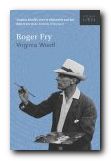
Virginia Woolf non-fiction writing - Roger Fry: A BiographyRoger Fry Her biography is both a homage to a family friend and a debate with a fellow artist – particularly on the relationship between aesthetics and realism. It was an official work commissioned by the Fry family- so don’t expect any revelations, or even any mention that Fry was once her sister’s lover. She emphasises his Quaker background, his scientific training, his amazing energy in organising art events (such as the Omega workshop) and his loyalty. Much of the work is based on letters and diaries, and of course the two artists were close friends – so at least it’s authentic.

Virginia Woolf non-fiction Buy the book at Amazon UK
Virginia Woolf non-fiction Buy the book at Amazon US


Virginia Woolf: BiographyVirginia Woolf is a readable and well illustrated biography by John Lehmann, who at one point worked as her assistant at the Hogarth Press. It is described by the blurb as ‘A critical biography of Virginia Woolf containing illustrations that are a record of the Bloomsbury Group and the literary and artistic world that surrounded a writer who is immensely popular today’. An attractive and very accessible introduction to the subject.

Virginia Woolf non-fiction Buy the book at Amazon UK
Virginia Woolf non-fiction Buy the book at Amazon US

© Roy Johnson 2005


Virginia Woolf – web links
Virginia Woolf – greatest works
Virginia Woolf – criticism
Virginia Woolf – life and works


Filed Under: Virginia Woolf Tagged With: A Room of One's Own, On Being Ill, Roger Fry, Virginia Woolf, Virginia Woolf non-fiction

Virginia Woolf selected criticism

September 24, 2009 by Roy Johnson

literary criticism and commentary

T.E. Apter, Virginia Woolf: A Study of her Novels, New York: New York University Press, 1979.

Anne Oliver Bell and Andrew McNeillie, The Diary of Virginia Woolf, London: Hogarth Press, 5 volumes, 1977-1984.

Quentin Bell, Bloomsbury, London: Weidenfeld and Nicolson, 1968.

Quentin Bell, Virginia Woolf: a Biography, 2 Vols, London: Hogarth Press, 1972.

Joan Bennett, Virginia Woolf: Her Art as a Novelist, second edition, Cambridge: Cambridge University Press, 1964.

Rachel Bowley, Virginia Woolf: Feminist Dimensions, Oxford: Blackwell, 1988.

Maria Di Battista, Virginia Woolf’s Major Novels, New Haven/London: Yale University Press, 1980.

David Daiches, Virginia Woolf, second edition, Norfolk Conn.: New Directions, 1963

Susan Dick (ed), The Complete Shorter Fiction of Virginia Woolf, Hogarth Press, 1985.


Virginia Woolf: BiographyVirginia Woolf is a readable and well illustrated biography by John Lehmann, who at one point worked as her assistant at the Hogarth Press. It is described by the blurb as ‘A critical biography of Virginia Woolf containing illustrations that are a record of the Bloomsbury Group and the literary and artistic world that surrounded a writer who is immensely popular today’. This is an attractive and very accessible introduction to the subject. Ideal for beginners.   Virginia Woolf - A Biography Buy the book here


Avron Fleishman, Virginia Woolf: A Critical Reading, Baltimore: Johns Hopkins University Press, 1977.

Ralph Freedman, Virginia Woolf: Revaluation and Continuity, Berkley: University of California Press, 1980.

B.J. Kirkpatrick, A Bibliography of Virginia Woolf, second edition, Oxford: Oxford University Press, 1980.

Lyndall Gordon, Virginia Woolf: A Writer’s Life, Oxford: Oxford University Press, 1984.

Jean Guiguet, Virginia Woolf and her Works, trans. Jean Stewart, London: Hogarth Press, 1965.

Jeremy Hawthorn, Virginia Woolf’s ‘Mrs Dalloway’: a Study in Alienation, Sussex University Press, 1975.

Mitchell A. Leaska, The Novels of Virginia Woolf: From Beginning to End, London: Weidenfeld and Nicolson, 1977.

Hermione Lee, The Novels of Virginia Woolf, London: Methuen, 1977.

Robin Majumdar and Allen McLaurin (eds), Virginia Woolf: The Critical Heritage, London: Routledge and Keegan Paul, 1975.


Virginia Woolf selected criticismThe Cambridge Companion to Virginia Woolf is collection of essays which addresses the full range of her intellectual perspectives – literary, artistic, philosophical and political. It provides new readings of all nine novels and fresh insight into Woolf’s letters, diaries and essays. The progress of Woolf’s thinking is revealed from Bloomsbury aestheticism through her hatred of censorship, corruption and hierarchy to her concern with all aspects of modernism. This book explores the immense range of social and political issues behind her search for new forms of narrative.   Buy the book here


Jane Marcus, New Feminist Essays on Virginia Woolf, Lincoln: University of Nebraska, 1981.

Herbert Marder, Feminism and Art: A Study of Virginia Woolf, New Haven/London: Yale University Press, 1968.

Allen McLaurin, Virginia Woolf: The Echoes Enslaved, Cambridge: Cambridge University Press, 1973.

Makiko Minow Pinkney, Virginia Woolf and the Problem of the Subject, Brighton: Harvester, 1987.

A.D. Moody, Virginia Woolf, Edinburgh: Oliver and Boyd, 1963.

Nigel Nicolson and Joanne Trautman (eds), The Letters of Virginia Woolf, 6 Vols, London: Hogarth Press, 1975-84.

Roger Poole, The Unknown Virginia Woolf, Cambridge: Cambridge University Press, 1978.

Sue Roe and Susan Sellers, The Cambridge Companion to Virginia Woolf, Cambridge: Cambridge University Press, 2000.

Phyllis Rose, Woman of Letters: A Life of Virginia Woolf, New York: Oxford University Press, 1978.

N.C. Thakur, The Symbolism of Virginia Woolf, London: Oxford University Press, 1965.

Eric Warner (ed), Virginia Woolf: A Centenary Perspective, London: Macmillan, 1984.

Jane Wheare, Virginia Woolf, Methuen, 1989.

Leonard Woolf, An Autobiography, Oxford: Oxford University Press, 1980.

Alex Zwerdling, Virginia Woolf and the Real World, Berkley: University of California Press, 1986.

© Roy Johnson 2005


Virginia Woolf – web links
Virginia Woolf – greatest works
Virginia Woolf – criticism
Virginia Woolf – life and works


Filed Under: Virginia Woolf Tagged With: Bloomsbury Group, Literary criticism, Literary studies, Modernism, Virginia Woolf, Virginia Woolf criticism

Virginia Woolf selected essays

May 26, 2009 by Roy Johnson

non-fiction meditations from a great novelist

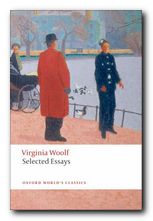
Virginia Woolf selected essays is a completely self-contained, and can be read for the pleasure which she thought was the purpose of the essay form. But they also illuminate her larger works of fiction. They are a small proportion of her total output (which runs to five volumes) but they represent some of the most important themes which pervade her work as a whole. They are also amazingly prophetic – on women as writers, on the death of Empire, and on the speed and locomotion of modern life.

Virginia Woolf Selected EssaysShe writes about the Tube, the telephone, the motor car, and aircraft, which were all recent developments at the time. The essays are arranged in chronological order in four groups – reading and writing, biography, feminism, and contemporary culture. She had inherited the skill of writing from her father Leslie Stephen and by the time these essays were written had honed that skill into a high form of art. She believes that the essay is an expression of the individual vision, but it is interesting to note how much of her own expression is couched in generalizations addressed in the first person plural – “We feel .. this and that”. I was reminded of George Orwell who whilst railing against generalizations and stereotypes was quite happy to fall into the trap of devising his own – as in ‘What is Englishness?’.

It’s also true to say that a lot of her argument is conducted in extended similes and metaphors. These give the essays unquestionable elegance, but they also allow her to hide behind these rhetorical flourishes. They often conceal a paucity of concrete examples to back up her arguments.

It’s a subtle and seductive method, because it draws any unwary reader into accepting unfounded generalizations without their realising it. Her judgments are sound whilst she is in the safe traditions of earlier centuries, but when it comes to her contemporaries – well. “Ulysses was a memorable catastrophe – immense in daring, terrific in disaster.”

But her analysis of reading fiction (‘How Should One Read a Book?) is truly inspirational. In it, she argues for a totally sympathetic submersion in the writer’s work, followed by an equally severe judgment in which each work is held up for comparison against the finest of its kind.

To read a book well, one should read it as if one were writing it … It is by the means of such readers that masterpieces are helped into the world.

‘The New Biography’ is her thoughtful response to the subject, prompted by her reading of Harold Nicolson’s excellent and much under-rated Some People. She is astute enough to spot that he was onto something quite new (and what a shame it is that he didn’t produce some more writing of this kind).

A companion piece to this essay is ‘The Art of Biography’, a meditation on Lytton Strachey’s Eminent Victorians and Elizabeth and Essex, arguing that the former is more successful because Strachey stayed within the confines of known facts, whereas in the latter he invented them, and turned the book into a work of artistic imagination – whereupon it failed by straying outside the ‘rules’ of biography.

‘On Being Ill’ is a reflection on the fact that illness, although a common human experience, is hardly present in literature as a subject. It was written before she read Marcel Proust, but it also dances around the subject of what literature we read (and cannot read) when ill.

‘Memories of a Working Women’s Guild’ expresses her ambiguous political notions but her personal sympathy with a movement which her husband Leonard Woolf had enthusiastically supported, along with the Co-Operative movement. She knows perfectly well that she is privileged, a ‘lady’, but it doesn’t stop her entering imaginatively into the lives of Mrs Burrows from Edgebaston and Mrs Philips from Bacup – delegates to a conference she attended.

The collection ends with essays on contemporary life and culture. There’s an extraordinarily prescient reflection on the end of Empire prefigured by an account of a thunderstorm at the Wembley Exhibition of 1924; a meditation on the art of the cinema (1926) in which she correctly predicts that its time was yet to come; and a riveting account of flying over London in an aeroplane which perfectly demonstrates her imaginative skill – since she had never done any such thing.

© Roy Johnson 2008

Buy the book at Amazon UK

Buy the book at Amazon US


David Bradshaw (ed), Virginia Woolf: Selected Essays, Oxford: Oxford University Press, 2008, pp.244, ISBN 0199212813


More on Virginia Woolf
Virginia Woolf – web links
Virginia Woolf – greatest works
Virginia Woolf – criticism
More on the Bloomsbury Group


Filed Under: Virginia Woolf Tagged With: Bloomsbury Group, English literature, Essays, Literary studies, Virginia Woolf

Virginia Woolf web links

September 24, 2009 by Roy Johnson

Virginia Woolf – web links

Virginia Woolf - portrait
Red button Virginia Woolf at Mantex
Biographical notes, study guides to the major works, book reviews, studies of the short stories, bibliographies, web links, study resources.

Virginia Woolf web links Blogging Woolf
Book reviews, Bloomsbury related issues, links, study resources, news of conferences, exhibitions, and events, regularly updated.

Virginia Woolf web links Virginia Woolf at Wikipedia
Full biography, social background, interpretation of her work, fiction and non-fiction publications, photograph albumns, list of biographies, and external web links

Virginia Woolf web links Virginia Woolf at Gutenberg
Selected eTexts of the novels The Voyage Out, Night and Day, Jacob’s Room, and the collection of stories Monday or Tuesday in a variety of digital formats.

Virginia Woolf web links Woolf Online
An electronic edition and commentary on To the Lighthouse with notes on its composition, revisions, and printing – plus relevant extracts from the diaries, essays, and letters.

Virginia Woolf web links Hyper-Concordance to Virginia Woolf
Search texts of all the major novels and essays, word by word – locate quotations, references, and individual terms

Red button Virginia Woolf – a timeline in phtographs
A collection of well and lesser-known photographs documenting Woolf’s life from early childhood, through youth, marriage, and fame – plus some first edition book jackets – to a soundtrack by Philip Glass. They capture her elegant appearance, the big hats, and her obsessive smoking. No captions or dates, but well worth watching.

Virginia Woolf web links Women’s History Walk in Bloomsbury
Tour of literary and political homes in Bloomsbury – including Gordon Square, Gower Street, Bedford Square, Tavistock Square, plus links to women’s history web sites.

Virginia Woolf web links Virginia Woolf Society of Great Britain
Bulletins of events, annual lectures, society publications, and extensive links to Woolf and Bloomsbury related web sites

Virginia Woolf web links BBC Audio Essay – A Eulogy to Words
Charming sound recording of radio talk given by Virginia Woolf in 1937 – a podcast accompanied by a slideshow of photographs.

Virginia Woolf web links A Family Photograph Albumn
Leslie Stephen compiled a photograph album and wrote an epistolary memoir, known as the “Mausoleum Book,” to mourn the death of his wife, Julia, in 1895 – an archive at Smith College – Massachusetts

Virginia Woolf web links Virginia Woolf first editions
Hogarth Press book jacket covers of the first editions of Woolf’s novels, essays, and stories – largely designed by her sister, Vanessa Bell.

Virginia Woolf web links Virginia Woolf – on video
Biographical studies and documentary videos with comments on Virginia Woolf and the Bloomsbury Group and the social background of their times.

Virginia Woolf web links Virginia Woolf Miscellany
An archive of academic journal essays 2003—2014, featuring news items, book reviews, and full length studies.


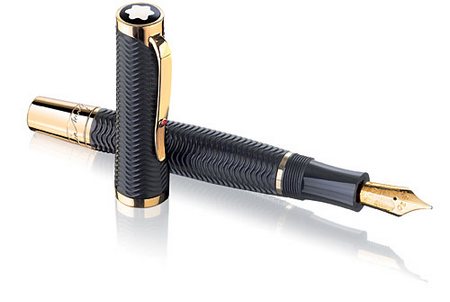
Mont Blanc pen - Virginia Woolf edition

Mont Blanc pen – the Virginia Woolf special edition


Virginia Woolf - Companion - book jacketThe Cambridge Companion to Virginia Woolf is collection of essays which addresses the full range of her intellectual perspectives – literary, artistic, philosophical and political. It provides new readings of all nine novels and fresh insight into Woolf’s letters, diaries and essays. The progress of Woolf’s thinking is revealed from Bloomsbury aestheticism through her hatred of censorship, corruption and hierarchy to her concern with all aspects of modernism. This book explores the immense range of social and political issues behind her search for new forms of narrative.

© Roy Johnson 2005


Virginia Woolf – web links
Virginia Woolf – greatest works
Virginia Woolf – criticism
Virginia Woolf – life and works


Filed Under: Virginia Woolf Tagged With: Bloomsbury Group, Literary studies, Virginia Woolf, Web links

Visual Explanations

July 20, 2009 by Roy Johnson

best-selling illustrated essays on presenting information

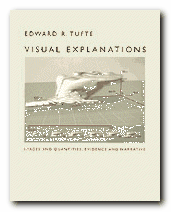
Visual Explanations is Edward Tufte’s passionate manifesto for intelligent information design. He is concerned with the need for scale, accuracy, and truthful proportion in the visualisation of data. The book derives much of its charm from the beautiful reproduction of its illustrative materials. He includes engravings, photographs, maps, computer-generated images, and even built-in flaps showing motion and before-after effects. The diversity of his examples is just as impressive.

Clarity and excellence in thinking is very much like clarity and excellence in the display of data. When principles of design replicate principles of thought, the act of arranging information becomes an act of insight.

Visual ExplanationsThey are drawn from scientific papers, conjurors’ manuals, and even books designed to be read under water. In one stunning example, he uses video snapshots of his own two-dimensional yet dynamic visualisation of a thunderstorm. Tufte [pronounced “TUFF-tee”] makes his central argument in a chapter which has now become famous.

This discusses the mis-representation of data related to the 1986 Challenger space shuttle which resulted in a disastrous explosion and the death of all the cosmonauts on board. His dense technical analysis of data-presentation and bad practice is used to argue that the fatal accident could have been averted if charts and diagrams had been presented more intelligently, more accurately.

A chapter on conjuring tricks focuses on the clever representation of temporal progression in single illustrations from how-to-do-it books. However, it has to be said that sometimes it’s not quite clear what point he’s making, and he seems to be struggling with what is obvious: that it’s difficult to represent fluid motion in static, two-dimensional images.

Eventually it emerges that he wishes to compare magic with it’s opposite – teaching. One amazes by concealment, the other should inform by revelation. “Your audience should know beforehand what you’re going to do.” That’s a useful insight for some of us.

His attitude is enormously confident and persuasive. Yet if you can brace yourself as a reader, it sometimes seems that he doesn’t always follow his own theories in the presentation of materials – and this in a book which he wrote, designed, and published himself. On some pages, it’s difficult to link illustration to argument; some reproductions are disproportionately large for the point they are making; and he pursues the odd habit of crowding the generous page margins with bibliographic minutiae which would normally be reserved for chapter endnotes.

He writes in a cryptic, elliptical manner, and is much given to compressed generalisations and gnomic claims such as “to make verbs visible, is at the heart of information design” – though this approach can also be quite witty, as when he dismisses one of the bad examples as “better than nothing ([but] that’s all it’s better than”.

Despite these occasional oddities, there are thought-provoking ideas on almost every page. For instance, the idea that the public health warnings on US billboard cigarette advertisements are less effective because they are difficult to read, crammed as they are into boxed text, sans-serif fonts, in continuous capitals, and underlined – which makes four typographical solecisms in one.

SURGEON GENERAL’S WARNING: SMOKING CAUSES LUNG CANCER, HEART DISEASE, EMPHYSEMA, AND MAY COMPLICATE PREGNANCY.

Despite the graphic variety of his presentations, many of his arguments are amazingly orchestrated onto single or double-page spreads, and the book is an almost irresistibly beautiful production. What he’s actually talking about is visual rhetoric: “by establishing a structure of rhythm and relationships, [graphic] parallelism becomes the poetry of visual information”. We might wish to query some of his theoretical claims, but it’s very hard to be critically detached from such a seductive presentation of evidence – which paradoxically is the very point he’s warning us about.

© Roy Johnson 2002

Visual Explanations   Buy the book at Amazon UK

Visual Explanations   Buy the book at Amazon US


Edward Tufte, Visual Explanations, Cheshire, CT: Graphics Press, 1997, pp.156, ISBN: 0961392126


More on information design
More on technology
More on digital media


Filed Under: Graphic design, Information Design Tagged With: Displaying information, Edward Tufte, Graphic design, Information design

Visual Language for the Web

June 27, 2009 by Roy Johnson

Visual Language for the Web is a book about the language of icons, buttons, and navigational aids used in the design of graphical interfaces of computer software programs. The first chapter deals with Mayan hieroglyphs and Chinese ideograms – writing with pictures. This establishes how much information can be conveyed semiotically. Paul Honeywill then looks at how graphical icons are used in interface design – and how well we understand them, particularly on a multi-national level. Some, like the folder icon, have been successful and are now widely used.

Visual Language for the WebOthers seem to be understandable only within the context of the program for which they are designed. Next comes an explanation of the design of icons, taking account of the psychology of visual perception and the technology of rendering images on screen. He explains for instance why colours and font sizes are rendered differently on PCs and Macs.

He offers an introduction to digital font technology which will be useful for anyone who doesn’t already know how serif and sans-serif fonts are used for quite different purposes.

To illustrate the principles on which graphic icons best operate, he presents two case studies of designing business logos. He considers pictographic languages ranging from the natural Mayan hieroglyphics and Sumerian cuneiform, to recent experiments such as Elephant’s Memory. But he seems reluctant to acknowledge their limitations in telling anything but simple narratives.

However, the very absence of any individual authority on the Internet means that any graphic icons which become generally accepted will be those which are commonly understood.

The last part of the book looks at testing recognition of icons – and comes to the unsurprising conclusion that the most effective and best known are those such as the magnifying glass ‘Search’ icon which appears in lots of different programs.

It has to be said that all this is sometimes discussed at a very theoretical level:

the day sign for Manik when it appears without the day sign cartouche in a non-calendrical context is chi

But this will be of interest to anybody concerned with the study of writing systems, as well as graphic designers, usability experts, and information architects.

© Roy Johnson 2000

Visual Language for the Web   Buy the book at Amazon UK

Visual Language for the Web   Buy the book at Amazon US


Paul Honeywill, Visual Language for the World Wide Web, Exeter: Intellect, 1999, pp.192, ISBN: 187151696X


More on information design
More on design
More on media
More on web design


Filed Under: Information Design, Theory, Web design Tagged With: Computers, Product design, Theory, Web design

Visualizing Data

June 19, 2009 by Roy Johnson

explaining data with the Processing environment

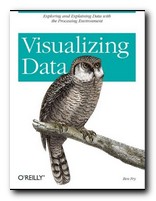
The doyen of data presentation is Edward Tufte, but even he has (so far) only dealt with the display of static information. Ben Fry’s new book combines similar aesthetic principles with the technical knowledge of how such presentations can be made dynamically. He uses a simple programming environment and API called Processing (which he developed as part of his PhD research). This is a free downloadable open source program based on Java (processing.org).

Visualizing DataHe’s an excellent communicator, and introduces his topics in gradual stages. The first few chapters are a gentle introduction to presenting data, and then gradually he presents more technically advanced approaches. What he proposes embraces a number of disciplines – statistics, data mining, graphic design, and information visualization – but he insists at the outset that the most important thing is to ask interesting questions. It’s all very well having huge amounts of data, but you need to ask ‘What is meaningful about it?’.

The process of creating a visual presentation is a logical series of steps. First the data is acquired: (he uses the US system of zip codes as an example). Then the data is parsed: that is, changed into a format that tags each part with its intended use. Next, any unwanted data is filtered out, then the data is mined – in this case to show its maximum and minimum values.

The next stage is deciding how to present the results – as a table, bar chart, graph, or diagram. Then the results can be refined. And finally, because this entire process is conducted digitally, drawing on processing power which is now available on even a standard computer, the data can be interrogated interactively. We can zoom in on maps, or refine searches by name or size.

In the next part of the book he offers an explanation of how to use the Processing software to create your own displays and visualize your own data. This is done in a straightforward manner that even someone without programming skills could follow. He also provides guidance on the philosophy of designing this type of software. Keep your designs as small and re-usable as possible. Work with samples of your data to begin with. Don’t start by trying to build a cathedral.

Subsequent chapters deal with different types of exercise – showing data as a physical map (the population of the US in states) then a time series (national consumption of tea and coffee 1910-2000). Next comes data with complex inter-relations (national results of all baseball teams in a single season).

As he says in his introduction, he is not offering a series of ready-made programs for presenting data. Instead, he is demonstrating the general principles by which such design problems can be solved, and leaving you to create your own.

Tree maps and network graphs are shown displaying word usage in a literary text (Mark Twain) and he even shows examples of results which are not useful – in order to emphasise the point he makes over and over again: you must ask the right questions of the data you are interrogating.

He ends by returning to the earliest stages of his thesis with some quite advanced level guidance on the acquisition and parsing of data. If by this time you’re not convinced (as I was) that he knows exactly what he’s talking about, have a look at his stunning personal web site at www.benfry.com.

© Roy Johnson 2007

Visualizing Data   Buy the book at Amazon UK

Visualizing Data   Buy the book at Amazon US


Ben Fry, Visualizing Data, Sebastopol (CA): O’Reilly, 2007, pp.366, ISBN: 0596514557


More on information design
More on design
More on media
More on web design


Filed Under: Information Design Tagged With: Data presentation, Information design, Visualization, Web design

Vita and Harold

July 11, 2009 by Roy Johnson

The letters of Vita Sackville-West and Harold Nicolson

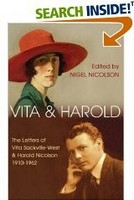
Harold Nicolson was a diplomat, a writer, and a politician, but he is best known for being married to Vita Sackville-West. They were both fringe members of the Bloomsbury Group. She too was a writer – indeed a best-selling author in the 1930s – but is best known as the woman who fell in love with and ran away with Virginia Woolf. Collectively, she and her husband are also best known for their rather unusual marriage and its arrangements which permitted them both to have lovers of the same sex whilst swearing their undying loyalty to each other. All this is recorded by their son in the equally famous account Portrait of a Marriage. Vita and Harold is a selection from their personal correspondence.

Vita & HaroldThey wrote to each other voluminously (10,500 letters) throughout their long relationship – mainly because so much of it was spent apart. He worked in Persia whilst she stayed at home. Later, he had his rooms in Albany where he lived all week: she stayed in Sissinghurst writing and tending their gardens. The children were kept out of the way, and they met at weekends. In the meantime homosexual affairs flourished and they wrote to say how much they were missing each other.

The early letters are very playful and, it has to be said, full of the protestations of a deep friendship based on shared interests and understanding on which they later claimed the success of their marriage was built.

She is very understanding when he contracts a venereal infection from another male guest at a weekend party he attended with her as his new wife. He is more concerned but ultimately forgiving when she leaves him and their two children to ‘elope’ with Violet Keppel, who had just married Denys Trefusis.

She even writes to him from the south of France whilst he is attending the Paris Peace Conference in 1919 – complaining that the exchange rate had dropped before she could convert her pounds sterling. He was negotiating the terms of the Armistice, whilst she was getting ready to gamble away her money in Monte Carlo.

It’s an interesting lesson in how letters must be put into a historical and cultural context in order to be properly understood. Vita writes a letter declaring undying love for her husband – but you would never guess it was written on the very day that she went off for the last time with Violet Trefusis.

Although Vita was the more successful author, his letters are more entertaining – at moments given to (unintentional?) humour:

[On horticulture] Shrubbery is a great problem if one is to avoid the suburban…[On his younger son] I said that about masturbation he must put it off as long as he possibly could – and that then he must only do it on Saturdays…[On education] I said that co-education was calculated to make boys homosexual for life, whereas Eton was only calculated to make them homosexual until 23 or 24.

Vita on the other hand is often more philosophically reflective, even if her observations are laced with a breathtaking notions of superiority:

The whole system of marriage is wrong. It ought, at least, to be optional and no stigma attached if you prefer a less claustrophobic form of contact. For it is claustrophobic. It is only very, very intelligent people like us who are able to rise superior; and I have a suspicion, my darling, that even our intelligence…wouldn’t have sufficed if our temperamental weaknesses didn’t happen to dovetail as well as they do…In fact our common determination for personal liberty: to have it ourselves, and to allow it to each other.

Serene detachment and au-dessus de la mêlée – yet this is the woman who travelled all the way to Paris to seduce Violet Trefusis whilst she was on her honeymoon, and forebad her to have any sexual relationship with her new husband Denys.

It’s amazing how many important political events Harold was connected with. He was the only person to be present at the settlement of both world wars. And he knew just about everyone who was anyone. In the course of his busy life he hobnobs with James Joyce, Somerset Maugham, Winston Churchill, the Duke of Windsor, and Charles de Gaulle.

No doubt there are today people with unconventional marriages, bisexual relations, connections in high places, and lots of money – but this one offers a glimpse of a world which has gone by. And I somehow doubt that people in future will be reading the emails and text messages which have replaced the written letter as a means of communication.

© Roy Johnson 2001

Vita and Harold   Buy the book at Amazon UK

Vita and Harold   Buy the book at Amazon US


Nigel Nicolson (ed), Vita & Harold: The Letters of Vita Sackville-West and Harold Nicolson 1910-1962, London: Phoenix, 1993, pp.452, ISBN: 1857990617


More on Harold Nicolson
More on the Bloomsbury Group
More on Vita Sackville-West
More on the novella
More on literary studies


Filed Under: Bloomsbury Group, Harold Nicolson, Lifestyle, Vita Sackville-West Tagged With: Biography, Bloomsbury Group, Harold Nicolson, Vita Sackville-West

Vita Sackville-West biography

September 21, 2009 by Roy Johnson

best-selling novelist, lesbian, and horticulturalist

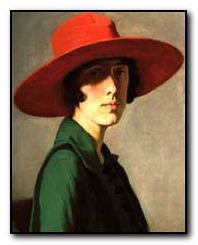
Vita Sackville-West biographyVita (Victoria Mary) Sackville-West (1892-1962) was a prolific poet and novelist – though she is probably best known for her writing on gardens and her affair with Virginia Woolf. She was born into an aristocratic family in Knole, Kent. Her grandmother was the famous Pepita, a Spanish dancer of humble descent who had formed an illicit union with Lionel Sackville-West, the 2nd Lord Sackville. She was educated privately and became a striking if slightly eccentric figure, over six feet tall. As a child she started to write poetry, writing her first ballads at the age of 11. Her first published work, the verse drama Chatterton, was printed privately in 1909 when she was seventeen, and besides further volumes of poetry she wrote thirteen full-length novels (including a detective story) as well as books on biography, and history.
In 1913 she married the diplomat and critic Harold Nicolson, with whom she lived briefly in Persia and then at Sissinghurst Castle in Kent. They had two children, who became the art critic Benedict Nicolson and the publisher Nigel Nicolson. At first she played her role as a dutiful wife, but then her husband admitted that he had a male lover. The marriage survived nevertheless.

She herself caused something of a scandal by having a very public affair with Violet Keppel, the daughter of Alice Keppel, Edward VII’s mistress. Their affair continued even after Violet married and became Violet Trefusis in 1919. It reached a climax when the two women ‘eloped’ to Paris. Their husbands Denys Trefusis and Harold Nicolson chartered an aeroplane and travelled to Paris together to persuade their wives to return home.

Vita fictionalised the episode in her novel Challenge, with Julian representing Vita Sackville-West. The book was thought at the time to be so sensational and provocative that it was suppressed in Britain by both Vita’s and Violet’s parents, who feared an explosive scandal. It was, however, accepted in America, and published there in 1923.

That same year the art critic Clive Bell introduced Sackville-West to Virginia Woolf, and the two became lovers, travelling to France and Italy on holiday together the following year. Much of this relationship is recorded in the voluminous exchange of letters between these two formidable women. Woolf used Vita as the model for the central figure in her novel Orlando, and indeed early editions of the book carried pictures of Vita in costumes appropriate to the story.

Vita also had affairs with Hilda Matheson, head of the BBC Talks Department, and Mary Campbell, married to the poet Roy Campbell. Vita’s father died in 1928 and his brother became the fourth Baron Sackville-West, inheriting Knole.

This was a terrible though inevitable blow to Vita. She was passionately attached to the family seat and the long tradition that it represented, but she knew that as a female offspring she could not inherit. Interestingly, in a letter to her husband she described her attachment to the building in terms of a lesbianism which directly recalls her behaviour towards Violet Trefusis:

My voluntary exile from Knole is very curious. I think about it a lot. I feel exactly as though I had had for years a liaison with a beautiful woman, who never, from force of circumstances, belonged to me wholly; but who had for me a sort of half-maternal tenderness and understanding, in which I could be entirely happy. Now I feel as though we had been parted because (again through force of circumstances and owing to no choice of her own) she had been compelled to marry someone else and had momentarily fallen completely beneath his jurisdiction, not happy in it, but acquiescent. I look at her from far off; and if I were wilder and more ruthless towards myself I should burst in one evening and surprise her in the midst of her new domesticity. But life has taught me not to do these things.

In 1929 her husband decided to resign from the foreign service and devote himself to writing and politics. They purchased Sissinghurst Castle, a near-derelict house, and started to restore it. The garden was designed from scratch and copiously stocked with plants by Vita and Harold themselves. Sissinghurst is now a tourist attraction, having been transferred to the National Trust.

In the 1930s she published The Edwardians (1930), All Passion Spent (1931), and Family History (1932) which portrayed English upper-class manners and life. All these books were published by the Hogarth Press (which was run by Leonard Woolf) and all of them became bestsellers. It might seem slightly surprising to us in the twenty-first century to realise that her books were much more popular than Virginia Woolf’s during the latter’s lifetime.

She recorded her own feelings about the relationship between person and place in The Land (1926) – a pastoral poem of 2,500 lines which was awarded the Hawthornden Prize and brought her the literary prestige for which she had long yearned.

This success inspired her to write a companion piece called The Garden. This was not completed and published until after the war, in 1946. She thought the poem ‘not a patch on The Land‘, but many people now see it as a finer work altogether. It won the Heinemann prize, and she spent the whole £100 prize money on azaleas for the garden.

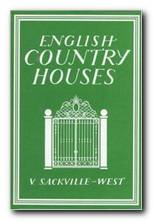
Vita Sackville-WestAfter the war she became something of a recluse, devoting herself to gardening and writing. Her classic English Country Houses records her passionate interest the history of the English country house from the Middle Ages to the 20th century, and of the people who built and lived in them from common squires to kings and queens. Much of this was fuelled by her passionate attachment to Knole, which she had not inherited.

Her interest in gardening was rewarded in 1955 by the Royal Horticultural Society. She also wrote a regular gardening column at the Observer from 1946. That year she was also made a Companion of Honour for her services to literature. In the latter years of her life she lived rather reclusively, and devoted herself largely to her gardens and home. She died of cancer on June 2, 1962. Harold Nicolson died six years later.

Vita’s son Benedict eventually found out about his mother’s (and his father’s) dual sexual nature when he was informed of it bluntly at the age of eighteen by his grandmother. Portrait of a Marriage by Nigel Nicolson (Weidenfeld & Nicolson, 1973) gives the full story of this period of the Nicolsons’ lives, taken from an autobiographical manuscript found in a locked briefcase after Vita’s death (which he cut open with a knife).


Vita Sackville-West biography


Bloomsbury Group – web links

Bloomsbury Group - web links Hogarth Press first editions
Annotated gallery of original first edition book jacket covers from the Hogarth Press, featuring designs by Vanessa Bell, Roger Fry, and others.

Bloomsbury Group - web links The Omega Workshops
A brief history of Roger Fry’s experimental Omega Workshops, which had a lasting influence on interior design in post First World War Britain.

Bloomsbury Group - web links The Bloomsbury Group and War
An essay on the largely pacifist and internationalist stance taken by Bloomsbury Group members towards the First World War.

Bloomsbury Group web links Tate Gallery Archive Journeys: Bloomsbury
Mini web site featuring photos, paintings, a timeline, sub-sections on the Omega Workshops, Roger Fry, and Duncan Grant, and biographical notes.

Bloomsbury Group - web links Bloomsbury: Books, Art and Design
Exhibition of paintings, designs, and ceramics at Toronto University featuring Hogarth Press, Vanessa Bell, Dora Carrington, Quentin Bell, and Stephen Tomlin.

Bloomsbury Group - web links Blogging Woolf
A rich enthusiast site featuring news of events, exhibitions, new book reviews, relevant links, study resources, and anything related to Bloomsbury and Virginia Woolf

Bloomsbury Group - web links Hyper-Concordance to Virginia Woolf
Search the texts of all Woolf’s major works, and track down phrases, quotes, and even individual words in their original context.

Bloomsbury Group - web links A Mrs Dalloway Walk in London
An annotated description of Clarissa Dalloway’s walk from Westminster to Regent’s Park, with historical updates and a bibliography.

Bloomsbury Group - web links Women’s History Walk in Bloomsbury
Annotated tour of literary and political homes in Bloomsbury, including Gordon Square, University College, Bedford Square, Doughty Street, and Tavistock Square.

Bloomsbury Group - web links Virginia Woolf Society of Great Britain
News of events, regular bulletins, study materials, publications, and related links. Largely the work of Virginia Woolf specialist Stuart N. Clarke.

Bloomsbury Group - web links BBC Audio Essay – A Eulogy to Words
A charming sound recording of a BBC radio talk broadcast in 1937 – accompanied by a slideshow of photographs of Virginia Woolf.

Bloomsbury Group - web links A Family Photograph Albumn
Leslie Stephens’ collection of family photographs which became known as the Mausoleum Book, collected at Smith College – Massachusetts.

Bloomsbury Group - web links Bloomsbury at Duke University
A collection of book jacket covers, Fry’s Twelve Woodcuts, Strachey’s ‘Elizabeth and Essex’.

© Roy Johnson 2000-2014


More on the Bloomsbury Group
More on Vita Sackville-West
More on the novella
More on literary studies


Filed Under: Bloomsbury Group, Vita Sackville-West Tagged With: Biography, Bloomsbury Group, Harold Nicolson, Literary studies, Vita Sackville-West

  • « Previous Page
  • 1
  • …
  • 92
  • 93
  • 94
  • 95
  • 96
  • …
  • 103
  • Next Page »

Get in touch

info@mantex.co.uk

Content © Mantex 2016
  • About Us
  • Advertising
  • Clients
  • Contact
  • FAQ
  • Links
  • Services
  • Reviews
  • Sitemap
  • T & C’s
  • Testimonials
  • Privacy

Copyright © 2026 · Mantex

Copyright © 2026 · News Pro Theme on Genesis Framework · WordPress · Log in