Mantex

Tutorials, Study Guides & More

  • HOME
  • REVIEWS
  • TUTORIALS
  • HOW-TO
  • CONTACT
>> Home / Archives for 2009

Archives for 2009

Virginia Woolf – The Waves

October 5, 2009 by Roy Johnson

Hogarth Press first edition book jacket designs
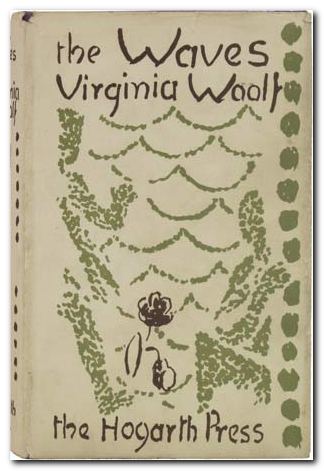
 

The Waves - first edition

Virginia Woolf, The Waves (1931) Cover design by Vanessa Bell.

“Customarily, Virginia Woolf composed in longhand, writing in ink with an old-fashioned straight pen on the right-hand page of a manuscript book bound for her by the press. She reworked each page as she went, writing for two hours or more in the mornings. In the afternoons she would type up the morning’s work, usually making only minor corrections or changes. When she had completed the first draft of the novel, represented by a holograph and a slightly edited typescript, she would then retype the book from the beginning, making whatever revisions she felt necessary, sometimes scrapping whole sections and rewriting them in markedly different ways. The final shaping of the book took place in this stage. The resulting typescript, probably bearing the marks of further revisions in ink, was given to Leonard for his critical reading.

After this, Virginia would sometimes, as she did with The Waves, have a press secretary retype the text into a copy which she corrected for errors before sending it to R. & R. Clark to be set and printed. At some point either after the proofs were corrected or after each book was published, Virginia would destroy her typescripts, saving only the holograph copy, probably feeling … that it best represented her initial creative impulses and so was important to keep as a record of her artistic struggles. The Waves, however, is unique among her novels because she completely rewrote it from scratch, starting over with a new holograph version and resulting typescript. The two existing holographs … total 399 and 347 pages respectively.”

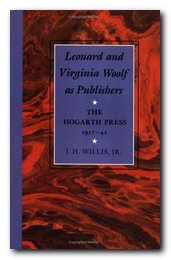
J.H. Willis Jr, Leonard and Virginia Woolf as Publishers: The Hogarth Press 1917-1941

previousnext


Hogarth Press studies

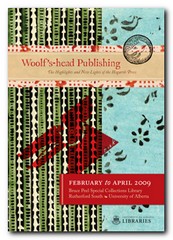
Woolf's-head Publishing Woolf’s-head Publishing is a wonderful collection of cover designs, book jackets, and illustrations – but also a beautiful example of book production in its own right. It was produced as an exhibition catalogue and has quite rightly gone on to enjoy an independent life of its own. This book is a genuine collector’s item, and only months after its first publication it started to win awards for its design and production values. Anyone with the slightest interest in book production, graphic design, typography, or Bloomsbury will want to own a copy the minute they clap eyes on it.

Woolf's-head Publishing Buy the book at Amazon UK
Woolf's-head Publishing Buy the book at Amazon US

The Hogarth Press Leonard and Virginia Woolf as Publishers: Hogarth Press, 1917-41 John Willis brings the remarkable story of Leonard and Virginia Woolf’s success as publishers to life. He generates interesting thumbnail sketches of all the Hogarth Press authors, which brings both them and the books they wrote into sharp focus. He also follows the development of many of its best-selling titles, and there’s a full account of the social and cultural development of the press. This is a scholarly work with extensive footnotes, bibliographies, and suggestions for further reading – but most of all it is a very readable study in cultural history.

The Hogarth Press Buy the book at Amazon UK
The Hogarth Press Buy the book at Amazon US

© Roy Johnson 2005


Filed Under: Hogarth Press Tagged With: Art, Bloomsbury, Graphic design, Literary studies, The Waves, Virginia Woolf

Virginia Woolf – The Years

October 4, 2009 by Roy Johnson

Hogarth Press first edition book jacket designs


The Years cover - first edition

 
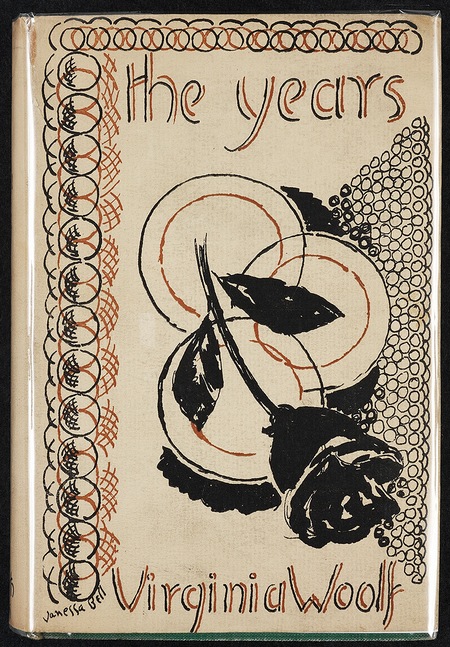
Virginia Woolf, The Years (1937) Cover design by Vanessa Bell.

“Leonard Woolf and many critics of the time considered The Years badly flawed in characterization and structure. Recent critics, however, mostly feminist, have opened up the novel in interesting ways, making virtues out of what were thought vices. Among other points, they have argued that The Years offers compelling evidence of Virginia Woolf’s courage and genius in confronting and remaking herself as a woman in a sexist world, in focusing her frustrations to expose traditional masculine myths of marriage and sex. Such criticism and the textual studies of her revisions have made the novel seem one of the more interesting and ambitious of Woolf’s books, its very ambiguities and muted anger part of its qualities. Leonard Woolf and the early male critics though it inferior to Virginia’s great modernist novels, but the average reader in 1937 had no such qualms, flocking to it with relief after the difficulties of The Waves.

In spite of his reservations about its literary virtues, Leonard anticipated its popularity and ordered over 18,000 copies of The Years for publication on March 15, 1937. Its commercial success completely overshadowed Virginia’s other novels. It sold over 13,000 copies in the first six months. In America, Harcourt Brace printed 10,000 copies for the first edition and quickly reprinted, as The Years sold over 30,000 copies in six months. It became an authentic American best-seller for 1937, ranking sixth on a list led by such heady company as Margaret Mitchell’s Gone With the Wind and Kenneth Roberts’ Northwest Passage and outranking John Steinbeck’s Of Mice and Men. One check alone from Harcourt Brace on January 5, 1938 total led over $5,000.”

J.H. Willis Jr, Leonard and Virginia Woolf as Publishers: The Hogarth Press 1917-1941

In 1937 Virginia Woolf appeared on the cover of Time magazine: she had achieved a remarkable level of critical recognition and esteem that was now translated into more popular acclaim and fame. The initial print run of The Years was the largest of any of Woolf’s novels to that date. The focus of the novel is the passage of time as it traces the Pargiter family from 1880 up to the ‘Present Day’. The novel met with high praise. David Garnett said the book “marks her as the greatest master of English” and is “the finest novel she has ever written” (New Statesman & Nation). Subsequent critical assessments have been more mixed. The novel sold very well in England and America making its way on to American best-seller lists. Vanessa Bell’s jacket for the book features a rose surrounded by geometric patterns and is signed with her full name.

Elizabeth Willson Gordon, Woolf’s-head Publishing: The Highlights and New Lights of the Hogarth Press

previousnext


Hogarth Press studies

Woolf's-head Publishing Woolf’s-head Publishing is a wonderful collection of cover designs, book jackets, and illustrations – but also a beautiful example of book production in its own right. It was produced as an exhibition catalogue and has quite rightly gone on to enjoy an independent life of its own. This book is a genuine collector’s item, and only months after its first publication it started to win awards for its design and production values. Anyone with the slightest interest in book production, graphic design, typography, or Bloomsbury will want to own a copy the minute they clap eyes on it.

Woolf's-head Publishing Buy the book at Amazon UK
Woolf's-head Publishing Buy the book at Amazon US

The Hogarth Press Leonard and Virginia Woolf as Publishers: Hogarth Press, 1917-41 John Willis brings the remarkable story of Leonard and Virginia Woolf’s success as publishers to life. He generates interesting thumbnail sketches of all the Hogarth Press authors, which brings both them and the books they wrote into sharp focus. He also follows the development of many of its best-selling titles, and there’s a full account of the social and cultural development of the press. This is a scholarly work with extensive footnotes, bibliographies, and suggestions for further reading – but most of all it is a very readable study in cultural history.

The Hogarth Press Buy the book at Amazon UK
The Hogarth Press Buy the book at Amazon US

© Roy Johnson 2005


Filed Under: Hogarth Press Tagged With: Art, Bloomsbury, Graphic design, Hogarth Press, Literary studies, The Years, Virginia Woolf

Virginia Woolf – Three Guineas

October 4, 2009 by Roy Johnson

Hogarth Press first edition book jacket designs


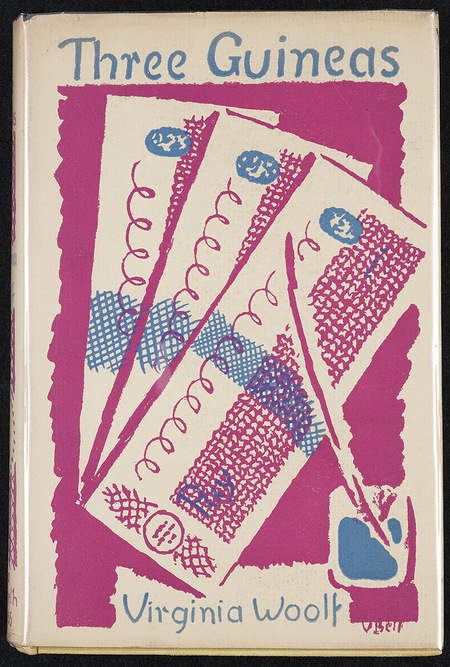
Three Guineas - first edition

 
Virginia Woolf, Three Guineas (1938) Cover design by Vanessa Bell.

This is the second of Virginia Woolf’s overtly feminist polemics. In it, she develops the ideas first put forward in A Room of One’s Own and launches an incisive critique of the English establishment – concentrating on its principal bases of power – the House of Lords, the military establishment, the Church, and the educational system.

“Virginia Woolf’s reading notebooks and scrapbooks [reveal] how much labour went into [her] gathering of facts: twelve volumes of notes, including three scrapbooks compiled between 1931 and 1937. In the power, anger, wit, and satire of her attack on repressive masculine institutions, Woolf chose not to write in the discourse of a traditional historian, sociologist, politician, suffragist, or guildswoman. She developed her arguments, cited her examples, digressed through provocative and unorthodox footnotes, to flail the misogyny and militarism of the patriarchal establishment with all the craft of the essayist and novelist. If she took little notice of the feminist history or the sociopolitical status of women in the 1930s as documented by Strachey and others, her book proved so welcome an offensive against enduring male sexist attitudes that her sisters in the trenches overlooked her lapses. They gleefully applauded her achievement.”

J.H. Willis Jr, Leonard and Virginia Woolf as Publishers: The Hogarth Press 1917-1941

Three Guineas considers women’s role in society, and more particularly, what they might do to prevent war.Woolf traces fascist elements within England’s education system and professions, highlighting monetary and material inequities of class and gender. She argues that “the public and the private worlds are insperably connected; that the tyrannies and servilities of the one are the tyrannies and servilities of the other”.

Elizabeth Willson Gordon, Woolf’s-head Publishing: The Highlights and New Lights of the Hogarth Press

previousnext


Hogarth Press studies

Woolf's-head Publishing Woolf’s-head Publishing is a wonderful collection of cover designs, book jackets, and illustrations – but also a beautiful example of book production in its own right. It was produced as an exhibition catalogue and has quite rightly gone on to enjoy an independent life of its own. This book is a genuine collector’s item, and only months after its first publication it started to win awards for its design and production values. Anyone with the slightest interest in book production, graphic design, typography, or Bloomsbury will want to own a copy the minute they clap eyes on it.

Woolf's-head Publishing Buy the book at Amazon UK
Woolf's-head Publishing Buy the book at Amazon US

The Hogarth Press Leonard and Virginia Woolf as Publishers: Hogarth Press, 1917-41 John Willis brings the remarkable story of Leonard and Virginia Woolf’s success as publishers to life. He generates interesting thumbnail sketches of all the Hogarth Press authors, which brings both them and the books they wrote into sharp focus. He also follows the development of many of its best-selling titles, and there’s a full account of the social and cultural development of the press. This is a scholarly work with extensive footnotes, bibliographies, and suggestions for further reading – but most of all it is a very readable study in cultural history.

The Hogarth Press Buy the book at Amazon UK
The Hogarth Press Buy the book at Amazon US

© Roy Johnson 2005


Filed Under: Hogarth Press Tagged With: Art, Bloomsbury, Graphic design, Hogarth Press, Literary studies, Three Guineas, Virginia Woolf

Virginia Woolf – To the Lighthouse

October 5, 2009 by Roy Johnson

Hogarth Press first edition book jacket designs


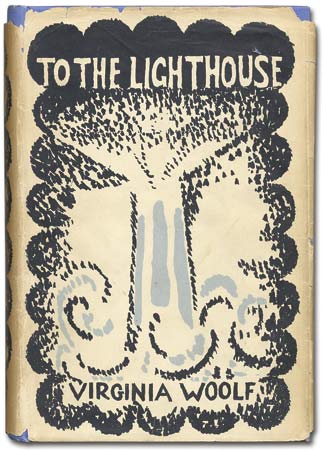
To the Lighthouse cover - first edition

 
Virginia Woolf, To the Lighthouse (1927) Cover design by Vanessa Bell.

“Advance sales totaled over 1,600 copies, more than twice the number for Mrs Dalloway. Virginia’s mood at the time expressed itself in her gaily ironic joke with Vita Sackville-West. When Vita returned from her second trip to Persia, she found a copy of To the Lighthouse waiting for her, inscribed by Virginia, “In my opinion the best novel I have ever written”. It was a bound dummy copy, with blank pages. Leonard Woolf, anticipating both an artistic and a commercial success for To the Lighthouse, ordered 3,000 copies printed by R. & R. Clark (a thousand more than Mrs Dalloway) and quickly ordered another 1,000 copies in a second impression. The novel outsold her previous fiction. The American publisher of Hogarth Press books, Harcourt Brace, printed 4,000 copies initially (almost twice the number of copies for Mrs Dalloway). American readers had begun to take notice of Woolf’s novels.”

J.H. Willis Jr, Leonard and Virginia Woolf as Publishers: The Hogarth Press 1917-1941

previousnext


Hogarth Press studies

Woolf's-head Publishing Woolf’s-head Publishing is a wonderful collection of cover designs, book jackets, and illustrations – but also a beautiful example of book production in its own right. It was produced as an exhibition catalogue and has quite rightly gone on to enjoy an independent life of its own. This book is a genuine collector’s item, and only months after its first publication it started to win awards for its design and production values. Anyone with the slightest interest in book production, graphic design, typography, or Bloomsbury will want to own a copy the minute they clap eyes on it.

Woolf's-head Publishing Buy the book at Amazon UK
Woolf's-head Publishing Buy the book at Amazon US

The Hogarth Press Leonard and Virginia Woolf as Publishers: Hogarth Press, 1917-41 John Willis brings the remarkable story of Leonard and Virginia Woolf’s success as publishers to life. He generates interesting thumbnail sketches of all the Hogarth Press authors, which brings both them and the books they wrote into sharp focus. He also follows the development of many of its best-selling titles, and there’s a full account of the social and cultural development of the press. This is a scholarly work with extensive footnotes, bibliographies, and suggestions for further reading – but most of all it is a very readable study in cultural history.

The Hogarth Press Buy the book at Amazon UK
The Hogarth Press Buy the book at Amazon US

© Roy Johnson 2005


Filed Under: Hogarth Press Tagged With: Art, Bloomsbury, Graphic design, Hogarth Press, Literary studies, To the Lighthouse, Virginia Woolf

Virginia Woolf a critical memoir

June 27, 2009 by Roy Johnson

critical study – plus personal memoir

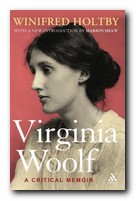
Virginia Woolf A Critical Memoir was the first extended study of Virginia Woolf’s work to be written in English. It appeared in 1936, whilst Woolf was still alive, shortly after the publication of her last major work, The Waves. The author Winifred Holtby was herself a novelist (best known for South Riding) a journalist, a radical feminist, and lifelong friend of Vera Britten, who wrote about their relationship in Testament of Friendship.

Virginia Woolf A Critical MemoirHoltby takes what at the time was a fairly conventional approach to literary criticism, which was to read what was known of the author’s biography into the fiction as a way of explaining it. Thus the parent figures in both The Voyage Out and To the Lighthouse are assumed to be portraits of Woolf’s own mother and father; and the recurrence of sea imagery in her work is seen as simply a reflection of her childhood holidays in Cornwall. There’s a certain amount of truth in this approach, but fortunately it does not hinder her exploration of deeper issues.

In fact the surprising thing – which makes this study so readable – is that Holtby had already identified all Woolf’s main themes and innovations, even though she was writing at the same time as some of the work was still appearing.

She discusses the main works – summarising the story, commenting on ‘well-rounded’ characters, and identifying the ‘moments of being’ for which Woolf is now famous. She also relies on huge chunks of quotations from the text, and is often so carried away with enthusiasm that her own commentary blends into Woolf’s narratives in a way which sometimes makes it difficult to see where one ends and the other begins.

Night and Day is seen in comparison with Jane Austen and judged to be the lesser for it – but for reasons which Holtby sees as political. She rightly identifies the short experimental fictions A Haunted House, Monday or Tuesday, and A String Quartet as works marking a major breakthrough in Woolf’s technique, and she offers a stunningly insightful reading of this transition.

It’s occasionally surprising to remember that she had met Virginia Woolf, and was writing at a time when both of them were commercially successful authors. Holtby’s prose style is eloquent and fluid, and she becomes almost rhapsodic when describing Woolf’s achievement as a literary critic:

She has, moreover, an almost perfect taste. Few critics have ever been more alert to detect humbug, the spurious, the second rate; few have been more generously and freely appreciative of real merit, even if it appears under strange disguises. Taste for her is a natural gift, never blunted by the adolescent ignorance, the commercial pressure, the confusion of aim and distractions of fashion, to which so many critical judgements are subjected.

She deals with Mrs Dalloway and To the Lighthouse in the same chapter, largely it seems on the grounds that they deal with the issue of Time in complementary ways.

She ends, fortunately for us, with The Waves, for not long after having written it Winifred Holtby died at the age of only thirty-seven. This is a remarkable book for its time, and still eminently readable now – seventy years after it first appeared.

© Roy Johnson 2007

Buy the book at Amazon UK

Buy the book at Amazon US

Winifred Holtby, Virginia Woolf: A Critical Memoir, London: Continuum, 2007, pp.206, ISBN 0826494439


More on Virginia Woolf
Virginia Woolf – web links
Virginia Woolf – greatest works
Virginia Woolf – criticism
More on the Bloomsbury Group


Filed Under: Virginia Woolf Tagged With: Biography, Literary criticism, Literary studies, Virginia Woolf, Virginia Woolf: A Critical Memoir, Winifred Holtby

Virginia Woolf a writer’s life

November 7, 2009 by Roy Johnson

a biography as seen through her major works

What does this biography have that the many others don’t? Well, Lyndall Gordon claims that Virginia Woolf a writer’s life was written to counteract the prevailing orthodoxy of Virginia Woolf being depicted as a tormented and unhappy artist – just as she was by Nicole Kidman in The Hours. What Gordon wants to offer as an alternative is a portrait of a sensitive young woman who was provoked into ‘madness’ on three occasions, lived a happily married life, and when she was on top form converted her life experiences into works of experimental fiction.

Virginia Woolf A Writer's LifeThe book also has substantial portraits of the other people who were important in her life – her father, Leslie Stephen, her mother Julia Duckworth, and her sister Vanessa Bell. Lyndall Gordon makes no bones about blending factual documentary evidence with fictional constructions, and talking about To the Lighthouse as if it were Woolf’s account of her parents rather than a fictional construct loosely based upon them. And she takes the novels in any order, to suit her purpose.

This haphazard approach is quite deliberate and conscious. She defends it as a fresh method: “The way she [VW] experienced life does not accord with the usual kind of linear chronology”. But it is indulged to such an extent that long passages of what purports to be a biographical study are no more than critical commentaries on To the Lighthouse and The Voyage Out after the manner of an undergraduate study guide. This approach reaches its nadir when her reading of The Waves as portraits of Leonard Woolf, Lytton Strachey, and so on lasts for an uninterrupted fifty-two pages, stretching over two chapters.

She focuses strongly on the issue of Woolf’s early mental illness – much of it ascribed to the loss of her mother, and she makes hardly any mention of her attachment to mother-substitutes such as Violet Dickenson.

The lack of chronological rigour and logic has important consequences. In discussing her ‘madness’ for instance, the years 1904, 1915, and 1941 are singled out as the worst – with no cognizance of the fact that they also represent the start of her career as a writer, the date of her first published novel, and the end of her career, when she was writing in the full possession of all her creative powers.

As a writer of literary biographies, Lyndall Gordon is keen to promote the notion that Woolf had similar motivations. She wonders why she is not recognised as a biographer, but looks down her nose at Orlando and Flush, and regards Roger Fry a ‘dutiful’ work – when in fact it is one of the weakest and most superficial of all Woolf’s writing.

Her attitude to Woolf’s intimate life is a combination of coyness and naivety. She skates over the sapphism and imagines that life with Leonard was very romantic, ignoring the fact that she only agreed to marry him in the first place on the understanding that she found him physically repulsive. Yet her account of their early years makes it read as if the sexual content was that of an X-rated B-movie.

When the external evidence piles up to prove that this was not the case, where does she turn for evidence to examine the case further? Well, the fiction of course. So instead of looking at the fairly well documented facts, she presents instead several pages of commentary on Leonard Woolf’s novel The Wise Virgins.

She also shares the naive views expressed by Leonard regarding the randomness of sexual desire – unable to explain why one might be enamoured of a love object whose social and intellectual qualities seem undistinguished. And she doesn’t want to countenance either Vita Sackville-West or the Orlando which was the true consummation of that relationship.

For one thing she can be commended. She has obviously read all the extant drafts of the novels, and offers a reading of them which comments on the changes, deletions, and shifts of emphasis as Woolf worked towards her final versions.

But apart from writing Three Guineas, you would not have a clue about the events of her life in the 1930s – apart from the absurd claim that she was more romantically in love with Leonard than ever.

So, for whom will this book be of any use? Well, it can be ignored as a conventional biography – because you will learn so little about Woolf’s life from it. But it does have critical analyses of her major writings, so it might be helpful to undergraduates or general readers trying to come to terms with some of the highpoints of literary modernism.

Buy the book at Amazon UK

Buy the book at Amazon US

© Roy Johnson 2009


Lyndall Gordon, Virginia Woolf: A Writer’s Life, London: Virago, rev edn 2006, pp.431, ISBN 1844081427


More on Virginia Woolf
Virginia Woolf – web links
Virginia Woolf – greatest works
Virginia Woolf – criticism
More on the Bloomsbury Group


Filed Under: Bloomsbury Group, Virginia Woolf Tagged With: Biography, Bloomsbury Group, Literary studies, Virginia Woolf

Virginia Woolf an MFS reader

August 26, 2009 by Roy Johnson

academic essays on Woolf and her major novels

For those who may not know, MFS is not some sort of DIY building material, but Modern Fiction Studies, a prestigious academic journal, and Virginia Woolf an MFS reader is a compilation of essays on Virginia Woolf drawn from its archives going back over the last half century of its publication. The chapters are arranged in three thematic sections, each arranged chronologically according to the text under consideration.

Virginia Woolf An MFS ReaderIt’s a book written by university teachers, designed to be read and (they hope) quoted by other teachers in the books that they write as part of seeking career promotion. That’s the nature of academic life today. In some instances it produces valuable results: for the main part it results in worthless dross. This system is the root of both the main strength and the weakness of this book.

Brenda Silvers’ introductory essay huffs and puffs about the adoption of Virginia Woolf into popular culture – but it’s mainly hot under the collar about Edward Albee’s play (Who’s Afraid..) and its possibly disguised gay theme. She also goes in for some quite bogus generalizing on the interpretation of photographs:

Woolf’s photographs [she means photographs of Woolf] in general … prove frightening to their viewers.

That will be news to the many people who buy and admire her portrait wherever it is on sale.

Susan Friedman offers an account of The Voyage Out which sees Rachel Vinrace as an example of Woolf’s ‘Common Reader’ – someone unprejudiced by formal academic experience and unburdened by the authority of criticism. This is quite a useful way of matching Wool’s theory with her fiction.

Charles Hoffmann traces the development of Mrs Dalloway from a short story (Mrs Dalloway in Bond Street) to a full length novel following the connections between notebooks, manuscripts, and drafts which are scattered in various collections on both sides of the Atlantic. This is an approach to literary scholarship which has the advantage of being unencumbered by lots of ‘theory’ and is rooted in the practicality of literary texts.

Tammy Clewell has a thoughtful piece on death, mourning, and grief in Jacob’s Room and Mrs Dalloway. This argues with persuasive supporting evidence that Woolf was promoting more radical views on these topics than is commonly supposed. She does not want her readers to relax any opposition to the barbarous mass slaughter behind every war memorial and slogans such as ‘their names shall live forever’:

In relation to these postwar forms of memorialization, Jacob’s Room stands out precisely for what it withholds: the text offers no faith in religious immortality, no applause for individual heroism, no celebration of male comradery, no stoical acceptance of fate, no aesthetic smoothing over of the war’s human cost of any kind.

The best-written essay in the collection (and unsurprisingly the most frequently quoted by others) is Karen deMeester’s on ‘Trauma and Recovery in Mrs Dalloway‘. This argues that Woolf gives accurate expression to the condition of psychological trauma – particularly of course in the case of Septimus Warren Smith, who has seen through the horrors upon which his society is based. But even more bravely, deMeester argues that Clarissa Dalloway is a social coward, because although she sees the same truths as Septimus, she chooses to re-unite with the world which has caused the horrors in the first place. As Peter Walsh says of her:

she frittered her time away, lunching, dining, giving these incessant parties of hers, talking nonsense, saying things she didn’t mean, blunting the edge of her mind, losing her discrimination

It’s not often one sees Peter Walsh (a lightweight figure) quoted with such approval. But he has a point – and so does deMeester.

Urmila Seehagiri desperately wants to offer a racial and post-colonial reading of Woolf’s work, and she digs and digs, hoping to come up with some suitable material. To the Lighthouse yields the fact that Lily Briscoe has ‘little Chinese eyes’; Woolf took part in the Dreadnought Hoax and attended the Ballets Russes. No distinction is made between fictional and biographical evidence. When To the Lighthouse is addressed in detail, broken teacups are the signal for an extended account of the history of the tea trade with India and China. Then, via a detour into the theories of art held by Roger Fry and Clive Bell, she concludes that Lily Briscoe’s ‘little Chinese eyes’

attain the ‘ultra-primitive directness of vision’ that Fry attributes to East Asian cultures, and her arrangement of forms is liberating because it is autotelic. Privileging the completion of Lily’s painting over mending broken familial structures, Woolf creates a racially differentiated model for modern English subjectivity that holds itself separate from patriarchal and imperialist hierarchies.

Many of the other essays suffer from this very dubious critical method. A single word or short phrase is seized upon; a tenuous connection with another text (fiction, biography, or theory) is made; and a literary critic’s comment upon some apparently similar phenomenon is noted. The flaw is that a logical and positive connection between the starting and finishing point is taken for granted without any critical examination or supporting evidence. The connections between these elements are at best loose, and more often mere fugitive verbal associations.

And that, I’m afraid, is the state of literary criticism in the university today. Some good solid textual scholarship, holding out against a tide of convoluted windbaggery masquerading as ‘critical theory’. Can you understand the last quote above?

Buy the book at Amazon UK

Buy the book at Amazon US

© Roy Johnson 2009


Maren Linnet, Virginia Woolf: An MFS Reader, Baltimore: Johns Hopkins University Press, 2009, pp.443, ISBN 0801891183


More on Virginia Woolf
Virginia Woolf – web links
Virginia Woolf – greatest works
Virginia Woolf – criticism
More on the Bloomsbury Group


Filed Under: Virginia Woolf Tagged With: Bloomsbury Group, Jacob's Room, Literary criticism, Literary studies, Mrs Dalloway, Theory, To the Lighthouse, Virginia Woolf

Virginia Woolf authors in context

July 25, 2009 by Roy Johnson

literature, politics, philosophy, art, feminism, criticism

The Authors in Context series examines the work of major writers in relation to their own times and the present day. This volume sets Virginia Woolf in the social, cultural, and political context of the period between 1900 and 1940, then looks at how we see her work now, from the perspective of the twenty-first century. Michael Whitworth starts with a biographical sketch of her life. He certainly knows all the details, and his outline might well propel readers who don’t already know about the troubled family life, the periods of creativity sandwiched between bouts of insanity, and the bohemian lifestyle of the Bloomsbury Group towards her famous Diaries and Letters for further revelations about this remarkable woman and groundbreaking modernist writer.

Virginia Woolf Authors in ContextNext comes a chapter providing the political and social background to the period 1900—1940, with its important developments in women’s rights, the rise of socialism, and the gradual erosion of the British Empire. It also contains some interesting reflections on the changing nature of ‘the family’ and ‘the household’ – particularly in relation to the employment of servants.

For those interested in the creative process, Whitworth reveals how Virginia Woolf’s method of composition started by her thinking about what she wanted to say, then articulating it in verbalised sentences, then speaking the sentences aloud. Following this, she then wrote out what she had composed in longhand, typed what she had written down, then subsequently revised it – sometimes several times over.

He deals well with problem topics, such as Woolf’s anti-semitism (even though she was married to Leonard Woolf, who was Jewish in origin if not in practice) and he knows enough about her to trace the gradual rise in self-awareness about this issue in her writing.

There’s a good chapter on what he calls The Writer and the Marketplace – that is, the writer’s financial relationship with book production and publishing – both of which Woolf practised professionally.

There are some fascinating pages which steep the reader deep into the literary and ideological culture of the period, and Whitworth is a rigorous guide to the new literary techniques which Woolf was pioneering.

He deals with the philosophic questions which permeate her work: the relationship between art and life; the nature of human perception; plus subjective and objective notions of time.

There are in-depth analyses of Mrs Dalloway, Night and Day, and The Waves, and he puts his finger on one of her most important strengths – showing the political issues in daily life:

The great strength of Woolf’s narrative method is that it allows her to present social issues in their psychological aspects; long before anyone voiced the slogan ‘the personal is the political’, Woolf identified the connection. In Night and Day, she takes the idea that the ‘professions’ might include ‘marriage’ and ‘living at home’, and uses it as the bridge between personal and public

The final part of the book looks at adaptations of Woolf’s work for the screen. This includes films of To the Lighthouse, Orlando, and Mrs Dalloway, as well as the recent version of Michael Cunningham’s The Hours. Whitworth persuasively argues that we should not expect these versions to be slavishly accurate. They are versions or interpretations which allow us to re-interpret the original or see it in a new light.

This is a book which can be read in two ways. For those who already know Woolf and her works it explores the important social, artistic, and intellectual themes which she examines, and for those who don’t, it will act as an excellent introduction. It is certainly a critical study which any lover of Woolf’s work will not want to miss.

© Roy Johnson 2005

artie shaw Buy the book at Amazon UK

artie shaw Buy the book at Amazon US


Michael Whitworth, Virginia Woolf: Authors in Context, Oxford: Oxford University Press, 2005, pp.268, ISBN: 0192802348


More on Virginia Woolf
Virginia Woolf – web links
Virginia Woolf – greatest works
Virginia Woolf – criticism
More on the Bloomsbury Group


Filed Under: Virginia Woolf Tagged With: Bloomsbury Group, Literary studies, Modernism, Virginia Woolf, Virginia Woolf: Authors in Context

Virginia Woolf greatest works

September 24, 2009 by Roy Johnson

fictional works – plus some film versions

Virginia Woolf greatest works Jacob's RoomJacob’s Room (1922) was Woolf’s first and most dramatic break with traditional narrative fiction. It was also the first of her novels she published herself, as co-founder of the Hogarth Press. This gave her for the first time the freedom to write exactly as she wished. The story is a thinly disguised portrait of her brother Thoby – as he is perceived by others, and in his dealings with two young women. The novel does not have a conventional plot, and the point of view shifts constantly and without any signals or transitions from one character to another. Woolf was creating a form of story telling in which several things are discussed at the same time, creating an impression of simultaneity, and a flow of continuity in life which was one of her most important contributions to literary modernism.

Virginia Woolf greatest works Buy the book at Amazon UK
Virginia Woolf greatest works Buy the book at Amazon US


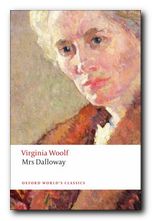
Virginia Woolf greatest works Mrs DallowayMrs Dalloway (1925) is probably the most accessible of her great novels. A day in the life of a London society hostess is used as the structure for her experiments in multiple points of view. The themes she explores are the nature of personal identity; memory and consciousness; the passage of time; and the tensions between the forces of Life and Death. The novel abandons conventional notions of plot in favour of a mosaic of events. She gives a very lyrical response to the fundamental question, ‘What is it like to be alive?’ And her answer is a sensuous expression of metropolitan existence. The novel also features her rich expression of ‘interior monologue’ as a narrative technique, and it offers a subtle critique of society recovering in the aftermath of the first world war. This novel is now seen as a central text of English literary modernism.

Virginia Woolf greatest works Buy the book at Amazon UK
Virginia Woolf greatest works Buy the book at Amazon US


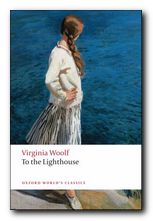
Virginia Woolf greatest works To the LighthouseTo the Lighthouse (1927) is the second of the twin jewels in the crown of her late experimental phase. It is concerned with the passage of time, the nature of human consciousness, and the process of artistic creativity. Woolf substitutes symbolism and poetic prose for any notion of plot, and the novel is composed as a tryptich of three almost static scenes – during the second of which the principal character Mrs Ramsay dies – literally within a parenthesis. The writing is lyrical and philosophical at the same time. Many critics see this as her greatest achievement, and Woolf herself realised that with this book she was taking the novel form into hitherto unknown territory.

Virginia Woolf greatest works Buy the book at Amazon UK
Virginia Woolf greatest works Buy the book at Amazon US


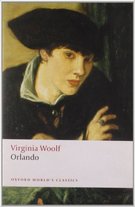
Woolf - OrlandoOrlando (1928) is one of her lesser-known novels, although it’s critical reputation has risen in recent years. It’s a delightful fantasy which features a character who changes sex part-way through the book – and lives from the sixteenth to the twentieth century. Using this device (which turns out to be strangely credible) Woolf explores issues of gender and identity as her hero-heroine moves through a variety of lives and personal adventures. Orlando starts out as an emissary to the Court of St James, lives through friendships with Swift and Alexander Pope, and ends up motoring through the west end of London on a shopping expedition in the 1920s. The character is loosely based on Vita Sackville-West, who at one time was Woolf’s lover. The novel itself was described by Nigel Nicolson (Sackville-West’s son) as ‘the longest and most charming love-letter in literature’.

Virginia Woolf greatest works Buy the book at Amazon UK
Virginia Woolf greatest works Buy the book at Amazon US


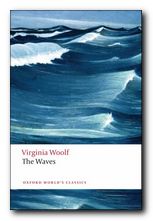
Virginia Woolf greatest works The WavesThe Waves (1931) is her most experimental and most demanding novel. Rather like her exact contemporary James Joyce, she was pushing the possibilities of the novel to their furthest limit. She abandons conventional narrative and setting altogether, and substitutes the interior monologues of six different characters. They are friends (and lovers) whose lives are revealed by what they think about themselves and each other. The monologues that span the characters’ lives are broken up by nine brief third-person interludes detailing a coastal scene at varying stages in a day from sunrise to sunset. Readers have to work out who is ‘thinking’ at any moment – but assistance is provided by patterns of imagery and fragments of repeated ideas associated with each character. Not for the faint-hearted. Read the other novels first.

Virginia Woolf greatest works Buy the book at Amazon UK
Virginia Woolf greatest works Buy the book at Amazon US


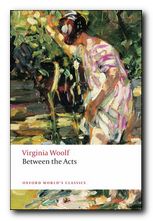
Virginia Woolf greatest works Between the ActsBetween the Acts (1941) is her last novel, in which she returns to a less demanding literary style. Despite being written immediately before her suicide, she combines a playful wittiness with her satirical critique of English upper middle-class life. The story is set in the summer of 1939 on the day of the annual village fete at Pointz Hall. It describes a country pageant on English history written by Miss La Trobe, and its effects on the people who watch it. Most of the audience misunderstand it in various ways, but the implication is that it is a work of art which temporarily creates order amidst the chaos of human life. There’s lots of social comedy, some amusing reflections on English weather, and meteorological metaphors and imagery run cleverly throughout the book.

Virginia Woolf greatest works Buy the book at Amazon UK
Virginia Woolf greatest works Buy the book at Amazon US


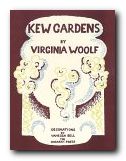
Virginia Woolf greatest works Kew GardensKew Gardens is a collection of experimental short stories in which Woolf tested out ideas and techniques which she then later incorporated into her novels. After Chekhov, they represent the most important development in the modern short story as a literary form. Incident and narrative are replaced by evocations of mood, poetic imagery, philosophic reflection, and subtleties of composition and structure. The shortest piece, ‘Monday or Tuesday’, is a one-page wonder of compression. This collection is a cornerstone of literary modernism. No other writer – with the possible exception of Nadine Gordimer, has taken the short story as a literary genre as far as this.

Virginia Woolf greatest works Buy the book at Amazon UK
Virginia Woolf greatest works Buy the book at Amazon US


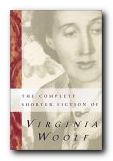
The Complete Shorter FictionThe Complete Shorter Fiction contains all the classic short stories such as The Mark on the Wall, A Haunted House, and The String Quartet – but also the shorter fragments and experimental pieces such as Mrs Dalloway in Bond Street. These ‘sketches’ (as she called them) were used to practice the techniques she used in her longer fictions. Nearly fifty pieces written over the course of Woolf’s writing career are arranged chronologically to offer insights into her development as a writer. This is one for connoisseurs – well presented and edited in a scholarly manner.

Virginia Woolf greatest works Buy the book at Amazon UK
Virginia Woolf greatest works Buy the book at Amazon US


Film versions

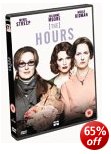
The HoursThe Hours DVD is an amazingly successful film adaptation of Michael Cunningham’s fictional take on Mrs Dalloway. Fragments of Virginia Woolf’s biography are interwoven with stories from 1950s Los Angeles and contemporary New York. It’s not a direct adaptation but a stunning interpretation of Woolf and her world, her themes, and even her narrative techniques. It is beautifully photographed, and the evocation of Woolf’s creative process is particularly impressive. Nicole Kidman creates a very sympathetic portrayal of Virginia Woolf, Julianne Moore glues the plot together with a magnificent performance as a woman at the end of her tether, and Meryl Streep is a slightly over-the-top but acceptable modern Clarissa. Music by Philip Glass. This is a film which no Woolf enthusiast should miss.

Virginia Woolf greatest works Buy the book at Amazon UK
Virginia Woolf greatest works Buy the book at Amazon US


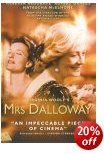
Mrs Dalloway - DVDMrs Dalloway DVD is an excellent film version of Mrs Dalloway directed by Dutch filmmaker Marleen Gorris. It’s a visually low key rendering of the original, but it captures the spirit of the novel very well. Outstanding performance by Vanessa Redgrave in the principal role, and Natascha McElhone as her younger self and a young Kenneth Brannah as Charles Tansley. The screenplay was written by actor-author Eileen Atkins.

Virginia Woolf greatest works Buy the book at Amazon UK
Virginia Woolf greatest works Buy the book at Amazon US


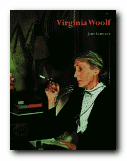
Virginia Woolf: BiographyVirginia Woolf is a readable and well illustrated biography by John Lehmann, who at one point worked as her assistant at the Hogarth Press. It is described by the blurb as ‘A critical biography of Virginia Woolf containing illustrations that are a record of the Bloomsbury Group and the literary and artistic world that surrounded a writer who is immensely popular today’. An attractive and very accessible introduction to the subject.

Virginia Woolf greatest works Buy the book at Amazon UK
Virginia Woolf greatest works Buy the book at Amazon US

© Roy Johnson 2005

Virginia Woolf – web links

Red button Virginia Woolf at Mantex
Biographical notes, study guides to the major works, book reviews, studies of the short stories, bibliographies, web links, study resources.

Virginia Woolf web links Blogging Woolf
Book reviews, Bloomsbury related issues, links, study resources, news of conferences, exhibitions, and events, regularly updated.

Virginia Woolf web links Virginia Woolf at Wikipedia
Full biography, social background, interpretation of her work, fiction and non-fiction publications, photograph albumns, list of biographies, and external web links

Virginia Woolf web links Virginia Woolf at Gutenberg
Selected eTexts of her novels and stories in a variety of digital formats.

Virginia Woolf web links Woolf Online
An electronic edition and commentary on To the Lighthouse with notes on its composition, revisions, and printing – plus relevant extracts from the diaries, essays, and letters.

Virginia Woolf web links Hyper-Concordance to Virginia Woolf
Search texts of all the major novels and essays, word by word – locate quotations, references, and individual terms

Virginia Woolf web links Orlando – Sally Potter’s film archive
The text and film script, production notes, casting, locations, set designs, publicity photos, video clips, costume designs, and interviews.

Virginia Woolf web links Women’s History Walk in Bloomsbury
Tour of literary and political homes in Bloomsbury – including Gordon Square, Gower Street, Bedford Square, Tavistock Square, plus links to women’s history web sites.

Virginia Woolf web links Virginia Woolf Society of Great Britain
Bulletins of events, annual lectures, society publications, and extensive links to Woolf and Bloomsbury related web sites

Virginia Woolf web links BBC Audio Essay – A Eulogy to Words
Charming sound recording of radio talk given by Virginia Woolf in 1937 – a podcast accompanied by a slideshow of photographs.

Virginia Woolf web links A Family Photograph Albumn
Leslie Stephen compiled a photograph album and wrote an epistolary memoir, known as the “Mausoleum Book,” to mourn the death of his wife, Julia, in 1895 – an archive at Smith College – Massachusetts

Virginia Woolf web links Virginia Woolf first editions
Hogarth Press book jacket covers of the first editions of Woolf’s novels, essays, and stories – largely designed by her sister, Vanessa Bell.

Virginia Woolf web links Virginia Woolf – on video
Biographical studies and documentary videos with comments on Virginia Woolf and the Bloomsbury Group and the social background of their times.

Virginia Woolf web links Virginia Woolf Miscellany
An archive of academic journal essays 2003—2014, featuring news items, book reviews, and full length studies.


More on Virginia Woolf
Virginia Woolf – web links
Virginia Woolf – greatest works
Virginia Woolf – criticism
More on the Bloomsbury Group


Filed Under: Virginia Woolf Tagged With: Between the Acts, Bloomsbury, Kew Gardens, Literary studies, Modernism, Mrs Dalloway, Orlando, The Hours, The Waves, To the Lighthouse, Virginia Woolf

Virginia Woolf illustrated biography

July 3, 2009 by Roy Johnson

an introduction to her life and work

This is a best-selling book from Thames and Hudson. It’s slim, cheap, and you might almost say a little old fashioned – yet it goes on being popular year after year. And it’s easy to see why. The text is written by John Lehmann who actually worked for Virginia Woolf and her husband Leonard at the Hogarth Press. Indeed, at one time he even wanted to take it over and run it on fully professional lines – something which Leonard quite rightly resisted, arguing that it’s strength lay in its independence. But the real delight the book offers is a wonderful collection of pictures of Woolf and her friends who were part of the Bloomsbury Group.

Virginia Woolf illustrated biographyMore than that, it combines a lightness of touch in presenting Woolf’s biography with a very engaging introduction to each of her major works. Lehmann follows the story of Woolf’s life and her social background – an upper-middle class milieu with artistic and literary connections (Henry James was a friend of the family) self-educated in her father Leslie Stephen’s library, falling in love with other women, and then the establishment of the Bloomsbury group in Gordon Square with her brother Thoby and his Cambridge friends John Maynard Keynes and Lytton Strachey.

She began her literary career, then married Leonard Woolf, who looked after her patiently through all her periods of mental and physical illness. As therapeutic activity, he even bought a printing machine which enabled them both to set up the Hogarth Press – which went on to become very successful.

Lehmann traces her literary development, from the conventional approach of The Voyage Out and Night and Day, to the artistic breakthroughs of Jacob’s Room and Mrs Dalloway, so his biography also provides and intelligent guide to her writing as well as her life.

Despite being a close personal friend of both Virginia and Leonard, he doesn’t shy away from the love-affair she had with Vita Sackville-West, linking it perceptively to his account of Orlando, which it inspired. Then his transition via A Room of One’s Own to The Waves traces her intellectual development as both a feminist and a novelist. His account of The Waves will help anyone who needs preparation for an attempt at what is quite a difficult novel.

Lehmann, rather like Leonard Woolf, thinks Three Guineas is not one of her best non-fiction works – an opinion I don’t think many people would agree with today. But the remainder of his explications and judgements are really helpful for anybody who wants to understand her work.

However, the real delight of the book is the photographs which range from her early through to her late life. They include portrait paintings, sketches made by artists such as Roger Fry and her sister Vanessa Bell, book jacket designs, and pictures of the houses where she lived and wrote.

© Roy Johnson 2000

Virginia Woolf illustrated biography Buy the book at Amazon UK

Virginia Woolf illustrated biography Buy the book at Amazon US


John Lehmann, Virginia Woolf, London: Thames and Hudson, 1987, pp.128, ISBN 0500260265


More on Virginia Woolf
Virginia Woolf – web links
Virginia Woolf – greatest works
Virginia Woolf – criticism
More on the Bloomsbury Group


Filed Under: Biography, Bloomsbury Group, Virginia Woolf Tagged With: Biography, Bloomsbury Group, Virginia Woolf

  • « Previous Page
  • 1
  • …
  • 91
  • 92
  • 93
  • 94
  • 95
  • …
  • 103
  • Next Page »

Get in touch

info@mantex.co.uk

Content © Mantex 2016
  • About Us
  • Advertising
  • Clients
  • Contact
  • FAQ
  • Links
  • Services
  • Reviews
  • Sitemap
  • T & C’s
  • Testimonials
  • Privacy

Copyright © 2026 · Mantex

Copyright © 2026 · News Pro Theme on Genesis Framework · WordPress · Log in