Mantex

Tutorials, Study Guides & More

  • HOME
  • REVIEWS
  • TUTORIALS
  • HOW-TO
  • CONTACT
>> Home / 2009 / Archives for October 2009

Archives for October 2009

Spelling reform

October 26, 2009 by Roy Johnson

A Plan for the Improvement of English Spelling

Spelling Reform was a much debated issue in the latter part of the nineteenth century and the early years of the twentieth. Various schemes were put forward for simplifying English spelling, which was thought to be difficult and obscure. These schemes often involved phonetic spelling, and some even went so far as proposing the creation of new alphabets. George Bernard Shaw funded one such scheme. A more recent example is Sayspel, devised by hydraulic engineer Roy Blain. None of these ideas came to anything – for very good reasons. This is also the period which gave rise to Esperanto, a totally artificial, invented language which nobody except enthusiasts actually speaks.

The famous short passage that follows is a satirical response to this idea attributed to the American humorist Mark Twain.


For example, in Year 1 that useless letter c would be dropped to be replased either by k or s, and likewise x would no longer be part of the alphabet. The only kase in which c would be retained would be the ch formation, which will be dealt with later.

Year 2 might reform w spelling, so that which and one would take the same konsonant, wile Year 3 might well abolish y replasing it with i and Iear 4 might fiks the g/j anomali wonse and for all.

Jenerally, then, the improvement would kontinue iear bai iear with Iear 5 doing awai with useless double konsonants, and Iears 6-12 or so modifaiing vowlz and the rimeining voist and unvoist konsonants.

Bai Iear 15 or sou, it wud fainali bi posibl tu meik ius ov thi ridandant letez c, y and x — bai now jast a memori in the maindz ov ould doderez — tu riplais ch, sh, and th rispektivli.

Fainali, xen, aafte sam 20 iers ov orxogrefkl riform, wi wud hev a lojikl, kohirnt speling in ius xrewawt xe Ingliy-spiking werld.

Mark Twain


More on language
More on literary studies
More on writing skills
More on creative writing
More on grammar

Filed Under: How-to guides Tagged With: Language, Mark Twain, Spelling

T.S.Eliot – Poems

October 3, 2009 by Roy Johnson

Hogarth Press first edition book jacket designs


T.S.Eliot - Poems - first edition

 
T.S. Eliot, Poems (1918)

This was the third publication of the Hogarth Press. It includes the poems ‘The Hippopotamus’, ‘Le spectateur’, ‘Mélange adultère de tout’, ‘Lune de miel’, ‘Sweeney among the Nightingales’, ‘Mr. Eliot’s Sunday Morning Service’, and ”Whispers of immortality’. All seven of the poems had appeared previously in the Little Review.

“In 1918 we printed two small books: Poems by T.S. Eliot and Kew Gardens by Virginia. Of Tom’s Poems we printed rather fewer than 250 copies. We published it in May 1919 price 2s. 6d. and it went out of print in the middle of 1920.

We took a good deal of trouble to find some rather unusual, gay Japanese paper for the covers. For many years we gave much time and care to find beautiful, uncommon, and sometimes cheerful paper for binding our books, and, as the first publishers to do this, I think we started a fashion which many of the regular, old established publishers followed. We got papers from all over the place, including some brilliantly patterned from Czechoslovakia, and we also had some marbled covers made for us by Roger Fry’s daughter in Paris. I bought a small quantity of Caslon Old Face Titling type and used it for printing the covers.

Caslon Old Style Titling Font

Caslon Old Style Titling Font

The publication of T.S.Eliot’s Poems must be marked as a red letter day for the Press and for us … Tom showed us some of the poems which he had just written and we printed seven of them and published them in the slim paper covered book. It included three remarkable poems which are still, I think, vintage Eliot: ‘Sweeney among the Nightingales’, ‘Mr. Eliot’s Sunday Morning Service’. and ”Whispers of immortality’.”

Leonard Woolf, An Autobiography

previousnext


Hogarth Press studies

Woolf's-head Publishing Woolf’s-head Publishing is a wonderful collection of cover designs, book jackets, and illustrations – but also a beautiful example of book production in its own right. It was produced as an exhibition catalogue and has quite rightly gone on to enjoy an independent life of its own. This book is a genuine collector’s item, and only months after its first publication it started to win awards for its design and production values. Anyone with the slightest interest in book production, graphic design, typography, or Bloomsbury will want to own a copy the minute they clap eyes on it.

Woolf's-head Publishing Buy the book at Amazon UK
Woolf's-head Publishing Buy the book at Amazon US

The Hogarth Press Leonard and Virginia Woolf as Publishers: Hogarth Press, 1917-41 John Willis brings the remarkable story of Leonard and Virginia Woolf’s success as publishers to life. He generates interesting thumbnail sketches of all the Hogarth Press authors, which brings both them and the books they wrote into sharp focus. He also follows the development of many of its best-selling titles, and there’s a full account of the social and cultural development of the press. This is a scholarly work with extensive footnotes, bibliographies, and suggestions for further reading – but most of all it is a very readable study in cultural history.

The Hogarth Press Buy the book at Amazon UK
The Hogarth Press Buy the book at Amazon US

© Roy Johnson 2005


Filed Under: Hogarth Press Tagged With: Art, Bloomsbury, Graphic design, Hogarth Press, Literary studies, T.S.Eliot

T.S.Eliot – The Waste Land

October 4, 2009 by Roy Johnson

Hogarth Press first edition book jacket designs


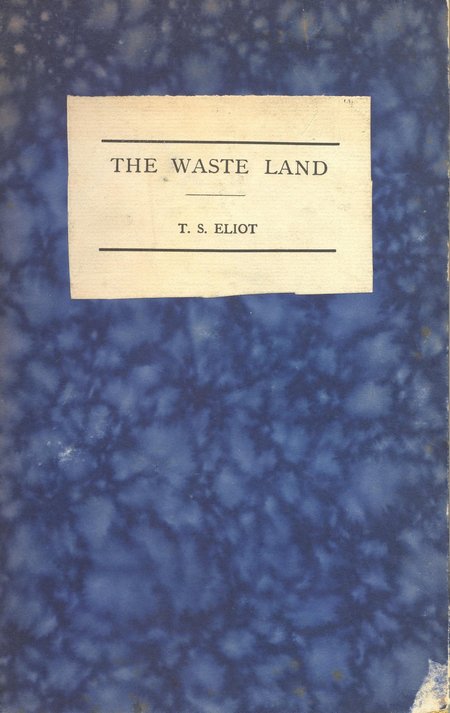
The Waste Land - first edition

 
T.S. Eliot, The Waste Land (1923)

This was published three times in America before it appeared under the Hogarth Press imprint. First it had been published in Criterion (October 1922), the magazine of which Eliot himself was editor, which was funded by rich patroness Lady Rothermere. Then it was published in Dial the following month, still without the famous explanatory ‘notes’. Finally it was published in book form by Boni and Liveright in December 1922.

Eliot himself suggested that the explanatory notes were an addition of ‘bogus scholarship’ devised to bulk out the number of pages in an otherwise slim publication. Virginia Woolf set the entire poem in type herself. It was issued in an edition of 470 copies with blue marbled boards probably prepared by Vanessa Bell. T.S. Eliot earned £7 5s. in royalties.

The Waste Land went on to become one of the most famous texts of the modernist movement – along with Virginia Woolf’s Mrs Dalloway and James Joyce’s Ulysses – and an iconic publication for modern poetry.

previousnext


Hogarth Press studies

Woolf's-head Publishing Woolf’s-head Publishing is a wonderful collection of cover designs, book jackets, and illustrations – but also a beautiful example of book production in its own right. It was produced as an exhibition catalogue and has quite rightly gone on to enjoy an independent life of its own. This book is a genuine collector’s item, and only months after its first publication it started to win awards for its design and production values. Anyone with the slightest interest in book production, graphic design, typography, or Bloomsbury will want to own a copy the minute they clap eyes on it.

Woolf's-head Publishing Buy the book at Amazon UK
Woolf's-head Publishing Buy the book at Amazon US

The Hogarth Press Leonard and Virginia Woolf as Publishers: Hogarth Press, 1917-41 John Willis brings the remarkable story of Leonard and Virginia Woolf’s success as publishers to life. He generates interesting thumbnail sketches of all the Hogarth Press authors, which brings both them and the books they wrote into sharp focus. He also follows the development of many of its best-selling titles, and there’s a full account of the social and cultural development of the press. This is a scholarly work with extensive footnotes, bibliographies, and suggestions for further reading – but most of all it is a very readable study in cultural history.

The Hogarth Press Buy the book at Amazon UK
The Hogarth Press Buy the book at Amazon US

© Roy Johnson 2005


Filed Under: Hogarth Press Tagged With: Art, Bloomsbury, Graphic design, Hogarth Press, Literary studies, T.S.Eliot, The Waste Land

Talk to the Hand

October 20, 2009 by Roy Johnson

The Utter Bloody Rudeness of Everyday Life (or six good reasons to stay home and bolt the door)

Lynne Truss must surely be one of the next participants lined up ready for the TV show Grumpy Old Women – in which celebrity ladies of a certain age ventilate their pet grievances. First she was grumpy about failures of punctuation in Eats, Shoots & Leaves, and now in Talk to the Hand she is being grumpy about modern manners – or lack of them. Fortunately, her grumpiness is served up with generous helpings of witty exposition, well dramatised anecdote, and self-deprecating humour.

Talk to the HandShe rails against people who don’t say ‘Thank you’ when you hold open a door for them – but goes further by analysing the reasons for our social expectations and our reactions to them when thwarted. The same is true for people who let their children run amok in other people’s houses – and are affronted if you don’t share share their self-indulgent view of them.

Fortunately, her own expectations in righting these situations are self-limited:

This book has quite a modest double aim: first, to mourn, without much mature perspective or academic rigour, the apparent collapse of civility in all areas of our dealings with strangers; then to locate a tiny flame of hope in the rubble and fan it madly with a big hat.

She’s against being prescriptive or proscriptive, and has a basic position that can be summed up as “Remember you are with other people; show some consideration.” Her chief bêtes noirs are (fairly predictably) automated telephone call services, shop assistants who don’t pay attention, and most things to do with information technology (‘There’s a WEBSITE for people with INTERNET ADDICTION’ [!])

Strangely enough, she is quite tolerant of people using mobile phones in public places and saying asinine things such as “I’m on the train. We’re just leaving Euston/Manchester/Bristol”. But I was glad to see that she secretly wished physical pain (as I do) to kids who skateboard or cycle on the pavement.

She’s good at cataloguing the language of insolence and contempt in sloppy service expressions – as when the waiter plonks down your main course with “There you go” and when you say “Thank you” replies with “No problems”.

She’s at her weakest when she makes the case for respect, and takes the Armistice Day memorial service as an example which ought to tug at all of our emotional coat tails. But she has lost none of her skill for switching deftly into the persona of the person she’s writing about – conjuring up their vocabulary and tone of voice with her well-attuned ear for speech and language patterns.

Of course what constitutes good manners changes with time. Nobody but a complete oaf would spit in public these days – yet I can remember when “No spitting” was a standard injunction on all public transport, even after the war. The second world war, that is.

Talk to the Hand   Buy the book at Amazon UK

Talk to the Hand   Buy the book at Amazon US

© Roy Johnson 2009


Lynne Truss, Talk to the Hand, London: Profile Books, 2006, pp.240, ISBN: 1861979797


More on lifestyle
More on biography
More on the Bloomsbury Group


Filed Under: Lifestyle Tagged With: Cultural history, Lifestyle, Lynne Truss, Manners, Talk to the Hand

Text Production

October 31, 2009 by Roy Johnson

the production, transmission, and reception of a text

Text production offers a series of discussion points from a presentation on literary studies. The points focus on the physical production of a text as it progress from author, via publisher, to reader. These are in fact lecture notes from a post-graduate foundation course on the very nature of literary studies. Course participants are invited to reflect on the entire process of literature as a cultural phenomenon – from its origins in the mind of the author, then through the various physical stages of reproduction until it is consumed by the reader.

By taking a historical, philosophical, and materialist view on the nature of what we call ‘literature’, we are forced to recognise the changing nature of the medium of literature itself, as well as notions of ‘authorship’, the creative process, and the physical consumption of language.

Medium

  • carved into wood or stone
  • handwriting on leather, parchment, paper
  • dictation to stenographer, amanuensis
  • written with fountain pen
  • typewriter [from late 19th C]
  • dictaphone [from early 1900s]
  • word-processor [from 1980]
  • World Wide Web [from 1990]

Author

  • legibility of handwriting
  • spelling irregularities
  • punctuation [subjective]
  • revisions to draft
  • multiple versions of a text

Compositor

  • mis-readings of the text
  • ‘regularisation’ of author’s spelling or punctuation
    * in line with ‘house style’
    * on compositor’s whim
  • commercial requirements of space

Printer

  • choice of typeface
  • choice of font size
  • page layout
  • page size
  • paper quality
  • binding

Editor

  • choice of copy text
  • editorial policy on corrections, spelling, substantives and accidentals

Publisher

  • paper and binding quality
  • print run (number of copies)
  • print or digital text
  • selling price
  • number of editions
  • advertising and promotion

Context

  • genre (type) of publication
  • its relation to others of its type
  • social status of such publications

Audience

  • readership and its expectations
  • reader’s ‘purpose’

Reception

  • Critical comment on the text
  • ‘reputation’ of text
  • context in which it is read

© Roy Johnson 2005


More on language
More on literary studies
More on writing skills
More on creative writing
More on grammar


Filed Under: Study Skills Tagged With: Book history, Literary studies, Text production

Textual Bibliography – selected reading

October 27, 2009 by Roy Johnson

recommended fundamental studies in textual scholarship

This is a short but highly selective list of studies in textual bibliography. That is, the classic theories and approaches related to the establishment of authoritative texts. These theories take into account multiple versions and editions of a single work; the ‘intentions’ of the author; printed variants in the text; and the issues arising from authorial revisions.

Textual BibliographyJaques Barzun, On Writing, Editing and Publishing, Chicago: University of Chicago Press, 1986.

George Bornstein (ed), Representing Modernist Texts: Editing as Interpretation, Ann Arbor: University of Michigan Press, 1991.

Fredson Bowers, Textual and Literary Criticism, Cambridge: Cambridge University Press, 1959.

Fredson Bowers, Bibliography and Textual Criticism, Oxford: Clarendon Press, 1964.

Fredson Bowers, Essays in Bibliography, Text, and Editing, Charlottesville: University Press of Virginia, 1975.

Peter Davison, The Book Encompased: Studies in Twentieth Century Bibliography, Cambridge: Cambridge University Press

Philip Gaskell, From Writer to Reader: Studies in Editorial Method, Oxford: Clarendon Press, 1978.

Ronald Gottesman and Scott Bennett, Art and Error: Modern textual editing, London: Methuen, 1970.

D.C. Greetham, Textual Scholarship: An Introduction, New York: Garland, 1994.

John Lennard, But I Digress: The Exploitation of Parentheses in English Printed Verse, Oxford: Clarendon Press, 1991.

G. Thomas Tanselle, A Rationale of Textual Criticism, Philadelphia: University of Pennsylvania Press, 1989.

G. Thomas Tanselle, Textual Criticism since Greg: A Chronicle, Charlottesville: University Press of Virginia, 1987.

[NB! Greetham’s excellent book Textual Scholarship contains a 106 page bibliography covering all aspects of the subject.]

© Roy Johnson 2009


More on language
More on literary studies
More on writing skills
More on creative writing
More on grammar

Filed Under: How-to guides Tagged With: Bibliography, English literature, Literary studies, Reference, textual scholarship

The writer’s marketplace

October 2, 2009 by Roy Johnson

a selection of resources

You’ve written a short story, a novel, poems, your memoirs, or even an article on goldfish or steam engines. The problem is, how to get your work published? How can you find a publisher who will accept what you have produced? You need to be aware of the writer’s marketplace.

If you’ve had a preliminary stab at this, you’ve no doubt received a few rejection slips. Don’t be put off. Everybody gets them. It is not necessarily to do with the quality of your work. It’s much more likely to be a question of matching what you have to offer with what a publisher is looking for. Publishers have audiences and markets. They want to supply these markets with the products which sell.

Some publishers specialise in antiques, travel, or local history; others concentrate on modern fiction, historical fiction, or science fiction. You need to match what you have to offer with what they are looking for. It’s no good sending your family saga to a publisher who specialises in chic lit or travel guides. And if the latest fad in publishing is for Running Over Lemons from a House in Provence – that’s what they will be looking for.

However, many long term best-sellers have been written for niche audiences – such as Walter Wainwright’s walking guides to the Lake District, or Elizabeth David’s cookbooks. So the first thing to do is get to know your market. Fortunately, this problem has been around so long that there are now several excellent books on the market to help you with all the issues involved.

Writer's MarketplaceThe Writers’ & Artists’ Yearbook
Without doubt, this is the most successful. It’s a number one best-seller which offers details of publishers, agents, and outlets in the US and UK. It tells you what they are looking for, where to contact them, and how to submit your work. But the real value for beginners is in the short essays offering advice to would-be writers and media workers which punctuate the listings. They cover fiction and poetry; drama scripts for TV, radio, theatre, and film; graphic illustration and design; plus photography and music.

The other features which make it particularly useful are general information on publishing methods, copyright and libel, income tax and allowances, and a list of annual competitions and their prizes. Recent editions have also included lists of the year’s bestsellers – including both the number of copies sold and the amount of money they’ve made. It is issued annually, and gets bigger each year.
Buy the book from Amazon UK
Buy the book from Amazon US
 

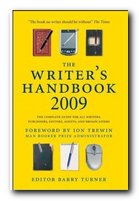
writer's marketplaceThe Writer’s Handbook
Barry Turner’s rival book does much the same thing – but focuses its attention on writers, and covers a slightly broader spread of media. In addition to the key areas of UK and US book publishers and agents, magazines, screen writing, TV and radio, theatre, film and video and poetry, this edition contains features on the appeal of biography; the uses and abuses of the English language; the challenges and rewards of self-publishing; writing poetry; and media contracts. This is well worth considering as an alternative.

Both of these books have extensive listings of all the outlets for creative work – fiction, journalism, sound broadcasting, photography, reporting, and editing. They also include mini-essays on various aspects of the publishing business, advising you how to place your work, where to find agents, and even how to sort out your tax problems after you hit the jackpot.
Buy the book from Amazon UK
Buy the book from Amazon US
 

writer's marketplaceThe Guardian Media Directory
If your writing is more geared to the mainstream media – newspapers, magazines, radio, and television, the Guardian annual directory is establishing itself as the major source of advice. It lists the addresses, phone numbers, websites and key personnel for companies in every sector of the media, from digital television to magazines, regional newspapers to publishing houses, think tanks to charities. This edition contains over 10,000 contacts and has been redesigned throughout.

There are lots of resources for writers on the Internet: the problem is knowing where to find them. Even trawling through search engine results can be time-consuming, and sometimes a dispiriting experience. Thank goodness then when somebody else has done all the research and written up the results.
Buy the book from Amazon UK
Buy the book from Amazon US
 

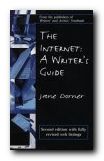
writer's marketplaceThe Internet: A Writer’s Guide
The main strength of Jane Dorner’s guide is that she is a professional writer who practices what she writes about. She writes for print and screen, and promotes her work via a personal web site. This book explores both the new opportunities for writers created by the Internet and the practicalities of publishing on your own site.

She touches on writing groups which exist in the form of mailing lists, websites, newsletters, chat groups, and conferences, and she also deals with eBooks plus annotated lists of all the sources a writer could possibly wish for – from libraries to bookshops, dictionaries to writing circles, newspapers to writing style guides, electronic publishers to free Internet service providers.
Buy the book from Amazon UK
Buy the book from Amazon US
 

Writer’s Market
This provides no-nonsense advice and authoritative guidance you need to get published and to get paid. With updated listings and ‘need-to-know’ publishing advice, Writer’s Market gives writers over 4,000 listings for consumer magazines, book publishers, trade journals, and contests and awards. It also includes complete contact information for fifty top literary agents.

There are dynamic interviews with established writers, plus publishers, editors and successful freelancers. This is essential publishing information and advice, including pay rates, a guide to book publisher imprints and valuable self-marketing tips. If you want to find out what’s available, or if you are really serious about placing what you have written with a commercial publisher – then sooner or later you will need one of these books. There are others, but these are the best; and every professional writer I have known has one or more of them on the shelf.
Buy the book from Amazon UK
Buy the book from Amazon US
 

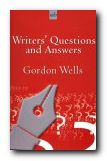
writer's marketplaceWriters’ Questions and Answers
Writers who wish to publish their work are often baffled by some of the mysteries of the publishing process itself. How can you get the attention of a publisher? Do you need an agent? How much can you expect to get paid? Should you submit an outline – or the complete work? Gordon Wells’ book answers these question, plus lots more which are frequently asked by people trying to get a foothold in the world of published writing.

The press always seems to have stories of first-time authors who have been paid a five or six-figure advance for their first novel. But those who have tried to do the same thing know that it’s a far more common experience to be dealing with rejection slips. How do you break into this seemingly charmed world?

Well, these guidance notes certainly tell you how to learn from rejection – and what to do about it. The advice is all practical, realistic, and based on the clear-eyed realisation that if you wish to succeed in this extremely competitive world – you need to know how it works.

Wells tackles all the most frequently asked questions – Who is the best person to approach with your masterpiece? Does vanity publishing work? What makes a best-seller? What if somebody poaches your ideas? Which publishers pay best?

If you want to move beyond the comforts of your local writers’ circle into the world of commercial publishing, you should read what he has to say. Keep dreams of success in mind by all means, but take the trouble to learn how professional writers actually work.
Buy the book from Amazon UK
Buy the book from Amazon US
 

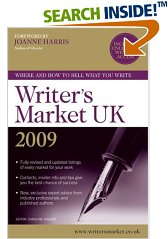
The Writer's MarketWriter’s Market UK 2009
This is a huge, 1,000 page compendium of advice, resources, and detailed information on how writers can locate markets and get their work into print. It has feature articles written by well-known authors giving advice on breaking into print. These are surrounded by listings of publishers, magazines, literary agents, and broadcast outlets. Then come specialized resources such as prizes and competitions, bursaries and fellowships, writers groups, and web sites.

The feature articles are precisely the sort of advice that aspirant writers are most likely to want and need. How to tackle the various genres of fiction writing: the short story, children’s writing, crime, and the novel. What agents and publishers are looking for – and how to approach them. Writing for radio, the Web, newspapers and magazines are all covered well,

There are essays on how books are designed, financed, and marketed, plus why you should know about contracts and legal issues. There are articles on the odd but very profitable field of ghost writing, and when you have made lots of money how to deal with agents, and how to promote your work once it’s published.

There are huge listings of bursaries, prizes, competitions, writers’ foundations, and all sorts of support to help the struggling want-to-be. And testing it out for being up to date, I found all sorts of on line resources for would-be writers: magazines, forums, self-help groups, web sites full of resources, writing software, plus competitions and prizes.

Given the differences in page and font sizes, it’s difficult to do a direct quantitative comparison with its two main rivals, but having looked through all three recently, I’d say that this gives the other two a very good run for their money.
Buy the book from Amazon UK
Buy the book from Amazon US

return button Publish your writing

© Roy Johnson 2009


More on creative writing
More on writing skills
More on publishing


Filed Under: Creative Writing, How-to guides, Journalism, Publishing, Writing Skills Tagged With: Creative writing, Journalism, Publishing, The Writer's Handbook, Writer's Market, Writers' and Artists' Yearbook, Writing skills

Twentieth Century Neglected Classics

October 2, 2009 by Roy Johnson

recommended lesser-known novels

This is a selection of neglected classics – lesser-known novels from the twentieth century. Great writers such as James Joyce, Franz Kafka, Virginia Woolf, and D.H.Lawrence are covered elsewhere on this site. Here you might find some pleasant surprises.

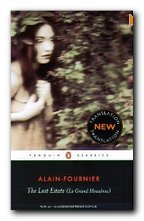
Neglected classics - Le Grand MeaulnesLe Grand Meaulnes (1913) Alain Fournier’s semi-autobiographical gem (usually translated into English as The Lost Domain) is an idyllic evocation of boyhood and adolescence. It’s a novel of teenage self-discovery and enormous charm. Two schoolboys stumble upon a semi-mythical realm set deep in the French countryside and fall in love with a girl who they can never later re-trace. This is a lyrical and atmospheric novel which evokes a fin de siécle innocence and romanticism which would be wiped out by the first world war – which was hovering just around the corner and cost Fournier his life fighting on the Meuse in 1914.
neglected classics Buy the book from Amazon UK
neglected classics Buy the book from Amazon US


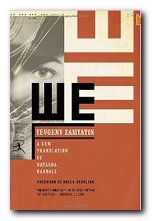
Neglected classics - We - ZamyatinWe (1920) Yevgeny Zamyatin’s tale is a very original and futuristic dystopia which prophesies Stalinism and the failure of the revolution to be truly revolutionary. It is set in a totally regulated society where people are known by numbers, and in which two lovers embody irrational urges towards which the state is hostile. It’s written in a dazzlingly poetic and experimental style, influenced by the early developments of Russian modernism. The novel was reviewed by George Orwell and heavily ‘influenced’ his novel Nineteen Eighty-Four. This is the original, and you”ll be pleased to discover that it’s far superior.
neglected classics Buy the book from Amazon UK
neglected classics Buy the book from Amazon US


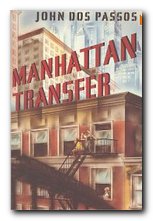
Neglected classics - Manhattan TransferManhattan Transfer (1925) John dos Passos is an unjustly neglected master of American experimental realism from the modernist period. He writes in a manner which combines multiple characters and perspectives, fragmented narratives running in parallel, stream-of-consciousness passages, the insertion of contemporary newspaper reports, potted biographies, popular songs, flash-backs and flash-forwards. The result is an expressionistic mosaic which captures the speed and chaos of modern life. His story is always one of ordinary working people struggling to make a living and a life in the modern city, which is under the control of monopoly capitalists. And his setting is almost always the city – New York City. Start with Manhattan Transfer, which is less demanding and more coherent. If you like that, move on to his chef d’oeuvre USA, which is three novels rolled into one.
neglected classics Buy the book from Amazon UK
neglected classics Buy the book from Amazon US


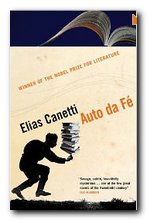
Neglected classics - Auto da FeAuto da Fe (1935) Elias Canetti’s only novel is the story of Peter Kien, a distinguished scholar and obsessive bibliophile who ends up setting fire to his own library. The novel was inspired by the burning of the Palace of Justice in Vienna in 1927, and is partly a parable of Nazi book burning. The figure of Kien is loosely based on Immanuel Kant, the German philosopher who was famous for his invariable habits. Kien deviates from his own spartan routines with disastrous results. Canetti wrote the novel when he was only twenty-five, and wrote little else except memoirs until he was awarded the Nobel Prize in 1981.
neglected classics Buy the book from Amazon UK
neglected classics Buy the book from Amazon US


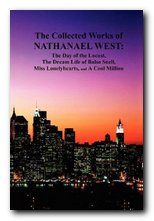
Neglected classics - Nathaniel West's novels Miss Lonelyhearts (1933) Nathaniel West’s novel concerns a newspaper columnist who deals with the problem letters from readers – most of them bordering on the humanly tragic. He innocently and for the best motives begins to take them seriously, and tries to help the people who send them. He is destroyed as a result. West is a much underrated master of black comedy. The Day of the Locust (1939) is his greatest novel – a searing critique of the movie business in which West briefly worked. It focuses on the lonely misfits and cranks drawn by Hollywood and the American Dream, and ends in an apocalyptic frenzy of hatred, self-destruction, and the burning of Los Angeles. Both novels, plus A Cool Million and The Dream Life of Balso Snell in one volume.
neglected classics Buy the book from Amazon UK
neglected classics Buy the book from Amazon US


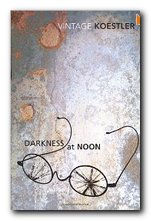
Neglected classics - Darkness at NoonDarkness at Noon (1940) Arthur Koestler’s novel is one of the classics capturing all the madness and tyranny of the Stalinist purges in the 1930s. Comrade Rubashov, an old Bolshevik, is accused of betraying the State he helped to create. The novel follows his physical and psychological torture until he finally agrees to make a false confession against himself, and following a completely corrupt show trial he is executed as a traitor. Grim; not for the faint-hearted; and politically spot-on in the light of everything we have learned since. It profits from being dramatically concentrated in time and place on Rubashov in his prison cell, but for a more wide-ranging novel which shows the madness of stalinism in a much wider social perspective, try Victor Serge’s The Case of Comrade Tulayev.
neglected classics Buy the book from Amazon UK
neglected classics Buy the book from Amazon US


Neglected classics - The Master and MargaritaThe Master and Margarita (1940/1973) Mikhail Bulgakov’s greatest novel is a wonderful mixture of realism and fantasy which offers a satirical view of communist Russia. The story involves the arrival of the Devil into Moscow, causing all sort of comic mischief. This story is interspersed with chapters dealing with Pontius Pilate and the crucifixion of Jesus Christ, plus other sections related to an artist and his relationships with his art and his lover. All three layers of the story are blended into one with spellbinding imaginative force. Bulgakov burnt the manuscript of his book in despair when being persecuted under the Stalinist tyranny. Fortunately, he lived just long enough to re-write it.
neglected classics Buy the book from Amazon UK
neglected classics Buy the book from Amazon US


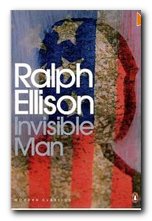
Neglected classics - Invisible ManInvisible Man (1952) Ralph Ellison’s powerful novel is the search of an unnamed black American man for his own identity in a society which denies it to him at every turn. It is told with a combination of deadly seriousness and great comic panache. The hero is presented with or stumbles into a range of roles – from Uncle Tom, through political activist, to Superstud and Black Muslim. He uncovers the racism and existential inauthenticity in all of them, and in the end ‘goes Underground’ as a form of escape. This novel is profound, beautifully written, and very funny. It’s a great shame Ralph Ellison wrote so little else.
neglected classics Buy the book from Amazon UK
neglected classics Buy the book from Amazon US


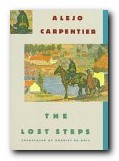
Neglected classics - The Lost StepsThe Lost Steps (1953) Alejo Carpentier’s novel is a story told twice. A disillusioned north-American musicologist flees his empty existence in New York City. He takes a journey with his mistress to one of the few remaining areas of the world not yet touched by civilization – the upper reaches of a great South American river. The novel describes his search, his adventures, the revival of his creative powers, and the remarkable decision he makes in a village that seems to be truly outside history. Wonderful evocations of Latin America from the writer who founded the idea of ‘Magical Realism’.
neglected classics Buy the book from Amazon UK
neglected classics Buy the book from Amazon US


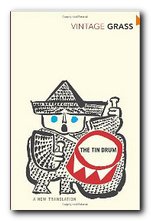
Neglected classics - The Tin DrumThe Tin Drum (1956) This was Günter Grass’s first novel, and it is still probably his best. In it, he makes a brave and imaginative attempt to come to terms with the German experience between 1930 and 1950. Set in Danzig where Grass grew up, it starts with the rise of fascism, goes through the horrors of WWII, and ends just after the dubious Economic Miracle of the post-war years. The ambiguous hero is a dwarf who is pathologically attached to his toy drum, who wills himself not to grow, and whose voice can shatter glass. This is a comic yet disturbing fantasy which combines elements of Grass’s own biography with notions of collective and individual responsibility for German war guilt. Despite his later fame and productivity (plus the Nobel Prize in 1999) this novel will be due for renewed critical examination, following Grass’s recent confession that he enlisted in the Waffen-SS during the war.
neglected classics Buy the book from Amazon UK
neglected classics Buy the book from Amazon US


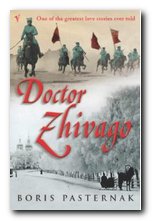
Neglected classics - Doctor ZhivagoDr Zhivago (1957) Boris Pasternak’s novel is a sprawling epic of the Russian revolution, a passionate love story, and a memorable portrait of a doctor-poet caught up in the merciless wheels of history. Zhivago seeks to do good and live with simple dignity, but his efforts are thwarted by war, a revolution in which he is forced to participate, and his love affair with Lara, who is married to a Bolshevik general. Pasternak received the Nobel Prize for this novel in 1958, but was forced to refuse it by the Soviet authorities at the time. Some commentators have criticised the novel for being rather traditional in its used of drama and suspense – but these features are precisely what gives it such appeal for general readers.
neglected classics Buy the book from Amazon UK
neglected classics Buy the book from Amazon US


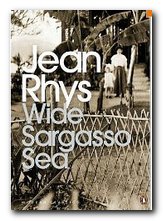
Neglected classics - Wide Sargasso SeaWide Sargasso Sea (1966)
Jean Rhys’ novel is a rare case of a ‘prequel’ which is as interesting, well written, and as original as the work to which it refers. This is the story of Mr Rochester’s first wife (before Jane Eyre) and how he came to bring her from the West Indies. It’s a vivid evocation of the Caribbean; a psychologically convincing portrait of a woman’s identity under threat from the twin forces of male dominance and enforced deracination; and a wonderfully lyrical narrative, full of poetic imagery and brooding force. This book re-established Jean Rhys’s reputation after decades of neglect.
neglected classics Buy the book from Amazon UK
neglected classics Buy the book from Amazon US


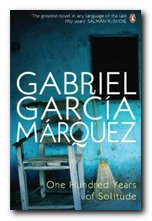
Neglected classics - One Hundred Years of SolitudeOne Hundred Years of Solitude (1967) Gabriel Garcia Marquez is the novelist who really put ‘magical realism’ on the world literary map. This is a sprawling epic which conveys the essence of Latin America via the saga of the Buendia family that mirrors the history of Colombia. Like many of his works, it is set in the fictional town of Macondo, a place much like García Márquez’s native Aracataca. Mixing realism and fantasy, the novel is both the story of the decay of the town and an ironic epic of human experience. Readers should expect levitating priests, time which goes backwards, and plagues of flowers and civic forgetfulness. Marquez has gone on to write many more novels, but this one remains his greatest.
neglected classics Buy the book from Amazon UK
neglected classics Buy the book from Amazon US


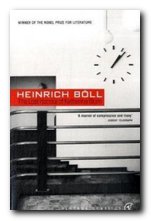
Neglected classics - Lost Honour of Katarina BlumThe Lost Honour of Katharina Blum (1969) This work by Heinrich Böll is a short, dramatic novel loosely based on the Baader-Meinhof affair. It is Böll’s scathing critique of tabloid journalism at its worst and Germany’s panic-driven anti-terrorist laws. A young woman is arrested for harbouring her lover, a suspected terrorist, who is in fact an army deserter. She is harassed by the police and a particularly obnoxious reporter. When he confronts her at her mother’s funeral she agrees to give him her story; but when they meet up and he suggests they have sex, she shoots him instead. Böll is a left-wing Catholic in the mould of Graham Greene. This is an intelligent and sensitive response to the moral outcry over European ‘terrorism’ which began in the late 1960s.
neglected classics Buy the book from Amazon UK
neglected classics Buy the book from Amazon US


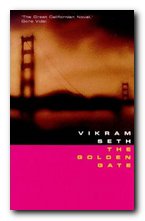
Neglected classics - The Golden GateThe Golden Gate (1989) Vikram Seth’s is a novel of modern life, written in verse , and set in California. It’s very charming, yet deals with important the fundamentals of life such as birth, friendship, love, and death. It was inspired by Pushkin’s novel in sonnet form, Eugene Onegin, and it contains some wonderfully poetic images and stunning rhymes. It’s a celebration of everyday existence, with strong ecological sympathies and an amazing variety of domestic pets. Guaranteed to please. Don’t let the idea of a novel in verse put you off: it’s a gem, and a linguistic treat. The text is presented, like Pushkin’s masterpiece, as one sonnet on each page. Every one is a self-contained work of art
neglected classics Buy the book from Amazon UK
neglected classics Buy the book from Amazon US


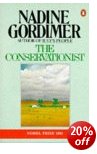
Neglected classics - The ConservationistThe Conservationist (1990) Nadine Gordimer has had a long and distinguished career as a novelist, but this has possibly emerged as her greatest work. A white South-African businessman keeps a farm in the country which he visits at weekends. He tries to do The Right Thing ecologically but cannot, because he does not truly live there. The Africans who work for him eventually emerge as the true inheritors of the earth. Gordimer charts the problems of a society divided by racism, colonialism, class, and political history. She expresses very eloquently the relationship between people and land. Fluent writing, great style, and lots of political commitment, but wrapped up in a non-judgemental way.
neglected classics Buy the book from Amazon UK
neglected classics Buy the book from Amazon US

© Roy Johnson 2009


More on literary studies
More on writing skills
More on creative writing
More on grammar


Filed Under: 20C Literature Tagged With: Classic novels, Literary studies, Modern classics, The novel, Twentieth Century Classic Novels

Twentieth Century Russian Novels

October 2, 2009 by Roy Johnson

Russian novels - St Petersburgrecommended classic reading

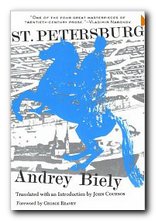
St Petersburg (1916) Andrei Biely (pseudonym of Boris Nikolaevich Bugaev) is a much-neglected figure from the period of modernist experimentation. He was a novelist, a poet, a theorist, and literary critic. His major work is a novel with a ticking bomb (concealed in a sardine can) at its centre – a sort of meditation on violence. It’s the story of the hapless Nikolai Apollonovich, a never-do-well who is caught up in revolutionary politics and assigned the task of assassinating a certain government official — his own father. Nikolai is pursued through the impenetrable Petersburg mists by the ringing hooves of the famous bronze statue of Peter the Great. It is not unlike James Joyce’s Ulysses in its literary experimentation, and in being concerned with the events one day in one city. But the experimentation is of a different kind. Biely was a symbolist and a mystic. He uses his poetic style in this novel to bring the city to life as if it were a living, breathing being.
Russian novels - 20th Century Buy the book from Amazon UK
Russian Novels - 20th Century Buy the book from Amazon US


Russian novels - We - ZamyatinWe (1921) Yevgeny Zamyatin is also an unjustly neglected master of the school of experimental modernism which flourished in Russia until the early 1920s. His one novel is a very original science-fiction dystopia, and a satirical critique of the Russian revolution (which he had supported) as he saw it being betrayed by the forces of totalitarianism. It is a novel which deserves to be much better known. In a totally regulated society where people are known by numbers, two lovers embody irrational urges towards which the state is hostile. The novel was tragically prophetic of the Stalinism which was to come. It is written in a dazzlingly poetic and experimental style, and it was quite clearly the model for both Aldous Huxley’s Brave New World (1932) and George Orwell’s Nineteen Eighty-Four (1949). Both of these writers had read the novel: this, the original, is far superior. Do yourself a favour: add this to your reading list.
Russian novels - 20th Century Buy the book from Amazon UK
Russian Novels - 20th Century Buy the book from Amazon US


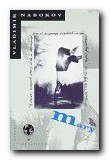
Russian novels - Nabokov - MaryMary (1923) Vladimir Nabokov is a great Russian writer, even though he left the country in flight from the revolution in his youth, and spent the rest of his life in exile, living in Germany, America, and Switzerland. In fact he wrote half of his huge output in English. He represents the playful, experimental side of modernism which the Stalinists did their best to stamp out. His writing is amazingly stylish – rich in imagery, erudite, stuffed full of verbal tricks and special effects.

Of course he is best known for Lolita, which he wrote in English whilst living in America. But he wrote novels in Russian during the 1920s and 1930s whilst living in Germany. He can be very lyrical as he is in his early novels Mary and Glory (1932) where he evokes the raptures of youthful pleasures, and the discovery of passion and loss. His lyrical prose records a young Russian exile’s recollections of his first love affair. But the woman in question clearly symbolises his relationship with Russia. He is also good at a creating a marvellous sense of awe in contemplating the quiet aesthetic pleasures in everyday events and special moments of being.

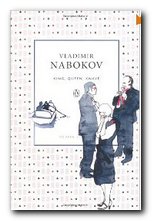
Russian novels - King,Queen,KnaveOther novels such as King, Queen, Knave show a much darker side to his nature, with its focus on adultery, deception, and cruelty. These traits are taken to an uncomfortable extreme in Laughter in the Dark (1932) which plots the downfall of a man who runs off with a young girl who, when he is rendered blind in a car accident, secretly moves her lover in to live under the same roof. The sleazy pair of them torment the protagonist in a particularly gruesome fashion. This theme of the older man driven to self-destruction by desire for a younger woman was something Nabokov explored again in The Enchanter which he wrote in Paris in 1939, and twenty years later in Lolita which he wrote in English whilst teaching in an American college.
Russian novels - 20th Century Buy the book from Amazon UK
Russian Novels - 20th Century Buy the book from Amazon US

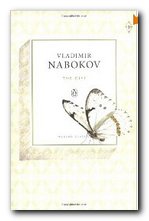
Russian novels - The Gift - NabokovThe Gift (1936) is generally held to be the greatest of Nabokov’s Russian novels. It deals with the ironies and agonies of exile. It’s also the last of the novels Nabokov wrote in his native Russian language and the crowning achievement of that period in his literary career. It’s also his ode to Russian literature, evoking the works of Pushkin, Gogol, and others in the course of its narrative, and it also has at its centre a critique of Chernyshevsky. It is the story of Fyodor Godunov-Cherdyntsev, an impoverished émigré poet living in Berlin, who dreams of the book he will someday write – a book very much like The Gift. The novel plays the most pleasurable kind of havoc with conventional notions of narrative structure and linguistic protocol. It also includes a deeply felt fictionalisation of the murder of Nabokov’s own father in 1922 whilst he was attempting to stop a political assassination.
Russian novels - 20th Century Buy the book from Amazon UK
Russian Novels - 20th Century Buy the book from Amazon US


Russian novels - The Master and MargaritaThe Master and Margarita (1940) Mikhail Bulgakov was originally a doctor. His early works The Diary of a Country Doctor and The White Guard are written in a lucid, plain style not unlike Chekhov (who was of course also a doctor). In the 1920s and 1930s Bulgakov turned to the theatre, and despite conflicts with the Stalinists at the height of their purges, he managed to survive just long enough to complete his masterpiece. The Master and Margarita is a wonderful mixture of realism and fantasy which offers a satirical view of communist Russia. The story involves the arrival of the Devil into Moscow, causing all sort of mischief and disruption. This is interspersed with chapters re-telling the story of Pontius Pilate and the crucifixion of Jesus Christ, plus other sections related to an artist and his relationships with his art and his lover. All three layers of the story are blended with spellbinding imaginative force.
Russian novels - 20th Century Buy the book from Amazon UK
Russian Novels - 20th Century Buy the book from Amazon US


Russian novels - Doctor ZhivagoDr Zhivago (1957) Boris Pasternak is principally a poet so far as Russian literature is concerned, but it is his novel by which he is best known to the general reading public in the West. He was awarded the Nobel prize for it, but forced to turn it down by the Soviet authorities. This is a sprawling epic of the Russian revolution, a passionate love story, and a memorable portrait of a doctor-poet caught up in the wheels of history. Zhivago seeks to do good and live with simple dignity, but his efforts are thwarted by war, revolution, and his love affair with Lara, who is married to a Bolshevik general. Critical opinion has been somewhat divided over this work, with some readers seeing it as no more than a nineteenth century novel in disguise. With the general reading public however, it has never lost its appeal.
Russian novels - 20th Century Buy the book from Amazon UK
Russian Novels - 20th Century Buy the book from Amazon US


Russian novels - One Day in the Life of Ivan DenisovichOne Day in the Life of Ivan Denisovitch (1962) This is the short novel that made Alexander Solzhenitsyn famous overnight. It recounts a typical day’s work, deprivation, and suffering of a prisoner in one of Stalin’s labour camps. Publication was ‘allowed’ as part of Krushchev’s post 1956 attack on Stalin and his legacy. The facts of the story were deliberately understated to meet the censor’s requirements at the time. It catapulted Solzhenitsyn to fame, and yet within a couple of years his work was banned again.

Solzhenitsyn writes in a simple, restrained style in which ornamentation is stripped away in favour of moral purpose. The results celebrate a stoical, almost puritan heroism in the face of all that the Russian people have had to endure – government-constructed poverty, war, political corruption, censorship, and totalitarian repression.

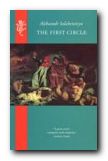
Russian novels - The First CircleThe First Circle (1968) This novel is set in a special research-cum-detention centre reserved for mathematicians and scientists who are nevertheless political prisoners. This is what might be called a novel of ideas, as the characters discuss the political and historical forces which have brought them to their present unjust imprisonment. Of the main characters, one is eventually released, another is sent off to a much harsher regime, and the third remains where he is. It is based very closely on Solzhenitsyn’s own experiences of his first period of imprisonment by the Stalinist regime.
Russian novels - 20th Century Buy the book from Amazon UK
Russian Novels - 20th Century Buy the book from Amazon US

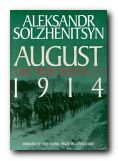
Russian novels - August 1914August 1914 (1984) This is the first part of a multi-volume epic, a historical novel on a grand scale about the origins of the Soviet Union and how communism came to take root there. Solzhenitsyn sees the Battle of Tannenberg at the start of the First World War as the first major turning point in this process. Using a range of modernist-cum-experimental techniques, he sets in motion a huge cast of characters against the backdrop of this decisive battle. The whole enterprise was called The Red Wheel. There were further volumes in the cycle published, but towards the end of his life Solzhenitsyn transferred most of his energy into books arguing for social and political reform – rather in the same manner as Tolstoy.
Russian novels - 20th Century Buy the book from Amazon UK
Russian Novels - 20th Century Buy the book from Amazon US

Russian novels - Lenin in ZurichLenin in Zurich (1976) This is a short novel composed of some separate chapters from The Red Wheel. It focuses largely on Lenin in exile, immediately prior to his triumphant return in a sealed train to St Petersburg’s Finland Station. It’s a very interesting study, because Solzhenitsyn is clearly critical of Lenin as one of the central architects of communism – yet he narrates the story largely from Lenin’s point of view. Steeped in history, this is a major attempt at a political and psychological portrait of a historical figure.
Russian novels - 20th Century Buy the book from Amazon UK
Russian Novels - 20th Century Buy the book from Amazon US

© Roy Johnson 2009

redbtn  Nineteenth Century Russian Novels


More on literary studies
More on writing skills
More on creative writing
More on grammar

Filed Under: 20C Literature Tagged With: Literary studies, Russian literature, Russian novels, The novel, Twentieth Century Russian novels

Typography bibliography

October 30, 2009 by Roy Johnson

Typography bibliography   Gavin Ambrose & Paul Harris, The Fundamentals of Typography, Lausanne: AVA, 2006, pp.176, ISBN 2940373450.

Typography bibliography   Tom Arah, Web Type: Start Here!, Lewes: ILEX, 2004, pp.192, ISBN: 1904705189.

Typography bibliography   Jeff Bellantoni and Matt Woollman, Type in Motion: Innovations in Digital Graphics, 2nd edn, London: Thames and Hudson, 2005, pp.176, ISBN 0500512434

Typography bibliography   John D. Berry, dot-font: talking about fonts, New York: Mark Batty Publishing, 2006, pp.126, ISBN: 0977282708

Typography bibliography   Charles Bigelow, Paul Hayden Duensing, and Linnea Gentry (eds) Best of Fine Print on Type and Typography, San Francisco: Fine Print/Bedford Arts, 1988.

Typography bibliography   Lewis Blackwell, Twentieth Century Type, Rizzoli International Publications/Calmann & King, 1992, pp.256, ISBN 084781596X

Typography bibliography   Lewis Blackwell, 20th Century Type: Remix, London: Lawrence King, 1998, pp.191, ISBN 1856691160. New edition of a historical survey of 100 years of innovation in typographic design – presented in elegantly publication which has become a favourite amongst designers.

Typography bibliography   Lewis Blackwell and David Carson, The End of Print: The Graphic Design Of David Carson, Chronicle, 1995, pp.160, ISBN: 0811811999. California dreaming. Father of ultra-distressed type. Carson came to fame by designing Raygun and has remained popular with the avant garde ever since.

Typography bibliography   Lewis Blackwell and David Carson, David Carson: 2nd Sight: Grafik Design After the End of Print, Universe Books, 1997, pp.176, ISBN: 0789301288. Follow-up to best-selling title above. More of Carson’s influential work – where type and graphics begin to merge with each other.

Typography bibliography   Joseph Blumenthal, The Printed Book in America, Boston: David R. Gondine, 1997.

Typography bibliography   Alexander Branczyk et al, Emotional Digital: A sourcebook of contemporary typographics, London: Thames & Hudson, 2001, pp.312, ISBN 0500283109. Showcase presentation of modern type design from the best of today’s studios – both traditional and avant-gard. Examples shown in wide range of applications. Beautifully produced book.

Typography bibliography   Robert Bringhurst, The Elements of Typographic Style (2nd edn), Vancouver: Hartley & Marks, 1996, pp.351, ISBN 0881791326. The Bible of typography. Beautifully designed and poetically written encyclopedia of all things typographic. Impossible to recommend this book too highly.

Typography bibliography   Christopher Burke, Paul Renner: the art of typography, London: Hyphen Press, 1999, pp.223, ISBN 1568981589. Scholarly biography of the designer of the Futura typeface. Mixes graphic design issues with politics and social history. Elegantly produced and well illustrated.

Typography bibliography   Sebastian Carter, Twentieth Century Type Designers, New York: W.W.Norton, (new edition) 1995.

Typography bibliography   Warren Chappell, A Short History of the Printed Word, New York: Alfred A. Knopf, 1970.

Typography bibliography   Carl Dair, Design With Type, Toronto: University of Toronto Press, 1982.

Typography bibliography   Geoffrey Dowding, Finer Points in the Spacing and Arrangement of Type, (Revised edition), Vancouver: Hartley & Marks, 1995, pp.96, ISBN 0881791199. Does what it says on the tin. Dowding reflects on the more subtle points of punctuation and letter spacing. Elegant, restrained, and well-produced.

Typography bibliography   William Addison Dwiggins, Layout in Advertising, New York: Harper and Brothers, 1948.

Typography bibliography   James Felici, The Complete Manual of Typography, Berkeley (CA): Peachpit Press, 2003, pp.360, ISBN 0321127307.

Typography bibliography   Adrian Frutiger, Type, Sign, Symbol, Zurich: ABC Verlag, 1980.

Typography bibliography   Simon Garfield, Just My Type, London: Profile Books, 2010, pp.352, ISBN: 1846683025

Typography bibliography   Eric Gill, An Essay on Typography, London, 1936, reissued Boston: David R. Godine 1993, pp.144, ISBN: 0879239506. Gill’s essay is a slightly quirky plea for the aesthetics and morals of good design principles. This has become a design classic. Produced in Gill’s own typeface – Johanna.

Typography bibliography   Bob Gordon and Maggie Gordon, The Complete Guide to Digital Graphic Design, London: Thames and Hudson, 2002, pp.224, ISBN 050028315X. Typography is only one part of this survey of contemporary design – but the book is so beautifully illustrated and produced, it acts as an excellent example of page structure and layout.

Typography bibliography   Bob Gordon, Making Digital Type Look Good, London: Thames and Hudson, 2001, pp.192, ISBN 0500283133. Beautifully designed and elegantly printed study. Includes the anatomy of type, rendering, technology, and fine tuning. Clarifies all the complexities of font technology in a very straightforward manner – showing how tracking, kerning, and hyphenation can be used to good effect.

Typography bibliography   Nicolette Gray, A History of Lettering: Creative Experiment and Letter Identity, Boston: David R. Gondine, 1986.

Typography bibliography   Robert Harling, The Letter Forms and Type Designs of Eric Gill, Boston: David R. Gondine, 1977.

Typography bibliography   New Hart’s Rule for Compositors and Readers, London: Oxford University Press, 1999, pp.182, ISBN 019212983X. Compact style guide to typographical and presentational niceties – from punctuation and spacing, to hyphenation, foreign words, symbols, and proof-correction.

Typography bibliography   Oldrich Hlavsa, A Book of Type and Design, New York: Tudor Publishing, 1960.

Typography bibliography   Richard Hollis, Graphic Design: a concise history, London: Thames and Hudson, 1994, pp.224, ISBN: 0500202702. Compact, well-illustrated, and good-value history of twentieth century design – including graphics and typography.

Typography bibliography Sally Hughes, Design and Typography, Computer Step, 1998, pp.193, ISBN 1840780045. Well-illustrated and simple introduction to typography and desk top publishing – every point illustrated by examples.

Typography bibliography   Indie Fonts, Buffalo, NY: P-Type Publications, 2002, pp.408, ISBN: 0963108220. Beautifully produced collection of over 2000 fonts from eighteen of the most innovative independent type designers.

Typography bibliography   W. Pincus Jaspert, W. Turner Berry, and A.F. Johnson, The Encyclopaedia of Type Faces, New York: Blandford Press, 1986.

Typography bibliography   Rob Roy Kelly, American Wood Type, New York: Van Nostrand Rheinhold, 1969.

Typography bibliography   Robin Kinross, Modern Typography: An Essay in Critical History, Chronicle Books/Princeton Architectural Press, 1996, pp.208, ISBN 0907259057.

Typography bibliography   Alexander Lawson, Anatomy of a Typeface, London: Hamish Hamilton, 1990, pp.428, ISBN 0241132673.

Typography bibliography   Alexander Lawson, Printing Types: An Introduction, Boston: Beacon Press, 1971.

Typography bibliography   Ellen Lupton, Thinking with Type: A critical guide for designers, editors, and students, New York: Princeton Architectural Press, 2004, pp.176, ISBN 1568984480

Typography bibliography   Mac McGrew, American Metal Typefaces of the Twentieth Century, New Castle Delaware: Oak Knoll Press, 1993.

Typography bibliography   Ruari McLean, The Thames and Hudson Manual of Typography, Thames and Hudson, 1980, ISBN 0500680221. Popular, good-value, and well illustrated general introduction to typography. Covers all aspects of the craft, but ends with focus on book design.

Typography bibliography   Ruari McLean, Jan Tschichold: Typographer, Boston: David R. Gondine, 1975.

Typography bibliography   Stanley Morison, Letterforms, Montreal: Hartley and Marks, 1997, pp.128, ISBN 0881791369

Typography bibliography   Stanley Morrison, First Principles of Typography, New York: The Macmillan Company, 1936.

Typography bibliography   Stanley Morrison, A Tally of Types, Cambridge: Cambridge University Press, 1973.

Typography bibliography   Robert Norton, Types Best Remembered/Types Best Forgotten, Parsimony Press, 1993, ISBN 1884606008. Collection of well-known typefaces, complemented by negative and positive criticism.

Typography bibliography   Bruce Rogers, Paragraphs on Printing, New York: Dover Publications, 1979.

Typography bibliography   Julian Rothenstein and Mel Gooding (eds), 130 Alphabets and Other Signs, London: Thames and Hudson, 1993, pp.183, ISBN 0500277419. A charming sample book of signs, symbols, alphabets, rules, swashes, and pictograms. Highly recommended.

Typography bibliography   Julian Rothenstein and Mel Gooding (eds), A B Z: More Alphabets and Other Signs, London: Redstone Press, 2003, pp.221, ISBN:1870003330. Another charming sample book of font sets, signs, symbols, alphabets, rules, swashes, and pictograms. Highly recommended.

Typography bibliography   Rosemary Sassoon, Computers and Typography, Oxford: Intellect, 1993, pp.164, ISBN 1871516234. Articles on text massage; layout and readability; new alphabets using bitmapped fonts; the history of typography and its effects; the visual analysis of a page of text; and Sassoon’s essay on perception and type design related to writing for children.

Typography bibliography   Rosemary Sassoon, Handwriting of the Twentieth Century, London: Routledge, 1999, pp.208, ISBN 0415178827. Developments in the teaching and study of handwriting over the course of the 20th century. A historical record of techniques, styles and methods. Beautifully illustrated with examples – from guidance manuals, schoolbooks, clerks’ registry entries, and personal handwriting.

Typography bibliography   Erik Spiekermann & E.M. Ginger, Stop Stealing Sheep and find out how type works, Adobe Press/Hayden Books, 1993, ISBN 0672485435. Very popular introduction to the general principles of typography. Well designed and illustrated.

Typography bibliography   Walter Tracy, Letters of Credit: A View of Type Design, Boston: David R. Godine, 1986, ISBN 0879236361.

Typography bibliography   Jan Tschichold, Asymmetric Typography, London: Faber & Faber, 1967.

Typography bibliography   Jan Tschichold, The Form of the Book: Essays on the Morality of Good Design, Vancouver: Hartley & Marks, 1991, pp.181, ISBN 0881791164. Short essays from Tschichold’s ‘late’ period on some of the most fundamental issues of arranging type on paper. Eloquent opinions on page shape, margins, text spacing, and even blank pages.

Typography bibliography   Jan Tschichold, The New Typography: A Handbook for Modern Designers, Berkeley: University of California Press, 1995, pp.236, ISBN: 0520071476. Manifesto of the modernist movement. Tschichold’s ‘early’ period, politically committed argument for ‘form follows function’. Original illustrations, and printed in period style.

Typography bibliography   Jan Tschichold, Treasury of Alphabets and Lettering: A Source Book, W.W. Norton, 1995, pp.236, ISBN 0393701972.

Typography bibliography   D.B. Updike, Printing Types: Their History, Forms and Use, New York: Dover Publications, 1980.

Typography bibliography   Hugh Williamson, Methods of Book Design: The Practice of an Industrial Craft, New haven: Yale University Press, 1985.

Typography bibliography   Adrian Wilson, The Design of Books, San Francisco: Chronicle Books, 1995, pp.159, ISBN 081180304X.

Typography bibliography   Jon Wozencroft, The Graphic Language of Neville Brody, London: Thames & Hudson, 1988, pp.160, ISBN 0500274967. Comprehensive survey of Brody’s graphics and typography – in two very popular and well-illustrated volumes. Best-seller.

© Roy Johnson 2009


More on typography
More on technology
More on digital media


Filed Under: How-to guides, Typography Tagged With: Bibliographies, Design, Fonts, Typography

  • « Previous Page
  • 1
  • …
  • 3
  • 4
  • 5
  • 6
  • 7
  • 8
  • Next Page »

Get in touch

info@mantex.co.uk

Content © Mantex 2016
  • About Us
  • Advertising
  • Clients
  • Contact
  • FAQ
  • Links
  • Services
  • Reviews
  • Sitemap
  • T & C’s
  • Testimonials
  • Privacy

Copyright © 2026 · Mantex

Copyright © 2026 · News Pro Theme on Genesis Framework · WordPress · Log in