Mantex

Tutorials, Study Guides & More

  • HOME
  • REVIEWS
  • TUTORIALS
  • HOW-TO
  • CONTACT
>> Home / Archives for 2009

Archives for 2009

New Media Language

May 21, 2009 by Roy Johnson

new forms of language, rhetoric, and communication

This is a collection of papers given at a conference on ‘Language, Media, and International Communication’ at Oxford University. The contributions are from academics and journalists, and the best thing about them is that they are interestingly varied in topic and approach. Issues discussed include the manner in which the norms of communication in the English-speaking world are affecting speakers of other languages. The example given is of an assistant in MacDonald’s in Budapest who speaks Hungarian, but uses an Anglo-American ‘discourse’.
New Media LanguageRobin Lakoff also writes on the ‘new incivility’ – how swearing and bad manners have risen to the surface of public discourse, from the television chat show to the theatres of government in the west. Sometimes the arguments seem to take a sledgehammer to crack nuts. Martin Conboy’s otherwise excellent analysis of the language of hysterical chauvinism in The Sun could have been done without evoking references to Mikhail Bakhtin.

Despite the title of the book, the emphasis is more on media than on language. John Carey looks at the problems of establishing credulity in reportage, and there’s a well-informed piece on the BBC’s anguish regarding the middlebrow nature of Radio 4.

One of the best pieces in the collection is by co-editor Diana Lewis on the changes brought about to the concept of news and the way it is broadcast as a result of now being simultaneously available in so many different forms. It comes at us in traditional manner via newspapers, radio, and television – but to these are now added instantly updated web sites, news feeds, and personal blogs – all of which can come along with a huge variety of background and contextual materials, available at the click of a hyperlink. Have a look at any page on a Wikipedia entry, and you’ll see what she means.

I also enjoyed an amusing piece from the Guardian columnist Malcolm Gluck on the difficulty of describing wines without slipping into Pseud’s Corner prose. At a more serious level, there’s an excellent piece analysing the duplicitous and rhetorical devices used in White House press briefings, where the official spokespeople try to give away as little as possible, and the press representatives try equally hard to make them admit the truth of what is going on.

There are two good chapters from professional lexicographers. John Ayto looks at the way in which newspapers create neologisms by what’s called ‘blending’ – as in motel comes from a blend of motor + hotel. John Simpson, one of the editors at the Oxford English Dictionary, considers the problem of accepting new media forms such as film, tabloids, and email as the sources for word definitions.

It certainly deals with traditional as well as new media – because there’s lots on the press, particularly the tabloids. This will be of interest to students of media, communication skills, politics, and current affairs, as well as anyone who follows trends in current language use.

© Roy Johnson 2004

New Media Language   Buy the book at Amazon UK

New Media Language   Buy the book at Amazon US


Jean Aitchison and Diana M. Lewis, New Media Language, Abingdon: Routledge, 2003, pp.209, ISBN: 0415283043


More on digital media
More on technology
More on theory

Filed Under: Language use, Media Tagged With: Communication, Language, Media, New Media Language, Theory

New Oxford Dictionary of English

July 29, 2009 by Roy Johnson

new single-volume compilation based on modern usage

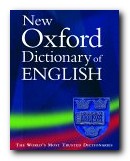
The New Oxford Dictionary of English is a one-volume giant from Oxford University Press and a departure from their normal practice. Instead of being based on other dictionaries, it’s a completely new selection of words, compiled after in-depth analysis of computerized databases of contemporary English. The emphasis is very much on current relevance. Each word is defined first by its modern meaning, as used by the majority of people. Rulings are given on tricky questions of usage – [due to is not the same as because of, for instance]. These provide advice on old and new problems.

New Oxford Dictionary of English This populist approach may not please traditionalists, but the dictionary is certainly very user-friendly – and that’s in there too. The other principal novelty is the inclusion of encyclopedia-type entries. So, for instance, opening randomly at the letter ‘P’ – you are offered ‘perquisite’, followed by potted biographies of Charles Perrault, Fred Perry, and Persephone; then a micro-history of Persia, and an explanation of correct usage for the ‘personal pronoun’. I suspect these will make this a popular choice for those people who want a serious dictionary and a useful general reference book all in one.

Brief notes on word history explain the linguistic roots of words and tell the story of how a word’s meaning and form have changed over time. Modern pronunciations are also given, using the internationally recognized pronunciation system. A rapid-reference page design separates out parts of speech, word histories, and phrases.

This new revised edition embraces the OUP’s latest style of having the headword printed in a bold san-serif font, with the explanation which follows in Times Roman (serif). Extra notes then revert to san-serif in a grey box. All this variety makes it something of a typographic jumble – but it is easy to use. Here’s what a typical entry looks like:

ear 1 > noun the organ of hearing and balance in humans and other vertebrates, especially the external part of this

• an organ sensitive to sound in other animals. •
[in sing.] an ability to recognise, appreciate, and reproduce sounds, especially music or language: an ear for rhythm and melody. • used to refer to a person’s willingness to listen and pay attention to something: she offers a sympathetic ear to worried pet owners.

The ear of a mammal is composed of three parts. The outer or external ear consists of a fleshy external flap and a tube leading to the eardrum or tympanum. The middle ear is an air-filled cavity connected to the throat, containing three small linked bones that transmit vibrations from the eardrum to the inner ear. The inner ear is a complex fluid-filled labyrinth including the spiral cochlea (where vibrations are converted to nerve impulses) and the three semi-circular canals (forming the organ of balance). The ears of other vertebrates are broadly similar.

– PHRASES be all ears informal
be listening eagerly and attentively. bring something (down) about one’s ears – bring something, especially misfortune, on oneself; she brought her world crashing about her ears. one’s ears are burning – one is subconsciously aware of being talked about or criticized. grin (or smile) from ear to ear: smile broadly. have something coming out of one’s ears: have a substantial or excessive amount of something: that man’s got money coming out of his ears. have someone’s ear have access to and influence with someone: he claimed to have the prime minister’s ear. have (or keep) an ear to the ground – be well informed about events and trends. in (at) one ear and out (at) the other – heard but disregarded or quickly forgotten: whatever you tell him seems to go in one ear and out the other. listen with half an ear not give one’s full attention. be out on one’s ear informal be dismissed or ejected ignominiously. up to one’s ears in informal very busy or deeply involved in: I’m up to my ears in work here.
— DERIVATIVES eared adjective [in combination] long-eared, earless adjective.
— ORIGIN Old English ëare, of Germanic origin; related to Dutch oor and German Ohr, from an Indo-European root shared by Latin auris and Greek ous.
ear 2> noun the seed-bearing head or spike of a cereal plant.
• N. Amer. a head of maize.
— ORIGIN Old English ëar, of Germanic origin; related to Dutch aar and German Ähre

© Roy Johnson 2005

New Oxford Dictionary of English   Buy the book at Amazon UK

New Oxford Dictionary of English   Buy the book at Amazon US


The New Oxford Dictionary of English, 2nd revised edn, Oxford: Oxford University Press, 2005, pp.2010, ISBN: 0198610572


More on dictionaries
More on language
More on literary studies
More on grammar


Filed Under: Dictionaries Tagged With: Dictionaries, English language, Language, New Oxford Dictionary of English, Reference

New Oxford Spelling Dictionary

August 4, 2009 by Roy Johnson

spellings, hyphens, capitals, and presentation of terms

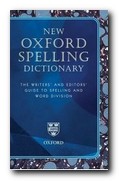
Unlike a conventional dictionary, the New Oxford Spelling Dictionary lists words without giving their definitions. So – you might well ask – if there are no explanations of meanings, what information does such a book contain? Quite a lot, as it turns out. For instance, it shows distinctions between words which might easily be confused – as in hare/hair – and it also indicates grammatical parts of speech – as in double fault used as a noun and double-fault used as a verb.

New Oxford Spelling Dictionary It also makes firm recommendations where there are variants in possible spellings (use judgement), shows where capitals are required in names, gives American spellings, and shows where logical word breaks occur for hyphenation and compounds. Entries run from aa (lava) and Aachen (which used to be Aix-la-Chapelle) to zymotic and zymurgy. This particular guidance makes it an ideal reference tool for those working with printed or word-processed text.

The reference data is based on the reputable scholarship of the Oxford Dictionary of English. It contains over 110,000 words and names, and in the latest edition includes a large number of compound words as well as very basic information about people and places. So, for instance, Enver Hoxha is the Albanian prime minister, and Santa Catarina is a Brazilian state.

A typical entry on proper nouns shows the variants on a personal name, with the pipe (these things – || -) showing the word breaks.

Kath|er|ine also
Cath|ar|ine,
Cath|er|ine,
Cath|ryn,
Kath|ar|ine,
Kath|ryn

And the same presentation of typical word is rendered thus:

tar|tar + s
(deposit on teeth etc.;
violent-tempered person;
in ‘cream of tartar’.
‡ tartare, ta-ta)

This last detail is an injunction that the term should not be confused with tartare or goodbye.

Of course you still need some idea of how a word is spelled (or spelt) in order to look it up. But this dictionary makes the job less distracting than using a normal dictionary, because it eliminates all that interesting stuff. Less may not be more, but it’s certainly faster.

This will be of most interest to authors, editors, proofreaders or typesetters, for whom it provides an ideal way to ensure the best spelling practice working on any sort of text – newspapers, magazines, reports, theses, or even websites. It has also been produced to team up neatly with the New Oxford Dictionary for Writers and Editors and New Hart’s Rules to form an ideal reference set.

© Roy Johnson 2005

New Oxford Spelling Dictionary   Buy the book at Amazon UK

New Oxford Spelling Dictionary   Buy the book at Amazon US


New Oxford Spelling Dictionary, Oxford: Oxford University Press, 2005, pp.596, ISBN: 0198608810


More on dictionaries
More on language
More on journalism
More on creative writing
More on writing skills
More on publishing


Filed Under: Dictionaries, Journalism, Writing Skills Tagged With: Dictionaries, New Oxford Spelling Dictionary, Reference, Spelling, Spelling Dictionary, Writing skills

New Oxford Style Manual

August 4, 2009 by Roy Johnson

compendium of writing skills PLUS  specialist dictionary

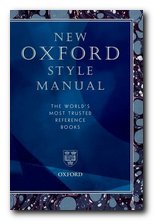
This New Oxford Style Manual is the result of putting together in one volume the Oxford Guide to Style [formerly Hart’s Rules] and the Oxford Dictionary for Writers and Editors. It starts from ‘parts of the book’ then moves on to punctuation, names, capitals, and numbers. The editor covers all other aspects of text presentation – such as how you should deal with music, mathematics, quotations, lists, tables, and even illustrations. There is even a special section on foreign languages which begins with the thorny issue of UK and American English – but it also covers Latin, European, Asiatic, Classical, and even Sanskrit.

New Oxford Style Manual Works such as this reveal the small but important conventions which academics, journalists, and professional writers need to know – but which are hard to remember. How do you punctuate a reference given in a footnote for instance? How are abbreviations shown in foreign languages? Where do spaces go when showing degrees of temperature? It deals with special subjects, plus linguistics and phonetics, translations, audio and visual broadcasts, and electronic data. In addition, it also incorporates the most recent changes in citing digital media, and details on the submission of materials for publication.

The second part of the book is a specialist dictionary for writers, journalists, and text-editors. It offers rulings on words and spellings which are commonly problematic. For instance, do we write Muslim or Moslem, customise or customize? It covers the names of well-known people and places, foreign words and commonly-used phrases such as petit-bourgeois and persona non grata.

The editor Robert Ritter also covers abbreviations, capitalization and punctuation. Only today, I’ve looked up amendment [one ‘m’] superseded [yes – it is spelt with an ‘s’] and manageable [it keeps the ‘e’]. It can also be used as a quick guide to many niceties of writing (the difference between hyphens and dashes) and as a potted encyclopedia for historical names (and their dates).

It should certainly be amongst the reference tools of anybody who takes a serious interest in writing. The single volume is even 25% cheaper than buying the two books separately. Fantastic value. Make sure you get the new revised edition which has materials gleaned from OUP’s latest researches into the Oxford English Corpus – a gigantic database containing hundreds of millions of words in current and historic use.

© Roy Johnson 2012

New Oxford Style Manual   Buy the book at Amazon UK

New Oxford Style Manual   Buy the book at Amazon US


Robert M. Ritter (ed), The Oxford Style Manual, Oxford: Oxford University Press, new second edition 2012, pp.861, ISBN: 0198605641


More on journalism
More on creative writing
More on writing skills
More on publishing


Filed Under: Journalism, Language use, Publishing, Writing Skills Tagged With: Editing, Oxford Style Manual, Publishing, Reference, Style guides, Writing skills

New Shorter Oxford English Dictionary

August 4, 2009 by Roy Johnson

two-volume reference dictionary with etymologies

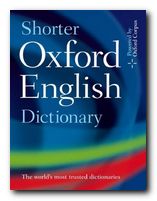
When checking a word, I usually reach first for the Concise Oxford – because it’s right in front of me on the desk. You can pick it up in one hand. If that doesn’t give the answer, I go to the New Shorter Oxford English Dictionary. This involves a trip to the bookcase, because it’s in two volumes – and they’re heavy. The term ‘Shorter’ for this publication is almost misleading, because it’s a big, serious, scholarly work of reference. It’s only shorter in being an abridged version of the monumental Oxford English Dictionary.

New Shorter Oxford Dictionary In recent editions however, the material draws on the OED’s ongoing revision, as well as its own independent research program. The entries are slightly abbreviated, but still rich in historical etymology. This is a dictionary for those concerned with lexicological scholarship – people who need to know both the origin of a term, and how it has been used in printed history since the Renaissance. The headword is recorded in all its possible forms, and the linguistic, grammatical, and bibliographical apparatus surrounding it is rendered via a code of abbreviations. A typical entry might run as follows:

Endeavour (ende’vðr) sb. ME. [app. f. next vb.] 1. The action of endeavouring; action directed to obtain an object; a strenuous attempt. †2. Philos. Used by Hobbs: =L. conatus [see quote.] -1667.
1. On this high e. The light of praise shall shine WORDSW. Phr. To do one’s endeavour(s): to do all one can; My best endeauours shall be done herein Merch. V. II.ii.182. 2. These small beginnings of Motion, within the Body of Man…are commonly called E.  HOBBES
Endeavour (ende’vðr) v. ME.[f. EN–1+DEVOIR sb. ; cf. F. se mettre en devoir de faire quelque chose to make it one’s duty to do something; hence, to endeavour.] †1. refl. To exert onself -1655; †trans. to exert (one’s power, etc.) -1642. †intr. for refl. To exert oneself; to direct one’s efforts -1624. 3. intr. To try, strive, make an effort for a specified object; to attempt strenuously.   The only mod. sense.) 1594.   4. trans. To use effort for; to attempt (now arch.) 1581; †to try to fulfil (a Law) MILT.
3. To e. to compromise matters FROUDE.   To e. at eminence JOHNSON, after more riches MILL.   4. To e. the extirpation of Popery CLARENDON.   Hence Endea’vourer one who endeavours; an aspirant; also spec., a member of the Christian Endeavour Society founded in U.S. in 1881.   †Endea’vourment, endeavour.

You can see from this that it illustrates definitions with quotations which show precisely how the meanings of words have changed over the centuries. Each entry provides a wealth of information, including history and meaning, pronunciation, etymology, definitions, variant spellings, irregular inflections, quotations, idiomatic phrases and a record of the word’s use. Some entries run to almost two columns on the page.

Thousands upon thousands of changing meanings are followed through history, illustrated by more than 83,000 quotations, from Benjamin Franklin to Lord Byron, and Jane Austen to Ricky Gervais.

The new edition has 600,000 definitions, 2,500 new words since the last edition in 2003, and 83,000 illustrative quotations. There’s a full index of the authors cited, a guide to pronunciation, and it comes in either the two-volume printed edition, or on a CD-ROM.

The obvious advantage of the CD version is that you can use the SEARCH feature – and the program also searches by anagram and by rhyme, by quotation and by etymology. Perusing the headword group is like flipping the pages of the book version. You can also copy the CD sub-directories onto your hard disk, which means you can access the material without loading the compact disk. This improves performance, and leaves your CD drive free for other tasks.

If you don’t want the complete Oxford English Dictionary this is the next best thing. It will last you a lifetime. In fact you’ll be able to pass it on to your children and grandchildren.

© Roy Johnson 2007

New Shorter Oxford English Dictionary   Buy the book at Amazon UK

New Shorter Oxford English Dictionary   Buy the book at Amazon US


The Shorter Oxford English Dictionary (in 2 volumes) Oxford: Oxford University Press, 2007, pp.3800, ISBN: 0199206872


More on language
More on literary studies
More on writing skills
More on creative writing
More on grammar


Filed Under: Dictionaries Tagged With: Dictionaries, English language, Language, New Shorter Oxford English Dictionary, Reference

New Systems in Design

July 2, 2009 by Roy Johnson

contemporary international web design

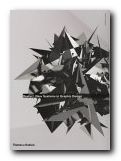
This portfolio presents a body of new systems in design work for the Web that is seeking to redefine the nature and scope of design practice. It is based on the productions of more than thirty-five international studios, and is presented in three categories.

New systems in DesignThe first – Code – shows how designers are using the computer as a tool to become creative programmers. The second – Generic – shows designers manipulating objects from the ordinary and everyday world to produce projects that are off-beat and refreshing. The third part – Disjunction – features work that aims to provoke, to question, and to advance a designer’s particular agenda, whether political, social, or even personal.

It is mainly composed of screenshots from avant guard web sites, samples of distressed modern typography, and reproductions from the pages of contemporary graphics display books. You may not be surprised to hear that this often means banal subjects, retro styling, and unreadable text.

There are also examples of architectural plans and sketches, maps, street signs, posters, fashion photography, book design and public signage, commercial advertising, and photography.

It represents what seems to me like a masochistic school of graphic design. In most cases, every effort seems to be made to alienate rather than to charm or please the viewer.

And yet just occasionally a gem shines through – such as the pictures of beautiful pleated garments created by the Japanese designer Issey Miyake, and the examples of public signage in Rotterdam.

It will probably appeal to young designers and those people who want something provocative for the coffee table.

© Roy Johnson 2001

New Systems in Design   Buy the book at Amazon UK

New Systems in Design   Buy the book at Amazon US


Christian Kusters and Emily King, Restart: New systems in graphic design, London: Thames & Hudson, 2001, pp. 176, ISBN: 0500282978


More on design
More on media
More on web design


Filed Under: Graphic design Tagged With: Graphic design, New Systems in Design, Web design

Nineteenth Century – literary timeline – part 1

September 29, 2009 by Roy Johnson

a chronicle of events, literature, and politics

1789. French Revolution

1790. Edmund Burke, Reflections on the Revolution in France

1791. Thomas Paine, The Rights of Man

1792. Denmark is first country to abolish slavery. September
massacres in France; royal family imprisoned. Coal gas used for lighting. Mary Wollstencraft, A Vindication of the Rights of Woman.

1793. Louis XVI beheaded. France becomes a republic and the National
Anthem La Marseillaise is composed. The Napoleonic Wars begin. Godwin, Political Justice.

1794. First slave revolution led by Toussaint L’Ouverture in Haiti. Ann Radcliffe, The Mysteries of Udolpho; William Godwin, Caleb Williams; Robert Burns writes Auld Lang Syne; Blake, Songs of Experience.

1795. First horse-drawn railroad appeared in England. Revolt in Ireland.

1796. British doctor Edmund Jenner performs the first vaccination against smallpox. Fanny Burney, Camilla, Mathew Lewis, The Monk.

1798. Wordsworth and Coleridge, Lyrical Ballads. First draft of Northanger Abbey written. T.R. Malthus, Essay on Population

1800. Parliamentary union of Great Britain and Ireland.

1801. Walter Scott, Ballads.

1802. Formation of the Society for the Suppression of Vice in response to concern over obscene literature and pictures – it conducts several prosecutions under the Obscene Libel Law. Wordsworth, Preface to Lyrical Ballads.

1803. Insurrection in Ireland. Britain at war with France. General Enclosures Act permits enclosure of common land. Thomas Chatterton, Works (posthumous).

1804. Napoleon declares himself Emperor. Spain declares war against Great Britain. Blake, Milton and Jerusalem.

1805. Battle of Trafalgar – Nelson’s victory and death. Walter Scott, Lay of the Last Minstrel.

1807. Slave trade abolished in British Empire. Occupation of Portugal by the French.

1808. Occupation of Spain by the French. Goethe, Faust – Part I.

1809. London exhibition of paintings by William Blake.

1810. Scott, The Lady of the Lake.

1811. George III is declared insane and The Prince of Wales becomes regent. ‘Luddite’ disturbances in Nottinghamshire and Yorkshire. Jane Austen publishes first novel, Sense and Sensibility.

1812. Napoleon’s retreat from Moscow.

1813. Austen, Pride and Prejudice. Shelly, Queen Mab.

1814. Stephenson’s steam locomotive. Copyright Act extended the period of copyright to 28 years from date of first publication or the length of the author’s life. Scott’s Waverley begins his career as Europe’s most celebrated novelist [largely unread today]. Jane Austen, Mansfield Park

1815. Battle of Waterloo. Napoleon is defeated. Corn Law passed setting price of corn at 80s per quarter.

1816. Jane Austen, Emma; Coleridge, Kubla Khan; Scott, The Antiquary.

1817. Blackwood’s Edinburgh Magazine founded; Coleridge, Biographia Literaria. Keats, Poems.

1818. Jane Austen, Northanger Abbey; Persuasion (published posthumously); Mary Shelly, Frankenstein; Scott, Rob Roy. Keats, Endymion.

1819. Peterloo massacre. Seditious Publications Act (copy tax on periodicals containing news). Savannah is the first steamship to cross the Atlantic. Sir Walter Scott, Ivanhoe; Byron, Don Juan.

1820. George IV becomes king. Shelley, Prometheus Unbound.

1821. Mechanics Institutes formed in Glasgow and London. Death of John Keats. Shelley, Defence of Poetry, Thomas DeQuincey, Confessions of an Opium Eater.

1822. Famine in Ireland. Shelly drowns in Italy. Charles Lamb, Essays of Elia.

1823. Charles Macintosh develops a new fabric for making raincoats. William Webb Ellis, a boy at Rugby school, unwittingly starts the development of the game that was to become known as ‘rugby’.

1824. The National Gallery is opened; G. Combe, Elements of Frenology. Death of Byron.

1825. Stockton-Darlington railway opened; Trade Unions are legalized.

1827. University College London founded. Constable paints The Cornfield.

1828. The Duke of Wellington becomes Prime Minister.

1829. The Governesses’ Mutual Society is founded in response to public concern over the situation of unemployed governesses. Catholic Emancipation Bill sponsored by Sir Robert Peel is passed – Roman Catholics in the UK are relieved of the oppressive regulations, some of which had been in force since the time of Henry VIII. Catholics now able to sit as Members of Parliament. Invention of the first steam locomotive. Founding of the Metropolitan Police Force. Thomas Carlyle, Signs of the Times.

next

© Roy Johnson 2009


More on How-To
More on literary studies
More on writing skills


Filed Under: 19C Literature, Literary studies Tagged With: Cultural history, History, Literary studies, nineteenth century, Reference

Nineteenth Century – literary timeline – part 2

September 29, 2009 by Roy Johnson

a chronicle of events, literature, and politics

1830. Death of George IV; William IV becomes King. Petitions to both Houses of Parliament on the abolition of slavery. William Huskisson, a former cabinet minister, is killed at the opening of the Liverpool – Manchester railway. Tennyson, Poems Chiefly Lyrical.

1831. Unsuccessful introduction of the Reform Bills. Darwin’s voyage on The Beagle.

1832. The First Reform Act extends the franchise to those owning property rated at 10 a year or more.

1833. Shaftesbury’s Factory Act limits hours of children’s employment. Slavery abolished in the British Empire. Thomas Carlyle, Sartor Resartus.

1834. First colony established in South Australia. Tolpuddle martyrs exiled there. Emancipation of British West Indian slaves declared – though it takes four years for this declaration to be fulfilled. New Poor Law Commission establishes workhouses. Fire breaks out in the Palace of Westminster – much of the Houses of Parliament destroyed.

1835. Municipal Corporation Act gives votes for local government to men only.

1836. Balzac begins La Comedie Humaine novel cycle. Pickwick Papers launches Dickens’s career. London University is formed. Newspaper tax reduced.

1837. Fox Talbot experiments with photographic prints. Queen Victoria ascends the throne. Dickens, Oliver Twist. Thomas Carlyle, The French Revolution.

1838. Chartist petitions published. Full emancipation of British West Indian slaves. The London to Birmingham railway is opened.

1839. Custody of Infants Act. (For the first time a woman living apart from her husband was able to apply for custody of children under seven.) Chartist riots. Daguerre patents photographic technique. Shelley, Poetical Works (posthumous)

1840. Beginning of a decade of considerable social and economic turbulence in England. Marriage of Victoria and Albert. Penny post established in UK. Start of a decade which saw a rise in so-called ‘condition of England novels’. Opium War – Chinese ports are besieged to force free passage of English narcotics. Dickens, Nicholas Nickleby.

1841. Governesses’ Benevolent Institute founded (see also 1829). Dickens, The Old Curiosity Shop. Thomas Carlyle, On Heroes and Hero-Worship.

1842. Mines Act forbids use of children and women in mines. New Chartist riots. Copyright Act extends the life of copyright to 42 years from publication or 7 years after the author’s death. Mudie establishes the circulating library. Browning, Dramatic Lyrics; Tennyson, Poems.

1843. Colonization of Africa includes Gambia, Natal, Basutoland. Dickens, Martin Chuzzlewit. Sara Ellis, The Wives of England: Their relative duties, domestic influence and social obligations. Ruskin, Modern Painters; Dickens, A Christmas Carol. Wordsworth appointed Poet
Laureate.

1844. Factory Act restricts working hours for women and children. First telegraph line, between Paddington and Slough. Engels, Condition of the Working Class in England. Royal Commission of Health in Towns. Co-Operative movement begun in Rochdale.

1845. Potato famine in Ireland. Boom in railway building speculation. Bronte sisters invest. Disraeli, Sybil, E.A. Poe, Tales of Mystery and Imagination. Franklin’s expedition to the Arctic to find ‘north west passage’.

1846. Repeal of the Corn Laws (legislation designed to protect the price of domestic grain from foreign imports). Famine in Ireland. Introduction of the ‘Marriage with a Deceased Wife’s Sister Bill’ (this is finally passed in 1907). C. Bronte, The Professor; George Eliot translates Strauss’s Life of Jesus; Ruskin, Modern Painters II.

1847. The first use of chloroform as an anaesthetic. Ten Hours Factory Act. Bronte sisters publish Jane Eyre, Wuthering Heights, and Agnes Grey in same year. Tennyson, The Princess. Thackery, Vanity Fair.

1848. Revolutions throughout Europe. Queen’s College for Women founded in London. Discovery of nuggets in California starts ‘The Gold Rush’. Introduction of a Public Health Act to try to tackle cholera. A. Bronte, The Tenant of Wildfell Hall; Elizabeth Gaskell, Mary Barton; Dickens, Dombey and Son; Marx and Engels, Communist Manifesto; Kingsley, Yeast. Dante Gabrielle Rosetti, William Holman Hunt and John Everett Millais form the Pre-Raphaelite Brotherhood.

1849. Bedford College for Women founded. Dickens, David Copperfield; C. Bronte, Shirley

1850. Pope Pius IX restores the Roman Catholic hierarchy in the UK – for the first time since the 16th century Catholics have a full hierarchy consistent with Catholic countries. The Public Libraries Act – first of a series of acts enabling local councils to provide free public libraries. Parliament imposes a sixty hour week. Death of Wordsworth. Tennyson becomes Poet Laureate; In Memoriam. Elizabeth Barrett Browning, Sonnets from the Portuguese, Wordsworth, The Prelude, Dickens begins publishing Household Words. Thackeray, Pendennis.

1851. Great Exhibition in Hyde Park. Religious Census. Mrs Gaskell, Cranford, Harriet Taylor Mill, The Enfranchisement of Women. Matthew Arnold, Dover Beach. Ruskin, The Stones of Venice. Mayhew London Labour and the London Poor

1852. Dickens, Bleak House. Harriet Beecher Stowe, Uncle Tom’s Cabin, Florence Nightingale, Cassandra. New Houses of Parliament open. First free public library opens in Manchester.

1853. Trollope, The Warden. C. Bronte, Villette

1854. Britain and France declare war against Russia to begin Crimean war. Charge of the Light Brigade at Balaclava. The British Medical Association is founded. Doctrine of the Immaculate Conception promulgated. Dickens, Hard Times, Gaskell, North and South. Coventry Patmore begins The Angel in the House (sequence of poems about female domestic responsibility).

1855. Charles Dickens, Little Dorrit. Repeal of stamp duty on newspapers; death of Charlotte Bronte. Elizabeth Gaskell, North and South; Robert Browning, Men and Women; Tennyson, Maud and Other Poems. Livingstone ‘discovers’ the Victoria Falls.

1856. Ruskin, On the Pathetic Fallacy; William Morris and Edward Burne-Jones, The Oxford and Cambridge Magazine.

1857. Indian ‘Mutiny’. Matrimonial Causes Act facilitates divorce for those who can afford it. The Obscene Publications Act is passed. Elizabeth Barrett Browning, Aurora Leigh. Gaskell, The Life of Charlotte Bronte; Thomas Hughes, Tom Brown’s Schooldays; Anthony Trollope, Barchester Towers; Gustave Flaubert, Madame Bovary.

1858. ‘Big Ben’ is installed in the Houses of Parliament clock tower. India ‘transferred’ to the British Crown. Abolition of property qualification for MPs, enabling working-class men to stand.

1859. Charles Darwin, The Origin of Species; Eliot, Adam Bede; Samuel Smiles, Self-Help; J. S. Mill, On Liberty; George Meredith, The Ordeal of Richard Feverel; Tennyson, Idylls of the King. Samuel Smiles Self-Help. Mrs Beeton Book of Household Management

1860. Lenoir invents the first practical internal combustion engine.
Charles Dickens, Great Expectations; George Eliot, The Mill on the Floss; Wilkie Collins, The Woman In White; Ruskin, Unto this Last

1861. American civil war begins with eleven states breaking away to form southern confederacy. Emancipation of serfs in Russia. Italy united under King Victor Emmanuel. In England, daily weather forecasts begin. First horse-drawn trams are used in London. George Eliot, Silas Marner; Mrs Beeton, The Book of Household Management; Hans Christian Andersen, Fairytales

1862. George Eliot, Romola; George Meredith, Modern Love; Victor Hugo, Les Miserables

1863. Polish rising against Russian occupation. American Civil War – to 1865. Opening of the first underground railway in London. George Elder Hicks’ triptych of paintings entitled Women’s Mission are exhibited at the Royal Academy. Charles Kingsley The Water Babies

1864. Contagious Diseases Act. Formation in London of the International Working Men’s Movement (influenced by Marx); Matthew Arnold, ‘The Function of Criticism at the Present Time’

1865. Slavery abolished in United States. Assassination of Abraham Lincoln. Lister develops antiseptic surgery. Cholera epidemic kills over 14,000. Leo Tolstoy, War and Peace; Ruskin, Sesame and Lilies. Lewis Carrol Alice’s Adventures in Wonderland.

previousnext

© Roy Johnson 2009


More on How-To
More on literary studies
More on writing skills


Filed Under: 19C Literature, Literary studies Tagged With: Cultural history, History, Literary studies, nineteenth century, Reference

Nineteenth Century – literary timeline – part 3

September 29, 2009 by Roy Johnson

a chronicle of events, literature, and politics

1866. George Eliot, Felix Holt the Radical; Elizabeth Gaskell, Wives and Daughters; Lewis Carroll, Alice’s Adventures in Wonderland; Fyodor Dostoyeski, Crime and Punishment; A.C. Swinburne, Poems and Ballads

1867. Russia sells Alaska to America for $7 million. The Second Reform Bill – votes extended to most middle-class men. Matthew Arnold, Dover Beach.

1868. Benjamin Disraeli becomes Prime Minister. Trades Union Congress formed. Robert Browning, The Ring and the Book. Wilkie Collins The Moonstone.

1869. Suez canal opened. J.S. Mill, The Subjection of Women (written in 1860). Matthew Arnold, Culture and Anarchy. Margarine is developed. Hungarian Emanuel Herman invents the picture postcard. Anthony Trollope, Phineas Finn. Girton College (for women) opened in Cambridge

1870. Papal infallibility announced. French declare war against Prussia – and are heavily defeated. Paris occupied. Married Women’s Property Act. Forster’s Education Act (compulsory full-time schooling for under tens).

1871. Paris commune declared – then crushed (by the French). Limited voting introduced in Britain. Emile Zola begins Le Rougon Maquart cycle of novels. George Eliot Middlemarch. Religious entry tests abolished at Oxford and Cambridge.

1872. Thomas Hardy, Under the Greenwood Tree. Christina Rossetti, Goblin Market.

1873. Walter Pater, The Renaissance, John Stuart Mill, Autobiography (posthumous)

1874. Thomas Hardy, Far from the Madding Crowd ; Parliament reduces the working week to 56.5 hours. Tolstoy, Anna Karenina. First Impressionist exhibition in Paris.

1875. Disraeli buys Suez Canal shares, gaining a controlling interest for Britain. Anthony Trollope, The Way We Live Now

1876. Queen Victoria declared Empress of India. Bell invents the telephone. George Eliot, Daniel Deronda ; Thomas Hardy, The Hand of Ethelberta; Henry James, Roderick Hudson.

1877. Henry James, The American; Zola, L’Assommoir. Phonograph invented by Edison.

1878. Thomas Hardy, The Return of the Native, Henry James, The Europeans. University of London admits women to degrees. Electric street lighting in London.

1879. Henrik Ibsen, A Doll’s House, George Meredith, The Egoist; Henry James, Daisy Miller.

1880. First Anglo-Boer war in South Africa. Education Act makes schooling compulsory up to the age of ten.

1881. The Natural History Museum is opened. President Garfield of the USA and Tsar Alexander II of Russia are assassinated. Henry James, Washington Square, The Portrait of a Lady. D.G. Rossetti, Ballads and Sonnets; Henrik Ibsen, Ghosts. Gilbert and Sullivan write Patience, a comic opera that pokes fun at the aesthetic movement.

1883. Robert Louis Stephenson, Treasure Island. Olive Schreiner The Story of an African Farm

1884. The franchise is extended by the Third Reform Bill. Mark Twain, Huckleberry Finn; F. Engels, The Origins of the Family, Private Property, and the State; Walter Besant gives a lecture entitled ‘The Art of Fiction’ and Henry James responds with an essay of the same title. First Oxford English Dictionary

1885. Radio waves discovered. Internal combustion engine invented. Death of General Gordon at Khartoum. Zola, Germinal. Rider Haggard King Solomon’s Mines

1886. Daimler produces first motor car. Thomas Hardy, The Mayor of Casterbridge, Henry James, The Bostonians.

1887. Thomas Hardy, The Woodlanders. Conan Doyle A Study in Scarlet (first Sherlock Holmes story)

1888. English Football League founded. George Eastman develops the Kodak camera. English vet John Dunlop patents the pneumatic tyre. Rudyard Kipling, Plain Tales from the Hills; Henry James, The Aspern Papers. Jack the Ripper murders in Whitechapel, London

1889. Eiffel Tower built for the Paris Centennial Exposition. Coca-Cola developed in Atlanta. 10,000 dockers strike in London. Rudyard Kipling, Barrack-Room Ballads; Henrik Ibsen, Hedda Gabler

1891. Work starts on the Trans-Siberian railway. The Prince of Wales appears in a libel case about cheating at cards. Anglo-American copyright agreement. Thomas Hardy, Tess of the d’Urbervilles, Gissing, New Grub Street, Wilde, The Picture of Dorian Gray ; Arthur Conan Doyle, The Adventures of Sherlock Holmes

1892. James Dewar invents the vacuum flask. First edition of Vogue appears in New York. Tchaikovsky, The Nutcracker. Thomas Hardy, The Well Beloved. Keir Hardy first Labour MP.

1893. First motor cars built by Karl Benz in Germany and Henry Ford in the USA. Alexander Graham Bell makes the first long-distance telephone call. Whitcome Judson patents the zip fastener. Independent Labour Party founded.

1894. Manchester ship canal opens. Dreyfus affair fanned by anti-Semitism in France. Rudyard Kipling, Jungle Books.

1895. X-rays discovered. Oscar Wilde, The Importance of Being Earnest. First radio broadcast by Marconi. First moving images displayed by French cinematographer.

1896. Wireless telegraphy invented. Abyssinians defeat occupying Italian forces – first defeat of colonising power by natives. Thomas Hardy, Jude the Obscure; Anton Chekhov, The Seagull. Daily Mail founded.

1897. Queen Victoria’s Diamond Jubilee. Henry James, The Spoils of Poynton, What Masie Knew; Bram Stoker, Dracula.

1898. Second Anglo-Boer War begins. Henry James, The Turn of the Screw ; Thomas Hardy, Wessex Poems; George Bernard Shaw, Plays Pleasant and Unpleasant

1899. British military disasters in South-Africa. Henry James, The Awkward Age; Kate Chopin, The Awakening; Anton Chekhov, Uncle Vanya

1900. Freud’s Interpretation of Dreams, Einstein’s General Theory of Relativity, Joseph Conrad, Lord Jim

1901. Queen Victoria dies — Edwardian period begins. Rudyard Kipling, Kim

1902. Henry James, The Wings of the Dove; Joseph Conrad, Heart of Darkness

1903. First flight in heavier-than-air machine by Wright brothers in USA. James, The Ambassadors

1904. Henry James, The Golden Bowl; Anton Chekhov, The Cherry Orchard

previous

© Roy Johnson 2009


More on How-To
More on literary studies
More on writing skills


Filed Under: 19C Literature, Literary studies Tagged With: Cultural history, History, Literary studies, nineteenth century, Reference

Nineteenth Century Russian Novels

October 2, 2009 by Roy Johnson

recommended reading from the classics

Russia has a rich literary tradition which stretches from the early nineteenth century to the present day. Its great writers have done particularly well with the novel, allowing themselves to be influenced by other strong traditions, such as the British and French.

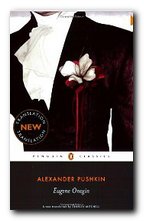
Russian novels - Eugene OneginEugene Onegin (1831) Alexander Pushkin is generally considered to be the father of modern Russian literature – a witty, sophisticated writer. He was principally a poet, but his masterwork is in fact a novel – which is written in verse. It’s the story of a clever but bored aristocrat who charms a young woman Tatiana so much that she writes a letter declaring her love to him. He rejects her and continues with his bachelor existence. But years later, on meeting her again, he realises what he has missed. He asks for a second chance, but his time, despite the fact that she still loves him, it is she who rejects him. The novel exists in many translations, including the monumentally scholarly production by Vladimir Nabokov. It’s a wonderfully light and entertaining story, but with lots of hidden depths. Many critics argue that Tatiana represents the soul of Russia, simple and truthful, and Onegin the more sophisticated but ultimately inappropriate spirit of Europe.
Russian novels - 19th Century Buy the book from Amazon UK
Russian Novels - 19th Century Buy the book from Amazon US


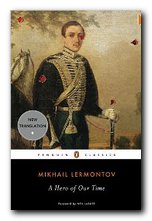
Russian novels - A Hero of Our TimeA Hero of Our Time (1839) Mikhail Lermontov is another one-novel writer who concentrated his attention, like Pushkin, on the theme of the ‘Superfluous Man’. This is the talented and educated young Russian who has no outlets for his skills and no place to employ his intelligence, because of the closed, feudal, and autocratic nature of Russian society. Lermontov was a contemporary of Pushkin’s, and like him he produced just this one substantial piece of fiction which seemed to sum up the epoch in which they lived. A Hero of Our Time turns on the events of a duel (which had killed Pushkin only ten years earlier). A young and disaffected soldier contemplates existential questions of will and identity, plus the perennial question of ‘how to live’. In the end he kidnaps a woman and shoots a man in a duel to test out the limits of his freedom.
Russian novels - 19th Century Buy the book from Amazon UK
Russian Novels - 19th Century Buy the book from Amazon US


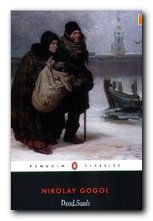
Russian novels - Dead SoulsDead Souls (1842) Nikolai Gogol is probably at his best in shorter fictions such as The Nose and The Overcoat. These are both seminal works in the history of Russian literature. He writes in an inventive and peculiar style, rich in playful and sometimes absurd imagery. He also has a habit of butting in to his own narratives to pass comments which sometimes have nothing to do with the story. Dead Souls is his one big novel. It’s a crazy satire on the corruption and inertia of nineteenth century provincial Russian life. The plot centres on someone who trades in the identities of peasants who have died but remain on the census records. Comic, absurd, and bitingly satirical, Gogol completed a sequel, but destroyed it in a fit of religious fanaticism whilst he was starving himself to death. This particular translation comes highly recommended. Vladimir Nabokov consigned all others to the rubbish bin.
Russian novels - 19th Century Buy the book from Amazon UK
Russian Novels - 19th Century Buy the book from Amazon US


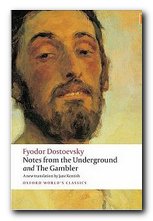
Russian novels - Notes from UndergroundNotes from Underground (1864) Fyodor Dostoyevski represents the dark, tortured, and often violent side of Russian life. In his novels he explores all sorts of existential issues such as reason and free will, personal identity, guilt, religious belief, and the power of unconscious motivation. His treatment of these issues, the suspense in his plots, and his studies of tortured neurotic behaviour make him seem quite modern, and he is often included in studies of twentieth-century existentialism. Be prepared for complex plots, long meditations on philosophic issues, melodrama, and contradictions. The rewards are thrilling suspense and deep psychological studies of characters struggling with personal demons at the end of their behavioural tether. Notes from Underground is one of Dostoyevski’s classic existential meditations. A first person narrator informs us “I am a sick man…I am an angry man. I am an unattractive man. I think there is something wrong with my liver” There is no plot: the character simply wrestles with his existence and debates whether to live according to reason or irrationality. You have the sense of something written in the middle of the twentieth century, not the nineteenth – and many modern writers make reference to this as a seminal work.
Russian novels - 19th Century Buy the book from Amazon UK
Russian Novels - 19th Century Buy the book from Amazon US


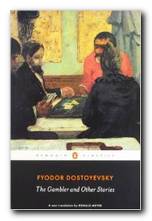
The GamblerThe Gambler (1867) This famous novel was written under extreme pressure. Unless Dostoyevski delivered the manuscript within six weeks, all future royalties on anything he wrote would go to his unscrupulous publisher. So Dostoyevski hired a stenographer – the star pupil from Russia’s first school of shorthand dictation. He dictated the novel in four weeks – then married her. It’s a tight-knit, complex tale of compulsive gambling set in a German spa town. A young man Alexei vows that he will quit gambling as soon as he breaks even at the roulette wheel. He has also fallen in love with a beautiful young woman who does nothing but humiliate him. The novel sees the disintegration and paradoxically increased euphoria of Alexei’s character, until he is at the end so depraved that one wonders what keeps him from going mad.
Russian novels - 19th Century Buy the book from Amazon UK
Russian Novels - 19th Century Buy the book from Amazon US


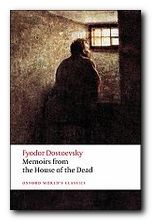
Russian novels - From the House of the DeadFrom the House of the Dead (1862) This isn’t a novel, but a documentary reportage. It gives an account of the ten years Dostoyevski spent in Siberian labour camps – as punishment for having planned to publish revolutionary pamphlets. The horrors of internment – including prisoners being flogged to death – are recounted in stomach-churning detail. But what emerges from the book as a whole is the amazing endurance of the human will and its desire to survive no matter how merciless the circumstances. If you have a taste for this topic, the book can profitably be read alongside similar classics such as Alexander Solzhenitsyn’s The Gulag Archipelago.
Russian novels - 19th Century Buy the book from Amazon UK
Russian Novels - 19th Century Buy the book from Amazon US


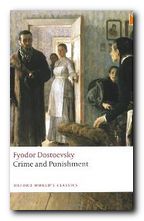
Russian novels - Crime and PunishmentCrime and Punishment (1866) This is one of Dostoyevski’s great masterpieces. Raskolnikov, a penniless student, decides to murder a greedy moneylender on principle in order to set himself outside and (as he sees it) above society. After he has done so, he is tormented by guilt and remorse. He is also pursued by a detective who seems to be able to read his mind, and to whom Raskolnikov repeatedly comes very close to confessing. In order to resolve his doubts about his own motivation and rationality, Raskolnikov in typical Dostoyevskian fashion decides to commit a second murder. This understandably makes matters worse. There is a great deal of conventional suspense – will he be found out, or not? – the outcome of which it would be unfair to reveal, but which is surprising nevertheless.
Russian novels - 19th Century Buy the book from Amazon UK
Russian Novels - 19th Century Buy the book from Amazon US


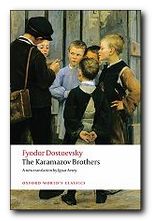
Russian novels - The Brothers KaramazovThe Brothers Karamazov (1880) This is another existential study which turns on the issue of a brutal murder. Old father Karamazov is killed by one of his three sons – but we don’t know which one. The eldest, Dmitri, is passionate, violent, and desperate for money; Ivan is an intellectual and an atheist; and Alyosha, the youngest, has love, faith, and compassion for everyone. (You don’t need a brass plaque on your door to see that these are aspects of Dostoyevski’s own personality.) Pay attention to the smallest details right from page one. This is a combination of a murder mystery, an exploration of the mind under extreme pressure, a study of the destructive nature of romantic love, and an argument for and against the existence of God. Many people regard this as Dostoyevski’s masterpiece.
Russian novels - 19th Century Buy the book from Amazon UK
Russian Novels - 19th Century Buy the book from Amazon US


Russian novels - Anna KareninaAnna Karennina (1875) Count Leo Tolstoy was a great novelist, but as a man he was full of contradictions. He was a pious Christian who did plenty of sinning; a rich land-owning aristocrat who was a passionate believer in the simple life; a compulsive gambler who believed in self-discipline; and an ascetic puritan who believed in sexual abstinence but who was a compulsive philanderer. As a social reformer, he might have been the man for whom the expression ‘Do as I say, not as I do’ was coined. Anna Karenina is the most approachable of his big novels. It’s the story of a beautiful woman torn between the man she loves and her duty to her husband and son. This story is counterpointed with that of Levin, a rich landowner who is seeking for the right way to live. He tries agriculture and politics, but ends up turning to God (not very convincingly). As the cultural philosopher Isaiah Berlin said of Tolstoy, his solutions are usually wrong; but what’s important is that he asks the right questions. However, it is the story of Anna’s love affair with Vronsky which dominates the novel and makes this an enduring masterpiece. This is the Russian equivalent of Flaubert’s Madame Bovary and a highlight of the nineteenth-century novel.
Russian novels - 19th Century Buy the book from Amazon UK
Russian Novels - 19th Century Buy the book from Amazon US


Russian novels - War and PeaceWar and Peace (1863-9) As everyone knows, this is the archetypal nineteenth-century blockbuster. It is an epic study of birth, marriage, life and death set against the background of Napoleon’s invasion of Russia, the sacking of Moscow, and his tragic retreat in 1812. Tolstoy does a very good job of depicting war as a shambolic mess, and he is successful in undermining the idea that historical events are shaped by Great Men. It is a long novel. Be prepared for extended episodes featuring lectures on the philosophy of history. But the writing is crystal clear and the characters unforgettable.
Russian novels - 19th Century Buy the book from Amazon UK
Russian Novels - 19th Century Buy the book from Amazon US


Russian novels - Fathers and SonsFathers and Sons (1862) Ivan Turgenev was the first Russian writer to find success in Europe, and he spent most of his adult life there. He was a supporter of the Western solution to Russia’s problems. His work might seem rather lightweight compared to Tolstoy and Dostoyevski, but he touches on important Russian themes, and his novels are well composed and easy to read. Fathers and Sons looks at the conflict between generations. The older landowners wish to preserve traditional systems, whilst the younger generation are yearning for some form of revolution to free them from the dead hand of conservatism. Neither party wins out in the end, but it is to Turgenev’s credit that the novel presciently flags up political issues which were to erupt forty years later in Russian history. This new translation, specially commissioned for the World’s Classics, is the first to draw on Turgenev’s working manuscript, which only came to light in 1988.
Russian novels - 19th Century Buy the book from Amazon UK
Russian Novels - 19th Century Buy the book from Amazon US

© Roy Johnson 2009

redbtn   Twentieth Century Russian Novels


More on literary studies
More on writing skills
More on creative writing
More on grammar


Filed Under: 19C Literature Tagged With: Literary studies, Russian literature, Russian novels, The novel

  • « Previous Page
  • 1
  • …
  • 56
  • 57
  • 58
  • 59
  • 60
  • …
  • 103
  • Next Page »

Get in touch

info@mantex.co.uk

Content © Mantex 2016
  • About Us
  • Advertising
  • Clients
  • Contact
  • FAQ
  • Links
  • Services
  • Reviews
  • Sitemap
  • T & C’s
  • Testimonials
  • Privacy

Copyright © 2026 · Mantex

Copyright © 2026 · News Pro Theme on Genesis Framework · WordPress · Log in