Mantex

Tutorials, Study Guides & More

  • HOME
  • REVIEWS
  • TUTORIALS
  • HOW-TO
  • CONTACT
>> Home / 2009 / Archives for October 2009

Archives for October 2009

L.B.Perkin – Darwin

October 5, 2009 by Roy Johnson

Hogarth Press first edition book jacket designs
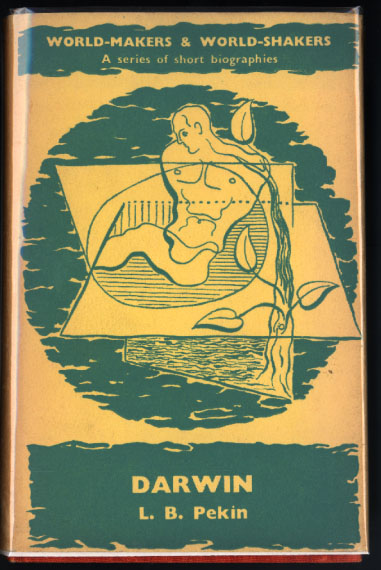
 

L.B.Perkin - Darwin - first edition

 
L.B. Pekin, Darwin (1934) World-Makers and World-Shakers: a series of short biographies.

“L.B. Pekin was the pseudonym of Reginald Snell, who wrote “two Hogarth pamphlets expanding on subjects he had introduced in [earlier] books: The Military Training of Youth: An Enquiry into the Aims and Effects of the O.T.C. (1937) and Co-education (1939). As the titles of his books and pamphlets suggest, Pekin was an innovative educator, highly critical of public schools (the British private boarding school) and in favour of progressive educational reform, including the efforts to broaden the curriculum with more science and mathematics and to introduce sex education and manual training. He strongly opposed the Officer Training Corps and supported coeducation enthusiastically.

The newly formed pacifist organization the Peace Pledge Union (with luminaries Canon Dick Sheppard, Julian Huxley, Rose Macaulay, Arthur Ponsonby, Bertrand Russell, and Vera Brittain among the early sponsors) was so impressed by Pekin’s OTC pamphlet that it ordered several hundred copies from Leonard Woolf for distribution to its members.”

J.H. Willis Jr, Leonard and Virginia Woolf as Publishers: The Hogarth Press 1917-1941

previousnext


Hogarth Press studies

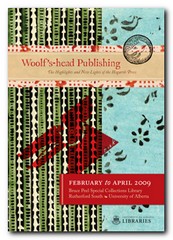
Woolf's-head Publishing Woolf’s-head Publishing is a wonderful collection of cover designs, book jackets, and illustrations – but also a beautiful example of book production in its own right. It was produced as an exhibition catalogue and has quite rightly gone on to enjoy an independent life of its own. This book is a genuine collector’s item, and only months after its first publication it started to win awards for its design and production values. Anyone with the slightest interest in book production, graphic design, typography, or Bloomsbury will want to own a copy the minute they clap eyes on it.

Woolf's-head Publishing Buy the book at Amazon UK
Woolf's-head Publishing Buy the book at Amazon US

The Hogarth Press Leonard and Virginia Woolf as Publishers: Hogarth Press, 1917-41 John Willis brings the remarkable story of Leonard and Virginia Woolf’s success as publishers to life. He generates interesting thumbnail sketches of all the Hogarth Press authors, which brings both them and the books they wrote into sharp focus. He also follows the development of many of its best-selling titles, and there’s a full account of the social and cultural development of the press. This is a scholarly work with extensive footnotes, bibliographies, and suggestions for further reading – but most of all it is a very readable study in cultural history.

The Hogarth Press Buy the book at Amazon UK
The Hogarth Press Buy the book at Amazon US

© Roy Johnson 2005


Filed Under: Hogarth Press Tagged With: Art, Bloomsbury, Darwin, Graphic design, Hogarth Press, L.B.Pekin, Literary studies

Leonard Woolf – Fear and Politics

October 4, 2009 by Roy Johnson

Hogarth Press first edition book jacket designs


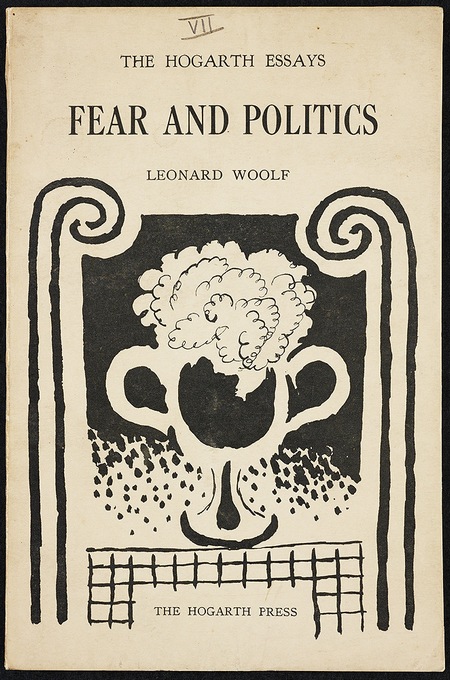
Fear and Politics - first edition

 
Leonard Woolf, Fear and Politics (1925) Cover design by Vanessa Bell

This is number 7 in the first series of Hogarth Essays, which began in 1924. It was the first of Leonard Woolf’s political contributions to the press. Cover design by Vanessa Bell. In his essay, Leonard writes from the point of view of the animals in a zoo:

“Human beings delude themselves that a League of Nations or Protection or armies and navies are going to give them security and civilization in their jungle.” According to the narrator, who is an elephant, humans “are the savagest race of carnivora known in the jungle, and they will never be happy and civilized, and the world will never be safe for democracy or for any other animal, until each human animal is confined in a separate cage.”

J.H. Willis Jr, Leonard and Virginia Woolf as Publishers: The Hogarth Press 1917-1941

previousnext


Hogarth Press studies

Woolf's-head Publishing Woolf’s-head Publishing is a wonderful collection of cover designs, book jackets, and illustrations – but also a beautiful example of book production in its own right. It was produced as an exhibition catalogue and has quite rightly gone on to enjoy an independent life of its own. This book is a genuine collector’s item, and only months after its first publication it started to win awards for its design and production values. Anyone with the slightest interest in book production, graphic design, typography, or Bloomsbury will want to own a copy the minute they clap eyes on it.

Woolf's-head Publishing Buy the book at Amazon UK
Woolf's-head Publishing Buy the book at Amazon US

The Hogarth Press Leonard and Virginia Woolf as Publishers: Hogarth Press, 1917-41 John Willis brings the remarkable story of Leonard and Virginia Woolf’s success as publishers to life. He generates interesting thumbnail sketches of all the Hogarth Press authors, which brings both them and the books they wrote into sharp focus. He also follows the development of many of its best-selling titles, and there’s a full account of the social and cultural development of the press. This is a scholarly work with extensive footnotes, bibliographies, and suggestions for further reading – but most of all it is a very readable study in cultural history.

The Hogarth Press Buy the book at Amazon UK
The Hogarth Press Buy the book at Amazon US

© Roy Johnson 2005


Filed Under: Hogarth Press Tagged With: Art, Bloomsbury, Fear and Politics, Graphic design, Hogarth Press, Leonard Woolf, Literary studies

Leonard Woolf – Quack! Quack!

October 5, 2009 by Roy Johnson

Hogarth Press first edition book jacket designs


Quack! Quack! - first edition
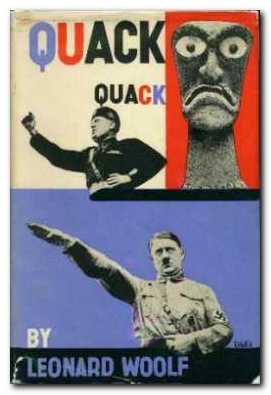
Leonard Woolf, Quack, Quack! (May, 1935) 2,000 copies, Printed by R & R Clark, 7s.6d.

“In his next two Hogarth Press books after the disappointment of After the Deluge (1931), Leonard Woolf published what he thought about Mussolini and his Fascist ambitions in Quack, Quack! (1935) and The League and Abyssinia (1936). The title of Quack, Quack! suggests the barnyard sounds of the orating Hitler and MUssolini. With devastating effect, Woolf matched photographs of the eye-bulging Hawaiian war god Kukailimoku to those of the gesticulating bellicose dictators. Woolf’s two-hundred page attack on fascism concentrated on the savage quackery of modern totalitarianism but also discussed the intellectual sources he found in Carlyle, Nietzsche, and Spengler. Woolf’s list of heroes who battled against the totalitarians for the light of civilization began with Erasmus and Montaigne and included Thomas More, Giordano Bruno, Spinoza, Descartes, Voltaire, Rousseau, Kant, and Goethe.”

J.H. Willis Jr, Leonard and Virginia Woolf as Publishers: The Hogarth Press 1917-1941

The striking, boldly-coloured dust jacket for this book was designed by E.McKnight Kauffer. A cheap edition of the book was published in 1936, priced at 2s.6d; it was reprinted again in 1937.

Elizabeth Willson Gordon, Woolf’s-head Publishing: The Highlights and New Lights of the Hogarth Press

previousnext


Hogarth Press studies

Woolf's-head Publishing Woolf’s-head Publishing is a wonderful collection of cover designs, book jackets, and illustrations – but also a beautiful example of book production in its own right. It was produced as an exhibition catalogue and has quite rightly gone on to enjoy an independent life of its own. This book is a genuine collector’s item, and only months after its first publication it started to win awards for its design and production values. Anyone with the slightest interest in book production, graphic design, typography, or Bloomsbury will want to own a copy the minute they clap eyes on it.

Woolf's-head Publishing Buy the book at Amazon UK
Woolf's-head Publishing Buy the book at Amazon US

The Hogarth Press Leonard and Virginia Woolf as Publishers: Hogarth Press, 1917-41 John Willis brings the remarkable story of Leonard and Virginia Woolf’s success as publishers to life. He generates interesting thumbnail sketches of all the Hogarth Press authors, which brings both them and the books they wrote into sharp focus. He also follows the development of many of its best-selling titles, and there’s a full account of the social and cultural development of the press. This is a scholarly work with extensive footnotes, bibliographies, and suggestions for further reading – but most of all it is a very readable study in cultural history.

The Hogarth Press Buy the book at Amazon UK
The Hogarth Press Buy the book at Amazon US

© Roy Johnson 2005


Filed Under: Hogarth Press Tagged With: Art, Bloomsbury, Graphic design, Hogarth Press, Literary studies, Quack! Quack!

Leonard Woolf – Stories of the East

October 3, 2009 by Roy Johnson

Hogarth Press first edition book jacket designs


Stories of the East - first edition

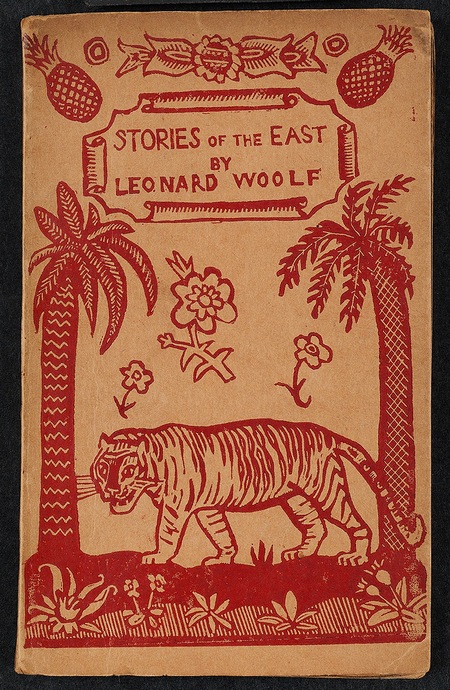
Leonard Woolf, Stories of the East (1919)

This publication contained three short stories – ‘Pearls and Swine’, ‘A Tale Told by Midnight’, and ‘The Two Brahmans’, with a cover illustration by Dora Carrington.

These three pieces are of vital importance in understanding Leonard Woolf’s mistrust of and dislike for colonialism. The stories provide disturbing commentaries about the disintegration of the colonial process and the uncomfortable moral ground occupied by the servants of the British Government in Ceylon prior to the Great War.

“Stories of the East was published in April 1921 in 300 copies and very nearly sold out. At the end of the first year, the Hogarth Press had sold over 230 copies, to realise a profit of £6 11s. 5d. When Leonard Woolf closed the account in January 1924, Stories of the East had sold 267 copies. Of the six books published by Hogarth in 1925, Leonard’s stories outsold all but Gorky’s second book, The Notebooks of Tchekhov and Virginia’s Monday or Tuesday, and in the scale of press operations it was a successful venture.”

J.H. Willis Jr, Leonard and Virginia Woolf as Publishers: The Hogarth Press 1917-1941


This book had a yapp binding, as does Prelude, and Eliot’s Poems. Dating from the nineteenth century, the yapp binding is limp, with “overlapping flaps or edges on three sides” and was originally used for binding Bibles meant to be carried in the pocket.

Elizabeth Willson Gordon, Woolf’s-head Publishing: The Highlights and New Lights of the Hogarth Press

previousnext


Hogarth Press studies

Woolf's-head Publishing Woolf’s-head Publishing is a wonderful collection of cover designs, book jackets, and illustrations – but also a beautiful example of book production in its own right. It was produced as an exhibition catalogue and has quite rightly gone on to enjoy an independent life of its own. This book is a genuine collector’s item, and only months after its first publication it started to win awards for its design and production values. Anyone with the slightest interest in book production, graphic design, typography, or Bloomsbury will want to own a copy the minute they clap eyes on it.

Woolf's-head Publishing Buy the book at Amazon UK
Woolf's-head Publishing Buy the book at Amazon US

The Hogarth Press Leonard and Virginia Woolf as Publishers: Hogarth Press, 1917-41 John Willis brings the remarkable story of Leonard and Virginia Woolf’s success as publishers to life. He generates interesting thumbnail sketches of all the Hogarth Press authors, which brings both them and the books they wrote into sharp focus. He also follows the development of many of its best-selling titles, and there’s a full account of the social and cultural development of the press. This is a scholarly work with extensive footnotes, bibliographies, and suggestions for further reading – but most of all it is a very readable study in cultural history.

The Hogarth Press Buy the book at Amazon UK
The Hogarth Press Buy the book at Amazon US

© Roy Johnson 2005


Filed Under: Hogarth Press Tagged With: Art, Bloomsbury, Graphic design, Leonard Woolf, Literary studies, Stories of the East

Maurice Dobb – Russia To-day and To-morrow

October 5, 2009 by Roy Johnson

Hogarth Press first edition book jacket designs


Russia Today and Tomorrow - first edition

 
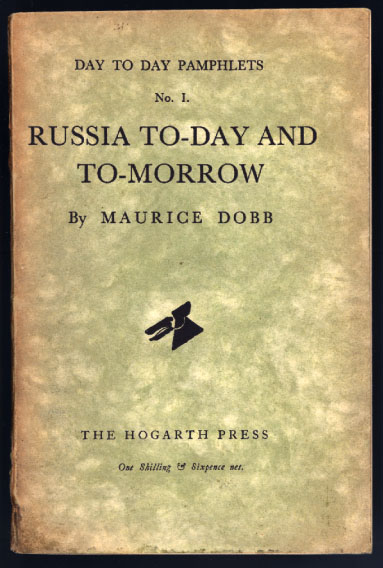
Maurice Dobb, Russia Today and Tomorrow (1930) Hogarth Day to Day pamphlets, Number 1.

The colophon design was by the American artist E.McKnight Kauffer. It was used on many other Hogarth publications as an alternative to the original dog’s head design by Vanessa Bell. Price 1s. 6d.

“Reporting on his second trip to Russia in 1929, Dobb provided in six chapters a perceptive, generally approving, but not uncritical survey of Soviet history, politics, economics, industrial development, and cultural revolution. His visit came just after the relaxed and stimulating New Economic Policy period (1921—28) had been controverted by the Five Year Plan and the Russian Association of Proletarian writers. While Dobb recognised the increasing pressure for conformity to Marxist ideology, he still reported finding tolerance for experimentation in the arts.”

J.H. Willis Jr, Leonard and Virginia Woolf as Publishers: The Hogarth Press 1917-1941

previousnext


Hogarth Press studies

Woolf's-head Publishing Woolf’s-head Publishing is a wonderful collection of cover designs, book jackets, and illustrations – but also a beautiful example of book production in its own right. It was produced as an exhibition catalogue and has quite rightly gone on to enjoy an independent life of its own. This book is a genuine collector’s item, and only months after its first publication it started to win awards for its design and production values. Anyone with the slightest interest in book production, graphic design, typography, or Bloomsbury will want to own a copy the minute they clap eyes on it.

Woolf's-head Publishing Buy the book at Amazon UK
Woolf's-head Publishing Buy the book at Amazon US

The Hogarth Press Leonard and Virginia Woolf as Publishers: Hogarth Press, 1917-41 John Willis brings the remarkable story of Leonard and Virginia Woolf’s success as publishers to life. He generates interesting thumbnail sketches of all the Hogarth Press authors, which brings both them and the books they wrote into sharp focus. He also follows the development of many of its best-selling titles, and there’s a full account of the social and cultural development of the press. This is a scholarly work with extensive footnotes, bibliographies, and suggestions for further reading – but most of all it is a very readable study in cultural history.

The Hogarth Press Buy the book at Amazon UK
The Hogarth Press Buy the book at Amazon US

© Roy Johnson 2005


Filed Under: Hogarth Press Tagged With: Art, Bloomsbury, Graphic design, Hogarth Press, Literary studies, Maurice Dobb

Netbooks – The Missing Manual

October 3, 2009 by Roy Johnson

small, portable, light, and cheap

I bought my first netbook just after the first Asus EeePCs were launched. At that time they were in short supply. Now the shops are full of them. You’re spoilt for choice. But what’s the difference between a netbook and a notebook (you might ask)? Well, netbooks are smaller, cheaper, and many of them use open source software such as Linux operating systems and the Open Office suite which does away with the need for (expensive) Microsoft programs.

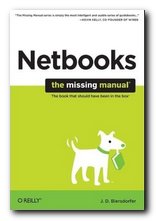
Netbooks The Missing ManualThey are also designed to be low on power consumption, and they don’t come with floppy or CD drives: you use USB ports instead. They have automatic Internet connection, and assume that you’ll be emailing, downloading software, and maybe even storing your work on the Web.

But one thing’s for certain: they won’t come with any user manual. That’s why this best-selling series from O’Reilly exists – to plug the gap left by equipment manufacturers who can’t keep up with support for their own product development.

Because netbooks have been such a huge success, versions using Windows have rapidly appeared, to cater for people who don’t want to tangle with new software. Fortunately, Jude Biersdorf’s book takes both Windows and Linux versions of netbooks into account. She shows you how to choose a netbook that will deliver what you require, then how to set it up using either of the most popular operating systems.

Even experienced computer users may not be comfortable in dealing with all these novelties all at once. She’s quite right – you’ve got to consider any shortcomings against the big advantages these devices offer. The keyboard might be a bit cramped, but the whole thing weighs just three pounds! Mine fits comfortably in my overcoat pocket.

If you’re new to Linux (she uses the popular Ubuntu version) there are full instructions on finding your way around. It’s very simple, because everything is based on big, clickable icons. The fact is that, even though open source software is completely free, it looks very much like Windows and Apple Mac when viewed on screen. All these interfaces are eventually starting to look the same.

She then deals with connecting peripherals. Your netbook won’t even have a mouse – so there are full instructions, and tips for downloading the latest drivers and software.

That’s where netbooks are really good : they update themselves all the time, and two clicks takes you to the latest version of whatever you want.

There’s a section on connecting to the Internet. You might not even need this. Mine recognised my home broadband as soon as I switched it on, and it’s never been a problem since.

But just in case you’re a first time user, she shows you how to set up an email account, how to make it secure, and how to navigate the web using a browser – Firefox and Google Chrome are recommended.

When it comes to standard use of computer software, most users will require a word-processor, spreadsheet, PowerPoint-type presentation – and so on – which are collectively called an office suite. She shows you how to deal with the stripped down version of the Microsoft Office Suite – which costs between $100and $150. I don’t know why she bothered, because she then goes on to deal with Open Office and Google Docs – both of which are free. You can even store your information on line with Google, which is a cost-free form of back-up.

[Why are all these services free? Because storage space price is plummeting, and these companies want you as a potential customer on their books.]

If you haven’t already got one, she shows you how to set up an email address and make full use of your browser to download extra tools – with the emphasis very much on free I was glad to note.

She also covers all the instant messaging software options and the social networking services, free phone calls, and picture-sharing. In fact there’s a whole section on how to edit and enhance your pictures – plus the same thing for MP3 and other sound files.

There’s also plenty on security, maintenance, upgrading, troubleshooting, and a really handy selection of online resources. So if your’re planning to buy or use a netbook, or if you want a user-manual to keep handy – this one will do the trick very nicely.

Buy the book at Amazon UK

Buy the book at Amazon US
© Roy Johnson 2009


J.D.Biersdorfer, Netbooks: the missing manual. Sebastopol (CA) O’Reilly, 2009, pp.320, ISBN 0596802234


More on technology
More on digital media
More on online learning
More on computers


Filed Under: Computers Tagged With: Computers, Netbooks, OSS, Technology, The Missing Manual

Nineteenth Century Russian Novels

October 2, 2009 by Roy Johnson

recommended reading from the classics

Russia has a rich literary tradition which stretches from the early nineteenth century to the present day. Its great writers have done particularly well with the novel, allowing themselves to be influenced by other strong traditions, such as the British and French.

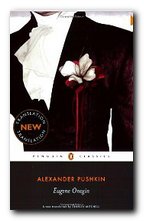
Russian novels - Eugene OneginEugene Onegin (1831) Alexander Pushkin is generally considered to be the father of modern Russian literature – a witty, sophisticated writer. He was principally a poet, but his masterwork is in fact a novel – which is written in verse. It’s the story of a clever but bored aristocrat who charms a young woman Tatiana so much that she writes a letter declaring her love to him. He rejects her and continues with his bachelor existence. But years later, on meeting her again, he realises what he has missed. He asks for a second chance, but his time, despite the fact that she still loves him, it is she who rejects him. The novel exists in many translations, including the monumentally scholarly production by Vladimir Nabokov. It’s a wonderfully light and entertaining story, but with lots of hidden depths. Many critics argue that Tatiana represents the soul of Russia, simple and truthful, and Onegin the more sophisticated but ultimately inappropriate spirit of Europe.
Russian novels - 19th Century Buy the book from Amazon UK
Russian Novels - 19th Century Buy the book from Amazon US


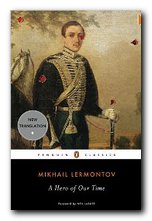
Russian novels - A Hero of Our TimeA Hero of Our Time (1839) Mikhail Lermontov is another one-novel writer who concentrated his attention, like Pushkin, on the theme of the ‘Superfluous Man’. This is the talented and educated young Russian who has no outlets for his skills and no place to employ his intelligence, because of the closed, feudal, and autocratic nature of Russian society. Lermontov was a contemporary of Pushkin’s, and like him he produced just this one substantial piece of fiction which seemed to sum up the epoch in which they lived. A Hero of Our Time turns on the events of a duel (which had killed Pushkin only ten years earlier). A young and disaffected soldier contemplates existential questions of will and identity, plus the perennial question of ‘how to live’. In the end he kidnaps a woman and shoots a man in a duel to test out the limits of his freedom.
Russian novels - 19th Century Buy the book from Amazon UK
Russian Novels - 19th Century Buy the book from Amazon US


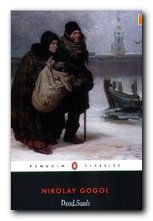
Russian novels - Dead SoulsDead Souls (1842) Nikolai Gogol is probably at his best in shorter fictions such as The Nose and The Overcoat. These are both seminal works in the history of Russian literature. He writes in an inventive and peculiar style, rich in playful and sometimes absurd imagery. He also has a habit of butting in to his own narratives to pass comments which sometimes have nothing to do with the story. Dead Souls is his one big novel. It’s a crazy satire on the corruption and inertia of nineteenth century provincial Russian life. The plot centres on someone who trades in the identities of peasants who have died but remain on the census records. Comic, absurd, and bitingly satirical, Gogol completed a sequel, but destroyed it in a fit of religious fanaticism whilst he was starving himself to death. This particular translation comes highly recommended. Vladimir Nabokov consigned all others to the rubbish bin.
Russian novels - 19th Century Buy the book from Amazon UK
Russian Novels - 19th Century Buy the book from Amazon US


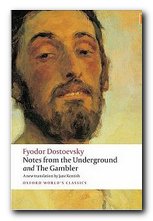
Russian novels - Notes from UndergroundNotes from Underground (1864) Fyodor Dostoyevski represents the dark, tortured, and often violent side of Russian life. In his novels he explores all sorts of existential issues such as reason and free will, personal identity, guilt, religious belief, and the power of unconscious motivation. His treatment of these issues, the suspense in his plots, and his studies of tortured neurotic behaviour make him seem quite modern, and he is often included in studies of twentieth-century existentialism. Be prepared for complex plots, long meditations on philosophic issues, melodrama, and contradictions. The rewards are thrilling suspense and deep psychological studies of characters struggling with personal demons at the end of their behavioural tether. Notes from Underground is one of Dostoyevski’s classic existential meditations. A first person narrator informs us “I am a sick man…I am an angry man. I am an unattractive man. I think there is something wrong with my liver” There is no plot: the character simply wrestles with his existence and debates whether to live according to reason or irrationality. You have the sense of something written in the middle of the twentieth century, not the nineteenth – and many modern writers make reference to this as a seminal work.
Russian novels - 19th Century Buy the book from Amazon UK
Russian Novels - 19th Century Buy the book from Amazon US


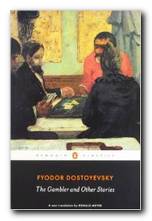
The GamblerThe Gambler (1867) This famous novel was written under extreme pressure. Unless Dostoyevski delivered the manuscript within six weeks, all future royalties on anything he wrote would go to his unscrupulous publisher. So Dostoyevski hired a stenographer – the star pupil from Russia’s first school of shorthand dictation. He dictated the novel in four weeks – then married her. It’s a tight-knit, complex tale of compulsive gambling set in a German spa town. A young man Alexei vows that he will quit gambling as soon as he breaks even at the roulette wheel. He has also fallen in love with a beautiful young woman who does nothing but humiliate him. The novel sees the disintegration and paradoxically increased euphoria of Alexei’s character, until he is at the end so depraved that one wonders what keeps him from going mad.
Russian novels - 19th Century Buy the book from Amazon UK
Russian Novels - 19th Century Buy the book from Amazon US


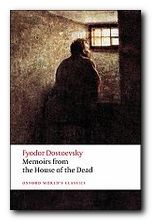
Russian novels - From the House of the DeadFrom the House of the Dead (1862) This isn’t a novel, but a documentary reportage. It gives an account of the ten years Dostoyevski spent in Siberian labour camps – as punishment for having planned to publish revolutionary pamphlets. The horrors of internment – including prisoners being flogged to death – are recounted in stomach-churning detail. But what emerges from the book as a whole is the amazing endurance of the human will and its desire to survive no matter how merciless the circumstances. If you have a taste for this topic, the book can profitably be read alongside similar classics such as Alexander Solzhenitsyn’s The Gulag Archipelago.
Russian novels - 19th Century Buy the book from Amazon UK
Russian Novels - 19th Century Buy the book from Amazon US


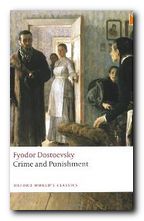
Russian novels - Crime and PunishmentCrime and Punishment (1866) This is one of Dostoyevski’s great masterpieces. Raskolnikov, a penniless student, decides to murder a greedy moneylender on principle in order to set himself outside and (as he sees it) above society. After he has done so, he is tormented by guilt and remorse. He is also pursued by a detective who seems to be able to read his mind, and to whom Raskolnikov repeatedly comes very close to confessing. In order to resolve his doubts about his own motivation and rationality, Raskolnikov in typical Dostoyevskian fashion decides to commit a second murder. This understandably makes matters worse. There is a great deal of conventional suspense – will he be found out, or not? – the outcome of which it would be unfair to reveal, but which is surprising nevertheless.
Russian novels - 19th Century Buy the book from Amazon UK
Russian Novels - 19th Century Buy the book from Amazon US


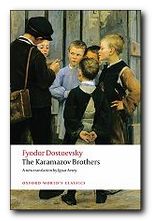
Russian novels - The Brothers KaramazovThe Brothers Karamazov (1880) This is another existential study which turns on the issue of a brutal murder. Old father Karamazov is killed by one of his three sons – but we don’t know which one. The eldest, Dmitri, is passionate, violent, and desperate for money; Ivan is an intellectual and an atheist; and Alyosha, the youngest, has love, faith, and compassion for everyone. (You don’t need a brass plaque on your door to see that these are aspects of Dostoyevski’s own personality.) Pay attention to the smallest details right from page one. This is a combination of a murder mystery, an exploration of the mind under extreme pressure, a study of the destructive nature of romantic love, and an argument for and against the existence of God. Many people regard this as Dostoyevski’s masterpiece.
Russian novels - 19th Century Buy the book from Amazon UK
Russian Novels - 19th Century Buy the book from Amazon US


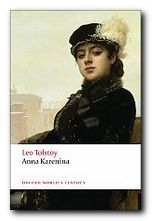
Russian novels - Anna KareninaAnna Karennina (1875) Count Leo Tolstoy was a great novelist, but as a man he was full of contradictions. He was a pious Christian who did plenty of sinning; a rich land-owning aristocrat who was a passionate believer in the simple life; a compulsive gambler who believed in self-discipline; and an ascetic puritan who believed in sexual abstinence but who was a compulsive philanderer. As a social reformer, he might have been the man for whom the expression ‘Do as I say, not as I do’ was coined. Anna Karenina is the most approachable of his big novels. It’s the story of a beautiful woman torn between the man she loves and her duty to her husband and son. This story is counterpointed with that of Levin, a rich landowner who is seeking for the right way to live. He tries agriculture and politics, but ends up turning to God (not very convincingly). As the cultural philosopher Isaiah Berlin said of Tolstoy, his solutions are usually wrong; but what’s important is that he asks the right questions. However, it is the story of Anna’s love affair with Vronsky which dominates the novel and makes this an enduring masterpiece. This is the Russian equivalent of Flaubert’s Madame Bovary and a highlight of the nineteenth-century novel.
Russian novels - 19th Century Buy the book from Amazon UK
Russian Novels - 19th Century Buy the book from Amazon US


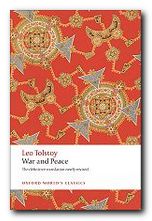
Russian novels - War and PeaceWar and Peace (1863-9) As everyone knows, this is the archetypal nineteenth-century blockbuster. It is an epic study of birth, marriage, life and death set against the background of Napoleon’s invasion of Russia, the sacking of Moscow, and his tragic retreat in 1812. Tolstoy does a very good job of depicting war as a shambolic mess, and he is successful in undermining the idea that historical events are shaped by Great Men. It is a long novel. Be prepared for extended episodes featuring lectures on the philosophy of history. But the writing is crystal clear and the characters unforgettable.
Russian novels - 19th Century Buy the book from Amazon UK
Russian Novels - 19th Century Buy the book from Amazon US


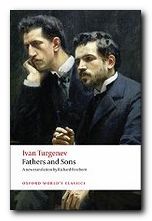
Russian novels - Fathers and SonsFathers and Sons (1862) Ivan Turgenev was the first Russian writer to find success in Europe, and he spent most of his adult life there. He was a supporter of the Western solution to Russia’s problems. His work might seem rather lightweight compared to Tolstoy and Dostoyevski, but he touches on important Russian themes, and his novels are well composed and easy to read. Fathers and Sons looks at the conflict between generations. The older landowners wish to preserve traditional systems, whilst the younger generation are yearning for some form of revolution to free them from the dead hand of conservatism. Neither party wins out in the end, but it is to Turgenev’s credit that the novel presciently flags up political issues which were to erupt forty years later in Russian history. This new translation, specially commissioned for the World’s Classics, is the first to draw on Turgenev’s working manuscript, which only came to light in 1988.
Russian novels - 19th Century Buy the book from Amazon UK
Russian Novels - 19th Century Buy the book from Amazon US

© Roy Johnson 2009

redbtn   Twentieth Century Russian Novels


More on literary studies
More on writing skills
More on creative writing
More on grammar


Filed Under: 19C Literature Tagged With: Literary studies, Russian literature, Russian novels, The novel

Nostromo – a review

October 13, 2009 by Roy Johnson

revolution and capital accumulation in Latin America

Nostromo is generally regarded by most Conrad commentators as his greatest novel. It embraces wide ranging themes of political struggle, international capitalism, the expansion of Europe and the United States into Latin America, various forms of personal heroism and sacrifice, and the dreams and obsessions which can lead people to self-destruction. The location of the novel is Costaguana, a fictional country on the western seaboard of South America, and the focus of events is in its capital Sulaco, where a silver mine has been inherited by English-born Charles Gould but is controlled by American capitalists in San Francisco.

Nostromo reviewCompeting military factions plunge the country in a state of civil war, and Gould tries desperately to keep the mine working. Amidst political chaos, he dispatches a huge consignment of silver, putting it into the hands of the eponymous hero, the incorruptible Capataz de Cargadores, Nostromo. However, things do not go according to plan. It is almost impossible to provide an account of the plot without giving away what are called in movie criticism ‘plot spoilers’. But the silver does not reach its intended destination, and the remainder of the novel is concerned with both the civil conflict and the attitudes of the people who know that the silver exists, and their vainglorious attempts to acquire it.

The novel has a curious but on the whole impressive structure. The first part of the book is an extraordinarily slow-moving – almost static – account of Costaguana and the back-history of the main characters in the story. Then the central section – more than half the novel – is taken up with the dramatic events of just two or three days and nights in which rebel forces attack the town, the silver is smuggled out, and the scene is set for disaster.

This central section of the novel which covers the scenes of military insurgency and high drama conveys very convincingly the uncertainty of civil war, the powerlessness of individuals, and the force of large scale events. Bandits suddenly become generals, all normal communications are cut off, and nobody can be sure where to turn to for law and order. Amazingly, around two hundred pages of narrative cover only two or three days of action – much of it at night.

The main point of Conrad’s story is that the silver of the mine corrupts almost all who come into contact with it. The inheritance and running of the mine estrange Charles Gould from his wife; once Nostromo has concealed the silver, his knowledge of its location eventually corrupts him; and the rebel leader Sotillo is driven almost made with desire to possess it. Only the saintly Emilia Gould has the strength to resist it, refusing to know where it is buried, even when the information is offered by the last person to know, on his death bed.

A great deal of the narrative tension in this long novel turns on who knows what about whom, and many of the key scenes are drenched in dramatic irony built on coincidences which have all the improbability of the nineteenth century novel hanging about them. At one point a completely new character suddenly appears as a stowaway on a boat, and then improbably survives a collision with another ship in the dark by hanging onto the other boat’s anchor. And this is merely a plot device allowing him to transmit misleading information to his captors – and incidentally allows Conrad to indulge in a rather unpleasant bout of anti-Semitism.

In common with many other novels from Conrad’s late phase, the narrative is conveyed to us in a very complex manner. It passes from third person omniscient narrator to first person accounts of events by fictional characters. Authorial point of view and the chronology of events both change alarmingly; the narrative is sometimes taken over temporarily by a fictional character, or is recounted via an improbably long letter which we are meant to believe is being written (in pencil) in the heat of gunfire and other tumultuous events.

There’s also a great deal of geographic uncertainty. As reports come in from one end of the country to the other, and the loyalty of one province and its leaders is mentioned in relation to another – as well as its strategic position on the seaboard – I began to wish for a map to conceptualise events.

Once a heroic solution has been found for the plight of the beleaguered loyalists (an epic Paul Revere type ride on horseback by Nostromo) the story suddenly flashes forward to the successful years of recovery and the aftermath. Nostromo seeks to consolidate his successful position by a judicious marriage, but is distracted by his passionate love for his intended’s younger sister. Even this detail is linked to the silver of the mine, and it brings about the truly tragic finale.

Despite all Conrad’s stylistic peculiarities (and even some lapses in grammar) this is a magnificent novel which amply repays the undoubtedly demanding efforts required to read it. But that is true of many modern classics – from Mrs Dalloway to Ulysses and Remembrance of Things Past.

Buy the book at Amazon UK

Buy the book at Amazon US

© Roy Johnson 2009


Joseph Conrad, Nostromo: A Tale of the Seaboard, Oxford: Oxford University Press, 2008, pp.524, ISBN: 0199555915


More on Joseph Conrad
Twentieth century literature
More on Joseph Conrad tales


Filed Under: Joseph Conrad Tagged With: English literature, Joseph Conrad, Literary studies, Modernism, Nostromo

On Being Ill

October 5, 2009 by Roy Johnson

Hogarth Press first edition book jacket designs


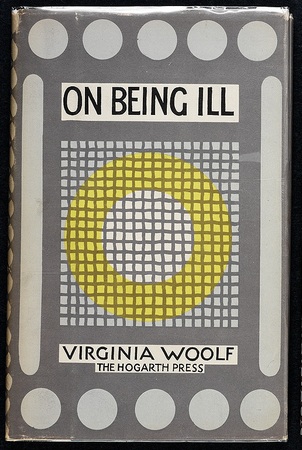
On Being Ill cover - first edition

 
Virginia Woolf, On Being Ill (1930) Cover design by Vanessa Bell.

“Not until 1930 did [Virginia and Leonard Woolf] hand print another of Virginia’s works, a small essay On Being Ill. To possible critics of the slightly botched printing of On Being Ill Virginia composed a tongue-in-cheek form letter which she never sent. Such a charming disclaimer could well serve as a summing up of the Woolf’s hand printing over the years. Beginning “Dear Madam,” Virginia agreed that “the colour is uneven, the letters not always clear, the spacing inaccurate, and the word ‘campion’ should read ‘companion””. Her defense was that she and Leonard were amateur printers without formal training, who fit in their hobby amid busy lives. But, she added, the volume was already worth more than it cost because of over-subscription, so that although “we have not satisfied your taste, we hope that we have not robbed your purse”.

J.H. Willis Jr, Leonard and Virginia Woolf as Publishers: The Hogarth Press 1917-1941

One of the last books hand printed by the Woolfs, On Being Ill is a fairly short essay by Woolf that explores not only illness, but also solitude, sympathy, and reading. Woolf writes, for example, that in illness “It is to the poets that we turn. Illness makes us disinclined for the long campaigns that prose exacts” The words of On Being Ill are both written and printed by Woolf. The book shows a greater sophistication than some of the earlier books, though there are still some errors that remind one that humans rather than machines created the book.

Elizabeth Willson Gordon, Woolf’s-head Publishing: The Highlights and New Lights of the Hogarth Press

previousnext


Hogarth Press studies

Woolf's-head Publishing Woolf’s-head Publishing is a wonderful collection of cover designs, book jackets, and illustrations – but also a beautiful example of book production in its own right. It was produced as an exhibition catalogue and has quite rightly gone on to enjoy an independent life of its own. This book is a genuine collector’s item, and only months after its first publication it started to win awards for its design and production values. Anyone with the slightest interest in book production, graphic design, typography, or Bloomsbury will want to own a copy the minute they clap eyes on it.

Woolf's-head Publishing Buy the book at Amazon UK
Woolf's-head Publishing Buy the book at Amazon US

The Hogarth Press Leonard and Virginia Woolf as Publishers: Hogarth Press, 1917-41 John Willis brings the remarkable story of Leonard and Virginia Woolf’s success as publishers to life. He generates interesting thumbnail sketches of all the Hogarth Press authors, which brings both them and the books they wrote into sharp focus. He also follows the development of many of its best-selling titles, and there’s a full account of the social and cultural development of the press. This is a scholarly work with extensive footnotes, bibliographies, and suggestions for further reading – but most of all it is a very readable study in cultural history.

The Hogarth Press Buy the book at Amazon UK
The Hogarth Press Buy the book at Amazon US

© Roy Johnson 2005

Filed Under: Hogarth Press Tagged With: Art, Bloomsbury, Graphic design, Hogarth Press, Literary studies, On Being Ill

Online Course Design – a bibliography

October 30, 2009 by Roy Johnson

Online Course Design  Laurel Alexander, Education & Training on the Internet: An essential source for students, teachers and education providers, Plymouth: Internet Handbooks, 2000, pp. 192, IBSN 1840253460. Guide to online resources for students and tutors. Exstensive listings of online courses in UK and abroad.

Online Course Design  Tom Boyle, Design for Multimedia Learning, London: Prentice Hall, 1997, pp.240, ISBN 0132422158. Software and media for creating learning programs. Slightly dated now, but sound on basic principles.

Online Course Design  Stephanie Browner, Stephen Pulsford, and Richard Sears, Literature and the Internet: A Guide for Students, Teachers, and Scholars, London/New York: Garland, 2000, pp.191, ISBN 0815334532. Popular guide to resources, techniques, and issues for literary studies classes.

Online Course Design  Alan Clarke, Designing Computer-Based Learning Materials, London: Gower, 2001, pp.196, ISBN 0566083205. Practical design principles – from conception to evaluation.

Online Course Design  Jason Cole & Helen Foster, Using Moodle, Sebastopol: O’Reilly, (second edition) 2007, pp.266, ISBN 059652918X. Clear and straighforward guide to course design using the open source virtual learning environment Moodle.

Online Course Design  Julia Duggleby, How to be an Online Tutor, Hampshire: Gower, 2000, pp.158, ISBN: 0566082470. Simple guidance notes for online tutors and course authors. Suitable for those working on community-based education.

Online Course Design  D. R. Garrison and Terry Anderson, E-Learning in the 21st Century: A Framework for Research and Practice, London: Routledge, 2003, pp.167, ISBN 0415263468. Course design – from planning and authorship, through to evaluation and assessment. Largely theoretical.

Online Course Design Duncan Grey, The Internet in School, London: Cassell, 1999, pp.155, ISBN: 0304705314. Guide to equipment, policies, and resources for teachers.

Online Course Design  Irene Hammerich and Claire Harrison, Developing Online Content: the Principles of Writing and Editing for the Web, New York: John Wiley, 2002, pp.384, ISBN 0471146110. The principles of writing and editing for the Web.

Online Course Design Reza Hazemi, Stephen Hailes, and Steve Wilbur (eds) The Digital University: Reinventing the Academy, London: Springer Verlag, 1998, pp.307, ISBN 1852330031. Academic essays on the e-Learning revolution.

Online Course Design   Silvina P. Hillar, Moodle 1.9 English Teacher’s Cookbook, Birmingham: Pakt Publishing, 2010, pp.207, ISBN: 1849510881

horton-2

Online Course Design  William K. Horton, Designing Web-Based Training : How to Teach Anyone Anything Anywhere Anytime, John Wiley & Sons, 2000, pp.640, ISBN: 047135614X. Best-selling guide to all aspects of instructional design and writing for web-based training materials. Highly recommended.

Online Course Design  Bob Hughes, Dust or Magic: Secrets of Successful Multimedia Design, London: Addison-Wesley, 2000, pp.264, ISBN 0201360713. Amusing and thought-provoking study of working on multimedia projects – from web design to CD-ROM and interactive video.

Online Course Design  William W. Lee and Diana L. Owens, Multimedia-Based Instructional Design, San Fransisco (CA): Jossey-Bass, 2000, pp.357, ISBN 0787951595.

Online Course Design  Roger Lewis and Quentin Whitlock, How to Plan and Manage an E-learning Programme, London: Gower,2003,pp.185,ISBN 0566084244. Practical step-by-step guide to planning, designing, and managing online learning courses – will apeal in particular to managers and administrators.

Online Course Design  Patrick J. Lynch and Sarah Horton, Web Style Guide, New Haven: Yale University Press, 1999, pp.164, ISBN: 0300076754. Excellent web site design guide. Originally written for medical students at Yale. Concentrates on design principles and navigation.

Online Course DesignMarguerita McVay Lynch, The Online Educator: A guide to creating the virtual classroom, New York/London: Routledge, 2002, pp.170, ISBN: 0415244226. Complete guide to designing and teaching online courses. Recommended.

Online Course Design  Robin Mason and Frank Rennie, eLearning: the key concepts, London: Routledge, 2006, pp.158, ISBN 0415373077

Online Course Design  Jakob Nielsen, Designing Web Usability: The Practice of Simplicity, Indiananapolis (Ind): New Riders, 2000, pp.420, ISBN: 156205810X. Nielsen puts speed and simplicity of access above all else in this tutorial on Web site design which pulls no punches. Fully illustrated with good and bad examples. Recommended.

Online Course Design  Jakob Nielsen and Marie Tahir, Homepage Usability: 50 websites deconstructed, Indiananapolis, (Ind): New Riders, 2002, pp.315, ISBN: 073571102X. Neilsen shows the strengths and weaknesses of famous web sites – and offers his own makeovers of their home pages.

Online Course Design  Jonathan and Lisa Price, Hot Text: Web Writing that Works, Indianapolis (IN): New Riders, 2002, pp.507, ISBN 0735711518. Professional-level manual on how to write, structure, and edit information for the Web. Highly recommended.

Online Course Design  Roy Rada, Understanding Virtual Universities, Bristol: Intellect, 2001, pp.122, ISBN 1841500526. Course design and construction for online learning.

Online Course Design  William H. Rice IV, Moodle Teaching Techniques, Birmingham UK: Pakt, 2007, pp.172, ISBN 184719284X

Online Course Design  William H. Rice, Moodle: E-Learning Course Development, Packt Publishing: Birmingham, 2006, pp.236, ISBN 1904811299.

Online Course Design  William H. Rice, Moodle 1.9 Teaching Techniques, Packt Publishing: Birmingham, 2010, pp.200, ISBN 1904811657.

Online Course Design  Karen Schriver, Dynamics in Document Design, New York (NY): John Wiley and Sons, 1997, ISBN: 0471306363. Wide-ranging academic and practical study in design theory and applications – with arguments for professionalism in design.

Online Course Design  Patti Shank (ed) the Online Learning idea book, San Francisco: John Wiley, 2007, pp.354, ISBN 0787981680

Online Course Design Jeff Stanford, Moodle 1.9 for Second Language Teaching, Birmingham: Packt, 2009, pp.505, ISBN 1847196241

Online Course Design  John Whalley, Theresa Welch, Lee Williamson, E-Learning in FE, London: Continuum, 2006, pp.118, ISBN 0826488625

© Roy Johnson 2009


Filed Under: How-to guides Tagged With: Bibliographies, Course design, Education, Online learning

  • « Previous Page
  • 1
  • 2
  • 3
  • 4
  • 5
  • …
  • 8
  • Next Page »

Get in touch

info@mantex.co.uk

Content © Mantex 2016
  • About Us
  • Advertising
  • Clients
  • Contact
  • FAQ
  • Links
  • Services
  • Reviews
  • Sitemap
  • T & C’s
  • Testimonials
  • Privacy

Copyright © 2026 · Mantex

Copyright © 2026 · News Pro Theme on Genesis Framework · WordPress · Log in