Mantex

Tutorials, Study Guides & More

  • HOME
  • REVIEWS
  • TUTORIALS
  • HOW-TO
  • CONTACT
>> Home / Archives for 2009

Archives for 2009

Harvard referencing in essays

August 23, 2009 by Roy Johnson

sample from HTML program and PDF book

1. Some subjects adopt the Author-Date method of referencing – which is also known as the Harvard referencing system. Full details of the texts you have quoted are placed in a bibliography at the end of an essay. These details are recorded in the following order:

Author – Date – Title – Place – Publisher

Smith, John. (1988) The Weavers’ Revolt, Chicago, Blackbarrow Press.

2. References in your text give the surname of the author, plus the publication date of the work to which reference is being made. This information is placed in brackets – thus:

Some research findings (James and Smith 1984; Brown 1987) have argued that these theories are not always reliable.

3. When you wish to draw attention to a particular page, this is done by simply adding the page number directly after the date of publication:

The development of these tendencies during the 1960s have been discussed by Brown (1977,234) and others (Smith 1992,180 and Jones 1993,88-90).

4. Note that when the author’s name is given in your text, it should not be repeated in the reference. You should simply give the date, then the page number(s). When you give the author’s name, the reference should either follow it directly, or it may come at some other point in the same sentence:

Smith (1987,166) argues that this was …
Smith, who is more positive on this issue, argues (1987,166) that …

5. If two or more works by the same author have the same publication date, they should be distinguished by adding letters after the date. (This can be quite common with journal articles.):

Some commentators (Mansfield 1991b and Cooper 1988c) have argued just the opposite case, that …

6. The list of texts which appears at the end of your essay should be arranged in alphabetical order of the author’s surname. The list differs from a normal bibliography in that the date of publication follows the author’s name:

Mansfield, M.R.1991a. ‘Model Systems of Agriculture in Early Britain’ Local History Journal Vol XX, No 6 ,112-117.

Mansfield, M.R.1991b. ‘Agriculture in Early Britain’, History Today Vol 12, No 3, 29-38.


Bibliography

Beeton, I. 1991 Beeton’s Book of Household Management, Chancellor Press.

Best, G. 1979 Mid-Victorian Britain 1851-75, Fontana.

Burman, S. 1979 (ed), Fit Work for Women, Croom Helm.

Darwin, E. 1890 ‘Domestic Service’, The Nineteenth Century, Vol.28, August.

Davidoff, L. 1973 The Best Circles, Croom Helm.

Davidoff, L. 1974 ‘Mastered for Life: Servant and Wife in Victorian and Edwardian England’, Journal of Social History, Vol.7.

Davidoff, L. 1987 and Hall, C., Family Fortunes, Hutchinson.

[…and so on]

© Roy Johnson 2003

Buy Writing Essays — eBook in PDF format
Buy Writing Essays 3.0 — eBook in HTML format


More on writing essays
More on How-To
More on writing skills

Filed Under: Writing Essays Tagged With: Academic writing, Essays, Harvard referencing, Reports, Study skills, Term papers, Writing skills

Heinemann English Dictionary

June 26, 2009 by Roy Johnson

popular dictionary – especially useful for schools

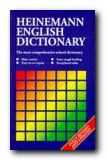
My copy of the Heinemann English Dictionary markets itself as “The most comprehensive school dictionary”, but it has been an invaluable companion for many years. First and foremost, it is small enough to pop into a briefcase or even a large handbag  – useful when you need to check a word in secret to save face!

Heinemann English DictionarySecondly, the layout is clear and easy to use, helpfully stating the relevant part of speech in full, instead of by abbreviations. I particularly like the way phrasal verbs are set out – if you look up the word pull, each of its variations – pull apart, pull down, pull up and so on – is listed on a separate line, making them much easier to locate. Compound words such as water-hole are shown as separate headings, rather than hidden amongst a myriad of other variations on  a word.

On a point which may be minor to some (but not to me) it is worth noting that a sans serif font is used for all the header words. This is proven to make words more accessible to beginner readers. As a teacher of Basic Skills to adults, I also appreciate the fact that common errors are pointed out. For example, the definition of the word principal includes a warning not to confuse it with principle. I have not seen this in other dictionaries.

An easily understood ‘pseudo-phonetic’ guide to pronunciation is provided. For example, euphonious is ‘yoo-foe-nee-us’. But, for me, one of its chief strengths is that it not only gives etymological information wherever possible, and an indication of colloquial usage where this may not be clear from the definition or may be useful to non-native speakers of English (eternity -‘It took an eternity for the doctor to arrive’), but that it also adds little titbits of information on selected words.

For example, just browsing through, I discovered that flannel is thought to be one of the few words which English has acquired from the Welsh. As I live in Chester, near the border with Wales, this little gem has opened a number of unexpectedly interesting conversations on linguistics. Nor would I have known, without the aid of these boxes, that the word assassin actually derives from an Arabic word for someone who eats cannabis!

Another surprising finding was the entry for the suffix -ette, for which Suffragette was the first known example. These little boxes are known as ‘Language Study Boxes’ and were designed specifically with the National Curriculum in mind. But who said children have to have all the fun? Incidentally, these extended entries are also provided for all the main parts of speech, giving useful examples for children (and adults) to learn from.

If I have any criticism at all to make, it is simply that my edition is too old, and so lacking in some of the more recent terms in the world of Information Technology – but, frankly, you can forgive an old friend almost anything …

© Alison Trimble 2001

Heinemann English Dictionary   Buy the book at Amazon UK

Heinemann English Dictionary   Buy the book at Amazon US


Heinemann English Dictionary, London: Heinemann Educational, 5th edition 2001, pp.1248, ISBN: 0435104241


More on language
More on literary studies
More on writing skills
More on creative writing
More on grammar


Filed Under: Dictionaries Tagged With: Dictionaries, Heinemann English Dictionary, Language, Reference

Henry James – biography

September 30, 2009 by Roy Johnson

chronology and works of  The Master

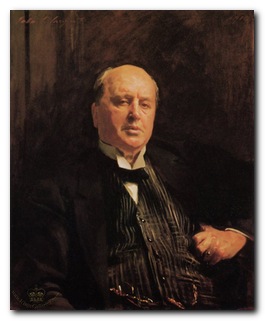
Henry James - portrait by J.S. Sargeant
1843. Henry James was born on 15 April at Washington Place, New York City. His grandfather was one of the first American millionaires. Father a theologian and philosopher. James’s brother William became psychologist and author of Varieties of Religious Experience.

1845-55. Childhood in Albany (State capital) and New York City, plus travelling in Europe.

1855-58. Attends schools in Geneva, London, and Paris, and is privately tutored.

1858. Family settles in Newport, Rhode Island.

1859. At scientific school in Geneva. Studies German in Bonn.

1861. American civil war begins – James develops a bad back. Studies art briefly.

1862-63. Spends a year studying Law at Harvard.

1864. Family settles in Boston, then Cambridge. James starts writing – and publishing – short stories and reviews.

1865. His first story in Atlantic Monthly – prestigious journal which went on to publish more of his work.

1869-70. Travels in England, France, and Italy. Death of his beloved cousin, Minny Temple.

1870. Back in Cambridge (MA). Published first novel, Watch and Ward.

1872-74. Travels with his sister Alice and aunt in Europe – greater part in Paris and Rome. Begins Roderick Hudson.

1874-75. Returns to New York City, writing literary journalism for the Nation. Three books published – Transatlantic Sketches, A Passionate Pilgrim, and Roderick Hudson.

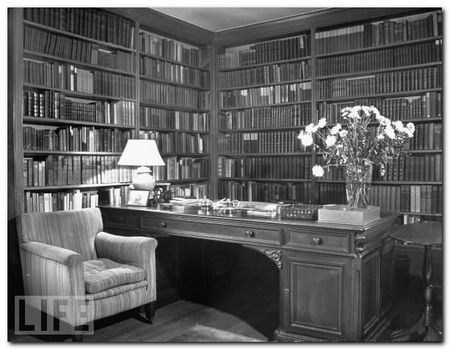
Henry James's study

Henry James’s study

1875-76. Spends a year in Paris – friendships with Flaubert, Turgenev, Zola, Daudet, and Edmund de Goncourt. Writes The American.

1876-77. Settles in London at Bolton Street, Picadilly. Visits Paris, Florence, and Rome.

1878. His story ‘Daisy Miller’ establishes his fame on both sides of the Atlantic. Writes critical essays French Poets and Novelists.

1879-82. Writes the great novels of his ‘early’ to ‘middle’ periods – The Europeans, Washington Square, Confidence, The Portrait of a Lady.

1882-83. Revisits America – the death of his parents.

1884-86. Resumes residence in London. His sister Alice comes to live near him. Publishes fourteen-volume collection of his novels and tales.

1886. Takes flat in De Vere Gardens. Publishes The Bostonians and The Princess Cassamassima.

1887. Long stay in Italy, mainly in Florence and Venice. ‘The Aspern Papers’, The Reverberator, ‘A London Life’. Friendship with Constance Fenimore Woolson (grand-niece of Fenimore Cooper) but remains a bachelor.

1888. Partial Portraits and various volumes of tales

1889. James begins to take an interest in the theatre – publishes The Tragic Muse.

1890-01. ‘The Dramatic Years’ James seeks to gain a reputation in the theatre. Dramatises The American, which has a short run. Writes four comedies, which are rejected by producers.

1892. Death of sister Alice James.

1894. Miss Woolson commits suicide in Venice. James journeys to Italy and visits her grave in Rome (c.f. – ‘The Beast in the Jungle’).

1895. His play Guy Domville is booed off stage on first night. James deeply depressed, abandons writing for the theatre and returns to novels.

1897. Settles at Lamb House in Rye, Sussex. Friendly with Joseph Conrad. Writes ‘The Turn of the Screw’ and What Masie Knew.

1899-1900. ‘The Late Period’. Begins composing by dictation. The Awkward Age, The Sacred Fount.

1902-1904. Writes The Ambassadors, The Wings of the Dove, and The Golden Bowl.

1905. Revisits United States after an absence of twenty-five years. Lectures on Balzac.

1906-10. The American Scene. Edits the twenty-four volume ‘New York Edition’ of his selected works and writes the prefaces which give an account of the genesis of the stories.

1910. Death of brother William James.

1913. Writes the autobiographical accounts A Small Boy and Others, and Notes of a Son and Brother.

1914. Notes on Novelists. Begins war work, visiting wounded in hospitals.

1915. Becomes a British subject.

1916. Given Order of Merit. Falls in love with a Swedish sailor, and dies thinking he is Napoleon. Ashes buried in Cambridge (MA).

1976. Commemorative tablet unveiled in Poets’ Corner of Westminster Abbey.


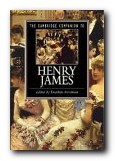
The Cambridge Companion to Henry JamesThe Cambridge Companion to Henry James is intended to provide a critical introduction to James’ work. Throughout the major critical shifts of the past fifty years, and despite suspicions of the traditional high literary culture that was James’ milieu, as a writer he has retained a powerful hold on readers and critics alike. All essays are written at a level free from technical jargon, designed to promote accessibility to the study of James and his work.

Henry James – web links

Henry James web links Henry James at Mantex
Biographical notes, study guides, tutorials on the Complete Tales, book reviews. bibliographies, and web links.

Henry James web links The Complete Works
Sixty books in one 13.5 MB Kindle eBook download for £1.92 at Amazon.co.uk. The complete novels, stories, travel writing, and prefaces. Also includes his autobiographies, plays, and literary criticism – with illustrations.

Henry James web links The Ladder – a Henry James website
A collection of eTexts of the tales, novels, plays, and prefaces – with links to available free eTexts at Project Gutenberg and elsewhere.

Red button A Hyper-Concordance to the Works
Japanese-based online research tool that locates the use of any word or phrase in context. Find that illusive quotable phrase.

Henry James web links The Henry James Resource Center
A web site with biography, bibliographies, adaptations, archival resources, suggested reading, and recent scholarship.

Henry James web links Online Books Page
A collection of online texts, including novels, stories, travel writing, literary criticism, and letters.

Henry James web links Henry James at Project Gutenberg
A major collection of eTexts, available in a variety of eBook formats.

Henry James web links The Complete Letters
Archive of the complete correspondence (1855-1878) work in progress – published by the University of Nebraska Press.

Henry James web links The Scholar’s Guide to Web Sites
An old-fashioned but major jumpstation – a website of websites and resouces.

Henry James web links Henry James – The Complete Tales
Tutorials on the complete collection of over one hundred tales, novellas, and short stories.

Henry James web links Henry James on the Internet Movie Database
Adaptations of James’s novels and stories for the cinema and television – in various languages. Full details of directors and actors, production features, film reviews, box office, and even quizzes.

© Roy Johnson 2009


More on Henry James
More on literature
More on the novella
More on literary studies
More on short stories


Filed Under: Henry James Tagged With: Biography, Henry James, Literary studies

Henry James greatest works

September 30, 2009 by Roy Johnson

the great novels, stories, and novellas

Henry James greatest works
Henry James writes in an elegant, leisurely style and he deals in the finer subtleties of moral life and human consciousness. He wrote relentlessly, copiously, and almost all of his work is first rate. His stories and novellas are just as good as his better-known novels; and he was also a major theorist of the novel and a perceptive critic. In his later work he begins to explore the interesting possibilities of ‘unreliable narrators’ – that is, people telling stories who may not know or reveal the whole truth.

It is interesting to note that for all James’ interest in the psychology of his characters and his avoidance of overt action as the mainsprings to his plots, many of his novels have been very successfully translated to the cinema screen. And more ironically still, for all the dramatic tensions which exist between his characters, his own attempts to write plays were regarded as a complete failure – by himself as well as by his critics.

If you have not read James before, you should begin with something shorter and written early in his career. His later prose style became increasingly mannered and baroque, as he explored the subtleties and moral complexities of social life in ever-increasing detail. Like fine wines, James is an acquired taste.

Henry James Washington SquareWashington Square (1880) is a superb early short novel – the tale of a young girl whose future happiness is being controlled by her strictly authoritarian (but very witty) father. She has a handsome young suitor – but her father disapproves of him, seeing him as an opportunist and a fortune hunter. There is a subtle battle of wills – all conducted within the confines of their elegant New York town house. Who wins out in the end? You will be surprised by the outcome. This is a masterpiece of social commentary, with a sensitive picture of a woman’s life. A good place to start if you have not read Henry James before.
henry james greatest works Buy the book at Amazon UK
henry james greatest works Buy the book at Amazon US


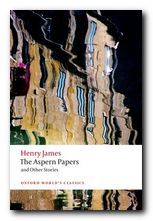
Henry James The Aspern PapersThe Aspern Papers (1888) is a psychological drama set in Venice which centres on the tussle for control of a great writer’s correspondence. An elderly lady, ex-lover of the writer, seeks a husband for her daughter. But the potential purchaser of the papers is a dedicated bachelor. Money is also at stake – but of course not discussed overtly. There is a refined battle of wills between them. Who will win in the end? As usual, James keeps the reader guessing. The novella is a masterpiece of subtle narration, with an ironic twist in its outcome. This collection of stories also includes three of his accomplished long short stories – The Private Life, The Middle Years, and The Death of the Lion.
henry james greatest works Buy the book at Amazon UK
henry james greatest works Buy the book at Amazon US


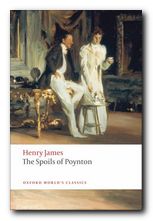
Henry James The Spoils of PoyntonThe Spoils of Poynton (1896) is a short novel which centres on the contents of a country house, and the question of who is the most desirable person to inherit it via marriage. The owner Mrs Gereth is being forced to leave her home to make way for her son and his greedy and uncultured fiancee. Mrs Gereth develops a subtle plan to take as many of the house’s priceless furnishings with her as possible. But things do not go quite according to plan. There are some very witty social ironies, and a contest of wills which matches nouveau-riche greed against high principles. There’s also a spectacular finale in which nobody wins out.
henry james greatest works Buy the book at Amazon UK
henry james greatest works Buy the book at Amazon US


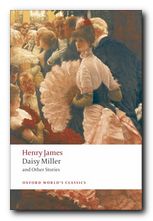
Henry James Daisy MillerDaisy Miller (1879) is a key story from James’s early phase in which a spirited young American woman travels to Europe with her wealthy but commonplace mother. Daisy’s innocence and her audacity challenge social conventions, and she seems to be compromising her reputation. But when she later dies in Rome the reader is invited to see the outcome as a powerful sense of a great lost potential. This novella is a great study in understatement and symbolic power.
henry james greatest works Buy the book at Amazon UK
henry james greatest works Buy the book at Amazon US


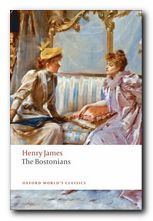
Henry James The BostoniansThe Bostonians (1886) is a novel about the early feminist movement. The heroine Verena Tarrant is an ‘inspirational speaker’ who is taken under the wing of Olive Chancellor, a man-hating suffragette. Trying to pull her in the opposite direction is Basil Ransom, a vigorous young man to whom Verena becomes attracted. The dramatic contest to possess her is played out with some witty and often rather sardonic touches, and as usual James keeps the reader guessing about the outcome until the very last page.
Henry James greatest works Buy the book at Amazon UK
Henry James greatest works Buy the book at Amazon US

The Oxford World Classics are the best editions of James’s work. They are largely based on the most accurate versions of the texts; and they feature introductory essays, a biography, explanatory notes, textual variants, a bibliography of further reading, and in some cases missing or deleted chapters. They are also terrifically good value.

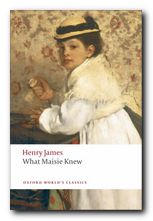
Henry James What Maisie KnewWhat Maisie Knew (1897) A vulnerable young girl is caught between parents who are in the middle of personal conflict, adultery, and divorce. Can she survive without becoming corrupted? It’s touch and go – and not made easier for the reader by the attentions of an older man who decides to ‘look after’ her. This comes from the beginning of James’s ‘Late Phase’, so you need to be prepared for longer and longer sentences. In fact it’s said that whilst composing this novel, James switched from writing longhand to using dictation – and it shows if you look carefully enough – part way through the book.
Henry James greatest works Buy the book at Amazon UK
Henry James greatest works Buy the book at Amazon US


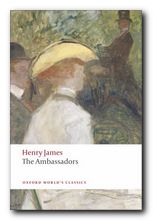
Henry James The AmbassadorsThe Ambassadors (1903) Lambert Strether is sent from America to Paris to recall Chadwick Newsome, a young man who is reported to be compromising himself by an entanglement with a wicked woman. However, Strether’s mission fails when he is seduced by the social pleasures of the European capital, and he takes Newsome’s side. So a second ambassador is dispatched in the form of the more determined Sarah Pocock. She delivers an ultimatum which is resisted by the two young men, but then an accident reveals unpleasant truths to Strether, who is faced by a test of loyalty between old Europe and the new USA. This edition presents the latest scholarship on James and includes an introduction, notes, selected criticism, a text summary and a chronology of James’s life and times.
Henry James greatest works Buy the book at Amazon UK
Henry James greatest works Buy the book at Amazon US


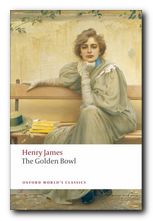
Henry James The Golden BowlThe Golden Bowl (1904) is the climax of James’ late period. The writing is mannered, baroque, complex, and focused intently on the psychological relationships between his characters. There is very little ‘plot’ here in the conventional sense. The bowl in the title is a gift from one couple to another – but there’s a lot more to it than that of course. It will not be giving away too much of the story to say that it concerns an American heiress as she becomes aware of the secret affair between her new husband and her father’s young wife.

Henry James greatest works Buy the book at Amazon UK
Henry James greatest works Buy the book at Amazon US


The Cambridge Companion to Henry JamesThe Cambridge Companion to Henry James is intended to provide a critical introduction to James’ work. Throughout the major critical shifts of the past fifty years, and despite suspicions of the traditional high literary culture that was James’ milieu, as a writer he has retained a powerful hold on readers and critics alike. All the essays in this compilation are written at a level free from technical jargon, designed to promote accessibility to the study of James and his work.
Henry James greatest works Buy the book at Amazon UK
Henry James greatest works Buy the book at Amazon US


Henry James – web links

Henry James web links Henry James at Mantex
Biographical notes, study guides, tutorials on the Complete Tales, book reviews. bibliographies, and web links.

Henry James web links The Complete Works
Sixty books in one 13.5 MB Kindle eBook download for £1.92 at Amazon.co.uk. The complete novels, stories, travel writing, and prefaces. Also includes his autobiographies, plays, and literary criticism – with illustrations.

Henry James web links The Ladder – a Henry James website
A collection of eTexts of the tales, novels, plays, and prefaces – with links to available free eTexts at Project Gutenberg and elsewhere.

Red button A Hyper-Concordance to the Works
Japanese-based online research tool that locates the use of any word or phrase in context. Find that illusive quotable phrase.

Henry James web links The Henry James Resource Center
A web site with biography, bibliographies, adaptations, archival resources, suggested reading, and recent scholarship.

Henry James web links Online Books Page
A collection of online texts, including novels, stories, travel writing, literary criticism, and letters.

Henry James web links Henry James at Project Gutenberg
A major collection of eTexts, available in a variety of eBook formats.

Henry James web links The Complete Letters
Archive of the complete correspondence (1855-1878) work in progress – published by the University of Nebraska Press.

Henry James web links The Scholar’s Guide to Web Sites
An old-fashioned but major jumpstation – a website of websites and resouces.

Henry James web links Henry James – The Complete Tales
Tutorials on the complete collection of over one hundred tales, novellas, and short stories.

Henry James web links Henry James on the Internet Movie Database
Adaptations of James’s novels and stories for the cinema and television – in various languages. Full details of directors and actors, production features, film reviews, box office, and even quizzes.

© Roy Johnson 2010


More on Henry James
More on literature
More on the novella
More on literary studies
More on short stories


Filed Under: Henry James Tagged With: Daisy Miller, Henry James, Literary studies, Roderick Hudson, The Ambassadors, The Aspern Papers, The Bostonians, The Golden Bowl, The novel, The Portrait of a Lady, The Spoils of Poynton, The Turn of the Screw, The Wings of the Dove, Washington Square, What Masie Knew

High Performance Web Sites

July 18, 2009 by Roy Johnson

fourteen steps to faster loading web sites

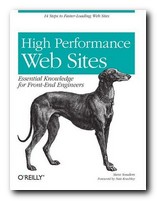
Steve Souders calls himself a ‘frontend engineer’. He’s a designer at Yahoo responsible for making their site work faster. He explains fourteen strategies for making web pages appear more quickly in a browser. And they’re not overly-technical. In fact he reveals his basic purpose from the outset in what he calls his Performance Golden Rule: “Only 10-20% of the end user response time is spent in downloading the HTML document. The other 80-90% is spent downloading all the components of the page”. From this flows his objective: the book is devoted to showing you his favoured methods of reducing that 80-90% time deficit and speeding up your page delivery.

High Performance Web Sites First he suggests that all scripts and any stylesheets should be rolled up together into one sheet each. That means that the server only makes one HTTP request per page instead of several. All this shaves valuable milliseconds off delivery time. Second (if you’re a big organisation) he suggests that you use a content delivery network. This means placing your web content on a number of different geographically disparate servers. Visitors making requests for your pages will get them more quickly from the nearest available source. Amazingly, some companies offer this service free of charge.

You can Gzip your content and your stylesheets, which might result in a 70%+ saving in file size, and he recommends putting stylesheets in the header and scripts at the bottom of the page.

He illustrates every one of the suggestions he makes with ‘before and after’ examples on his own web site – so it’s possible to check the effects and see his code.

Some of his tips seem better suited to large scale rather than small scale sites, but he shows in each case how you can best judge the decision for adopting them on your own site.

A knowledge of JavaScript and style sheets would be useful for understanding the details of his explanations, particularly if you are going to follow him into the process of obfuscating and munging your code. As you can perhaps guess from this, he’s much given to inventing his own jargon:

This step could also be an opportunity to minify the files … [You should] analyze your pages and see whether the combinatorics is manageable.

In the last section of the book he analyses the construction and performance of ten large scale sites (rather as Jakob Nielsen does in his Homepage Usability). The entry pages of Amazon, YouTube, CNN, Wikipedia, eBay, and MySpace are all put through tests, and the results show. (Not surprisingly, Google is fastest of all.) He then shows you how they could speed up their page delivery by implementing those of his fourteen rules which are appropriate.

In fact as one of his pre-publicity supporters observes: “If everyone would implement just 20% of Steve’s guidelines, the Web would be a dramatically better place “.

© Roy Johnson 2007

Buy the book at Amazon UK

Buy the book at Amazon US


Steve Souders, High Performance Web Sites, Sebastopol (CA): O’Reilly, 2007, pp.146, ISBN: 0596529309


More on web design
More on digital media
More on technology


Filed Under: Web design Tagged With: High Performance Web Sites, Technology, Usability, Web design

Hip Hotels: New York

July 25, 2009 by Roy Johnson

glamorous, modern, and fashionable locations

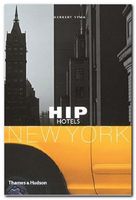
Who would have thought that books on architecture and interior design would suddenly become fashionable. But that’s what’s happened with this Hip Hotels series, which made a big impact when it first appeared a couple of years ago. What are Hip Hotels? Well, Herbert Ypma defines them as Highly Individual Places, but I think it’s a bit more than that – because even traditional hotels can be individual. The selection he shows (and he claims to have stayed in them) are all very modern, usually minimalist, and the emphasis throughout is that they are located in very fashionable parts of the city – even if that means you’re in the Meatpacking District.

Hip Hotels: New York But he covers other parts of the city too. His survey goes from the Lower East to the Upper West Side, with Tribeca, SoHo, Midtown, and Times Square in between. The common features of most examples are dark brown modernist furniture, exposed brick or granite, soft downlighting, stainless steel bathroom fittings, no pictures, decorations, or knickknacks of any kind, a lot of square, black leather chairs and settees, and of course some stupendous views over the city’s roofscapes.

You get an eight page spread on each location. It goes almost without saying (these days) that the photography is of superb quality, and there are full contact and location details for each hotel – so you can phone in or log onto their web sites and book a room if you wish.

And it’s not just pretty pictures. He’s obviously well informed on the practical issues of architecture: he gives details of the planning permission, zoning regulations, and the acquisition of ‘air rights’ necessary for these largely high-rise buildings. He’s also good on the way in which the districts have changed their nature – turning from manufacturing to arts and fashion centres within a couple of generations.

These publications are normally big expensive coffee table books, but for this series they have been reduced in size to a more easily portable format. You lose some of the visual expansiveness of the originals, but Thames and Hudson call it their ‘travel format’. I suppose the idea is that you could take them along on your cultural pilgrimage. However, I should warn you, before you get too excited, that most of these places charge $300-plus minimum per night. Buy the book instead. It’s twenty-five times cheaper.

© Roy Johnson 2006

Hip Hotels: New York Buy the book at Amazon UK

Hip Hotels: New York Buy the book at Amazon US


Herbert Ypma, Hip Hotels: New York, London: Thames & Hudson, 2006, pp.192, ISBN: 0500286183


More on architecture
More on technology
More on design


Filed Under: Architecture, Lifestyle Tagged With: Architecture, Design, Hip Hotels: New York, Interior design, Lifestyle

Hogarth Press – Book Jackets

October 3, 2009 by Roy Johnson

Hogarth Press - Book Jackets - colophon - Bell

Hogarth Press first edition book jacket designs

1917.   Leonard & Virginia Woolf,   Two Stories

1918.   Katherine Mansfield,   Prelude

1918.   T.S. Eliot,   Poems

1918.   Virginia Woolf,   Kew Gardens

1921.   Leonard Woolf,   Stories of the East

1921.   Roger Fry,   Twelve Original Woodcuts

1921.   Virginia Woolf,   Monday or Tuesday

1922.   Fyodor Dostoyevski,   Stavrogin’s Confession

1922.   Virginia Woolf,   Jacob’s Room

1923.   T.S. Eliot,   The Waste Land

1923.   Robert Graves,   The Feather Bed

1924.   Virginia Woolf,   Mr Bennett and Mrs Brown

1924.   Harold Nicolson,   Jeanne de Hénaut

1924.   Leonard Woolf,   Fear and Politics

1925.   Virginia Woolf,   The Common Reader

1926.   Virginia Woolf,   Mrs Dalloway

1927.   F.L. Lucas,   Tragedy

1927.   Virginia Woolf,   To the Lighthouse

1927.   Sigmund Freud,   The Ego and the Id

1929.   Virginia Woolf,   A Room of One’s Own

1930.   Maurice Dobb,   Russia To-Day and To-Morrow

1930.   Virginia Woolf,   On Being Ill

1931.   Virginia Woolf,   The Waves

1931.   George Rylands,   Poems

1931.   William Plomer,   Sado

1932.   Virginia Woolf,   The Common Reader – II

1933.   Rebecca West,   Letter to a Grandfather

1934.   L.B. Pekin,   Darwin

1935.   R.C. Trevelyan,   Beelzebub and Other Poems

1935.   Leonard Woolf,   Quack, Quack!

1937.   Virginia Woolf,   The Years

1938.   Virginia Woolf,   Three Guineas

1939.   Hogarth Press,   Hogarth Sixpenny Pamphlets

1939.   E.M. Forster,   What I Believe

1939.   Virginia Woolf,   Reviewing

1939.   Christopher Isherwood,   Goodbye to Berlin

1940.   Virginia Woolf,   Roger Fry

1941.   Virginia Woolf,   Between the Acts

1942.   Virginia Woolf,   The Death of the Moth


Hogarth Press studies

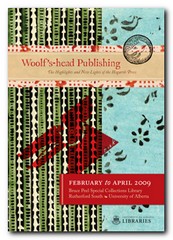
Woolf's-head Publishing Woolf’s-head Publishing is a wonderful collection of cover designs, book jackets, and illustrations – but also a beautiful example of book production in its own right. It was produced as an exhibition catalogue and has quite rightly gone on to enjoy an independent life of its own. This book is a genuine collector’s item, and only months after its first publication it started to win awards for its design and production values. Anyone with the slightest interest in book production, graphic design, typography, or Bloomsbury will want to own a copy the minute they clap eyes on it.

Woolf's-head Publishing Buy the book at Amazon UK
Woolf's-head Publishing Buy the book at Amazon US

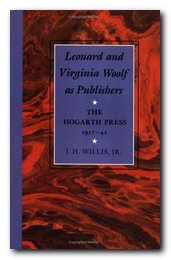
The Hogarth Press Leonard and Virginia Woolf as Publishers: Hogarth Press, 1917-41 John Willis brings the remarkable story of Leonard and Virginia Woolf’s success as publishers to life. He generates interesting thumbnail sketches of all the Hogarth Press authors, which brings both them and the books they wrote into sharp focus. He also follows the development of many of its best-selling titles, and there’s a full account of the social and cultural development of the press. This is a scholarly work with extensive footnotes, bibliographies, and suggestions for further reading – but most of all it is a very readable study in cultural history.

The Hogarth Press Buy the book at Amazon UK
The Hogarth Press Buy the book at Amazon US

© Roy Johnson 2005


Filed Under: Hogarth Press Tagged With: Art, Bloomsbury, First editions, Graphic design, Hogarth Press, Literary studies

Hogarth Sixpenny Pamphlets

October 4, 2009 by Roy Johnson

Hogarth Press first edition book jacket designs


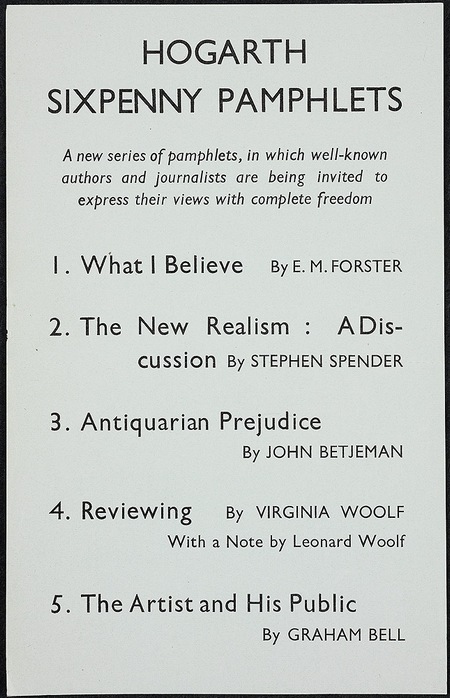
Hogarth Sixpenny Pamphlets - original advertising flyer
Hogarth Sixpenny Pamphlets 1940 – advertising flyer

previousnext


Hogarth Press studies

Woolf's-head Publishing Woolf’s-head Publishing is a wonderful collection of cover designs, book jackets, and illustrations – but also a beautiful example of book production in its own right. It was produced as an exhibition catalogue and has quite rightly gone on to enjoy an independent life of its own. This book is a genuine collector’s item, and only months after its first publication it started to win awards for its design and production values. Anyone with the slightest interest in book production, graphic design, typography, or Bloomsbury will want to own a copy the minute they clap eyes on it.

Woolf's-head Publishing Buy the book at Amazon UK
Woolf's-head Publishing Buy the book at Amazon US

The Hogarth Press Leonard and Virginia Woolf as Publishers: Hogarth Press, 1917-41 John Willis brings the remarkable story of Leonard and Virginia Woolf’s success as publishers to life. He generates interesting thumbnail sketches of all the Hogarth Press authors, which brings both them and the books they wrote into sharp focus. He also follows the development of many of its best-selling titles, and there’s a full account of the social and cultural development of the press. This is a scholarly work with extensive footnotes, bibliographies, and suggestions for further reading – but most of all it is a very readable study in cultural history.

The Hogarth Press Buy the book at Amazon UK
The Hogarth Press Buy the book at Amazon US

© Roy Johnson 2005


Filed Under: Hogarth Press Tagged With: Art, Bloomsbury, Graphic design, Hogarth Press, Literary studies

Home and Small Office Networking

July 10, 2009 by Roy Johnson

practical guide to building a home network on a budget

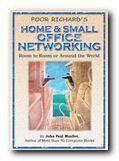
Many homes these days have a second or a spare computer; and more people than ever are either working from home or starting their own small businesses. For all of them, setting up a computer network can be the foundation for more efficient working. With links between your equipment, you can keep in touch with people in another room or out on the road. You can share information, keep everything updated from one desk, and share resources. But how would you go about doing it? Well, John Paul Mueller provides the advice and the tools you will need in Home and Small Office Networking his plain-speaking guide to setting up a computer network for small businesses on a budget. His approach is extremely thorough.

Home and Small Office NetworkingHe starts by helping you to define what you might need, how to set up a small office network, and the range of cheap options available. Did you know that it’s even possible to use the electrical wiring in your own home as the basis for the network? There’s plenty here on cabling, connections, and tips on the best equipment to choose. It might be a technically challenging task – but he takes you through step by step, passing on a lot of first-hand experience on the way.

He also spends quite some time on the software you will need for efficient administration of the system, as well as network security and maintenance. But the part which I suspect will appeal most to a lot of get-up-and-go entrepreneurs are the chapters on remote communications and connections via the Internet. These will allow you to share information and keep in touch with both mobile and home workers.

And he doesn’t neglect either the costs or the cost-effectiveness of building such a system. His goal is to help small businesses get the most from networking, and he both looks at the benefits and explains in easy-to-understand language how to design, protect, and maintain your network.

The main point of these books from the very successful Poor Richard series is that they provide the enthusiast, the amateur, and the small business with lots of budget-priced tools for development. They explain what to do in a jargon-free, no-nonsense manner, and they offer lists of free and bargain-level resources. Whether you’re in the next room or on the road, this book tells you how to set up an inexpensive network.

© Roy Johnson 2001

Buy the book at Amazon UK

Buy the book at Amazon US


John Paul Mueller, Poor Richard’s Home and Small Office Networking, Lakewood CO: Top Floor, 2001, pp.357, ISBN 1930082037


More on technology
More on digital media
More on online learning
More on computers


Filed Under: Computers Tagged With: Computers, Home and Small Office Networking, Technology

Homepage Usability

July 12, 2009 by Roy Johnson

rigorous examination of 50 big commercial websites

This is the latest broadside from usability guru Jakob Nielsen – well known for his radical and uncompromising views on Web design. It’s a follow-up to his best-selling Designing Web Usability. What he does in Homepage Usability is spell out the basic principles of what makes a Web page efficient – then he applies these principles to fifty commercial sites.

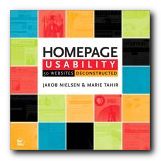
Homepage UsabilityThe first part of the book analyses the basic elements of a home page – its name, shape, content, links, navigation, and graphics. His statement of general principles (established with co-author Marie Tahir) includes information design, typography, and navigation, as well as consistency and logic of categorisation.

He makes all this seem perfectly reasonable and almost beyond doubt. This establishes Nielsen’s ‘Guidelines’ – which he then uses as a benchmark against which to dissect a collection of sites – ranging from amazon.com to yahoo.com. In other words, he aims high, and he doesn’t pull his punches.

The analysis is detailed and unsparing – and any Web designer who stays with him through the process will learn a lot. He is keen on simplicity, clarity, minimalism, overt navigation, and lack of visual clutter.

Everything is served up with Nielsen’s customary brio. If you score below 50% on his usability test, he shows no mercy. “Most likely, you should abandon [your] entire current site and start over from scratch”.

There have been criticisms of this approach – for instance, that he assumes an aggressive commercial model as the norm. But what if your site is a walk-through gallery, or a portfolio of work, rather than an e-Commerce site like Ford or Amazon. Surely the same ‘guidelines’ would not apply.

In each analysis he shows the client’s home page and describes it across a double page spread. Just occasionally he might even sprinkle a few words of praise. Then he pulls it apart bit by bit – showing where the designers are going wrong. The secret of his approach is attention to fine detail. He looks at the small print (literally and metaphorically) checking even the font, its size, its colour, and its position on the page.

I think you could argue with some parts of his methodology. For instance, in his statistical breakdown of screen real estate (how much space each topic occupies) he puts portal listings and niche product details into the same category. Then in some cases a list of category links might be rated lowly, whereas in others blatant advertising copy might be rated highly. I don’t think that is consistent, and it doesn’t correspond to the real user experience.

He’s good on conventions for naming. For instance, ‘site contents’ is not the same as ‘site map’ – because web users have quickly got used to certain conventions – the site name at top left, Help top right, and so on. Homepage links to ‘Forum’ for instance don’t mean much – even though the information beneath them might be quite valuable. These are valuable insights.

This is an attractive and well-illustrated book. Don’t be put off by the front cover – which makes it look like a home improvements catalogue. It’s is a serious workbook for Web designers at all levels. Anybody who wants to keep abreast of Web design and e-Commerce should read Nielsen – even if it’s to disagree with him.

© Roy Johnson 2003

Buy the book at Amazon UK

Buy the book at Amazon US


Jakob Nielsen and Marie Tahir, Homepage Usability: 50 websites deconstructed, Indianapolis, (Ind): New Riders, 2002, pp.315, ISBN: 073571102X


More on web design
More on digital media
More on technology


Filed Under: Web design Tagged With: e-Commerce, Homepage Usability, Jakob Nielsen, Usability, Web design

  • « Previous Page
  • 1
  • …
  • 37
  • 38
  • 39
  • 40
  • 41
  • …
  • 103
  • Next Page »

Get in touch

info@mantex.co.uk

Content © Mantex 2016
  • About Us
  • Advertising
  • Clients
  • Contact
  • FAQ
  • Links
  • Services
  • Reviews
  • Sitemap
  • T & C’s
  • Testimonials
  • Privacy

Copyright © 2026 · Mantex

Copyright © 2026 · News Pro Theme on Genesis Framework · WordPress · Log in